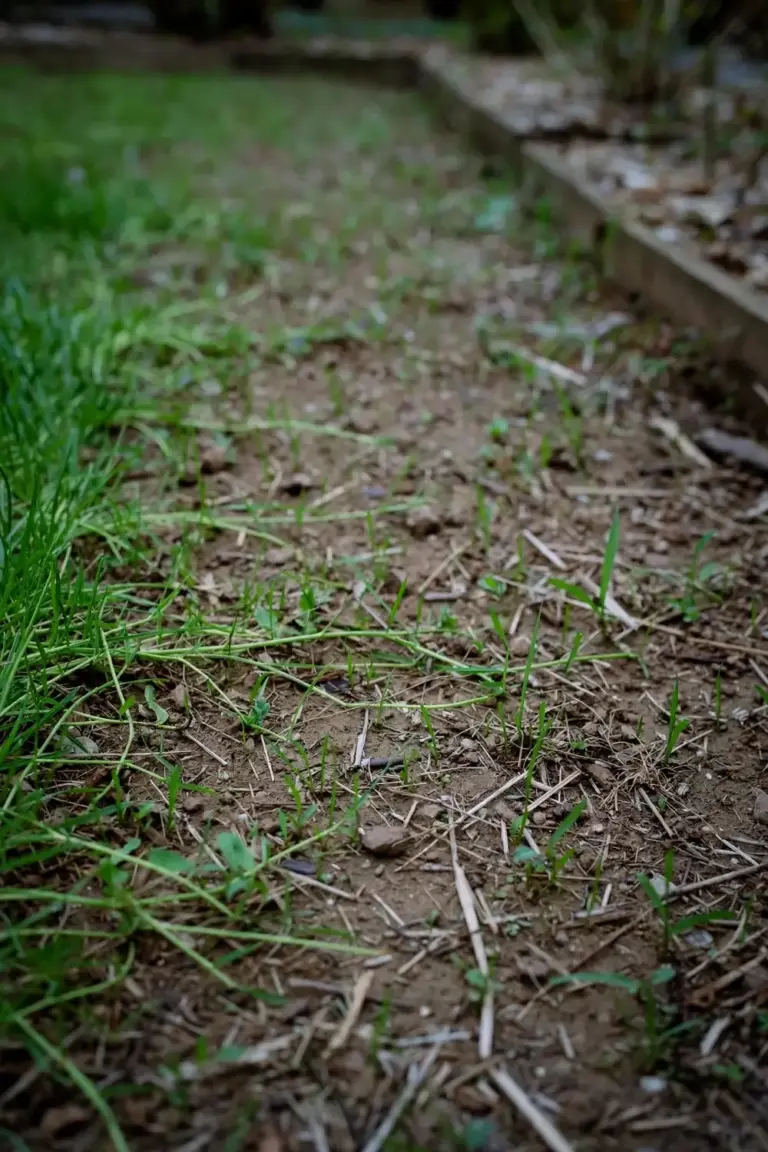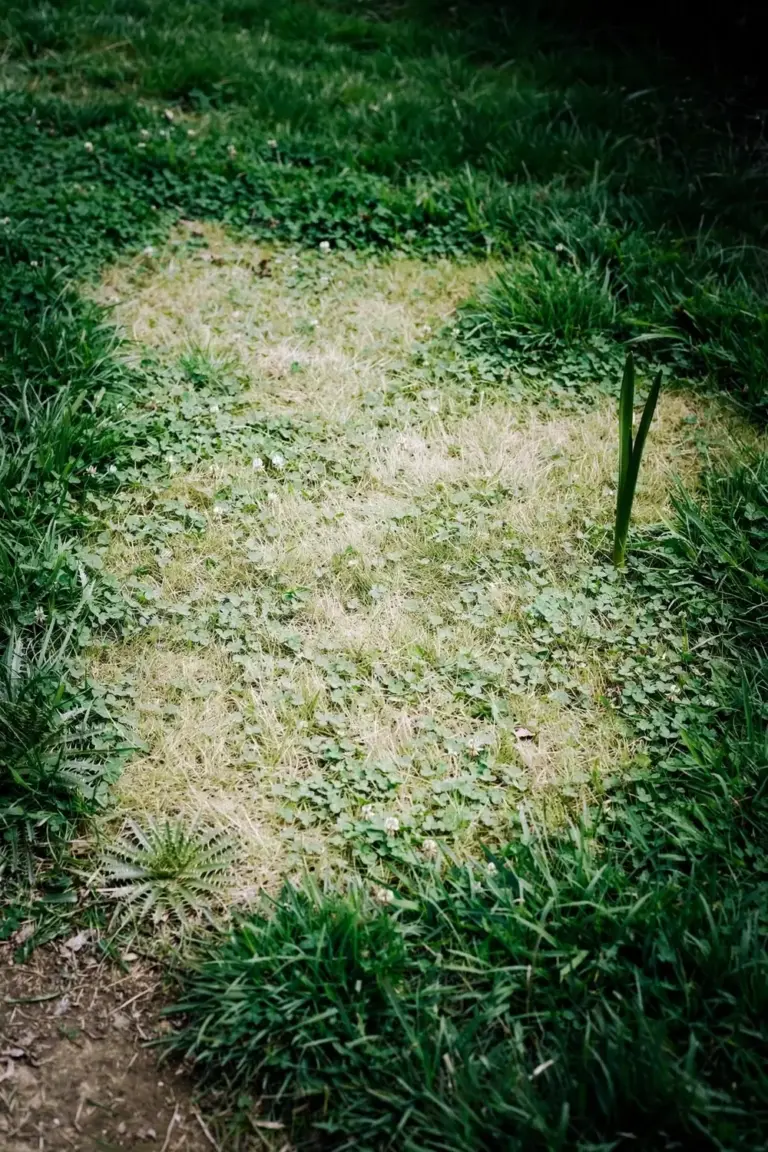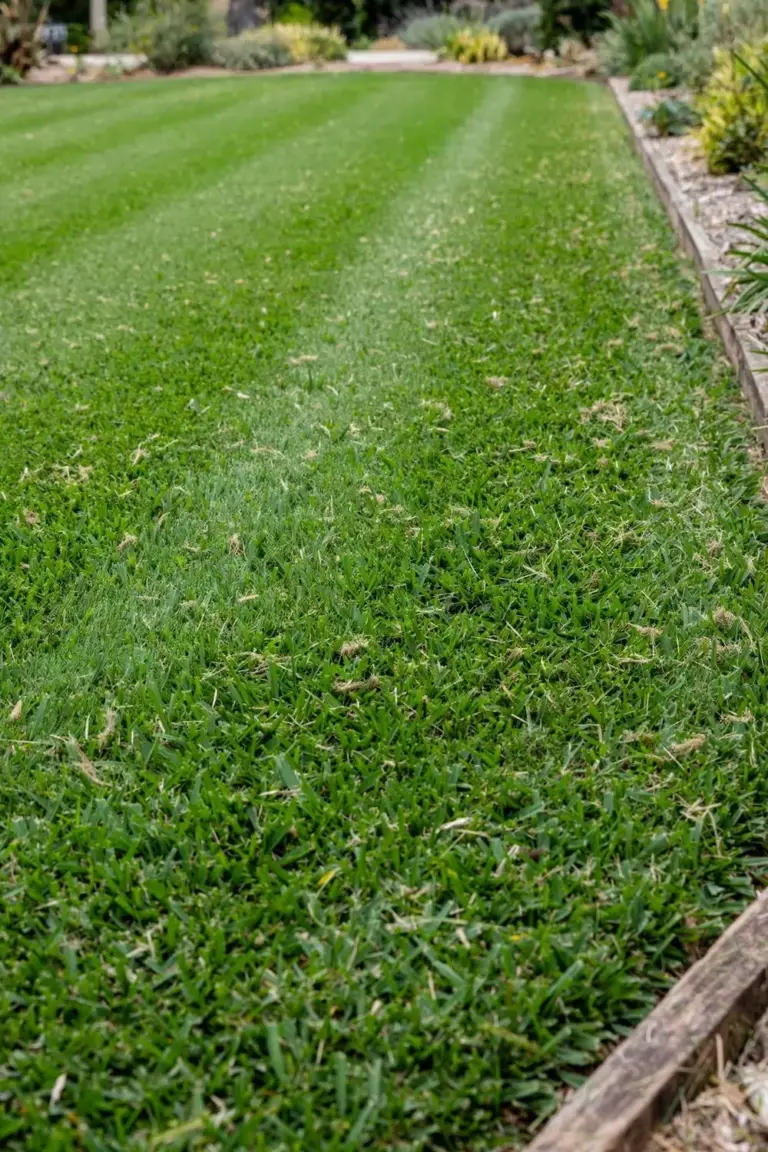

Why is my Buffalo lawn dying? Pull a handful of grass and run the 30-second tug test before you water, feed, or spray anything. Dormant Buffalo pulls back against your hand. Dead Buffalo lifts away with no resistance. That one test, plus the pattern table below, sorts the 9 causes below into a single first fix.
A dying Buffalo lawn is a diagnosis job, not a product job. Buffalo is Stenotaphrum secundatum, the soft-leaf turf grass sold across Australia under names like Sir Walter, Palmetto, and Sapphire. It is a different plant from buffel grass, which is Cenchrus ciliaris, and a different plant again from the prairie grass Americans call buffalo grass, which is Bouteloua dactyloides. Advice written for either of those two plants does not apply to your lawn.
I have learned that the Buffalo lawn I tug-test before feeding saves the feed for the grass that can still use it. Feed poured onto dead crowns feeds nothing. Feed poured onto a lawn that only needed water wastes a round of fertilizer. The test takes half a minute. Run it first, then read the pattern.
1. Is It Dead or Dormant? Run the Tug Test First
Dormant Buffalo rests. Dead Buffalo is gone. The tug test tells them apart in one pull.
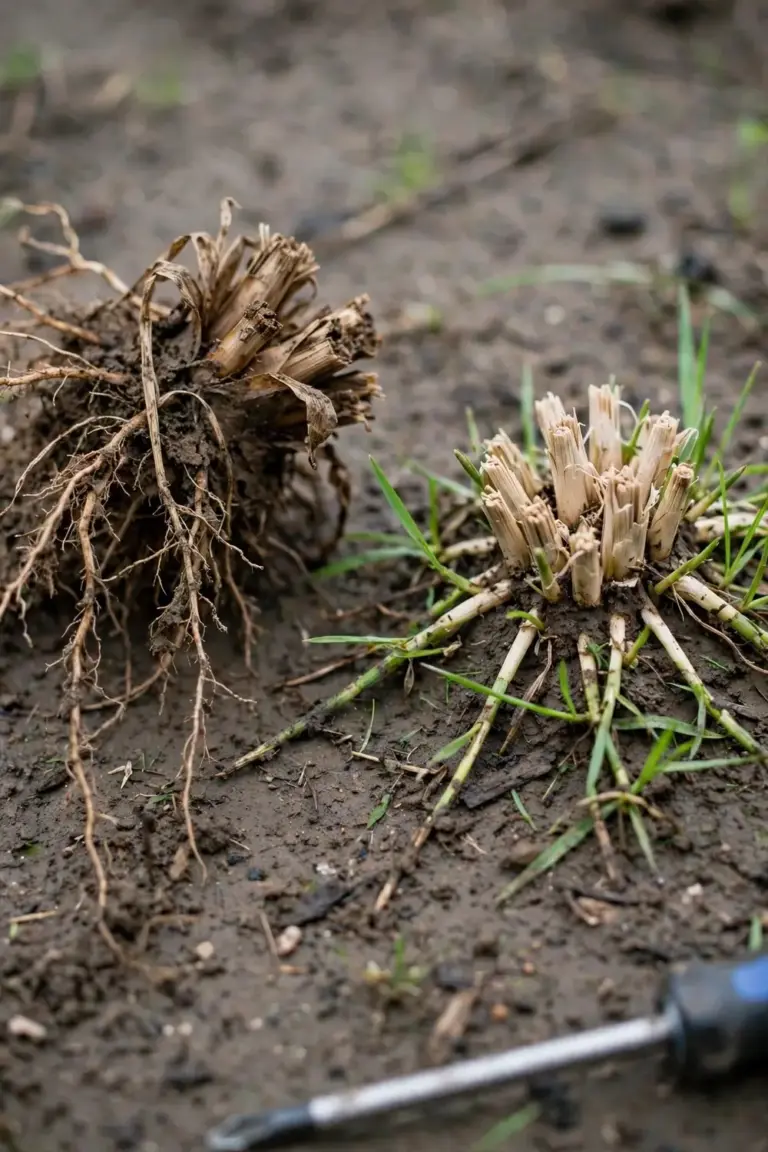
Grip a handful of brown grass at the edge of the worst patch and pull with steady pressure. Dormant grass resists the pull because its crowns and roots still grip the soil. Dead grass lifts away with almost no resistance because the roots and crowns have already let go. Then part the blades with your fingers and look at the crown, the base where blades meet roots just under the soil line. A crown that feels firm and shows green or white tissue is alive. A crown that feels soft and shows brown, mushy tissue is dead.
The Water Corporation of Western Australia gives the same crown check in plain terms: a crown that is white to off-white is probably still alive, and a lawn that died outright will not return in winter. That sentence is the whole point of this article. A living crown earns water, patience, and one fix at a time. A dead crown earns re-turfing, and no amount of water brings it back.
Run the test in 3 spots: the middle of the worst patch, the edge where brown meets green, and one green area for comparison. One pull in one spot can mislead you. Three pulls give you a map of what is alive and what is finished.
2. Read the Pattern Table Before You Treat Anything
The pattern names the cause faster than any single symptom does. Where the damage sits, and what shape it takes, narrows 9 causes to 1 or 2. Use the table first, then read only the matching cause section.
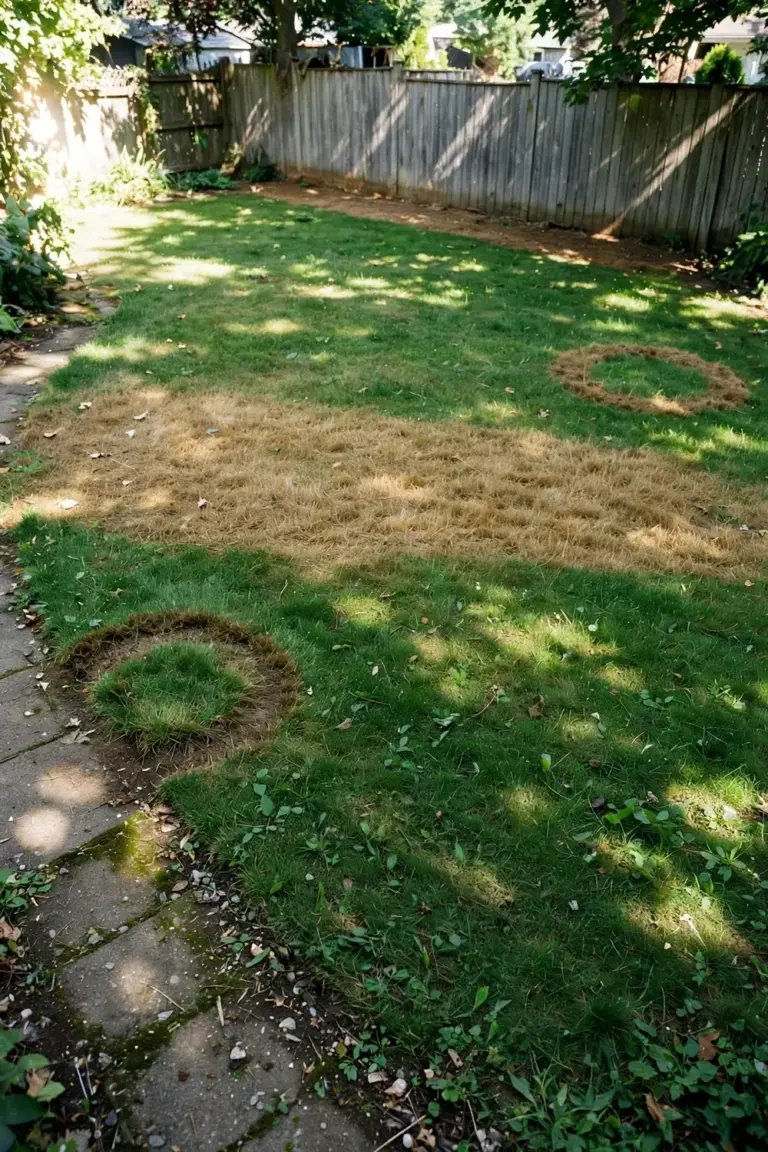
| Where the Damage Is | What It Looks Like | Most Likely Cause | First Check |
|---|---|---|---|
| Whole lawn, even color | Even fade to straw, leaves curl, footprint stays after walking | Drought and underwatering | Screwdriver probe and soil moisture |
| Low spots and near downpipes | Soft, yellow, spongy underfoot, sour smell | Overwatering and waterlogging | Squeeze test and drainage |
| Under trees and beside fences | Thin, leggy growth that never thickens | Shade death | Sun count through the day |
| Irregular patches that spread | Brown patches that lift like a carpet, birds digging | Grub damage | Soapy water flush |
| Rings, spots, or a spreading edge | Rings or blotches with a sharp margin, worse after wet weeks | Fungal disease | Compare against the pattern table again |
| Whole lawn after a spray day | Even scorch across every sprayed area | Herbicide damage | Product label and spray date |
| Stripes or blocks after feeding | Stripes that follow the spreader path | Fertilizer burn | Feeding date and rate |
| High-traffic paths and worn areas | Thin, hard ground, spongy mat underfoot | Compaction and thatch | Screwdriver probe and thatch wedge |
| Whole lawn in cold months | Even color dip, crowns firm, no spreading edge | Winter dormancy mistaken for death | Tug test and crown check |
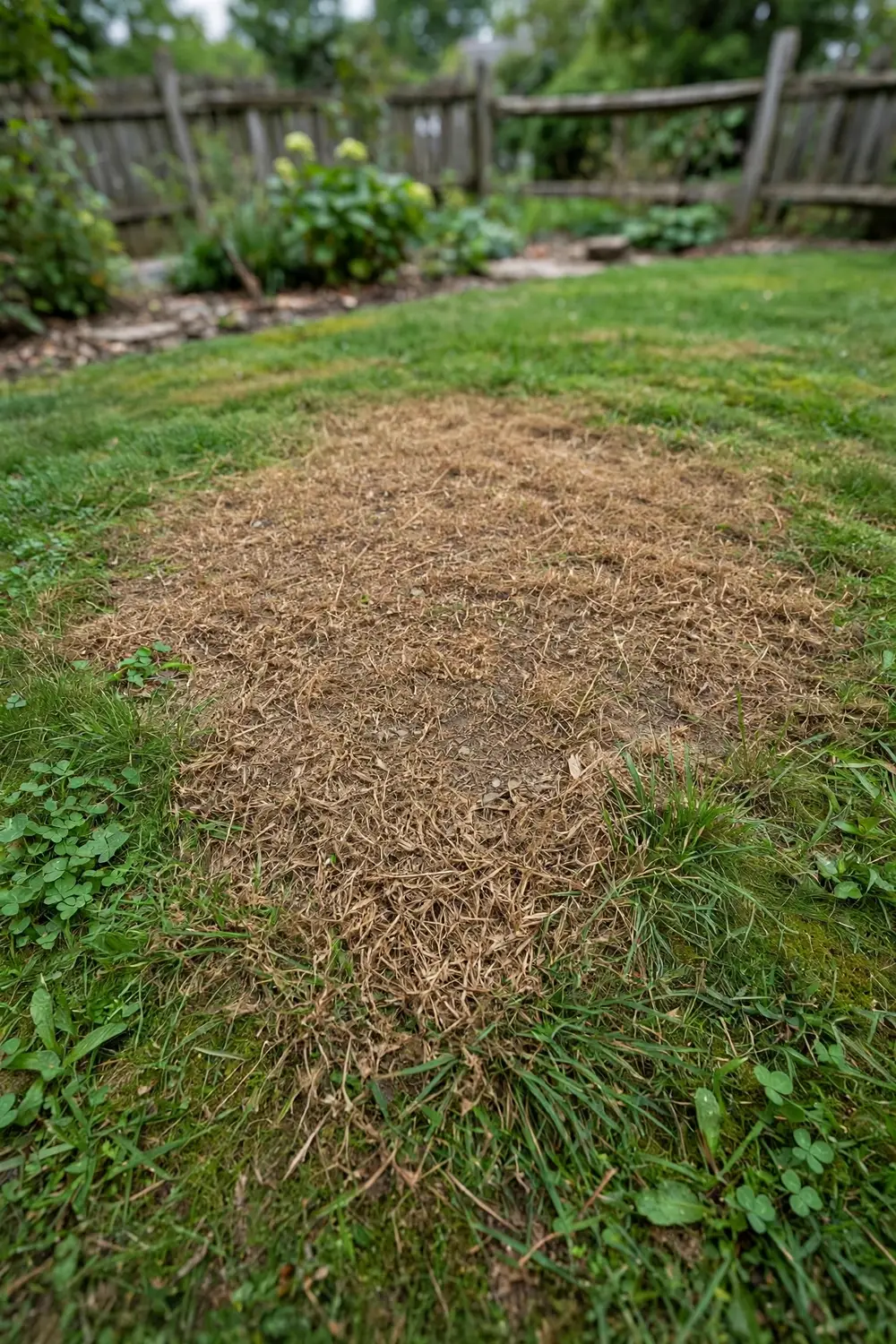
The table works because each cause leaves a signature. Drought fades the whole lawn at once. Grubs cut the roots and leave patches that lift. Herbicide follows the sprayer. If the damage does not match any row, run the tug test again and check the two nearest rows. Two causes often arrive together, and the table still points at the pair.
3. Drought and Underwatering: The Whole Lawn Fades Together
Drought fades the whole lawn at once, and it shows in the leaves before it shows in the color. The first sign is a footprint that stays visible after you walk across the grass. Lawn Solutions Australia describes that footprint test in its heat-stress guidance: a footprint that lingers means the lawn lacks water, while a lawn that springs back holds enough moisture.
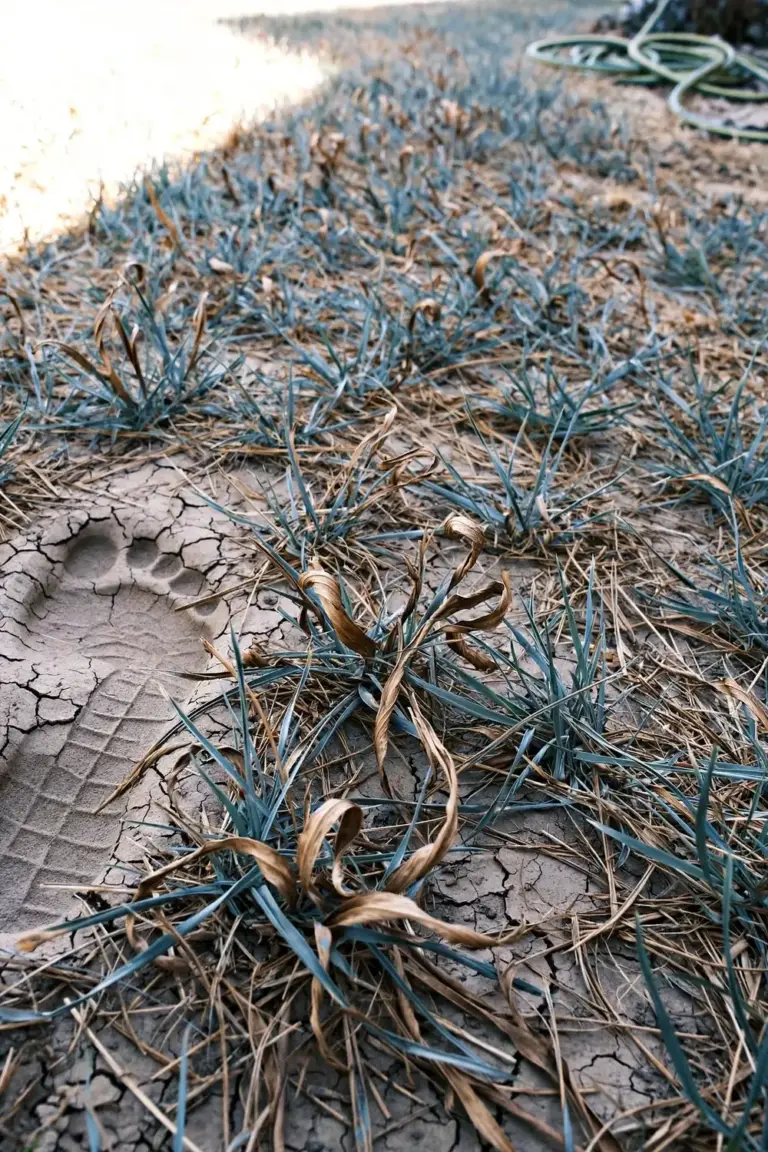
The leaves tell the same story in stages. Wilting comes first. Color loss follows. In extreme heat the lawn can turn blue to gray before it starts to die if the dry spell runs on. Dry patches often show in patches rather than across the whole lawn, because soil does not hold water evenly, and a patch that turned hydrophobic repels water instead of soaking it in.
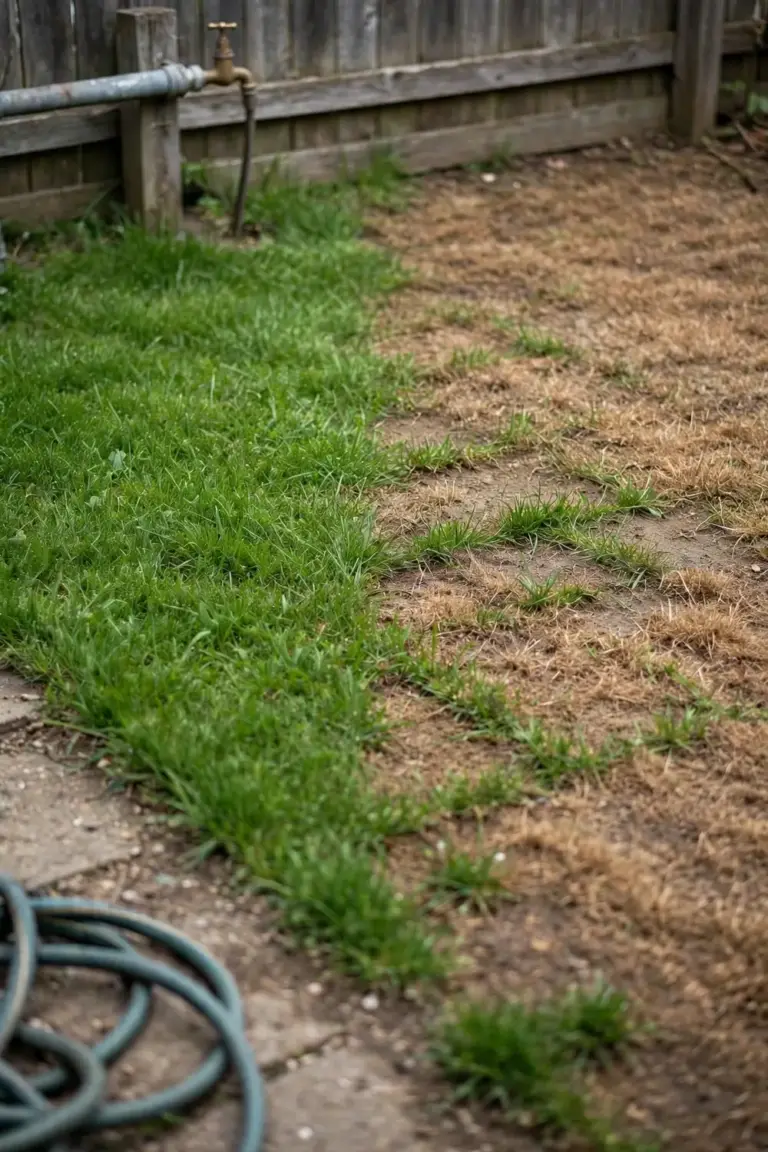
The first fix is one deep watering in the early morning, then a check the next day. Push a screwdriver 10 cm into the soil in the worst area. Dry soil at that depth means the water never reached the roots. Moist soil at that depth means the roots still have something to drink. If water beads and runs off the surface instead of soaking in, the soil turned hydrophobic, and a wetting agent is the next step. Watering a little every day keeps roots near the surface. One deep watering trains them down.
4. Overwatering and Waterlogging: Soft, Yellow, and Spongy
Overwatering kills Buffalo by drowning its roots, and the lawn feels it before it shows it. The ground turns soft and spongy underfoot. The grass yellows from the base up. The soil smells sour where water sits. A lawn that squelches when you walk on it holds too much water, and more water makes the damage worse.
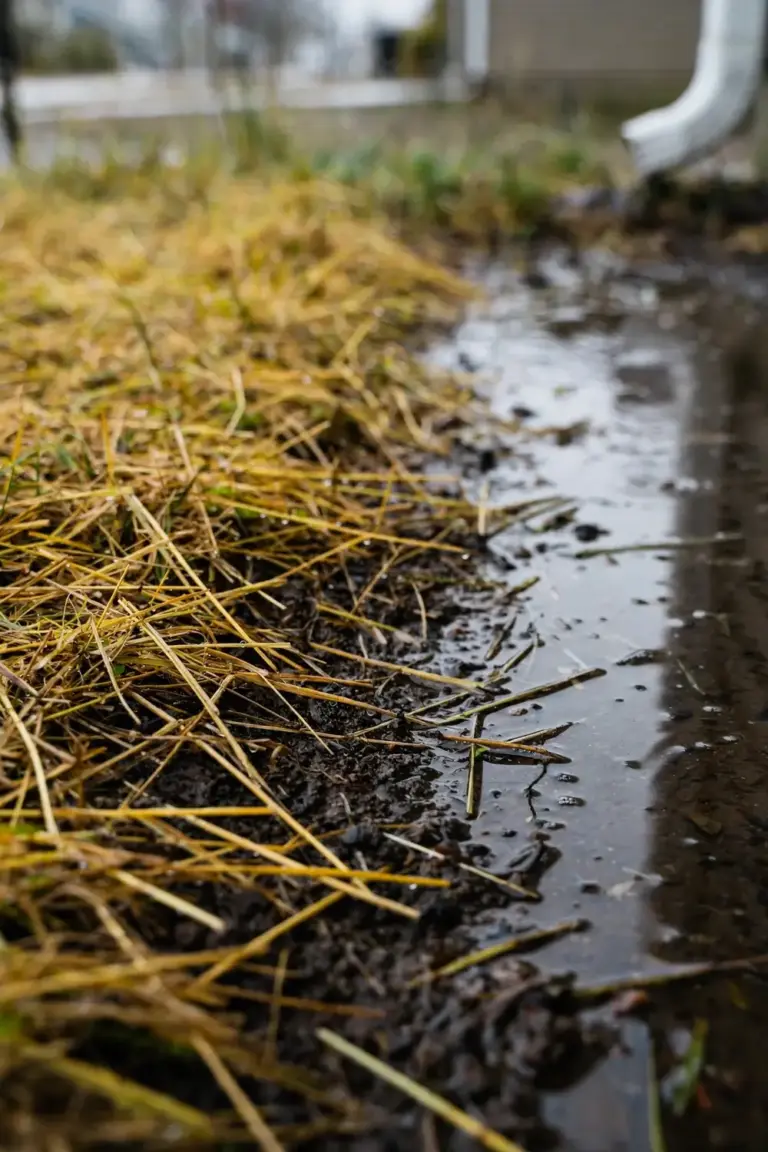
The cause is usually a schedule that ignores the weather. An irrigation timer that runs through a wet week, a downpipe that dumps onto one corner, or a low spot that collects runoff all produce the same result. Roots that sit in water lose air, and roots without air stop working. The grass above them yellows and thins, and the bare soil that opens up stays wet longer, which keeps the cycle going.
The first fix is to stop the water and let the soil dry. Turn off the irrigation for that zone. Redirect the downpipe or the runoff if one feeds the patch. Then test the drainage with a screwdriver. Push it 10 cm into the soil. If it slides in with no effort and the hole fills with water, the soil is waterlogged. If it meets firm resistance and comes out damp rather than wet, the soil is drying. Healthy soil drains, and building soil that drains is the long game behind every lawn fix. Do not feed a waterlogged lawn. Fertilizer on roots that cannot breathe adds salt stress to water stress.
5. Shade Death: The Lawn Thins Where the Sun Never Reaches
Shade death thins Buffalo slowly, and the lawn never recovers on its own because the cause never leaves. The grass under a tree or beside a tall fence grows leggy, with long thin blades and wide gaps between plants. The patch never thickens no matter how much you water or feed it. The rest of the lawn stays dense while the shaded strip fades year after year.
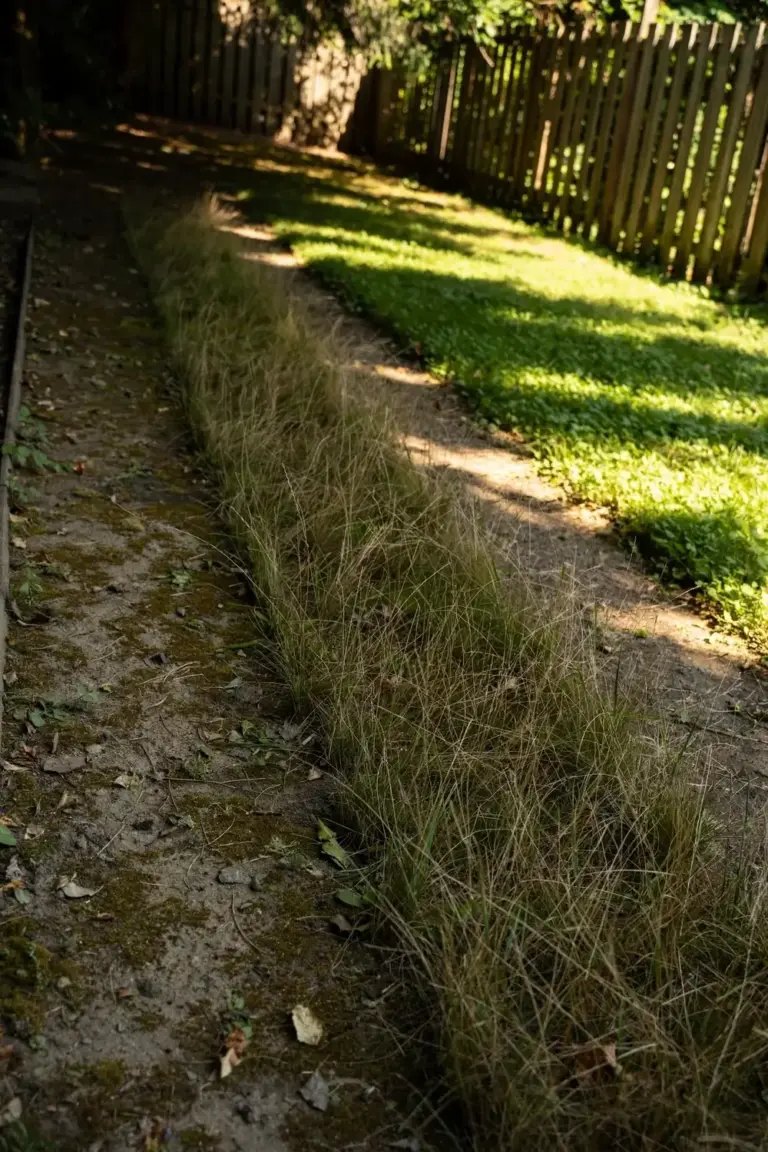
Buffalo tolerates shade better than couch or kikuyu, and it still needs light to live. Lawn Solutions Australia puts the floor at 3 to 4 hours of direct or scattered light a day for Buffalo grasses. Below that floor, the grass cannot make enough food to hold its density, and the patch thins until bare soil shows. Trees make the problem worse in two ways: the canopy blocks light, and the roots take water and nutrients from the same soil.
The first fix is a sun count, not a product. Stand in the patch at 9 in the morning, at noon, and at 3 in the afternoon on a clear day, and note whether direct sun reaches the grass. Fewer than 3 hours of direct or scattered light means the patch will not hold Buffalo no matter what you apply. Prune the canopy back where you can, and lift low branches to let morning light in. If a wall or a fence casts the shade, no product changes that geometry. The honest answer for a patch that never sees sun is a shade-tolerant groundcover or mulch, not another round of seed or fertilizer.
6. Grub Damage: Patches That Lift Like a Carpet
Grub damage lifts like a carpet because grubs eat the roots that hold the lawn down. The first signs are brown patches that spread and birds digging in the yard. Cobbitty Turf notes that Buffalo species tolerate grub attack better than other grasses and spring back faster, and even so, a heavy grub load beats that tolerance.
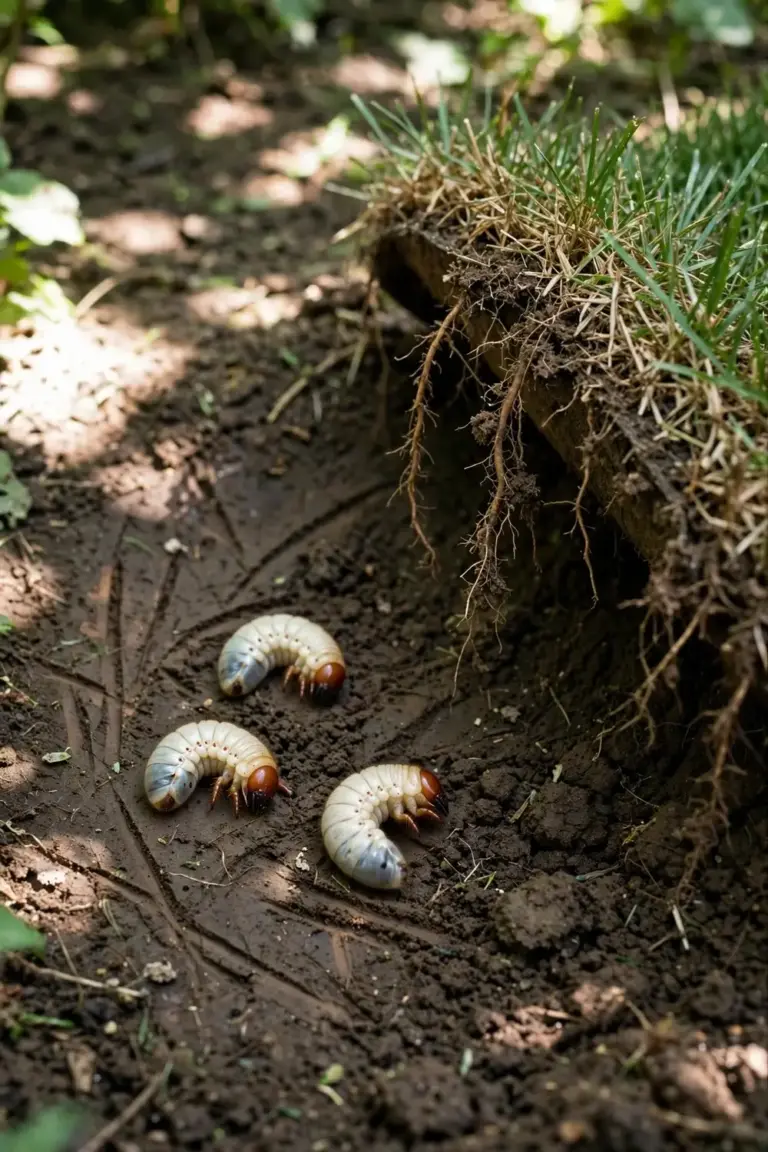
The confirming test is a soapy water flush. Cobbitty Turf describes the grub check in two forms: splash soapy water around the edges of the affected areas, and the grubs surface after 10 minutes, or lay a wet towel or hessian bag over the patch overnight and check it in the morning. The second test is a cut square. Mississippi State University Extension advises cutting several 30 cm square samples of turf 5.1 cm deep, crumbling the soil, and counting the grubs. An average of 3 to 5 grubs per sample means treatment is warranted. Below that count, the lawn usually carries the load without help.
The first fix is confirmation, then a product registered for lawn grubs in your state, applied exactly per the label. Water the soil before and after treatment when the soil is dry, so the product reaches the grubs. Keep children and pets off the lawn until the product dries. Grubs feed near the surface, and a treatment that sits on dry thatch never reaches them. After treatment, leave the lawn alone and let the surviving stolons run back across the patch. Buffalo spreads by above-ground runners, and a grub-thinned patch with living crowns fills in from the edges.
7. Fungal Disease: Rings, Spots, and a Pattern That Spreads
Fungal disease spreads with a pattern, and the pattern is the diagnosis. Brown patch shows as rings or blotches with a sharp margin, often after warm, wet weeks. Bipolaris leaf spot shows as small dark spots on the blades that join into larger dead areas. Both follow wet weather, and both spread outward from a starting point instead of fading evenly across the lawn.
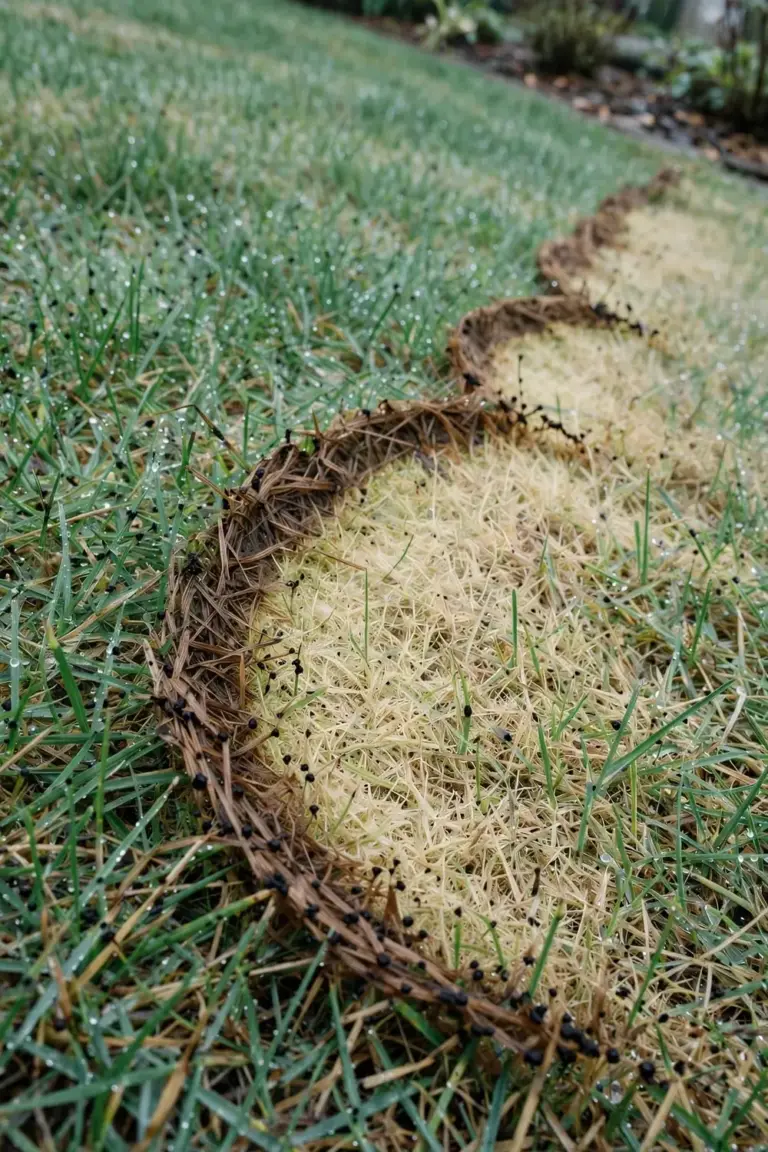
The first fix is to stop feeding the fungus. Hold fertilizer. Hold evening watering, which leaves the blades wet overnight. Mow in the morning so the cut blades dry through the day. Clean the mower deck and the boots after working a diseased patch, because spores travel on both. Then look at the crown. If the crowns are firm and pale, the lawn can grow out of the damage once the weather turns. If the crowns are brown and soft, that ground needs re-turfing.
This article does not carry a disease treatment protocol. Fungal treatment depends on the pathogen, and guessing the pathogen wastes a spray round. The bipolaris crown rot and leaf spot guide carries the identification detail for that disease. A sample taken to a turf diagnostic lab settles the question when the pattern does not match any row in the table above. One more honesty note: a University of Queensland turf-pathology study found mosaic viruses and a novel root-rot fungus behind some buffalo yellowing in farm surveys. Home gardeners cannot identify viruses by eye, and a virus diagnosis belongs to a lab, not to a spray bottle.
8. Herbicide Damage: The Wrong Product on Buffalo
Herbicide damage scorches the whole sprayed area at once, and the timing gives it away. The lawn looks fine on spray day, then yellows or browns evenly across every area the sprayer covered. Edges stay sharp where the spray stopped. A lawn that browns in sprayer-shaped stripes or blocks points at the sprayer, not at drought or disease.
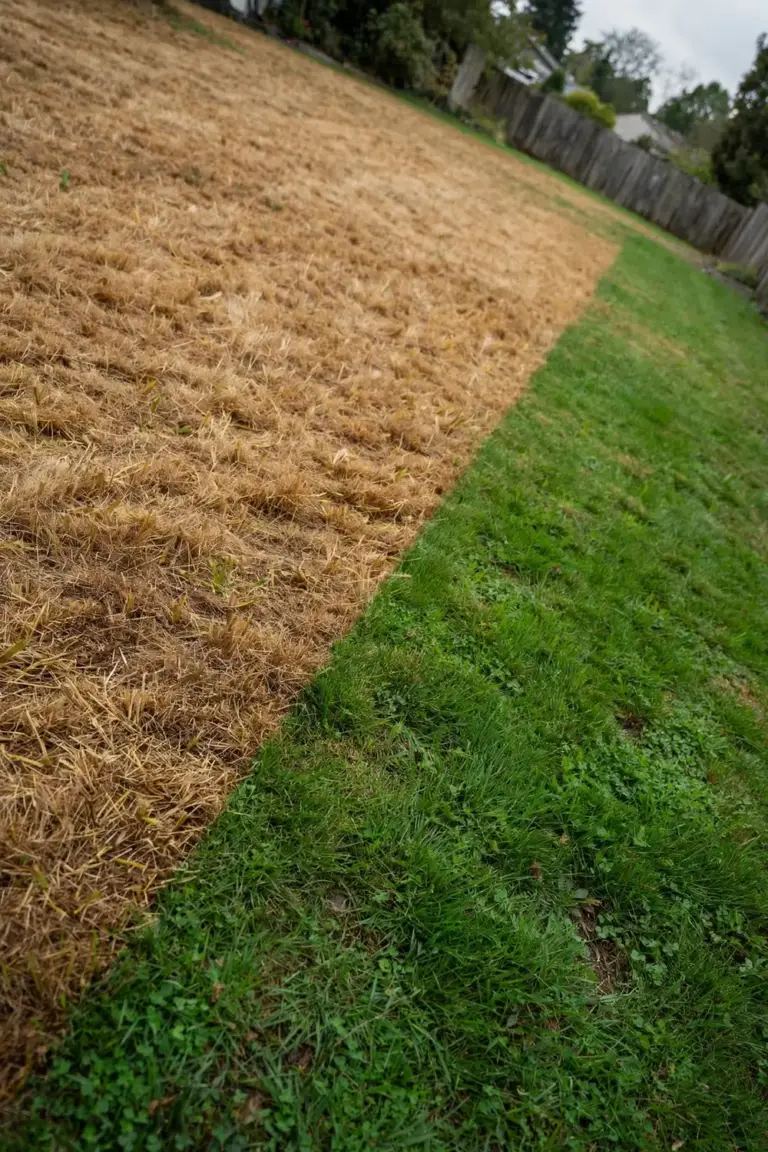
Buffalo is sensitive to herbicides that other lawn grasses tolerate. Its broad leaf blades respond to broadleaf weed sprays the way a broadleaf weed does. BioWeed states the rule plainly: dicamba-based herbicides are not recommended for buffalo and can cause severe damage, while MCPA and bromoxynil blends are generally considered buffalo-safe at correct rates. The label is the authority. If the label says “do not use on buffalo” or never mentions buffalo at all, do not spray it.
The first fix is water, patience, and the label. Read the label for the exact product you applied and note its rate. A light overdose on a tolerant variety often grows out with deep watering and time. A dicamba application on Buffalo can kill the sprayed area outright, and no wash-off fixes that. Australian turf advisers also warn that the ST26, ST85, and ST91 Buffalo varieties react badly even to herbicides registered for use on Buffalo, and they recommend a test spray on a small patch with a check 2 to 3 weeks later before spraying a whole lawn of an unknown variety. If you do not know your variety, test-spray a patch behind the shed first. Keep children and pets off sprayed ground until it dries, and never spray in wind or before rain.
9. Fertilizer Burn: Stripes and Patches That Follow the Spreader
Fertilizer burn follows the spreader, and the stripes are the confession. A double pass leaves a dark stripe that burns. A spill where the spreader sat leaves a dead patch the size of the hopper. A rate above the label leaves a whole lawn that yellows within days of feeding. The damage appears fast, within days, and it lines up with the path the spreader took.
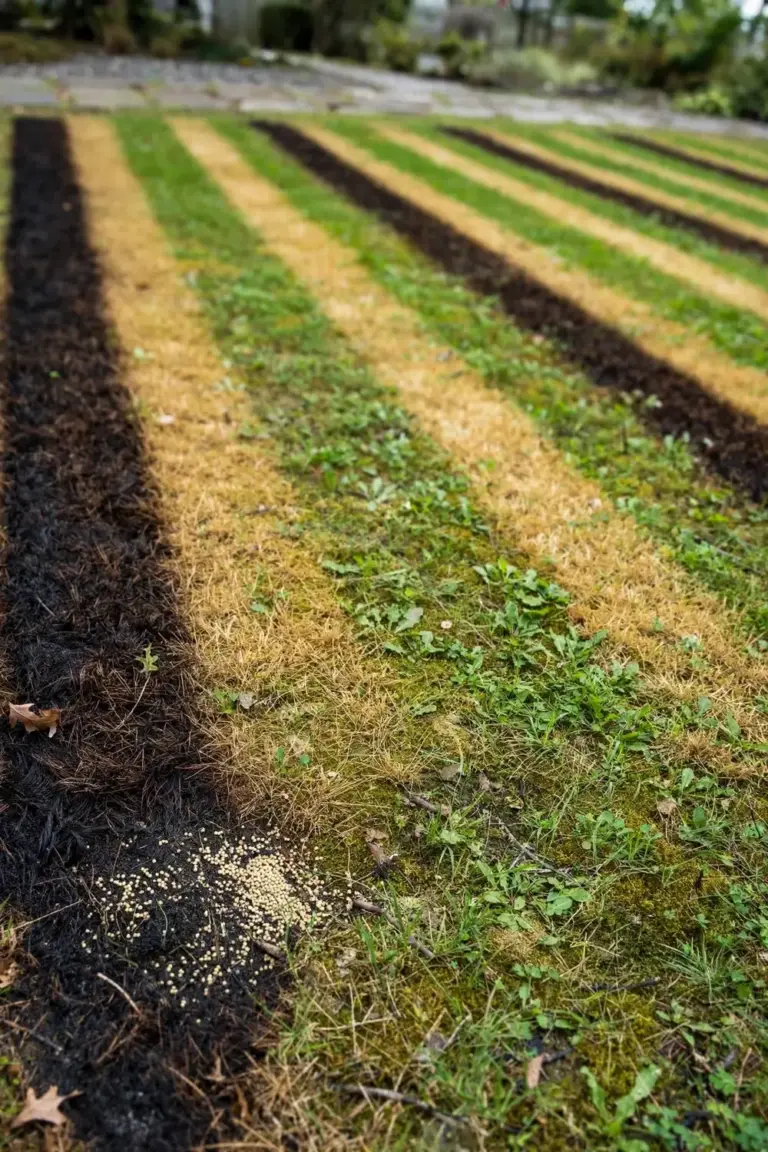
The mechanism is salt. Fertilizer salts pull water out of the leaf blades and the roots, and the grass dries from the outside in even when the soil is moist. Granules that sit on wet blades in hot sun burn the leaf first. Granules washed into the crown zone in one heavy dose burn the roots. The lawn looks drought-stressed, and watering lightly makes it worse, because a light watering dissolves the salts without moving them down.
The first fix is a deep flush, not a second feed. Water the burned area deeply so the salts move below the root zone. University of Maryland Extension guidance for fertilizer salt injury is repeated deep watering that flushes salts down through the soil. Then leave the lawn alone. Do not feed again until new growth shows. Feeding belongs to a schedule built around the season, not to a rescue attempt. A burned lawn that still holds living crowns pushes new runners within weeks. A burned lawn with dead crowns needs re-turfing, and the next feed needs a calibrated spreader and the label rate.
10. Compaction and Thatch: The Lawn That Starves Under Its Own Mat
Compaction and thatch starve Buffalo by blocking water, air, and nutrients from the roots. The lawn thins along the paths people actually walk. Water pools on the surface or runs off during rain instead of soaking in. A screwdriver will not push into moist soil without real effort. Underfoot, the lawn feels spongy where thatch built up, or hard where traffic packed the soil down.
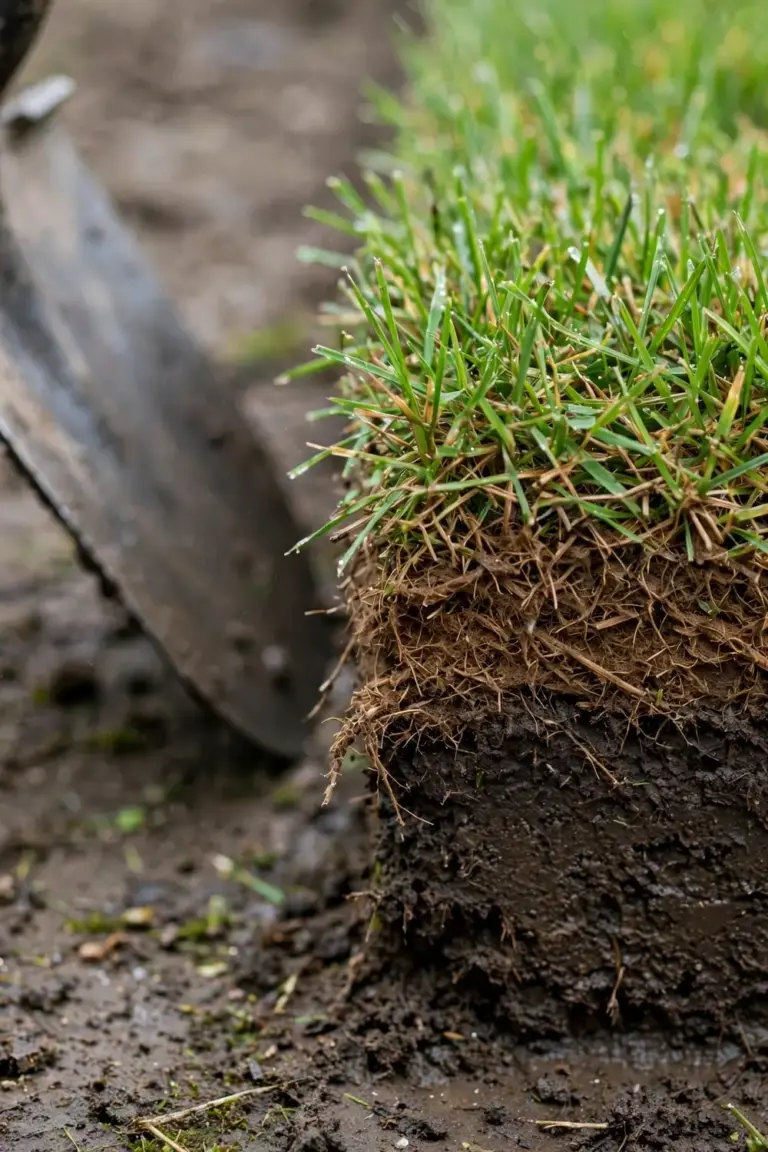
Thatch is the spongy layer of stems and roots between the green leaf and the soil. A thin layer helps. A thick layer holds water at the surface and keeps roots out of the ground. University of Georgia Extension advises keeping the thatch layer below a half-inch thick, about 1.3 cm, and using a power rake as needed to hold that line. The same guide advises aeration with a machine that pulls soil cores 2 to 3 inches deep, about 5.1 to 7.6 cm, and leaving the cores on the surface to dry and crumble. The cores carry soil microbes that break thatch down.
The first fix is measurement, then aeration. Cut a small wedge out of the lawn with a spade and look at the side of it: green leaf on top, brown spongy layer below that, then soil. A brown layer thicker than 1.3 cm means thatch is part of the problem. A screwdriver that stops at 5 cm means compaction is part of it. Aerate when the lawn is growing strongly, in late spring into summer for warm-season turf, so the grass recovers. A dethatch or an aeration done on a dormant lawn opens ground the grass cannot fill.
11. Winter Dormancy Mistaken for Death: Buffalo Rests, It Does Not Die
Winter dormancy looks like death and is not. Buffalo is a warm-season grass. Growth slows as soil temperatures fall, and the lawn loses color through the cold months. The whole lawn dips to a duller green or a straw tone, evenly, with no spreading edge and no pattern. Crowns stay firm. The tug test still resists. That lawn is resting, and it greens up when the soil warms again.
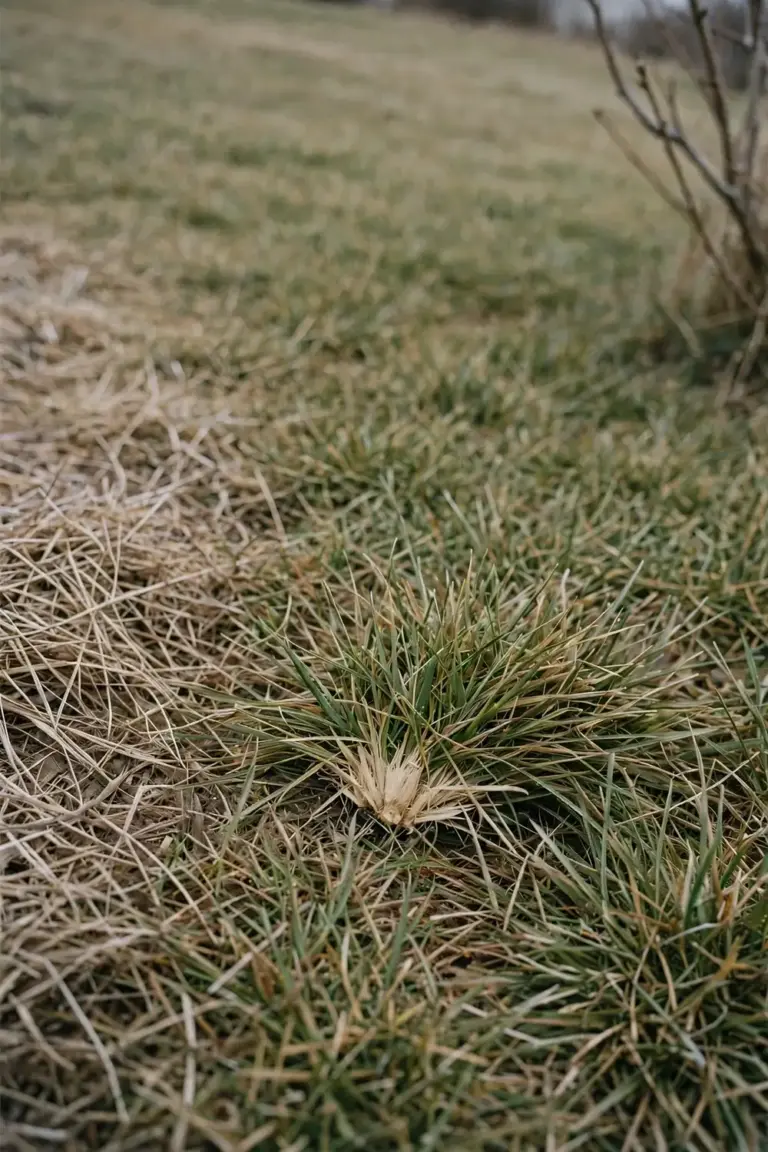
The mistake is treating dormancy as a disease. A winter feed poured onto a resting lawn does nothing the grass can use, and a fungicide sprayed onto dormant grass treats a pathogen that is not there. A renovation dug into a dormant lawn removes grass that would have returned on its own. The cost of the mistake is the work, the product, and the bare ground that stays bare until spring.
The first fix is the tug test and patience. Pull a handful in the middle of the worst area. Firm resistance and a pale crown mean the lawn lives. Wait for soil warmth and regular mowing growth before judging the lawn. One more check separates dormancy from a real problem in winter: a dormant lawn shows no spreading edge, no rings, and no lifting patches. A lawn with any of those three signs has a second cause on top of the season, and the pattern table points at it.
12. When to Call It: Repair the Lawn or Re-Turf the Patch
The re-turf call rests on one count: how much living crown is left. Walk the patch and tug-test 5 spots across it. Living crowns in more than half the spots mean the lawn can repair itself from its own runners, given water, time, and the one fix that matches the cause. Living crowns in fewer than half the spots mean the patch fills slowly or not at all, and re-turfing the dead ground beats a season of waiting.
Repair works when the cause is fixed and the crowns live. Buffalo spreads by above-ground runners, and runners from the living edges creep across a thin patch through the growing season. Water deeply and rarely. Mow high. Hold fertilizer until new growth shows. The patch fills from the edges inward, and the fill speeds up once the runners meet.
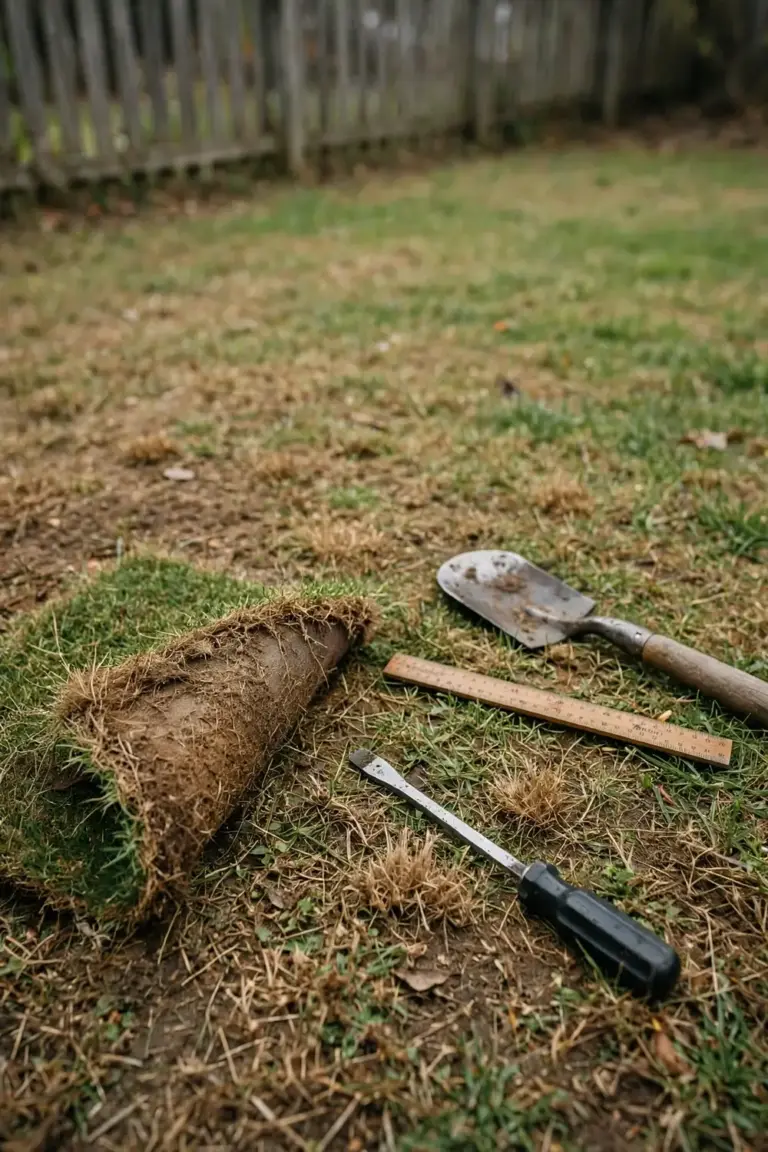
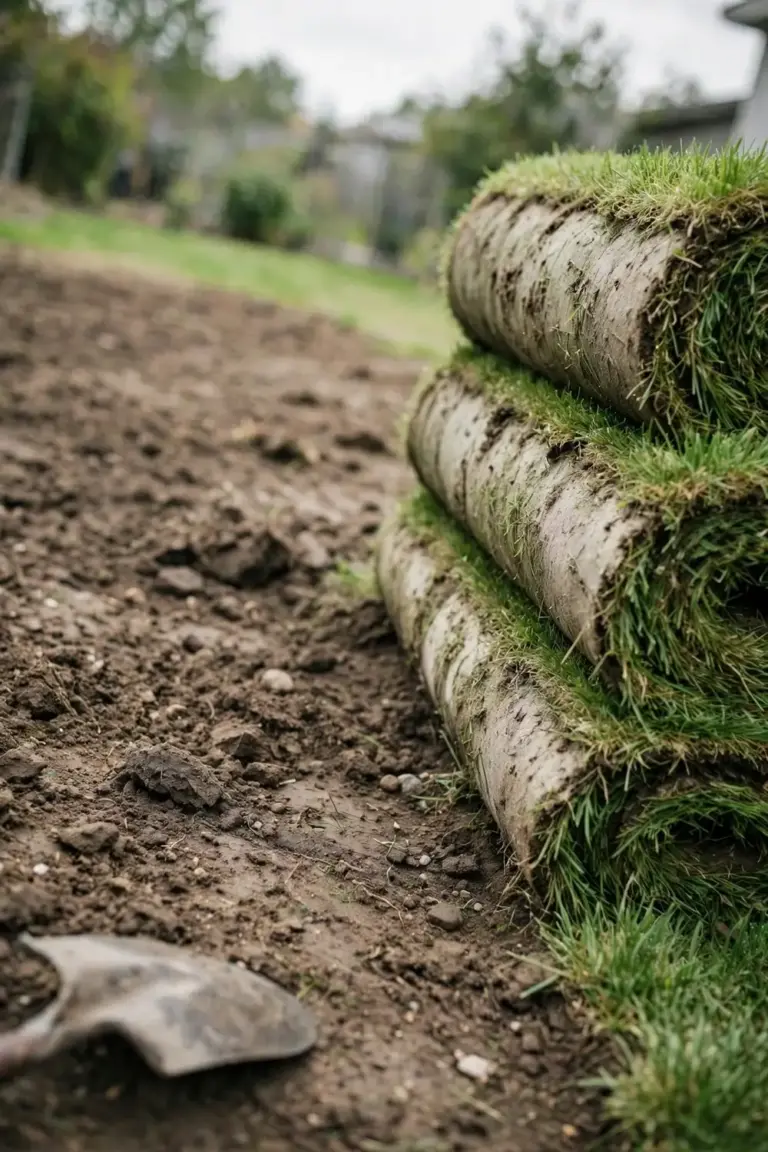
Re-turf when the crowns are dead across the whole area, when herbicide killed the sprayed zone outright, or when the patch sat dead through a full growing season without a single runner. Cut out the dead turf, loosen the soil underneath, check the drainage and the thatch while the ground is open, and lay fresh turf of a known variety. Write the variety name down this time. A lawn of unknown variety is a lawn you cannot spray safely, because the ST varieties and the tolerant varieties react to herbicides in opposite ways. Judge recovery by cover, not by color. Green tips on a thin lawn mean the lawn is alive. Full cover means the lawn is back.
13. Buffalo Lawn Dying FAQ: Your Questions Answered
Pull a handful of grass at the edge of the worst patch. Dormant grass resists the pull because its crowns and roots still grip the soil. Dead grass lifts away with almost no resistance. Then part the blades and check the crown. A firm crown with green or white tissue is alive. A soft crown with brown, mushy tissue is dead. A dormant lawn shows no spreading edge, no rings, and no lifting patches.
A Buffalo lawn with living crowns recovers from most causes once the cause is fixed. Water deeply and rarely, hold fertilizer until new growth shows, and let the runners fill the patch from the edges. A lawn with dead crowns across the whole patch does not recover. Cut out the dead turf and re-turf that ground. Judge recovery by cover, not by color, because green tips on a thin lawn mean the lawn lives.
Buffalo reacts to broadleaf weed sprays the way a broadleaf weed does. Dicamba-based herbicides are not recommended for Buffalo and can cause severe damage, while MCPA and bromoxynil blends are generally considered buffalo-safe at correct rates. Read the label before spraying. If the label says “do not use on buffalo” or never mentions buffalo, do not spray it. Test-spray an unknown variety on a small patch first.
Recovery time depends on how much living crown survived and whether the cause is fixed. A drought-thinned lawn with living crowns pushes new runners within weeks of deep watering. A grub-damaged patch fills from the edges through the growing season. A herbicide-killed zone does not recover at all and needs re-turfing. Patience beats a second product. Fix one cause, then watch for cover.
Do not fertilize a lawn until you know why it is dying. Fertilizer on a waterlogged lawn adds salt stress to water stress. On a dormant lawn it does nothing the grass can use. On a burned lawn it adds more salt to the burn. Diagnose first. Fix the cause, wait for new growth, then feed. A lawn that is growing again is a lawn that can use a feed.
14. Diagnose First, Then Act on One Cause at a Time
A dying Buffalo lawn asks one question, and the tug test answers it. Living crowns earn one fix and patience. Dead crowns earn fresh turf. The pattern table sorts the 9 causes into a single first check, and the first check beats a season of guessing. Fix one cause, watch for cover, and let the runners do the rest.