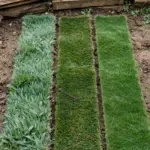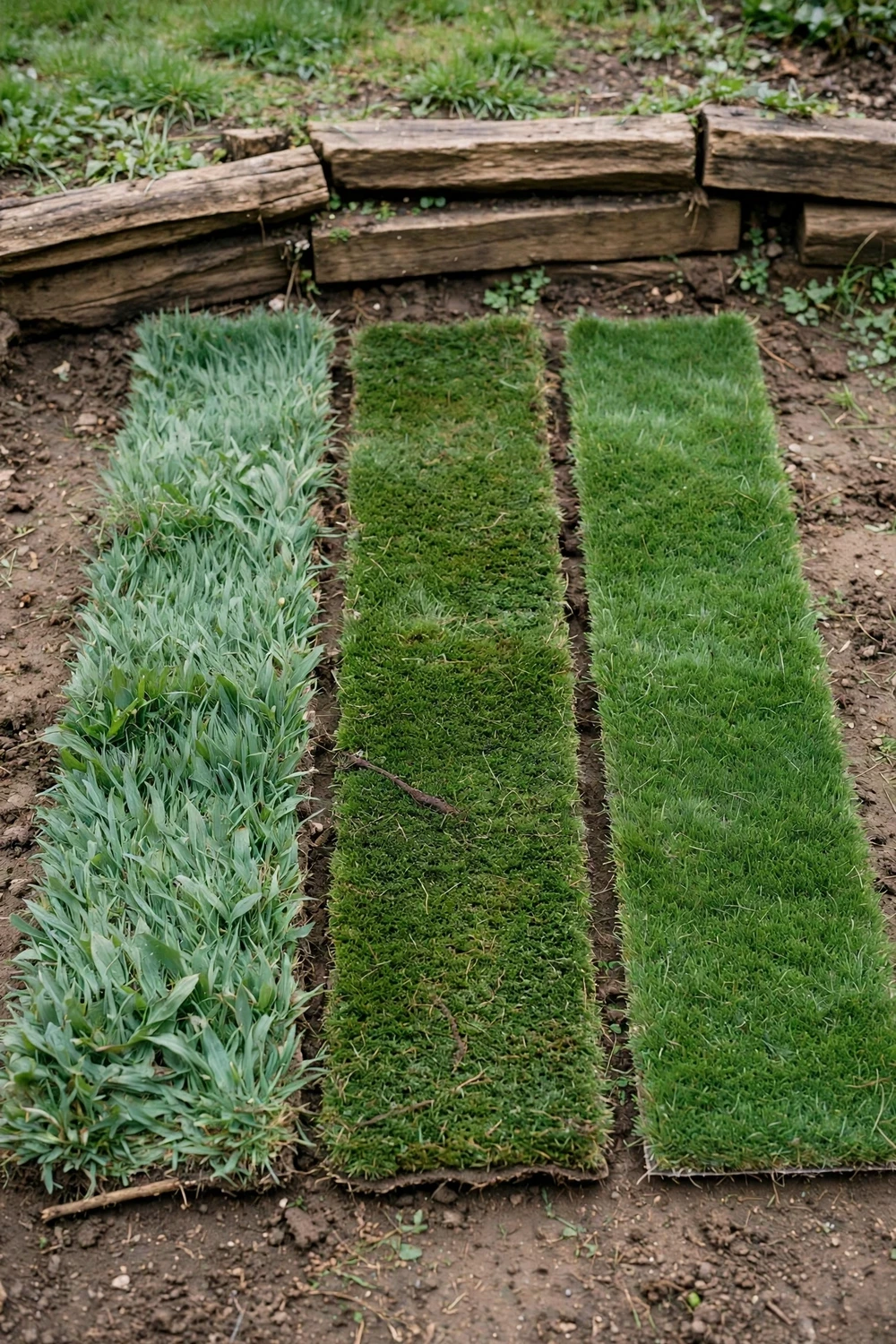

Answer 5 questions about your yard and the grass picks itself. Sun hours, traffic, mowing time, spread tolerance, and budget decide between Kikuyu, Buffalo, and Couch for Australian gardens. That is the whole method behind this kikuyu vs buffalo vs couch decision.
I have learned that a lawn chosen for the yard you have beats a lawn chosen for the yard you wish you had.
The rest of this page walks the 5 questions in order, then gives one short profile per grass, an answer table by yard type, and a tie-breaker. Measure first. Pick second.
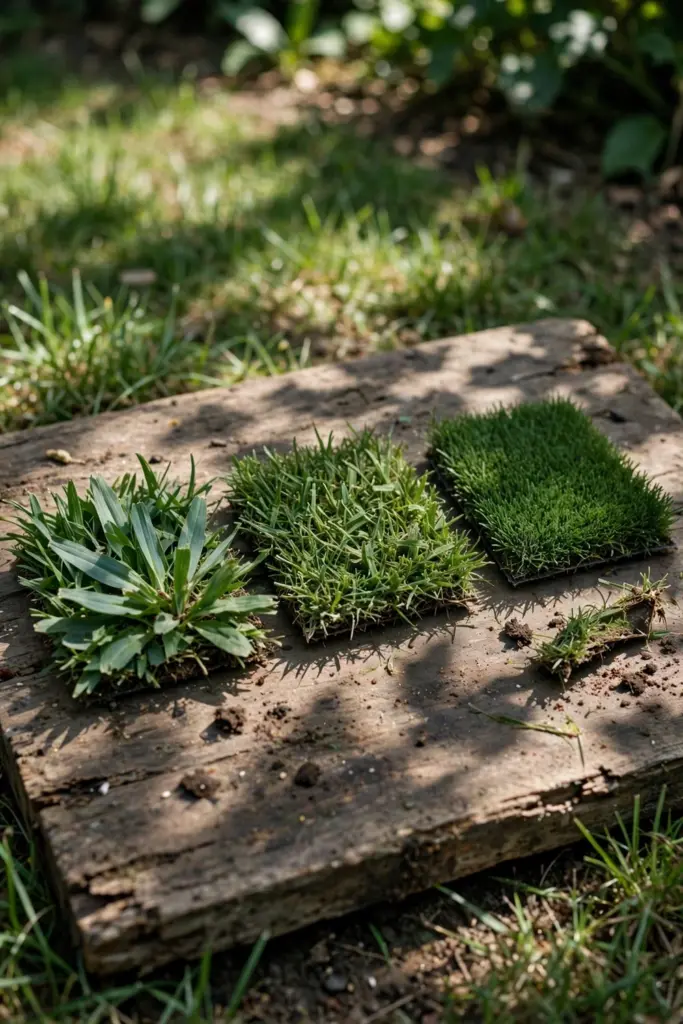
Compare Kikuyu vs Buffalo vs Couch Side by Side
The table below lines up the three grasses on the traits that decide the choice. Read across one row to see where a grass wins. Read down one column to see how the three compare on a single trait.
| Grass | Shade Tolerance | Wear Recovery | Mowing | Invasiveness and Spread | Winter Color | Best For |
|---|---|---|---|---|---|---|
| Buffalo | High, copes with 3 to 4 hours of direct sun | Medium, slow to moderate recovery | Low to moderate | Low in modern varieties | Holds color well in modern varieties | Shade, soft feel, low mowing |
| Kikuyu | Low, needs 6 to 7 hours of direct sun | High, fast recovery | High | High, runs into beds and paths | Holds color well in modern varieties | Kids, dogs, heavy wear, full sun |
| Couch | Low, full sun, TifTuf copes with 4 to 5 hours | High, fast recovery | Medium to high | Medium to high, spreads fast | Varies, TifTuf holds color better than common Couch | Fine finish, front lawns, low traffic |
A Perth comparison rates the same traits in the same direction: Couch and Kikuyu carry high wear resistance and high growth rates, Buffalo carries medium wear and medium growth, and Buffalo carries the lowest maintenance requirement of the three. The table above adds the sun-hour thresholds and the winter-color notes that the comparison alone does not carry.
Use the table as the map. The sections below turn each column into a question you can answer from your own yard.
Measure the Sun in Your Yard First
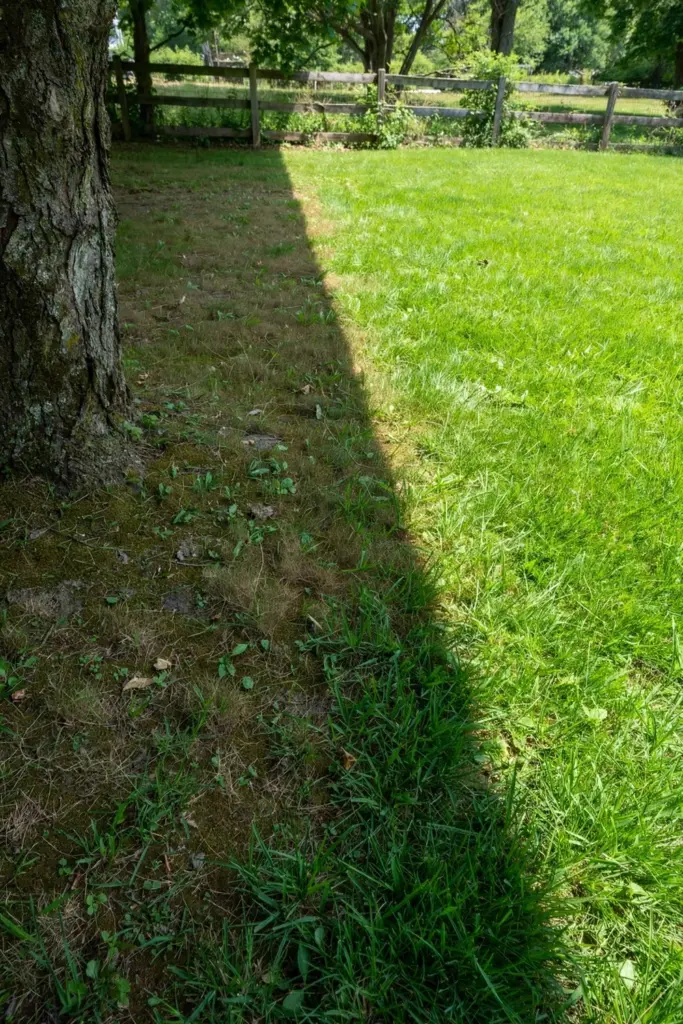
Sun decides more than any other factor. Stand in the yard and count the hours of direct sun that fall on the lawn area, not the hours of bright sky. A spot under a tree canopy that glows all day but never sees direct sun counts as shade.
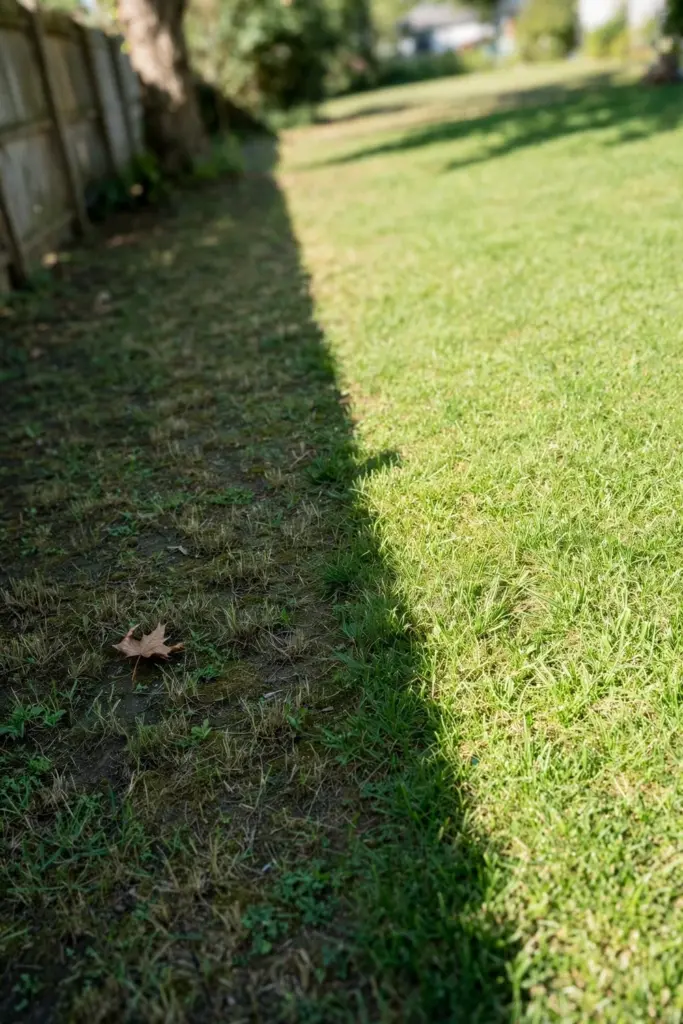
Buffalo copes with as little as 3 to 4 hours of direct sun per day, while Kikuyu needs full sun of at least 6 to 7 hours daily to stay healthy and dense, according to Paul Munns and their Buffalo vs Kikuyu comparison. That gap is the first fork in the decision. A yard under 4 hours of direct sun points to Buffalo. A yard over 6 hours leaves all three grasses open.
Couch sits between the two. Common Couch wants full sun. TifTuf, a hybrid Couch, copes with less light than common Couch and still needs direct sun for part of the day. The Couch section below carries its exact threshold.
Cultivar choice moves the Buffalo line further into shade. Sapphire Buffalo carries the deepest shade tolerance of the Buffalo cultivars, and OzBreed rates it number one in independent industry shade trials. OzBreed’s spec guide rates the two named Buffalo cultivars this way:
| Buffalo Cultivar | Shade Tolerance |
|---|---|
| Palmetto | 60 percent shade |
| Sapphire | 70 percent shade |
Ask the turf supplier for the cultivar by name. The grass family alone does not tell you the shade limit.
How to Count Sun Hours Without a Meter
Walk the lawn area once in the morning, once at midday, and once in the afternoon. Mark each patch that sits in direct sun at each check. A patch sunny at two of three checks gets roughly two thirds of the daylight hours. A patch sunny at one check gets roughly one third. Add the patches to get the yard total.
Check again in a different season if the decision can wait. A yard that reads 6 hours in summer can read 3 hours in winter when the sun sits lower and the neighbor’s roof throws a longer shadow. The winter reading is the one that matters, because the grass lives through winter too.
Match the Grass to the Wear Your Yard Gets
Traffic is the second fork. Kids, dogs, and ball games punish a lawn every week. A display front lawn sees feet twice a month. The two yards need different grasses.
Kikuyu recovers fastest from wear. Its runners spread above and below ground, and a worn patch fills in weeks after the traffic eases. That recovery is the reason Kikuyu wins yards with dogs and kids. The same vigor that repairs the lawn also invades the garden beds, which the spread section covers.
Couch recovers fast too. Its rhizomes and stolons knit worn patches closed, and hybrid Couch varieties such as TifTuf were bred for sports fields. A Couch lawn under heavy traffic needs mowing and feeding to keep its density, but it takes the punishment and comes back.
Buffalo recovers slowest of the three. Its stolons spread above ground only, and a worn patch fills in over months rather than weeks. Buffalo suits yards where looks matter more than toughness. A Buffalo lawn under daily dog traffic thins at the gate, along the fence line, and at the back door. Those thin spots stay thin until the traffic eases.
A Wear Test You Can Run Before You Buy
Walk the yard and mark the three spots that take the most feet: the gate path, the clothesline run, and the spot where the dog waits at the fence. If those three spots cover more than a quarter of the lawn area, treat the yard as high wear. Kikuyu or Couch fits a high-wear yard. Buffalo fits a yard where the wear spots stay small.
Count the Mowing and Edging Hours You Will Actually Spend
Mowing time is the cost that never stops. Turf price is paid once. Mowing is paid every week for the life of the lawn. Be honest about the hours you will spend.
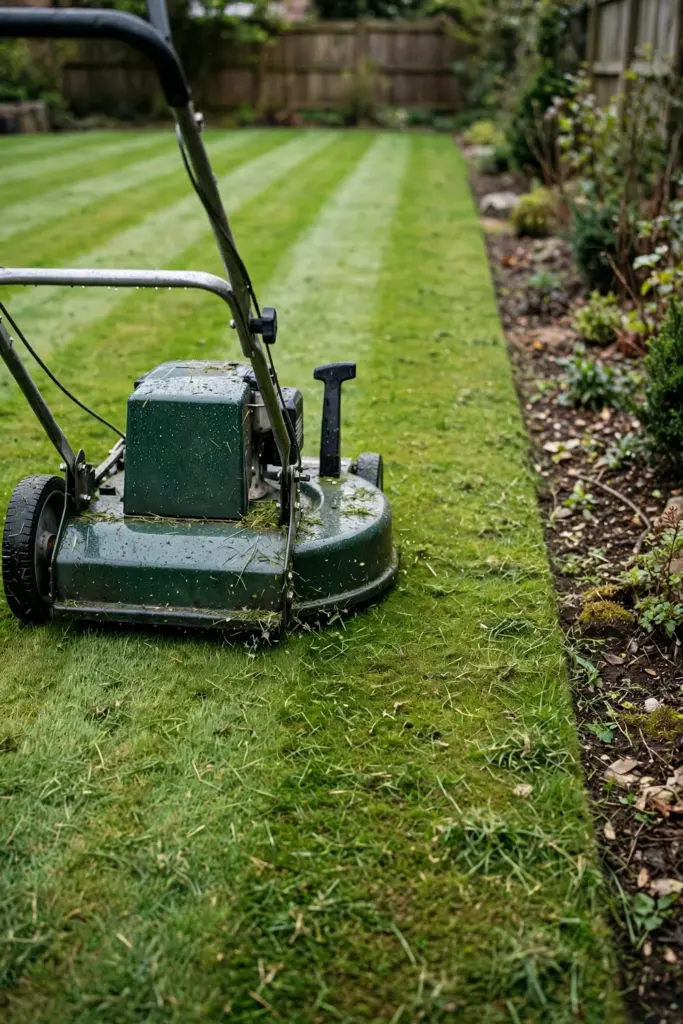
Buffalo needs the least mowing of the three. It grows slowly and holds its height. A Buffalo lawn mowed every 10 to 14 days in the growing season stays tidy, and these mowing tips for a pristine lawn cover the blade height and pattern that keep the cut clean. That low mowing load is the main reason Buffalo suits owners who want a lawn without a weekly chore.
Kikuyu needs the most mowing. It grows fast in warm weather and needs a cut every 5 to 7 days in summer to stay dense. Skip two weeks and the lawn turns shaggy, then scalps when you finally cut it back. Kikuyu also needs edging. Its runners run across paths and into beds, and the edging job never ends.
Couch sits in the middle. It needs regular mowing to stay dense, and it needs edging where it meets paths and beds. Hybrid Couch varieties need less feeding than common Couch, but they still need the mower. A Couch lawn left unmowed for three weeks goes thin at the base and patchy at the edges.
Feeding Follows Mowing
A fast-growing grass eats more. Kikuyu and Couch need feeding through the growing season to hold density. Buffalo needs less feeding than either. The feeding bill tracks the mowing bill. A grass that grows fast costs time at the mower and money at the fertilizer bag.
Decide How Much Spread You Will Tolerate
Every one of these grasses spreads. The question is how far, and where you draw the line. Kikuyu spreads furthest and fastest. Buffalo spreads slowest. Couch sits between them, and Couch spreads faster than Buffalo when the two grow side by side.
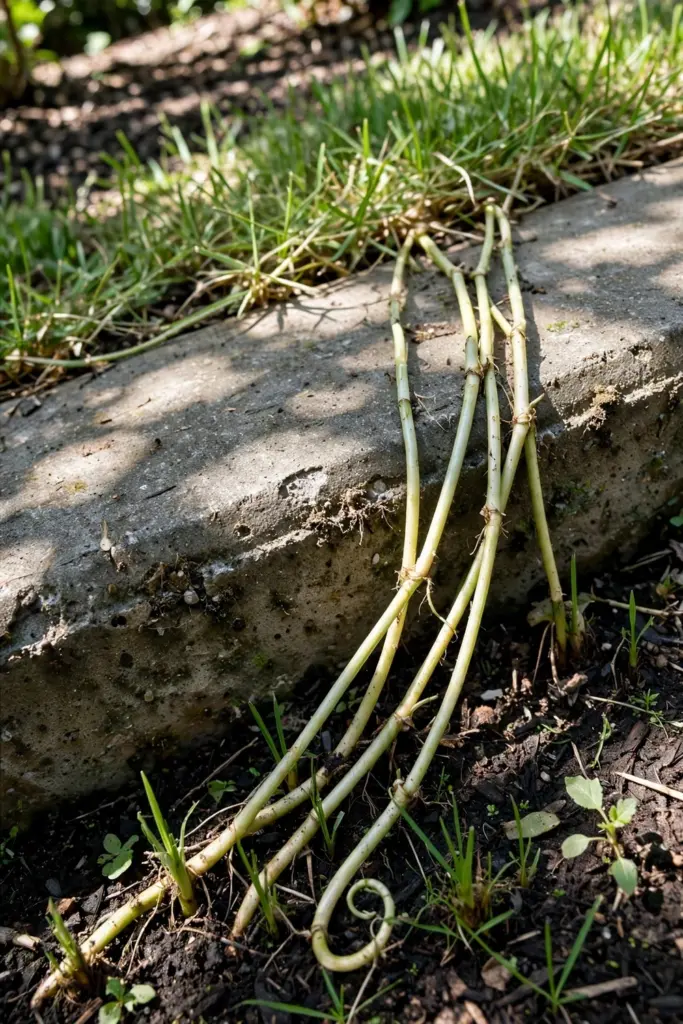
Kikuyu runners cross a concrete path in a season. They dive under a timber edge and surface in the vegetable bed. A Kikuyu lawn needs a solid edge: steel, concrete, or a deep spade-cut trench renewed every month in summer. A brick edge laid flat will not hold Kikuyu. A mulch border between the lawn and the beds slows runners and shows where they cross, but mulch alone never stops Kikuyu.
Couch runners also cross edges, but they move slower than Kikuyu and they stop at a clean spade cut for longer. A Couch lawn needs edging too, and the job is smaller than Kikuyu’s. Buffalo runners move slowest of all, and a simple mowing strip holds most Buffalo lawns.
Never Mix Two Grasses in One Lawn
Plant one grass per lawn area. Couch spreads faster than Buffalo, so a mixed Couch and Buffalo lawn turns into a Couch lawn with Buffalo patches, and the two textures and colors sit side by side in patches. Kikuyu invades a Buffalo lawn the same way. The result reads as a mistake, not a blend.
If an existing lawn already holds two grasses, pick one and remove the other. Hand-pull the invader where it is thin. Spot-treat where it is thick, following the label on the product. Buffalo has limited herbicide options, so check the label before spraying anything near a Buffalo lawn. Couch and Kikuyu accept a wider set of herbicide actives.
Set the Budget Before You Buy Turf
Buffalo costs more upfront than the other two. Couch and Kikuyu tend to carry similar prices, while Buffalo is typically 30 to 40 percent higher in price, according to the Crafted Gardens comparison of Couch, Kikuyu, and Buffalo. That gap buys shade tolerance, a soft leaf, and less mowing. It does not buy faster repair.
Kikuyu is the cheapest grass to establish. Its seed and turf cost less than Buffalo, and it covers bare ground fast. The saving shows up in year one. The mowing and edging bill shows up every year after.
Couch sits near Kikuyu on upfront cost. Hybrid Couch varieties such as TifTuf cost more than common Couch, and they earn that premium in wear tolerance and drought tolerance. Common Couch costs less and needs more water and feeding to hold its finish.
Count the Whole Bill
Turf price is one line. Add soil preparation, delivery, and the first season of feeding and watering. A cheap grass over poor soil costs more in repairs than a dear grass over good soil. Prepare the soil before the turf arrives, and building soil health first gives the new turf roots something to grow into. A level, weed-free base with organic matter worked through it decides the lawn more than the cultivar name on the delivery docket.
Match the Grass to Your Climate Zone
Australia runs from tropical north to cool south, and the three grasses respond differently to that range. A grass that thrives in Brisbane can sulk in Hobart.
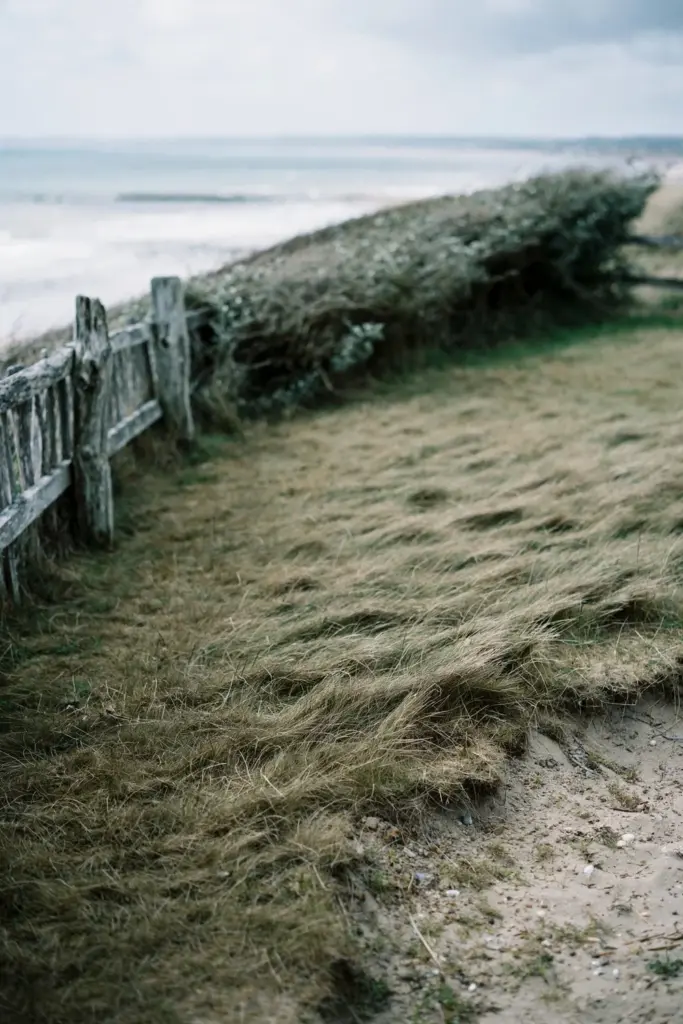
The north favors Kikuyu and Couch in full sun. Both grow hard through a long warm season and recover fast from summer storms and traffic. Buffalo suits shady tropical yards where trees cut the sun. Buffalo holds its color through a mild northern winter without a dormant phase.
The south favors Buffalo for winter color. Buffalo holds its green through cool winters better than Couch, and better than Kikuyu in many southern yards. Couch can go dormant and lose color in a cold southern winter. Kikuyu slows hard in a cold winter and greens up late in spring.
Coastal yards suit all three, with one edge to Buffalo. Salt air and sandy soil stress Couch hardest. Buffalo copes with salt better than Couch, and Kikuyu copes with sandy soil well. A coastal yard with shade points to Buffalo. A coastal yard in full sun leaves all three open.
Dry inland yards suit Couch and Kikuyu with watering. Both carry high drought tolerance and recover when water returns. Buffalo carries medium drought tolerance, so it needs watering sooner in a dry spell, and no grass in this comparison survives a dry inland summer without water at all. Plan the watering before the grass goes down, and check the spring lawn care tips guide for the seasonal watering rhythm once the lawn is in.
Choose Buffalo When Shade and Softness Win
Buffalo wins the yard with trees, fences, and a south-facing aspect. Its broad, soft leaf feels good under bare feet, and its shade tolerance is the best of the three. Buffalo suits family yards where the lawn is a place to sit, not a field to play on.
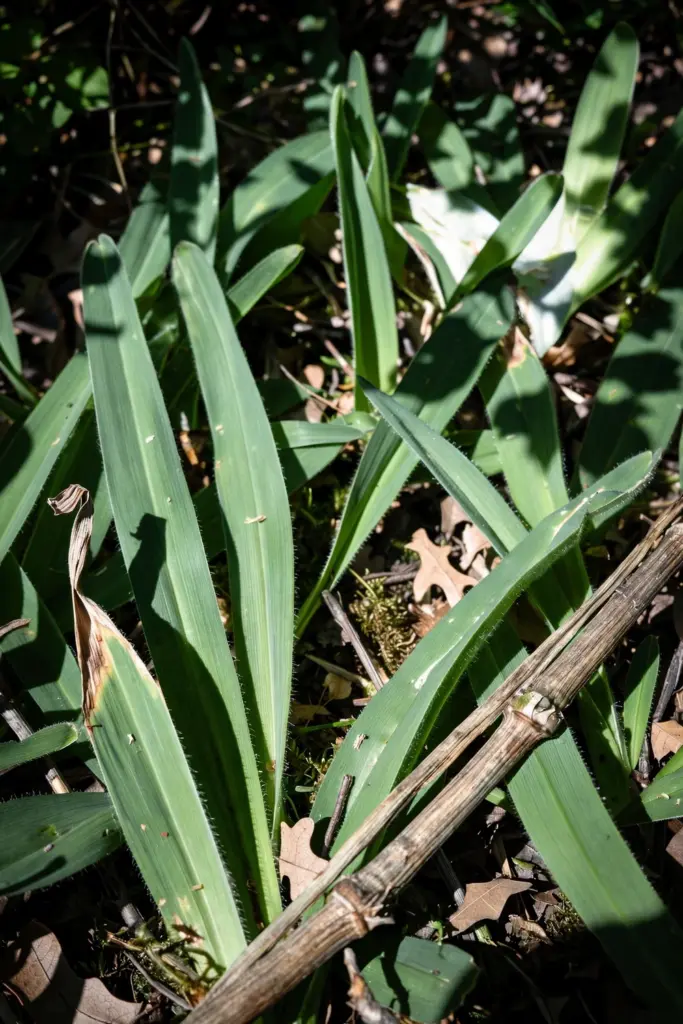
Buffalo’s weakness is repair speed. A worn patch fills slowly. A scalped patch shows for weeks. A Buffalo lawn needs a higher mowing height than Couch, and it needs protection from heavy traffic. Keep the mower high, keep the feet off a wet lawn, and the lawn holds its cover.
Cultivar picks matter more in Buffalo than in the other two grasses. Sir Walter is the all-rounder and the most common Buffalo in Australian yards. Sapphire is the shade champion, with the deepest shade tolerance of the Buffalo cultivars, while Palmetto is the lowest-maintenance Buffalo, with strong winter color and deep shade tolerance. Ask the supplier for one of these three by name, and check the delivery docket on arrival: the cultivar name should be printed there, because unnamed Buffalo turf can be an older, coarser variety with weaker shade tolerance than the named three.
Buffalo has one hard rule. Check every herbicide label before spraying. Some common broadleaf actives damage Buffalo, and the damage shows as bleached, stunted patches. The herbicide section in the Couch weeds guide covers this in full, but the rule here is simple: read the label, confirm the active suits Buffalo, and test a small patch first.
Choose Kikuyu When Wear and Speed Win
Kikuyu wins the yard with dogs, kids, and daily ball games. Its runners repair worn patches faster than any other grass in this comparison, and it takes traffic that would thin Buffalo in a month. Kikuyu suits backyards that get used hard every day.
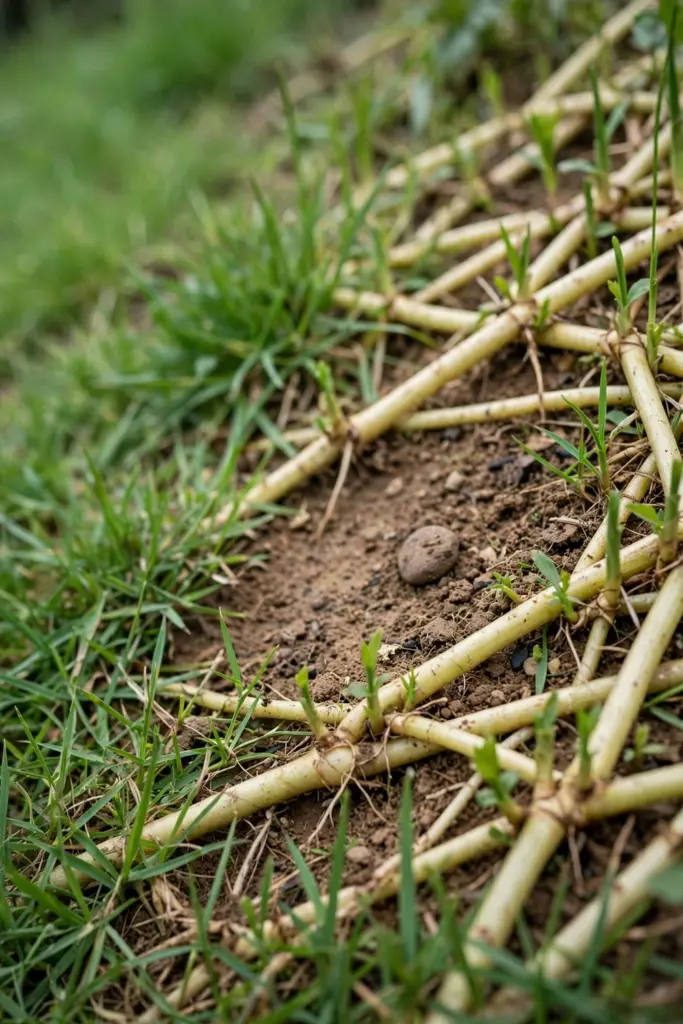
Kikuyu’s weakness is its vigor. The same growth that repairs the lawn invades the beds, the paths, and the neighbor’s lawn. Kikuyu needs edging every month in summer and mowing every week. An owner who skips both jobs ends up with a Kikuyu lawn that owns the whole yard.
Cultivar picks exist in Kikuyu too. Eureka is the common Kikuyu in Australian yards. Kenda carries four times more underground growth than regular Kikuyu, according to OzBreed’s spec guide, and it keeps growing further into winter. Whittet is a steady all-rounder for cooler southern yards. Fine Leaf Kikuyu carries a finer leaf than common Kikuyu and suits owners who want a tidier look without switching to Couch.
Kikuyu needs full sun. A Kikuyu lawn under a tree thins, then opens up to weeds. A Kikuyu lawn in a shaded yard is the most common Kikuyu failure. If the yard reads under 6 hours of direct sun, Kikuyu is the wrong grass no matter how much wear the yard takes.
Choose Couch When a Fine Finish Wins
Couch wins the yard where the lawn is the view. Its fine leaf cuts clean, stripes well, and reads as a manicured surface. Couch suits front lawns, courtyard lawns, and owners who enjoy mowing.
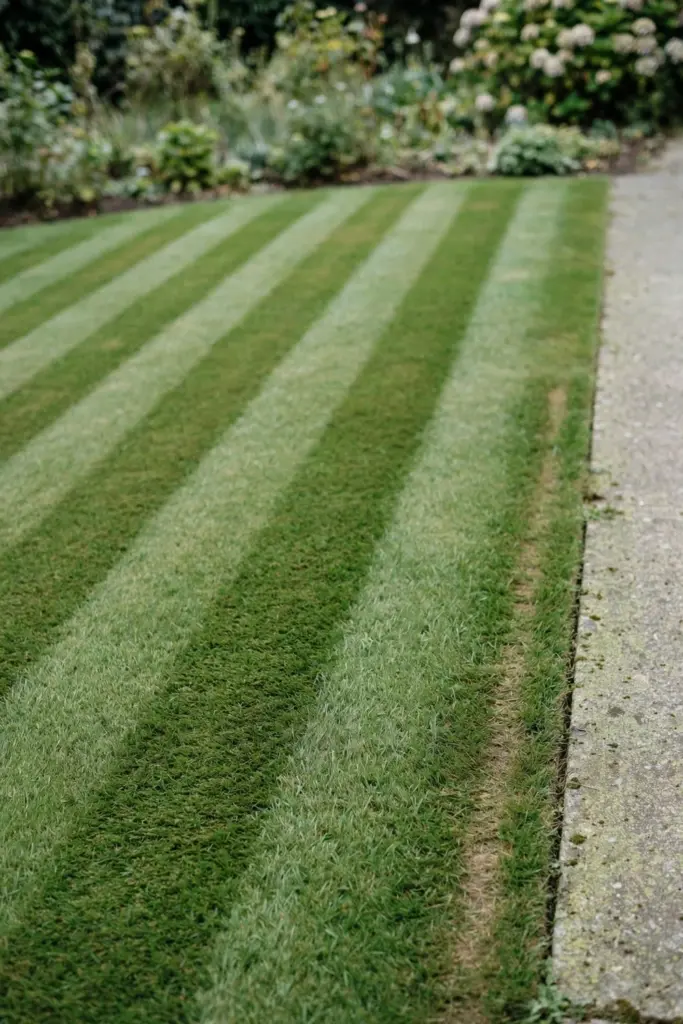
Couch’s weakness is shade and neglect. Common Couch thins in shade and thins when left unmowed. A Couch lawn needs sun, mowing, and feeding to hold its density. A Couch lawn that gets none of the three turns patchy within a season.
Cultivar picks change the Couch equation. TifTuf is the standout hybrid Couch. It needs a minimum of 4 to 5 hours of direct sunlight per day, and it mows between 8 and 36 mm, according to the Lawn Solutions Australia technical data sheet for TifTuf. TifTuf carries very high wear tolerance and very high drought tolerance, and it holds its color longer into winter than common Couch. Queensland Blue Couch, Wintergreen, and Stadium Couch are the other named Couch varieties to ask a supplier about.
Couch accepts a wider set of herbicide actives than Buffalo. That wider set makes weed control simpler in a Couch lawn. Read the label anyway. The active that suits Couch can still damage garden plants if it drifts onto beds.
Let Your Yard Type Pick the Grass
The table below turns the five questions into a direct answer. Find the yard that looks like yours. Read across to the grass.
| Your Yard | Pick This Grass | Why It Wins There |
|---|---|---|
| Deep shade under trees, low traffic | Buffalo, Sapphire cultivar | Deepest shade tolerance of the three |
| Full sun, kids and dogs daily | Kikuyu, Kenda cultivar | Fastest repair from wear |
| Full sun, sports and heavy traffic | Couch, TifTuf cultivar | Very high wear tolerance, fine finish |
| Front lawn, show finish, low traffic | Couch, TifTuf or Wintergreen | Fine leaf, clean cut, stripes well |
| Full sun, little mowing time | Buffalo, Palmetto cultivar | Slowest growth, least mowing |
| Small yard, hate edging | Buffalo, any named cultivar | Slowest spread, simplest edge |
| Coastal, salt air, some shade | Buffalo, Palmetto cultivar | Best salt coping of the three |
| Cool southern winter, want winter color | Buffalo, Palmetto or Sir Walter | Holds color through cool winters |
| Hot inland, full sun, watering planned | Kikuyu or Couch | High drought tolerance, fast recovery |
If two rows fit your yard, the tie-breaker is mowing time. Pick Buffalo when mowing time is short. Pick Kikuyu or Couch when mowing time is generous and wear is high. The grass that fits the hours you will actually spend beats the grass that fits the yard on paper.
Break a Tie With a Trial Patch
Two grasses can look equal on paper. A trial patch settles the tie. Lay one square meter of each grass in the yard, side by side, in the spot where the lawn will grow. Water both the same. Mow both at the height each grass prefers.
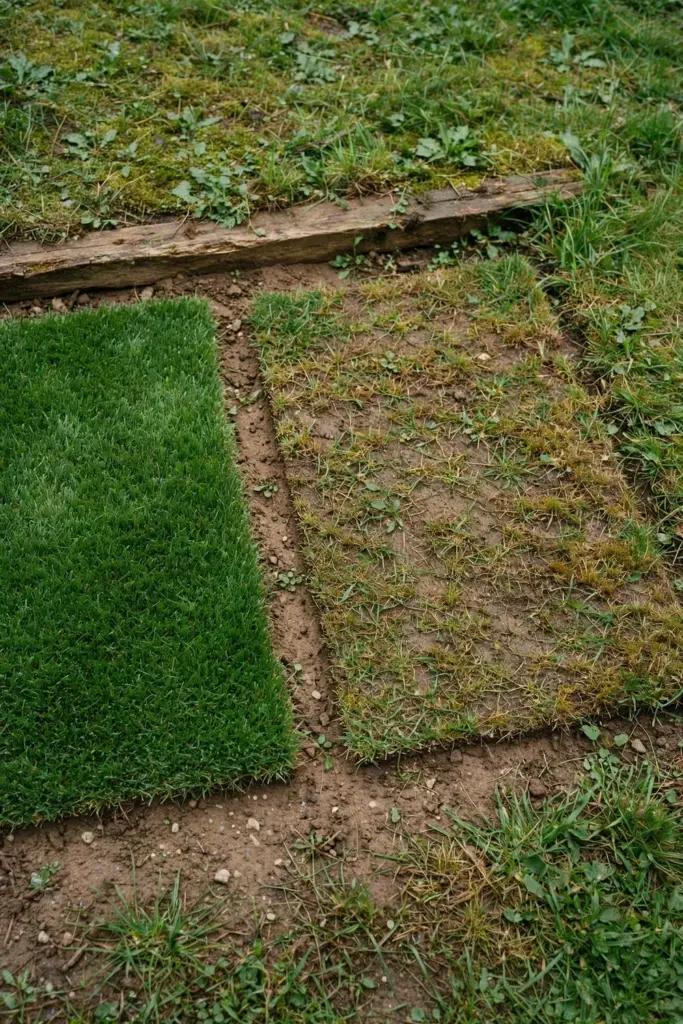
Watch the patches for one full season. The winner shows denser cover, fewer weeds, and better color through the hardest month. The loser thins, fades, or invites weeds. One season of watching beats ten seasons of regretting the wrong grass, and the patch test costs less than a single bag of fertilizer.
A trial patch also settles the mowing question. Mow each patch at the height its grass prefers for a month. The patch that stays tidy on your real schedule is the grass that fits your life. The patch that turns shaggy between cuts tells you the mowing load before you commit the whole yard.
Keep Zoysia Out of This Three-Way Choice
Zoysia exists, and it is a good grass. It needs far less mowing than any grass in this comparison. Empire Zoysia needs 2 to 3 times less mowing than an average lawn, according to OzBreed and their low-maintenance turf varieties guide. Zoysia copes with filtered light and salt air, and it resists grubs better than the three grasses above.
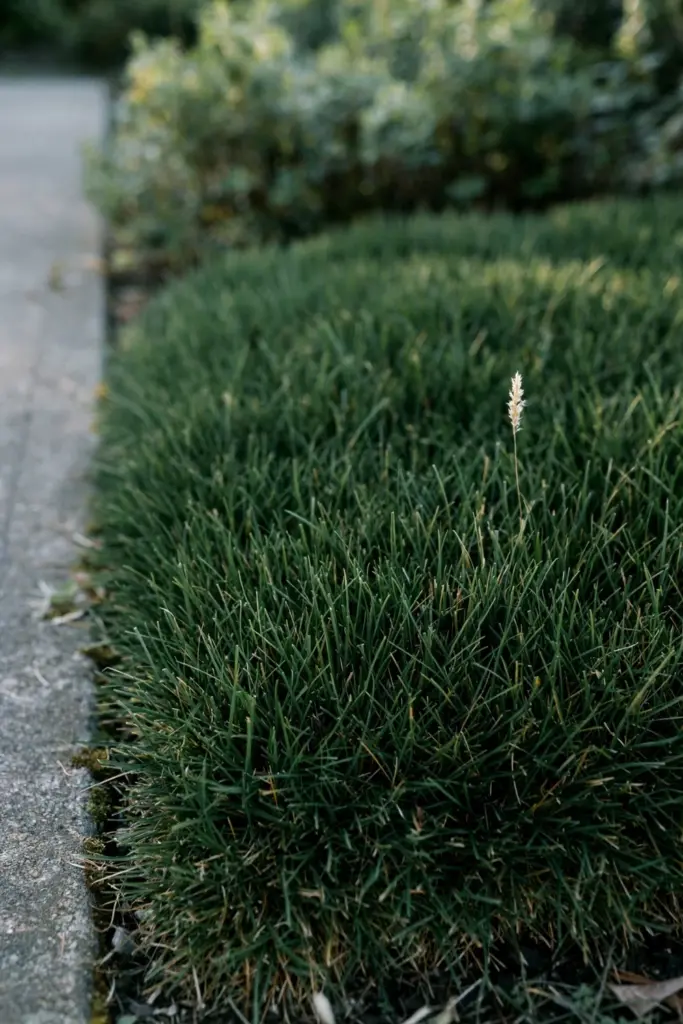
Zoysia stays out of this comparison for one reason. The choice in front of you is Kikuyu, Buffalo, or Couch. Zoysia is a fourth grass with its own trade-offs, and folding it into this decision would turn a clear three-way choice into a muddle. A lawn that needs the lowest mowing of all, copes with filtered light, and tolerates salt points toward Zoysia. That lawn is a different decision, and it deserves its own comparison.
Frequently Asked Questions
Kikuyu wins a yard with dogs. Its runners repair worn patches fastest, and it takes daily traffic without thinning. TifTuf Couch is the second pick for a dog yard. Buffalo thins under daily dog traffic and stays thin until the traffic eases.
Buffalo needs the least mowing. It grows slowly and holds its height for 10 to 14 days between cuts in the growing season. Kikuyu needs a weekly cut in summer. Couch needs regular mowing to stay dense, though hybrid Couch varieties need less feeding than common Couch.
Do not mix them. Couch spreads faster than Buffalo and overtakes it, leaving patches of two textures and two colors side by side. Plant one grass per lawn area. If a lawn already holds two grasses, pick one and remove the other.
Buffalo is the best grass for shade. It copes with as little as 3 to 4 hours of direct sun per day. Sapphire is the deepest-shade Buffalo cultivar. Kikuyu needs 6 to 7 hours of direct sun. Common Couch wants full sun, though TifTuf copes with 4 to 5 hours.
Buffalo costs more upfront than Couch or Kikuyu. The premium buys shade tolerance, a soft leaf, and less mowing. The premium does not buy faster repair. Pay it when the yard is shady or mowing time is short. Skip it when the yard is sunny and wear is heavy.
Measure Your Yard, Then Pick One Grass
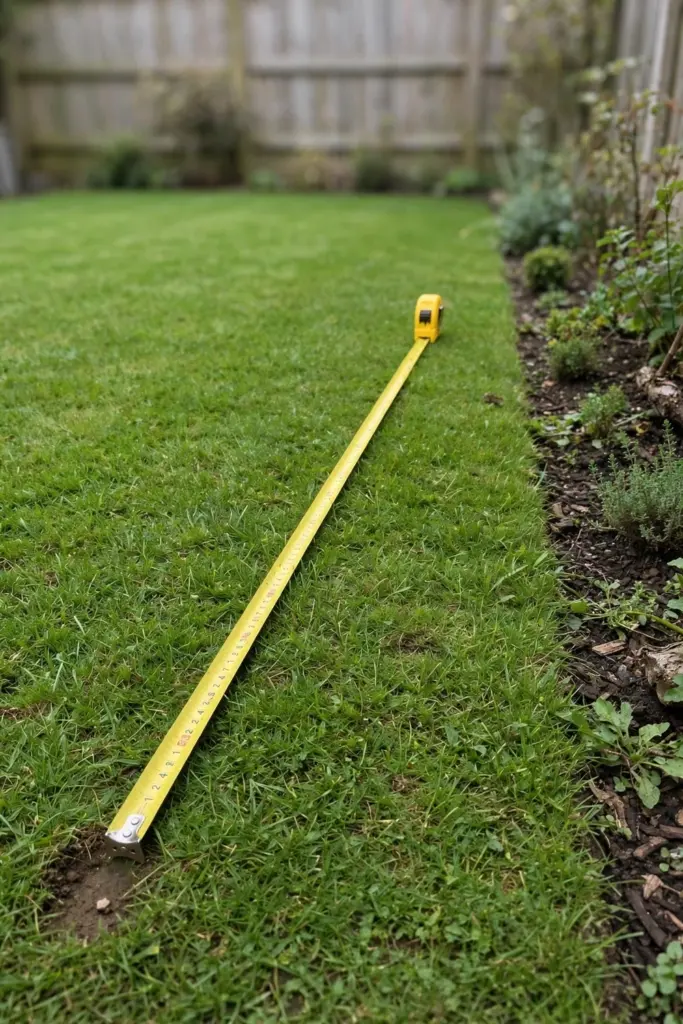
Walk the yard with a notebook. Write down the sun hours, the wear spots, the mowing hours you will spend, and the budget. Match those four numbers to the tables above. The answer will show itself.
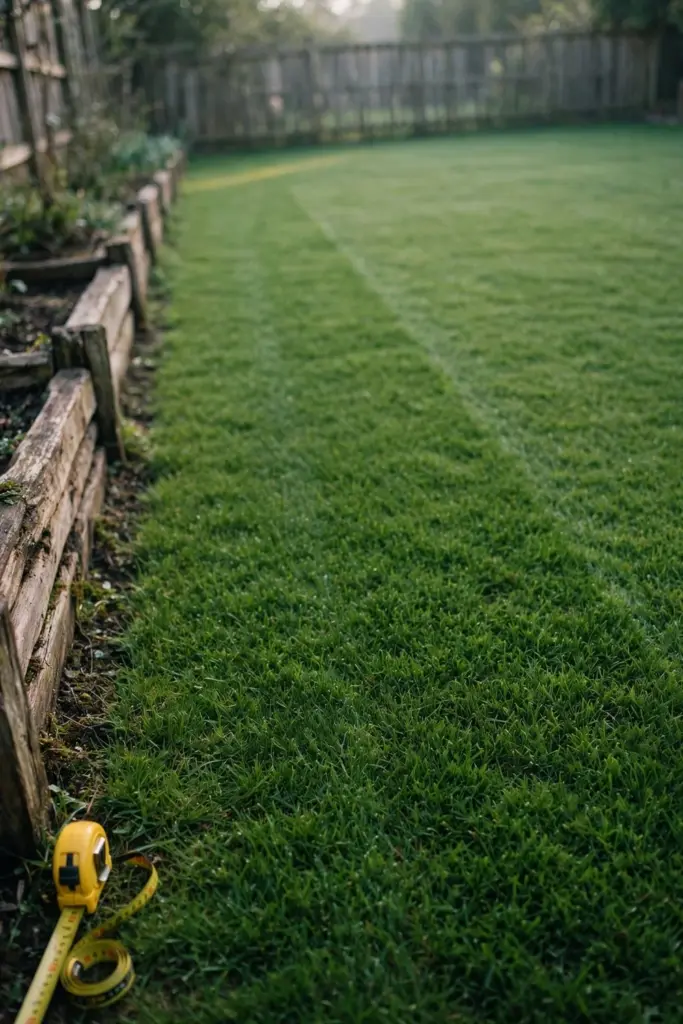
Pick one grass. Lay one grass. Edge it, mow it at its own height, and give it a season. Start with the sun count. A lawn chosen for the yard you have will outlast a lawn chosen for the grass you liked in the brochure.