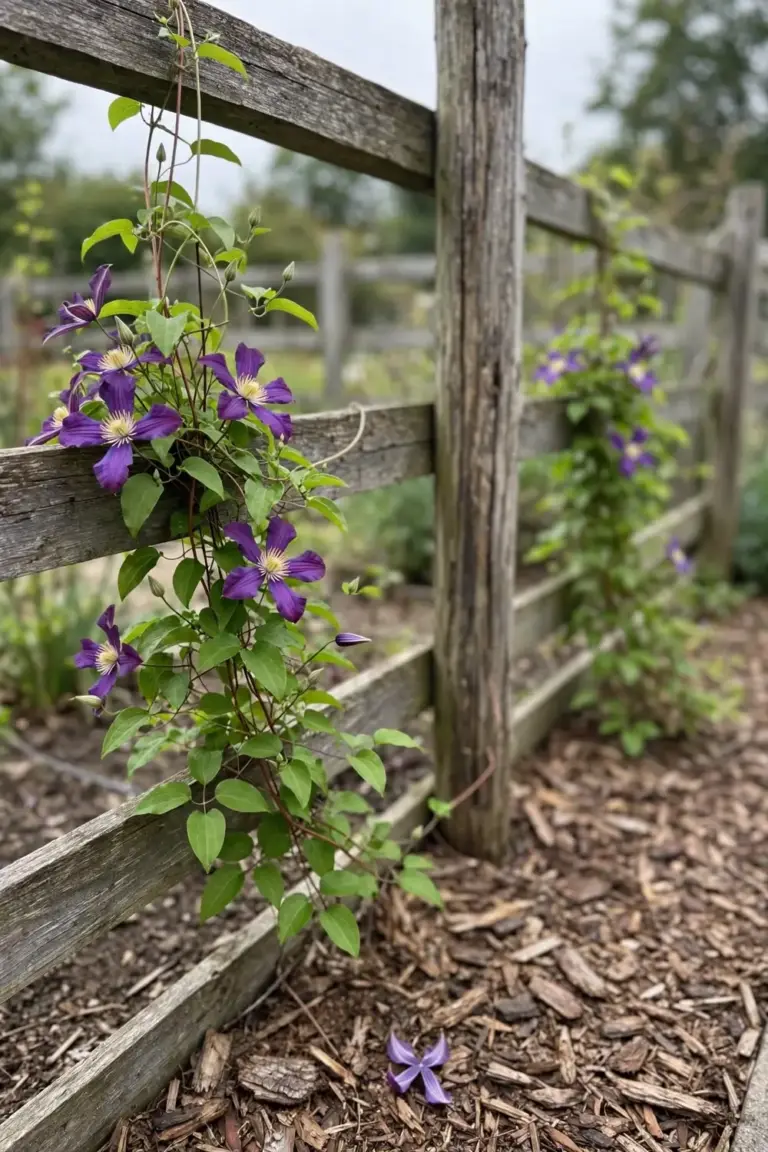

Australian vine identification starts with 4 steps: climbing method, leaf, flower, fruit. This page runs that key across 11 common Australian vines, 6 natives and 5 weeds, so you can tell the plant you keep from the weed you report. I have learned that counting leaflets settles more vine arguments than any flower photo does.
Vine here means a climbing plant, not a grapevine grown for wine. The same common name can cover two or three different plants, so this page gives the botanical name once per vine and uses it throughout. Check the botanical name before you act on any vine, because common names mislead more often than they help.
Start with the climbing method, because that single observation splits the field before you look at a leaf. Twining vines wrap the whole stem around a support, tendril vines send out thin coiled arms that grip, adhesive pads glue a vine to a wall, and scramblers lean and hook without any grip of their own.
Check These 3 Lookalike Traps Before You Name Anything
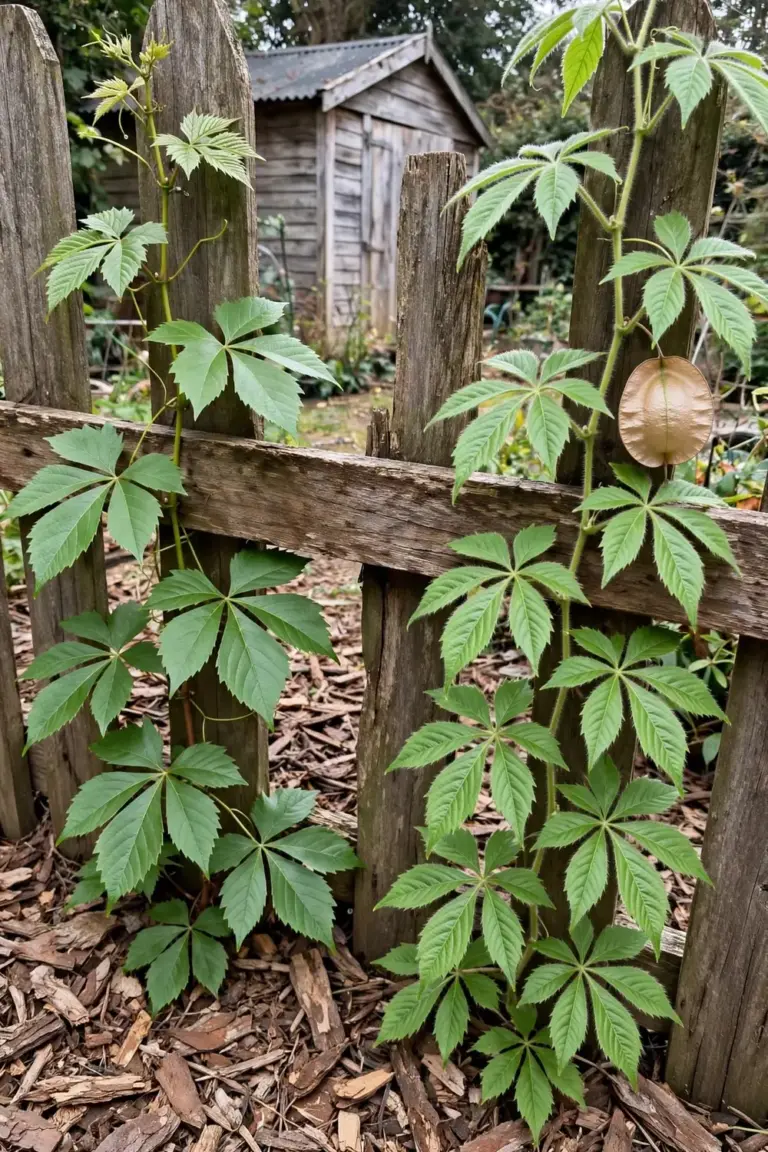
Native grape and balloon vine share toothed compound leaves, and the split between them is a leaflet count. Native grape carries 5 leaflets and hairless leaves, while balloon vine carries 9 leaflets with hairy undersides, according to the Plants of South Eastern New South Wales key. Balloon vine adds a papery balloon fruit that native grape never grows. Count the leaflets first. The fruit confirms the call.
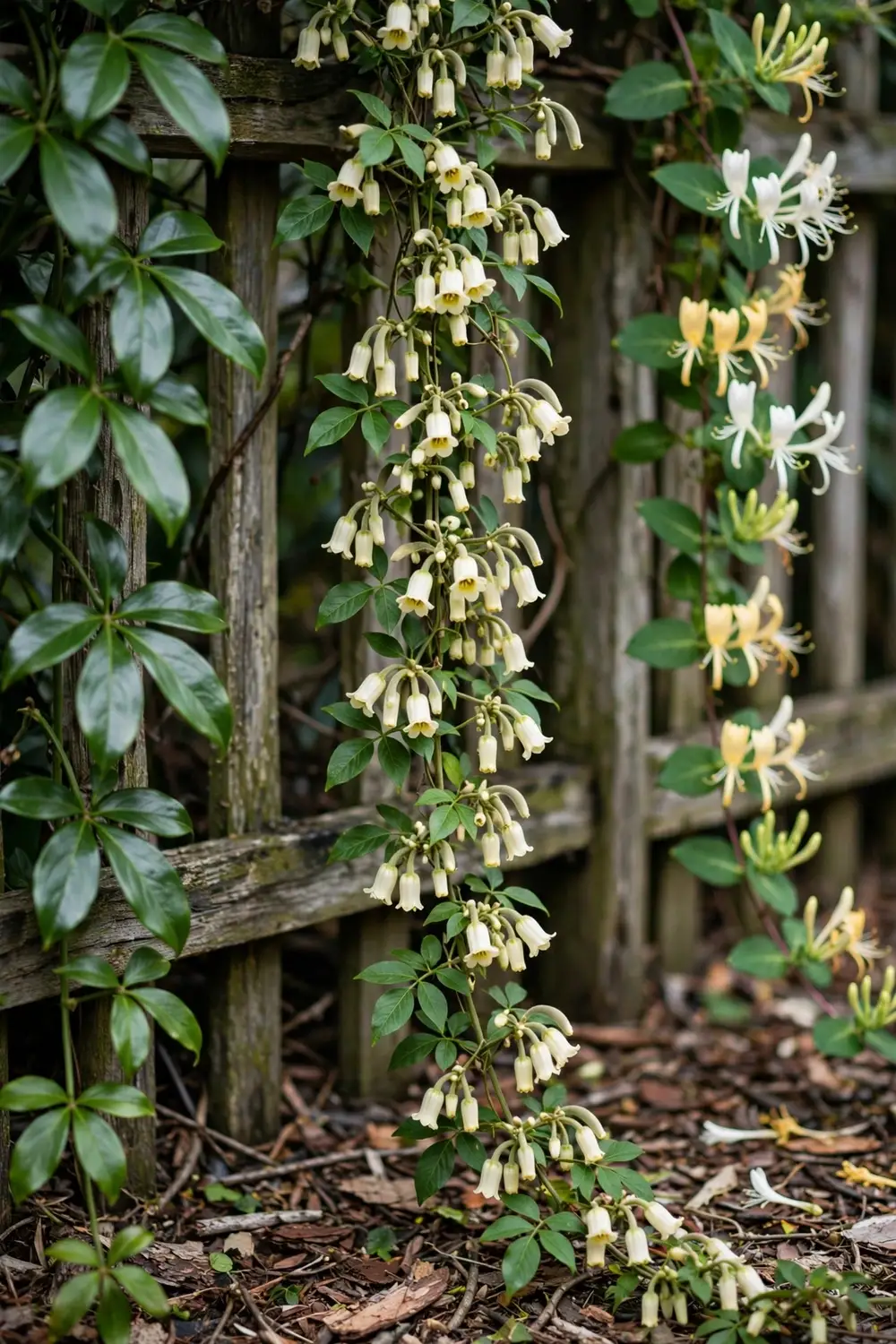
Wonga wonga vine and bower vine are both Pandorea, both twiners, and both carry pinnate leaves and bell flowers. Bower vine carries larger bells in pink or white, while wonga wonga vine carries smaller bells in cream with maroon throats. Flower size and color separate them when the leaves look the same. Both are natives, so a mix-up here costs nothing but a wrong label.
Shared names cause the third trap. Water vine means kangaroo vine, five-leaf water vine, and small-leaved water vine, three different plants under one name. Snake vine means Hibbertia scandens and Stephania japonica, two different plants. Lawyer vine means Smilax australis, a prickly vine, and lawyer cane, a spiky palm vine. Jasmine covers true jasmine (Jasminum), star jasmine (Trachelospermum), and Carolina jessamine (Gelsemium). Wonga vine and wonga wonga vine are the same plant, a spelling variant, not two vines. The botanical name is the only name that holds still.
One more common vine sits outside this page. Field bindweed scrambles along the ground and up fences with arrowhead leaves and white trumpet flowers, and the field bindweed guide covers it in full. In the tropics, add rubber vine to your suspect list and confirm it with your state biosecurity authority. For any vine you suspect is a declared weed, confirm it with NSW WeedWise or your local council before you act, because several natives resemble the weeds.
Run the 4-Step Australian Vine Identification Key
Step 1 is the climbing method. Watch how the vine holds on. Twining stems wrap. Tendrils coil. Adhesive pads stick. Scramblers lean. A trellis shows the climbing method plainly, because the vine has to grip something regular and open.
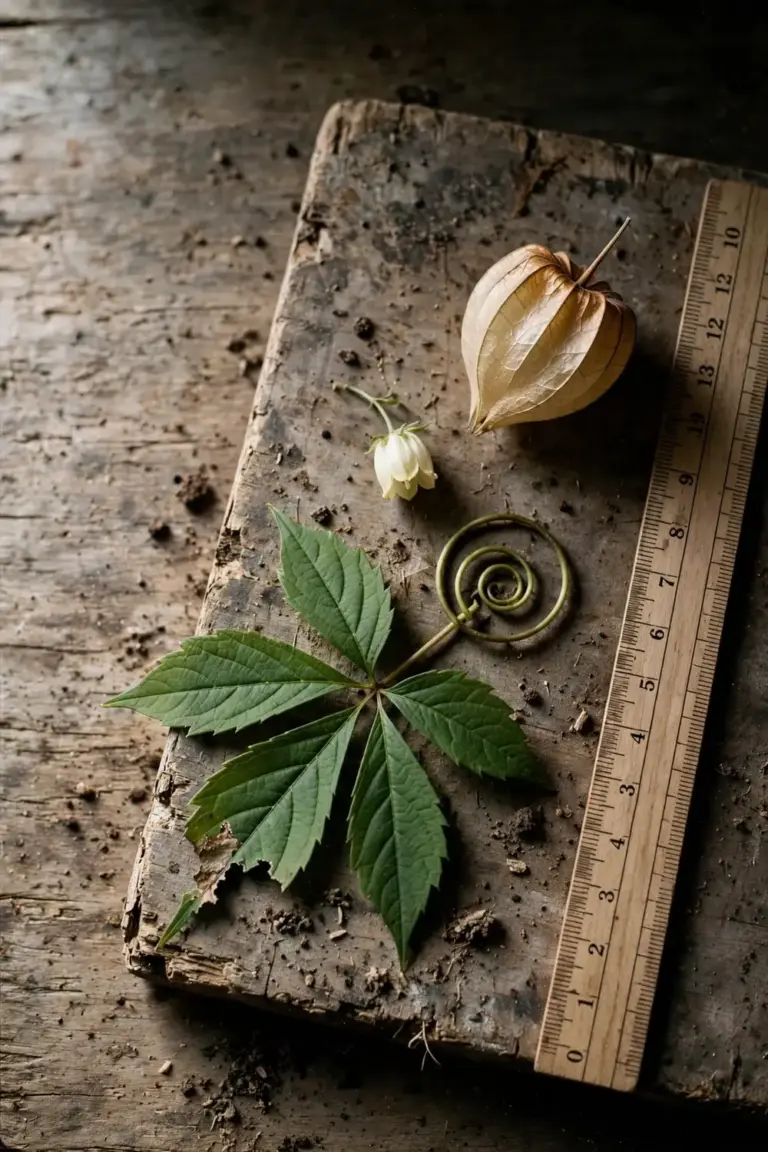
Step 2 is the leaf. Count the leaflets on one compound leaf, note whether the arrangement is opposite or alternate, and check the margin and the underside in one pass. A toothed margin, a hairy underside, or a blue-white coating each narrows the field. Leaves carry more marks than flowers in most vines, and leaves are present all year.
Step 3 is the flower. Note the shape, bell or star or pea or trumpet. Note the color and the season. Note whether the flower is single or clustered. Flowers confirm a leaf-based call, and they rarely carry it alone.
Step 4 is the fruit, stem, and sap. Note the fruit shape, balloon or berry or pod or choko, and check for tubers on the stem or underground. Snap a leaf stalk and note the sap color. Note bark and stem shape, round or square or ridged. Confirm any name against the PlantNET FloraOnline key before you act on it, because a wrong name sends you down the wrong path.
| Vine | Climbing Method | Leaf | Flower or Fruit | Native or Weed |
|---|---|---|---|---|
| Kangaroo vine | Tendrils | 5 glossy leaflets, toothed | Black grape-like fruit | Native |
| Five-leaf water vine | Tendrils | 5 leaflets, blue-white underside | Blue-black fruit | Native |
| Wonga wonga vine | Twining | Pinnate leaves | Small cream bells, maroon throat | Native |
| Bower vine | Twining | Glossy pinnate leaves | Large pink or white bells | Native |
| Native grape | Tendrils | 5 hairless leaflets, toothed | Black grape-like fruit | Native |
| False sarsaparilla | Twining | 3 leaflets | Purple pea flowers, flat pods | Native |
| Balloon vine | Tendrils | 9 hairy leaflets | Papery balloon fruit | Weed |
| Cat’s claw creeper | Hooked tendrils | Paired leaflets, glossy | Yellow trumpet flowers, long pods | Weed |
| Madeira vine | Scrambling | Fleshy heart-shaped leaves | White flower spikes, aerial tubers | Weed |
| Moth vine | Twining | Opposite leaves, milky sap | White star flowers, choko fruit | Weed |
| Japanese honeysuckle | Twining | Opposite leaves | White to yellow scented flowers, black berries | Weed |
1. Kangaroo Vine: Five Glossy Leaflets and Coiled Tendrils
Kangaroo vine is Apocissus antarctica, a native tendril climber with 5 glossy leaflets on each leaf. The leaflets carry toothed margins and a glossy green upper surface. Tendrils grow opposite the leaves and coil around any thin support. Ripe fruit looks like small black grapes in a loose cluster.
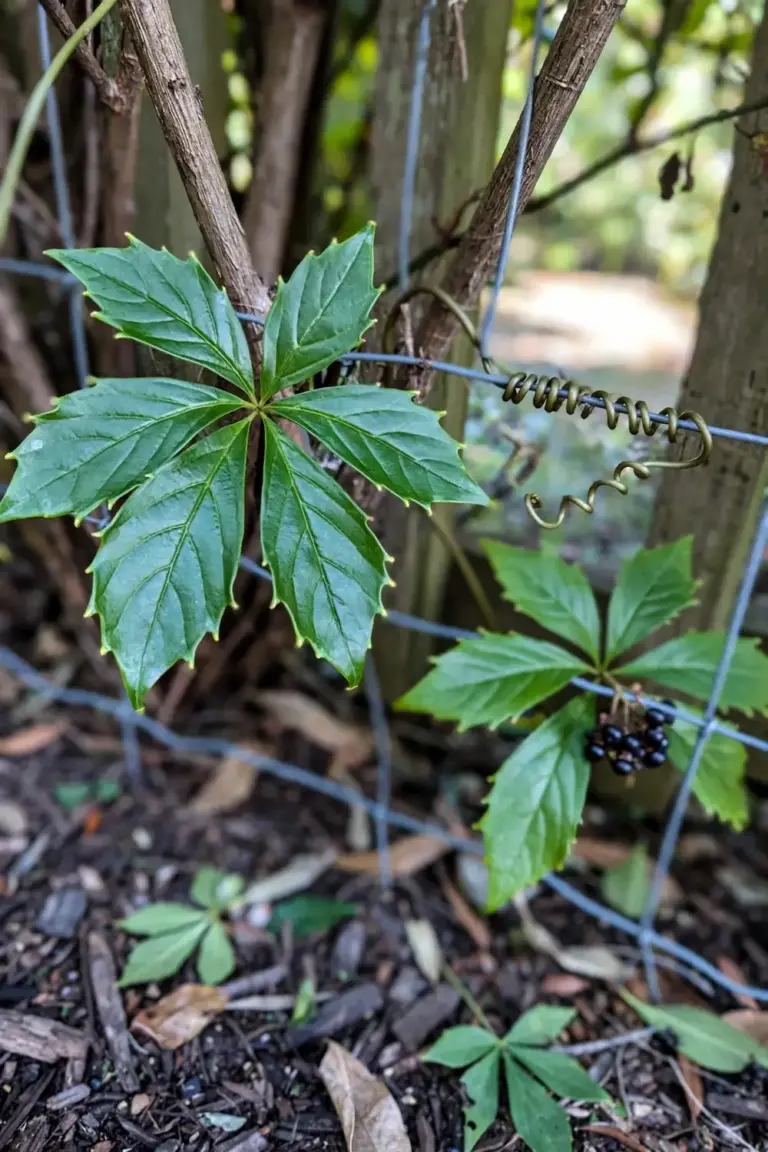
Kangaroo vine grows through rainforest margins and gullies along the east coast, and it climbs high into canopy trees in the bush. In a garden it scrambles over a fence or pergola and holds its leaves through winter in warm districts. The stems turn woody with age, and the vine can smother a small tree if it is left to climb unchecked. That vigor is normal for a native climber, not a sign of a weed. Older stems run thick and rough, and new growth pushes from the tips through spring and summer, so a vine that looks thin in winter still carries a full crown by midsummer.
Confused with five-leaf water vine, which carries a blue-white leaf underside, and with native grape, which carries thinner hairless leaflets and smaller fruit. The glossy underside and the thick leaflets settle kangaroo vine. Keep it. It is a native screening plant, and birds eat the fruit.
2. Five-Leaf Water Vine: Five Leaflets With a Blue-White Underside
Five-leaf water vine is Cissus hypoglauca, a native tendril climber with 5 leaflets and a blue-white leaf underside. The underside is the mark. Flip a leaf and the pale waxy coating shows at once. The leaflets carry toothed margins, and the tendrils fork into two or three arms. Ripe fruit is blue-black and grape-like.
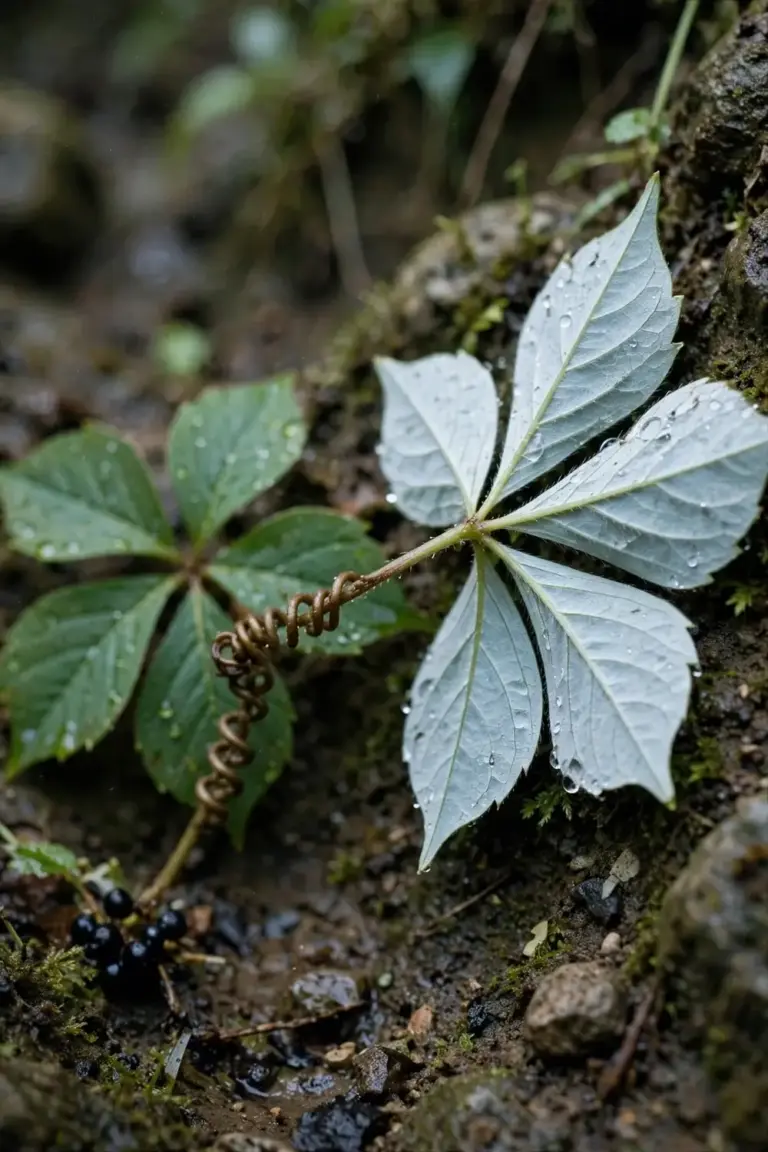
Five-leaf water vine grows in rainforest and wet gullies from Queensland to southern New South Wales. It climbs by tendrils and scrambles across the ground where no support stands. The stems stay slender, and the vine rarely smothers a host tree the way a weed vine does. It drops leaves in cool districts and regrows in spring. Older references call it Cissus hypoglauca still, and nurseries use both names, so check the botanical name on the label before you buy.
Confused with kangaroo vine, which carries a glossy green underside and thicker leaflets. Flip the leaf. A blue-white underside means five-leaf water vine. Keep it. It is a native groundcover and climber, and it belongs in a shade garden.
3. Wonga Wonga Vine: Pinnate Leaves and Small Cream Bells
Wonga wonga vine is Pandorea pandorana, a native twiner with pinnate leaves and small cream bell flowers. The stem wraps around any support and climbs steadily through spring. The bells open in clusters, cream with maroon throats, and they carry a light scent. Leaves stay glossy green through the year in warm districts.
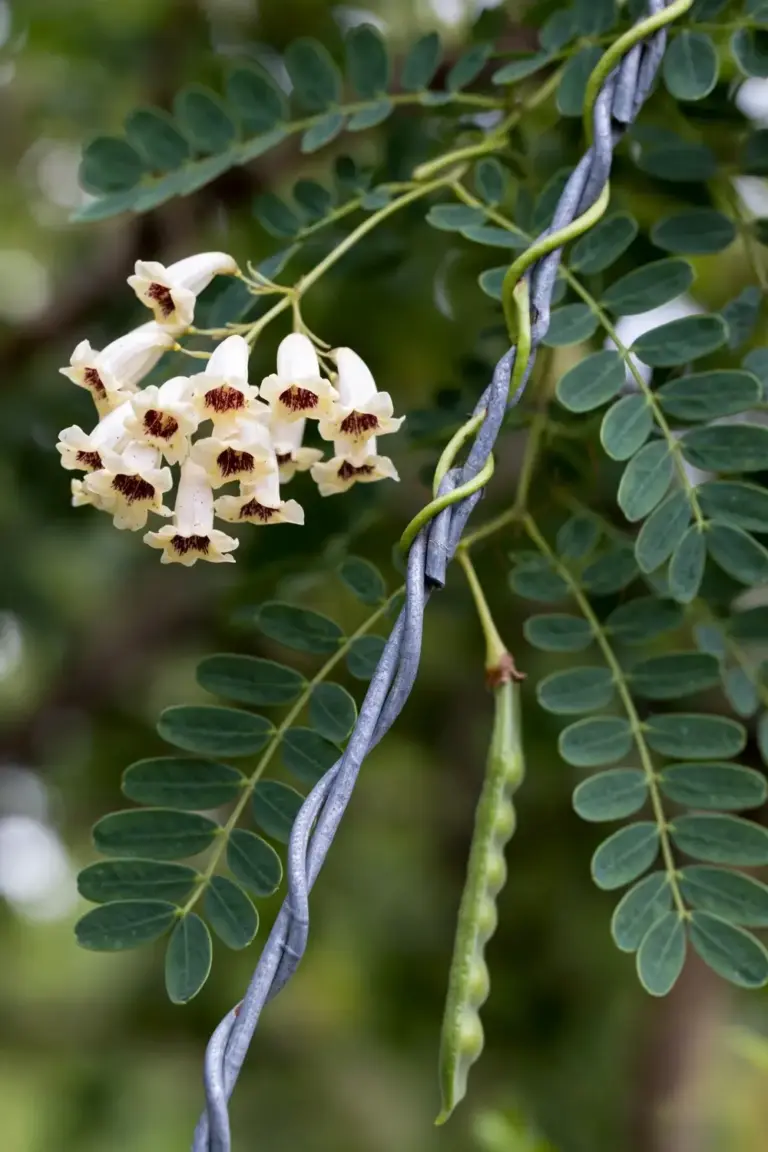
Wonga wonga vine grows across eastern Australia, from rainforest edges to dry open forest. It suits a fence, a pergola, or a tree trunk, and it flowers best in full sun with its roots in shade. The vine can reach the top of a tall tree in the bush, and it drops old leaves as new growth pushes through. That turnover is normal, not decline. Cultivars with gold or white bells fill nurseries, and they all carry the same pinnate leaves and twining stem, so the species marks hold whatever the flower color.
Confused with bower vine, which carries larger pink or white bells and glossier leaves. Flower size and color separate them. Keep it. It is a native climber, and honeyeaters visit the bells.
4. Bower Vine: Glossy Leaves and Large Pink Bells
Bower vine is Pandorea jasminoides, a native twiner with glossy pinnate leaves and large pink or white bell flowers. The bells open through the warmer months and sit wide on the vine, pink with a pale throat or plain white. The stem twines around any support, and the leaves stay deep glossy green. Gardening With Angus ranks bower vine among its top ten Australian climbers for its bell flowers through the warmer months.
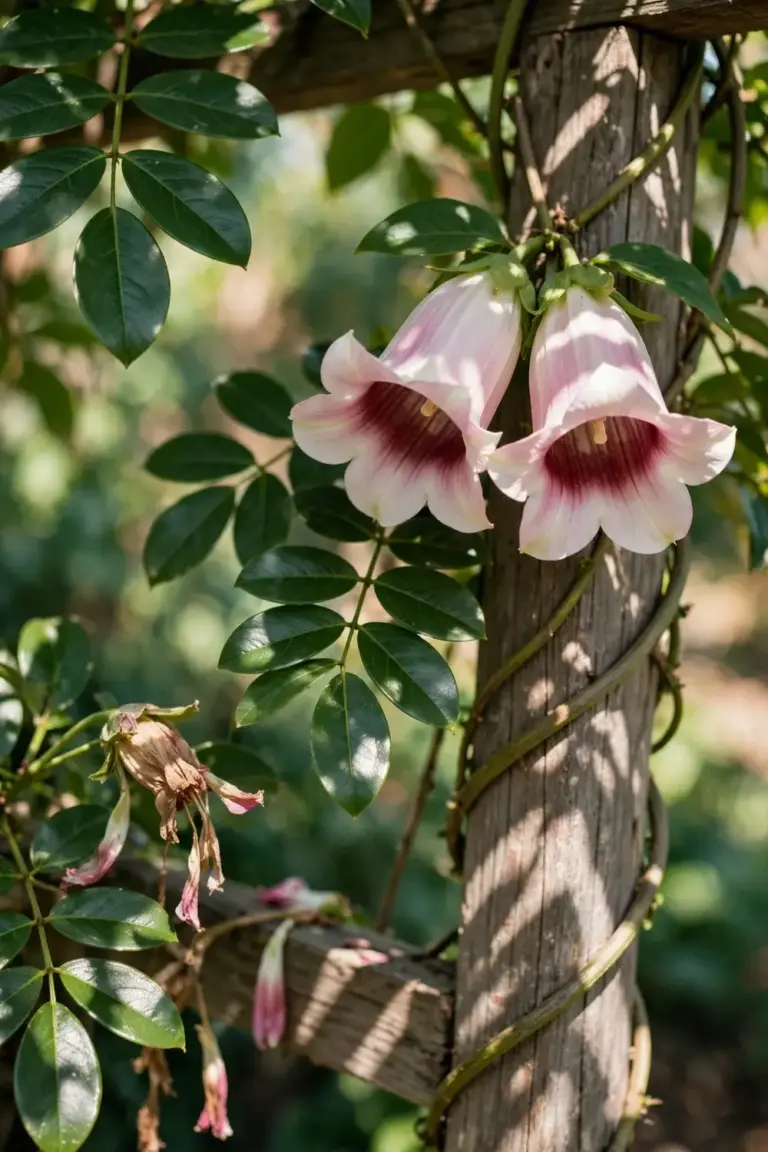
Bower vine grows in rainforest margins and coastal forest from Queensland to northern New South Wales. It flowers best in sun with shelter from strong wind, and it keeps flowering while the weather stays warm. The vine can grow heavy on a light trellis, so a solid support suits it. Leaves yellow and drop in a cold snap, then regrow in spring. Cultivars with white bells or deep pink bells all carry the same glossy pinnate leaves, so the leaf marks hold whatever the flower color.
Confused with wonga wonga vine, which carries smaller cream bells with maroon throats. Bell size and color settle the call. Keep it. It is a native climber, and it is one of the showiest native vines for a sunny fence.
5. Native Grape: Five Hairless Leaflets and Black Grape Fruit
Native grape is Causonis clematidea, a native tendril climber with 5 hairless leaflets and black grape-like fruit. The leaflets carry deeply toothed margins and dull hairless surfaces, with the terminal leaflet largest. Tendrils fork into two or more arms opposite the leaves. Ripe fruit is a small black grape, 5 to 7 mm across, according to the Plants of South Eastern New South Wales key. Its grape-like fruit puts it with the fruits that grow on vines, but it is a wild native, not a crop.
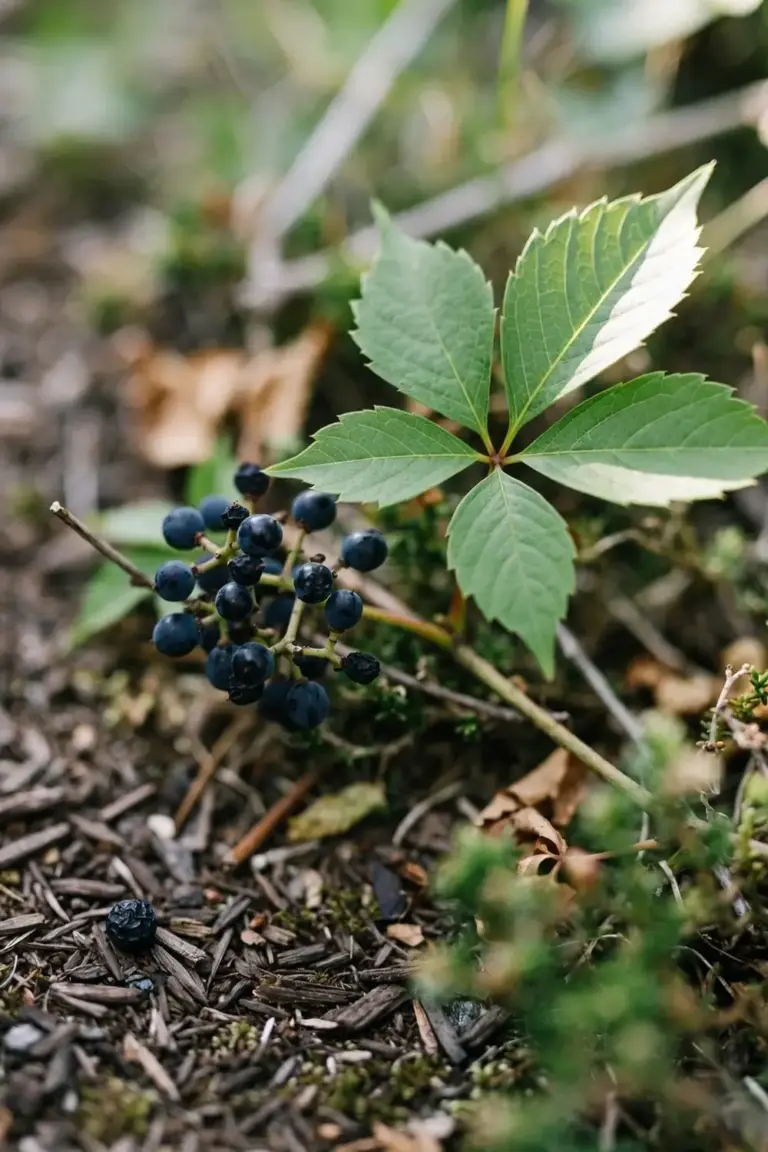
Native grape grows in forest and woodland along the east coast, from Queensland to southern New South Wales. It climbs weakly and scrambles across the ground where no support stands. The stems stay slender, and the vine spreads by underground stems that sprout new foliage each spring. It drops leaves in cool districts and regrows when the weather warms. The vine also carries the common name slender grape, and bushy water vine turns up in older references, so three names can point at one plant.
Confused with balloon vine, which carries 9 hairy leaflets and a papery balloon fruit. Count the leaflets and feel the underside. Five leaflets and hairless means native grape. Keep it. It is a native vine, and birds eat the fruit.
6. False Sarsaparilla: Three Leaflets and Purple Pea Flowers
False sarsaparilla is Hardenbergia violacea, a native twiner with 3 leaflets and purple pea flowers. The flowers open in sprays in winter and spring, deep purple with a yellow-green eye, and they sit above the foliage. The leaflets are narrow and leathery, and the stem twines around any support. Flat pods follow the flowers and split to drop hard seeds.
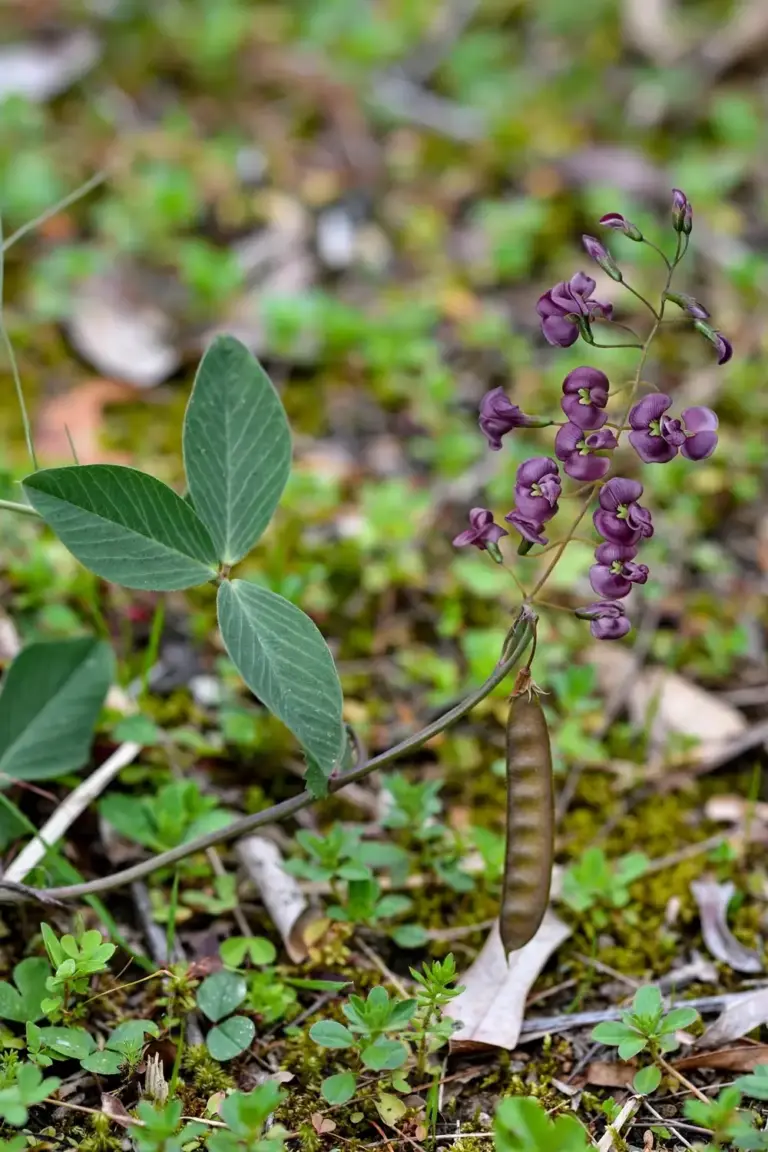
False sarsaparilla grows across south-eastern Australia, from coastal forest to inland woodland. It scrambles as a groundcover where no support stands, and it climbs a fence or shrub when one is near. The vine handles sun and light shade, and it flowers best after a cold winter. It drops few leaves, and it regrows from the base after fire. Garden cultivars carry white or pale pink flowers beside the wild purple, and they all keep the 3-leaflet pattern, so leaflet count still settles the call.
Confused with dusky coral pea, Kennedia rubicunda, which carries rounder leaflets and larger red pea flowers. Flower color separates them at a glance. Keep it. It is a native climber, and it is a winter flower when little else blooms.
7. Balloon Vine: Nine Hairy Leaflets and Papery Balloon Fruit
Balloon vine is Cardiospermum grandiflorum, a weed vine with 9 hairy leaflets and a papery balloon fruit. The leaves are made up of 3 groups of 3 leaflets, hairy with small red hairs on the underside, and the vine climbs to 10 m into trees on tendrils, according to the NSW WeedWise balloon vine profile. The fruit is a thin-skinned papery capsule, 4 to 8 cm long, with 3 compartments. White flowers with 4 petals open in clusters through spring and summer.
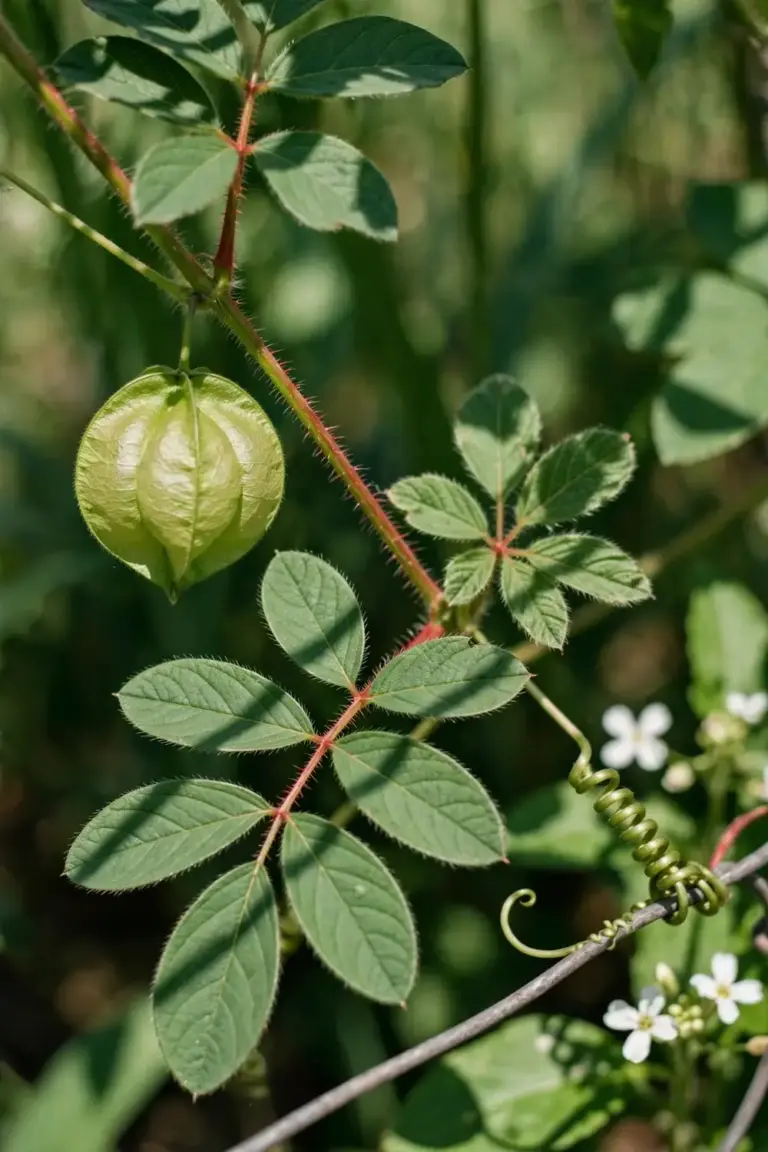
Balloon vine smothers other plants and brings down branches under its weight. It grows in moist gullies, creeklines, and garden edges along the east coast, and it spreads by seed carried on wind and water. The vine is a priority environmental weed in parts of New South Wales and south-eastern Queensland. It is not a native grape, and the leaflet count proves it. Seedlings look like small native grape plants at first, so check the underside early, because a hairy underside on a seedling already means balloon vine.
Confused with native grape, which carries 5 hairless leaflets and no balloon fruit. Count the leaflets. Nine leaflets and a balloon fruit means balloon vine. Confirm it with NSW WeedWise or your local council before you act, and keep every cutting and fruit off the ground and out of green waste.
8. Cat’s Claw Creeper: Three-Pronged Hooks and Yellow Trumpets
Cat’s claw creeper is Dolichandra unguis-cati, a weed vine with tendrils that end in three stiff hooks like a cat’s claw. The hooks grip bark and brick and let the vine climb over trees and buildings. Leaves sit opposite in pairs, glossy dark green above and paler below. Yellow trumpet flowers open singly or in small clusters in spring, and long bean-like pods follow, according to the NSW WeedWise cat’s claw creeper profile.
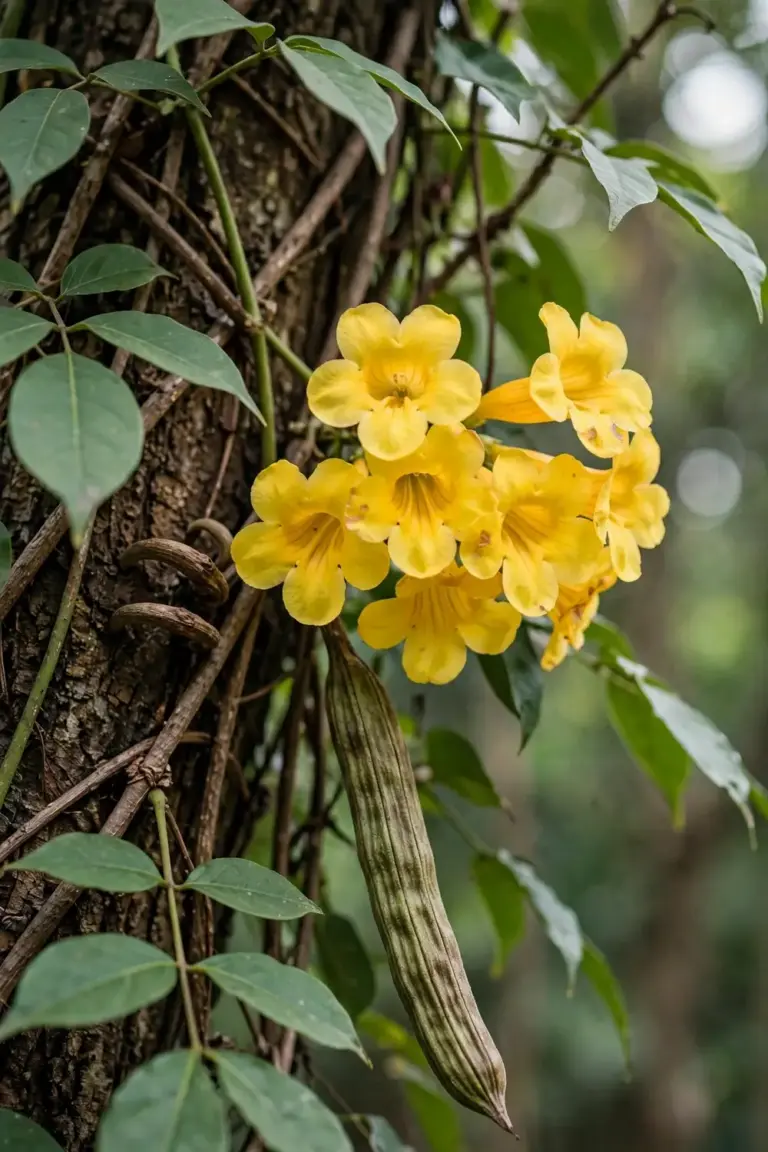
Cat’s claw creeper grows underground tubers that sprout new stems, so the vine returns from roots even when the top growth is gone. It forms dense mats that smother groundcovers and seedlings, and its weight can pull down branches. It is listed as a Weed of National Significance and a key threatening process in New South Wales. It grows in subtropical and warm temperate districts, mostly near the coast. The tubers sit deep and spread wide, and a single missed tuber restarts the whole patch, which is why a visual call alone never ends the job.
Confused with native tendril climbers, which never carry the three-pronged hook. The hook is the mark. Check the tendril tip. Three stiff hooks mean cat’s claw creeper. Report it to your local council and confirm it with NSW WeedWise before you act.
9. Madeira Vine: Fleshy Heart Leaves and Aerial Tubers
Madeira vine is Anredera cordifolia, a weed vine with fleshy heart-shaped leaves and aerial tubers along the stems. The leaves are thick and waxy, bright green, and they feel soft between finger and thumb. The stems carry warty aerial tubers that drop and sprout, and fragrant white flower spikes open in summer. No native vine in the Sydney district carries those stem tubers, so the tubers settle the call on their own. That single mark beats every leaf comparison, because no lookalike in the district grows tubers on its stems, and a vine with stem tubers is Madeira vine until an authority says otherwise.
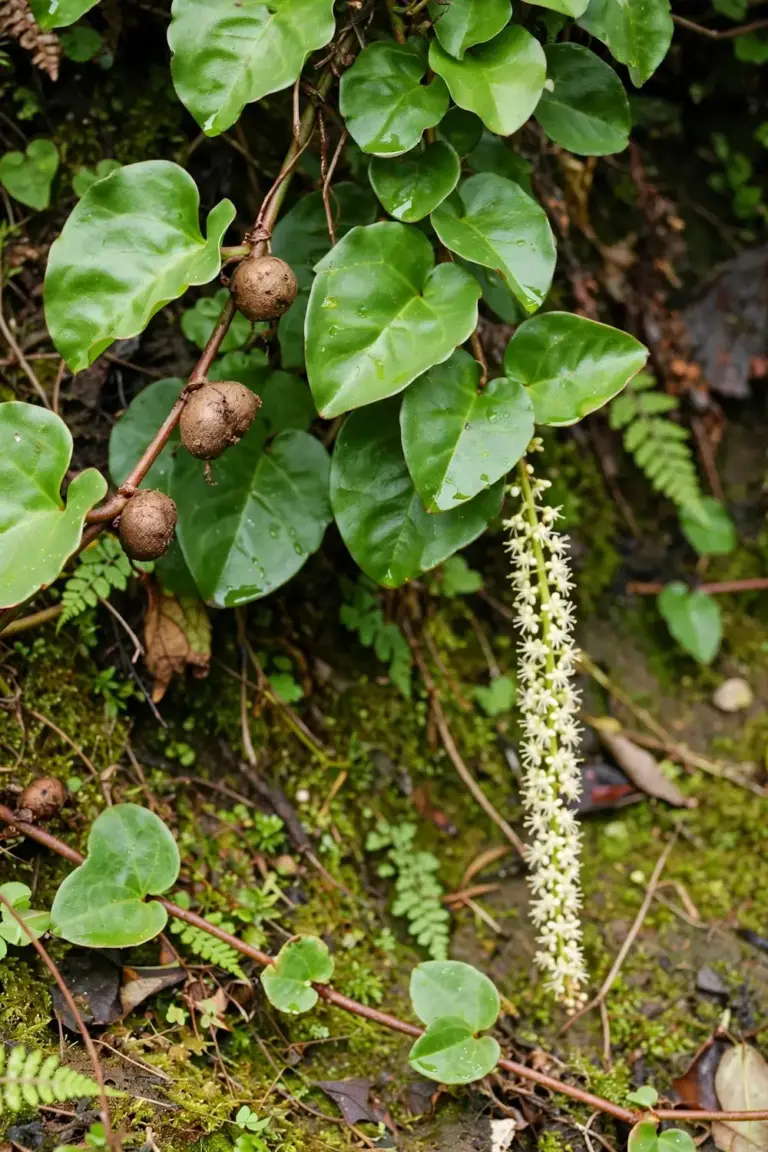
Madeira vine smothers trees and shrubs under a dense curtain of leaves. It grows in moist gullies, creeklines, and garden edges in warm districts, and it spreads by tubers carried on water and in dumped garden waste. The vine is a Weed of National Significance. It dies back in cold winters and regrows from tubers in spring, so a bare winter stem is not a dead vine. The Sydney Northern Beaches climbing-plants booklet describes nobbly tubers that grow wherever leaves join stems and break off to grow a new plant, which is why every tuber counts.
Confused with nothing common, because the aerial tubers are unique. Feel the stem. Warty tubers along the stem mean Madeira vine. Confirm it with your state biosecurity authority or local council before you act, and keep every tuber off the ground and out of green waste.
10. Moth Vine: Milky Sap and White Choko Fruit
Moth vine is Araujia sericifera, a weed vine with milky sap and a white choko-like fruit. Snap a leaf stalk and white sap beads at once. The leaves sit opposite, dark green above and pale below, and the stem twines around any support. White star-shaped flowers open through summer, and the fruit swells into a choko-shaped pod that splits to release wind-blown seeds. The Plants of South Eastern New South Wales key confirms the milky sap, the opposite leaves, and the choko fruit as the marks that separate it from other vines.
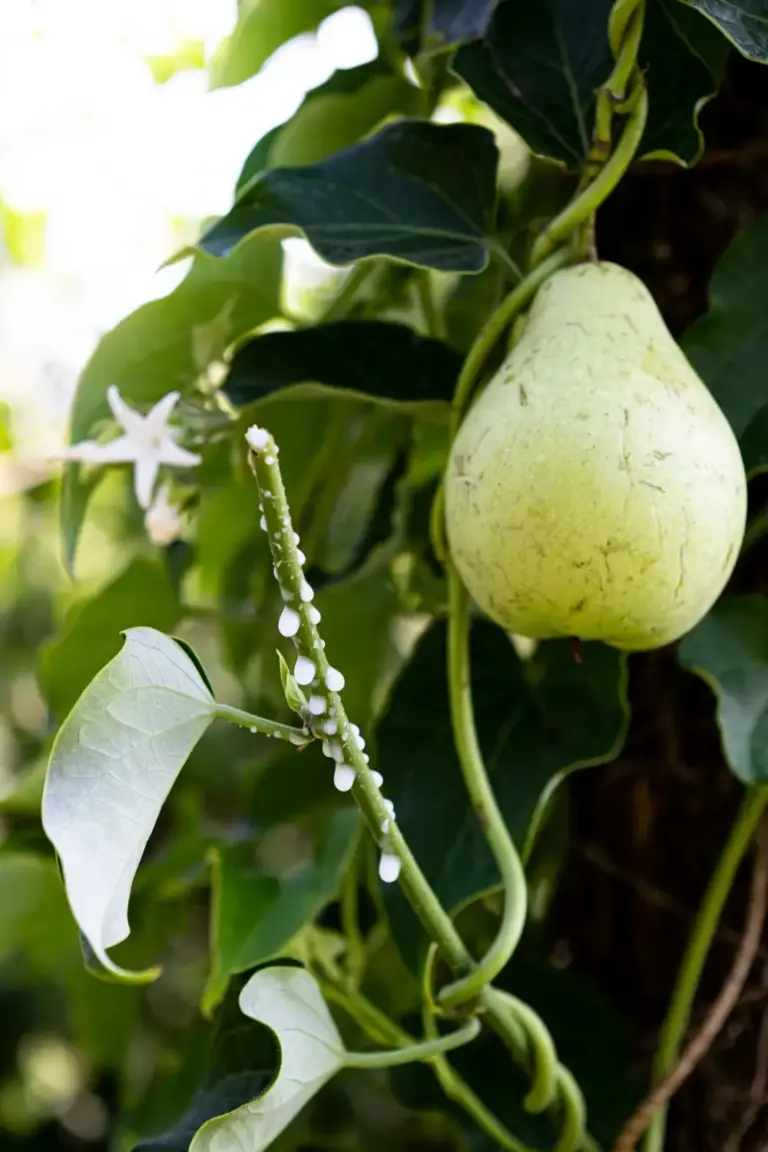
Moth vine smothers shrubs and small trees, and its seeds ride the wind into bushland. It grows in gardens, wasteland, and creeklines in warm districts, and it flowers through summer into autumn. The sap irritates skin and eyes, so gloves suit any handling. The vine is a declared weed in parts of Australia. Every part of the plant is poisonous when eaten, and the sap can cause breathing trouble in sensitive people, so keep children and pets away from a vine you suspect.
Confused with choko, Sechium edule, which carries similar fruit on a larger vine with lobed leaves and no milky sap. Snap the stalk. Milky sap means moth vine. Confirm it with NSW WeedWise or your local council before you act.
11. Japanese Honeysuckle: Opposite Leaves and Two-Tone Scented Flowers
Japanese honeysuckle is Lonicera japonica, a weed vine with opposite leaves and two-tone scented flowers. The flowers open white and age to yellow, and they carry a sweet scent that drifts across a garden on a warm evening. The stem twines around any support, and the leaves stay green through winter in warm districts. Black berries follow the flowers, and birds spread the seed.
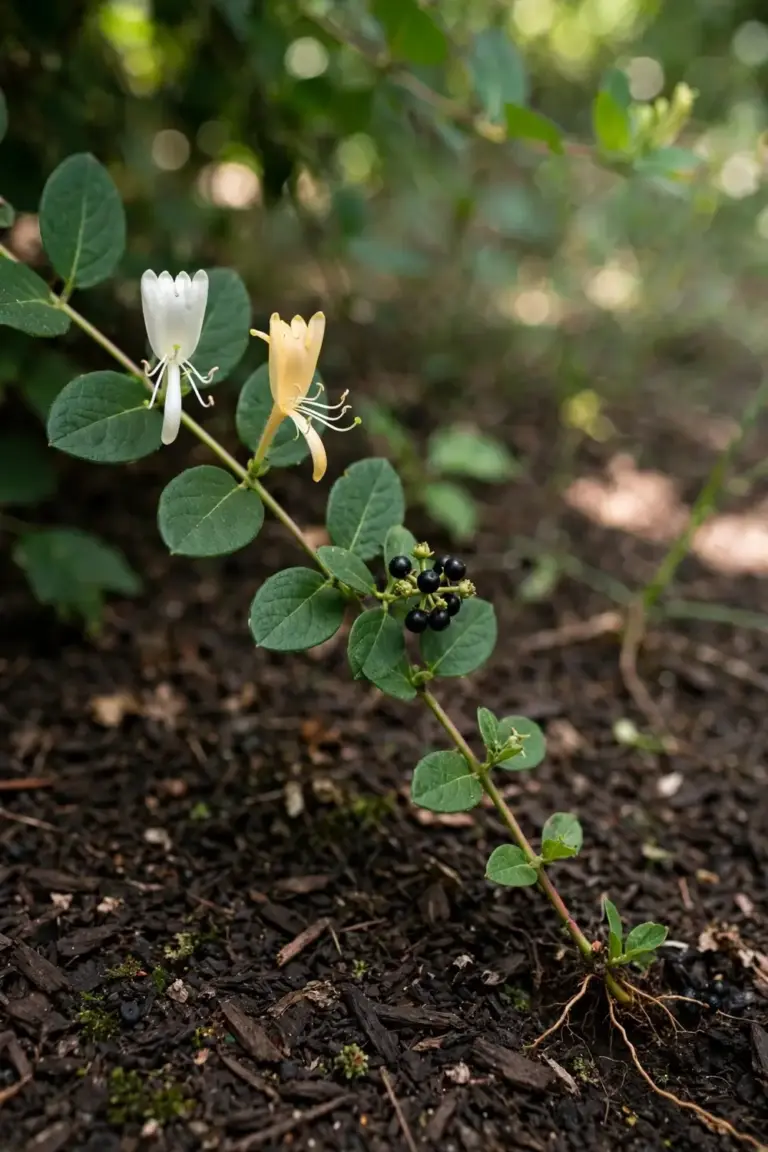
Japanese honeysuckle smothers shrubs and groundcovers under a dense mat of stems. It grows in gardens, creeklines, and bushland edges across the east coast, and it spreads by seed and by stems that root where they touch soil. The vine is a declared weed in parts of Australia. It flowers through spring and summer, and it keeps growing while the weather stays mild. Stems that run along the ground root at the nodes, so one plant becomes a mat within a season.
Confused with true jasmine, Jasminum, which carries star-shaped flowers with a different scent and no two-tone aging. Honeysuckle flowers are tubular and two-lipped, while jasmine flowers are flat stars. Flower shape separates them. Confirm it with your local council before you act.
Frequently Asked Questions
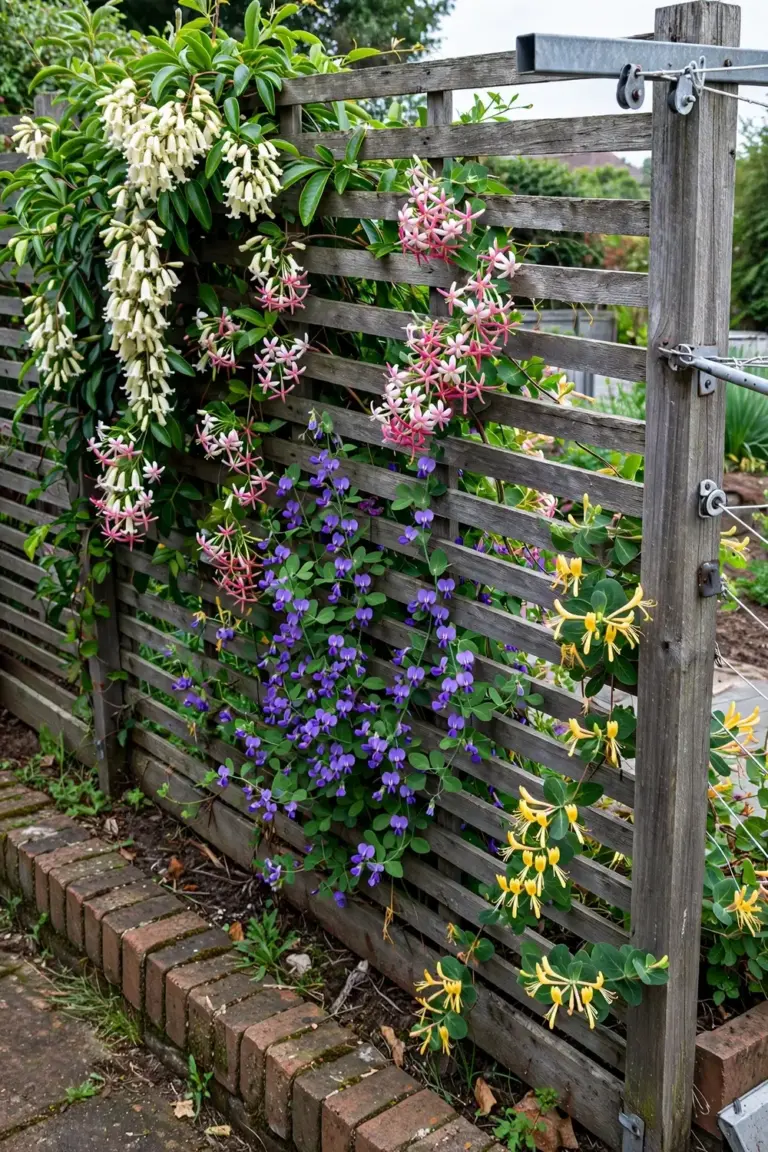
Sometimes. Leaf shape, leaflet count, and arrangement settle many vines, and the key on this page leans on leaves for that reason. Flowers, fruit, tubers, and sap confirm the call when leaves alone leave doubt. Photograph the climbing method, the leaf underside, and any fruit or tubers with the leaves, because one leaf photo rarely carries enough marks.
A twining vine wraps its whole stem around a support, so the stem itself coils. A tendril vine sends out thin coiled arms from the leaf stalk or stem, and the arms grip while the main stem stays straight. Check the grip. A coiled stem means twining. Thin coiled arms mean tendrils. That one split narrows the field before you look at a leaf.
Yes, in most cases. Leaf shape, leaflet count, climbing method, stem shape, and sap carry enough marks for a firm call on the common vines on this page. Flowers confirm the call, and fruit or tubers settle the hard cases. Check again when the vine flowers, because a flower photo closes the gap on the few vines that leaves alone cannot separate.
Run the key first, then check the verdict against NSW WeedWise or your state biosecurity authority. A weed verdict in one state can differ in another, and several natives resemble declared weeds. Never act on a visual call alone. Confirm the name with the authority, then follow its advice for your district.
Confirm it with NSW WeedWise or your local council before you act. Do not dump cuttings, fruit, or tubers in green waste or bushland, because many weed vines regrow from fragments. Keep the plant contained, photograph the leaves, flowers, and any tubers, and report it through your council or state biosecurity channel.
Take the Key Outside and Test It on Your Fence
Walk to the vine with the key in hand. Name the climbing method first. Count the leaflets. Flip a leaf and check the underside. Note any fruit, tubers, or sap. The 11 vines on this page cover the climbers most Australian gardeners meet, and the traps above cover the mix-ups that cost the most. A vine named right is a vine handled right, whether you keep it or report it. Photograph the marks you used, because a photo set of climbing method, leaf, flower, and fruit helps the council or the nursery confirm your call without a site visit.