
Hold one suspect leaf to the light and read the veins before you reach for a spray. That is the whole foliar nematode test in miniature. The rest of this page is 9 strategies, from that vein check to the lab assay that settles close calls.
Foliar nematode is a leaf-feeding roundworm. The pathogen is Aphelenchoides, a genus of microscopic worms that live in and on leaves, buds, and stems. It feeds inside leaf tissue, and the damage follows the veins.
The damage is usually cosmetic and non-lethal on ornamentals. Severe cases on susceptible hosts can strip leaves and cut flowering. Read the identification sections first if the plant still stands, and start at Step 1 if leaves already show blotches.
What Foliar Nematode Actually Is
Foliar nematode is a leaf-feeding roundworm, not a fungus. The pathogen is Aphelenchoides, a genus of microscopic worms that live in and on leaves, buds, and stems. These worms feed inside leaf tissue with a needle-like stylet, and the feeding kills cells in patches.
Adult worms measure 0.5 to 1.2 millimeters long, according to Penn State Extension. The stylet pierces a plant cell. Enzymes pass through the stylet into the cell. The digested contents travel back into the worm. The genus holds more than 220 known species, and three dominate on ornamentals: Aphelenchoides besseyi, A. fragariae, and A. ritzemabosi.
Host range runs wide. University of Wisconsin Horticulture counts more than 450 plant species in more than 75 plant families. A University of Florida review documents more than 700 species across 126 families. The two counts come from different surveys. Both point the same way. This pest is not picky.
Beneficial nematodes belong to a different job, and Steinernema and Heterorhabditis are sold for grub control in soil. They attack insect pests. They do not cure foliar nematode. Do not buy a grub-control product for a leaf problem.
How to Identify Foliar Nematode on Leaves
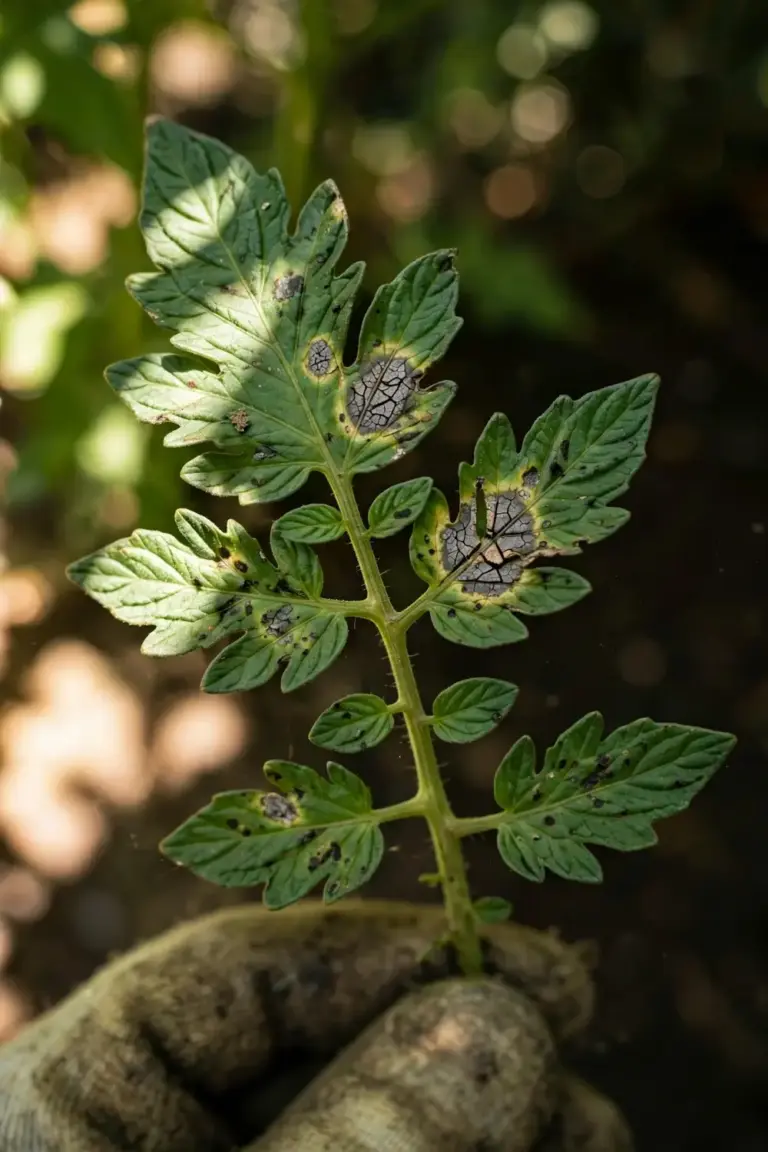
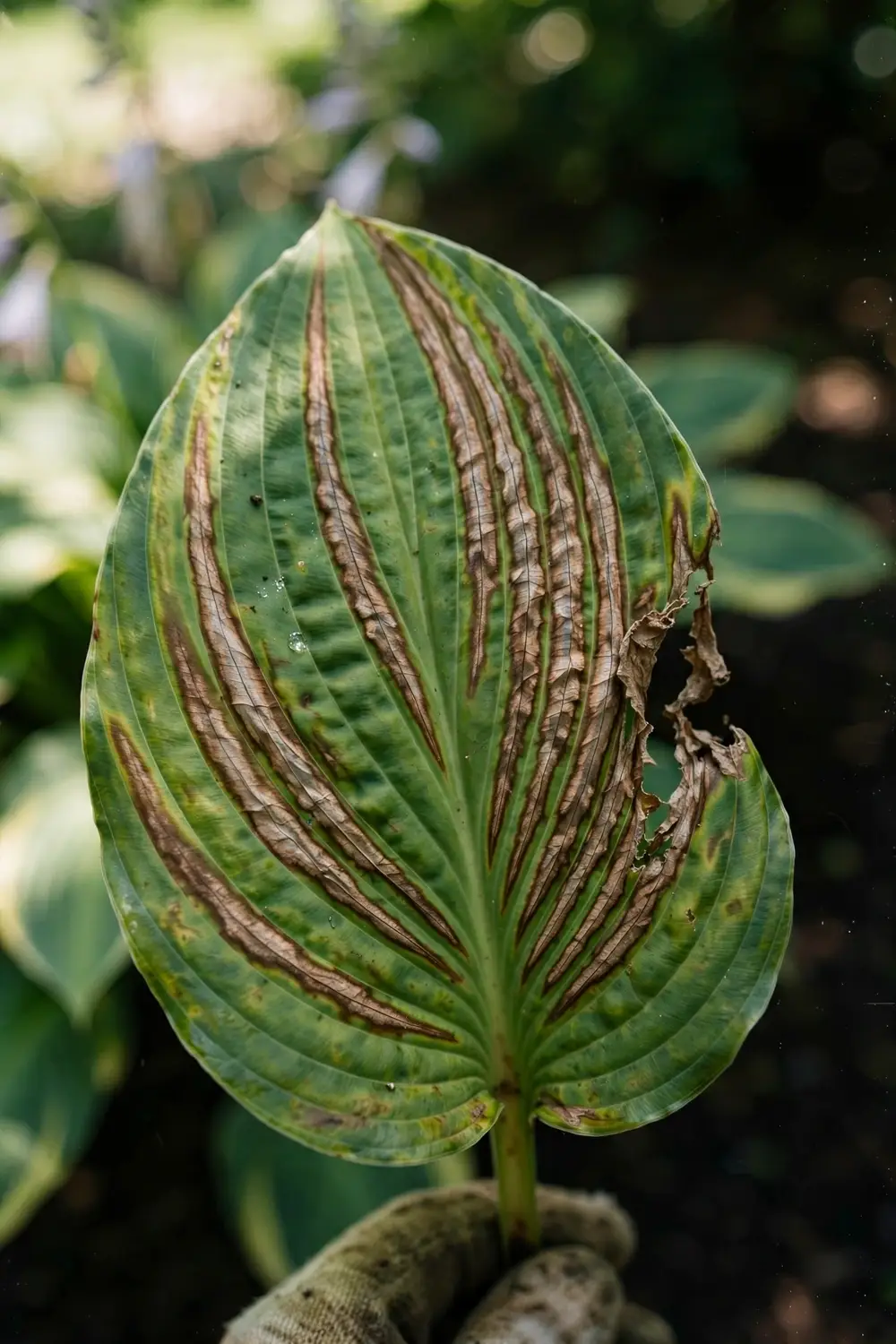
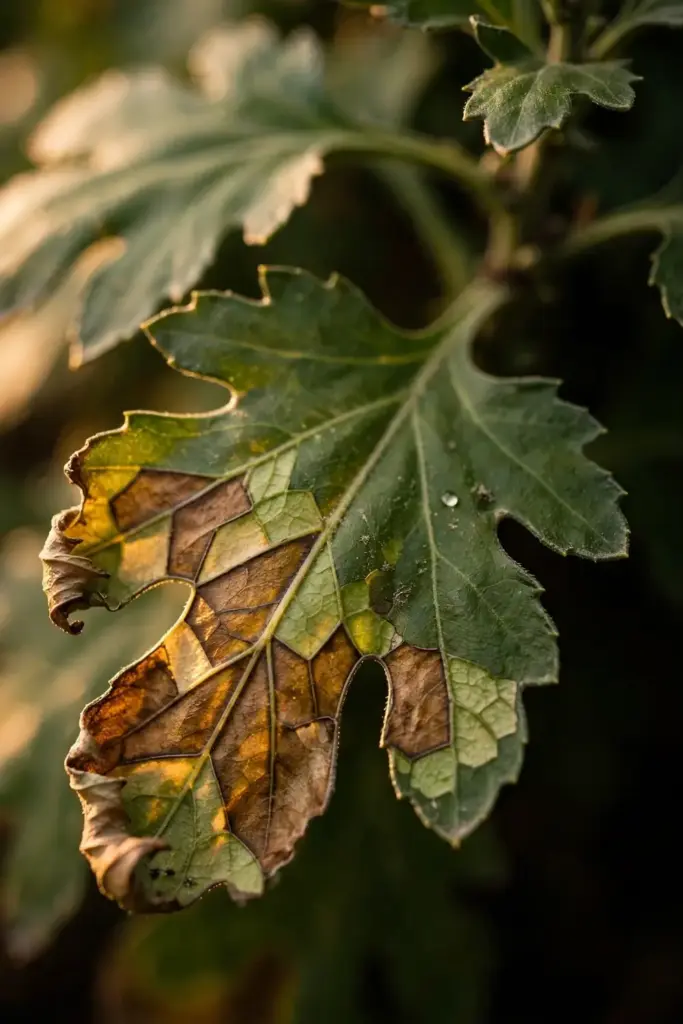
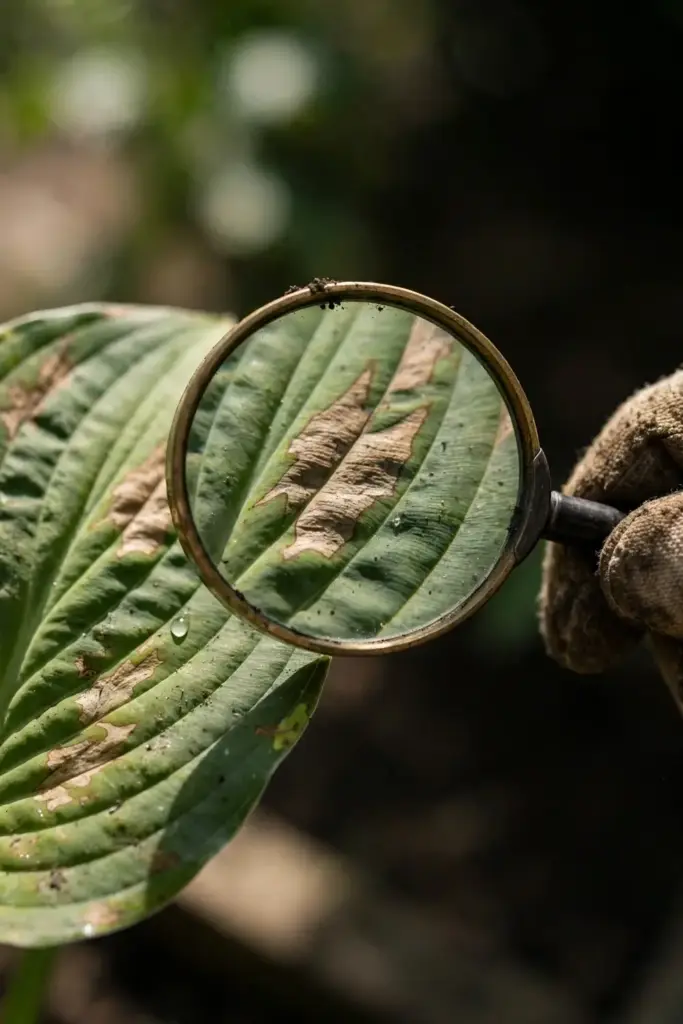
Foliar nematode shows as small angular blotches on leaves, bounded by veins. The blotch edges run straight because leaf veins wall the feeding zone off. That straight edge is the signature. Round spots with soft edges point elsewhere.
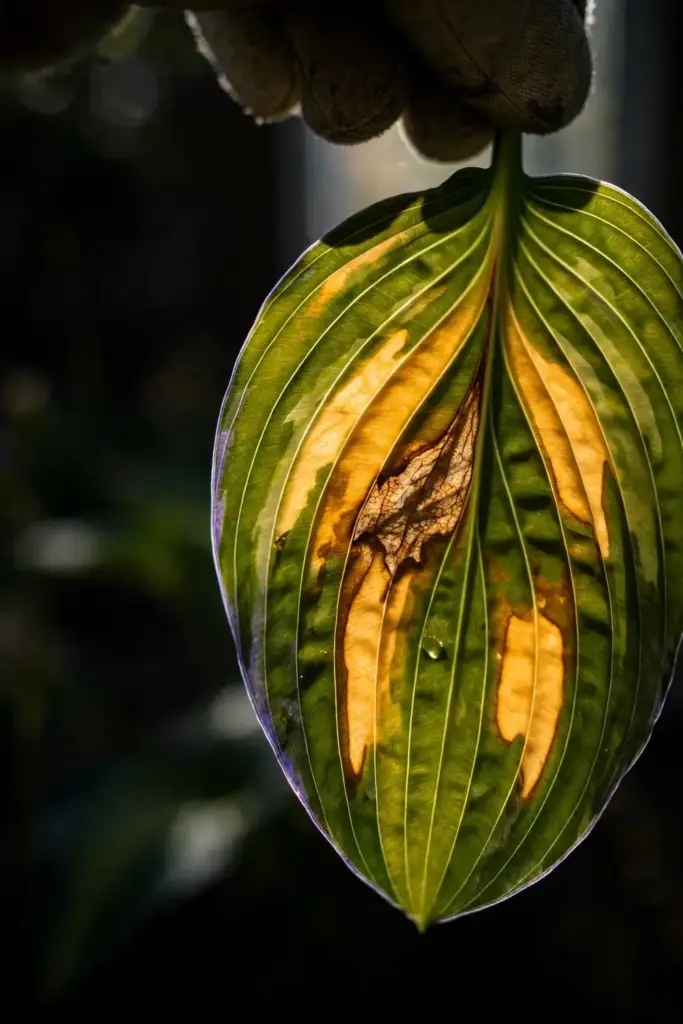
Early lesions look water-soaked. They turn yellow, brown, purple, or black and stay wet-looking for a time, according to Penn State Extension. Blotches dry out later. Dead tissue may fall away and leave a shot-holed leaf. Angular blotches often stay hidden until late in the season, around August, according to University of Wisconsin Horticulture.
Young plants show a different face. New growth curls, twists, and stunts. Mature plants carry the blotches. Growth stalls across the whole plant when the infestation runs heavy.
Hold the leaf to a window and trace the blotch edges with your eyes. A blotch that stops at a vein fits foliar nematode. A blotch that crosses veins without pausing does not. Begonia breaks this rule, and the host section below covers that exception.
How to Identify Foliar Nematode on Buds, Stems, and Flowers
Foliar nematode attacks buds, stems, and flowers as well as leaves. New growth comes out twisted and bunched. Leaves proliferate in tight clusters. Flowering drops off on a plant that once bloomed freely. The worms live in buds and crowns, so the damage starts before a leaf ever opens.
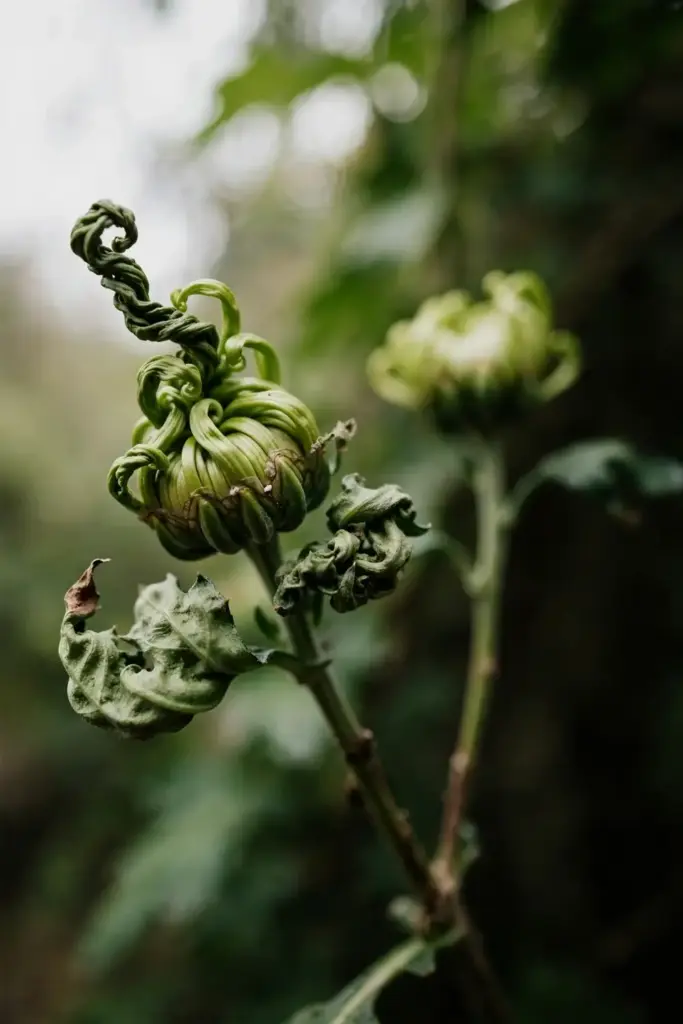
Ferns show the pattern in miniature. Lesions stay confined to single pinnae or lobes of pinnae, according to the University of Florida review. Strawberry leaves come out crimped and undersized. African violets cup and distort, especially in the newest leaves, according to Penn State Extension.
Some hosts carry the worms with no visible symptoms at all. Elatior begonias can hold large populations in water-conducting tissue without showing damage, according to Penn State Extension. A clean-looking plant can still spread the pest. That is why the inspection step below matters even when the foliage looks fine.
Buds carry the next generation of damage. Worms overwinter in dormant buds, according to Michigan State University Extension, and they move into young leaves as growth resumes. A bud that opens twisted has carried the pest since dormancy. Flower buds suffer the same way. Blooms come out small, deformed, or missing entirely on a heavy infestation.
Which Plants Get Hit Hardest by Foliar Nematode
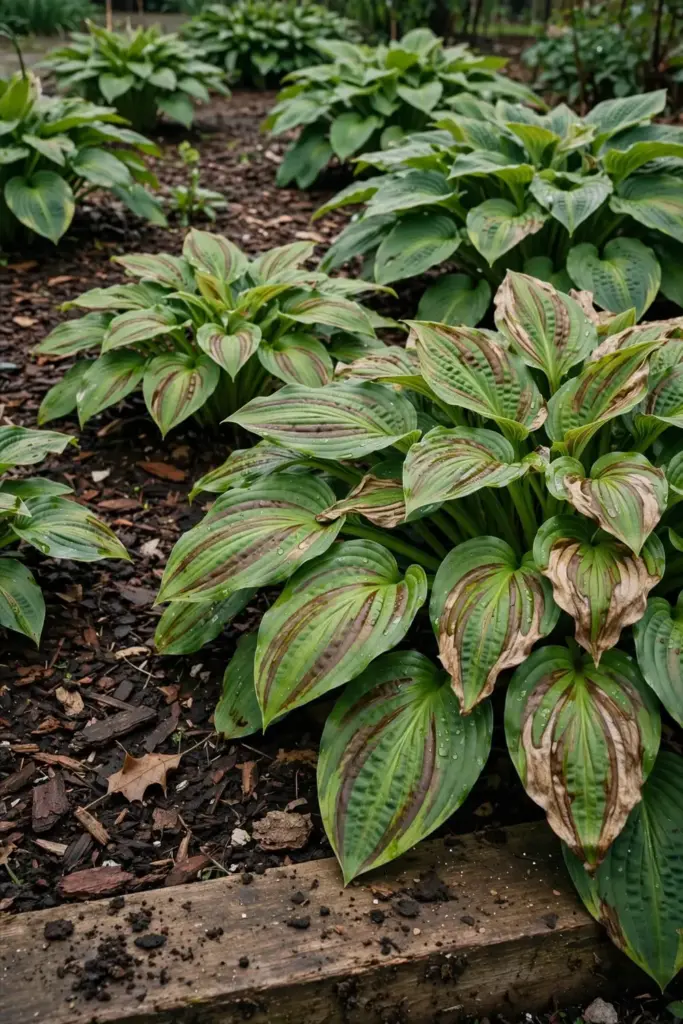
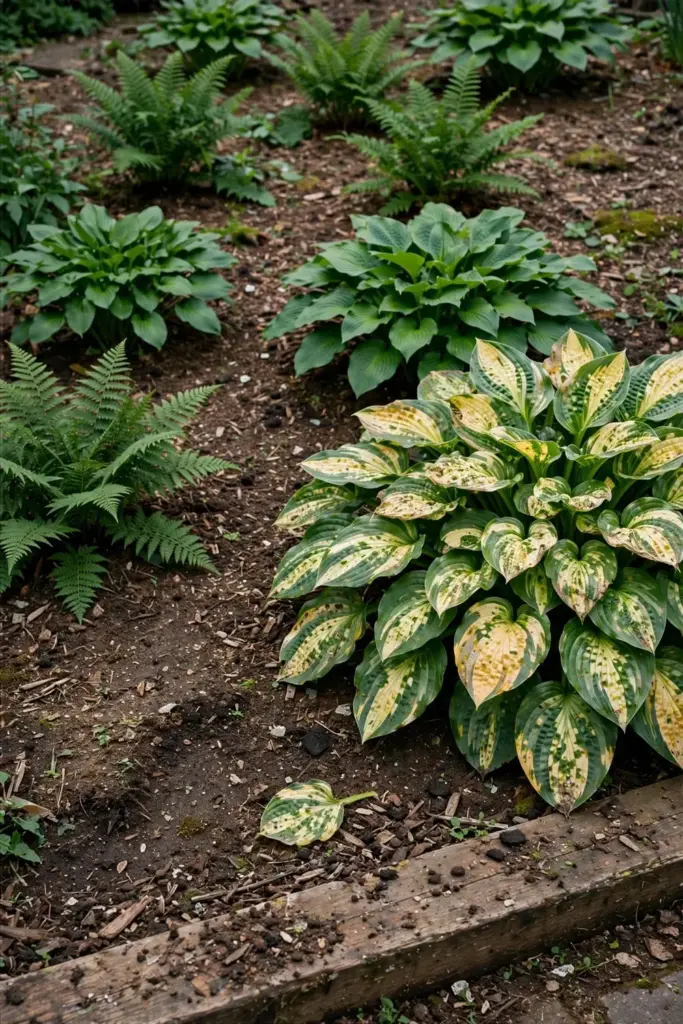
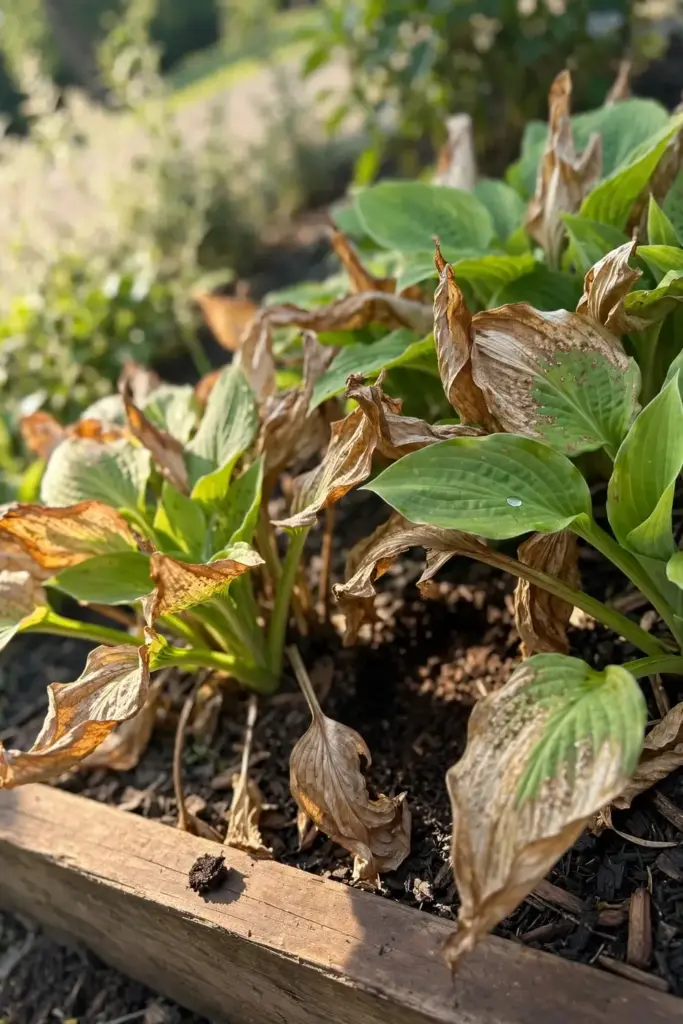
Hosta sits at the top of the risk list. Hosta leaves develop striped dead areas between the veins, according to University of Wisconsin Horticulture. Chrysanthemum, begonia, fern, strawberry, and African violet follow close behind. The table below gives the signature damage for each host.
| Host | Signature Damage | What to Watch |
|---|---|---|
| Hosta | Striped dead areas between veins | Stripes follow the leaf veins in parallel bands |
| Chrysanthemum | Angular blotches plus distorted new growth | Blotches cluster low, distortion shows at the tips |
| Begonia | General yellowing, reddening, or bronzing, often not vein-limited | The vein-bounded rule fails on begonia |
| Fern | Lesions confined to single pinnae or lobes | Damage stops at the midrib of each leaflet |
| Strawberry | Crimped, undersized leaves | Severe cases defoliate plants and cut flowering |
| African violet | Cupping and distortion of new leaves | Youngest leaves twist first |
Strawberry pays the highest price. Damage from foliar nematode is usually cosmetic and non-lethal, according to University of Wisconsin Horticulture. Severe cases on strawberry break that pattern. Extensive leaf injury and defoliation follow. Flowering drops.
Houseplants carry a secondary lane here. African violet, orchid, and Thanksgiving cactus all appear on host lists, according to Penn State Extension. Garden ornamentals carry this article. The houseplant lane stays narrow because the field evidence for indoor plants is thin next to the outdoor ornamental record.
What Foliar Nematode Damage Looks Like Next to Lookalikes
Field identification of foliar nematode stays presumptive. Several disorders produce blotches that look close enough to fool a quick glance. No single field check separates all of them cleanly. A lab assay settles close calls.
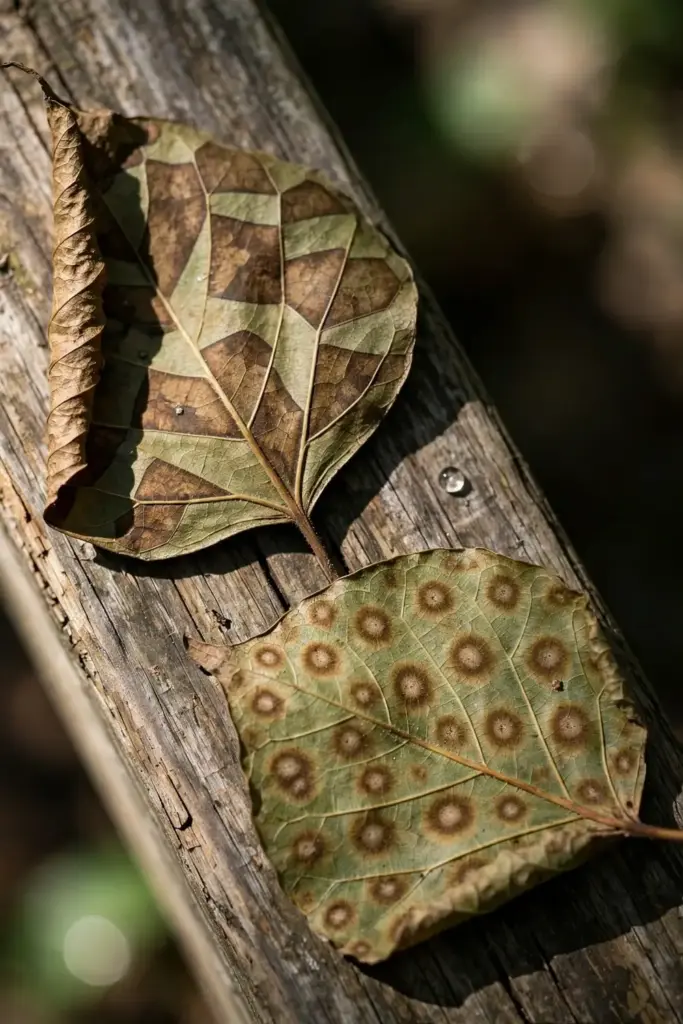
Lookalikes box. Fungal leaf spots produce round or irregular blotches that often cross veins. Bacterial angular leaf spot produces vein-bounded patches that mimic nematode damage closely. Sunscorch bleaches exposed leaf areas after heat and bright light, and nutrient deficiency shows as chlorosis that resembles iron deficiency. Chemical injury burns leaf tissue in patterns that follow spray coverage. Mites and thrips on strawberry cause crinkled leaves that resemble nematode crimp.
The confusion list runs long. Foliar nematode damage can be confused with damage caused by bacteria, fungi, viruses, nutrient deficiencies, or chemical injuries, according to the University of Florida strawberry review. When the pattern points toward bacteria rather than worms, the bacterial wilt guide covers a bacterial disease with its own field test.
Why Foliar Nematode Spreads Through Water Films
Foliar nematode spreads through water films. The worms swim in thin films of water on stems and leaves. They enter leaf tissue through stomata. They feed inside the leaf, and they cannot cross main veins while inside it. That single limit explains the whole symptom pattern. Feeding stays inside one vein-bounded zone until the food runs out. Then the worms exit and re-enter elsewhere.
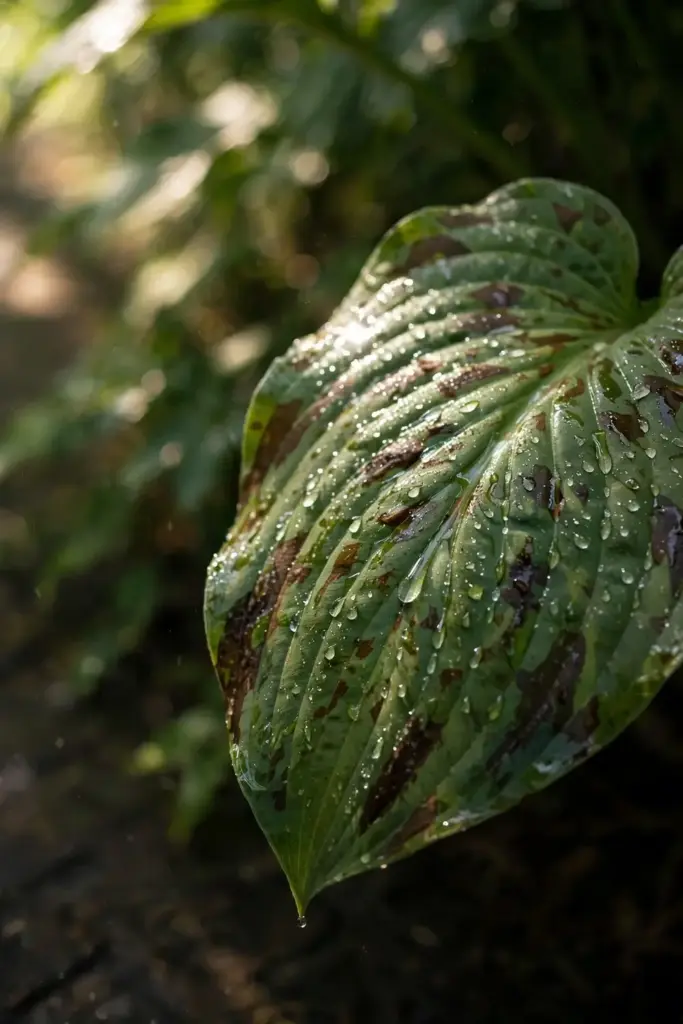
Splashing water moves the worms from leaf to leaf and plant to plant. Rain does it. Overhead watering does it. Plants with symptoms characteristically occur in scattered clumps because of the splashing of nematodes from one or two plants to neighboring plants, according to Penn State Extension. One infested plant seeds its neighbors every time water runs across its leaves.
Survival runs on dormancy. The worms enter anhydrobiosis, a dormant state induced by drought, and remain viable in dry plant tissue for 20 to 36 months, according to the University of Florida review. Moisture wakes them. Foliar nematodes can survive in dry leaves, dormant buds, and in soil, according to University of Wisconsin Horticulture. Dry conditions pause the pest. They do not kill it.
Reproduction runs fast in warm, wet weather. The life cycle runs 8 to 14 days, according to the University of Florida strawberry review. Optimum temperatures for foliar nematode development sit between 70 and 75 degrees Fahrenheit, according to Penn State Extension. Warmth plus leaf wetness builds populations in weeks.
What Makes Foliar Nematode Worse in a Home Garden
Overhead watering drives spread. Sprinklers splash worms from plant to plant and keep leaf films wet. High humidity holds those films in place. Tight spacing keeps leaves touching and wet. Working with plants while they are wet drags worms across foliage on hands and sleeves.
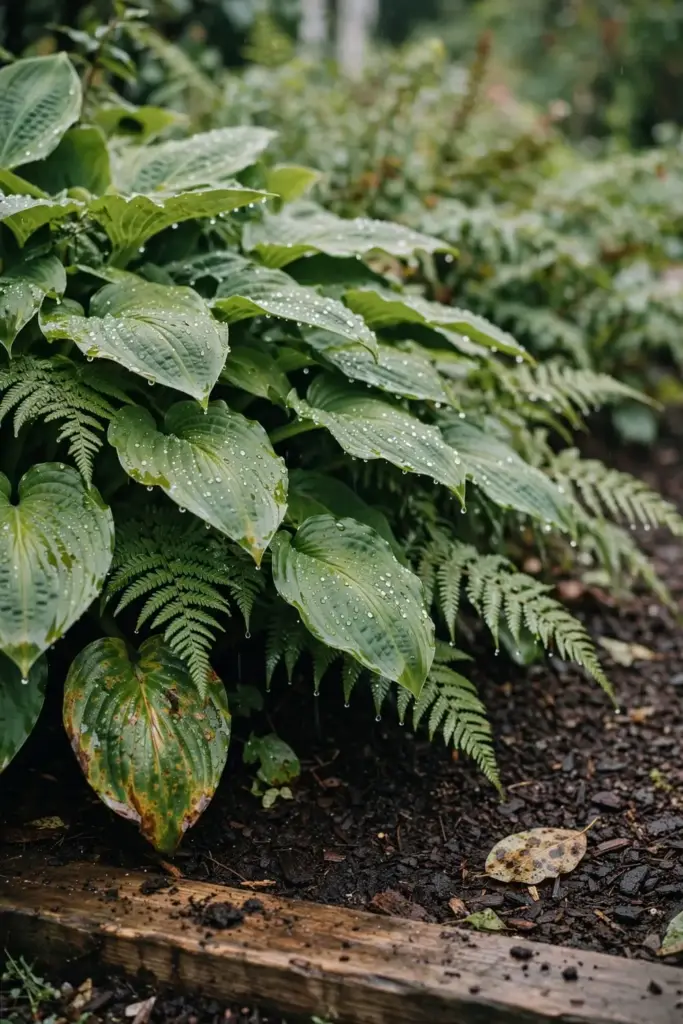
Propagation from infected stock spreads the pest silently. Foliar nematodes can be spread when infected plants are vegetatively propagated, according to University of Wisconsin Horticulture. Cuttings taken from infested plants carry the worms into new pots. Symptomless carriers make this worse. A cutting that looks clean can still harbor the pest.
Greenhouses compress every risk factor. Warmth holds near the optimum for months. Leaves stay wet between waterings. Plants stand close enough to touch. One infested cutting on a bench can seed a whole house before the first blotch shows. Home greenhouses need the same discipline as open beds, plus a hard rule against sharing water between benches.
Buying infested stock starts the cycle. Foliar nematodes are typically first introduced into a garden on infected plants brought from another location, according to University of Wisconsin Horticulture. One infested hosta can seed a bed for seasons.
Soil resists cleanup. Soil is virtually impossible to decontaminate, according to University of Wisconsin Horticulture. Avoid planting susceptible hosts in an area where foliar nematodes have been a problem. The bed keeps its history.
Step 1: Learn the Vein-Bounded Signature Check
Hold a suspect leaf to the light and trace each blotch edge. A blotch that stops dead at a vein fits foliar nematode. A blotch that crosses veins without pausing points elsewhere. Check three or four leaves, not one, because one leaf can mislead. A pattern across leaves tells the truth.
Begonia breaks this rule. General yellowing, reddening, or bronzing of begonia leaves is not limited in shape by veins, according to Penn State Extension. Do not force the vein check onto begonia. Begonia needs the lab assay in Step 9.
Fungicide wastes money on a vein-bounded blotch. Fungicides target fungi. Foliar nematode is a worm. The spray cannot reach worms inside leaf tissue, and it cannot undo the dead cells they left behind. Skip the spray. Run the rest of the steps.
Step 2: Read the Whole Pattern Before You Act
Check the neighbors before you touch the suspect plant. Foliar nematode moves by splash, so infected plants cluster. Plants with symptoms characteristically occur in scattered clumps because of the splashing of nematodes from one or two plants to neighboring plants, according to Penn State Extension. A clump of blotchy plants points to splash spread. A lone blotchy plant in a clean bed points to a recent introduction.
Read the early signs too. Early lesions look water-soaked. Yellow, brown, purple, or black wet-looking areas on leaves mark fresh feeding, according to Penn State Extension. Distorted new growth and stunting back the diagnosis. One sign alone proves little. Three signs together carry weight.
Photograph the pattern before you cut anything. A photo of the whole plant plus a close shot of one blotchy leaf gives a diagnostic clinic a head start. Photos also let you compare week to week. A blotch pattern that spreads outward from one plant fits splash. A pattern that appears everywhere at once points to a bad batch of stock.
Treating one leaf while the neighbors carry the pest wastes the effort. Walk the whole bed. Mark every plant that shows blotches. The map you build here drives Steps 5 and 6.
Step 3: Inspect Every New Plant Before It Enters the Garden
Inspect every new plant before purchase. Look at the undersides of lower leaves. Look for angular blotches, water-soaked patches, and twisted new growth. Plants may not show symptoms early in the growing season, according to University of Wisconsin Horticulture. A clean look in spring proves nothing by August.
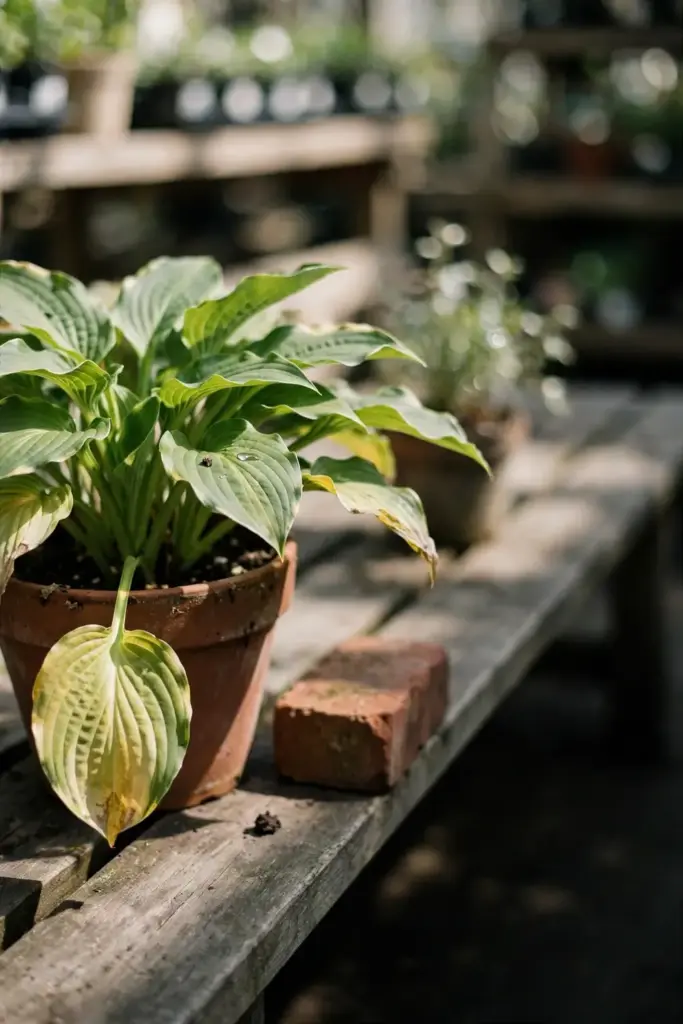
Buy healthy, nematode-free stock from a reputable supplier. Ask the seller about their sanitation. A supplier who propagates from clean mother stock earns the sale. A supplier who cannot answer the question does not.
Hold new plants apart from established hosts and watch the foliage. Watch for blotches and distortion. Keep them apart until new growth comes out clean. Starting from clean seed and sterile mix removes the risk entirely, and the seed starting guide covers clean technique from sowing to transplant.
Step 4: Keep Foliage Dry With Soil-Level Watering
Water at soil level. A soaker hose or drip line applies water directly to the soil rather than onto leaves, according to University of Wisconsin Horticulture. Overhead sprinklers splash worms from plant to plant. Drip keeps the worms grounded.
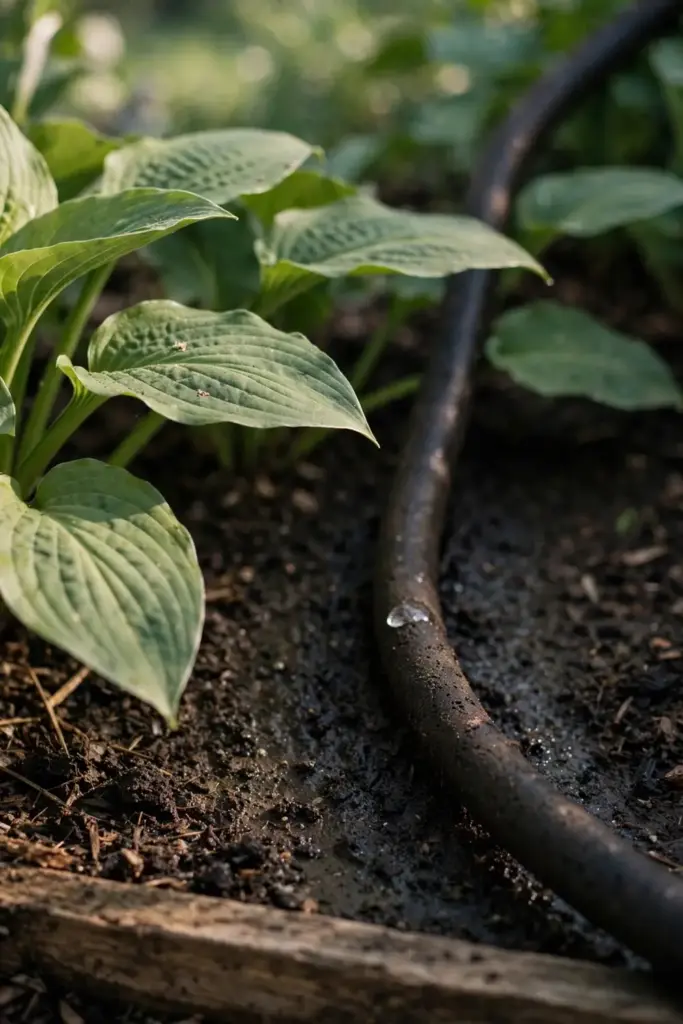
Space plants so leaves dry fast. Space plants well so that any splashing during watering is minimized, and plant surfaces dry quickly, according to Penn State Extension. Airflow dries leaf films. Dry leaf films strand the worms. Crowded beds hold moisture for hours after rain.
Water in the morning. Morning water dries incidental wetness during the day. Evening water leaves leaves wet overnight. Wet overnight leaves give the worms a full night of travel time.
Step 5: Isolate a Suspect Plant on the First Suspicious Leaf
Move a suspect potted plant away from healthy plants at the first suspicious blotch. Set it apart. Do not wait for confirmation. Days of waiting give the worms days of splash spread. Isolation costs nothing. Delay costs the bed.
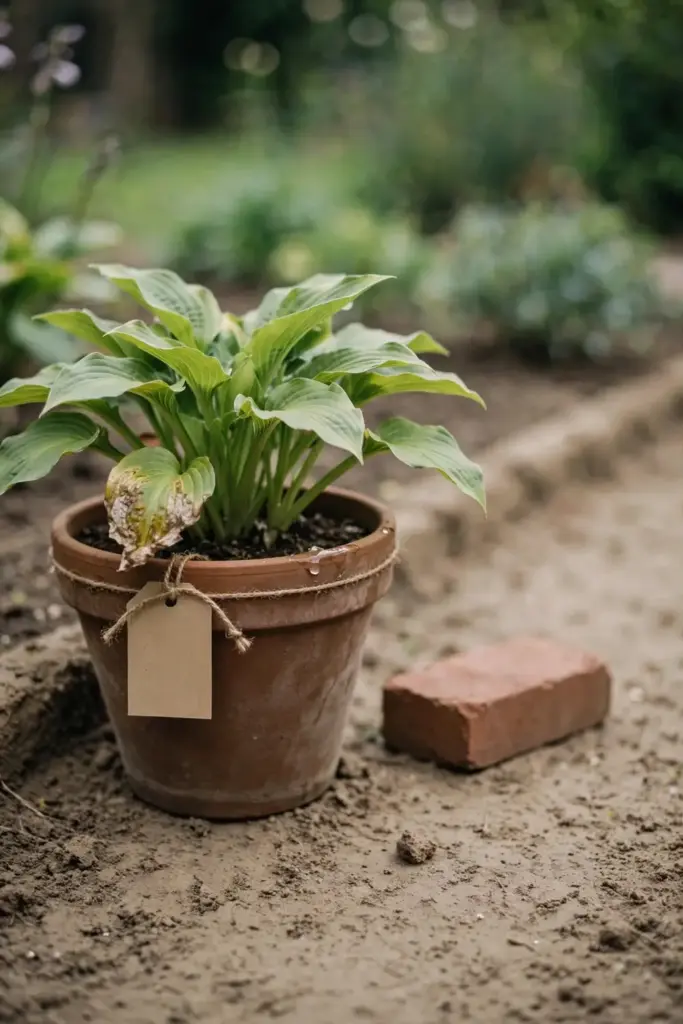
In a bed, flag the suspect and work it last. Move through healthy plants first, then the flagged plant. Minimize leaf-to-leaf contact between the suspect and its neighbors. Tie back or prune neighboring foliage that brushes the suspect.
Avoid working with plants when they are wet, according to University of Wisconsin Horticulture. Wet hands and wet sleeves carry worms. Dry plants first. Then prune, tie, or inspect.
Label the isolated plant. A tag that reads suspect plus the date stops a helpful visitor from moving it back into the bed. Tags also keep your own memory straight. A plant that sat apart for a month with no new blotches earns a second look. A plant that keeps blotching earns the bag.
Step 6: Remove and Destroy Infected Leaves and Plants
Dig up infected plants, bag them, and remove them from the garden as soon as you notice symptoms, according to University of Wisconsin Horticulture. Bagging stops splash during the carry-out. An unbagged armful drips worms across every bed it passes.
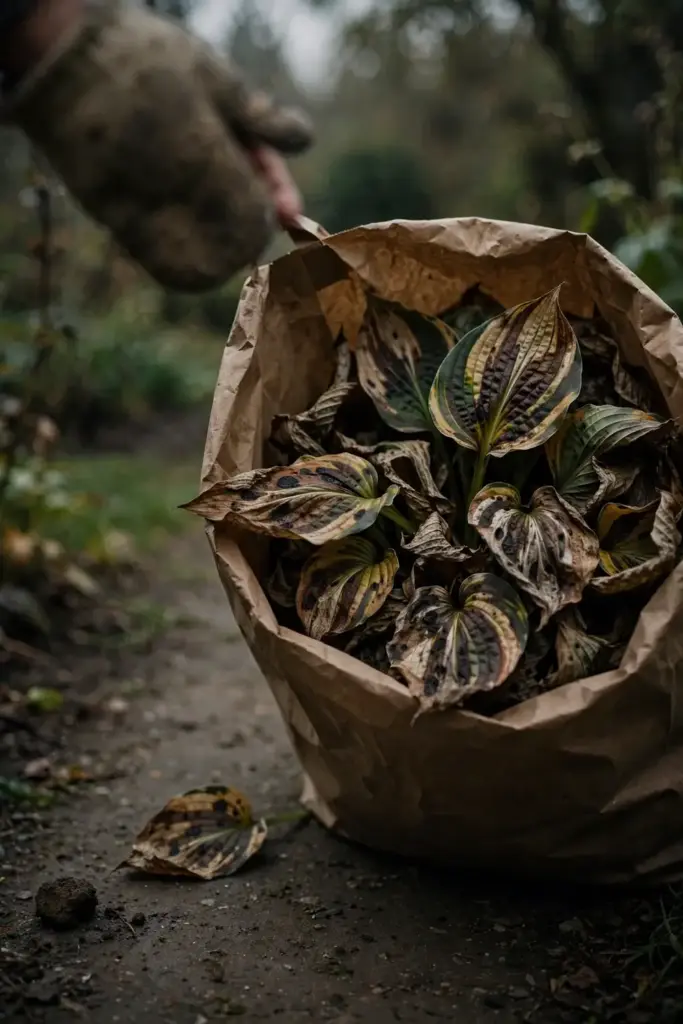
Remove infected leaves selectively when symptoms just started. Michigan State University Extension notes that growers can selectively remove leaves from plants just expressing symptoms of foliar nematode damage. Cut the leaf, bag it, and wash your hands after. Selective removal buys time. It does not cure the plant.
Never compost infected material. Home compost piles rarely sustain the heat that kills dormant worms. The worms survive in dry leaves, according to University of Wisconsin Horticulture. Composted debris returns the pest to the bed. Trash the material or send it to municipal waste.
Step 7: Sanitize Tools, Hands, Pots, and Benches
Decontaminate everything that touched an infected plant. Decontaminate tools, pots, and bench surfaces for 30 seconds with either 70 percent alcohol or 10 percent bleach, according to University of Wisconsin Horticulture. Rinse bleach off metal tools and oil them to prevent rusting. Alcohol needs no rinse.
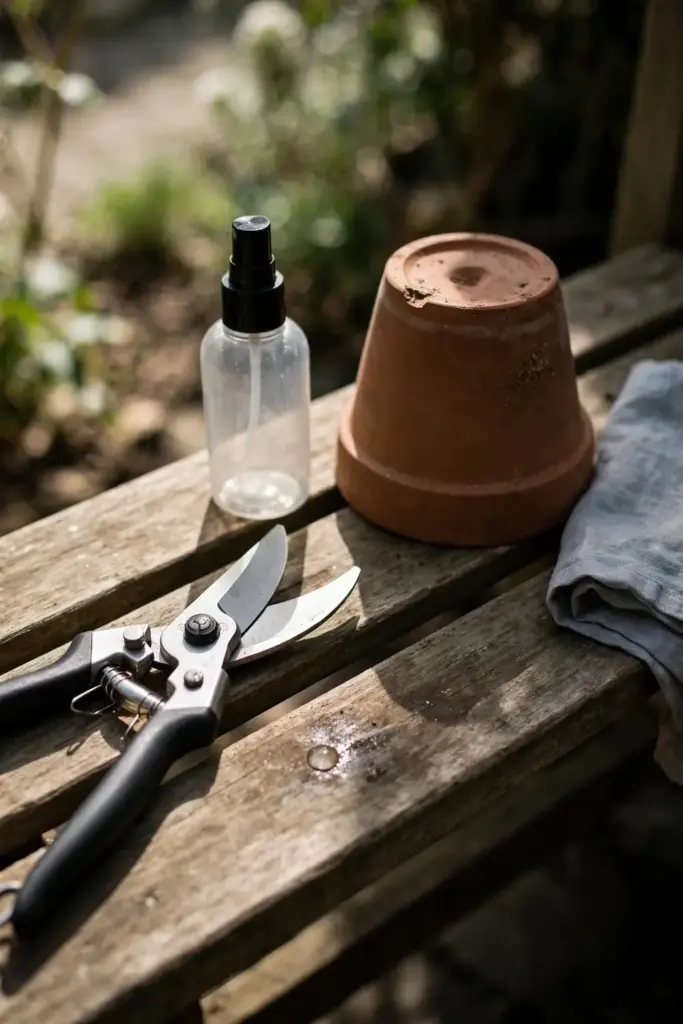
Wash your hands with soap and water after working with infected plants, according to University of Wisconsin Horticulture. Hands carry worms in the same water films that carry them across leaves. Soap and water break the film. Change gloves between beds if you wear them.
Clean the bench too. Pots, trays, and bench surfaces hold the same films. A clean bench keeps the next batch of cuttings clean. Sanitation runs every time you touch a suspect plant, not once at season end.
Step 8: Reserve Hot-Water Treatment for High-Value Dormant Stock
Hot-water treatment is not a home-garden method. Hot water treatments have been developed to treat high-value plants but are not recommended for home gardeners, according to University of Wisconsin Horticulture. Exact temperatures and timings vary by plant type. Missteps in timing or temperature can kill plants or leave nematodes alive.
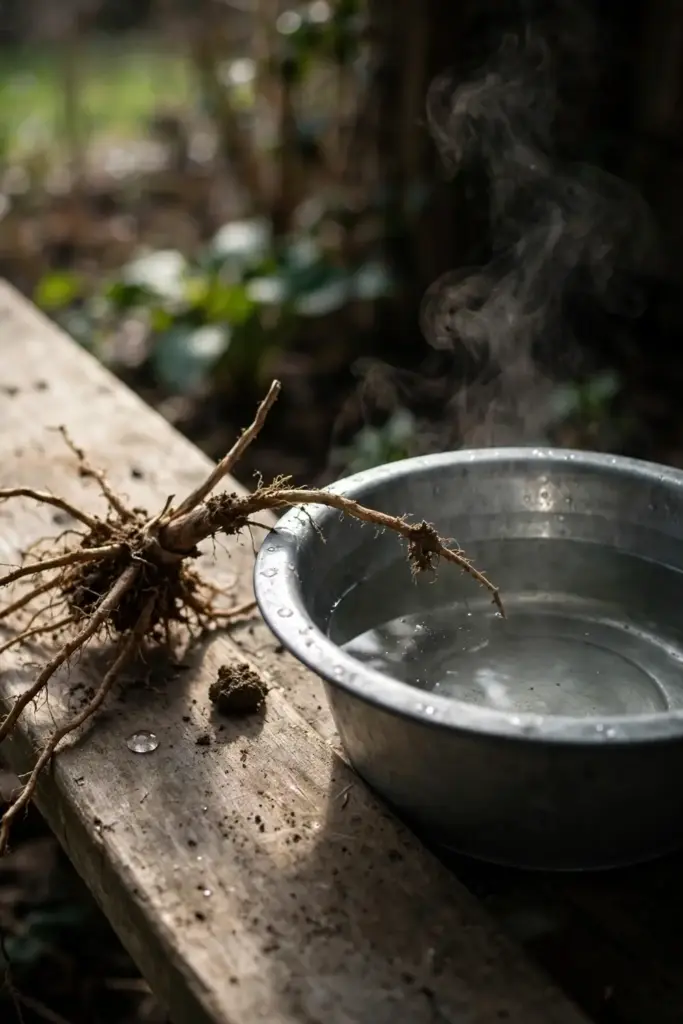
Published nursery parameters show how precise the method runs. A University of Florida strawberry review records that nematodes suspended in water died at 48 degrees Celsius for 20 minutes or 47 degrees Celsius for 30 minutes. Cuttings can be disinfected by dipping them in hot water at 122 degrees Fahrenheit (50 degrees Celsius) for 5 minutes or at 111 degrees Fahrenheit (44 degrees Celsius) for 30 minutes. Those figures describe nursery work with controlled baths. They are evidence of precision, not a home recipe.
Guessing the temperature fails both ways: water a few degrees cool leaves the worms alive, and water a few degrees hot cooks the plant. For a plant worth saving, ask your local Extension diagnostic clinic before you heat water. The clinic can confirm the diagnosis and advise on whether treatment fits your plant.
Step 9: Accept the Honest Limits and Confirm With a Lab Assay
Eliminating foliar nematodes is virtually impossible, according to University of Wisconsin Horticulture. No chemical products are available for foliar nematode control in home gardens. That sentence is the honest core of this article, and sanitation, clean stock, dry foliage, and discard are the control. Nothing else carries the plan.
Insecticides do not change that verdict. While some insecticides greatly suppress the activity of foliar nematodes and can reduce the nematode population, none are known to totally eliminate foliar nematodes from an infected plant, according to Penn State Extension. The rate needed to suppress the worm can injure the plant. Suppression is not elimination.
Fungicides, insecticidal soap, and neem oil do not cure foliar nematode. One home-garden blog mentions insecticidal soap and neem oil for chrysanthemum. That mention is unverified. Do not treat it as a recommendation. A single uncorroborated mention never outweighs Extension guidance.
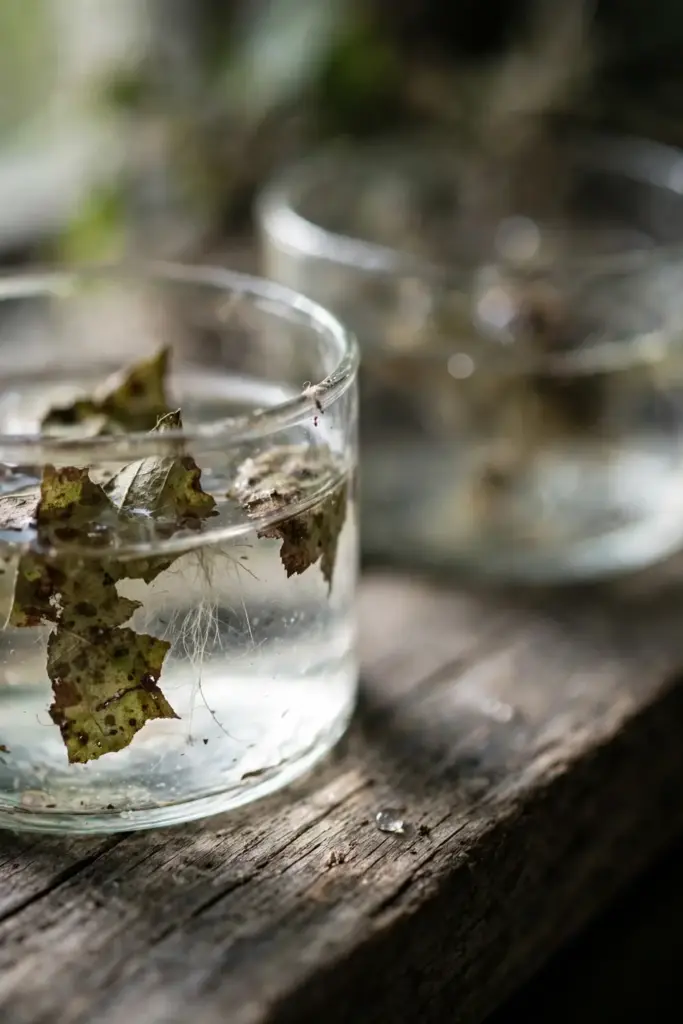
Confirm before you destroy a valuable plant. Tear symptomatic tissue into small pieces in a drop of water in a clear container, according to Penn State Extension. Soak the pieces for a few minutes. Look with at least 10X magnification for small worms moving in rapid, snake-like motions. A dark background and correct lighting make the worms visible. For a firm identification, send a sample to your state plant diagnostic clinic.
Living With Foliar Nematode in a Garden That Already Has It
A garden with foliar nematode is not a dead garden. It is a managed garden. Keep foliage dry. Buy clean stock. Discard infected material fast. Avoid planting susceptible hosts in an area where foliar nematodes have been a problem, according to University of Wisconsin Horticulture. The discipline runs every season, because dormant worms wait longer than any gardener’s memory.
I have learned that a garden with foliar nematode rewards dry leaves more than any spray.
Keep a notebook of which plants showed symptoms and which year. The notebook stops next spring from repeating this spring. The soil health guide covers the soil biology that keeps plants vigorous enough to tolerate light pressure.
Root-knot nematode lives a different life. Root-knot nematodes feed in roots and soil. Foliar nematodes feed in leaves, buds, and stems. The two syndromes need different tests and different responses. Do not merge them.
Replace the worst-hit hosts with non-host plantings over time. A bed that loses hostas every August can hold plants outside the host list. Distance breaks the splash chain. New plantings go in with clean stock, wide spacing, and drip lines from day one.
Frequently Asked Questions
Usually no. Damage from foliar nematode is usually cosmetic and non-lethal on ornamentals, according to University of Wisconsin Horticulture. Leaves look blotchy and plants lose sale appeal. Severe cases on susceptible hosts break that pattern. Strawberry can suffer extensive leaf injury, defoliation, and lost flowering. Treat the pest as a quality problem with a severe tail, not as an automatic plant killer.
No. Fungicides target fungi. Foliar nematode is a worm that lives inside leaf tissue. Sprays cannot reach worms inside leaves, and they cannot undo dead cells. University of Wisconsin Horticulture states that no chemical products are available for foliar nematode control in home gardens. Sanitation, clean stock, dry foliage, and discard carry the whole plan. Save the fungicide budget for a disease it can actually touch.
Run the water-soak check. Tear symptomatic tissue into small pieces in a drop of water in a clear container, according to Penn State Extension. Soak the pieces for a few minutes. Look with at least 10X magnification for small worms moving in rapid, snake-like motions against a dark background. For a firm identification, send a sample to your state plant diagnostic clinic. Field signs stay presumptive until the assay confirms them.
Not as a home method. Hot-water treatments exist for high-value plants but are not recommended for home gardeners, according to University of Wisconsin Horticulture. Exact temperatures and timings vary by plant type. A misstep kills the plant or leaves nematodes alive. Published nursery parameters run precise to the degree and the minute. For a plant worth saving, ask your local Extension diagnostic clinic before you heat water.
They can reach many hosts, but spread needs water films. A University of Florida review documents more than 700 host species across 126 families. That breadth sounds alarming. Splash spread still limits the pace. Dry foliage, spacing, soil-level watering, and fast removal of infected material slow the pest to a crawl. The host list is wide. The transmission route is narrow. Close the route and the list matters less.
Months to years in dry tissue. The worms enter anhydrobiosis, a dormant state induced by drought, and University of Florida researchers report they remain viable in dry plant tissue for 20 to 36 months. Moisture wakes them. Dry leaves, dormant buds, and debris all harbor dormant worms. That dormancy is why bag-and-trash beats compost, and why a bed keeps its history across seasons.
Where to Go From Here
Foliar nematode rewards fast identification and steady sanitation. Learn the vein-bounded check, keep foliage dry, and inspect new stock. Bag and trash infected material. Sanitize tools after every suspect plant. Confirm close calls with a lab assay.
Tell the nursery when you find an infested plant. A supplier who hears about a bad batch can pull the rest before it spreads to other gardens. Silence protects no one. A short note with the plant name, the purchase date, and a photo of the blotches gives the seller what they need to act.
Start at the leaf in front of you. Hold it to the light. Trace the blotch edges. If the veins wall the damage off, run the 9 strategies in order. The blossom blight guide is a useful companion read if you are building a broader disease-identification habit, since it trains the same look-closely-at-symptoms approach.