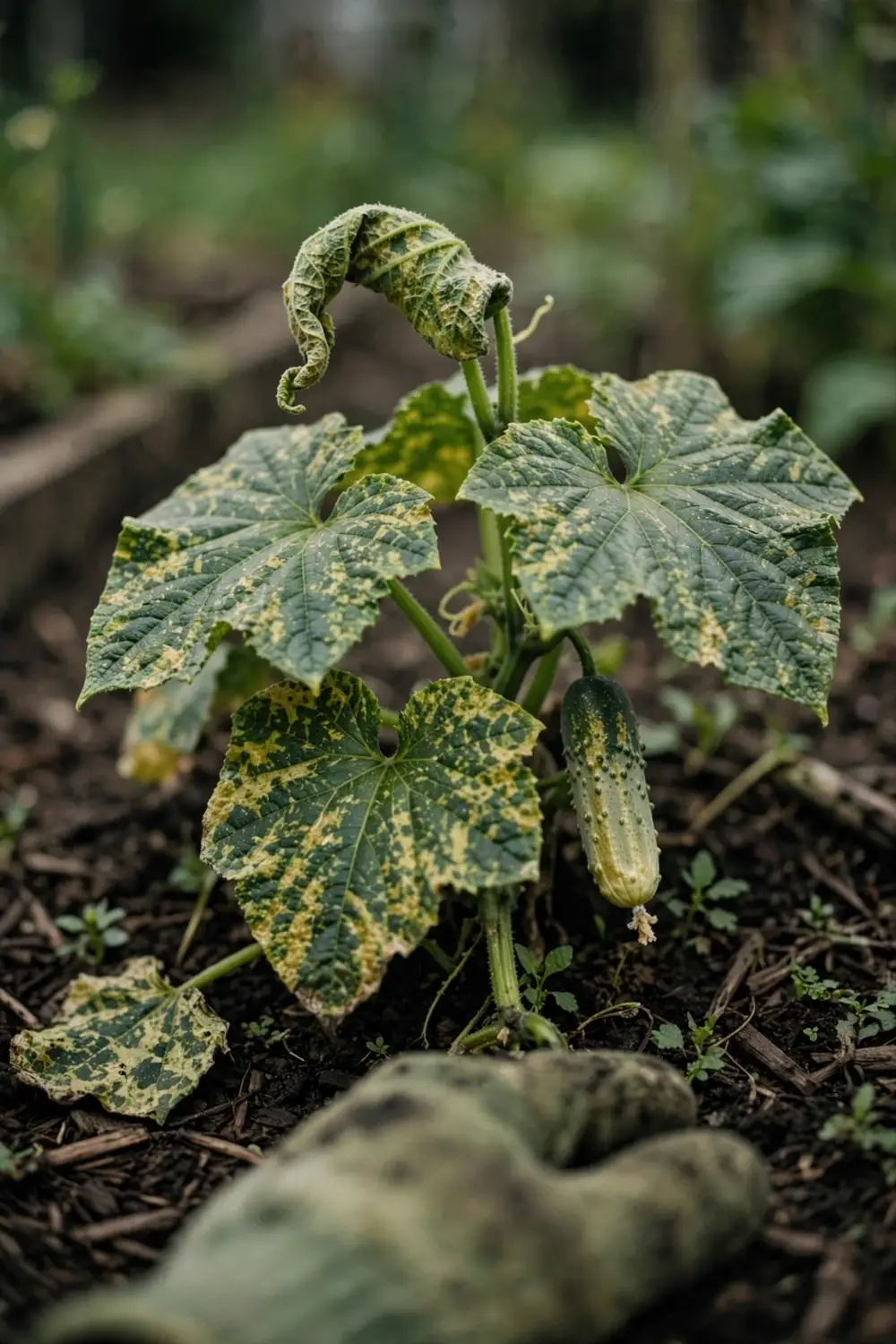

Cucumber mosaic virus has no cure once it infects a plant. Aphids spread cucumber mosaic virus in seconds, and one infected plant can seed a whole bed with virus before its leaves show a single mottle. The 10 strategies below protect the plants around the sick one, starting with the discard call that stops the spread.
The virus hides behind ordinary-looking damage. Leaves mottle in light and dark green. Young leaves narrow to shoestrings. Fruit comes in small, blotched, and bitter, and the plant stalls while its neighbors keep growing. That gap between infection and obvious symptoms is why prevention beats treatment in every home vegetable bed, greenhouse, and patio collection.
The rest of this page is 10 moves, from identification to clean starts next season. Read the identification sections first if the plant still stands. Start at Step 1 if the plant already shows mosaic mottling and stunting.
What Cucumber Mosaic Virus Actually Is
Cucumber mosaic virus is a plant virus that infects a broad host list and travels on aphid mouthparts. Cucumber mosaic virus sits in the genus Cucumovirus. The virus moves systemically through an infected plant, and the plant stays infected for the rest of its life.
Cucumber mosaic virus infects more than 1,200 plant species, from cucumbers and tomatoes to spinach, lettuce, beans, celery, and ornamentals. That breadth means one sick plant threatens a mixed bed. Peanut stunt virus sits in the same genus and shares aphid vectors, yet it is a different virus with its own hosts, and this page does not cover it.
About 80 aphid species transmit cucumber mosaic virus in a nonpersistent manner. An aphid picks the virus up while probing a leaf and loses it quickly, so the insect stays infectious for a short stretch only. Cucumber beetles can also carry the virus, and Bayer lists them as a secondary vector behind aphids.
No spray cures cucumber mosaic virus. The virus lives inside living plant tissue, and no chemical reaches it there. Penn State Extension states that no chemicals cure an infected plant or protect a healthy one. Certified virus-free seed and plants matter because infected transplants carry cucumber mosaic virus into clean beds.
How to Identify Cucumber Mosaic Virus on Leaves and Stems
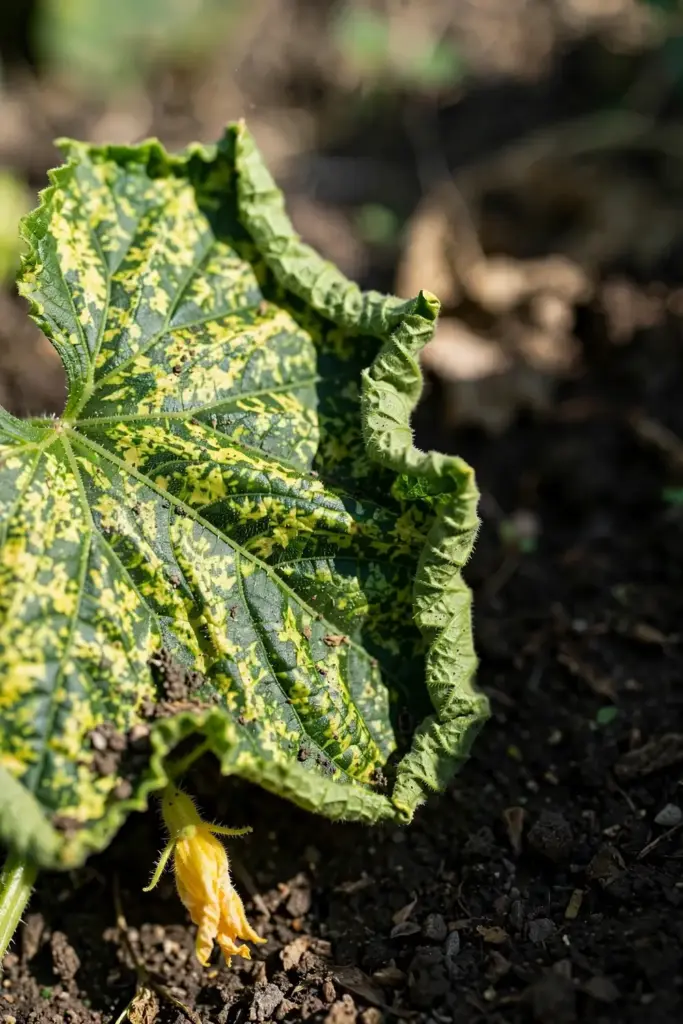
Cucumber mosaic virus shows on leaves as a mosaic of light and dark green, plus stunting and distortion. Young leaves show the pattern first. The mottling deepens as the infection spreads through the plant, and distorted new growth follows.

On tomato, expanding leaves twist, curl downward, and narrow to a shoestring band along the midrib. Kansas State Extension gives that description. Older tomato leaves yellow and mottle. Growth stalls, and the plant sets little fruit once the infection takes hold early.
On cucumber and squash, leaves curl downward, show yellow and green mosaic, and shrink. On pepper, leaves show oak-leaf patterns and necrotic spots with yellow halos, and stems can die back, and Ohio State University Extension lists those marks. Symptoms vary by host, variety, and infection age, so no single leaf mark proves the virus on its own.
Eyes alone cannot confirm cucumber mosaic virus. The University of Wisconsin Plant Disease Diagnostics Clinic notes that symptoms vary widely by host and timing, and virus diseases need lab testing for a firm diagnosis. A test kit or a lab test names the virus. Inspect the growing tip while you wait, because stunted and distorted new growth on a mottled plant points hard toward virus.
How to Identify Cucumber Mosaic Virus on Fruit and Flowers
Cucumber mosaic virus marks fruit with mottling, bumps, and poor color, and it shrinks the harvest. Fruit symptoms arrive after leaf symptoms on most hosts, and fruit from an early infection suffers the worst damage.
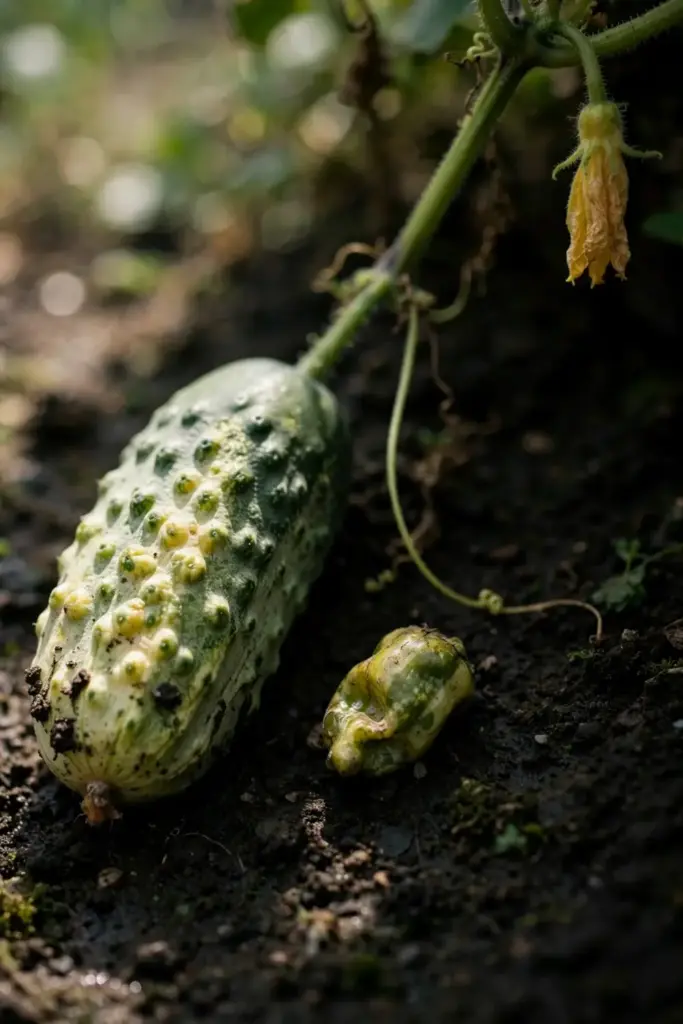
Cucumber fruit from infected plants carries warty bumps and blotchy color, and Washington State University Extension notes the fruit usually tastes bitter. Melon vines decline early under cucumber mosaic virus, and Cornell University links early muskmelon vine decline to this virus. Fruit that ripens unevenly on a mottled plant fits the pattern.
Tomato fruit from infected plants shows internal browning, and Ohio State University Extension gives that description. Pepper fruit stays small with thin walls. Fruit ripens late and unevenly, and the plant drops yield while the canopy still looks partly green.
On ornamentals, cucumber mosaic virus distorts leaves and flowers and stunts the plant. The University of Connecticut IPM program lists petunia, dahlia, delphinium, geranium, phlox, zinnia, and viola among ornamental hosts. Flower symptoms alone can pass for nutrition trouble. Flower symptoms plus mosaic leaves point toward virus. Cymbidium mosaic virus attacks orchids and shares the word mosaic only, and it is a different virus on a different host.
Which Plants Get Hit Hardest by Cucumber Mosaic Virus
Cucurbits, tomatoes, and peppers take the hardest hits from cucumber mosaic virus in home gardens. Cucumbers, squash, melons, tomatoes, and peppers head the risk list, and early infection hurts them most.

Cucumbers, squash, and melons catch cucumber mosaic virus early and show it hard. Early infection stops the plant before fruit sets. Late infection marks the fruit and cuts quality, and the plant keeps growing while the fruit stays unsellable.
Tomatoes show shoestring leaves and stunting. Peppers show oak-leaf patterns and stem necrosis. Both set little fruit once infected young, and both pass the virus to aphids that feed on them.
Spinach, lettuce, celery, beans, and beets host cucumber mosaic virus too. Perennial weeds host cucumber mosaic virus without showing symptoms, and Kansas State Extension notes infected weeds carry the virus through winter. That silent reservoir is why weed control sits in the strategy list below.
Cucumber Mosaic Virus vs Tobacco Mosaic Virus
Cucumber mosaic virus and tobacco mosaic virus both mottle leaves, and the vector splits them. Aphids spread cucumber mosaic virus. Hands, tools, and debris spread tobacco mosaic virus.

Both viruses stunt plants and cut yield. The University of Connecticut IPM program notes that both diseases cause stunting and lower yield, with symptoms that vary by plant age, variety, virus strain, and weather. The table below separates them on the clues a gardener can use.
| Clue | Cucumber Mosaic Virus | Tobacco Mosaic Virus |
|---|---|---|
| Vector | Aphids, nonpersistent | Hands, tools, debris, and contact; no insect vector needed |
| Host range | More than 1,200 plant species | Broad, centered on tomato, tobacco, pepper, eggplant, and potato |
| Seedborne in tomato | No | Yes, in viable seed |
| Persistence | Cannot withstand drying; does not persist in soil or debris | Very stable; persists on tools, hands, debris, and in soil for years |
| Speed in the garden | Slower; progresses unevenly from plant to plant | Faster; spreads with every touch |
| Leaf symptoms | Light and dark green mosaic, shoestring on tomato | Blotchy light and dark mosaic, cupping, curling, and strapping |
| Best defense | Aphid barriers, clean stock, and roguing | Sanitation, clean tools, and keeping tobacco products out of the garden |
The persistence gap decides the hygiene plan. Unlike tobacco mosaic virus, cucumber mosaic virus is not seedborne in tomato and does not persist in plant debris in soil or on hands or clothing. Tobacco mosaic virus survives for decades in stored debris, and the University of Wisconsin Plant Disease Diagnostics Clinic reports that stability. Hygiene still matters for cucumber mosaic virus because sap on tools moves it plant to plant, and the virus moves faster when gardeners work sick plants first.
Thrips carry a different pair of viruses, tomato spotted wilt virus and impatiens necrotic spot virus. Those two belong to another virus group and spread without aphids. The strategies below target aphids, so they do not control thrips viruses.
How Herbicide Damage Differs From Cucumber Mosaic Virus
Phenoxy herbicide injury mimics cucumber mosaic virus leaf distortion, and the mimicry fools gardeners every season. Kansas State Extension notes the confusion. The split is simple.
Herbicide hits all plants uniformly. Plants exposed to low levels may recover. Cucumber mosaic virus hits plants unevenly, and infected plants never recover, so a bed with sick plants standing beside healthy ones points toward virus rather than spray drift.
Herbicide injury also marks other broadleaf plants across the area. Virus damage stays patchy, with one sick plant in a row of healthy ones. Kansas State Extension gives that split, and a lab test settles close calls.
Why Aphids Spread Cucumber Mosaic Virus So Fast
Aphids spread cucumber mosaic virus fast because pickup and delivery take seconds. The aphid needs no long feed to move the virus, and a single probing visit can infect a healthy plant.
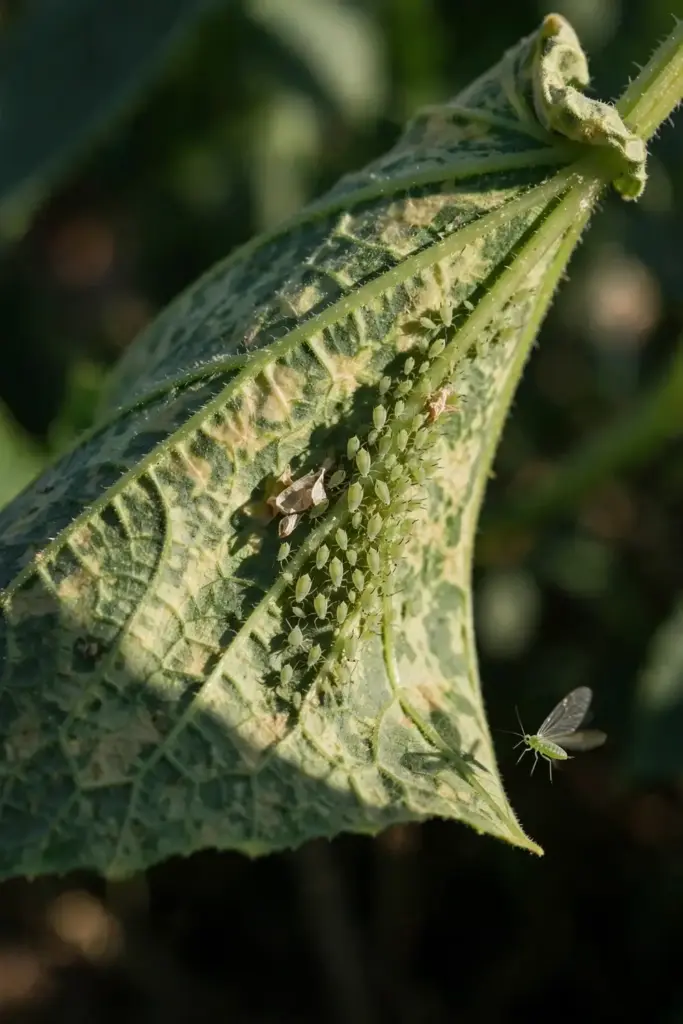
The University of Delaware Extension puts nonpersistent acquisition and transmission at seconds to about a minute. A probing aphid can infect a plant and move on before any spray kills it. That timing is the whole reason sprays fail against this virus.
Aphids retain the virus for minutes to a few hours, so spread stays rapid and local. Moving aphids spread cucumber mosaic virus. Settled colonies spread it less, because the virus moves when aphids move through the crop rather than when they colonize plants.
Ohio State University Extension puts the aphid-friendly window at 70 to 85 degrees Fahrenheit, and warmer or colder air slows aphid reproduction. Warm spring flights bring the first infections. That speed is why barriers beat sprays in every strategy below.
What Makes Cucumber Mosaic Virus Worse in a Home Garden
Aphid flights, weed reservoirs, and old infected plantings make cucumber mosaic virus worse. Each one feeds the next infection, and the three together turn a single sick plant into a bed-wide problem.
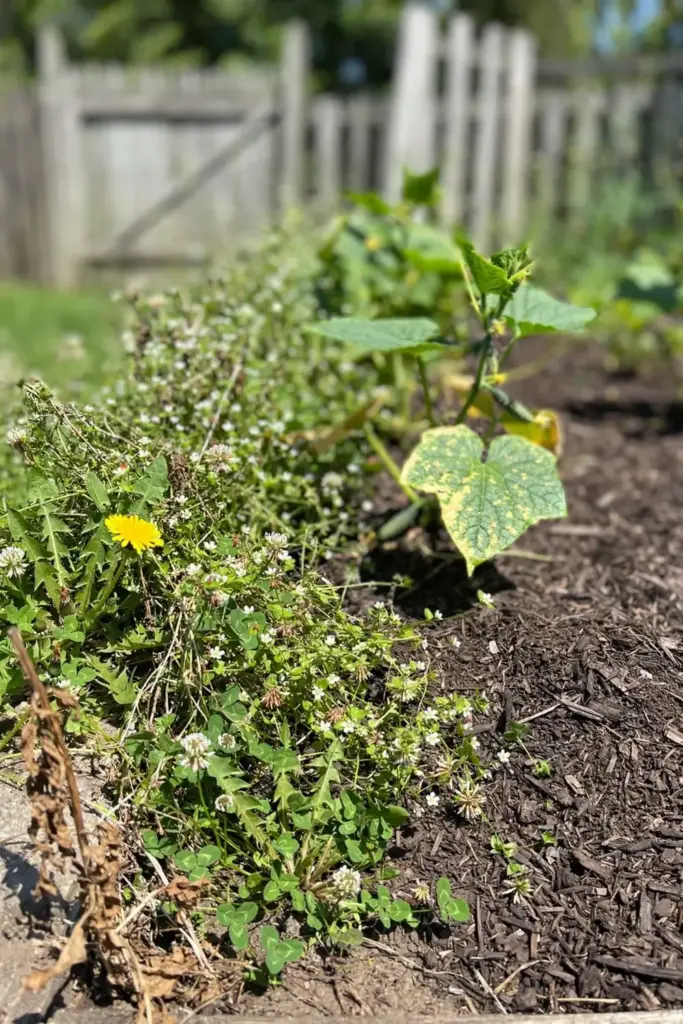
Perennial weeds carry cucumber mosaic virus without symptoms. Spring growth draws aphids to infected weeds first, and Cornell University notes the virus overwinters in perennial weed sources. University of Maryland Extension lists chickweed, clover, curly dock, dandelion, milkweed, and nightshade among weed hosts. A bed with clean rows and weedy edges still holds a reservoir.
Older cucurbits and perennial ornamentals hold virus near new plantings. New transplants beside an old infected bed catch cucumber mosaic virus first. Dense mixed beds let aphids hop plant to plant without ever leaving the canopy.
Heat and plant stress sharpen symptoms. High temperatures aggravate cucumber mosaic virus symptoms, and Utah State University Extension notes that pattern. Early infection hurts most. A University of California, Davis scouting guide notes plants infected before flowering lose the most yield, and late infection costs less.
Greenhouses concentrate the risk. Warm air, dense planting, and year-round hosts let aphids feed without a break. Screen vents, space plants for airflow, and pull infected plants the day symptoms show. A greenhouse that holds virus through winter seeds the spring crop.
Step 1: Decide Whether Saving This Plant Is Worth It
Pull the infected plant when symptoms cover the canopy and fruit already shows damage. Nursing it costs the season. It spreads virus to neighbors, and no product reverses that trade.

No spray reverses cucumber mosaic virus inside a plant. Penn State Extension states that no chemicals cure an infected plant or protect a healthy one. Fungicides cannot treat a virus, and a fungicide marketed for cucumber mosaic virus wastes money and misleads the gardener.
The exception is a plant you test. A lab test that comes back negative saves a plant that only looks viral. Without a test, removal is the honest call. A transplant costs little. A season nursing a dead plant costs the whole bed.
Testing beats guessing when the plant matters. A diagnostic lab or an on-site test kit names the virus, and the result decides the plant’s fate with evidence instead of suspicion. Test the plant before you pull a rare variety or a whole row. A negative result saves a plant that only looks viral. A positive result makes the removal call easy.
Step 2: Rogue the Plant and Sanitize Every Tool It Touched
Pull infected plants whole, roots and all, and bag them for municipal waste. Never compost them. The University of Wisconsin Plant Disease Diagnostics Clinic lists removal and destruction among the core defenses against cucumber mosaic virus.
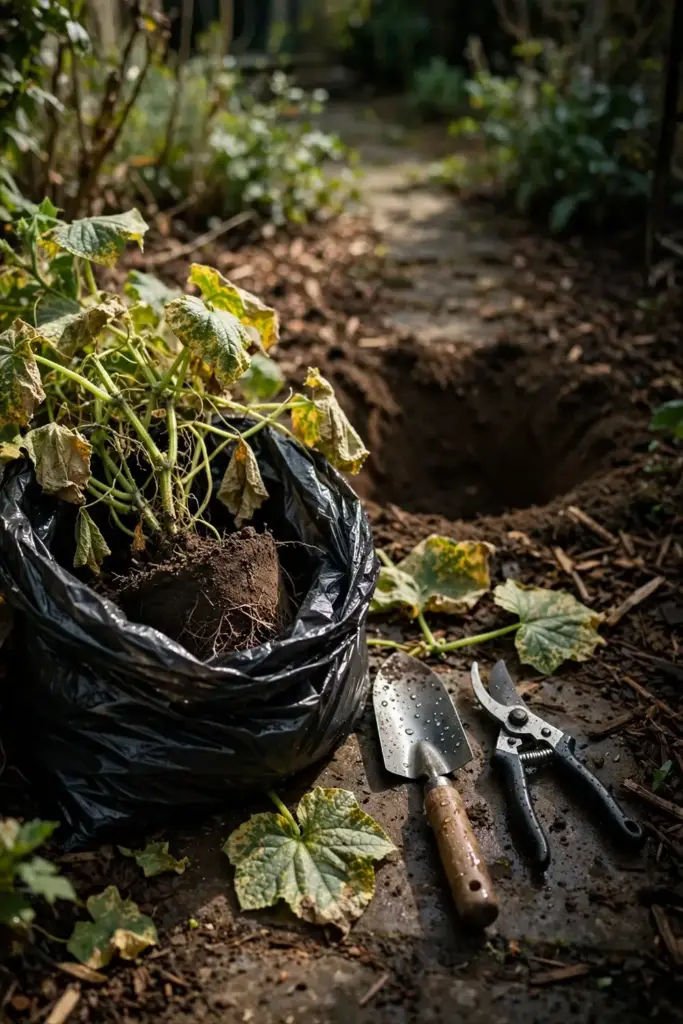
Wash tools after working sick plants. Disinfect tools used for vegetative propagation, and Penn State Extension gives that rule. Work sick beds last. Move through healthy beds first, then the infected bed, so hands and tools never carry sap from sick to healthy. Wash hands with soap and water after handling infected plants.
Change gloves between beds if you wear them. Clean the tools again before you put them away. A clean tool rack is part of the treatment, because sap on a blade moves cucumber mosaic virus as surely as an aphid does.
Step 3: Start With Certified Virus-Free Seed and Resistant Varieties
Buy certified virus-free seed and plants, and choose cucumber mosaic virus resistant varieties where catalogs list them. Clean stock is the cheapest prevention in this plan, and it works before a single aphid lands.
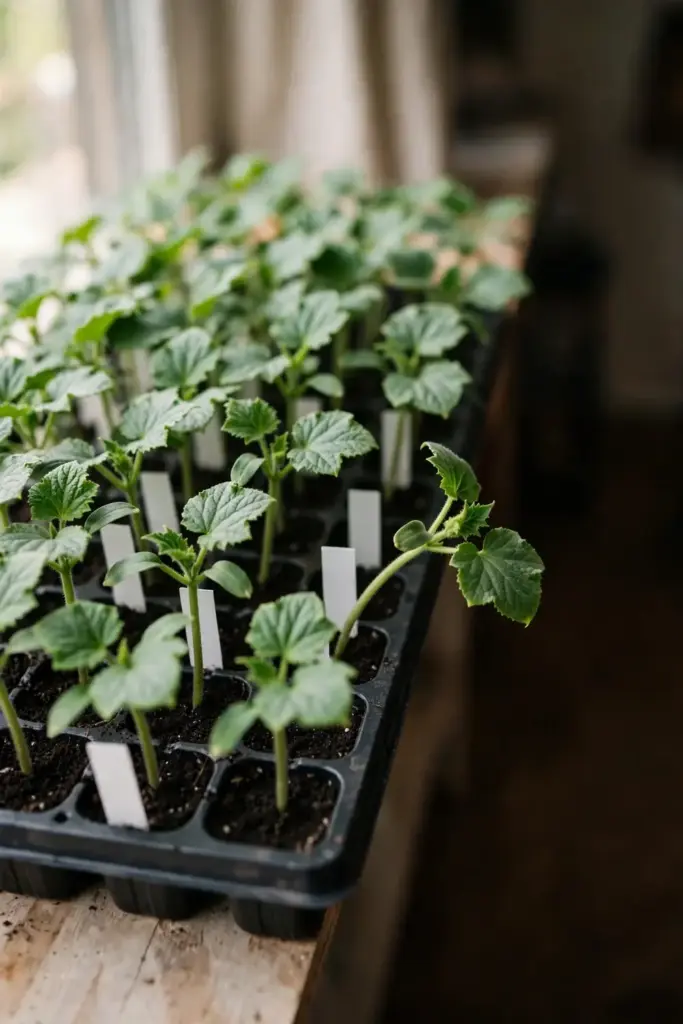
Seed catalogs print cucumber mosaic virus resistance information, and the University of Wisconsin Plant Disease Diagnostics Clinic points gardeners to those listings. South Dakota State University Extension calls genetically resistant varieties the best option for producers. Resistance varies by crop. The University of Delaware Extension notes cucumber has many more resistant cultivars than squash or pumpkin.
Start seed in fresh sterile mix. The seed starting guide covers clean technique from sowing to transplant. Inspect every transplant before it leaves the store. Any stunted, mottled, or off-color seedling stays behind.
Step 4: Clear Weed Hosts and Mulch to Suppress Them
Clear weed hosts around the garden and mulch to keep them down. Weed control cuts both the virus reservoir and the aphid habitat, and it pays off all season.

Pull perennial weeds in and around the garden. The University of Wisconsin Plant Disease Diagnostics Clinic advises removing weed hosts whenever possible. Mulch vegetable and ornamental gardens to inhibit weed growth, and the same clinic gives that rule. A mulched bed starves weeds of light and keeps the soil surface cool and even.
Check bed edges, fence rows, and ditch banks. Weeds at the edge host cucumber mosaic virus as surely as weeds in the bed. Keep the garden edge mowed and clear through the season, and pull new weeds before they set seed.
Step 5: Use Reflective Mulch to Repel Aphids
Lay silver reflective mulch under susceptible plants to repel aphids and delay infection. Reflected light confuses aphids before they land and probe, and a confused aphid is an aphid that never transmits the virus.

Studies cited by UF/IFAS Extension found silver reflective plastic mulch repels aphids and reduces or delays virus infection. The mulch works best early, before aphid flights peak. Late mulch on an already infected bed helps little, because the virus inside the plant no longer needs a vector.
Use reflective mulch on cucumbers, squash, tomatoes, and peppers. Pair it with row covers for the strongest barrier. Remove the mulch at season end and discard it with infected debris.
Step 6: Use Floating Row Covers to Keep Aphids Off
Cover susceptible plants with floating row covers to keep aphids off them. The cover is a physical wall between aphids and leaves, and it needs no chemical to work.

The University of Wisconsin Plant Disease Diagnostics Clinic advises floating row covers where possible to keep aphids from reaching susceptible plants. Anchor the edges so aphids cannot crawl under. A loose edge voids the barrier, and one gap lets in the whole flight.
Remove covers at bloom on fruiting crops so pollinators reach the flowers. On cucurbits, hand pollination covers the gap when covers stay on. Check under covers weekly for aphids that slipped in. One colony under a cover spreads cucumber mosaic virus fast, because the cover that keeps aphids out also keeps them in.
Step 7: Skip Insecticide Sprays Aimed at Stopping Cucumber Mosaic Virus
Do not spray insecticides to stop cucumber mosaic virus. Sprays kill aphids too slowly to prevent transmission, and a sprayed bed can end up with more virus than an unsprayed one.

The University of Wisconsin Plant Disease Diagnostics Clinic gives the rule plainly. Insecticide treatments act too slowly to prevent aphids from transmitting cucumber mosaic virus, and sprays may push aphids to move and feed more widely, which increases spread. An aphid that picks up the virus in seconds beats any residue on the leaf.
Sprays still have a place against aphid feeding damage and honeydew. That place is pest control, and pest control is a different goal from virus control. Crop oils and feeding inhibitors may interfere with transmission, and UF/IFAS Extension notes that possibility. A garden that skips sprays keeps the aphid predators that eat aphids for free. Nectar flowers draw aphid predators, and South Dakota State University Extension lists that tactic among the mitigation steps.
Step 8: Keep New Plantings Away From Older Reservoirs
Keep new plantings away from older cucurbits and perennial ornamentals that can hold virus. Distance breaks the aphid bridge, and a gap of open ground slows the flight.

Do not plant tomatoes next to cucurbits, spinach, or other susceptible vegetables and flowers, and Kansas State Extension gives that warning. Avoid planting a late squash crop beside an early one. The old planting feeds aphids to the young one, and Illinois Extension warns against planting late cucurbits beside earlier vine crops.
Screen greenhouse vents to keep aphids out. Do not grow cucumbers in seedbeds beside flowers and bedding plants, and Illinois Extension gives that rule. Map the garden on paper so next spring does not repeat this spring.
Step 9: Scout Early and Act on First Symptoms
Scout weekly for mosaic mottling, shoestring leaves, stunting, and distorted fruit. Early scouting catches cucumber mosaic virus while removal still helps, and a week of delay can cost the whole row.

Check young leaves first. Symptoms show first on young growth on many hosts. Check the undersides of leaves for aphids. Aphid colonies flag the plants to watch, and a colony on a mottled plant deserves a test the same day.
Flag suspect plants and test them. A lab test or on-site test kit names the virus, and Michigan State University Extension notes testing options through diagnostic labs and on-site kits. Act on first symptoms. Pull and bag the plant the day symptoms look viral, and do not wait for the whole bed to confirm the diagnosis.
Keep a scouting notebook. Write the date, the bed, and the symptom each time you scout. The notebook turns scattered sightings into a pattern, and the pattern shows which bed needs barriers first. A gardener who writes things down catches the second wave before it starts.
Step 10: Plan the Season Around Prevention and Clean Replants
Plan the season around prevention and clean replanting. Prevention is the whole treatment for cucumber mosaic virus, and the gardener who plans for it grows clean fruit in a bed that once held virus.

Replant gaps with resistant varieties or clean stock. Do not nurse infected plants through the season. Rotate susceptible crops to a different bed next season and keep the old bed weed free. The fall garden bed prep guide covers soil tests, compost, mulch, and cover crops between seasons.
Keep a bed map on paper. Write down which bed held cucumber mosaic virus and which resistant variety grew there. Memory fades. The virus reservoir does not, and the map stops next spring from repeating this spring.
Living With Cucumber Mosaic Virus in a Garden You Already Own
A garden with cucumber mosaic virus is still a working garden. Resistant varieties, barriers, and clean starts keep it productive, and the bed that held virus this year can grow clean fruit next year.

I have learned that a garden with cucumber mosaic virus rewards prevention more than products.
Stop three habits. Do not compost sick plants. Do not plant susceptible varieties beside old infected beds to test them. Do not reuse tools between sick and healthy plants without cleaning them. The soil health guide walks through structure, organic matter, and drainage in practical detail.
Keep scouting every week. Prevention is a season-long habit, and the payoff is fruit that stays clean. A bed with cucumber mosaic virus is not a dead bed. It is a managed bed, and managed beds feed gardeners for years.
Frequently Asked Questions
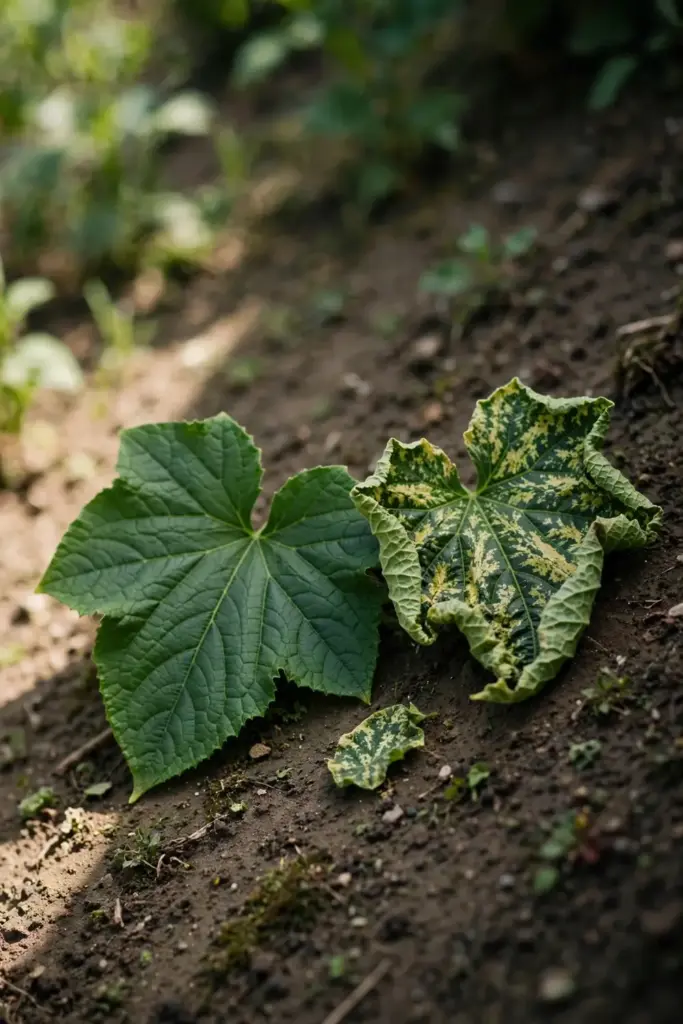
No. Cucumber mosaic virus lives inside living plant tissue, and an infected plant never recovers on its own. The virus stays in the plant for the rest of its life. What can change is the pressure. Roguing, barriers, clean stock, and weed control let you garden around the virus, but the virus itself does not leave a plant it has infected.
Yes, if the fruit looks sound. Cucumber mosaic virus is a plant disease, not a human one. Harvest fruit from infected plants and wash it as usual. Discard rotted, moldy, or badly distorted fruit. The real loss is yield and quality, not safety. A plant that stalls early stops feeding fruit, so pick what ripens before the canopy fails.
No. Garden fungicides target fungi, and cucumber mosaic virus is a virus. No fungicide reaches the virus inside plant tissue, and no fungicide clears an infection. Penn State Extension states that no chemicals cure an infected plant or protect a healthy one. That is why the plan above skips fungicides entirely. Prevention, clean stock, and barriers carry the whole plan.
No. Insecticide sprays act too slowly to prevent transmission, because aphids pick up and deliver cucumber mosaic virus in seconds. Sprays may also push aphids to move and feed more widely, which increases spread. The University of Wisconsin Plant Disease Diagnostics Clinic gives that warning. Barriers, reflective mulch, clean stock, and roguing stop more virus than any spray.
Cucumber mosaic virus is not seedborne in tomato. The virus can pass in seed to a limited extent in a few crops and weeds, and Cornell University notes chickweed as one. Buy certified virus-free seed anyway, because infected transplants carry the virus into clean beds. Seed certification and clean transplants matter more than the seed question for most home gardeners.
Herbicide damage hits all plants at once and marks other broadleaf plants across the area, while plants exposed to low levels may recover. Cucumber mosaic virus hits plants unevenly. Infected plants never recover. Virus damage stays patchy, with one sick plant in a row of healthy ones, and Kansas State Extension gives that split. A lab test settles close calls.
Where to Go From Here
Cucumber mosaic virus rewards fast roguing and steady barriers. Confirm the mosaic mottling and shoestring leaves. Make the honest triage call in Step 1. Then work the sequence: rogue, sanitize, plant clean stock, clear weeds, lay reflective mulch, cover, and skip the sprays.

Next season, start clean. Certified seed, resistant varieties, and weekly scouting will prevent more cucumber mosaic virus than any product treats. The blossom blight guide is a useful companion read if you are building a broader disease-identification habit, since it trains the same look-closely-at-symptoms approach.