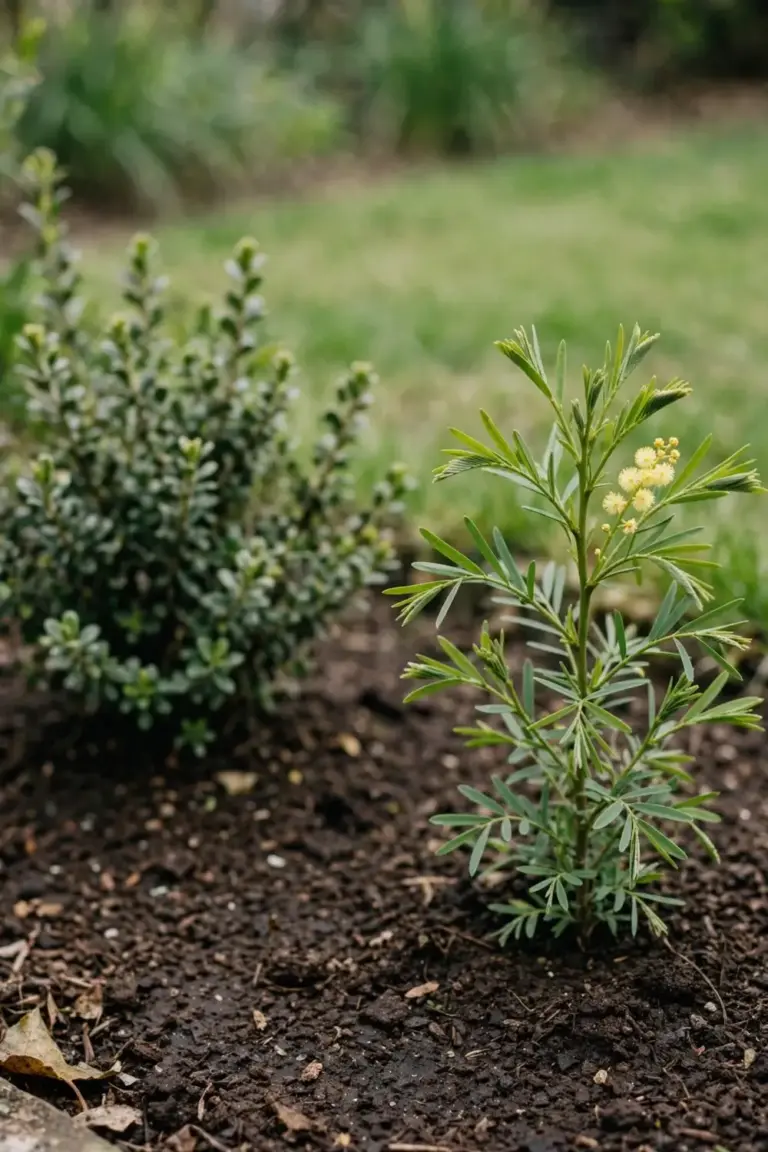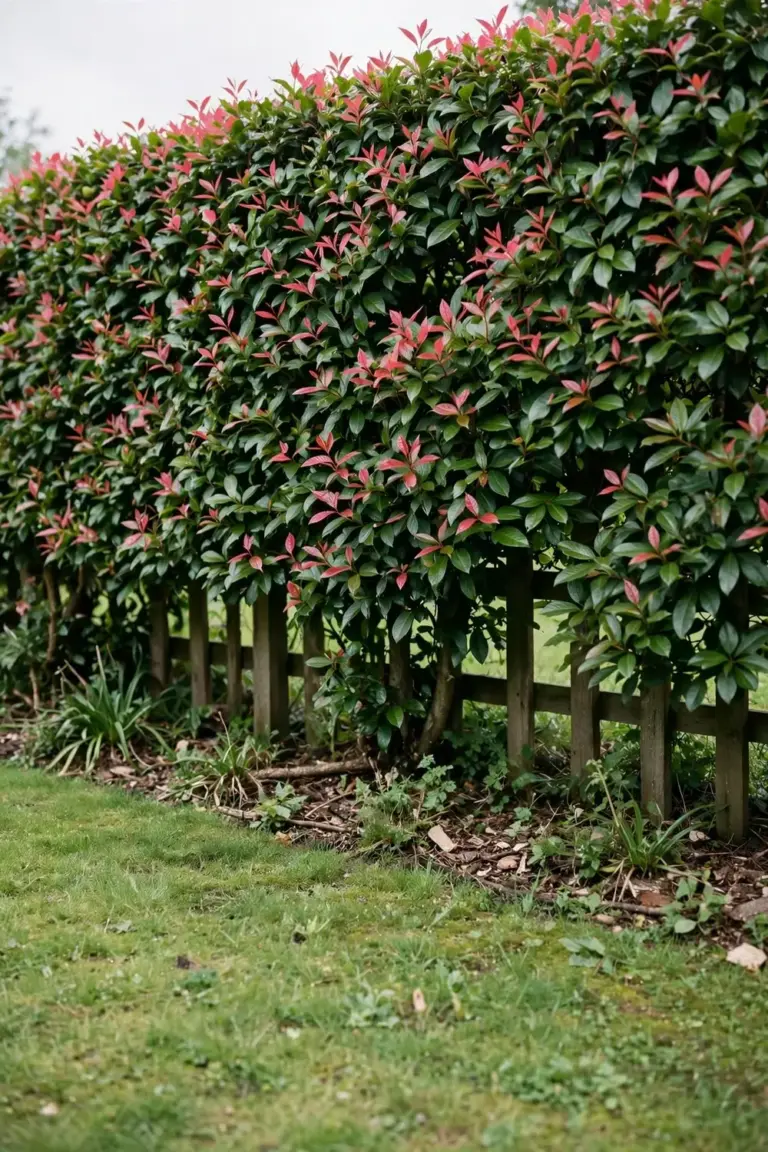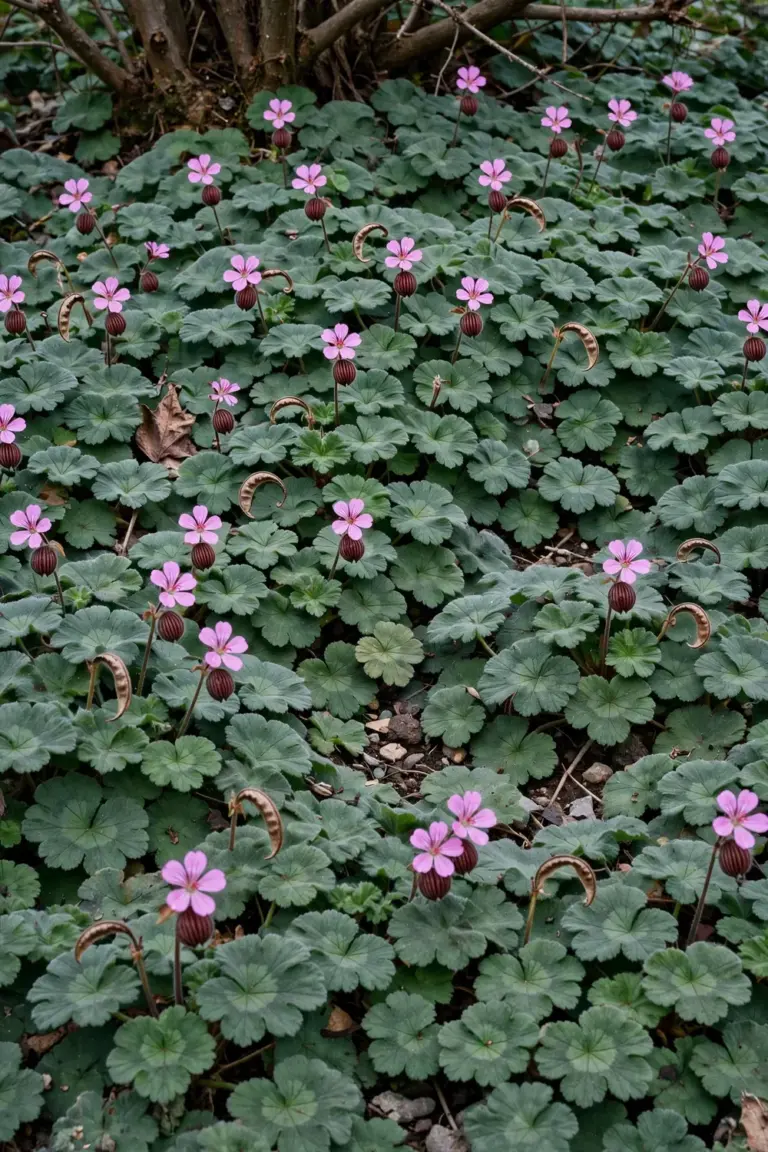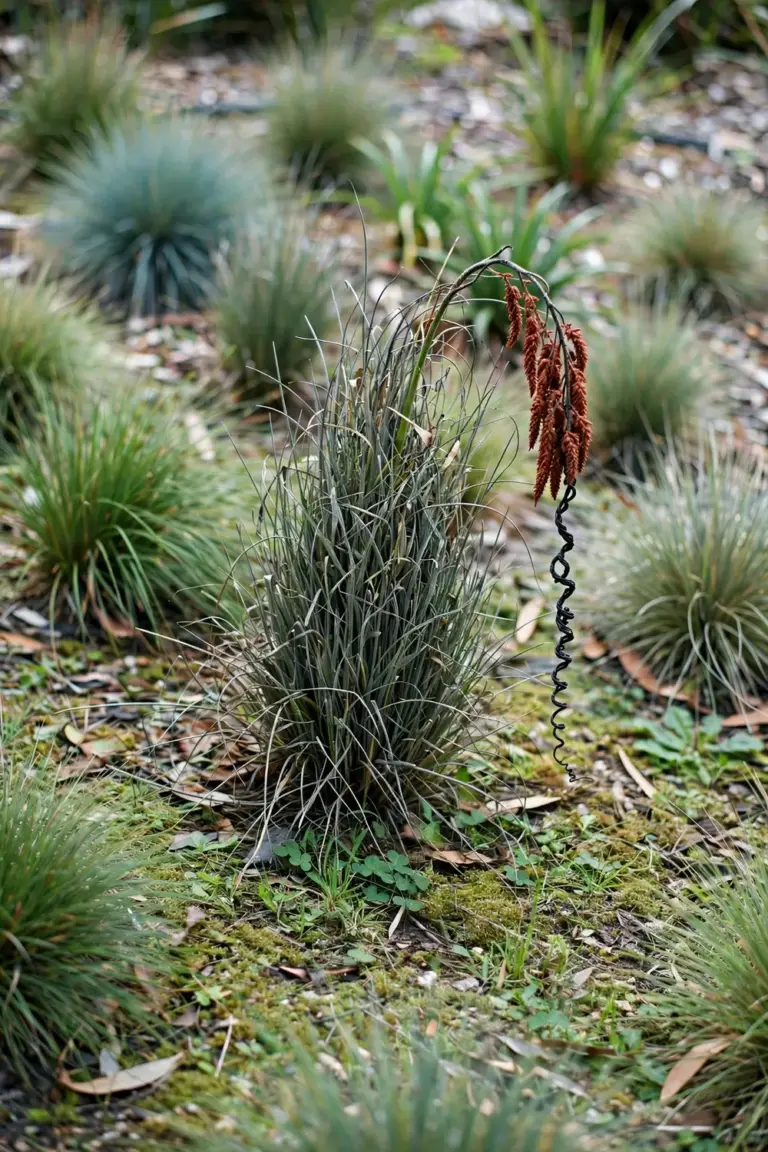

Measure 3 things before you buy a wattle: the space it gets, the sun it gets, and the frost it must survive. That is how you pick from the 15 best acacia species for Australian gardens. The rest of this page is 15 picks, from a 1 m pot mound to an 8 m screen.
Acacia and wattle are the same plants under two names. Acacia is the genus name. Wattle is the everyday Australian name. “Best” here means best for a stated role and climate, not best in absolute terms. A wattle that screens a Brisbane boundary fails in a frost-pocket garden in Orange, and a wattle that thrives in Orange sulks in a humid Brisbane courtyard.
I have learned that a wattle bought for its flowers earns its keep twice when its roots feed the soil. Wattles fix nitrogen. Their roots host bacteria that convert air nitrogen into plant food. That feeding helps the shrubs planted beside them.
Choose the Role First, Then the Climate
Pick the role first. A screen needs height and density. A pot needs a dwarf cultivar. A feature tree needs a clean trunk and a flower show. Climate comes second. A wattle planted outside its home climate grows weakly and seeds where it should not.
Match the Role to the Space
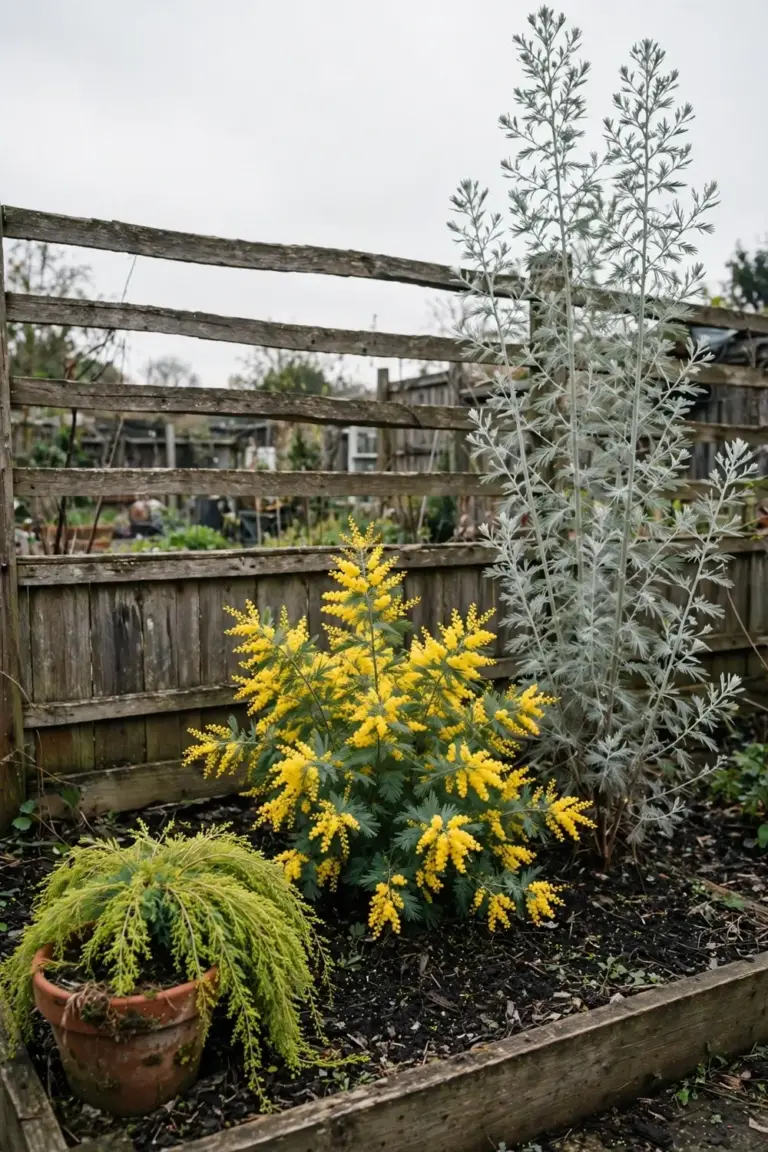
Screens want height. Plant a screen wattle where it has room to reach full size. Pots want dwarf cultivars. River Wattle cultivars stay under 1 m. Small gardens want shrubs to 4 m. Feature trees want open ground and a clear view of the canopy.
Match the Climate to the Home Range
Check the home range before you buy. A wattle local to your area grows with less help and seeds less aggressively outside its range. The table below sorts the 15 picks by role, garden height, flower, and climate fit. Heights are garden heights, not forest records.
| Species | Role | Garden Height | Flower | Climate Fit |
|---|---|---|---|---|
| Golden Wattle (Acacia pycnantha) | Feature tree | 8 m | Golden yellow | Temperate |
| Cootamundra Wattle (Acacia baileyana) | Feature tree | 6 to 8 m | Golden yellow | Temperate, frost hardy |
| Blackwood (Acacia melanoxylon) | Shade and timber | 10 to 20 m | Pale lemon | Cool to warm temperate, moist soils |
| Silver Wattle (Acacia dealbata) | Fast screen | 8 to 10 m | Golden yellow | Cool temperate, frost hardy |
| Brisbane Golden Wattle (Acacia fimbriata) | Warm-climate screen | 7 m | Bright yellow | Warm temperate to subtropical |
| Snowy River Wattle (Acacia boormanii) | Cold-climate screen | 4 m | Bright yellow | Cold, frost hardy |
| Gossamer Wattle (Acacia floribunda) | Creek-line screen | 8 m | Creamy yellow | Temperate, moist soils |
| River Wattle (Acacia cognata) | Pots and small gardens | 0.5 to 1 m (cultivars) | Pale yellow | Temperate, frost tender cultivars |
| Gold Dust Wattle (Acacia acinacea) | Small shrub | 1 to 2.5 m | Deep yellow | Temperate, south-eastern Australia |
| Wyalong Wattle (Acacia cardiophylla) | Weeping small tree | 3 m | Golden yellow | Temperate, south-eastern Australia |
| Knife-Leaf Wattle (Acacia cultriformis) | Silver foliage shrub | 2 to 4 m | Bright yellow | Temperate, frost resistant |
| Ovens Wattle (Acacia pravissima) | Cold gardens | 1 to 8 m | Golden yellow | Cool temperate, frost tolerant |
| Coastal Wattle (Acacia sophorae) | Salt wind | 3 m | Bright yellow | Coastal, salt spray |
| Western Myall (Acacia papyrocarpa) | Dry inland | 2 to 8 m | Pale golden yellow | Arid, sandy hard soils |
| Mulga (Acacia aneura) | Arid country | 8 m | Golden yellow | Arid, all mainland states |
Wattles carry phyllodes. A phyllode is a flattened leaf stalk that does the work of a leaf. Most wattles drop true leaves as seedlings and keep phyllodes for life. That nitrogen feeds the shrubs beside them, which is why wattles work as nurse plants for slower long-lived plantings. Wattles dislike phosphorus-rich fertilizer. Feed them nothing, or a low-phosphorus native fertilizer. Plant them in free-draining soil in full sun. The soil-health guide explains how to build that free-draining base before planting.
1. Plant Golden Wattle (Acacia pycnantha) for a Feature Tree
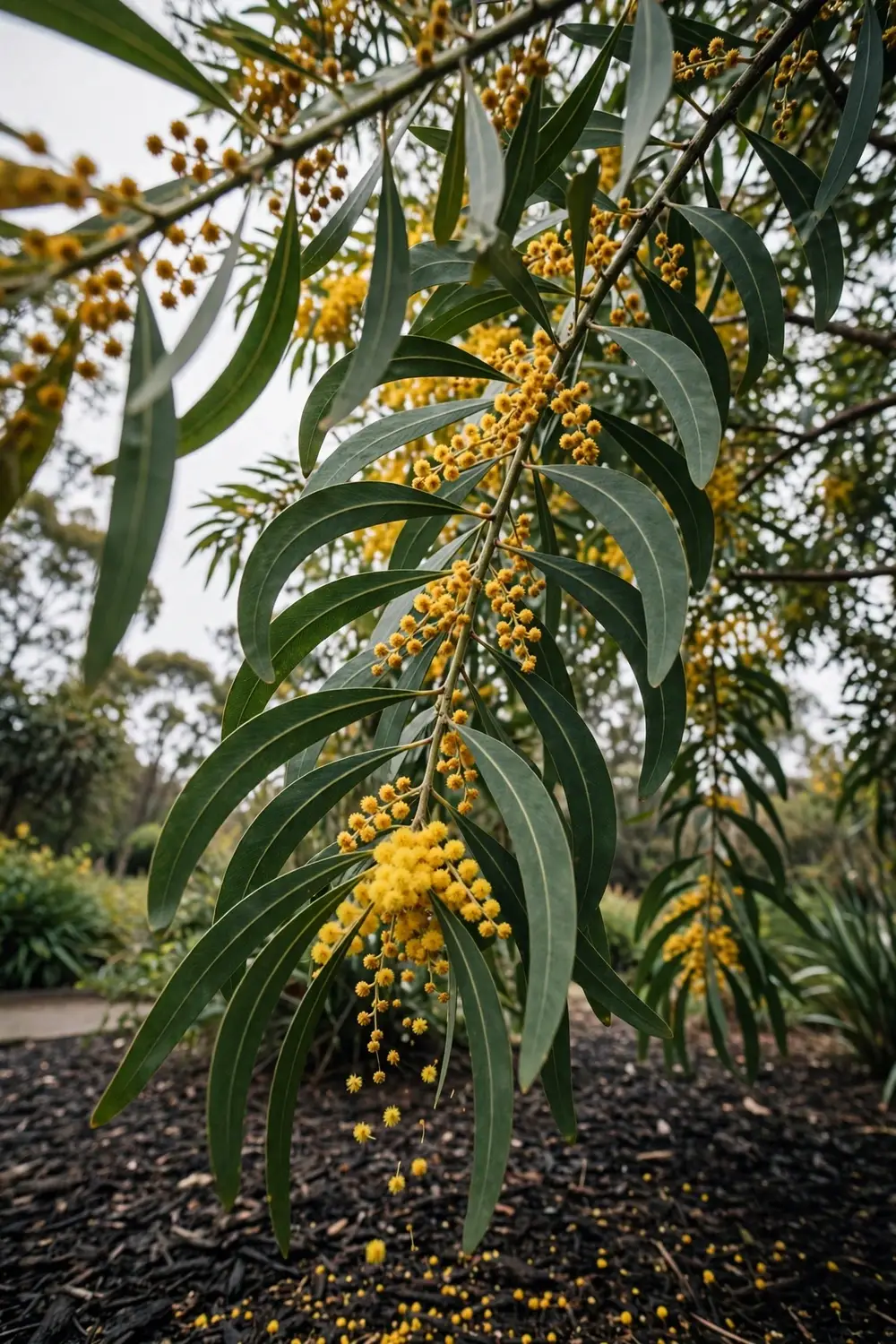
Golden Wattle gives the garden a national emblem with a short, bright life. It grows as a small spreading tree with broad sickle-shaped phyllodes and masses of fragrant golden ball flowers. The Australian Government’s floral emblem page puts mature height at 8 m and lifespan at 12 to 15 years, with flowering from late August to September. Flowering starts at about 3 years of age. Australia celebrates Wattle Day on 1 September, at the peak of golden wattle flowering.
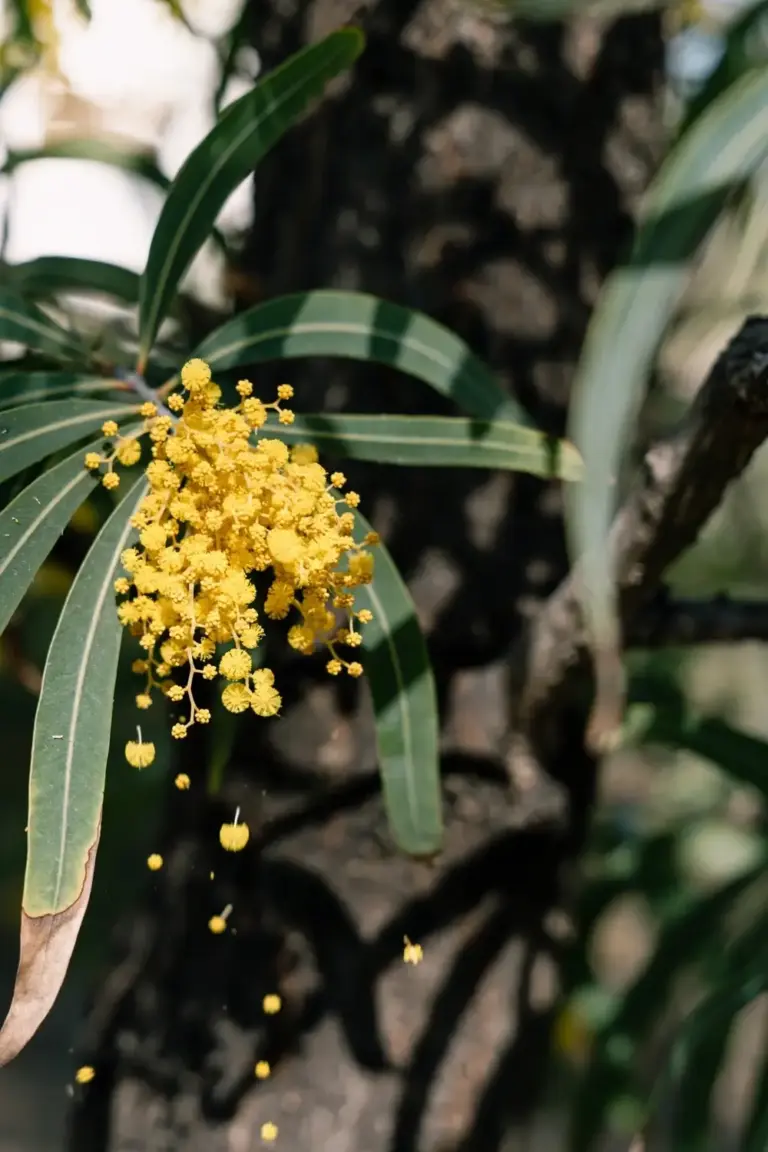
Plant Golden Wattle where its canopy shows from the house. It suits temperate gardens in South Australia, Victoria, New South Wales, and the Australian Capital Territory. It handles light to moderate frost once established. Plan the successor now. A 12 to 15 year life means the tree leaves a gap. Plant a slow long-lived shrub beside it and let that shrub take over. Tip prune after flowering. Skip phosphorus-heavy fertilizer.
2. Plant Cootamundra Wattle (Acacia baileyana) for Winter Color
Cootamundra Wattle gives the garden silver-blue foliage and a winter flower show. It grows as a broad small tree with fine ferny bipinnate foliage and clouds of golden pompom flowers in winter and early spring. Aussie Green Thumb lists garden size at 6 m tall and 3 m wide. Australian Plants Online lists 8 m tall and 5 m wide with a 10 to 15 year life. The flowers open when little else flowers. The silver foliage carries the tree through the rest of the year.
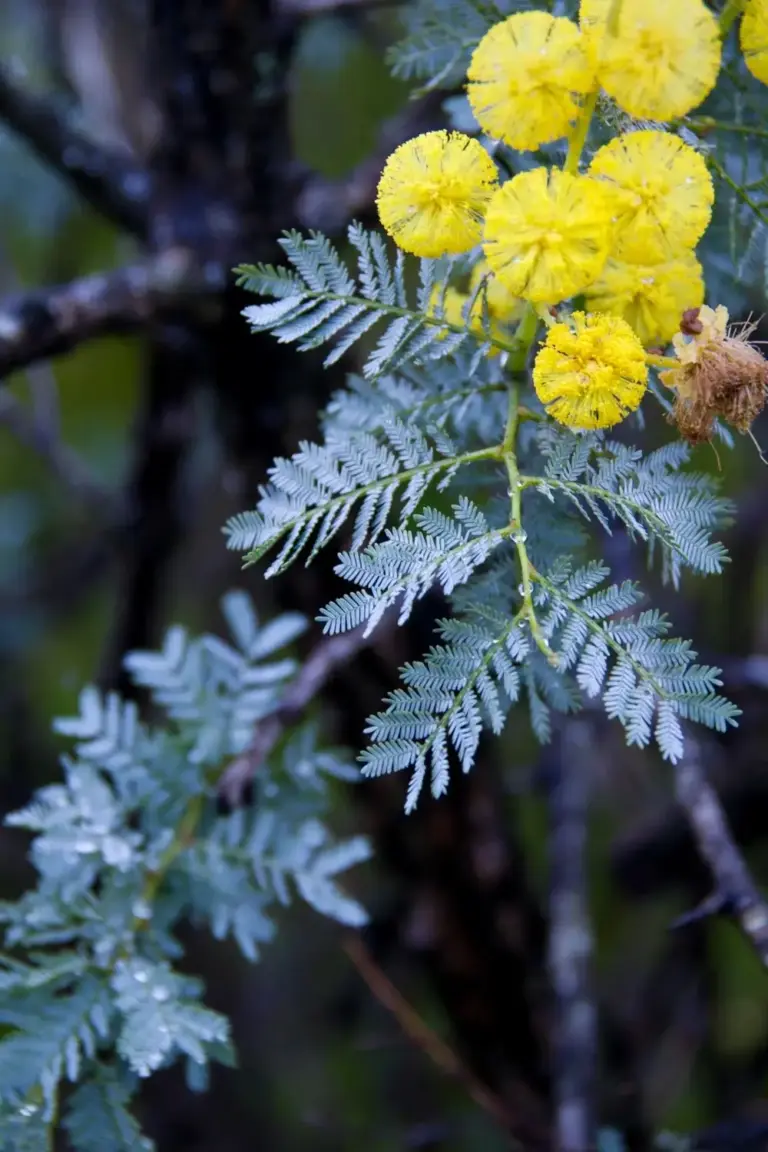
Plant Cootamundra Wattle only inside its home range thinking. It comes from a small area around Cootamundra in New South Wales. It self-seeds freely and turns weedy outside that range, and it harms other native wattle populations in Western Australia and the Northern Territory. Check your local council rules before planting. Gardeners outside New South Wales should pick a local species instead. Sterile hybrids suit gardeners in Western Australia and the Northern Territory, per Aussie Green Thumb. The tree suits temperate gardens with full sun and free-draining soil. It tolerates frost and drought once established. Tip prune after flowering.
3. Plant Blackwood (Acacia melanoxylon) for Shade and Timber
Blackwood gives the garden a long-lived shade tree with dark furniture timber. It grows as a tall evergreen tree with long lance-shaped phyllodes and pale lemon flower heads from July to December. Australian Plants Online lists garden height at 10 to 20 m with a spread to 5 m. Phys.org records forest trees to 40 m and a life past 150 years. The timber runs golden to dark brown with chocolate growth rings. The bark stays dark and fissured.
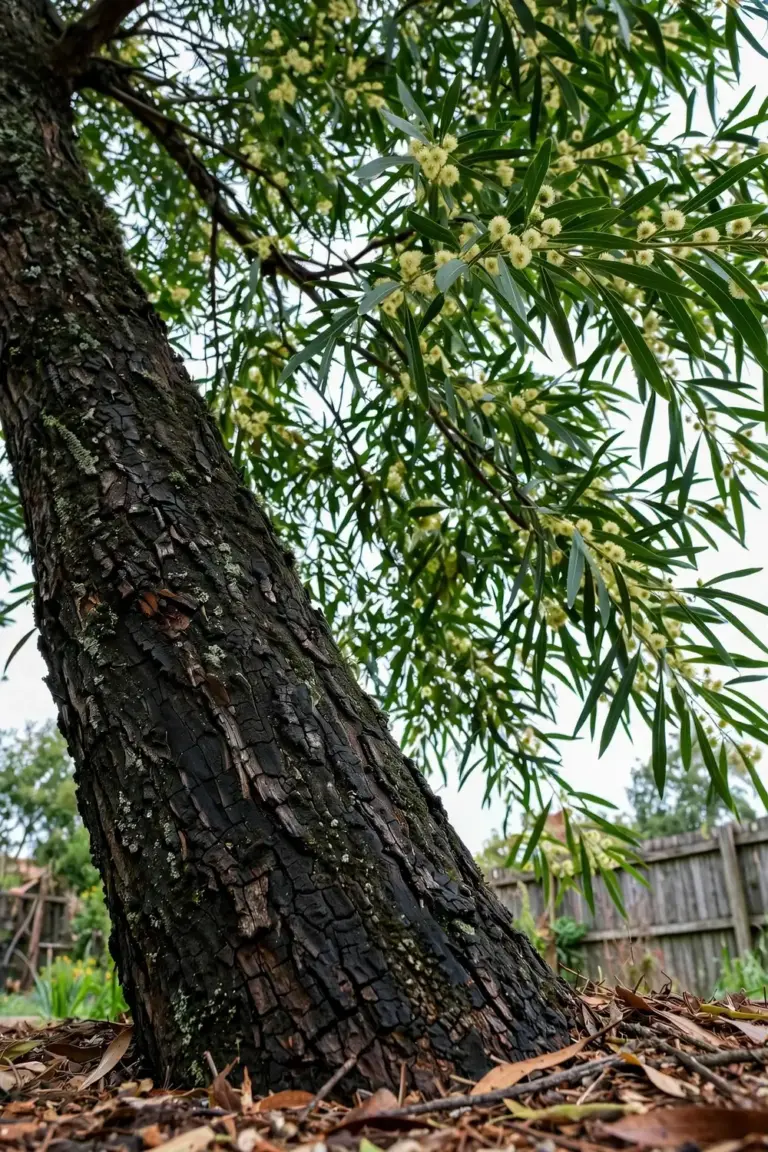
Plant Blackwood only where a large tree fits. It suits acreage, shelterbelts, and large gardens with moist soil, and it tolerates frost to minus 7 degrees Celsius. Keep it away from houses, paving, drains, and pipes. Blackwood suckers freely from its roots. Cut roots send up new shoots. It counts as a potential weed in parts of Tasmania, so check local council rules. Give it full sun or part shade and free-draining soil. Mulch keeps the root zone cool. The mulching guide explains mulch depth and placement.
4. Plant Silver Wattle (Acacia dealbata) for a Fast Screen
Silver Wattle gives the garden the fastest winter screen of any wattle. It grows as a fast evergreen tree with fine feathery silver-blue foliage and dense fragrant sprays of golden-yellow flowers from late winter through spring. Nurseries Online lists wild height at 8 to 30 m and garden height usually under 8 to 10 m. The foliage reads silver gray against darker trees. The flowers feed bees and birds through the coldest weeks.
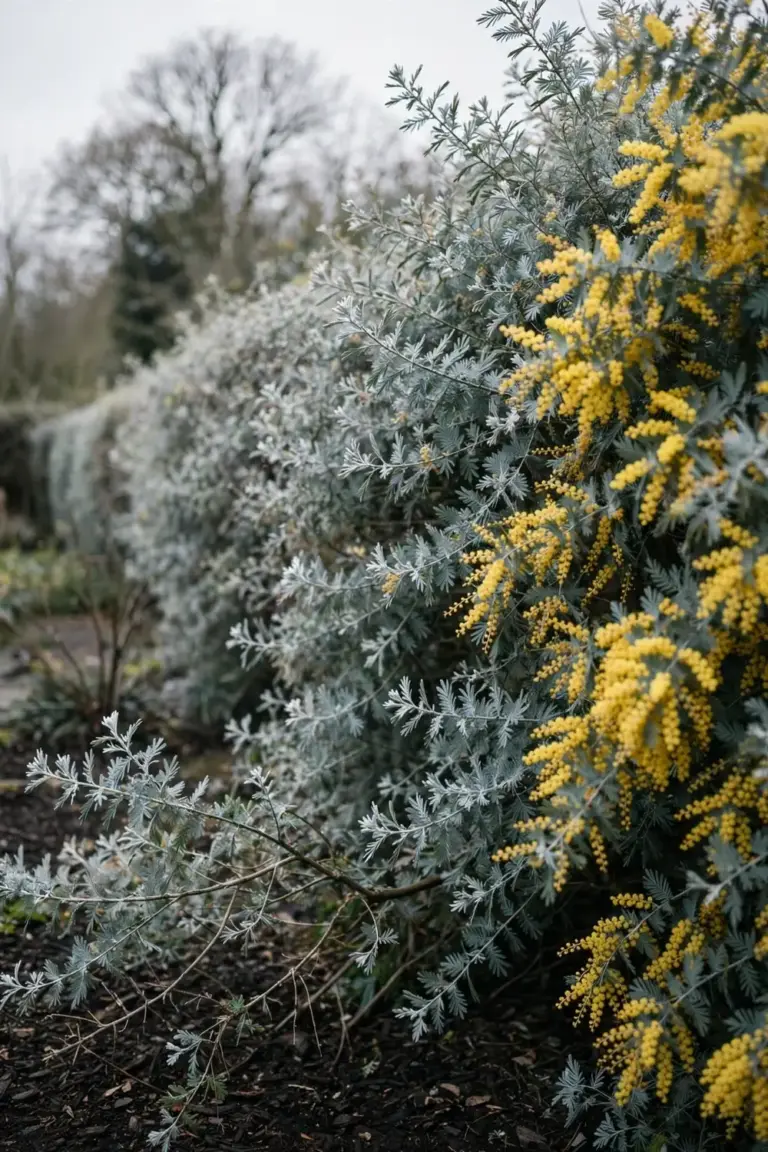
Plant Silver Wattle where a fast screen matters more than a long life. It suits cool temperate gardens in Tasmania, Victoria, and New South Wales. It tolerates moderate frost and drought once established. It thins at ground level with age, so underplant with shrubs when you need cover to the ground. Space screen plants 4 m apart. Cut stems work in a vase, where the trade name is mimosa. It self-seeds outside its natural range, so check local council rules and pull seedlings early. Tip prune after flowering. Skip phosphorus-heavy fertilizer.
5. Plant Brisbane Golden Wattle (Acacia fimbriata) for Warm-Climate Screens
Brisbane Golden Wattle gives warm gardens a fast screen with a spring flower show. It grows as a graceful small tree with slender branches and narrow phyllodes, and it carries scented bright yellow ball flowers. Arbor Operations lists Brisbane Golden Wattle to 7 m with flowers from July to November. It serves as the floral emblem of the city of Brisbane. The branches arch under the weight of blossom in a good year.
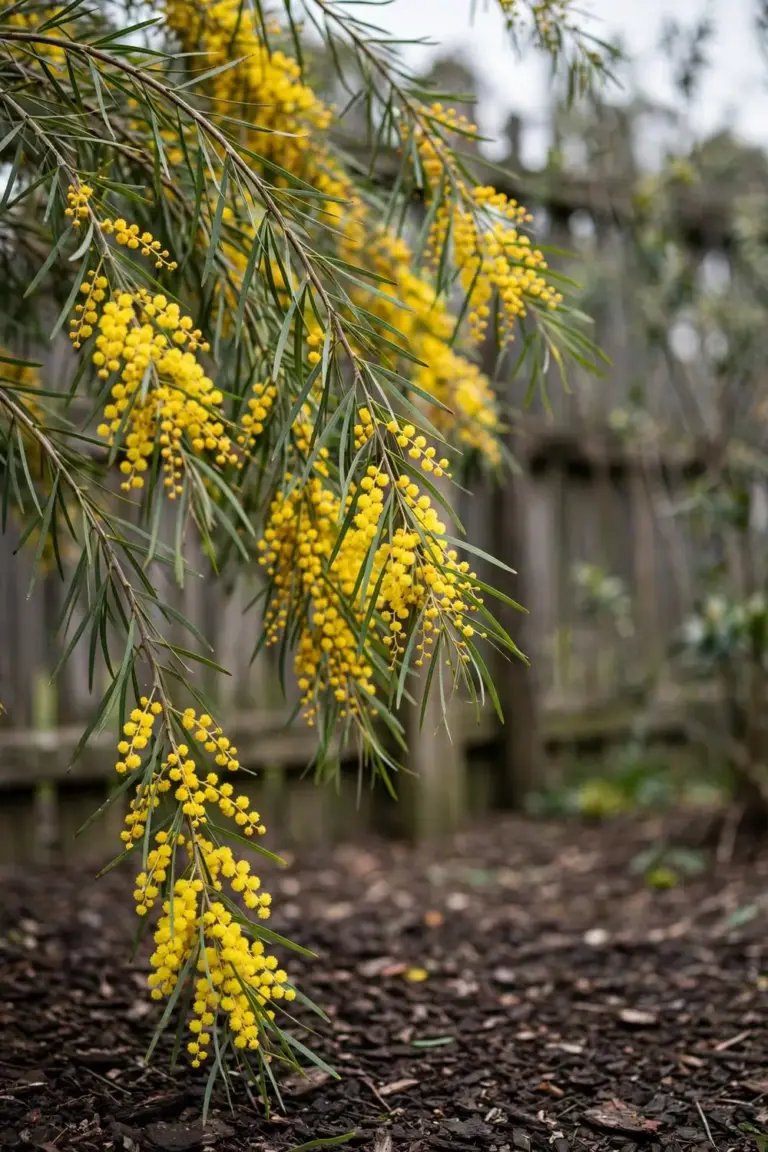
Plant Brisbane Golden Wattle where winters stay mild. It comes from coastal areas and tablelands from near Yeppoon in Queensland to Nerriga in New South Wales. It suits warm temperate to subtropical gardens. It tolerates heavy frost poorly as a young plant, so shelter it through its first winter in cold districts. It lives about 8 to 12 years, per Noosa Landcare, so treat it as a fast fill-in screen while slower trees grow. It grows fast enough to fill a screen gap within a few seasons. Space screen plants 3 m apart. Tip prune after flowering.
6. Plant Snowy River Wattle (Acacia boormanii) for Cold-Climate Screens
Snowy River Wattle gives cold gardens a compact frost-hardy screen. It grows as a bushy multi-stemmed shrub with narrow gray-green phyllodes and lemon-yellow globular flower heads in profuse panicles. Arbor Operations lists it to 4 m high with bright yellow flowers from August to October. It suckers and coppices, so it fills a gap fast. The foliage holds a silver cast through winter.
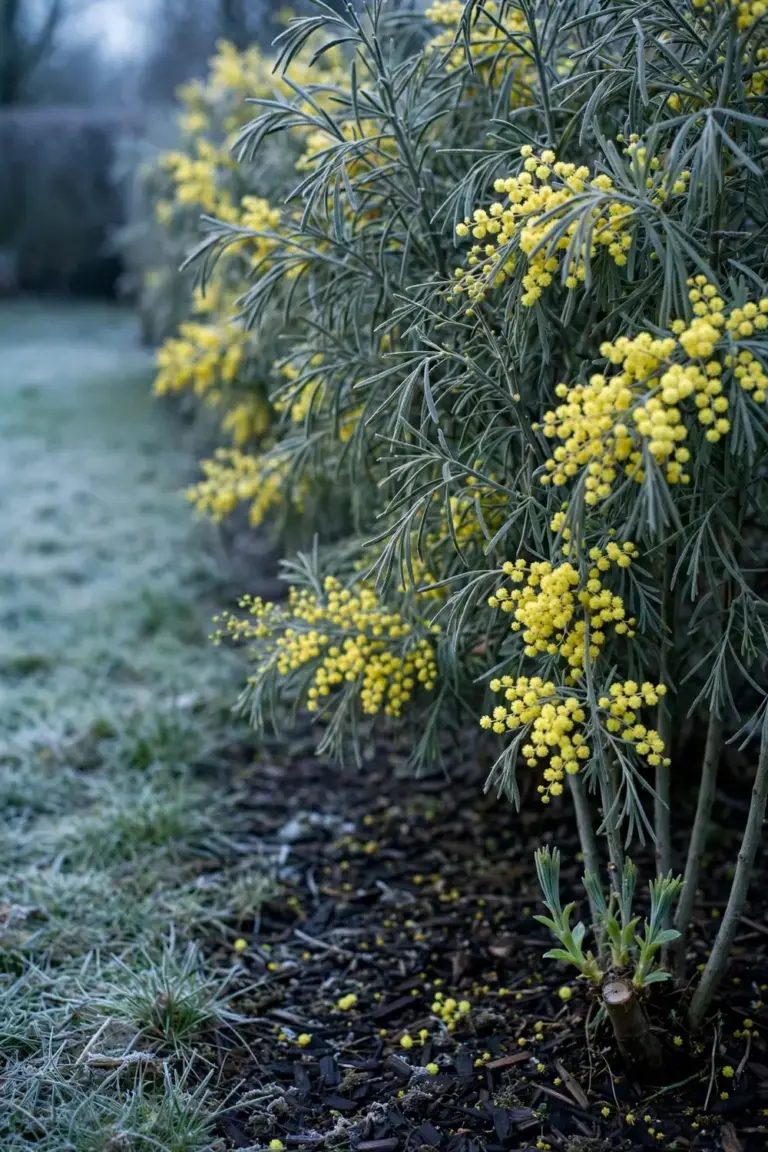
Plant Snowy River Wattle where frost bites. It comes from the Snowy River country in alpine south-eastern Australia. It suits cold temperate gardens in Victoria and New South Wales. It tolerates compacted clay and some salinity. It suits hedges and windbreaks. Coppicing keeps it dense. Cut older stems to the base and let new shoots fill the gap. Give it full sun and free-draining soil. Tip prune after flowering.
7. Plant Gossamer Wattle (Acacia floribunda) for a Creek-Line Screen
Gossamer Wattle gives moist ground a fast screen with cream flower spikes. It grows as a fast spreading tree with narrow phyllodes and creamy-yellow flowers in spikes 3 to 5 cm long. Arbor Operations lists it to 8 m high with flowers from July to September. The flower spikes read pale against the foliage, unlike the gold balls of most wattles. The tree grows well along creeks and rivers.
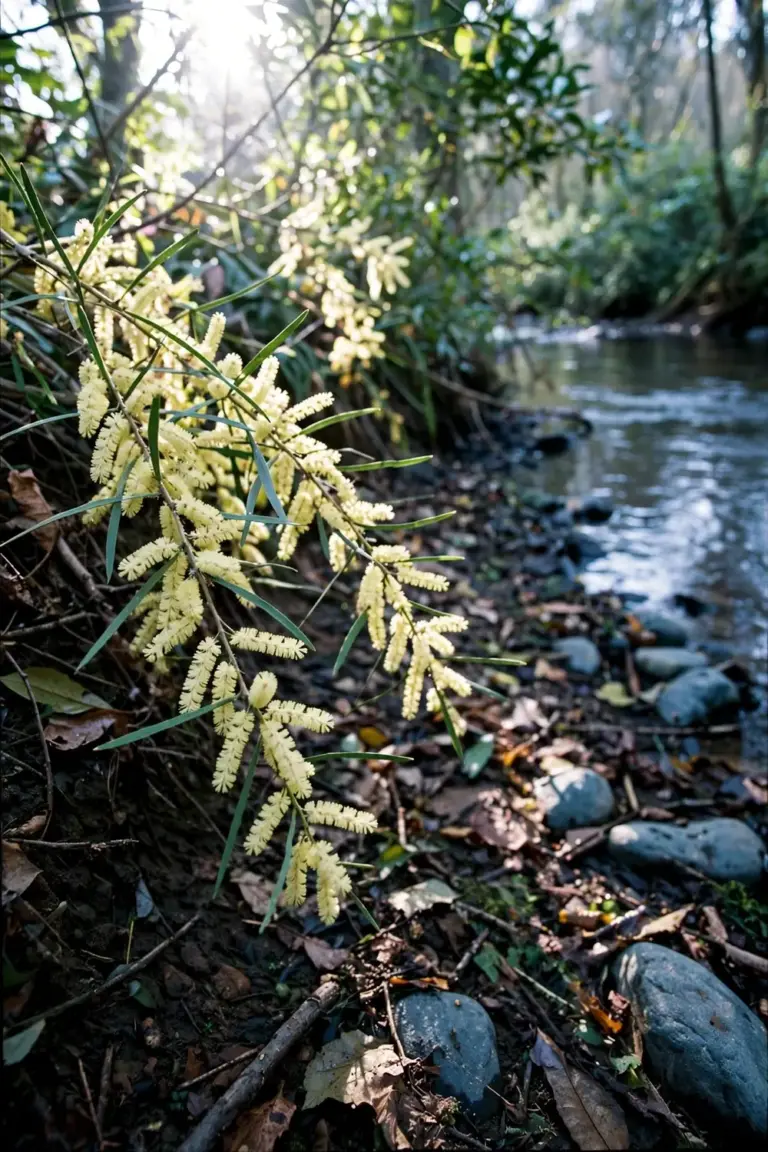
Plant Gossamer Wattle where soil stays moist. It comes from Queensland, Victoria, and New South Wales. It suits temperate gardens with reliable moisture. It screens fast on moist ground and grows well in a shelterbelt, and it tolerates moderate frost. The cream spikes open earlier than most gold ball flowers, which stretches the wattle season. It seeds freely, so check local council rules and pull seedlings early. Give it full sun and free-draining soil. Tip prune after flowering. Skip phosphorus-heavy fertilizer.
8. Plant River Wattle (Acacia cognata) for Pots and Small Gardens
River Wattle gives small gardens a weeping mound of lime-green foliage. The parent species grows as a large weeping shrub to 10 m, but the garden cultivars stay small. Gardening With Angus lists ‘Limelight’ at 0.5 to 1 m tall with yellow spring flowers. ‘Mini Cog’ stays near 0.6 to 0.9 m with a wide spread. ‘Fettucini’ stays compact with twisted foliage. The flowers stay small and secondary. The foliage does the work.
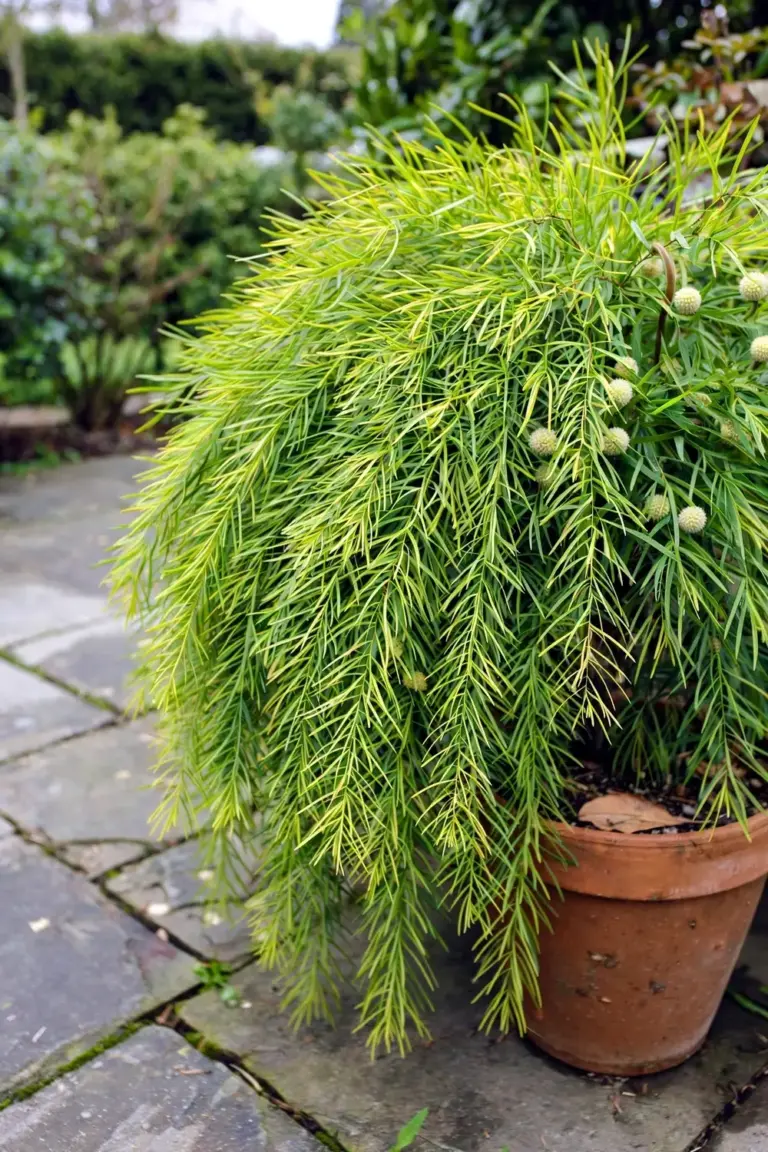
Plant River Wattle cultivars in pots, courtyards, and rockeries. They suit temperate gardens in the southern states. ‘Limelight’ is frost sensitive, so give it a protected position or grow it in a pot that moves under cover. Give it free-draining soil and full sun to light shade. It hates wet feet and humid summers, so raise pots on feet and water only when the mix dries. ‘Fettucini’ carries twisted foliage that reads as texture even without flowers. The container natives guide covers pot size and mix for Australian natives. A light tip prune after the growth flush keeps the mound tight. Never cut hard into old wood.
9. Plant Gold Dust Wattle (Acacia acinacea) for a Small Shrub
Gold Dust Wattle gives small gardens a low spreading shrub covered in deep yellow flowers. It grows as a small spreading shrub with small phyllodes and masses of deep yellow ball flowers in spring. The shrub spreads low and wide. Arbor Operations lists it at 1 to 2.5 m high. It suits the front of a native bed, a rockery, or a low hedge. The flowers open in spring and draw bees.
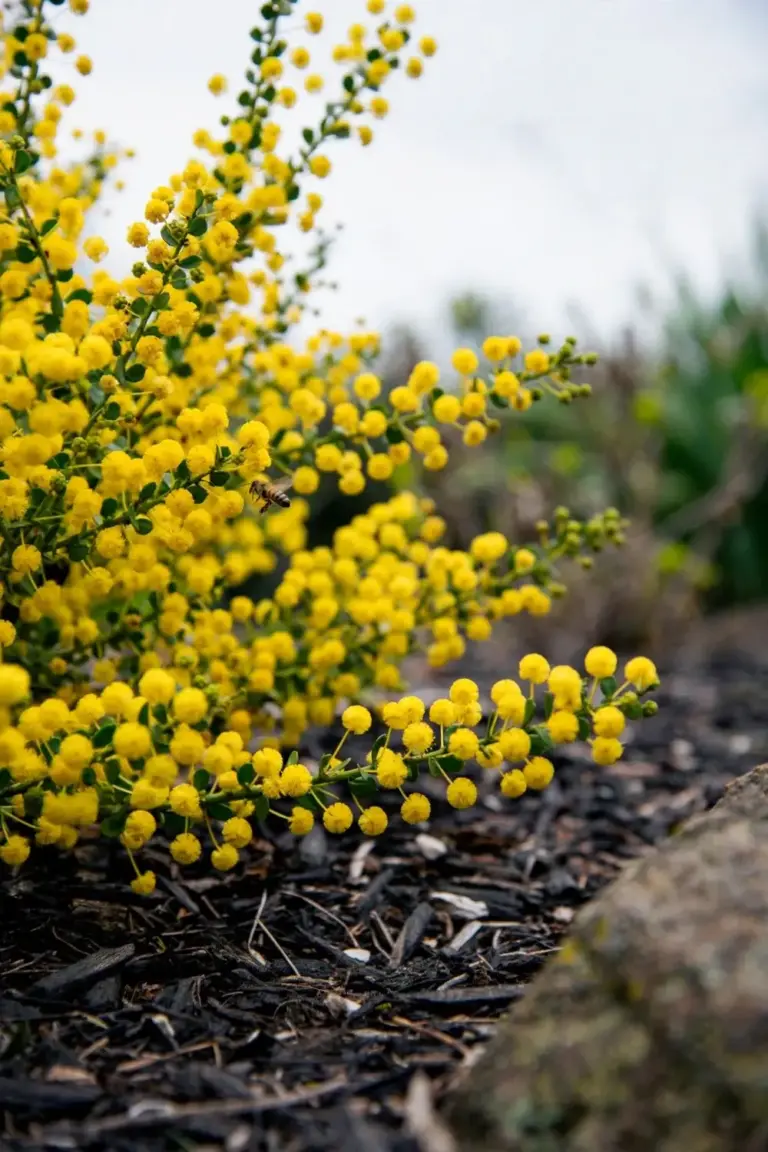
Plant Gold Dust Wattle where space runs short. It comes from Victoria, New South Wales, and South Australia, and it suits temperate gardens in south-eastern Australia. It tolerates moderate frost and drought once established. It lives about 15 years, per Aussie Green Thumb, so plan a successor before the shrub thins. Give it full sun and free-draining soil. A light tip prune after flowering keeps it dense, and the shrub answers with fresh growth. Skip phosphorus-heavy fertilizer.
10. Plant Wyalong Wattle (Acacia cardiophylla) for a Weeping Small Tree
Wyalong Wattle gives small gardens a weeping small tree with golden autumn flowers. It grows as a small spreading tree with arching branches and weeping foliage, and it carries bright golden-yellow flowers from October to December. Arbor Operations lists it to 3 m high. The late flowers extend the wattle season past the spring peak. The weeping habit softens a fence line.
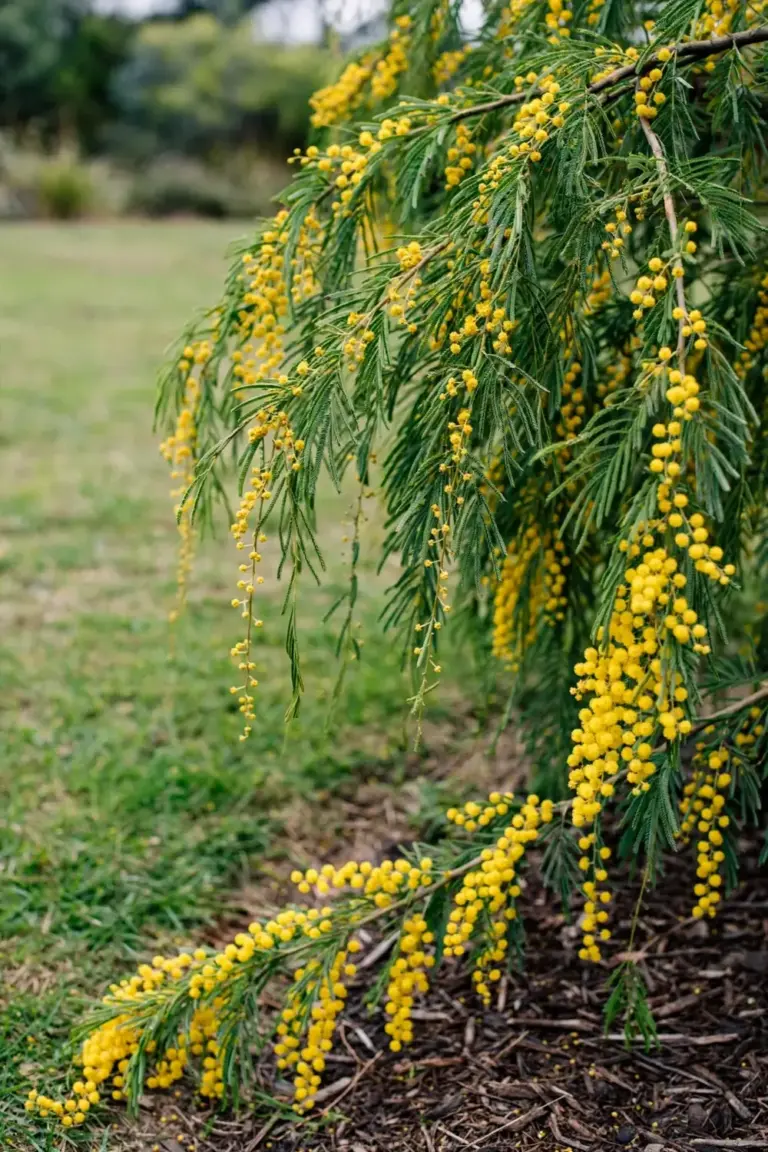
Plant Wyalong Wattle where a small tree fits under power lines. It comes from New South Wales and suits temperate gardens in south-eastern Australia. It tolerates frost and drought once established. Give it full sun and free-draining soil. It suits a lawn specimen or a native bed, and a light tip prune after flowering keeps the weeping shape. That late flowering stretches the wattle season into summer. Skip phosphorus-heavy fertilizer.
11. Plant Knife-Leaf Wattle (Acacia cultriformis) for Silver Foliage
Knife-Leaf Wattle gives the garden silver foliage all year and gold flowers in late winter. It grows as an upright or spreading shrub with stiff triangular gray-green phyllodes about 3 cm long and 1.5 cm wide. The South Australian State Flora catalogue lists height at 2 to 4 m with a spread of 2 to 4 m, flowers from August to November, and frost resistance. The phyllodes look like knife blades. The flowers open as bright yellow balls on spikes 1 to 8 cm long.
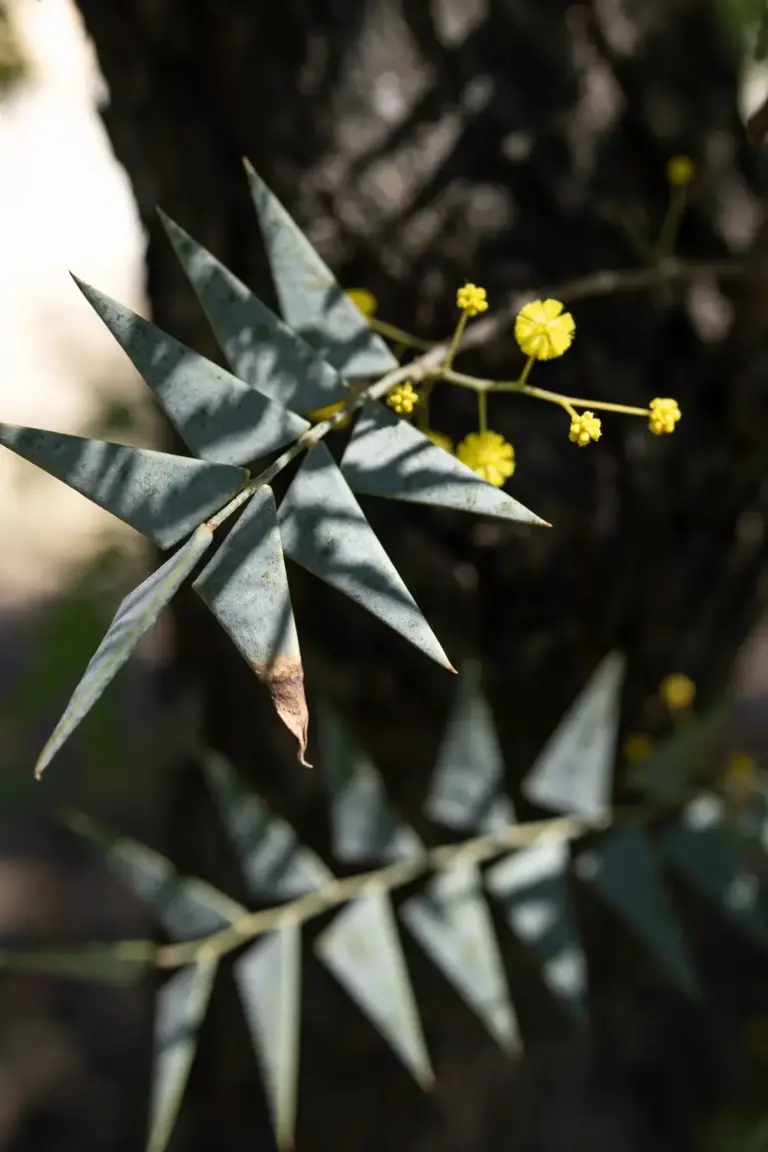
Plant Knife-Leaf Wattle where foliage matters more than flowers. It comes from central New South Wales and southern Queensland. It suits temperate gardens with full sun and free-draining soil. It tolerates frost and a minimum rainfall of 450 mm. It suits informal screens, banks, and retaining walls, and a prostrate form called ‘Cascade’ spills over walls and rocks. Space screen plants 2 m apart. Tip prune after flowering.
12. Plant Ovens Wattle (Acacia pravissima) for Cold Gardens
Ovens Wattle gives cold gardens a tough screen with wedge-shaped phyllodes. It grows as a shrub or small tree with crowded gray-green triangular phyllodes and prolific golden flower heads. PlantNET describes Ovens Wattle as a tree or shrub 1 to 8 m high flowering September to November. Gardening With Angus lists garden size at 4 to 8 m with yellow winter and spring flowers. The phyllodes sit crowded on short stem projections. The flowers carry a light scent.
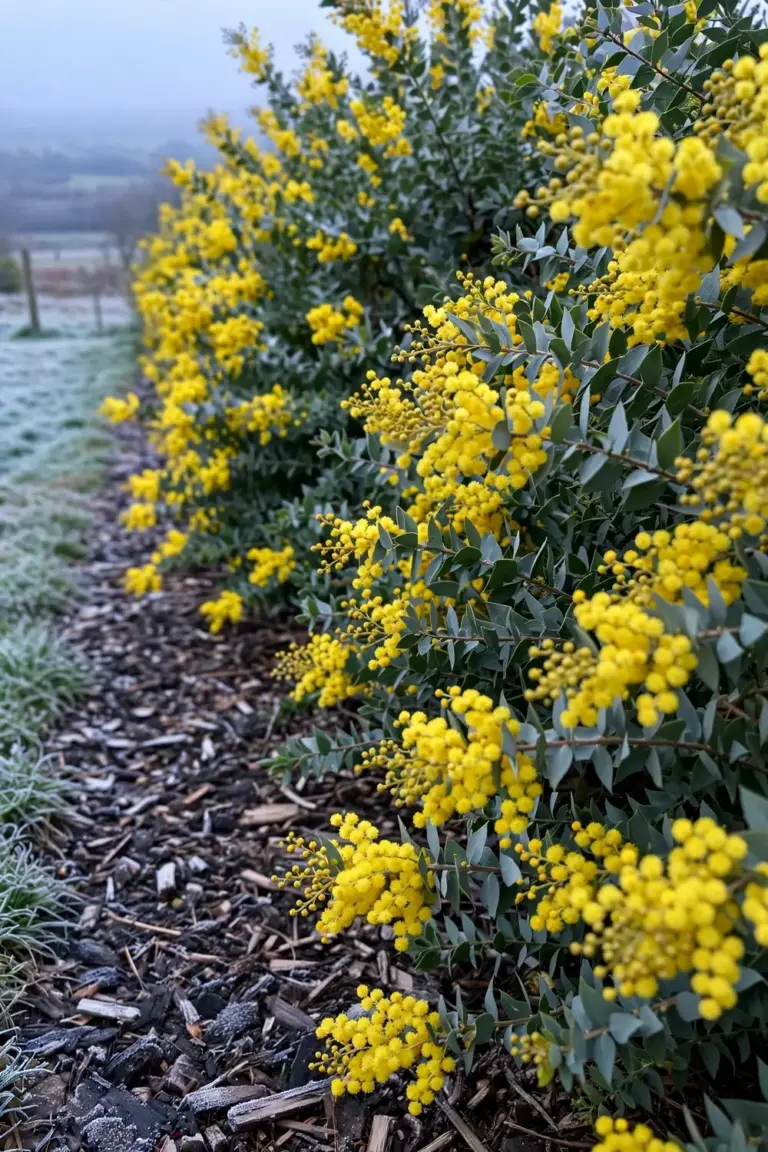
Plant Ovens Wattle where frost bites and wind blows. It comes from the high country of the Great Divide, from near Tumut in New South Wales to the Strathbogie Ranges in Victoria. It suits cool temperate gardens. It tolerates frost, long dry periods, and some coastal exposure. It serves as a windbreak and shelter tree. It has grown in Oregon and south-eastern England, per Gardening With Angus. Prune after flowering to keep a dense habit. The spring pruning guide covers the light tip prune wattles want. Give it full sun or part sun and free-draining soil, and it asks for little else once established.
13. Plant Coastal Wattle (Acacia sophorae) for Salt Wind
Coastal Wattle gives beach gardens a salt-hardy shrub that holds dunes. It grows as a large prostrate or decumbent shrub in exposed sites, with its trunk and lower branches running along the ground. It occurs on primary dunes, in coastal heath, open forest, and alluvial flats. The Flora of Australia description puts exposed plants to 3 m high and 4 m or more across, with oval phyllodes 50 to 100 mm long and bright yellow flower spikes to 50 mm. It flowers mainly in late winter and spring. It stabilises primary dunes.
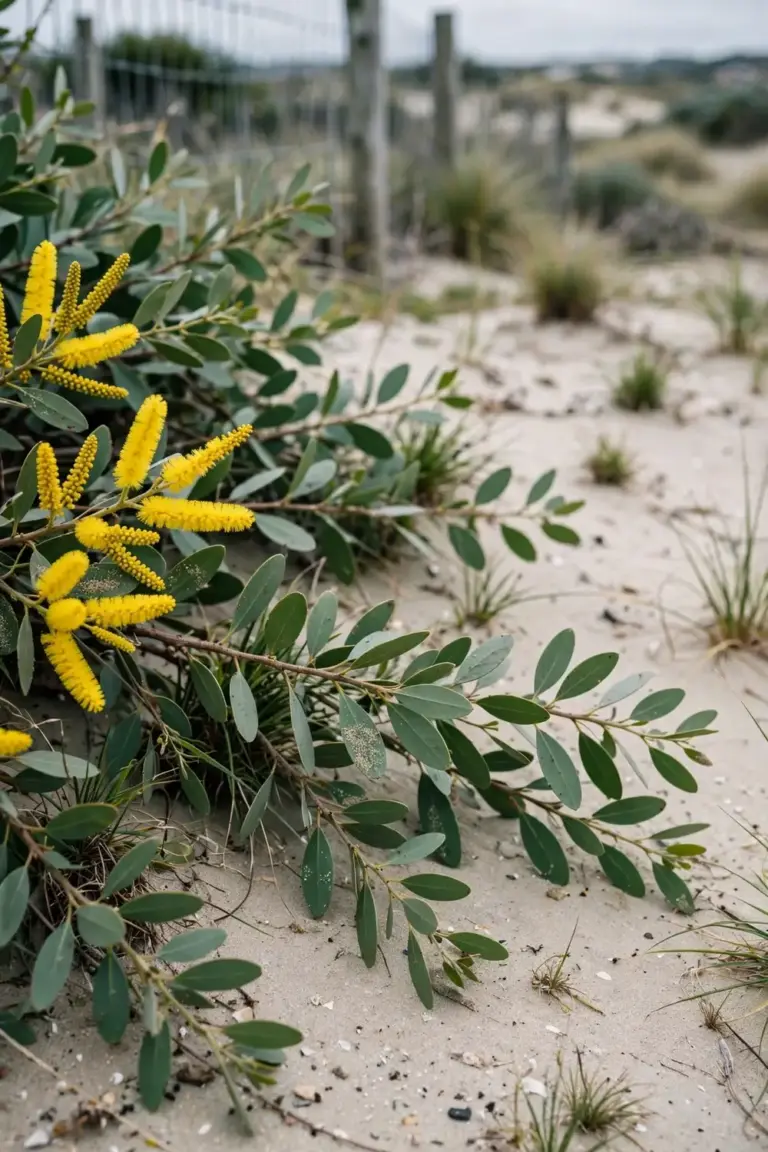
Plant Coastal Wattle where salt spray kills other shrubs. It comes from coastal and subcoastal south-eastern Australia, from the Eyre Peninsula to southern Queensland. It tolerates sea spray and sand blast. It shelters less hardy plants behind it. Its prostrate form hugs the ground in exposed sites and stands taller in shelter. Do not confuse it with Sydney Golden Wattle (Acacia longifolia subsp. longifolia), which has naturalised as a weed in parts of South Australia and Western Australia. Buy the coastal subspecies by its full name. Give it full sun and free-draining sandy soil. Tip prune after flowering.
14. Plant Western Myall (Acacia papyrocarpa) for Dry Inland Gardens
Western Myall gives dry gardens a long-lived shade tree with weeping gray foliage. It grows as a shrub or upright tree with fissured gray bark and a dense spreading rounded crown, and it carries grayish-green phyllodes 4 to 12 cm long. Arbor Operations lists it to 8 m high with pale golden-yellow flowers from August to October. It suits sandy hard soils. It lives long for a wattle.
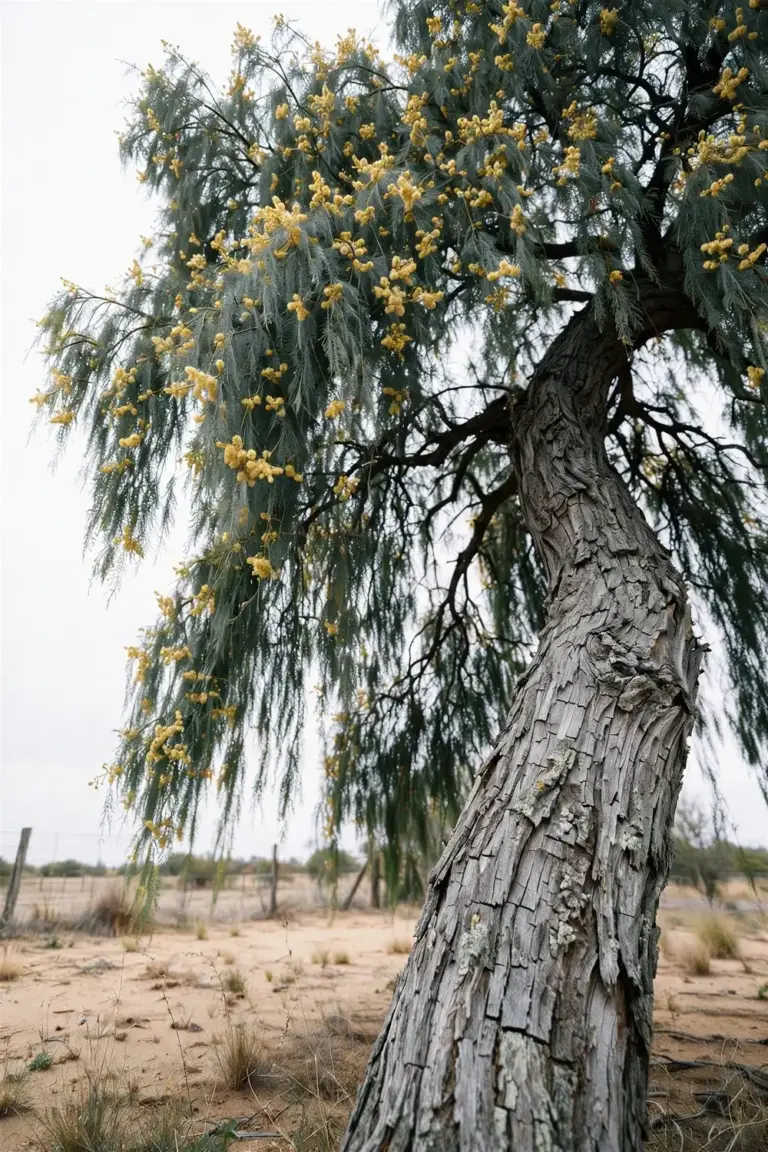
Plant Western Myall where rainfall runs low. It comes from arid areas of central and western Australia. It suits dry inland gardens with free-draining soil and tolerates drought, heat, and poor soils. Give it full sun and room to spread. It suits a shade tree in a large garden or a street tree in a dry town, and it needs little water once established. Tip prune after flowering. Skip phosphorus-heavy fertilizer.
15. Plant Mulga (Acacia aneura) for Arid Country
Mulga gives arid gardens a tough evergreen tree that survives on little rain. It grows as an erect or spreading tree with narrow gray-green phyllodes and golden-yellow flower spikes 3 cm long. Mulga grows across the arid interior, from Western Australia to Queensland. Arbor Operations lists it usually near 8 m tall, with some subspecies to 18 m, and flowers from June to September. Mulga stands shape much of arid Australia. The tree holds its foliage through drought.
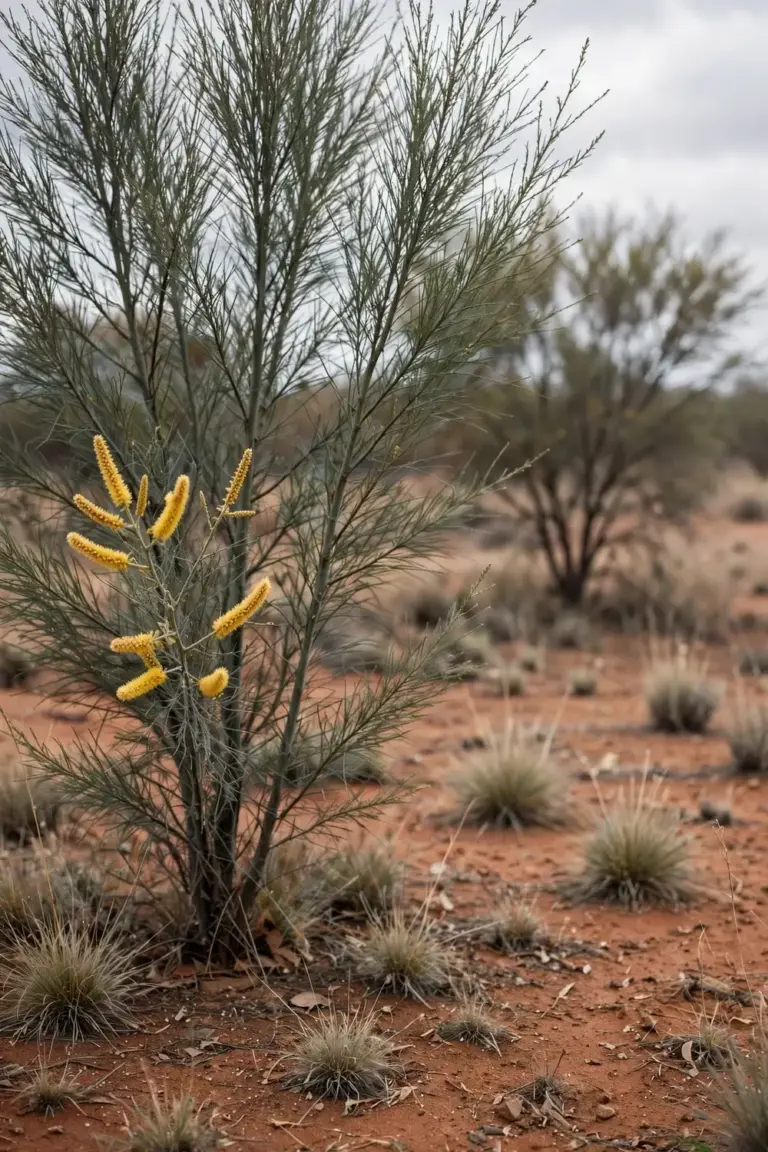
Plant Mulga where water stays scarce. It comes from Queensland, New South Wales, South Australia, Western Australia, and the Northern Territory. It suits arid and semi-arid gardens. It tolerates drought, heat, and poor soils. Give it full sun and free-draining soil. It suits revegetation, windbreaks, and large dry gardens, and it needs little water once established. Tip prune after flowering. Skip phosphorus-heavy fertilizer.
Frequently Asked Questions
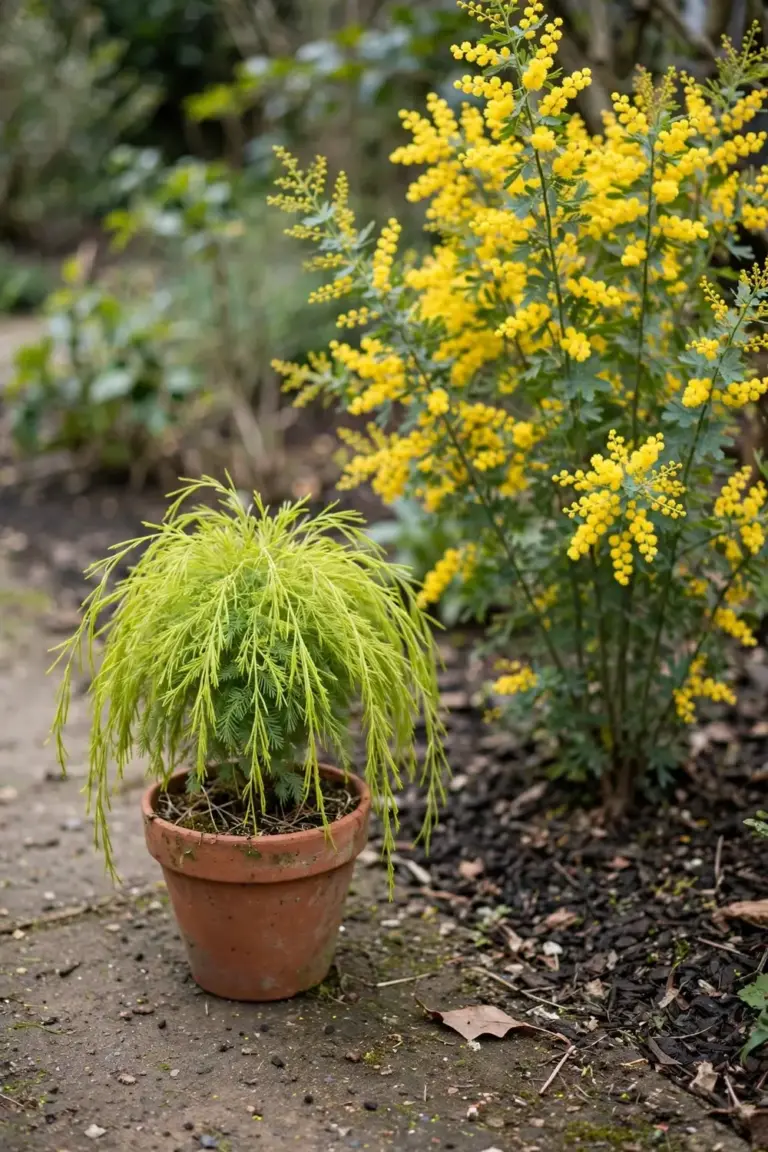
River Wattle cultivars stay smallest. ‘Limelight’ reaches 0.5 to 1 m tall and about 1 m wide. ‘Mini Cog’ stays near 0.6 to 0.9 m tall with a wider spread. Both suit pots, courtyards, and rockeries. Grow them in free-draining mix in full sun to light shade. ‘Limelight’ is frost sensitive, so move the pot under cover in cold districts.
Silver Wattle grows fastest for a screen. It reaches garden height in a few years and flowers from late winter through spring. The flowers cut well for vases. Gossamer Wattle runs close behind on moist soil. Both live short lives for trees, so plant a slow long-lived shrub beside the screen and let it take over. Space screen plants 3 to 4 m apart.
Small wattles suit planting near houses. Large wattles do not. Blackwood suckers from its roots and needs distance from paving, drains, and footings. Silver Wattle and Cootamundra Wattle drop seed that self-sows. Keep large species at least one mature canopy width from the house. Check local council rules before planting near boundaries.
Do not plant Cootamundra Wattle outside its home range without checking local rules. It self-seeds freely and turns weedy outside New South Wales, and it harms other native wattle populations in Western Australia and the Northern Territory. Gardeners outside New South Wales should pick a wattle local to their area. Sterile hybrids suit Western Australia and the Northern Territory, but a local species is the safer pick. Local provenance beats a famous species every time.
Wattles need no fertilizer. Their roots host bacteria that fix nitrogen from the air. Feeding them a general fertilizer wastes money and can push soft growth. A low-phosphorus native fertilizer helps only when the soil test shows a real gap. Never use a high-phosphorus fertilizer on wattles. Free-draining soil and full sun matter more than feeding.
Plant the Wattle That Fits the Space You Have
Pick the role first. Pick the climate second. Pick the species third. A 1 m River Wattle cultivar fits a pot. A 3 m Wyalong Wattle fits a small garden. An 8 m Silver Wattle fits a boundary screen. Buy a wattle local to your area when one fits the role, and check local council rules when a species carries a weed flag. Buy the plant by its full botanical name, because common names repeat across species. Plan the successor, because most wattles live short lives and leave a gap. Tip prune after flowering. Skip phosphorus-heavy fertilizer. The right wattle earns its place twice: once in flower, and once in the soil it feeds.