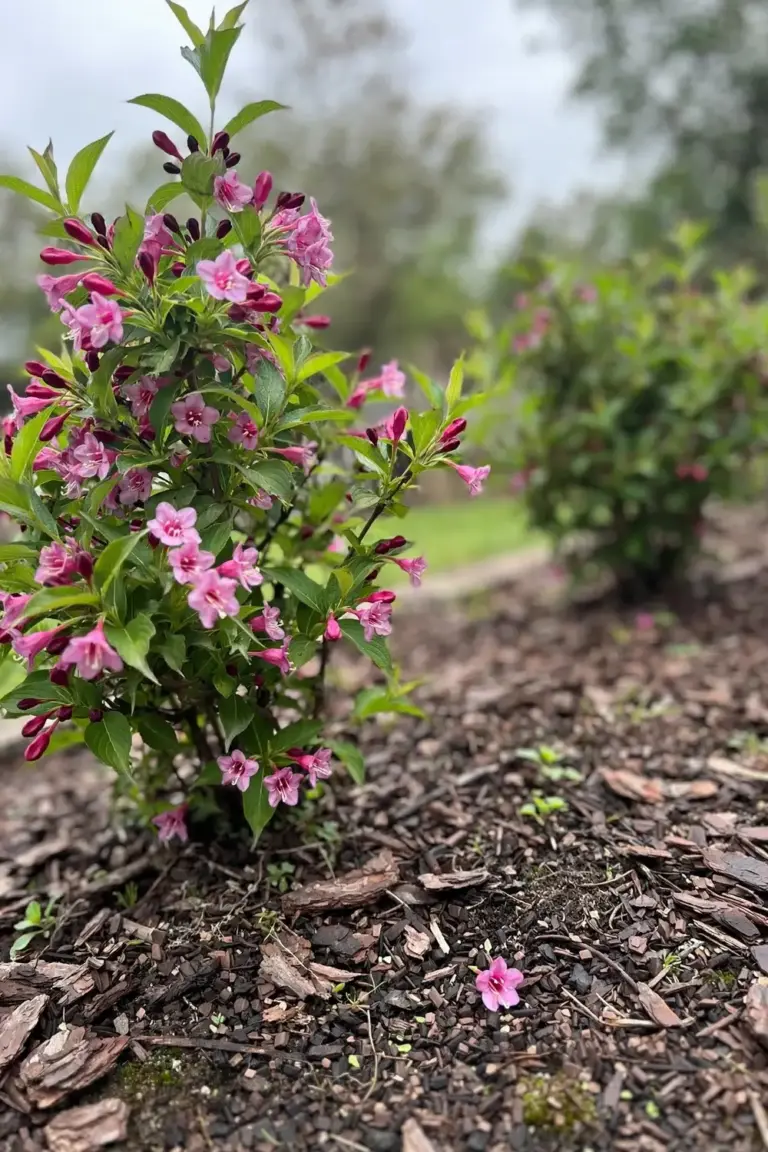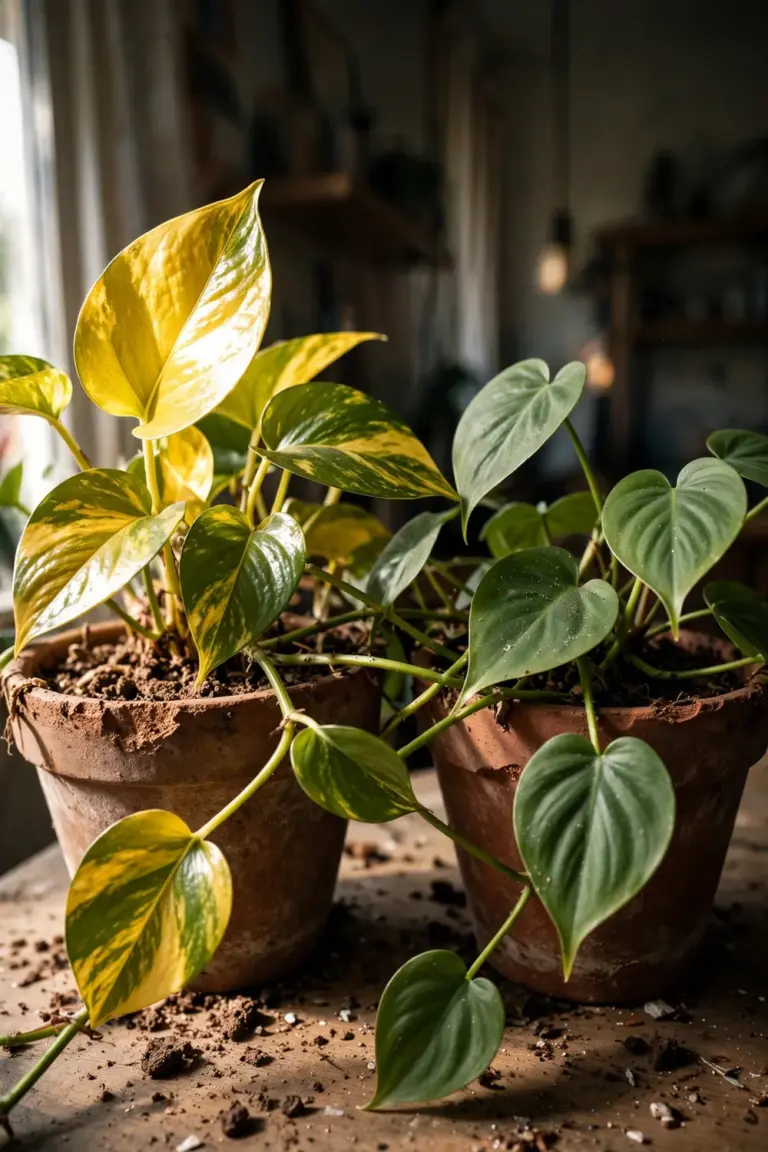

Australian shrub identification comes down to five checks: leaf, flower, fruit, bark and habit, and setting. Run them in that order and the shrub usually names itself before you reach the last check. The 15 shrubs below cover the ones Australian gardeners meet most often, from grevillea and bottlebrush to lantana and privet, each with a native, exotic, or weed flag.
I have learned that the shrub I name from its leaves beats the shrub I name from its flowers. Leaves stay on the plant all year. Flowers come and go.
Work through the key first, then match the shrub against the 15 entries. Check the lookalike line in each entry before you settle. Common names repeat across unrelated plants, so trust the botanical name in brackets.
Run the 5-Step Australian Shrub Identification Key First
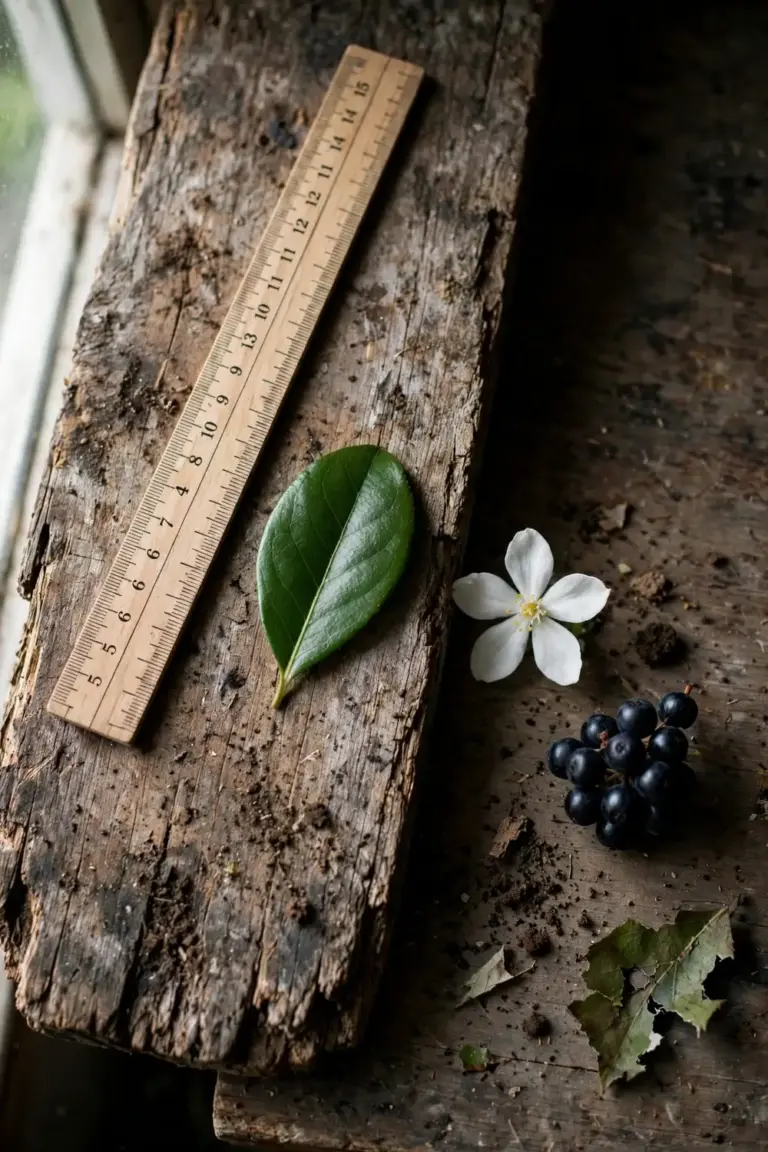
The key turns a walk past a shrub into a short checklist. Answer each step with what you can see and touch. Write the answers down when two shrubs look close. Photograph the whole shrub first, then one leaf, then one flower or fruit, because the wide shot fixes the habit while the close shots fix the details. Carry a phone and a ruler. The phone holds the photos. The ruler sets scale in each shot. The table below the steps condenses all 15 entries into one comparison.
Step 1. Start With the Leaves
Leaves carry the most reliable clues because they stay on the shrub in every season. Note arrangement first: opposite pairs, alternate singles, or whorls of three or more around the stem. Then note shape, edge, and underside. A whorl of narrow leaves points toward westringia. Opposite glossy leaves point toward lilly pilly, murraya, or privet. Needle-like leaves point toward rosemary-like shrubs, and a check of scent and flower separates them.
Step 2. Read the Flowers
Flowers confirm or overturn the leaf reading. Note form before color: a bottlebrush spike, a grevillea toothbrush or spider cluster, a banksia cone, a correa bell, or a five-petalled tea tree flower. Color helps, but form decides. Lantana breaks this rule in a useful way: one flower head carries buds and open flowers in different colors at the same time.
Step 3. Check the Fruit
Fruit separates the shrubs that flowers cannot. Pods, berries, cones, and capsules all count as fruit for this step, because the key cares about form, not botany jargon. Grevillea and hakea both carry woody follicles, but grevillea fruit sits past the foliage while hakea fruit sits inside it. Lilly pilly carries a fleshy berry. Privet carries clusters of black berries. Bottlebrush carries woody capsules packed along the stem. No fruit on the shrub still tells you something: the shrub may be young, male, or past its season.
Step 4. Feel the Bark and Read the Habit
Bark and habit settle close calls. Papery bark that peels in sheets points toward tea tree and its myrtle relatives. Corky or furrowed bark points elsewhere. Habit means the shape of the whole plant: a dome, a mound, an upright screen, or a scrambling tangle. A scrambling tangle with prickles and multi-color flower heads reads as lantana before you touch a leaf.
Step 5. Note the Setting
Setting means where the shrub grows: sun or shade, coastal wind or inland frost, wet feet or sharp drainage, garden bed or bushland edge. Setting covers sun, shade, wind, salt, and the soil under the shrub. Soil that stays wet after rain suits few shrubs, and the soil health notes explain how to read drainage before you blame the plant. A shrub native to one part of Australia can behave as a weed in another, so setting also feeds the native or weed flag. When the key ends in a tie, the herbarium keys at PlantNET, the NSW Flora Online database carry the full botanical descriptions.
| Shrub | Leaf | Flower | Fruit | Confused With |
|---|---|---|---|---|
| Grevillea (Grevillea spp.) | Narrow to divided, often stiff | Toothbrush or spider cluster, past the foliage | Woody follicle | Hakea |
| Bottlebrush (Callistemon / Melaleuca spp.) | Narrow, stiff, alternate | Red bristle spike around a stem | Woody capsules along the stem | Grevillea toothbrush types |
| Shrubby Wattle (Acacia spp.) | Phyllodes, flat leaf stalks | Golden ball clusters | Flat pods | Other wattles |
| Lilly Pilly (Syzygium australe) | Opposite, glossy, oval | White fluffy clusters | Pink to red berry | Privet |
| Coastal Rosemary (Westringia fruticosa) | Narrow, whorled, gray-green | White to pale mauve, spotted throat | Tiny dry nutlets | True rosemary |
| Native Fuchsia (Correa spp.) | Opposite, oval, often hairy below | Dangling bells | Tiny dry fruit | Fuchsia |
| Hakea (Hakea spp.) | Needle or flat, stiff | Clusters tucked inside the foliage | Woody follicle, often beaked | Grevillea |
| Shrubby Banksia (Banksia spinulosa group) | Long, narrow, toothed | Dense cone spike | Woody cone with follicles | Other banksias |
| Tea Tree (Leptospermum spp.) | Small, narrow, aromatic when crushed | Five-petalled, white to pink | Woody capsule | Manuka and melaleuca |
| Camellia (Camellia japonica) | Alternate, glossy, toothed | Rose-like, layered petals | Woody capsule, rarely seen | Azalea |
| Azalea (Rhododendron spp.) | Alternate, thin, soft | Clustered, open flowers | Dry capsule | Camellia |
| Lavender (Lavandula angustifolia) | Narrow, gray, aromatic | Purple spikes on bare stems | Tiny dry nutlets | Westringia |
| Orange Jessamine (Murraya paniculata) | Opposite, glossy, oval leaflets | White, citrus-scented clusters | Red berry | Privet and lilly pilly |
| Lantana (Lantana camara) | Opposite, rough, toothed | Multi-color heads | Black berry clusters | Native verbena shrubs |
| Privet (Ligustrum spp.) | Opposite, glossy, smooth edge | White, strongly scented clusters | Black berry clusters | Lilly pilly and murraya |
1. Grevillea: Toothbrush or Spider Flowers Past the Leaves
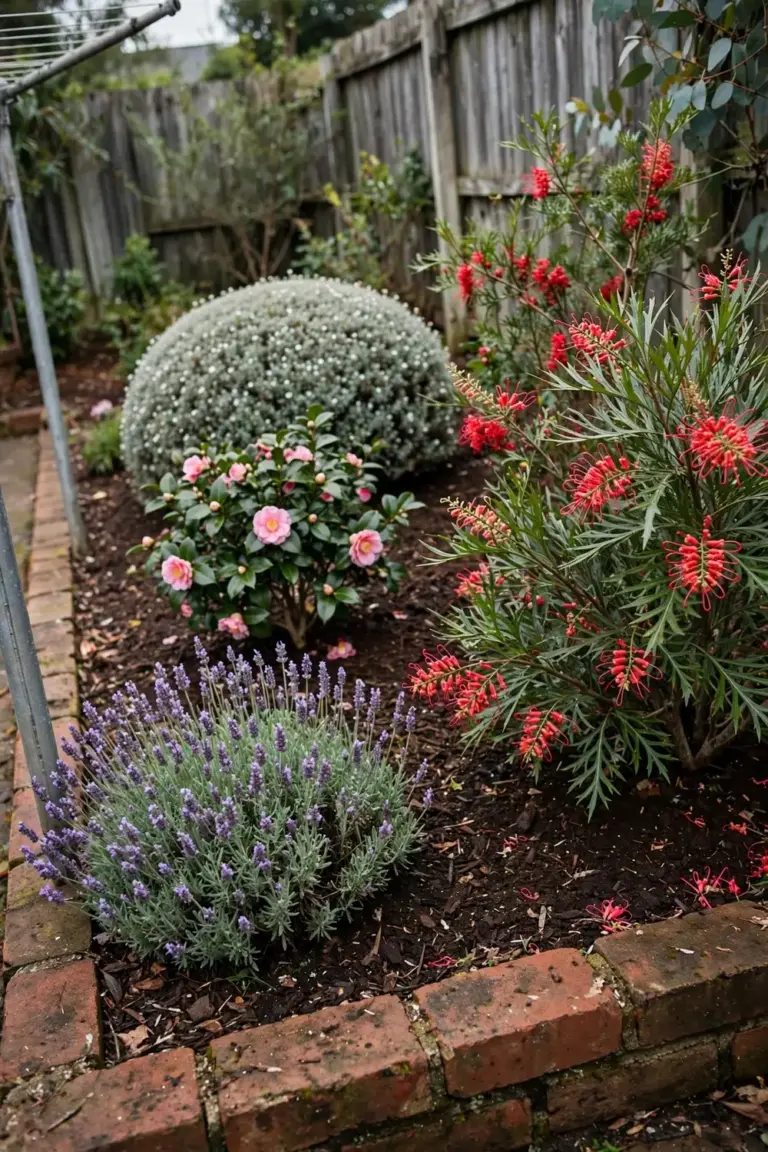
Grevillea is a large group in the Proteaceae family, and the flower form names it. Toothbrush types carry flowers along one side of a stem. Spider types carry a clustered head with long styles that stick out like legs. Both forms sit past the foliage at the branch tips. Leaves run from narrow needles to deeply divided fronds, and that range is why grevilleas confuse beginners.
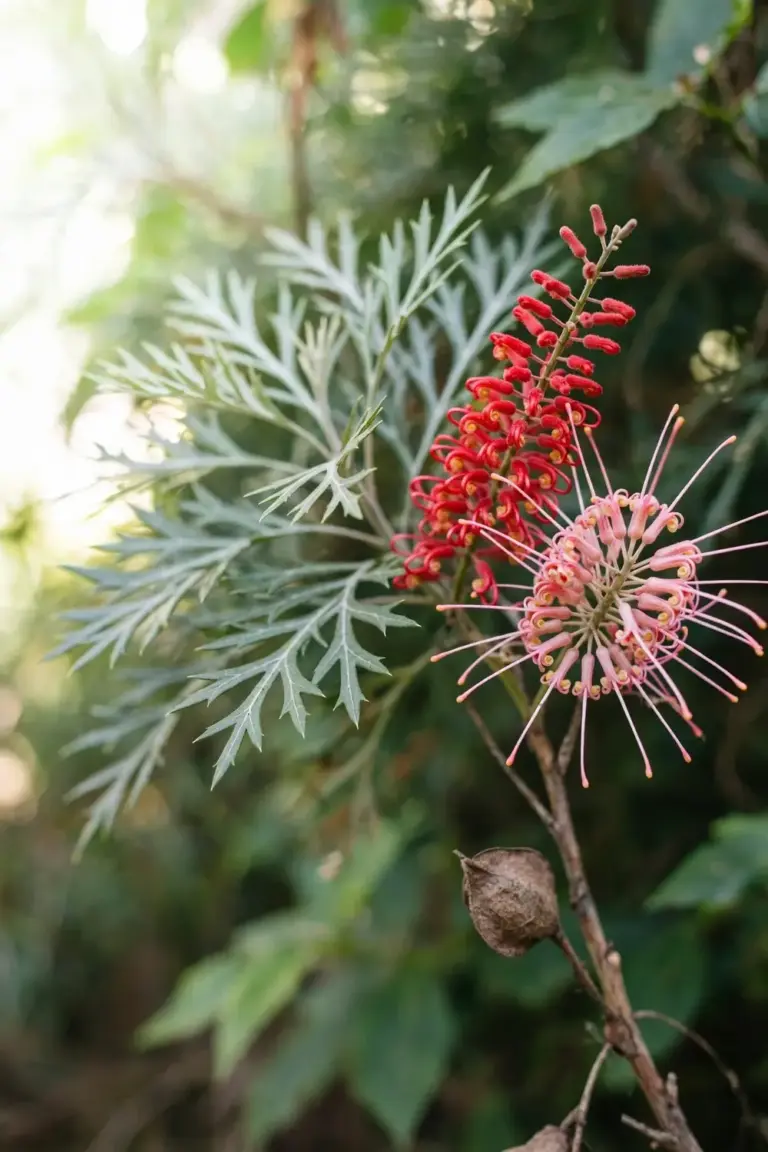
Confused with hakea, which carries similar flowers tucked inside the foliage instead of past it. Flag: native. Care pointer: feed low phosphorus only. The Australian Plants Society notes put Grevillea pinaster at about 1.5 m, and Grevillea speciosa at about 1 m after three years in the ground. Those two figures show the group scale: garden grevilleas stay shrub sized. Leaf shape alone never settles a grevillea. Flower form does.
2. Bottlebrush: Red Bristle Spike Around a Stem
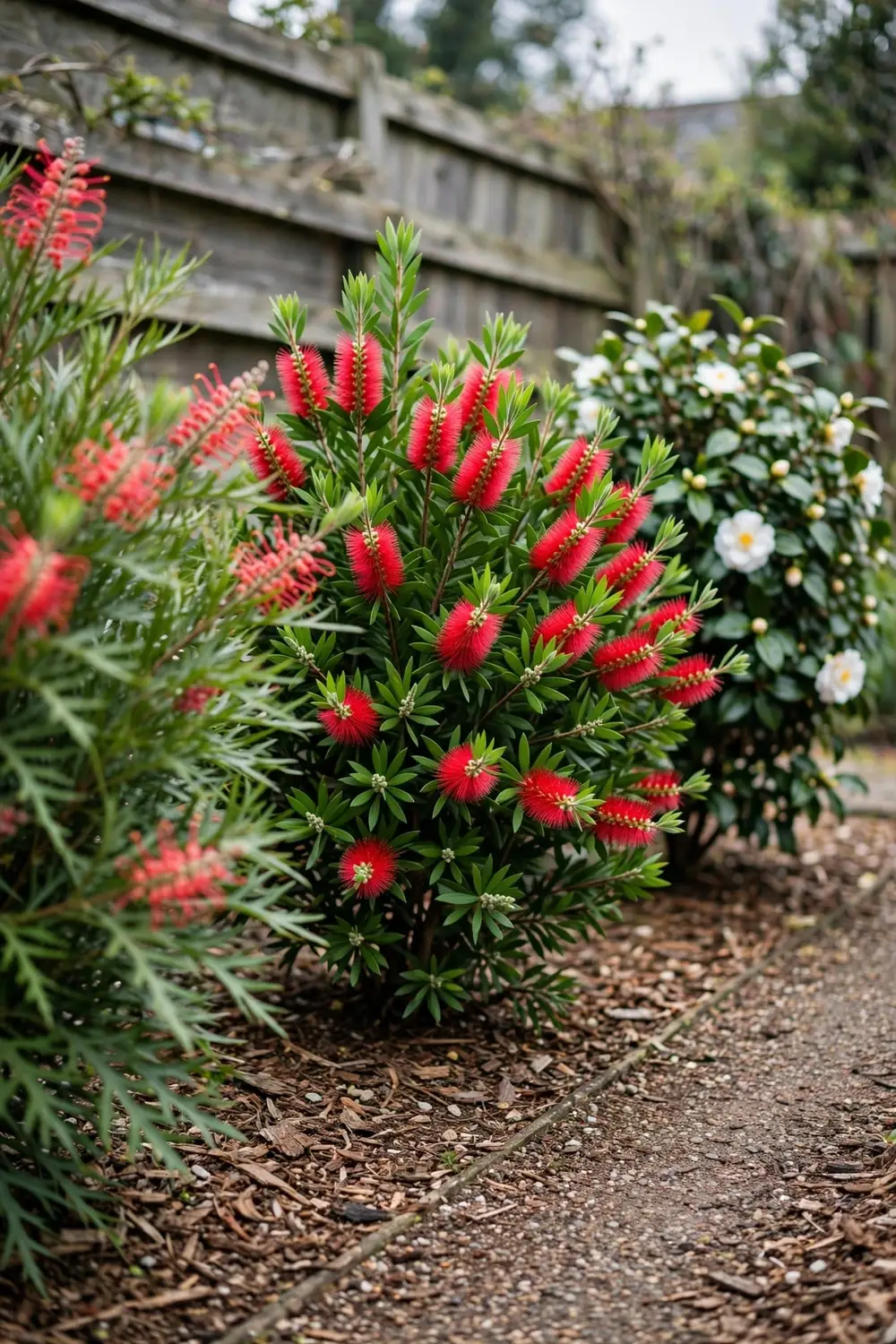
Bottlebrush names a flower, not one species. A stiff stem runs through the middle of a dense cylinder of red stamens. Leaves sit alternate along the stem, narrow and stiff. Woody capsules pack along the old flower stem after the color fades, and those capsules stay on the plant for months. The name covers two botanical names for the same plants: Callistemon in garden catalogs and Melaleuca in current botany. Check the full botanical name before you buy, because the two names still mix in nurseries.
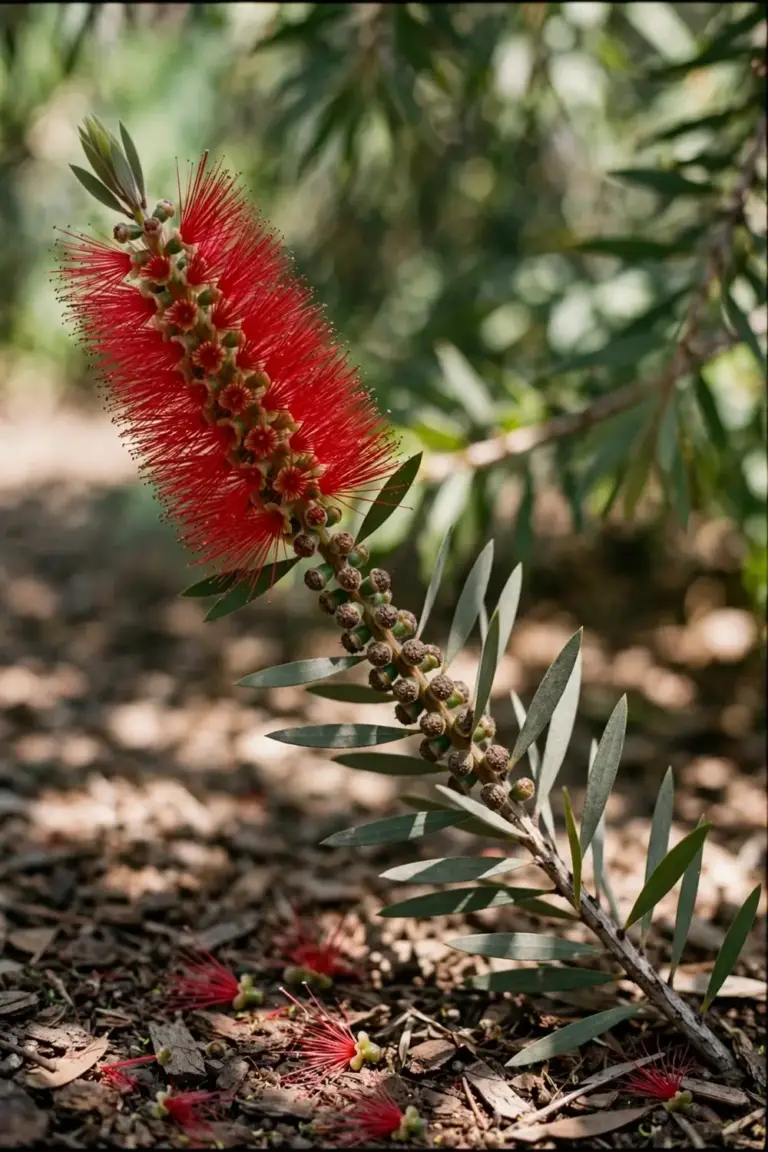
Confused with grevillea toothbrush types, which lack the central stem running through the flower. Flag: native. Care pointer: prune lightly behind the spent flower head. Old capsules on the stem confirm the name when flowers are gone. No other common shrub leaves that capsule row behind.
3. Shrubby Wattle: Phyllodes and Golden Ball Flowers
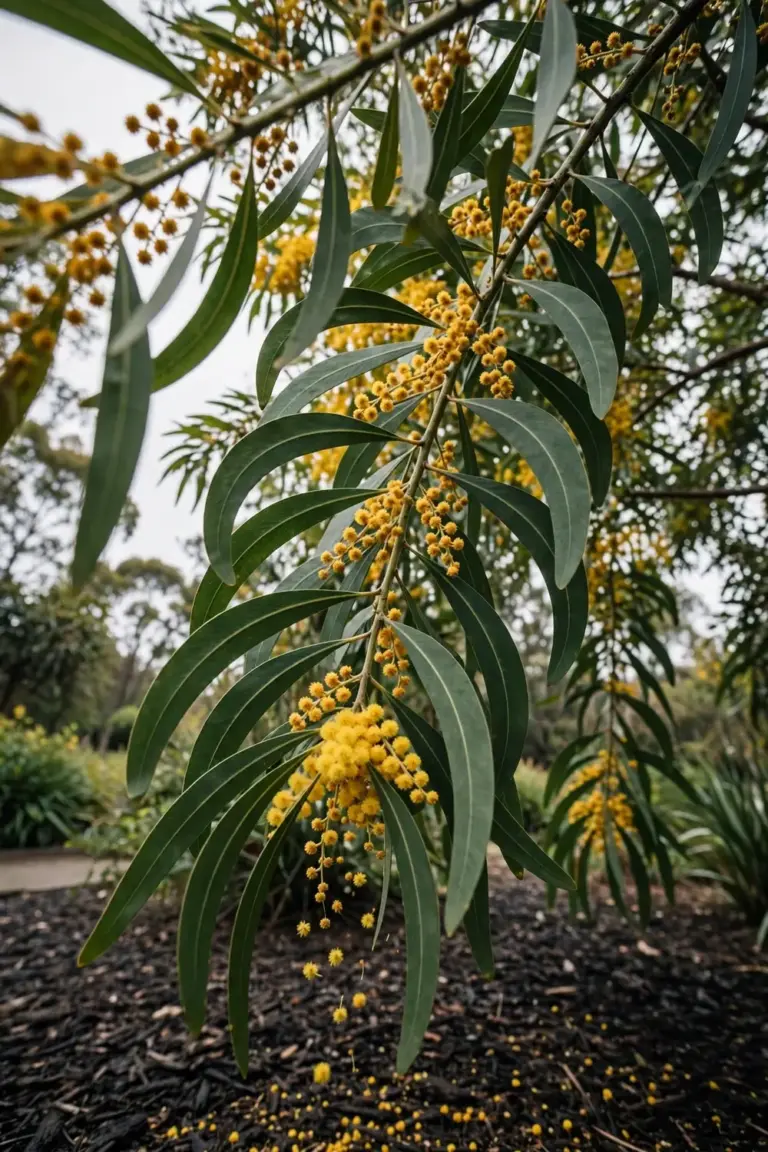
Shrubby wattle shows phyllodes, not true leaves. A phyllode is a flattened leaf stalk that does the work of a leaf. It feels stiff, and it often runs in one plane from the stem. Flowers form golden ball clusters on short stalks. Pods follow, flat and straight or coiled. Wattles vary so widely that one entry cannot split species apart, and a shrubby wattle with fine feathery foliage is usually a young plant still carrying true leaves.
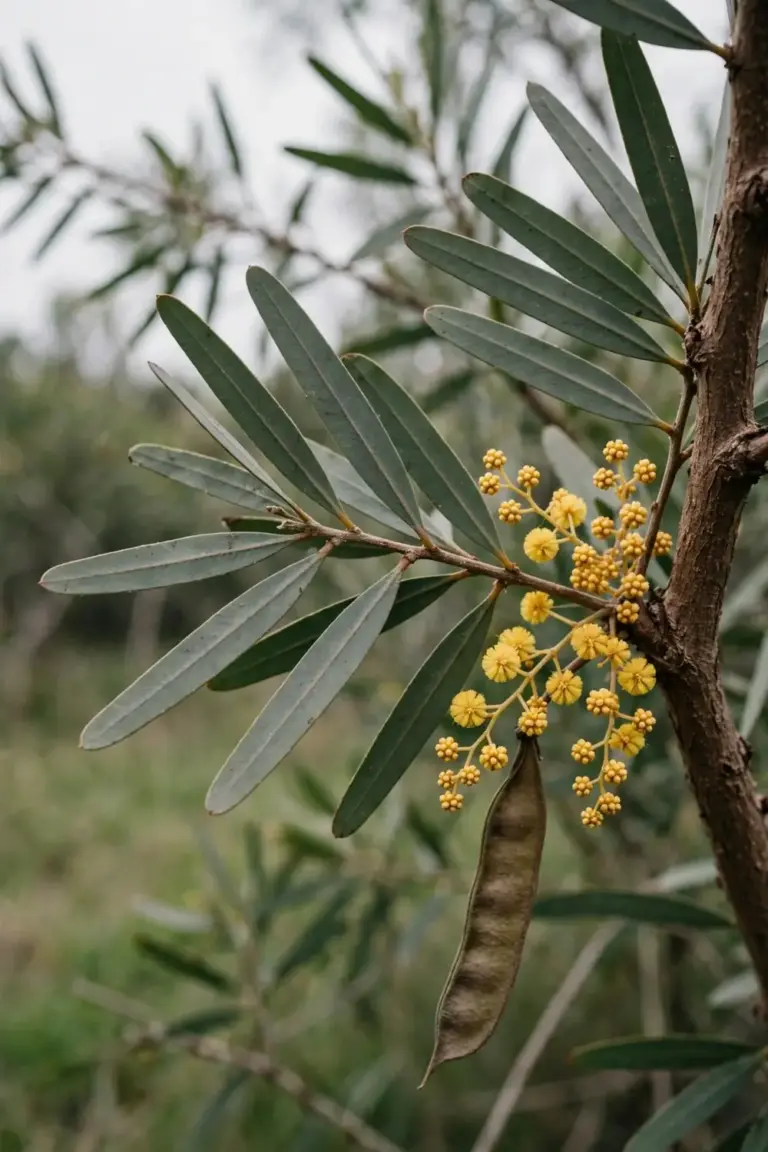
Confused with other wattles, which share the same flower form. Flag: native, with a weed warning for a few species planted outside their home range. Care pointer: plant the local species first. Pod shape narrows the field when flowers are gone. Flat, straight pods and coiled pods belong to different species.
4. Lilly Pilly: Glossy Opposite Leaves and a Hedge That Flushes Red
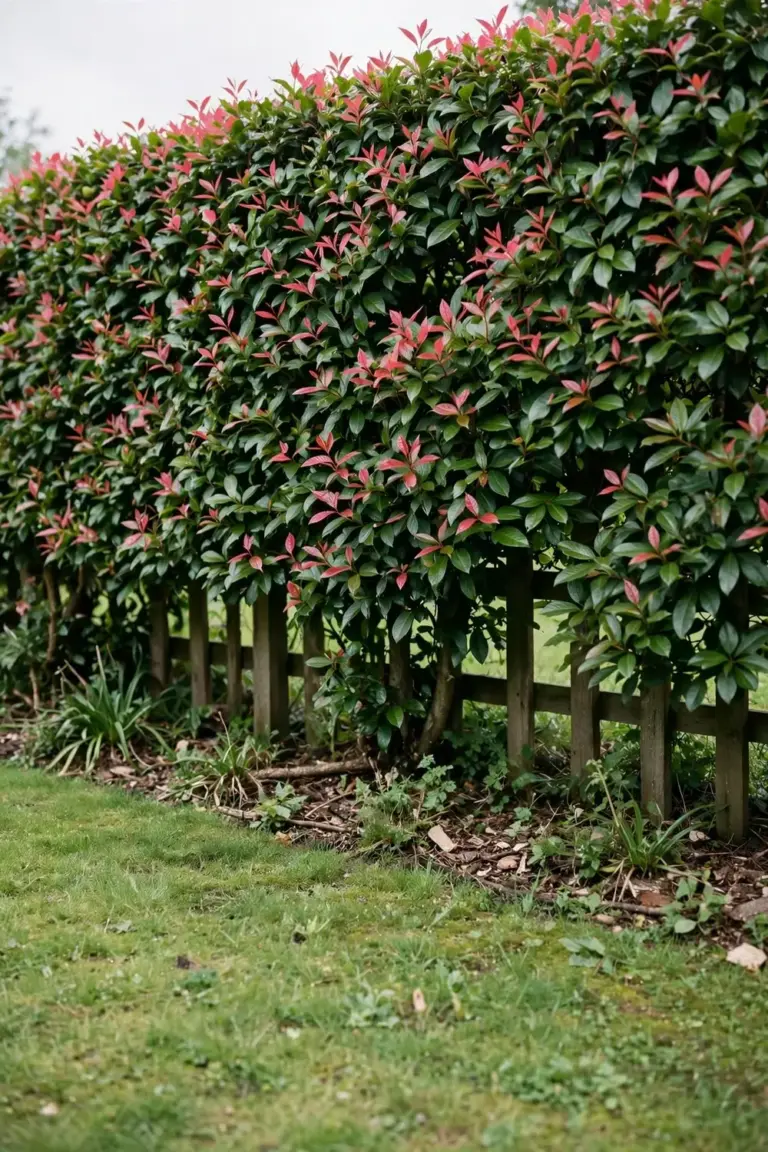
Lilly pilly is Syzygium australe in most hedges, with Syzygium smithii close behind. Leaves sit opposite, glossy, oval, and smooth edged. New growth flushes red or bronze, then hardens to deep green. White fluffy flower clusters open in summer, and pink to red berries follow. Birds eat the berries. The hedge form stays dense when clipped, and the species also grows into a tree when left alone.
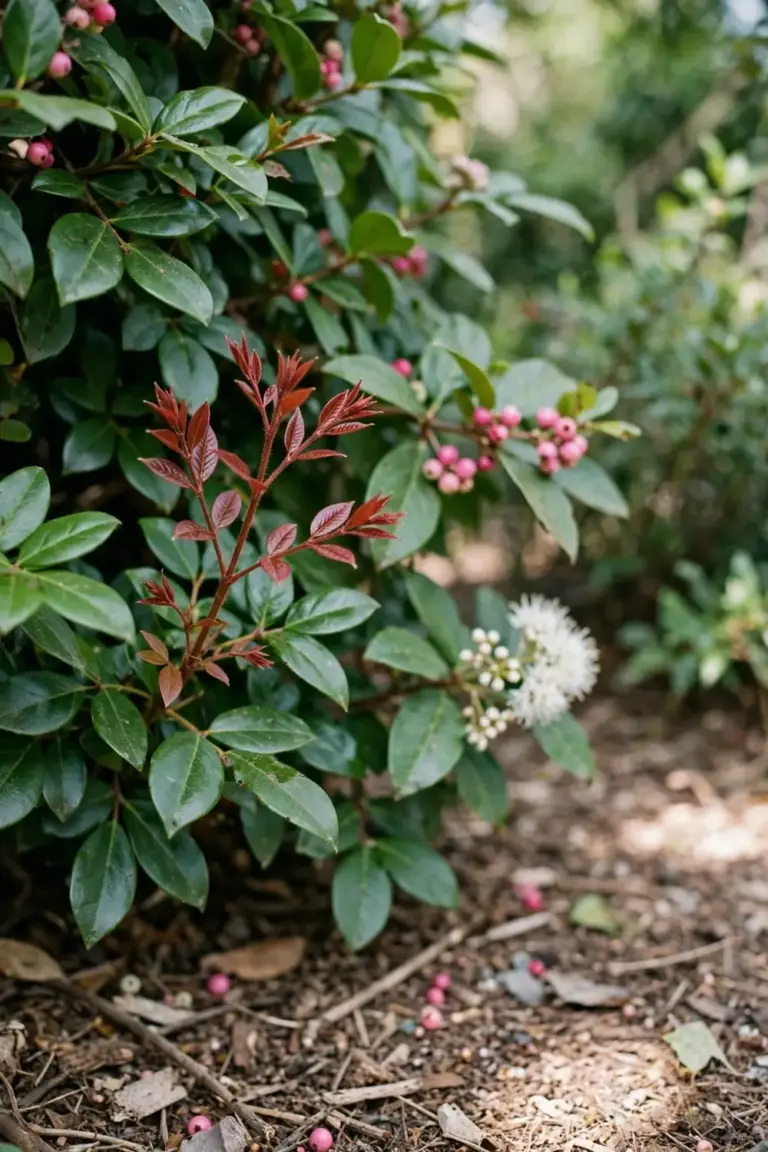
Confused with privet, which carries similar opposite glossy leaves but duller, with black berries and strongly scented white flowers. Flag: native. Care pointer: clip after the berry flush. Crush a leaf to check. Lilly pilly leaves smell green and plain. Privet leaves carry a heavier scent.
5. Coastal Rosemary: Gray-Green Whorls and a Spotted Throat
Coastal rosemary is Westringia fruticosa, a mint family shrub from the east coast. Leaves sit in whorls of three or more around the stem, narrow and gray-green with a pale underside. Flowers are small, white to pale mauve, with reddish and yellow-brown spots near the throat. The shrub forms a dense dome and clips into a hedge. It looks like rosemary and smells of nothing in the kitchen, because it is not the culinary herb.
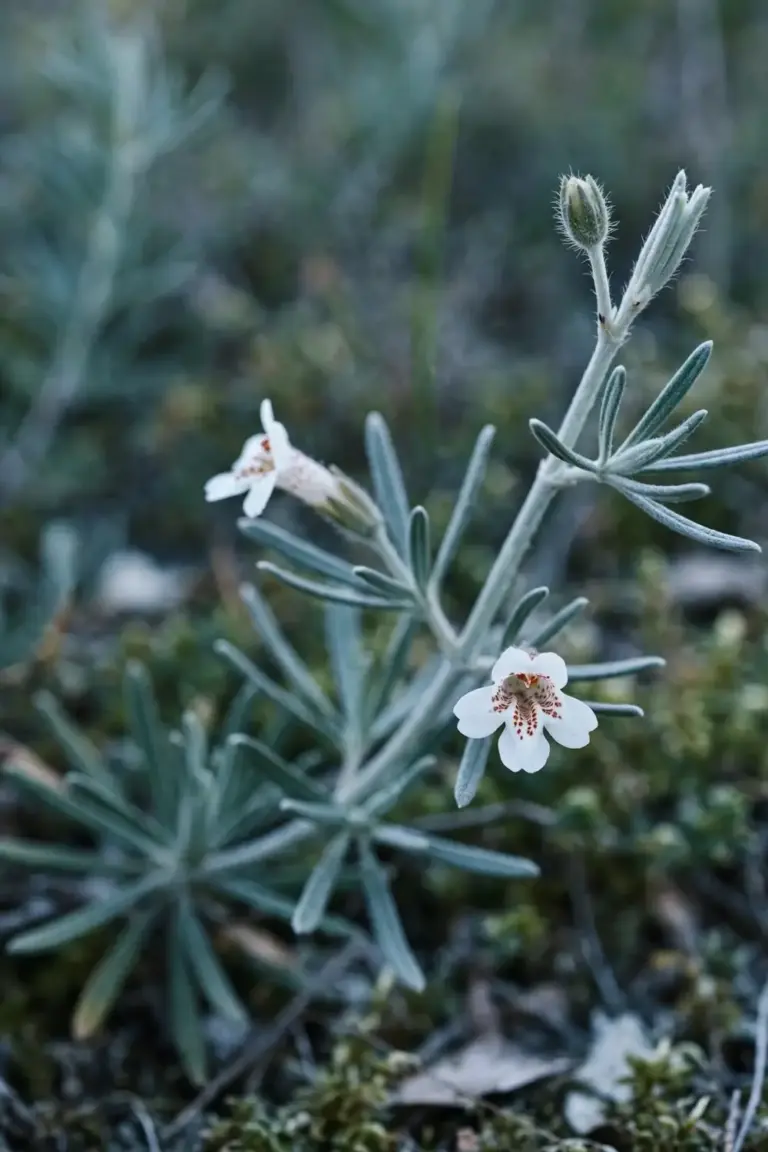
Confused with true rosemary, which carries needle leaves in opposite pairs and a strong scent when crushed. Flag: native. The ANBG Growing Native Plants notes put coastal rosemary at a small shrub to 2 m high, with leaves up to 2 cm long and flowers 2 cm across. A pot suits it, and the container natives guide lists natives that hold a pot shape. Whorls settle it. True rosemary never whorls.
6. Native Fuchsia: Dangling Bells on a Small Bush
Native fuchsia is Correa, with Correa reflexa the most common garden species. Flowers hang as narrow bells, red, pink, or cream, from short stalks. Leaves sit opposite, oval, and often hairy below. The shrub stays compact and flowers through the cool months when little else blooms. Birds work the bells for nectar.
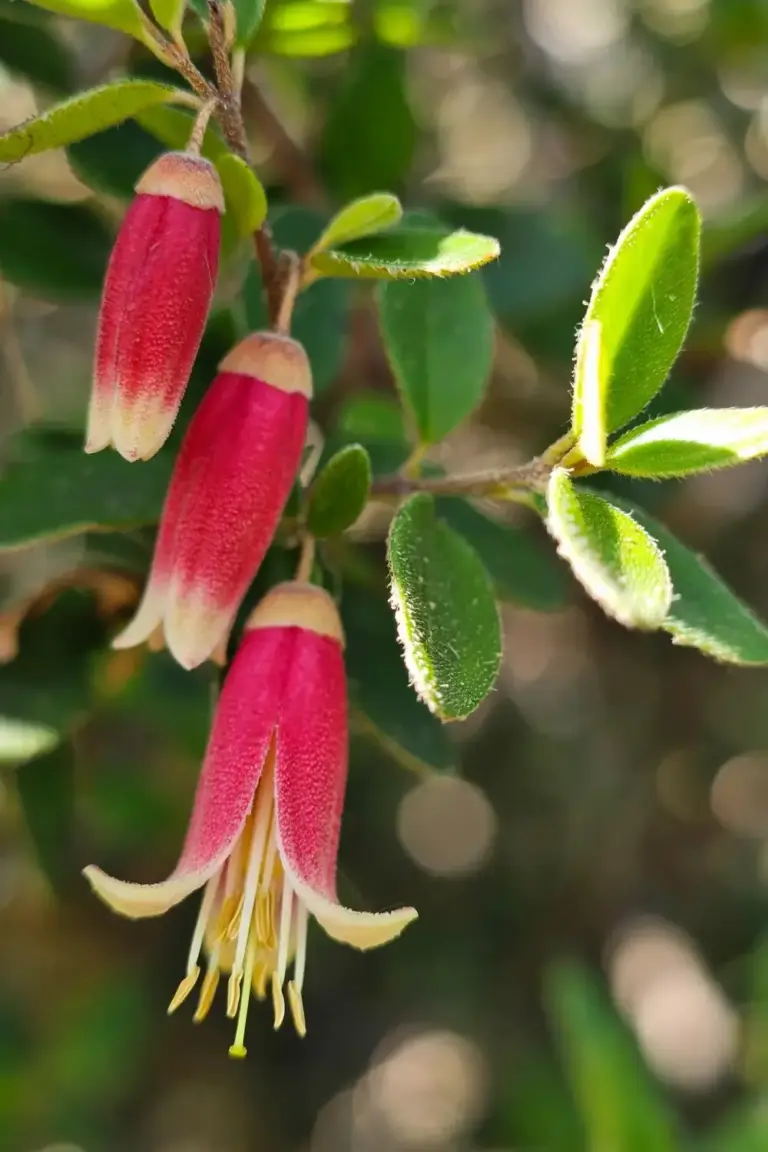
Confused with fuchsia, the exotic garden plant, which carries larger showy flowers with flared skirts and soft leaves. Flag: native. Care pointer: prune lightly after flowering to keep the bush dense. The bell shape stays narrow. Fuchsia bells flare wide.
7. Hakea: Woody Fruit and Flowers Hidden in the Foliage
Hakea is the grevillea lookalike that hides its flowers. Clusters sit tucked inside the foliage, not past it. Leaves run from needles to flat straps, always stiff. Fruit is the clincher: a woody follicle, often beaked, that stays on the shrub for years. Hakea laurina, the pincushion hakea, carries round red flower heads with cream styles. The group spans groundcovers to small trees, and this entry covers the shrubby species.
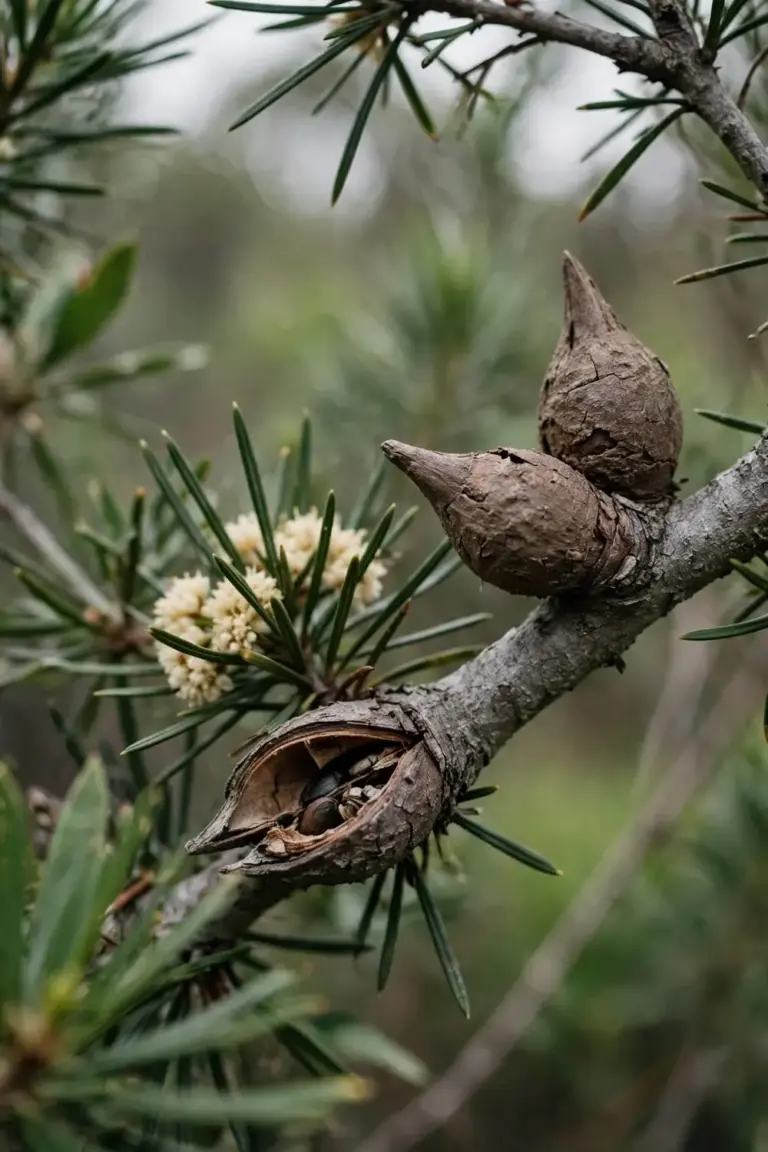
Confused with grevillea, which shows its flowers past the foliage. Flag: native, with a weed warning for Hakea sericea outside its home range. Care pointer: feed low phosphorus only. The woody fruit lasts for years. Crack one open and the two seeds sit inside.
8. Shrubby Banksia: A Cone of Hundreds of Flowers
Shrubby banksia shows a flower spike that is really hundreds of small flowers packed into one cone. Banksia spinulosa, the hairpin banksia, carries spikes in gold, orange, red, or brown. Leaves are long, narrow, and toothed along the edge. Old cones stay on the shrub as woody cones studded with follicles. The flower spike opens from the top down, so one spike can carry buds, open flowers, and old capsules at once.
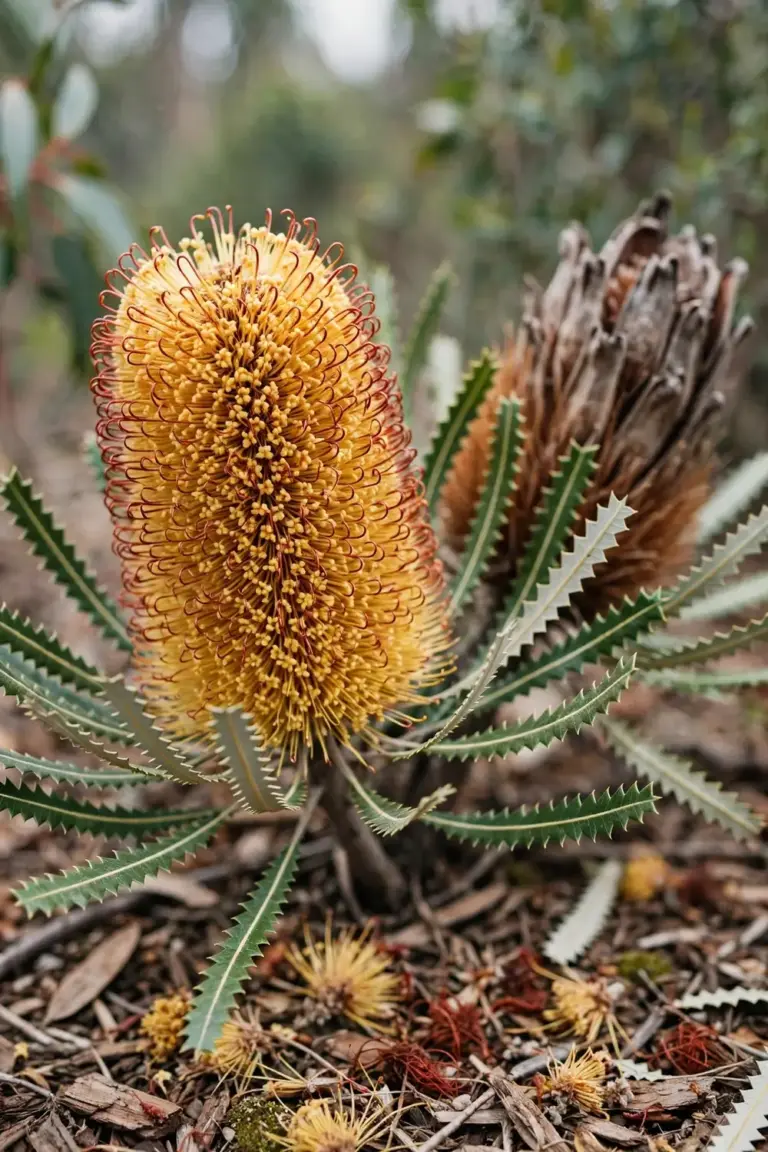
Confused with other banksias, which share the cone form. Flag: native. The ANBG Growing Native Plants notes put Banksia spinulosa at 1 to 3 m, with spikes 10 to 20 cm long and leaves 3 to 8 cm long and 2 to 7 mm wide. Those figures set the shrub scale: a banksia cone is longer than a hand. The toothed leaf edge confirms it when flowers are gone.
9. Tea Tree: Small Leaves and Five-Petalled Flowers
Tea tree is Leptospermum, with Leptospermum scoparium the best known species. Leaves are small, narrow, and aromatic when crushed. Flowers carry five petals around a dark center, white to pink, and sit singly along the stem. Bark peels in papery sheets. Woody capsules follow the flowers and stay on the shrub. The common name also covers Melaleuca alternifolia, the tea tree oil plant, which is a different plant with similar small leaves. Check the botanical name before you buy.
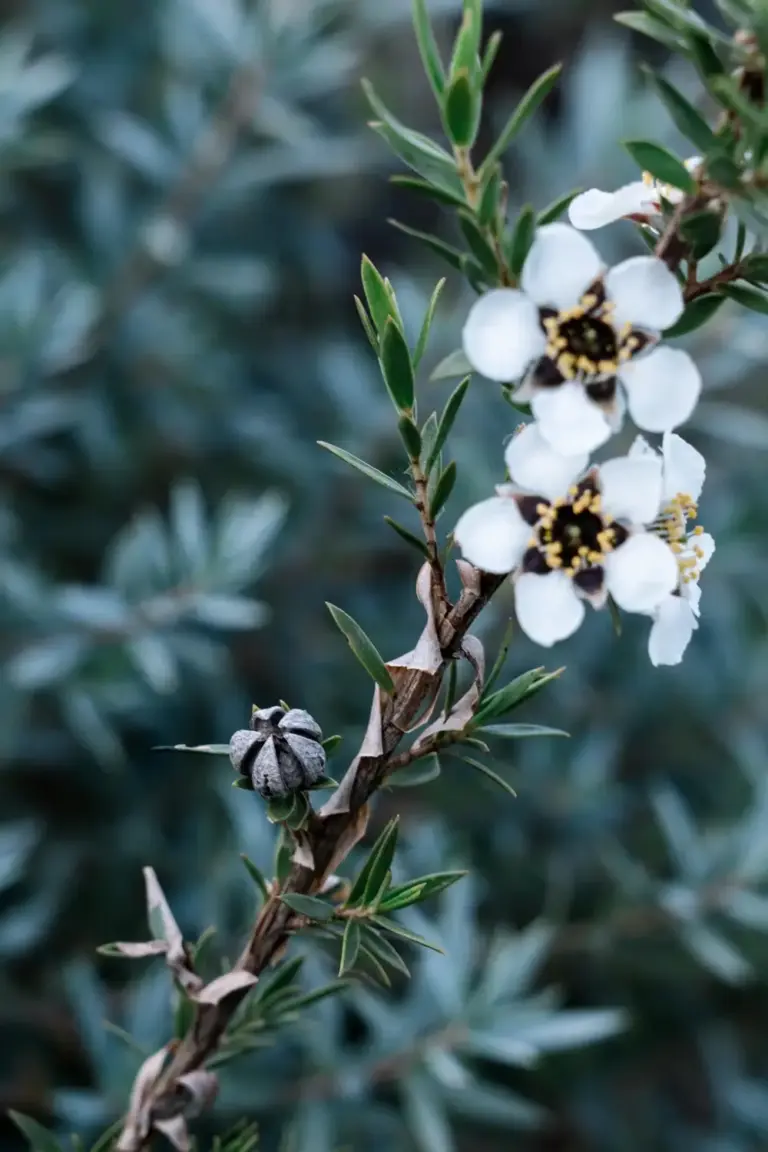
Confused with melaleuca, which carries bottlebrush-like spikes instead of single five-petalled flowers. Flag: native. Care pointer: prune lightly after flowering. Papery bark confirms the myrtle family. No other shrub group peels the same way.
10. Camellia: Glossy Leaves and a Rose-Like Bloom
Camellia is Camellia japonica in most gardens, with Camellia sasanqua close behind. Leaves sit alternate, glossy, oval, with a toothed edge and a pointed tip. Flowers are rose-like, with layered petals in white, pink, or red, and a center of yellow stamens. Buds form in autumn and open from winter into spring. The shrub holds its leaves all year and grows slowly into a dense dome.
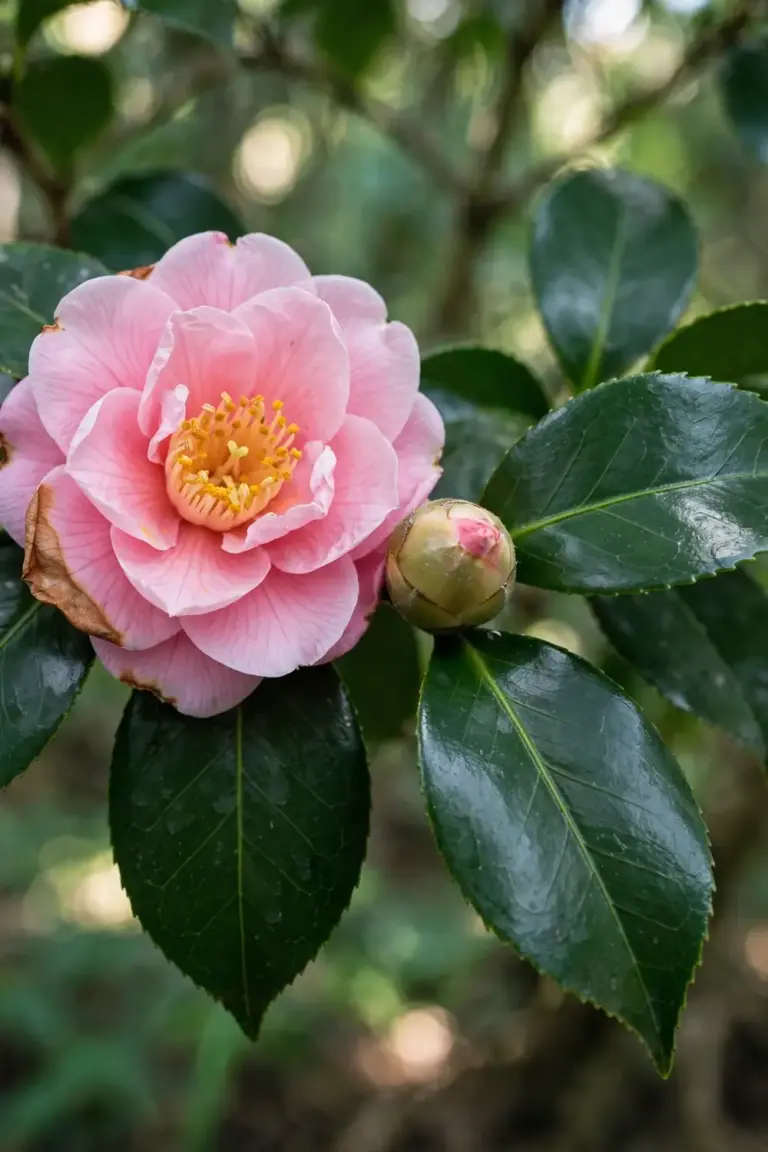
Confused with azalea, which carries thinner, softer leaves and clustered open flowers without the layered rose form. Flag: exotic. Care pointer: prune after flowering, and the spring pruning techniques show the cut. Buds form in autumn. A camellia with no buds in autumn is likely a sasanqua past its flush.
11. Azalea: Thin Leaves and Clustered Spring Flowers
Azalea is a group inside Rhododendron, the evergreen azaleas of gardens. Leaves sit alternate, thin, soft, and oval, with a fine hair on the underside in many types. Flowers open in clusters at the branch tips in spring, five lobes, in white, pink, red, or purple. The shrub stays compact and twiggy when young, then broadens. Deciduous azaleas drop their leaves in winter, and that single trait splits them from the evergreen group.
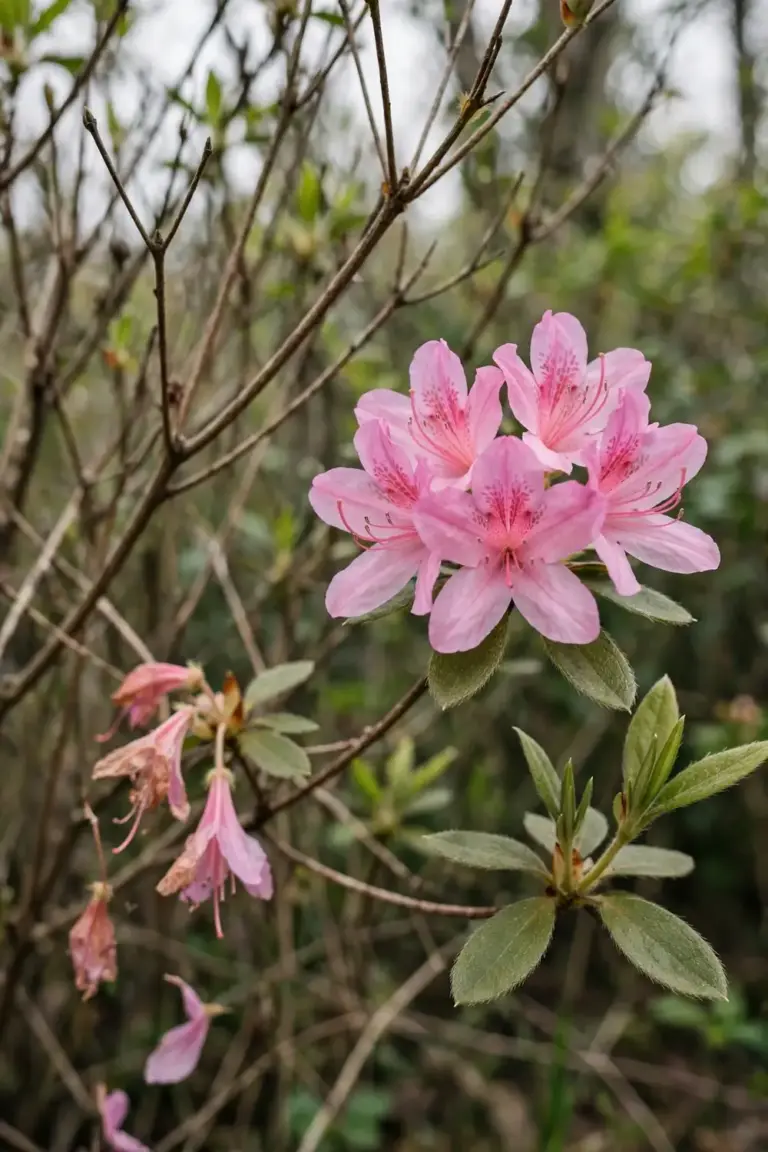
Confused with camellia, which carries thick glossy leaves and single rose-like blooms. Flag: exotic. Care pointer: keep the root zone cool with mulch. The thin leaf is the tell. Camellia leaves feel like leather. Azalea leaves feel like paper.
12. Lavender: Gray Spikes and a Scented Flower Head
Lavender is Lavandula angustifolia, the English lavender of herb gardens. Leaves are narrow, gray, and aromatic, held opposite on short stems. Flower spikes rise on bare stems above the foliage, each carrying rings of small purple flowers. The whole plant smells when brushed. The shrub forms a low mound and goes woody at the base with age.
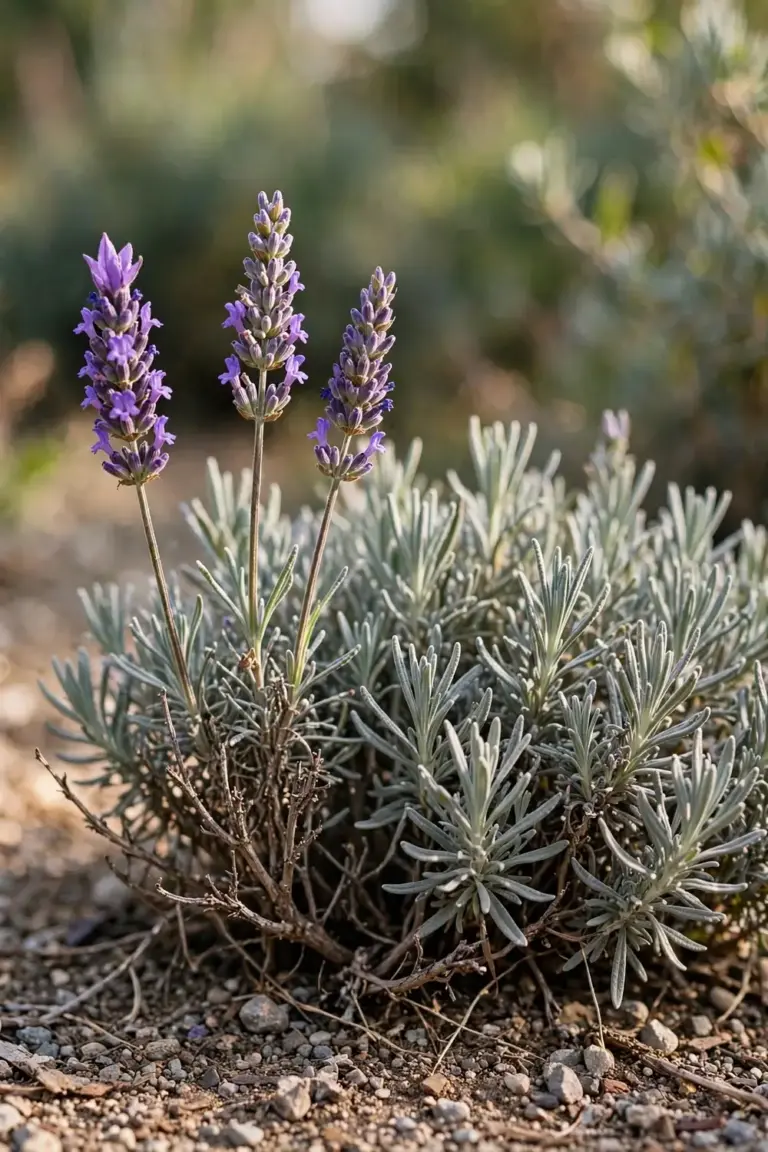
Confused with westringia, which carries similar gray narrow leaves but whorled, with small spotted flowers tucked among the foliage instead of spikes above it. Flag: exotic. Care pointer: cut flower stems after the main flush. Scent settles it. Lavender perfumes the air when brushed. Westringia does not.
13. Orange Jessamine: Glossy Leaves and Citrus-Scented Flowers
Orange jessamine is Murraya paniculata, a hedge shrub from warm districts. Leaves sit opposite, glossy, and divided into oval leaflets with a smooth edge. White flower clusters open with a strong citrus scent, and red berries follow. The shrub clips into a dense hedge and flowers in flushes through the warm months. The scent suggests jasmine and citrus. The plant belongs to neither family.
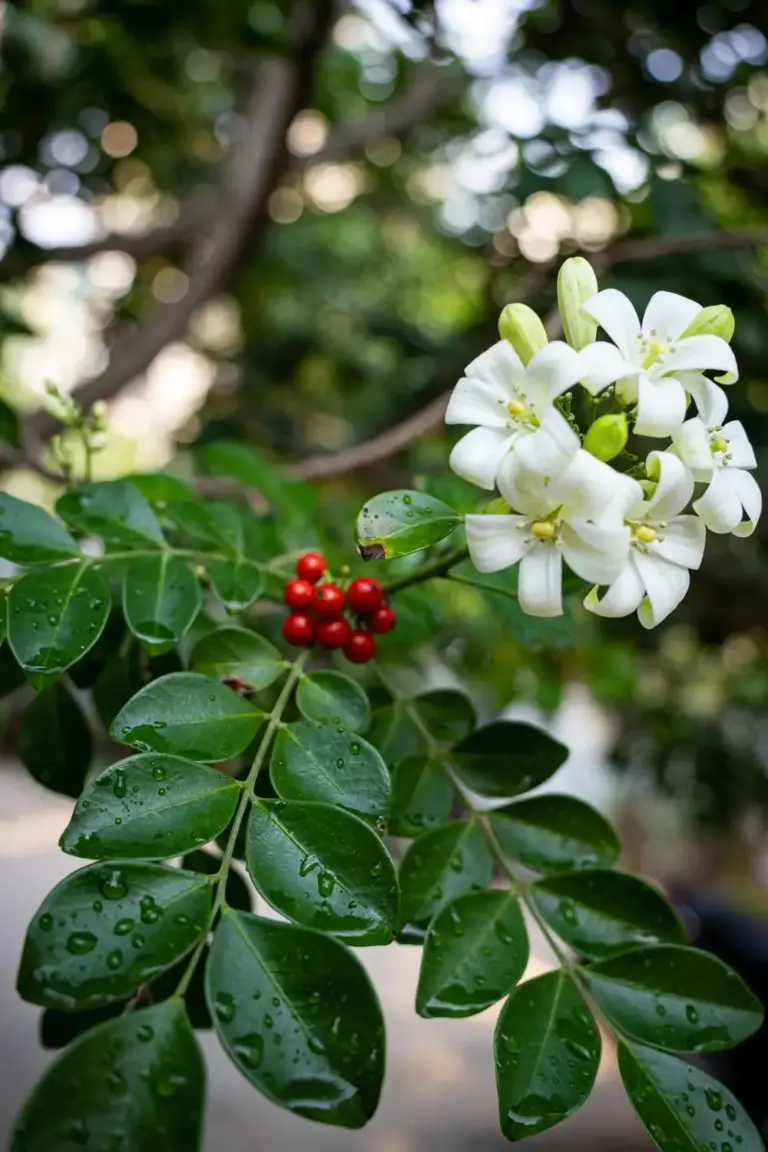
Confused with privet, which carries similar glossy opposite leaves but plain oval blades, and with lilly pilly, which carries a red new-growth flush. Flag: exotic. Care pointer: clip after each flower flush. Leaflets settle it. Murraya leaves divide into leaflets. Privet leaves stay whole.
14. Lantana: Rough Leaves and a Flower Head That Changes Color
Lantana is Lantana camara, a declared weed across much of coastal Australia. Leaves sit opposite, rough to the touch, bright green above and paler below, with a toothed edge and a pungent smell when crushed. Flower heads carry buds and open flowers in different colors at once: yellow, orange, pink, red, or white in one head. Stems are square in cross-section when young, with short prickles. Berries ripen from green to shiny purple-black.
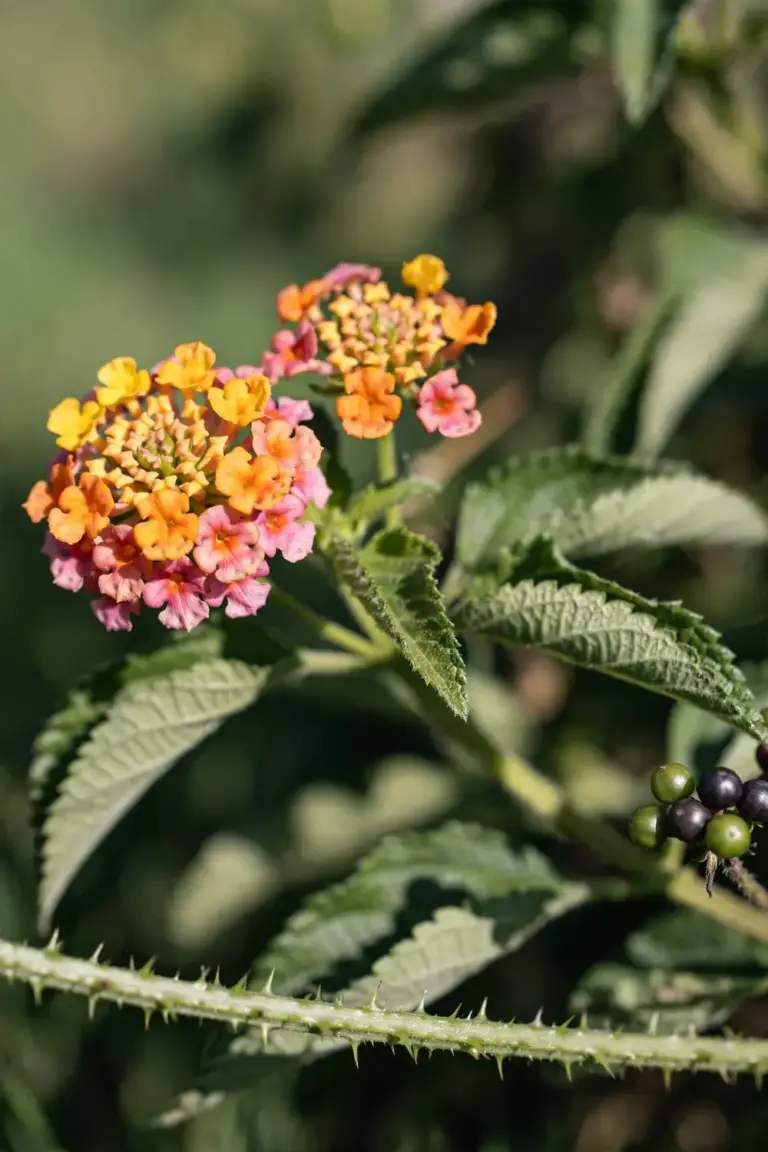
Confused with native verbena shrubs, which carry similar flower heads but softer leaves and no prickles. Flag: weed. NSW WeedWise lists lantana as poisonous to animals and humans, and as a weed that invades native grassland and pastures. A Camden Council fact sheet sourced from WeedWise puts lantana at 2 to 4 m high. Check before you remove any suspect shrub, because native lookalikes exist. Prickles settle it. No native lookalike arms itself the same way.
15. Privet: Glossy Opposite Leaves and Black Berries
Privet is Ligustrum, with Ligustrum lucidum, Ligustrum sinense, and Ligustrum vulgare the common garden escapees. Leaves sit opposite, glossy, smooth edged, and oval to narrow. White flower clusters open in spring and summer with a strong scent. Berries ripen to shiny black and hang in clusters into winter. Stems carry smooth gray-brown bark, with white pores on older wood. Birds spread the berries into bushland.
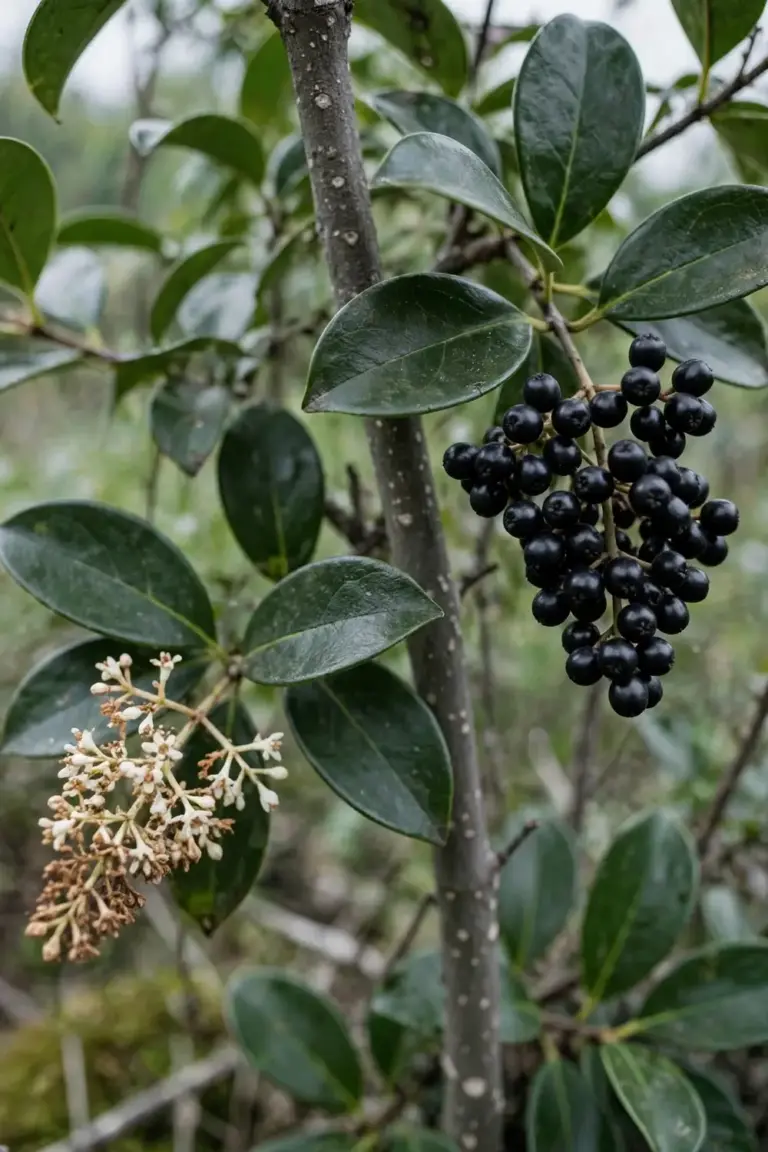
Confused with lilly pilly, which carries a red new-growth flush and pink to red berries, and with murraya, which carries divided leaflets. Flag: weed in most states. WeedWise puts European privet at up to 5 m tall, with leaves 2 to 6 cm long and 0.8 to 2.5 cm wide and berries 3 to 10 mm long, and broad-leaf privet at up to 15 m with leaves 4 to 13 cm long. Check before you remove any suspect shrub, because native lookalikes exist. Berry color settles it. Privet berries turn black. Lilly pilly berries stay pink to red.
Watch These 3 Lookalike Traps
Three traps catch even careful gardeners. Each one turns on a single trait. Each trap below names the single trait that resolves it, so a second pass through the key usually settles the name. Run the key again when a shrub lands in one of these traps.
Trap 1. Shrub or Tree
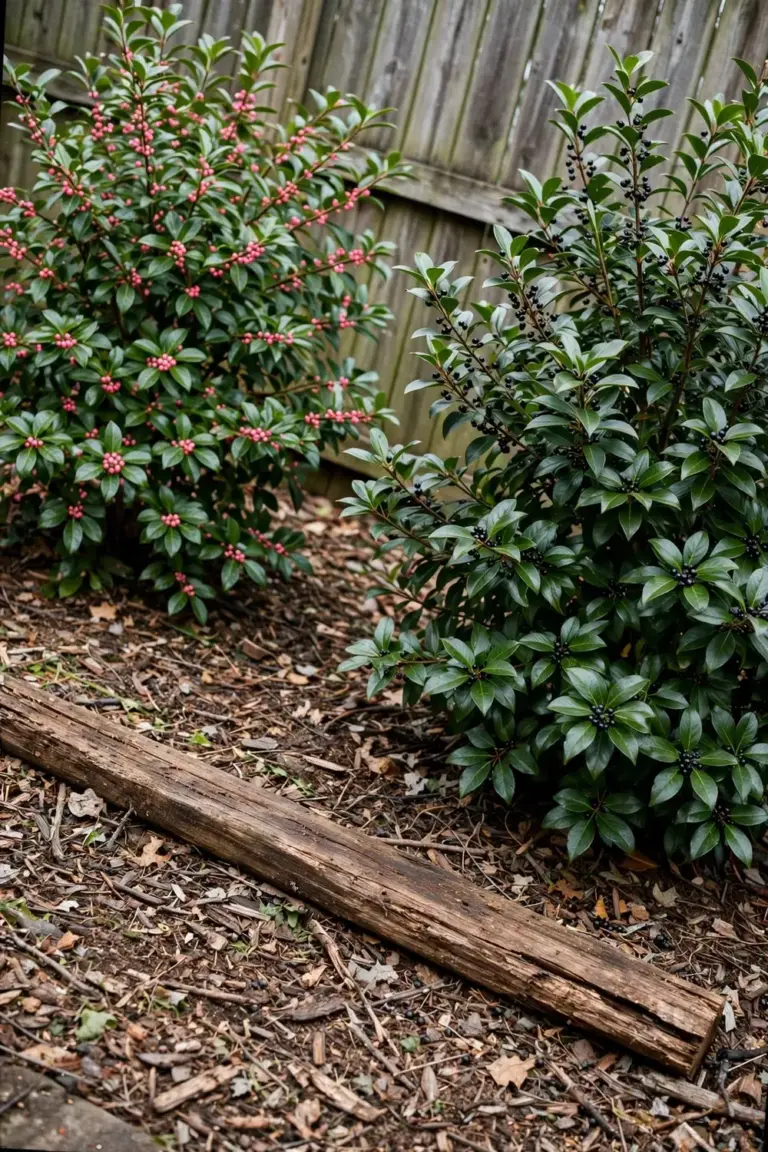
Some shrubs grow into trees. Lilly pilly hedges become trees when left unclipped. Shrubby mallee eucalypts look like big shrubs but grow into multi-stemmed trees, so they sit outside this shrub key. A hedge plant that outgrows the fence is still the same species, and the key still names it. Size at the time you look is not the test. Leaf, flower, and fruit name the plant, and habit follows from the name.
Trap 2. Shrub or Vine
Vines climb and shrubs stand. A vine leans on a fence, a tree, or a trellis, and it often carries tendrils or twining stems. A shrub holds itself up. When the plant in front of you climbs, the vine key answers it, not this shrub key. When it stands alone, this key applies.
Trap 3. Same Common Name, Different Plant
Common names repeat. Tea tree covers Leptospermum and Melaleuca alternifolia. Rosemary covers the culinary herb and coastal rosemary. Native fuchsia covers Correa and the exotic fuchsia. Bottlebrush covers Callistemon and Melaleuca for the same plants. One common name never proves identity. The botanical name in brackets settles it. Nursery labels mix these names freely, so the botanical name in brackets is the only name worth trusting when two plants share one common name. Read the label. Trust the brackets.
Frequently Asked Questions
Use leaves, bark, habit, and setting. Leaves alone split most of the 15 entries: whorled, opposite, or alternate arrangement narrows the field fast. Leaf arrangement alone often narrows the field to two or three entries, and bark plus setting usually finish the job. Bark and habit add the next split. Fruit from last season often still hangs on the shrub. When the shrub still ties, photograph the leaves and wait for flowers before you decide.
Native means the plant grows wild in Australia. Exotic means it came from overseas and stays in gardens. Weed means it escapes gardens and harms bushland or farms. One species can be native in one state and a weed in another. Your state weed list gives the local answer, and WeedWise covers New South Wales. The flag follows the postcode, not the plant alone.
A shrub carries several woody stems from near the ground and stays under about 5 m. A tree carries one main trunk and grows taller. The line blurs because shrubs grow into trees when left alone. Botanists treat the split as habit, not a fixed label. Use the plant name to settle it, not the height you see today.
Yes, and it happens often. Tea tree, rosemary, native fuchsia, and bottlebrush each cover two or more plants. Nurseries mix the names too. Ask for the botanical name on the label and check it against the entry in this key. The botanical name is the only name that stays put.
Match the flag to the next move. A native keeper earns a place in the garden. An exotic keeper stays when it behaves. A weed flag means check your state weed list before you act, because native lookalikes exist and removal without a name kills the wrong plant. A shrub you cannot name stays until flowers or fruit confirm it.
Name the Shrub, Then Decide What It Needs
A name turns a mystery bush into a plant with known habits. Run the five steps, match the entry, and check the lookalike line before you settle. Photograph the shrub before you act. A photo keeps the name attached to the plant when you check the weed list or ask a nursery. Keep the photos. A shrub that stumps you in spring may answer itself when it flowers in summer. The flag tells you the next move: keep it, watch it, or check the weed list. If the shrub is a keeper and you want more, the bushes to plant in fall list covers shrub picks by season. A shrub you cannot name stays until flowers or fruit confirm it.