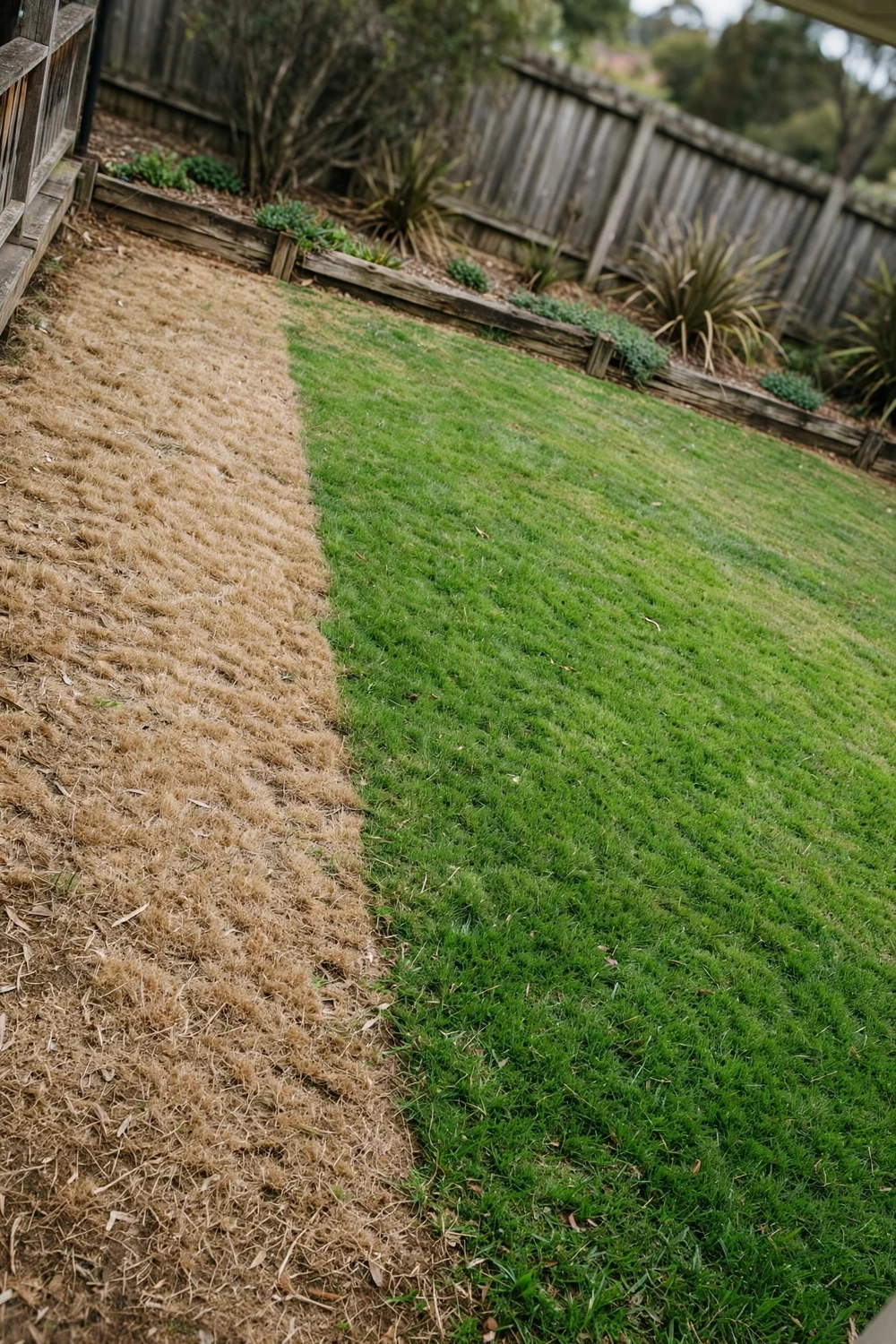

A brown lawn is usually dormant or thirsty, not dead. Three checks, done in under 10 minutes, answer why is my lawn turning brown or dying: the tug test, the crown check, and the pattern of the brown. Run them before you buy anything, because each fix only works on its own cause.
I have learned that the tug test saves more lawns than any spray in the shed. The rest of this page is 11 causes, each with a confirm test and a fix, from dormancy to dog urine. Start at the triage below and follow the pattern you see.
Run Three Checks Before You Treat a Brown or Dying Lawn
Three checks name the cause before you spend a cent: pull, part, and read the pattern.
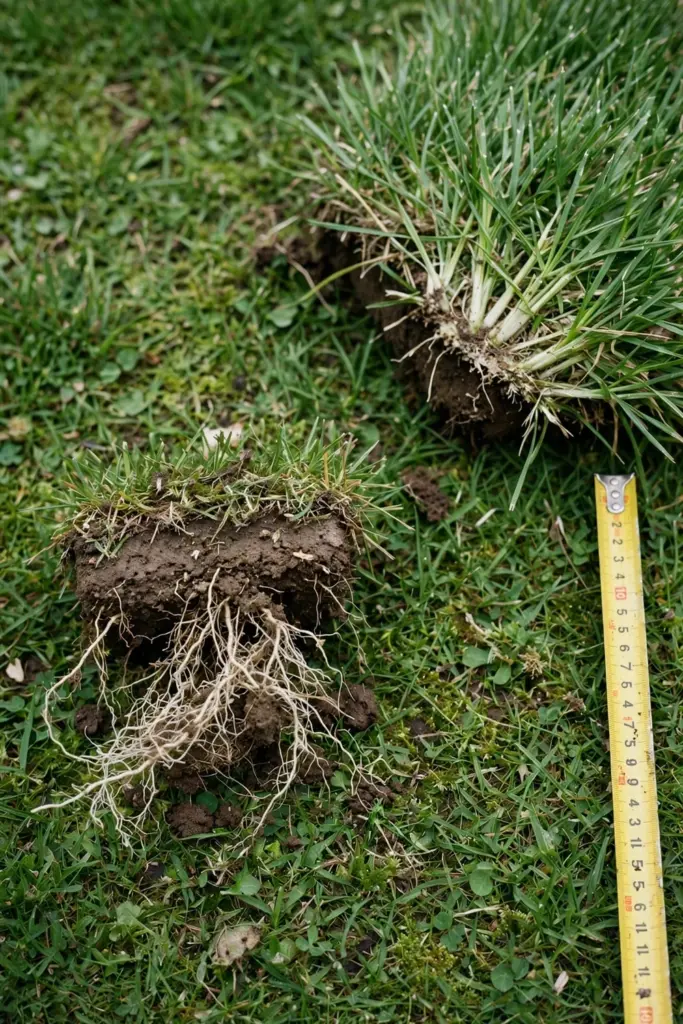
First, pull a handful of brown grass with a gentle tug. Dormant grass resists and stays rooted. Dead grass lifts away with little resistance, roots and all. Pull gently. A hard yank rips out healthy dormant grass and tells you nothing.
Second, part the blades at the base and look at the crown, where the blades meet the roots just below the soil line. A firm crown with green or white tissue means the plant is alive. A brown, mushy crown means the plant is dead. Check two or three spots. One dead patch does not condemn the whole lawn.
Third, read the pattern. Uniform brown across the whole lawn points at dormancy, drought, or reticulation. Irregular patches point at grubs. Circles point at fungus. Rings and spots point at urine or chemical burn. Patches that sit in shade point at light. The table below turns that reading into a first fix.
| Cause | Brown Pattern | First Fix |
|---|---|---|
| Winter dormancy | Uniform straw-brown, no growth | Wait, keep traffic off, hold fertilizer |
| Heat and drought stress | Even browning, wilting, footprint stays | One deep soaking, raise the cut |
| Uneven reticulation | Dry patches shaped like the sprinkler gap | Catch-cup test, fix heads and coverage |
| Hydrophobic soil | One patch stays dry while the rest drinks | Wetting agent, water in cycles |
| Thatch build-up | Spongy feel, water sits on top | Dethatch while grass grows vigorously |
| Compaction | Thin brown along paths and play areas | Core aeration, water well after |
| Lawn grubs | Irregular patches, turf lifts like carpet | Flush test, treat only after confirming |
| Fungus | Circular patches, dew webs in the morning | Water mornings, ease off nitrogen |
| Weeds crowding out grass | Thin turf with weed patches | Thicken the lawn, pull small outbreaks |
| Shade | Patches under trees and beside fences | Raise the cut, cut traffic, open light |
| Dog urine, chemical burn, scalping | Spots and rings, brown after a low cut | Dilute, follow label rates, raise the cut |
Two rules hold for the whole page. Never fertilize a dormant lawn. Never spray a fungicide or insecticide before you have confirmed the cause. Both mistakes cost money and leave the real cause untouched.
Photograph the brown patches before you treat them, because that one habit saves more lawns than any product. A photo records the pattern, the size, and the date. A week later, a second photo shows whether the patch shrank, held, or spread. That comparison tells you whether the fix works, and it gives a professional a clear history if you call one in.
1. Rule Out Winter Dormancy First
Winter dormancy turns a warm-season lawn straw-brown and still. It is rest, not death. Buffalo, couch, kikuyu, and zoysia all rest when cold weather shuts growth down. The lawn looks dead for months and greens up on its own when warmth returns.
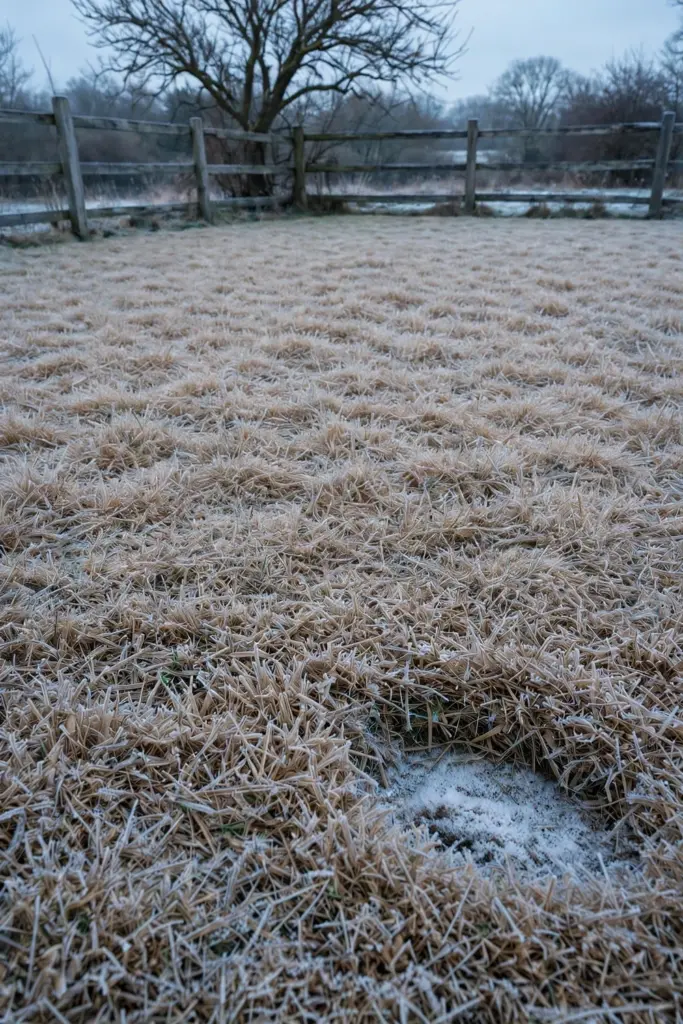
Confirm dormancy with the two checks above. The tug test passes. The crown stays firm with green or white tissue near the soil line. The brown covers the lawn evenly instead of in patches, and growth has stopped. Frost makes the change look sudden. A lawn that was green on Friday can look straw-brown after a cold weekend, and that speed alone does not mean death.
Check shaded and low-lying areas first. Dormancy shows there first, since cold air pools in low spots and shade holds frost longer. A lawn that browns in the hollows while the high ground stays green is resting, not dying. The same logic covers patchy shade browning in winter. Do not reseed or re-turf a dormant lawn. New turf laid over dormant crowns competes for the same soil and dies back the same way when cold returns.
Fix dormancy by waiting. Keep heavy traffic off the resting lawn. Hold fertilizer until growth returns, since feeding a dormant lawn feeds the weeds instead of the grass. Spring feeding has its own timing, and it starts once the lawn is growing again. Water only in a long dry spell, enough to keep the crowns from drying out. Warm-season grasses also rest in hot, dry weather. That summer dormancy works the same way: the plant waits, and it recovers when conditions improve.
2. Water Deep for Heat and Drought Stress
Heat and drought stress shows up as wilting, a blue-gray cast, and a footprint that stays. Step on the lawn in the morning. If the footprint fades, the grass has water. If the footprint stays pressed into the turf, the grass is thirsty. That test beats a fixed watering schedule, because soil, sun, and wind change faster than any calendar.
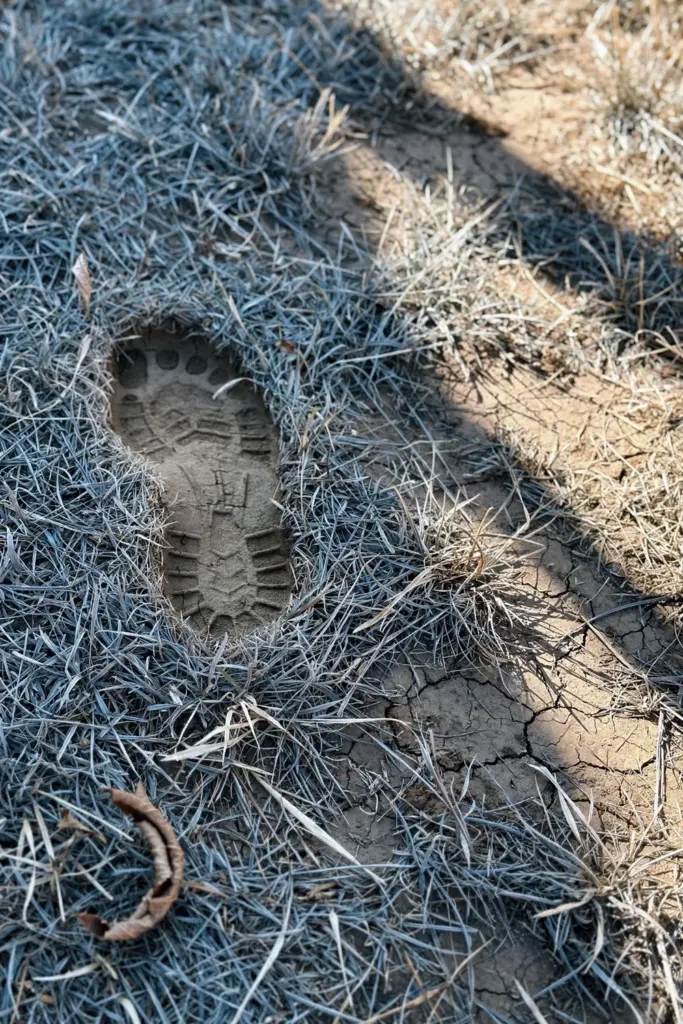
Confirm drought by the even browning across the lawn and by the soil. Push a screwdriver into the ground after watering. Dry soil an inch down means the water never reached the roots. Light, frequent sprinkles cause this. They wet the surface and leave the root zone dry, so the grass grows shallow roots that fail at the first hot week.
Fix drought with one deep soaking at the first sign of wilting, then wait until the footprint test says thirsty again. Deep, infrequent watering trains roots downward. Water in the early morning so less evaporates and the blades dry before night. Raise the mowing height. Longer blades shade the soil, slow evaporation, and keep the crowns cooler. A lawn that gets deep water and a higher cut handles the next heatwave without browning. Watch the lawn in the first hot week after the fix. Wilting that returns within a day or two means the soil dried faster than the roots can follow, and a second deep soaking is due.
3. Test Reticulation With Catch Cups
Uneven reticulation browns the lawn in the shape of the sprinkler gap. The pattern gives it away. Dry brown patches sit where heads miss, while the lawn beside them stays green. One station waters well and the next leaves a dry crescent. The grass is not sick. The water never arrived.
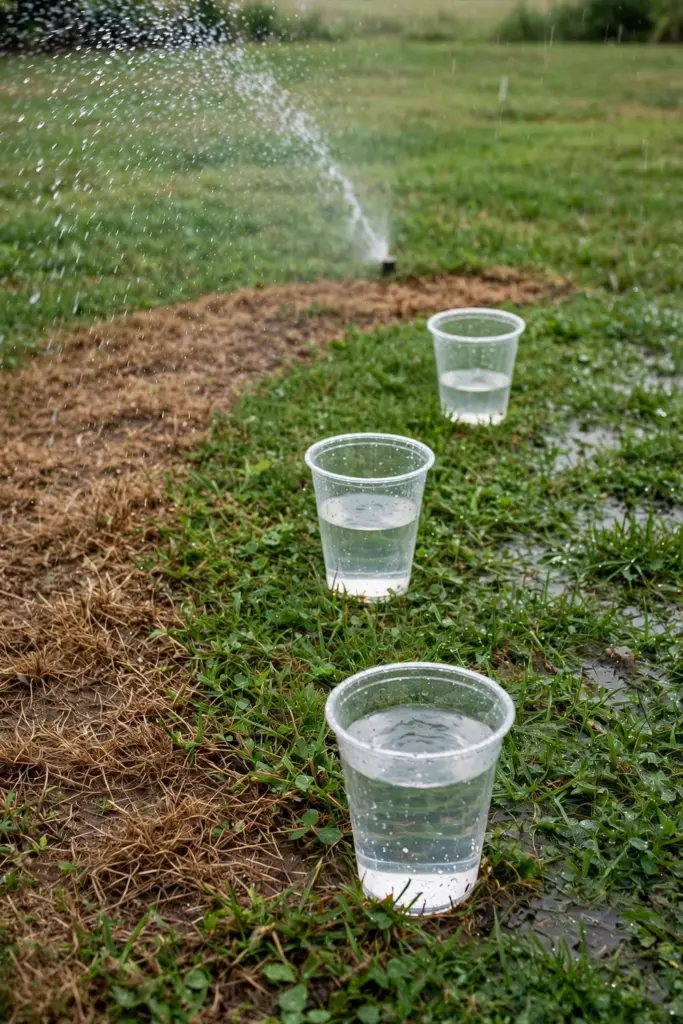
Confirm reticulation with the catch-cup test. Spread flat-sided containers marked in millimetre increments across the lawn, one every few metres, then run one station at a time and record how long each station takes to catch 10 mm of water, since pop-up sprinklers generally take between 13 and 20 minutes to put down 10 mm of water, while rotary sprinklers take up to 60 minutes for the same amount. Cups that stay near empty mark the gap. Heads that spray the fence, the path, or each other waste the water the lawn needs.
Fix reticulation at the heads. Clear blocked nozzles. Realign heads that spray past the lawn. Replace heads that no longer match the pressure. Check for heads buried under thatch or mulch, since a buried head throws water sideways instead of over the lawn. Never mix sprinkler types in one station, because each type throws water at a different rate, and the slow heads never catch up. Run the catch-cup test again after the repair. Even coverage across every cup is the sign the station works.
4. Break Hydrophobic Soil With a Wetting Agent
Hydrophobic soil repels water, so one patch stays dry while the lawn beside it drinks. The surface looks normal. The water beads and runs off instead of soaking in. Sandy soils go water-repellent fastest, and the patch often sits metres from healthy turf that takes water fine.
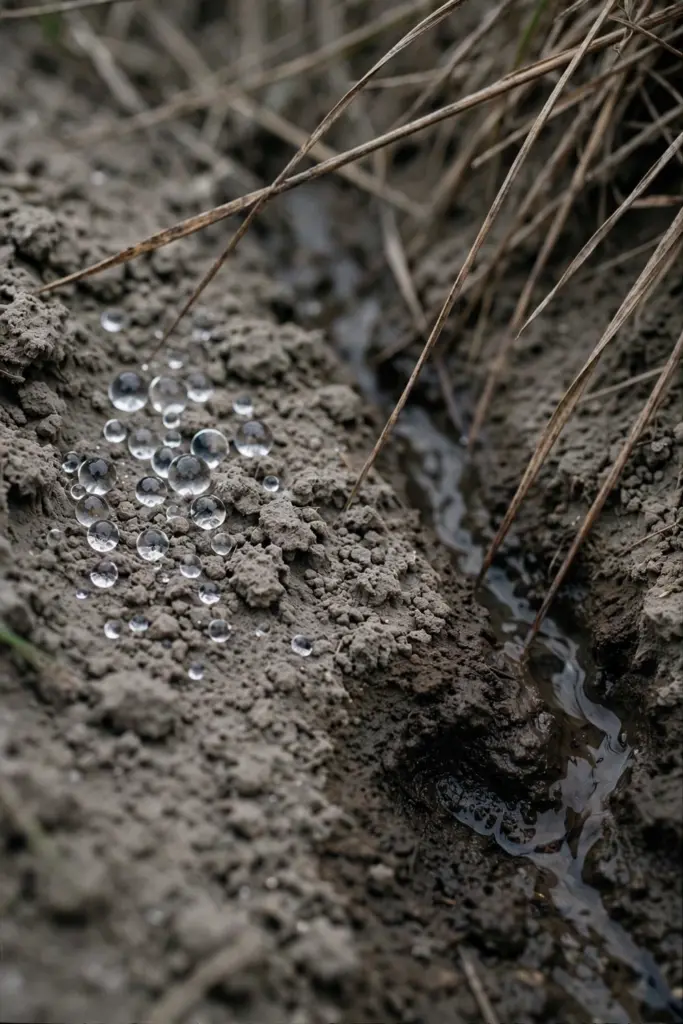
Confirm hydrophobic soil with a simple dig check. Water the patch, wait an hour, then dig down 10 cm. Dry soil under a wet surface means the water never penetrated. Compare it with a healthy patch dug the same way. The difference is stark. Dry soil under the surface while the top looks wet is the mark of a water-repellent patch.
Fix hydrophobic soil with a soil wetting agent applied to the label rate, repeated through the warm months. The wetting agent breaks the surface tension that makes water bead. Water in cycles after applying it: short runs, a pause to let water soak, then another run. Cycle watering keeps water from running off while the soil relearns how to absorb. Dig again a week later. Moist soil at depth means the patch is drinking again.
5. Dethatch a Mat Thicker Than 2.5 cm
Thatch is the mat of living and dead stems between the soil and the green blades. A thin layer cushions the lawn. A thick mat starves it. Water sits on top of the mat instead of reaching the roots. Fertilizer feeds the mat instead of the soil. Insects and fungi shelter inside it.
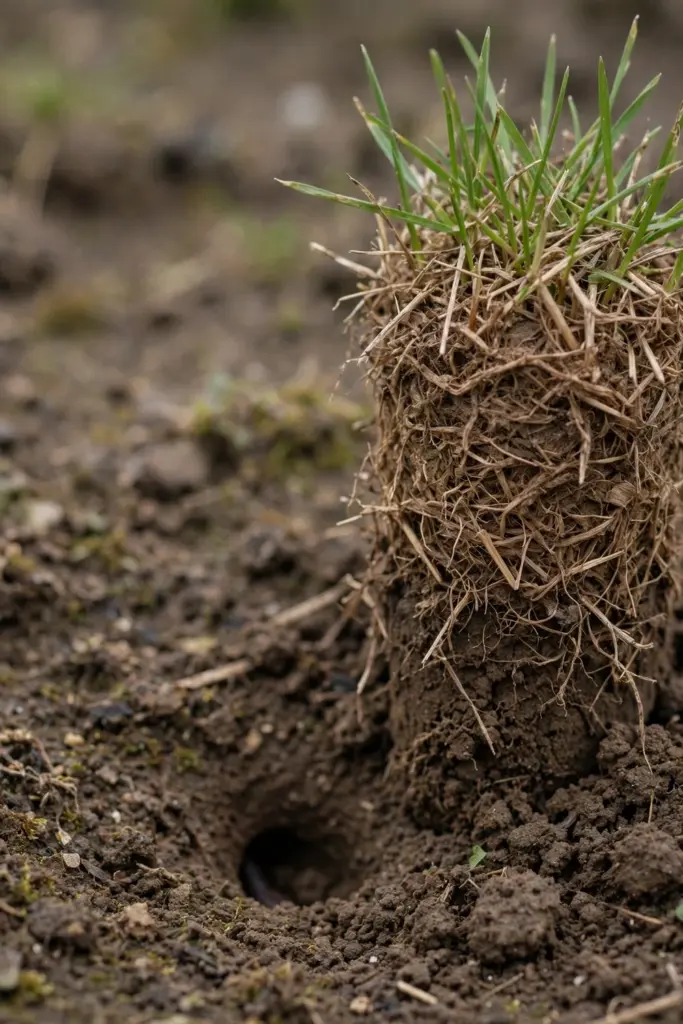
Confirm thatch by cutting a small plug and measuring the mat. A thin layer 6 to 13 mm thick cushions the lawn and moderates temperature, while excessive thatch 2.5 cm or more thick blocks water and air from reaching the root zone. Feel it underfoot too. A thatch-heavy lawn feels spongy and springy, and water pools on the surface after watering instead of soaking in. Buffalo, couch, and zoysia build thatch faster than other warm-season grasses.
Fix thatch by dethatching while the grass grows vigorously and has time to recover. A dethatching rake or a hired vertical mower cuts through the mat and lifts it out. Rake the debris off the lawn. Feed and water deep after dethatching so the lawn fills the gaps. Aeration also helps, because the cores bring soil microbes into contact with the mat and speed up decomposition. Light, frequent watering and heavy feeding build thatch faster, so fix those habits or the mat returns.
6. Aerate Compacted Soil
Compacted soil locks air and water out of the root zone. Grass thins and browns along paths, play areas, and anywhere feet or wheels cross the lawn. The soil feels hard underfoot. Water pools on the surface after rain instead of soaking in. Roots stay shallow because they cannot push into hard ground.
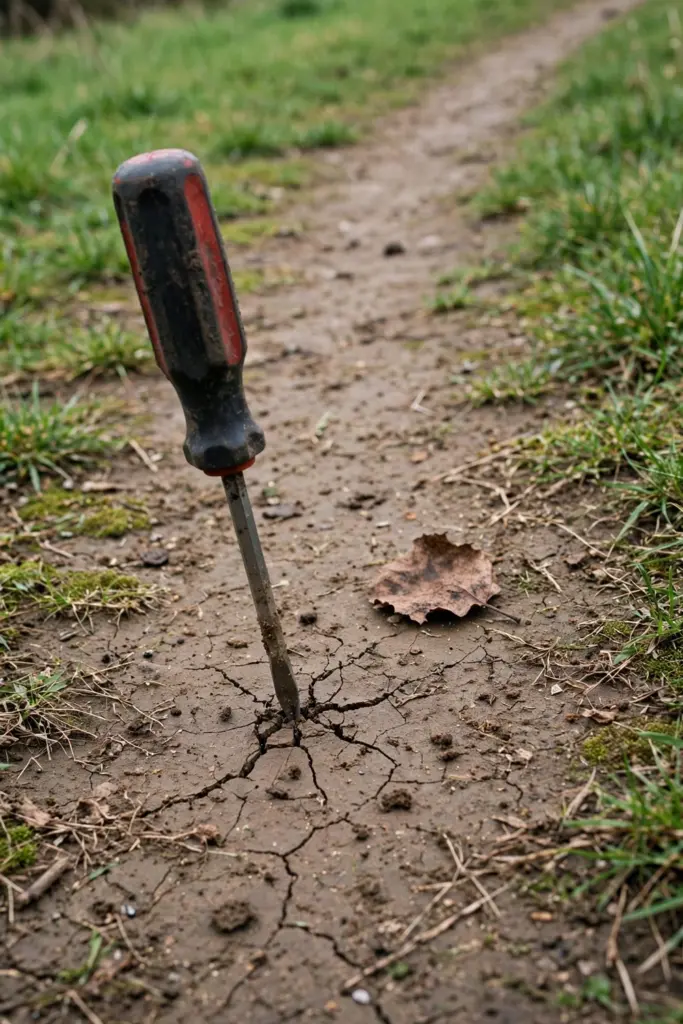
Confirm compaction with a screwdriver test. Push a screwdriver into moist soil. Healthy soil lets it slide in with light pressure. Compacted soil stops it near the surface. Test a worn path and a healthy patch side by side. The difference tells you where the problem sits. Compaction often pairs with thatch, since both block water from reaching the roots.
Fix compaction with core aeration while the grass grows vigorously. A core aerator pulls plugs of soil out of the lawn and leaves holes that let air, water, and fertilizer reach the roots. Leave the plugs on the surface to dry and crumble, then mow over them. The crumbled soil returns to the lawn. Water well after aerating. Building healthy soil grows deeper roots that handle traffic and heat without browning. Aerate worn areas once the lawn recovers, and keep heavy traffic off soft, wet soil that compacts fastest.
7. Flush Out Lawn Grubs With Soapy Water
Grubs chew roots, so the lawn wilts, thins, and lifts away like a loose carpet. The damage looks like drought at first. The difference is that grub damage does not improve with watering. Patches appear as irregular dead areas over a week or two, and birds peck at the turf hunting for larvae.
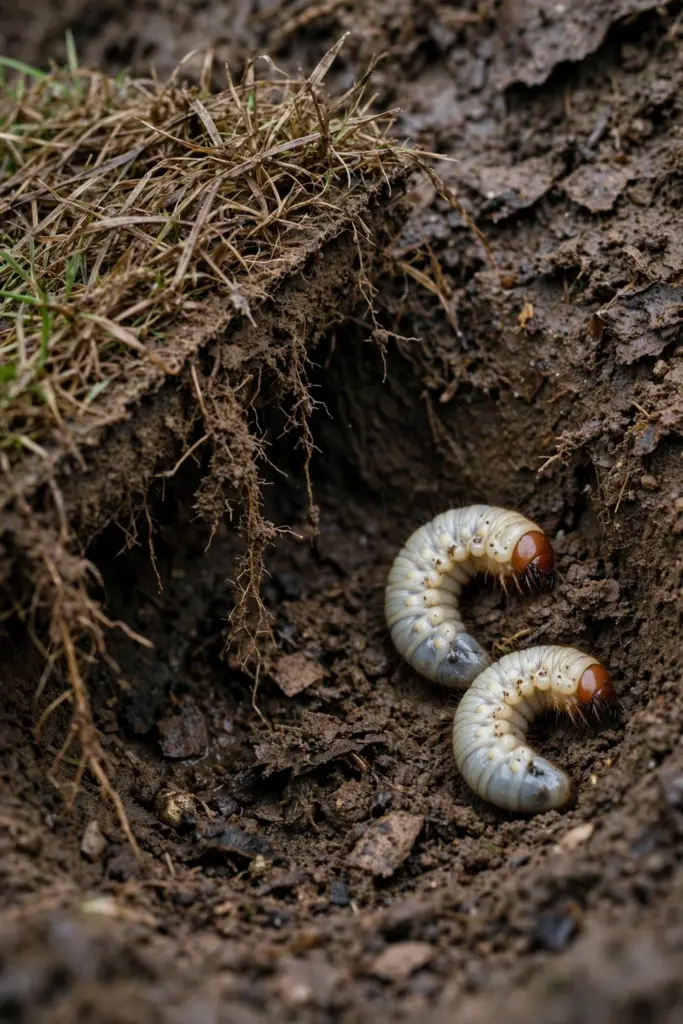
Confirm grubs with the flush test. Mix 1 tablespoon of lemon-scented soap per 1 gallon of water, drench a patch of healthy grass beside the damaged area, and watch for 5 to 10 minutes to see if insects come to the surface, as LSU AgCenter’s flush test directs. Surface feeders like armyworm, cutworm, and sod webworm rise to the surface. Root-feeding curl grubs stay below ground, so dig a square of turf and sift the top soil for C-shaped white larvae with brown heads. Turf that feels spongy and pulls up with no roots attached points the same way.
Fix grubs only after confirming them. Treat to the label rate for the pest you found, and water the product in so it reaches the root zone. Confirming the pest before treating is the core of organic pest control. Treat the edges of the damaged area as well as the center, because grubs spread outward from the first patch. Water and feed the lawn after treatment so the turf fills back in. A thick, healthy lawn resists the next grub wave better than a thin one.
8. Read Fungus by the Shape of the Patch
Fungus browns the lawn in circles. The shape and the morning dew tell you which one. Dollar spot makes small, circular, straw-colored patches the size of a silver dollar, and white, cottony fungal threads appear on the blades in the morning when dew is present. Brown patch makes larger, irregular circles with a smoke-ring edge, and the affected leaves slip easily from the stolons. Both love warm, humid weather and wet leaves.
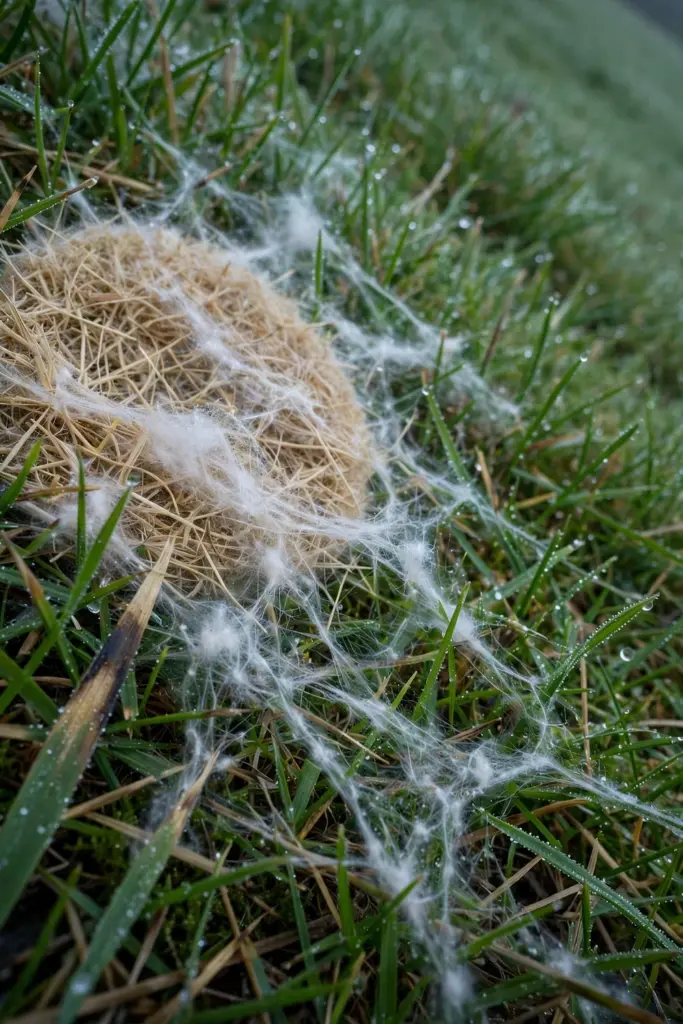
Confirm fungus by looking early, while dew still sits on the grass. Fine cobweb threads across the blades point at dollar spot. Leaves that pull away from the stolon with a wet, slimy base point at brown patch. Check the pattern too. Fungus makes circles. Retic gaps make crescents. Grubs make irregular patches. The shape plus the dew check separates fungus from the other causes on this page.
Fix fungus by drying the leaf surface. Water in the morning so the blades dry before night. Ease off nitrogen feeding in humid weather, since soft, fast growth feeds disease. Sharpen the mower blades. Torn blades open wounds that fungi enter. Open airflow by pruning low branches that shade damp patches, and clear leaf litter that holds moisture on the surface. If the patch matches brown patch, the brown patch guide covers that disease in full. Fungicide comes last, only after the cause is confirmed, and only to the label rate.
9. Thicken Thin Turf to Push Weeds Out
Weeds move into thin, stressed turf and crowd out the grass that is left. Bindii, clover, winter grass, oxalis, and nutgrass all colonize bare patches faster than grass fills them. The weeds are the symptom. The thin turf is the cause. Spraying weeds off a thin lawn leaves bare soil, and the weeds return.
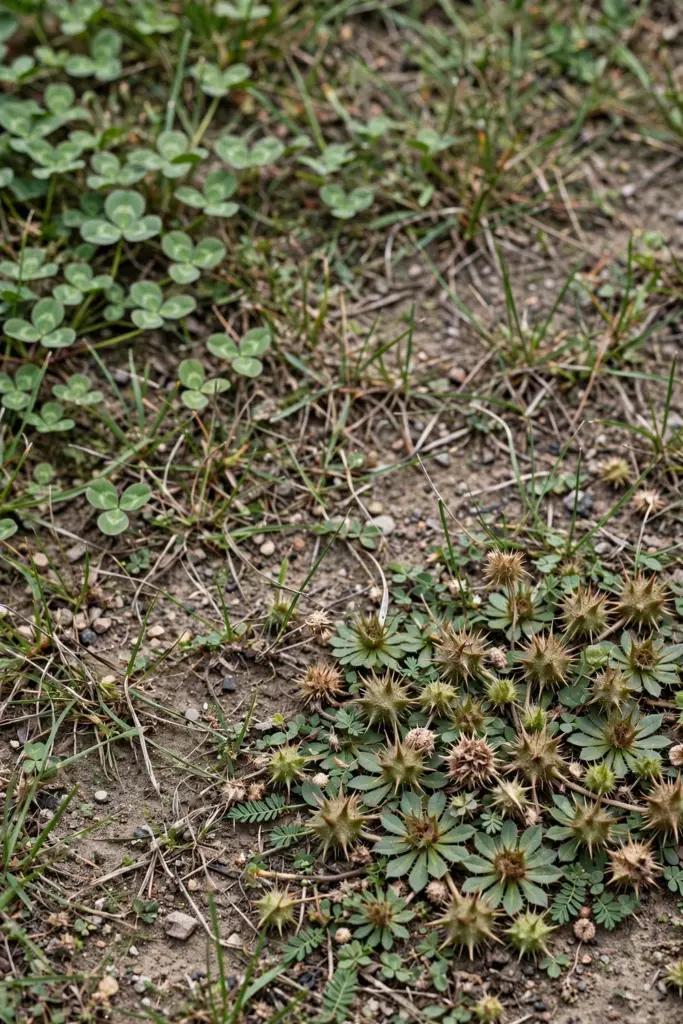
Confirm weeds by reading the patch. Weed patches hold a mix of broad leaves, runners, or spiky rosettes among thinning grass. The grass around them looks weak and open. Bare soil shows between plants. Dig a small plug. Weed roots mat near the surface while grass roots run deeper. That contrast tells you the turf lost the competition for the patch.
Fix weeds by thickening the lawn first. Feed and water to the season, mow high, and let the grass close the gaps. Hand-pull small outbreaks, roots and all, before they seed. Pull after rain, when the soil gives up roots whole. For large outbreaks, use a selective herbicide matched to your grass type, and read the label twice before spraying. The wrong product on buffalo or couch kills the grass it was meant to save. A thick lawn shades weed seedlings out and keeps the patch closed after the weeds die. That shade is the real weed control. Spraying alone never holds a patch for long.
10. Raise the Cut in Shade
Shade thins grass. The lawn under trees and beside fences browns first and recovers last. Grass in shade grows slower, holds moisture longer, and competes with tree roots for water. The same mowing height that suits the sunny lawn scalps the shaded lawn, because shaded blades stretch thin reaching for light.
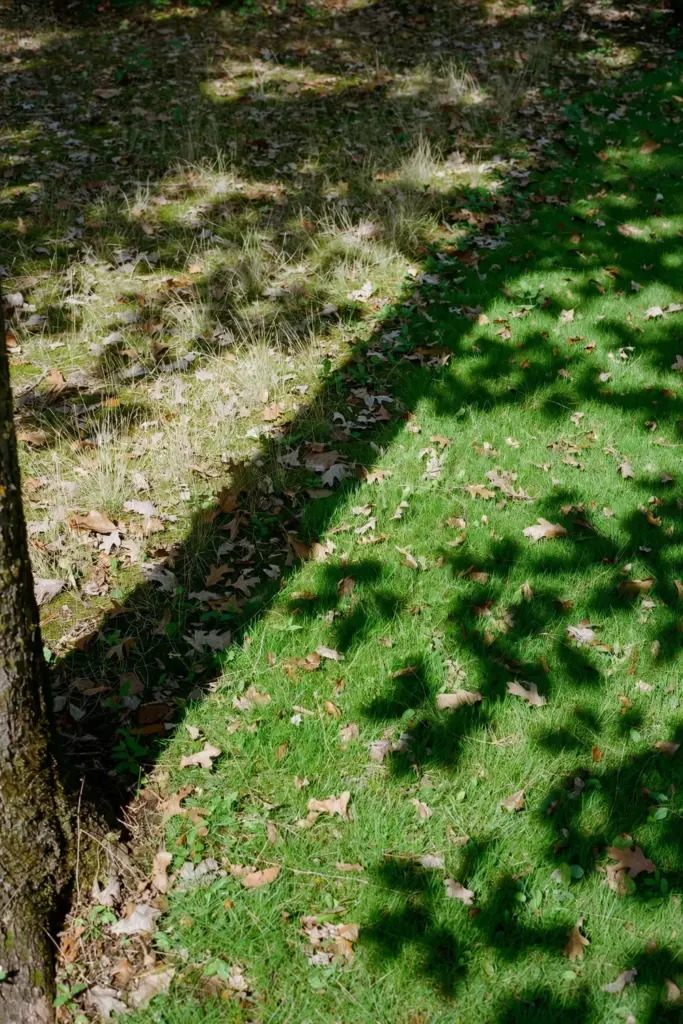
Confirm shade by the map of the brown. Patches sit where the house, fence, or tree canopy blocks the sun. The grass there looks thin and leggy, and the soil stays damp long after watering. Moss or algae on the surface points the same way, since damp shade grows both. A patch that follows the shadow line across the lawn through the day is shade, not disease.
Fix shade by raising the cut. Longer blades catch more light in dim areas and shade the soil beneath them. Cut traffic across shaded patches, since stressed grass recovers slowly. Prune low branches to let more light reach the lawn, and keep the canopy open. Tree roots compete for water too, so water shaded patches deeply rather than sprinkling the surface. Where shade stays deep all day, skip the fight for light the spot never gets. Plant a shade-tolerant turf in that patch.
11. Dilute Dog Urine, Chemical Burn, and Scalping
Dog urine, chemical spills, and scalping burn the lawn in spots and rings. The three look alike at first glance. The confirm test tells them apart. Urine leaves a brown center with a dark green ring around it, where concentrated urea burned the middle and fed the edge. A chemical spill leaves a dead patch shaped like the spill or the sprayer pass. Scalping leaves brown across a whole mown area right after a low cut.
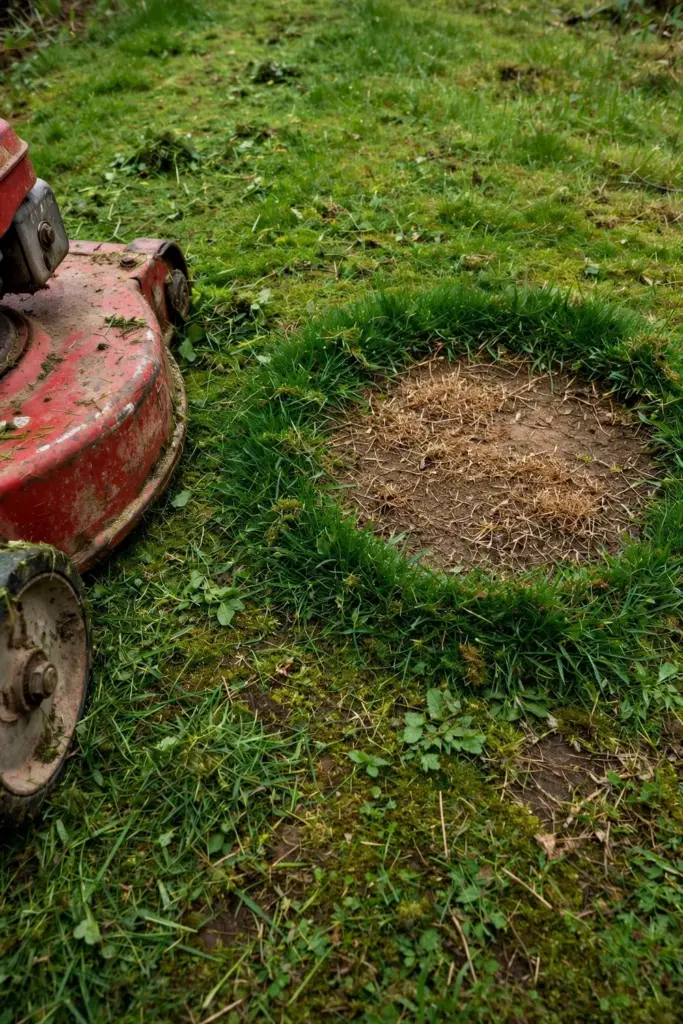
Confirm the cause by the timing and the shape. A ringed spot on a lawn a dog uses points at urine. A dead strip along a sprayer pass points at a chemical mix that ran too strong. Brown across the whole lawn the day after mowing points at a cut set too low. Each one has its own fix, and the wrong fix wastes the recovery.
Fix urine spots by diluting them with water right away. A bucket of water over a fresh spot washes the urea down before it burns. Fix chemical burn by following label rates on every product, every time, and by rinsing spills at once. Fix scalping by raising the cutting height one notch and mowing more often so each cut takes less leaf. Re-turf dead areas only after the cause is fixed, or the new turf burns the same way.
Frequently Asked Questions
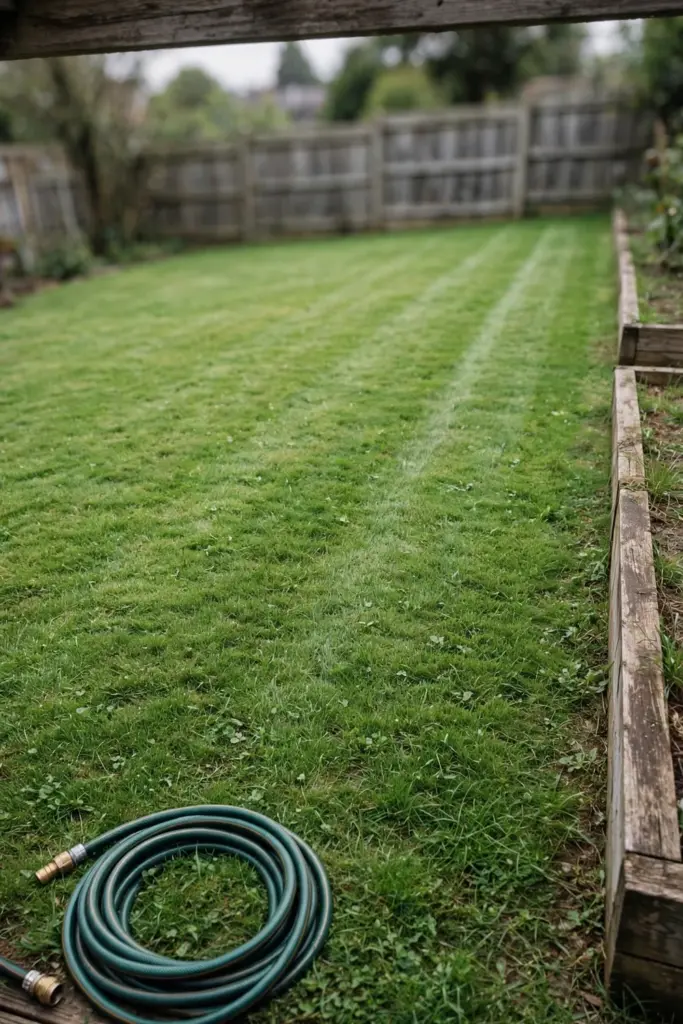
Recovery runs from two weeks to a full season. The cause sets the clock. Drought stress greens up within two weeks of deep watering. Grub damage takes longer, because the roots must regrow before the blades follow. Dormancy waits for warmth and cannot be rushed. Fungus damage fills in once the leaf surface stays dry. Judge recovery by new green shoots at the crown, not by the old brown blades, which do not green up again.
Daily watering keeps the surface wet and the roots shallow, which is the opposite of what a brown lawn needs. Water deep once, then wait until the footprint test says thirsty again. The exception is new turf or seed, which needs steady surface moisture until it roots. For an established lawn, deep and infrequent watering grows roots downward and makes the lawn harder to brown next time. Morning watering beats evening watering every time.
Fertilizer only helps when hunger is the cause, and hunger is rarely the cause of a brown lawn. Feeding a dormant lawn feeds weeds. Feeding a fungus-hit lawn feeds the fungus. Feeding a drought-stressed lawn pushes soft growth that burns in the next hot week. Fix the cause first. Feed once the lawn grows again and shows new green shoots. A soil test beats a guess when the lawn stays pale after the cause is fixed.
Grub damage does not improve with watering, and that is the key separator from drought. Run the flush test on healthy grass beside the damaged area and watch for insects surfacing. Dig a square of turf. Look for C-shaped white larvae in the top soil. Turf that lifts like a loose carpet with no roots attached points the same way. Treat only after confirming, and treat to the label rate for the pest you found.
Call a professional when the lawn keeps dying after you fixed the obvious cause, when the brown spreads fast across the whole lawn in days, or when you need a product you cannot buy over the counter. A turf agronomist or licensed lawn service brings a soil test, a microscope check, and products a home gardener cannot buy. Bring photos of the pattern and a note of what you already tried. That history saves the visit.
Start With the Pattern, Then Fix the Cause
A brown lawn is a message with a pattern on it. Uniform brown means dormancy or drought. Irregular patches mean grubs. Circles mean fungus. Rings mean urine or chemical burn. Read the pattern, run the tug test, and fix the one cause that matches. The lawn rewards that order. Watering a grub patch, spraying a dormant lawn, and fertilizing a fungus patch all cost money and leave the real cause standing.
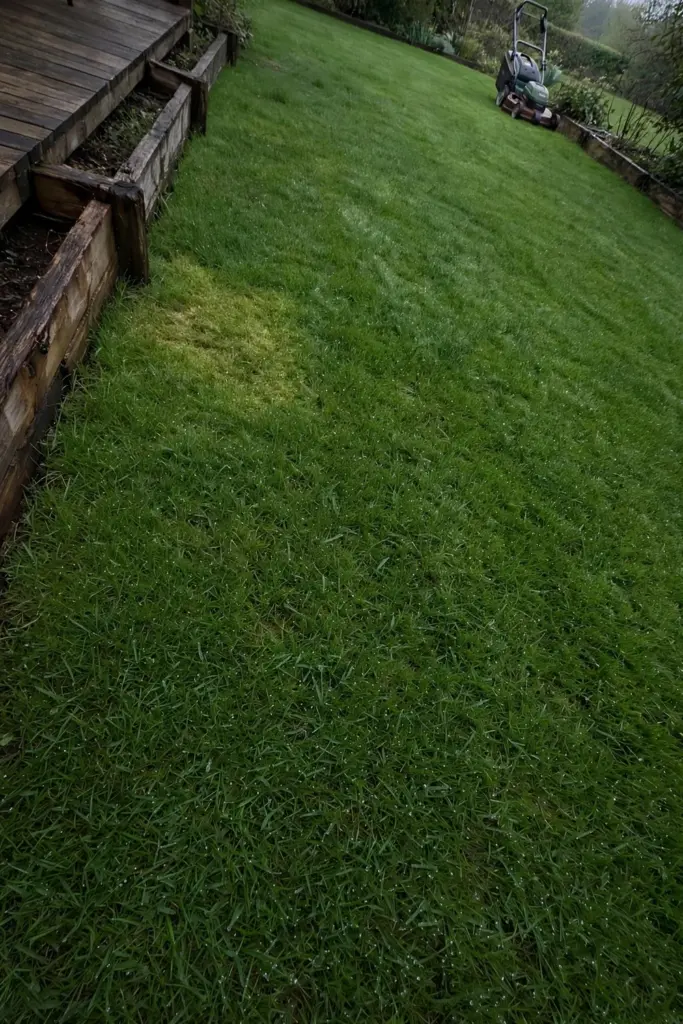
Prevention runs on the same habits that fix most causes. Water deep and infrequent. Mow high and mow often. Aerate worn ground while the grass grows. Feed to the season, never to a brown lawn. Walk the lawn once a week and look at the pattern before it spreads. Start with the pattern, fix the cause, and let the grass do the rest.