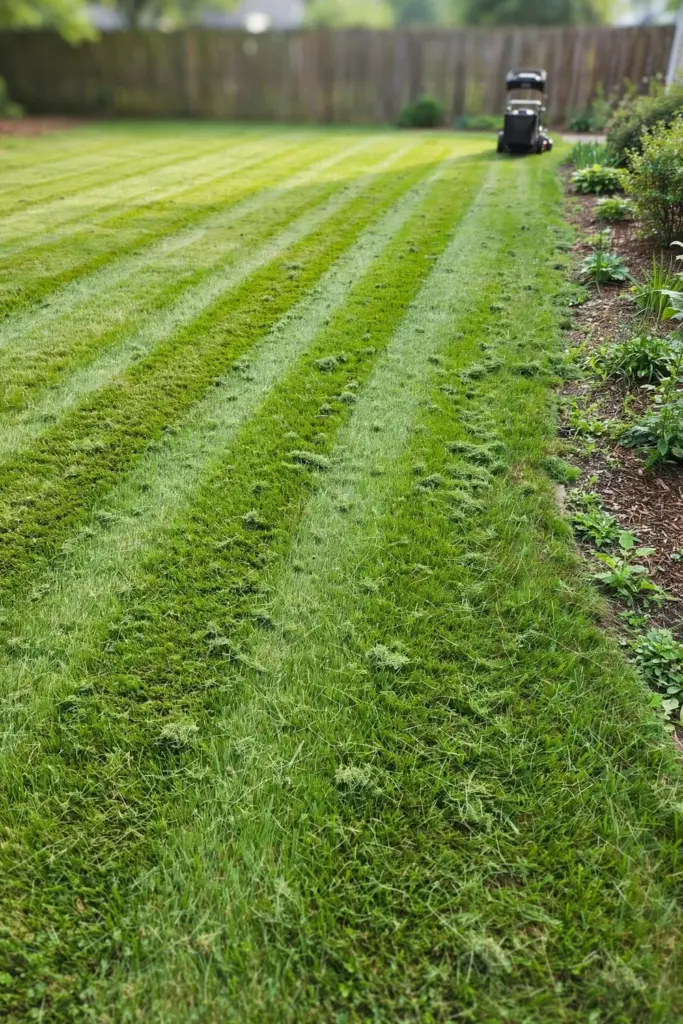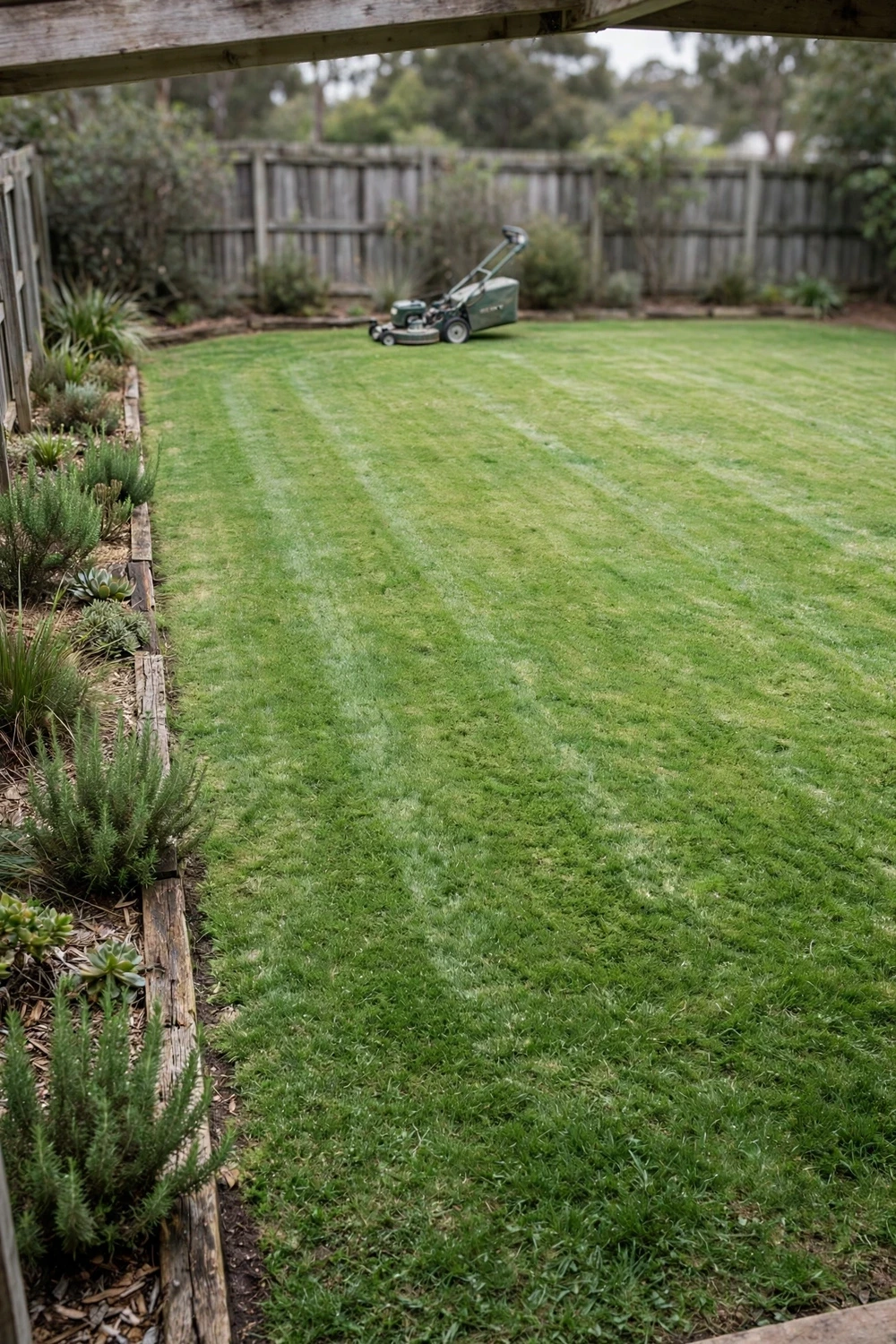

Four grasses carry almost every Australian lawn: buffalo, kikuyu, couch, and zoysia. All four are warm-season C4 grasses. They grow hard from late spring through summer, then slow down and fade in winter. Warm-season lawn care in Australia runs on four moves: mow to the height your grass wants, water deep in the morning, feed while the lawn grows, and leave it alone when it sleeps.
That is warm-season lawn care in Australia. The rest of this page is 8 moves, from naming your grass to reading brown patches.
Work from the top if spring is close. Start with the grass you already have. Fix the season in front of you before you plan the next one.
1. Identify Your Warm-Season Turf in 4 Grasses
Warm-season grasses are C4 grasses. The C4 label describes their photosynthesis pathway, and the practical result is tolerance for heat and dry spells with lower water demand. Lawn Solutions Australia’s guide to grasses that handle the heat names the four that dominate Australian lawns: couch, kikuyu, buffalo, and zoysia. All four suit hot summers and relatively warm winters. The same guide places most of Australia in a transition zone, with the north firmly warm-season and only isolated cool-season pockets in the far south.
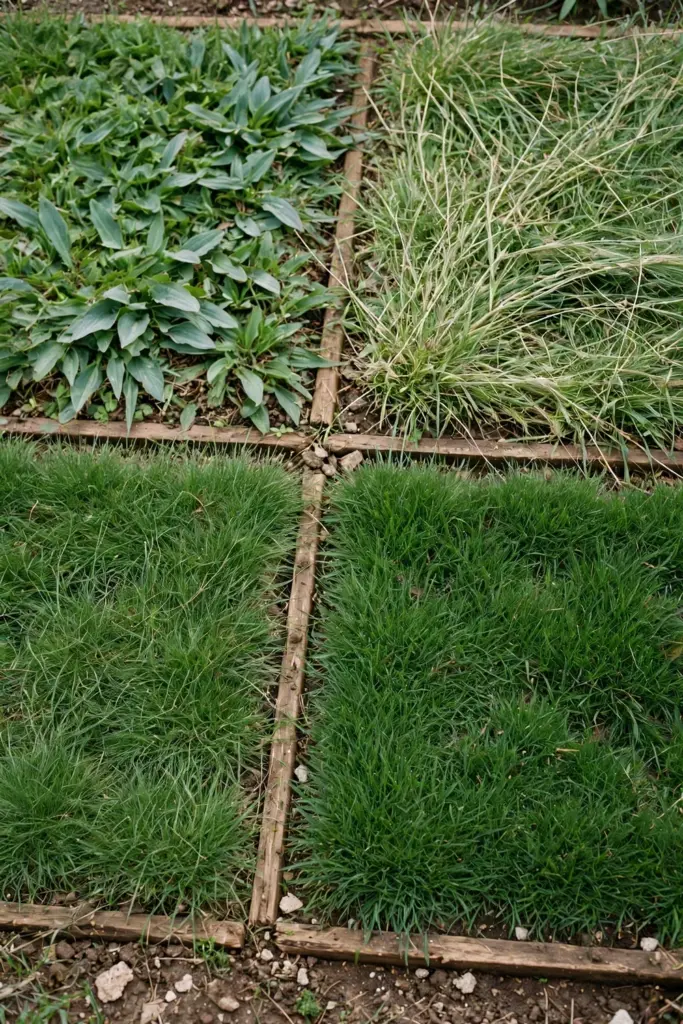
Know the four by sight before you buy anything. Buffalo has broad, soft, flat leaves and a relaxed mat. Kikuyu has medium leaves, fast runners, and a habit of escaping into garden beds. Couch has fine, wiry leaves and the lowest cut of the four. Zoysia has stiff, dense leaves and the slowest spread. If your lawn holds green through winter without help, you may own a cool-season grass such as fescue or ryegrass instead. Those grasses follow a different calendar and sit outside this guide.
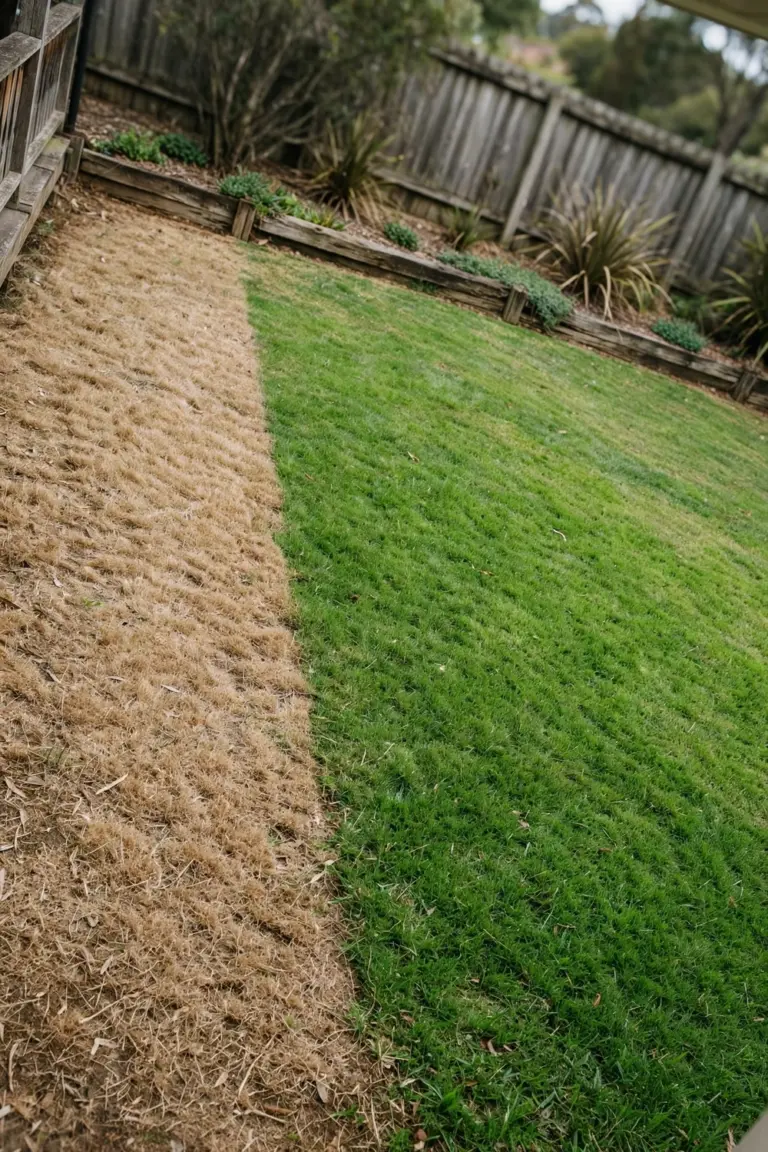
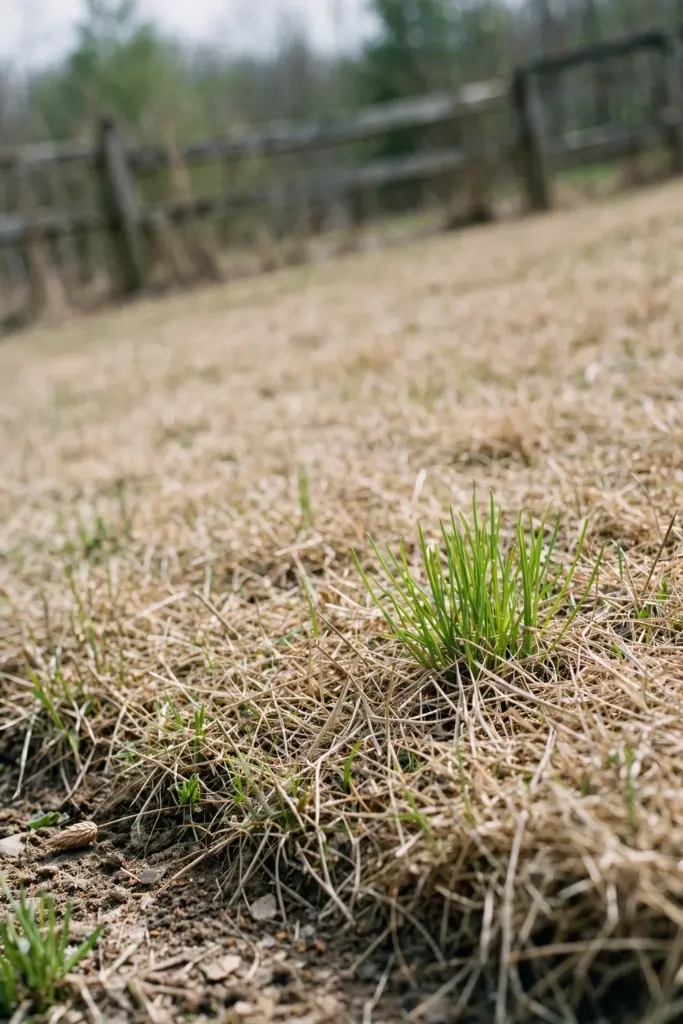
Dormancy is the one idea that saves more lawns than any product. Warm-season grasses turn golden or brown after the first frost and stop growing. The crown stays alive underground. Growth returns when soil warms in spring. A brown winter lawn is usually a sleeping lawn. Treat it as dead and you will waste money on seed, feed, and water it cannot use.
Confirm the grass before you set the mower. Buffalo leaves run broad and soft, with a flat mat that feels cushioned underfoot. Couch leaves run fine and wiry, and the runners creep across bare soil fast. Kikuyu runners travel further and faster than couch, and they climb into beds through gaps in edging. Zoysia leaves feel stiff and dense, and the mat resists a finger pushed into it. Check the runners at the lawn edge. Stolons run above ground. Rhizomes run below it. A lawn with both runners spreading hard is usually kikuyu or couch, and both need edging discipline that buffalo and zoysia forgive.
2. Mow to the Height Your Grass Wants
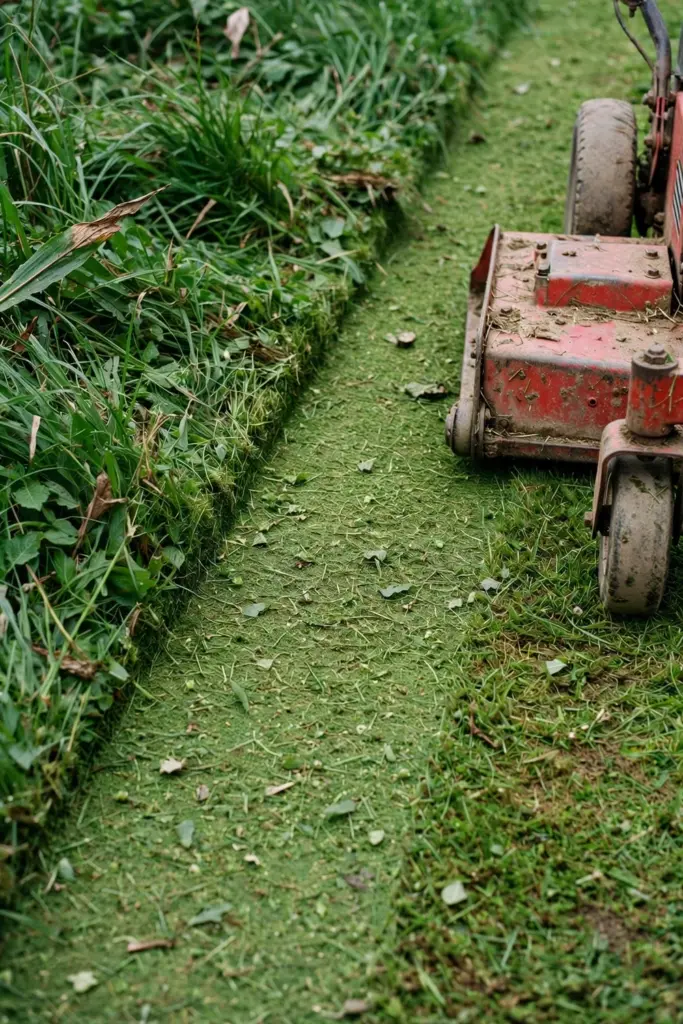
Mowing height is the single fastest fix for a struggling warm-season lawn. Cut too low and the crown starves. Cut too high and the mat turns spongy and thin. The heights below come from CompleteGrow’s summer lawn care playbook for Australia, which sets buffalo at 30 to 40 mm, kikuyu at 25 to 35 mm, couch at 20 to 30 mm, and zoysia at 25 to 35 mm. Read the table first, then set the mower to your row.
| Grass | Growth Pace | Mowing Height | Sun | Wear | Watch Out |
|---|---|---|---|---|---|
| Buffalo | Moderate | 30 to 40 mm | Full sun to part shade | Moderate | Turns spongy if overfed |
| Kikuyu | Vigorous | 25 to 35 mm | Full sun | High | Invades beds without edging |
| Couch | Fastest | 20 to 30 mm | Full sun | High | Thins in shade and frost |
| Zoysia | Slow | 25 to 35 mm | Full sun | Moderate | Slow to repair bare spots |
Never remove more than one-third of the leaf in a single cut. The same guide sets that one-third rule as the hard limit for every mow. A lawn at 45 mm comes down to 30 mm at most. A lawn that grew to 60 mm needs two cuts across two days. Break the rule and the crown loses the leaf area it needs to feed the roots. Recovery takes weeks in summer and months in autumn.
Raise the cut 2 to 4 mm during heat spikes. The extra leaf shades the soil, slows moisture loss, and keeps the crown cooler. Drop back to your normal height once the heat breaks. Sharp blades matter as much as height. Dull blades tear leaf tips and leave bronze or yellow edges that look like disease. Sharpen the blade before summer starts, and again mid-season if you mow weekly. Leave light clippings on the lawn. They return nitrogen to the soil and break down fast in warm weather. Break up heavy clumps that smother the grass underneath.
Mow little and often through summer. Kikuyu and couch need the mower weekly in peak growth. Buffalo stretches longer between cuts. Zoysia stretches longest of all. A missed week on kikuyu means a hard cut, and a hard cut means a stressed lawn. Set a weekly slot and keep it.
Match the mower to the cut. A rotary mower handles buffalo, kikuyu, and zoysia at home-lawn heights without fuss. Couch at 20 mm tests a rotary, because the low cut scalps every bump. A reel mower holds a low couch cut better, since its blades shear cleanly across a level bed. If you mow couch with a rotary, keep the lawn level with light top-dressing and accept a slightly higher cut. The mower that cuts clean at your height beats the mower that fights it.
3. Water Deep and Early for Deep Roots
Water builds roots or it builds thatch. Deep, infrequent watering trains roots downward. Light daily sprinkles keep roots at the surface, where heat kills them first. A lawn watered deep once a week outlasts a lawn sprinkled every day. I have learned that the hose setting matters less than the depth the water reaches.
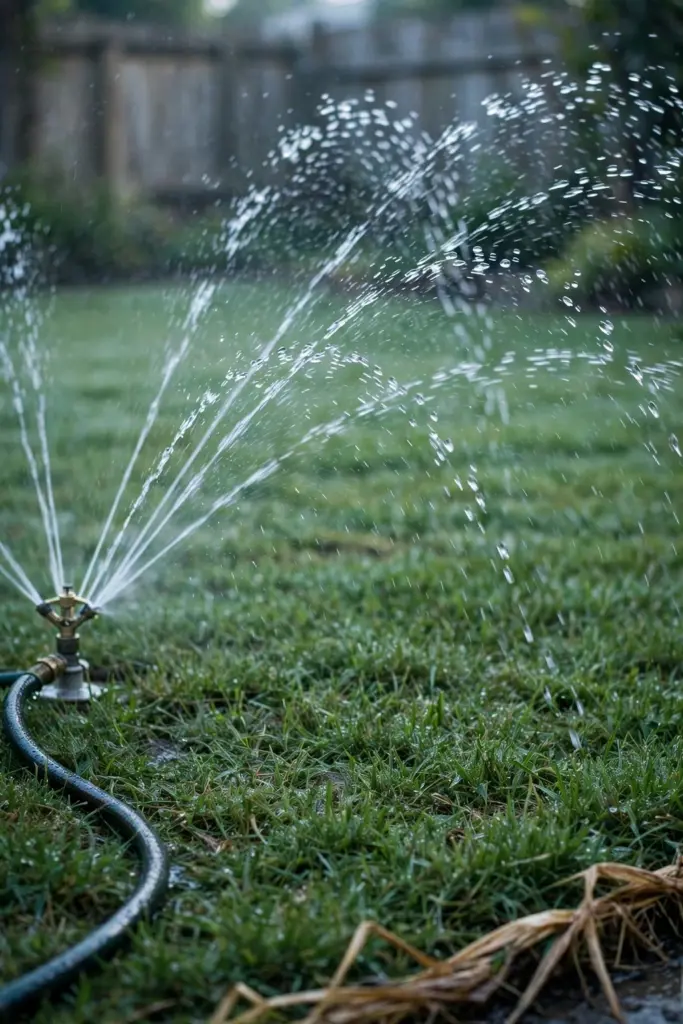
Apply 13 to 19 mm per watering when the lawn shows drought stress, and water in the early morning, according to UF/IFAS Extension’s healthy lawn watering guide. The same guide names the stress signs: folded blades, a bluish gray tint, and footprints that stay visible after you walk across the lawn. Water when you see those signs. Skip the watering when you do not. Morning watering cuts evaporation loss and lets leaves dry during the day, which holds disease pressure down. Night watering keeps leaves wet overnight and invites fungus.
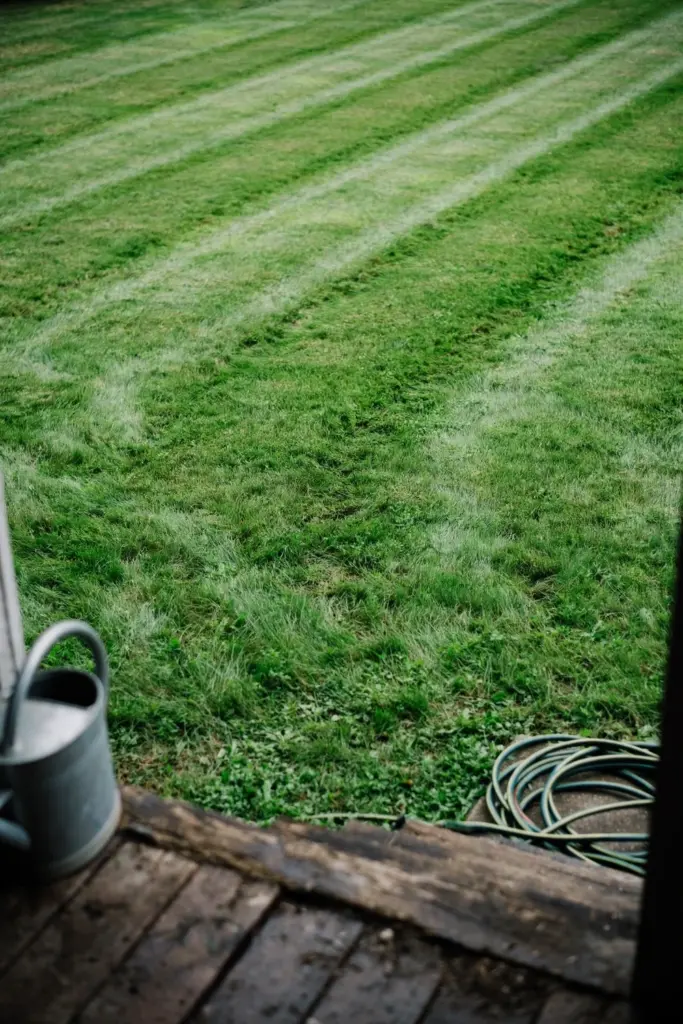
Sandy soil and slopes need cycle and soak. Split the watering into short on and off bursts so water infiltrates instead of running off. Hydrophobic soil beads water and sheds it. A wetting agent breaks that surface tension, then cycle and soak pushes moisture deeper. Check uniformity before you chase fertilizer fixes. Pale stripes usually mean a clogged or misaligned sprinkler head, not a hungry lawn.
Warm-season grasses grow deep root systems. Seasol notes roots reaching 2 m in established lawns. Deep roots explain why an established warm-season lawn survives a dry fortnight that kills a shallow-rooted lawn. The watering job is to build that depth. Every deep watering in spring pays back in January.
New turf is the one exception to deep and infrequent. Freshly laid turf needs frequent short watering while roots knit into the soil, because bare roots dry out in hours on a hot day. Taper the frequency across the first few weeks as the turf takes hold, moving from several light waterings a day to one deep watering, then to the stress-sign pattern above. Test the join with a gentle tug. If the turf resists, the roots have knit, and the deep and infrequent pattern takes over.
Measure what your sprinkler delivers. Set out catch cups, or tuna cans with straight sides, across the lawn and run the system. The same guide recommends catch cups to measure output before you trust any watering schedule. Read the depth in each cup. If one corner collects half the depth of the rest, fix the sprinkler before you change the schedule. A watering plan built on an uneven system waters one half of the lawn and starves the other.
4. Feed While the Lawn Grows
Feed on growth, not on the calendar. A lawn in Brisbane stays active longer than a lawn in Hobart. The same date on the calendar means different growth in each place. Watch the lawn. Feed when it grows. Stop when it stops.
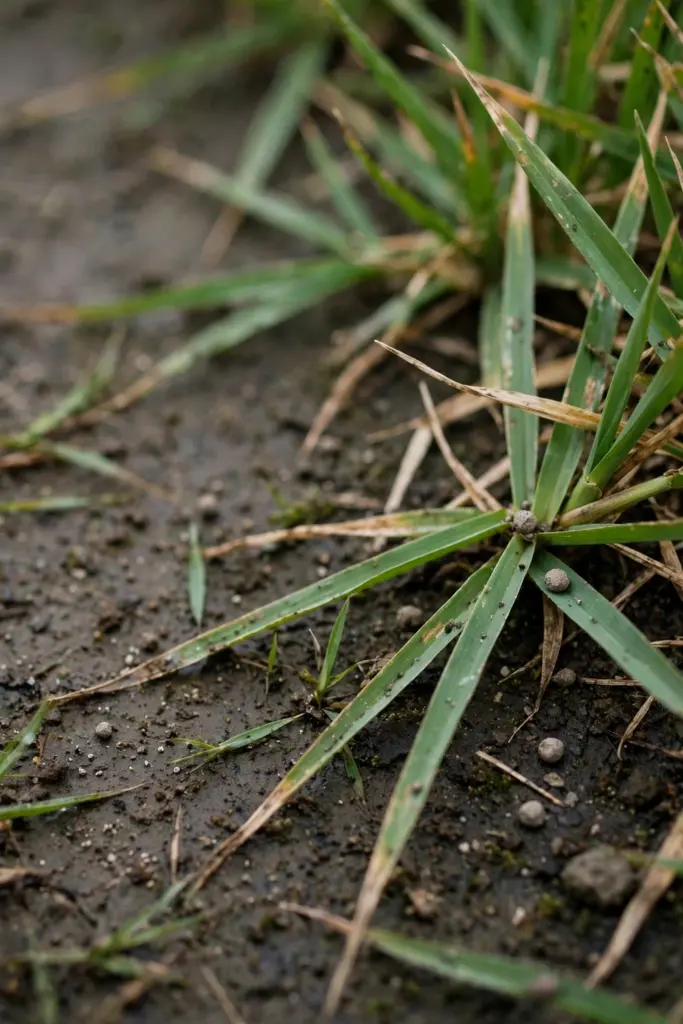
Spring brings the first feed. Apply it as the lawn breaks dormancy and greens up. Growth returns, and the roots take up nutrients again. A second feed in November to December carries the lawn into peak summer. The autumn feed is the one people skip, and it is the one that sets up winter. Use a low nitrogen, high potassium feed in autumn to harden growth before the cold. Heavy nitrogen in autumn pushes soft leaf that frost damages.
Test the soil before you add lime or dolomite. A pH test costs little and stops a guess that locks up nutrients. Lime raises pH. Dolomite raises pH and adds magnesium. Ammonium sulfate lowers pH. None of them belong in a lawn without a test result that calls for them. Guessing wastes money and can push pH the wrong way for a full season.
Best Time to Fertilize Lawn in Spring covers the spring feed in detail, including how to time it against soil temperature and growth. Read it when spring is two weeks out. The rule for this guide stays simple: feed a growing lawn, skip a sleeping one, and let the soil test settle the lime question.
Buffalo needs a lighter hand than the other three. It turns spongy under heavy nitrogen. Couch and kikuyu take a stronger feed and answer with dense growth. Zoysia wants lower, steady nutrition across the season rather than heavy single doses. Match the feed to the grass in your table row, not to the bag that promises the fastest green.
Pick the feed form for the job. Slow-release granular feed meters nitrogen across weeks and suits the main seasonal feeds. Liquid feed answers within days and suits a lawn that needs a quick lift before a gathering. Both work. Water granular feed in after spreading, and follow the label rate for your grass. A double dose does not double the green. It burns leaf, pushes soft growth, and wastes the money twice.
5. Renovate Once a Year With Aeration and Top-Dressing
Renovation opens the soil so water, air, and nutrients reach the roots. Do it once a year in active growth. Spring suits most Australian lawns. The lawn recovers fast while it grows, and the renovation effects last through summer.
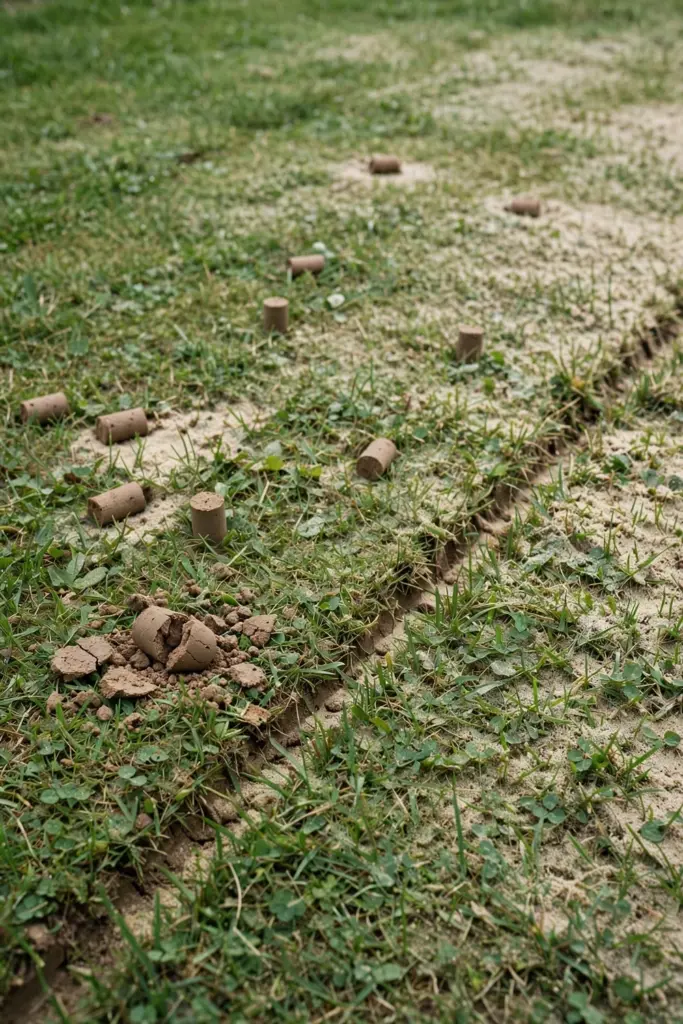
Aerate when the soil resists. Push a screwdriver or a knife into moist soil. If the blade stops hard within a few centimeters, compaction is holding the lawn back. LSU AgCenter’s bermudagrass lawn care guide places aeration in late spring and early summer for warm-season turf, which matches the Australian spring window. Core aerators pull plugs and leave them on the surface. Spike aerators punch holes without removing soil. Cores work better on heavy clay and high-traffic lawns. Leave the plugs where they fall. They break down in a week or two and return soil to the surface.
Dethatch when the mat turns spongy. Thatch is the layer of dead stems and runners between the green leaf and the soil. A thin layer protects the crown. A thick layer sheds water and starves roots. Test it with a finger. Push down through the green. If you meet more than a finger width of springy brown mat, the lawn needs dethatching. Scarify in active growth so the lawn knits back fast. A spring scarify after aeration is the standard one-two move.
Top-dress after aeration or scarifying. Spread a thin layer of sandy loam or compost over the surface and brush it into the holes and the canopy. Light top-dressing smooths scalping humps and levels minor bumps. Heavy top-dressing buries the crown and sets the lawn back. Keep the layer thin enough that green leaf shows through. One light pass beats one heavy burial every time.
Pick the top-dressing material for the job. Sandy loam levels bumps and drains freely, which suits lawns that scalp on humps after mowing. Compost feeds soil life. It suits lawns that need biology more than leveling, and either one works after aeration without replacing it. A lawn that holds water like a bowl needs drainage work first. No dressing fixes that from the top.
Soil Health explains how the soil under the lawn feeds the grass above it. Renovation works best on soil that already drains and breathes. If your lawn sits wet for days after rain, fix drainage before you renovate. Aeration cannot rescue a lawn that holds water like a bowl.
6. Follow the Seasonal Calendar From Spring to Winter
The calendar below turns the care routine into a year. Four seasons, four jobs. The table gives the shape. The paragraphs under it give the timing for each season.
| Season | Months | Mow | Water | Feed | Watch |
|---|---|---|---|---|---|
| Spring | September to November | First cut, then weekly | Deep, as growth returns | First feed at green-up | Aerate, scarify, top-dress |
| Summer | December to February | Weekly, raise cut in heat | Deep mornings, stress signs | Second feed | Grubs and armyworm |
| Autumn | March to May | Slow the cadence | Reduce as growth slows | Low nitrogen, high potassium | Pre-emergent, persistent weeds |
| Winter | June to August | Rarely, high cut | Minimal | None | Dormancy, avoid traffic |
Spring is the working season. Make the first cut as growth returns. Feed at green-up. Aerate if the soil resists. Scarify if thatch built up. Top-dress after aeration or scarifying. Spring repairs set the ceiling for the whole year. A lawn renovated in spring carries summer. A lawn skipped in spring chases summer.
Summer is the holding season. Mow weekly, and raise the cut 2 to 4 mm when a heat spike lands, because extra leaf shades the soil and holds moisture in. Water deep in the morning when stress signs show. Feed a second time in November to December. Watch for grubs and armyworm in warm, humid spells, and act at the first chewed patch. Avoid heavy traffic on a lawn under heat stress. Summer spends the strength spring built, so the job is to protect it, not to push it.
Autumn is the hardening season. Slow the mowing cadence as growth falls. Reduce watering as days cool. Apply the low nitrogen, high potassium feed to harden growth before winter. Deal with persistent weeds before they seed. Apply pre-emergent in late autumn, before winter grass germinates. Autumn work decides how the lawn enters dormancy.
Winter is the resting season. Mow rarely, and keep the cut high when you do, because leaf is the lawn’s stored food through dormancy. Water only when the lawn truly needs it. Feed nothing. Avoid heavy traffic on a dormant lawn. Traffic on a sleeping lawn crushes crowns that cannot regrow until spring. A ryegrass overseed gives winter green for readers who want it, but the warm-season lawn underneath still sleeps. Plan spring repairs in winter, then start them in spring.
Shift the calendar by growth, not by dates. A Brisbane lawn greens up weeks before a Hobart lawn, so the table’s months fit the temperate south best. Northern readers start spring work earlier and finish autumn work later. Southern readers start later and finish earlier. The lawn tells you the date, so feed when it grows, mow when it grows, and rest it when it stops.
Spring Lawn Care Tips Guide covers the spring season in full depth. Use it when spring is two weeks out and you want the whole spring sequence in one place.
7. Catch Weeds and Pests in Their Windows
Weeds and pests run on windows. Hit the window and the job stays small. Miss it, and the job grows all season, because one seeded weed becomes a hundred weeds next spring. This section gives the windows only. Removal methods live in the pest guide linked below.
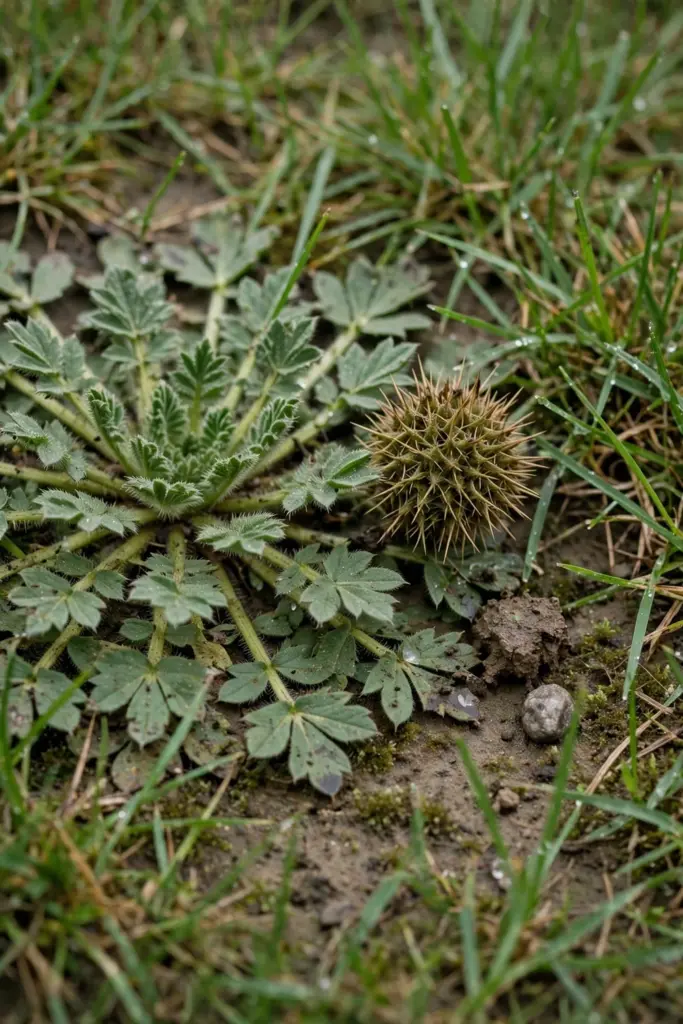
A dense lawn is weed control by itself. Thick canopy shades weed seeds and starves them of light. Every mowing move doubles as weed control: the right height keeps the canopy closed, and little-and-often mowing keeps it dense. A scalped lawn opens gaps. Weeds take the gaps before grass does. Hold the canopy closed and the weed job shrinks to the edges and the thin spots.
Spring brings bindii and winter grass before they seed. Pull or treat them early, while they are small and before seed heads form. A weed that seeds in spring becomes a hundred weeds next spring. Autumn brings pre-emergent timing for winter grass. Apply it in late autumn, before germination. Pre-emergent stops seeds. It does nothing to weeds already growing. Summer brings grubs and armyworm in warm, humid spells. Watch for chewed patches and birds working the lawn at dawn. Act at the first sign, not at the first bare patch.
What Is Organic Pest Control Tailored Solutions for Your Garden Vegetables Fruits More sets out the organic-first approach that fits a home lawn: identify the pest, use the least disruptive control first, and protect the insects that eat the pests. A lawn sprayed hard for one pest often loses the predators that held the next pest down. Start with identification. Spray last, not first.
Disease diagnosis belongs in a different lane. Night watering invites fungus, and a lawn that stays wet overnight will show it. If patches carry a disease pattern, with spots, rings, or a spreading edge, get a disease diagnosis from a dedicated guide before you treat. This page covers routine care. It does not diagnose disease, and guessing at a fungicide wastes money and risks the wrong chemical on the wrong problem.
8. Read Brown Patches Before You React
Brown is a symptom, not a diagnosis. Read the pattern before you act. The pattern names the cause faster than any product fixes it.
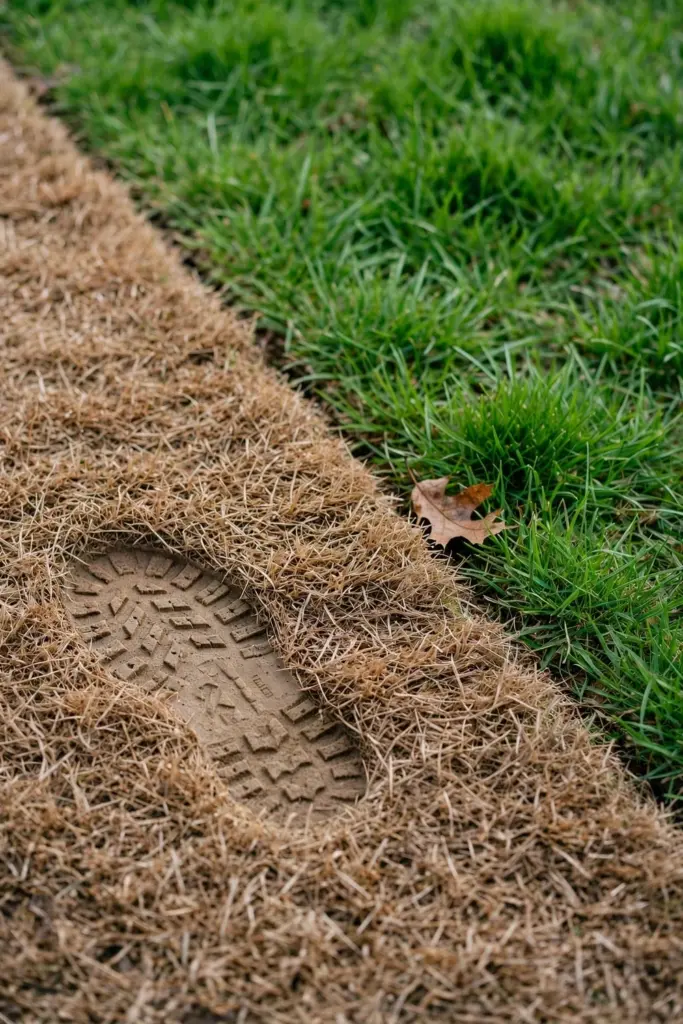
Brown in winter across the whole lawn is usually dormancy. The grass sleeps. The crown stays alive. Leave it alone and wait for spring warmth. Brown in summer after heavy traffic is stress. The lawn needs water, a higher cut, and a rest from feet and wheels. Brown in a ring with a green center points at a pest or disease problem. Brown in one strip points at a mower or sprinkler fault. Check the strip for a clogged head or a missed pass before you buy anything.
Thin or bare patches need a repair routine. Small patches fill on their own when the surrounding grass grows. Large patches need seed or turf and a reason for the gap. Find the reason first. A patch caused by shade, compaction, or a leaking downpipe returns after repair unless the cause goes with it. Fix the cause, then fill the gap.
Yellowing across the whole lawn in growing season points at hunger or water. A hungry lawn yellows evenly and answers a feed within two weeks. A dry lawn yellows in patches and answers watering within days. A lawn yellow after a feed may hold fertilizer burn. Water it deeply once and wait. Do not feed it again to fix the first feed.
Thinning under trees points at shade, not hunger. Buffalo handles shade better than couch, kikuyu, or zoysia, but no warm-season grass thrives in deep shade. Raise the cut under trees to hold more leaf. Prune low branches to let light reach the lawn. If the lawn still thins after two seasons of higher cuts and lighter shade, replace that patch with a shade groundcover and stop fighting the tree. The tree wins that fight every time.
Frequently Asked Questions
Warm-season grasses grow in most of Australia, including cool regions, but they brown off in winter and recover slowly after frost. The far south and highland pockets suit cool-season grasses better. If your winters bring regular frost, expect a brown lawn from June to August. Choose buffalo for the best cold tolerance of the four, and accept winter color loss as normal.
Brown in winter is usually dormancy. Warm-season grasses stop growing and fade to gold or brown after the first frost. The crown stays alive underground and regrows when soil warms in spring. Avoid heavy traffic on the sleeping lawn. Traffic crushes crowns that cannot regrow until growth returns. Wait for spring warmth before you judge the lawn.
Water when the lawn shows drought stress: folded blades, a bluish gray tint, and footprints that stay visible. Apply 13 to 19 mm in the early morning and let the soil dry between waterings. Deep, infrequent watering trains roots downward. Light daily sprinkles keep roots shallow, where heat kills them first. Sandy soil and slopes need cycle and soak.
Leave light clippings on the lawn. They return nitrogen to the soil and break down fast in warm weather. Break up heavy clumps that smother the grass underneath. A clump left sitting kills the grass below it within days. If the clippings mat thick after a missed week, rake them off and compost them. Then return to little-and-often mowing.
Renovate once a year in active growth, usually spring. Aerate when the soil resists a screwdriver, scarify when thatch builds past a finger width, and top-dress lightly after either job. Spring renovation heals fast because the lawn grows hard through the repair. Autumn renovation suits weed work and pre-emergent timing instead. Winter renovation wastes effort on a sleeping lawn.
Start With the Season in Front of You
Name your grass, set the mower to your row, and water deep in the morning. Feed while the lawn grows. Renovate once a year in spring. Read brown patches before you react. That is the whole routine, and it fits on one page because the lawn itself does the heavy work. Give it the season it needs, and it pays you back in summer.