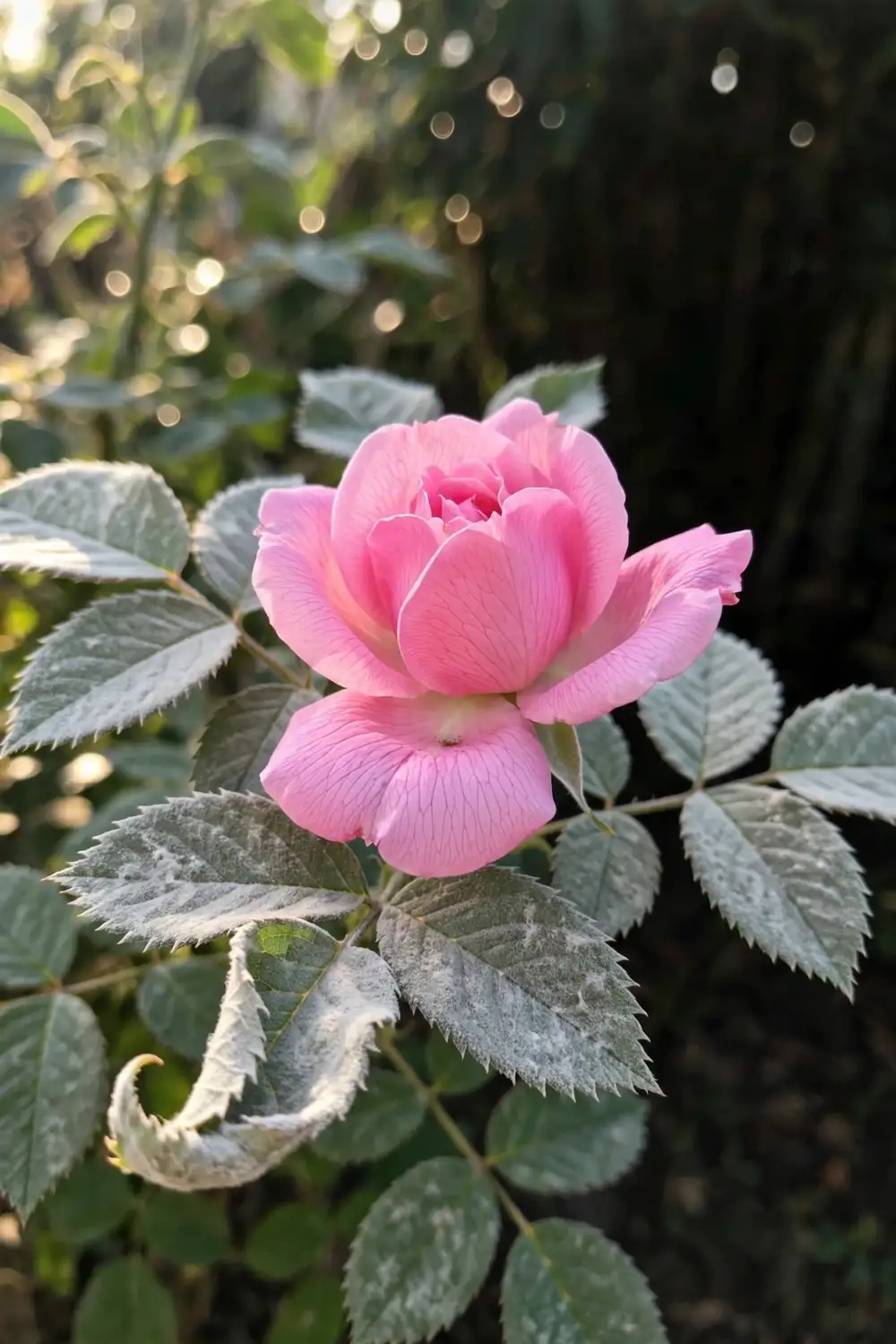

That ghostly white dust on your rose leaves is powdery mildew, and it looks worse than it usually is. The fungus behind it, Podosphaera pannosa, feeds on the leaf surface without invading the tissue underneath, and it spreads fastest on humid nights near 70 F. Most powdery mildew roses treatment advice skips straight to sprays, but the honest first move is deciding whether the infection is bad enough to treat at all.
This guide walks you through that decision, then through 9 treatments ranked from cultural fixes to sprays, with the research behind each one stated plainly. You will learn which home remedies have actual evidence (baking soda does), which ones can hurt your roses (vinegar can), and when the smartest move is to do almost nothing. For rose-growing basics alongside disease care, our roses for fall planting guide covers getting new bushes established right.
What Powdery Mildew on Roses Actually Is
Powdery mildew on roses is caused by the fungus Podosphaera pannosa (formerly called Sphaerotheca pannosa), a member of the Ascomycete fungi that specializes in the rose family. Unlike most fungal diseases, it grows almost entirely on the leaf surface, sending only tiny anchor cells called haustoria into the leaf to sip nutrients. The white powder you see is a mat of fungal threads plus chains of microscopic spores called conidia.
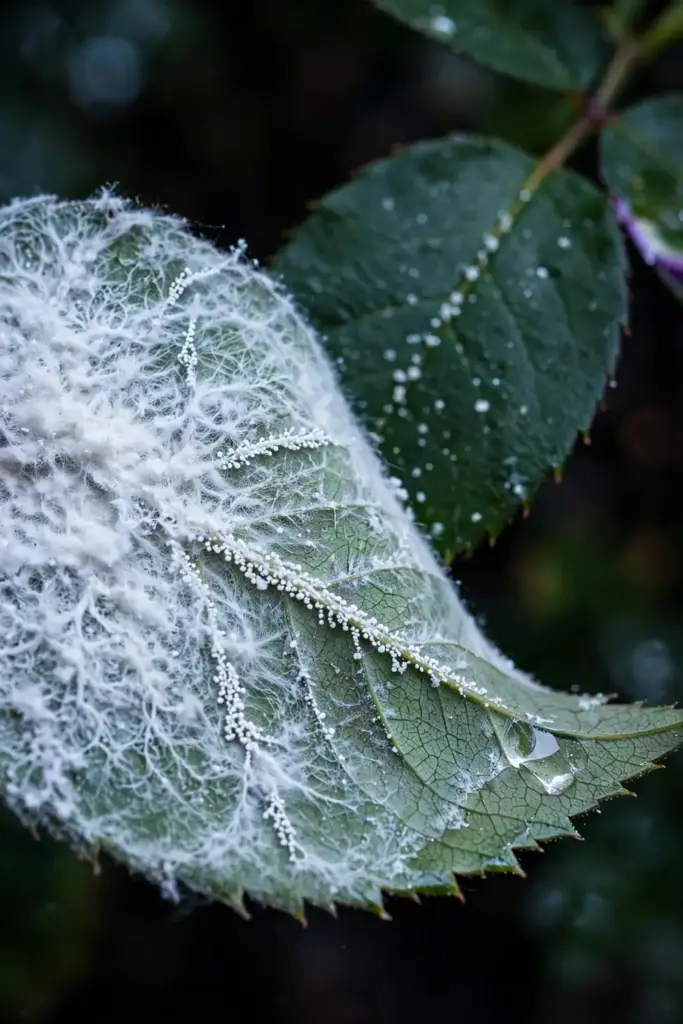
That surface lifestyle explains the disease’s strangest trait. Powdery mildew does not need leaf wetness to germinate. In fact, heavy rain can burst the spores and wash the fungus off. What it needs is humid air, temperatures near 70 F, and tender new growth to colonize, as the Pacific Northwest Pest Management Handbooks describe in their March 2026 revision. Newly unfurled leaves are far more susceptible than mature ones, so the first flush of spring growth is the danger window.
The fungus overwinters as mycelium inside infected rose buds and on twigs, and also as tiny black fruiting structures called chasmothecia on fallen debris. Infected buds open in spring already stunted and white with spores, which is why the disease often seems to appear out of nowhere in May. Multiple disease cycles can run in a single growing season, so one neglected infection keeps re-seeding the plant all summer.
How to Identify Powdery Mildew on Rose Leaves
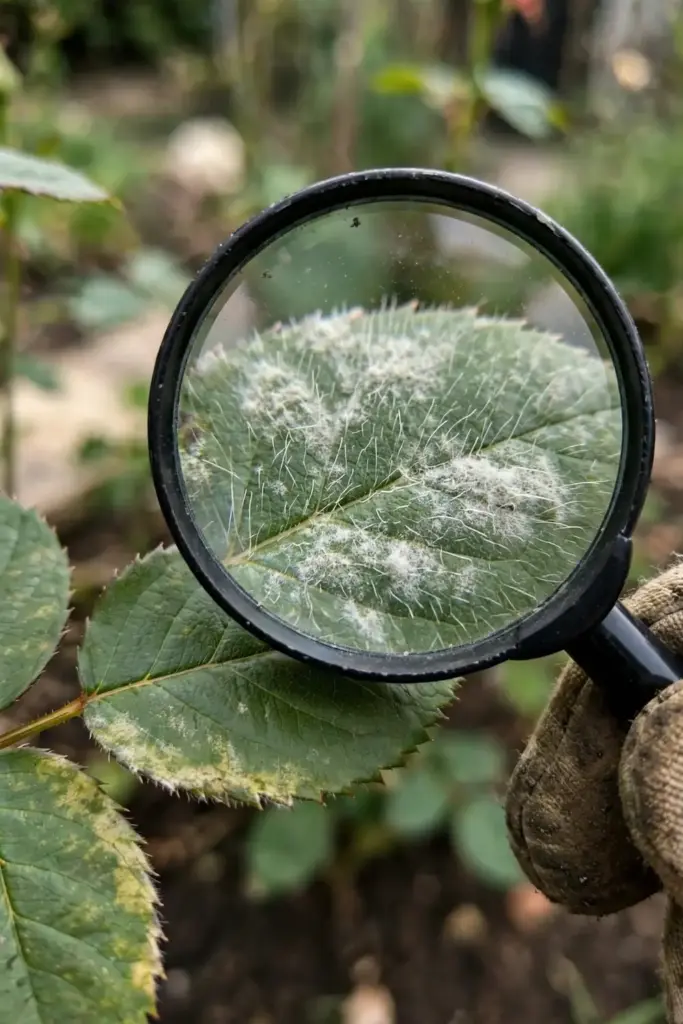
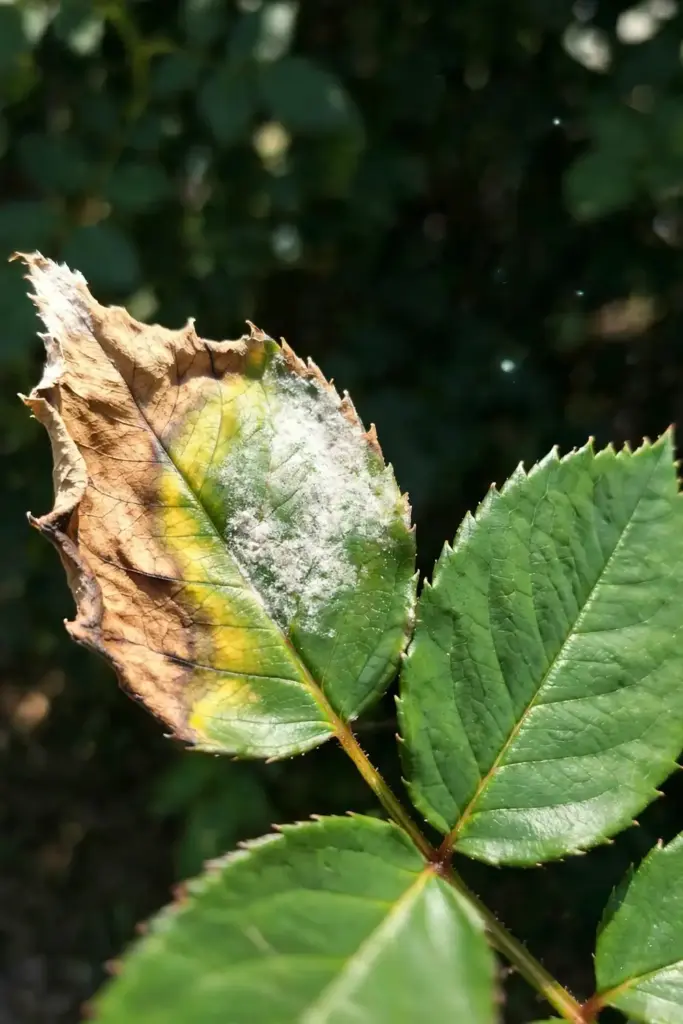
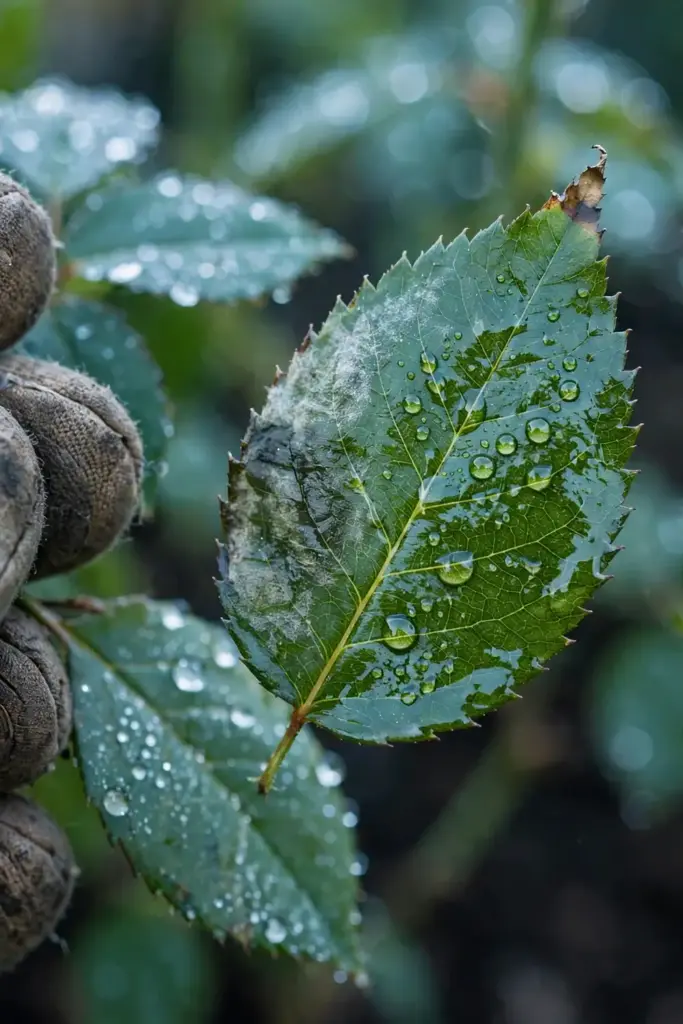
Powdery mildew on rose leaves starts as small white or grayish-white powdery patches, usually on the upper leaf surface. The patches widen and merge into a felt-like coating that can cover whole leaflets. Both leaf surfaces can be affected, and the undersides sometimes show the coating first on susceptible varieties.
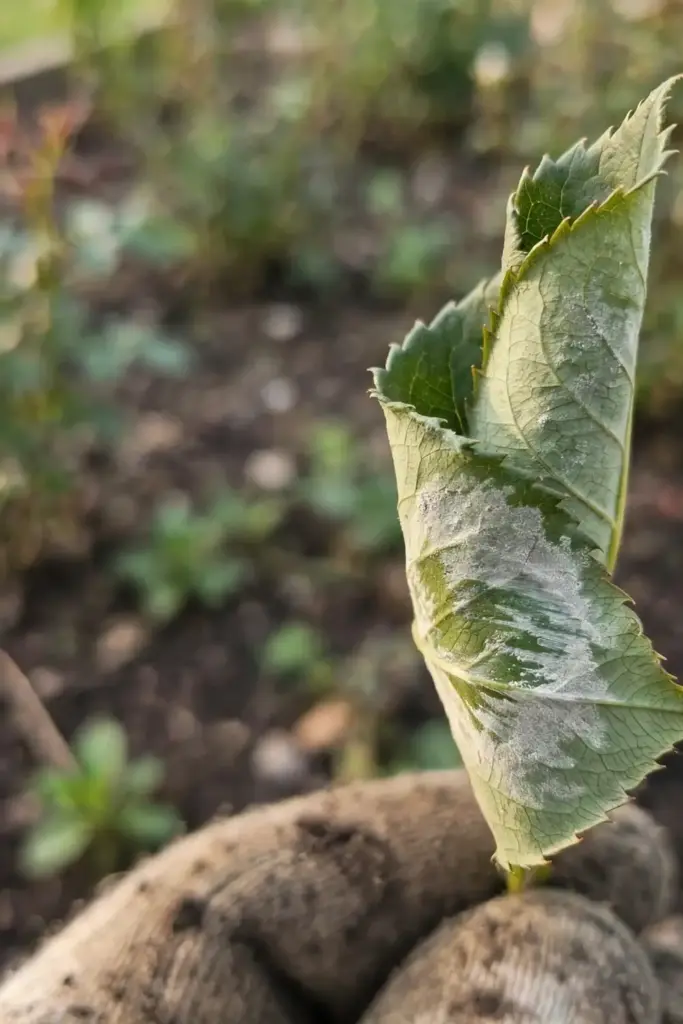
As the infection ages, you may see discoloration of the leaf tissue itself: yellow, reddish, or purple blotches around the white patches. Heavily infected young leaves curl, pucker, and distort. In severe cases on young plants, the distorted growth looks alarming, but the leaf is still photosynthesizing underneath the mat, just less efficiently.
The single most useful field mark is the powder itself. Rub a finger lightly across a suspect patch. Powdery mildew smears and wipes off, revealing green leaf beneath. Downy mildew, by contrast, shows as grayish fuzz mostly on leaf undersides with yellow angular patches on top, and rust shows as orange pustules. If it wipes off white, it is powdery mildew.
How to Identify Powdery Mildew on Rose Buds and Stems
On rose buds, powdery mildew coats the sepals and the bud surface with the same white powder, and infected buds often open into malformed, stunted flowers or fail to open at all. Flower stalks and the upper stems can carry the coating too. This is the damage rose growers notice most, because it ruins the bloom they were waiting for.
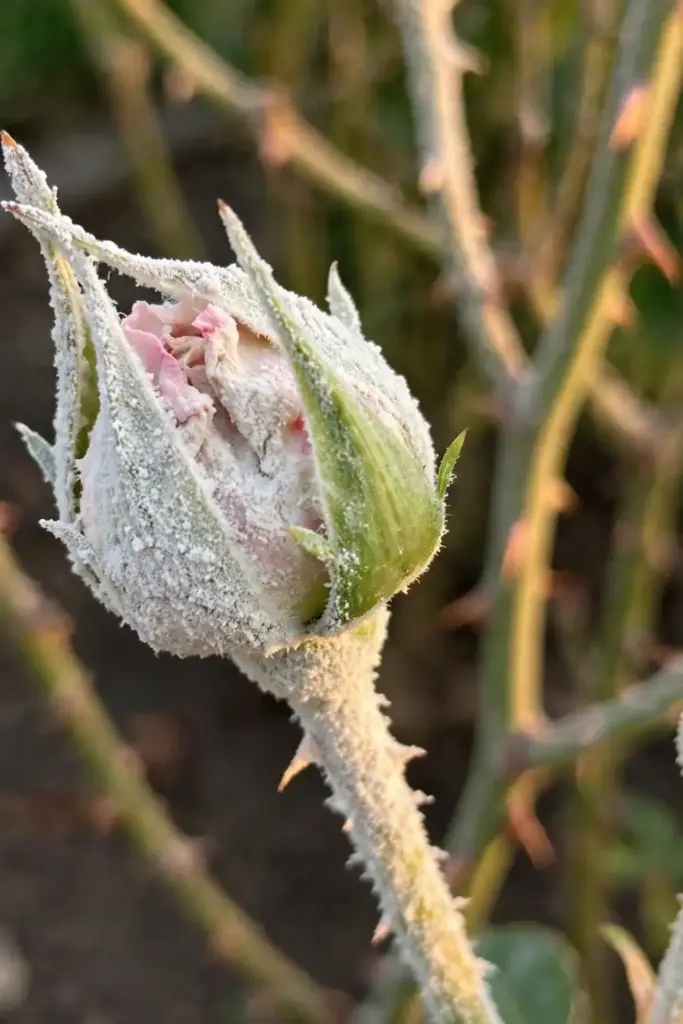
On stems and thorns, look for the overwintering form: a whitish felted coating on the canes, especially near thorn bases, that persists through winter. Clemson University’s Home and Garden Information Center lists rose among the primary hosts for powdery mildew and notes that the disease, while rarely fatal, can cause real damage under severe infection.
Late in the season you may spot tiny black dots embedded in the white mat. Those are chasmothecia, the overwintering fruiting bodies. Their presence tells you the fungus is settling in for winter on that cane, which makes fall cleanup genuinely useful rather than cosmetic.
Which Roses Get Hit Hardest
Hybrid teas, floribundas, climbers, and ramblers are the most susceptible rose classes, according to the PNW Handbooks. These are the roses with the softest, fastest new growth, which is exactly the tissue Podosphaera pannosa prefers. If you grow exhibition hybrid teas, expect to manage powdery mildew as a standing cost of the hobby.
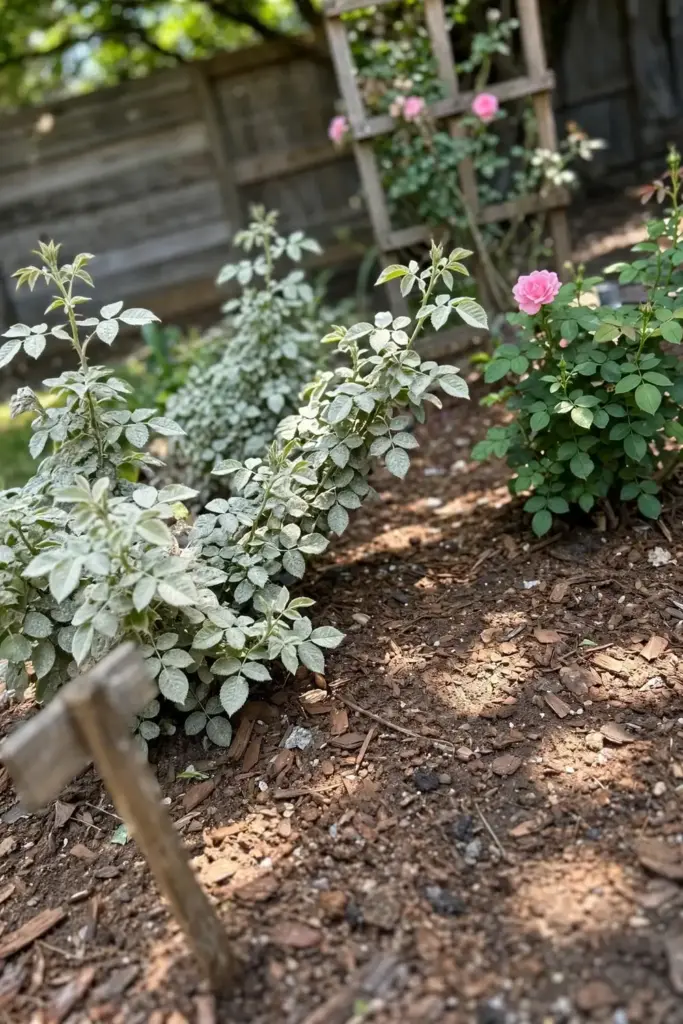
Shrub roses, rugosas, and many landscape roses show more resistance, though no rose is immune in a bad year. Moss roses are notably susceptible, a quirk Clemson mentions in its rose-growing guide. The PNW Handbooks add an important caution: resistance is local and temporary. A variety rated resistant in one region can be susceptible in another because different fungal strains dominate, and a resistant rose can lose that resistance after a few years as the local fungal population shifts.
New plantings get hit harder than established bushes for the same reason new growth does: everything is tender. A first-year rose covered in mildew usually outgrows the problem as its canes harden, which is worth remembering before you reach for the sprayer.
Powdery Mildew vs Downy Mildew vs Rust vs Black Spot
Four rose diseases get confused constantly, and treating the wrong one wastes a season. Use this table to sort them before you spray anything.
| Feature | Powdery Mildew | Downy Mildew | Rust | Black Spot |
|---|---|---|---|---|
| What you see | White powdery coating, wipes off | Grayish-purple fuzz under leaves, yellow angular patches on top | Orange-yellow pustules, mostly leaf undersides | Black circular spots with fringed edges on top of leaves |
| Leaf wetness needed | No; rain can destroy spores | Yes; needs wet leaves | Yes; needs wet leaves | Yes; needs 7+ hours of leaf wetness |
| Distortion | Yes; young leaves curl and pucker | Little; leaves drop fast | Little; leaves yellow and drop | Spots first, then yellowing and drop |
| Overwinters in | Buds, canes, debris | Debris, not buds | Fallen leaves, canes | Fallen leaves, canes |
| Baking soda helps | Yes, with evidence | No | No | Some, mostly preventive |
If your rose has white powder that wipes off, you have powdery mildew and the rest of this guide applies. If it does not wipe off, re-check the table before going further.
Why New Growth Gets Powdery Mildew First
The mechanism is simple and it drives every treatment decision. Podosphaera pannosa colonizes the leaf surface, and newly unfurled leaves have thinner cuticles and softer cell walls than mature leaves. The fungus’s haustoria penetrate young tissue easily and struggle with hardened older leaves. That is why the first flush of spring growth and every flush after pruning are the danger windows.
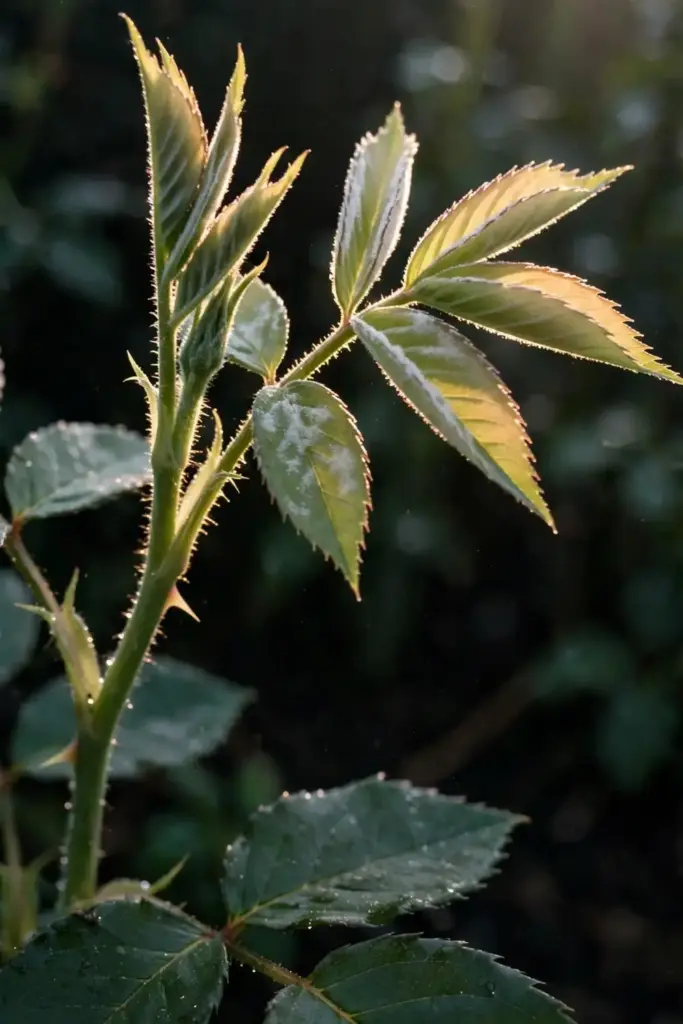
Temperature and humidity set the calendar. Conidia germinate fastest on humid nights near 70 F, and conidial production stops below 50 F (10 C) and above roughly 81 F. Warm days with cool humid nights, the classic late-spring pattern, are peak mildew weather. Shade makes it worse because shaded foliage stays humid longer and dries slower.
Here is the part most guides bury: because the fungus lives on the surface and spreads by wind-blown spores released when humidity drops abruptly, overhead watering is not the villain here the way it is for black spot. Morning watering that wets the leaves can actually knock spores off. The real enablers are shade, crowding, and a steady supply of soft new growth from heavy nitrogen feeding.
What Makes Powdery Mildew Worse in a Home Garden
Four conditions turn a light dusting into a season-long problem. Shade is first. Roses in half shade or crowded against a fence hold humidity around their leaves for hours longer than roses in open sun, and the fungus exploits every one of those hours.
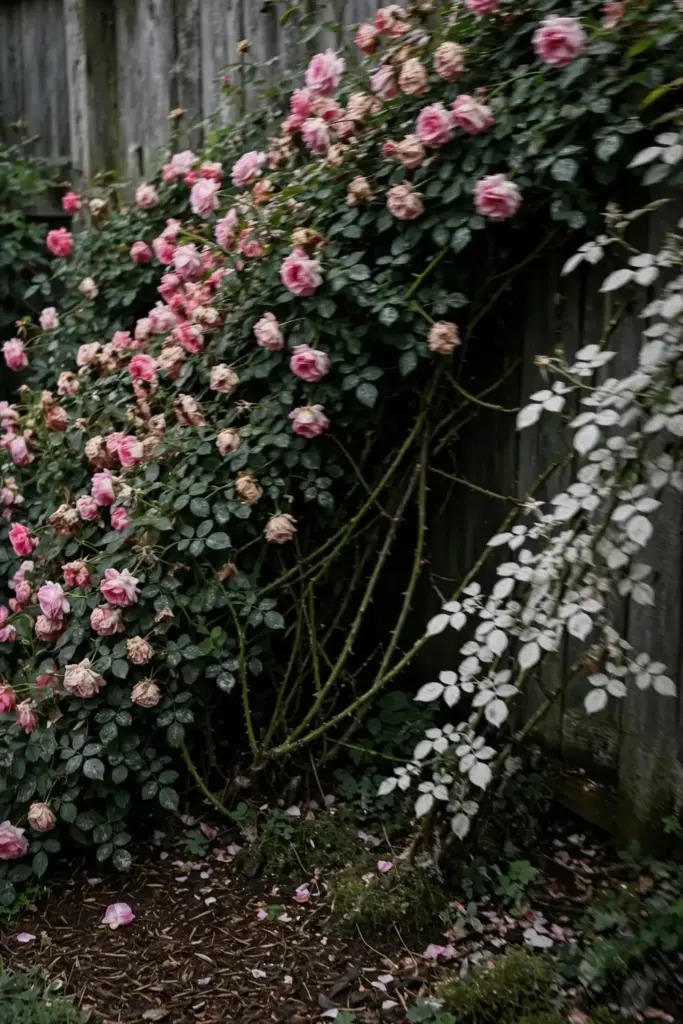
Poor air circulation is second. Roses packed tight, surrounded by dense underplanting, or backed against a wall trap still air. Spores settle instead of blowing away, and humidity never drops.
The third is excess nitrogen. Heavy feeding pushes flush after flush of soft, succulent growth, which is a standing invitation. A rose fed for maximum bloom is also fed for maximum mildew. Balanced feeding with adequate potassium, which strengthens cell walls, produces tougher foliage the fungus penetrates less easily.
The fourth is dry soil combined with humid air, the odd couple the Australian rose growers flag: roots stressed by drought while the canopy sits in humidity. Deep, consistent watering at the base keeps the plant vigorous without wetting the mildew’s playground. None of these four requires a spray to fix, which is why they come before the spray section.
Step 1: Decide Whether Treatment Is Actually Worth It
Here is the honest cost-benefit call. Powdery mildew on an established rose is mostly cosmetic. The plant rarely dies, the roots are untouched, and a healthy bush outgrows a light infection once the weather turns hot and dry. If the white coating covers a few leaves and the bush is blooming anyway, the correct treatment is nothing. That is not neglect; it is the same conclusion the extension services reach.
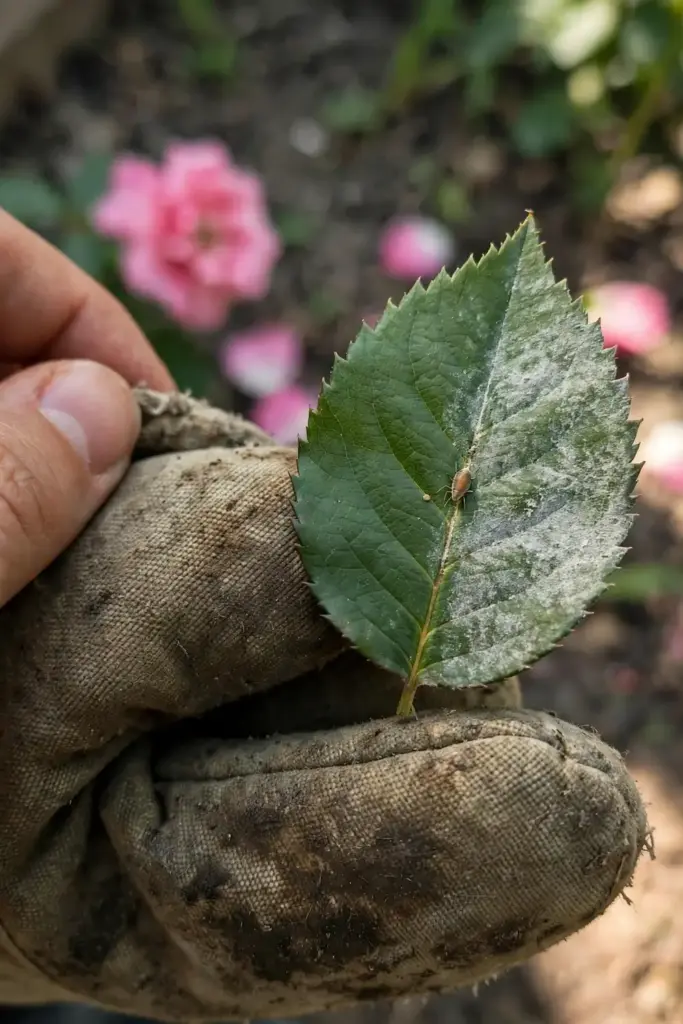
Treatment earns its effort in four cases. First, the infection is on a young or newly planted rose whose growth is being stunted. Second, buds are malformed and you are losing the actual flowers. Third, the same bush defoliates or stalls every year, which points to a chronic problem worth breaking. Fourth, you grow exhibition roses where foliage matters.
A powdery mildew roses treatment plan that starts with this triage saves more money and effort than any spray. Write down which of the four cases fits your rose. If none fits, skip to Step 9, keep the calendar, and spend the afternoon doing something else.
Step 2: Prune Out the Worst of It and Clean Up
Start with the shears, not the sprayer. Cut out the most heavily infected shoots, cutting back to healthy wood, and remove any buds that opened white and stunted. This physically removes millions of spores and, just as important, opens the bush to air and light. For clean technique on the cuts themselves, our spring pruning techniques guide covers the angles and tool sanitation basics.
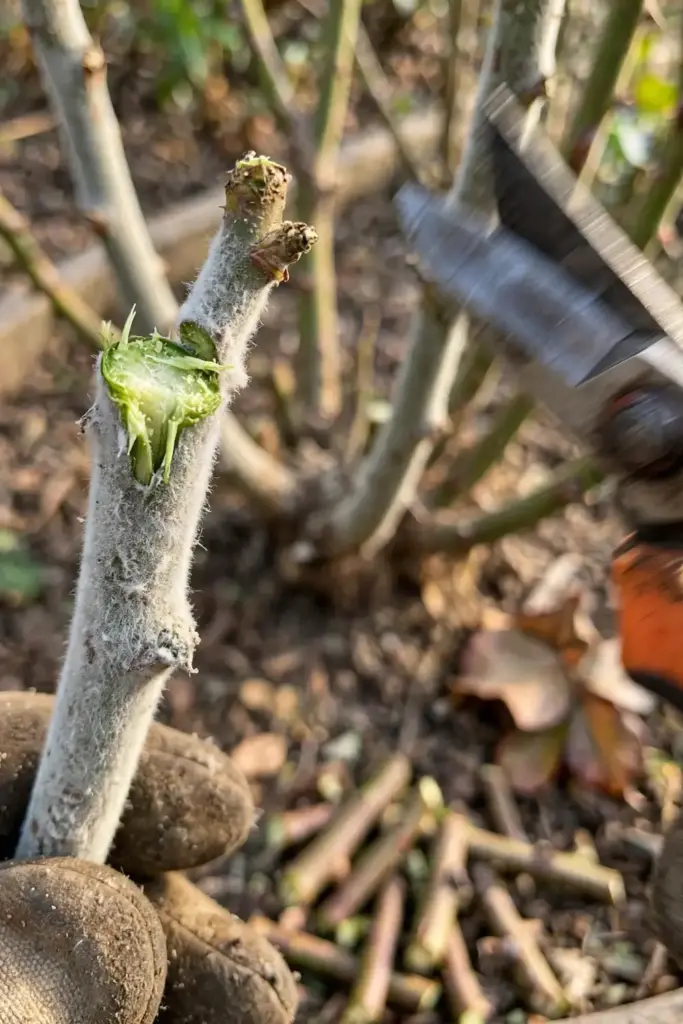
Clemson University’s Home and Garden Information Center lists sanitation and tool disinfection among the core powdery mildew controls, and a 10 percent bleach dip between bushes keeps spores from hitchhiking on your blades. Then clean up. Rake up fallen infected leaves and prune debris from under the bush and destroy it. Do not compost it unless your pile reliably runs hot; the chasmothecia survive cool composting and re-seed the bed next spring.
Time this work for a dry morning. Pruning wet foliage spreads spores on your hands and tools, and wet cuts invite other problems. One thorough cleanup in early spring, when you can see the white-coated overwintering buds, does more than a summer of half-hearted spraying.
Step 3: Fix the Airflow and Watering Around Your Roses
Cultural fixes are the highest-return treatments because they work every season without reapplication. Thin the center of the bush so air moves through it. Space new plantings to their mature width instead of their nursery-pot width. Cut back encroaching shrubs and groundcover that trap humidity around the rose’s lower leaves.
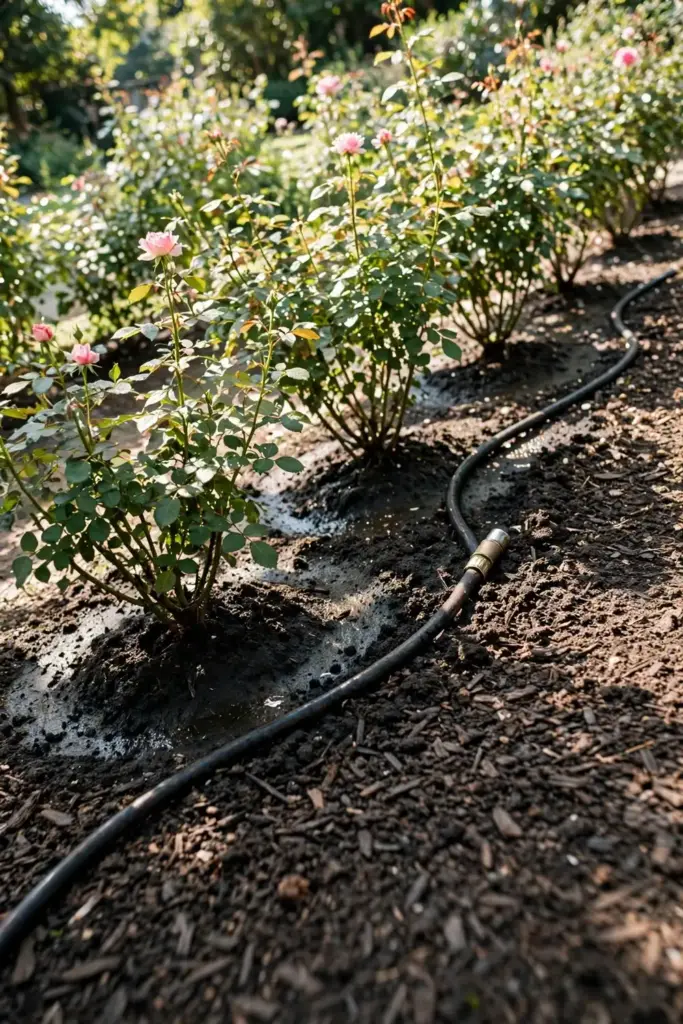
Move the rose if you can. A bush that mildews every year in the shadow of a fence will often stay clean one bed over in full sun. Transplanting a struggling rose to a sunnier, airier spot in dormancy solves chronic cases that sprays only suppress.
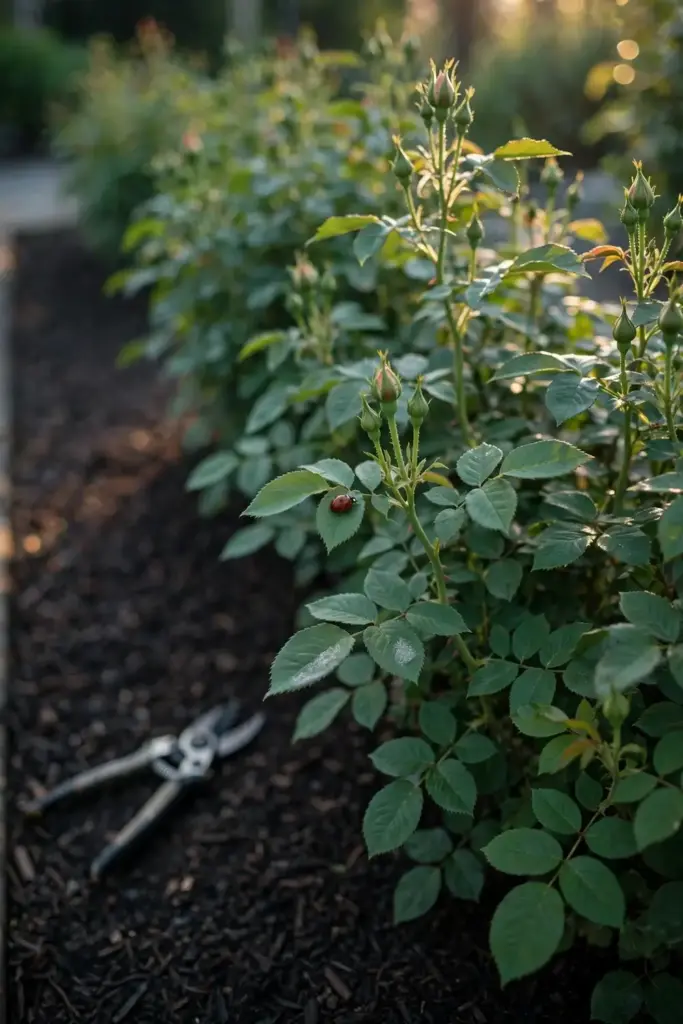
Water deeply at the base in the morning and keep foliage dry through the evening. Drip irrigation or a soaker hose is ideal. Mulch the bed to keep soil moisture even, which reduces the drought-stress-plus-humidity combination that favors the fungus. These fixes cost nothing after the initial effort, and they are the reason old gardeners with airy, sunny rose beds rarely spray at all.
Step 4: Try the Baking Soda Spray That Has Real Research Behind It
If you want a home remedy with actual published evidence, this is the one. In the late 1980s, Dr. R. Kenneth Horst of Cornell University tested sodium bicarbonate sprays on roses and found that weekly sprays of baking soda mixed with horticultural oil significantly controlled powdery mildew and black spot in both greenhouse and field trials. Later work found potassium bicarbonate often more effective and less phytotoxic than sodium bicarbonate.
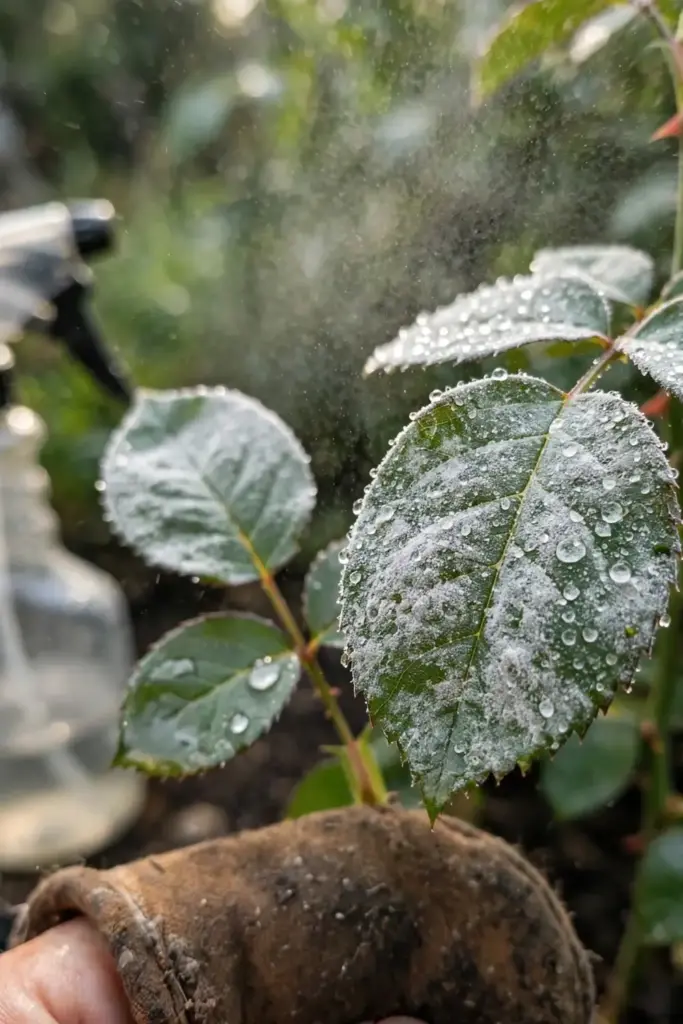
The standard home mix: 1 tablespoon of baking soda (or potassium bicarbonate if you can find it) plus 1 teaspoon of horticultural oil or insecticidal soap as a spreader-sticker, in 1 gallon of water. Spray to thorough coverage, including leaf undersides, on a dry morning. Reapply weekly and after rain. It works as a protectant and mild eradicant on light infections; it will not rescue a bush that is already skeletonized.
Two cautions. First, sodium can accumulate on foliage and in soil with heavy repeated use, which is one reason researchers favor potassium bicarbonate. Second, test on a few leaves first and wait 48 hours. Even the best home remedy can spot sensitive varieties, and a test patch costs nothing.
Step 5: Understand the Limits of Vinegar, Milk, and Other Kitchen Remedies
This step exists because the internet is full of confident recipes with thin evidence, and your roses deserve honesty. Vinegar sprays are the riskiest of the popular options. Acetic acid at kitchen concentrations can burn rose foliage, especially in sun, and there is no extension research supporting vinegar as a powdery mildew treatment on roses. A burned leaf is worse than a mildewed one.
Milk sprays sit in the middle. Dilute milk (often 1 part milk to 9 parts water) has shown real powdery mildew suppression in published trials on cucumbers, squash, and grapes, where researchers propose that milk proteins produce antiseptic compounds in sunlight. But little published work tests milk on roses specifically, so treat it as promising-but-unproven for your bushes, not as a sure thing.
Neem oil is sometimes filed under “home remedy,” but it is a real horticultural oil with eradicant action, so it gets its own step next. The pattern across all kitchen remedies: they help most as preventives on light infections, they demand thorough coverage and weekly reapplication, and none of them outperforms the baking soda plus oil combination that actually has rose-specific research behind it.
Step 6: Use Neem or Horticultural Oil Without Burning Your Roses
Neem oil and other horticultural oils (including JMS Stylet Oil) are good eradicants. They smother the surface mycelium and spores on contact, which makes them one of the few options that visibly reduce an existing infection rather than just protecting new growth. Coverage is everything: the oil must touch the fungus, so spray leaf undersides and buds, not just the tops you can see.
The critical safety rule is heat. Do not apply oils when temperatures exceed 90 F, when the plant is drought-stressed, or within a few weeks of a sulfur spray, because oil plus sulfur burns foliage. Spray in the cool of the morning or evening, never in full midday sun. Southern Living’s plant pathology guidance makes the same point: oil sprayed on a hot afternoon is a frequent way gardeners injure their own roses.
Oils also harm beneficial insects on contact, so avoid spraying open blooms where bees are working. Evening application, after pollinators have left, is the considerate and effective timing. Expect to reapply every 7 to 14 days during mildew weather; oils have no residual activity once dry.
Step 7: Use Sulfur and Fungicides Only Before the Disease Arrives
Sulfur is the oldest recorded fungicide, used against mildew for more than 2,000 years, and it still works as a preventive. It stops spores from germinating but cannot cure infected tissue, so it must go on before the disease appears or at the very first sign. Like oils, sulfur burns foliage in heat: never apply when temperatures will exceed 85 to 90 F within a few days, and never mix or closely follow oil sprays.
Synthetic options labeled for roses include myclobutanil, propiconazole, and chlorothalonil, applied in the evening to limit pollinator exposure. These are preventives too. No fungicide erases the white coating already on a leaf; they protect the new growth emerging after application. Rotate active ingredients across the season, because powdery mildew fungi develop resistance to single-mode chemicals, a pattern documented across ornamental crops.
The honest placement of this step is last among the sprays for a reason. A home gardener who prunes, cleans up, fixes airflow, and sprays baking soda weekly will rarely need synthetic fungicides. Keep them as the backup for exhibition roses or chronic cases, not the opening move.
Step 8: Plant Resistant Roses Next Time You Buy
The cheapest treatment is the one you never have to apply. When you buy new roses, check the supplier’s disease-resistance notes and favor varieties rated resistant to powdery mildew in your region. Shrub roses and many modern landscape series carry meaningful resistance, while older hybrid teas as a class are the most vulnerable.
Remember the PNW caution: resistance is local. A variety rated resistant three states away may meet a different fungal strain in your garden. Buy from regional growers when you can, and ask local rose societies which varieties stay clean in your county. Their answers beat any catalog claim.
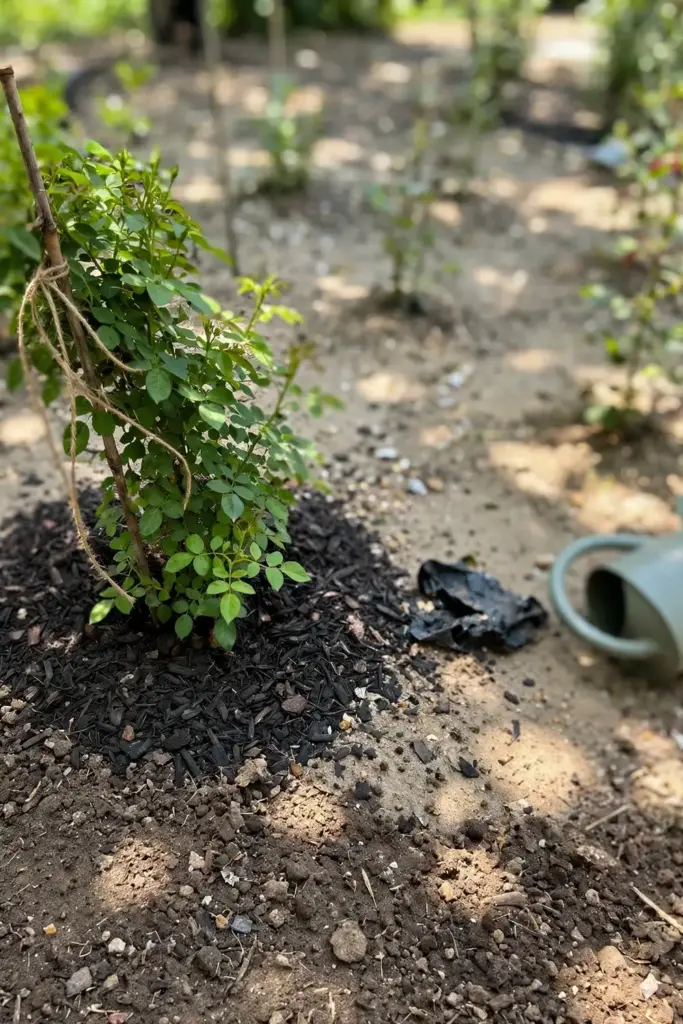
Plant the new rose right the first time: full sun, mature spacing, and good air. A resistant variety in a shady, crowded corner will still mildew, and a susceptible variety in open sun with airflow will often stay clean. Genetics loads the dice; placement rolls them.
Step 9: Keep a Simple Powdery Mildew Calendar for Your Roses
Mildew management is a calendar, not a crisis response. In late winter, while the bush is dormant, prune for airflow and destroy debris. At bud break, watch the first flush of new leaves; this is when a preventive baking soda or oil spray earns its keep if your bush mildews yearly.
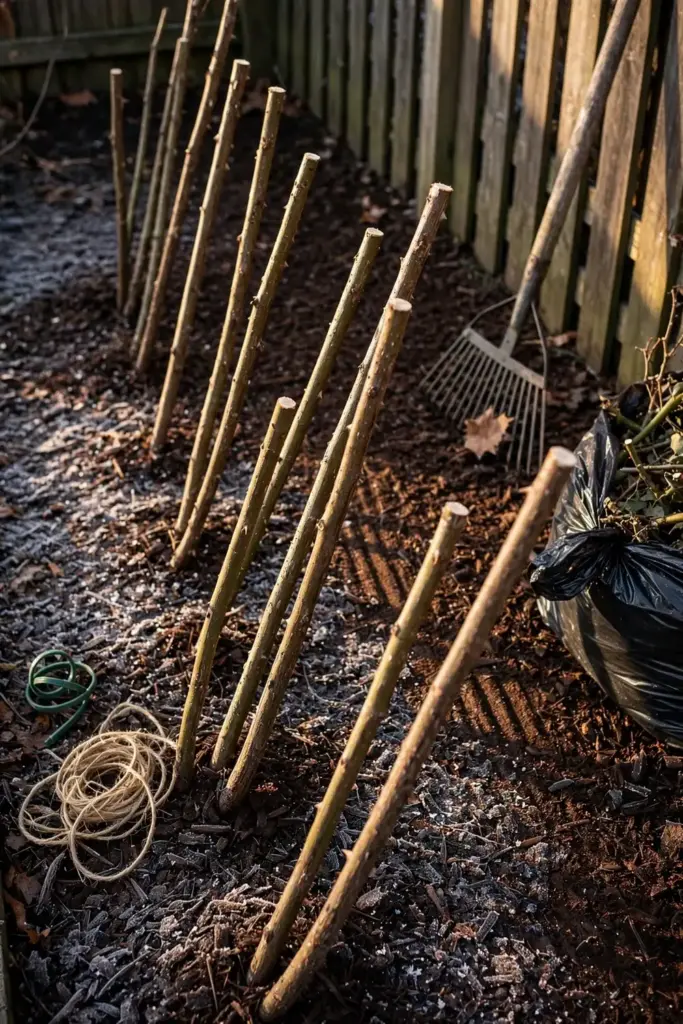
Through spring and early summer, scout weekly. The moment you see the first white patches, start the spray routine rather than waiting for full coverage. Early treatment of a light infection succeeds where late treatment of a heavy one fails, for every product on this list.
In fall, do the final cleanup: strip remaining infected leaves, rake the bed, and destroy the debris. You are removing the chasmothecia that would start next spring’s epidemic. Write down what worked this year. A one-line note, “baking soda weekly from May, clean by July,” beats memory every time.
Living With Roses That Already Had Powdery Mildew
If the season got away from you and the bush is coated, do not panic and do not defoliate it. Stripping every infected leaf starves the plant at the moment it needs energy to push healthy new growth. Remove the worst shoots, keep watering and feeding normally, and let the plant outgrow it as temperatures rise past the fungus’s comfort zone.
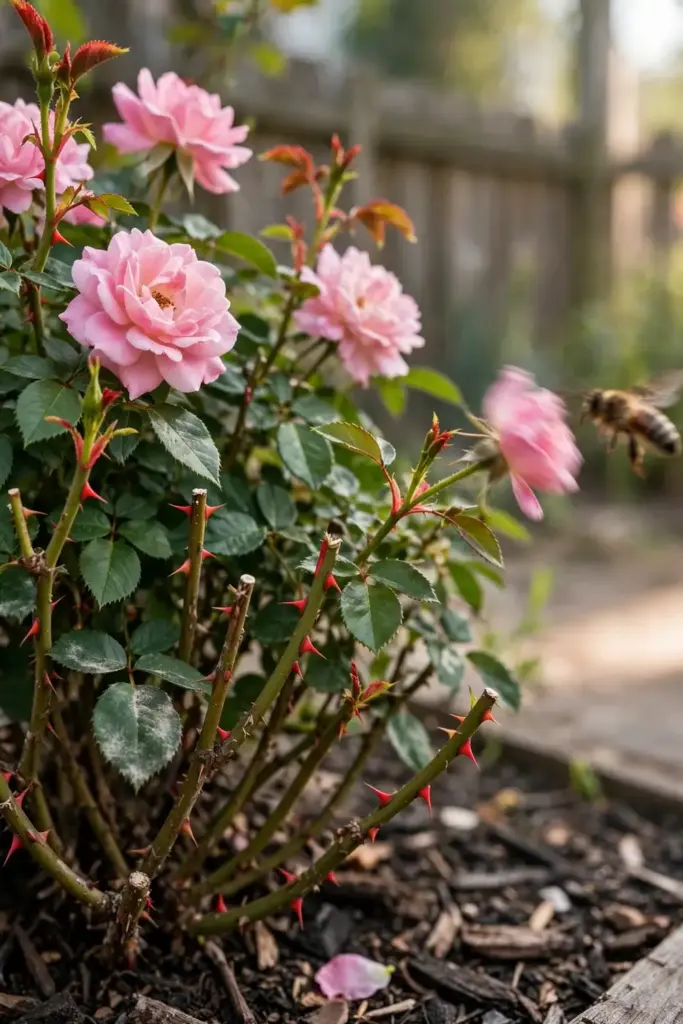
Expect some bud loss on the current flush. The next flush on cleaned-up, better-ventilated wood is usually fine. Keep up the fall cleanup even in a bad year; it is the single highest-return habit for next spring.
One reassurance worth stating plainly: a rose that looked terrible in June can bloom beautifully in September. Powdery mildew is a foliage disease of the moment, not a death sentence. Judge the bush by its recovery, not its worst week.
Frequently Asked Questions

Nothing kills it instantly and safely. Horticultural oils and neem oil are the fastest-acting home options because they smother surface mycelium on contact, with visible reduction in a day or two. Baking soda sprays suppress and protect but work over days, not hours. Any product promising instant eradication is overselling; the fungus’s surface mats need contact, coverage, and repeat applications.
Baking soda, clearly. Cornell research from the Horst trials showed sodium bicarbonate plus horticultural oil significantly controlled powdery mildew on roses, and potassium bicarbonate performs even better with less leaf injury. Vinegar has no extension research behind it for roses and can burn foliage in sun. If you use only one kitchen remedy, make it baking soda.
Almost never. Powdery mildew is a surface feeder that reduces photosynthesis and vigor, and it can stunt young plants or ruin a flush of buds, but the death of an entire established rose from mildew alone is rare. Severe early-season infection can seriously stunt a first-year bush. The real risk is chronic stress over multiple bad years, not a single dusty summer.
Often, yes. On an established, blooming bush with a light dusting, doing nothing is a legitimate choice that extension sources support. The disease usually fades as summer heat passes the fungus’s 81 F ceiling. Intervene when buds are malformed, young plants are stunted, or the same bush suffers every year. Cosmetic mildew on a healthy plant is a candidate for benign neglect.
It has real evidence on vegetables and grapes, where dilute milk sprays suppressed powdery mildew in published trials, possibly through antiseptic compounds formed in sunlight. But little published research tests milk specifically on roses, so treat it as an experiment, not a plan. Skip milk as your primary defense. Use a 1:9 milk-to-water dilution as a weekly supplement if you like, and let the baking soda and oil combination carry the real load.
Start at bud break if your roses mildew every year, because prevention beats cure with every product listed here. For everyone else, start at the first white patch: weekly scouting in spring catches the infection when sprays still work. Sulfur and synthetic fungicides are preventive only and must go on before or at first sign. Oils and baking soda can suppress light existing infections but will not rescue heavily coated foliage.
Where to Go From Here
You now have the full picture: a surface fungus with a known name, a triage step that saves unnecessary work, and 9 treatments in honest order from pruning shears to spray calendar. The single habit that matters most is the fall cleanup, because it removes the overwintering structures that start next year’s outbreak.

If your rose problem turns out to be a different disease, our blossom blight guide covers another common misdiagnosis. For the soil and feeding side that keeps roses vigorous enough to outgrow mildew, see our soil health guide. Start with Step 1. Be honest about whether your rose needs treatment, then let the calendar do the rest. A powdery mildew roses treatment that begins with triage and ends with fall cleanup beats any spray used alone.