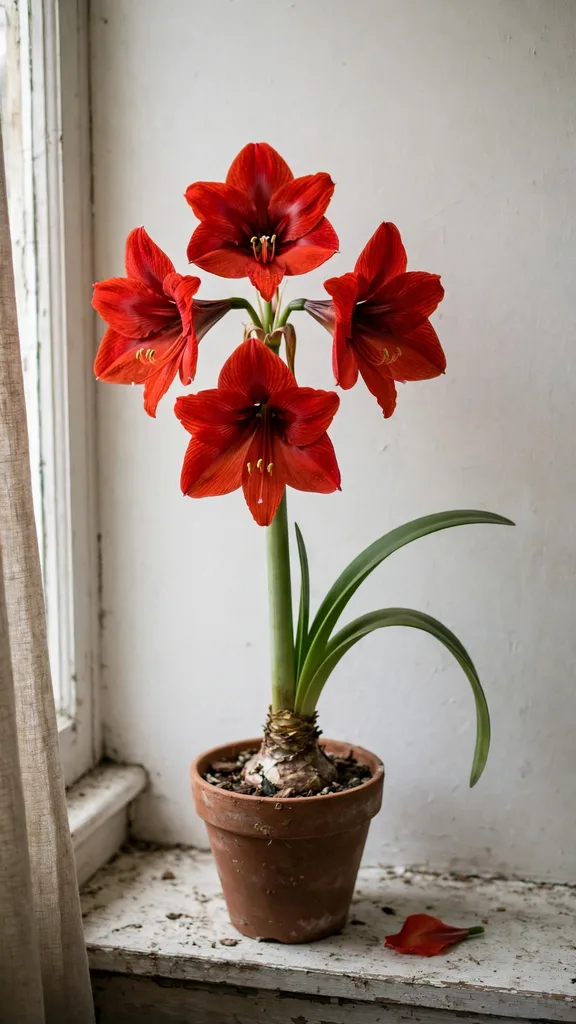
Amaryllis care is a yearly cycle with four jobs: pot the bulb shallow, water it sparingly until growth starts, feed the leaves hard after the flowers fade, then rest the bulb cool and dry for 8 to 10 weeks so it blooms again. A bulb that gets all four jobs can flower every winter for years. The rest is the step most people skip, and it is the step that decides whether a second bloom happens at all.
I have learned to judge an amaryllis by its leaves in July, because a bulb carrying six or seven fat green straps in midsummer is a bulb that has already paid for next winter’s flowers.
| Spec | Detail |
|---|---|
| Pot | Snug, about 2.5 cm (1 inch) wider than the bulb, with drainage holes |
| Planting depth | Top third of the bulb above the potting mix |
| Light | Brightest window indoors; at least 6 hours of sun outdoors in summer |
| Water | Thoroughly once at potting, then when the top 5 cm (2 inches) of mix feels dry |
| Growing temperature | Room temperature, 21 to 24°C (70 to 75°F) while waking |
| Rest | 8 to 10 weeks at 10 to 13°C (50 to 55°F), dry and semi-dark |
| Time to bloom | About 4 to 6 weeks after the rest ends |
| Difficulty | Easy, one bulb per pot |
Pick a Firm, Heavy Bulb and Skip the Soft Ones
Buy the largest firm bulb on the shelf. Amaryllis bulbs run about 5 to 13 cm (2 to 5 inches) across, and the biggest bulbs carry the most stored food. Stored food is what pays for the flower stalk. A large bulb commonly sends up two or three stalks. A small bulb sends up one thin stalk, or skips flowering and grows leaves only.
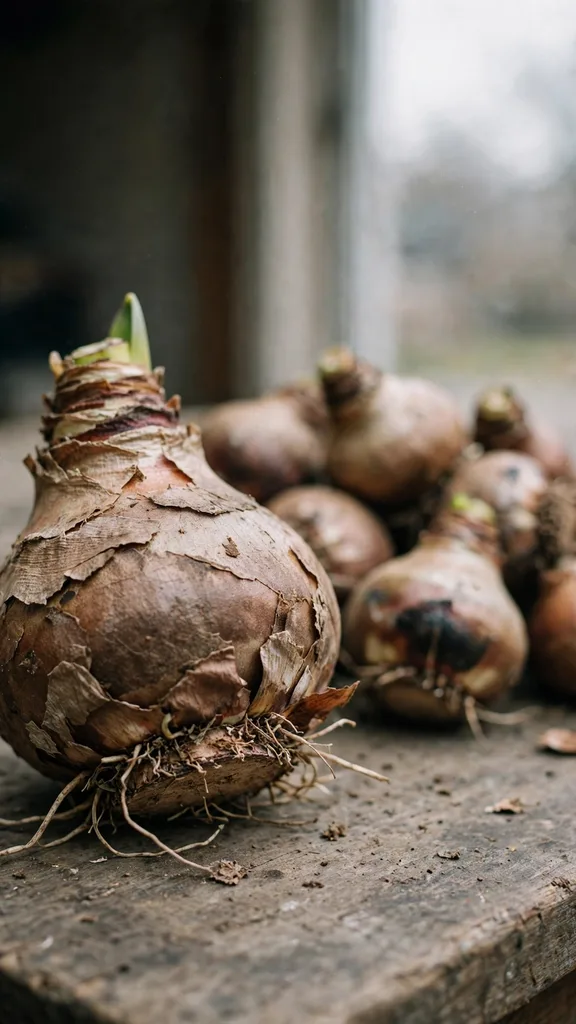
Squeeze the bulb before you pay. It should feel solid, with dry papery skin and no soft patches. Soft spots mean rot has started inside, and a rotting bulb rarely recovers in a pot. Check the basal plate at the bottom as well. It should be intact, with short dry roots attached.
Growing from seed is a different project with a wait of several years, and the guide to growing amaryllis from seeds covers that path. This guide starts from a mature bulb that can flower this winter.
Pot the Bulb Shallow With the Top Third Above the Mix
Choose a pot about 2.5 cm (1 inch) wider than the bulb and roughly twice as tall as the bulb is high. The University of Illinois Extension planting guidance sets that pot size and asks for the top third of the bulb to sit above the potting mix. A heavy clay pot earns its place here. A flowering amaryllis is top-heavy, and a light plastic pot tips over on the day the blooms open.
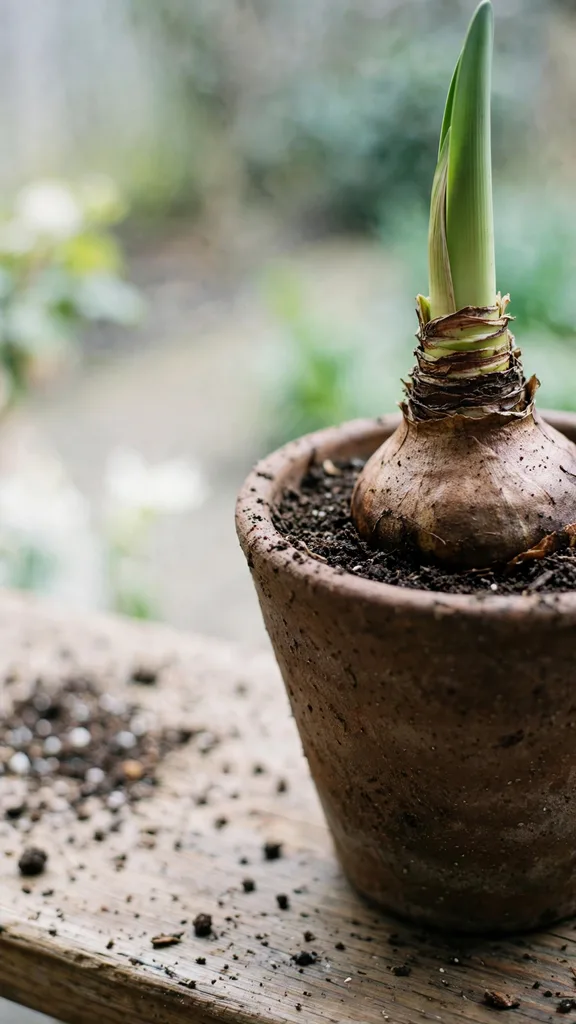
Use a soil-less, free-draining potting mix. Set the bulb on a mound of mix, spread the roots down the sides, then fill around it and firm the mix with your fingers. Leave about 2.5 cm (1 inch) between the mix surface and the pot rim so water stays in the pot instead of sheeting off the side. The neck and shoulders of the bulb stay dry above the line, which is what keeps the neck from rotting.
Water Once at Potting, Then Wait for the Top 5 cm to Dry
Water the pot thoroughly once, in a sink, and let every drop of excess drain away. Then stop. Until the stalk or leaves appear, the bulb lives on stored food and needs very little water. A bulb sitting in wet mix before it has roots is a bulb rotting from the base plate up.
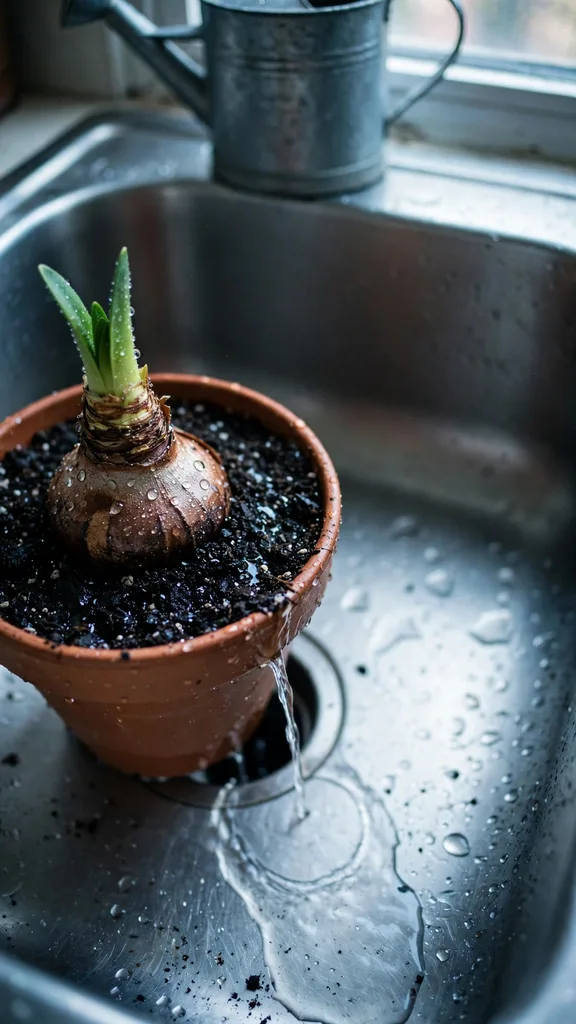
Once growth is moving, water when the top 5 cm (2 inches) of mix feels dry to a fingertip. That check takes two seconds and replaces every watering schedule. Keep the mix moist, never soggy. When flower buds start to show color, move the plant out of direct sun into bright indirect light, ideally in a cooler room. Cooler air at flowering stretches the bloom display by days.
Stake the Stalk Early and Turn the Pot a Quarter Turn
A flower stalk can reach 30 to 60 cm (1 to 2 feet) tall, and it leans hard toward the window. Turn the pot a quarter turn every few days so the stalk grows straight instead of bending into a hook. A bent stalk on a top-heavy plant is how pots end up on the floor.
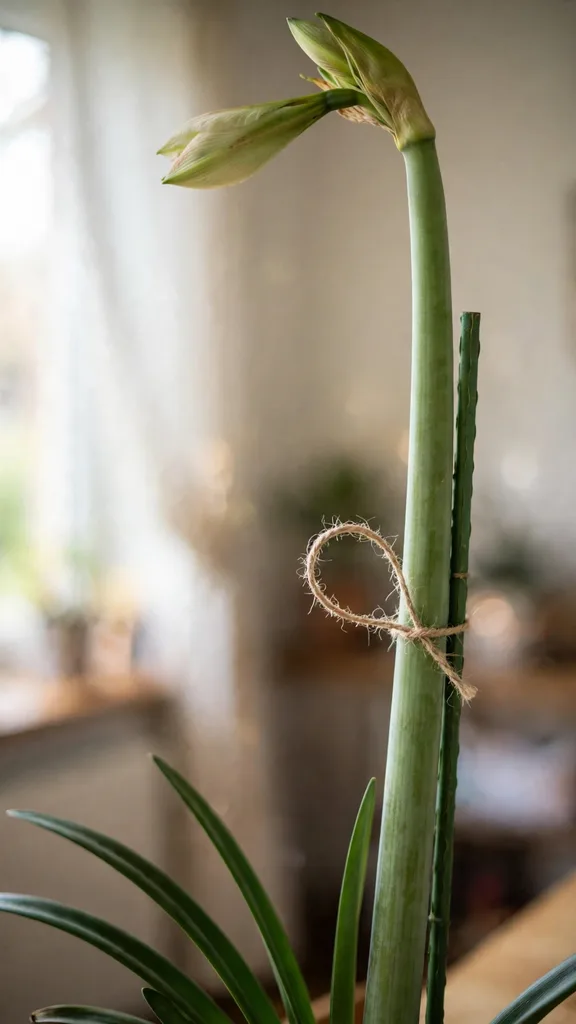
Push a slim stake into the mix beside the bulb before the stalk needs it. Tie the stalk loosely with soft twine once it passes 20 cm (8 inches). Retrofitting a stake beside a growing stalk spears roots and sometimes the bulb itself, so the early stake is the cheap insurance.
Cut Faded Flowers at Once and Keep Every Leaf
Snip each flower off as it fades. A fertilised flower sets seed, and seed production drains food the bulb needs for next year. The Iowa State Extension advice on after-bloom care gives the working cut: take the whole stalk off 2.5 to 5 cm (1 to 2 inches) above the bulb once it yellows, and never nick the foliage doing it.
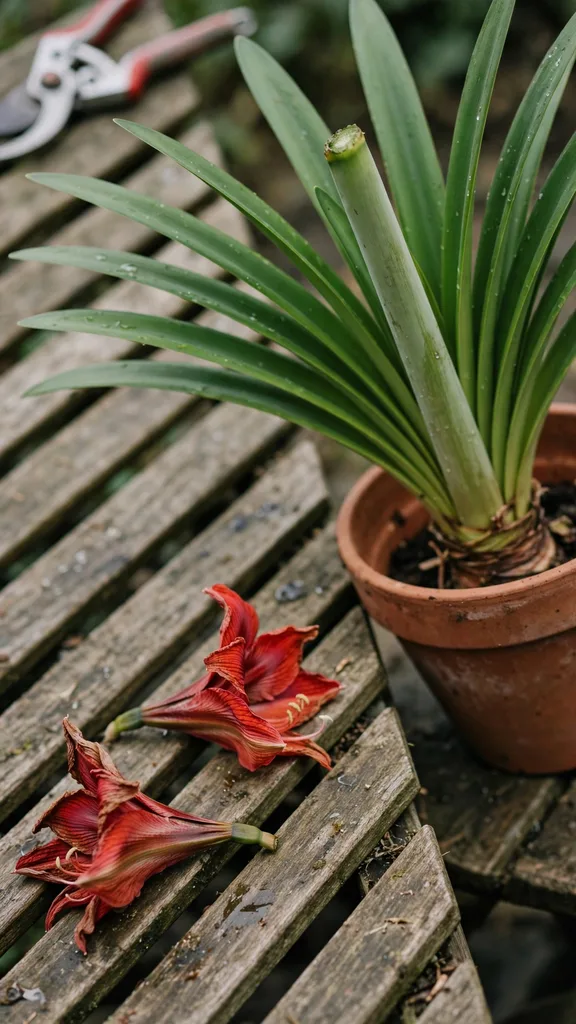
The green stalk still makes food while it stands, so it stays until it yellows. The leaves stay, full stop. Every strap leaf is a food factory filling the bulb for the next flowering, and a bulb stripped of leaves in spring has nothing to rebuild with. A plant with no leaves in June is a plant with no flowers in December.
Feed the Leaves Every 2 to 4 Weeks Through the Growing Season
Feed with a dilute houseplant fertilizer every 2 to 4 weeks while the leaves are growing. Dilute means half the label rate in the watering can. The leaves convert that feed into stored food, and stored food is next winter’s stalk count.
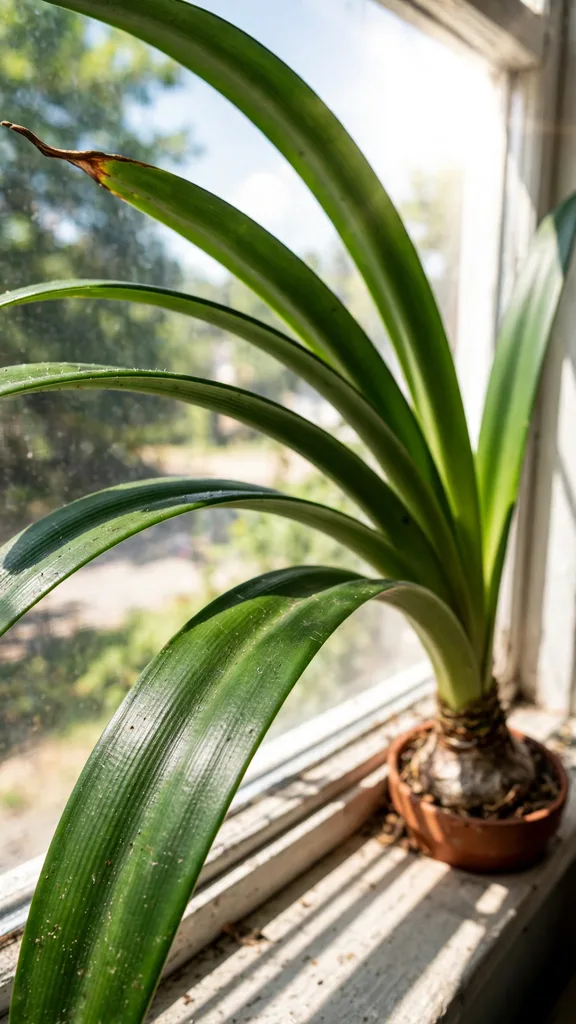
Place the plant in the sunniest window you have. Water when the surface of the mix is nearly dry, the same fingertip rule as before. Stop feeding at the end of summer. Feed pushed into autumn keeps the plant growing green when it should be winding down toward its rest.
Move the Pot Outdoors After Frost and Bring It In by Mid-September
An amaryllis can spend the summer outdoors once frost risk has passed. Harden it first: a shady, sheltered spot for 2 or 3 days, then longer stretches of direct sun, fully hardened in 7 to 10 days. Sink the pot into a bed in partial to full sun so the wind cannot tip it and the mix stays evenly moist.
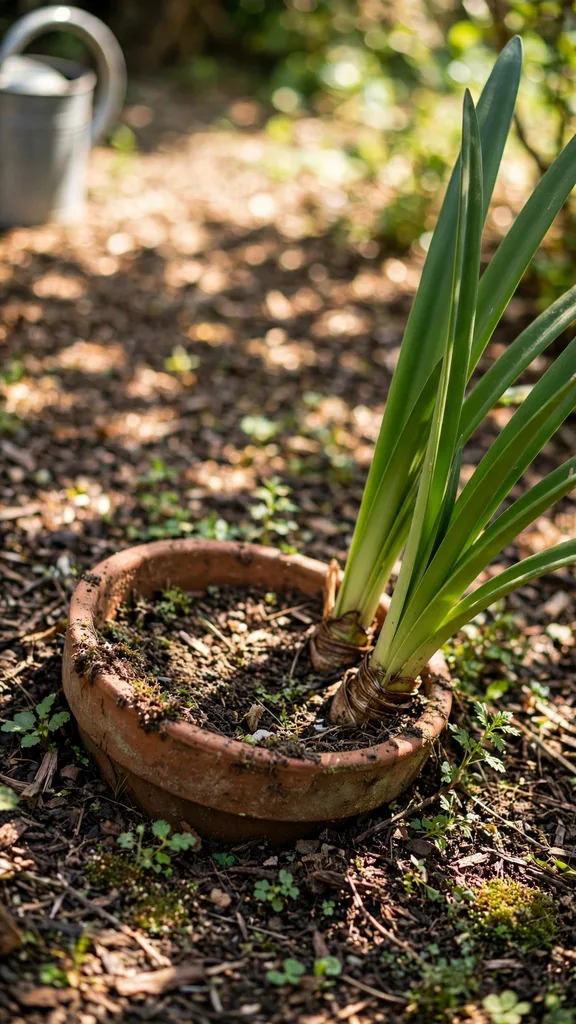
Keep watering through dry spells and keep feeding once or twice a month through July. Bring the plant indoors in mid-September, before the first frost touches it. That mid-September move is the trigger for everything that follows, because the rest clock starts indoors.
Rest the Bulb at 10 to 13°C for 8 to 10 Weeks
In late September, move the pot to a cool, semi-dark place and withhold water completely. A basement, a garage wall that never freezes, or an unheated spare room all work. The leaves yellow and brown as the bulb dries. Cut the foliage off once it has browned down.
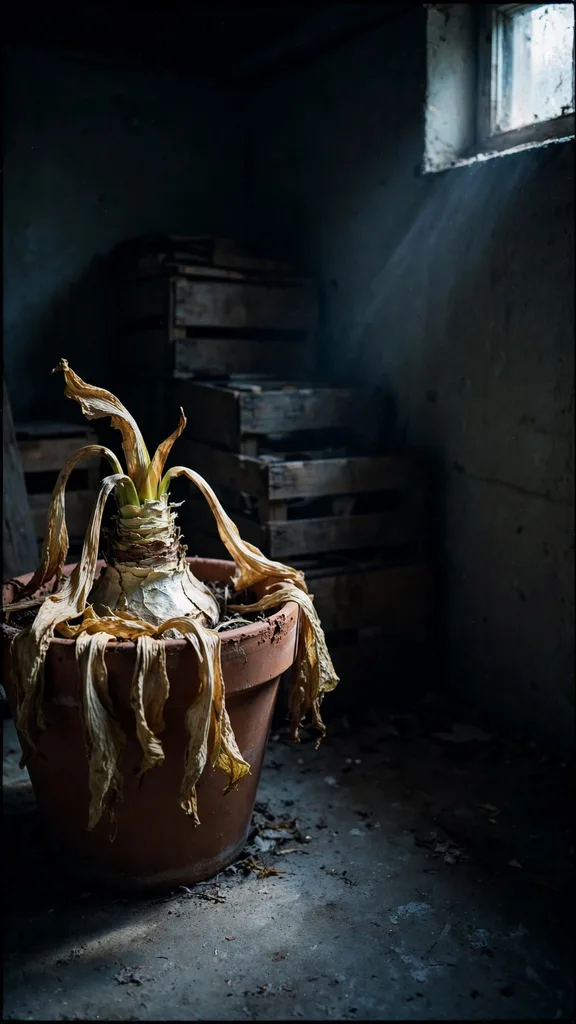
Store the dormant bulb at 10 to 13°C (50 to 55°F) for at least 8 to 10 weeks, with no water at all. This cool, dry rest is the requirement the bulb must meet before it can bloom again. Check the bulb every few weeks. It should stay firm and dry. A bulb that softens or smells sweet and rotten has failed, and it goes to the compost, not back into a pot.
Wake the Bulb With Water, Warmth and a Bright Window
When the rest is complete, water the bulb once and set the pot in a well-lit place at 21 to 24°C (70 to 75°F). Keep the mix moist, never wet, until growth appears. A green nose through the neck is the signal that the cycle has restarted. Flowers usually develop about 4 to 6 weeks after the rest ends, which is how a mid-November waking lands blooms on the Christmas table among the 100 Christmas garden ideas that fill the rest of the house.
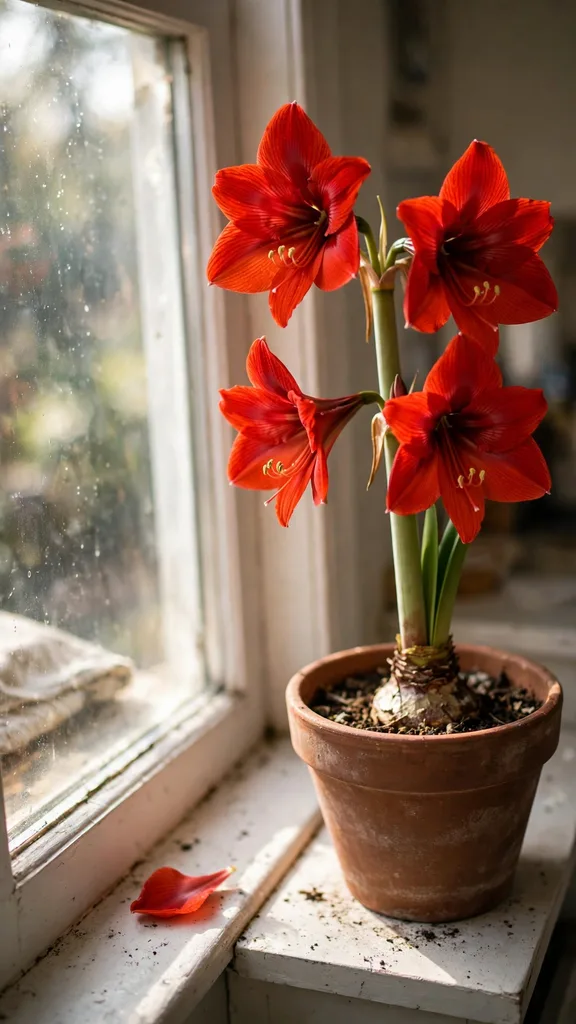
Count backwards to set your date. For flowers in the last week of December, end the rest in mid-November. For flowers in mid-January, hold the bulb cool two weeks longer. The rest is a dial, and the waking date is yours to set.
Can You Skip the Rest and Still Get Flowers?
Yes. The flowers arrive on the plant’s schedule instead of yours, because amaryllis does not strictly require a dormant period to rebloom. Kept green and growing through autumn in a bright, cool room at 10 to 13°C (50 to 55°F), a bulb can meet its cool requirement as a leafy plant. It flowers when it is ready. March, maybe.
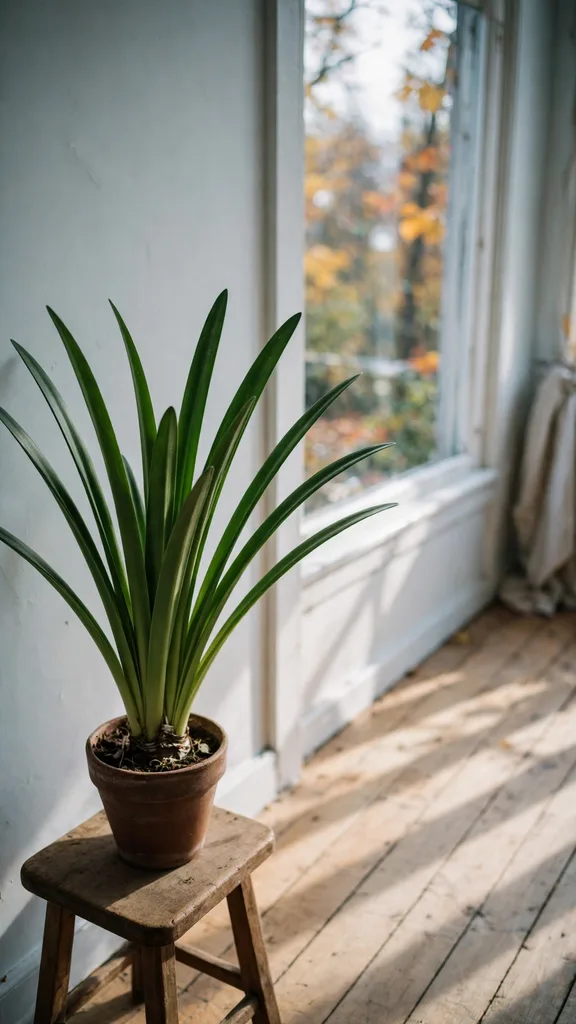
The trade is control. A rested bulb wakes on the day you water it, so its flowers land in a week you choose. If the flowers are the point of the exercise, rest the bulb.
Repot at Waking When Roots Have Filled the Pot
Amaryllis blooms best slightly potbound, so repotting is a rare job, not a yearly one. Repot when the bulb has swollen against the pot sides or roots circle thickly out of the drainage hole. The waking week is the moment: the bulb is dry, the roots are quiet, and fresh mix goes in before growth restarts.
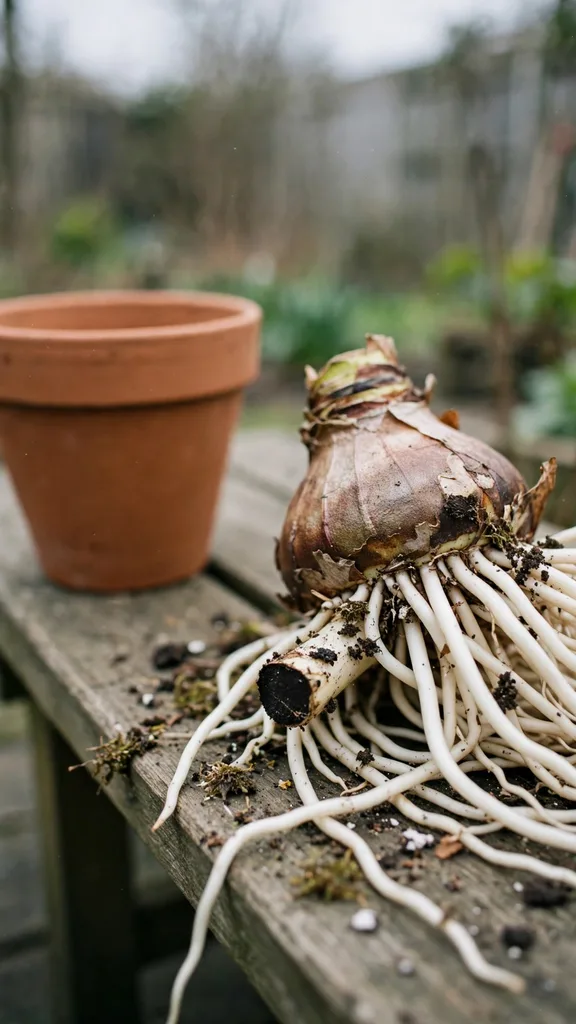
Move up one pot size only, keeping the same rule of about 2.5 cm (1 inch) of clearance around the bulb. Shake the old mix off the roots, trim any black, mushy roots with a clean knife, and reset the bulb with its top third above the new mix. A bulb buried deeper than that rots at the neck. Water once, then run the normal cycle.
Run the Whole Cycle on a One-Year Calendar
January is flowering and the start of leaf growth. February to May is feeding and the brightest window, while the bulb rebuilds. June to August is the outdoor season, pot sunk in a sunny bed, watered and fed. September brings the plant indoors and starts the drying.
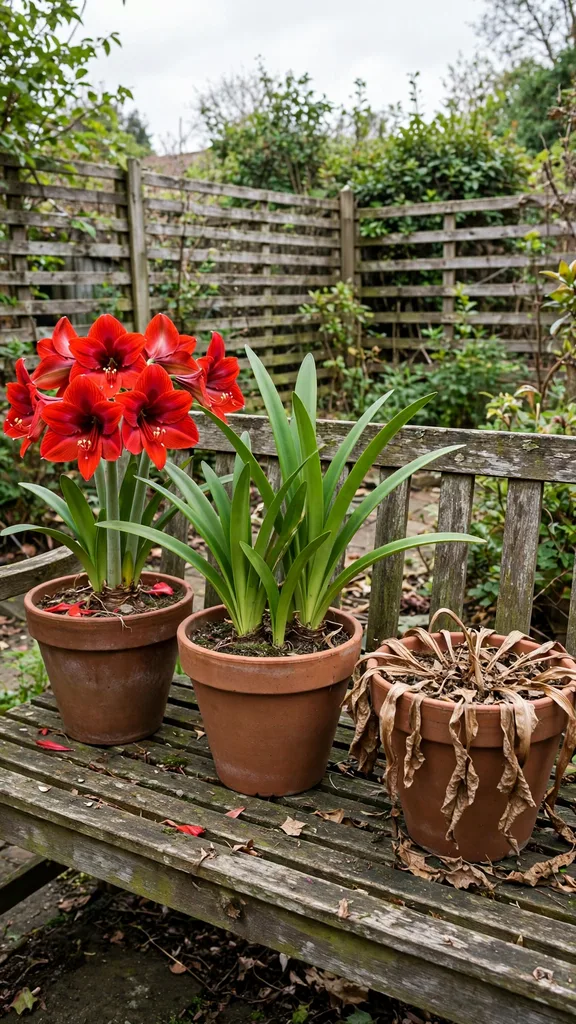
October and November are the rest, cool and dark and dry. December is the waking for a Christmas bloom, or the bulb stays cool for a January one. Written out like that, the year has no empty months. Every season is doing one job, and each job is what makes the next one possible.
Fix the Four Failures That Stop a Rebloom
Leaves and no flower stalk means the bulb never rebuilt its reserves or never got its cool rest. The fix is a full summer of sun and feeding, then the full 8 to 10 weeks cool and dry. There is no shortcut version of either half.
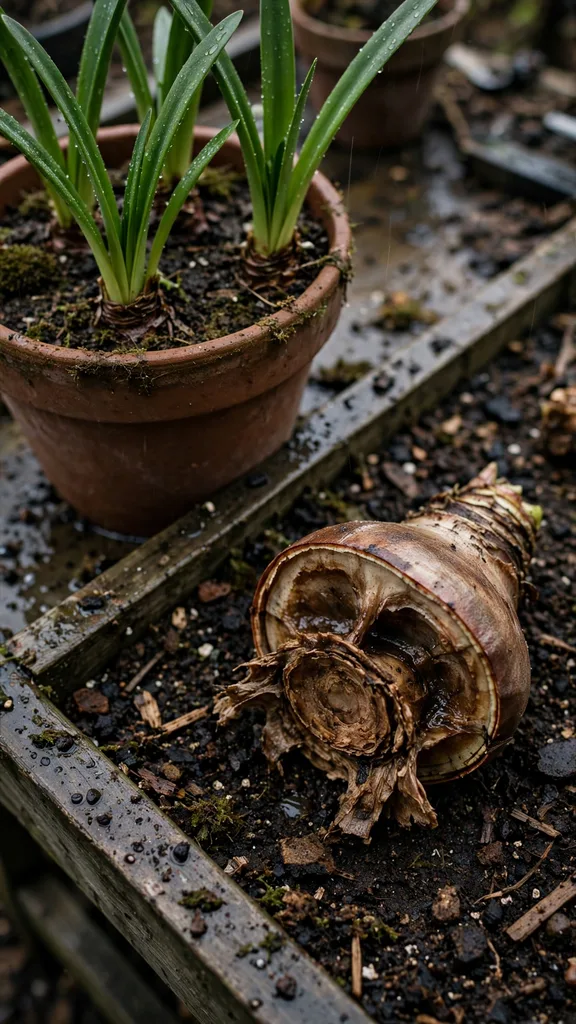
A stalk that flops has usually grown in one-sided light without turning, or the pot is too light for the plant. Stake it, tie it loosely, and move the pot somewhere the falling plant cannot take anything with it. Yellowing leaves during the growing season point at wet mix: check that the drainage hole is open and that the pot is not standing in a saucer of water. A soft, sweet-smelling bulb is rot, and rot at the base plate does not reverse. That bulb is finished.
Frequently Asked Questions About Amaryllis Care
A rested bulb usually flowers about 4 to 6 weeks after it is watered and moved into warmth and bright light. Count from the waking day, not the potting day. A bulb woken in mid-November flowers around Christmas. A bulb woken in mid-December flowers in late January, which is a fine result as long as it was the plan.
The bulb spent its stored food and never replaced it, or it never received its cool rest. Leaves without a stalk after a full season almost always trace back to a short summer: too little sun, no feeding, or leaves cut away early. Give the plant a full season of sun and feed every 2 to 4 weeks, then rest it 8 to 10 weeks cool and dry.
Cut each faded flower off at once so the plant never sets seed. Leave the green stalk standing while it yellows, because the stalk still makes food for the bulb. Once it has yellowed, cut it 2.5 to 5 cm (1 to 2 inches) above the bulb with a sharp knife, taking care not to nick the leaves beside it.
No. A dormant rest is not required for reblooming. A bulb kept growing as a green plant in a cool, bright room can flower again on its own schedule. The rest exists to control timing. Eight to 10 weeks at 10 to 13°C (50 to 55°F), dry and dark, lets you choose the waking day and therefore the flowering week.
A waxed bulb is sold as a single-season plant, with its roots removed and the bulb sealed so it needs no water or soil. Rescue is still worth one attempt. Peel off the wax and the wire, and if the bulb underneath is still firm, pot it like any other amaryllis bulb and run the same cycle of leaf growth and cool rest.