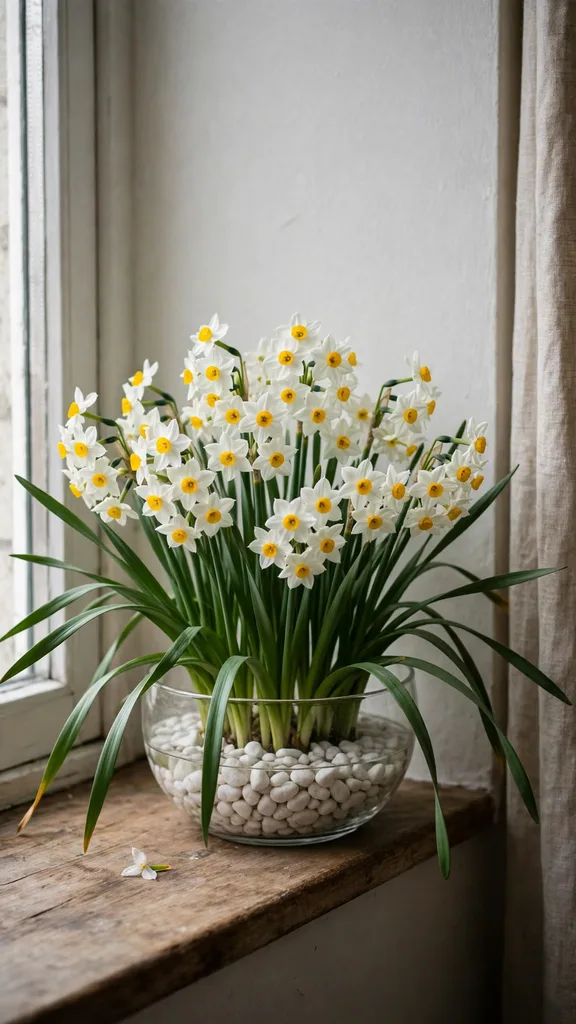
Paperwhites are the one Christmas bulb that asks for almost nothing: no weeks in a cold frame, no fridge, no dark cupboard. Set the bulbs on pebbles, add water to the base, and flowers open 3 to 5 weeks later, so a bowl planted in the second half of November is in bloom for Christmas week. I plant my first bowl around November 20 and a second one ten days later, which keeps fresh flowers coming from mid-December into the New Year. This guide covers the planting dates that land on Christmas, the pebble and water method, the research-backed trick that stops the stems flopping, and what to do with the bulbs once the flowers fade. Paperwhites are one part of the wider season covered by the Christmas garden ideas pillar.
| Item | Value |
|---|---|
| Bulb | Paperwhite narcissus (Narcissus papyraceus and tazetta types) |
| Chill needed | None |
| Weeks to bloom | 3 to 5 (up to 6 in a cool room) |
| Plant for Christmas Day | Mid-November to early December |
| Water level | Just touching the base of the bulbs |
| Light | Brightest window you have |
| Bloom life | 10 days to several weeks in a cool room |
| After flowering | Compost in cold climates, plant out in frost-free ones |
Count Back From Christmas Day to Find Your Planting Date
Paperwhites flower on warmth. A bowl in a heated living room at around 21°C (70°F) can open in 3 to 4 weeks, while the same bowl in a cool spare room takes 5 to 6. That spread is wide enough to miss Christmas in both directions, so work back from December 25 and match the date to the room the bowl will live in.
| Room | Weeks to bloom | Plant between |
|---|---|---|
| Warm living room, 20 to 22°C | 3 to 4 | November 27 to December 4 |
| Average room, 18 to 20°C | 4 to 5 | November 20 to November 27 |
| Cool room, 15 to 18°C | 5 to 6 | November 13 to November 20 |
If the date has already passed for your room, plant anyway and run the bowl warm: a week on top of a fridge or in an airing cupboard at the start pulls the schedule forward by several days. Amaryllis runs on a longer clock and needs its own calendar, set out in the amaryllis care guide published alongside this one.
Pick Plump Bulbs and Plant Them Close
Buy the largest bulbs on offer and squeeze each one gently before it goes in the basket. A paperwhite bulb should feel dense and heavy for its size, with dry papery skin and a firm base. Soft bulbs, bulbs with dark mold patches at the neck, and bulbs that feel light and hollow have usually dried out or started to rot in storage, and they flower poorly or not at all.
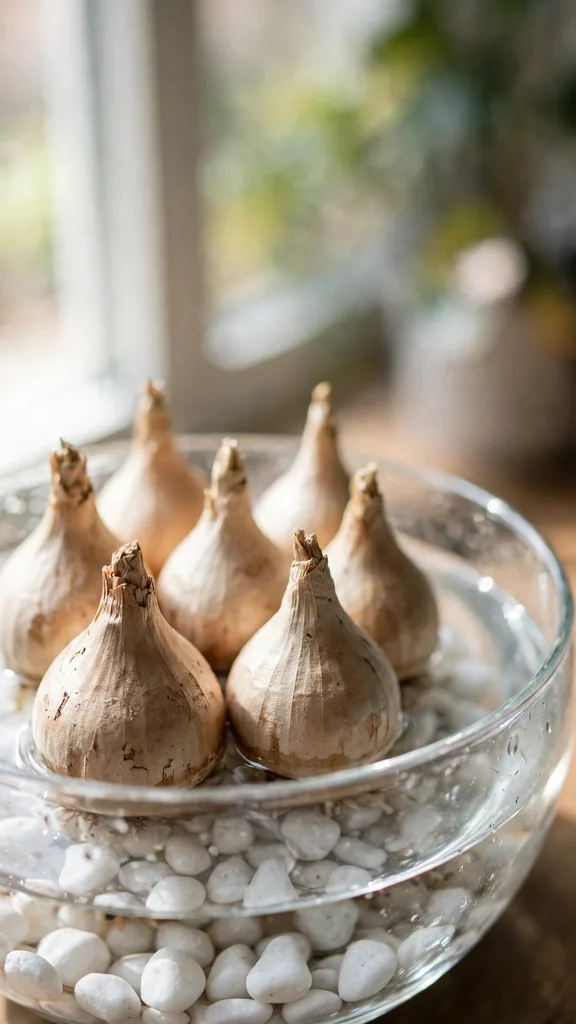
Plant them crowded. Paperwhites look best in a dense group, and the bulbs hold each other upright as the stems grow. Leave about 2.5 cm (1 in) between bulbs so the roots have room to work down into the pebbles. A bowl 15 to 20 cm (6 to 8 in) across takes five to seven bulbs, which is enough for a full display from a single planting.
Force Them on Pebbles With Water at the Base Only
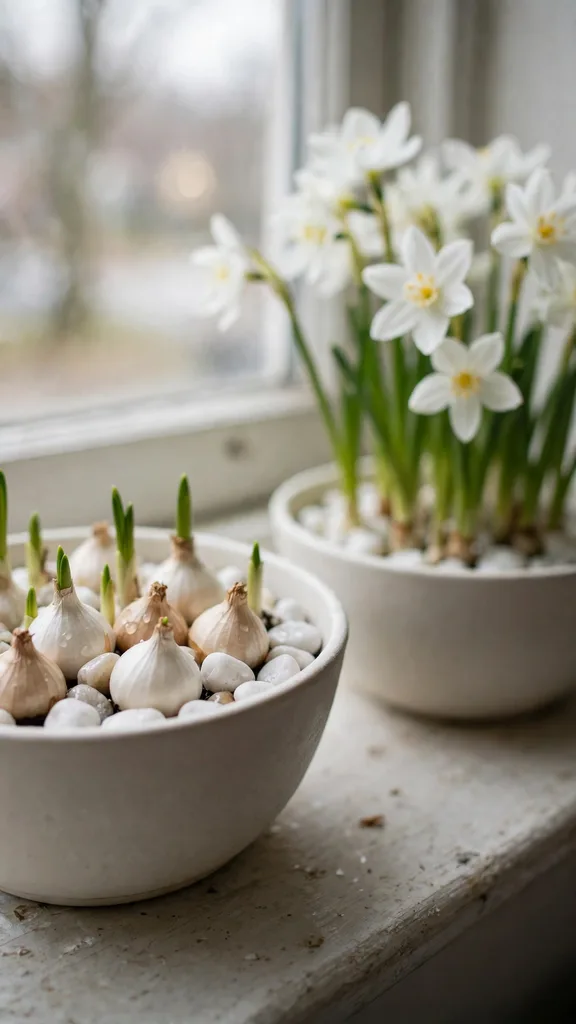
Use a bowl, vase, or low pot with no drainage hole, at least 10 cm (4 in) deep. Fill it two-thirds full with washed pebbles, gravel, or glass beads, set the bulbs on top with the pointed end up, then tuck more pebbles around them until they stand firm with the top half of each bulb clear. Wisconsin Horticulture’s forcing guide gives the water rule that decides whether this works: add water until it just reaches the bottoms of the bulbs, and keep it there. If water touches the bulb itself, the bulb rots.
Soil works too, and it is the sturdier option for a tall display. Use a pot with a drainage hole and ordinary potting mix, set the bulbs with their noses at the surface, and water it like a houseplant. Soil-grown bowls flop less and need less topping up, while pebble bowls show the roots and suit a glass vase on a table. The flowers are the same either way.
Root Them Cool, Then Give Them the Brightest Window
Roots come before shoots. Put the planted bowl somewhere cool and dim, 10 to 13°C (50 to 55°F), for the first week or two while the roots grow down into the pebbles. A garage bench, a cool porch, or the floor of a spare room all work. Rooting cool first gives the plant a base before the stem starts, and bowls rooted warm from day one grow taller and weaker.
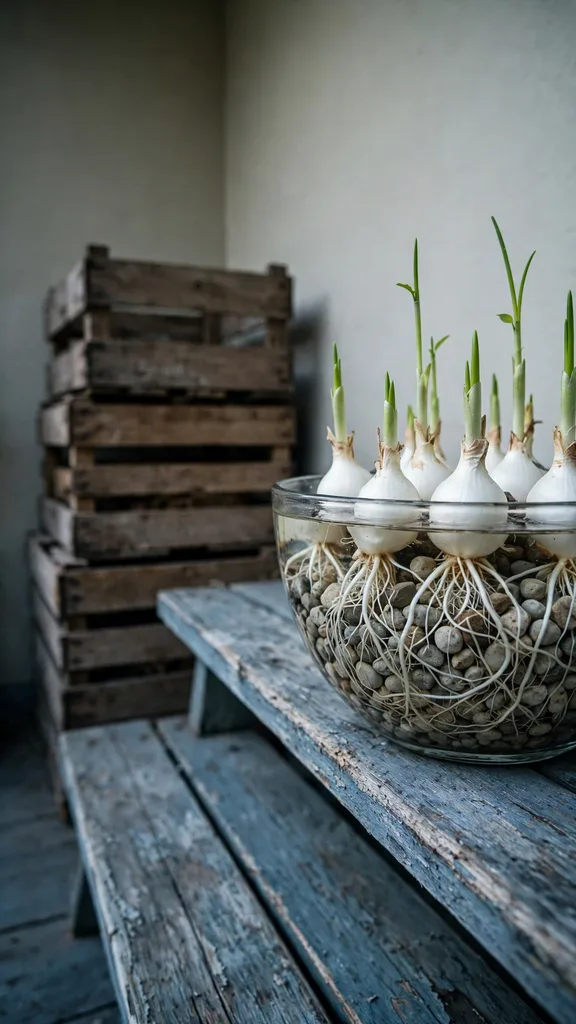
Once the green shoots stand 3 to 5 cm (1 to 2 in) tall, move the bowl to the brightest window you have and keep the room as cool as the house allows. Light is the second brake on height: paperwhites stretch hard toward a dim window and stay compact in full sun. Turn the bowl a quarter turn every few days so the stems grow straight instead of leaning into the glass.
Keep Stems Short With the Cornell Alcohol Mix
Even in good light, paperwhites in a warm room can reach 45 to 50 cm (18 to 20 in) and flop just as the flowers open. The fix with research behind it comes from the Cornell Flower Bulb Research Program’s paperwhite trials, which found that starting the bulbs in plain water, then pouring the water off once the roots are growing and the shoot stands 2.5 to 5 cm (1 to 2 in) above the bulb and replacing it with a solution of 4 to 6 percent alcohol (1 part 40 percent spirit such as gin or vodka to 7 parts water, or 1 part 70 percent rubbing alcohol to 10 or 11 parts water) grows plants one-third to one-half shorter, with flowers the same size, the same fragrance, and the same life. Use that solution for every top-up from then on.
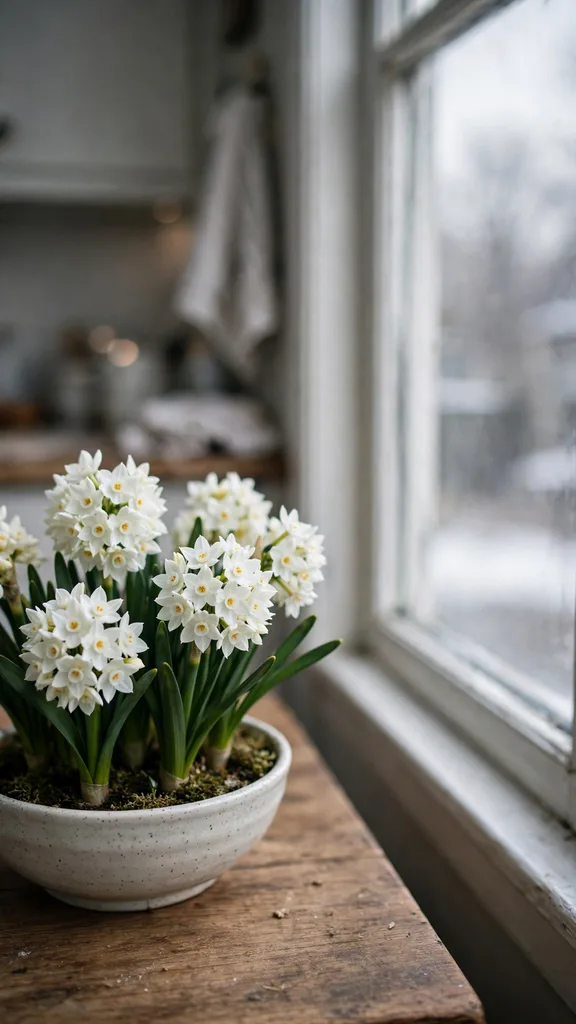
Two limits matter. Never use beer or wine, because their sugars feed mold and harm the plant. And never mix the solution stronger than the range above, because too much alcohol damages growth instead of steadying it, and a far stronger mix can kill the plant outright.
Stake and Turn Bowls That Still Lean
A bowl that missed the alcohol window or sits in a warm room can still be saved. Push three or four short twiggy stems, such as birch or red dogwood prunings, into the pebbles around the edge of the bowl and loop a single strand of twine or raffia around the whole group at two-thirds height. The stems disappear among the leaves and the loop holds the flower stalks as one bunch.
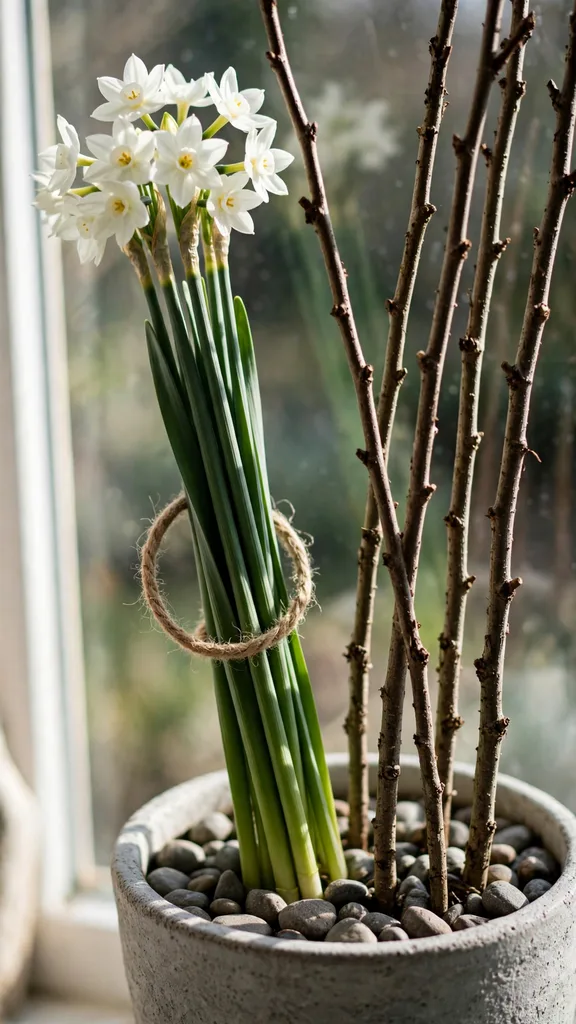
Keep turning the bowl. Most leaning starts as light-seeking, and a quarter turn every two or three days straightens a young display within a week. If one stalk has already folded at the base, cut it and use it in a small vase indoors: paperwhite flowers last several days in water, and removing the stalk stops it dragging the rest of the bunch sideways as it falls.
Move Blooming Bowls Cool to Stretch the Flowers
Heat spends the flowers. A bowl in full bloom beside a radiator or in a sunny south window can finish in ten days, while the same bowl in a cool spot out of direct sun holds its flowers for several weeks. Once the first buds open, move the display to the coolest bright place you have: a porch table, a cool hallway, or a windowsill in an unheated room.
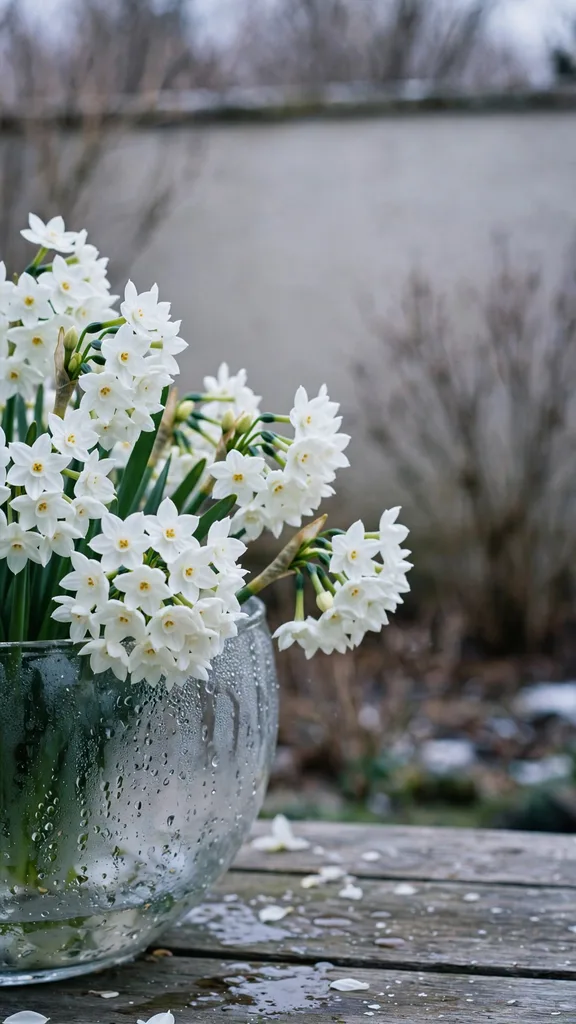
Keep the water topped up to the base of the bulbs for as long as the flowers last, and pick off each spent flower cluster as it browns so the bowl stays clean. Cool nights do the most good, so a bowl that comes in for the evening table and goes back to a cold porch overnight can still be presentable in the first week of January.
Plant a Fresh Bowl Every 10 Days for a Longer Season
One bowl gives you one flush. A row of bowls planted in sequence gives you flowers from early December to February, and the planting takes five minutes each time. Buy all the bulbs at once while the best stock is in the shops, keep the unplanted ones in a paper bag somewhere cool and dry, and set a fresh bowl every 10 days from mid-November to early January.
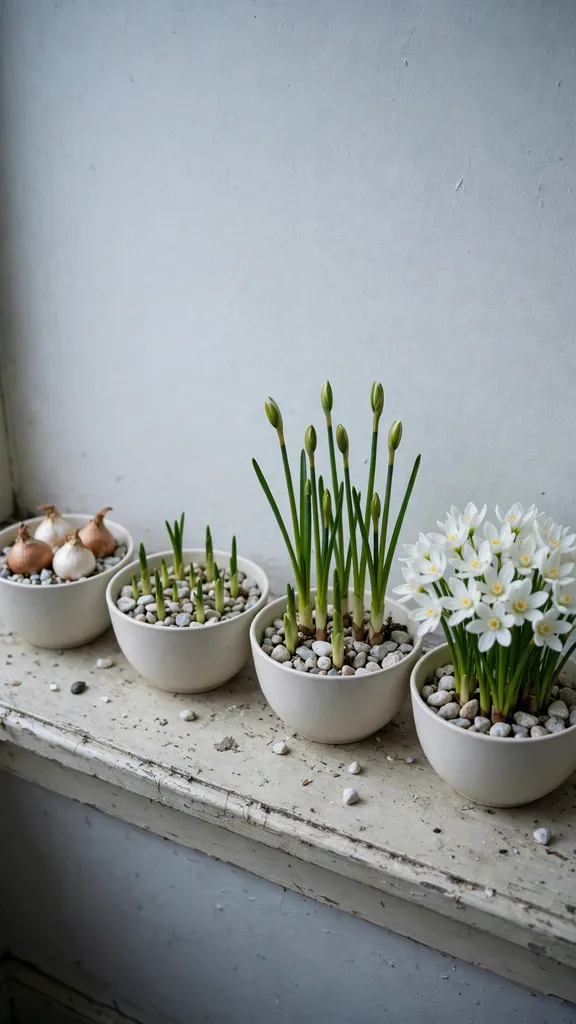
Succession planting also covers failures. If one bowl rots, stretches, or flowers a week early for a party, the next bowl in the line is already coming. Label each bowl with its planting date on a strip of tape under the base, because by the third bowl nobody remembers which one went in first, and the dates tell you which room speed to trust next year.
What to Do With the Bulbs After the Flowers Fade
Forced paperwhites spend everything they have on that one indoor display. The bulbs come out of flowering exhausted, with soft, shrunken sides, and they almost never build up enough strength to flower well indoors a second time. Treat the Christmas display as the bulb’s one performance and plan on fresh bulbs next year.
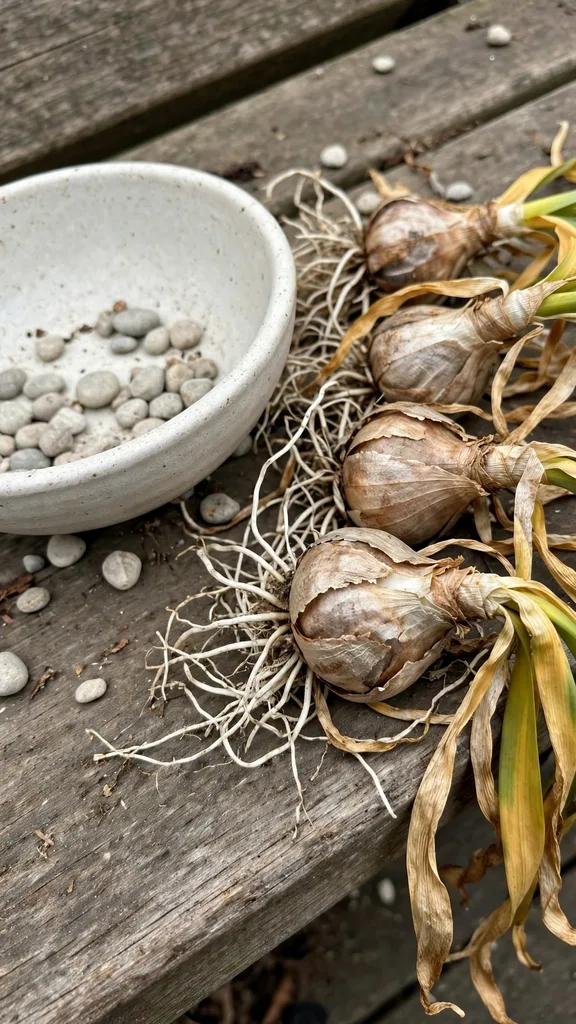
In frost-free gardens, zones 8 to 11, the spent bulbs can go outside once the leaves have yellowed: plant them 10 cm (4 in) deep in a sunny bed and they will settle in and flower in the garden in later winters. In colder climates the bulbs are not hardy, so compost them with the pebbles washed and kept for next year’s bowls. Cut the flower stalks off at the base as they finish, but leave the leaves on any bulb you plan to plant out, because the leaves feed whatever strength is left back into the bulb.
Fix Cloudy Water, Mold and Bulbs That Sit Still
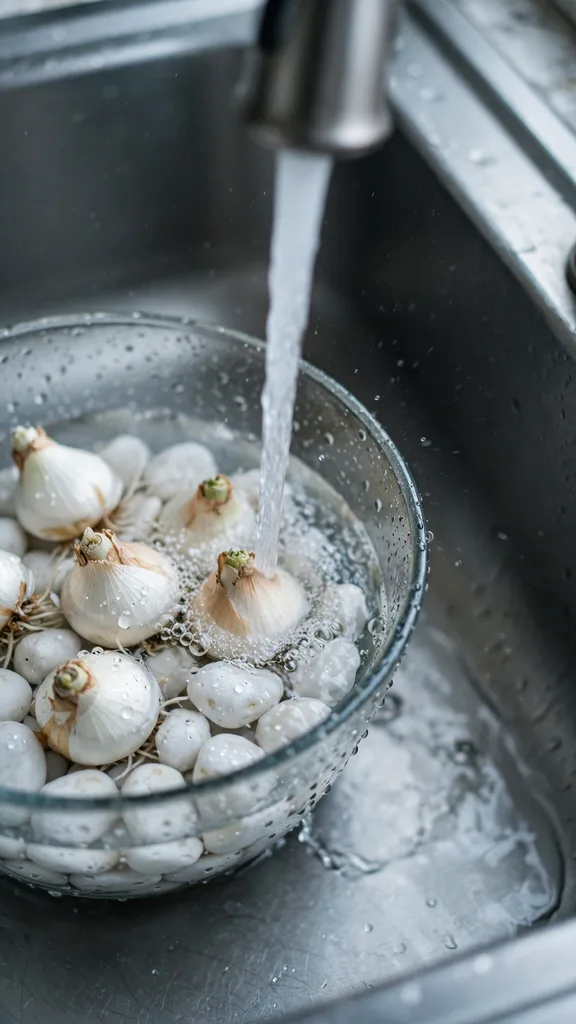
Cloudy water with a sour smell means bacteria are building up in the bowl. Tip the water out, rinse the pebbles and the roots under a tap, and refill to the base of the bulbs. A bowl that clouds twice usually sits in too warm a spot, so move it somewhere cooler and change the water weekly from then on.
White or blue mold on a bulb neck means that bulb is rotting. Lift it out before the rot reaches its neighbors, check the water level is below the bulb bases, and space the remaining bulbs so air moves between them. A bulb that sits still for two weeks while its neighbors grow was usually dead on arrival: replace it with a spare from the succession bag and the display fills in within days.
Frequently Asked Questions About Paperwhites for Christmas
No. Paperwhites come from mild Mediterranean winters and carry no chilling requirement, which is what makes them the easiest Christmas bulb to force. Tulips, hyacinths, and garden daffodils need weeks of cold before they will flower indoors, but a paperwhite bulb goes from a dry bowl of pebbles to open flowers on warmth, water, and light alone. Buy, plant, and water the same day.
Count back from December 25 by the warmth of the room, using the planting table in the first section above: warm rooms run fastest and plant latest, cool rooms run slowest and plant earliest, and most homes plant in the second half of November. When in doubt, plant a second bowl ten days after the first, so one of the two lands close to the day.
Yes. A pot with a drainage hole and ordinary potting mix works just as well, with the bulb noses set at the surface and the mix kept evenly moist. Soil holds the bulbs more firmly, so tall displays flop less and need less staking, and the pot needs watering less often than a pebble bowl. Pebbles win only on looks, when you want roots showing through a glass vase.
Warmth and low light stretch the stems until the flower heads pull them over. Move the bowl to the brightest, coolest spot you have, turn it every few days, and loop twine around the group for support. For the next bowl, switch to the dilute alcohol mix described in the Cornell section above once the shoots are up and growing, which keeps the plants much shorter and steadier.
No. Paperwhites, like all narcissus, are toxic to cats and dogs, and the bulb is the most poisonous part. Keep bowls on a table or shelf pets cannot reach, pick up fallen leaves and petals rather than leaving them on the floor, and store unplanted bulbs in a closed cupboard. A pet that chews a bulb needs a vet the same day.