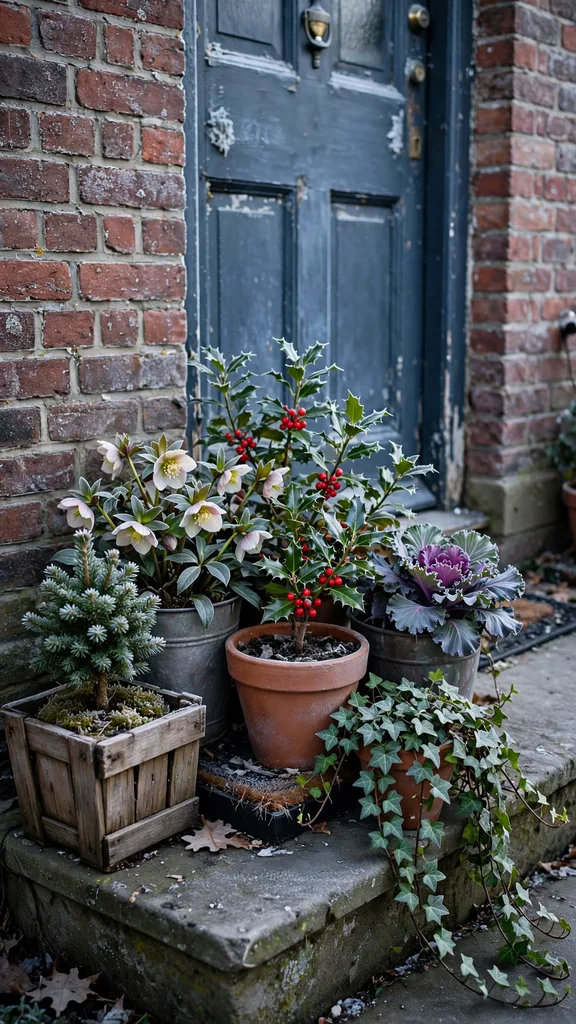
A winter container lives a harder life than any plant in the ground: its roots sit in a small block of compost that freezes solid, thaws fast, and dries in wind, all in the same week. This list gathers 45 winter container ideas in two halves, planting recipes that flower and berry through the cold, and the frost-survival techniques that keep pots and plants alive to spring. The recipes come first because they are the pleasure; the techniques are woven through because they are the reason the pleasure lasts.
The governing facts are simple. A pot freezes harder than a border, so winter containers need bigger pots, hardier plants, and water in dry spells even in January. I cluster my own pots against the house wall every November and work through them with a watering can on mild days, which is the whole system in one sentence: shelter, company, and water.
| Pot Job | Recipe | Frost Trick |
|---|---|---|
| Doorstep pair | Evergreen and hellebore | Frost proof pots on feet |
| Shady door | Skimmia and heather | House wall shelter |
| Color fast | Kale and pansy | Cluster and mulch |
| Specimen | Dwarf conifer and wintergreen | Double pot insulation |
| Scent at the door | Sweet box and daphne | Porch shelter |
| Spring in waiting | Bulb lasagna | Sink into a bed |
1. Evergreen and Hellebore, the Classic Winter Pot
Build the classic on three layers: a small evergreen at the back for height, hellebores in the middle for December flowers, and trailing ivy at the rim. It is the recipe every other pot here varies, because it works in sun or shade, at a door or on a patio.
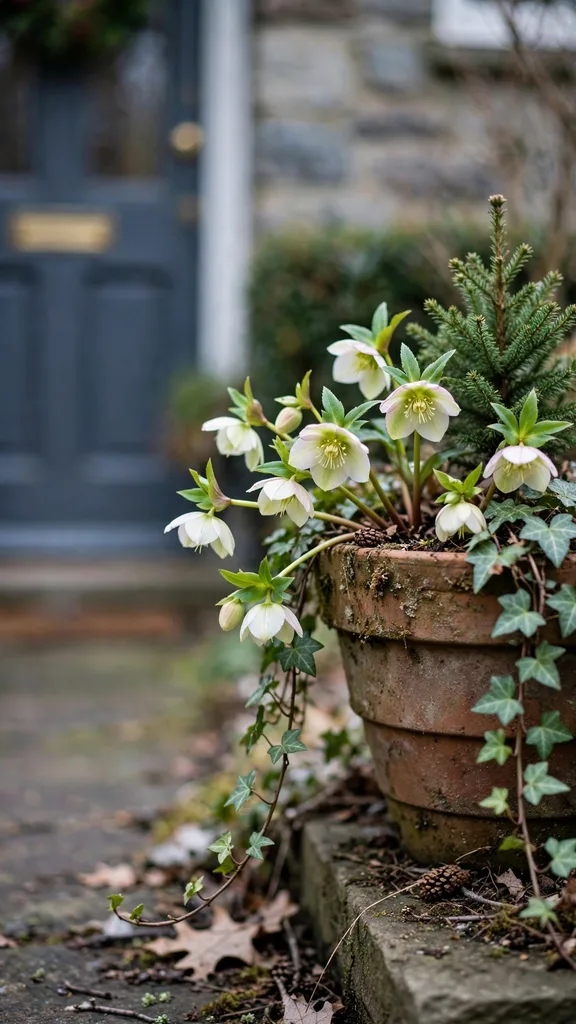
Use a pot at least 14 inches across so the roots have insulation in numbers. The hellebores flower through the coldest weeks, the evergreen holds the shape, and the whole pot plants out into the border in spring if you let it.
2. Skimmia and Heather for the Shady Door
Pair skimmia’s red buds with winter heather’s flowers in a pot for the door that never sees sun. The NC State Extension Plant Toolbox entry for Erica carnea profiles the spring heath as a winter bloomer for well-drained soil, and its flowers open from late autumn onward in pinks and whites.
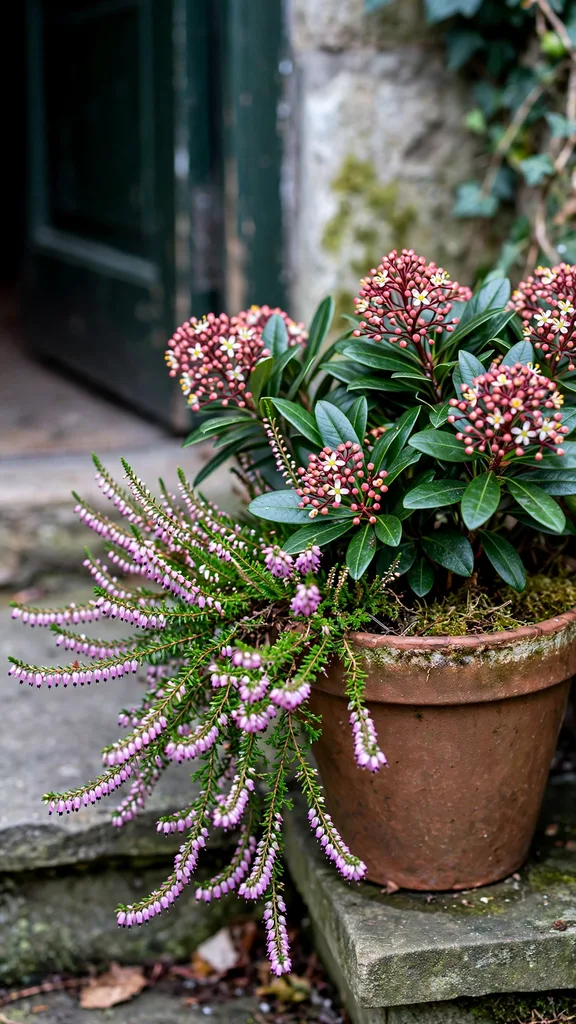
Both plants want acidic, sharply drained compost, so they share a pot happily. On a shady doorstep this recipe blooms while the sunny pots are still thinking, which is the north-facing door’s revenge.
3. Ornamental Kale and Pansy Color Pot
Plant ornamental kale at the center and winter pansies around it for the fastest color pot in winter: the kale’s rosette deepens purple with every frost and the pansies flower in every mild spell between.
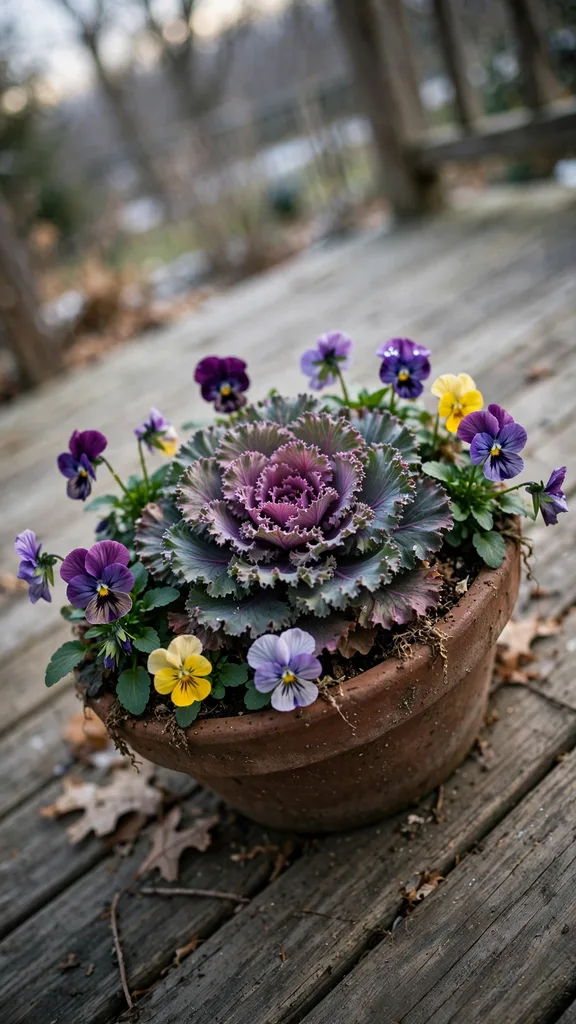
This is the budget recipe, bedding plants at bedding prices, and it holds from November to March with deadheading and water in dry weeks. When the kale bolts in spring, the pot is free for the first summer planting.
4. Dwarf Conifer and Wintergreen Specimen Pot
Give a dwarf conifer a pot of its own with wintergreen planted at its feet, red berries against dark needles. A specimen pot is a garden in one container: one tree, one ground cover, nothing else competing.
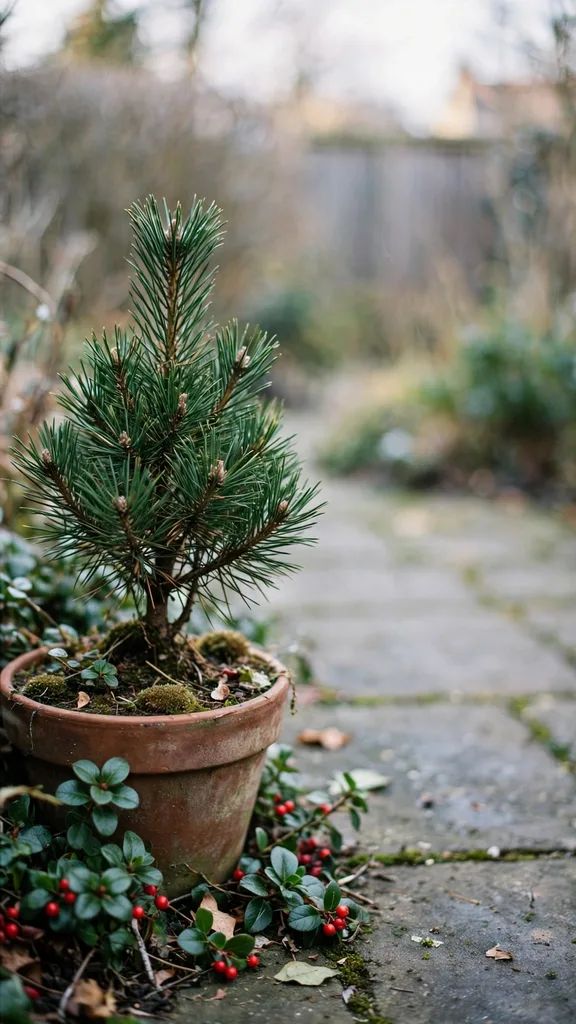
Choose the pot for the tree’s third year, not its first, and the conifer will not need disturbing until then. Wintergreen wants the same acidic, moist soil, so the pairing is as practical as it is handsome.
5. Holly and Ivy, the Traditional Pot
A small holly with berries, underplanted with ivy that trails over the rim, is the traditional winter pot, the one that looks like a Christmas card without trying. The holly’s gloss and the ivy’s lobes are texture enough; the berries are the color.
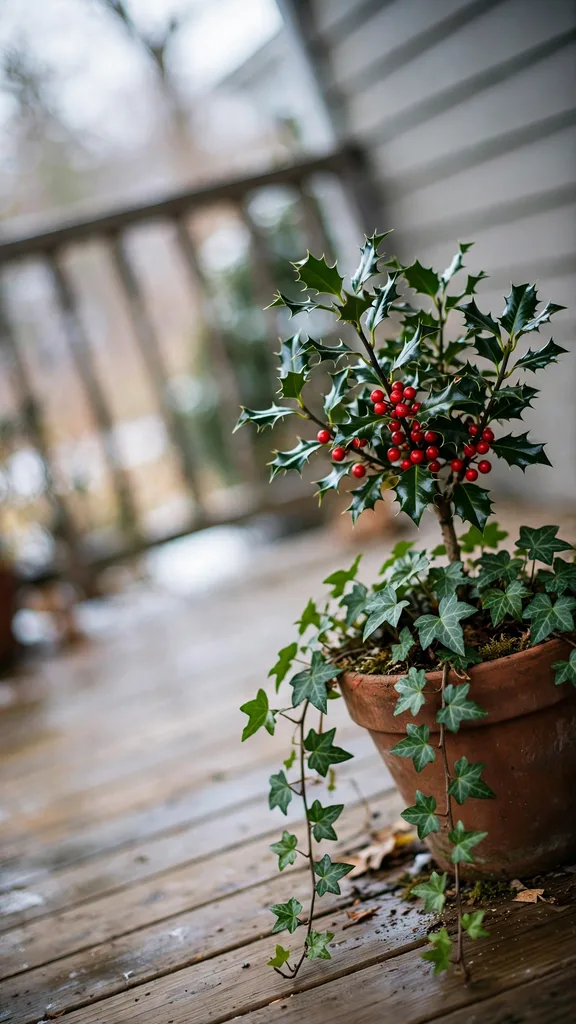
A berrying holly needs its pollinator in the garden, so a pot that berries one year may not the next unless the bees found both. The pot lives happily on a porch for years with a spring feed and a summer trim.
6. Cornus Stems and Evergreen Drama Pot
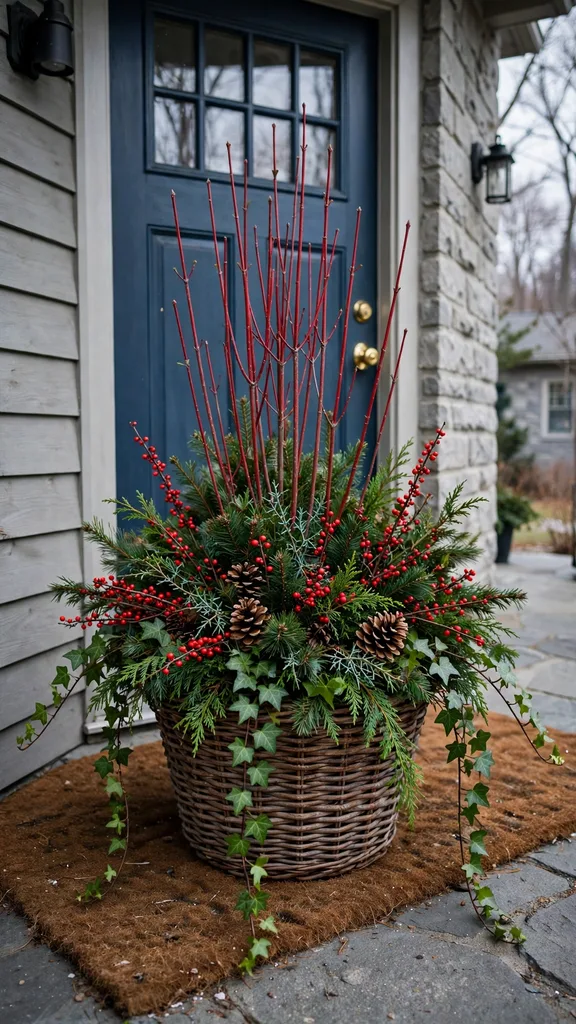
Plant a red or yellow stemmed cornus in a large pot with dark evergreen underplanting, and the bare colored stems become the winter display, lit by low sun like stained glass. Cut the stems hard each spring and the pot renews its drama annually.
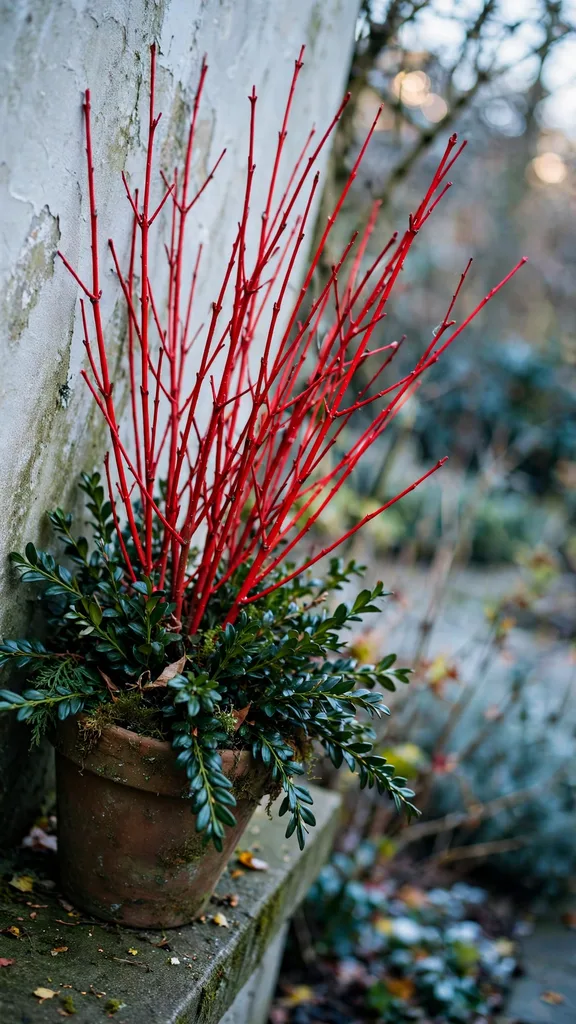
Cornus in a pot drinks more than most shrubs; keep it watered even in winter. The stems’ color is brightest on young wood, so the spring cut is the whole point of the plant.
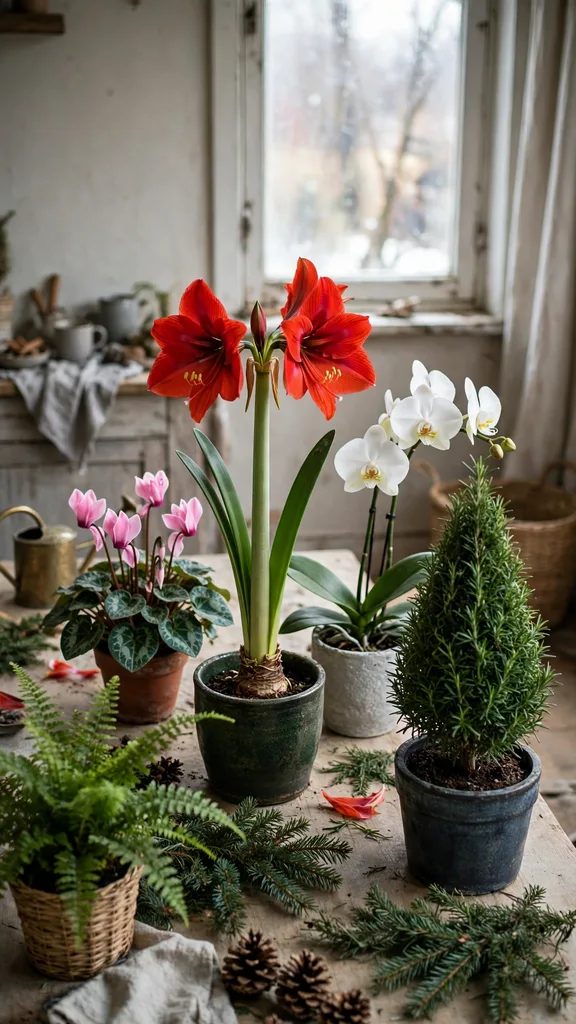
7. Hardy Cyclamen and Snowdrop Pot
Plant hardy cyclamen, Cyclamen coum, with snowdrops in a shallow pot for the connoisseur’s winter recipe: pink and white cyclamen flowers in the coldest weeks, snowdrops nodding beside them, both from autumn-planted corms and bulbs.
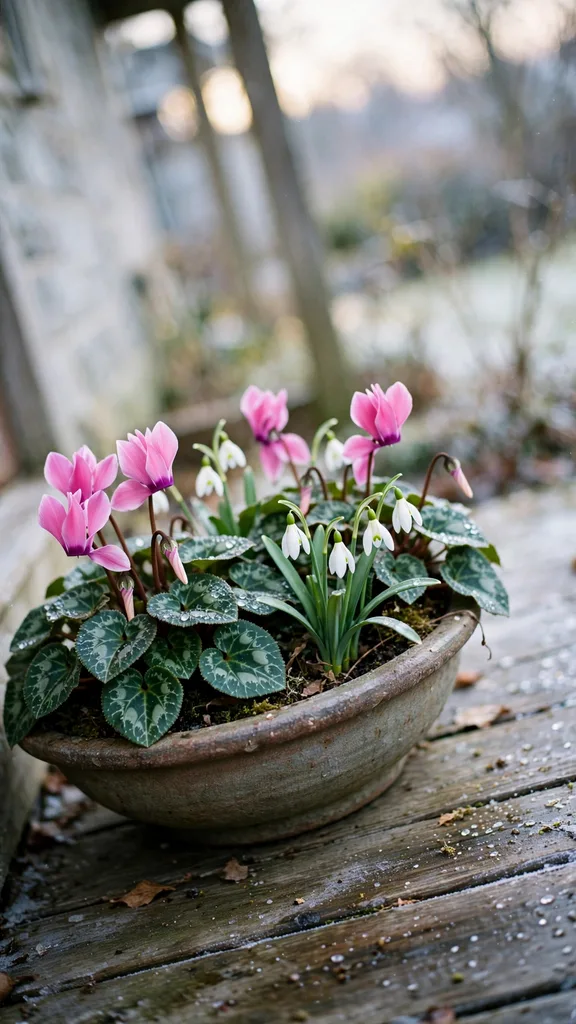
The pot wants a cold spot and sharp drainage; a porch or an unheated frame suits it. This recipe asks for patience in autumn and pays in February, when it is the most admired pot on the property.
8. Birch Stems and Fern Winter Pot
Stand white birch stems in a pot of evergreen ferns for a woodland winter recipe in white and green. The stems are cut, not planted, pushed into the compost among the ferns, and the pot reads as a piece of winter forest floor.
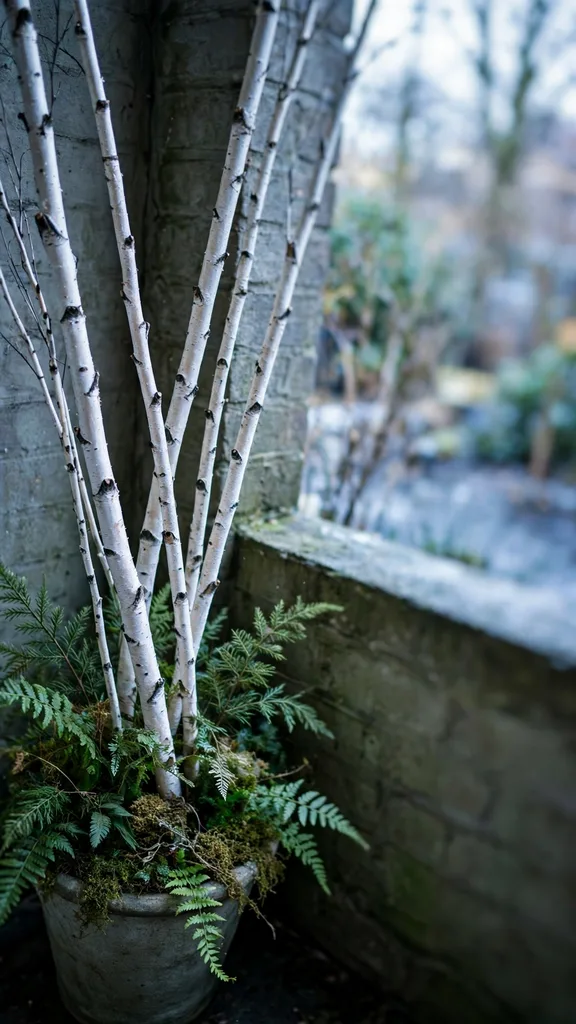
Evergreen ferns, hart’s tongue and soft shield, hold their fronds through frost. Replace the birch stems when they dull, which takes a year, and the ferns carry on. It is the shade recipe with the lightest touch in this list.
9. Winterberry and Silver Foliage Pot
Plant a dwarf winterberry with silver foliage plants, dusty miller or silver heuchera, for a pot of red berries on silver leaves. The NC State Extension Plant Toolbox entry for Ilex verticillata profiles winterberry as the deciduous holly whose berries carry the winter display after its leaves fall.
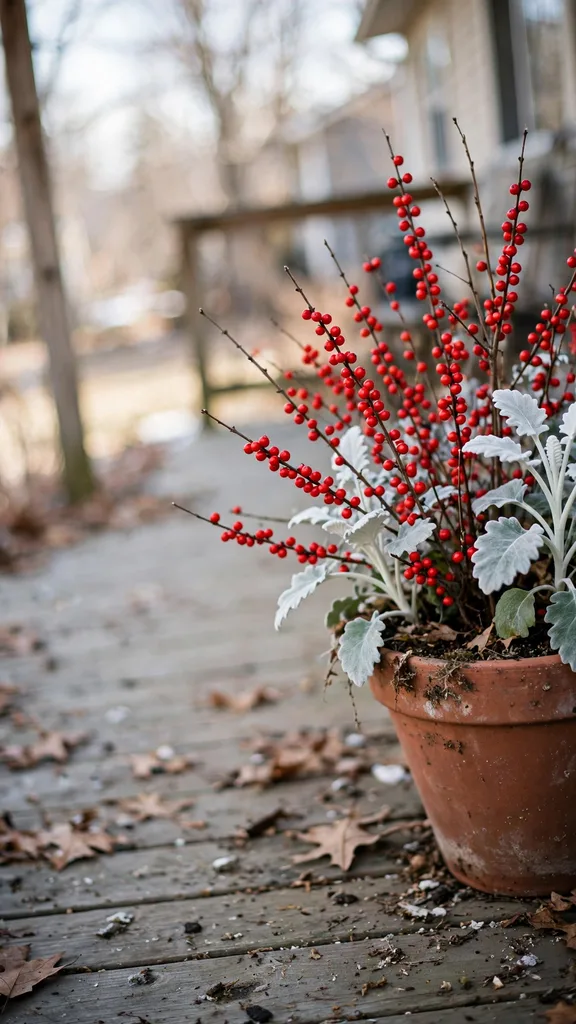
Winterberry wants a male pollinator nearby for berries and moist, acidic soil. In a pot, keep it watered and set the whole pot where the low sun finds the berries; silver and red is a combination that needs light to perform.
10. The Herb Pot That Winters Outdoors
In mild zones, a pot of rosemary, sage, and thyme winters outdoors and keeps seasoning the cooking while it decorates the doorstep. The herbs’ gray and green foliage with the rosemary’s structure make a pot that earns its place twice daily.
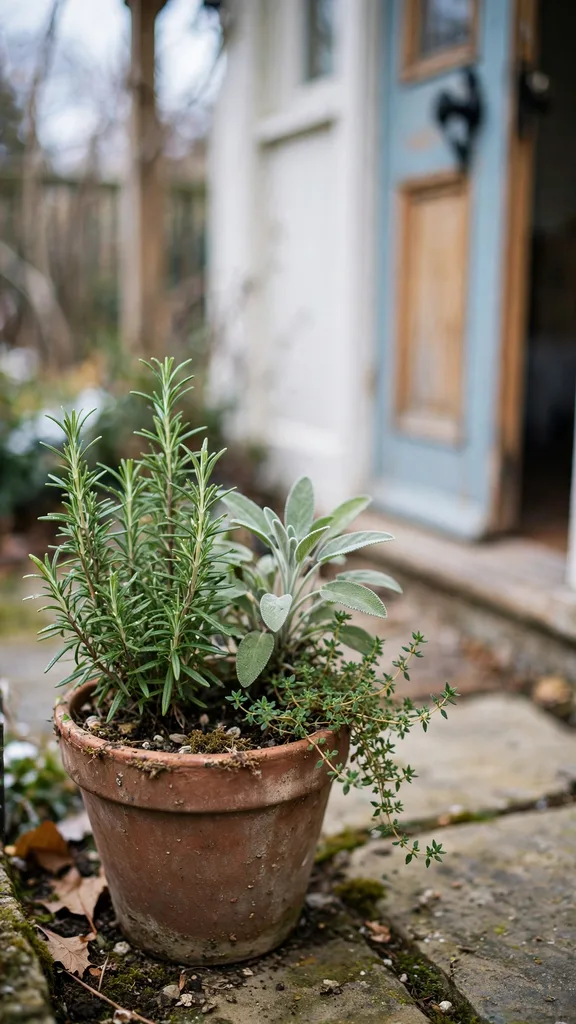
Sharp drainage is the whole secret; winter wet kills more herbs than winter cold. Set the pot in the sunniest sheltered spot, under the eaves if your winters are wet, and harvest lightly through the dark months.
11. Double Potting: A Pot Inside a Pot
Set the planted pot inside a larger empty pot and pack the gap with straw, leaves, or compost, and the roots gain an insulating jacket against freeze and thaw. Double potting is the oldest winter container trick and still the most reliable for prized plants.
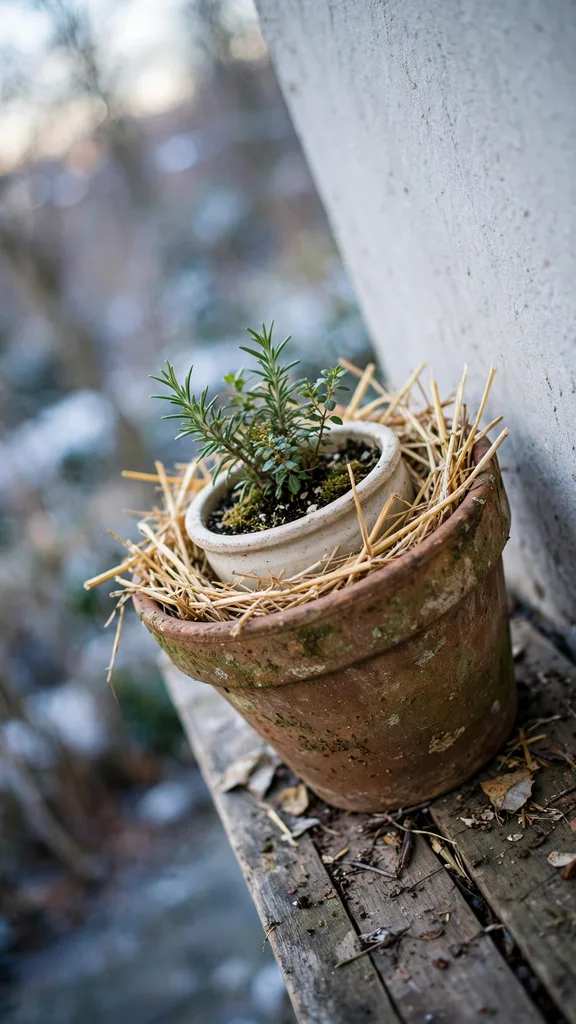
The outer pot can be the handsome one and the inner the nursery pot, which makes spring repotting a lift rather than a dig. Refresh the packing each autumn; it composts slowly into the job it is doing.
12. Wrap the Pot: Burlap, Bubble Wrap, and Straw
Wrap a vulnerable pot in bubble wrap or burlap stuffed with straw before the hardest weather, tying it like a parcel. The wrap protects the roots and the pot itself, since most winter pot losses are the container cracking, not the plant freezing.
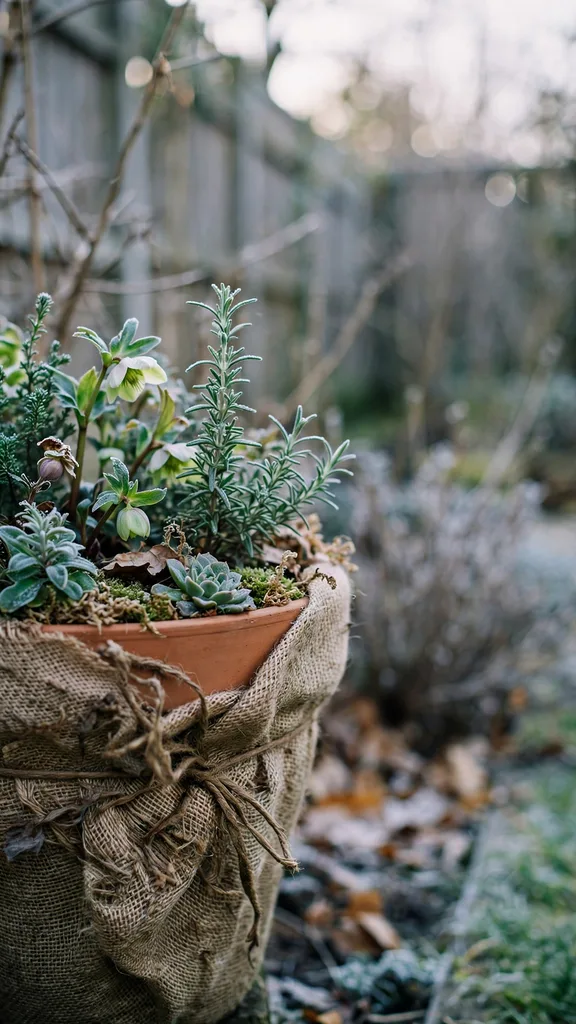
Wrap the pot, not the plant, and leave the top open for rain and air. A wrapped pot is not beautiful, so wrap the back pots and keep the doorstep pair in frost proof containers instead, which is the next division of labor in this list.
13. Cluster the Pots Together
Group winter pots tightly together against a wall and they share warmth, shelter each other from wind, and lose less heat than any pot standing alone. A cluster of pots freezes slower and thaws gentler, which is what roots actually need.
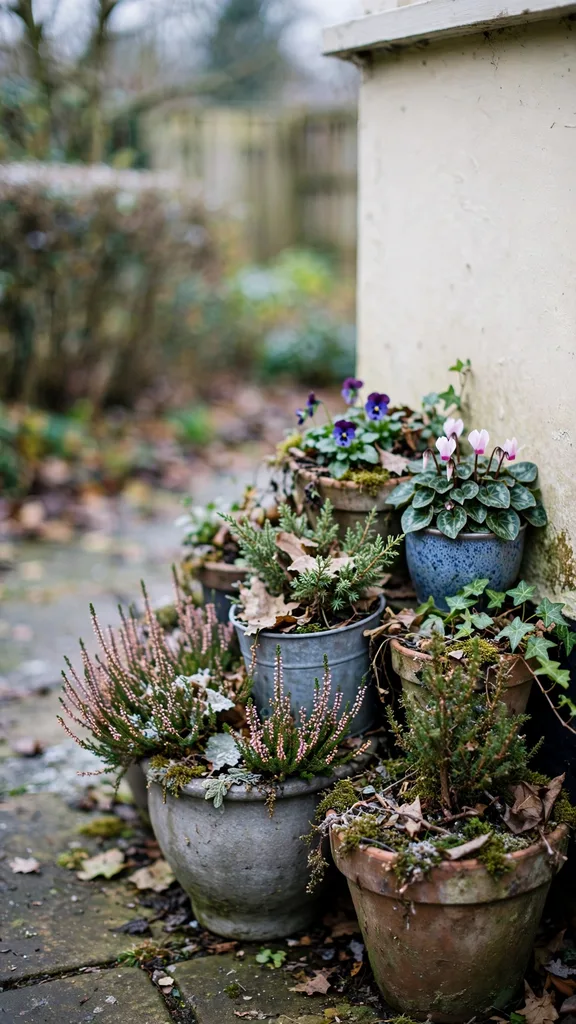
Clustering also makes watering one trip instead of six. Put the hardiest pots on the cluster’s exposed edge and the tender ones in its heart, the way plants arrange themselves in a border when left alone.
14. Sink the Pot Into a Bed or Mulch Pile
Bury a pot to its rim in a garden bed or a mulch pile for the hardest weeks and the soil itself insulates the roots, the cheapest frost protection there is. The plant looks planted, because for winter purposes it is.
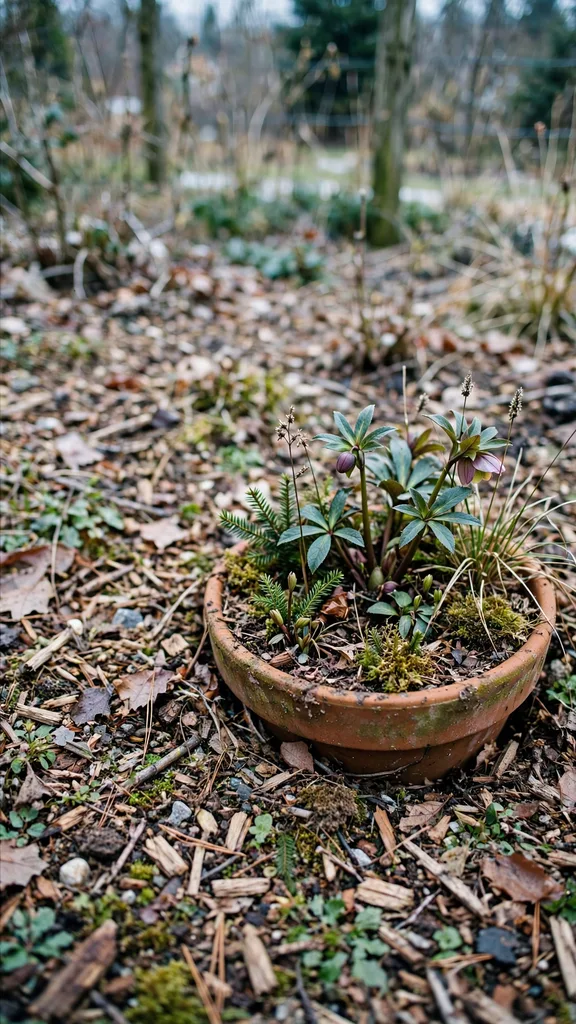
Sink pots in late autumn before the ground freezes and lift them when the worst passes. A sunken pot needs no watering in a normal winter; the bed does the work. This is the method for the pots you cannot move and cannot lose.
15. Choose Frost Proof Pot Materials
Wood, metal, fiberglass, and good plastic survive freezing compost; porous clay and cheap ceramic crack as the water in them freezes and expands. Choose the container for January, not for the garden center in October, and the winter losses halve.
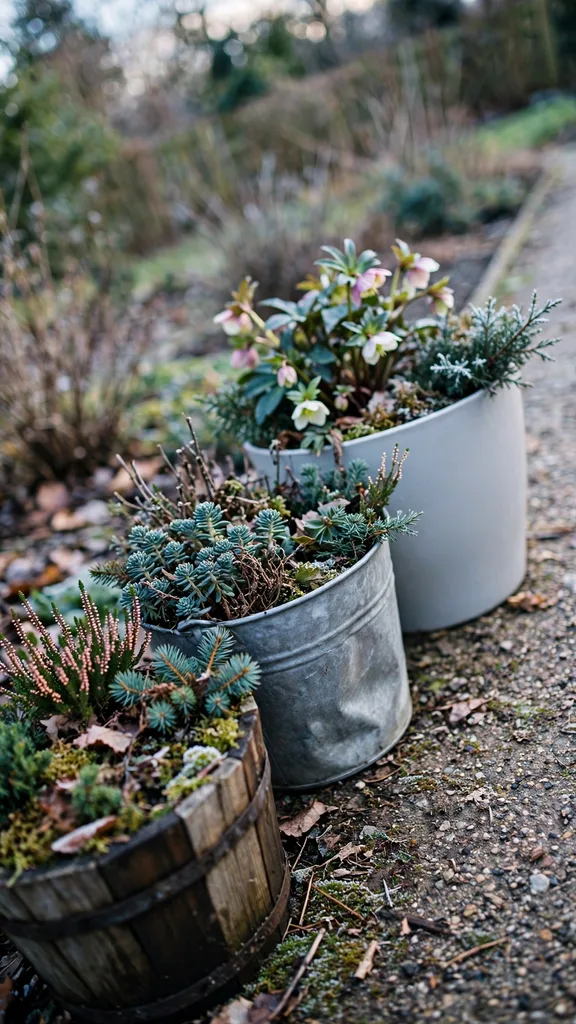
A frost proof pot costs more once and less forever. Keep the clay for summer annuals that empty before frost, and let the winter collection live in materials that shrug at ice. The pot is the plant’s house; build it for the worst month.
16. The Clay Pot Problem
Terracotta’s pores drink water, and that water freezes, expands, and flakes the clay apart layer by layer. A terracotta pot can survive winters in a dry, sheltered spot and die in one wet freeze standing in the open, which is why grandmothers kept theirs under the eaves.
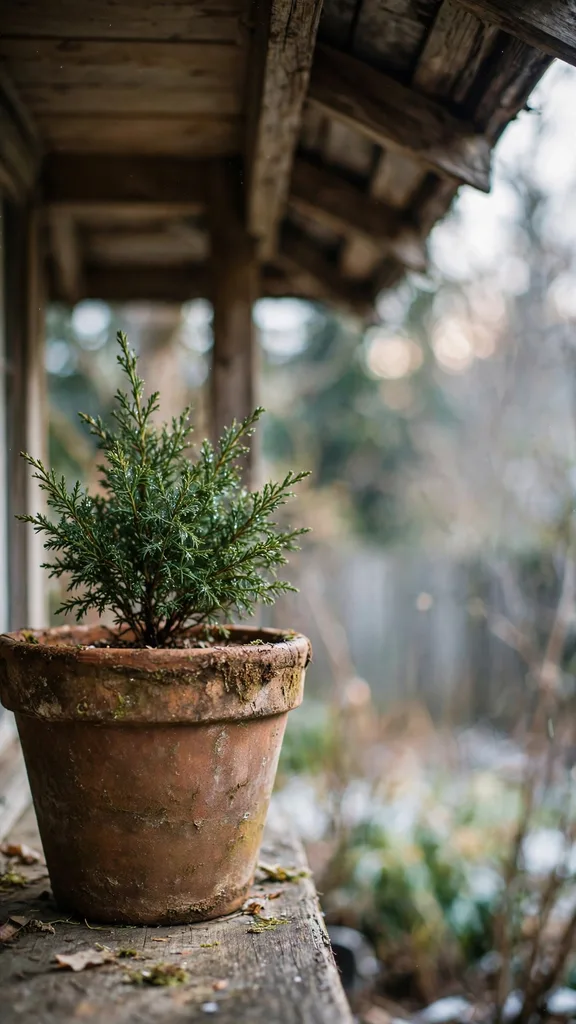
If you love clay, buy the thick, high-fired pots sold as frost resistant, keep them on feet so they drain, and shelter them from rain before a freeze. Or accept the flaking as patina; a slightly shaggy pot has its own winter charm, provided the plant inside is hardy.
17. Raise Pots on Feet for Drainage
Set every winter pot on feet, bricks, or a stand so its drainage holes clear the ground and water escapes instead of freezing the pot to the paving and the roots into a block. More winter pots die of wet feet than of cold air.
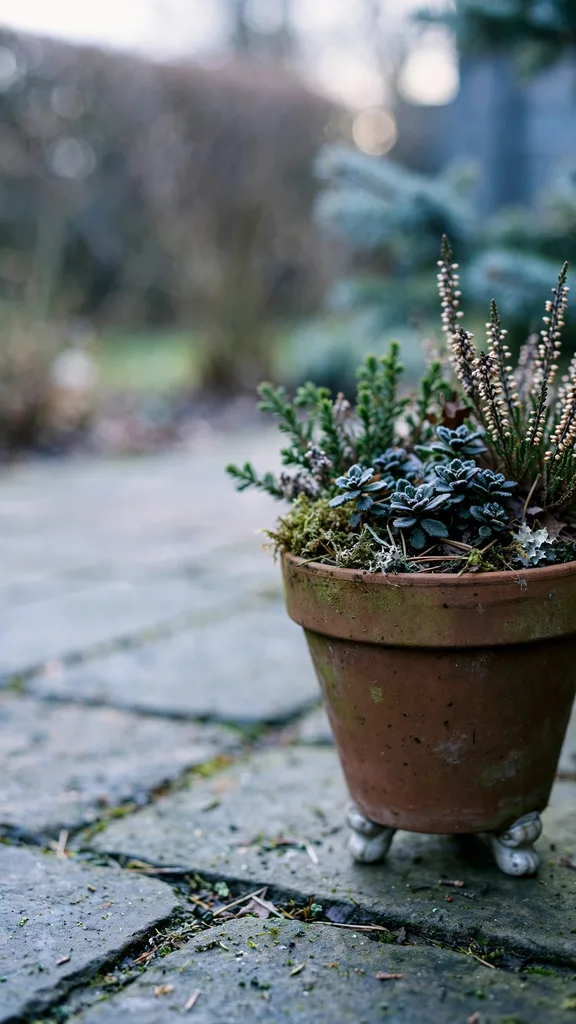
Feet also stop the pot freezing fast to stone, which cracks bases in a thaw. Three small feet per pot is the whole investment, and the difference shows in February, when the raised pots are growing and the grounded ones are grieving.
18. Water Before a Freeze
Water winter pots well before a forecast freeze: moist compost freezes slower and holds more heat than dry, and a hydrated plant withstands cold that desiccates a thirsty one. Winter drought, not winter cold, is the silent killer in containers.
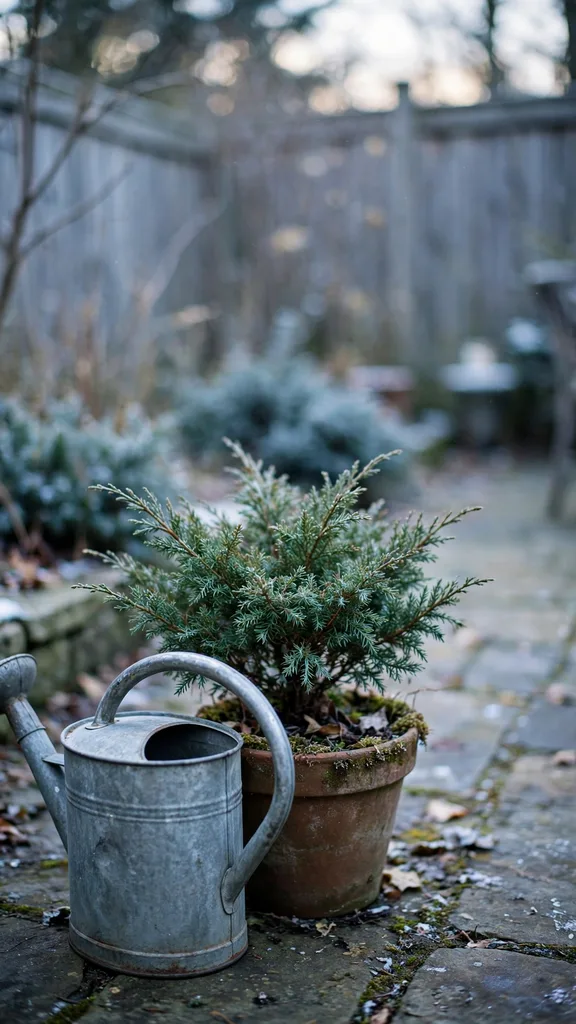
Water in the morning of a mild day so the pot drains before night. Evergreens in pots lose water to wind all winter while their roots sit in frozen compost unable to replace it, which is why the January watering round matters more than the December one.
19. Move Pots Against the House Wall
A house wall leaks heat and breaks wind, and a pot against it winters a zone warmer than a pot in the open garden. Moving the tender pots to the wall for the hardest month is the simplest protection in this list: no materials, just geography.
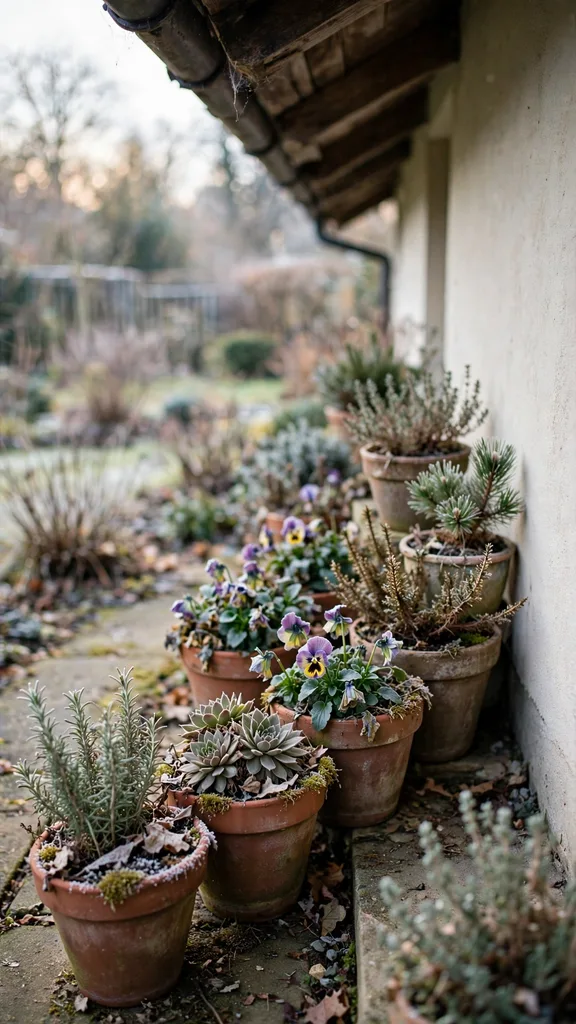
South and west walls give the most warmth in northern gardens; an east wall shelters from the worst wind. Keep pots a hand’s width off the wall for air, and remember they still need rain or watering under the eaves’ rain shadow.
20. Shelter Under a Porch or Cold Frame
A porch roof or a cold frame takes the edge off winter for the pots that need it: alpine plants that hate winter wet, succulents, and the Mediterranean herbs in borderline zones. Shelter from rain matters as much as shelter from frost for these.
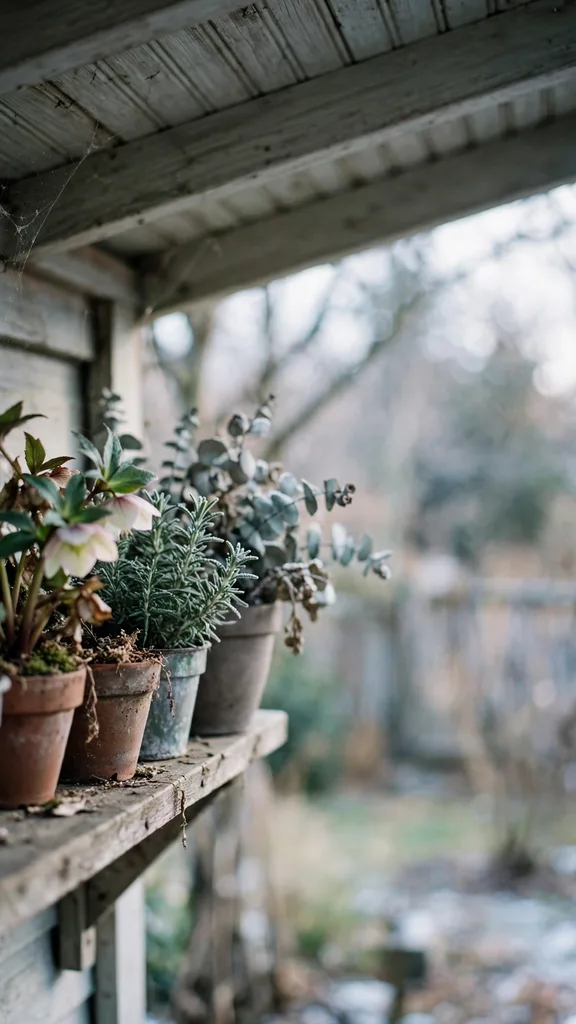
Ventilate a frame on mild days or the plants soften and mold. The porch shelf and the frame are the winter hospital ward: plants go there to survive, not to display, and they come out in spring tougher for the discipline.
21. Doorstep Pair in Matching Pots
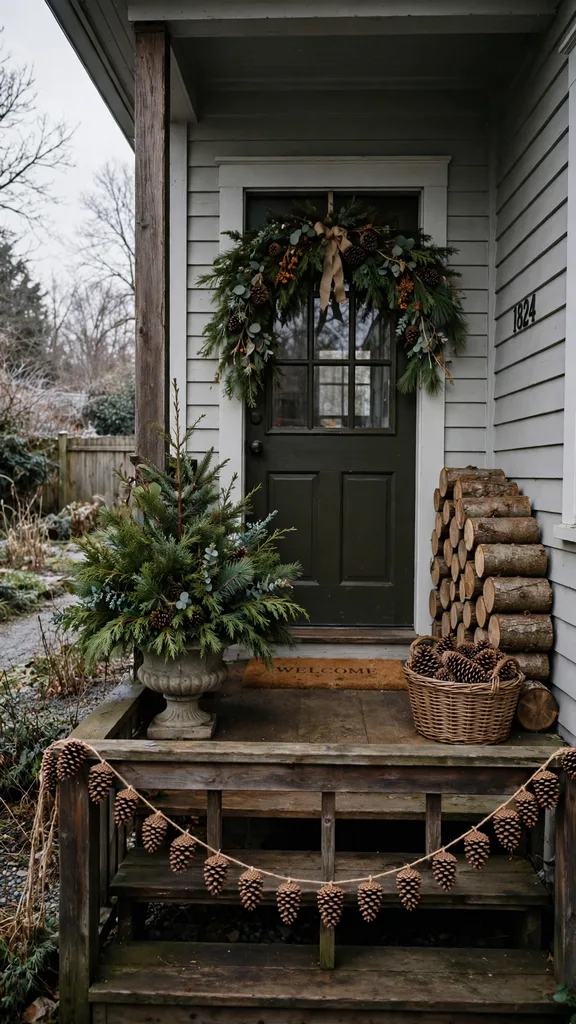
Two matching pots flanking the door, planted as twins, evergreen structure with hellebores or heather, give the entrance a winter frame that lasts to spring. Symmetry is the cheapest design tool in winter, when growth cannot help you.
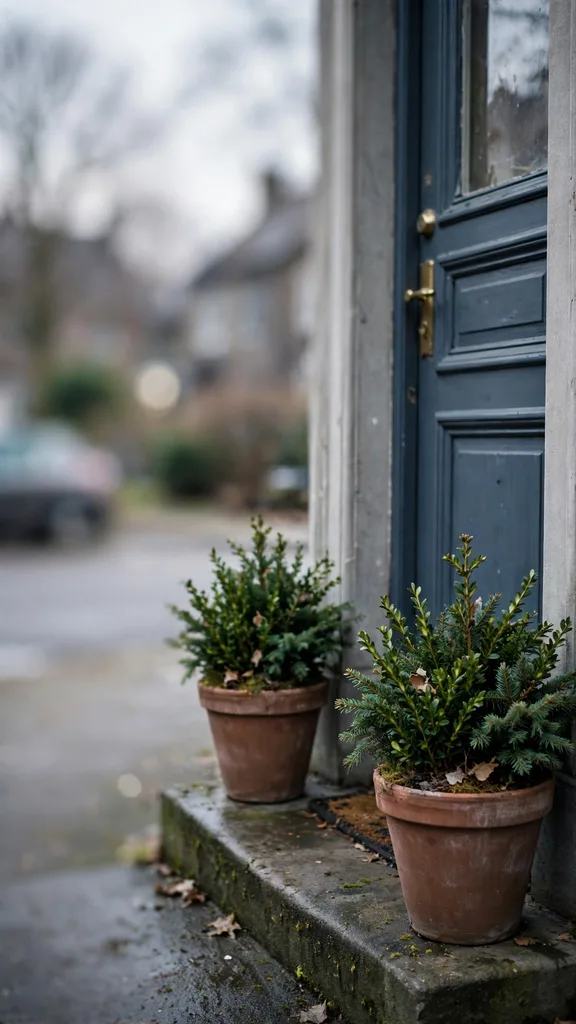
Plant the pair in one session from one batch of plants so they match in size and vigor. A doorstep pair in frost proof pots needs nothing all winter but water in dry spells and the occasional dead leaf picked off.
22. Winter Window Box Recipe
Fill the window box for winter with small evergreens, trailing ivy, and winter pansies or hardy cyclamen stood in their pots among the compost. From inside, the box frames the window with life; from outside, it dresses the wall through the darkest months.
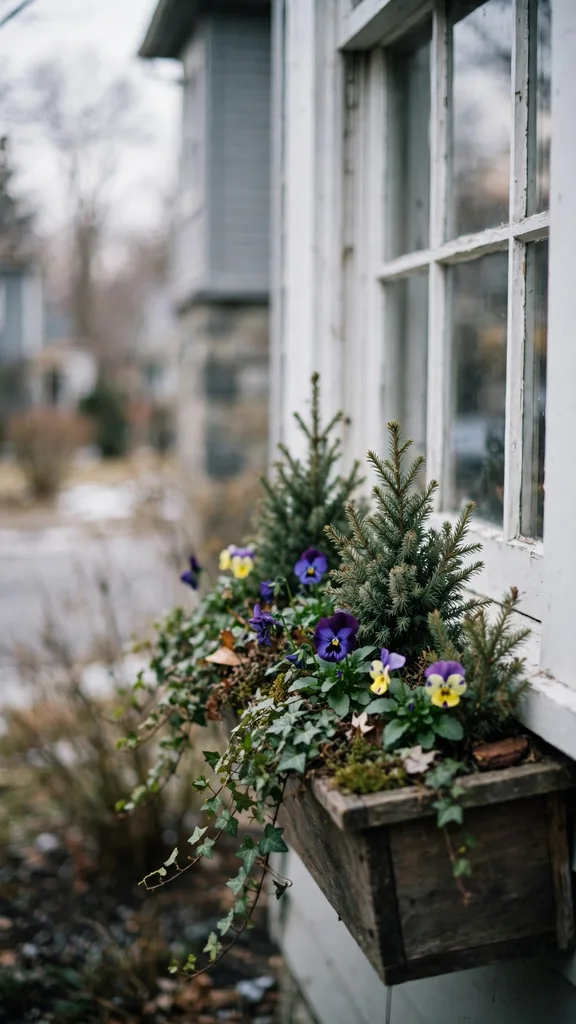
Window boxes dry and freeze faster than pots on the ground, so water them in every mild spell. The winter box is a rotation display: swap the flowering pots as they peak, and the box performs from November to March.
23. Balcony Rail Planters in Winter
Rail planters on a balcony hold winter recipes at eye level: trailing ivy, heucheras, small conifers, and pansies in a row. A balcony’s winter garden is small, so every plant in it should earn its place by foliage or flower, preferably both.
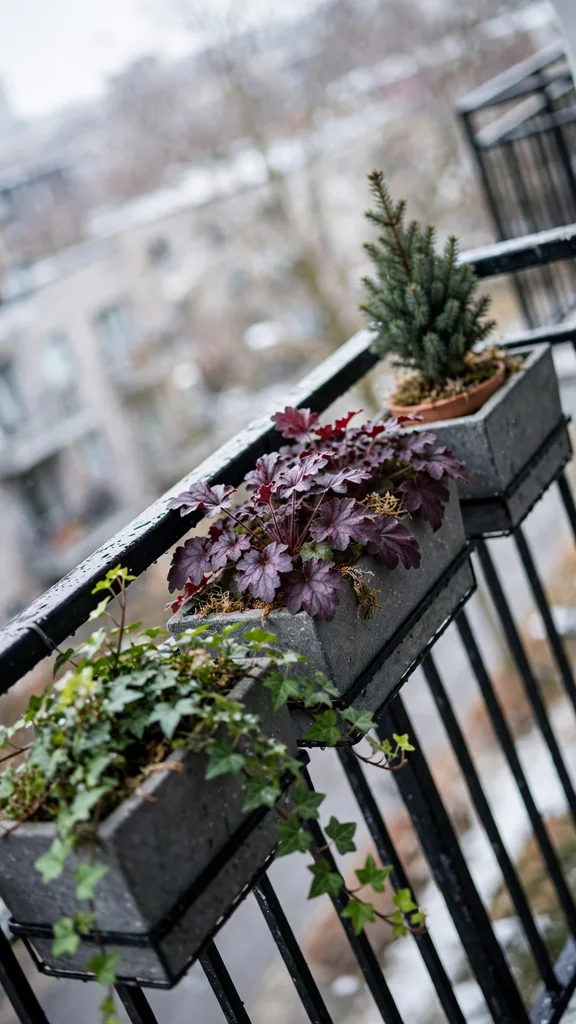
Balcony pots freeze from all sides and dry in wind; use the largest planters the rail allows, cluster them, and water on mild days. The balcony gardener’s winter is a watering discipline, and the reward is a garden in the sky that never closes.
24. Steps Display of Graduated Pots
Line the steps with pots in graduated sizes, the largest at the bottom, planted with a repeating recipe of evergreen and berry, and the staircase becomes the winter display. Repetition up a flight of steps reads as design at any budget.
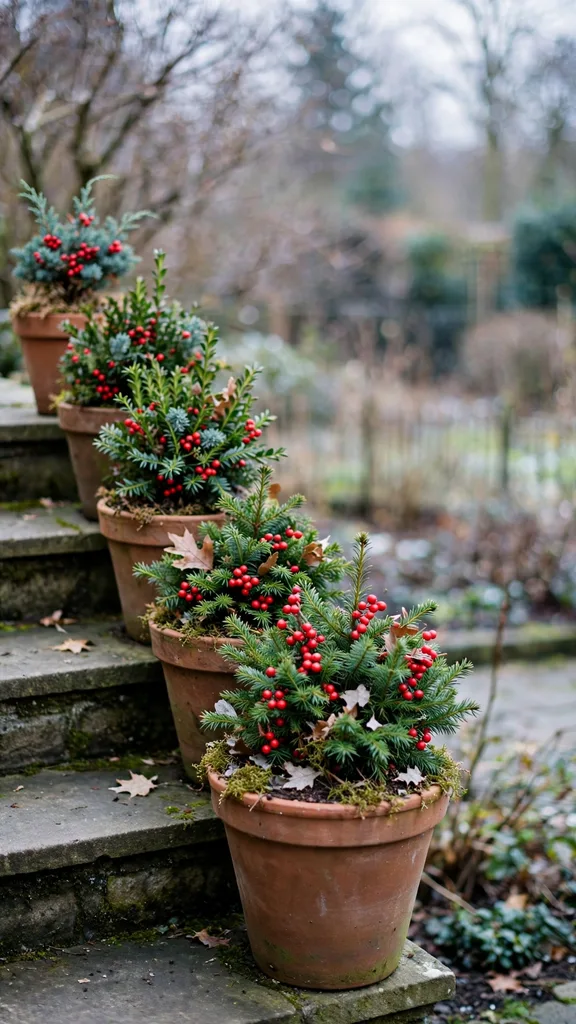
Keep the pots to the outer edge of each step so feet keep their space, and choose heavy containers the weather cannot move. Steps displays suit renters and small gardens, where the steps may be most of the outdoors there is.
25. The Big Statement Pot for the Patio Corner
One large pot, 24 inches or more, planted with a small tree or a cornus and underplanted richly, anchors a patio corner all winter. Big pots freeze slower, hold more plants, and make a young garden look established in a single purchase.
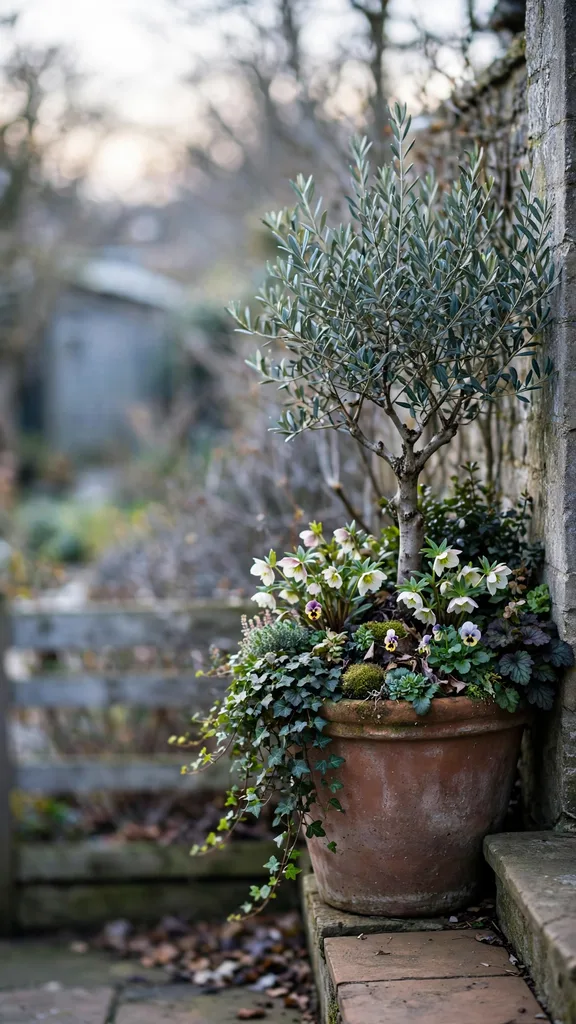
The statement pot is where the budget belongs: the best container, the best compost, the structural plant bought a size larger than feels sensible. Everything else in the winter garden can be modest if the corner pot is magnificent.
26. Tabletop Pots for the Outdoor Table
Small pots of hardy cyclamen, snowdrops, and tiny conifers dress the outdoor table through winter for the meals and drinks that happen outside even in January. Tabletop pots are the winter garden at reading distance, where small flowers count.
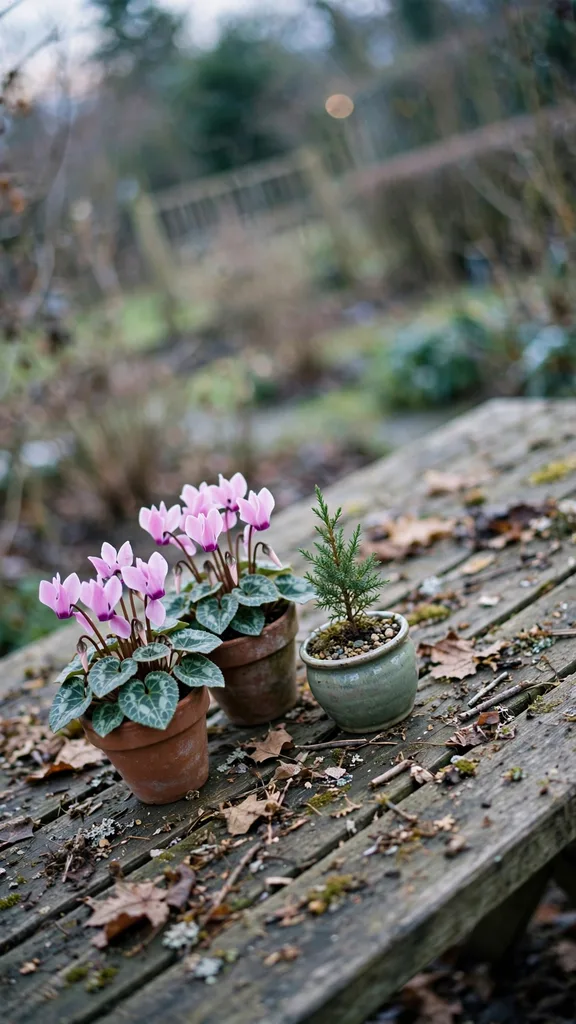
Bring the smallest pots under cover in the hardest freezes and return them for the next mild day; their size is their weakness and their portability is the cure. A table with living pots on it makes the whole garden feel inhabited in winter.
27. Winter Hanging Basket Recipe
Plant a hanging basket for winter with ivy, heuchera, winter pansies, and a small evergreen at the center, and it hangs green and flowering by the door while the summer baskets are in the shed. The winter basket’s secret is foliage first, flowers as the bonus.
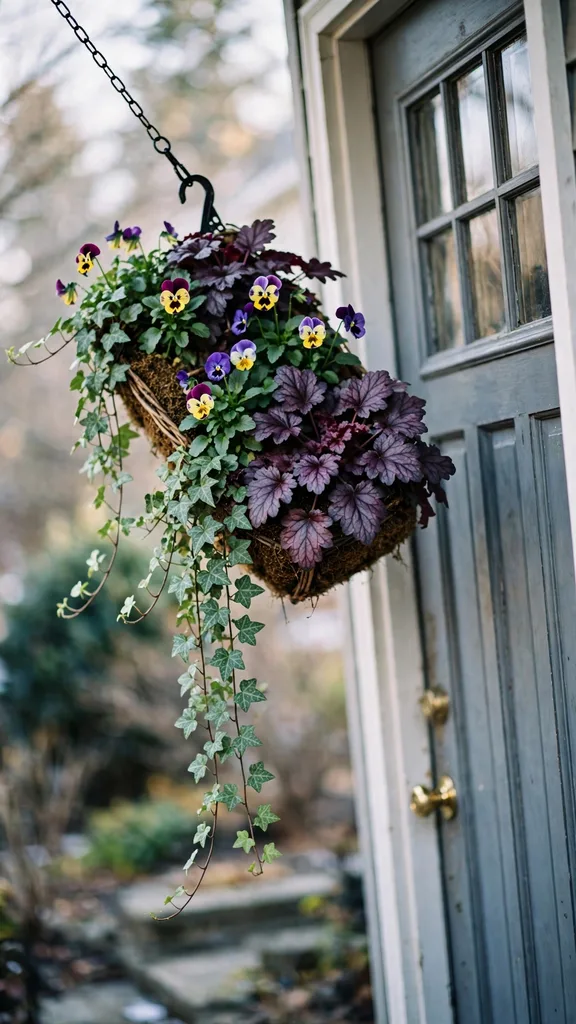
Baskets dry fast and freeze hard, so hang the winter basket in the most sheltered spot, by the door under the porch, and water it in mild spells. A basket that survives to spring can be topped up rather than replanted.
28. Wall Pots and Half Baskets
Wall pots and half baskets hold winter recipes against a warm wall: trailing ivy, hardy ferns, and winter flowers at head height. The wall gives them its stored warmth, and they give the wall a garden in the months it usually stands bare.
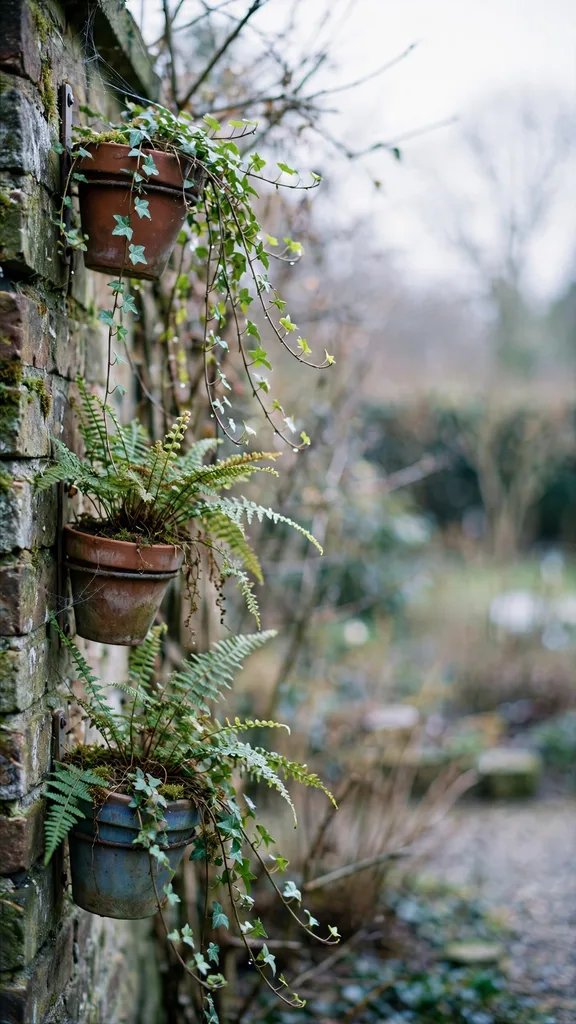
Small wall containers dry quickly; water them little and often in dry weather. A row of three matching wall pots with one repeated recipe is a design statement that costs less than one statement pot, which makes it the renter’s version.
29. Alpine Style Winter Trough
A stone or hypertufa trough planted with dwarf conifers, small hebes, sedums, and winter bulbs is a mountain garden in miniature that peaks in winter. Troughs suit the smallest spaces and the closest looking, by a door or a bench.
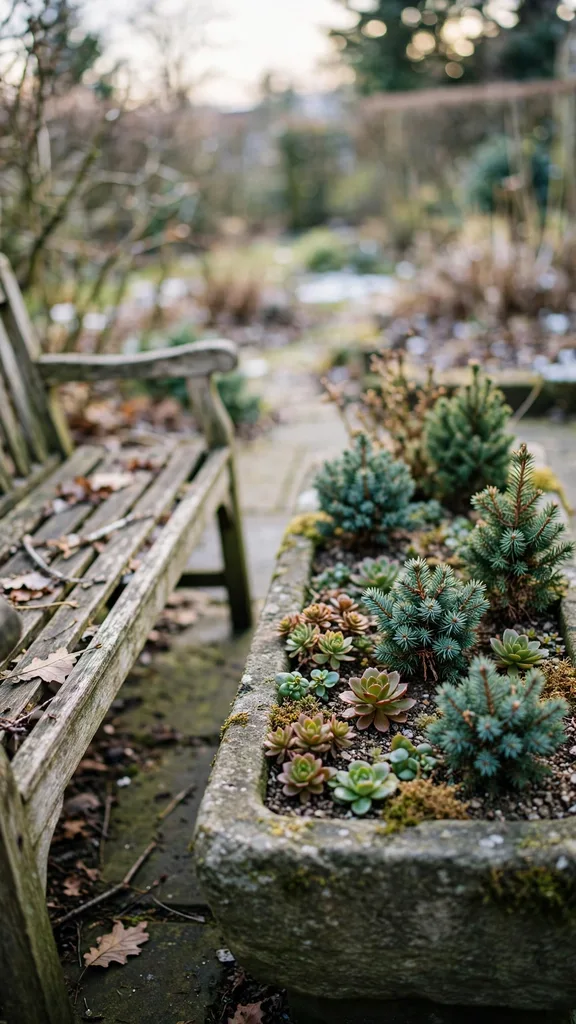
Trough compost must drain like a mountain: mostly grit, little soil. The plants are slow and the arrangement lasts for years, improving as the conifers gain their tiny stature. A trough is the winter container for gardeners who like their gardens at hand height.
30. Old Buckets, Crates, and Found Containers
Galvanized buckets, wooden crates, and old olive oil cans make winter containers with more character than most pots, planted with the same recipes. Drill drainage, line the wood, and the found container performs like any other, with a story attached.
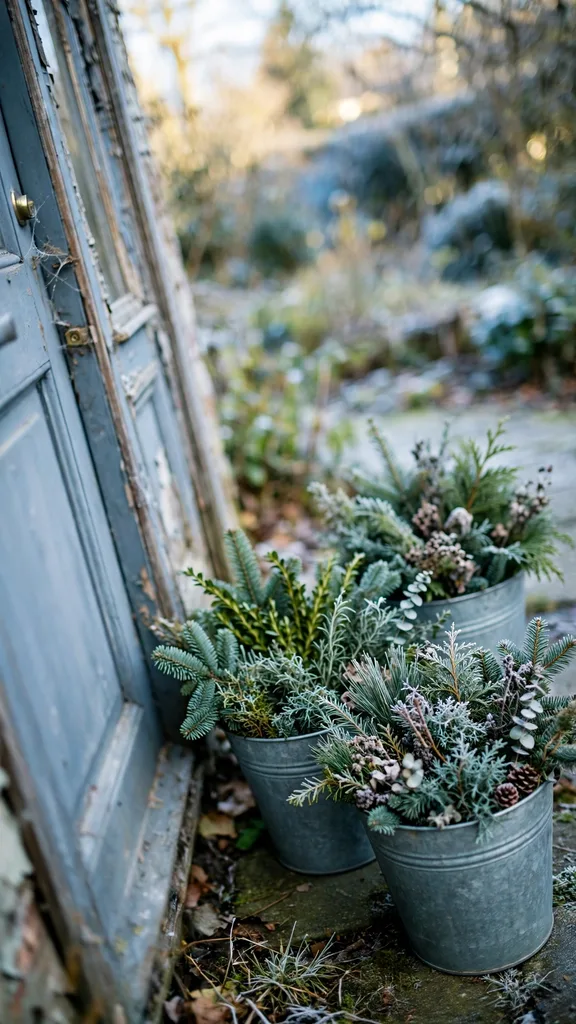
Metal containers freeze fast and heat fast, so give their plants the sheltered spots. A row of matching buckets unifies a collection that cost almost nothing, which is the found container’s quiet triumph over the garden center.
31. All Evergreen Texture Pot
Build a pot from evergreens alone, a dwarf conifer, a hebe, trailing ivy, a small holly, and let texture and shades of green do all the work. An all-green pot is the winter garden’s backbone, handsome in every light and never out of flower because it never flowers.
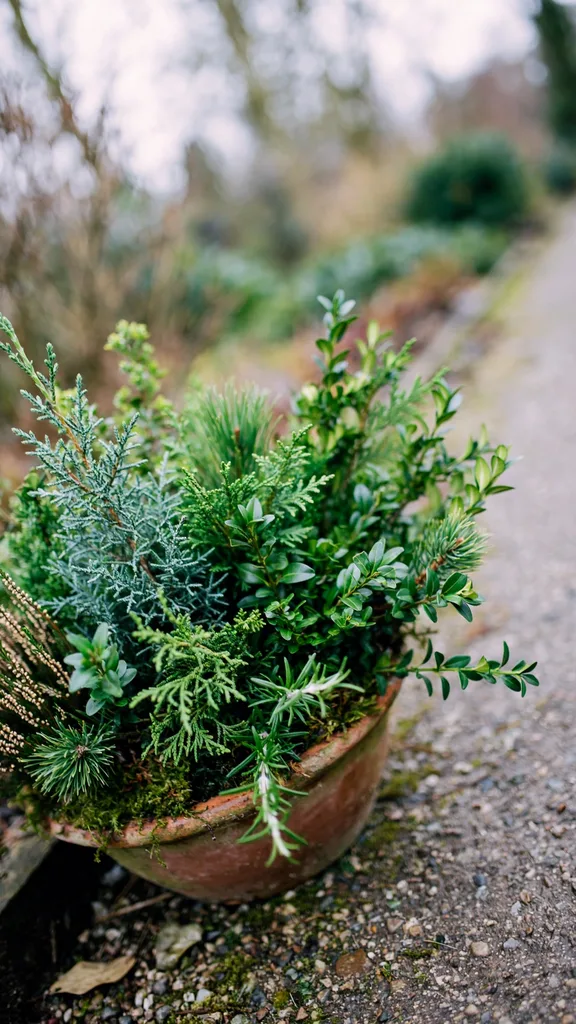
Mix leaf shapes deliberately: needles, gloss, and small rounds against each other. The texture pot needs no replacing all winter and little care beyond water, and it makes every flowering pot near it look more colorful by contrast.
32. Berry Heavy Winter Pot
Combine winterberry, gaultheria, and a berried skimmia or holly in one pot for a container that decorates in red from November to February. Berries are winter’s flowers for containers, holding color through weather that ends every bloom.
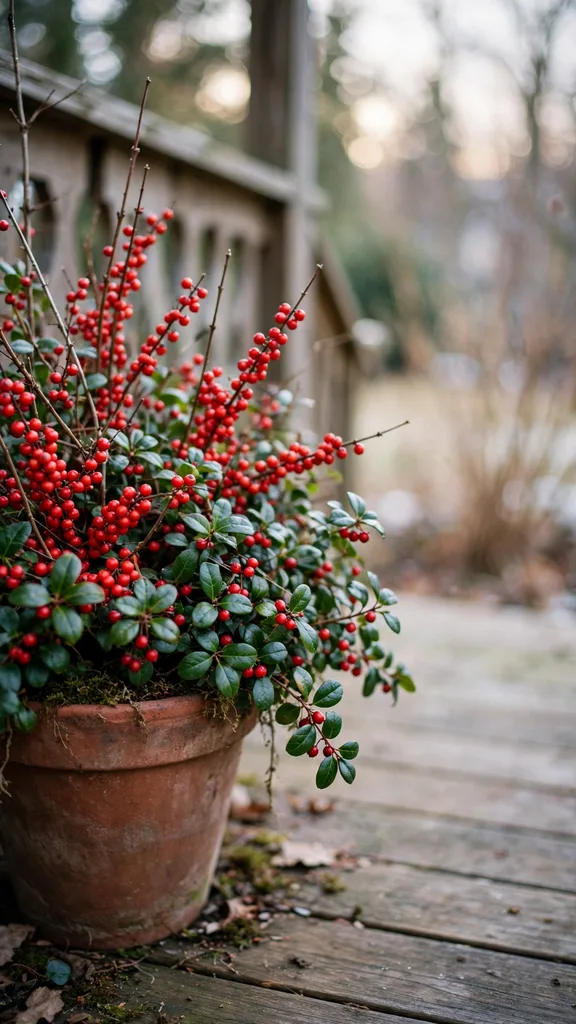
Berried plants need their pollinators in the wider garden, so a berry pot is a promise the garden keeps or breaks in spring. Keep the pot where birds can be watched enjoying it in late winter, when the berries finally go.
33. The Winter Flower Pot in Rotation
Keep one pot by the door planted for flowers in succession: hellebores first, then heather, then hardy cyclamen and snowdrops, swapping the flowering plant to the front as each peaks. The wider cast of cold season bloomers is gathered in winter flowers, the plants that bloom in the cold.
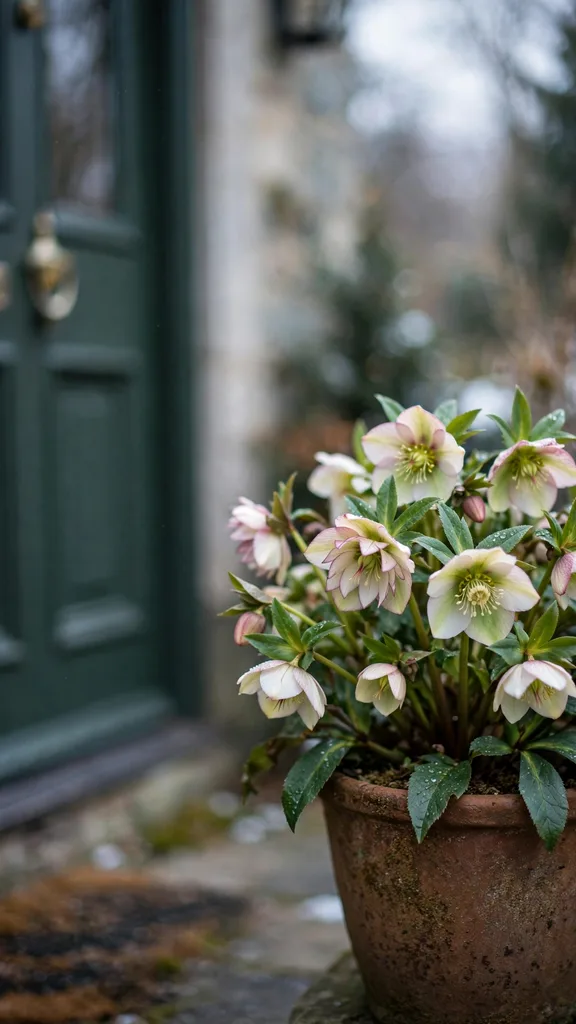
A rotation pot needs a small bench of spares in their own pots behind the scenes. The door pot always looks at its peak because it is, which is stage management, not cheating, and every public garden does exactly this.
34. Scented Winter Pot: Sweet Box and Daphne
Plant sarcococca, sweet box, with a winter daphne in a pot by the door for the scented winter recipe: small flowers with a perfume that stops visitors on the step in January. Scent is the winter pot’s invisible flower, and these two are its strongest voices.
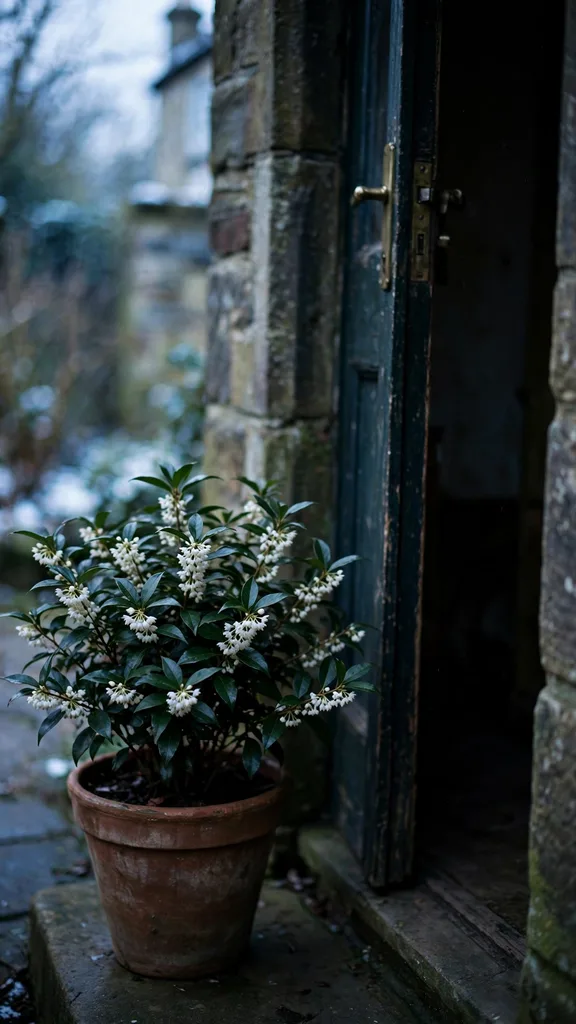
Both want shade or part shade and steady moisture, and both are slow, so buy the largest plants you can. Set the pot where people pass closely; scent this fine is wasted on an open patio and perfect at a door.
35. Grass and Sedge Winter Pot
Ornamental grasses left standing and evergreen sedges make a winter pot of movement and bronze tones, with seed heads that catch frost and low light. A grass pot sways when every other pot is still, which is its own kind of flowering.
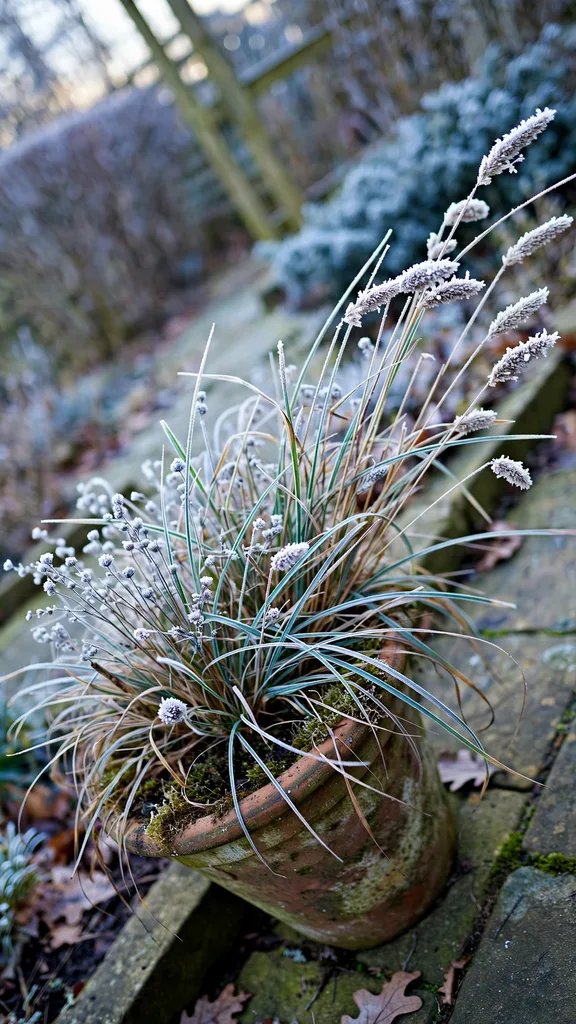
Leave the grasses uncut until spring; their winter structure is the display. Sedges like carex stay green or bronze through frost. The grass pot suits modern gardens and wild ones equally, being mostly a decision not to tidy.
36. Heuchera Foliage Pot
Heucheras carry leaves in purple, amber, lime, and silver that hold their color through winter in a pot, a foliage display that needs no flowers at all. Three heucheras of different colors in one wide pot is a winter painting that waters itself politely.
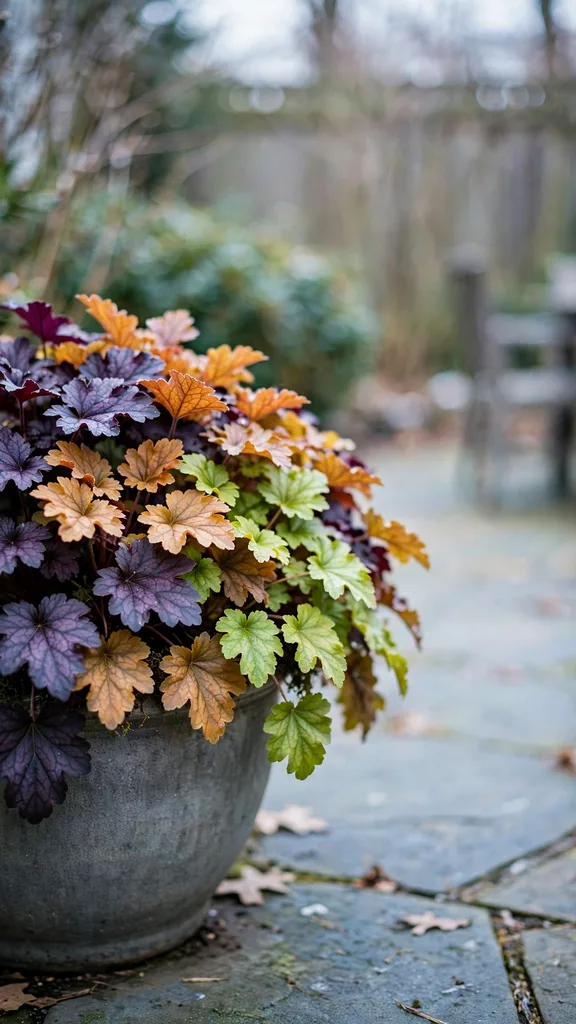
Heucheras in pots want drainage and a spring tidy of old leaves. Their colors deepen in cold, so the pot improves as winter bites. In spring the same plants divide into the borders, and the pot starts again with new colors.
37. Bulb Lasagna Pot With a Winter Top
Layer bulbs in a deep pot in autumn, tulips lowest, then daffodils, then crocus and snowdrops, and plant winter pansies or ivy on top for the cold months. The pot decorates in winter from its top layer and erupts in sequence in spring from the layers below.
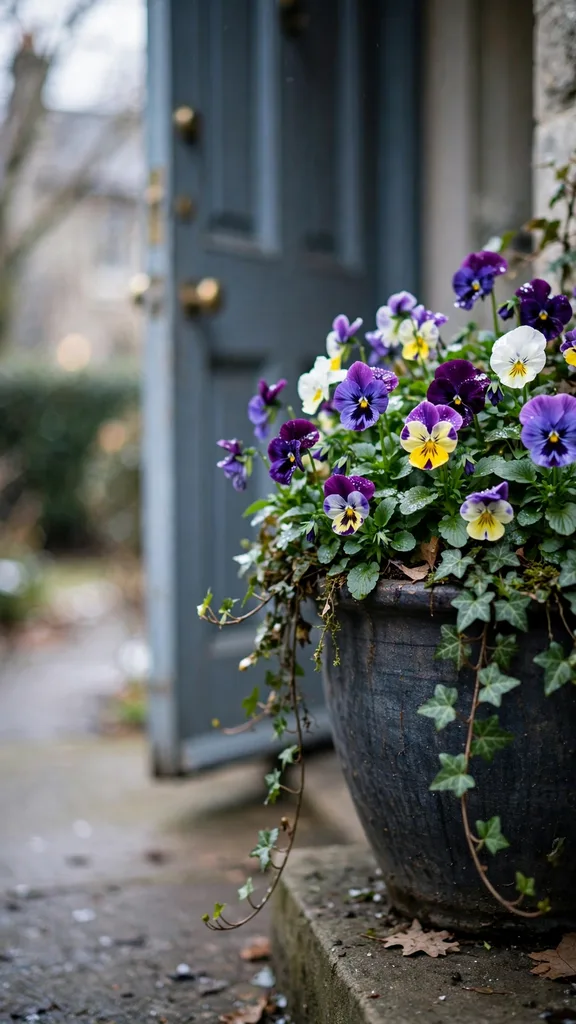
The lasagna pot is two displays in one container, which makes it the hardest working pot here. Water it through winter in dry spells; the bulbs are growing roots while the top flowers. Label the layers if you plant more than one, or spring becomes a surprise party.
38. Succulent Pot Under Cover
A pot of hardy succulents, sempervivums and hardy sedums, winters outdoors in a sheltered spot, its rosettes coloring red and purple in the cold. Tender succulents join it only under a porch or frame, where rain cannot sit in their crowns.
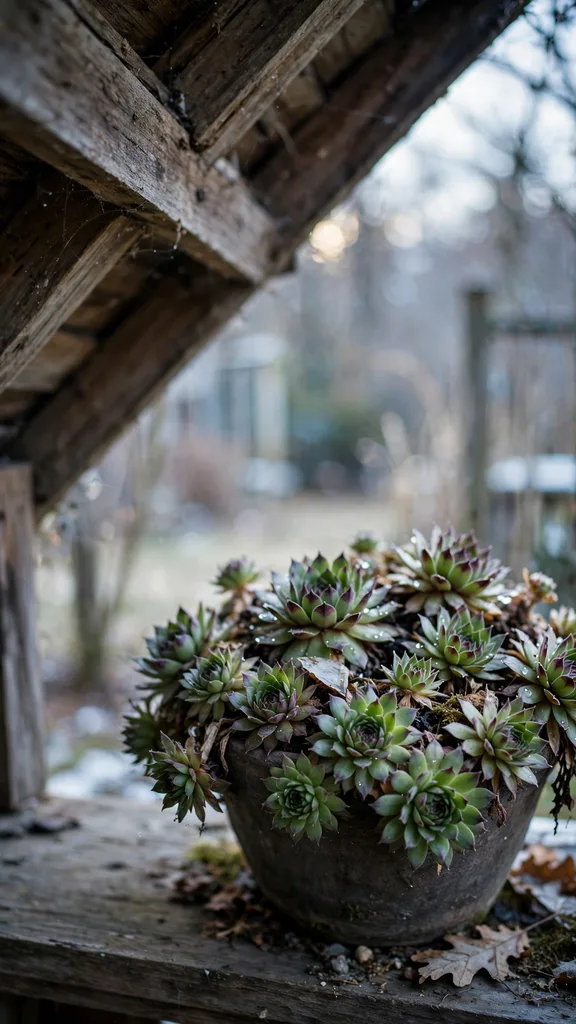
Wet is the enemy, not cold: give succulents grit, a roof, and no water all winter. A succulent pot under the eaves in January is a small desert holding its breath, and it exhales beautifully in spring.
39. Citrus and Olive Pots: The Move Indoors Plan
In cold climates, citrus and olive pots winter indoors in the brightest, coolest room, and the plan is the decoration: a lemon by the window and an olive by the door make the house’s winter garden Mediterranean for a season.
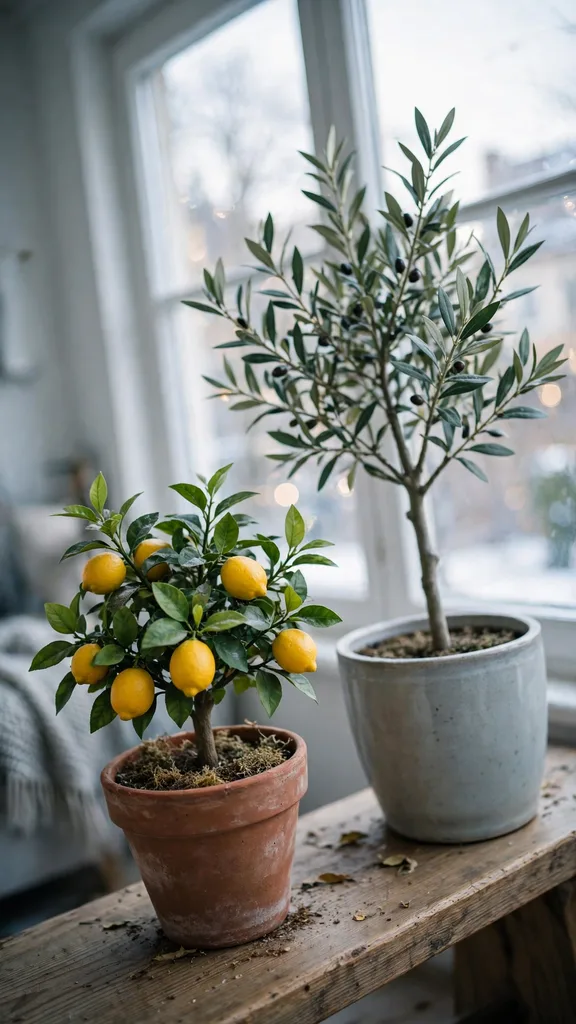
Move them in before the first frost and out after the last, with a week of hardening at each end. Indoors, watch for scale insects and keep the watering lean. These are the pots that make a northern house smell southern in February.
40. Edible Winter Pot: Kale and Chard
Plant curly kale and rainbow chard in a large pot by the kitchen door for a winter container you can eat: the kale sweetens with frost and the chard’s stems glow red, yellow, and pink through the dark months.
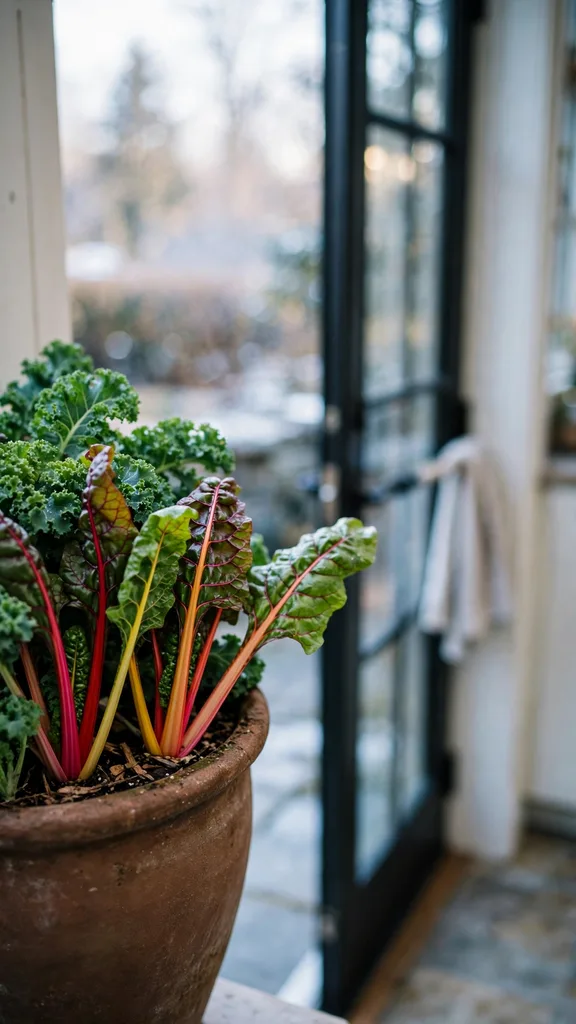
An edible pot wants feeding and watering like any crop, and a spot in the best light the doorstep offers. Harvest the outer leaves and the pot keeps producing and decorating at once, which no other recipe here can claim at dinner.
41. Mulch the Pot Surface
Cover the compost in winter pots with a mulch of bark, gravel, or leaf mold: it insulates the roots, stops frost heave lifting small plants, and keeps the surface from splashing mud onto the foliage. A mulched pot also looks finished, which matters at a door.
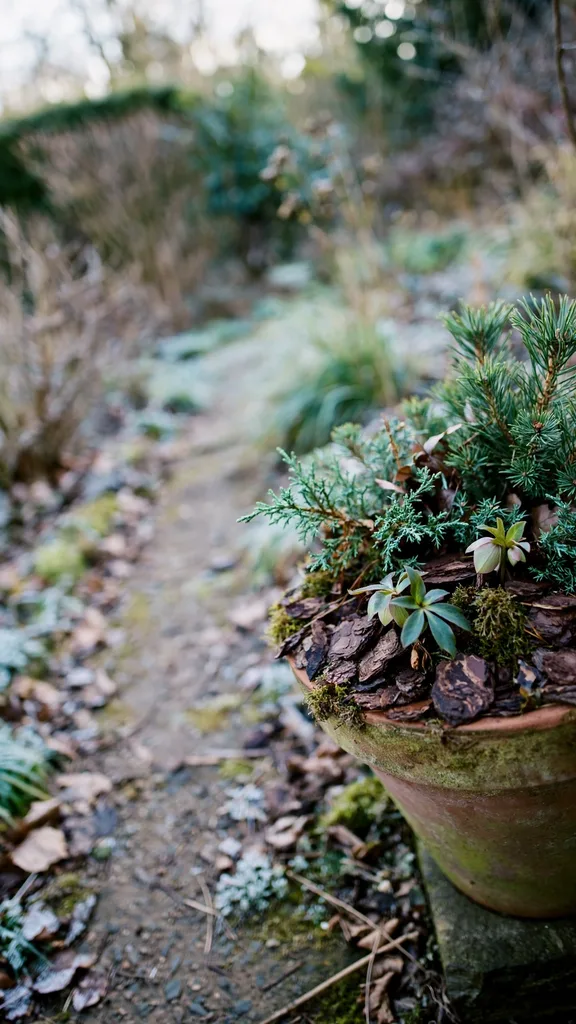
Gravel suits the alpine and succulent pots, bark the shrubs and evergreens. Keep the mulch off the crowns of small plants. One bag of bark mulches every pot in this list, making it the cheapest winter protection per plant there is.
42. Empty the Saucers: The Anti Freeze Rule
A saucer of water under a pot in winter is an ice rink that freezes the roots from below and cracks the pot from inside its own base. Tip saucers out after rain all winter, or remove them entirely until spring.
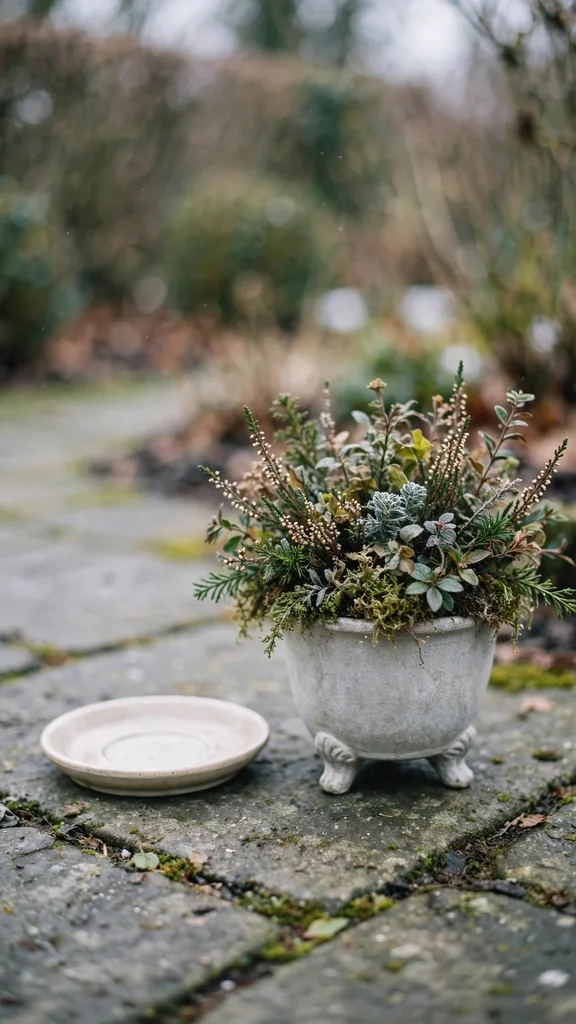
Pots on feet drain into air, which is the point of the feet. The saucer rule is the smallest habit in this list and prevents the most stupid losses, the ones where the plant was hardy, the pot was sound, and the water underneath killed both.
43. Rotate Pots for Even Thaw and Light
Turn winter pots a quarter every few weeks so all sides thaw evenly and evergreen growth stays balanced toward the light. The wall side of a pot lives a different winter from the garden side; rotation shares the hardship fairly.
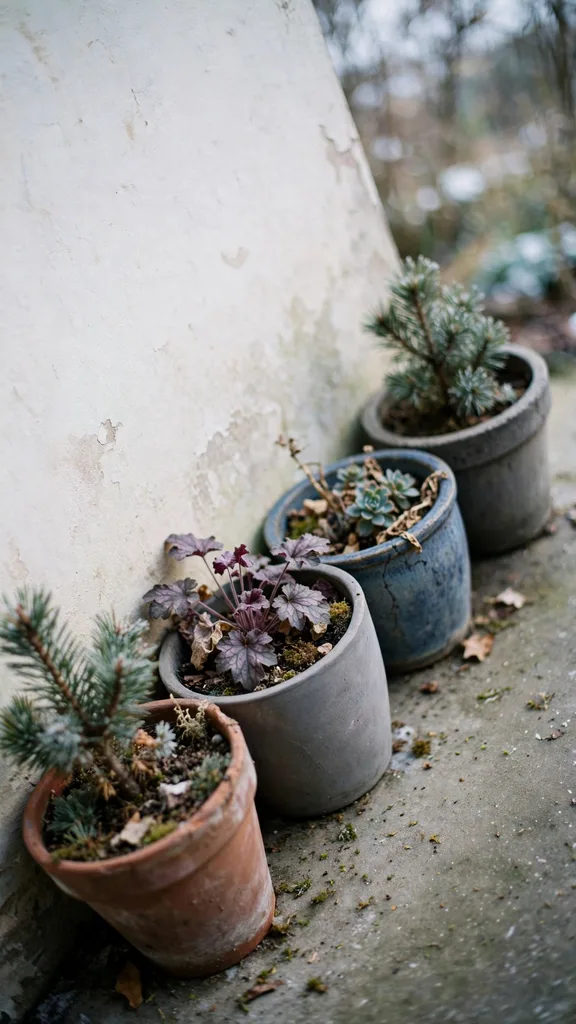
Rotation is also inspection: turning a pot shows you the dry side, the slug, the crack beginning. Two minutes a month per pot is the whole cost, and it is when the January check below happens naturally.
44. The January Check: Water, Tidy, Replace
Walk the winter pots in January with a watering can, a pair of snips, and a ruthless eye: water the dry ones, snip the dead leaves, and replace anything that has given up with a spare from the bench. A winter display is maintained, not installed.
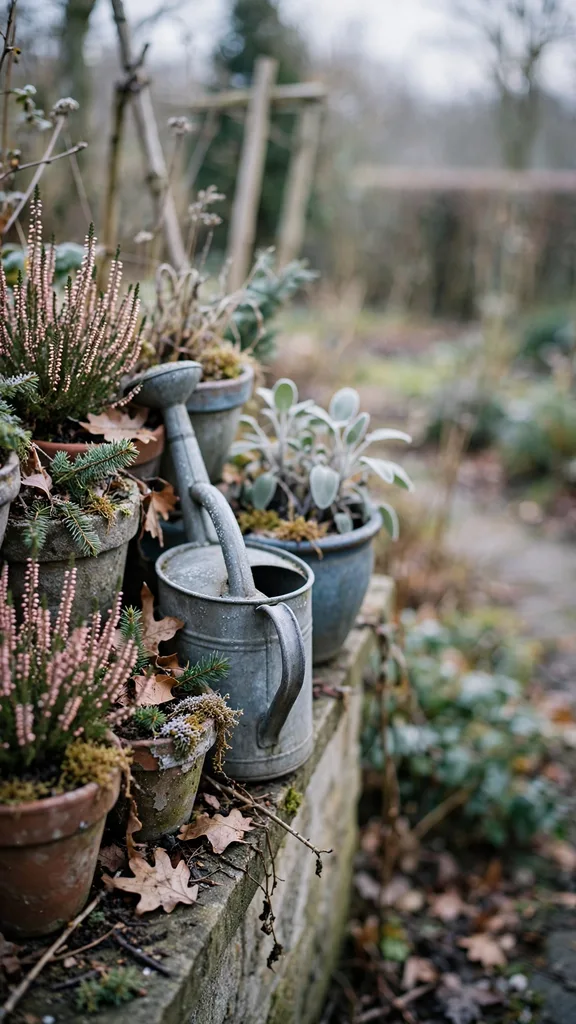
January is when winter containers are won or lost, since December’s cold is survived on stored strength and February’s on care. The check takes an hour for a whole collection and is the difference between a display that fades and one that finishes the season standing.
45. The Winter Container Corner: Every Trick Combined
Assemble the finale: the statement pot at the corner, the doorstep pair flanking it, clustered pots of evergreens, berries, and winter flowers against the wall, wrapped and raised and mulched, with the rotation spares on a bench behind. Every recipe and every frost trick in this list, working one corner of the garden.
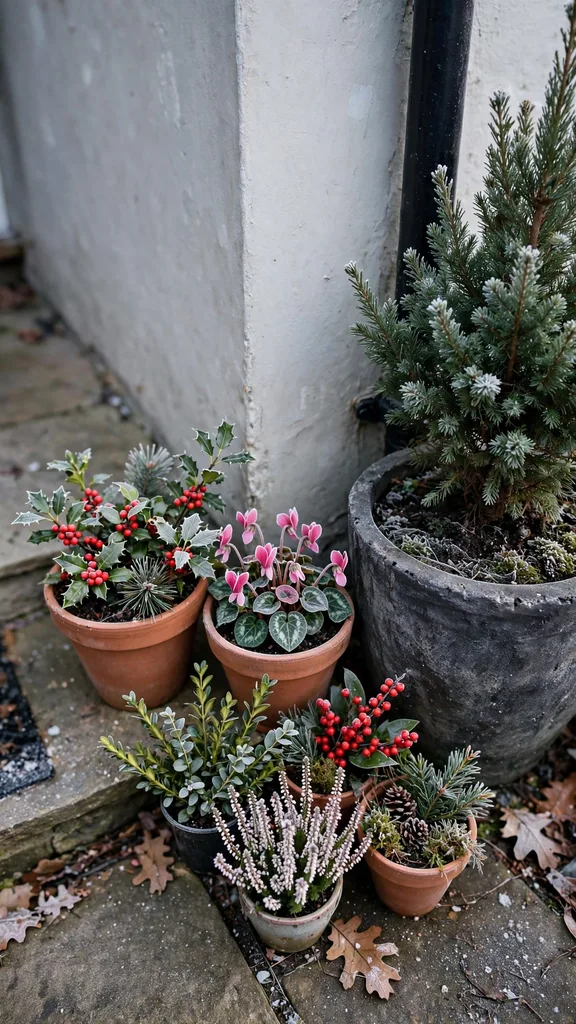
The corner holds through winter on the January check and the watering round, and it photographs like a magazine in the first snow. The wider season’s plantings gather in the Christmas garden ideas pillar, but this corner is the winter garden’s proof: containers do not close for winter unless their gardener does.
Frequently Asked Questions
Because roots are less hardy than tops, and a pot exposes roots to air temperature on all sides. In the ground, soil insulates roots and the temperature a foot down stays far steadier than the air. In a pot, the whole root ball can freeze solid and thaw repeatedly, which breaks roots and lifts plants. The defenses are bigger pots, insulation, clustering, sheltering, and choosing plants hardy a zone colder than yours for container duty.
Wood, metal, fiberglass, and quality plastic survive freezing compost without cracking. Porous terracotta and cheap ceramic are the risky ones, since absorbed water freezes and flakes them apart; thick, high-fired clay sold as frost resistant is the exception. Whatever the material, raise the pot on feet so it drains freely, and empty or remove saucers so water never freezes under the base.
Whenever the compost is dry and the weather is above freezing, which in a dry winter can be every week or two, and in a wet one almost never. Evergreens and winter flowers keep drinking all season, and pots under eaves or porch roofs get no rain at all. Water in the morning of a mild day, and water well before a forecast freeze, since moist compost and hydrated plants withstand cold better than dry ones.
Plants that combine hardiness with winter interest: dwarf conifers and other small evergreens for structure, hellebores, heather, hardy cyclamen, and pansies for flowers, winterberry, skimmia, and gaultheria for berries and buds, ornamental kale for color, and ivy, heuchera, and sedges for foliage. Build each pot in layers, one structural plant, one flower or berry, one trailer, and the recipe repeats across every good winter container.
Yes, if the plants are hardy and the pot is frost proof: empty the tender summer plants to the compost, keep any hardy shrubs, grasses, and perennials in place, and underplant with winter flowers and ivy. A summer pot with a small shrub at its heart becomes a winter pot with one editing session. Pots with tender plants at their center are better emptied, wrapped, and stored, ready for next summer.