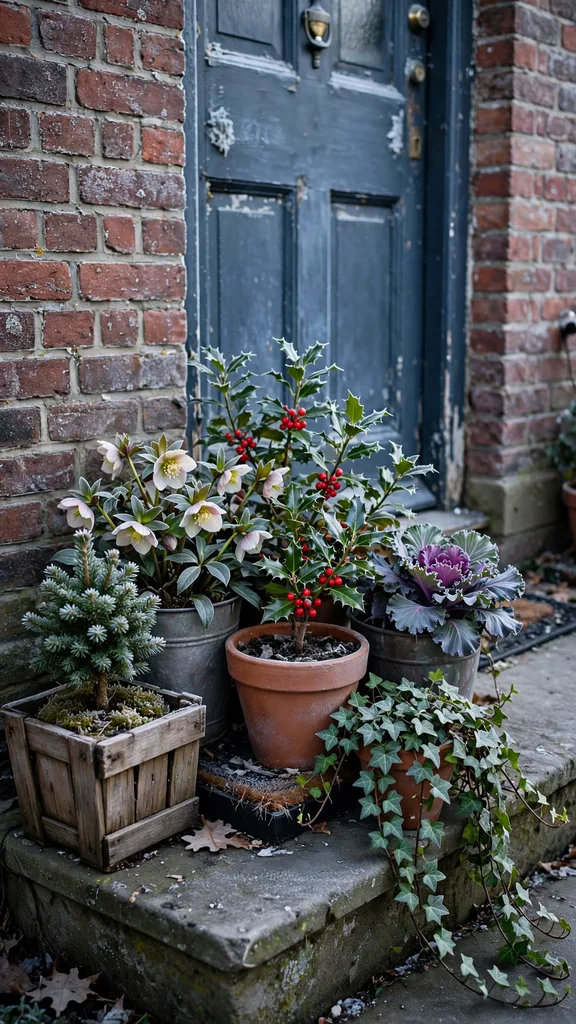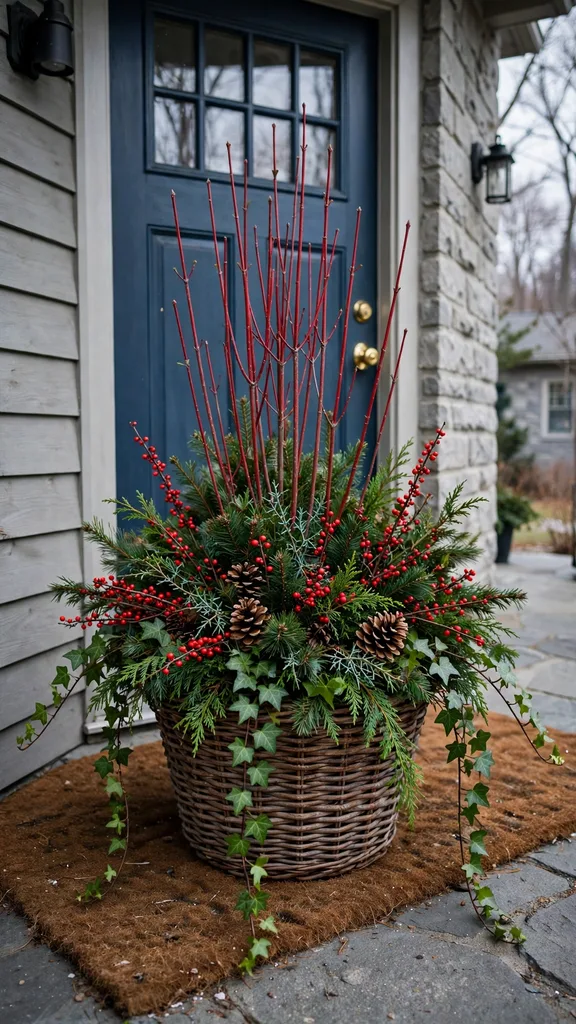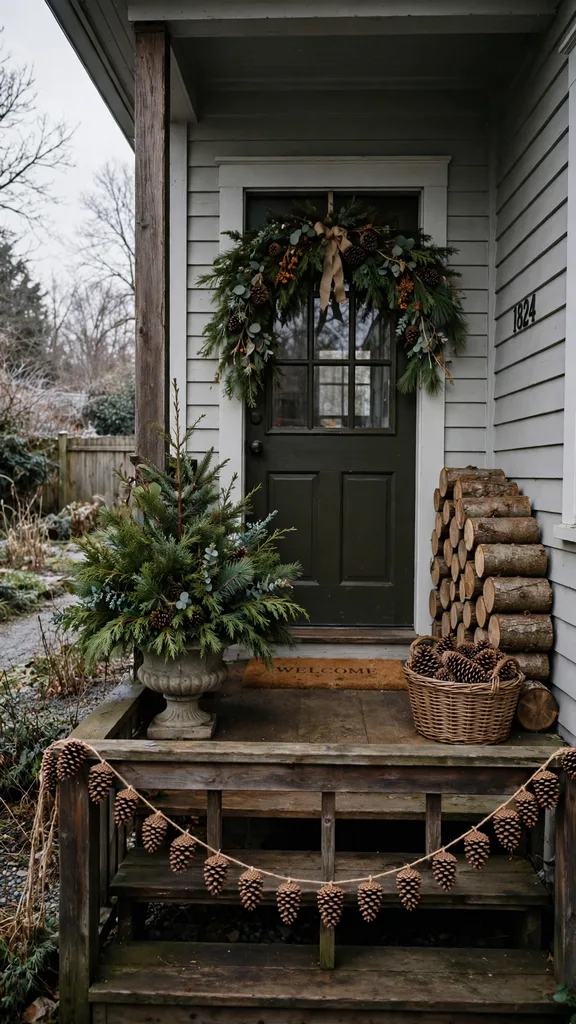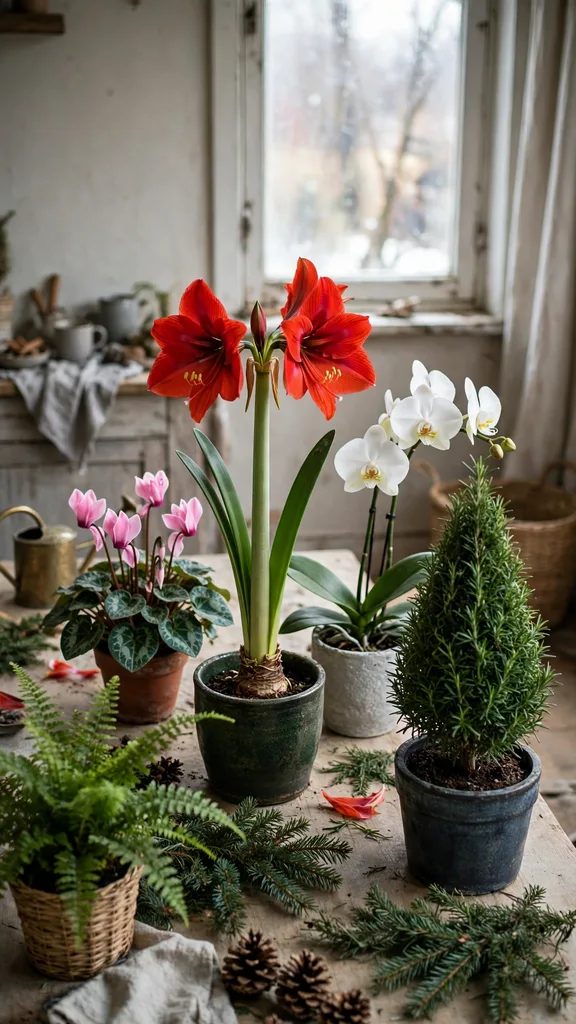
The right Christmas plant depends on the job: color for the table, a gift that lives, scent for the room, safety where the pets rule, green for the rooms the sun forgot, and flowers for the porch in frost. This list gathers 45 Christmas plants organized by use, so the plant is chosen the way a gardener actually chooses, by what it has to do and where it has to do it. Every entry names the plant, its job, and the care that job demands.
The groups run from the table outward: ten flowering plants for the table, eight living gifts, six scent plants, nine pet-safe picks, six low-light survivors, and five porch plants that flower in frost, closing with the whole-house plan that combines them. I plant by use myself, because a plant bought for a job gets the care the job requires, and a plant bought for its looks alone gets whatever care is left over.
| Use | Plants | Watchword |
|---|---|---|
| Table color | Amaryllis, paperwhites, cyclamen, orchid | Cool room, long bloom |
| Living gifts | Forced bulbs, rosemary, succulents, orchids | Give in bud |
| Scent | Jasmine, lemon, geranium, gardenia | Leaves and blossom |
| Pet-safe rooms | Palm, calathea, fern, violet | Check the lists |
| Low-light rooms | Snake plant, ZZ, pothos, cast iron | Water rarely |
| Porch in frost | Heather, skimmia, kale, pansies | Color deepens with cold |
1. Amaryllis for the Table
An amaryllis in flower is the tallest color a Christmas table can hold: one stem of trumpets in red, white, or striped pink above a pot that a napkin ring could circle. Grow it yourself from a bulb and the table’s centerpiece has a story; the full method is in amaryllis care, from potting to reblooming.
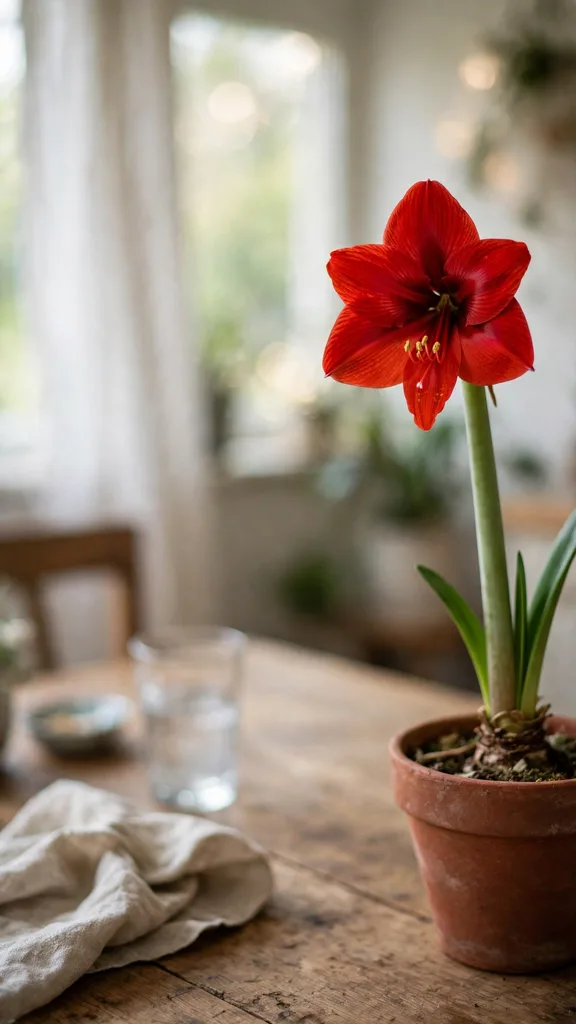
Time the bulb so the buds show color in Christmas week, and stake the stem before it leans toward the window. A flowering amaryllis holds 2 to 3 weeks in a cool room, outlasting every cut arrangement on the table.
2. Paperwhites for the Table
Paperwhites bring white flowers and scent to the table in a low bowl that guests can see over, which is the centerpiece’s first job. A bowl of them in pebbles costs a handful of bulbs and four weeks of patience; paperwhites for Christmas covers the forcing calendar.
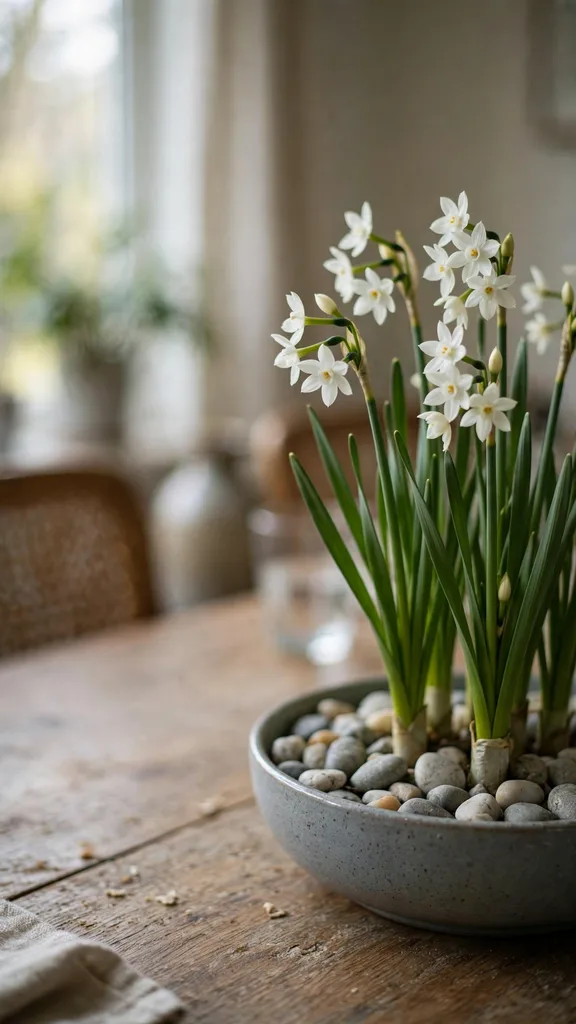
Grow them cool and bright so the stems stay short, and tie the bunch loosely with ribbon when it flowers. A bowl holds its bloom for 2 to 3 weeks; stagger a second bowl two weeks behind the first and the table is covered to New Year.
3. Hyacinths for the Table
A pot of hyacinths in flower is a table piece with perfume built in: dense spikes in blue, pink, or white that scent the room at a radius of one table, which is exactly far enough. Forced hyacinths in a low pot sit below sightlines and above crumbs.
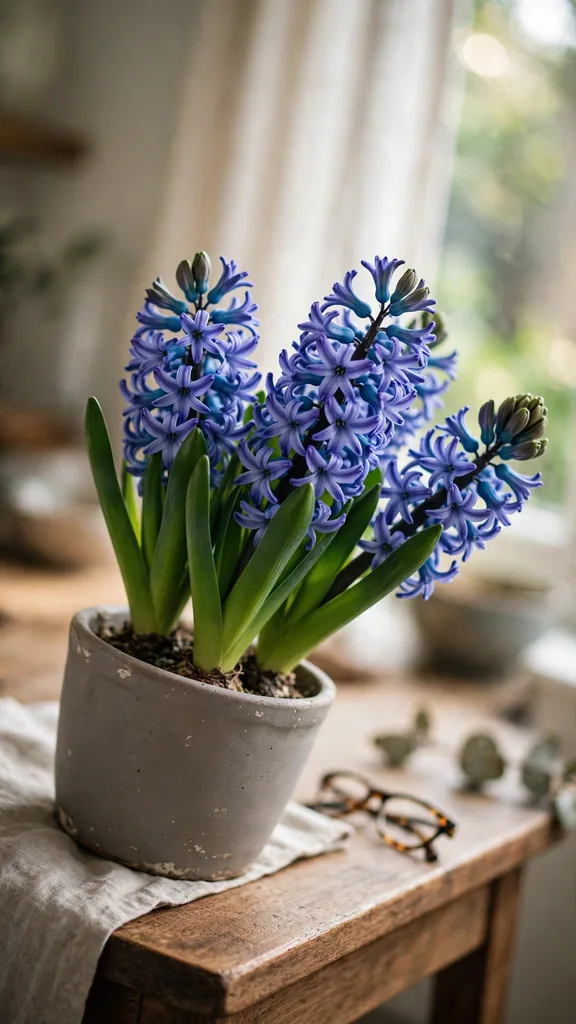
Buy or force them so the spikes are in bud, not full flower, when they reach the table; they open over the following week and last longest in a cool room. One pot scents a small dining room; two is a statement and possibly an argument.
4. Cyclamen for the Table
Cyclamen is the table plant for cool rooms: swept-back flowers in red, pink, or white over marbled leaves that are decoration by themselves. It flowers for weeks rather than days, outlasting the holiday and most of January.
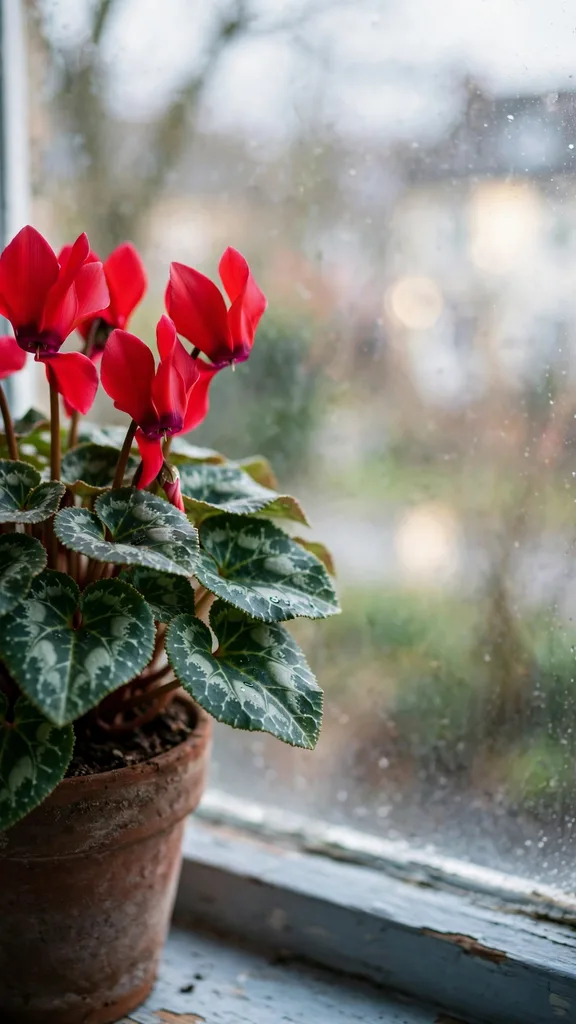
Water cyclamen from below and keep it out of hot, dry air, which collapses it faster than any neglect. A cyclamen on a cool windowsill between meals will still be flowering when the amaryllis is a memory and a bulb to save.
5. Hellebore, the Christmas Rose, for the Table
The Christmas rose flowers in the garden in December, and a pot of it brought to the table carries white or blush blooms that no florist can match for freshness. The NC State Extension Plant Toolbox entry for Helleborus niger profiles the plant, and its caution is worth repeating at a table: hellebores are poisonous, so keep the pot where pets and small children cannot reach it.
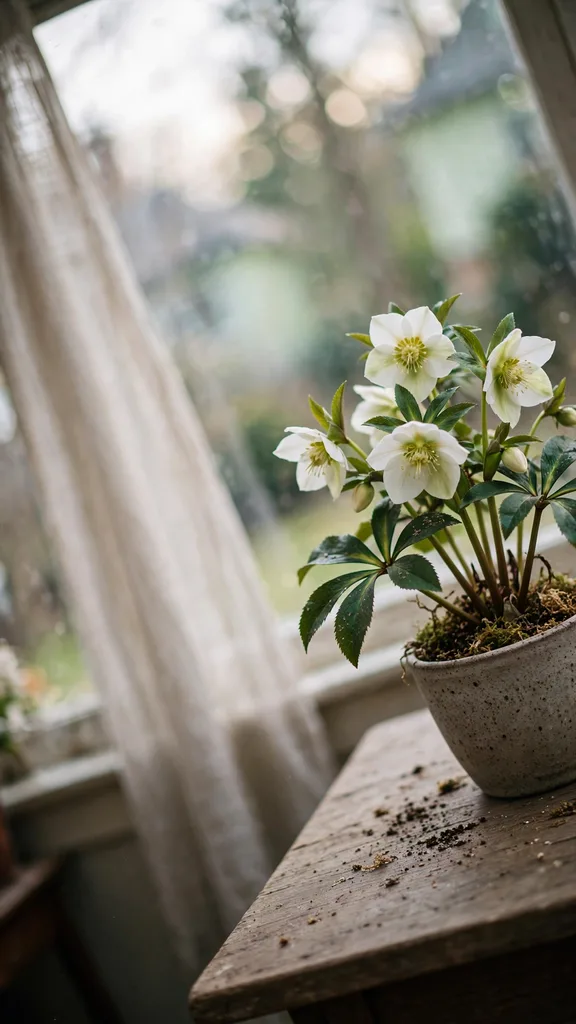
A potted hellebore serves the table for the holiday and plants out into a shady border in January, where it flowers every winter from then on. It is the table plant with the longest future in this list, a perennial wearing a centerpiece’s clothes for one week.
6. Christmas Cactus for the Table
The Christmas cactus flowers on cue in December, arching stems of pink, red, or white blooms that ask for a cool bright spot and almost no water. The NC State Extension Plant Toolbox entry for the Christmas cactus covers its profile as a holiday houseplant whose blooms are triggered by short days and cool nights.
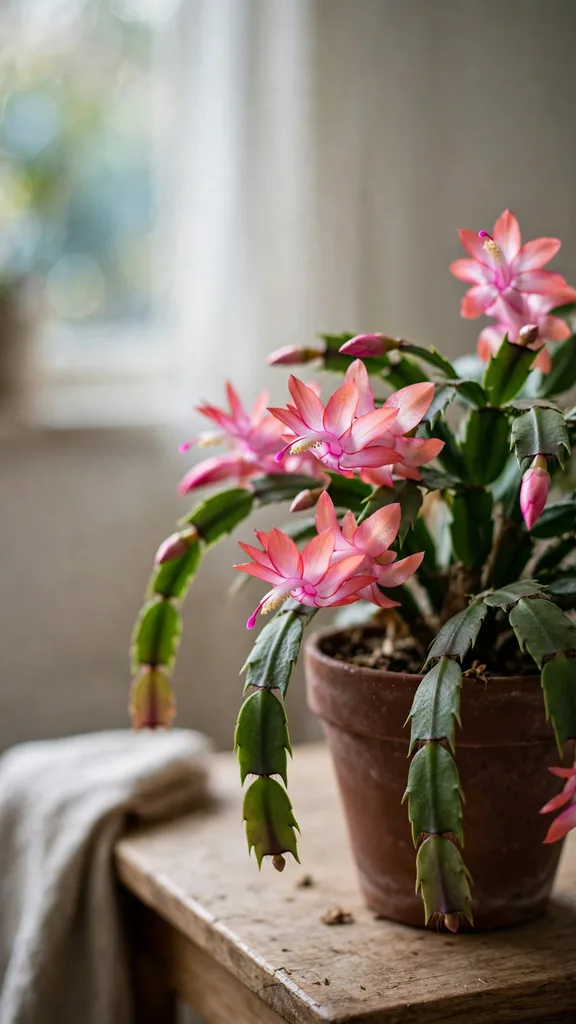
It is also the traditional answer for pet households, widely listed as non-toxic to cats and dogs, which is why it reappears in spirit in the pet-safe section below. A Christmas cactus is a decades plant: the one on this year’s table may be flowering on a grandchild’s.
7. Poinsettia for the Table
The poinsettia is the default Christmas plant for a reason: a mound of red, pink, white, or marbled bracts that reads as Christmas from the doorway. As a table plant it wants a low, wide pot and the center of the table to itself.
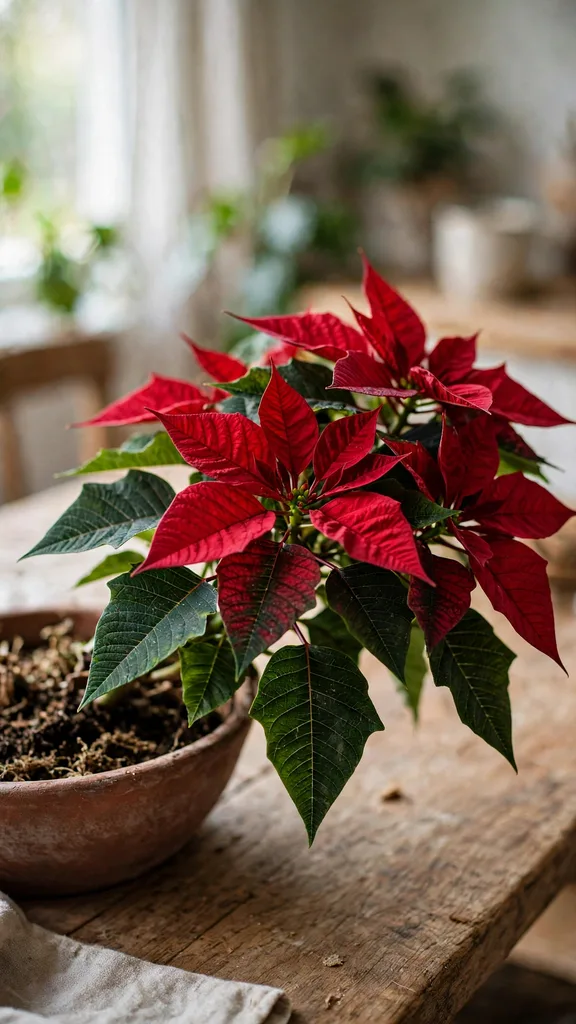
Keep it out of drafts and away from heating vents, water when the surface dries, and it holds its color for 6 to 8 weeks, well past the season. Its reputation for danger is overstated; the sap is a mild irritant, though the plant still belongs out of nibbling reach like everything on a table.
8. Kalanchoe for the Table
Kalanchoe brings clusters of small, long-lasting flowers in red, orange, pink, or yellow over succulent leaves, a table plant that thrives on the neglect a busy December provides. Its flowers hold for weeks without a single deadhead.
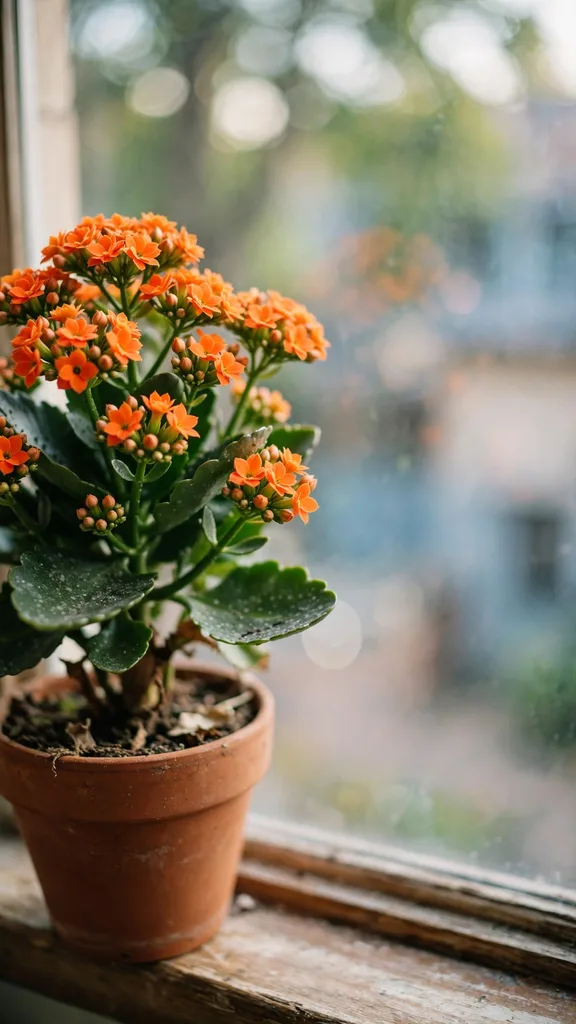
Give it bright light and let the soil dry between waterings. A kalanchoe is the table plant for households that travel at Christmas: water it, leave it, and it will be in flower when you return, which cannot be said for anything else in this section.
9. Phalaenopsis Orchid for the Table
A phalaenopsis orchid is the elegant table plant: one arching stem of long blooms over a small pot, in white for formality or pink for warmth. Its flowers last longer than the season, often 2 to 3 months, making it the best value per week of bloom here.
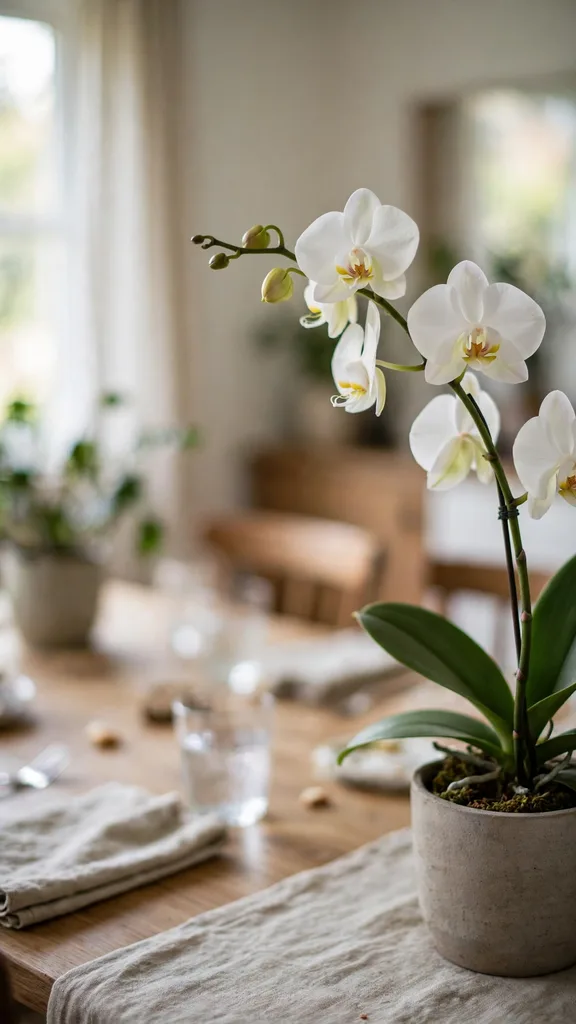
Water it weekly by soaking the bark and draining it fully, and keep it in bright indirect light. An orchid on the table looks like a florist’s arrangement and behaves like a houseplant, which is the whole trick of the thing.
10. Primrose for the Table
Primroses bring the widest color range of any plant here, jewel reds, yellows, blues, and pinks in low rosettes that suit small tables and place settings. A row of three in matching pots down a table is a centerpiece built from pocket money.
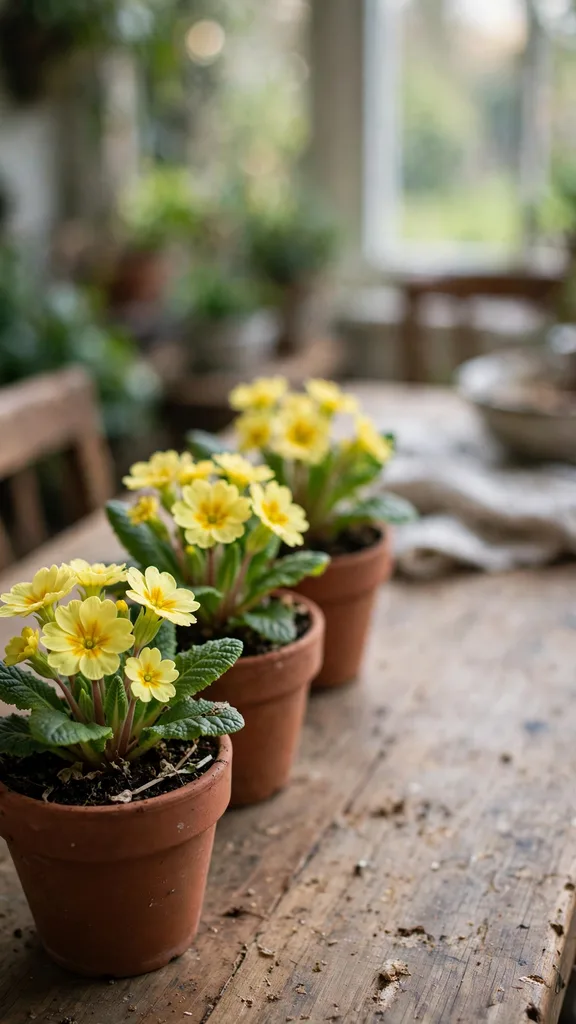
Primroses want cool air and steady moisture; a hot room fades them in days, a cool windowsill keeps them for weeks. After the holiday they plant out into spring borders in mild climates, where they flower again as the garden wakes.
11. Forced Bulb Trio as a Living Gift
A pot holding three forced bulbs, an amaryllis, a hyacinth, paperwhites, potted up and given in bud, is a living gift that opens after it is received. The giver supplies the pot and the patience; the recipient gets the flowering. The bulb-by-bulb method sits in growing amaryllis bulbs for Christmas blooms.
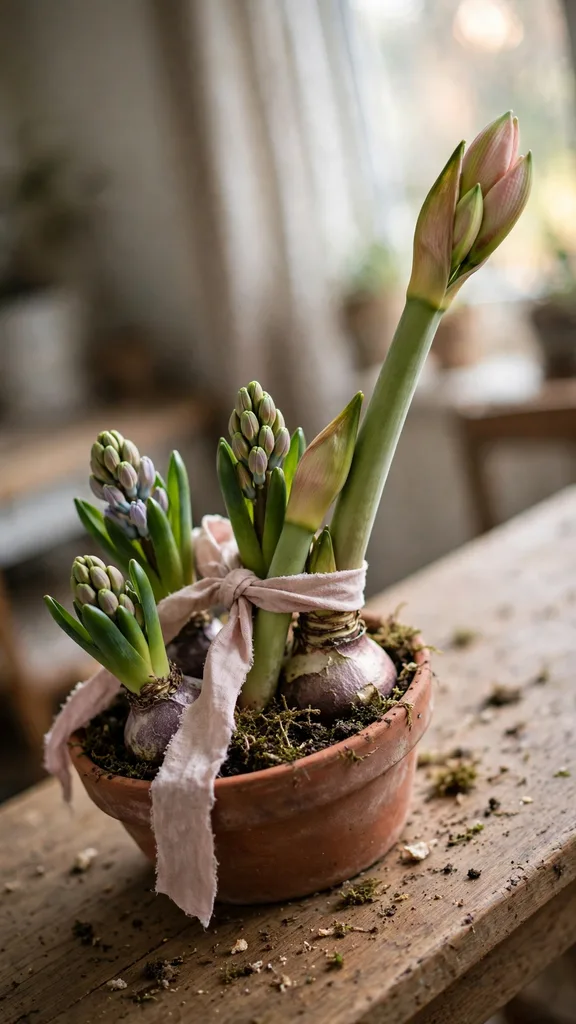
Give it in bud with a card naming the flowers to come and the one instruction that matters: water sparingly until growth shows. A trio pot flowers in sequence across January, which spreads the gift over the darkest month.
12. Rosemary Tree as a Living Gift
A rosemary cone in a pot is the gift that seasons the recipient’s cooking all winter. It arrives as a small tree, lives on a bright windowsill, and gives clippings with every roast. For a cook, it is the most useful plant in this list.
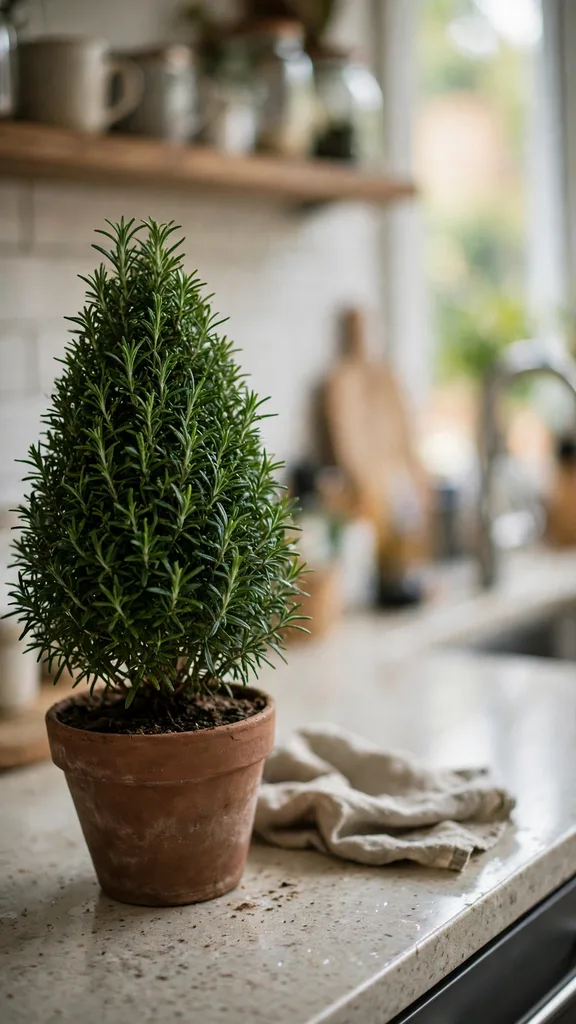
Warn the recipient about its one dislike: soggy soil in dim light. A rosemary tree with sun and restraint will still be giving clippings at Easter, long after the cut flowers and chocolates it arrived alongside are gone.
13. Echeveria as a Living Gift
An echeveria rosette in a small pot is the gift for the friend who kills plants: it asks for a bright sill and a tablespoon of water now and then, and it looks like a carved stone flower in the meantime.
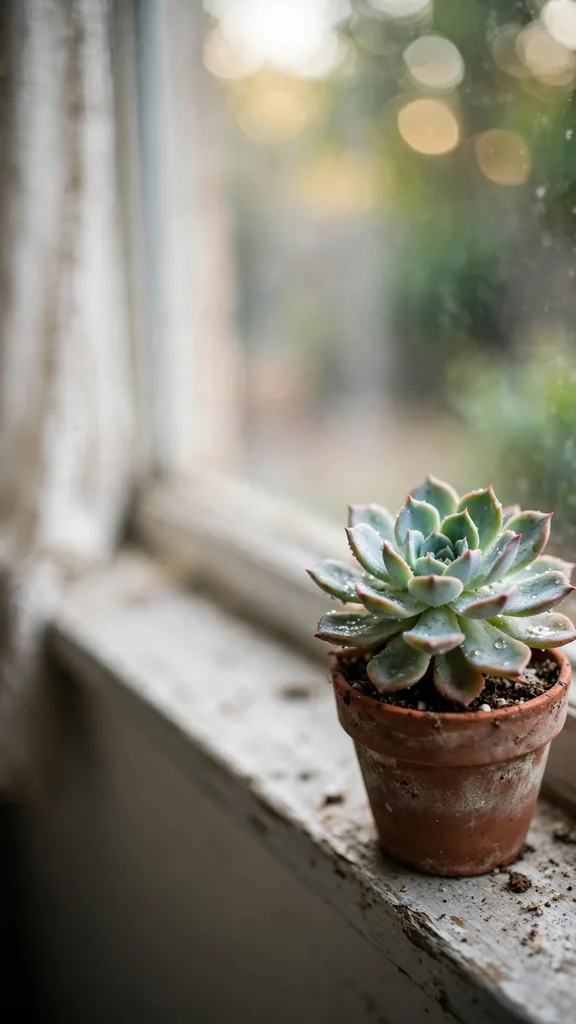
Succulents travel well and wrap easily, which makes them the reliable posting gift of the list. Choose a rosette with tight, unmarked leaves, and tuck a care line in the pot; the plant does the rest, slowly and beautifully.
14. Mini Orchid as a Living Gift
A miniature phalaenopsis is the orchid scaled for desks and small flats, with the same months-long bloom on a stem half the size. As a gift it reads luxurious and costs modestly, a useful combination in December.
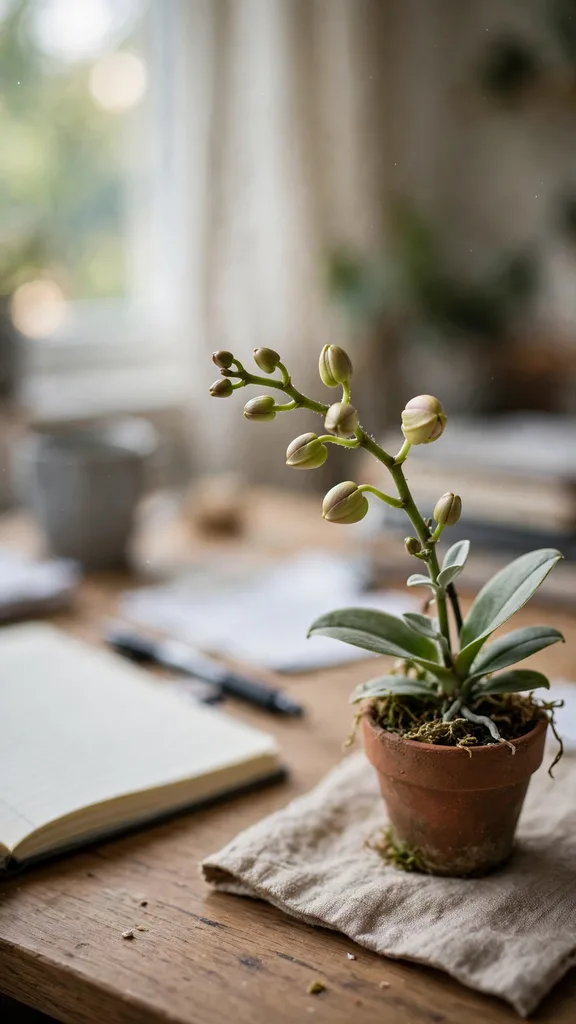
It wants the same care as its full-sized relative: a weekly soak, bright indirect light, no ice cube fashions unless the giver enjoys arguments. Given in bud, it flowers into February, outstaying every other present under the tree.
15. Lavender as a Living Gift
A pot of lavender given in winter is a promise of summer: gray-green foliage now, scent and flowers later, and a plant for the garden when spring comes. It suits gardeners, who are the easiest people to give plants to and the most critical.
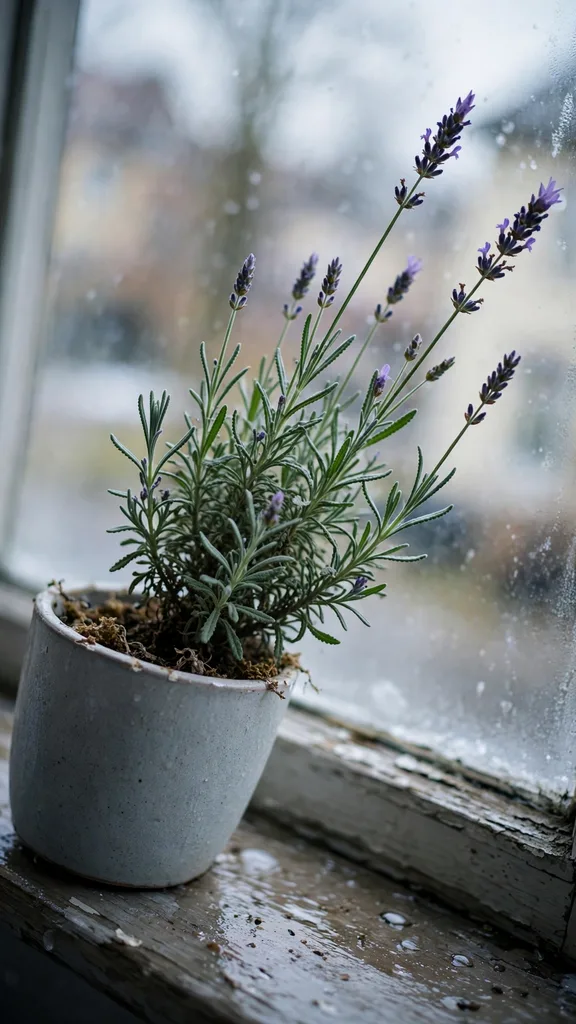
Keep it cool and bright indoors and plant it out into sun and sharp drainage after frost. A lavender that winters on a cold windowsill arrives at spring planting tougher than a greenhouse-soft one, which the recipient’s garden will appreciate.
16. Herb Pot as a Living Gift
A pot of mixed culinary herbs, thyme, sage, chives, parsley, is a gift that gets used the week it is given. Plant it as a small kitchen garden in one container, with the herbs the recipient actually cooks with.
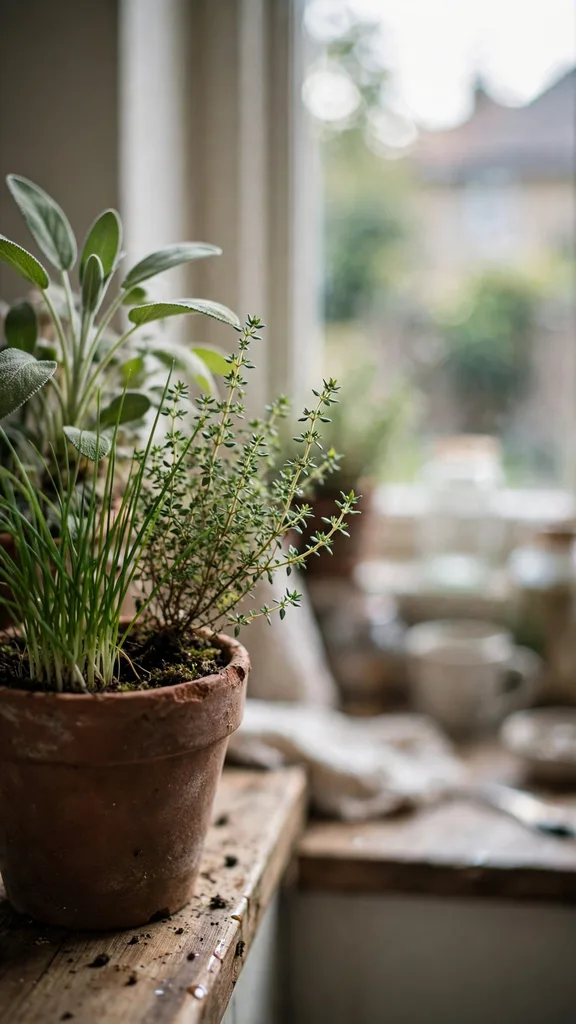
Herbs indoors want the brightest window in the house and harvesting little and often, which the recipient will do anyway, and a herb pot given at Christmas reaches its best in February, when the windowsill garden is the only garden going. It earns its sill.
17. Tillandsia on Driftwood as a Living Gift
An air plant mounted on a piece of driftwood or cork is the gift for small spaces: no soil, no pot, just a sculptural plant that lives on misting and bright air. It suits the friend whose flat has no windowsill to spare.
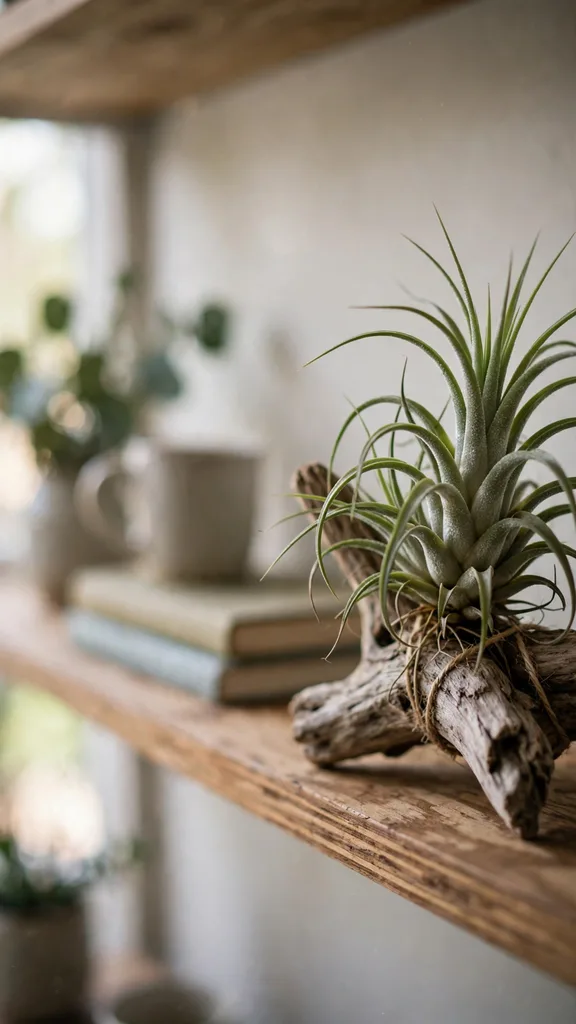
Tell the recipient the whole care regime on the card: mist or soak weekly, shake dry, bright light. An air plant is a pet of a plant, undemanding and strange, and it starts more conversations than any gift its size.
18. Norfolk Island Pine Sapling as a Living Gift
A young Norfolk Island pine in a pot is a tree as a gift: a foot tall now, a floor-standing houseplant tree in a few years, and a Christmas tree every December of its life. It is the gift that grows into the recipient’s traditions.
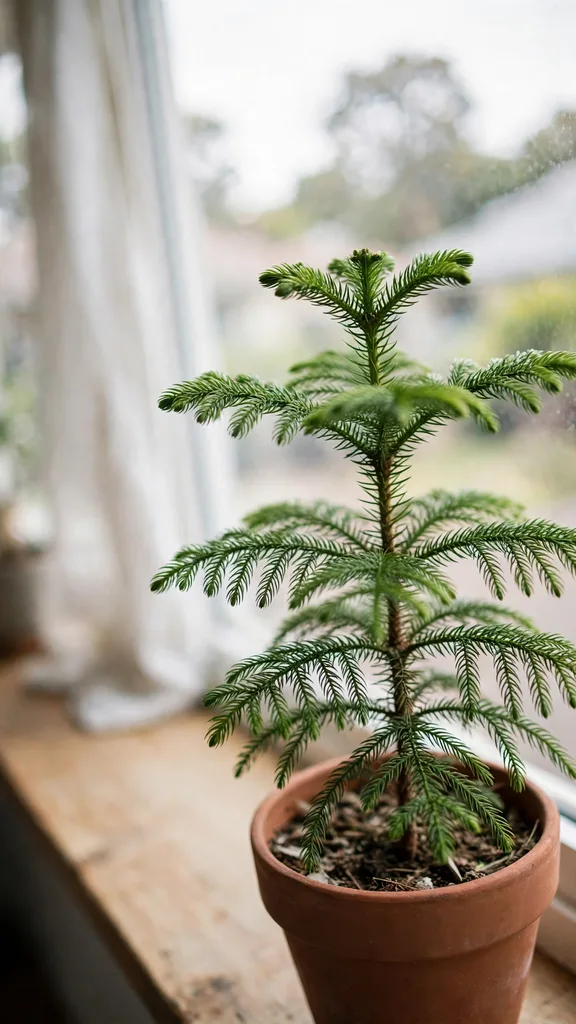
It wants bright light and regular watering, and it forgives the learning curve. Given to a young household, a Norfolk pine can be the tree in their photographs for a decade, which is a great deal of presence for one small pot.
19. Winter Jasmine for Scent
Jasminum polyanthum in a pot climbs a small hoop and opens clouds of white, intensely scented flowers through winter. One plant perfumes a whole room in the evenings, when the buds open and the scent is strongest.
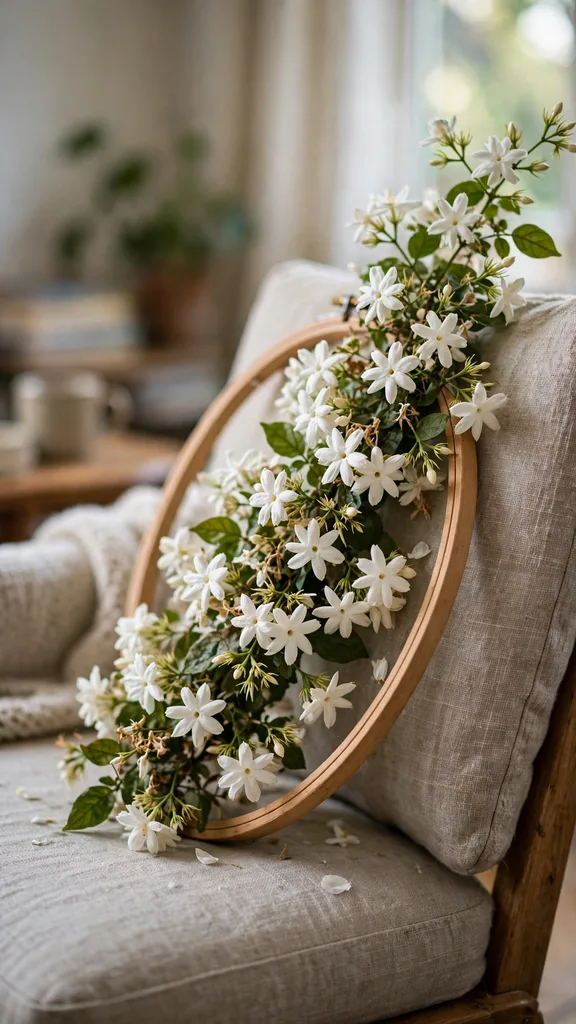
Give it bright light and a cool room if you can; warmth without light makes it leggy. A jasmine by a reading chair is the scented plant at its best, close enough to enjoy and cool enough to flower well.
20. Eucalyptus Stems for Scent
Cut eucalyptus stems in a vase bring the clean, camphor scent and the silver-blue foliage that modern Christmas styling runs on. The stems are cut, not potted, the one cheat in this section, and they dry in the vase to keep their looks for months.
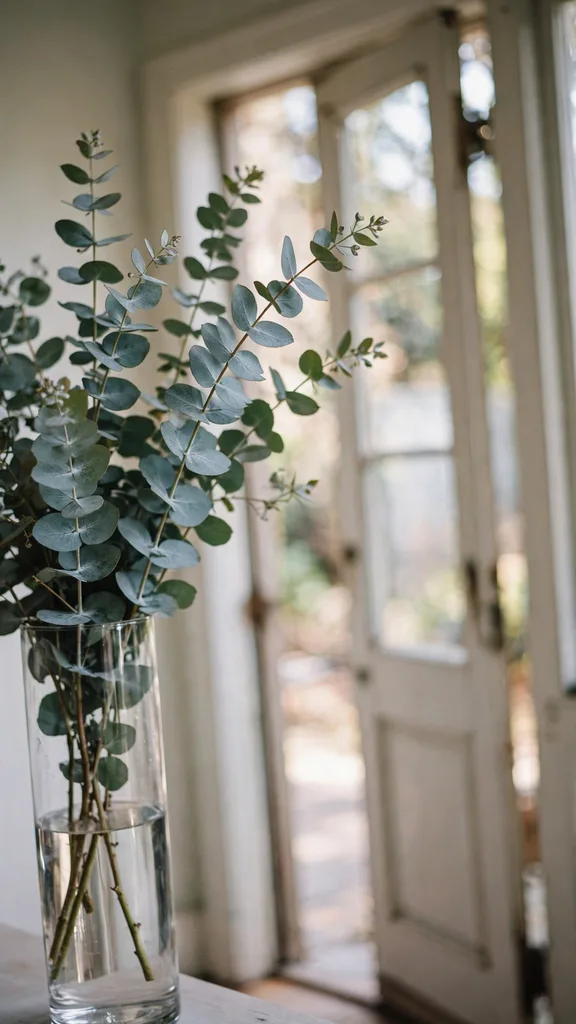
Hang a bunch in the shower or stand it by the door and the scent releases with warmth and movement. Eucalyptus pairs with everything in the color sections and asks for nothing but water it barely drinks.
21. Lemon Tree for Scent
A potted lemon tree scents a room twice: the blossom’s perfume in winter and the fruit’s zest whenever a leaf is brushed. Meyer lemons flower and fruit indoors through the dark months, which makes the tree a scent plant that also produces.
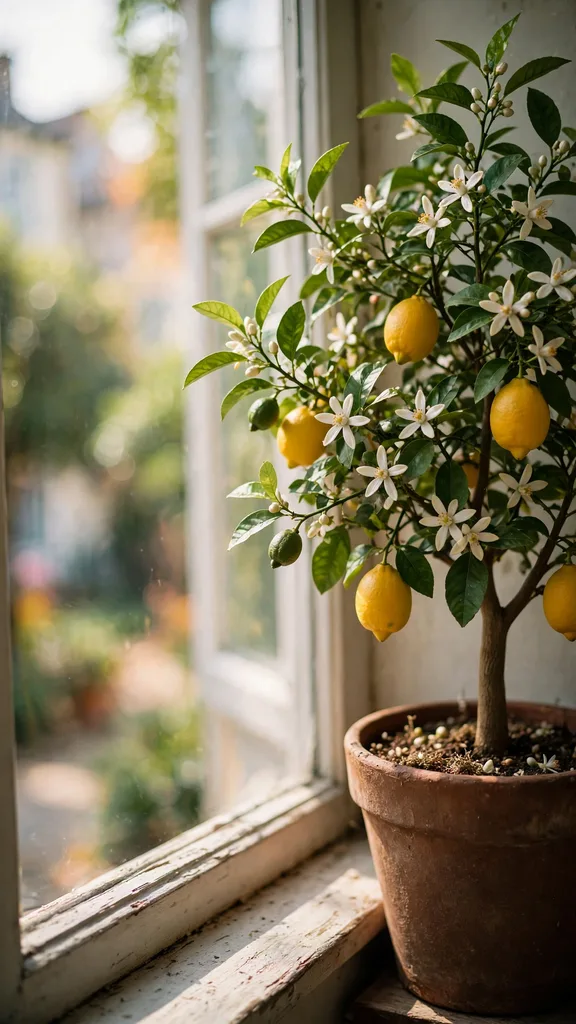
It wants the brightest light in the house and steady watering. A lemon tree by a sunny window in December, in flower and fruit at once, is the Mediterranean answer to the pine-scented north, and neither is wrong.
22. Dwarf Conifer for Pine Scent
A small potted conifer, a dwarf spruce or juniper, brings the resin scent that says Christmas before a single decoration appears. Crush a few needles when you pass and the room smells like a forest clearing.
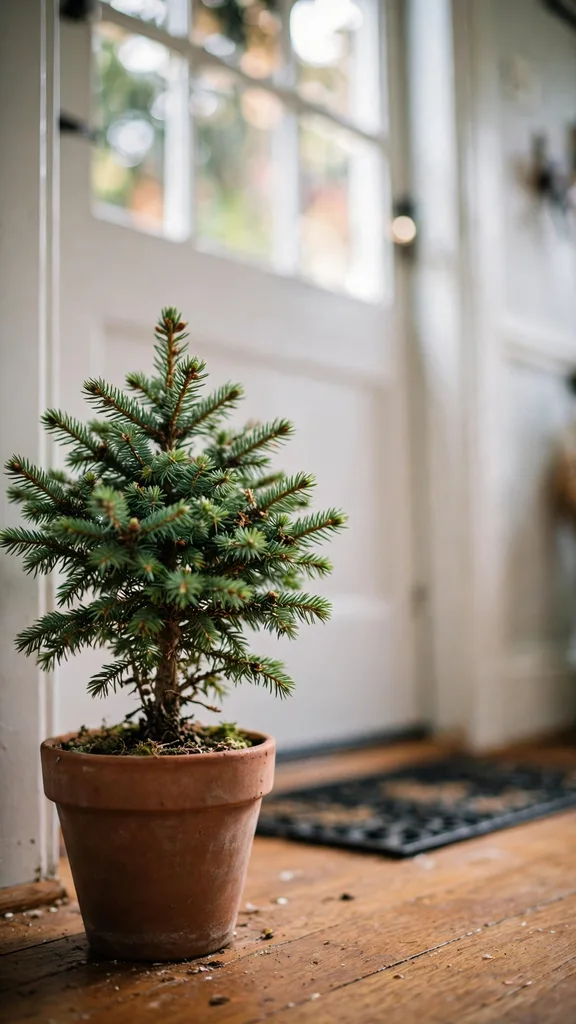
Keep it cool and bright, outdoors if the climate allows, since conifers sulk in hot dry rooms. A dwarf conifer is also a garden plant in waiting: after the season it can pot on or plant out, scenting the garden path for years.
23. Scented Geranium for Scent
Scented geraniums carry their perfume in their leaves: rose, lemon, mint, and spice varieties that release scent when brushed. A pot by a doorway or a chair arm perfumes the traffic of the house all season.
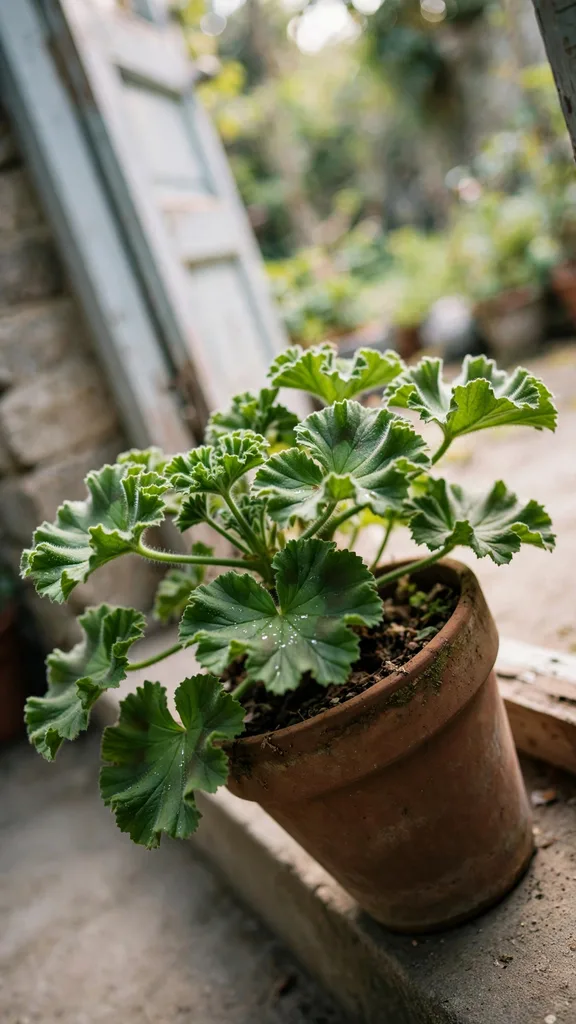
They want bright light and lean watering indoors, and they take a light trim without complaint. A scented geranium is the scent plant for people who find flower perfume heavy; the leaves scent the air only when touched, which is perfume with manners.
24. Gardenia for Scent
A gardenia in flower is the luxury scent plant: white blooms with a perfume that fills a house from one plant. It is also the diva of this list, wanting humidity, steady warmth, and even moisture, and dropping its buds when the world disappoints it.
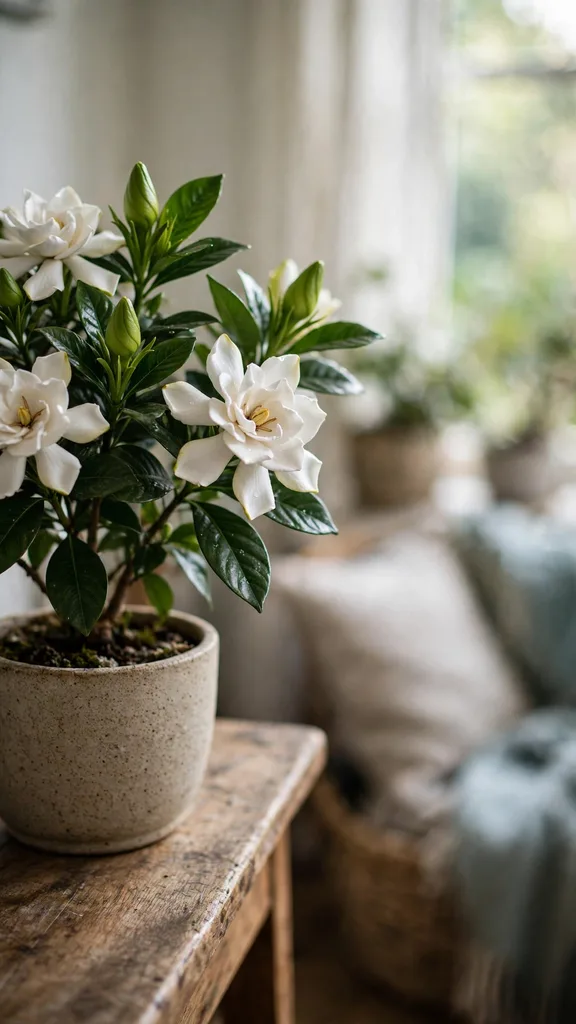
Give it a pebble tray, bright indirect light, and no moves once the buds set. A gardenia that flowers at Christmas is a triumph the household will discuss for years, which is exactly the status the plant believes it deserves.
25. Parlor Palm for Pet-Safe Rooms
The parlor palm is the pet-safe section’s small tree: feathery fronds on a cluster of stems, tolerant of indoor light, and widely listed as non-toxic to cats and dogs. It brings the green architecture of a palm to rooms where animals rule.
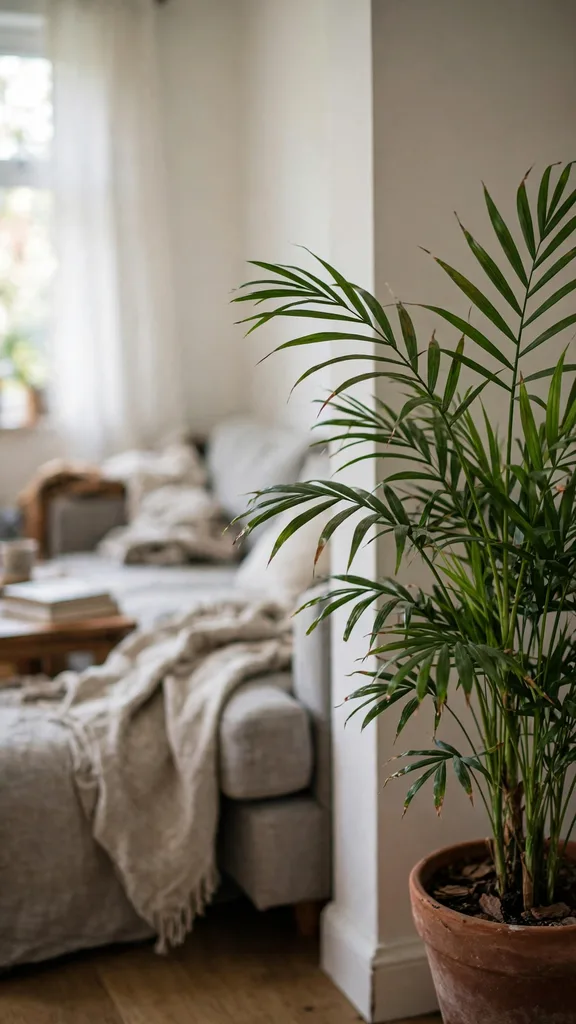
It wants steady moisture and indirect light and grows slowly enough to stay table-sized for years. A parlor palm is the plant that survives both the cat and the calendar, which is the pet-safe brief in one pot.
26. Calathea for Pet-Safe Rooms
Calatheas carry the most patterned leaves in the houseplant world, stripes, brushstrokes, and purple undersides, and they are widely listed as safe around cats and dogs. A calathea decorates by foliage alone, no flowers required.
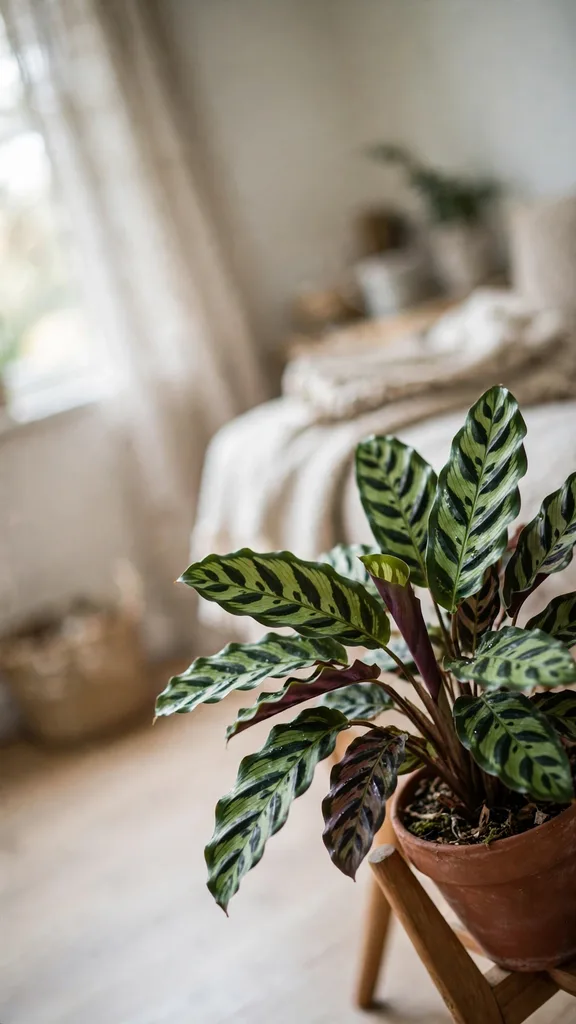
They want humidity and even moisture and will crisp at the edges in dry heated air to tell you so. Group a calathea with other plants on a tray and the shared humidity keeps the patterns perfect through the season.
27. Peperomia for Pet-Safe Rooms
Peperomias are the small, various, pet-safe pot plants: watermelon-striped, rippled, trailing, all widely listed as non-toxic and all content on a windowsill. A trio of different peperomias makes a pet-safe collection in miniature.
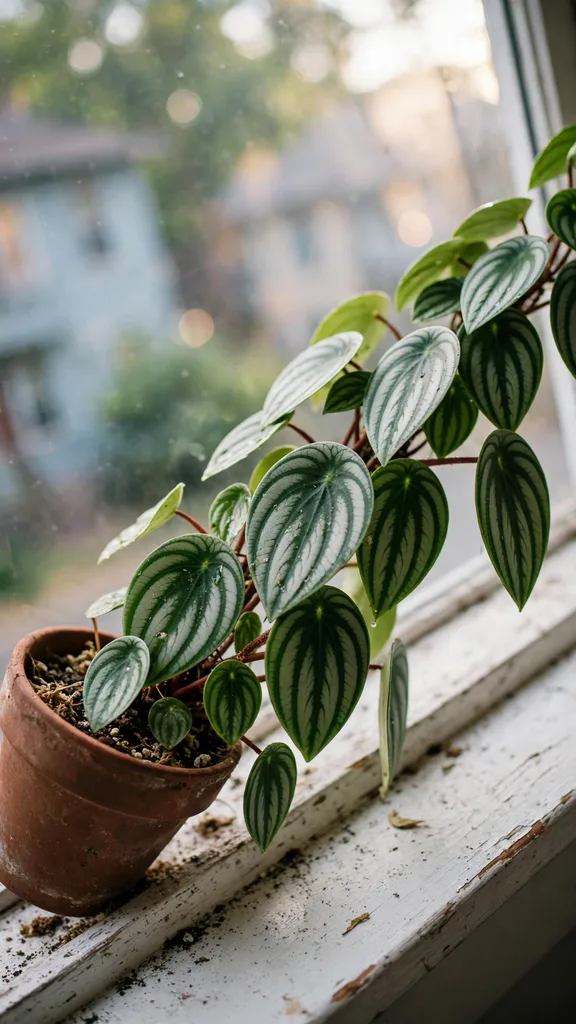
They store water in their leaves and forgive irregular watering, which suits December. Small pots, bright light, and a light hand with the can are the whole regime, and the variety within the genus keeps a collector busy for years.
28. Boston Fern for Pet-Safe Rooms
A Boston fern is the generous one: arching fronds in a hanging basket or on a stand, softening any room, and safe around pets by the standard lists. It is the plant that makes a winter room feel like a conservatory.
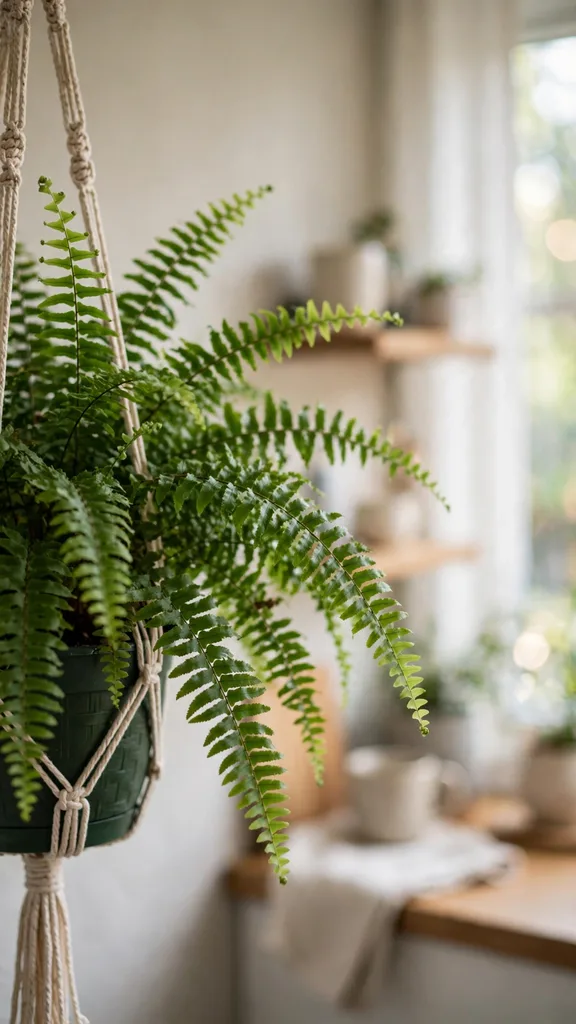
Ferns want humidity most of all; mist it, tray it, or hang it in the bathroom’s steam. A Boston fern that gets its moisture will still be arching in spring, when it can move to a shady porch and double in size by autumn.
29. African Violet for Pet-Safe Rooms
African violets flower through winter in purple, pink, and white over velvet leaves, and they sit on the non-toxic lists that pet households consult. A violet in bloom on a winter windowsill is color that asks for almost no space.
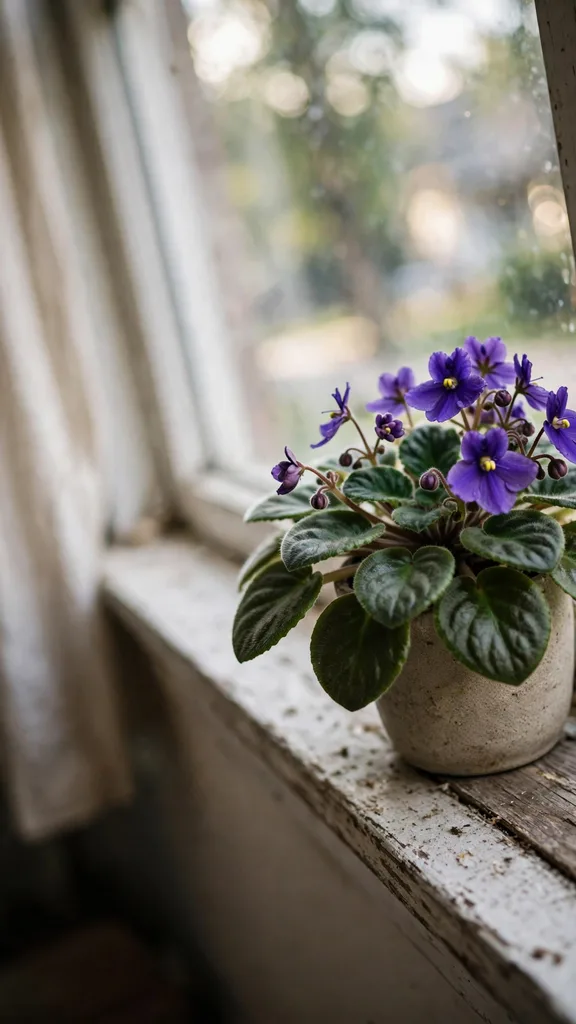
Water from below to keep the leaves unmarked, and give it bright indirect light. Violets bloom in cycles all year with steady care, so the Christmas flowers are the first show, not the only one.
30. Spider Plant for Pet-Safe Rooms
The spider plant is the indestructible pet-safe classic: arching striped leaves and a fountain of baby plantlets on long stems, which the cat will bat and the plant will survive. It tolerates light, shade, and irregular watering with equal calm.
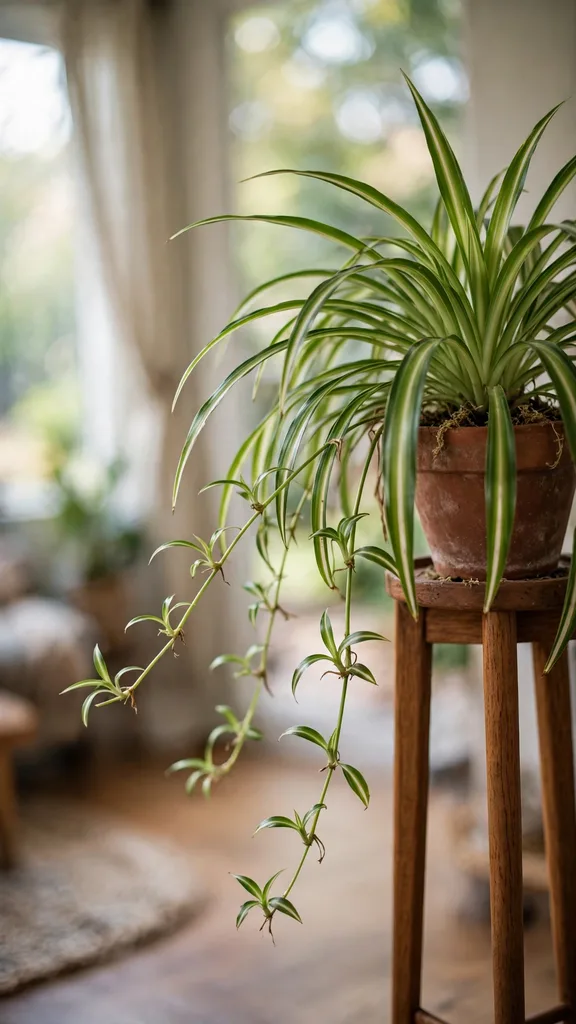
Hang it or stand it high and the plantlets cascade out of paw range, mostly. The babies root in water in a fortnight, making the spider plant a gift factory as well as a decoration, which the living-gift section would approve of.
31. Haworthia for Pet-Safe Rooms
Haworthias are small rosette succulents with patterned, pointed leaves, widely listed as safe for pets, unlike their look-alike aloes. A haworthia in a small pot is a desk plant with architecture, asking for light and very little water.
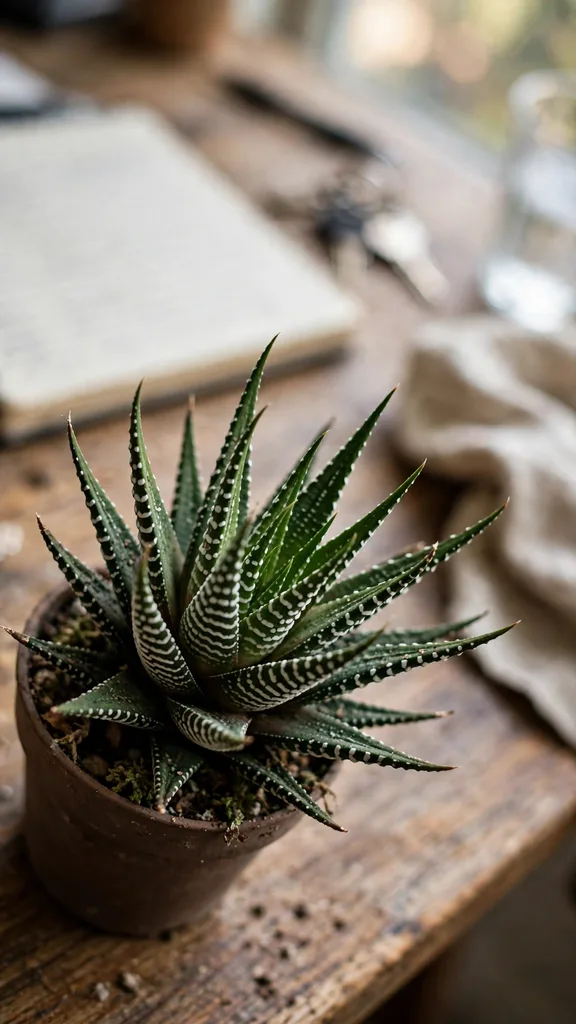
They suit the pet household that also travels: a haworthia can wait a month between drinks in winter. Group three in a shallow bowl and the bowl decorates like a tiny rock garden, indoors, indefinitely.
32. Polka Dot Plant for Pet-Safe Rooms
The polka dot plant splashes its leaves with pink, red, or white spots, a foliage plant that decorates like a flower, and it is listed as non-toxic for pet households. In a small pot it brings the table color without a single bloom.
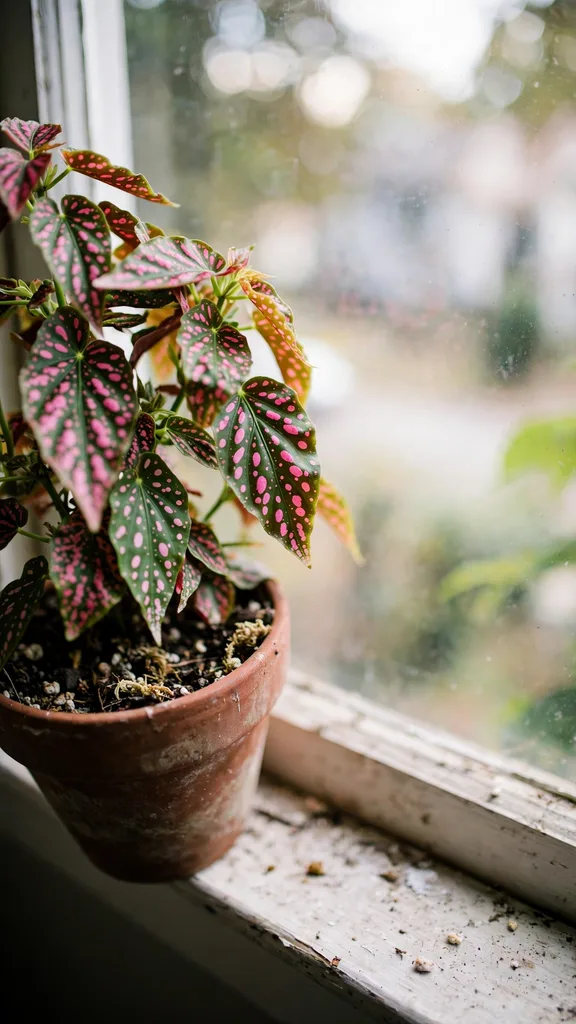
It wants bright light to keep its spots bright and pinching to keep it bushy. A polka dot plant fades in dim rooms, so give it the windowsill and it will spot happily through the season and beyond.
33. Prayer Plant for Pet-Safe Rooms
The prayer plant folds its patterned leaves up at night and opens them by day, a small daily performance in a pot, and it is a standard entry on pet-safe lists. Its red-veined leaves suit Christmas colors without a flower in sight.
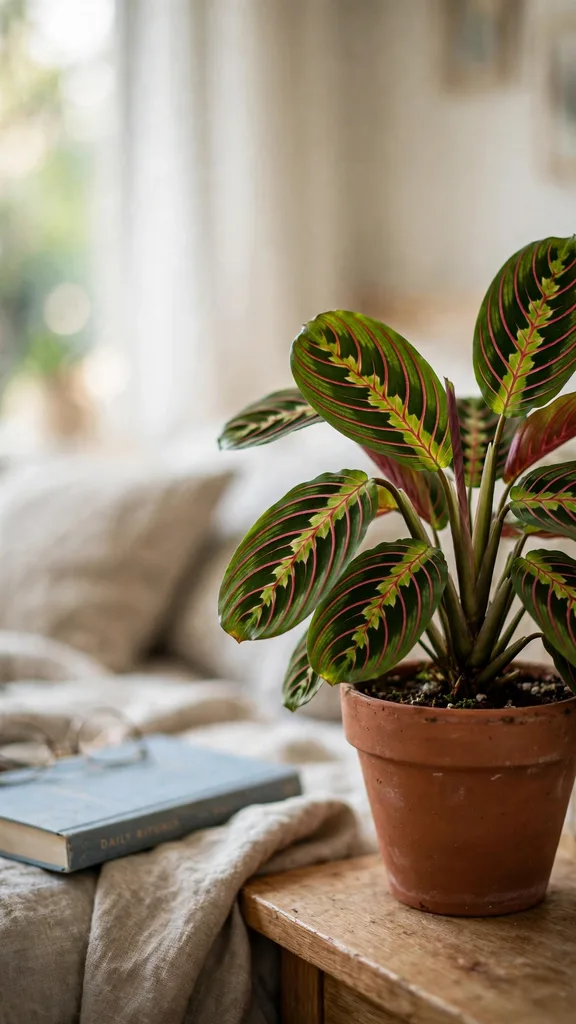
It wants humidity and even moisture like its calathea cousins, and repays them with unmarked leaves. A prayer plant on a bedside table performs its folding where someone is there to notice, which is the point of it.
34. Snake Plant for Low-Light Rooms
The snake plant is the low-light survivor: upright sword leaves that tolerate the dim corner, the hallway, the room the sun forgot, and watering measured in months. Dressed with a pot worth looking at, it decorates the rooms other plants refuse.
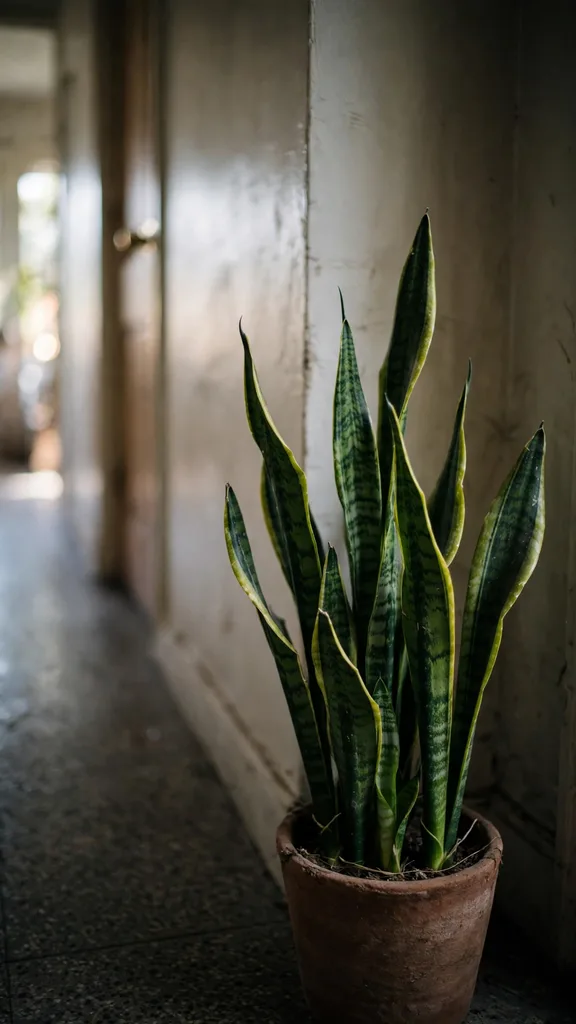
Its one demand is restraint: in low light it drinks almost nothing, and overwatering is the only way to kill it. A snake plant placed in December will be standing in the same corner, unchanged and unbothered, next December.
35. ZZ Plant for Low-Light Rooms
The ZZ plant’s glossy leaflets shine in low light as if polished, and the plant stores water in its rhizomes to wait out neglect. It is the office plant that comes home for Christmas and improves the house’s darkest corner.
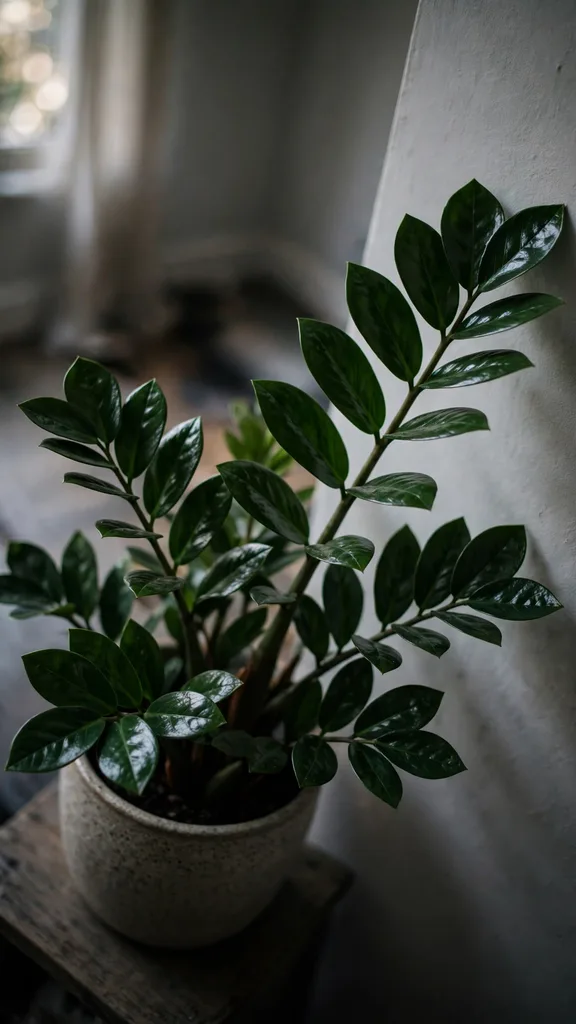
Water it rarely and let it be; ZZ plants resent attention more than absence. Note for pet households that ZZ is not on the safe lists, so its corner should be one the animals do not graze. Every plant here has a room it suits; this one’s is the dim, pet-free one.
36. Pothos for Low-Light Rooms
Pothos trails from a shelf or a high pot in light too low for most plants, its marbled leaves keeping their pattern in all but true darkness. A trailing pothos over a bookcase is the low-light room’s garland that never comes down.
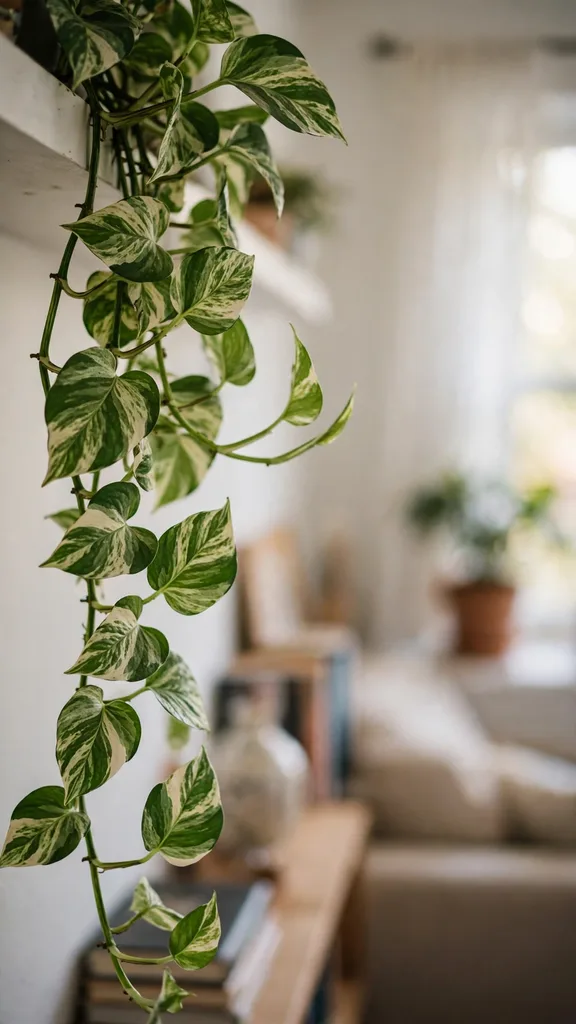
It roots in water from any cutting, so one plant becomes the house’s supply. Keep it out of grazing reach in pet households, since pothos is not a safe-list plant; on its shelf, it harms nothing and decorates everything below it.
37. Cast Iron Plant for Low-Light Rooms
The cast iron plant earned its name in Victorian parlors lit by gas: broad dark leaves that endure low light, drafts, and neglect that would finish modern plants. It is the period-correct Christmas plant for an old house’s dark rooms.
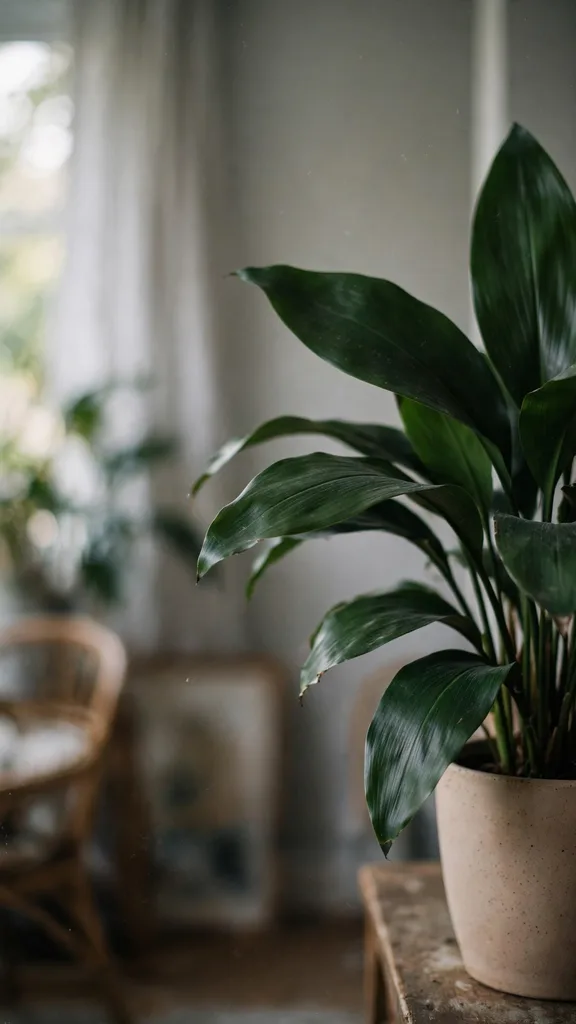
It grows slowly and asks for almost nothing, a drink when dry and a dusting of its leaves now and then. A cast iron plant is a decade plant; buy a good one once and it outlasts the furniture around it.
38. Chinese Evergreen for Low-Light Rooms
Chinese evergreens carry silver and cream patterns on their leaves that brighten dim rooms, and they tolerate the low light of north windows and interior halls. Red-edged varieties exist that suit the season’s colors exactly.
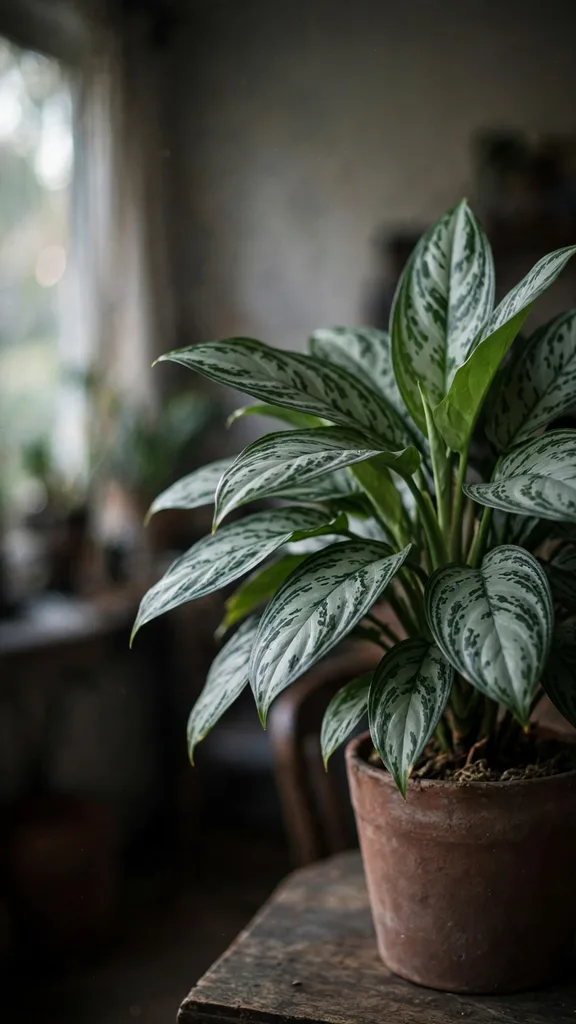
Keep the soil lightly moist and the plant out of cold drafts, and it will hold its pattern all winter. Like the ZZ, it carries a pet caution, so give it a room the animals do not frequent; within that room, nothing decorates dim light better.
39. Peace Lily for Low-Light Rooms
The peace lily flowers in low light, white spathes over dark leaves, the only plant here that blooms in the dim rooms. It droops dramatically when thirsty and recovers within hours of watering, the house’s most communicative plant.
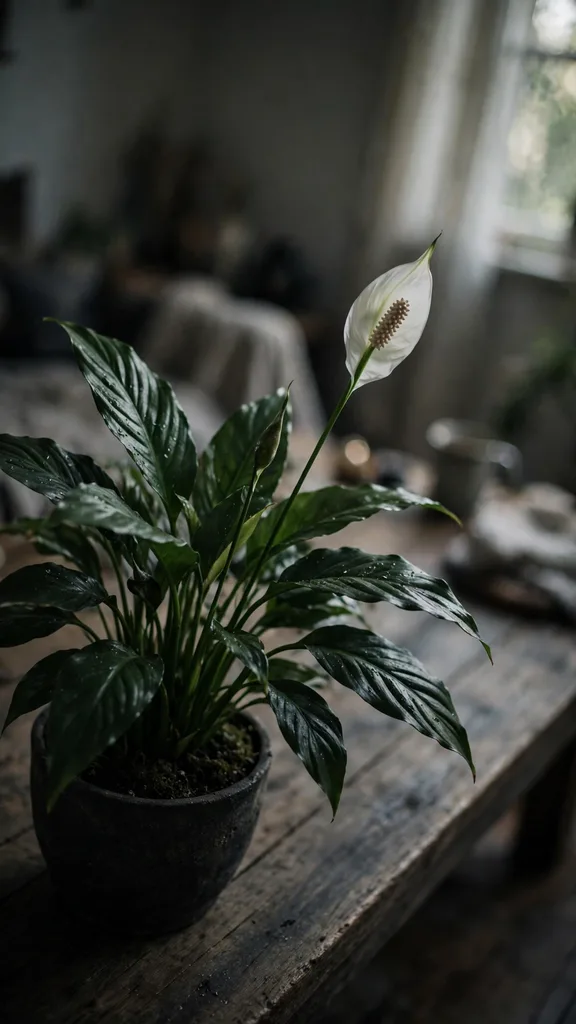
Keep it moist and out of the pet rooms: peace lilies are toxic to cats and dogs if chewed, so this one belongs where animals do not go. In its proper room it flowers through winter, which no other low-light plant here can promise.
40. Winter Heather for the Porch
Winter heather, Erica carnea, flowers from late autumn through winter in pink, white, or red over needle foliage, in pots on the porch where frost cannot stop it. A pair of heathers flanking the door blooms while everything else waits for spring.
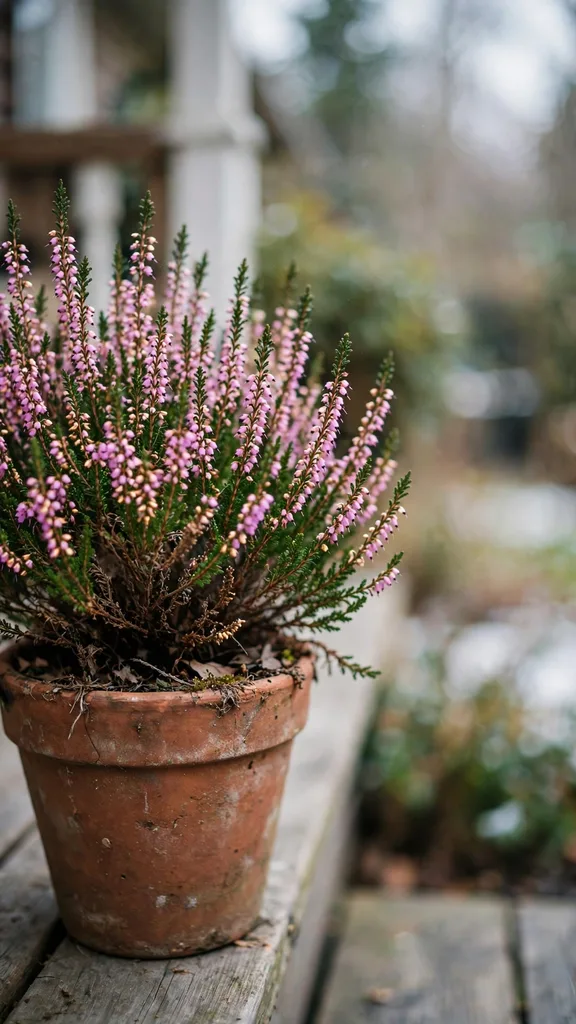
Heather in pots wants sharp drainage and water in dry spells, even in winter. After the season it plants out into acidic soil, where it spreads into the winter garden’s most reliable color, returning every year with no further orders.
41. Skimmia for the Porch
Skimmia carries clusters of red buds all winter that open to scented white flowers in spring, with glossy evergreen leaves the whole time. In a porch pot it looks decorated by nature: buds like berries, arranged for free.
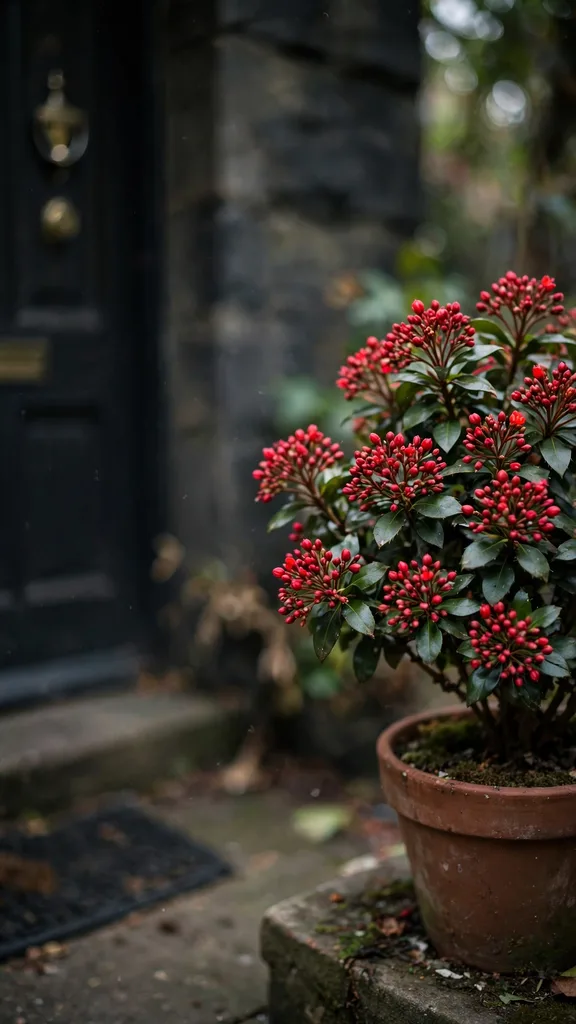
Skimmia wants shade or part shade and steady moisture, and it dislikes lime. A male and female plant together give berries as well as buds. It is the porch plant for the shady side of the house, where the heathers would sulk.
42. Ornamental Kale for the Porch
Ornamental kale turns purple, pink, and cream as the frosts deepen, a rosette that colors up exactly when the garden’s other color quits. In porch pots it is the winter annual that behaves like a flower for three months.
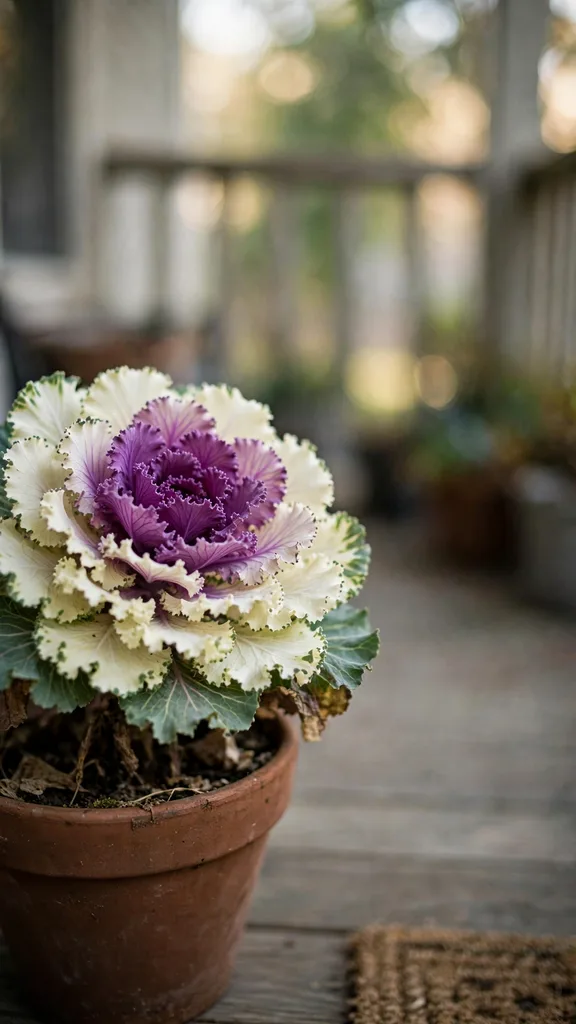
Cold is its fertilizer: the colors intensify with every frost. Water the pots in dry spells and pick off the odd yellowing leaf. By spring it bolts and retires, having held the porch’s color through the whole dark season at bedding-plant prices.
43. Winter Pansies for the Porch
Winter pansies flower through mild spells all winter, faces in purple, yellow, and white that close in hard frost and reopen in the thaw. A pot of them by the door is the porch’s optimist, blooming on every gentle day.
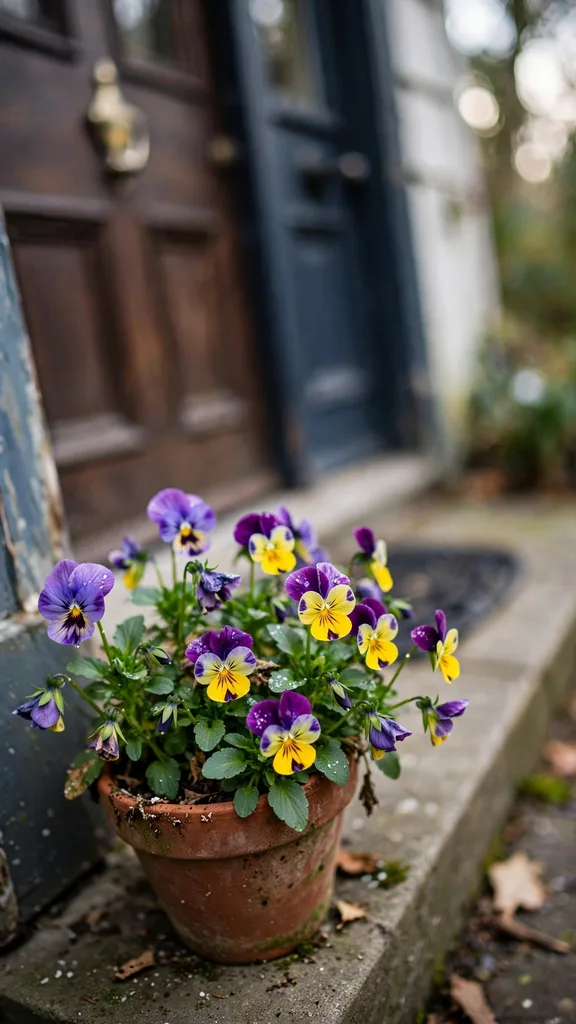
Deadhead them lightly and water in dry weeks, and the same pot flowers into spring. Pansies are the cheapest porch color here and the most cheerful, which is a combination worth a place in every winter pot.
44. Wintergreen for the Porch
Gaultheria, wintergreen, carries red berries over glossy evergreen leaves all winter in a low pot, with the mint scent of its namesake when a leaf is crushed. It is the porch plant that looks most like Christmas without being asked to.
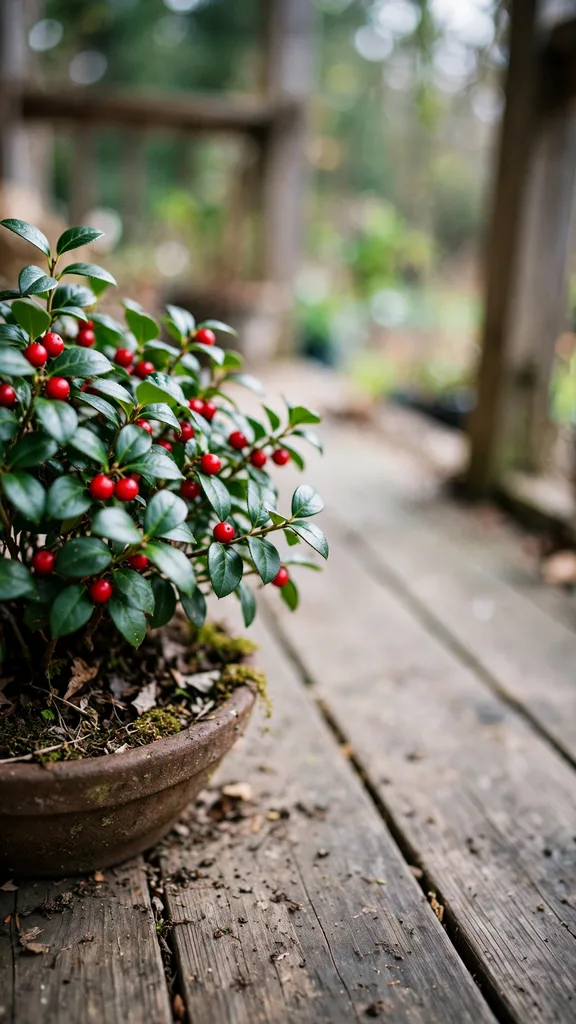
It wants acidic, moist soil and part shade, a woodland plant in a pot. The berries hold for months untouched by frost. Planted out in spring in the right soil, it spreads into ground cover that berries every winter from then on.
45. The Whole House Plan: One Plant per Room and Use
The finale is the plan itself: amaryllis and paperwhites on the table, a rosemary tree in the kitchen, a palm and a fern where the pets rule, a snake plant standing in the dark hall, heather and skimmia at the door, and one gift plant wrapped for a friend. A house planted by use has no room without a plant and no plant without a job.
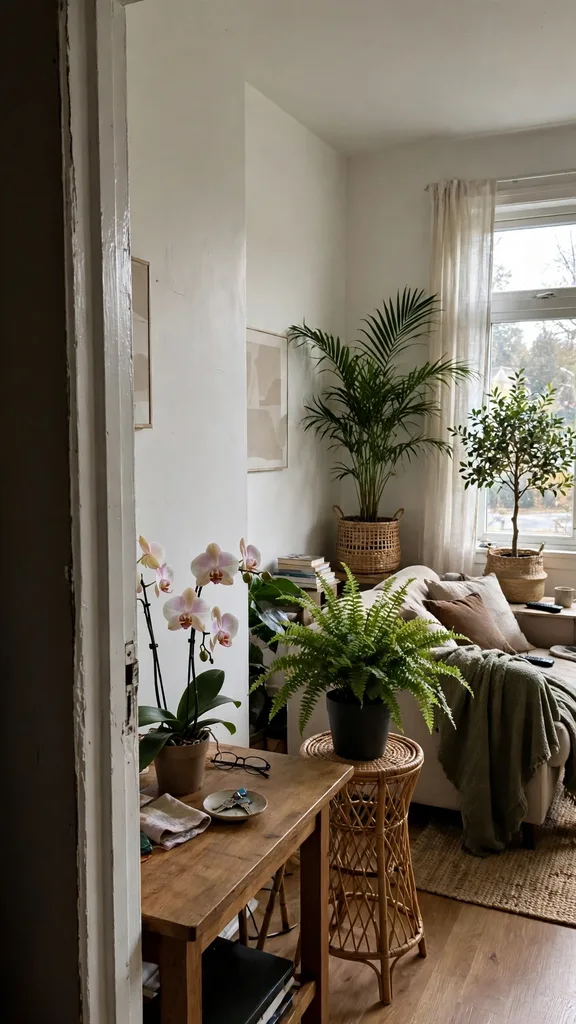
Build the plan from what you grow and what you keep: the forced bulbs you potted in October, the houseplants already in their corners, the porch pots that overwinter. Photograph the house at Christmas with its plants in place, and next year’s plan starts from the picture, which is how a collection becomes a tradition.
Frequently Asked Questions
Several traditional ones need care: amaryllis and paperwhite bulbs, hellebores, peace lilies, ZZ plants, pothos, and Chinese evergreens are all toxic to cats and dogs if eaten, and poinsettia sap is a mild irritant. None of this bans them from the house; it assigns them rooms. Keep the toxic plants on tables and shelves in rooms the pets do not use, and furnish the pet rooms from the pet-safe group: palms, calatheas, ferns, violets, and Christmas cactus.
The phalaenopsis orchid, whose flowers commonly last 2 to 3 months, followed by cyclamen and kalanchoe at many weeks, and poinsettia holding its color for 6 to 8 weeks in a cool room away from vents. Amaryllis and paperwhites give 2 to 3 weeks of bloom but can be staggered. For a table dressed from early December to New Year without replacement, the orchid is the single-plant answer, and a cyclamen is its understudy.
Snake plant, ZZ plant, cast iron plant, and pothos tolerate genuinely low light, and Chinese evergreen brightens dim rooms with patterned leaves. None of them flower there except the peace lily, which blooms in low light but belongs away from pets. In low light every plant drinks less, so the commonest killer in dark rooms is kindness with the watering can; water these plants rarely and let the soil dry.
Most of this list is perennial or a houseplant by nature: amaryllis and paperwhites rebloom with the right rest, cyclamen and orchids flower again, the herbs and conifers grow on, and the porch plants plant out in spring. The true annuals are the ornamental kale and the pansies, which retire in spring. A Christmas plant collection built by use becomes the house’s permanent planting, topped up each year rather than replaced.
An echeveria or a haworthia, which thrive on neglect in bright light, or a Norfolk Island pine sapling, which forgives the learning curve and becomes a tree. Avoid the divas: gardenia, and any forced bulb whose aftercare matters, unless the gift is a joke you are both in on. A living gift should match the recipient’s habits, not the giver’s hopes, which is why the succulents outsell everything in December.