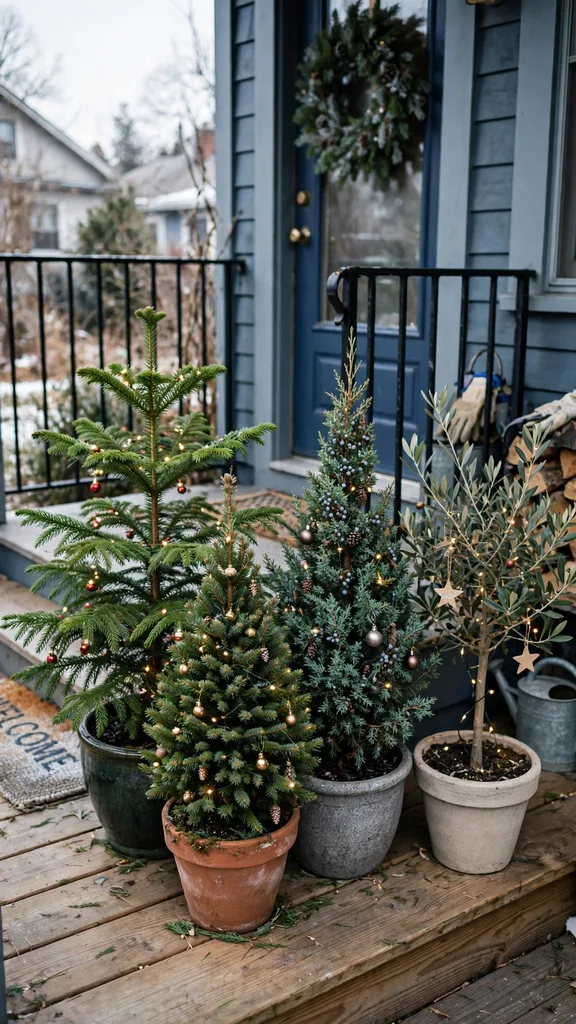
A potted Christmas tree is still working in January. It plants out, moves to the porch, or goes on being a houseplant, instead of going to the curb. This list gathers 45 potted trees, species first, then shapes, then displays for porch, patio, and indoors, and finally the care that keeps a living tree alive through its indoor week and growing for years. Every idea names the tree itself, because with a living tree the species is the decision everything else follows from.
The rules that govern the whole list are few. Living trees from outdoors tolerate only a short indoor stay, about a week, in the coolest bright spot away from heat. Pots freeze harder than ground, so outdoor trees need winter watering in dry spells. I keep one potted tree permanently and rotate smaller ones around it, which is the pattern this list quietly recommends: a forever tree at the center, and a supporting cast that plants out, herbs down, or fruits its way through the season.
| Tree | Best Place | After Christmas |
|---|---|---|
| Norfolk Island pine | Indoors, bright room | Houseplant, grows on |
| Dwarf Alberta spruce | Porch or cool room | Pot or border for years |
| Rosemary cone | Kitchen or tabletop | Herb again |
| Container fir or spruce | Indoors one week | Plants out in January |
| Olive or bay | Patio or bright room | Patio tree, clips for cooking |
| Lemon or kumquat | Brightest window | Fruits through winter |
1. Norfolk Island Pine, the Indoor Classic
The Norfolk Island pine is the potted Christmas tree that never has to leave: a tropical conifer with perfect tiered whorls of soft needles, grown as a houseplant and dressed with the lightest ornaments its branches can hold. The NC State Extension Plant Toolbox entry for Norfolk Island pine profiles it as an indoor tree, which is the point: in cold climates it lives in the house all year and puts on its decorations in December.
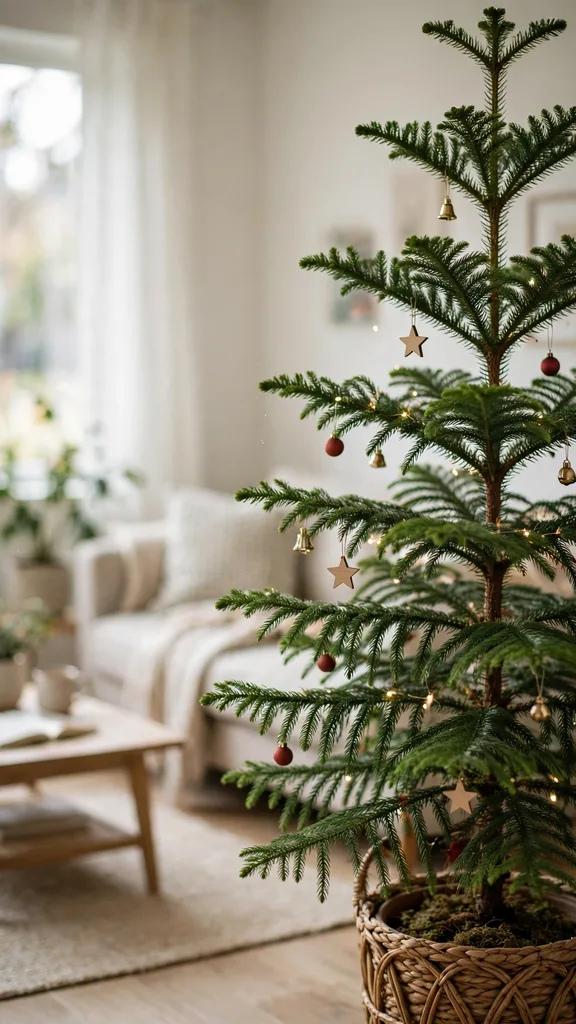
Keep it in bright light, water when the top inch dries, and turn the pot a quarter each week so the tiers grow evenly toward the light. A Norfolk pine bought at 3 feet becomes a 6-foot tree in a few good years, graduating from tabletop to floor without ever being replaced.
2. Dwarf Alberta Spruce in a Pot
The dwarf Alberta spruce is the cone-shaped spruce sold everywhere in December, dense, slow, and symmetrical enough to look clipped without touching it. In a pot it serves as a tabletop tree this year and a porch tree for years after, growing only 2 to 3 inches a year.
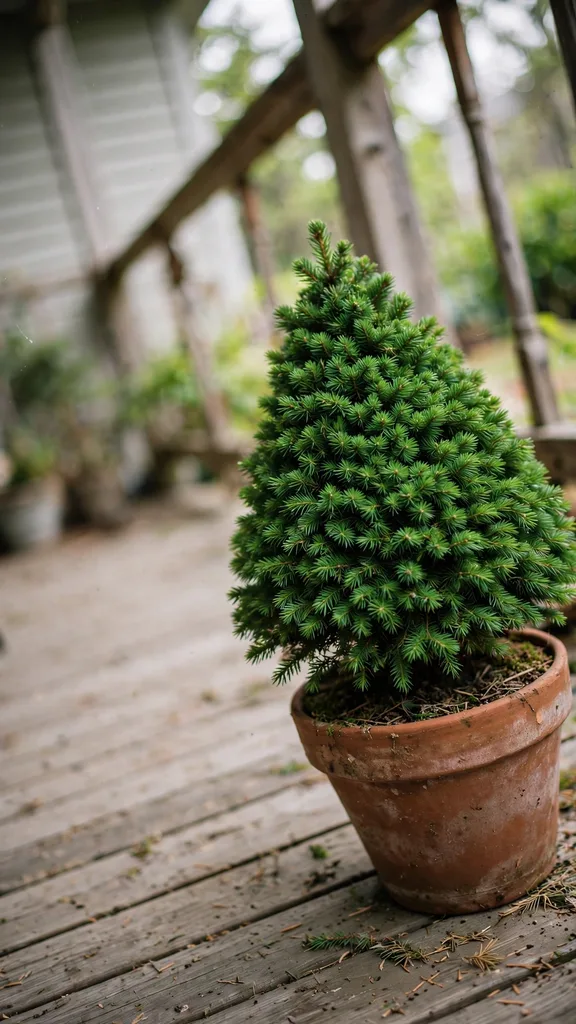
It wants cold. Keep a potted Alberta spruce outdoors or in the coolest bright room, because warm dry indoor air invites the spider mites that love it, and a mite-riddled spruce is a sorry sight by January. After Christmas it can stay in its pot on the porch for years, or plant out into a border where its cone anchors the planting in every season.
3. Rosemary Trimmed as a Tabletop Tree
A rosemary plant pruned into a cone is the smallest real tree on this list and the only one that seasons dinner. Nurseries sell them ready-shaped in December; a garden rosemary in a mild climate can be clipped into the same cone across a summer.
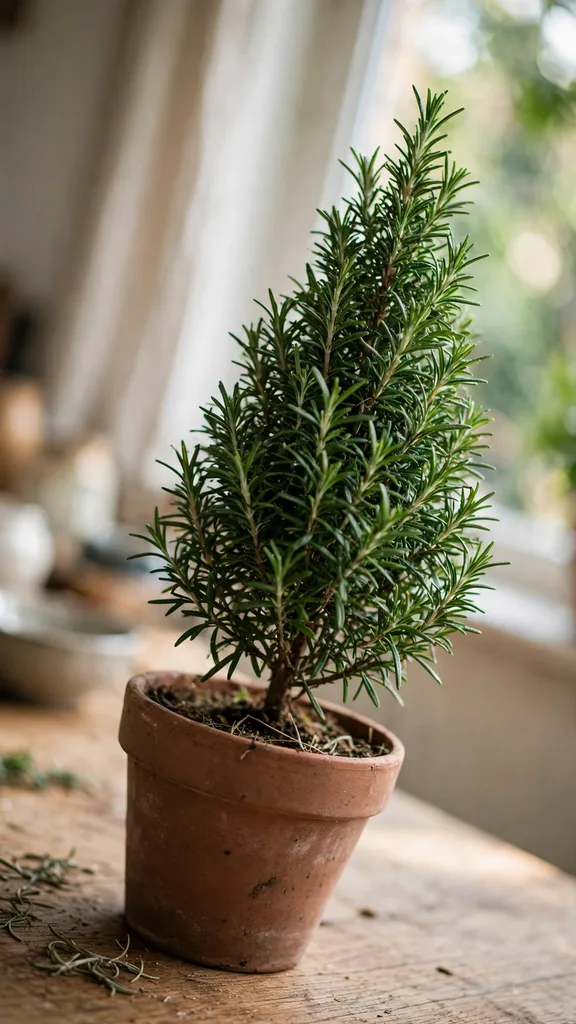
Rosemary trees die indoors from kindness: too much water in too little light. Keep the pot in the brightest window, water sparingly, and mist the foliage. After the holiday, the tree goes back to being an herb with an interesting silhouette, and its clippings have been flavoring the roast all along.
4. Container Fraser Fir, a Living Cut-Tree Alternative
A container-grown Fraser fir gives the classic cut-tree look, dark needles, strong branches, the right scent, while staying alive in its pot. It is heavier than a cut tree and shorter-lived indoors, and in exchange it plants out in January as a landscape tree.
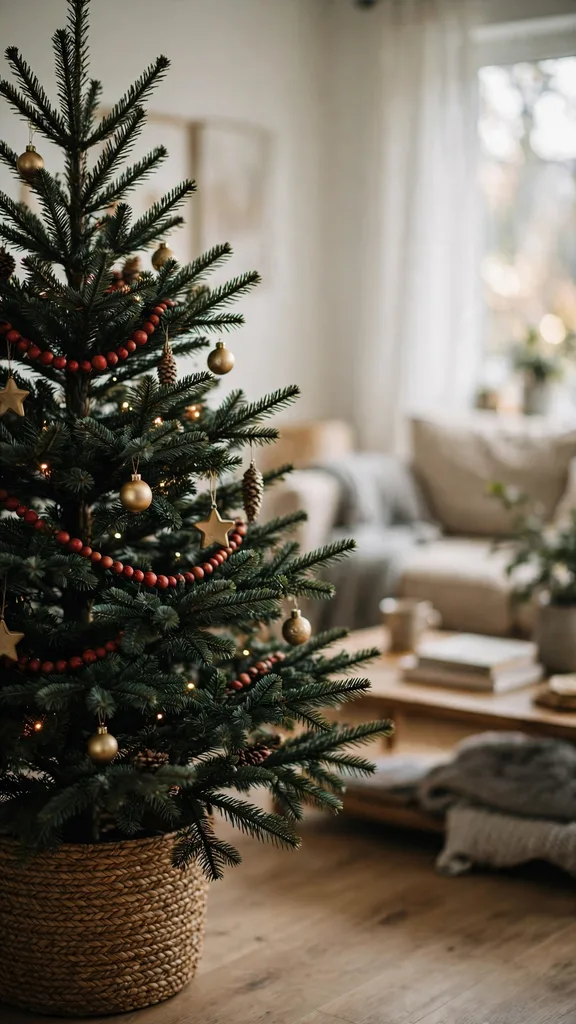
Treat every living fir by the living-tree rules in the planting-out item below: a week or so indoors at most, root ball kept moist, coolest spot in the house. Choose the planting site before you buy, because a fir’s mature size is a commitment the garden has to honor.
5. Italian Stone Pine in a Pot
The Italian stone pine starts life as a soft blue-green cushion of a tree, sold small in December as a living tabletop pine. Its juvenile foliage is nothing like the umbrella crown it becomes, which makes it a tree with two acts.
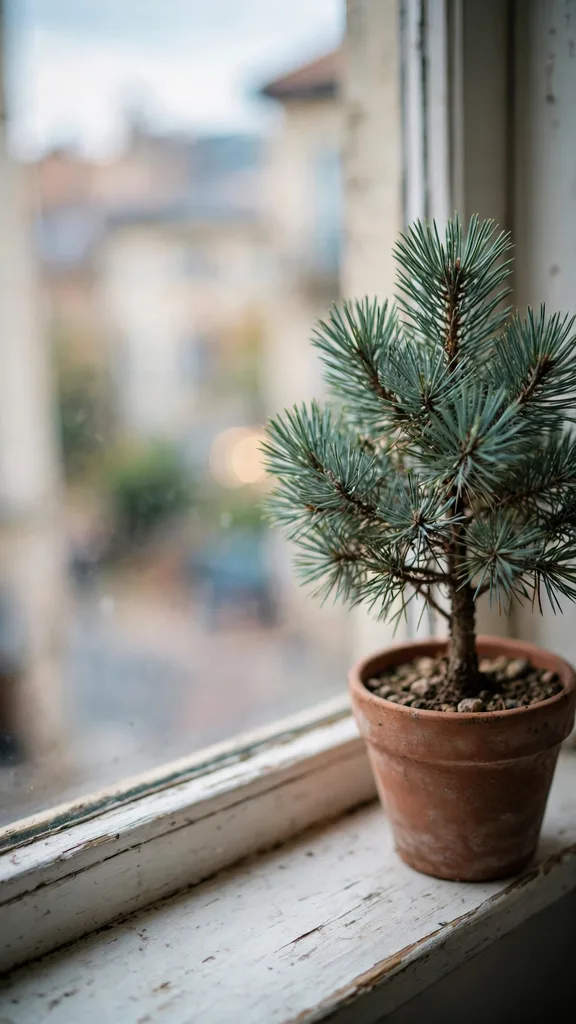
In a pot it stays juvenile and charming for years with sun and sharp drainage. In mild climates it can plant out and begin its second act; in cold ones it remains a houseplant pine, moved to the porch for summer. Either way it outgrows the windowsill slowly and gracefully.
6. Lemon Tree Dressed as a Christmas Tree
A potted lemon tree wears small ornaments among its own fruit, and the fruit outshines them: yellow lemons on a green tree is a color scheme no shop improves. A Meyer lemon in a pot is the right scale for a bright room and fruits through winter indoors.
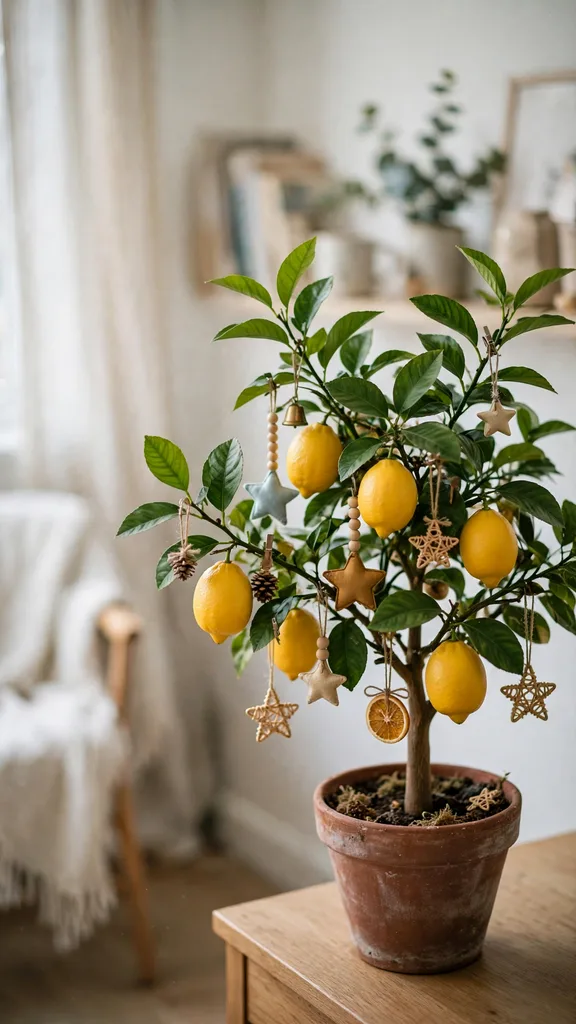
Citrus wants the brightest light you have and steady watering. Hang only the lightest ornaments, on the branches’ forks rather than the tips, and let the lemons be the baubles. After Christmas the tree goes on fruiting, which no other tree on this list can claim.
7. Olive Tree in a Terracotta Pot
A potted olive brings silver-green foliage and Mediterranean calm to the decorations: a few small ornaments, a linen ribbon, nothing that shouts. In terracotta it looks like it was always the plan, and in mild climates it lives on the patio year-round.
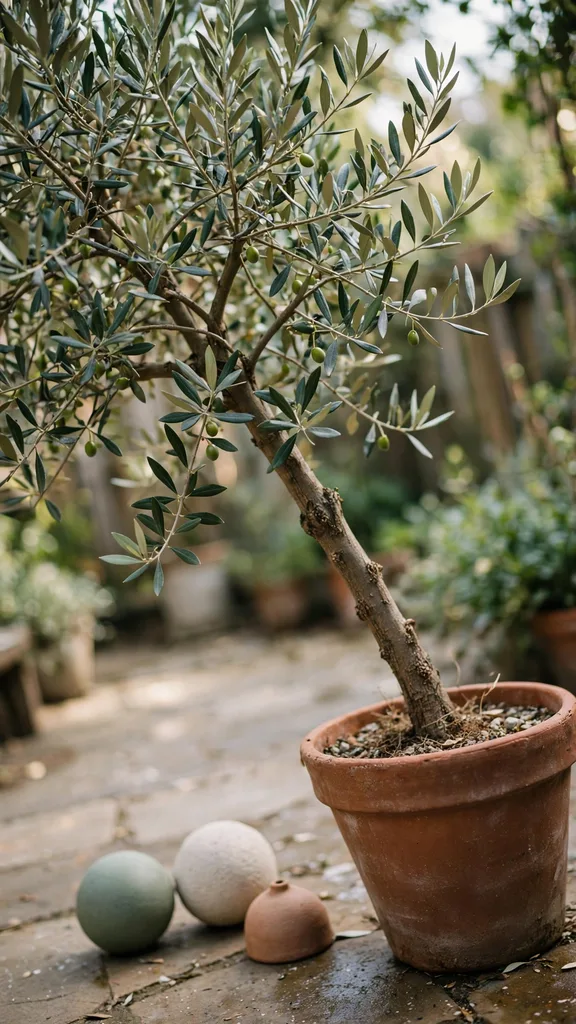
Olives in pots want sun and lean watering, and they shrug off the dry indoor air that sulks other trees. Bring a patio olive indoors only for the coldest weeks in borderline climates; its favorite Christmas is a bright, cool one, near glass.
8. Bay Laurel Trimmed as a Cone
A bay laurel clipped into a cone or a standard is a Christmas tree you can cook from, its glossy leaves holding small ornaments and a dusting of powdered sugar snow better than most conifers. Kitchen gardeners have kept bay in pots by the door for centuries for exactly this double duty.
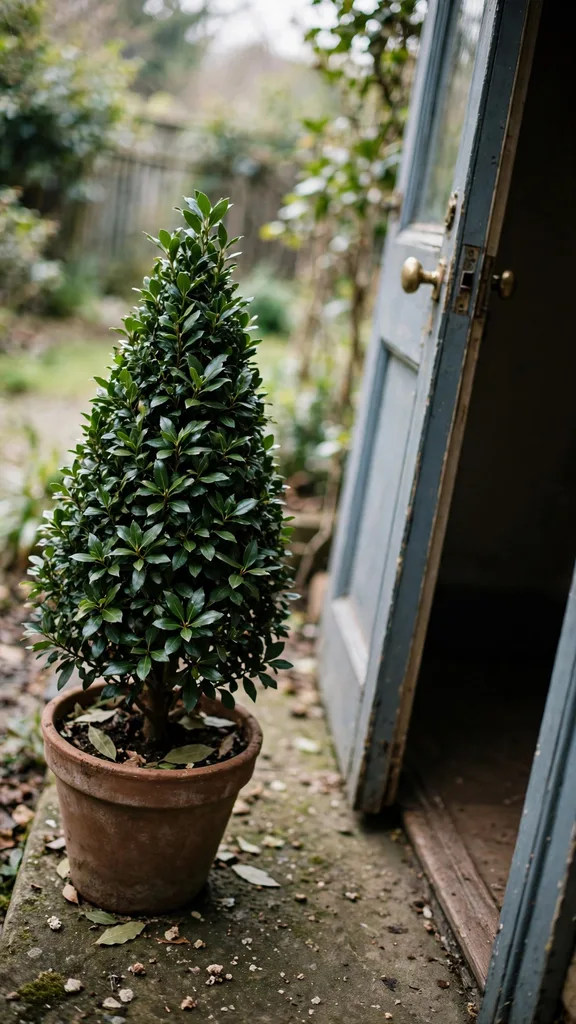
Bay in a pot overwinters in a cool bright spot and dislikes wet feet; water it like an herb, not a houseplant. Clip it lightly after Christmas to hold the shape, and dry the clippings for the soup pot, which is the tidiest decoration disposal in this list.
9. Juniper Topiary Cone
A juniper trained as a cone or a tight column gives the porch a tree with architecture: dense blue-green or gold foliage that takes lights well and laughs at wind. Junipers in pots are among the toughest trees here, unbothered by the cold that empties other pots indoors.
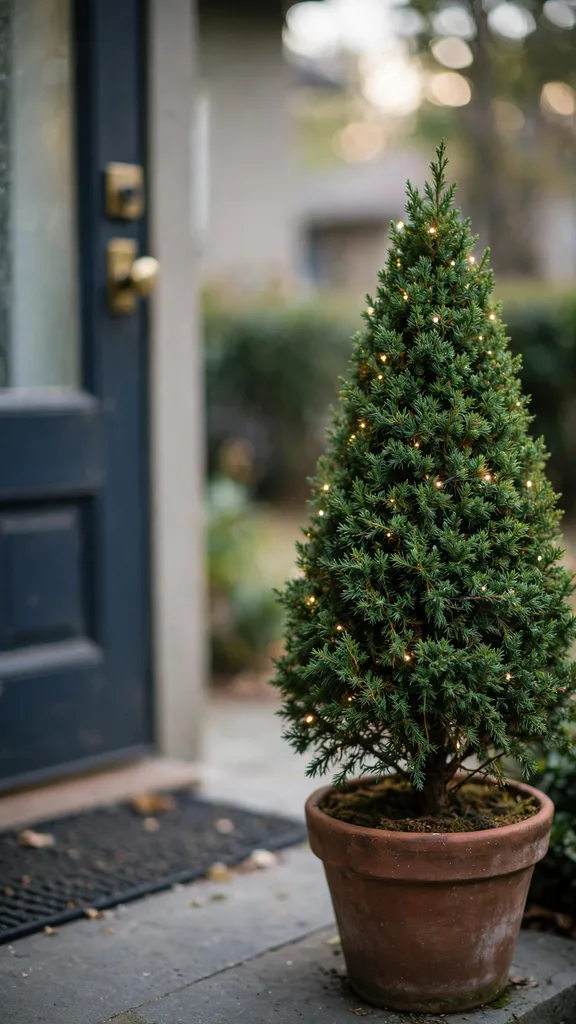
Keep a juniper tree outdoors through the season if your climate allows; it prefers cold air to a heated room. Water the pot during dry freezes, since a frozen root ball cannot drink, and the tree will stand at the door for a decade of Decembers.
10. Holly Standard in a Pot
A holly grown as a standard, a clear stem topped with a clipped ball of glossy leaves and berries, is a Christmas tree that arrives pre-decorated. Set a pair by the door and the decorating is done before it starts.
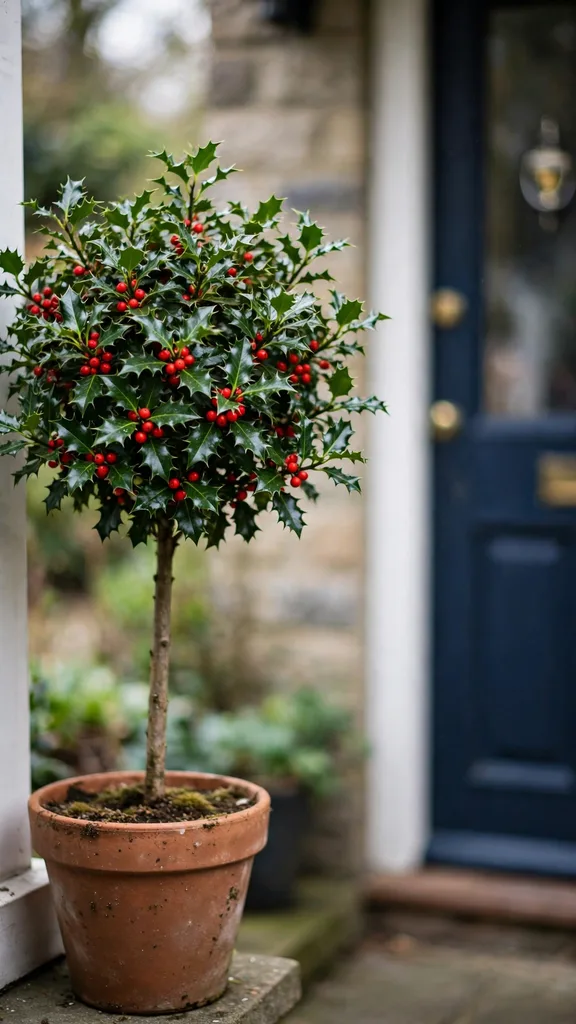
Berries need a pollinator nearby in the garden year, so a berrying holly standard is a small ecosystem in a pot. Keep the pot in the cold bright spot it prefers, water in dry spells, and clip the ball once after the holiday to keep the lollipop honest.
11. Camellia in a Pot, Blooming on Cue
A winter camellia in a pot is the tree that flowers for Christmas: sasanqua camellias bloom from late autumn into winter, opening rose-like flowers among dark glossy leaves while every other tree on this list is merely green. Add nothing but a pot worth looking at.
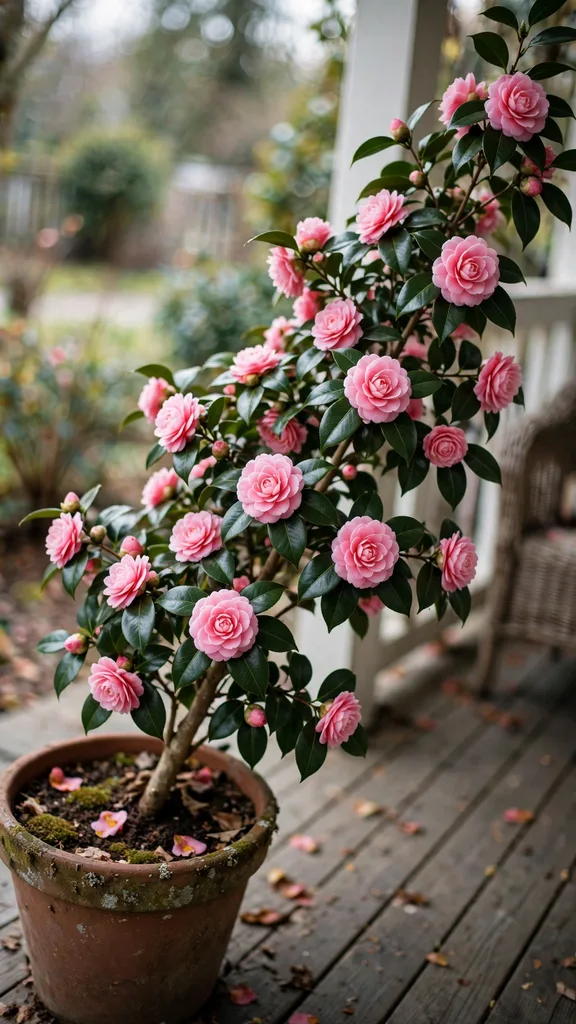
Camellias in pots want acidic compost, steady moisture, and shelter from the hardest frost while in bud. On the porch in a mild spell they bloom for weeks. It is the one potted tree whose decorations grow themselves, in pink, red, or white.
12. Dwarf Colorado Blue Spruce
A dwarf blue spruce in a pot brings the one color no other tree offers: steel blue. Its dense, slow growth suits containers, and its stiff branches hold heavier ornaments than most small trees. Against a white porch or a red door, the blue does all the design work.
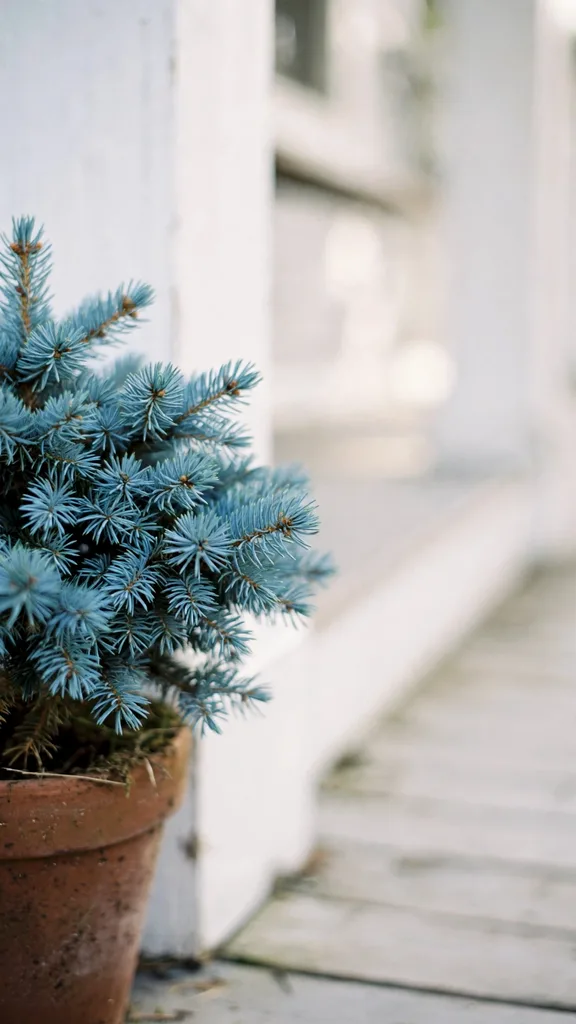
Full sun keeps the blue bluest; shade greens it. The Clemson Extension guide to living Christmas trees notes Colorado blue spruce among the landscape-sized living trees, so choose a genuinely dwarf form for a pot, since the species itself matures at 30 to 60 feet and will not be contained forever.
13. Leyland Cypress in a Large Pot
A Leyland cypress in a big pot is the fast screen that moonlights as a tree: feathery, vigorous, and green in the deep shade of green that reads as Christmas at a glance. In a large container it gives a young garden instant height at the door or the patio corner.
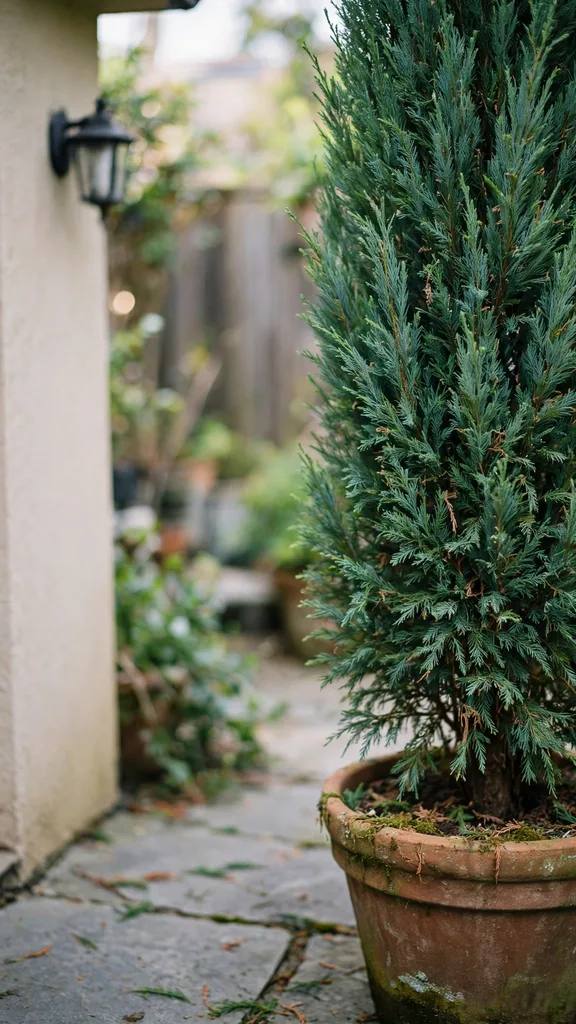
Leyland grows fast enough to outgrow any pot in a few years, so plan its exit: plant it out as a screen tree when the pot gets small, and start a successor. Water a large pot deeply in dry winter weather; a big tree drinks even in December.
14. Eastern Red Cedar, the Aromatic Native
An eastern red cedar in a pot is the wild tree of the list: narrow, dense, aromatic enough to scent a porch, with foliage that bronzes in cold weather. It tolerates drought and poor soil that would finish fussier trees, and it is a genuine native landscape tree when it plants out.
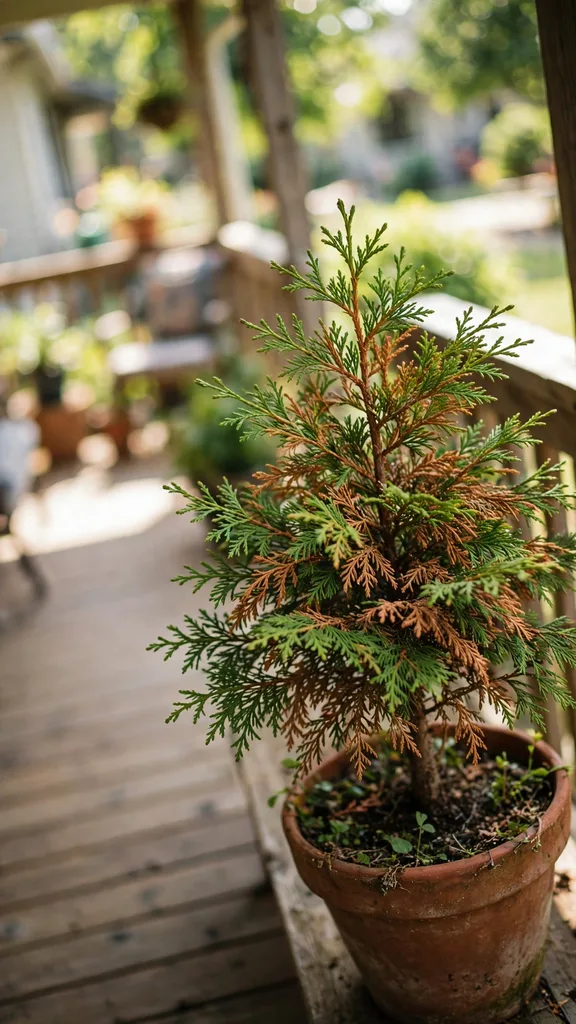
In a pot it asks for sun and restraint with the watering can. Its berries feed birds after the holiday if it stands outdoors. A red cedar bought small becomes a screen tree in time, so give its January planting real room, or keep it pot-bound and clipped.
15. Podocarpus, the Sleek Indoor Tree
Podocarpus, sold as Buddhist pine or fern pine, is a sleek, narrow-leaved conifer that thrives as a houseplant and shapes into an elegant small tree. Its fine foliage takes tiny ornaments and warm white lights with a restraint the bushier trees cannot match.
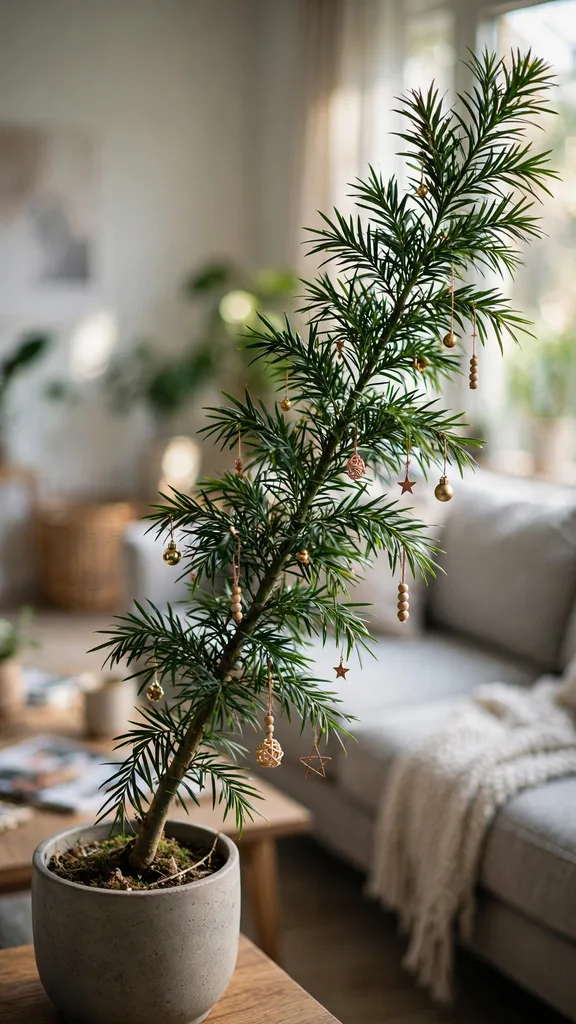
It tolerates indoor light better than most conifers here and wants even moisture. As a Christmas tree it suits modern rooms and small spaces, and after the holiday it goes back to being the handsomest houseplant in the house, which it was all along.
16. Weeping Fig as an Indoor Tree
A weeping fig with a clear trunk and a full canopy is a Christmas tree for houses that keep their trees indoors permanently: lights woven through the canopy glow against the small glossy leaves, and the tree asks only for its usual bright corner.
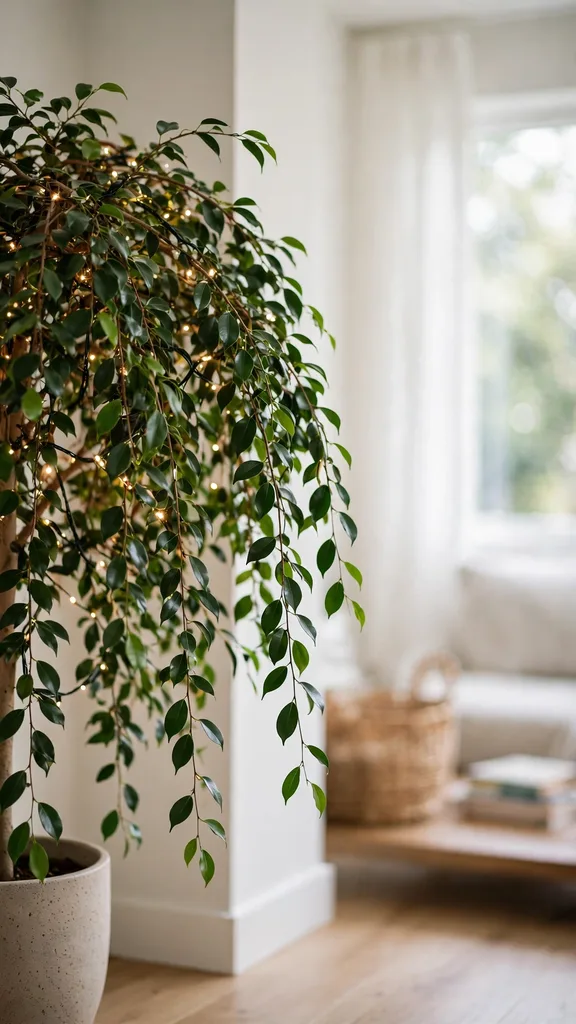
Figs drop leaves when moved, so decorate it where it lives rather than carrying it to a stage. Keep ornaments light and the lights cool. When January comes, the decorations leave and the tree remains, which is the fig’s whole philosophy and not a bad one.
17. Dwarf Korean Fir
The dwarf Korean fir is the connoisseur’s potted tree: slow, dense, with dark needles silvered beneath and violet cones that appear even on young plants. In a pot it stays small for years and looks expensive, because it is.
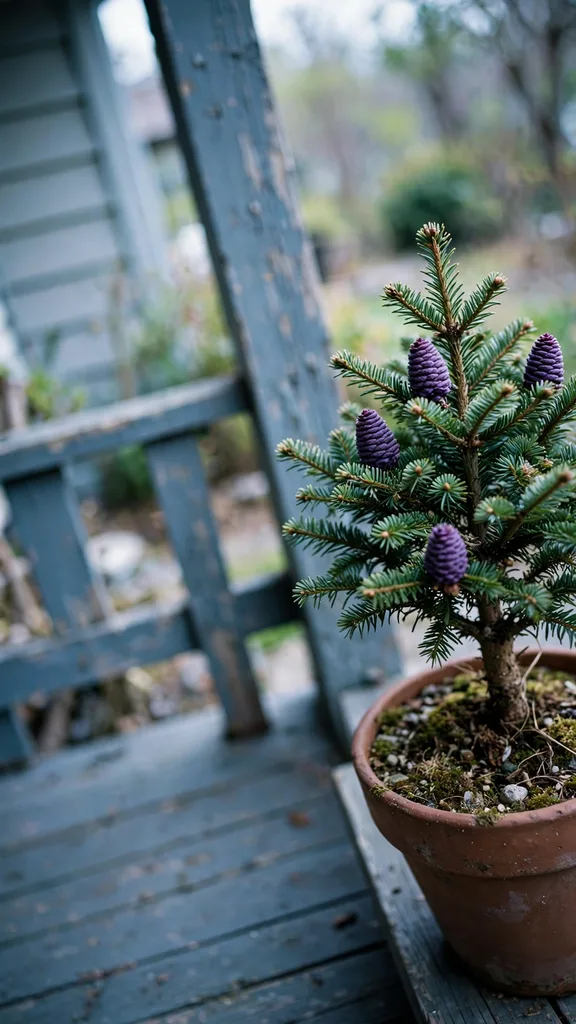
It wants cool air, bright light, and a pot that never dries out or drowns. Give it the porch or the coldest bright room rather than the fireside. A Korean fir bought small is a ten-year tree, and its cones arrive as built-in ornaments that improve annually.
18. Hinoki Cypress in a Pot
A hinoki cypress brings fan-shaped sprays of deep green foliage with a sculptural, almost cloud-like habit that Japanese gardens have prized for centuries. In a handsome pot it is a Christmas tree for people who find tinsel loud.
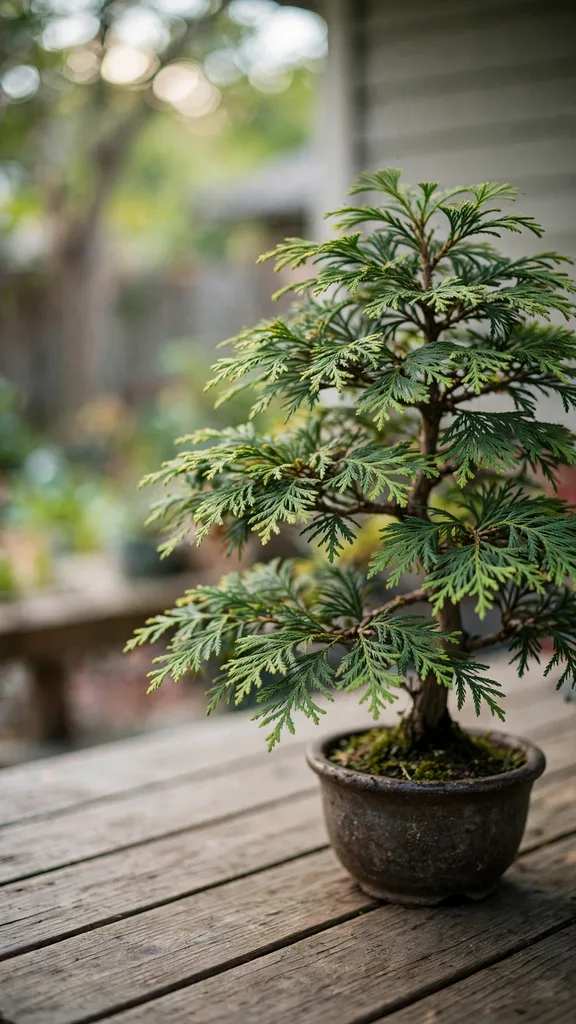
Hinoki in a pot wants steady moisture and shelter from drying wind. Dwarf forms stay pot-sized for years. Decorate it with a few matte ornaments and let the foliage fans be the texture; this tree’s decoration strategy is understatement, executed perfectly.
19. Boxwood Cone in a Pot
A boxwood cone is the formal garden’s Christmas tree: small, dense, evergreen in the truest sense, and already standing in pots by doors in half the gardens in the country. A string of small lights and it is dressed; a ribbon and it is formal.
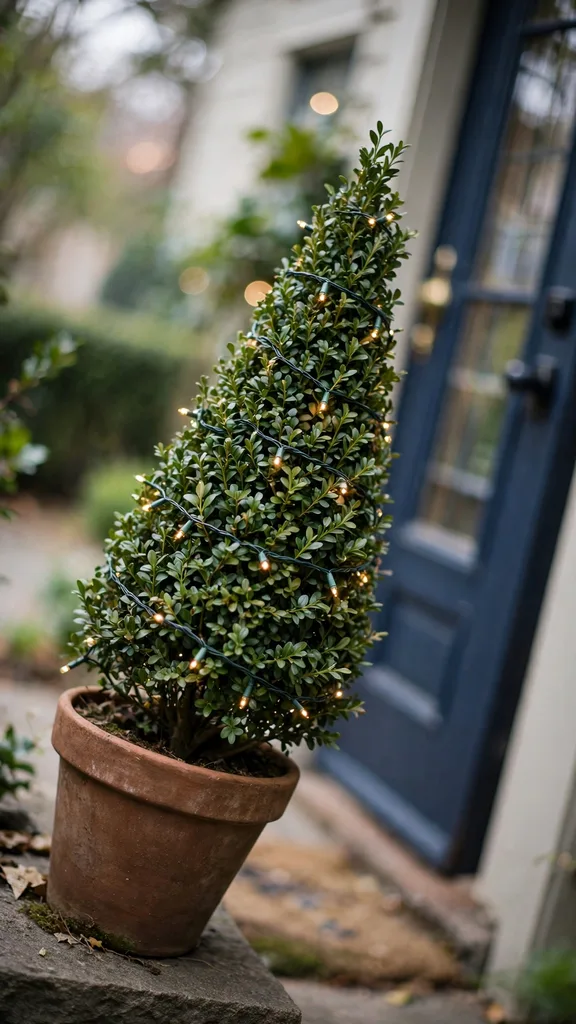
Boxwood in pots needs winter watering in dry freezes and shelter from the harshest wind in very cold zones, where a pot freezes harder than the ground. The cones by the door can stay dressed-down all year and still be the first decorations up each December.
20. Kumquat Tree, Fruit as Ornaments
A kumquat tree in December is covered in small orange fruit that hang like baubles the tree grew itself. In a pot by a bright window it needs no decoration beyond a ribbon on the pot, and the fruit is edible straight off the branches.
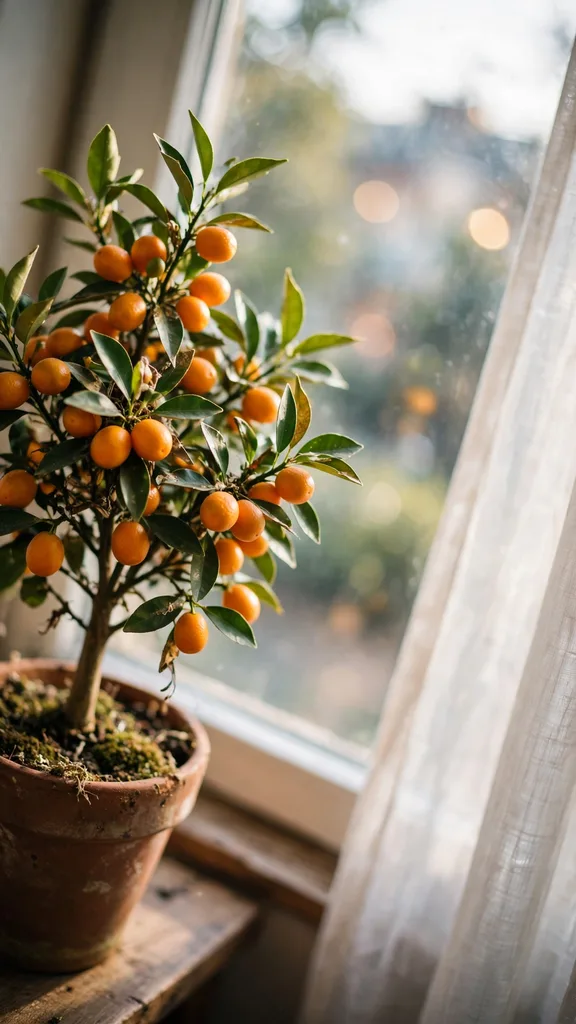
Kumquats want bright light and regular watering, and they fruit on the current season’s rhythm indoors. Pick the fruit as it deepens to full orange; the tree often holds flowers and fruit at once, which makes it the hardest-working small tree in this list.
21. Monkey Puzzle, the Conversation Tree
A young monkey puzzle in a pot is a Christmas tree as sculpture: whorls of stiff, triangular leaves on geometric branches that guests touch carefully and remember. It grows slowly enough to live in a pot for years before its ambitions need a garden.
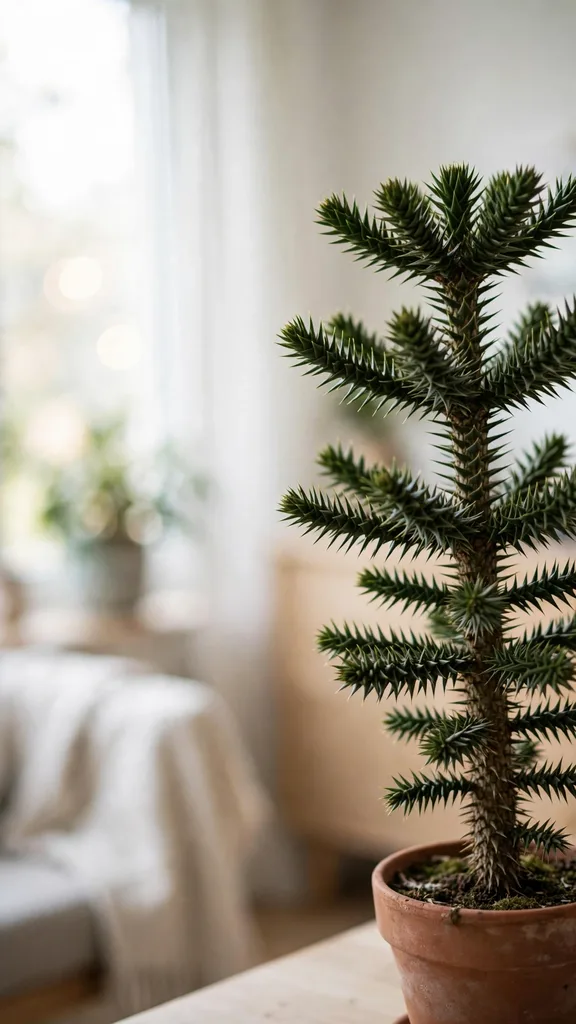
It wants bright light, sharp drainage, and room: the branches are not for brushing past. Decorate it with a few large, light ornaments hung on the whorls, or with none at all. Some trees in this list are chosen to be looked at, and this is the chief of them.
22. Spiral Topiary Spruce
A spruce or juniper clipped into a spiral is a tree that is already a decoration before anything hangs on it: lights follow the spiral’s groove like water down a channel, and a single ornament at the top finishes it. In a pot by the door it reads as festive from the street.
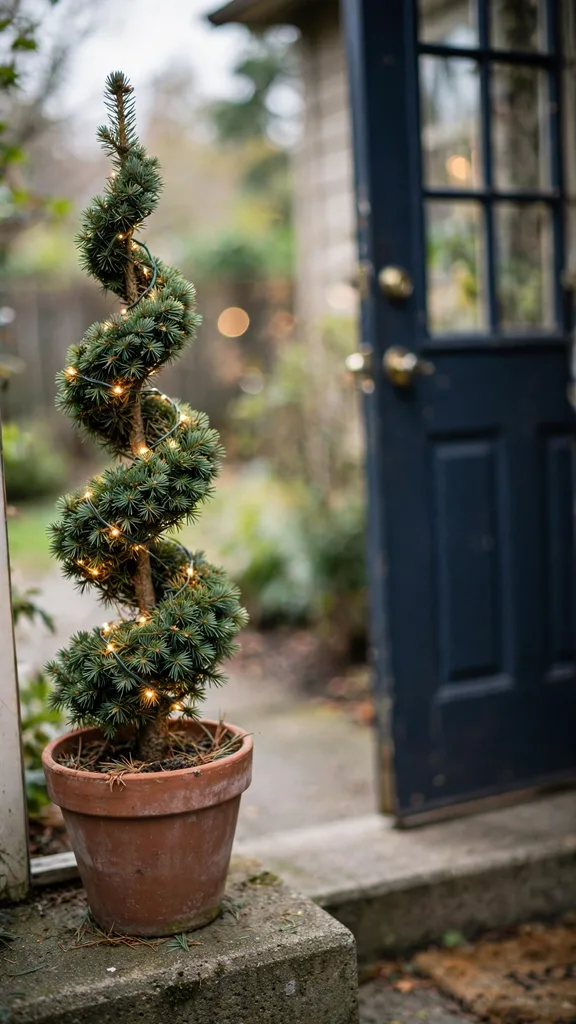
Spirals need a light clip twice a year to keep the groove crisp, which is the rent this shape charges. Buy the shape ready-made unless you have years and patience; clipping a spiral from scratch is a long apprenticeship, and December is not when to start it.
23. Pom-Pom Juniper Tree
A pom-pom juniper, clouds of foliage on a bare branching trunk, turns a potted tree into topiary art. Each cloud takes a few small ornaments, and the bare trunk between them keeps the whole tree light and strange in the best way.
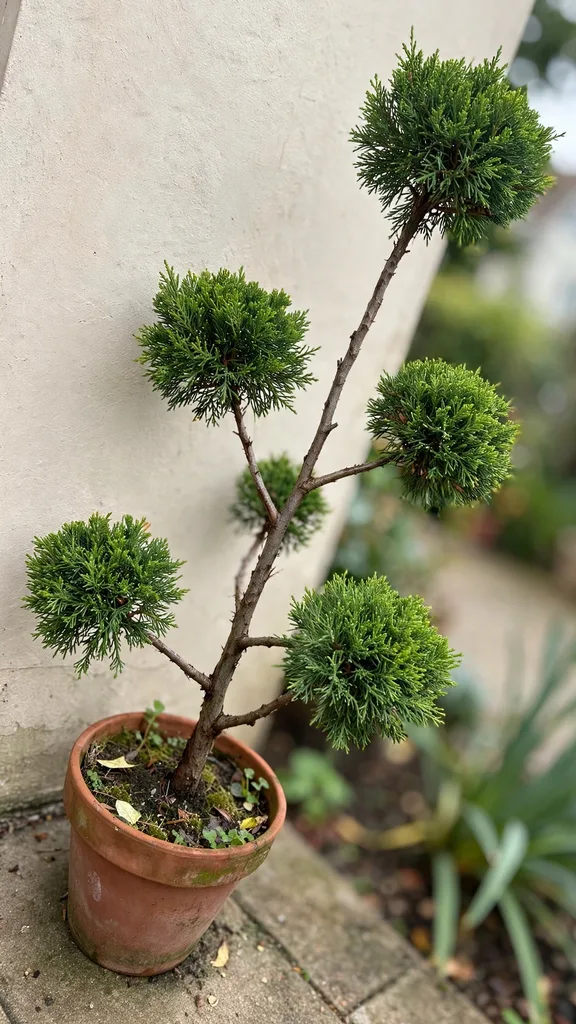
Pom-poms hold their shape with an annual clip and suit pots on patios and by doors where their silhouette shows against a wall. They are trees for gardeners who like their Christmas with a sense of humor and a pair of shears.
24. Standard Bay or Olive, the Lollipop Tree
A standard tree, one straight stem, one clipped ball of foliage, is the most architectural small tree in a pot: it flanks doors in pairs, stands on tables singly, and takes a ribbon around its stem like it was designed for one. Bay and olive are the classic species for the form.
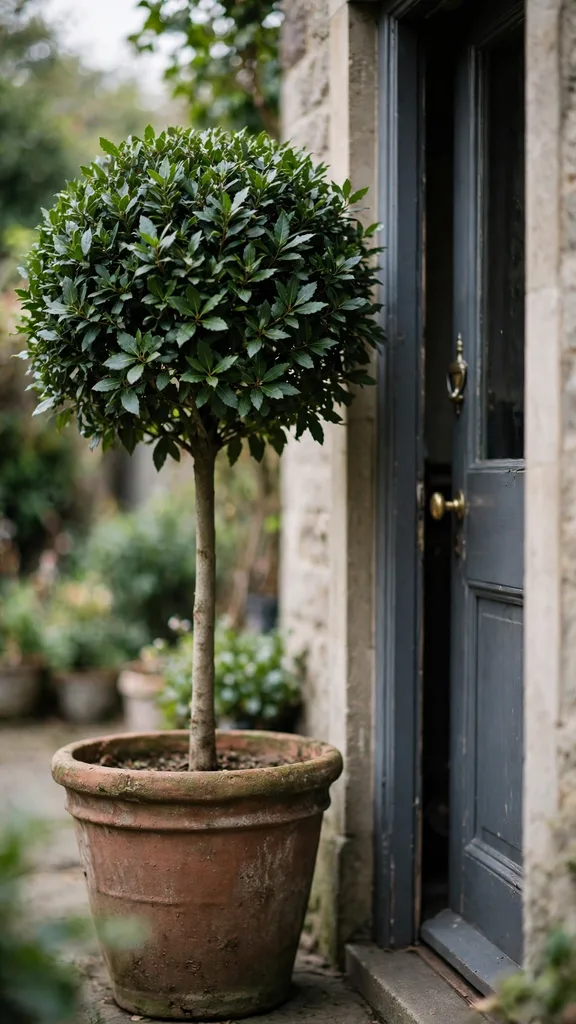
Standards are top-heavy; use a heavy pot or a pot inside a heavier cachepot, especially outdoors where wind finds them. Clip the ball lightly after the holiday. A pair of standards is the fastest complete door display in this entire list.
25. Tiered Trio of Tabletop Trees
Three small trees in graduated pots, a rosemary cone, a dwarf spruce, a tiny Norfolk pine, arranged in a tier make a tabletop forest that decorates a sideboard or a hall table better than any single small tree. The trio lets each species show its own texture.
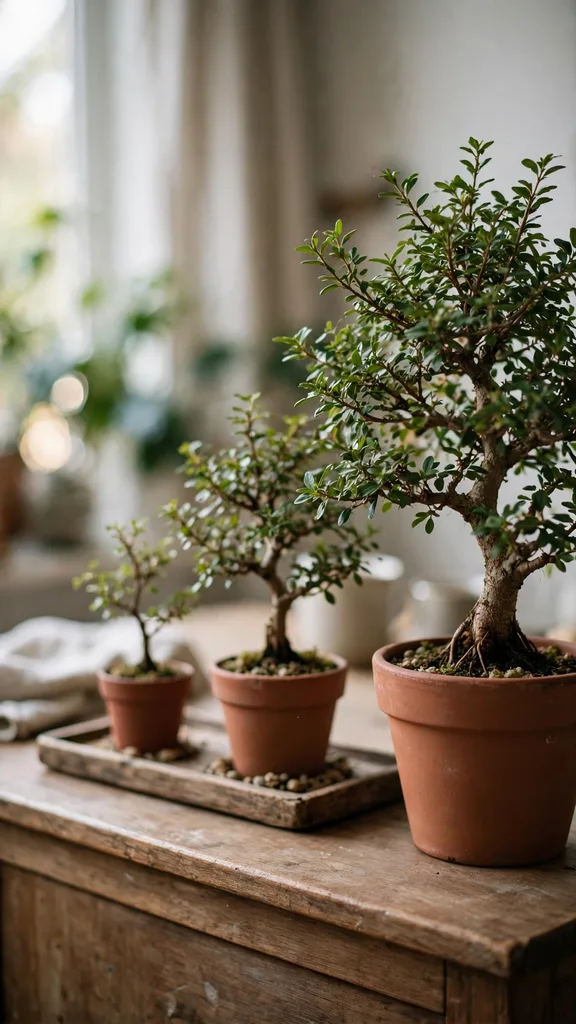
Group the pots on a tray so watering is one job, and keep the grouping near bright light. The trio breaks up after Christmas into three houseplants and herbs, which is a display with no storage problem at all.
26. Miniature Trees in Graduated Pots
A row of miniature potted conifers in graduated sizes along a windowsill or a mantel makes a skyline of trees, each a few inches taller than the last. Use one species repeated, dwarf spruces or young junipers, so the row reads as a design rather than a queue.
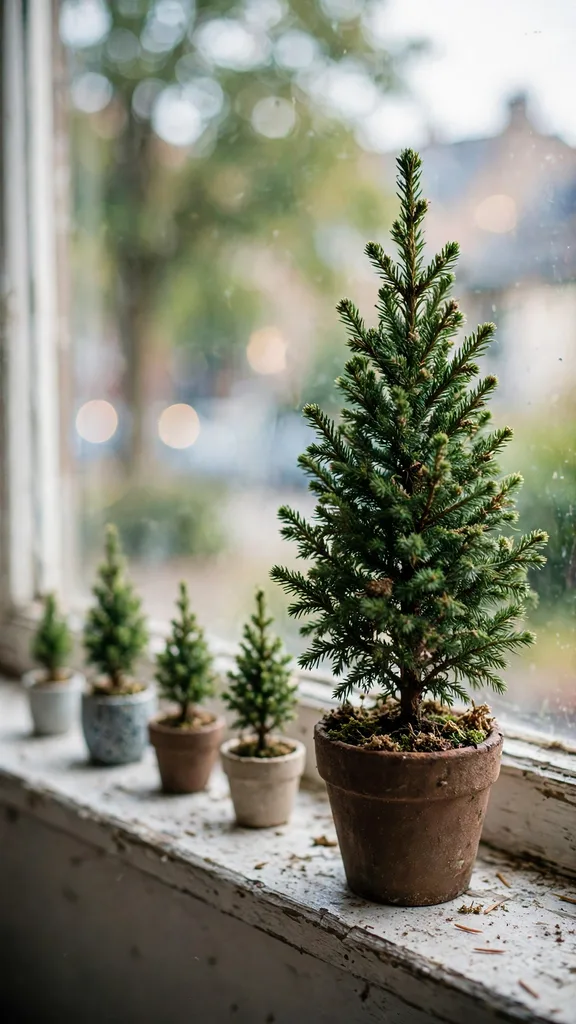
Miniatures dry out fast in small pots; check them every few days and water from the tray. After the holiday the row plants out into a nursery bed or a rock garden, where the skyline becomes next year’s bigger trees.
27. Pair of Potted Spruces Flanking the Door
The classic: two matched potted spruces, one each side of the front door, dressed alike. Symmetry does the decorating; the trees need only lights or a few cones and the door gains a frame that makes every wreath look better.
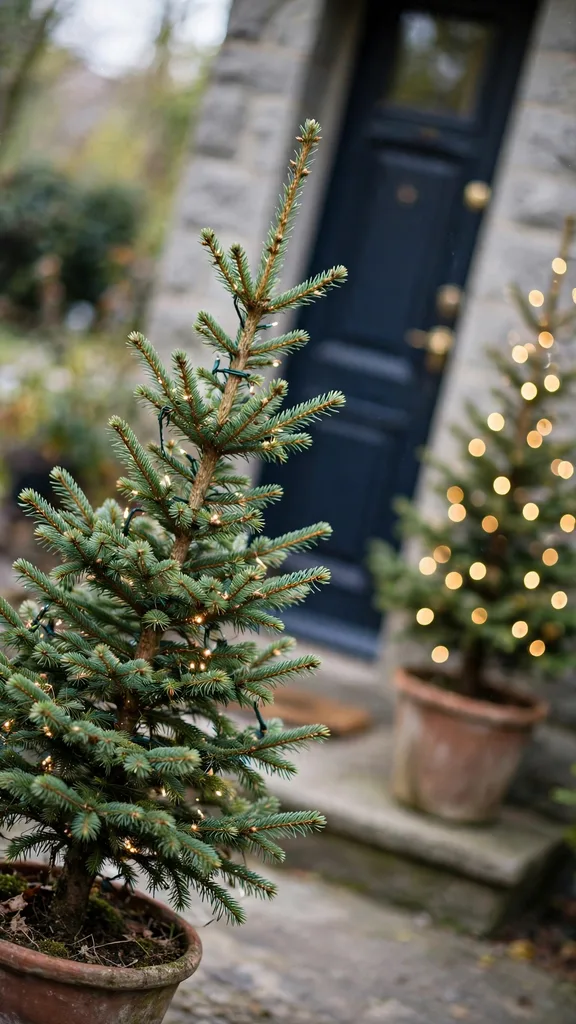
Buy the pair together so they match in size and habit, and keep them in matching pots. After Christmas the pair can flank the door all year as green sentinels, re-dressing each December in minutes. The outdoor Christmas tree guide covers the bigger tree in the ground nearby, if the pair inspires ambition.
28. Potted Tree in a Wooden Crate Collar
Hide a plain nursery pot inside a wooden crate and the potted tree gains instant rustic finish: the crate’s slats, a stuffing of straw or evergreen tips around the pot’s rim, and the tree looks planted rather than purchased.
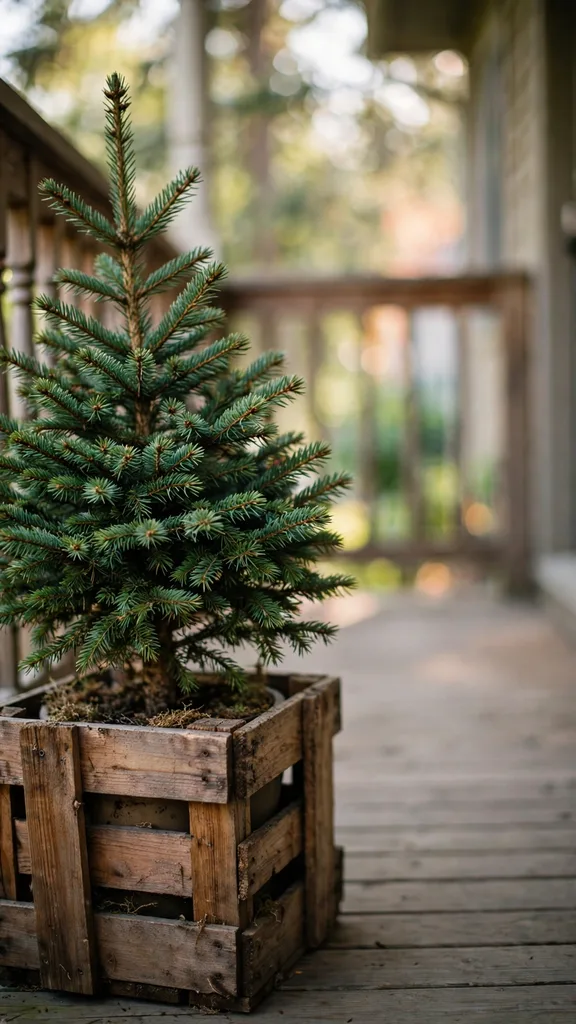
Crates weather outdoors for a season or two and store flat-ish in the shed. Line the crate with plastic if it stands on a porch floor you care about, since watering a tree in a crate is watering the crate too, eventually.
29. Trees on the Porch Steps
Line the porch steps with small potted trees, one per step, decreasing or alternating with lanterns and cone baskets, and the staircase becomes the display. Guests climb through the decoration, which is the most welcoming arrangement a porch can make.
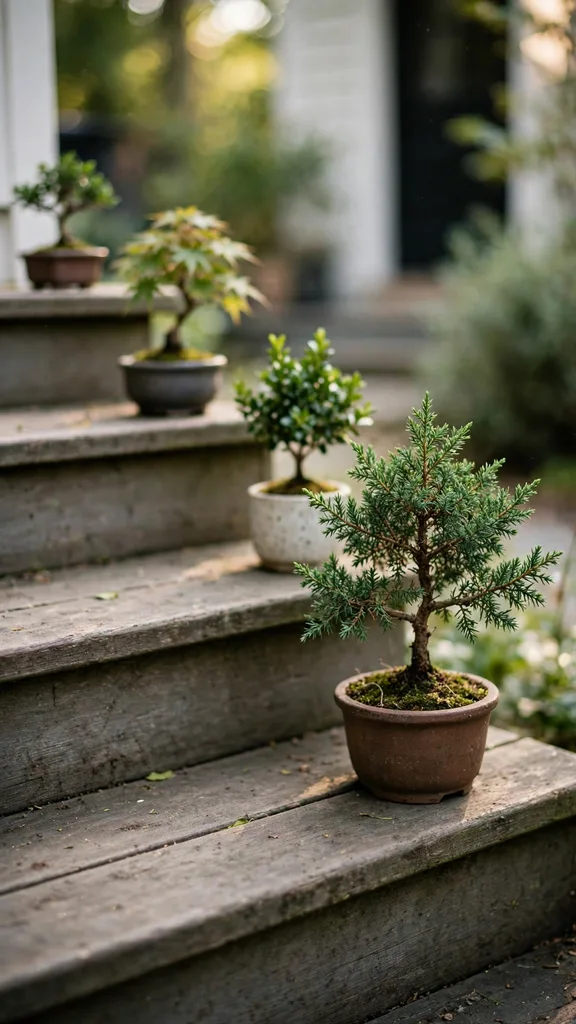
Keep the trees to the outer third of each step so feet keep their room, and choose heavy pots the wind and the dog cannot argue with. Steps displays suit small trees perfectly, since elevation gives each one its own stage.
30. Potted Tree in a Galvanized Bucket
A galvanized bucket is the farmhouse cachepot: drop the nursery pot inside, pack the gap with moss or cones, and a modest spruce becomes a styled tree. The metal shrugs off porch weather and frost that would crack ceramic.
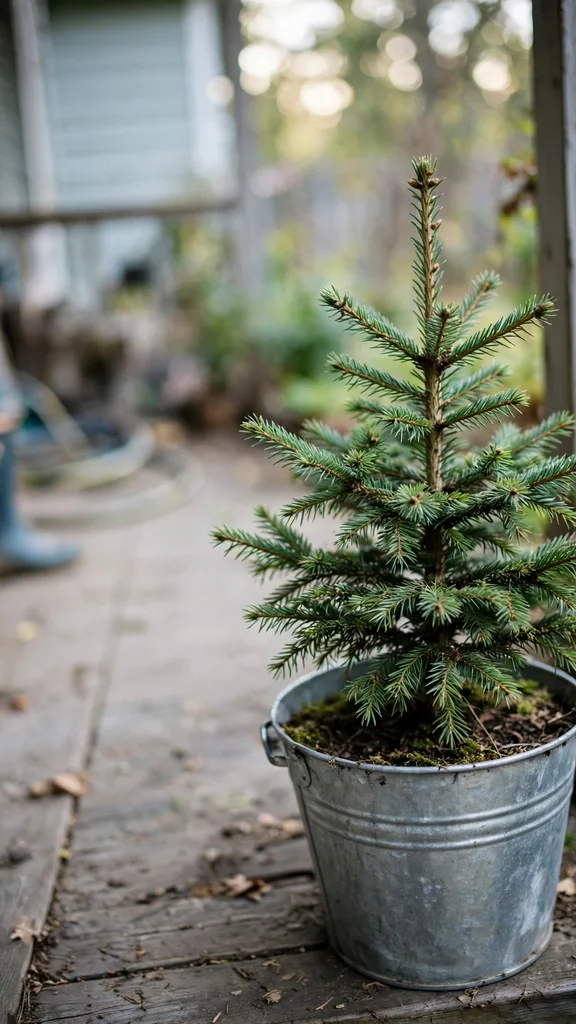
Drill no holes; the bucket is a coat, not a pot, so tip out standing water after rain. Buckets dent charmingly and last for years, and a set of them unifies a mixed collection of potted trees into a deliberate-looking group.
31. Tree in a Woven Basket Collar
A woven basket collar softens a potted tree indoors: the nursery pot hides inside, the basket brings texture, and a few evergreen tips tucked at the rim finish the illusion. It is the warmest-looking way to present a tree in a living room.
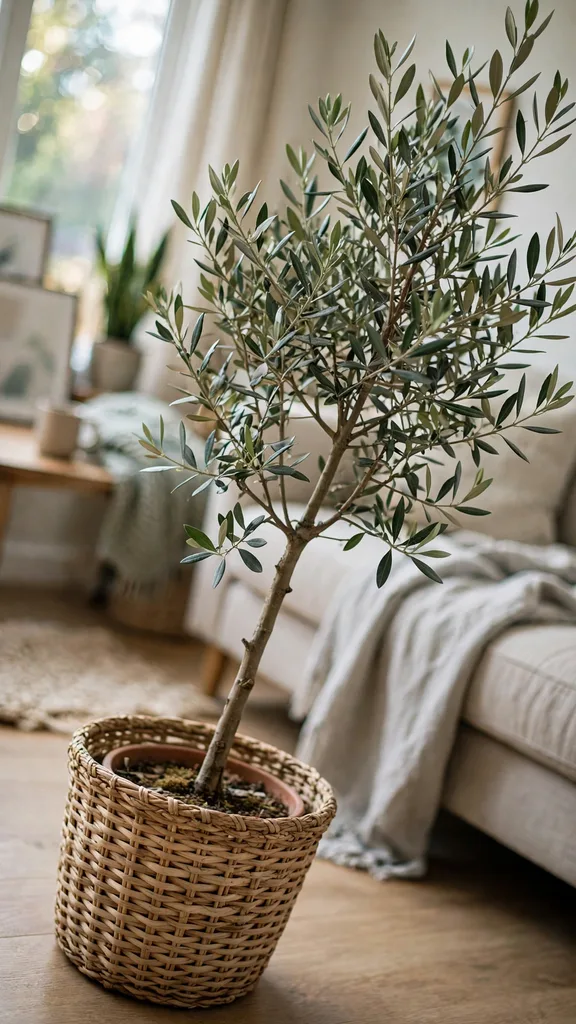
Baskets and water are enemies, so stand the pot on a saucer inside the basket and water carefully. Under a porch roof a basket lasts a season; indoors it lasts for years and stores the ornaments inside itself in January.
32. Patio Grouping of Three Potted Trees
Group three potted trees of different species and heights at the patio corner, a juniper, a spruce, a bay, and the corner becomes a small grove that dresses as one display. Odd numbers and mixed textures are the whole technique.
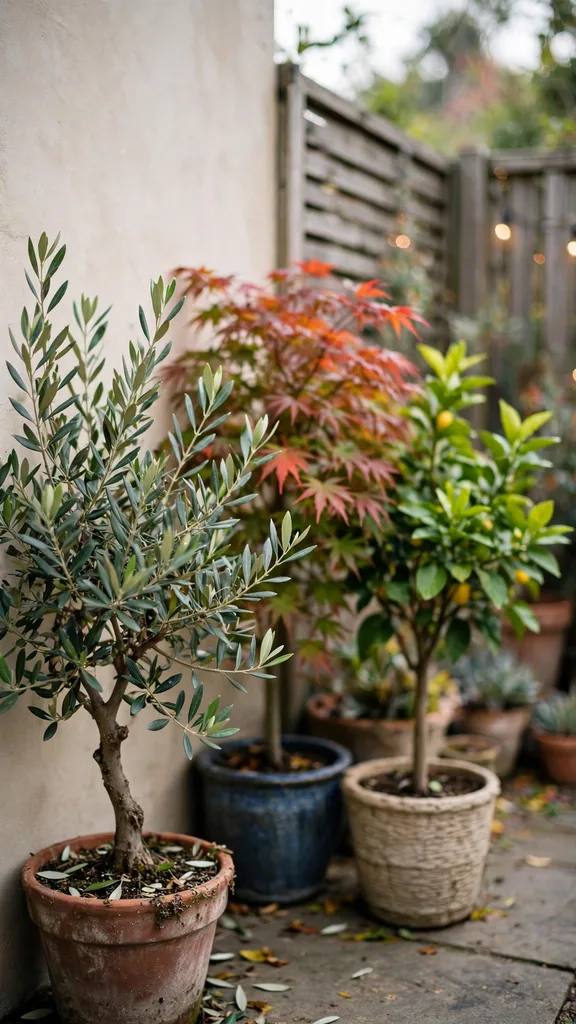
Groupings water as a unit if the pots share a large tray or stand close. The grove lives on the patio all year, gaining lights in December, and gives a young garden the borrowed maturity that only trees confer.
33. Potted Tree as the Outdoor Table Centerpiece
A small potted tree at the center of the outdoor table, rosemary or dwarf spruce, with cones and citrus around its pot, dresses a winter meal outdoors better than any arrangement, because it is alive and smells right.
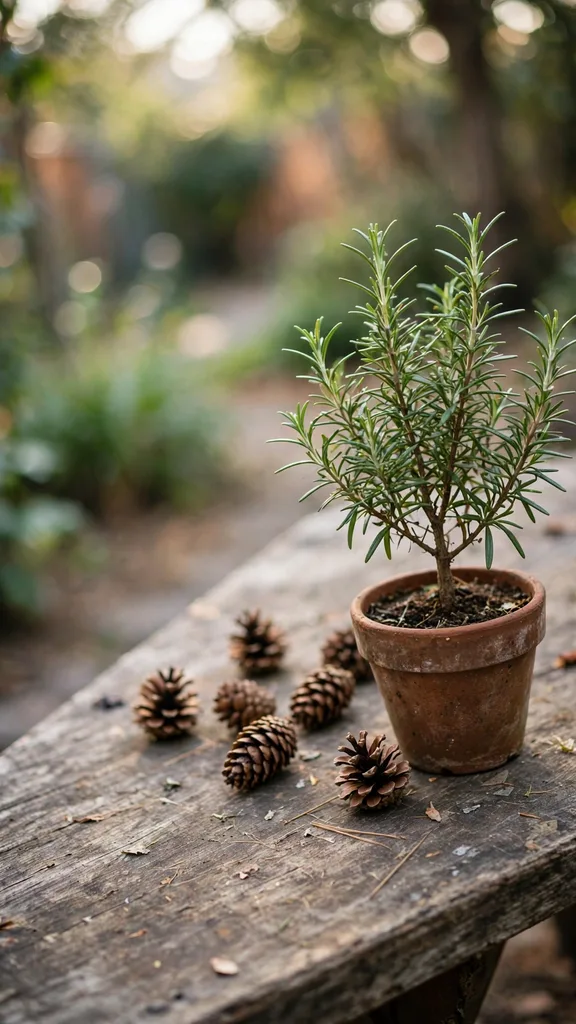
Choose a tree under 18 inches for a table so faces stay visible across it. After the meal the centerpiece returns to its porch post; nothing is thrown away, which is the potted tree’s recurring advantage over every cut arrangement.
34. Rolling Pot Tree, Indoors for the Day
Put a larger potted tree on a wheeled plant caddy and it can live on the porch but roll indoors for the party, the photograph, or the coldest night. The caddy turns a two-person lift into a one-person glide.
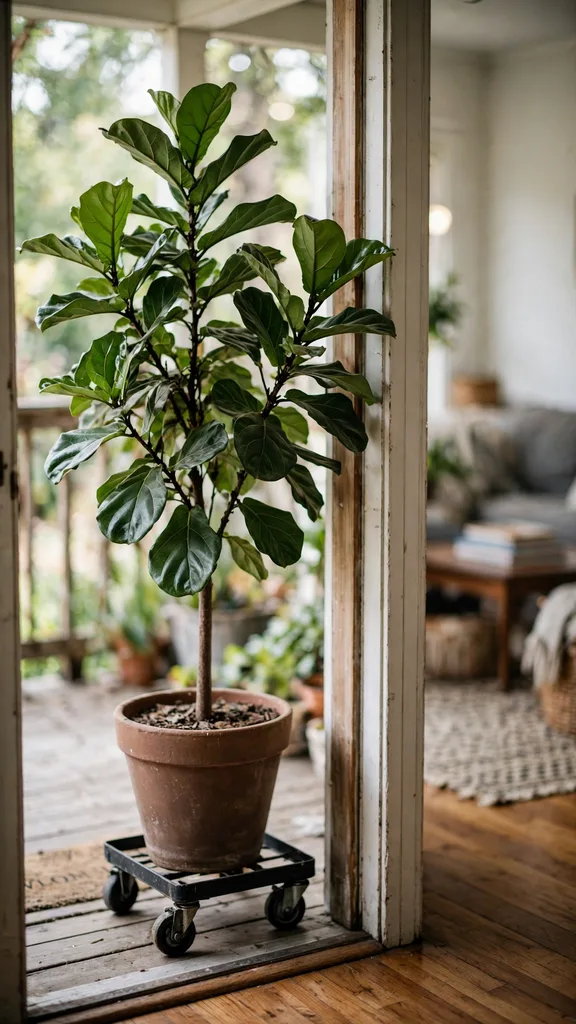
Mind thresholds and the tree’s height on its caddy, which adds inches. A rolling tree still obeys the living-tree indoor limits; the wheels are for visits, not for moving the tree into the house for the month.
35. Tabletop Tree on a Sideboard
A tabletop tree on a sideboard or hall table decorates at eye level, where its small ornaments and the pot’s finish get the attention they deserve. Raise it on a stack of books or a cake stand and even a foot-tall tree commands the room.
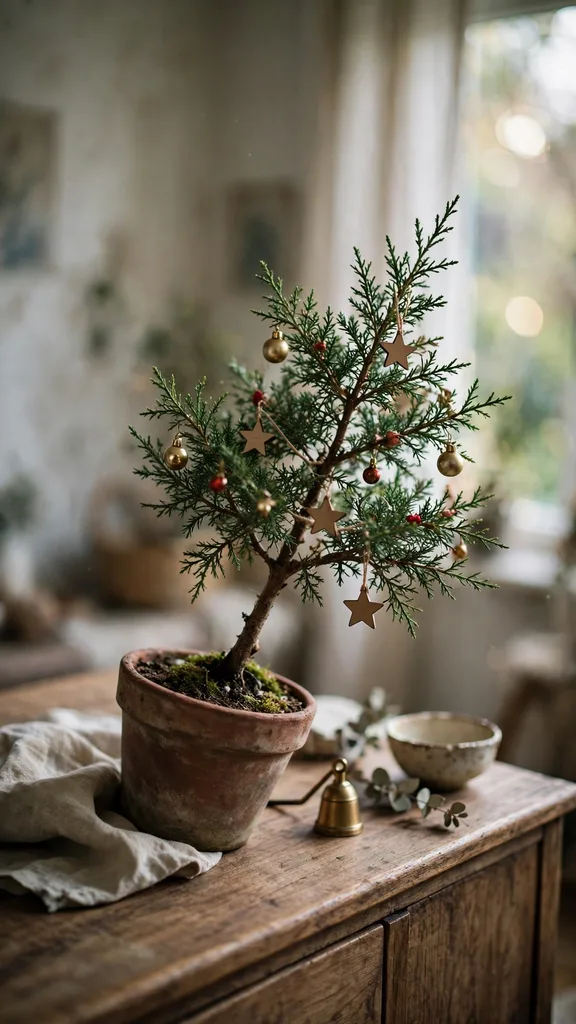
Sideboards sit in warm rooms, so choose species that tolerate houses: Norfolk pine, rosemary for short stays, podocarpus. A tabletop tree is also the right tree for a household with a floor-level toddler or a tree-climbing cat, being out of the first line of fire.
36. Staircase Landing Tree
A potted tree on a staircase landing decorates the house’s most-traveled corner, seen from above and below all day. A narrow form, juniper column or a young Norfolk pine, suits the landing’s tight geometry.
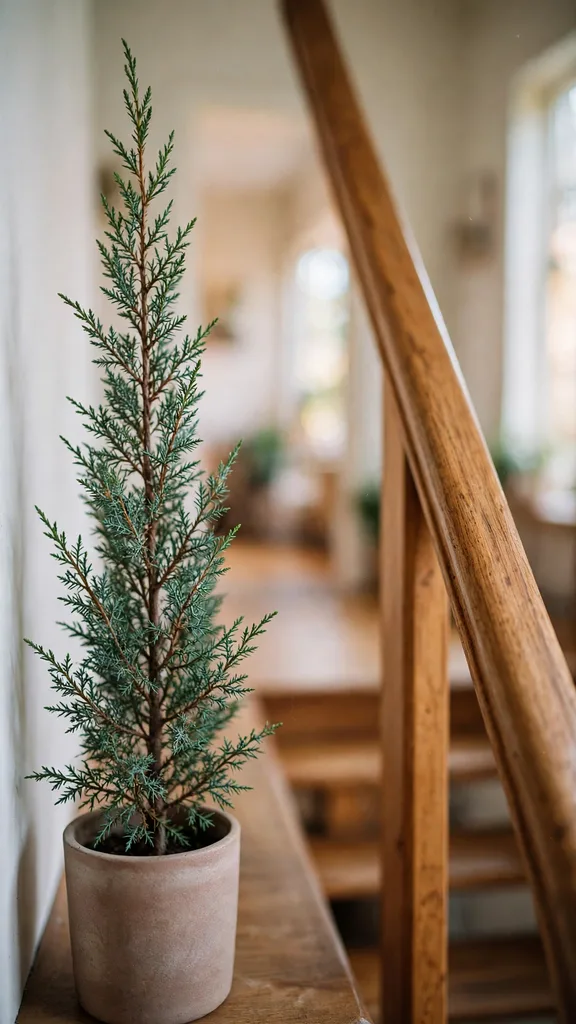
Keep the pot clear of the walking line and the handrail’s swing. Landing trees catch light from hall windows that floor trees miss, which makes the landing a genuinely good growing spot, not just a stage.
37. Bay Tree in the Kitchen
A bay tree in a kitchen pot decorates the room that works hardest in December, and its leaves go straight into the cooking. Hang tiny ornaments or none; a bay by the stove is decoration by usefulness, the kitchen’s favorite kind.
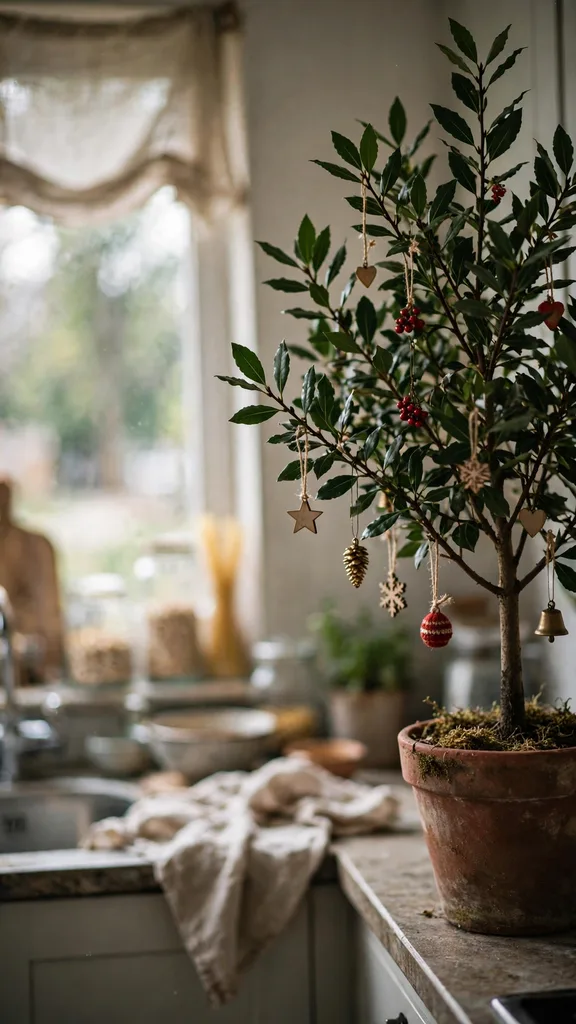
Kitchens are warm and steamy, which bay tolerates better than most trees here, though it still wants the brightest spot and lean watering. Snip leaves as you cook and the tree gets its winter clip a leaf at a time.
38. Guest Room Norfolk Pine
A Norfolk pine dressed with a few ornaments in the guest room tells visitors the whole house joined the season, and the tree lives there happily all year as the room’s plant. It is the easiest room tree: it never has to move.
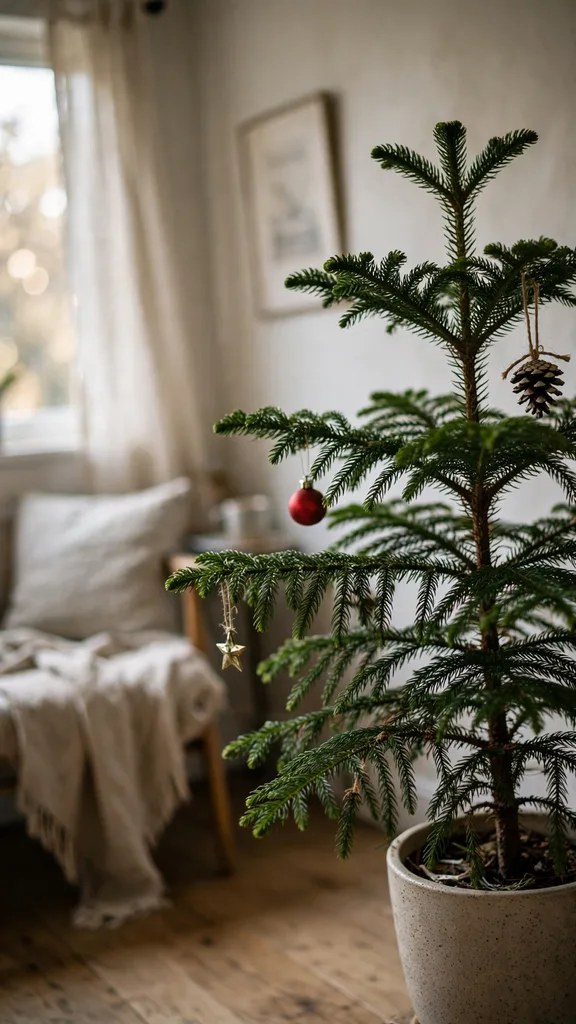
Guest rooms run cool and bright between visitors, which suits the Norfolk pine exactly. Water it on the houseplant round and it will be a foot taller by next Christmas, promoted by growth rather than by shopping.
39. Small Spruce for a Child’s Room
A small potted spruce in a child’s room, decorated with the child’s own paper and pinecone ornaments, is a first Christmas tree of one’s own. The tree is real, the decorations are unbreakable, and the responsibility of watering it is part of the gift.
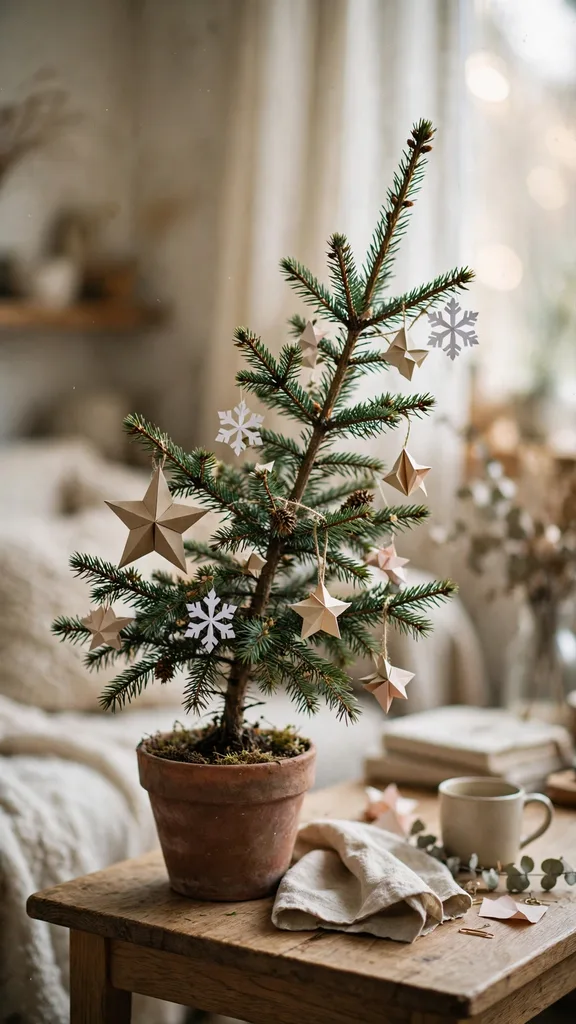
Choose a dwarf spruce in a heavy pot that small hands cannot tip, and keep the lights battery-powered and cool. After Christmas the tree moves to the porch and, in spring, to a garden bed, where its owner can measure future Christmases against it.
40. Hallway Tree in a Narrow Pot
A slim tree in a narrow pot, a columnar juniper or a young podocarpus, decorates a hallway without blocking it, bringing the season to the pass-through spaces that centerpieces never reach. A mirror behind it doubles the lights for free.
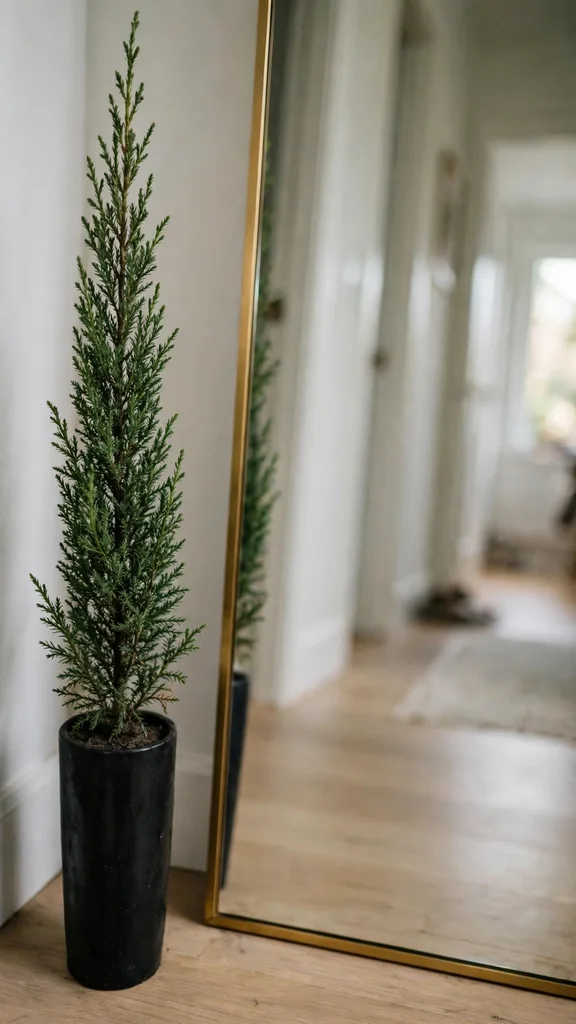
Hallways are drafty and dim in many houses; choose the tree for the spot, juniper for draft, podocarpus for lower light. Keep the pot against the wall and the decorations flat to the tree, so shoulders pass without harvesting ornaments.
41. Buy One Size Up: The Tree That Grows Into Its Pot
Buy a potted tree one size larger than the tabletop you imagined, in a pot it can grow in for two or three years, and the tree becomes a fixture that improves annually instead of a purchase repeated annually. This year’s floor tree was a tabletop tree three Decembers ago in every house that keeps them.
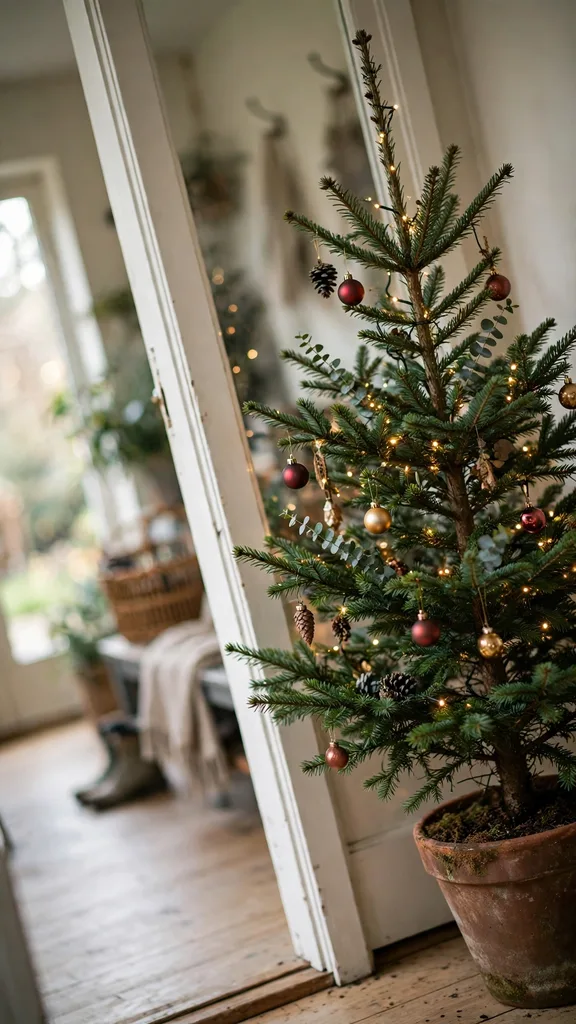
Repot in spring, not December, and step up one pot size at a time. A growing tree’s decorations scale with it; keep the small ornaments from its tabletop years, since they carry the record of its size better than photographs.
42. The Tree That Plants Out in January
The living-tree finale: after its week indoors, the potted or balled tree plants out into the garden as a permanent tree, a Christmas remembered in the landscape. Choose species and site for the mature tree, not the December one, and the garden gains a tree with a story every year.
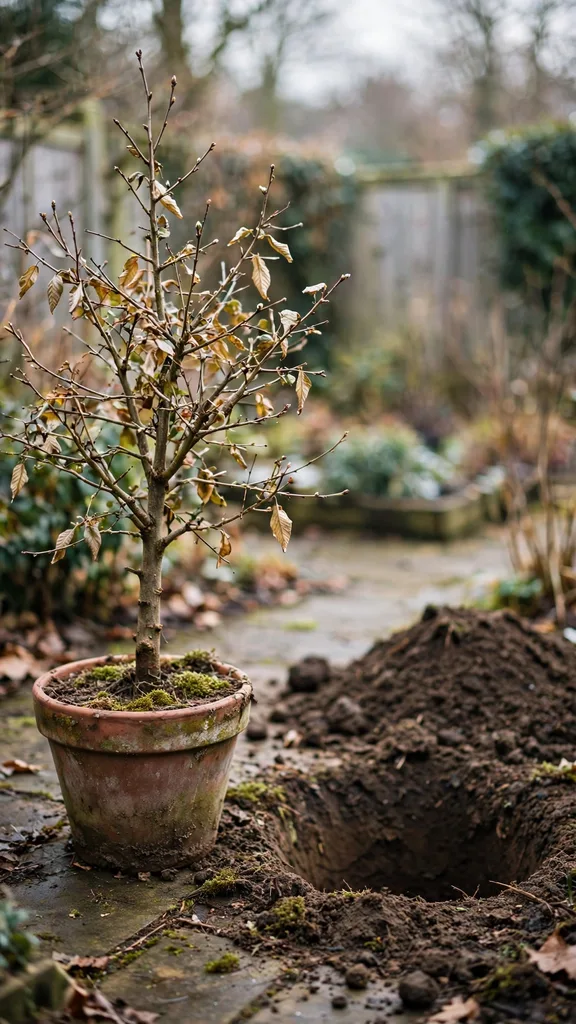
Follow the extension routine: the Clemson guide linked earlier sets the indoor limit at 7 to 10 days, then several days of re-acclimating in a sheltered unheated spot before planting into a hole twice the root ball’s width, mulched and watered in. A tree planted in January in mild climates settles before spring and grows away.
43. Two Trees in Rotation, One In and One Out
Keep two living trees and rotate them: one decorates indoors for its week while the other rests outside, then they swap. Rotation doubles the display while halving each tree’s indoor stress, and two smaller trees cost less than one large one.
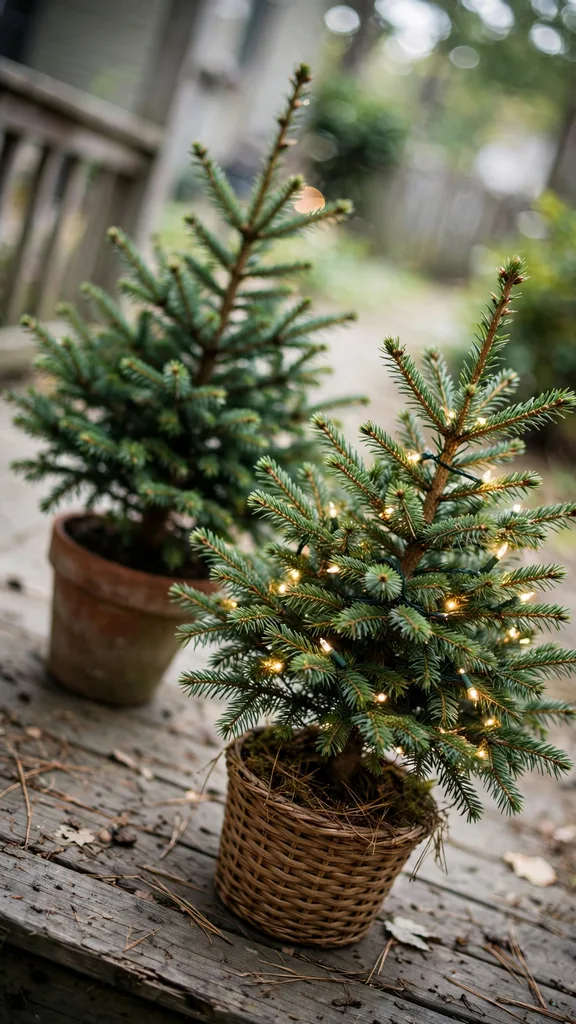
Rotation suits container firs and spruces destined for planting, and Norfolk pines moving between rooms. Mark each tree’s indoor days on the calendar; the rotation only works if the week limit is honored for both, however festive the house feels.
44. Balcony Tree Built for Wind
On a balcony, the potted tree’s enemies are wind and a frozen pot. Choose a low, dense tree, juniper or dwarf spruce, in the heaviest pot the balcony allows, set in the corner where two walls break the wind, and dress it with wired-on decorations only.
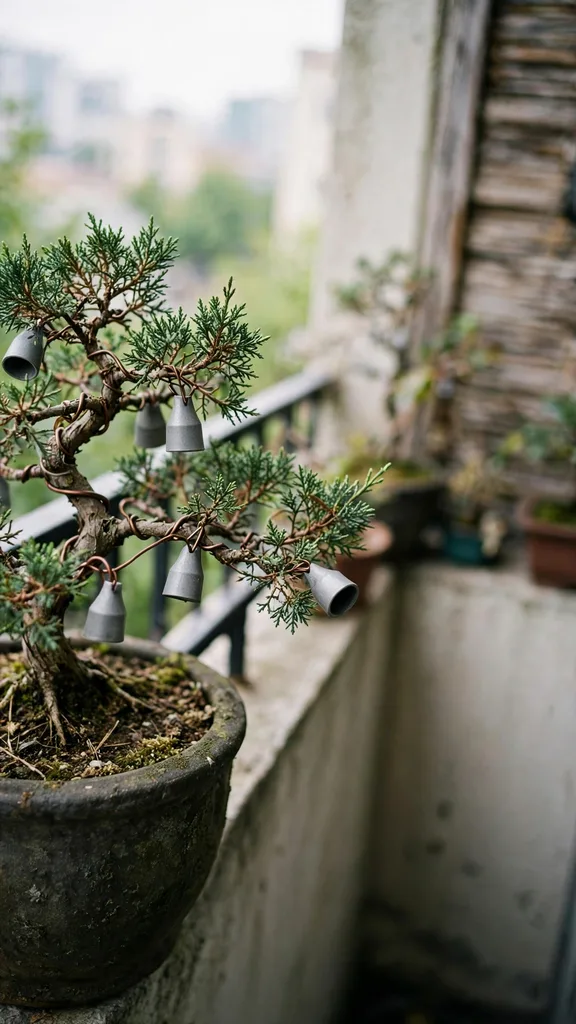
Balcony pots freeze solid in cold snaps; cluster the tree with other pots and wrap the group in burlap for the worst weeks. Water on mild days, since a frozen root ball in wind dries like laundry. A balcony tree that survives January has earned its place permanently.
45. The Forever Tree: One Pot, Growing With the Family
The finale is one tree kept for years: a Norfolk pine, an olive, a Korean fir in its big pot, decorated every December and measured against the door frame every year. It becomes the family’s fixed point, the tree in every photograph, outgrowing children and outlasting sofas.
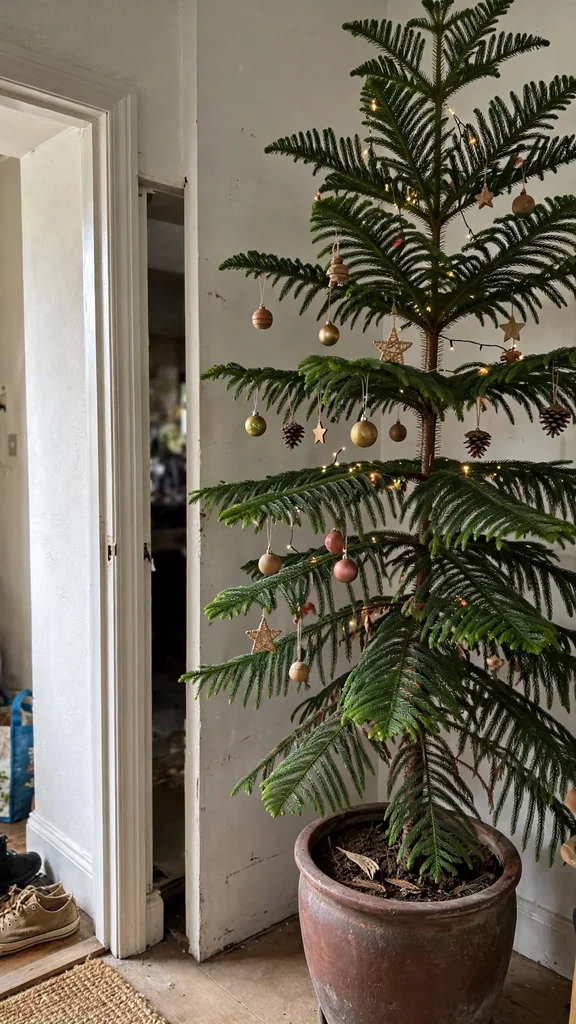
A forever tree asks for steady, unglamorous care: spring repotting while it is young, summer outdoors if the species likes it, winter water in dry spells, and decorations scaled to its branches each year. The wider season’s ideas gather in the Christmas garden ideas pillar, but this tree is the one the pillar cannot give you: it has to be kept, year by year, until it is the tree.
Frequently Asked Questions
A tree that lives outdoors, a container fir, spruce, or juniper, should stay indoors for no more than 7 to 10 days, in the coolest bright spot away from heating vents and fires, with its root ball kept moist. Longer stays in warm, dry air can kill it or break its dormancy. True houseplant trees, Norfolk Island pine, podocarpus, citrus, and olive in cold climates, live indoors indefinitely and wear decorations for the season.
The Norfolk Island pine is the easiest for indoor households: it is a houseplant by nature, tolerates indoor light, and needs only regular watering and a weekly turn. Outdoors, a juniper or dwarf Alberta spruce in a pot is nearly indestructible in cold weather, asking only for water during dry freezes. The hardest are balled landscape trees kept indoors too long, which fail from hospitality rather than neglect.
Match the pot to the root ball with a small margin: a tabletop tree of 1 to 2 feet grows in a 1 to 2 gallon pot, a 3 to 4 foot tree in a 3 to 5 gallon pot, and anything larger needs 7 gallons or more and a plan for moving it. Weight matters as much as volume outdoors, where a heavier pot resists wind. Step up one size each spring rather than over-potting in December.
Yes, with the pot-sized species: Norfolk pine, olive, bay, dwarf spruces and firs, junipers, and boxwood can live in containers for years with spring repotting, feeding, and winter watering. Fast or large species, Leyland cypress and landscape firs, outgrow pots in a few years and should plant out while they are still movable. A tree kept for years becomes the household’s forever tree, decorated annually and measured against the door.
Re-acclimate it first: several days in a sheltered, unheated spot outdoors after its indoor week. Dig a hole the same depth as the root ball and at least twice as wide, set the tree no deeper than it grew, backfill with the dug soil, water deeply to settle it, and mulch 2 to 3 inches deep, kept off the trunk. Plant as soon after the holiday as the ground allows, and water through dry spells in its first year.