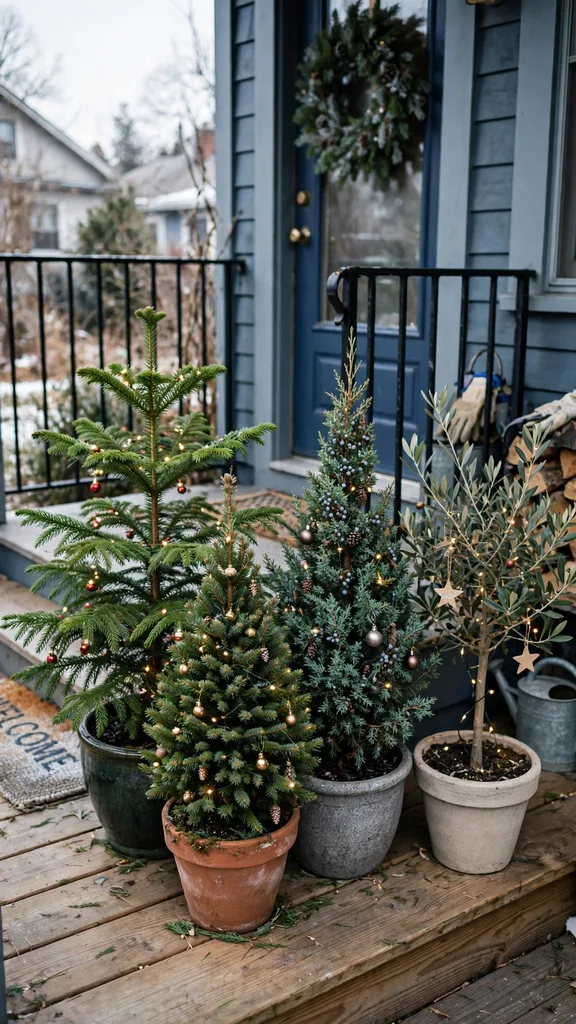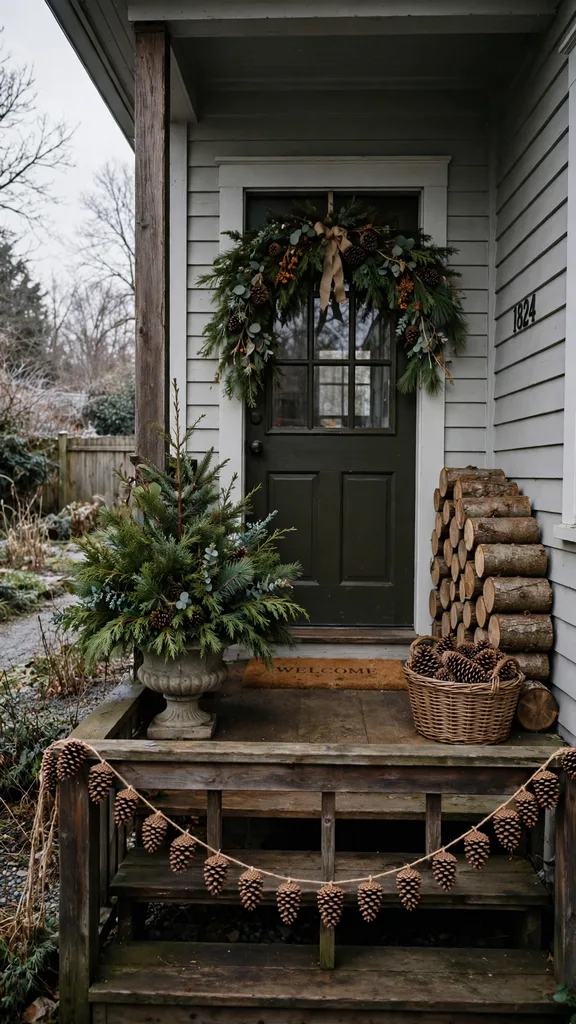
The best outdoor Christmas decorations in a gardener’s yard are not bought in November; they are pruned, gathered, and felled across the whole year, then assembled in a weekend. This list builds 45 outdoor decorations from four garden materials, prunings, logs, pinecones, and evergreen cuttings, with berries, seed heads, and dried citrus as the supporting cast. Every build is sized for real weather, rated for how long it lasts outdoors, and made from what a working garden already throws off.
The method is a single harvest: walk the garden with loppers and a basket in late November, take the evergreen cuttings, the straight prunings, the fallen cones, and the berry sprays in one pass, and build on the porch over the following days. I build the door pieces first, because the door is where the season greets people, and let the path, fence, and yard pieces follow as the material pile sorts itself. Nothing here needs a craft shop beyond twine, wire, and battery lights.
| Material | Best Builds | Outdoor Life |
|---|---|---|
| Evergreen cuttings | Swags, urns, boughs, runners | 4 to 6 weeks |
| Prunings and twigs | Stars, teepees, hurdles, bundles | A full season |
| Logs and rounds | Reindeer, snowman, stacks, edging | Several seasons |
| Pinecones | Garlands, trees, jars, markers | Years, stored dry |
| Berries and seed heads | Stakes, bunches, sprays | 2 to 5 weeks |
| Dried citrus | Garlands, runners | 3 to 4 weeks |
1. Evergreen Door Swag of Mixed Cuttings
Wire a mixed handful of evergreen cuttings, fir, pine, and cedar, into a teardrop swag with the stems at the top and the tips fanning down, then hang it on the door by its wire loop. A swag asks for no frame and no form, which makes it the fastest decoration in this list: ten minutes from pruning pile to door.

Outdoors, a fresh swag holds its color for 4 to 6 weeks in cold weather and sheds gracefully rather than collapsing. Hang it out of the strongest wind, and choose the longest-needled greens for the outside layer, where weather hits first.
2. Pinecone Garland Along the Porch Rail
Screw small eye hooks into the base of large cones, or wire them by their bottom scales, and string 20 to 30 along twine at hand-span intervals. Drape the garland along the porch rail in shallow swags, tying it at every post so the wind works on short lengths instead of the whole run.
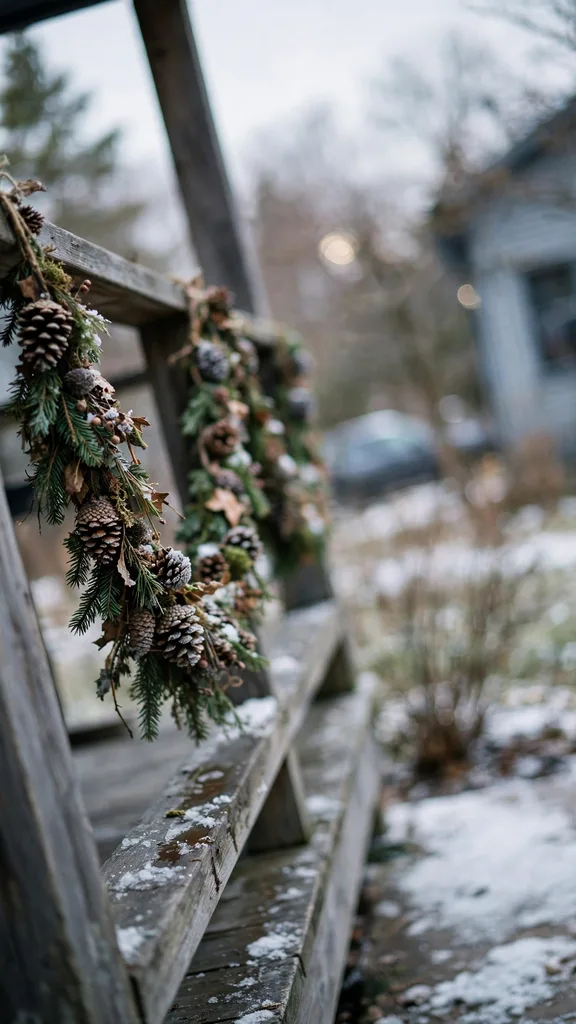
Cones open in dry cold and close in wet weather, so a cone garland changes with the forecast, which the household will start reading by breakfast. The garland itself lasts for years: store it coiled in a dry box and it comes out ready each December.
3. Tied Pruning Bundle by the Door
Gather straight prunings, dogwood, willow, or birch whips, into a bundle as thick as your wrist, bind it at two points with twine, and stand it by the door in a tall crock or lean it against the frame. The bundle’s beauty is its lines: bare winter stems in reds, yellows, and white bark need nothing added.
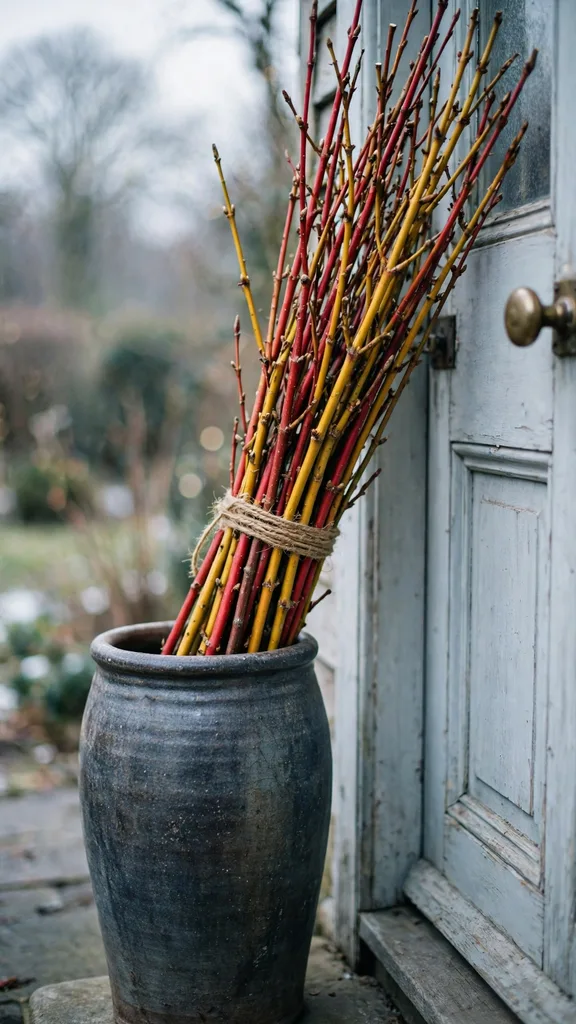
Pruning bundles last the whole season outdoors and dry rather than rot in cold air. Refresh the look mid-season by adding a few berry sprays or a cone or two wired into the binding, turning the plainest material in the garden into the display’s backbone.
4. Basket of Cones and Greens at the Doorstep
Fill a sturdy basket with the largest cones you gathered, tuck evergreen tips around the rim, and set it at the doorstep where guests actually arrive. The basket grounds the door display and uses the cones too big for garlands, the ones that roll off shelves indoors.
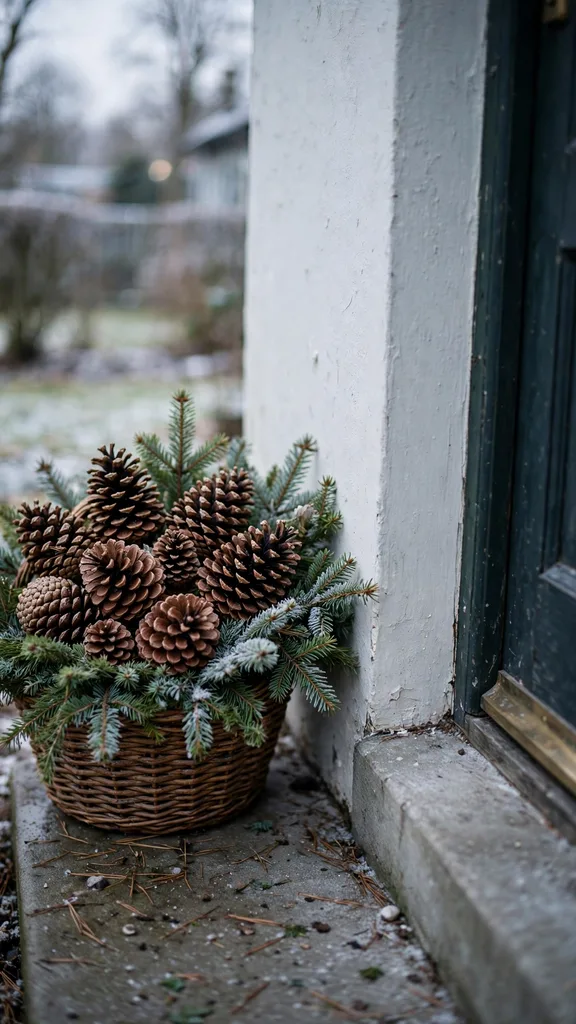
A doorstep basket weathers everything except being kicked, so set it against the wall rather than in the traffic line. In snow it looks better, not worse: cones hold snow on their scales like tiny roof tiles, and the greens stay green under it.
5. Log Round Doorstep Stack
Saw or select log rounds of graduated sizes and stack three or four beside the door like a small woodpile sculpture, bark out. The stack reads as winter itself, firewood made decorative, and it costs one fallen branch.
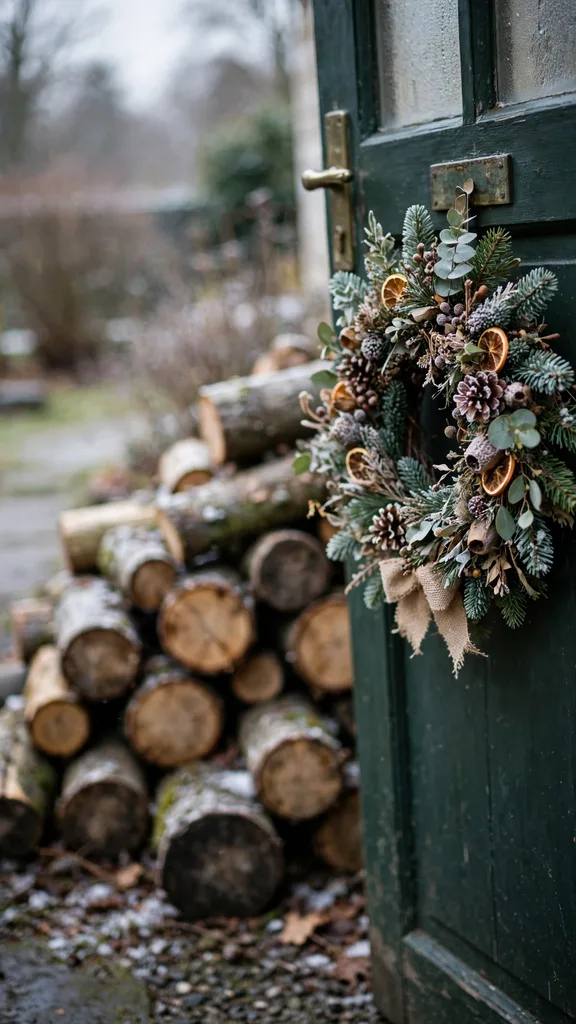
Log rounds outdoors last for seasons; the stack’s enemy is ground damp, so set the bottom round on two bricks or a flat stone. Between Christmases the same rounds serve as plant stands, which is the kind of decoration a garden justifies easily.
6. Evergreen Filled Porch Urn
Fill a porch urn with soil or gravel for weight, then build the arrangement in layers: tall evergreen branches at the back, berry sprays and cones wired on stems through the middle, trailing ivy or cedar over the rim. Work from the garden’s own prunings and the urn becomes a cutting diary of the whole yard.
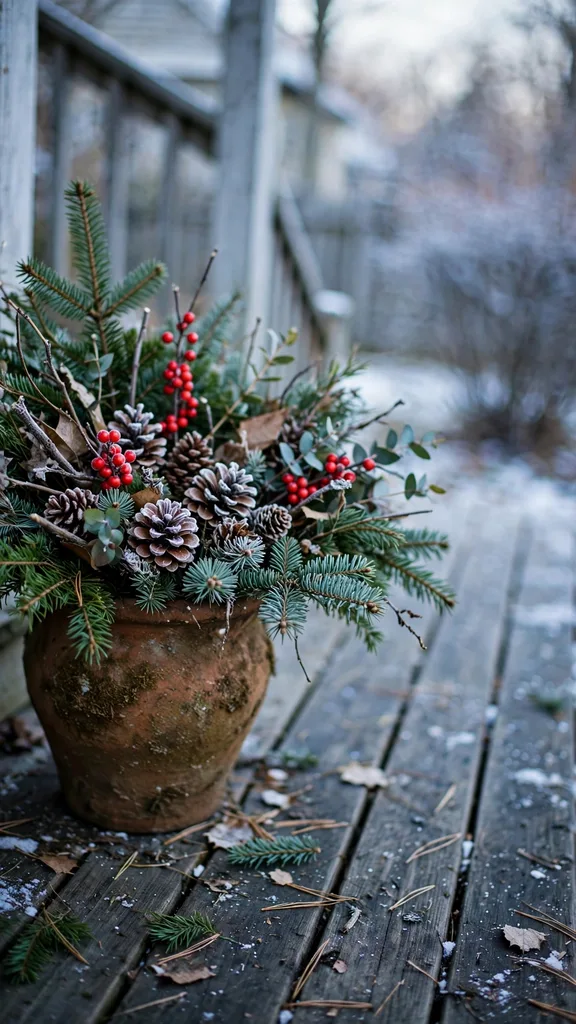
A filled urn outdoors holds 5 to 7 weeks, the longest of any fresh display, because the stems sit in damp soil that freezes and thaws slowly. Water it on mild days before a freeze and the greens drink ahead of the cold. The Christmas garden ideas pillar gathers the wider season’s displays alongside this one.
7. Log Round Path Edging
Set log rounds on edge along a garden path, half-buried, so the cut faces line the walk like stepping punctuation. In December the rounds catch frost on their end grain and mark the path for guests arriving in the dark.
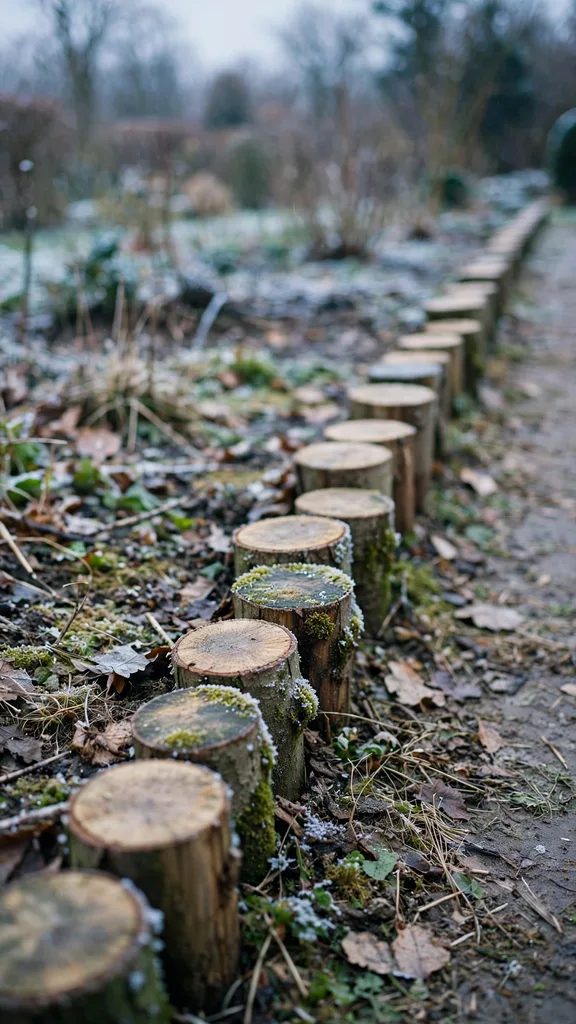
Rounds sunk in soil last 2 to 3 seasons before softening, longer on gravel. Use wood you already felled; the edging is a way to spend a storm-felled branch across several winters instead of one bonfire.
8. Cone and Candle Jar Path Lights
Set battery tea lights in wide jars ringed with small cones and a sprig of green, and line the path or the porch steps with them. The cones silhouette against the jar’s glow and the whole line costs an afternoon of gathering.

Battery lights only: real flames in jars near dry cones invite the wrong kind of warmth. Bring the jars in during heavy rain and the cones stay dry enough to reuse; the lights themselves shrug off cold that would kill a candle flame by wind.
9. Twig Hurdle Edging for Winter Beds
Weave flexible prunings, willow, hazel, or dogwood, between short stakes along a bed edge to make a low hurdle, then tuck evergreen tips and a few cones along its top for the season. The hurdle is real garden infrastructure wearing a Christmas trim.
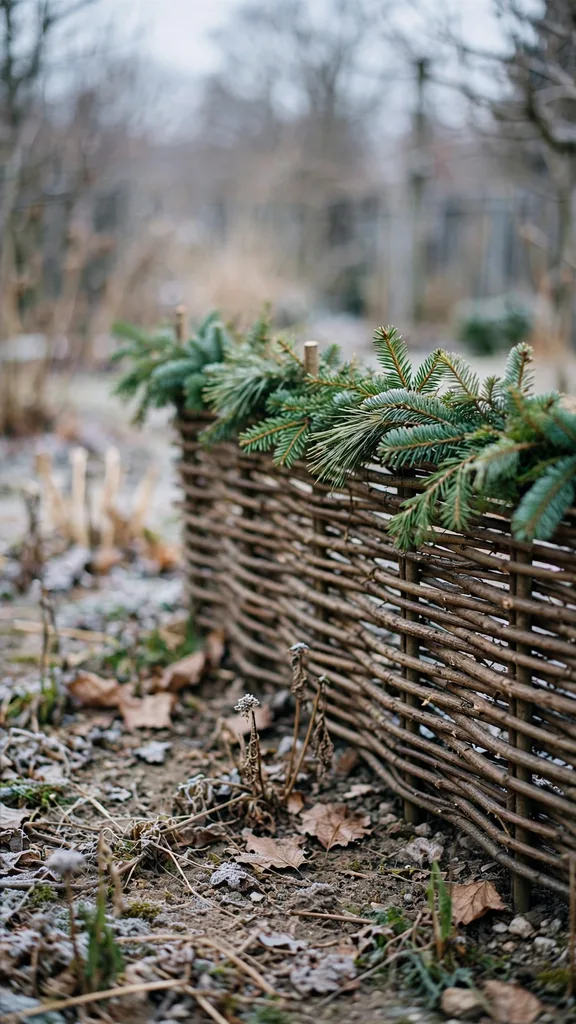
A woven hurdle lasts 2 to 4 years outdoors and looks right in every season, which makes its December dressing a five-minute job rather than a project. Weave it in late autumn while the prunings are fresh and bendy; dry stems snap instead of curving.
10. Evergreen Boughs Along the Path
Lay whole evergreen boughs along the path edges, tips pointing toward the house, overlapping like roof shingles. The green corridor leads the eye and the guest, and it uses the bulky lower branches that garlands reject.

Laid boughs stay fresh 4 to 5 weeks outdoors, fed by nothing but cold air, and they compost in place when the season ends if you move them onto the beds as mulch. It is the least built decoration in this list, and few work harder at dusk.
11. Berry Spray Path Stakes
Wire berry sprays, winterberry, holly, or rose hips, to short stakes and push them in pairs along the path or flanking the steps. Red against snow or dark soil, the stakes read from the street and take minutes each.
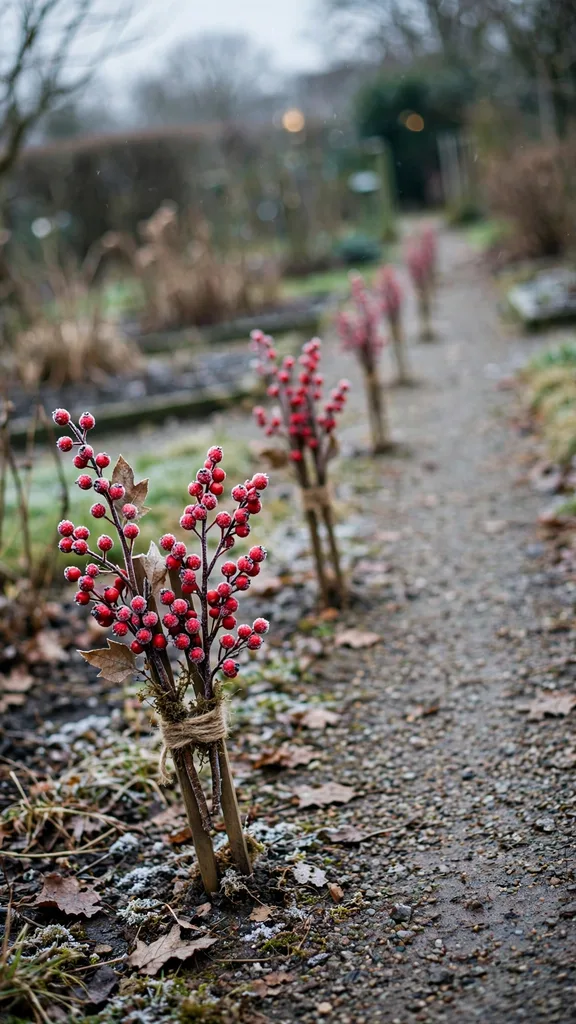
Berries hold outdoors until the birds finish them, which on a busy shrub can be 2 to 3 weeks. Cut more sprays than you need and store the spares in a bucket of water in the cold; replacing a stripped stake is a moment’s work.
12. Log Reindeer From a Felled Branch
Build the classic log reindeer: a horizontal log for the body on four stick legs, a short log neck and head, and branched twig antlers, all lashed or pegged. It stands by the porch or under a tree, charmingly imperfect, and unmistakably homemade in the best sense.
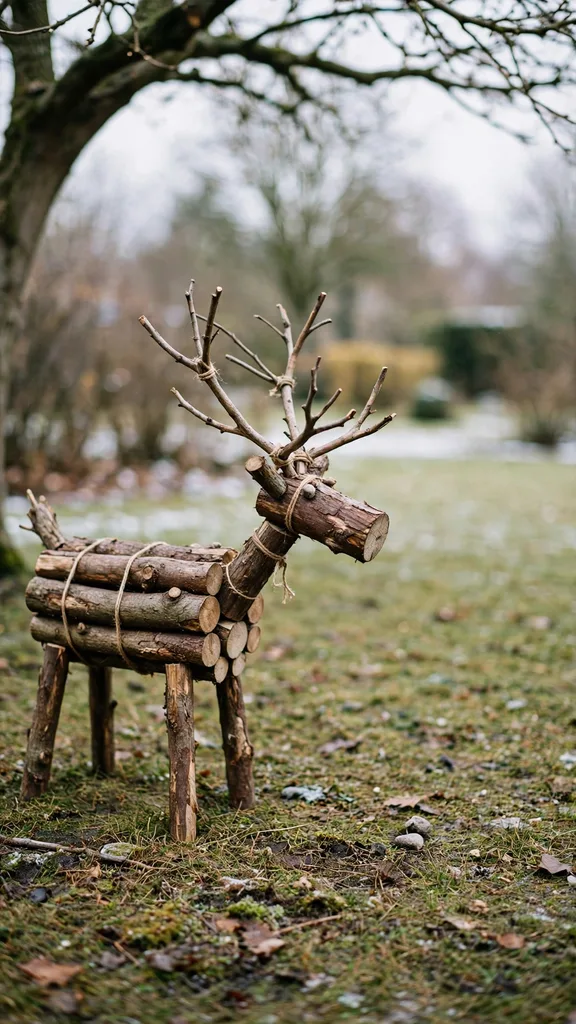
A log reindeer outdoors lasts several seasons if the legs sit on stones rather than soil. Antlers are the fragile part; keep two spare branched twigs in the shed. Children name the reindeer, after which it is no longer a decoration but a resident, and it will be expected annually.
13. Stacked Twig Christmas Tree
Lash straight sticks in decreasing lengths across a central pole, or stack prunings in a cone around a tomato cage, to build a rustic tree for the porch or lawn. Dress it with cone clusters and berry sprays wired on, and a twig star at the top.
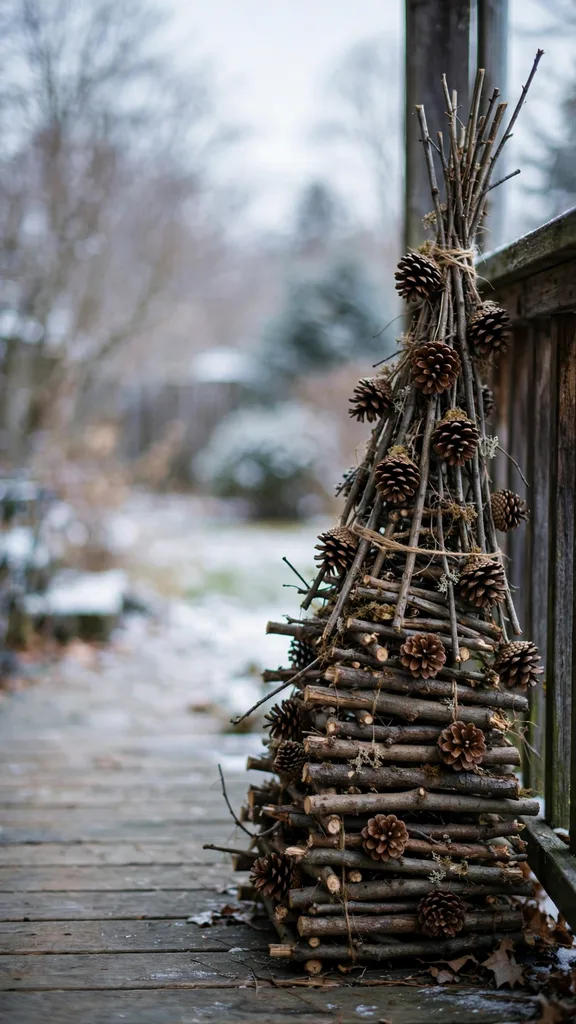
The twig tree weathers a season easily and stores flat if you build the lashings to slip off the pole. It is the garden’s answer to a bought yard tree: same silhouette, materials from the pruning pile, and nothing plastic to store for eleven months.
14. Pinecone Tree on a Log Base
Glue or wire cones in rings around a cone-shaped stack of crumpled paper or a foam-free frame of chicken wire, set on a log round base, building a tabletop-to-porch-sized cone tree. Overlap the cones like scales, tips out, working from the bottom ring up.
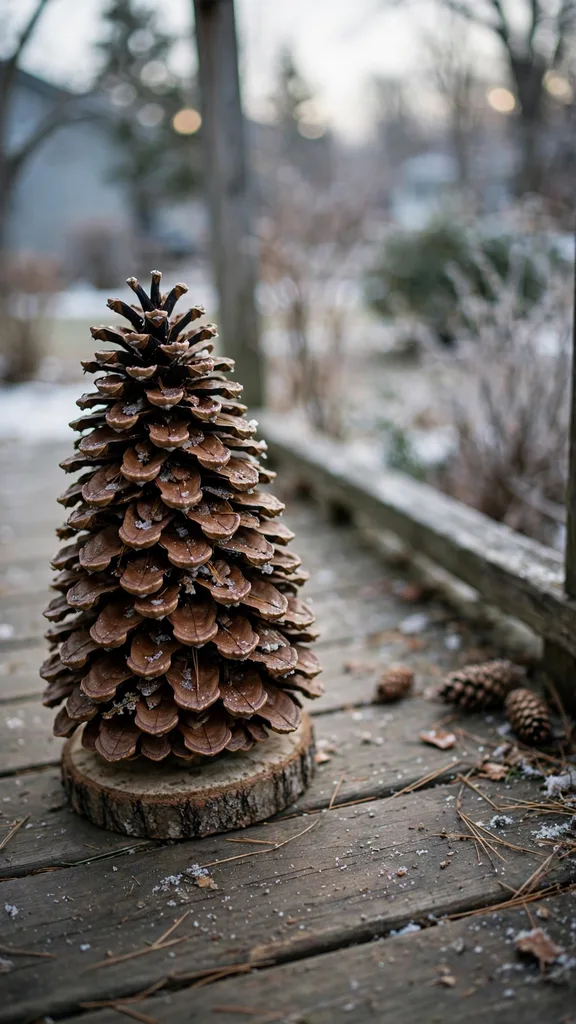
A cone tree lasts for years stored dry, and outdoors it belongs under the porch roof where rain runs off the scales instead of soaking in. Dust it with a brush each year; the cones’ own resin keeps them sound far longer than most natural decorations.
15. Twig Star Yard Stake
Bind five straight twigs into a star with twine at every crossing, mount it on a stake, and push it into a bed or a lawn edge where the low sun can silhouette it. Make three at different heights and the bed gains a constellation.
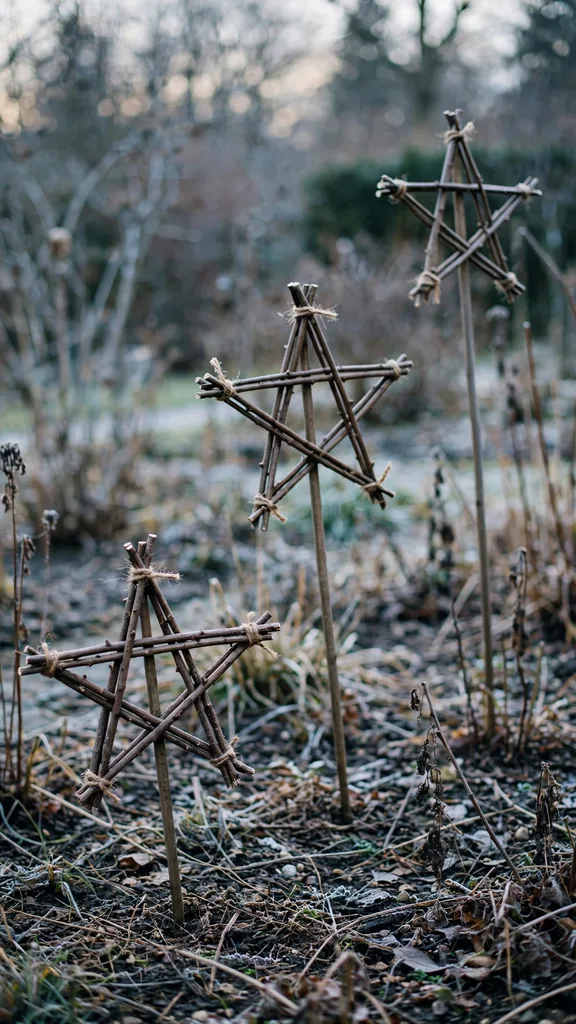
Twig stars last a season outdoors and take ten minutes to replace, which is the right lifespan math for twig work. Willow and dogwood bend into the points without snapping; brittle prunings like lilac need soaking overnight before bending.
16. Pruning Teepee Tree With Cone Trim
Tie six to eight long prunings into a teepee over a pot or a bed, wrap it with a spiral of twine, and hang cones and seed heads from the spiral. The teepee is a climbing frame in waiting, decorated for its off-season.
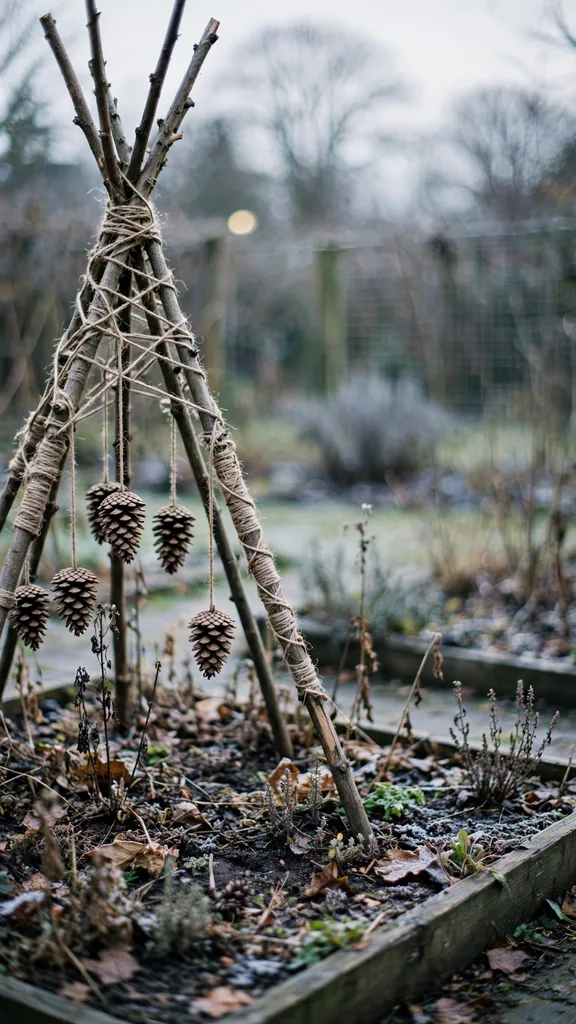
In spring the same teepee carries beans or sweet peas, so the decoration is really the garden showing off its structures. Outdoors it stands through winter storms if the legs are pushed well into the soil; check the lashing after the first gale.
17. Log Round Snowman
Stack three log rounds of decreasing size, cut faces forward, and give the snowman a twig scarf of woven stems, cone buttons, and a small log hat. Paint is optional and honestly unnecessary: the end grain’s rings read as the snowman’s face to anyone willing to see it.
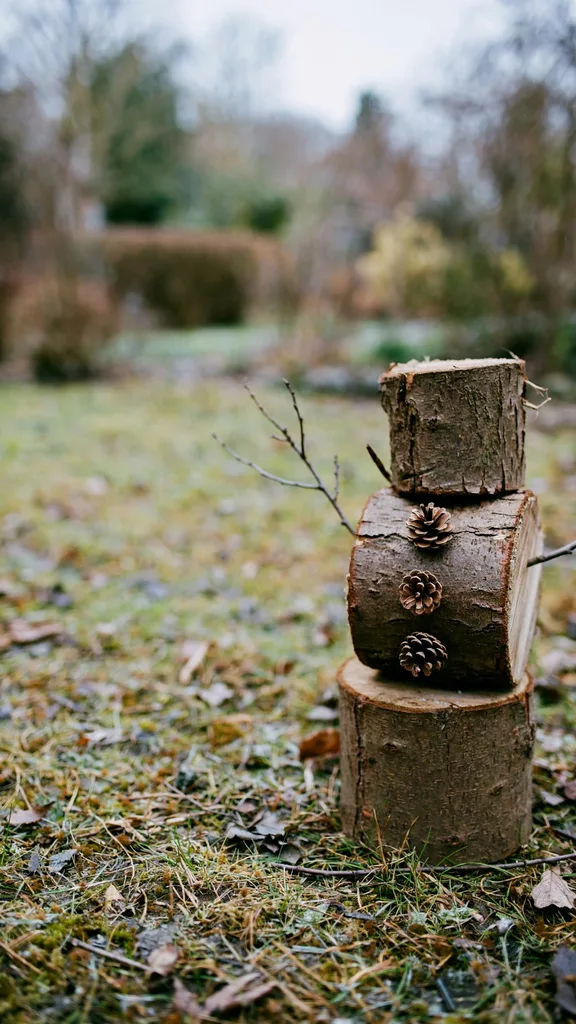
The log snowman never melts, which is its entire comic premise, and it stores in a corner of the shed until next year. Set each round on the one below with a wooden peg or a dab of outdoor adhesive if small children will climb it, which they will.
18. Bird Feeder Garland on the Fence
String cones smeared with suet and seed, dried apple rings, and berry sprays along a garland for the fence or a low branch, and hang it where you can watch from a window. It is a decoration that feeds its audience, and the Penn State Extension guide to winter bird feeding grounds the menu: black oil sunflower seed and suet draw the widest range of winter birds.
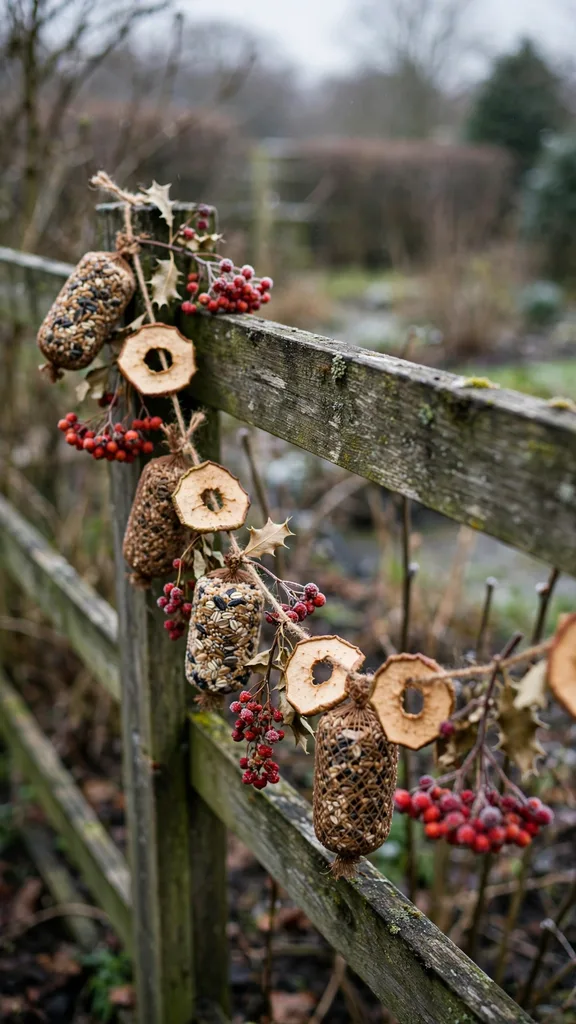
A feeder garland lasts as long as the birds allow, usually 1 to 3 weeks of active weather, and refilling it becomes a small ritual. Keep it away from the door plantings if you would rather the birds dined at the garden’s edge than over the doorstep.
19. Evergreen Dressed Garden Bench
Lay a thick evergreen bough across the back of the garden bench, wire cone clusters at each end, and set a basket of cones on the seat. The bench becomes a still life that suggests sitting out with a hot drink, even if nobody does.

Bench greens hold 4 to 6 weeks outdoors. Choose a bench in view of a window; half the pleasure of outdoor decorating in deep winter is seeing it from inside, warm, while the frost does the lighting.
20. Gate Swag of Mixed Greens and Berries
Wire a fat swag of mixed greens with berry sprays worked through it and hang it at the garden gate, the threshold between street and garden. The gate swag is the handshake of the whole display: it promises the garden beyond is dressed too.

Gate decorations take the worst wind on the property, so wire this swag at three points, not one. Berry sprays wired stem-to-stem with the greens move as one piece instead of flapping apart by the second storm.
21. Fence Rail Cone Swags
Wire small swags of greens topped with a cluster of three cones and tie one at every fence post along the front rail. Repetition does the decorating: a single swag is a sprig, ten swags are a design.

Post swags last 4 to 5 weeks and replace individually when one fades early, which keeps the run looking intentional all season. Cut the greens a hand longer than the swag needs; trimming in place is easier than adding.
22. Mailbox Dressing of Greens and Cones
Saddle the mailbox with a wired pad of evergreen cuttings, cones along the top, and a berry spray at the flag. Keep the flag and the door clear of the dressing, since the mail carrier votes on this decoration daily.

Mailbox greens dry faster than most, lifted into the wind and sun on their post; expect 3 to 4 good weeks and plan a mid-season refresh from the cutting pile. A December mailbox is seen by more people than any other display you own, which argues for the refresh.
23. Arbor Arch of Prunings and Greens
Weave long prunings through the garden arbor’s top and sides, then wire evergreen sprays and cone clusters along the arch so the entrance frames itself in green. An arbor already owns the shape; the season only asks you to dress it.
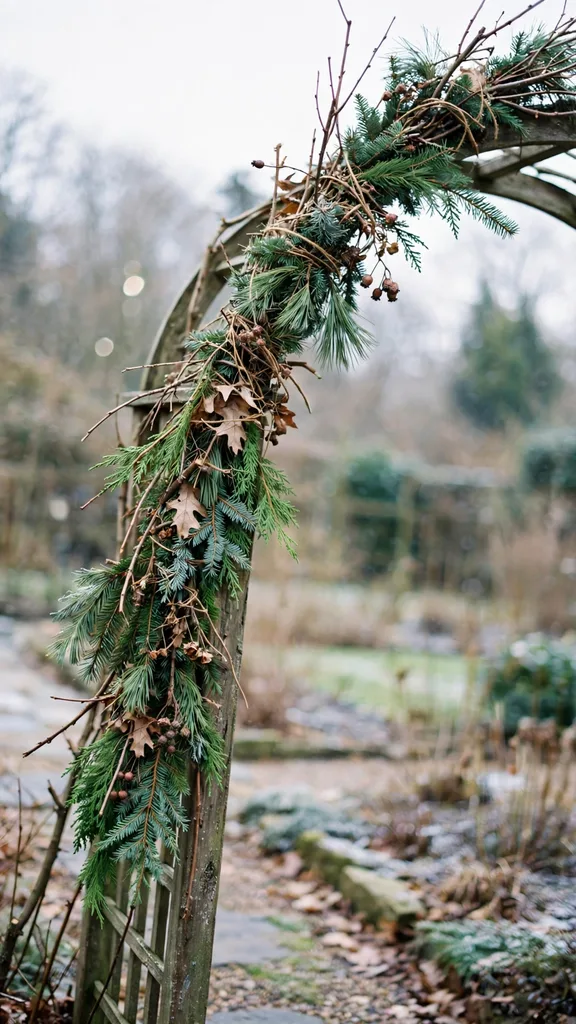
Woven prunings in an arbor can stay as permanent structure, gaining patina year by year, while the greens refresh each December. Work the fresh greens in after the first hard frost and they will hold their color to the month’s end and beyond.
24. Window Box Evergreen Fill
Empty the window box of its summer soil plants and fill it with evergreen cuttings stood upright in the damp soil, berry sprays and cones among them, trailing cedar over the front edge. From inside, the box frames the window with green; from outside, it dresses the wall.

Cuttings in soil stay fresh 5 to 6 weeks, drinking from the box on mild days. The display on the living tree outside follows the same logic at larger scale, and the outdoor Christmas tree guide covers decorating it safely end to end.
25. Cone and Berry Sill Swag
Wire a slim swag of cedar, three cones, and a berry spray for each exterior window sill, tied at both ends to hooks or the frame. The swags repeat the fence swags’ rhythm up the wall of the house, tying the building into the garden’s scheme.

Sill swags sit in the house’s rain shadow and last the full season with no attention. Make them all in one session on the bench, assembly-line style, and the set matches in a way one-at-a-time swags never quite do.
26. Seed Head Sprays Tied Into Bare Shrubs
Cut dried seed heads, hydrangea, sedum, ornamental grass plumes, and tie small sprays into the bare shrubs by the door and along the front beds, where their shapes catch frost and low light. The shrubs gain a second flowering, in sepia and silver.
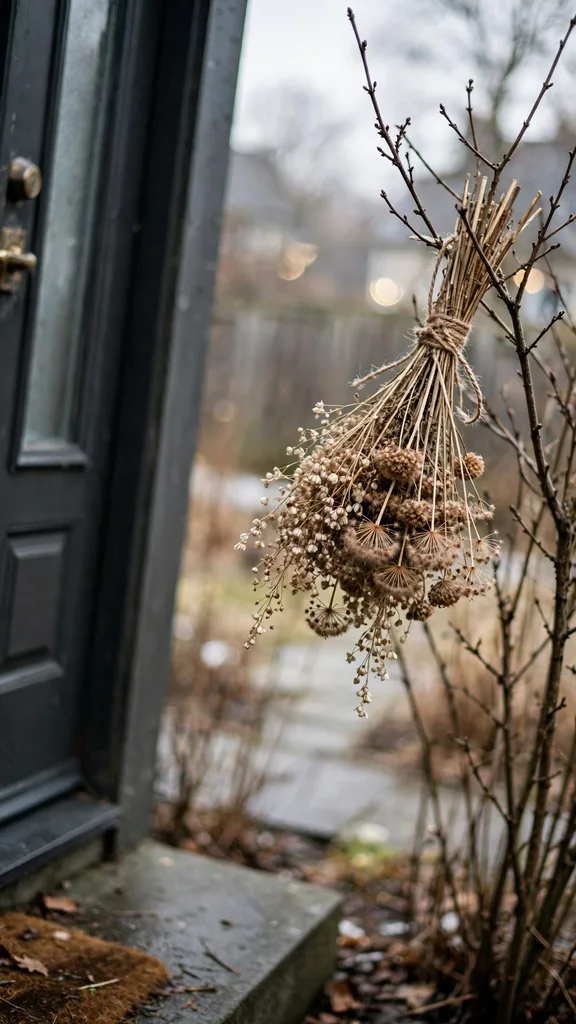
Seed heads outdoors last until heavy wet snow bends them, usually most of the season. Leave some standing in the beds uncut for the birds and the winter garden’s own structure; the tied sprays are the garnish, not the whole crop.
27. Berry Bunches in Bare Shrubs
Wire extra berry sprays into shrubs whose own fruit is finished or sparse, concentrating the color where the house needs it: by the door, under the front window, at the gate. Gardeners call it helping; the shrubs call it nothing, and the birds call it dinner eventually.
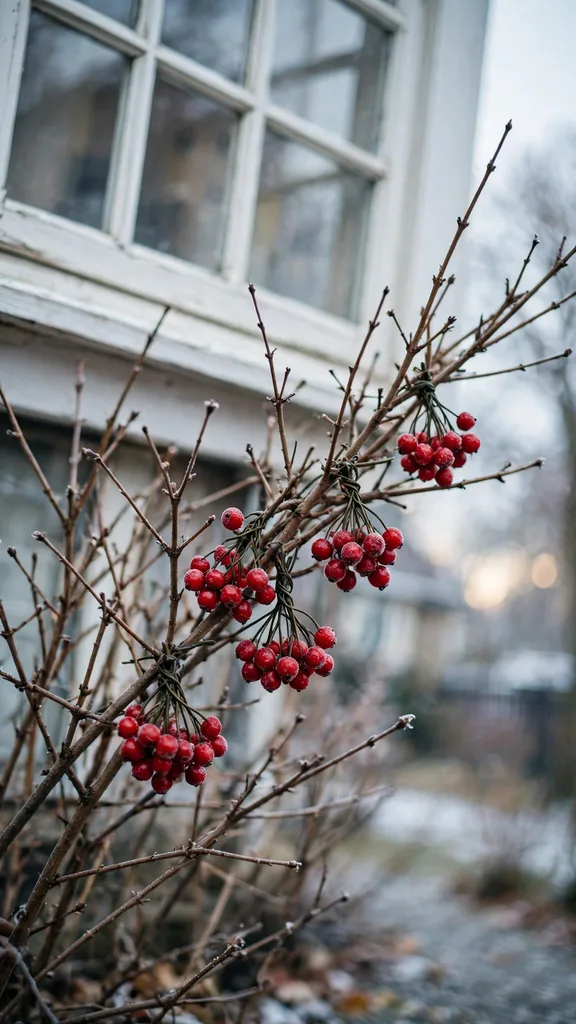
Added berries hold 2 to 4 weeks depending on bird pressure. Push the spray stems deep into the shrub’s own branching so the join hides and the bunch reads as the shrub’s own crop from the path.
28. Evergreen Boughs on the Pergola
Lay and wire evergreen boughs along the pergola’s beams, tips hanging slightly over the edges, with cone clusters at the posts. The pergola’s summer shade structure becomes a green ceiling for the winter garden room below it.
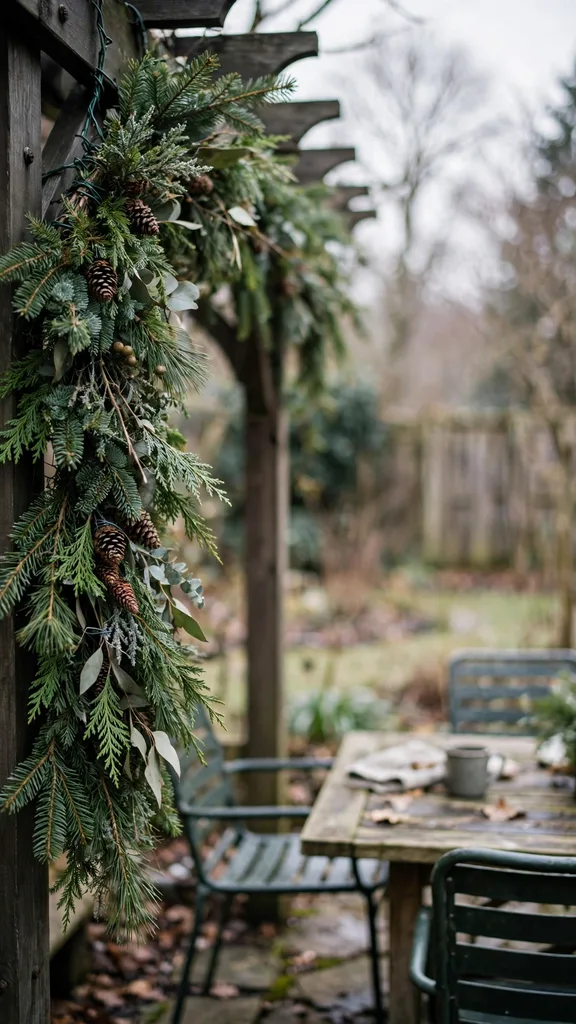
Boughs on beams sit out of ground damp and last 5 to 6 weeks. Wire every bough at two points; a bough that slips in a storm lands on the table below with opinions. The work is ladder work, so do it on a calm, dry morning.
29. Cone Filled Hurricane Jars on the Outdoor Table
Fill tall glass jars two-thirds with cones, dried citrus, and a few green tips, and group three on the outdoor table. The jars protect their contents from weather while showing them, like specimens of the season under glass.
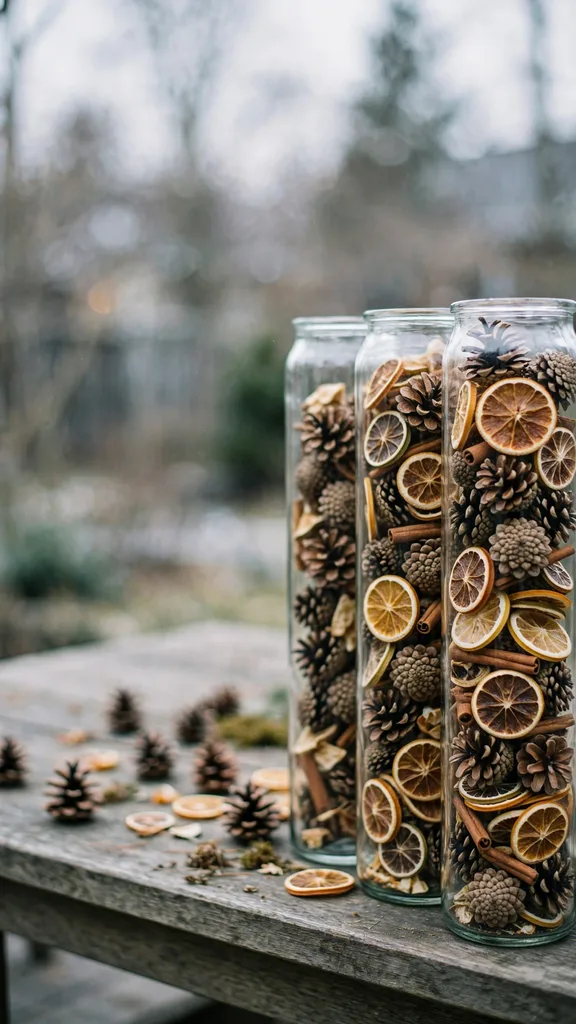
Under a porch roof the jars run all season untouched; in the open, bring them in during storms so water does not cloud the glass. Battery candles nestled in the cones turn the jars into the table’s evening light, the same trick as the path jars at larger scale.
30. Hollow Log Planter With Winter Greens
Set a hollow log section on the porch or a stump, fill its cavity with soil, and plant or arrange winter greens, berry sprays, and cones in it. The log planter is the garden’s own container, bark outside and Christmas inside.
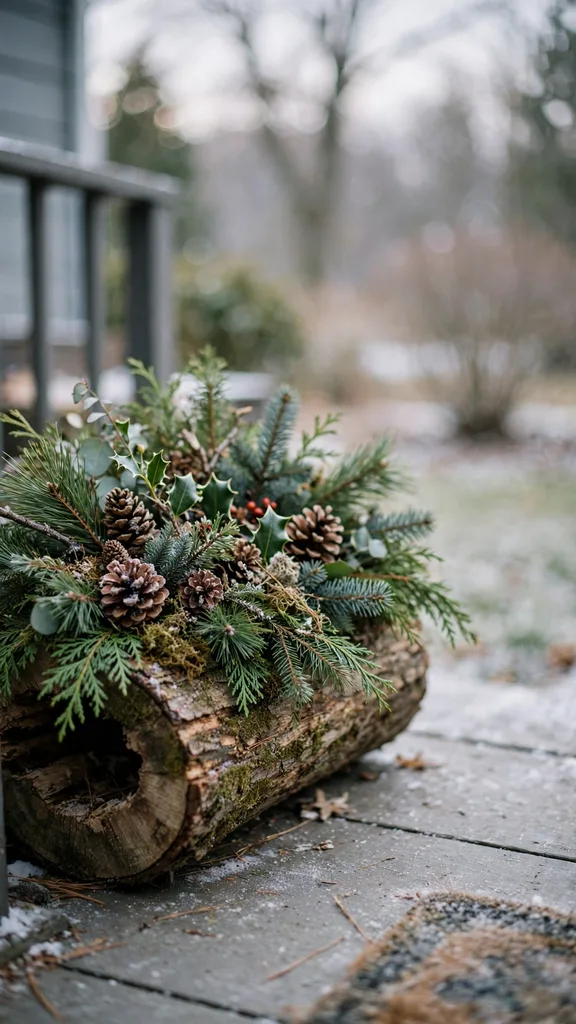
A hollow log holds moisture kindly and the arrangement lasts 5 to 6 weeks. Line a very rotten log with a piece of landscape fabric so the soil stays while the bark does the showing. In spring the log takes seedlings or becomes a fern planter without changing address.
31. Log Bundle Porch Stack With Greens
Bundle short logs upright in a crate or a metal bucket by the door, and tuck evergreen tips and berry sprays between the top rounds. It reads as the firewood store dressed for the season, honest and handsome at once.
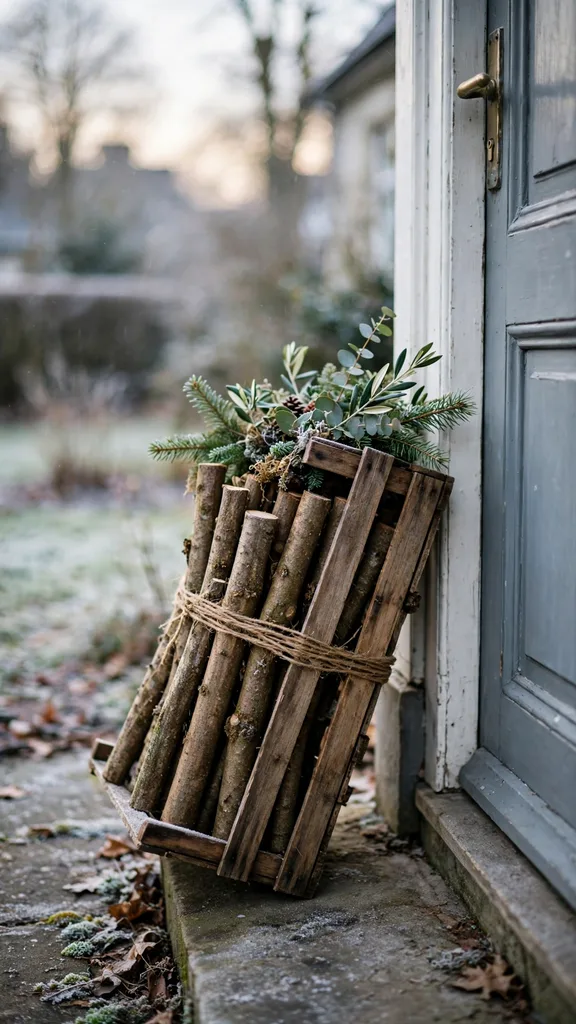
The stack lasts indefinitely; only the greens need a mid-season refresh. Keep the display stack and the burning stack as cousins, not twins, or the best-decorated logs will walk into the fire one cold night by mistake.
32. Evergreen Runner for the Garden Table
Lay a runner of flat cedar and fir down the outdoor table’s center, cone clusters and dried orange slices along it, and jars at each end. The runner dresses the table for the photograph and the occasional brave outdoor meal of the season. The Clemson Extension guide to drying oranges gives the method behind the slices: cut them an eighth of an inch thick and dry them low and slow until they turn translucent.

A table runner outdoors survives a week of weather handsomely and a month under a porch. Build it the day before it matters most, from greens cut that morning, and let the porch roof do the preserving.
33. Pinecone Place Markers for Outdoor Eating
Stand a cone at each place setting on the outdoor table, a small card or a dried leaf with a name tucked into its scales. The markers take five minutes and make a winter table outdoors feel deliberately hosted.

Cones as markers last forever and store in a shoebox. Choose cones of one species and similar size for the set; the sameness is what makes them read as tableware rather than debris. The hanging versions of these cones live in the DIY ornaments from the garden collection.
34. Citrus and Cone Garland for the Pergola Rail
String dried orange slices and small cones alternately on twine and drape the garland along the pergola rail or the porch’s sunny edge, where low light shines through the slices like stained glass. The garland is the list’s most jewel-like build and costs a bag of oranges.
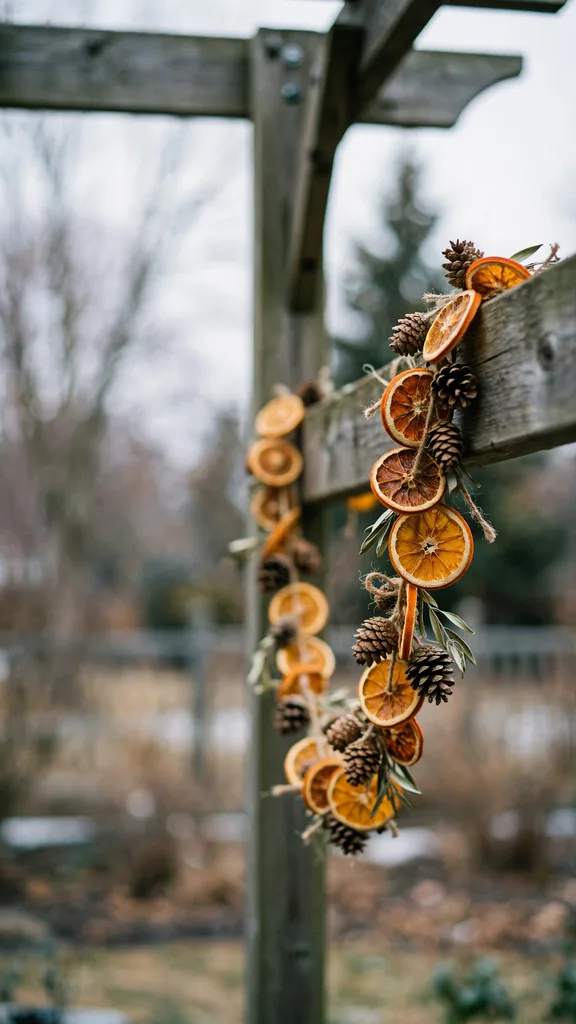
Dried citrus outdoors lasts 3 to 4 weeks before damp softens it; a sunny, airy rail is its best home. Make the slices a touch thicker than the indoor standard and they trade a little glow for a lot of stamina.
35. Grapevine and Pruning Wreath Base Decorations
Wind grapevine or flexible prunings into wreath bases and decorate them for outdoor posts and doors with cones, seed heads, and berry sprays wired on. A homemade base has the irregular, hand-built character that bought rings sand away.
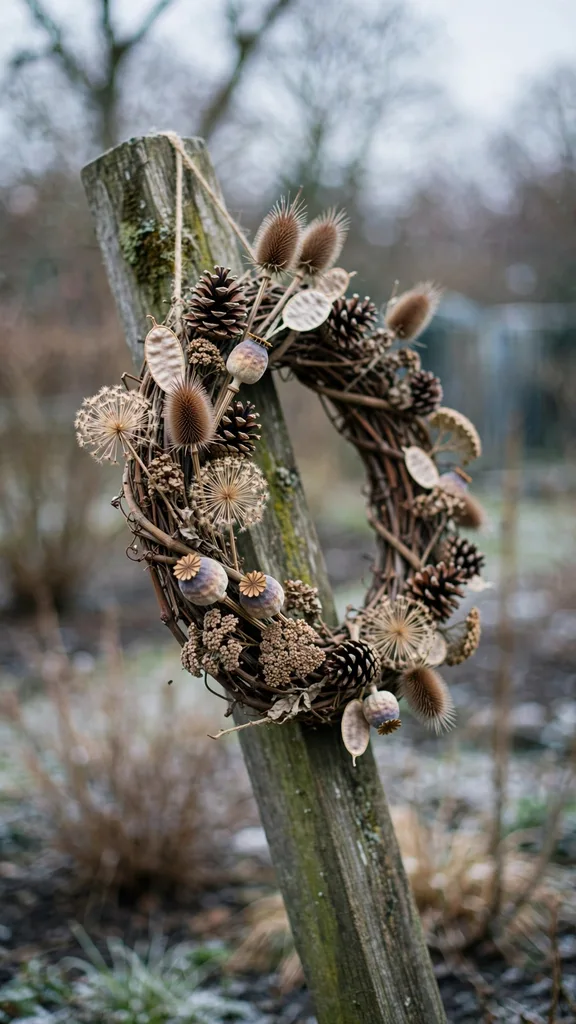
Bases last for years; dressings refresh annually. Soak dry vine for an hour before winding and it bends without argument. Keep two sizes on hand, door and post, and December’s decorating starts from structure instead of scratch.
36. Rosemary Bundle Door Hangers
Bind thick rosemary prunings into bundles with twine, add a cone and a dried orange slice at the knot, and hang them on door handles and gate latches where every passerby brushes them into scent. The decoration announces itself before it is seen.
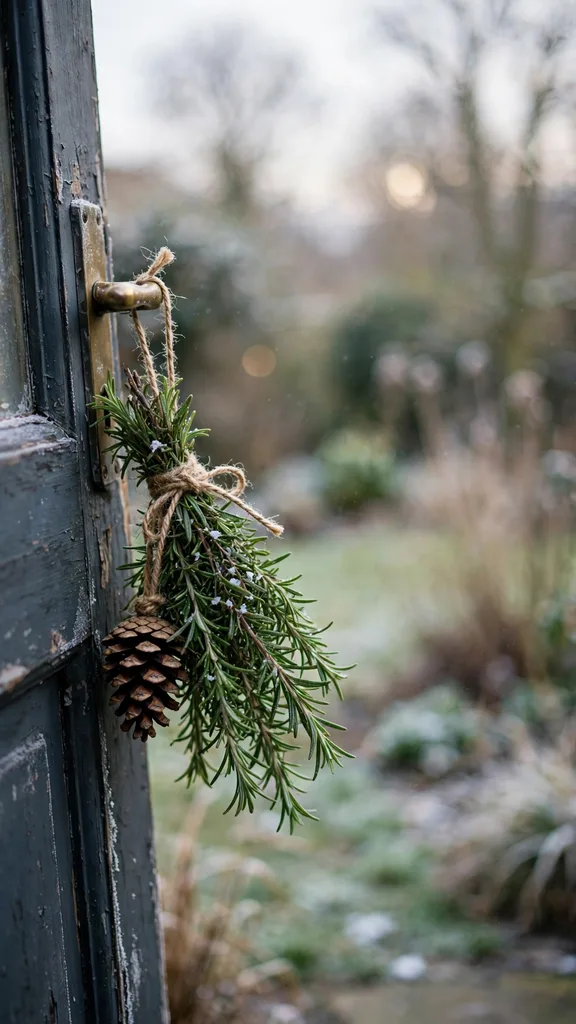
Rosemary outdoors holds its needles and scent for 3 to 4 weeks, and the bundles dry in place into next month’s cooking if they hang somewhere clean. Cut rosemary hard for the bundles; the shrub answers hard pruning with next year’s bush.
37. Dried Flower and Seed Head Stakes in Pots
Push stakes wired with dried flower heads, strawflower, statice, yarrow, and seed heads into the porch pots among their winter greens, giving the pots height and a dried bouquet’s worth of color. The stakes reuse summer’s dried harvest at the front door.
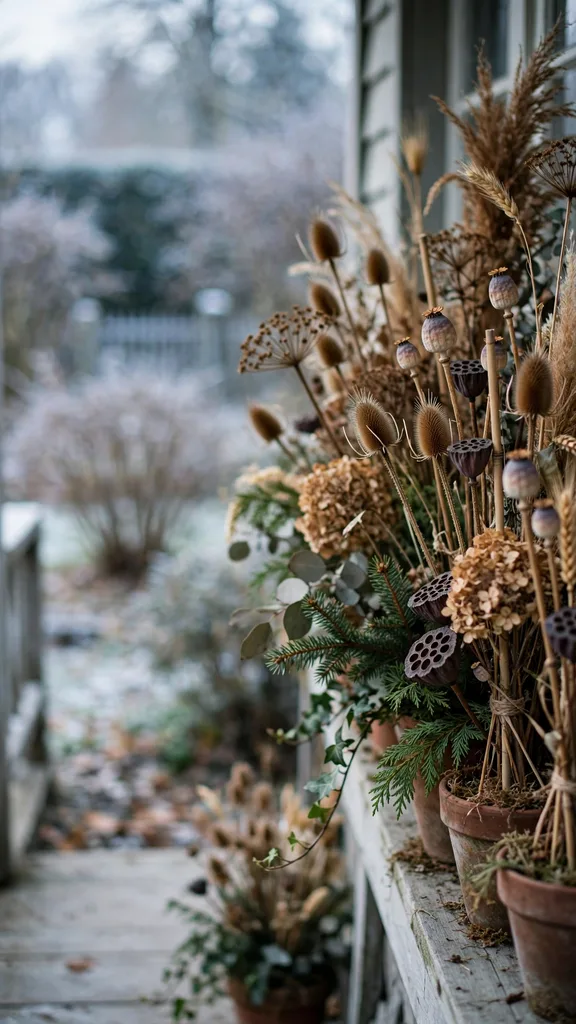
Dried flowers outdoors fade gently rather than collapsing, holding 4 to 5 weeks under a porch. Keep the brightest heads for the pots nearest the door, where their color works at greeting distance.
38. Magnolia Leaf Garland on the Rail
Wire magnolia leaves stem to stem into a garland, green side and copper underside alternating, and drape it along the porch rail where the two-tone leaves do the work of ribbon. A magnolia garland looks tailored, the tailored end of garden decorating.
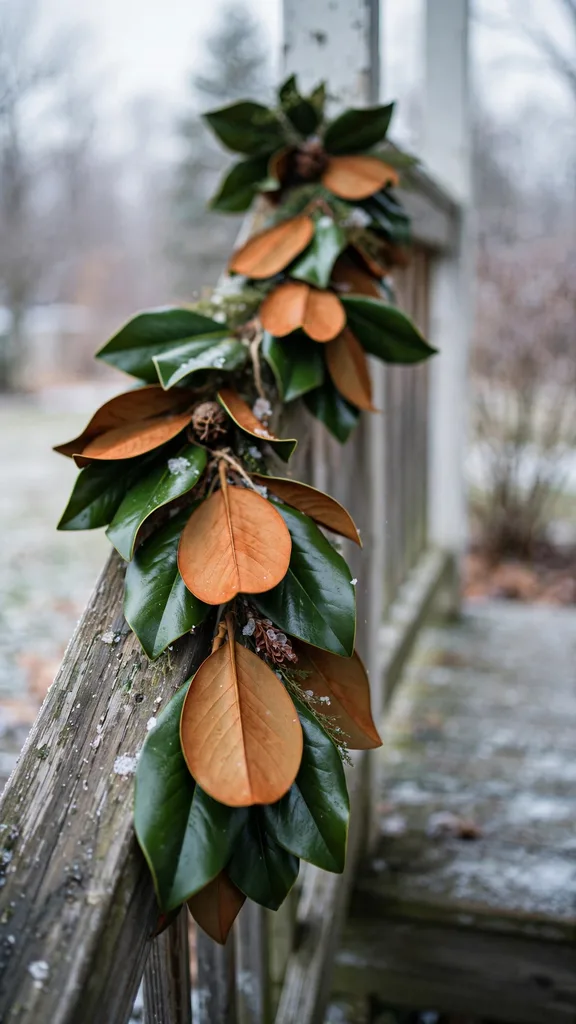
Magnolia leaves outdoors hold 4 to 5 weeks, curling slightly as they dry into their copper phase, which most people prefer. Wire the garland on a rope core so it drapes in even swags instead of kinking at the leaf joints.
39. Holly and Ivy Fence Weaving
Weave long ivy trails and holly sprays through the fence’s rails or a trellis panel, letting the plants’ own habits do the pattern. It is the oldest decoration in this list, older than the fence in some gardens, and it asks only for what the fence already grows.
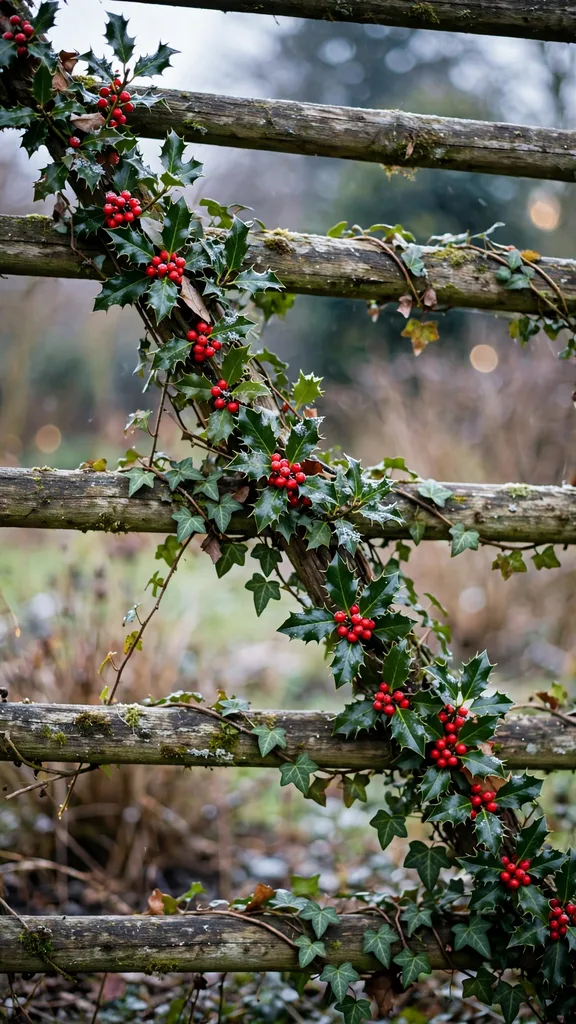
Woven in place, holly and ivy stay fresh as long as the weather stays cold, effectively the whole season. Wear gloves for the holly and mind the ivy near mortar and gutters; a woven panel on a fence is charming, and ivy in the gutter is a chore wearing a costume.
40. Evergreen Chandelier Ring Hung From a Branch
Wire greens thickly around a hoop of bent vine or a metal ring, hang it level from a tree branch or the pergola on three cords, and set battery candles or cone clusters on its top surface. The floating ring of green is the garden’s chandelier, and it stops guests mid-path.
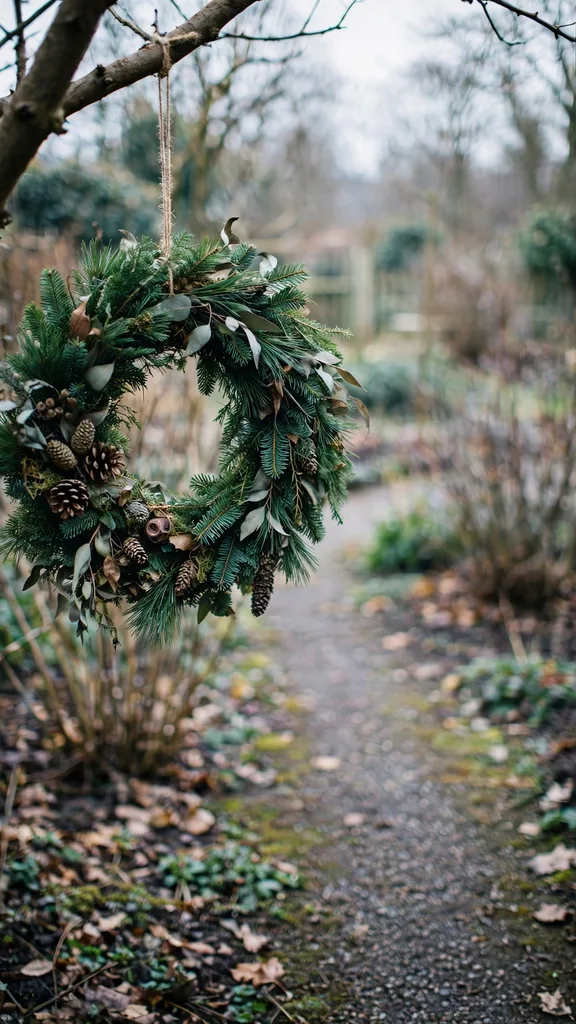
The ring lasts 4 to 5 weeks outdoors, drying evenly in the open air. Hang it where it clears heads by a good margin, and check the cords after storms; a chandelier that swings is festive, and one that descends is a story.
41. Pinecone Fire Starters Basket by the Door
Fill a basket with resinous cones, a few dried herb bundles, and cedar tips, and set it by the door as a working display for the fire inside. Half decoration, half stores, it earns its place twice every cold evening.

The basket’s contents are consumable, so top it up from the cone store as the fire eats it. Keep the display basket and the doorstep basket as separate citizens; cones destined for flames should not be the ones wired and painted by the children.
42. Log Slice Garland for the Porch Beam
Drill thin log slices and string them on twine with cones and dried leaves between, then hang the garland along the porch beam. The slices’ rings echo the season’s tree rings theme, and the garland clatters softly in wind like a wooden wind chime.
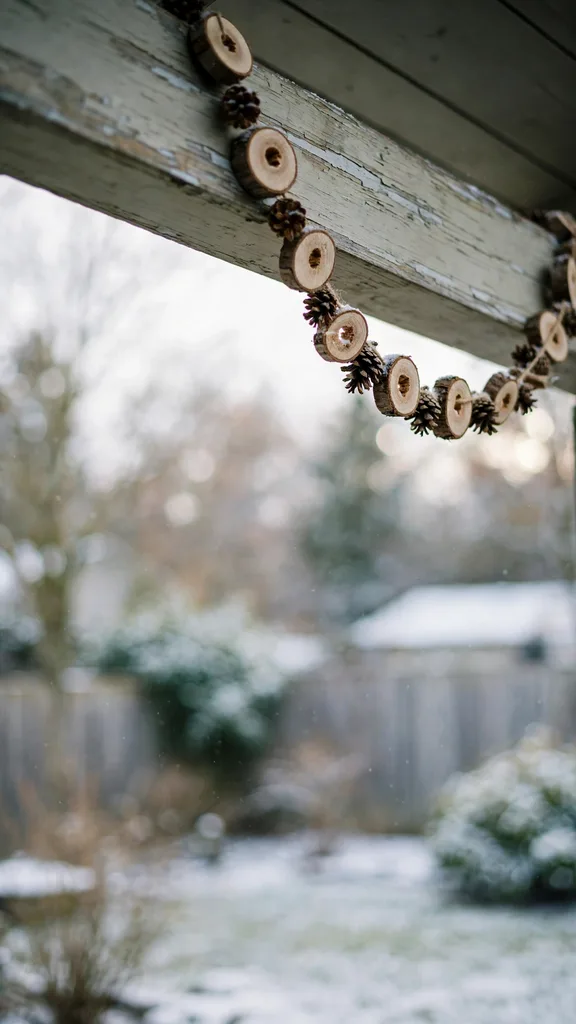
Log slice garlands last for years stored dry. Drill the slices green and they split less; string them bark-side alternating for rhythm. A name or a year burned into one slice per season turns the garland into a family record, added to annually.
43. Red Twig Stems in a Tall Crock
Cut the brightest red and yellow dogwood stems and stand them tall in a crock or a churn by the door, with a few evergreen tips at the base to anchor the arrangement. Against a pale wall or snow, the stems are pure line and color, the modernist entry in a traditional list.
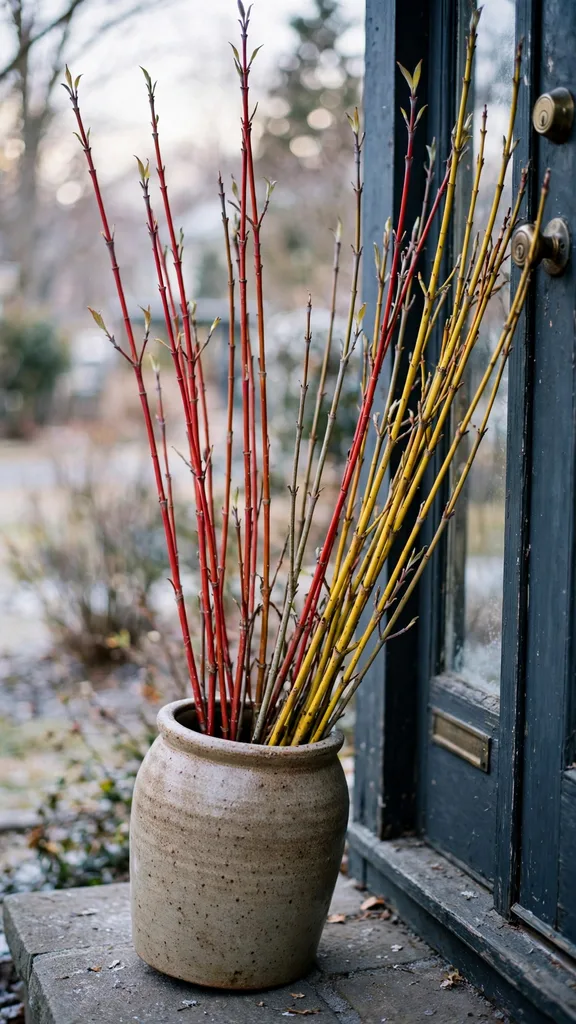
Cut stems in a crock outdoors last the whole season, and many will root if left in water into spring, which turns the decoration into next year’s shrubs. Refresh the water on mild days and trim any stem that slimes; the rest is architecture.
44. Ornamental Grass Plume Bundle on the Gate Post
Tie a sheaf of ornamental grass plumes, miscanthus or pampas style heads cut from your own clumps, with twine at the waist and fan it against the gate post or the porch column. The plumes move in every breath of wind, the only decoration in this list that dances.

Grass plumes outdoors hold 4 to 6 weeks before wet snow mats them; a post under any shelter keeps them handsome longest. Cut the plumes before the autumn rains shatter them and store the spares dry, since a mid-season replacement sheaf takes two minutes to tie.
45. Whole Porch Display: Logs, Cones, and Greens Combined
Assemble the finale: the urn filled, the door swag hung, log rounds stacked, cone garlands draped, the basket at the step, and berry stakes flanking the path, every material in this list working one porch. Built across a weekend from the pruning pile and the cone store, the combined display is the proof that a garden decorates a house better than a shop does.
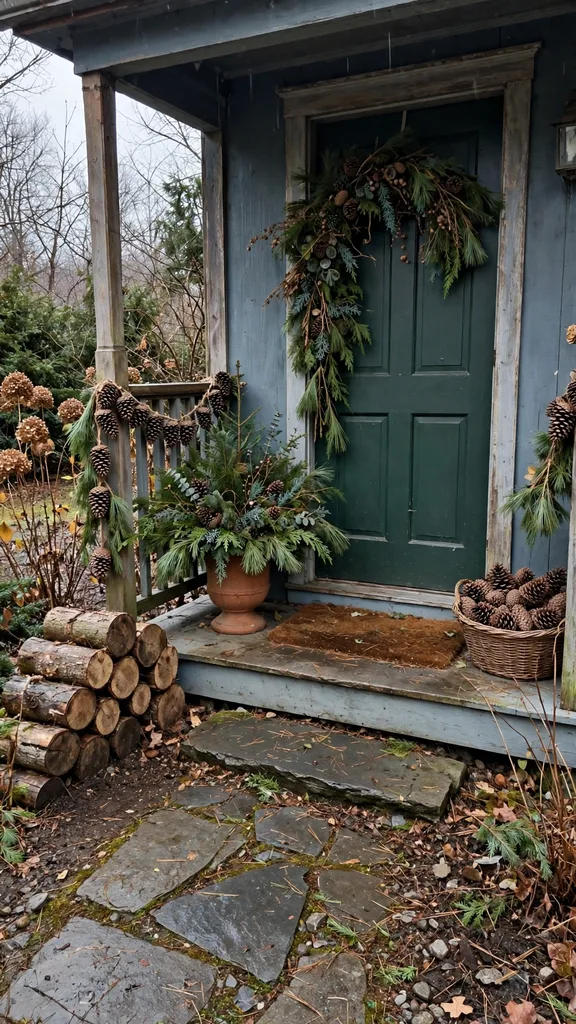
The combined display holds through the season with two small refreshes: berries at week three, door greens at week four. Photograph it on the first snow and again at dusk; the porch you built from your own garden is the season’s best picture, and it cost the garden nothing it was not already giving away.
Frequently Asked Questions
Cut evergreens outdoors in cold weather hold their color and needles for 4 to 6 weeks, longer in soil or water, shorter on a windy mailbox or gate. Cut them after hard frosts begin and they last longest, since the plant has hardened for winter. Pieces that fade early replace individually from the cutting pile in minutes, which is the working advantage of decorating from your own garden: the spares are growing outside the door.
Logs and pinecones weather best, lasting seasons and years respectively with dry storage between. Twig and pruning builds last a full season and often become permanent garden structure. Fresh greens give 4 to 6 weeks, berries 2 to 4 weeks before the birds or the weather take them, and dried citrus 3 to 4 weeks in an airy spot. Build the permanent pieces once and refresh the fresh pieces annually.
Nearly everything in this list builds from the garden itself: prunings, logs, cones, cuttings, berries, seed heads, and citrus from the kitchen. The honest bought list is short: twine, florist wire, and battery tea lights where jars glow. Even those serve for years. A garden that produces food and flowers all year produces its Christmas decorations as a by-product, which is the whole argument of this collection.
Wire or tie every piece at two or three points so the wind works on short, anchored lengths instead of the whole build. Weight baskets and crocks with soil, gravel, or a brick, sink stakes well into the ground, and keep light pieces like seed head sprays in the shelter of walls and shrubs. After the first storm, walk the display and re-tie whatever moved; the storm is the inspection you did not have to schedule.
Sort them by material. Logs, cones, twig builds, and vine bases store dry for next year. Fresh greens and berries go to the compost or onto the beds as mulch, where the birds finish the berries. Dried citrus composts too, once the twine is removed. The bird feeder garland’s remains belong to the birds entirely. A January hour of sorting is what makes next December’s building start from a stocked shelf instead of an empty one.