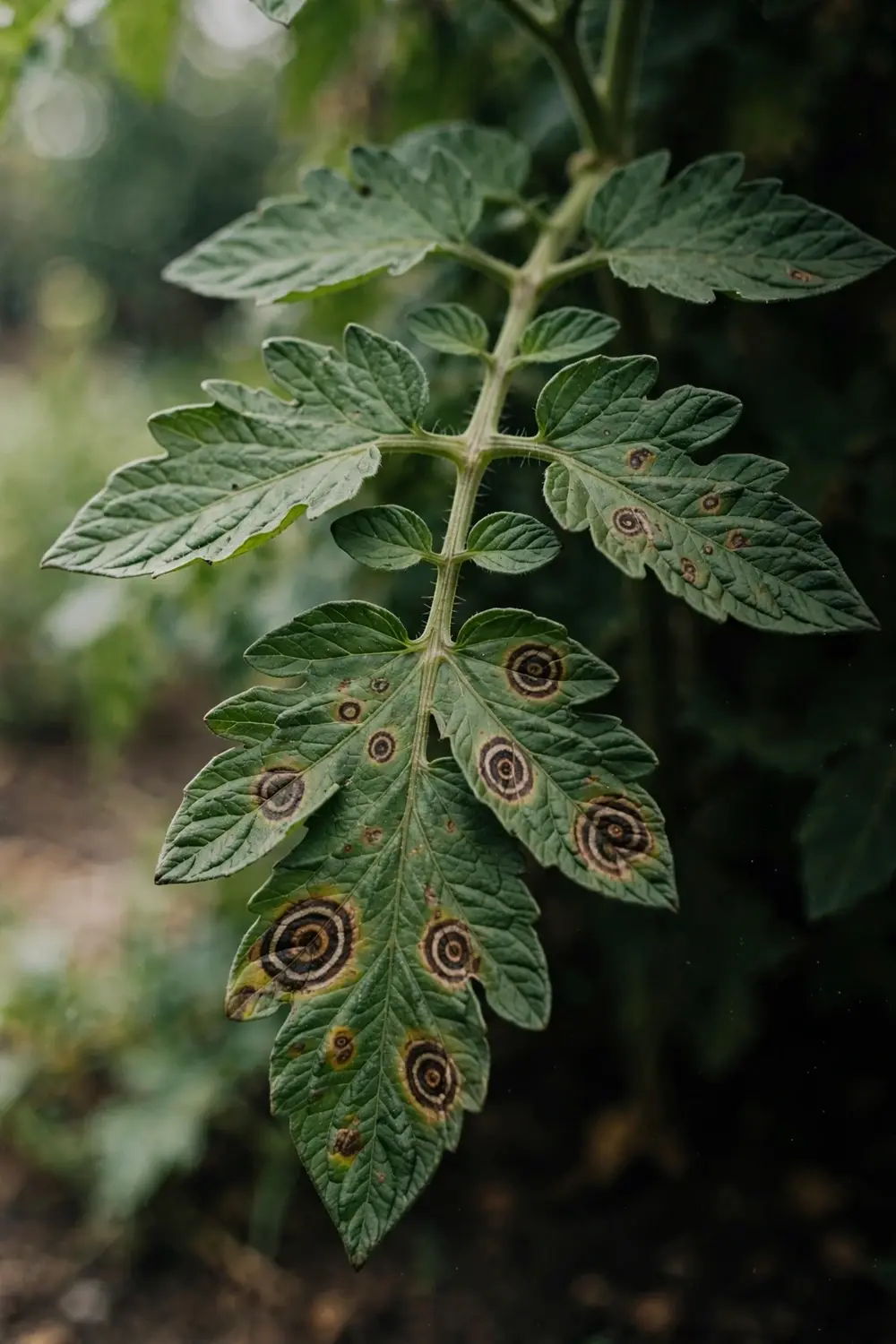

Target spot has no cure for the leaves it marks. The 9 strategies below prevent it on tomato and cucumber, starting with the clean seedlings that keep the fungus out of the bed.
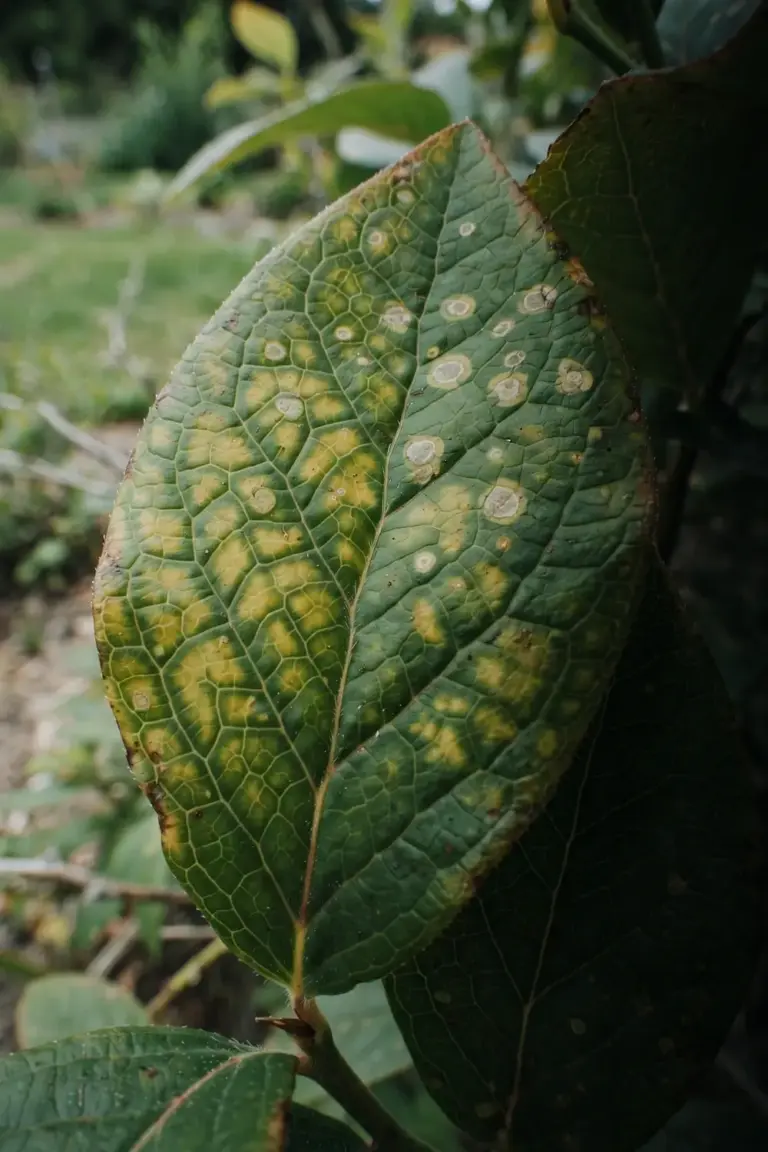
The signature is a leaf spot with concentric rings, a target pattern, starting on older, lower leaves and climbing the plant. The fungus survives up to 2 years in debris, spreads by wind-blown rain, and rides on weed hosts. Prevention is the whole game.
The rest of this page runs the order a gardener should follow. Understand the fungus first, learn its signs, then work the 9 strategies from clean seedlings to resistant cucumbers. I have learned that the spotted lower leaf I strip today is the healthy upper leaf that stays clean next week.
What Target Spot (Corynespora) Actually Is
Target spot on tomato and cucumber is a fungal disease. The fungus Corynespora cassiicola causes Corynespora target spot.
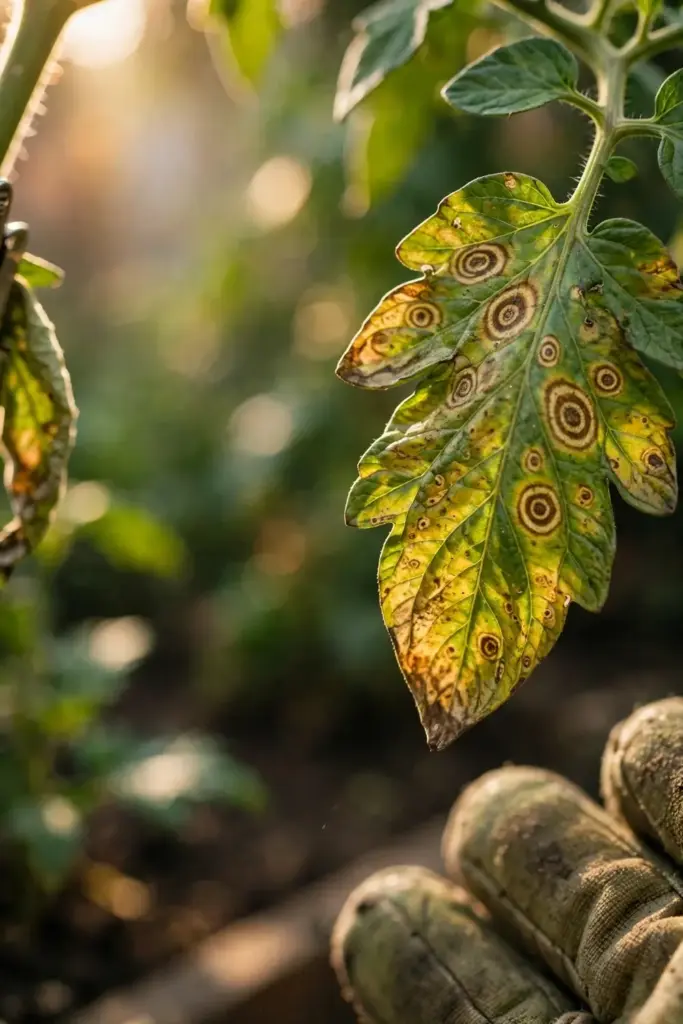
The collision box comes once, then the article moves on. “Target spot” means three things. First, this article: Corynespora target spot, caused by Corynespora cassiicola, on tomato, cucumber, and other vegetables. Second, early blight, caused by Alternaria solani, which Australian and Iowa sources also call target spot. Third, a generic descriptor for any leaf spot with concentric rings. After this box, this article uses “Corynespora target spot” throughout, and it never re-litigates the name.
The fungus survives up to 2 years in plant debris. The University of Florida IFAS Extension gives that figure in its fact sheet on target spot of tomato. Two years of survival is the reason debris cleanup and rotation matter more than any spray. A bed cleaned once and replanted at once still holds the fungus. A bed cleaned and rotated for 3 years starves it.
The fungus has a wide host range, but strains from different hosts do not always cross-infect. A strain from tomato may not infect cucumber, and a strain from cucumber may not infect tomato. The host range is wide across vegetables, beans, peppers, lettuce, and papaya. The cross-infection is uncertain. The article treats the uncertainty honestly: rotate away from all solanaceous and cucurbit hosts, not only the crop that showed spots.
The fungus spreads by wind-blown rain. Spores release with a mid-morning peak, ride rain splash, and land on lower leaves. Wet leaves give spores the hours they need to germinate. Dry leaves break the chain. The disease starts on older, lower leaves and climbs the plant. The lower leaves are the beachhead. The upper leaves are the prize. The strategies below defend the upper leaves by cleaning the lower ones.
The scope stays on the home garden. Tomato carries the flagship case. Cucumber and other cucurbits carry the secondary cases. Beans, peppers, lettuce, and papaya appear as hosts only. Cotton and soybean commercial framing stays out. This article is a prevention-first care guide, not a treatment guide.
How to Spot Target Spot on Tomato and Cucumber
| Host | Signs | First Action |
|---|---|---|
| Tomato | Concentric-ring spots on lower leaves, climbing bottom-up, leaf drop | Strip spotted lower leaves, bag and trash |
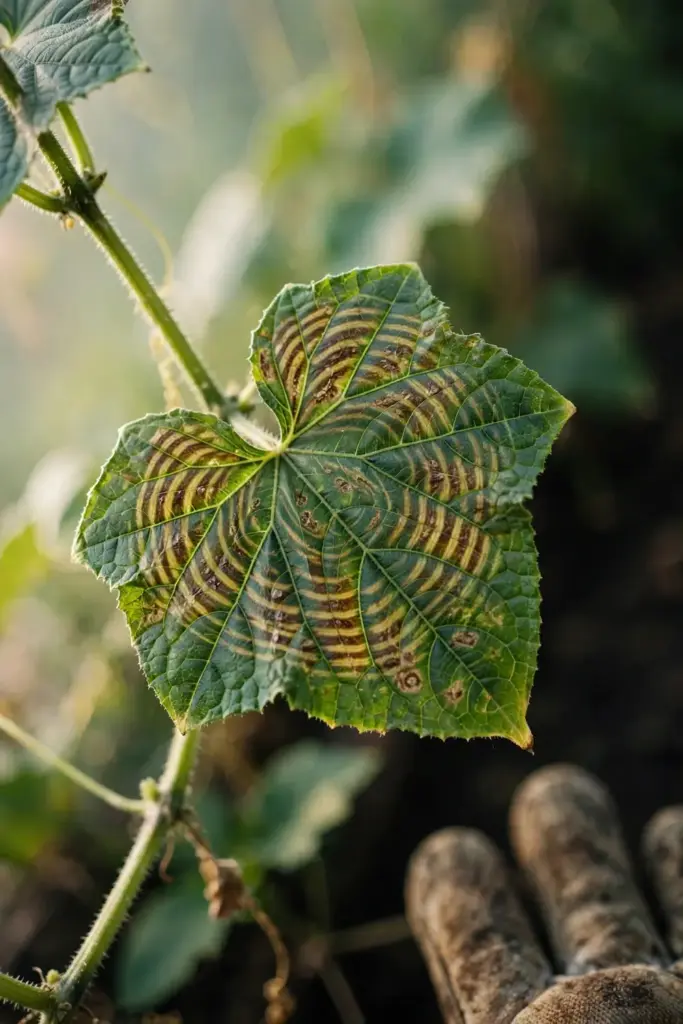
| Cucumber | Concentric-ring spots on lower leaves, vine defoliates bottom-up | Strip spotted leaves, trellis for airflow |
| Any host | Early spots hard to separate from bacterial spot | Act on the rings, confirm with a lab where it matters |
Concentric-ring leaf spots, starting on older, lower leaves and climbing the plant, point at Corynespora target spot.
On tomato, the spots start small and round on lower leaves, then develop concentric rings that give the target pattern. The spots grow, merge, and yellow the leaf. The leaf drops. The plant loses lower leaves first, then mid leaves, then upper leaves as the season runs. The pattern is bottom-up. A plant that loses leaves from the bottom up, with ringed spots, is a Corynespora suspect.
On cucumber, the spots follow the same pattern on leaves, with the same bottom-up climb. The vine loses lower leaves first. The fruit stays sound until the vine loses enough leaves to stress it. The leaf loss is the damage. The fruit loss follows the leaf loss. A cucumber vine that defoliates from the bottom up, with ringed spots, is a Corynespora suspect.
Field identification is presumptive. Florida Extension notes that early-stage Corynespora leaf symptoms are extremely difficult to distinguish from bacterial spot, and that even experienced professionals need lab tests for a definitive diagnosis. Concentric rings resemble early blight lesions, per Bayer. Treat target-like rings as a prompt to act: strip the spotted leaves, sanitize the tools, dry the foliage, and prevent the next infection. The rings are enough to start the routine. The lab names the fungus where it matters.
Check the whole planting, not one plant. Corynespora on one tomato plant in a bed points at that plant’s debris or that plant’s transplant. Corynespora across a whole tomato row after a rainy week points at the row’s watering and spacing. The spread of symptoms across the planting tells the gardener whether the problem is one transplant or one habit.
Strategy 1: Start With Clean, Symptom-Free Seedlings
Start with clean, symptom-free seedlings and transplants. Check every plant before it enters the bed.
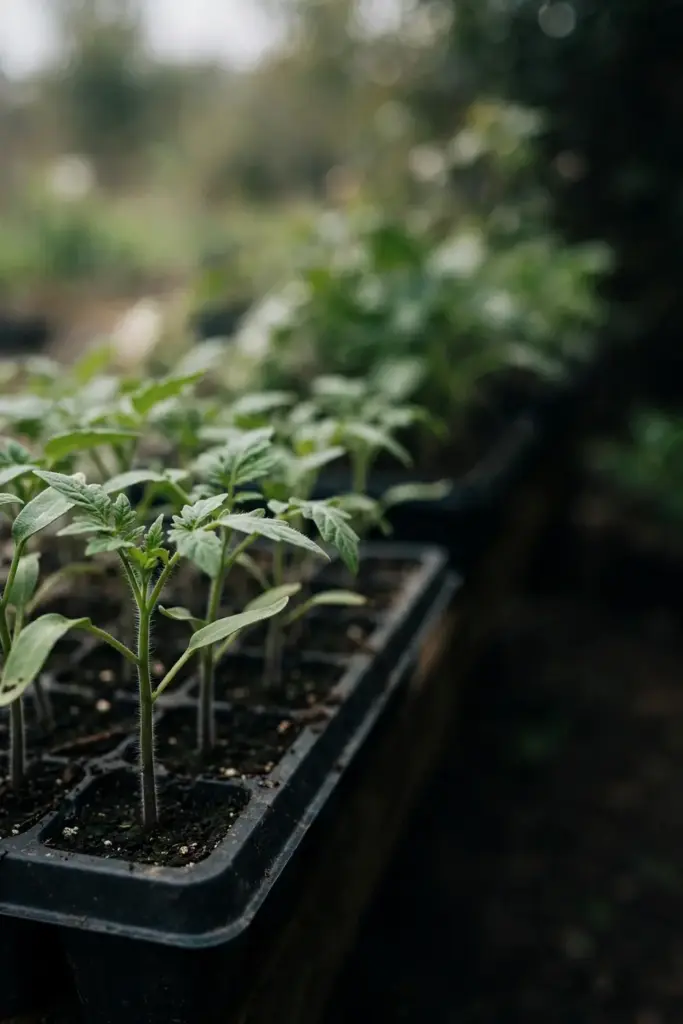
The fungus arrives on infected transplants. A transplant with spots on its lower leaves brings the fungus into a clean bed. A transplant with clean leaves starts clean. The inspection takes minutes. The minutes save the bed.
Inspect the lower leaves first. Corynespora starts on older, lower leaves. A transplant that shows spots on its lowest leaves is a transplant to reject. Inspect the stems and the base. Inspect the plants beside the one you want. A whole flat of tomatoes with spotted lower leaves is a nursery problem, not a bargain. Buy the clean flat from the clean bench.
Quarantine new transplants when the garden already holds valuable plants. Hold a new flat apart from the main beds for a few days, water it at the base, and watch the lower leaves. A flat that shows spots in quarantine stays out of the main bed. A flat that stays clean joins the garden. Quarantine costs nothing and catches the infection that inspection missed.
Do not buy a symptomatic flat to rescue it. A gardener who buys spotted transplants at a discount imports the fungus into a clean garden. Rescue feels kind. It spreads disease. The kindest purchase is the healthy flat from the clean nursery. Leave the spotted flat for the nursery to destroy under its own protocols.
Strategy 2: Rotate for 3 Years Away From Host Crops
Rotate for 3 years away from host crops. Never follow tomato or cucumber with a solanaceous or cucurbit host.
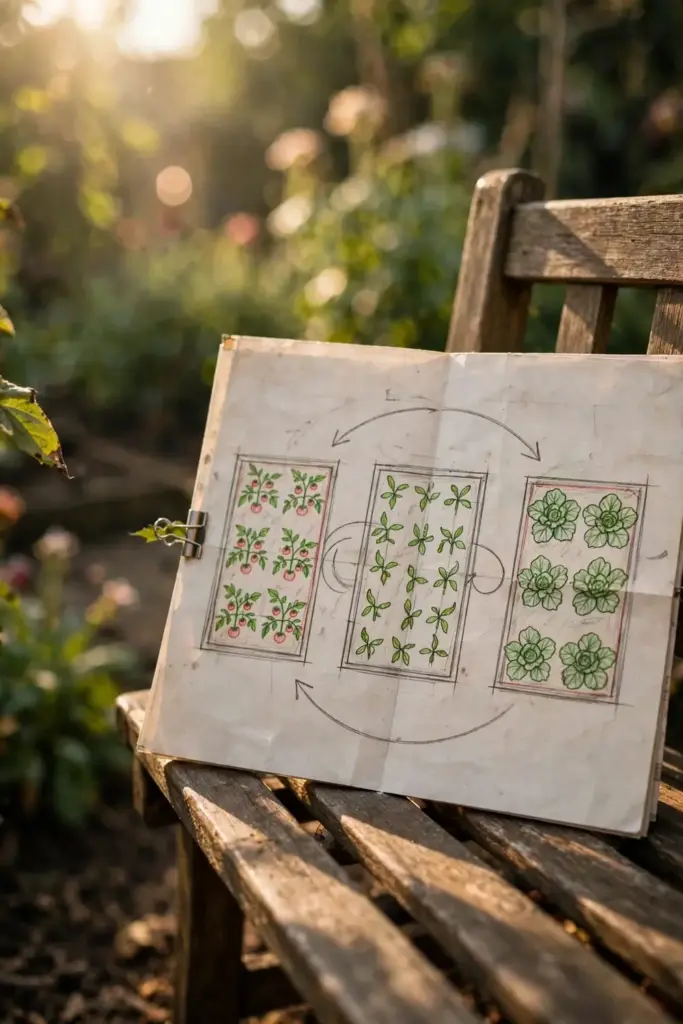
The fungus survives up to 2 years in debris. A 3-year rotation starves it. A 1-year rotation does not. A 2-year rotation cuts it close. The 3-year rule is the safe margin, and it costs nothing but planning. A bed that held tomato this year holds beans, corn, or onions next year, and tomato again in year four.
Rotate with non-host crops. Beans, corn, and onions are safe rotation partners. Solanaceous crops are not: tomato, pepper, eggplant, and potato all host the fungus or its close relatives. Cucurbit crops are not: cucumber, squash, melon, and pumpkin all host the fungus or its close relatives. The rotation must move the whole host family out of the bed, not only the crop that showed spots.
Plan the rotation on paper. A garden map with last year’s crops, this year’s crops, and next year’s crops takes an hour in winter. The map prevents the spring mistake of planting tomato where tomato grew last year. A gardener who plans the rotation on paper plants the rotation in the soil. A gardener who plans it in memory plants tomato in the same bed twice.
Do not rotate tomato with cucumber and call it rotation. Tomato and cucumber are both hosts. A bed that swaps tomato for cucumber swaps one host for another. The fungus stays. The rotation must leave the host families behind. Beans, corn, and onions break the cycle. Tomato and cucumber do not.
Strategy 3: Clear and Destroy Debris at Season’s End
Clear and destroy all debris at the end of the season. Trash it, never compost it unless the pile runs hot enough to kill the fungus.
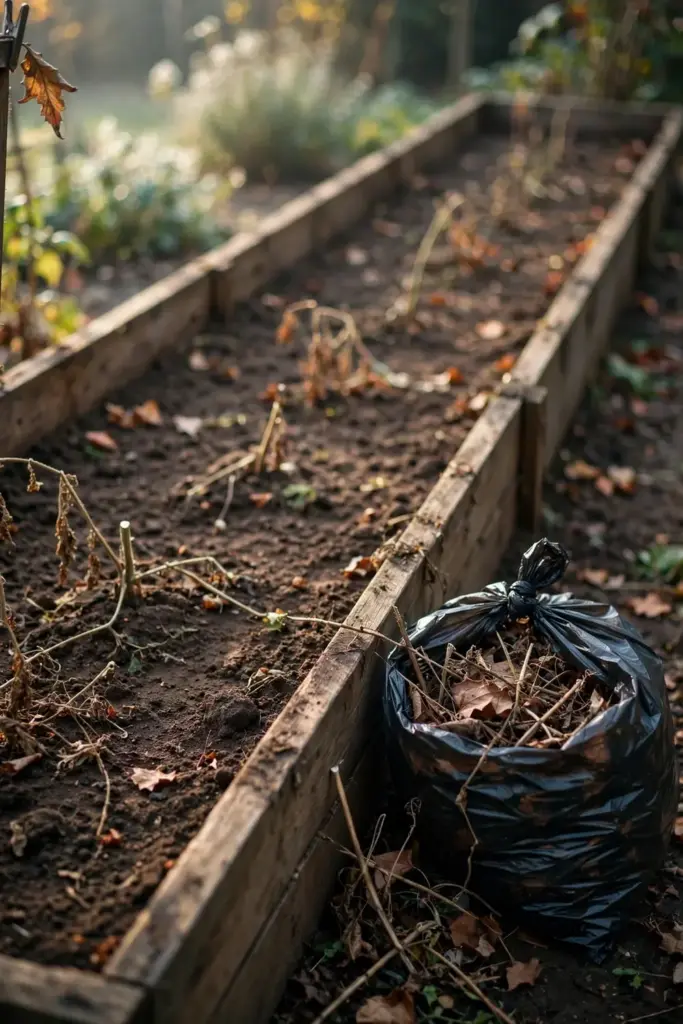
The fungus survives up to 2 years in debris. A bed left dirty in autumn starts spring with the fungus in place. A bed cleaned in autumn starts spring clean. Pull spent plants, including roots. Rake up fallen leaves. Bag everything and trash it. Do not leave debris piled beside the bed for later. Later rarely comes, and the pile sheds spores all winter.
Do not compost infected debris in a home pile. A home compost pile runs too cool to kill the fungus in thick stems and roots. The finished compost carries the fungus back into the bed. Bag the debris. Trash it. Compost only healthy debris. The trash rule protects next season’s planting.
Clean the bed to bare soil. A bed that looks clean but holds old roots and fallen leaves is not clean. A bed raked to bare soil, with every scrap out, starts clean. The clearing costs an afternoon. The clean start saves the next planting. The clearing is the cheapest disease prevention a gardener owns.
Do not leave debris in the paths. Debris in the paths sheds spores onto the next rain. Spores splash from the path into the bed. Rake the paths too. Bag the path rakings. Trash them. A clean path is part of a clean bed.
Strategy 4: Space, Stake, and Trellis for Airflow and Sun
Space, stake, and trellis for airflow and full sun. Airflow dries leaves, and dry leaves break the infection chain.
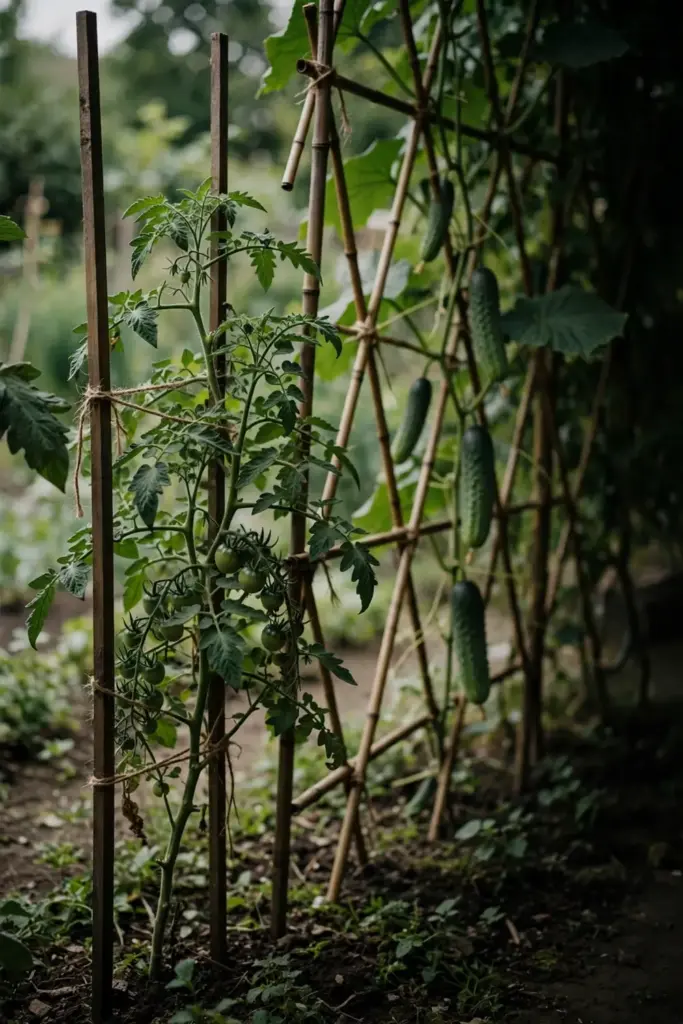
Space tomato plants for their mature size. A tomato planted tight for instant fill pays for that fill with wet foliage and leaf spot. Read the mature width on the tag, and plant at that spacing. A bed with air between plants at maturity needs less thinning, dries faster, and shows fewer spots.
Stake or cage every tomato. A staked tomato holds its leaves off the soil and opens air channels through the plant. A sprawling tomato lies on wet soil and traps moisture under its leaves. The stake lifts the plant into the air. The air dries the leaves. The drying breaks the chain.
Trellis cucumbers. A trellised cucumber grows up, not across the soil. The leaves hang in the air and dry fast. The fruit hangs clean. A cucumber sprawled on the soil lies in the splash zone, where every rain splashes spores onto the lowest leaves. The trellis lifts the vine out of the splash zone. The trellis is the single most effective cucumber habit on this page.
Give the bed full sun. A bed in shade stays wet longer after rain and after dew. A bed in full sun dries fast. A tomato or cucumber in shade catches leaf spot sooner and harder than the same plant in sun. Site the bed for sun first, and the spacing second. The sun is free. The shade is costly.
Strategy 5: Water at the Base in the Morning and Never Work Wet Plants
Water at the base, in the morning, and never work plants when wet. Wet foliage spreads the fungus, and wet hands move it.
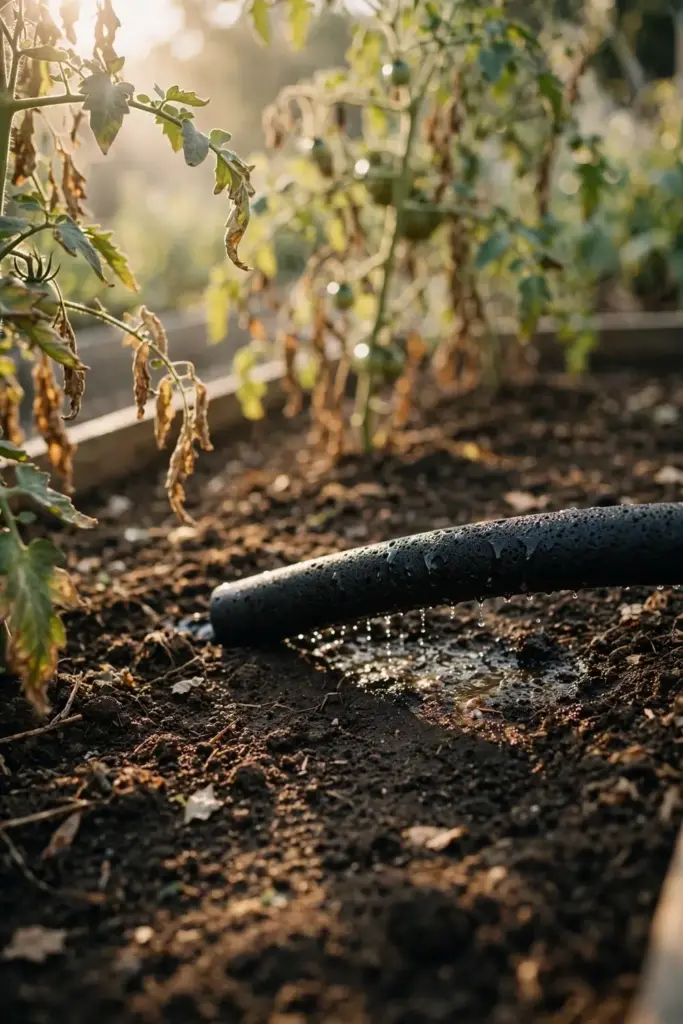
Use drip, soaker, or a slow hose at the soil line. Lay drip line or a soaker hose along the bed, not over the plants. Water slowly so the soil absorbs it without runoff. Water in the morning so any splash that reaches low foliage dries during the day. A morning base watering that splashes a little beats an evening overhead watering that soaks the bed overnight.
Fix sprinklers that hit tomatoes and cucumbers. A lawn sprinkler that arcs across a tomato bed every evening is an overhead irrigation system by accident. Redirect the head, shorten the arc, or move the sprinkler. A bed that gets sprayed every night will show target spot no matter how well the rest of the routine runs.
Never work plants when wet. Wet tissue tears easier than dry tissue, and wet hands and tools move spores. Wait until the foliage dries before thinning, staking, harvesting, or stripping leaves. A morning wait until the dew dries costs an hour. A wet-weather work session costs a bed. The rule is simple: dry plants, dry hands, dry tools.
Reduce leaf wetness after rain too. Rain cannot be controlled, but its aftermath can. An open planting dries fast after rain. A mulched, well-drained bed does not pond water under the plants. Plants with space around them catch wind that dries the foliage. The spacing in Strategy 4 and the watering in Strategy 5 work together. One dries the planting from inside. The other stops wetting it from above.
Strategy 6: Mulch to Block Soil Splash
Mulch to block soil splash onto lower leaves. Splash is the main route from soil to leaf.
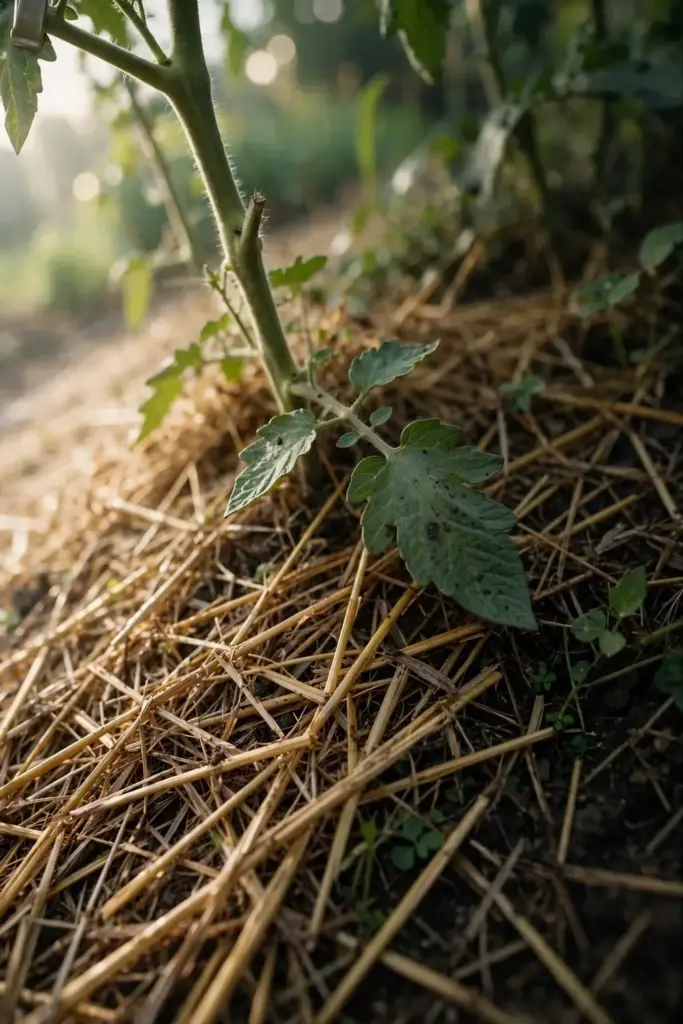
Lay mulch under tomatoes and cucumbers. A 2 to 3 inch layer of straw, shredded leaves, or wood chips covers the soil and blocks the splash that carries spores from debris to lower leaves. Rain that falls on mulch splashes mulch, not soil. The spores stay in the mulch. The leaves stay clean. The mulch is the shield.
Keep the mulch layer at 2 to 3 inches where slugs and snails are a problem. A thicker mulch layer shelters slugs and snails, which eat seedlings and fruit. A 2 to 3 inch layer blocks splash without sheltering slugs. The thin layer is the balance. A bed with slugs needs the thin layer. A bed without slugs tolerates a thicker layer.
Keep mulch pulled back from stems by a few inches. Mulch piled against a stem holds moisture there and invites stem rot. Mulch with a gap around each stem keeps the stem dry and the soil covered. The gap is small. The gap matters.
Replenish mulch as it breaks down. A mulch layer that thins to bare soil stops blocking splash. A mulch layer kept at depth keeps blocking splash. Check the depth monthly. Top up the thin spots. The mulch is a living shield, and it needs maintenance.
Strategy 7: Strip Spotted Lower Leaves Promptly
Strip spotted lower leaves promptly. Bag them, trash them, and never compost them.
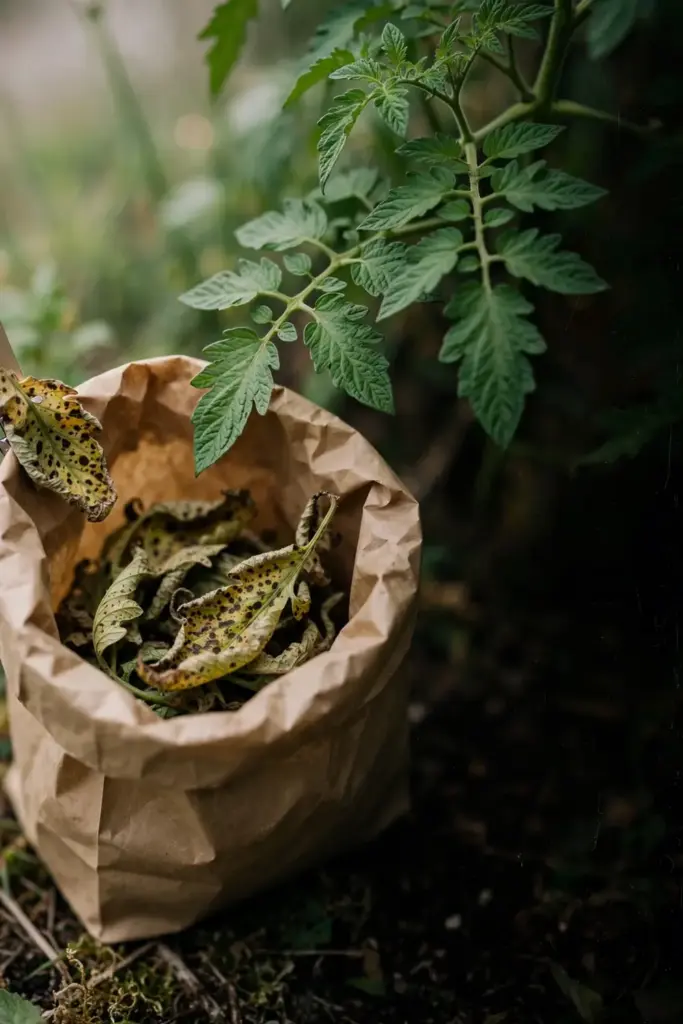
Stripping removes the spore source. A spotted lower leaf sheds spores onto healthy leaves below it every time rain or dew wets it. A stripped leaf sheds nothing. The stripping stops the climb. A plant stripped of its spotted lower leaves keeps its upper leaves clean. A plant left with its spotted lower leaves loses its upper leaves next.
Pick off spotted leaves by hand when the count is small. Hold the leaf by the petiole, snap it off, and drop it straight into a bag. Do not drop it on the ground and pick it up later. The bag travels with you around the bed. A leaf dropped on the ground is a leaf that may stay on the ground.
Remove lower leaves after the trusses are picked on tomato, per LucidCentral guidance. A tomato that has set and picked its lower trusses no longer needs its lowest leaves. Stripping them opens air at the base and removes the spore source. Do not strip above the fruit. Stripping above the fruit exposes fruit to sunscald. The sunscald warning is a general principle, and it applies here: strip low, never high.
Disinfect tools after stripping. A blade that cuts a spotted leaf and then cuts a healthy plant moves the fungus. Dip blades in alcohol or bleach solution between plants. Wash hands. The habits are cheap. The habits close the pathway between plants.
Strategy 8: Weed Relentlessly and Keep New Plantings Away From Old Crops
Weed relentlessly. Keep new plantings away from older infected crops and from papaya.
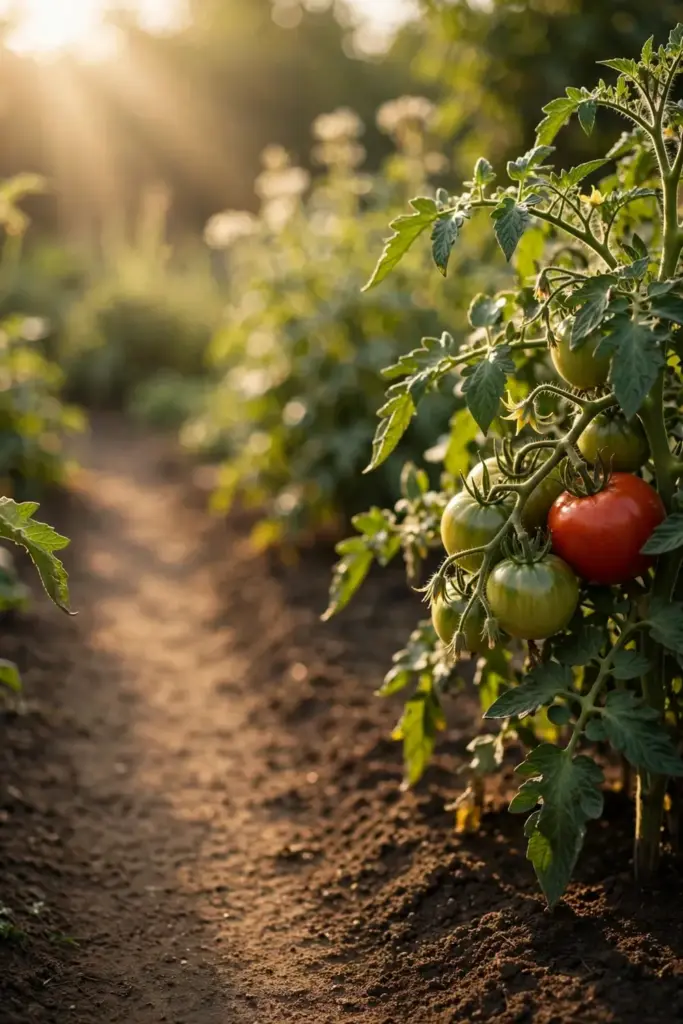
Weed hosts carry the inoculum. Weeds in and around the planting host the fungus and shelter it through the season. A weed that grows beside a tomato row feeds spores to the row. A weed-free row faces only its own debris. The weeding habit is the cheapest insurance in the whole routine, and it never expires.
Keep new plantings away from older infected crops. A new tomato bed planted beside an old infected tomato bed catches spores from the old bed on every rain. A new bed planted across the garden, separated by lawn or a non-host bed, catches far fewer spores. The distance is the defense. A new planting beside an old infected crop is a new planting that starts infected.
Keep new plantings away from papaya. Papaya hosts the fungus. A papaya tree beside a tomato bed is a reservoir at the bed’s doorstep. A tomato bed far from papaya faces a lighter load. The papaya note is a plain plant fact, not a differential. The distance matters.
Pull weeds roots and all. A weed pulled with its roots out is a weed gone. A weed pulled with its roots in is a weed that regrows. Pull when the soil is moist and the roots come clean. Bag weeds from a bed with a disease history. Do not compost them.
Strategy 9: Choose Resistant Cucumbers and Accept No Resistant Tomatoes
Choose resistant cucumber cultivars where available. Accept that no resistant tomato varieties exist, and rely on prevention for tomato.
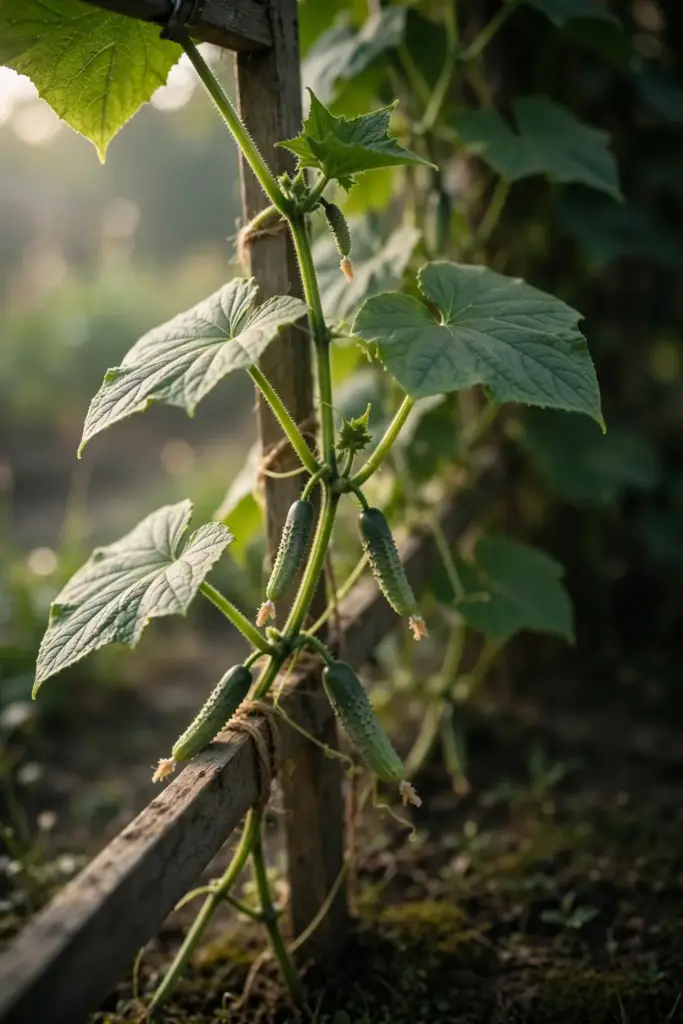
Resistant cucumber cultivars exist. Ask the seed catalog for target-spot-resistant cucumber varieties. A resistant cucumber is not immune. Resistance lowers the odds and slows the spread. Resistance does not remove the need for dry foliage, clean tools, and debris cleanup. Buy the resistant cucumber and run the routine anyway.
No resistant tomato varieties exist. State it plainly and plan around it. A tomato gardener cannot buy resistance. A tomato gardener buys prevention: clean seedlings, rotation, debris cleanup, spacing, base watering, mulching, stripping, and weeding. The routine is the resistance for tomato.
Treat preventive fungicide as a labeled last resort for tomato, never as a cure. Fungicides protect new growth only. They do not cure a spotted leaf. A protectant applied before infection, with full coverage, slows the spread. A protectant applied after infection wastes money. Read the label for the crop, the rate, and the timing. Do not apply a dormant rate to open growth.
Do not recommend QoI or strobilurin fungicides. QoI resistance is documented in Corynespora populations. A strobilurin sprayed against a resistant population wastes money and selects for more resistance. SDHI fungicides carry a moderate resistance warning. The article names no spray program, no rate, and no schedule. The cultural steps carry the prevention. A labeled protectant, used after a lab confirmation, is the last resort, not the default.
Living With Target Spot Damage You Cannot Undo
Some damage stays. A spotted leaf never heals, and a defoliated lower stem never regrows its leaves.
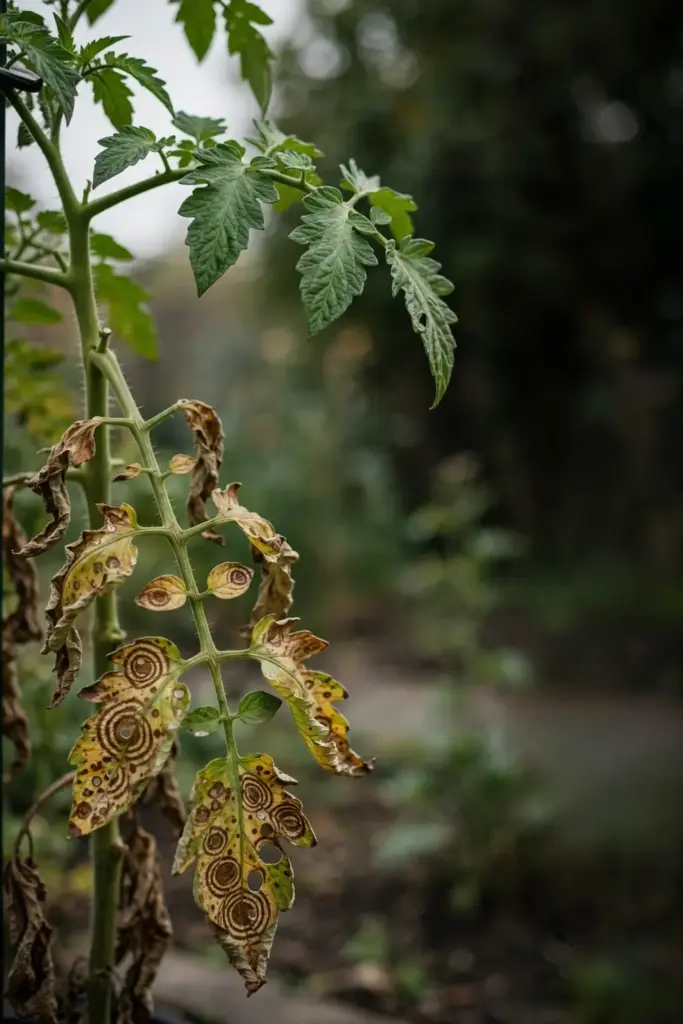
Strip the damaged leaves and let the plant replace them from the top. A tomato pushes new growth from the tip. A cucumber pushes new growth from the vine tip. The new growth needs the same routine: dry foliage, clean tools, steady spacing. A plant that keeps its new growth clean earns its place. A plant that spots every new flush needs a harder look at site, drainage, and watering.
General bacterial blight care follows the same order: cut, clean, destroy, then keep the canopy dry. The guide to bacterial blight simple solutions covers that order for bacterial blight problems across the garden. The pathogens differ. The habits do not.
The guide to growing tomato vegetables for juicy fruit covers starting and growing tomatoes at home for readers who want the full growing routine. The growing guide carries the planting and feeding steps. This article carries the disease prevention. The two guides work together. The tomato that grows well and stays dry is the tomato that resists target spot.
Do not replant tomato or cucumber in the same dirty bed and expect a different result. The fungus stays. The debris stays. The wet soil stays. A new planting in the same bed faces the same season with the same disadvantage. Fix the bed first: clean it, rotate it, space the plants, fix the watering, and give the new planting sun and air flow from the day it goes in.
Frequently Asked Questions
No cure exists for leaves with target spot. Fungicides protect new growth only. They do not cure a spotted leaf. Remove and destroy spotted leaves, protect the rest, and prevent the next infection. The 9 strategies above are the prevention. A spotted leaf stripped today protects the healthy leaves above it. A spotted leaf left in place sheds spores onto the healthy leaves below it. Prevention is the whole game.
Target spot and early blight are different diseases. Corynespora target spot is caused by Corynespora cassiicola. Early blight is caused by Alternaria solani. Australian and Iowa sources also call early blight target spot, which creates the naming confusion. After the collision box in the first section, this article uses Corynespora target spot throughout. The prevention routine overlaps, because both diseases love wet foliage and debris. The fungi differ.
Never compost leaves with target spot. The fungus survives up to 2 years in debris, and a home compost pile runs too cool to kill it in thick stems and leaves. Bag spotted leaves, tie the bag, and put it in the trash. Compost only healthy debris. The trash rule protects next season’s planting. A compost pile that receives infected debris returns the fungus to the bed with the finished compost.
No resistant tomato varieties exist for Corynespora target spot. State it plainly and plan around it. A tomato gardener cannot buy resistance. A tomato gardener buys prevention: clean seedlings, rotation, debris cleanup, spacing, base watering, mulching, stripping, and weeding. Resistant cucumber cultivars do exist, and the article recommends asking the seed catalog for them. Resistance is a cucumber option, not a tomato option.
Do not use baking soda spray as a Corynespora treatment. The baking soda recipe in home sources targets early blight, not Corynespora target spot. The recipe does not transfer. A gardener who sprays baking soda against Corynespora wastes the effort and leaves the real prevention undone. Strip the spotted leaves, dry the foliage, and clean the debris. Those three habits beat any home spray.
Corynespora survives up to 2 years in plant debris. The University of Florida IFAS Extension gives that figure. Two years of survival is the reason the article recommends a 3-year rotation and a full debris cleanup at season’s end. A bed cleaned once and replanted at once still holds the fungus. A bed cleaned and rotated for 3 years starves it. The rotation is the treatment. The debris cleanup is the first step.
Where to Go From Here
Start with the lowest leaves. Strip the spotted ones, bag them, and trash them today.
The order is clean seedlings, rotate 3 years, clear debris, space and trellis, water at the base, mulch, strip spotted leaves, weed relentlessly, and choose resistant cucumbers. One next action beats ten good intentions. Strip the lower leaves. Clean the bed. The planting stays clean next season because the gardener cleaned it this season.