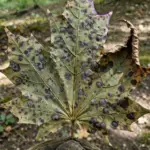

Tulip Breaking Virus has no cure. One broken bloom calls for 3 moves: pull and destroy the plant and bulb, buy virus-tested bulbs next time, and disinfect cutting tools.
Tulip Breaking Virus is one of several viruses behind tulip breaking. Aphids spread it, and infected bulbs carry it into the next season. I have learned to treat a striped bloom on a solid-color tulip as a suspect, not a prize.
The moves below are prevention and cleanup. None of them cures an infected plant, because no cure exists in the published record. Read the limits first, then act on the moves.
What Tulip Breaking Virus Actually Is
Tulip Breaking Virus is a potyvirus of tulip (Tulipa spp.). The Pacific Northwest Handbook page on tulip break names Tulip Breaking Virus as one of several viruses behind breaking, alongside tulip band-breaking virus, tulip top-breaking virus, Rembrandt tulip-breaking virus, and lily mottle virus. Each sits in the potyvirus group.

The virus lives in the bulb. An infected bulb stays infected, and every daughter bulb from it carries the virus. The WSU Hortsense page on tulip break states that viruses overwinter in infected bulbs.
Tulip Breaking Virus weakens the plant over generations. Infected plants make fewer offsets, flower late, and grow stunted bulbs that in time fail to flower. The Illinois RPD 634 on tulip breaking states that infected plants gradually weaken and should be destroyed to prevent spread to healthy tulips.
The symptoms were first described in tulips in 1576. That history explains the fame of the broken pattern. It does not change the home response.
How to Spot Breaking on Tulip Petals
Breaking shows as streaks, stripes, feathering, or flames of a different color across the petals. The pattern breaks the cultivar’s single color into bars and flecks. The WSU Hortsense page on tulip break describes flower petals showing streaks, stripes, feathering, or flames of different colors.
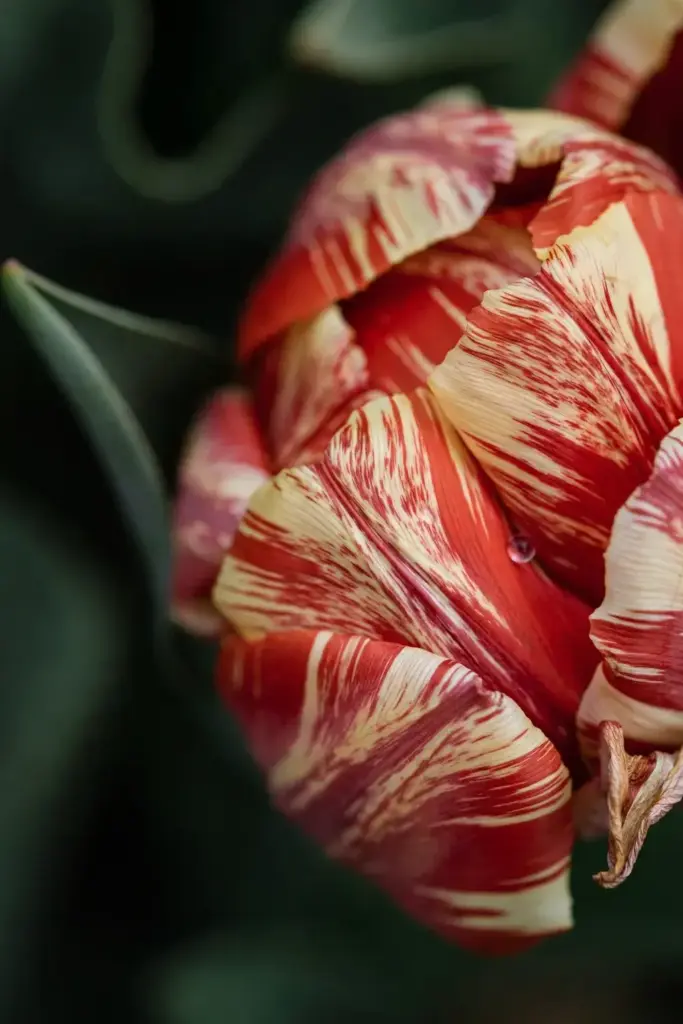
Petals on a red, pink, or purple tulip show the break. White and yellow cultivars carry no anthocyanin pigment to break, so they show no obvious petal symptoms and can spread the virus unseen. WSU states that white and yellow cultivars do not exhibit obvious symptoms and therefore may increase the risk that the disease spreads to other tulips.
Leaves rarely show symptoms. WSU notes that foliar symptoms are rare but may occur on some varieties. Flower size, pollen production, and seed set drop on infected plants.
Uniform, predictable pattern on every bloom of a vigorous plant points to breeding. Irregular, unexpected streaks on a solid-color cultivar point to virus. Treat a suspect as infected, and destroy the plant with its bulb and daughter bulbs before aphids feed on it. The Illinois RPD 634 on tulip breaking draws that line: genetic bicolor patterns stay uniform and predictable for the variety, while viral patterns vary greatly.
| What the Record Establishes | What the Record Does Not Establish |
|---|---|
| Breaking streaks come from virus infection | A field mark that names Tulip Breaking Virus alone |
| Some infected cultivars show no symptoms | A home test for Tulip Breaking Virus |
| An infected bulb stays infected | Any spray or feed that cures an infected plant |
| Infected bulbs weaken over generations | A reason to keep a broken plant for its pattern |
Field identification stays unreliable. Diagnosis by symptoms is not reliable, because some infected cultivars are symptomless. Lab work settles identity.
How Tulip Breaking Virus Spreads
Aphids spread Tulip Breaking Virus in a nonpersistent manner. The virus also moves in infected bulbs and in sap on cutting tools. The Pacific Northwest Handbook page on tulip break states that these viruses spread by several species of aphids in a nonpersistent manner and can also be mechanically transmitted in plant sap.
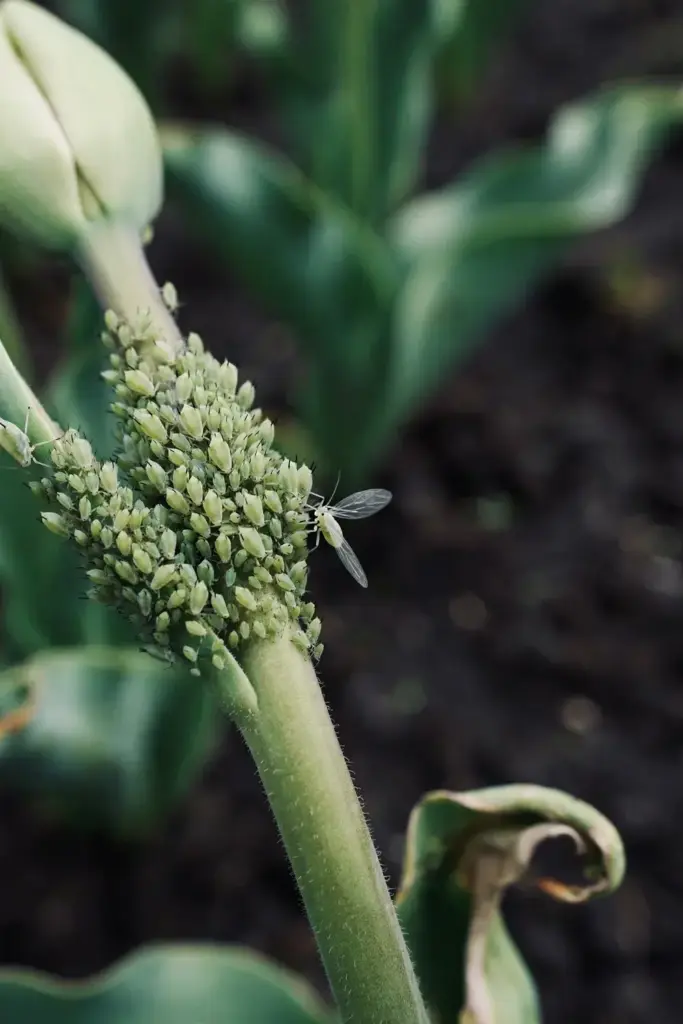
Nonpersistent spread means aphids carry the virus on their mouthparts for a short time after feeding. Pulling a broken plant promptly matters more than spraying after the fact.
Cutting stems with the same knife moves sap, and sap carries virus. Disinfect tools between plants when you cut tulip stems.
Susceptibility varies by cultivar. The Pacific Northwest Handbook lists Apeldoorn, Kees Nelis, and Lustige Witwe as susceptible, and Cantata, Juan, Madame Lefeber, and Priceps as resistant.
Cucumber mosaic virus can also cause minor flower-breaking symptoms, with flower and leaf symptoms distinctly different from Tulip Breaking Virus breaking. Management stays the same whichever breaking virus is at work.
1. Rogue and Destroy the Broken Plant and Bulb
Pull the whole plant, bulb and all, as soon as you see breaking. Bag it and put it in the trash. Do not compost it. The WSU Hortsense page on tulip break gives removal as the first move: remove and destroy affected plants, including all daughter bulbs.
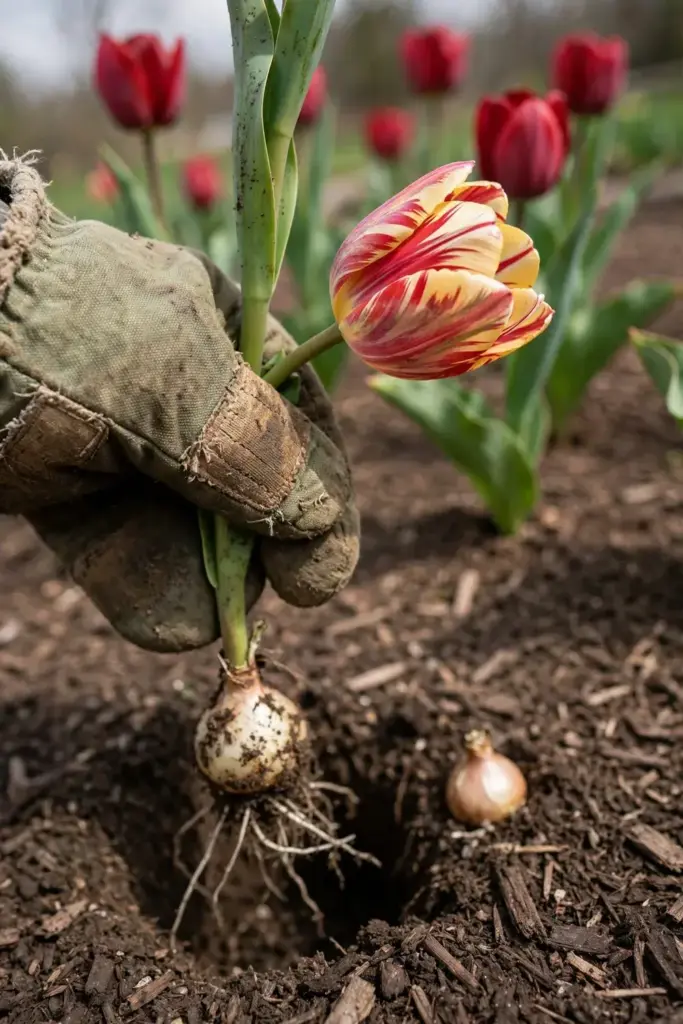
Dig wide enough to lift every daughter bulb. A daughter bulb left in the soil carries the virus into the next season.
Do not keep a broken plant for its pattern. The bulb weakens with each generation, and aphids spread the virus to healthy tulips while it stands.
Do not move a suspect bulb to another bed. Moving it moves the virus.
2. Buy Virus-Tested Bulbs
Buy bulbs tested free of known viruses. The WSU Hortsense page on tulip break gives that instruction as the second non-chemical move: purchase and plant virus-tested material, found to be free of known viruses.
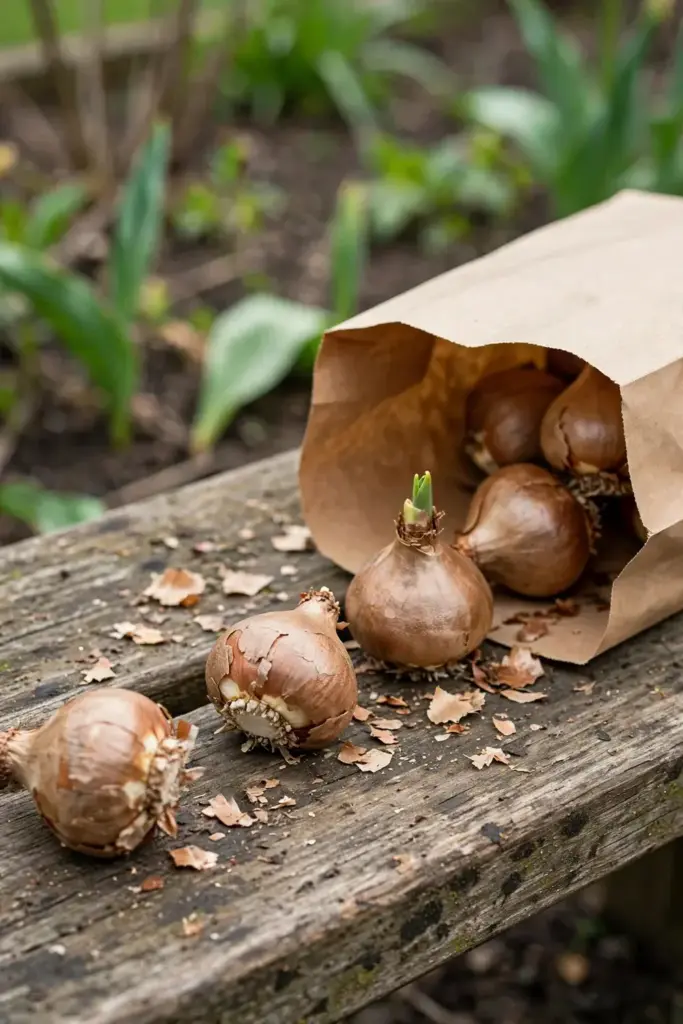
Ask the seller whether the bulbs are virus-tested. A label that says only healthy is not testing.
Keep the receipt and the variety name. A named lot gives you a trail back to the seller when a bed fails.
Start clean beds with tested bulbs. The bulbs to plant in fall guide covers planting timing and depth.
3. Disinfect Tools and Starve Aphid Routes
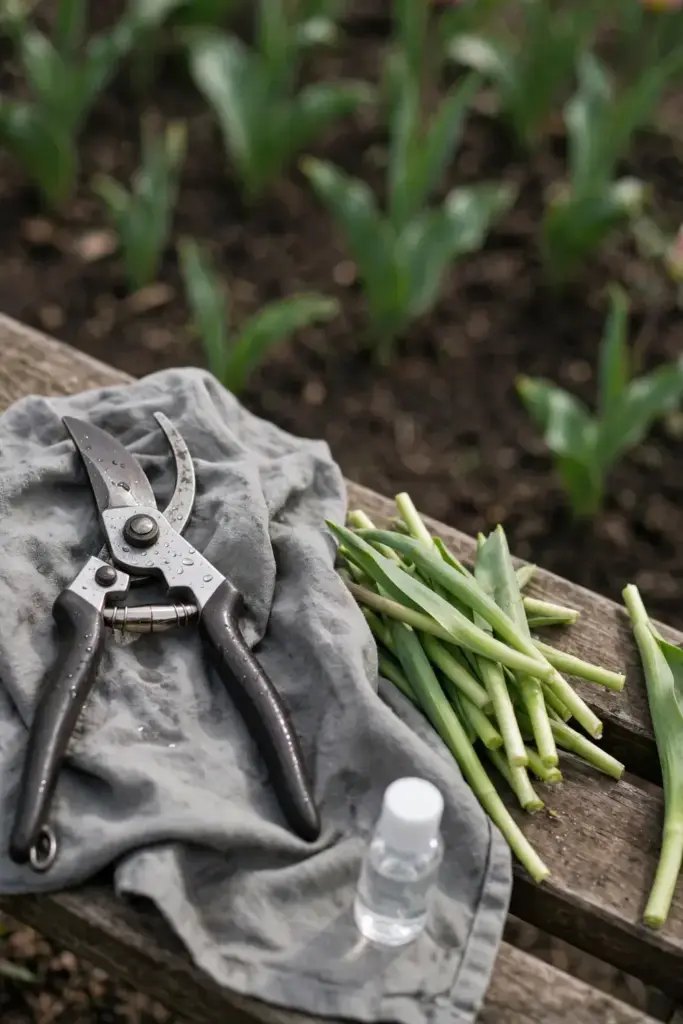
Disinfect cutting tools between plants. Sap on a blade carries virus from a broken stem to a clean one. The Pacific Northwest Handbook page on tulip break lists mechanical transmission in plant sap among the spread routes.
Pull weeds near the tulip bed. Weeds can harbor virus sources. The Illinois RPD 634 on tulip breaking includes weed control in its control list.
Do not rely on insecticide sprays to stop spread. The WSU Hortsense page on tulip break states that aphid control using insecticides has not prevented spread.
Check leaf undersides for aphids through the season. Early removal of a broken plant beats any spray applied after aphids have fed.
Frequently Asked Questions

No. No spray, feed, or home remedy cures an infected tulip. The virus lives in the bulb, and the plant stays infected. Extension guidance rests on removal: pull the plant with its bulb and daughter bulbs, bag it, and trash it. Buy virus-tested bulbs for the next planting. Support the rest of the bed with clean tools and steady care, and do not chase the virus with sprays.
Look at pattern and vigor. Bred bicolor tulips show a uniform, predictable pattern on every bloom, and the plant stays vigorous. Viral breaking shows irregular, unexpected streaks on a solid-color cultivar, and the plant weakens over seasons. A single suspect bloom among true-to-type fellows points to virus. Field identification stays unreliable, so treat a suspect as infected and destroy it.
No. A broken tulip weakens with each generation. It makes fewer offsets, flowers late, and grows stunted bulbs that in time fail to flower. Aphids spread the virus from that plant to healthy tulips while it stands. Destroy the plant, bulb and all, before aphids feed on it. A pretty pattern is not worth an infected bed.
No. Modern Rembrandt tulips are bred for their broken pattern. They carry no virus. The UC Agriculture and Natural Resources guide on garden viruses states that today, broken tulips with patterns on the flowers are the result of breeding, not viral infection. Buy named Rembrandt varieties from a reputable seller. They give you the look without the virus that destroyed the old broken bulbs.
Where to Go From Here
Tulip Breaking Virus gives a home gardener little to see and nothing to spray. Pull broken plants with bulb and all, start clean with virus-tested bulbs, and disinfect tools between cuts. That is the whole playbook.

When you replant, the fall planting guide covers bed prep and timing.
Start clean. End with a bed you can trust.