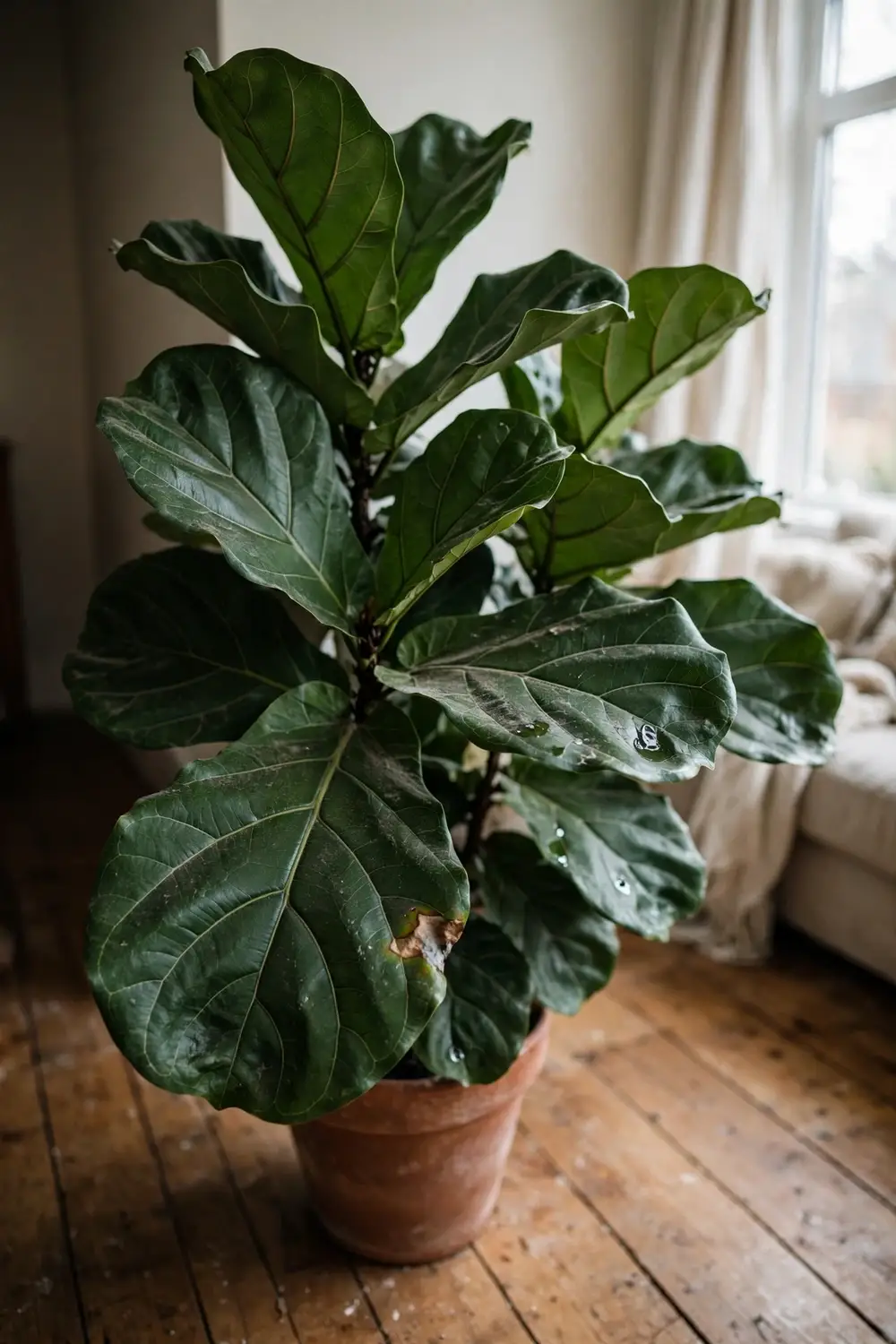

Your fiddle-leaf fig drops a leaf, spots another, and you wonder what you did wrong. The answer is usually water, light, or air, not a mystery disease. Fiddle-leaf fig is Ficus lyrata, a tropical tree from western and central Africa that grows 0.6 to 3 metres tall as a houseplant, and it complains loudly when its conditions shift. Every spot and dropped leaf is a message. Learn to read them, and you will stop guessing for good. The plant wants to live. Your job is to help it get there.
That is a fiddle-leaf fig diagnosis in Australia: match the symptom to the cause, fix the cause, and give the plant time. Do not chase symptoms with products. Chase causes with changes. The rest of this page is 11 problems in the order they actually appear, from the most common killer to the rarest, plus a recovery plan and a symptom table. Work from the top. The first problem is the most likely one in your home.
I check the soil before I blame the light, because wet roots cause more fiddle-leaf deaths than dim corners ever will. The finger test takes five seconds. It saves months of guessing.
A sick houseplant is a different job from a sick garden bed, and the site’s guide to the 10 benefits of indoor plants covers why we keep them. The reasons are good. Clean air, lower stress, a living thing in the room. This page stays on the diagnosis: what is wrong with your fiddle-leaf fig, and what fixes it. No fluff. Just the problems and the fixes.
1. Overwatering Drowns the Roots First
Overwatering kills more fiddle-leaf figs than every other cause combined. The roots sit in soggy soil, oxygen cannot reach them, and they rot. Rotted roots cannot take up water, so the leaves wilt and spot even though the soil is wet. Beginners water on a schedule, but the plant needs water on demand. Learn that difference and half your problems disappear, because light and air are the other half. Master all three and the plant thrives for years.
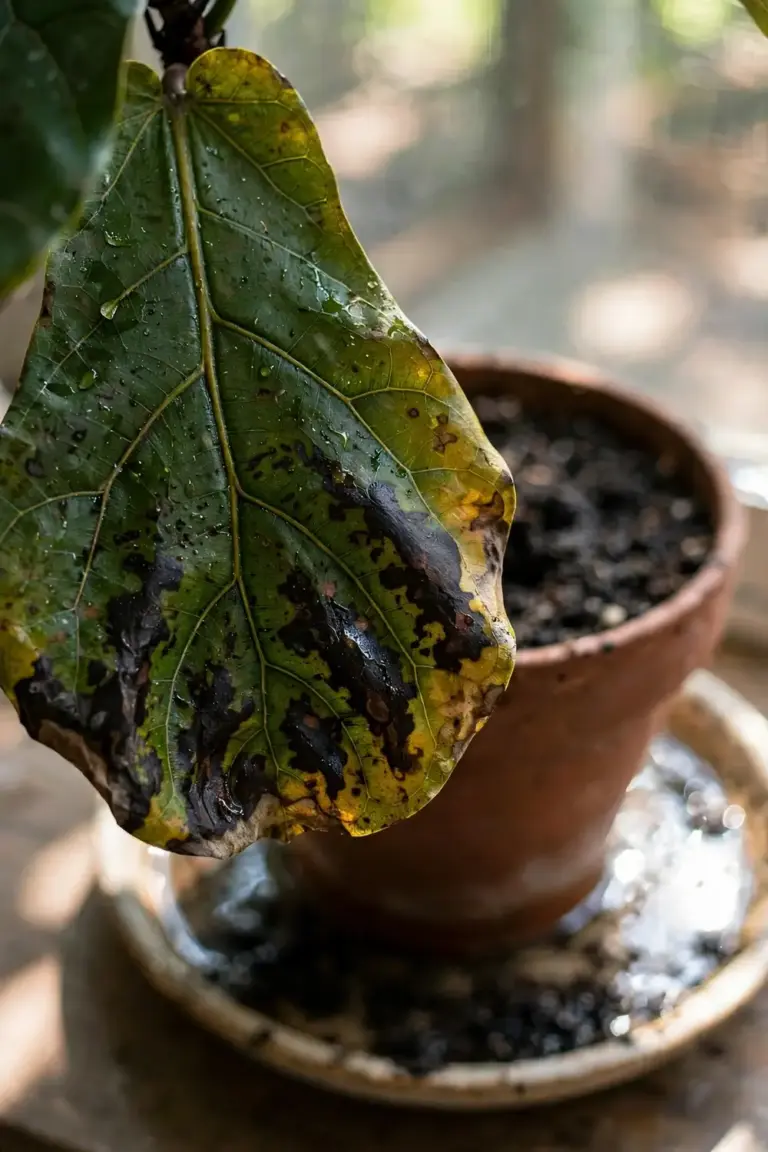
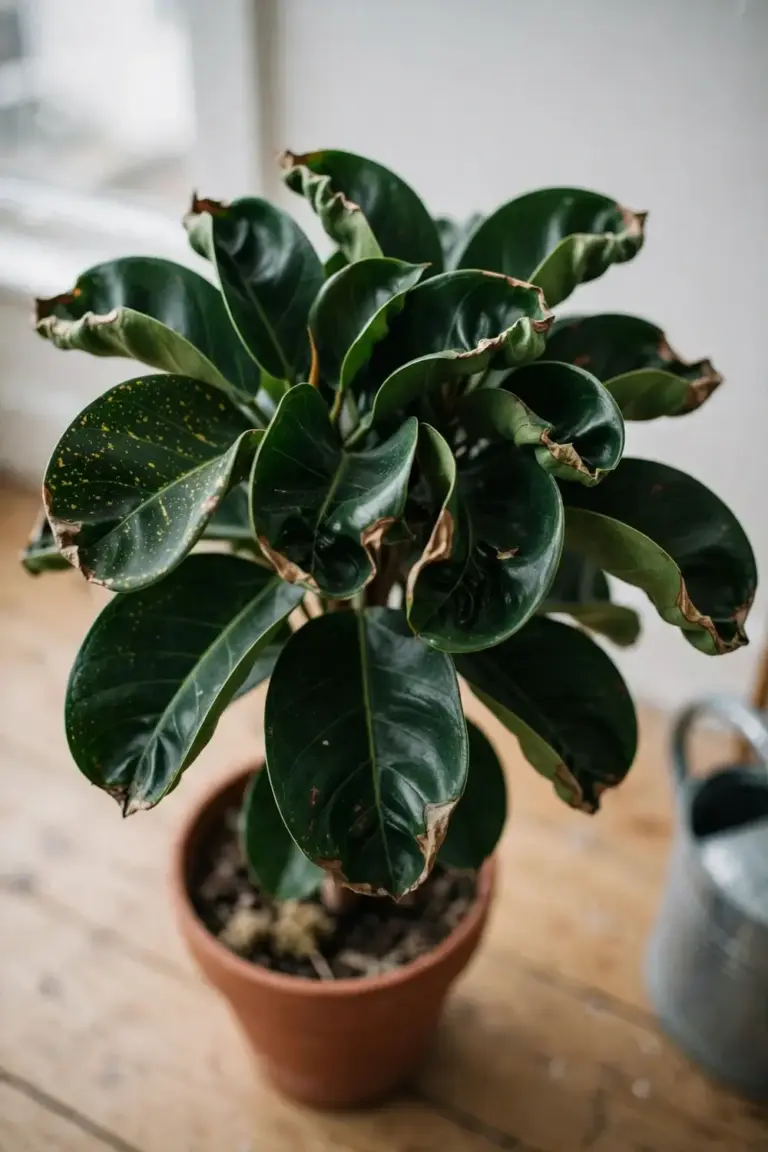
Dark brown or black spots that start on the lower leaves and spread upward signal root rot from overwatering. The spots feel soft or mushy. The soil smells musty or sour. Leaves may yellow around the spots, then drop. The lower leaves go first because the rot starts at the root zone and works up. If you unpot the plant, rotted roots look dark brown or black and feel mushy, while healthy roots are firm and pale. The contrast is unmistakable once you see both.
Ficus lyrata is sensitive to overwatering and needs moist, well-drained, loamy, acidic soil, according to the North Carolina Extension Gardener Plant Toolbox entry for Ficus lyrata. That sensitivity is the whole story. The plant wants water, then air, then water again. Constant wetness is the opposite of what its roots evolved for. In the wild, tropical downpours soak the soil and then drain fast through deep earth. A pot with no drainage traps the water. The fine feeder roots drown first.
Let the top 3 to 5 centimetres of soil dry completely before watering again. Water thoroughly until it runs from the drainage holes, then empty the saucer so the pot never sits in water. That saucer step is the one most people skip. Standing water wicks back up and keeps the bottom roots wet long after the top looks dry. A decorative pot with no drainage hole will rot the roots no matter how careful the watering can is. If the roots are already mushy, unpot the plant, trim the rotted roots with clean scissors, and repot in fresh, fast-draining mix. Cut away all the dark tissue. Leave only firm, pale roots.
2. Underwatering Crisp the Edges
Underwatering shows up as dry, tan, crispy brown edges and tips. The brown starts at the leaf margins and curls inward. The leaf feels papery, not soft. This is the mirror image of root rot: the spots are dry and crunchy, not dark and mushy. Touch the leaf. The texture tells you which problem you have before you touch the soil.
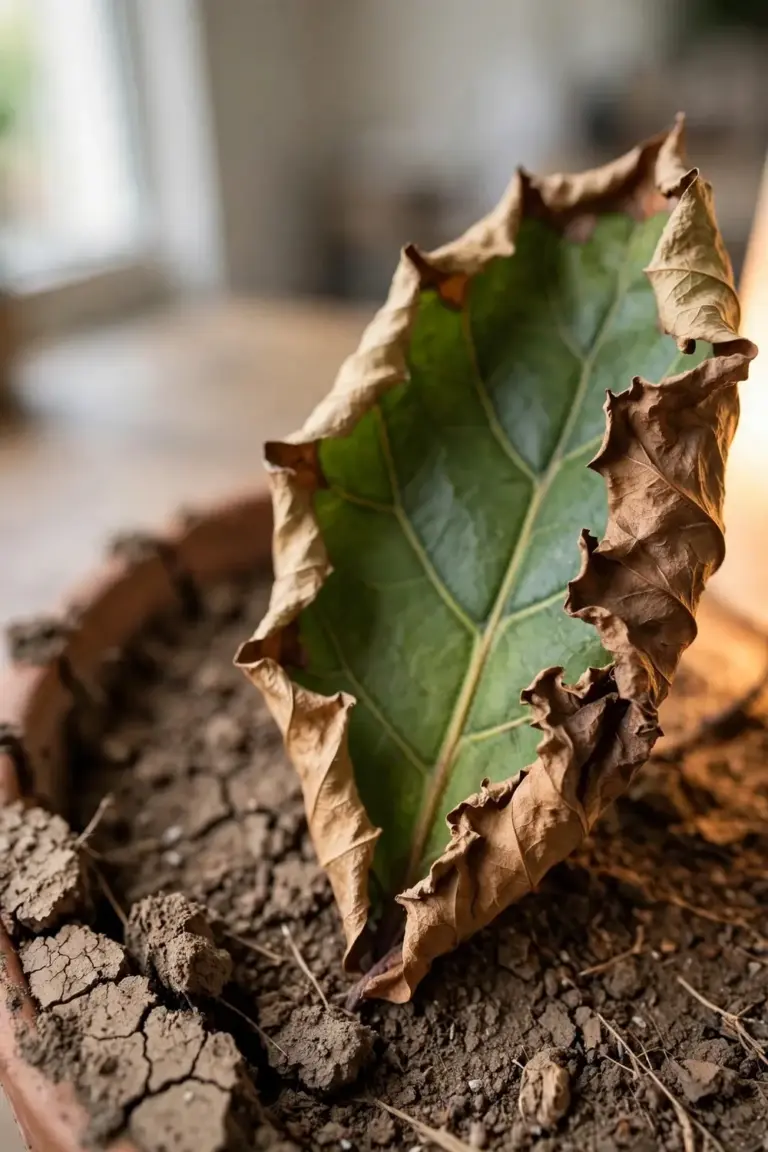
The plant wilts between waterings, then perks up after a drink, then wilts again. That cycle stresses the roots and the leaves take the damage at their thinnest points, the edges. New growth may stall. Older leaves may drop one by one from the bottom. The plant is rationing. It sheds what it cannot sustain.
Check the soil with a finger 5 to 7 centimetres deep before deciding. If the soil is dry at that depth, water deeply until it drains. If the top is dry but the lower soil is damp, wait. The finger test beats any calendar schedule because pots dry at different rates in different rooms and seasons. A plant near a heater dries faster than the same plant in a cool hallway. A terracotta pot dries faster than a plastic one. The finger knows what the calendar cannot.
Do not swing from drought to flood. Soak the soil evenly, let the excess drain, and return to the finger test. The goal is consistent moisture with air in between, not a strict weekly ritual. Think of it as a rhythm, not a rule. The plant tells you when it is thirsty if you check.
3. Australian Sun Through Glass Scorches the Leaves
Australian sun through an unshaded north or west-facing window scorches fiddle-leaf fig foliage badly, a danger that Australian nursery growing guides flag specifically for local conditions. The damage shows as pale, bleached patches in the middle of leaves that never recover. The patches look like the color was washed out. That is exactly what happened. Overseas guides say to give the plant as much light as possible, and that advice is dangerous in Australia.
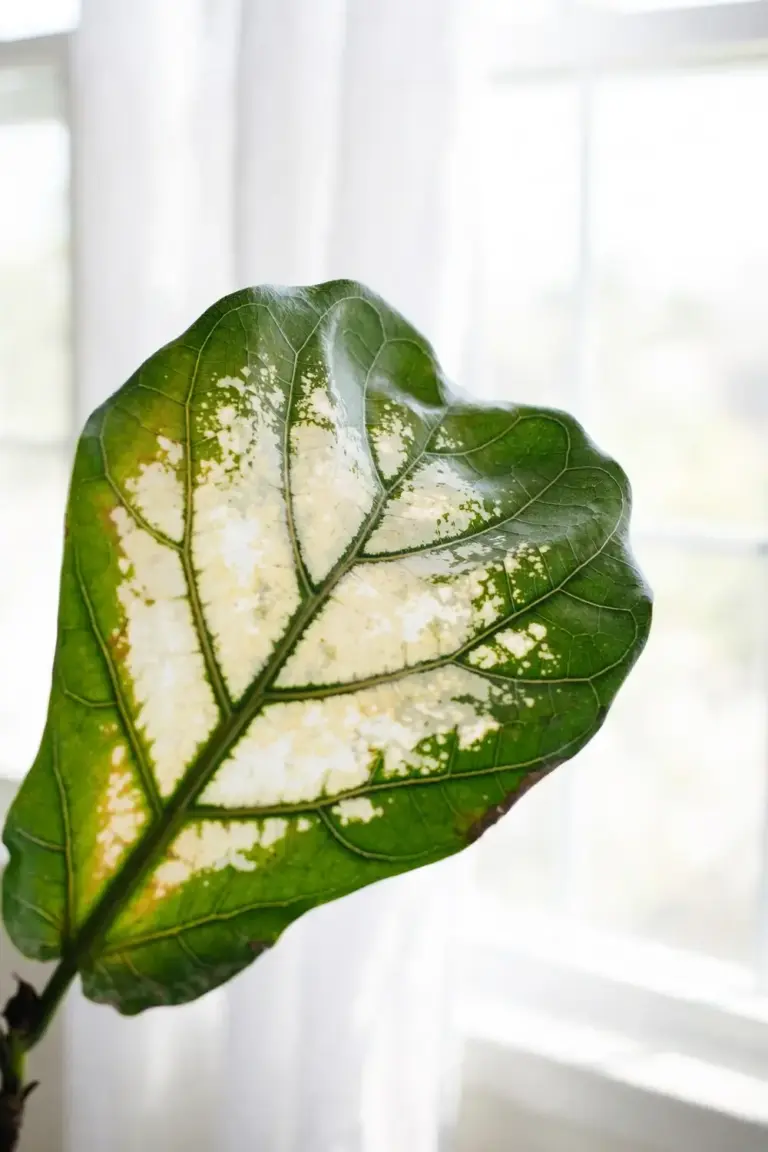
Ficus lyrata prefers bright indirect light or partial shade and needs protection from afternoon sun, according to the North Carolina Extension Gardener Plant Toolbox entry for Ficus lyrata. Leaf scorch occurs when the plant receives too much direct sunlight. In Australia, the afternoon sun through glass is far stronger than the same exposure in a northern-hemisphere guide’s home country. Glass amplifies the heat. The leaf cooks.
Bright indirect light near an east-facing window is the target. Morning sun is gentle. Afternoon sun is not. A north-facing window works if the plant sits back from the glass behind a sheer curtain. The curtain diffuses the light without blocking it. Watch for the bleached patches after a hot week. If they appear, move the plant further from the glass or add the curtain. Scorched leaves stay damaged. New growth comes in clean once the light is right. Patience does the rest.
4. Air Conditioning Dries the Leaf Edges
A plant sitting in the airflow from a split system dries out at the leaf edges continuously. Ducted heating does the same in a Melbourne winter. The edges turn brown and crispy, and no watering change fixes it because the water is not the problem. The moving dry air is. You can water perfectly and still watch the edges brown.
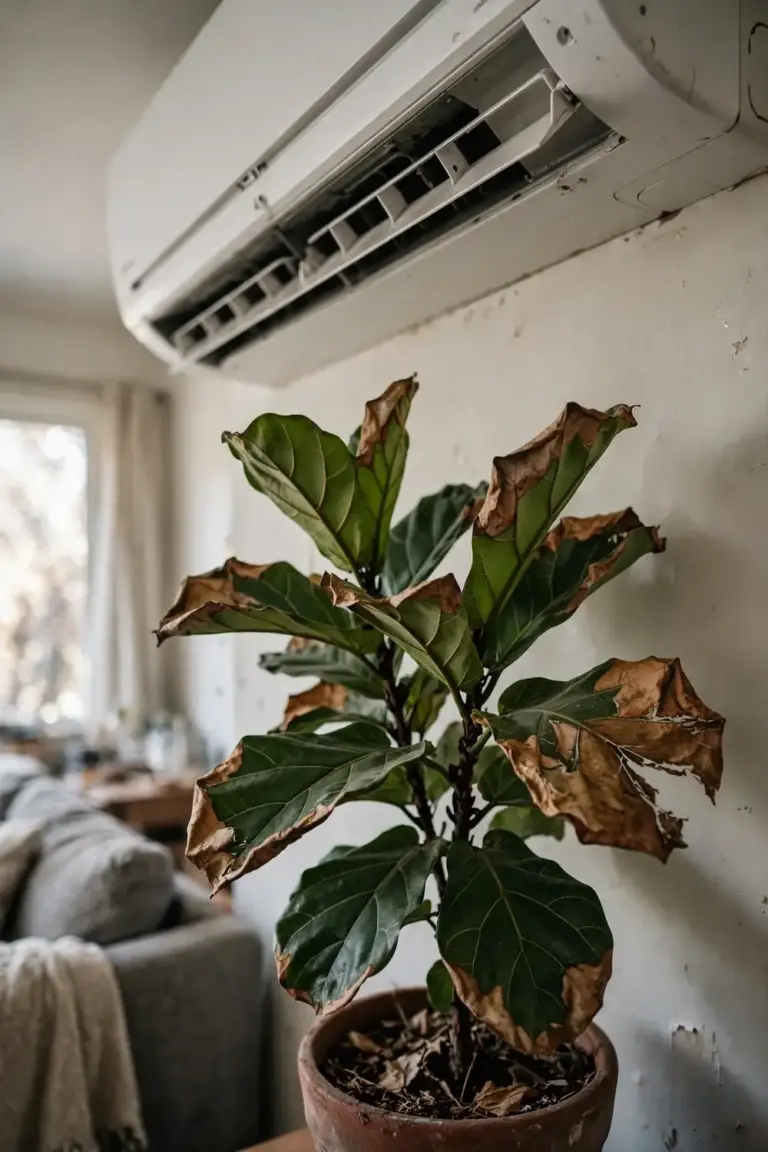
This is one of the two Australian-specific problems that overseas guides underplay. Australian homes run air conditioning hard through long hot summers in Brisbane and Perth, and ducted heating through cold Melbourne winters. A fiddle-leaf fig parked under a vent lives in a permanent dry wind. The leaves never get a break. Every day is a drying day.
Move the plant out of the airstream. That single move fixes more brown-edge problems than any watering change. Check where the vents point, not just where the plant sits. A plant two metres from a vent can still sit in its direct path. Air travels. Redirect the louvre or shift the pot to a still corner of the same room. The plant does not need a new room. It needs still air.
5. Low Humidity Stresses the Foliage
Fiddle-leaf fig performs best in medium relative humidity, according to the North Carolina Extension Gardener Plant Toolbox entry for Ficus lyrata. Australian indoor air in winter, especially with heating running, drops well below what the plant prefers. The leaf edges brown, new leaves emerge smaller, and growth slows. The plant is telling you the air is too dry.
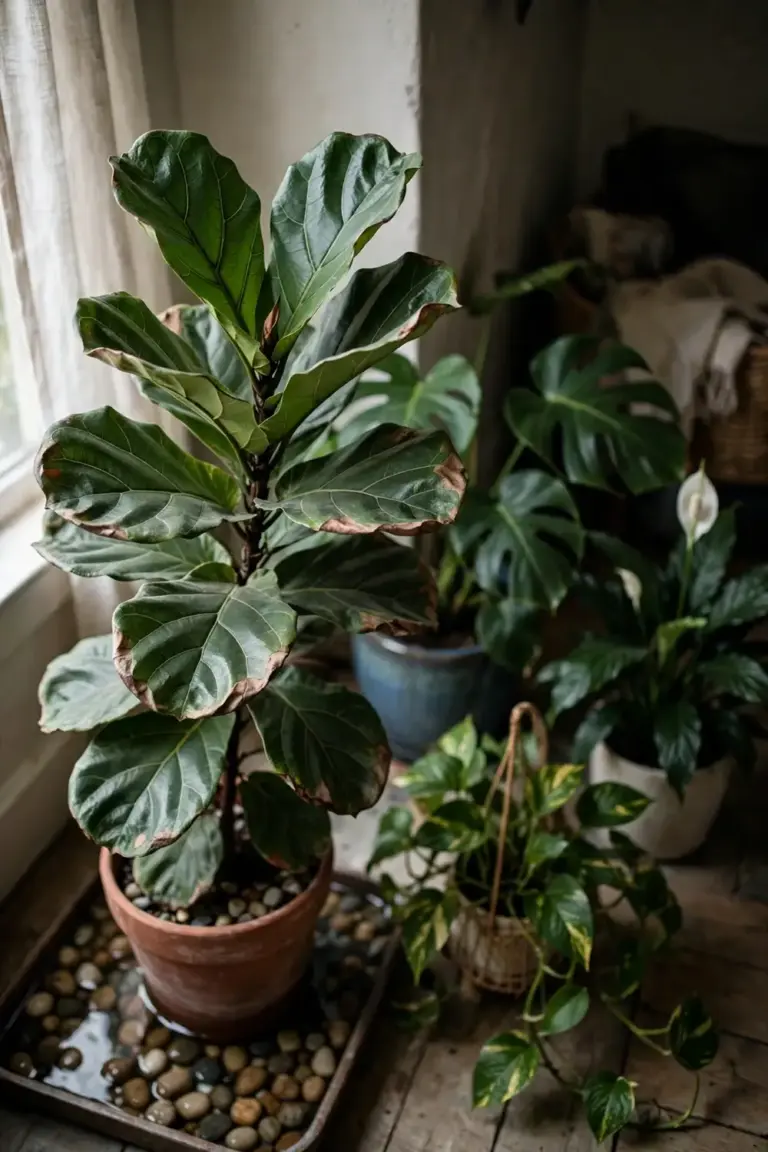
Group the plant with other houseplants to build a small humid microclimate. Leaves transpire. A cluster of plants raises the humidity around all of them. A pebble tray with water under the pot raises local humidity as it evaporates. Keep the pot above the water, not in it. A room humidifier near the plant is the most reliable fix in a heated Melbourne living room or an air-conditioned Perth bedroom. It runs quietly and the plant notices.
Misting the leaves gives a brief lift and then evaporates. It does not change the room’s humidity in any lasting way. The water is gone in minutes. Skip the spray bottle as a solution and fix the air instead. Wipe the broad leaves with a damp cloth every few weeks to remove dust, which blocks light and invites pests. Clean leaves breathe better.
6. Sudden Leaf Drop After Moving Is Normal Stress
Fiddle-leaf fig hates being moved. Shift the pot three feet, and it may drop leaves within days. Bring it home from the nursery, and it may shed for two weeks. This is acclimatisation stress, not a disease. The plant is adjusting, not dying. That distinction matters.
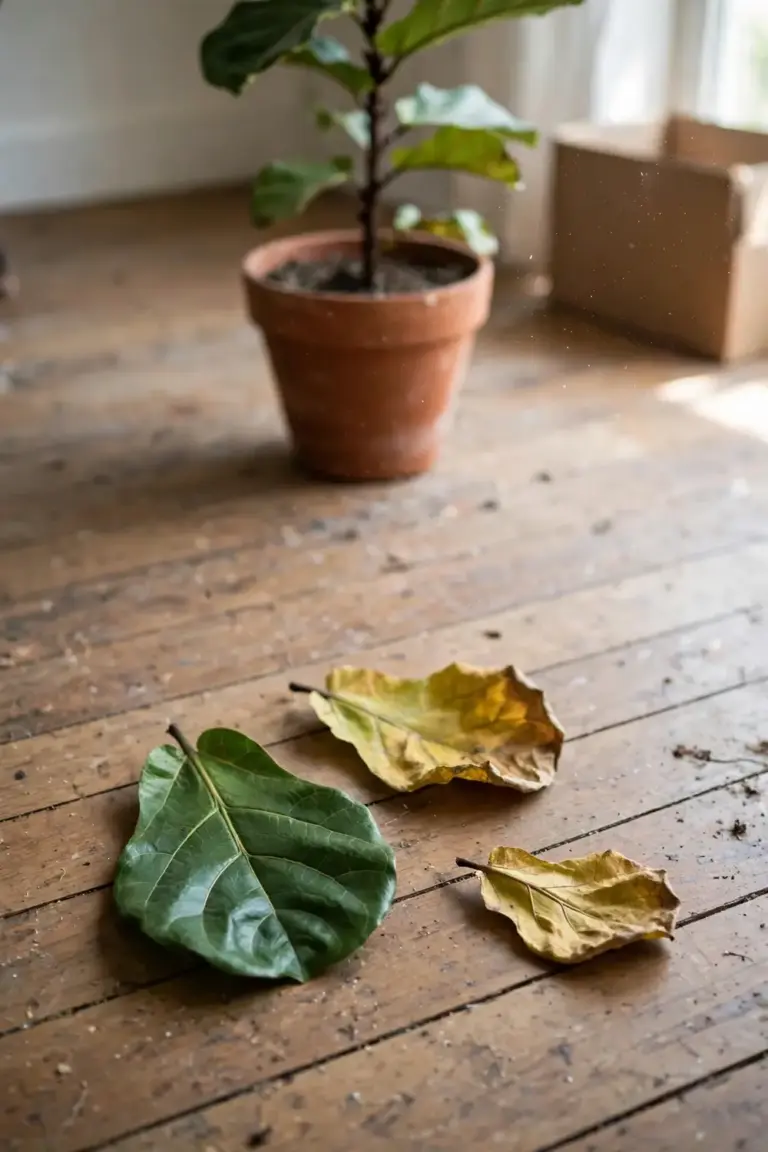
The nursery grew the plant in a humid greenhouse with steady light and temperature. Your home is drier, the light comes from one direction, and the temperature swings when doors open. The plant responds by dropping the leaves it cannot support while it adjusts. It is cutting its losses. Leaves dropping from all over the plant after a move point to this stress. Leaves dropping only from the bottom point to overwatering or low light instead. The pattern is the diagnosis.
Give a newly moved plant two to three weeks to settle before changing anything else. Keep the water steady, keep it out of drafts, and resist the urge to repot, fertilize, and relocate all in the same week. Each change is another shock. One change at a time lets you see what actually helped. The plant needs stability more than it needs intervention.
7. Read Brown Spots by Position and Texture
Brown spots are the most common fiddle-leaf complaint, and their position tells the cause. Learn to read them and you can diagnose in seconds. Dark brown or black spots starting at the base of the plant and spreading upward mean root rot from overwatering. The most common killer shows itself in the lowest leaves first. Start there.
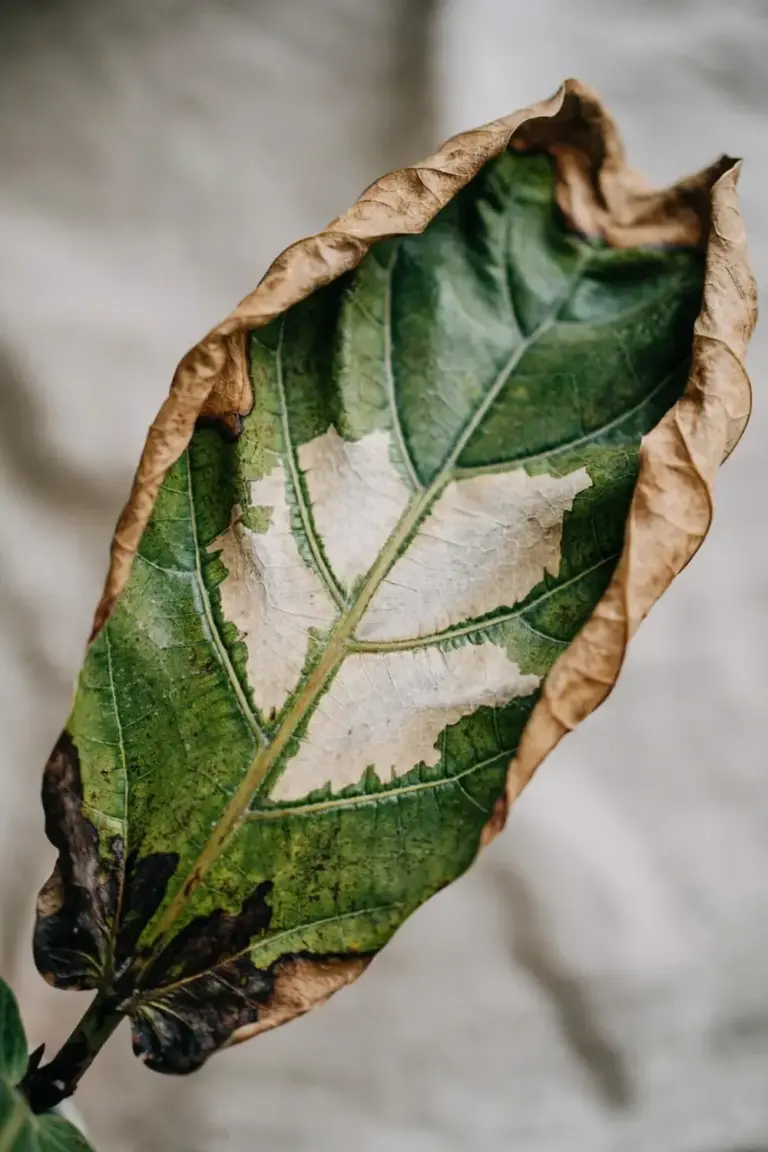
Brown, crispy edges and tips mean dry air, air conditioning, or underwatering. The texture is the giveaway: crispy means dry, mushy means wet. Run a finger over the spot. Your fingertip knows. Pale, bleached patches in the middle of leaves mean sunburn through glass. Small red-brown freckles on new leaves mean edema from inconsistent watering, and they fade as the leaf matures. They look scary. They are harmless.
Bacterial leaf spot shows as medium-brown spots scattered across the plant, sometimes with yellow halos. The spots look different from rot. They are drier, more defined. Remove affected leaves with clean hands and sterilised tools to stop it spreading, and treat the watering like a root-rot case: less water, better drainage, more light. Do not guess. Match the spot to the description, then act on the cause. A wrong guess wastes weeks.
8. Check for Spider Mites, Mealybugs, and Scale
Fiddle-leaf fig has no serious insect pests outdoors, but as a houseplant it attracts sap-feeders. Indoors is a different world. No rain, no predators, steady warmth. Monitor for scale, aphids, mealybugs, thrips, and spider mites, according to the North Carolina Extension Gardener Plant Toolbox entry for Ficus lyrata. Dry indoor air favours spider mites above all. They thrive where the air is still and dry.
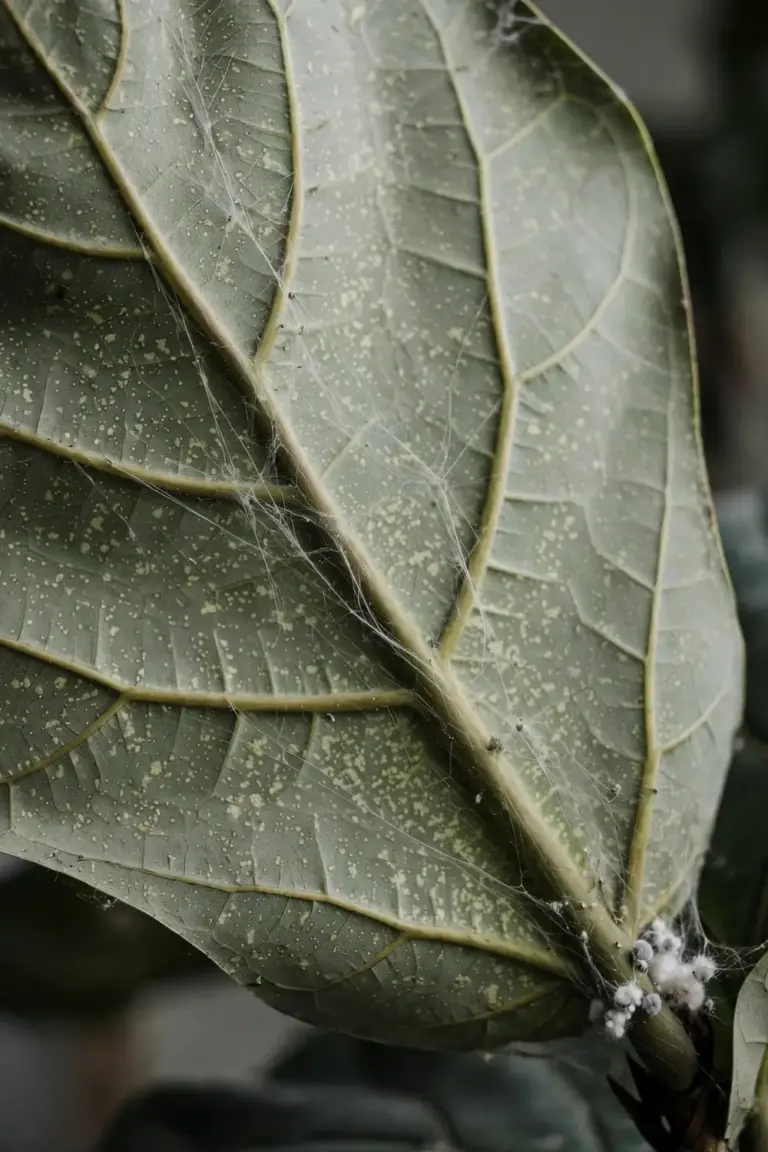
Spider mites cause fine stippling on the leaves and delicate webbing on the undersides. The leaf looks dusty and loses color before the webs appear. Hold the leaf to the light. The stippling shows as tiny pale dots. Mealybugs show as white, cottony clusters in leaf axils and along stems. They look like tiny tufts of cotton wool. Scale appears as small brown bumps stuck to stems and leaf veins. They do not move. They just sit and feed.
Wipe light infestations off with a damp cloth, checking the undersides where pests hide. Flip every leaf. The pests cluster where you do not look. Isolate the plant. Crawlers spread to neighbours fast. For persistent infestations, insecticidal soap or neem oil applied to all leaf surfaces, top and bottom, breaks the cycle. Coat the undersides well. Mites live there. Repeat the treatment at the label interval until two full weeks pass with no new signs. One treatment is never enough.
9. Edema Freckles on New Leaves Fade on Their Own
Small red-brown spots on new, expanding leaves are edema, not disease. The roots take up water faster than the young leaf can use or transpire it, and cells burst. The freckles look alarming on a fresh leaf and then fade as the leaf hardens. New growers panic. Experienced growers wait.
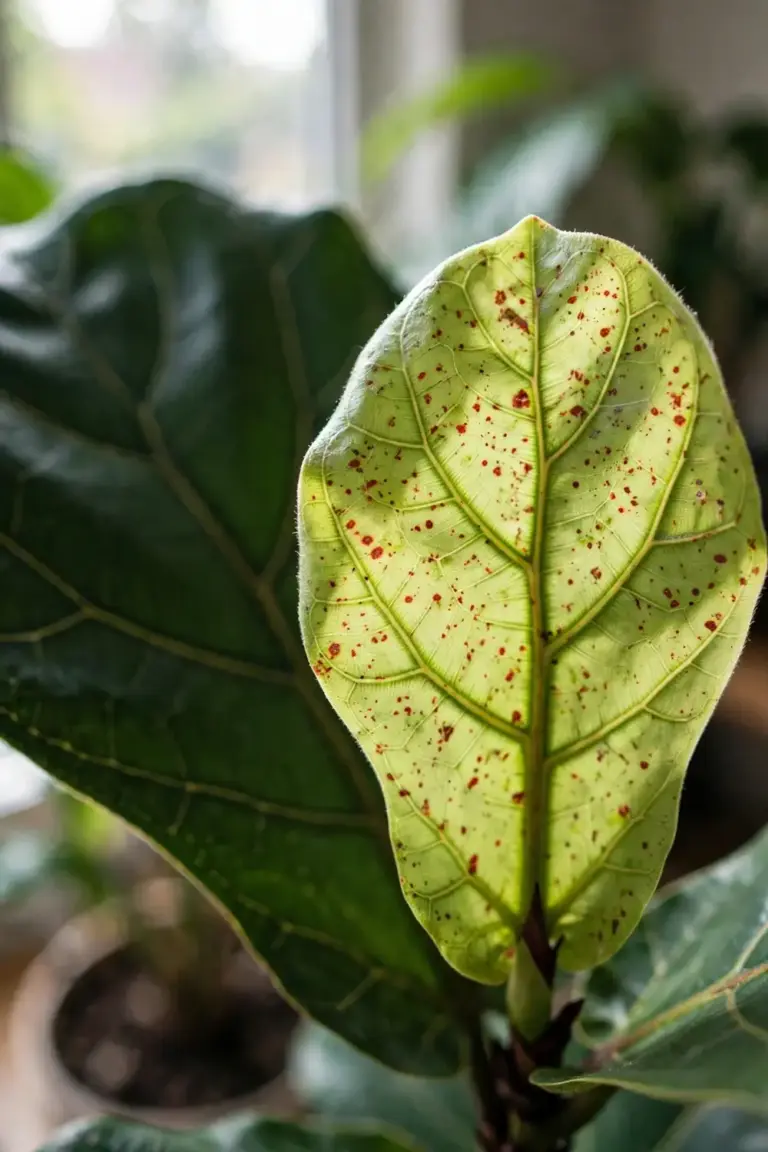
Inconsistent watering causes edema. A plant that swings from dry to soaked forces its roots to gulp whenever water appears. The new leaves, still soft and expanding, cannot handle the surge. They are the most vulnerable tissue on the plant. Establish a steady watering rhythm based on the finger test instead of a calendar. Consistency matters more than quantity.
Do not treat edema with fungicide or by removing the leaves. The spots are cosmetic and the leaf outgrows them. Spraying chemicals on a cosmetic issue wastes money and stresses the plant. Fix the watering consistency and the next flush of growth comes in clean. If the freckles appear on mature leaves too, recheck for overwatering, because the same wet roots cause both problems. The root cause is the same.
10. Cold Drafts and Temperatures Below 13 Degrees Cause Damage
Fiddle-leaf fig performs best when temperatures stay above 13 degrees Celsius, according to the North Carolina Extension Gardener Plant Toolbox entry for Ficus lyrata. Cold air from a draughty window or a heating vent cycling on and off stresses the plant. The plant evolved in tropical Africa. It has no frost tolerance. Brown spots can appear where temperature fluctuates sharply. The spots mark where cold air hit.
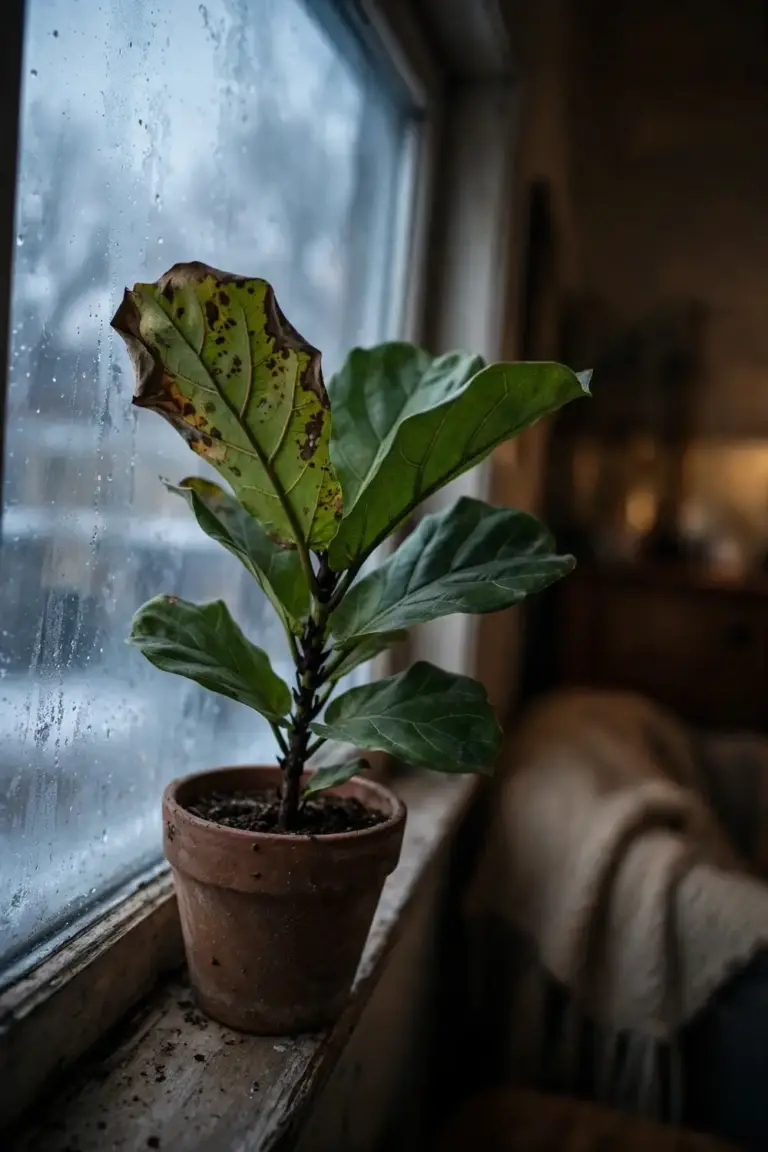
In Australia, the risk is winter nights near glass and the blast from a reverse-cycle unit switching modes. A plant against a single-glazed window in Canberra or the Adelaide Hills can sit several degrees colder than the room. Glass conducts cold. The leaves nearest the glass spot first. Check the coldest spot in the room, not the average.
Keep the plant away from draughty doors and windows in winter. Do not park it where a heater blasts it directly, either. The swing between hot air and cold glass is worse than steady cool, and wild swings stress the plant more than a constant chill ever does. If the whole plant must stay in a cool room, reduce watering, because cold roots use less water and wet soil in the cold invites rot. Cold plus wet is the dangerous combination.
11. Run the Fiddle-Leaf Fig Recovery Plan Before You Repot
Most sick fiddle-leaf figs need a calmer routine, not a new pot. Repotting is another shock on top of the existing stress. The roots are already struggling. Disturbing them adds trauma. Work through the fixes in order before reaching for fresh mix.
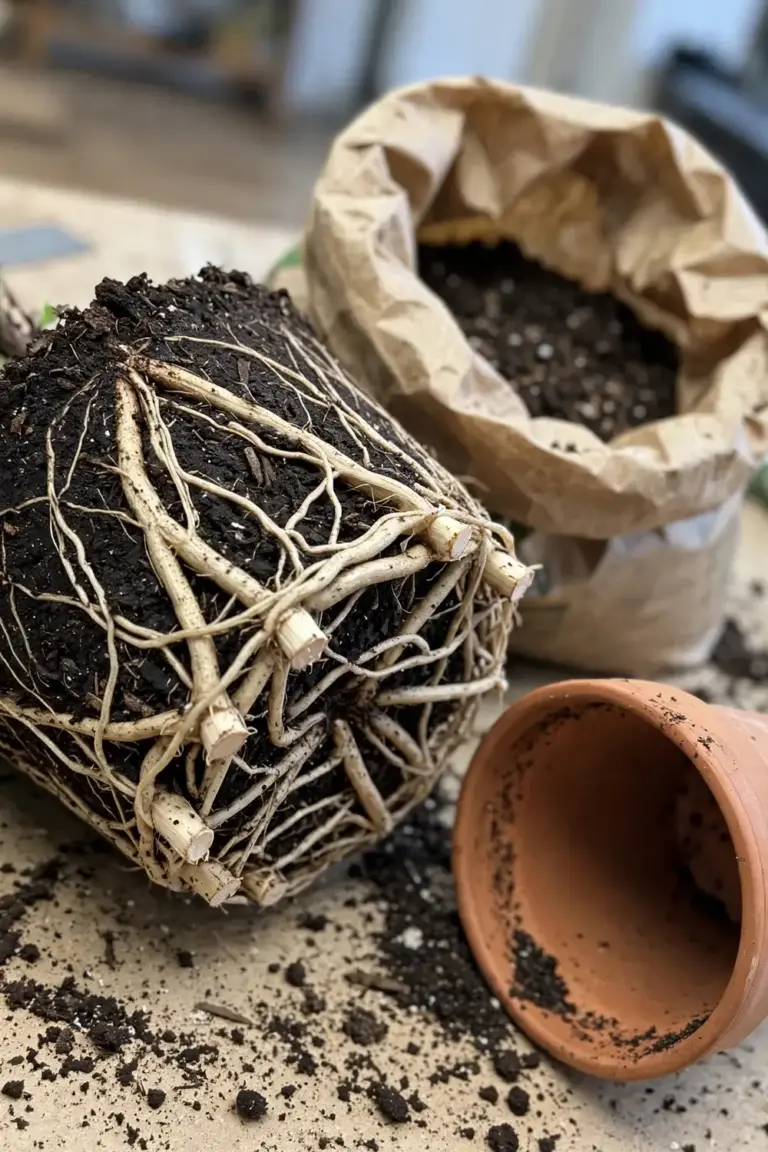
First, check the roots. Slide the plant from its pot and look. This is the single most informative thing you can do. Firm, pale roots mean the watering is the issue, not rot. The roots are healthy but the schedule is wrong. Dark, mushy, foul-smelling roots mean rot: trim the damaged roots with sterilised scissors and repot in fresh, fast-draining mix. Be ruthless with the rot. Leave no dark tissue. Second, fix the light. Move the plant to bright indirect light, out of direct afternoon sun through glass. East-facing is ideal. Third, fix the air. Move it out of vent airflow and away from draughty doors. Still air, bright light. That is the foundation.
Fourth, steady the water. Use the finger test, water deeply, drain fully, and empty the saucer. Every time. No shortcuts. The saucer is not storage. Fifth, wait. A stressed fiddle-leaf fig can take weeks to show new growth, and the plant heals on its own slow timeline, not yours. Do not fertilize a sick plant. Fertilizer on damaged roots burns them. Wait for proof before you feed. When new leaves appear in spring, the recovery is real. Green shoots mean the roots are working again. The site’s soil health guide covers what healthy root-zone biology looks like, which is what the recovery is really about.
| Symptom | Most Likely Cause | First Fix |
|---|---|---|
| Dark brown or black spots on lower leaves, spreading up | Root rot from overwatering | Let soil dry, check roots, repot if mushy |
| Crispy brown edges and tips | Dry air, air conditioning, or underwatering | Move from vent, water by finger test |
| Pale bleached patches mid-leaf | Sunburn through glass | Move from north or west window, add sheer curtain |
| Sudden leaf drop after moving | Acclimatisation stress | Wait 2 to 3 weeks, change nothing else |
| Small red-brown freckles on new leaves | Edema from inconsistent watering | Steady the watering rhythm |
| Fine webbing and speckled leaves | Spider mites | Wipe leaves, raise humidity, treat |
| White cottony clusters in leaf axils | Mealybugs | Wipe off, isolate, treat with insecticidal soap |
| Small brown bumps on stems | Scale | Scrape off, treat, check neighbours |
| Yellowing lower leaves | Overwatering or low light | Dry the soil, brighten the spot |
| Drooping leaves, dry soil | Underwatering | Water deeply until it drains |
| Leggy stems, wide leaf gaps | Too little light | Move to brighter indirect light |
Frequently Asked Questions
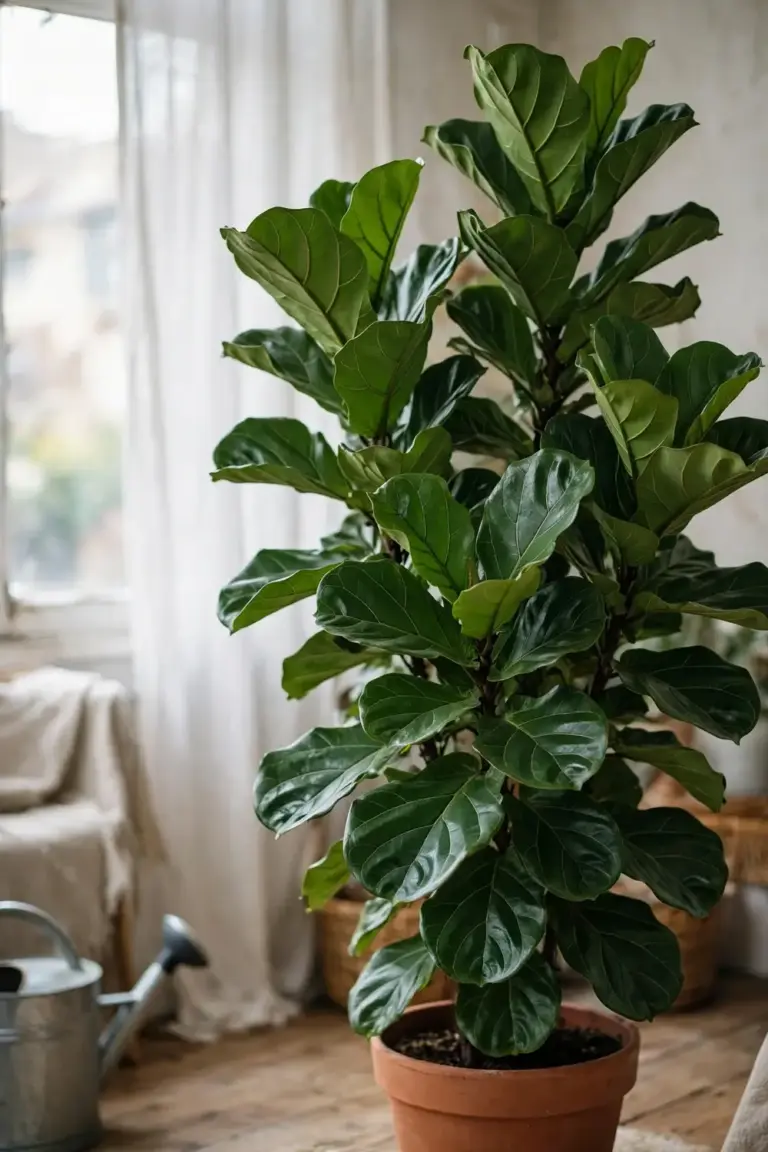
Water when the top 3 to 5 centimetres of soil feel dry to your finger, then soak until water runs from the drainage holes and empty the saucer. In a hot Brisbane summer that may mean weekly; in a cool Melbourne winter it may mean fortnightly or less. The finger test beats any calendar because pots, rooms, and seasons dry at different rates. Reduce watering noticeably through winter when growth stops.
Leaf drop with correct watering usually means the plant was recently moved, or it sits in a draft, or the light changed. Fiddle-leaf figs shed leaves after any environmental shift while they acclimatise. Give a newly moved plant two to three weeks of steady conditions before changing anything else. If leaves drop only from the bottom and the soil stays wet, recheck for overwatering, because wet roots cause bottom-up drop.
Yes, if the rot has not reached the stem. Unpot the plant and trim every dark, mushy root with sterilised scissors, leaving only firm, pale roots. Repot in fresh, fast-draining mix in a clean pot with drainage holes. Place it in bright indirect light and water sparingly until new growth appears. Severe cases where the stem base is soft and dark rarely recover, and starting fresh with a new plant is the honest call.
No. Crispy brown edges come from dry air and air-conditioning airflow as often as from underwatering. Check the vent positions before changing the watering. A plant under a split-system vent in a Perth summer will crisp no matter how well it is watered. Move it out of the airstream first, then reassess the watering. If the edges stay brown after the move, the finger test will tell you whether the soil is the issue.
No. Fiddle-leaf fig is toxic to humans, cats, and dogs if ingested, and the milky sap irritates skin, according to the North Carolina Extension Gardener Plant Toolbox entry for Ficus lyrata. Oral irritation, drooling, and vomiting can follow chewing. Wear gloves when pruning or handling the stems. Keep the plant out of reach of cats, dogs, and small children, and wash your hands after touching the sap.
Walk the Plant Weekly and Catch Trouble Early
A fiddle-leaf fig tells you what it needs if you look. Walk past it weekly with a purpose: check the soil with a finger, flip one leaf to scan the underside, and note any new spots. Small catches stay small. A spot caught early is a spot you can fix. A spot ignored for a month is a dead leaf.
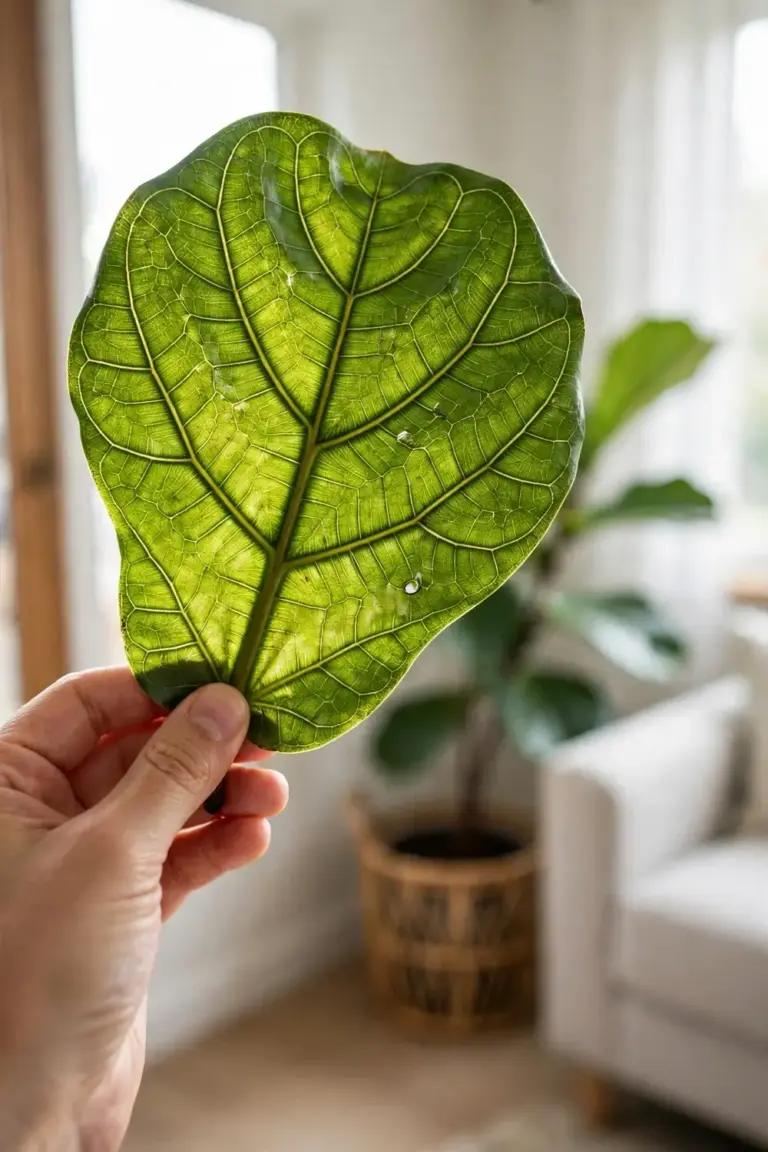
The plant is a tropical tree doing its best in a living room. It did not evolve for air conditioning, north-facing glass, or Melbourne winters. Give it bright indirect light, water with air in between, still air, and time after every change. Most problems trace back to one of those four. Fix the cause, not the symptom, and the next flush of leaves proves it. The proof is always in the new growth.
The rubber plant is a close cousin with the same demands, and the site’s baby rubber plant guide covers its care. Same genus, similar needs, smaller leaves. If you can keep a fiddle-leaf fig happy, a rubber plant is easy. But this page was about your fiddle-leaf fig. Keep the routine steady and it will hold its leaves. Steady wins. Every time.