
Cover tomatoes before the air hits 0 °C. That is how to protect tomatoes from frost in Australia. The rest of this page is 7 moves, from reading the forecast to checking the damage after the frost.
General frost protection for the whole garden lives in the site’s late-frost guide. This page stays on tomatoes: covers by frost severity, pots under cover, and what to do after a frost.
1. Match the Method to the Frost Severity First
Match the method to the forecast low. A light frost gets frost cloth on hoops. A hard frost gets cloches or cold frames. A severe frost gets pots moved under cover and ripe fruit picked. The ladder below is this page’s decision rule. The sourced cover gains behind it sit in the sections that follow.
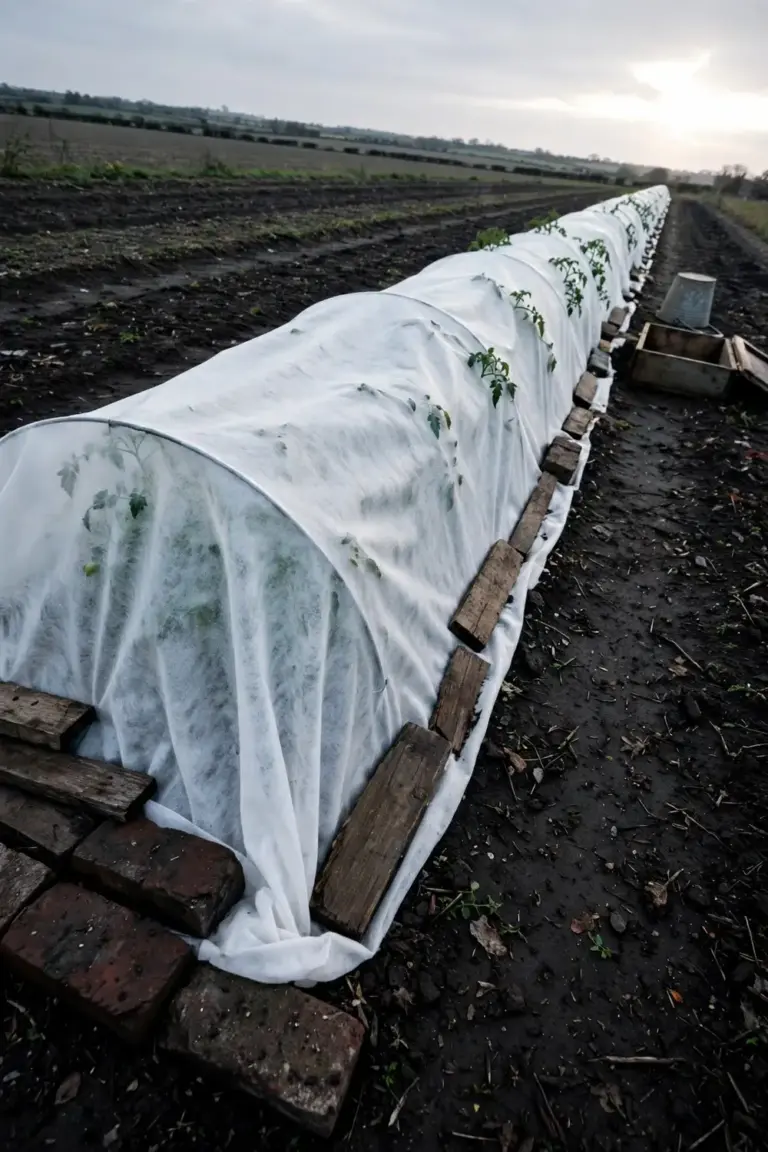
| Frost Severity | Method | When |
|---|---|---|
| Light frost, 0 to -2 °C forecast | Frost cloth on hoops | Cover before sunset |
| Hard frost, -2 to -5 °C forecast | Cloches, cold frames, or double cover | Cover before sunset, add a film layer |
| Severe frost, below -5 °C forecast | Move pots under cover, pick ripe fruit | Move pots by late afternoon |
A cover traps heat rising from the soil. It does not make heat. That is why every method below seals to the ground and goes on before sunset, while the soil still holds the day’s warmth. A cover thrown over cold soil at midnight traps cold air and helps nothing.
Work the ladder from the top each time a frost is forecast. Check the forecast low first. Pick the row that matches it. Set up that method and no more. A light frost does not need a cold frame, and a cold frame does not save a plant in a severe frost if the pots stay out.
Over-covering costs a harvest too. A plant sealed under film on a mild night overheats by morning. A plant under two layers it never needed grows soft from trapped humidity. Match the method to the frost. No more, no less.
The ladder suits radiation frost, the common kind in Australia. Radiation frost forms on clear, calm nights when the ground loses heat to the sky. Covers work on those nights because they trap the heat the ground still holds. A windy freeze is a different beast. Wind strips trapped heat from under any cover, so cloth and film buy little on a night with strong wind and driving cold air. The Bureau notes this wind-driven kind, advection frost, is rarely cold enough to matter in Australia. When the forecast shows strong wind with the cold, pick the fruit and let the plant go.
Keep the kit ready before frost season. Store frost cloth, hoops, pegs, bricks, and a roll of film in one spot near the beds. A frost forecast at dinner leaves no time to hunt for pegs in the shed. The gardener who sets up before sunset saves the fruit. The gardener who hunts for gear in the dark does not.
2. Read the Forecast for Frost, Not Just Cold
Read the overnight low, the cloud cover, and the wind. Frost forms on clear, calm nights. A forecast low of 2 °C under a clear sky with no wind can still frost a low bed, because the ground cools below the air temperature.
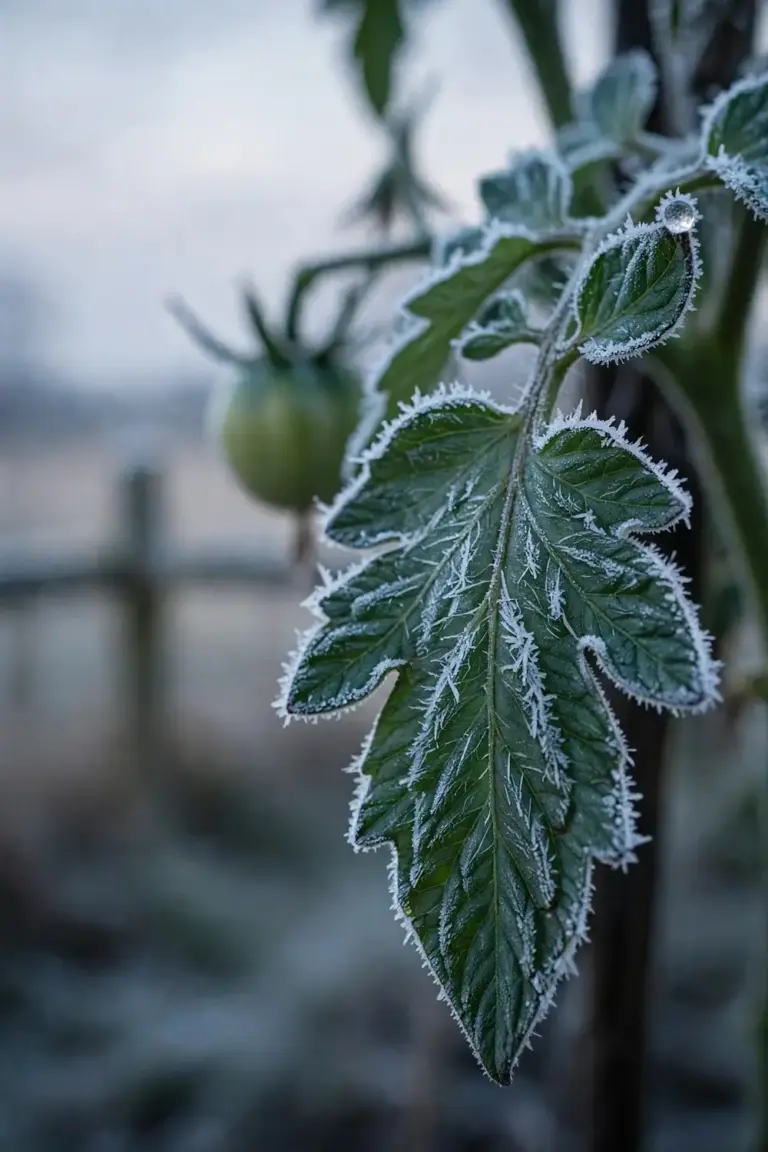
The Bureau of Meteorology’s frost guide defines frost as a deposit of ice crystals that forms when the temperature at ground level falls to 0 °C or less, and notes frost is most likely under a clear sky with little or no wind. Clouds act as a blanket and hold daytime warmth near the ground. Wind mixes cooler air near the ground with warmer air above it. A clear, calm night after a cold front is the danger night.
Tomatoes face frost in two windows in Australia. Spring brings the last frost, when seedlings go out. Autumn brings the first frost, when fruit still hangs on the vine. The same methods serve both windows. Spring seedlings need the lightest cover because they sit low and small. Autumn plants need the tallest cover because they stand full height with fruit.
Watch for black frost. A dry night can freeze plants with no white ice anywhere. The air holds too little moisture to form crystals, so the garden looks clear in the morning while leaves turn black. A forecast low below 0 °C means frost risk even when the air feels dry. Trust the thermometer, not the sight of ice.
Check the forecast daily through both windows. A single cold night can end a crop that stood healthy for months. The Bureau’s forecast gives the overnight low for your district. Your garden may run colder than the district figure if it sits in a hollow or on low ground. A minimum-maximum thermometer on a post near the beds tells you what your garden actually did overnight. Read it each morning through frost season and you learn your own garden’s pattern fast.
Gardeners in the frost-free north rarely need any of this. If your nights never reach 0 °C, skip the covers and grow on. The rest of this page suits gardeners who see frost at least once a year.
Cold air pools in low spots. A bed at the bottom of a slope can frost while a bed higher up escapes untouched. Walk the garden at dawn after the first frost and note where frost formed. Those spots are the last places to trust with tender plants in spring. A north-facing wall helps in the southern hemisphere. The wall catches sun by day and releases heat at night. Place tender plants near it.
Read the forecast low as air temperature, not ground temperature. The Bureau measures air temperature in a sheltered screen above the ground. The ground itself runs colder on a clear night. A forecast low of 2 °C can still mean frost at ground level in a low bed. Treat any clear, calm night with a forecast low near 2 °C as a cover night. The cover costs minutes. The frost costs fruit.
Seedlings started indoors need hardening off before they face a spring night. The seed starting guide covers the indoor start. Once seedlings stand outside, this page covers their frost nights.
3. Cover With Frost Cloth on Hoops for a Light Frost
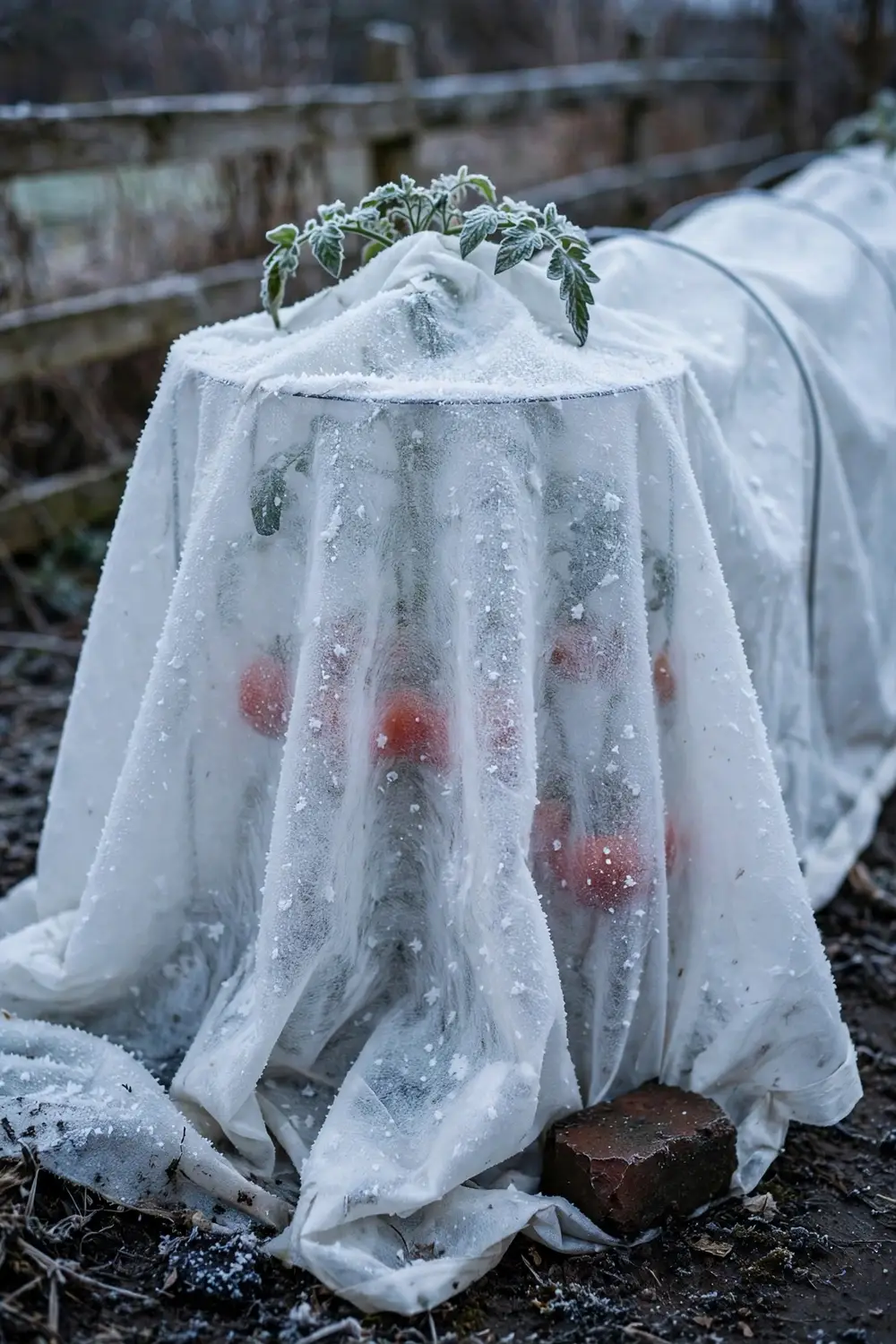
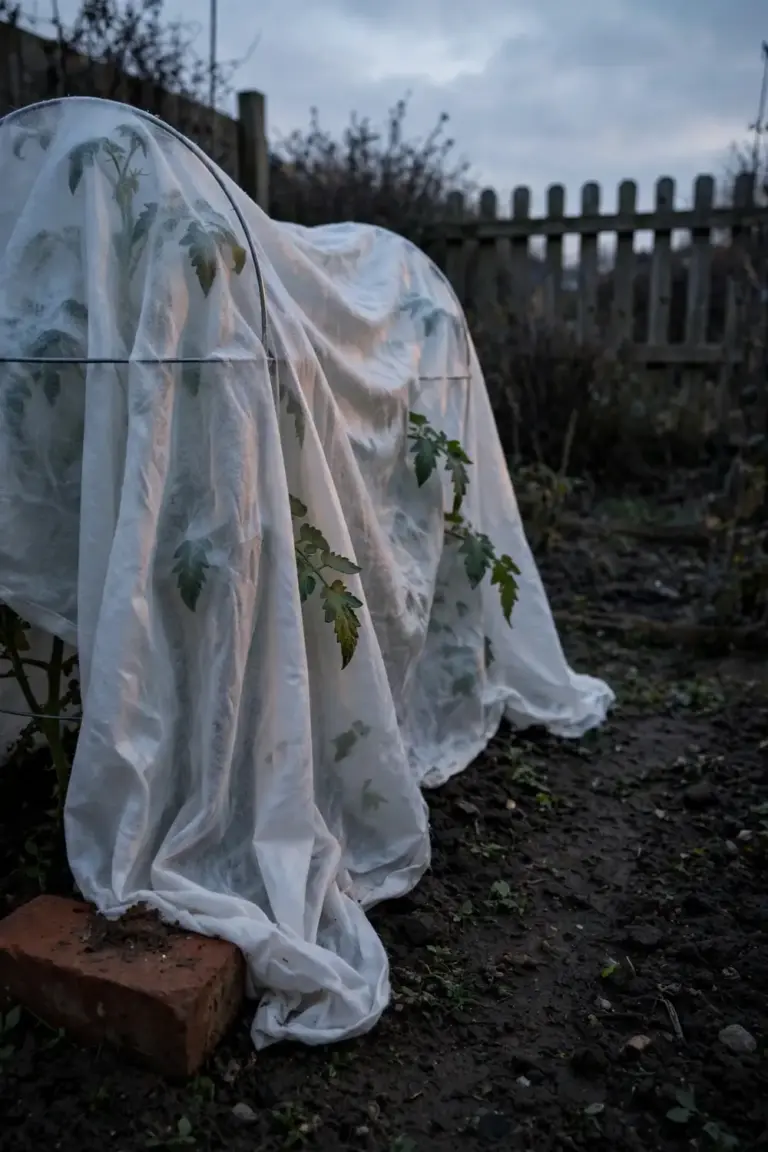
Drape frost cloth over hoops, peg every edge to the ground, and cover before sunset. Frost cloth is the fabric AU nurseries sell under that name, also called frost fleece. It breathes. It lets air and moisture pass while it holds heat below. That breathability is the whole point.
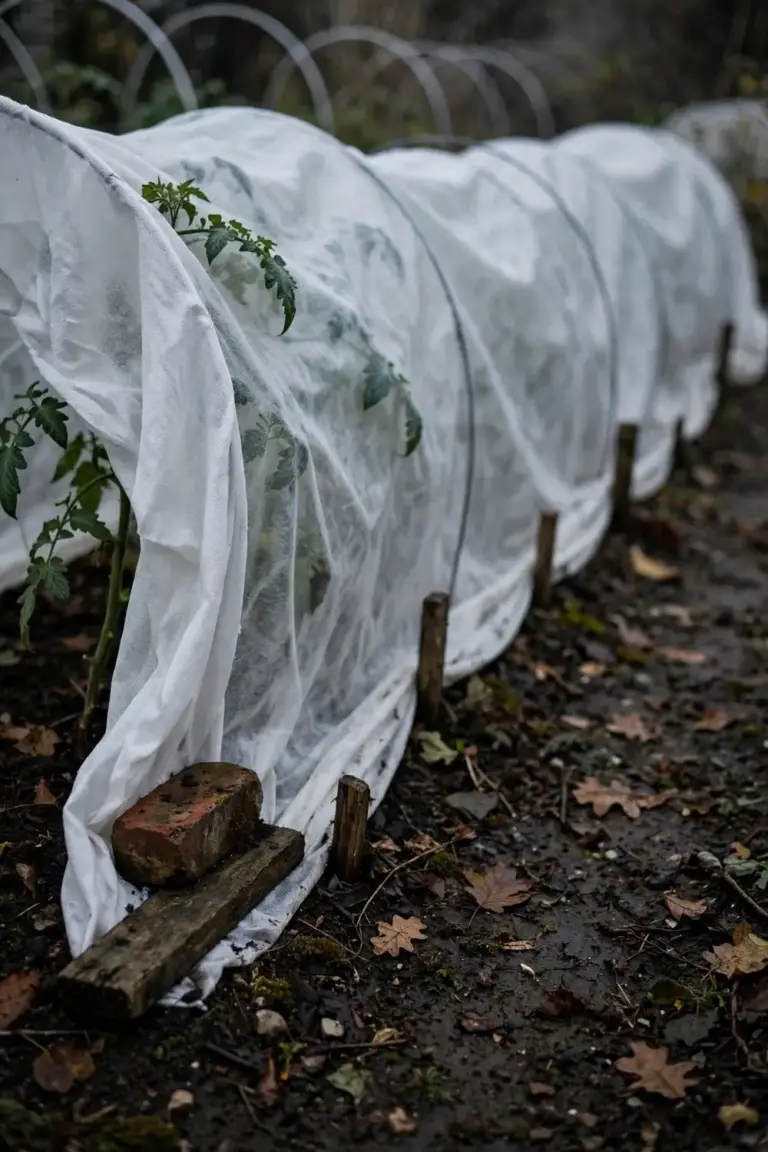
I have learned that the cloth I peg to the ground saves more fruit than the cloth I drape loose over the leaves.
Alabama Cooperative Extension’s frost advice notes a lightweight fabric cover adds 3 to 5 °F (1.7 to 2.8 °C) to the air around the plant, and cloth beats plastic because plastic transfers cold to any leaf it touches. Foliage that touches plastic freezes against it. Hoops hold the cloth off the leaves. Push hoops into the bed edges and drape the cloth over them. Weight the edges with bricks, boards, or soil. Leave no gap for cold air to enter. A gap at one end vents the trapped heat all night.
Water the soil in the afternoon before a frost. The same Alabama notes state that well-watered plants resist frost damage better, and wet soil retains heat longer and releases it slowly during the frost. Soil that holds moisture without waterlogging gives the cover more stored heat to trap. The soil health guide covers building that kind of soil. Do not soak a bed that already drains poorly. Water in the afternoon, not at dusk, so the surface dries before the cover goes on.
Remove the cover in the morning once the air warms above freezing. A cover left on in direct sun cooks the plant it saved. Fold the cloth and store it dry. Frost cloth survives many seasons when it stays clean and dry. A torn edge still works if it still seals to the ground.
Nurseries sell frost cloth in light and heavy grades, and light cloth suits a mild frost while letting more light through. Heavy cloth suits a harder frost and blocks more light. Match the grade to the frost the way the ladder matches the method. A heavy cloth left on through a warm day overheats the plant faster than a light one, while a light cloth on a hard frost night buys little, so buy one of each if frosts vary through your season.
Wind is the enemy of a good cover. A loose edge flaps, lifts, and vents the trapped heat in minutes. Peg every edge, then check the windward side twice. Bricks beat pegs on hard ground. Soil heaped over the edge beats both when the bed edge is soft. On a windy forecast night, run a rope over the top of the cloth and tie it to stakes at both ends. The rope stops the cloth ballooning and ripping.
Rows and single plants need different setups. A row takes hoops and a long run of cloth, one cover for many plants. A single plant takes four stakes and a square of cloth tied at the corners. The single-plant cover goes on faster and comes off faster. It suits a tomato in a pot on a patio or one plant left fruiting in a small bed.
4. Switch to Cloches and Cold Frames for a Hard Frost
Step up to a rigid cover when the forecast drops below -2 °C. A rigid cover holds a bigger pocket of still air than cloth alone. Still air insulates. Moving air strips heat. That is why a cloche or a cold frame beats a flat sheet on a hard frost night.
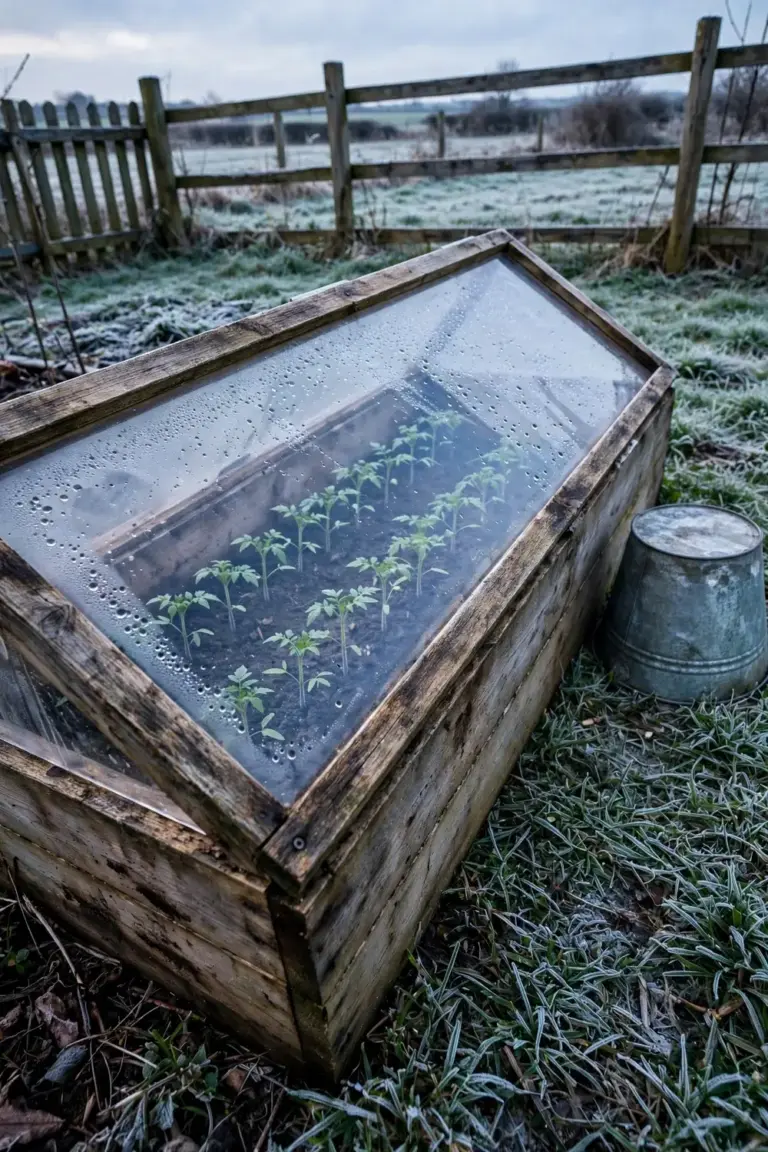
Kansas State’s row cover notes state row cover cloth gives up to 4 °F (2.2 °C) of protection past freezing, while polyethylene film gives up to 8 °F (4.4 °C). Film over hoops is the double cover in the ladder. Lay cloth on the hoops first, then film over the cloth. The cloth keeps film off the leaves while the film adds the extra degrees. Remove the film in the morning, since film traps moisture and heat fast once the sun hits it.
A cloche is a mini greenhouse for one plant. A bucket, a large milk carton with the base cut out, or a glass jar all serve. The same Alabama notes list buckets, newspaper, and gallon milk cartons as covers for small plants such as tomato and pepper seedlings. Set the cloche over the seedling in the evening and lift it in the morning, because a cloche left on through a warm day steams the plant inside it.
A cold frame is a bottomless box with a clear lid that sits over a row or a bed. The box blocks wind. The lid lets sun in by day and holds heat at night. Open the lid on warm mornings and shut it before sunset on a frost night. A cold frame suits low autumn plants and spring seedlings, while a tall fruiting tomato needs hoops and film, not a box.
Vent a double cover on a sunny morning before you remove it. Lift one edge of the film and let the hot air out. A sealed double cover on a sunny morning cooks the plants inside within the hour. Venting takes a minute and saves the crop the cover saved the night before.
Site the cold frame where it catches morning sun. Morning sun warms the box early and dries dew off the leaves. Morning sun also lets you open the lid at breakfast instead of midday. Keep the frame off low ground that pools cold air. A frame in a frost hollow fights the coldest air in the garden all night. A frame on a slight rise starts the night warmer.
Never put a flame under a cover. Candles, heaters, and open flames under cloth or film start fires. The cloth melts. The film burns. The plant dies in the fire instead of the frost. Heat comes from the soil and the wall, not from a flame. If a night is too cold for covers, pick the fruit and let the plant go.
A greenhouse does this job at scale. It is the right answer if frosts hit weekly through your growing season.
5. Move Pots Under Cover Before the Frost
Move potted tomatoes under cover before the frost, because pots freeze faster than beds. A bed draws heat from deep soil. A pot holds a small ball of soil with cold air on every side. Roots in a pot freeze first.
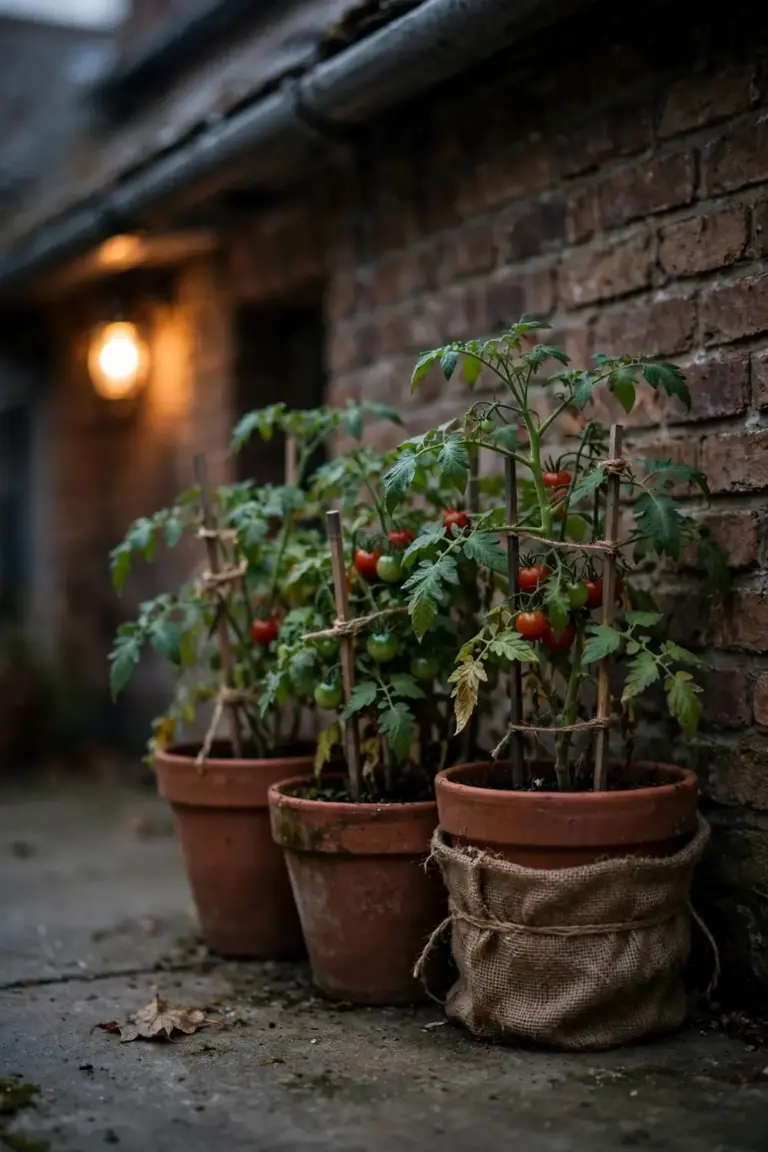
Move pots by late afternoon, before the soil in them cools. Cluster the pots together against a north-facing wall, under eaves, or inside a carport or shed. Clustered pots share warmth. A wall releases stored daytime heat through the night. A roof overhead blocks the clear sky that drives radiation frost. Water the pots in the afternoon before you move them. Wet mix holds heat longer than dry mix.
When a hard frost is forecast and a pot cannot move indoors, wrap the pot itself. Hessian, burlap, or an old towel around the pot insulates the root ball. Keep the wrap off the foliage. Damp foliage under a wrap chills. Then cover the plant with cloth on a frame. Two layers, one pot.
Bring pots inside only when the frost is severe and the pot is small enough to lift. A pot left inside for days grows soft and leggy. Move it out again once the frost passes. In-ground plants cannot move. They get the ladder in section 1. Pots get the ladder plus the move.
Big pots hold heat better than small ones. A large pot carries a big ball of mix that cools slowly. A small pot cools fast and freezes first. When frost threatens, move the small pots first and leave the big ones for last. A seedling in a small pot is the most frost-tender plant in the garden. It goes under cover first every time.
A pot that stays outside through frost season needs its own routine. Wrap it in autumn and leave the wrap on until spring. Check the wrap after storms. Wet wrap insulates less than dry wrap, so replace a soaked wrap with a dry one. The plant inside the pot still needs water through winter. Water on mild mornings, never before a forecast frost night. Empty the saucer under the pot after watering. A saucer full of water freezes, grips the pot, and chills the roots from below.
6. Grow a Living Cloche Under Frost-Hardy Plants
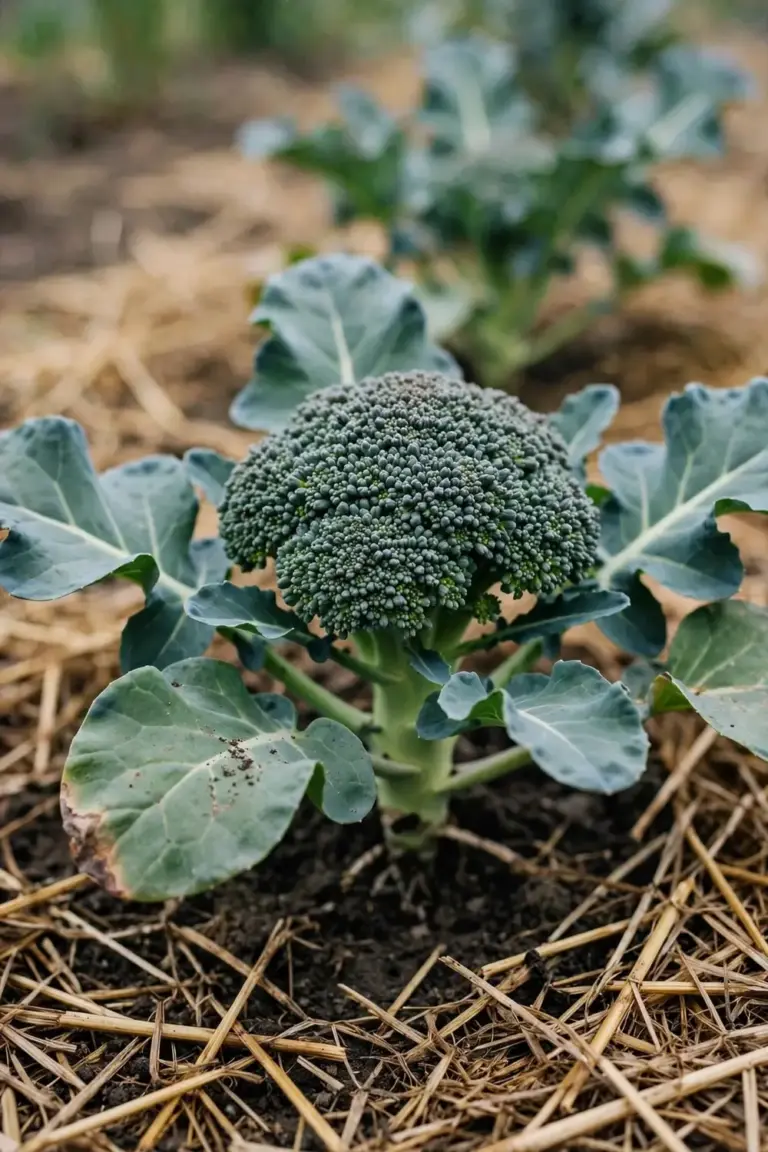
Plant tender seedlings under the canopy of a frost-hardy plant and let the canopy act as a living cloche. Broccoli and snow peas both serve. Their leaves form a roof over the seedling. The roof traps ground heat the same way cloth does. The seedling grows in the warm pocket beneath.
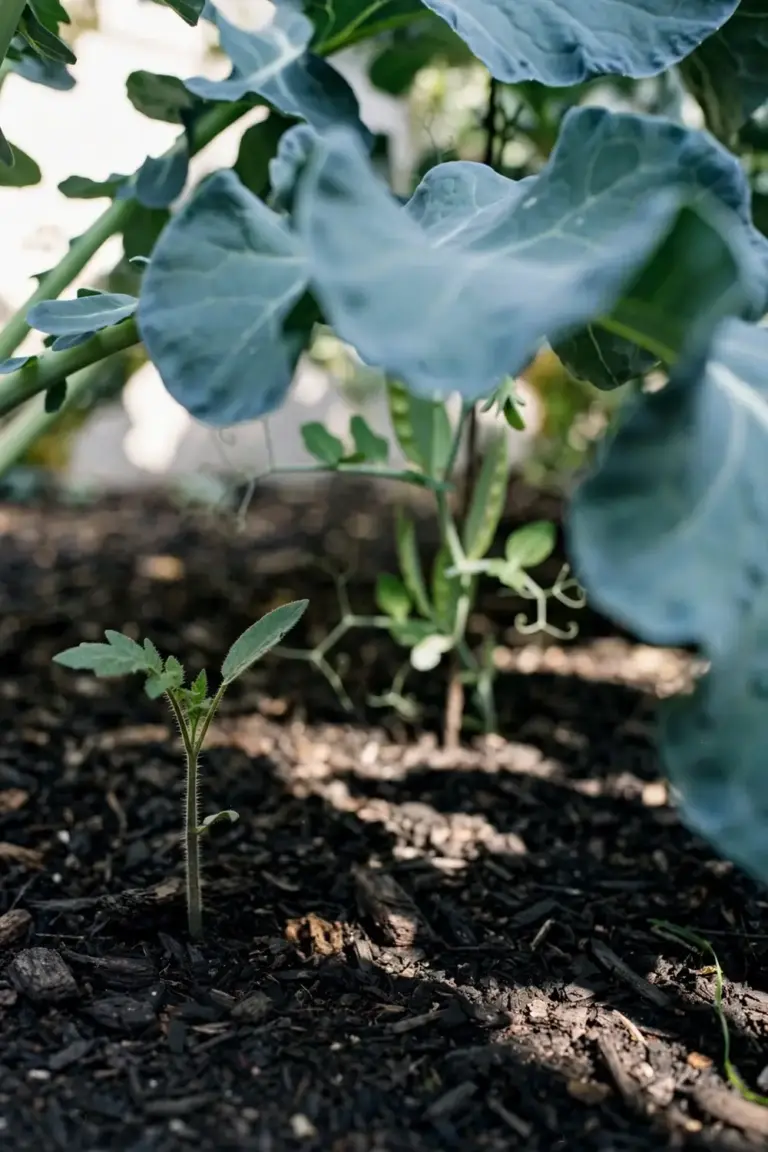
Set the seedling under the canopy in the afternoon, while the soil still holds warmth. Water the soil first. The canopy alone does not help if the soil beneath it is dry and cold. Space the seedling where it still gets morning sun. A seedling in deep shade under a dense canopy grows weak even if it stays warm.
Check under the canopy each morning by lifting a leaf and looking at the seedling. A seedling that stayed green through the night is safe, while one with wilted, darkened leaves took cold damage despite the canopy. Move a damaged seedling under cloth on hoops for the next frost night. The canopy is one layer. Cloth on hoops is a stronger layer. Combine them on a forecast hard frost night.
A living cloche suits seedlings, not tall fruiting plants, since a tomato in full fruit stands above any broccoli canopy and needs cloth on hoops. Use the living cloche for the spring window, when seedlings are small and frost-hardy companions already stand in the bed.
Possums may raid the sheltering plants, so check for chewed leaves. A living cloche that draws possums to the bed costs more than it saves. If possum damage shows, drop the living cloche and use cloth on hoops instead. The cloth keeps possums off the seedling as well as frost.
Time the companions to the frost window. Sow or plant the frost-hardy companions early enough that they stand tall before the seedlings go out. A broccoli plant still small in spring gives no canopy. A broccoli plant at full leaf by the time seedlings arrive gives real shelter. Plan the pairing when you plan the bed, not on the frost night itself.
A living cloche works best in a bed that already mixes crops. A bed of tomatoes alone has no canopy to offer. A bed with broccoli at the edge and tomatoes in the middle has shelter built in. The companions feed the household while they shelter the seedlings. Two jobs, one bed.
7. Check the Damage After the Frost and Recover
Wait, then check the stems before you prune anything. Frost damage shows slowly. Leaves wilt and darken first. Stems tell the truth later. A stem that stays green under the skin can regrow. A stem that turns black and mushy cannot.
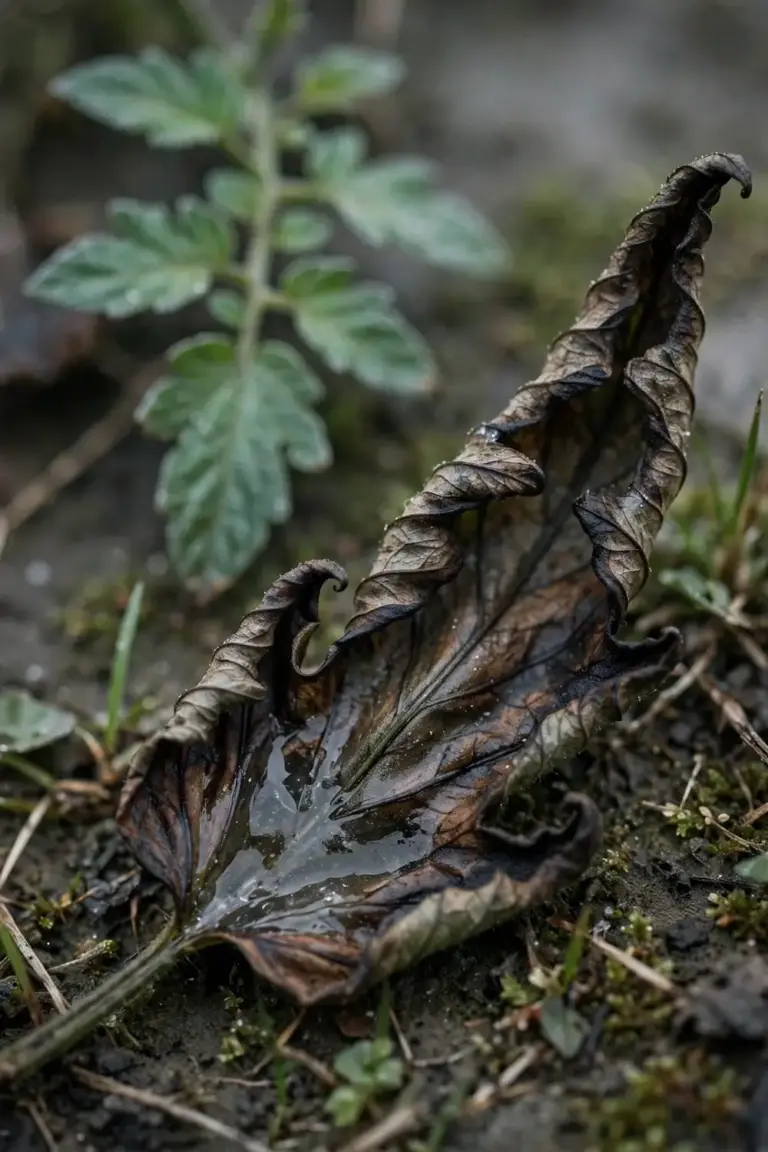
Delaware Extension’s crop update notes tomatoes are a warm-season vegetable that cannot tolerate any frost or freeze event, and damaged plants will have to be replaced. That is the severe end. Light damage is a different story. A plant that lost a few leaves to a light frost can regrow from healthy stems. Give it days, not hours, before you judge it.
Harvest mature fruit first. A fruit that shows full color comes inside. A fruit with blackened skin goes to the compost. Green fruit that survived without damage can ripen indoors on a bench. Fruit that froze turns soft and watery as it thaws. It will not recover.
Leave damaged leaves in place for a few days. They shield the stem from the next cold night. Pruning opens fresh wounds and removes the small insulation the dead leaves give. Prune only after new growth shows and the forecast clears. Cut back to green tissue.
Remove covers in the morning once the air warms above freezing. The same Alabama notes stress removing covers each morning, because a cover left on in direct sun causes heat damage to new growth. Fold covers dry. Store them where you can reach them fast. The next frost night may come within days.
Decide whether to replant or wait. A plant with green stems and a few live buds earns a week of patience. Water it steadily and watch for new shoots at the leaf joints. A plant with black stems down to the soil line earns the compost. No amount of waiting revives a frozen stem. Pull it, compost it, and use the space for a frost-hardy crop. The bed is not wasted. A row of broccoli or snow peas in the freed space feeds the household while the frost season runs out.
Feed lightly once new growth appears. A plant rebuilding leaves needs steady water and time, not a heavy dose of fertilizer, since a heavy feed on a damaged root system burns what is left. A light feed after new leaves show supports the regrowth without stressing the roots. Hold off on any spray until the plant shows new growth, because spraying a frost-damaged plant adds chemical stress to cold stress.
Frequently Asked Questions
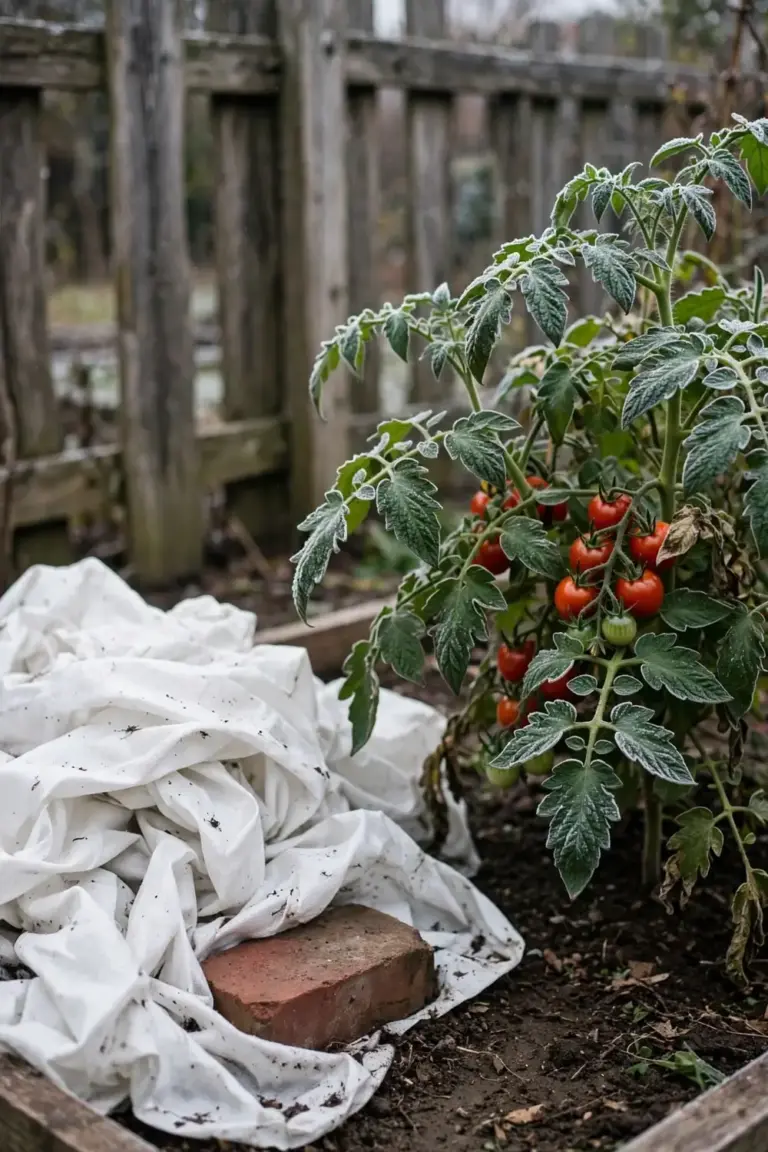
A light frost kills exposed leaves and young growth on an uncovered tomato plant. The plant may regrow from healthy stems if only leaves froze, but fruit on the vine suffers. Cover before the frost. A single layer of frost cloth on hoops buys about 2 °C of protection and saves the fruit that a bare plant loses.
Plastic alone is a poor cover. It transfers cold to any leaf it touches, and foliage that touches plastic freezes against it. If plastic is all you have, drape it over a frame so it never touches the plant. Cloth is the better choice. It breathes, it insulates, and it cannot freeze a leaf on contact.
Yes. Water the soil in the afternoon before a frost. Wet soil retains heat longer than dry soil and releases it slowly through the night. Well-watered plants resist frost damage better than thirsty ones. Do not soak a bed that drains poorly. Water in the afternoon so the surface dries before the cover goes on.
Remove covers once the air warms above freezing and the frost has thawed. A cover left on in direct sun traps heat and cooks new growth. Fold the cloth and store it dry for the next frost night. If another frost is forecast for the following night, leave the hoops in place and re-cover before sunset.
Fruit that escaped damage ripens normally. Harvest mature fruit after a frost and ripen green fruit indoors on a bench. Fruit that froze turns soft and watery as it thaws and will not recover. Compost frozen fruit. The plant itself regrows only if its stems stayed green under the skin.
Protect Your Tomatoes From Frost in Australia Tonight
Cover tonight if the forecast says 0 °C or below. Read the low, the cloud, and the wind, pick the ladder row that matches the forecast, and peg the cover to the ground before sunset. That is how to protect tomatoes from frost in Australia.
The growing-on detail lives in the site’s tomato growing guide. Frost protection buys weeks. Good growing buys the season. Cover tonight, check the stems in the morning, and grow on.
Frost season ends. The covers come off for the last time. The thermometer stays on its post. Next autumn, the same ladder waits: read the forecast, match the method, peg the cover, and check the stems in the morning.