
Style the Whole House by Noon on Thanksgiving Day
Thanksgiving Day decorations work when everything is cut fresh that morning and every room is finished by noon. Cut at dawn, soak by eight, arrange by ten, and light the candles when the first car pulls into the driveway. The whole plan runs on a clock. Dawn is for cutting, mid-morning is for building, and noon is the deadline because guests never wait for a centerpiece.
A Thanksgiving Day decoration is not the same as seasonal decor. Seasonal decor goes up in early November and stays for weeks. Day-of decorations are fresh, fast, and built for one evening of heavy use: doors opening, kids running, hot dishes landing. This page runs the day itself on a timeline, room by room, from the porch at dawn to the candles at dusk. If you want the whole-season home tour instead, read the Thanksgiving decor for home guide. That one dresses the house for the month. This one dresses it for the day.
| Time | Task | Where |
|---|---|---|
| Before 7 AM | Cut greens while stems hold maximum water | Yard |
| 7-8 AM | Soak cuttings, crush woody stem ends | Kitchen or garage |
| 8-10 AM | Build door, entryway, and mantel pieces | Porch, entry, living room |
| 10 AM-12 PM | Set the table, powder room, and sideboard | Dining room, bath, buffet |
| 12 PM | Deadline: every room finished | Whole house |
| Dusk | Light candles, float the bowls | Table and porch |
Work the table in order and you never backtrack with wet hands through a finished room.
1. Cut Fresh Greens at Dawn While the Stems Are Full
Cut before the sun clears the fence. Stems hold the most water in the first hour of light, and greens cut at dawn stay perky hours longer than greens cut at noon. Bring sharp pruners, a bucket of water, and a plan. Cut only what the morning needs: a few long pine boughs for the door, cedar for the entryway, boxwood for the small vases. Every extra branch is compost you carried for nothing.
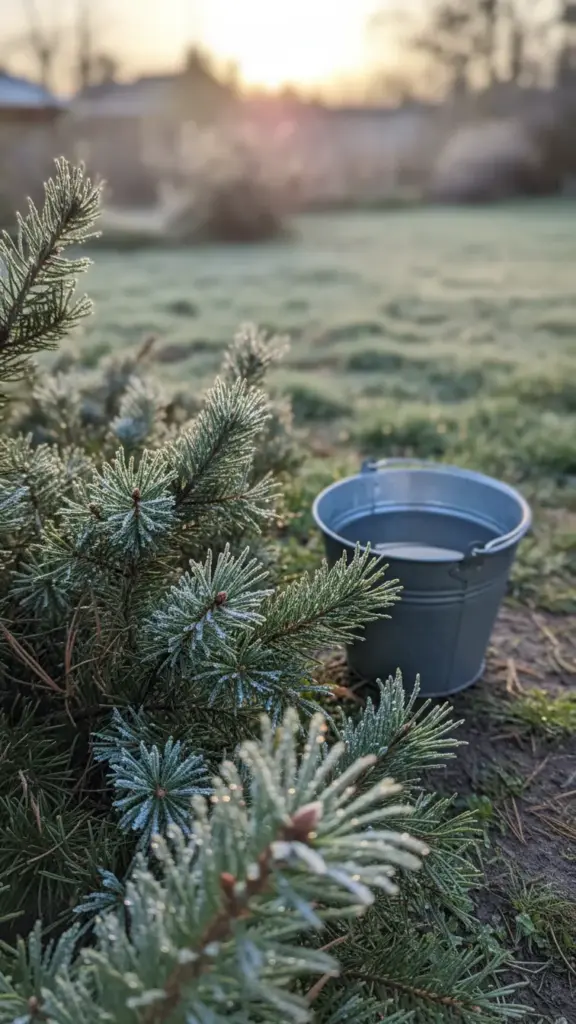
Cut like the tree still matters. Take branch tips, never strip one side of a shrub, and never remove more than a quarter of any plant. Leave live foliage behind every cut so the branch keeps growing. Step back after every few cuts and check the shape of the plant. A shrub that looks lopsided in November looks lopsided all winter.
Get the cut ends into water within minutes, not when you get around to it. Stand the bucket in the shade while you keep cutting. Greens left wilting on the driveway for an hour have already lost the freshness you woke up early to capture.
2. Soak Every Cutting Before You Arrange a Single Stem
Dry stems arranged dry stay dry. Fill a deep bucket or the laundry tub with lukewarm water and stand every cutting in it for at least an hour. Ohio State’s extension specialists recommend immersing fresh greenery in water before arranging so the cuttings absorb maximum moisture, then letting the foliage dry before display. An hour of soaking buys you an evening of perky needles. Skipping it buys you a centerpiece that droops during dessert. Their full fresh-greenery guide is here: decorating safely with fresh greenery.
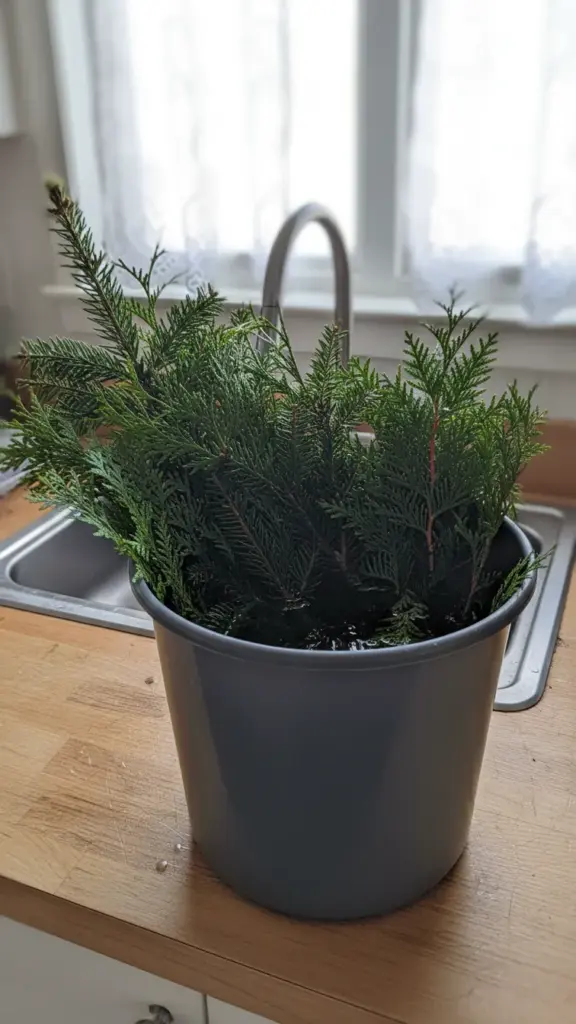
While the greens soak, crush the ends of the woody stems. Smash the bottom inch with a hammer or make a fresh angled cut with pruners. Crushed ends drink faster than clean-cut ones because the fibers open up. This is the one fussy step of the morning, and it pays off in every arrangement you build after it.
Use the soaking hour for the dry work. Wipe the vases, lay out the candles, set the table linens. When the greens come out of the water, every container and surface is ready, and the arranging goes twice as fast.
3. Dress the Front Door for the First Arrival
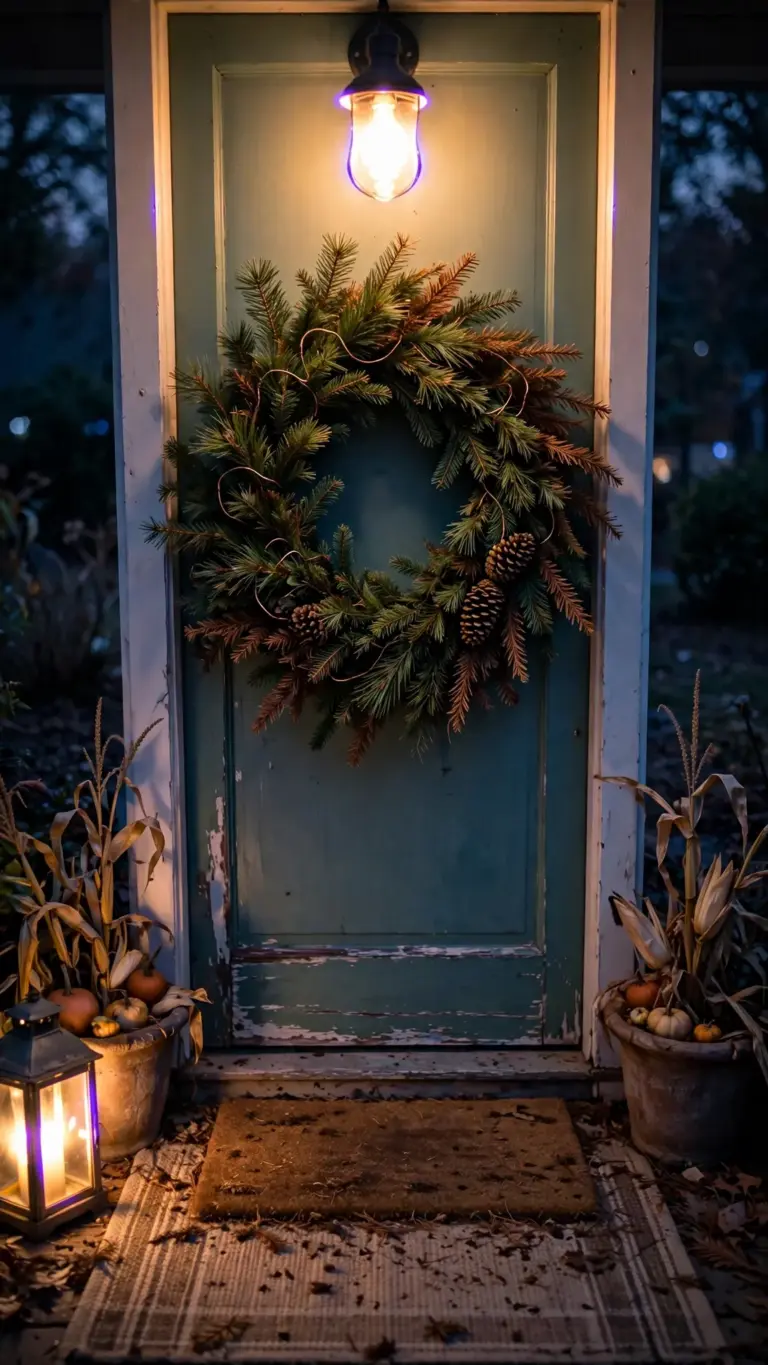
The door is the first decoration anyone sees and the last one you should fuss over. Hang the wreath or swag before 9 AM, while the porch is still empty and you can stand back to check it. A swag of pine and cedar wired to the door knocker or hung from a hook takes ten minutes when the greens are already soaked. It takes forty when you are still cutting.
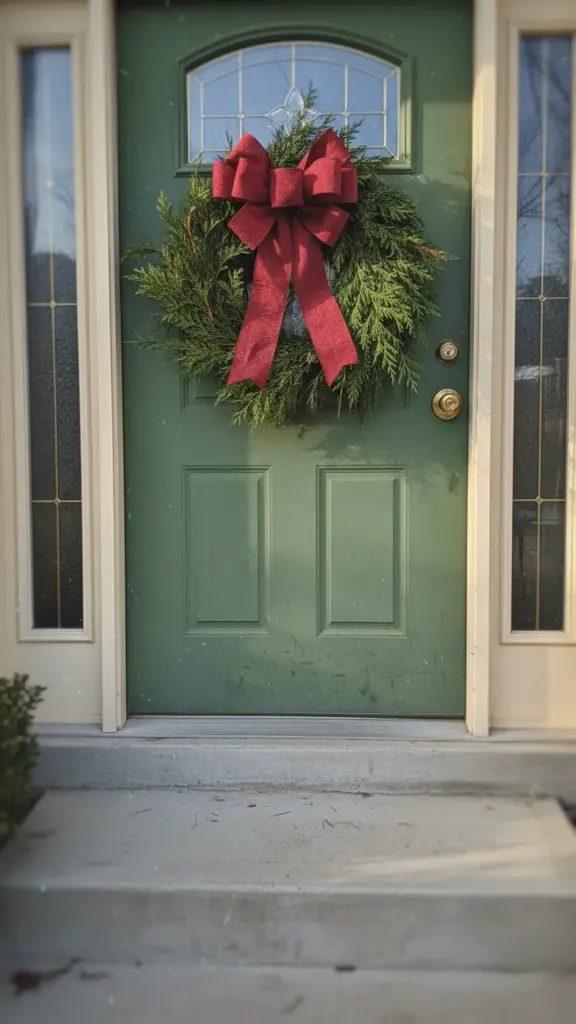
Keep the door design simple enough to survive the day. One swag, one bow, maybe a cluster of pinecones. Every door decoration gets grabbed, bumped, and brushed by coats all afternoon. Delicate arrangements shed. A tight pine swag wired firmly at three points holds through twenty arrivals.
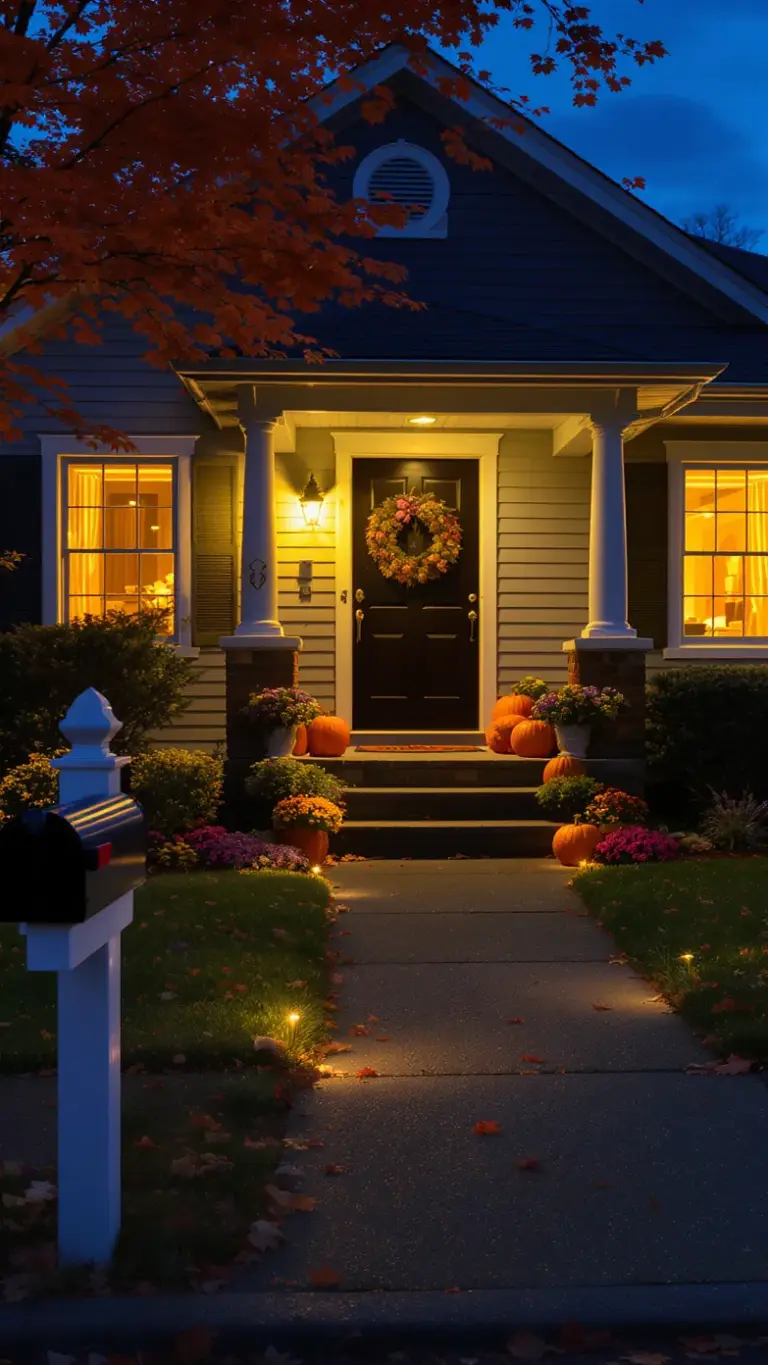
Check the door from the street, not from the porch. Step onto the sidewalk and look at the whole entry: door, steps, lanterns, doormat. Guests experience the house from the curb first. A beautiful wreath on a porch buried in dead leaves still reads as neglected. Sweep the steps before you hang anything.
Replace the doormat if it is worn. A fresh coir mat costs little and frames the door the way a frame holds a picture. Guests wipe their feet on it while looking at your swag. A ragged mat under a beautiful wreath sends a mixed message.
4. Line the Entryway Console with a Low Fresh Runner
The entryway sets the tone in the ten seconds between the door opening and the coats coming off. Lay a low runner of cedar and boxwood down the center of the console table, no taller than a hand. Low matters because the entryway is a corridor, not a gallery. Anything tall gets knocked by bags and elbows before the turkey is carved.
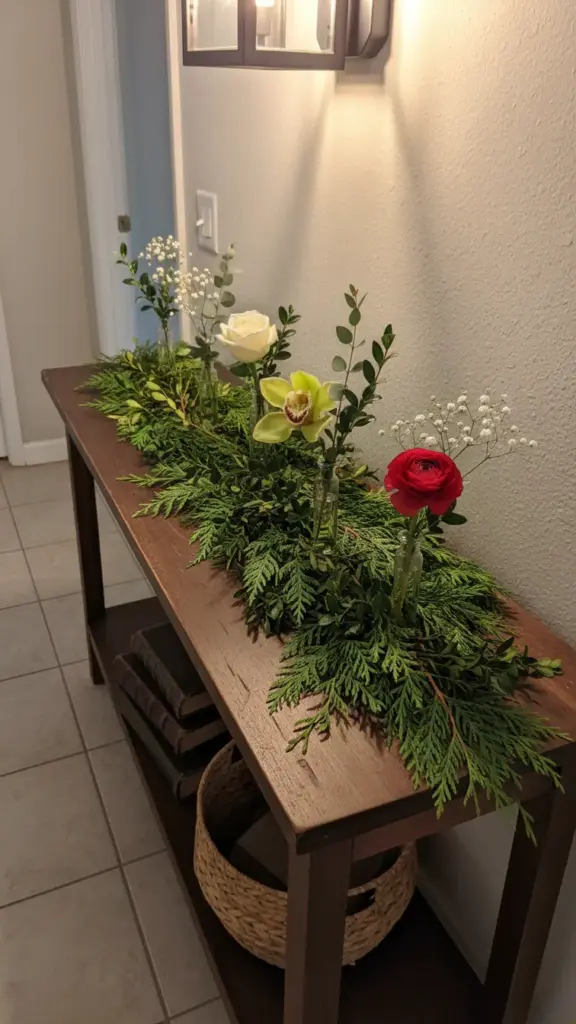
Tuck three small water vials or floral tubes into the runner for the thirstiest stems. The runner looks like loose greens, but the stems are drinking. This trick doubles the life of the arrangement through a heated house. Without water, cut cedar in a warm entryway curls by mid-afternoon.
Leave the ends of the console clear. Keys, mail, and the inevitable casserole dish need landing space. A runner that covers the whole table forces guests to set things on top of your greens. Give the arrangement the middle third and surrender the rest to real life.
5. Build the Centerpiece Around the Turkey Timer
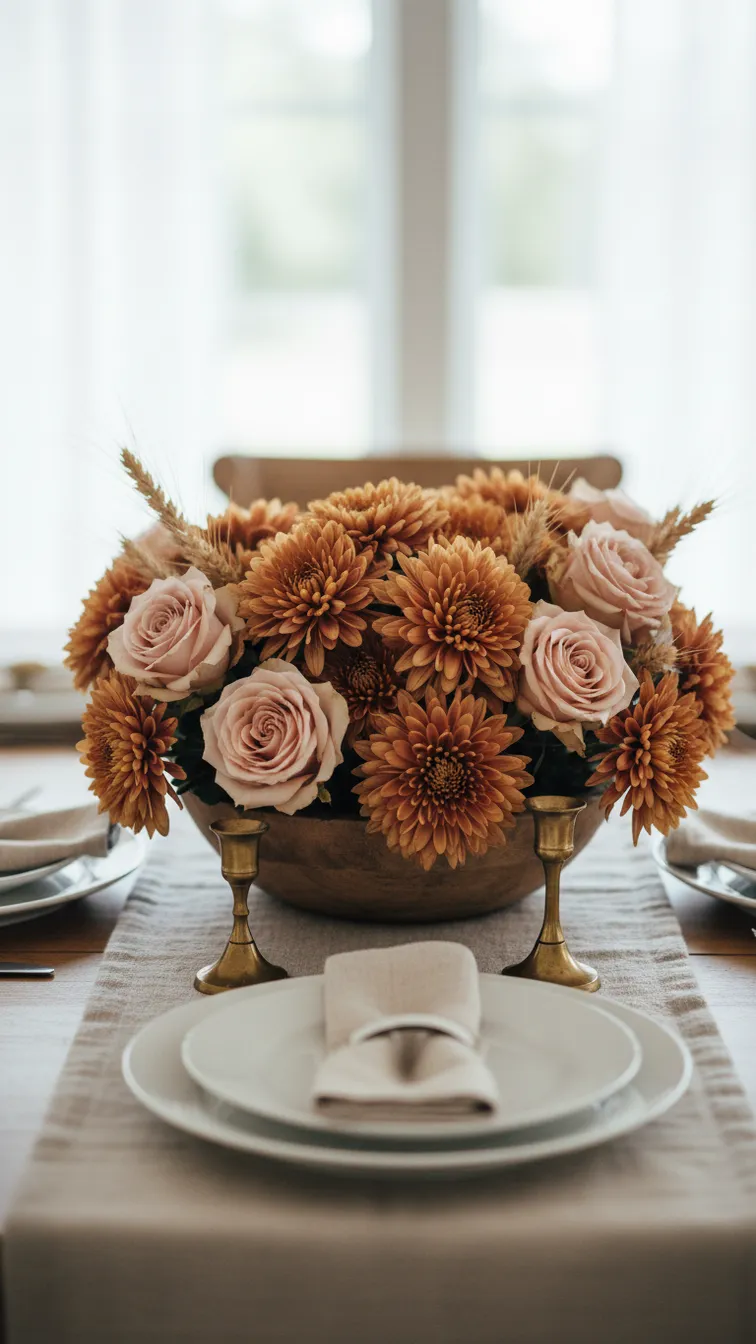
The table centerpiece has one enemy: the serving dishes. Build low and narrow, or the food and the flowers fight for the same square inches. A centerpiece wider than a dinner plate steals space from the gravy boat. Keep it under six inches tall so guests can see each other across it. Conversation is the point of the table. Flowers are the frame.
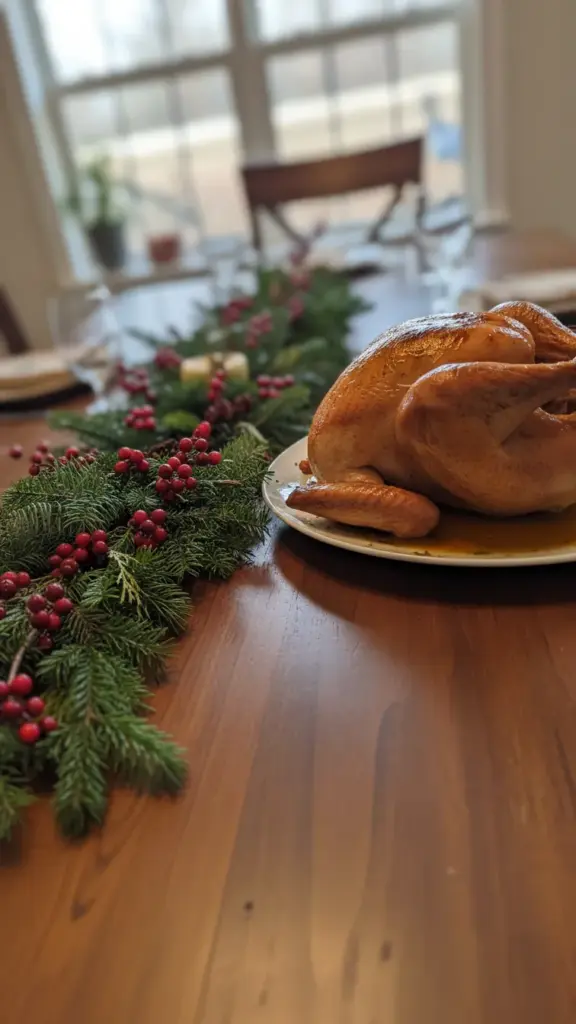
Time the build to the turkey, not the guests. Assemble the centerpiece while the bird rests, about an hour before serving. Greens arranged at 10 AM in a warm dining room have four hours to wilt before anyone sits down. Greens arranged at noon look freshly cut at two. For the full centerpiece playbook, see the Thanksgiving centerpieces guide.
Use a shallow bowl with a water source, not a dry pile of greens. A low bowl with floral foam or a kenzan holds pine, fir, and berries upright and drinking. Dry centerpieces shed needles onto the tablecloth and look tired by pie. Wet ones stay sharp through the whole meal.
6. Set a Fresh Herb Bundle at Each Place Setting
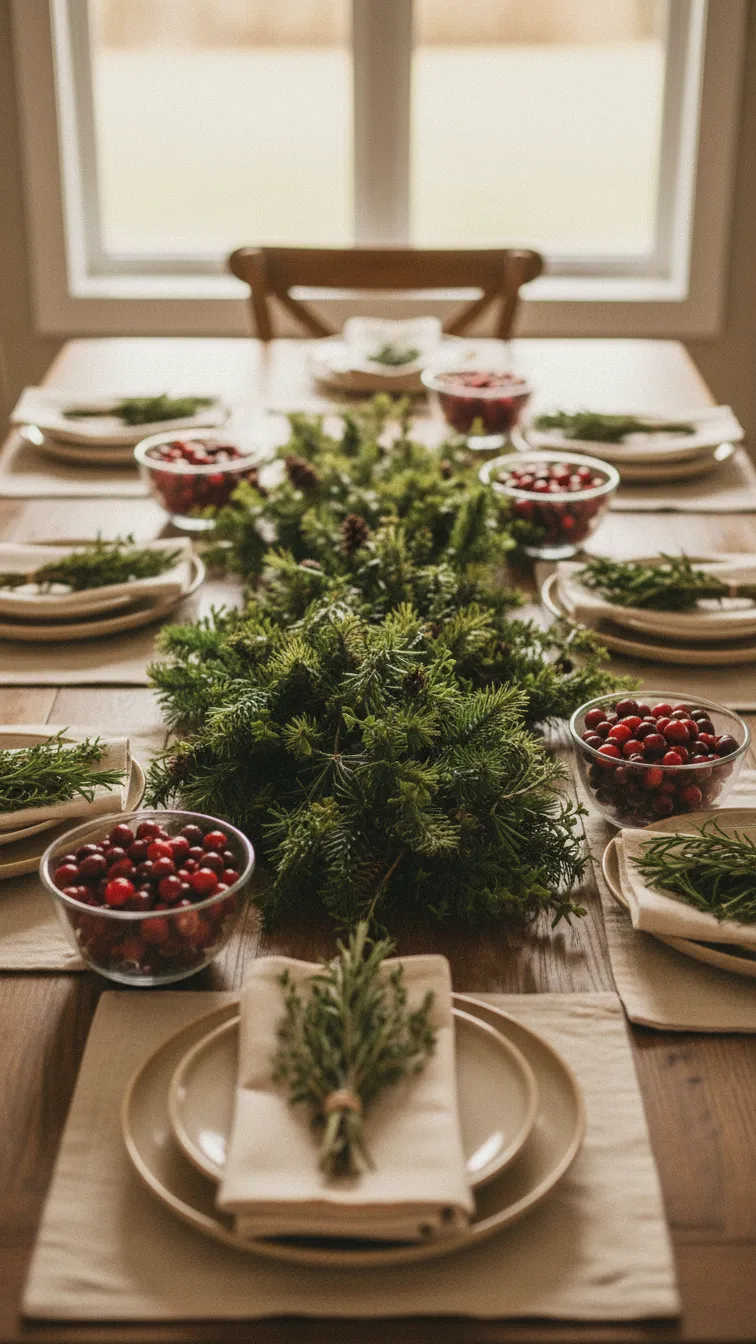
A bundle of rosemary, sage, and thyme tied with twine costs nothing from the garden and makes every place setting smell like the meal. Cut the herbs that morning, tie three to five stems per bundle, and lay one across each napkin. Guests notice the smell before they notice the flowers. Scent is the decoration most hosts forget.

Keep the bundles small enough to move. Each bundle gets lifted when the plate lands, so it must survive being set aside and picked up again. A bundle the size of a thumb works. A bundle the size of a fist becomes an obstacle the guest quietly drops on the floor.
Save the herb bundles for the cook, not the compost. After dinner, untie them and toss the rosemary into the leftover stock pot. Decorations that become ingredients earn their place twice.
7. Fill the Powder Room Because Guests Notice Everything
Every guest visits the bathroom. Every single one. A bare powder room after a decorated house feels like a room you forgot, and guests remember it. The fix takes five minutes: a small jar of boxwood and one holly stem with berries on the back of the toilet or the windowsill. Small room, small arrangement, big impression.
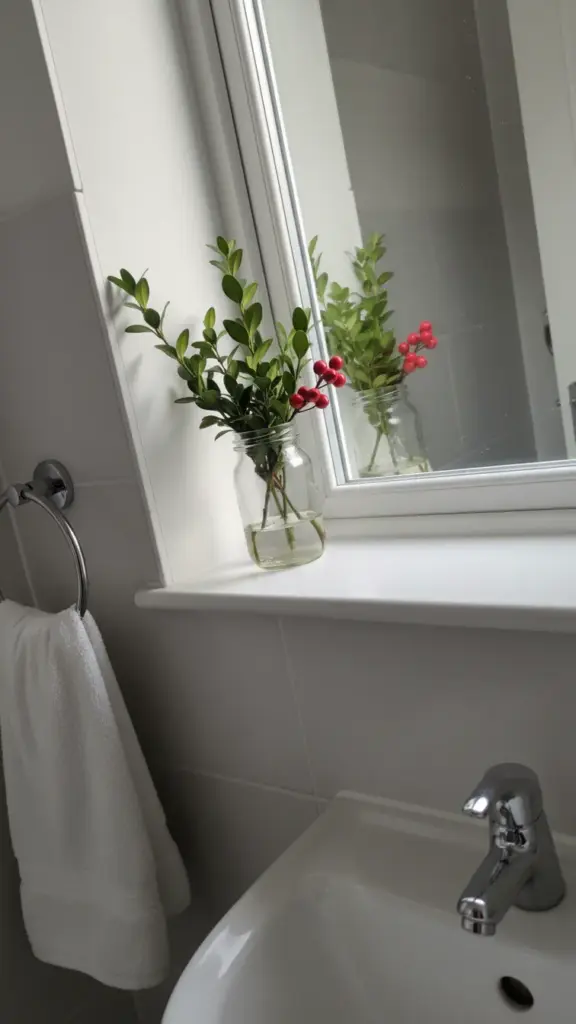
Keep it away from the faucet and the soap. Water splashes and hand soap mist coat the leaves and dull them. Tuck the jar into the corner farthest from the sink. In a room this small, the arrangement is viewed from two feet away, so every brown leaf shows. Use only your freshest cuttings here.
Check the bathroom at noon and again before dessert. It is the one room guests use hard all day. Straighten the hand towel, empty the small trash, and make sure the arrangement still stands. A five-second reset between courses keeps the smallest room looking intentional.
8. Style the Mantel for Afternoon Light
The mantel gets styled for the afternoon, not the morning. By three o’clock the low sun hits the living room and every arrangement there is backlit. Build the mantel garland with that light in mind: darker greens like fir and cedar read as rich silhouettes, and a few light berries or cream candles catch the glow. A mantel designed at 9 AM under flat light can look muddy at 3 PM.
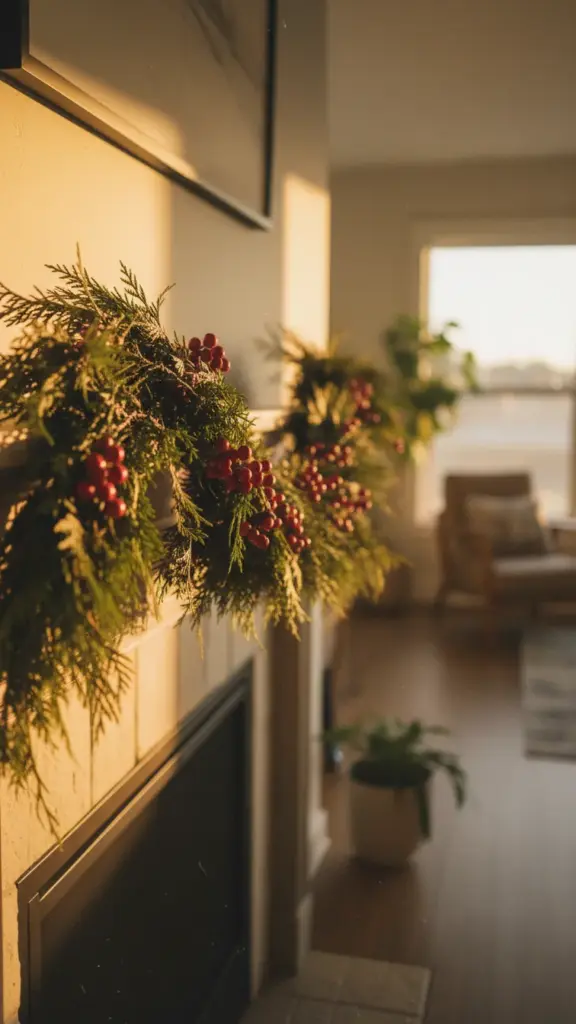
Anchor the garland so it survives the fireplace. If you burn a fire, keep every green at least three feet from the opening and never drape anything across the mantel front where heat rises. Fresh greens near heat dry fast and turn into kindling. No fire today? Then the garland can sprawl, but keep candles in glass hurricanes away from the lowest branches.
Step back to the couch and look. The mantel is viewed from sitting height across the room, not from two feet away. Big shapes read; fussy details vanish. Three clusters of greens with breathing room between them beat one continuous fussy rope.
Add one personal object to the garland. A framed photo, a small heirloom, a child’s handprint turkey from years past. The mantel is the family altar of the living room, and one personal piece turns a pretty garland into your garland. Set it off-center so it looks placed, not parked.
9. Dress the Sideboard for the Buffet Line
The sideboard is a work surface wearing a costume. It holds the ham, the rolls, the extra gravy, and somewhere in the gaps, your decoration. Style it last, after you know where every dish lands. A decoration planned before the food arrives always ends up moved, crushed, or dripping with gravy.
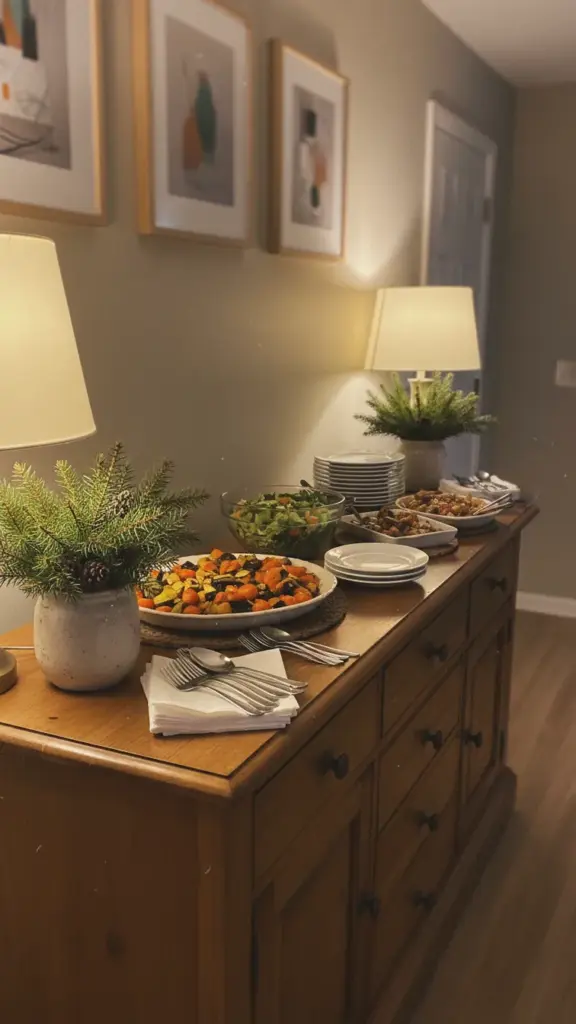
Build in two low clusters at the ends, leaving the middle open for dishes. End clusters frame the food without competing with it. One tall arrangement in the center becomes the thing everyone reaches around. Two low ones get admired and ignored in the right balance.
Put nothing edible-looking in the decoration. Pinecones dusted with cinnamon look like cookies to a hungry kid. Berry sprays read as garnish. Keep the sideboard greens clearly inedible: pine, fir, bare branches. The food is the food. The decor is the decor.
10. Tuck Eucalyptus into the Stair Garland
The staircase is the vertical moment of the house, and a garland wired to the banister draws the eye up the moment guests walk in. Weave eucalyptus through a base of pine along the handrail, wiring it every foot so it cannot slide. Eucalyptus brings the silver-green color and the scent that pine alone cannot give. Guests brush it on the way up and the whole stairwell smells like the arrangement.
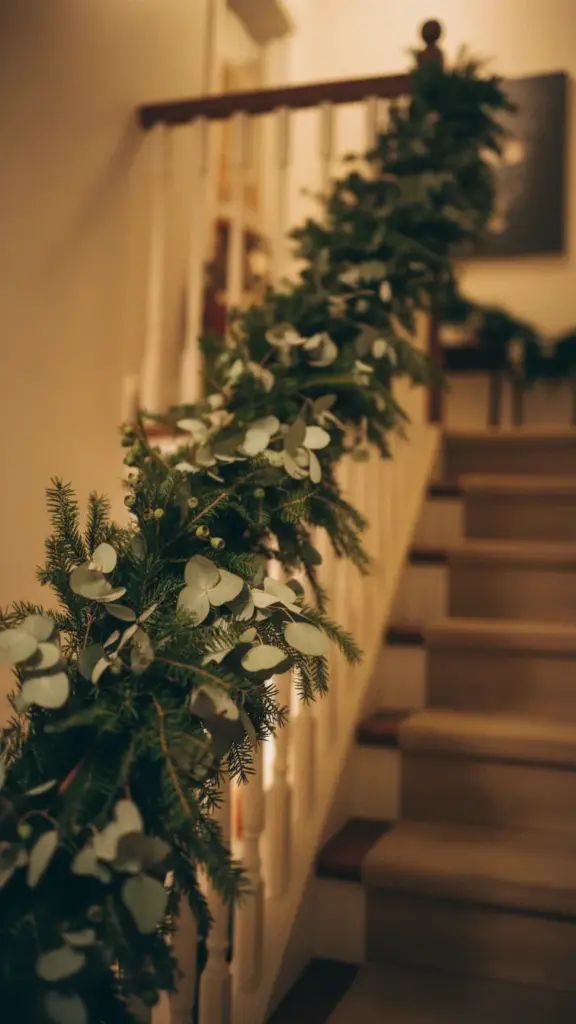
Wire, do not drape. A garland draped over a banister slides the first time someone grabs the rail, and someone always grabs the rail. Floral wire every twelve inches holds it through the whole day. Tuck the wire ends into the greens so no sharp points catch a sleeve.
Keep the stair side clear. The garland belongs on the wall side of the rail, not the open side where hands and hips pass. A garland on the traffic side gets crushed by the third trip upstairs. Decorate the side nobody touches.
11. Float Cranberries and Candles for the Evening Glow
When the sun drops, the decorations change jobs. Daylight arrangements relied on shape and color. Evening relies on light. Fill two or three low glass bowls with water, float a handful of fresh cranberries and one floating candle in each, and set them where the table and sideboard catch the eye. The cranberries glow red through the water and the candle doubles itself in the reflection. Ten minutes of work, and the whole room warms up.
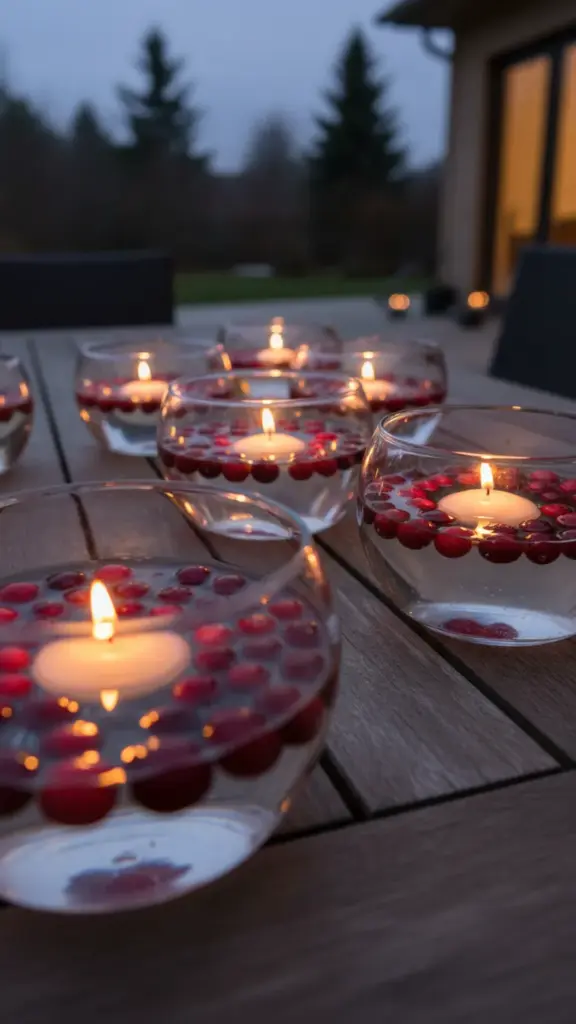
Use floating candles, not tea lights in the bowls. Tea lights sink or tip; floating candles are wide and stable. Trim the wick short before lighting so the flame stays small and clean. A tall flame near cranberries and glass is fine, but a tall flame near greens is not, which is why the floating bowls sit apart from the foliage arrangements.
Never leave the bowls burning unattended. Blow them out when dinner ends and relight for dessert if you want the effect back. Candles are the one decoration that can burn the house down, and no glow is worth that risk.
12. Know Which Greens Last Past Dinner
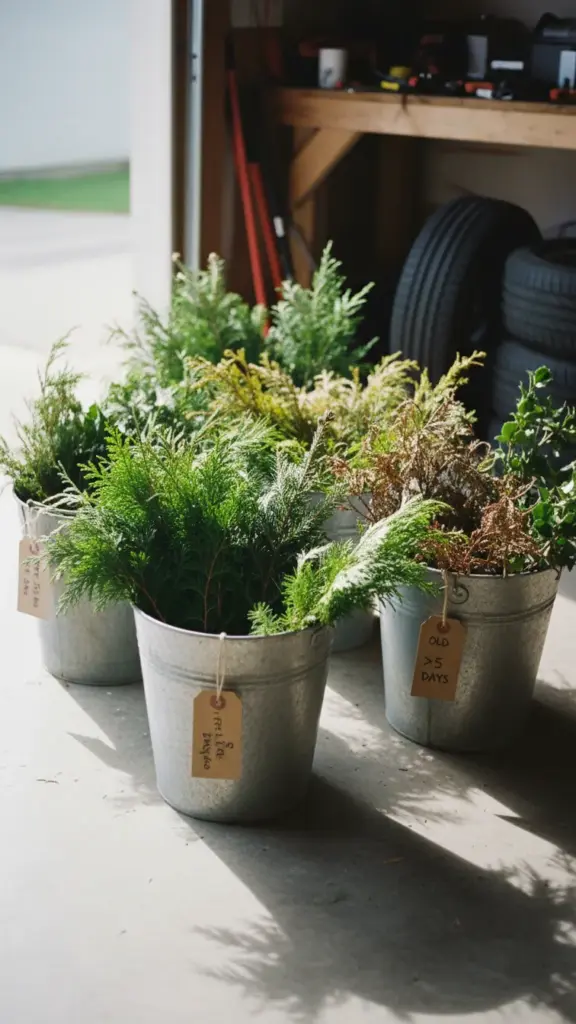
Not all cut greens survive a heated house equally. University of Georgia researchers ranked common holiday greens by how fast they dry out: red cedar dries fastest, followed by spruce, then Leyland cypress, then balsam fir, with Fraser fir holding out longest. Put the fast-drying greens where the day is short and cool, and save the slow ones for the rooms that stay warm all evening. Their full ranking is here: which cut greenery stays fresh longest.
| Green | How Fast It Dries | Best Spot on Thanksgiving Day |
|---|---|---|
| Red cedar | Fastest | Porch and front door, cool air only |
| Spruce | Fast, poor needle retention | Outdoor swags and stair rail ends |
| Leyland cypress | Middle of the pack | Entryway console, away from vents |
| Pine | Slow, excellent needle retention | Table centerpiece and sideboard |
| Balsam fir | Slower | Mantel garland |
| Fraser fir | Slowest | Any warm room, the marathon green |
| Holly | Holds well indoors, never freeze after cutting | Powder room and small vases |
Match the green to the room temperature and nothing wilts before pie. Cedar on the porch looks perfect all day because the air stays cool. Cedar on the dining table curls by the main course. This one decision, made at the bucket at 7 AM, determines which arrangements still look alive at 8 PM.
13. Stage the Coffee and Dessert Station
Dessert has its own geography. By the time pie arrives, the dining table is a wreck of plates and serving dishes, so smart hosts move coffee and dessert to a side table or kitchen island. That station needs its own small decoration, or it reads as an afterthought. A low bowl of pinecones, a few walnuts in the shell, and one candle turn a folding table into a destination.
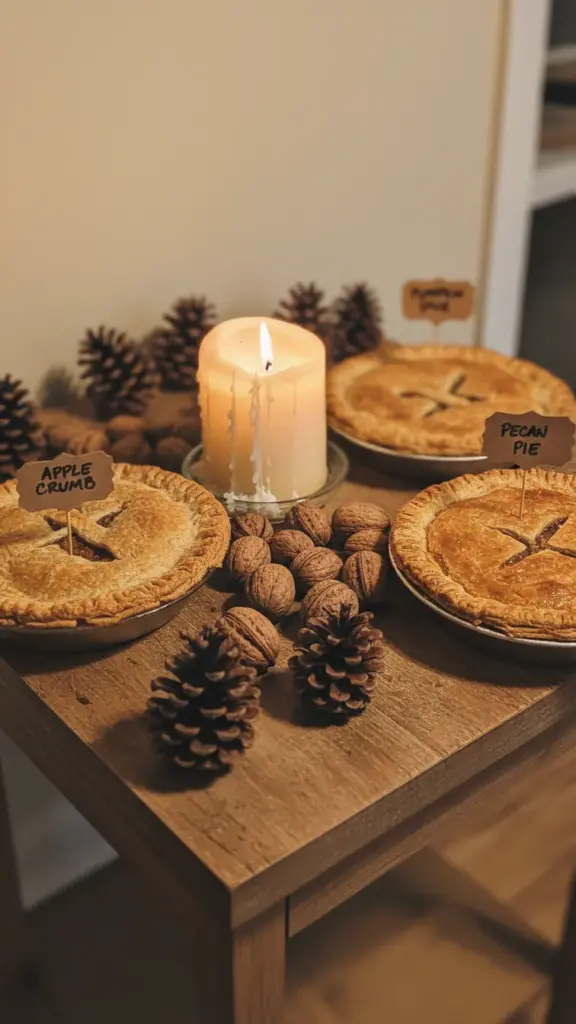
Keep it edible-adjacent but clearly decor. Walnuts in the shell, whole cinnamon sticks, dried orange slices. Guests can touch and even pocket these without ruining anything. Avoid loose glitter, fake snow, or anything that sheds into the pie. The dessert station is the one place where decoration and food share breathing room.
Set out the cups and the decaf before anyone asks. The decoration frames the station, but the station works because it is ready. A beautiful dessert table with no spoons is just a still life.
Label the pies. A folded card tent that says pecan, pumpkin, or apple saves you from answering the same question twenty times. Guests with nut allergies need the answer before they serve themselves. The cards take five minutes and prevent the one mistake that ruins a dessert table.
14. Set Up a Kids’ Table That Decorates Itself
The kids’ table is a decoration project disguised as furniture. Cover it with kraft paper instead of a tablecloth and set out crayons, pinecones, and a bowl of unshelled nuts. By the main course, the table is covered in drawings, and it looks intentional because it is. A kids’ table that stays pristine all day means the kids were bored. Let them wreck it beautifully.
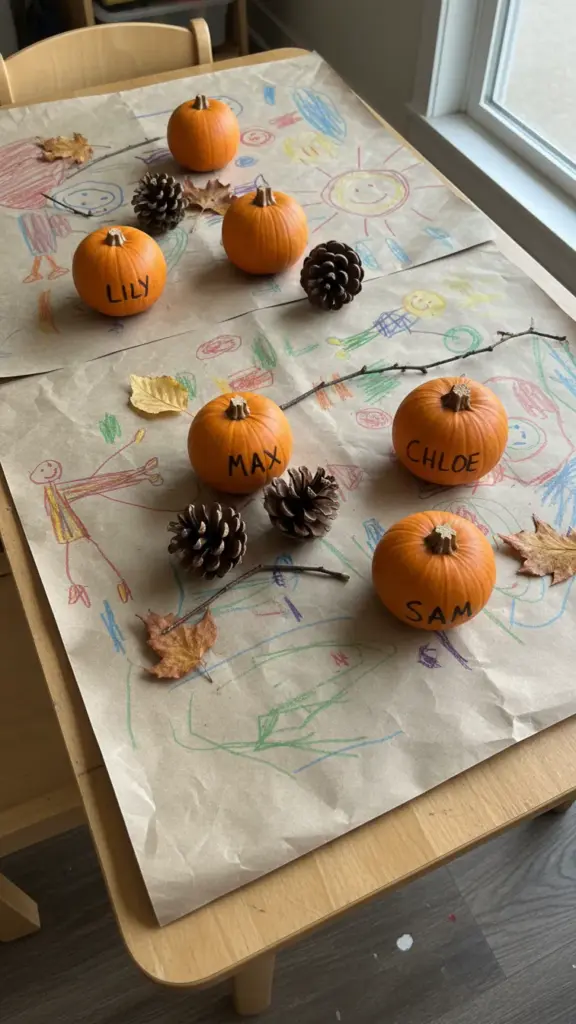
Give each kid a small pumpkin or gourd as a place marker. Write their name on it with a marker. It keeps the seating chart visible, gives small hands something to hold, and goes home as a favor. A pumpkin with a name on it does three jobs for the price of one.
For the grown-ups who want their own hands-on project while dinner cooks, these Thanksgiving crafts for adults run on the same dried materials. Kids draw on the paper. Adults build the real thing.
15. Light the Porch for the Evening Goodbye
The last decoration of the day is for the departure, not the arrival. When guests leave after dark, the porch is what they remember. Line the steps with lanterns or LED candles in glass jars, and make sure the door swag is still straight. The goodbye view should feel as cared for as the hello view. Most hosts nail the arrival and forget the exit.
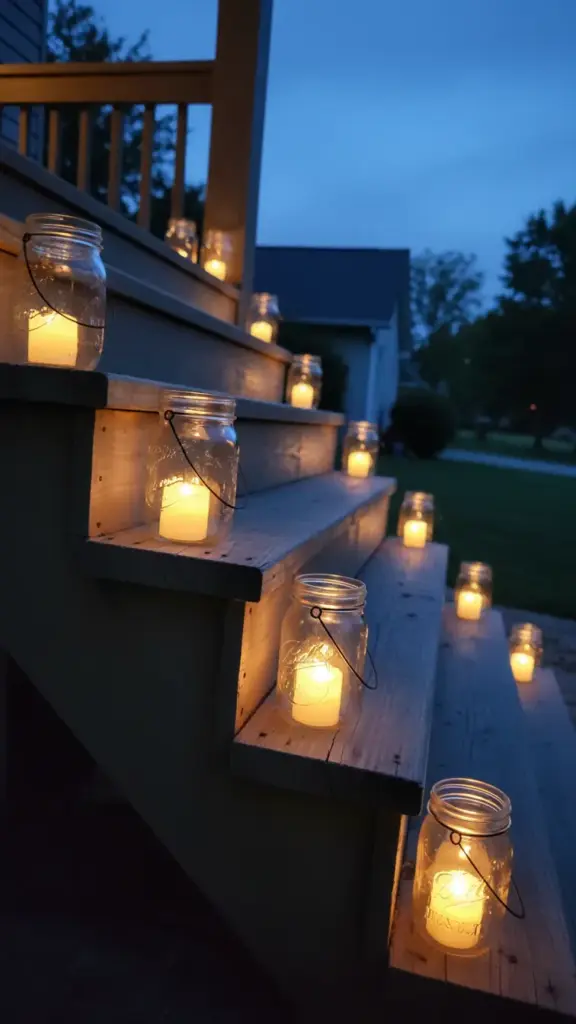
Use LED candles outside, not real flame. Wind gusts on an open porch and real candles blow out or worse. LED pillars in mason jars give the same warm glow through glass and survive every gust. Save the real candles for the indoor bowls where the air is still.
Leave the porch lights on until the last car leaves. Then turn everything off, bring in anything the wind could take, and lock the door on a finished day.
16. Keep Arrangements Fresh Until the Last Guest Leaves
The hardest hours for fresh greens are the last ones. The house has been heated all day, the oven has run for hours, and every arrangement is drying at top speed. Penn State’s cut-tree researchers found that clean water is all cut greenery needs, with no additives, and that displayed greens must stay away from heat sources with water checked daily. Their care sheet is here: caring for cut greenery.
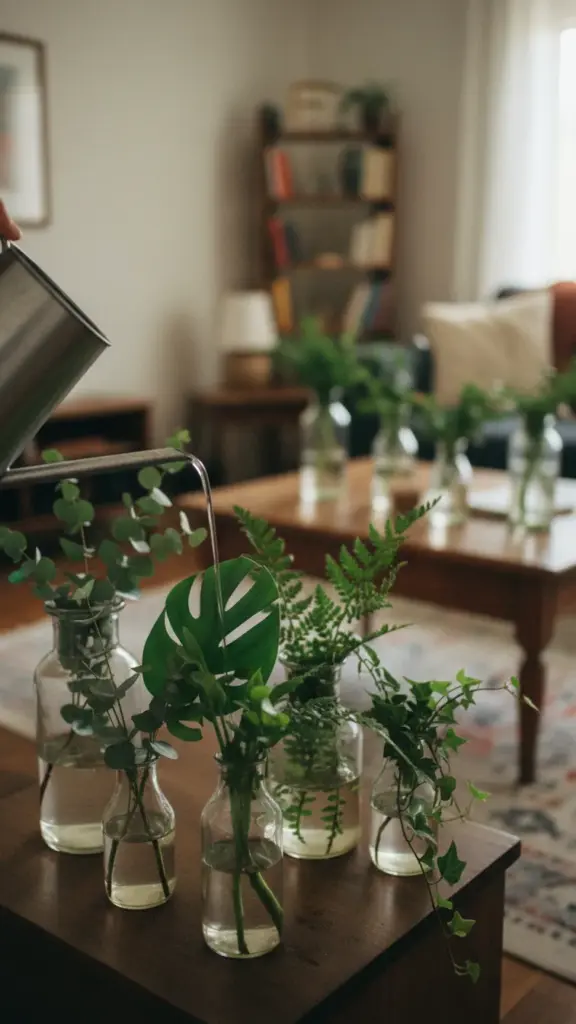
At four o’clock, do a water round. Top up every vase, bowl, and floral tube in the house. It takes ten minutes and buys three more hours of freshness. The arrangements that die before dessert are almost always the ones that ran dry, not the ones that were doomed. Water is the whole game.
Move the thirstiest arrangements away from the heat as the evening goes on. The centerpiece that sat near the kitchen all afternoon can shift to the cool living room for dessert. Small moves, big difference. Fresh greens are resilient when they drink and fragile when they do not.
17. Photograph Every Room Before the First Guest Sits
Take the photos at noon, when every room is finished and nobody has touched anything. Walk the house with your phone and shoot each decorated spot: the door from the street, the entryway, the table, the mantel, the powder room. These photos are next year’s instruction manual. Memory lies about what worked. Photos do not.
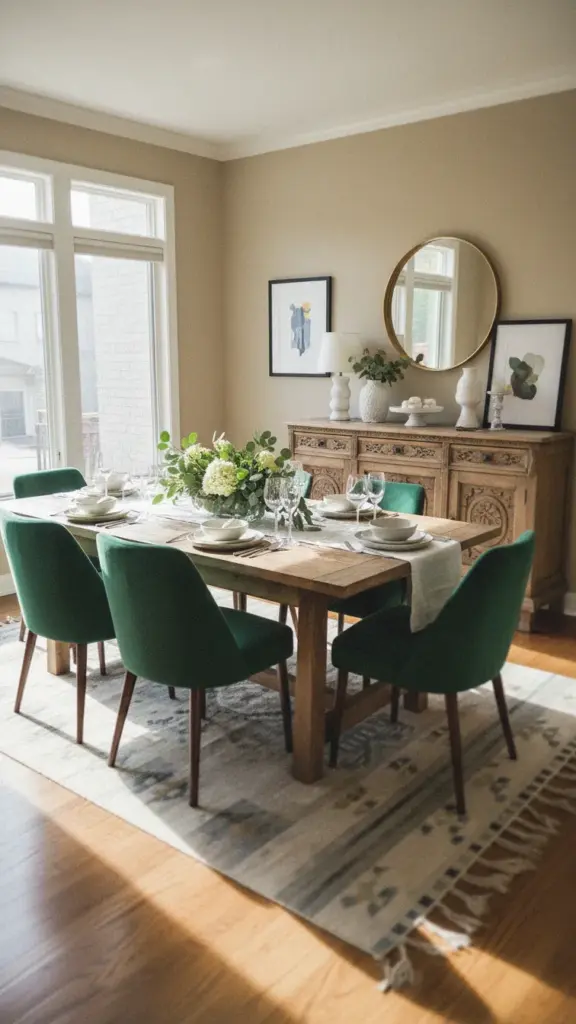
Shoot the details, not just the wide views. Photograph how the herb bundles were tied, how the runner sat on the console, which vase held the powder room jar. Next November you will stare at a wide shot of the table and wonder how you built the centerpiece. The close-up answers it.
Save the photos in one album labeled with the year. When next Thanksgiving approaches, open the album before you cut a single branch. You will rebuild the whole house in half the time, skipping every experiment that failed and repeating every one that worked.
18. Compost the Fresh Cuts the Next Morning
Friday morning is teardown day, and fresh greens make it easy. Strip the arrangements, toss every green into the compost or the yard-waste bin, and wash the vases before the sap hardens. Greens compost fast because they are soft tissue full of nitrogen. A Thanksgiving’s worth of pine and cedar breaks down in weeks, not months.
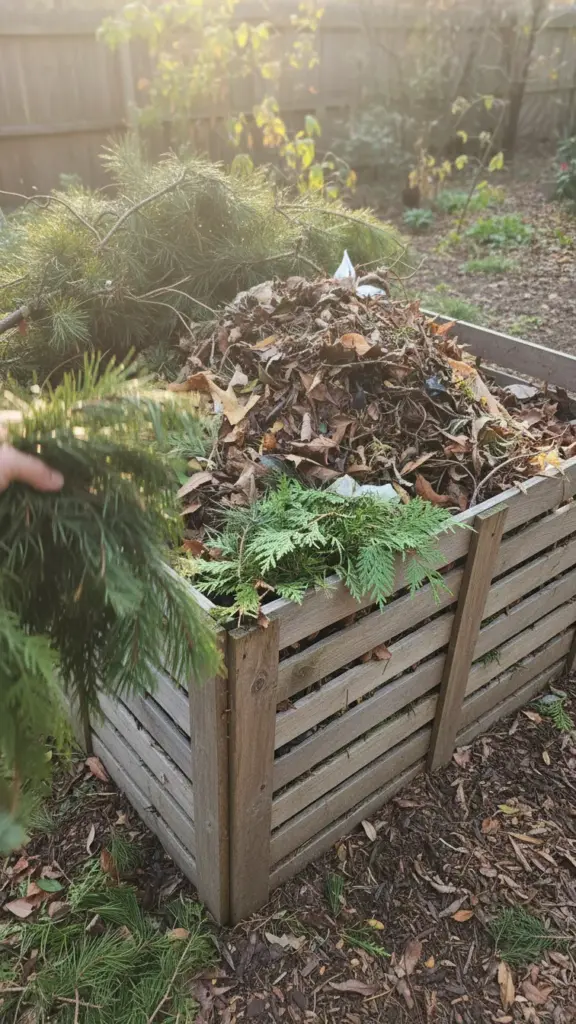
Save the keepers before you compost. Pinecones, the good ribbon, the glass bowls, the LED candles, the kraft-paper drawings worth keeping. Everything reusable goes into one labeled box: Thanksgiving Day. Next year the box opens and half the decorating is already owned.
Write three lines in a notebook before you forget: what wilted, what lasted, what you would skip. Tape it inside the box lid. Next November, that note is worth more than any inspiration board, because it is your house, your greens, your lessons.
Thanksgiving Day Decorations FAQ
How Early Can I Decorate for Thanksgiving Day?
Build nothing with fresh greens before Thanksgiving morning. Cut greens arranged the night before lose their best hours overnight in a warm house. Do the dry work early: set linens, place candles, stage empty vases the night before. Then cut, soak, and arrange on the day. The greens get their twelve best hours exactly when the guests are there. If you must prep greens Wednesday, store them standing in buckets of water in an unheated garage, never in the heated house.
How Do I Keep Fresh Greens from Wilting Before Dinner?
Soak the cuttings for at least an hour before arranging, use water sources in every arrangement, and keep greens away from heat vents and the oven’s warmth. Match the green to the room: fast-drying cedar belongs on the cool porch, slow-drying fir belongs on the warm table. Top up the water at four o’clock. Most mid-day wilting is thirst, not fate.
Are Fresh Cut Greens a Fire Hazard Near Candles?
Dry greens near flame are a real hazard, which is why freshness is a safety issue, not just a looks issue. Keep all fresh greens at least a foot from any open flame, never drape greens above candles where heat rises, and use LED candles anywhere near foliage. Ohio State’s specialists advise checking that needles bend without breaking and keeping greenery away from heat sources. Fresh, watered greens in a cool room are decor. Dry greens near a candle are kindling. When in doubt, choose the LED. Nobody has ever looked at a glowing jar and wished it were real flame.
What Should I Do with the Greens After Thanksgiving?
Compost them. Strip the arrangements Friday morning, toss the greens in the compost or yard-waste bin, and wash the vases before sap hardens. Save the reusables: pinecones, ribbon, glass bowls, LED candles. Never burn fresh greens in the fireplace; they burn fast and hot and throw sparks. The compost pile is the right ending for a day’s worth of cuttings.
Write Down What Worked Before Midnight
The day is over, the dishes are done, and the house still smells like pine and pie. Before midnight, write the three lines: what wilted, what lasted, what to skip. Tape the note inside the decoration box with the ribbon and the pinecones. Next November, you open the box and the note, and the whole day rebuilds itself in half the time. Thanksgiving Day decorations are a one-day art. The notes make it a tradition.