Force 20 Buds on One Thanksgiving Cactus
A Thanksgiving cactus blooms when the nights get long and the air gets cool, not when you fuss over it. Give it 13 hours of darkness and nights near 60 degrees starting in mid-September, and one plant sets dozens of buds by late November. The calendar runs itself after that: guard the buds through October, enjoy the flowers through December, and let the plant rest in January. A thanksgiving cactus is Schlumbergera truncata, a Brazilian rainforest plant that grows on tree branches rather than in desert sand. That origin explains every demand it makes: humidity, indirect light, and soil that drains fast. This page is a care plan for the plant itself. If you want the holiday table dressed, read the Thanksgiving centerpieces guide instead. Everything below keeps one cactus blooming year after year, for decades.
1. Tell a Thanksgiving Cactus from Its Christmas Cousin
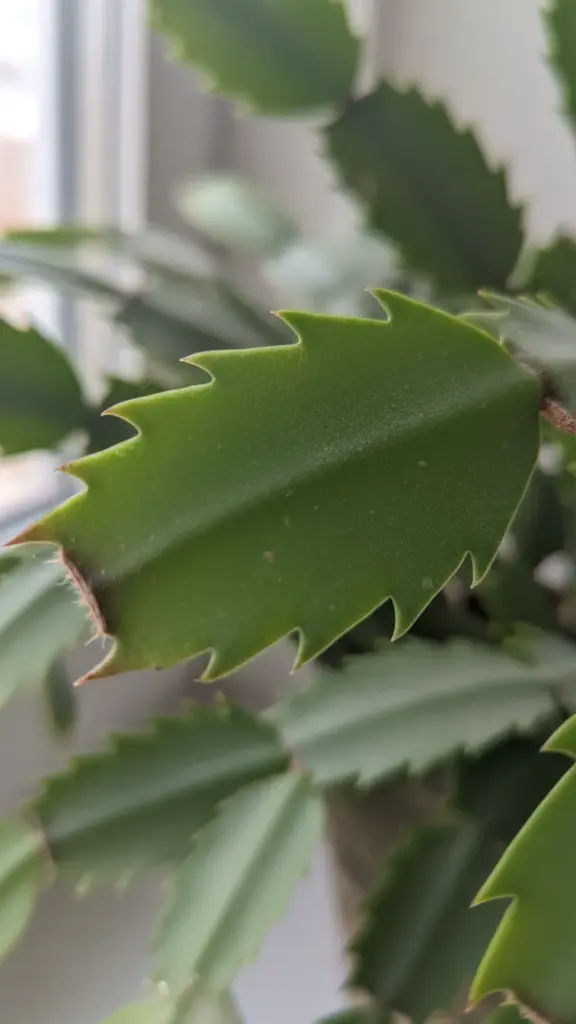
Look at the leaf segments before you do anything else. A Thanksgiving cactus has pointed, sawtooth teeth along each segment edge, two to four claws pointing upward. The true Christmas cactus has smooth, rounded segment margins. Nurseries mislabel them constantly, and the wrong name leads to the wrong bloom expectations. Thanksgiving types flower from late November into December; Christmas types follow weeks later. Check the teeth on your plant tonight. If the edges are spiky, you own a Thanksgiving cactus and the rest of this list applies. If the edges are scalloped and smooth, your bloom calendar shifts later. Knowing which plant sits in your window is the cheapest care decision you will make all year. Every trigger below is timed to the Thanksgiving bloom window.
2. Give It Bright Indirect Light After the Bloom Fades
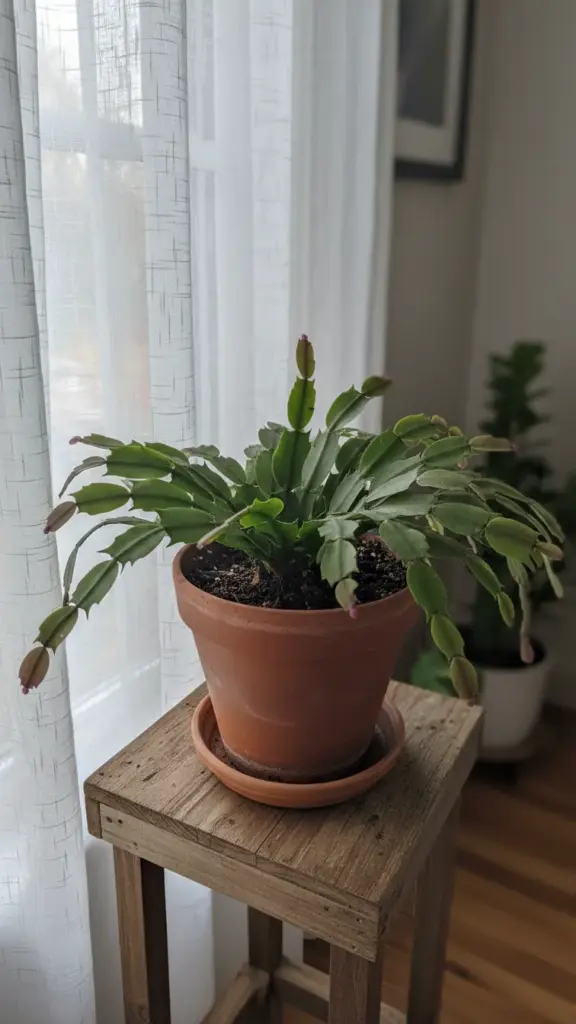
Park the plant near an east or north window once the flowers drop. Bright indirect light grows the new segments that will carry next November’s buds. Direct afternoon sun scorches the segments and turns them yellow-red, a stress color that stalls growth for weeks. A sheer curtain fixes a too-bright south window in one move. In summer the plant tolerates a shaded patio, but keep it out of direct rays. Light matters most in spring and summer because that is when the plant builds its bloom wood. Weak light in May means no buds in November, and no rescue exists in October. Skip the dark closet trick for now. That treatment belongs to September. Grow the plant hard through the bright months, then trigger it in the fall. A full, green plant in August is a promise of flowers in November.
3. Mix a Fast-Draining Epiphytic Potting Blend
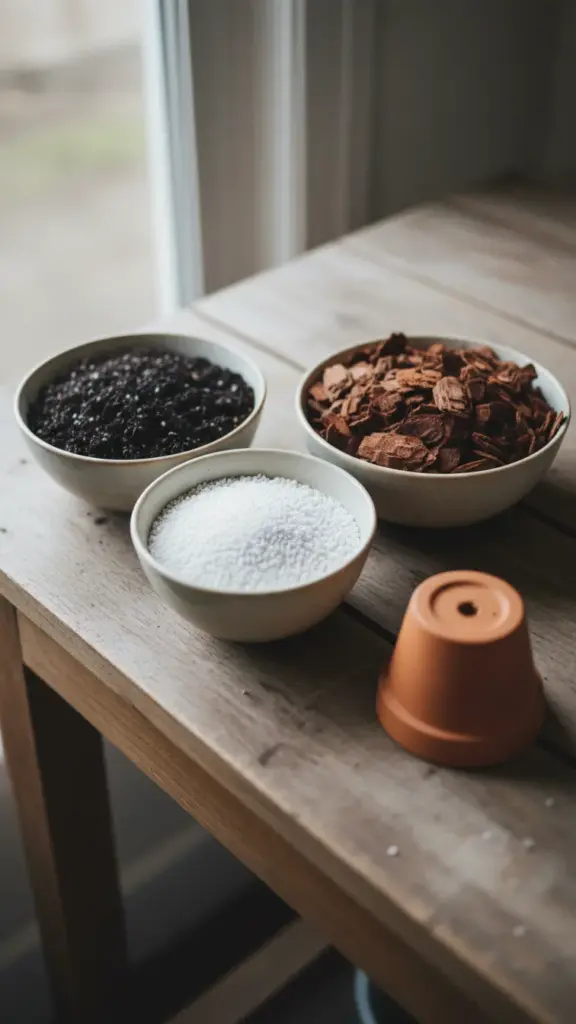
Forget desert cactus soil. A Thanksgiving cactus is an epiphyte, so it wants the airy, humus-rich mix of a tree branch, not sand. Combine two parts standard potting soil with one part perlite and one part orchid bark. The perlite keeps air around the roots. The bark mimics the crevices of a branch. Water should run through the pot within seconds of watering and leave the mix moist but never soggy. A dense peat mix stays wet for a week and rots the fine roots silently. Root rot shows up as limp, wrinkled segments that do not firm up after watering. By then half the root system is gone. Repot store-bought plants out of their nursery peat within the first spring you own them. The right mix is the single best insurance against the most common cause of death.
4. Water When the Top Inch Dries, Then Empty the Saucer
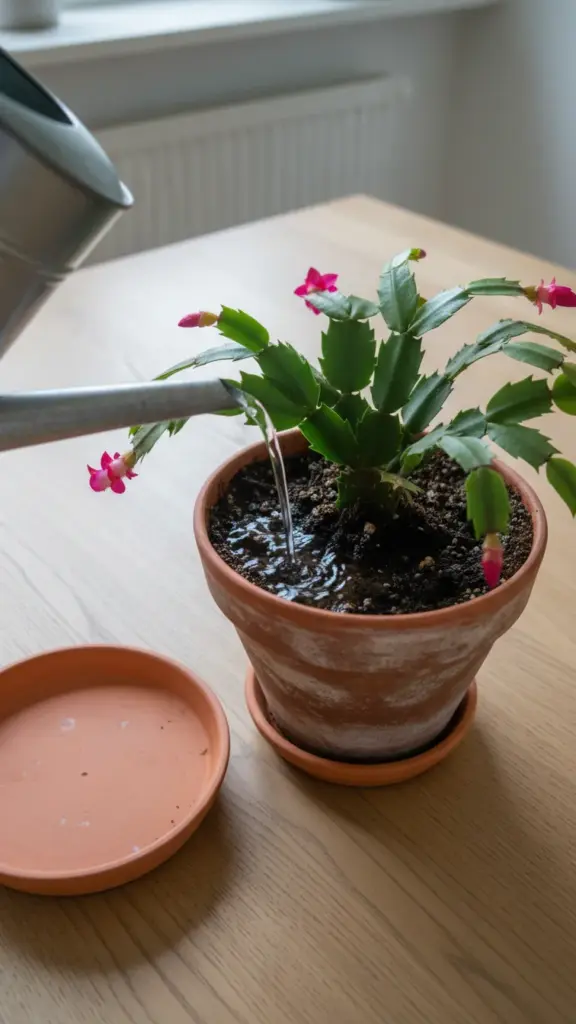
Stick your finger into the mix. Water only when the top inch feels dry. Then water thoroughly until it drains from the bottom, and empty the saucer within 15 minutes. Sitting water suffocates roots in hours. In bud and bloom, from October through December, keep the moisture consistent. A pot that dries out completely in October drops its buds. After flowering, back off and let the mix dry fully between waterings while the plant rests. In a heated winter house, check the pot twice a week. In a cool room, once a week is plenty. Skip the ice cube trick. Lukewarm water poured through the pot beats a melting cube sitting on the surface. Roots drink from the whole pot, not from one cold spot.
5. Feed Monthly in Spring and Summer, Never in Fall
Start feeding when new segments appear in spring. Use a balanced liquid houseplant fertilizer at half strength, once a month, through August. Stop feeding when September arrives. Fall fertilizer pushes soft new growth instead of buds, and soft growth drops at the first cool night. A plant fed in October blooms worse, not better. Mark your last feeding on the calendar for late August and treat it as a hard deadline. If you missed the whole feeding season, do not compensate with a double dose. One light feeding in spring beats a heavy rescue feeding every time. Underfed plants bloom a little less. Overfed plants burn roots and bloom not at all.
6. Start 13-Hour Nights in Mid-September
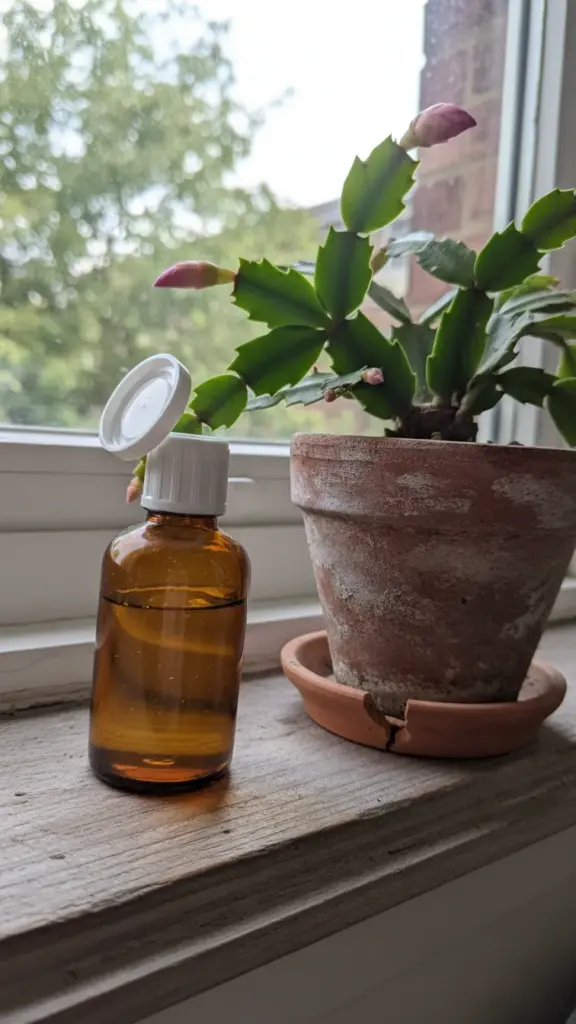
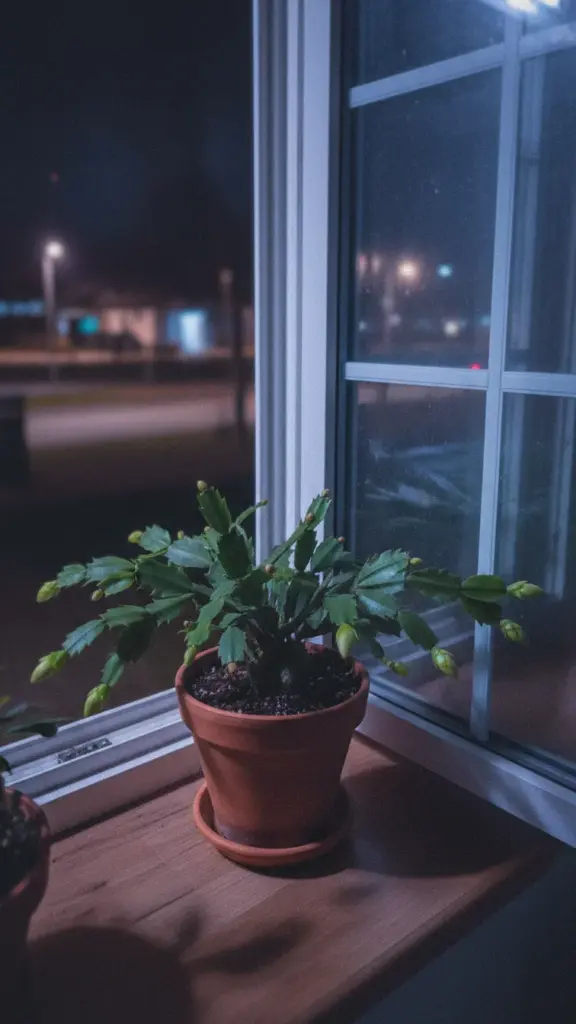
This is the trigger that matters most. Beginning in mid-September, give the plant 13 hours of uninterrupted darkness every night until buds form, usually into mid-November. The North Carolina Extension Plant Toolbox calls this the secret to flower production: bright light by day, night temperatures of 55 to 65 degrees, and 13-hour nights from mid-September until mid-November, with total darkness, no artificial light leaking in (holiday cactus bloom trigger guide). A streetlamp through the window counts as light. A hallway lamp left on counts as light. Move the plant to a spare bedroom or basement that stays dark after sunset. If the room cannot stay dark, drape a breathable cloth over the plant each evening and remove it each morning. Missing one night restarts the clock on that bud cycle. Start on time. Mid-September gives the plant eight full weeks of short days before Thanksgiving. Start in October and you get a sparse, late show.

7. Keep Nights at 55 to 65 Degrees While Buds Set
Cool nights work with the long darkness to set buds. Aim for 55 to 65 degrees at night and 60 to 70 during the day through October. Temperatures above 70 delay flower development, sometimes by weeks. A cool basement windowsill or an unused bedroom is ideal. Keep the plant away from radiators, heating vents, and the warm air above a television. Heat plus dry air is the fastest way to watch buds yellow and fall. If your house runs warm, crack the window near the plant on October nights and let the cool air do the work. A thermometer on the sill ends the guessing. When the first buds swell to pea size, you can relax the temperature a little. The critical window is bud initiation, not the open flower. Cool nights in October buy you a full canopy of blooms in November.
8. Stop Moving the Pot Once the First Buds Show
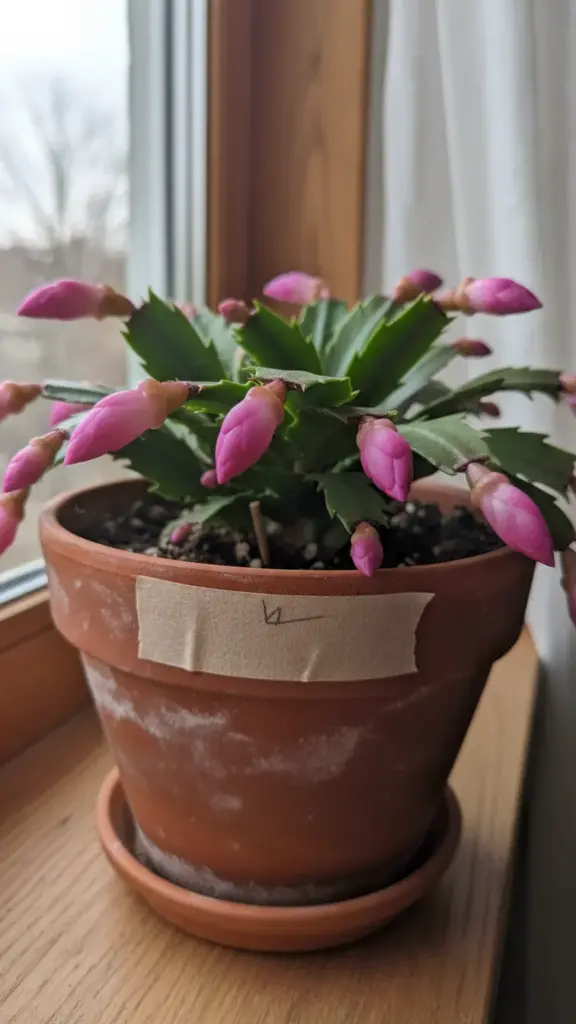
Buds are fragile. Once they appear, leave the plant exactly where it stands. Moving the pot to a “better” display spot, rotating it for even light, or carrying it to show a guest can all trigger bud drop. The plant orients each bud to its light source, and a sudden change reads as damage. Pick the display location in October and commit to it. If you must move the plant, mark the pot’s orientation with tape and keep the same side facing the window. Water in place. Dust in place. Admire in place. One dropped bud is a shrug. Twenty dropped buds is a bare plant at Thanksgiving dinner. The plant forgives almost everything except being relocated mid-bloom. Choose the spot in October, then keep your hands in your pockets until December.
9. Prune Two Segments per Stem After Blooming
After the last flower falls, usually in January, shape the plant. Twist off two or three segments from the tip of each stem at the joint, working around the whole plant. The joints separate cleanly with a gentle twist; no knife needed. Pruning forces branching, and each new branch tip is a future bloom site. A plant pruned every year doubles its flower count within three seasons. Never prune in fall. Removing segments in September removes the buds that were forming on them. Spring is the other safe window, and the same spring pruning techniques that shape outdoor shrubs apply here: cut to a joint, never mid-segment, and step back to check the shape every few cuts. Save the twisted-off segments. They root easily and become next year’s gifts. A neglected plant grows long, floppy chains that bloom only at the tips. A pruned plant grows a dense crown that blooms everywhere.
10. Repot Only When Roots Fill the Pot
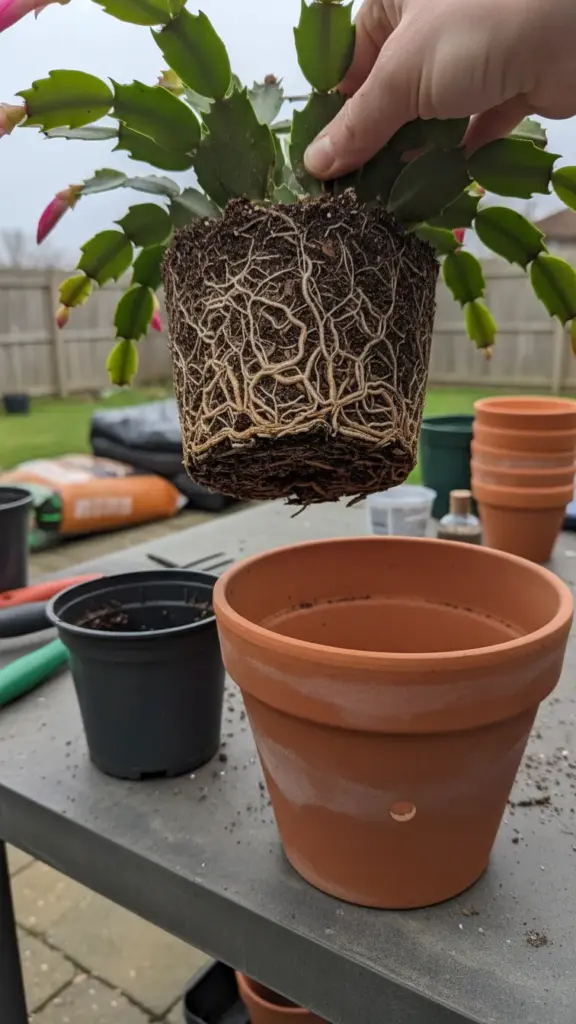
Thanksgiving cacti bloom best when slightly pot-bound, so repot rarely. Wait until roots circle the drainage holes or water runs straight through without wetting the mix, roughly every three years. The North Carolina Extension Plant Toolbox notes the plant does well slightly pot-bound and suggests repotting about every three years (Schlumbergera truncata plant profile). Repot in spring, just as new growth starts, never in fall when buds are forming. Move up only one pot size. A plant drowning in a huge pot grows roots for a year and blooms for none of it. Use the fast-draining blend from item 3 and water lightly for the first week while roots settle. A repotted plant may skip one bloom cycle while it establishes. That is normal. The payoff is a root system that supports a heavier flower load for the next three years. Patience at repotting time buys abundance at bloom time.
11. Root Cuttings in Perlite for Free New Plants
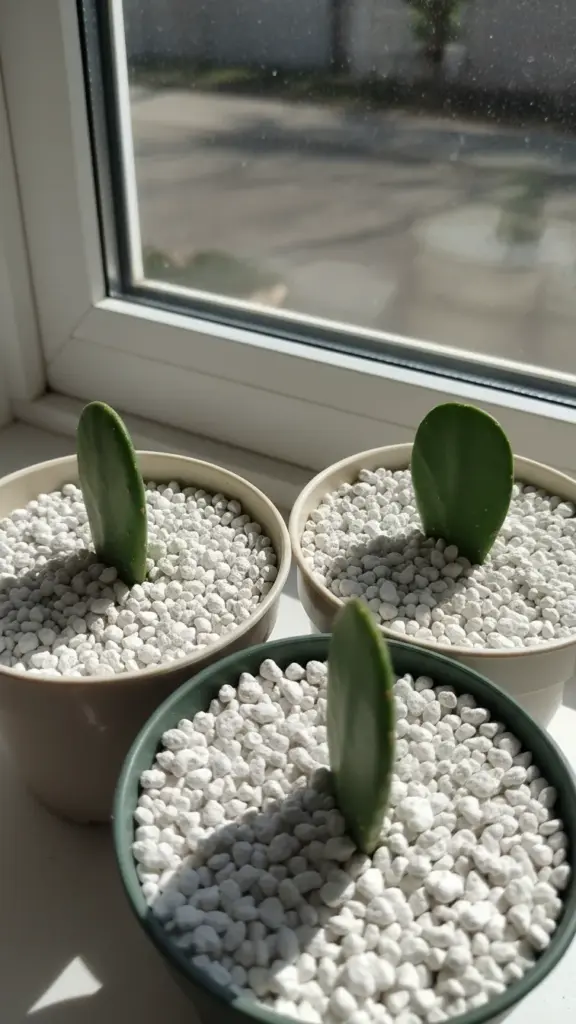
Turn pruned segments into new plants. Take sections of two to five stem segments, twist them off at a joint, and let the cut ends callus overnight on the counter. Iowa State Extension recommends filling a container with perlite or coarse sand, watering it, inserting the cut ends about an inch deep, and keeping the medium lightly moist in a bright spot; roots form in six to eight weeks, and then the cuttings move into potting mix (holiday cactus propagation guide). Skip the water glass method. Segments root faster in barely moist perlite than in a jar of water, and they skip transplant shock entirely. The same patience in the seed starting guide applies: steady warmth, gentle moisture, no fertilizer until roots form. Root cuttings in March and you have gift-sized plants by the holidays. Label each pot with the parent plant’s flower color. Two years later you will not remember which cutting came from the magenta mother and which from the white one.
12. Watch for Mealybugs in the Segment Joints
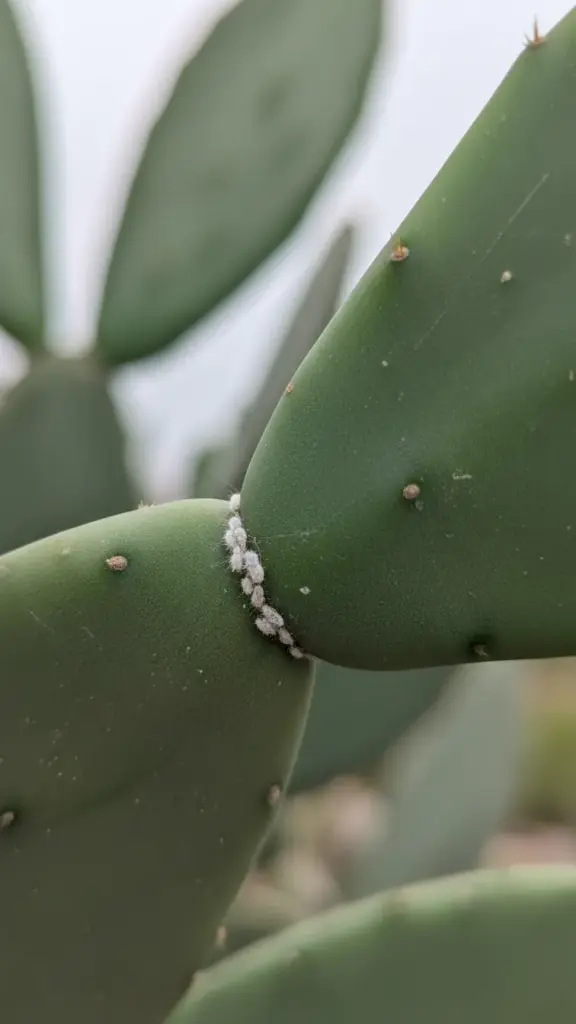
Check the joints where segments meet. Mealybugs hide in those crevices as tiny white cottony clusters. Catch them early and dab each one with a cotton swab dipped in rubbing alcohol. The alcohol dissolves their waxy coating on contact. For a spreading infestation, spray the whole plant with insecticidal soap, reaching into every joint, and repeat in seven days. Quarantine the plant away from your other houseplants until the bugs are gone. Mealybugs spread on touch and on watering cans. Prevention beats treatment: inspect new plants before they join the windowsill, and wipe the segments with a damp cloth every few months. A healthy plant in the right light outgrows minor pest pressure. A stressed plant in a dark corner feeds the whole colony. Check the joints monthly. Thirty seconds of inspection saves a season of treatment.
13. Fix Bud Drop: Drafts, Heat, and Dry Air
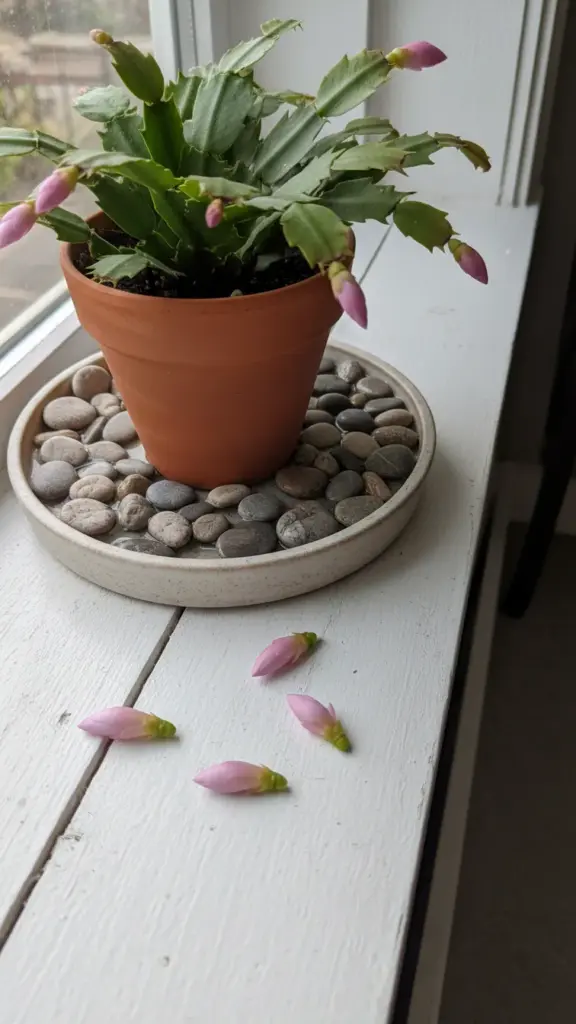
Buds fall for three reasons, and all three are environmental. First, drafts: cold air from a door or window shocks the buds off. Second, heat: temperatures above 70 during bud set stall development. Third, dry air: heated winter rooms pull moisture from buds faster than the plant replaces it. Fix all three at once. Move the plant away from doors, keep the room cool, and set the pot on a tray of pebbles with water just below the pebble tops. The evaporating water raises humidity around the plant without wetting the roots. Do not mist the buds directly. Wet buds in cool air invite gray mold. Also check your watering: a plant that dried out completely in October drops buds even if everything else is perfect. Consistent moisture during bud set is non-negotiable. Diagnose in order: drafts, heat, humidity, water. One of the four is always the culprit.
14. Summer It Outdoors, Bring It In Before First Frost
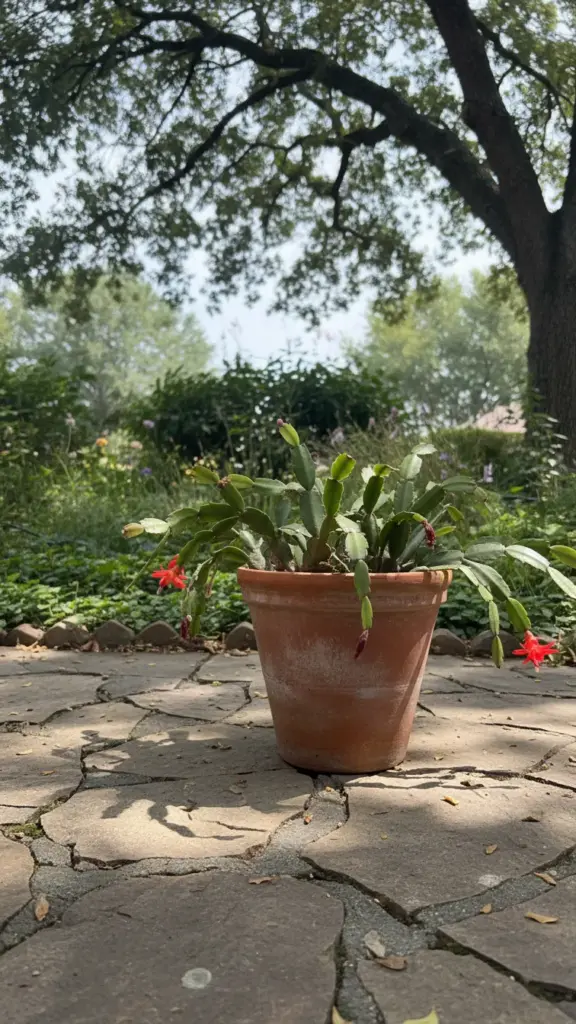
A summer outside builds the plant faster than any windowsill can. After the last frost, move the pot to a shaded patio or under a tree where it gets bright indirect light and rain. The humidity and temperature swings of summer grow thick, dark green segments. Bring it back inside well before the first fall frost, and check it for pests before it crosses the threshold. The move indoors is also the perfect moment to start the 13-hour nights, since the plant is already adjusting. Acclimate it over a week: a few hours of outdoor shade first, then full days. A plant yanked from deep shade to full sun burns in an afternoon. A plant eased outside for the summer returns inside twice the size. The outdoor summer is the closest you can give a rainforest epiphyte to home. It shows in the November bloom count.
15. Rest It Cool and Dim for Six Weeks After Blooming
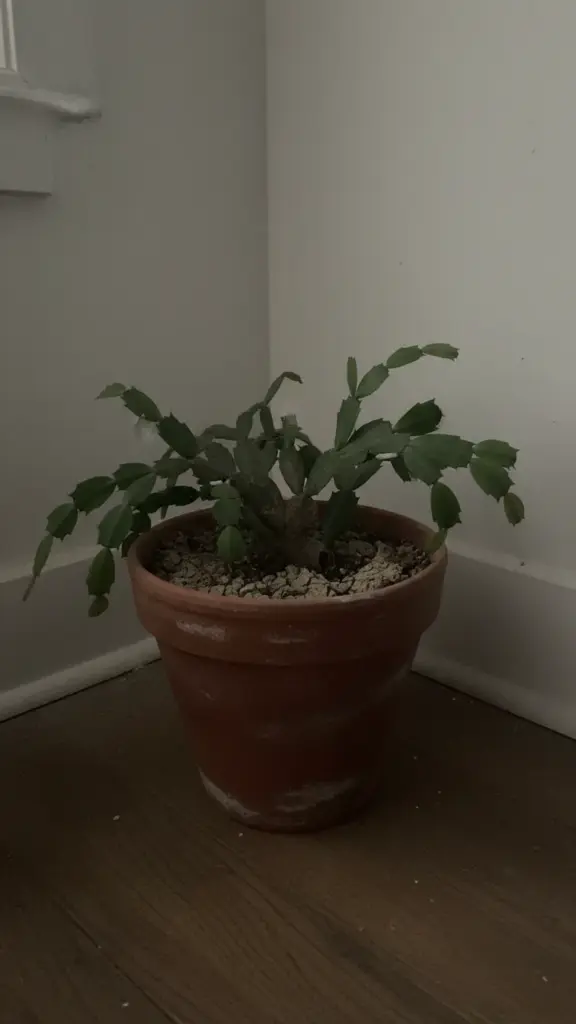
After the last flower drops, the plant needs a rest. Move it to a cool room, 55 to 60 degrees, with lower light, and cut watering back sharply. Let the mix dry completely between waterings for about six weeks. This rest resets the bloom cycle. Plants kept warm, bright, and wet all winter grow leggy segments and bloom poorly the next year. Do not fertilize during the rest. Do not repot during the rest. Do almost nothing. In late winter, when new segment tips appear, move the plant back to bright indirect light and resume normal watering. The rest period is the step most growers skip, and it is the reason their plant blooms heavily one year and barely the next. A rested cactus is a reliable cactus. Six quiet weeks in January buy you a loud November.
16. Pot It Shallow and Heavy, Not Deep and Tippy
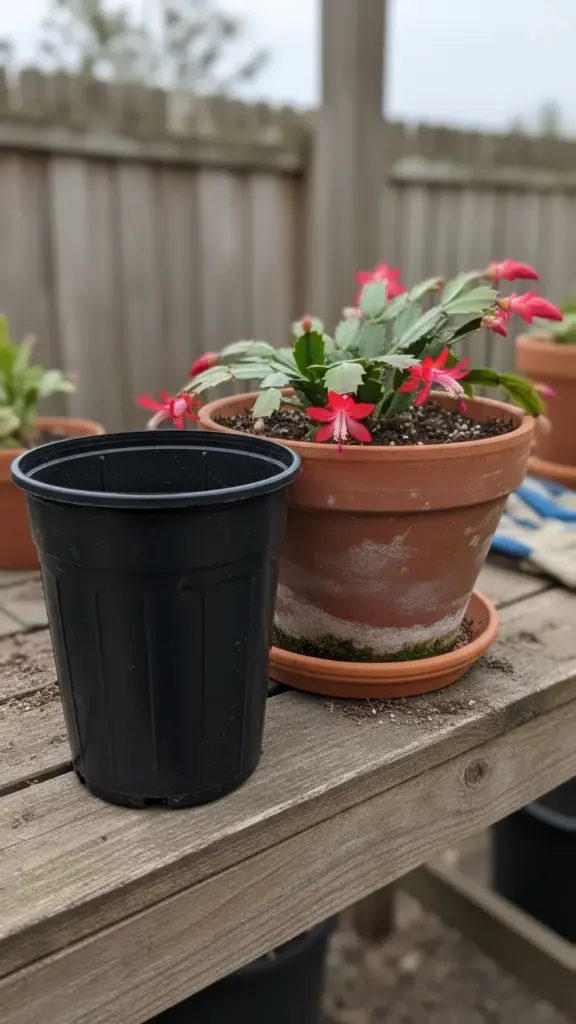
Thanksgiving cacti grow shallow roots, so a deep pot is a swamp with a plant on top. Choose a container only slightly wider than the root ball, with real drainage holes. The bottom third of a deep pot never dries. Rot starts in that permanent wet zone. A shallow azalea pot suits the root system perfectly. Weight matters too. A mature plant in full bloom is top-heavy, and a light plastic pot tips over in a draft or when a cat brushes past. Heavy clay or ceramic keeps it upright. Clay also breathes, wicking excess moisture away from the roots between waterings. If you love a decorative cachepot with no holes, use it as a sleeve: keep the plant in a plastic nursery pot, lift it out to water, let it drain, then set it back. Never water inside the sealed cachepot. A puddle hiding at the bottom rots roots invisibly while you admire the flowers up top. The right pot is boring and heavy, and that is exactly the point.
Thanksgiving Cactus FAQ
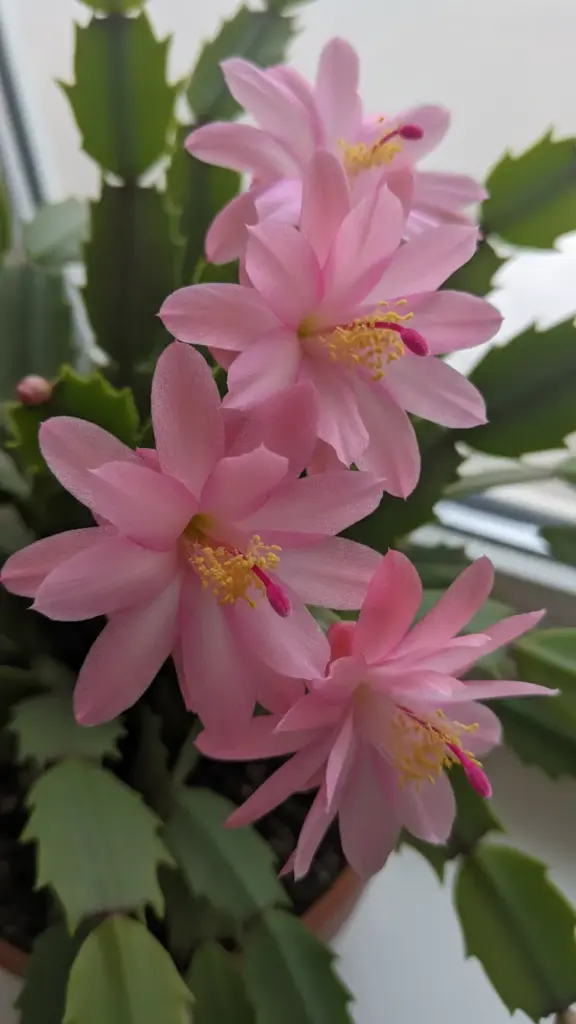
Why Is My Thanksgiving Cactus Dropping Buds?
Bud drop almost always means the environment changed. Four culprits cover nearly every case: a cold draft from a door, temperatures above 70 degrees, dry heated air, or a pot that dried out completely; moving the plant after buds form can empty a whole branch overnight. Fix the draft, cool the room, set the pot on a pebble tray, and water on a steady schedule. Dropped buds never recover, so protect the ones still on the plant.
How Often Should I Water a Thanksgiving Cactus in Winter?
Water when the top inch of mix feels dry, usually every one to two weeks in a heated house. During bud and bloom, keep moisture steady and never let the pot sit dry for days. After flowering, let the mix dry fully between waterings while the plant rests. Always empty the saucer. A moisture meter removes the guesswork if your finger test is unreliable.
Can a Thanksgiving Cactus Bloom Twice in One Year?
Yes. As days lengthen in February, a healthy plant sometimes sets a second, lighter flush of flowers without any special treatment. You can also force a second bloom by repeating the 13-hour nights and cool temperatures for a few weeks. The second show is rarely as full as the November one. Let the plant rest afterward so it has energy for the main event.
Is a Thanksgiving Cactus Toxic to Cats and Dogs?
No. Holiday cacti are widely listed as non-toxic to cats and dogs, so a curious pet that nibbles a segment is not a poisoning emergency. The plant can still cause mild stomach upset if eaten in quantity, and the fibrous segments are a choking consideration for small pets. Keep the plant out of reach anyway. Non-toxic does not mean good for them.
Keep the Same Plant Blooming for Decades
A Thanksgiving cactus is not a disposable holiday decoration. The North Carolina Extension Plant Toolbox notes that one plant can live for over a hundred years, brightening a home for decades. Think of it as a long-term resident with an annual calendar: grow it hard in summer, darken it in September, cool it in October, display it in November, rest it in January. Each year the plant gets bigger, the bloom count climbs, and the care gets easier because you know its rhythm. Start this September. By next Thanksgiving you will own the plant everyone asks about. By the fifth Thanksgiving, you will be giving away cuttings of it.