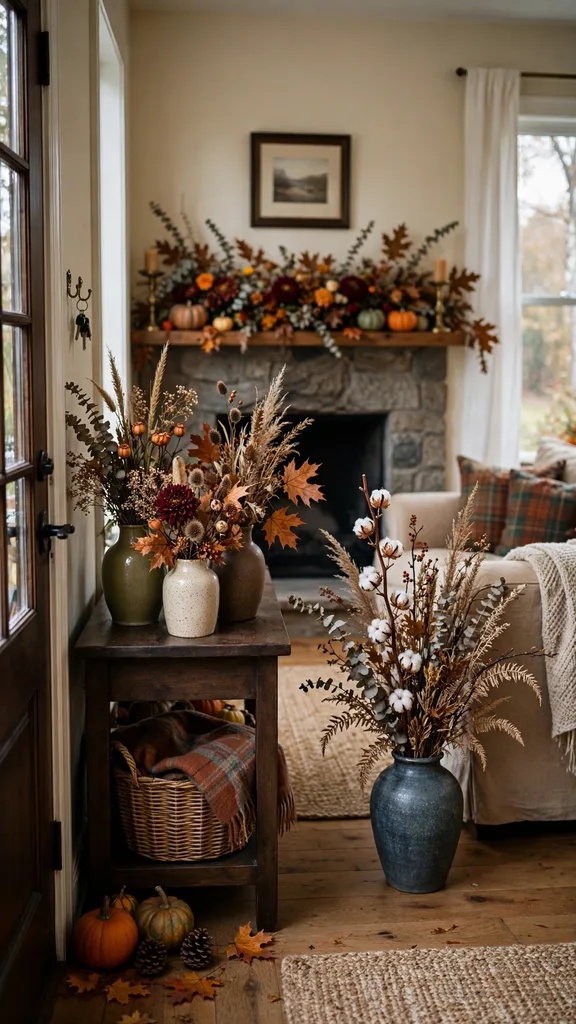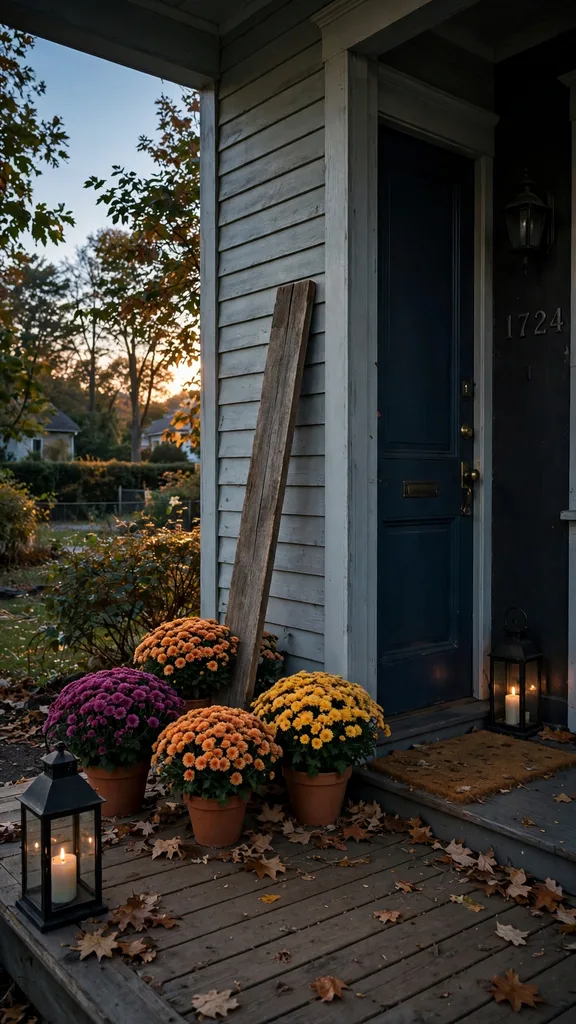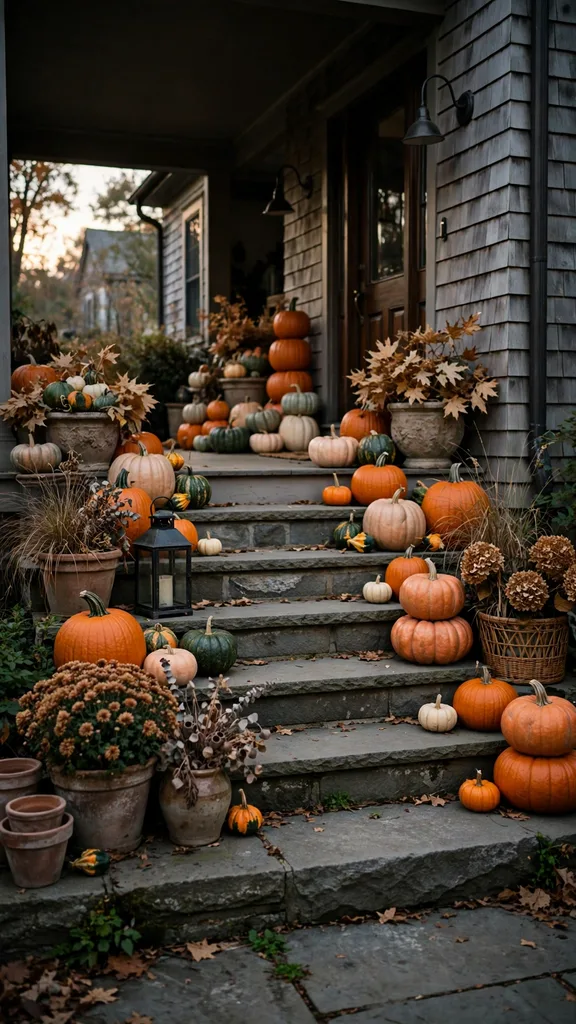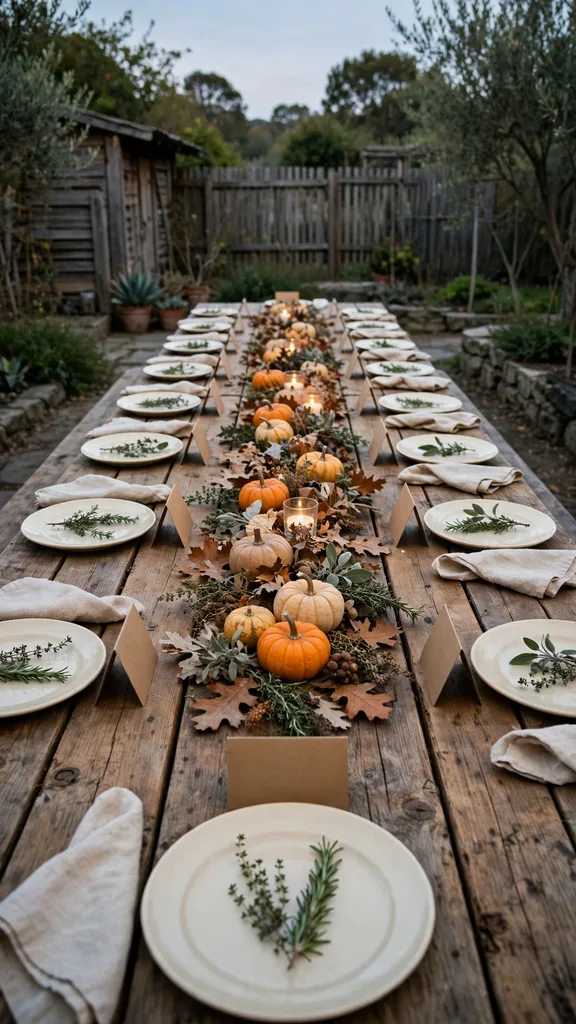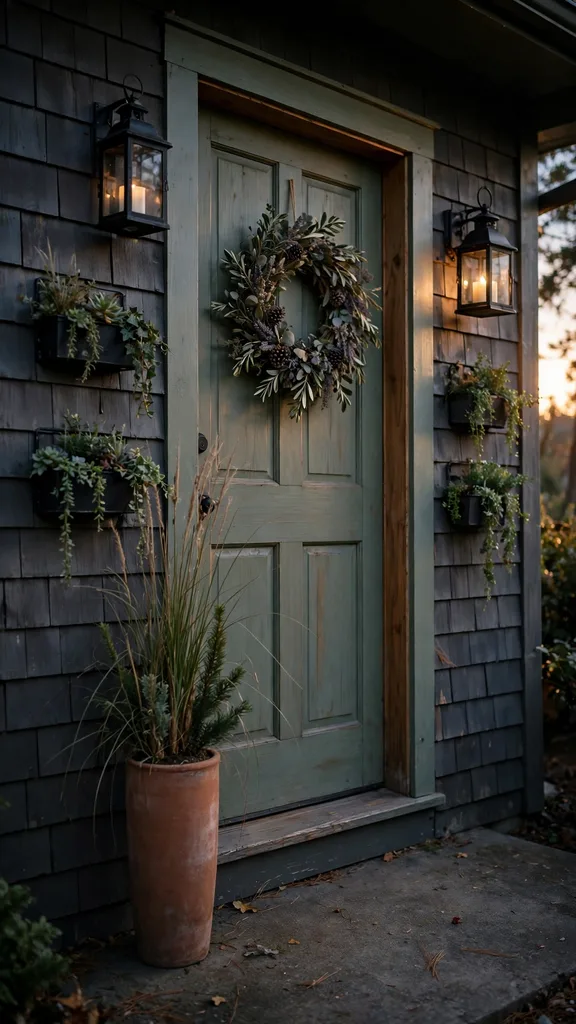

A tiny porch rewards a plan, because every centimetre of floor must earn its place and a single oversized pot can close the whole entry. This collection gathers 45 small front porch decorating ideas for Thanksgiving, grouped by measuring and planning, vertical surfaces, one-pot floor systems, compact plants, evening light, Thanksgiving touches, and weather durability, so a reader with a landing, a narrow flight of steps, or a one-step entry can build a complete display from a small set of pieces.
The system rests on three rules that repeat in every group. Choose one focal point and let the rest support it, decorate walls, rails, and the door before adding anything to the floor, and keep the walking path clear in daylight and in lantern light. A tiny porch decorated by that system looks finished from the walkway, while a tiny porch decorated by adding one more pot at a time looks crowded from the same spot.
I learned this on a landing barely wider than the door, where a second pot meant stepping sideways to reach the lock.
1. Measure the Porch Before Buying Anything
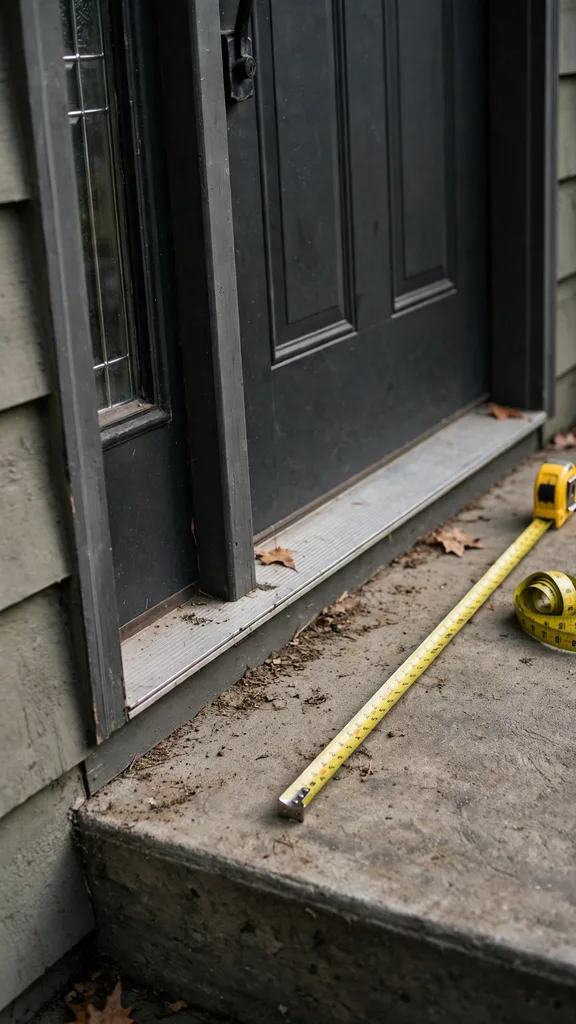
A tape measure prevents the most common tiny-porch mistake, which is buying a display sized for a wide farmhouse porch and then forcing it onto a landing. Measure the landing width, the landing depth, the tread depth, and the door width, and write each number down before shopping, because a display planned from numbers fits on the first try.
Measure the door swing arc as well, and mark it on the landing with tape for one day, since the arc claims floor space that looks empty when the door stands closed. A porch that measures 120 centimetres (47 inches) wide and 90 centimetres (35 inches) deep holds one focal pot and one small accent, and no second large pot.
2. One Focal Point for a Tiny Porch
One focal point gives a tiny porch a clear subject, because the eye lands on one object and then notices the supporting pieces in order. Choose the focal point first, whether it is a tall narrow pot, a large wreath, or a single lantern cluster, and let every other piece sit lower, smaller, or quieter than that one object.
Test the focal point from the walkway, since a display that reads well from the door often reads as clutter from the street. If two objects compete for attention from the walkway, remove the weaker one and store it for a wider porch, because a tiny porch has no room for a tie.
3. Keep a Clear Walking Path Every Day
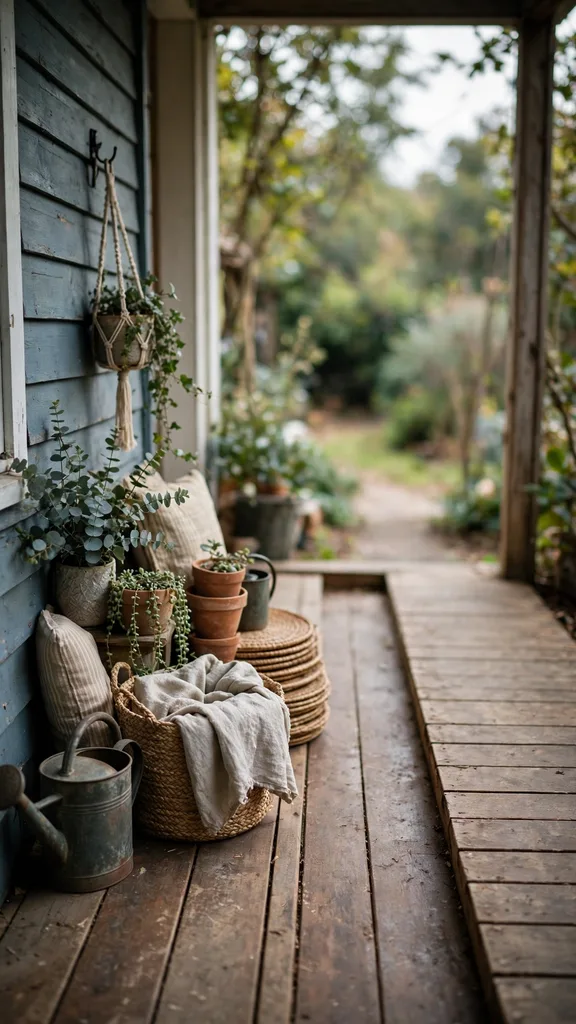
A clear walking path is a safety rule before it is a style rule, because guests arrive carrying dishes, children run ahead, and parcels sit on the landing. Keep a channel 60 centimetres (24 inches) wide from the lowest step to the door, and keep that channel free of pots, pumpkins, baskets, and trailing stems at all times.
Walk the channel with a tray in both hands before Thanksgiving, and move any piece that forces a sidestep, since a sidestep in daylight becomes a stumble after dark. A tiny porch with a clear channel feels larger than a tiny porch with a blocked channel, even when the blocked porch carries fewer pieces.
4. Door Swing Rules for Small Entries
A door swing claims a quarter circle of floor that many displays ignore, because the swing looks empty while the door stands shut. Keep all floor pieces outside the swing arc, and measure the arc from the hinge side to the handle side at full open, since a pot inside the arc gets knocked on every entry.
Wall and door pieces suit the swing zone best, because a wreath and a slim garland live above the floor and never meet the moving door edge. Check the arc again after adding a thick doormat, since a raised mat can shorten the clearance under the door and change where the door stops.
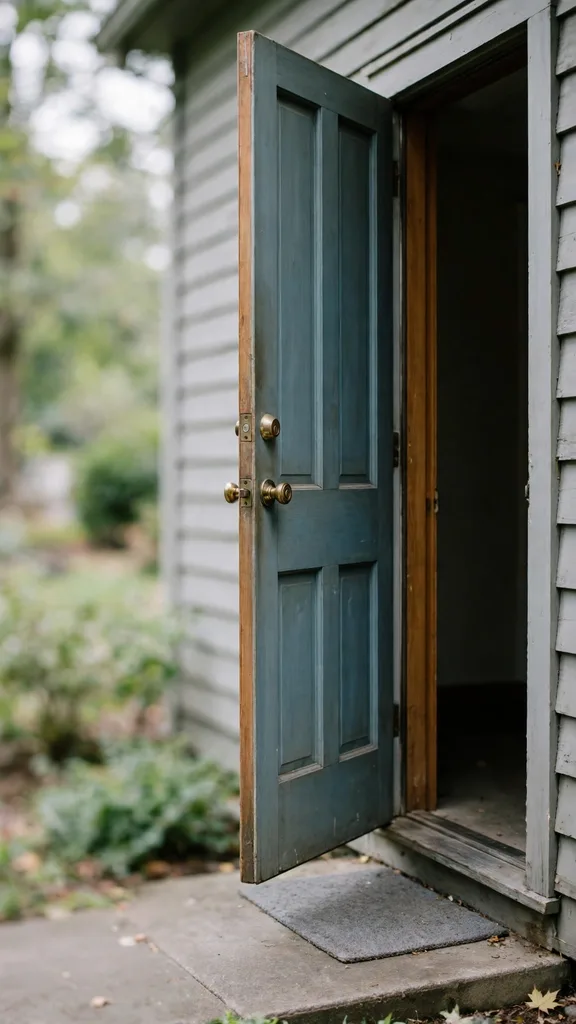
5. Landing Only Layout for a One Step Entry
A one-step entry has a landing and little else, so the layout must work on one flat rectangle without steps to borrow. Place the focal pot on the wall side of the landing, keep the handle side open for parcels and keys, and let the door carry the second display layer with a wreath.
A landing of 90 centimetres (35 inches) square holds one pot, one doormat, and one wall piece, and adding a second pot forces the walking channel below a safe width. When the landing cannot hold a pot at all, the wall and the door carry the whole display, and the floor stays empty by design.
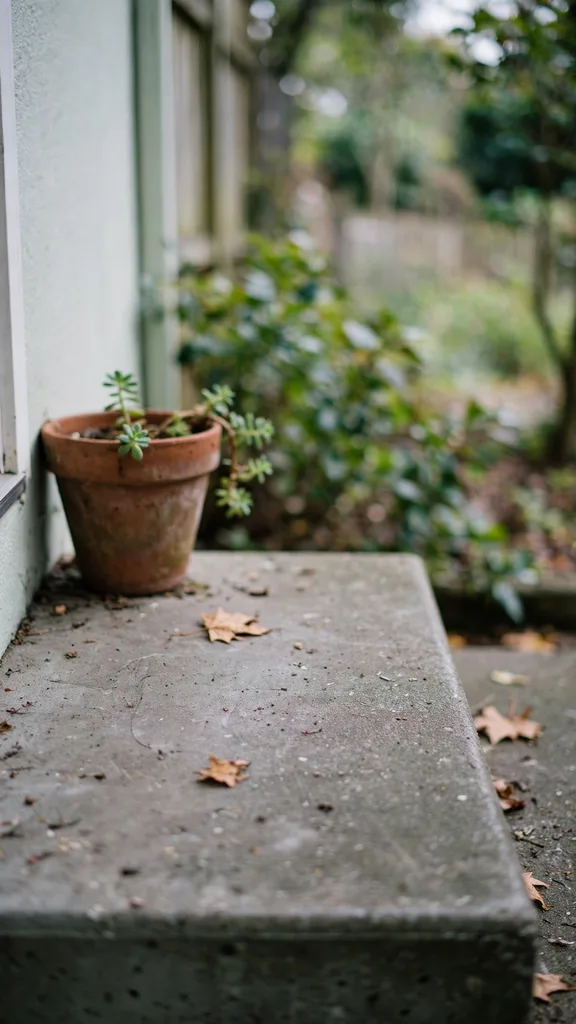
6. Narrow Step Layout for Steep Entries
A narrow flight of steps needs a one-sided layout, because spreading pieces across both edges leaves no safe tread for feet. Decorate the wall side of the flight only, keep the open side and the handrail side fully clear, and place at most one small piece per tread on that single side.
Keep every piece flush with the riser or against the wall, and never let a pot lip overhang the tread edge, since an overhang catches toes in low light. A narrow flight decorated on one side reads as a deliberate line from the walkway, while the same pieces spread across both sides read as obstacles.
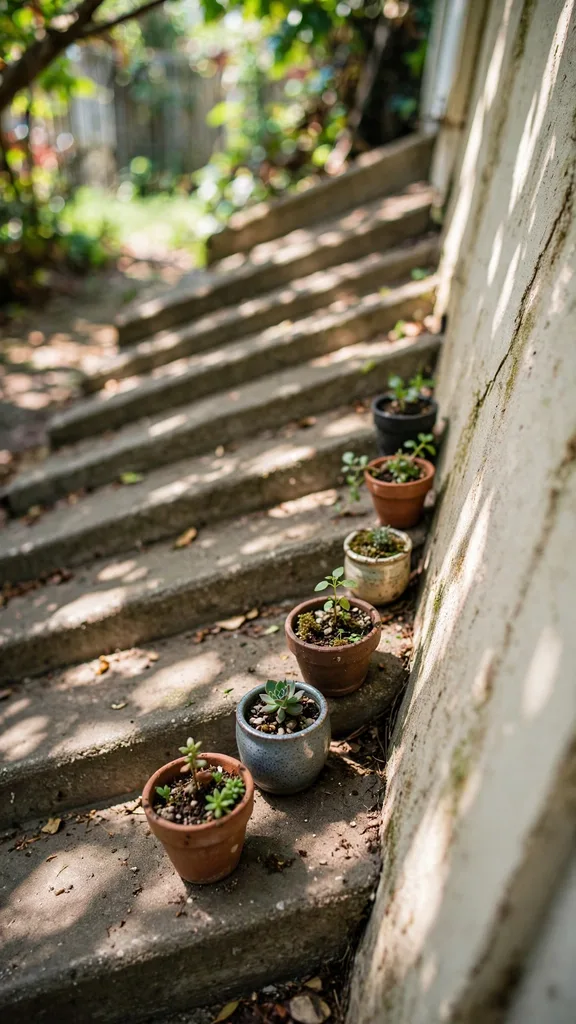
7. Landing to Walkway Handoff
A tiny porch ends at the walkway, and the handoff between the two decides whether guests feel guided or crowded. Place one low pot or one small plant group at the walkway edge where the porch meets the path, and keep the porch itself to its one focal point, so the walkway piece acts as a greeting rather than a second display.
For the wider yard context that sits beyond the walkway, see [Thanksgiving Yard Decorations: 21 Outdoor Ideas](https://growit.wiki/thanksgiving-yard-decorations/. Keep the handoff piece low, at most 30 centimetres (12 inches) tall, so it never blocks the view of the porch from the street.
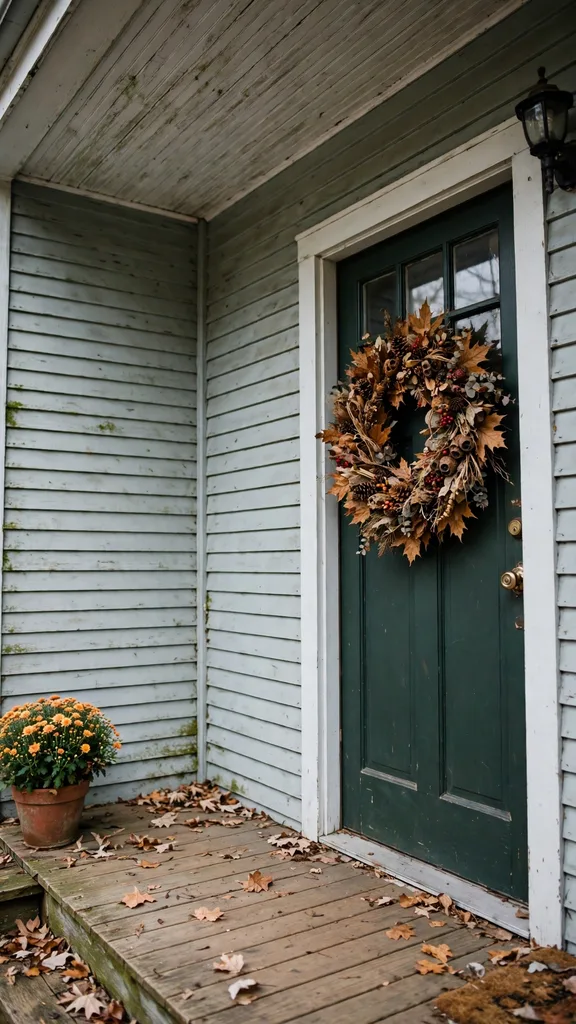
8. Wreath as the Main Display on the Door
A wreath can carry the whole display on a porch with no floor to spare, because the door is the largest unused surface on a tiny entry. Hang one wreath at eye level, centred on the door, and let the floor stay empty except for a doormat, since the wreath gives colour, texture, and seasonal signal without claiming a single centimetre of floor.
Size the wreath to the door, with a diameter near 50 centimetres (20 inches) for a standard door, and keep it clear of the handle, the lock, and the peephole. A wreath that swings with the door needs a firm hook, because a sliding wreath scratches paint and tilts after a few openings.
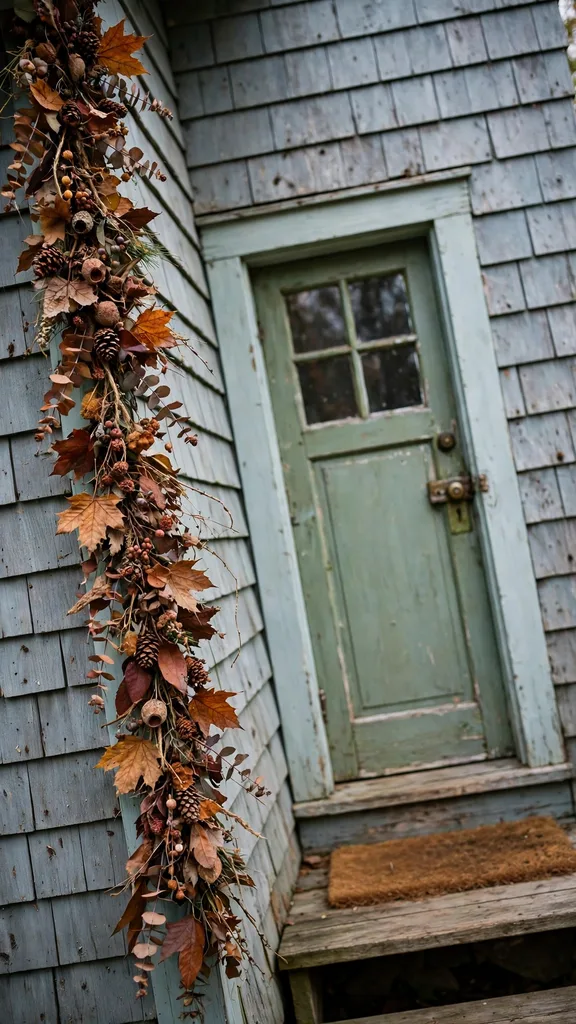
9. Slim Door Garland Without Floor Footprint
A slim garland frames the door upward rather than outward, which suits a tiny porch because height costs no floor space. Choose a garland no thicker than 10 centimetres (4 inches), run it up one side of the door frame and across the top, and fix it with small hooks that leave the frame undamaged.
Keep the garland clear of the door edge and the weather strip, since a thick garland can stop the door from closing fully and let cold air in. A slim garland pairs with a wreath only when the wreath is simple, because two busy door pieces on a small door fight for attention.
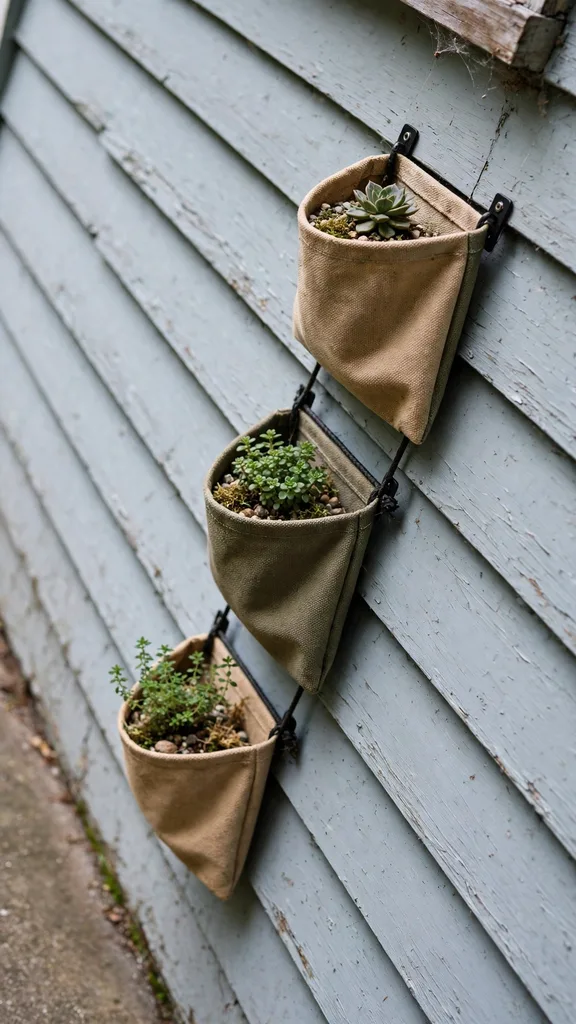
10. Wall Pocket Planters for a Bare Side Wall
A bare side wall is free display space on a tiny porch, because wall pockets hold plants at eye level while the floor stays clear for walking. Mount two or three pockets in a vertical line, plant each with one compact plant, and keep the lowest pocket above 90 centimetres (35 inches) so it never meets a passing shoulder bag.
Check the wall fixings for weight, since a watered pocket weighs more than an empty one, and use pockets with a drip tray or a sealed back to protect siding. Wall pockets suit renters when they hang from a rail or a freestanding frame, and they suit owners when fixed with screws into studs.
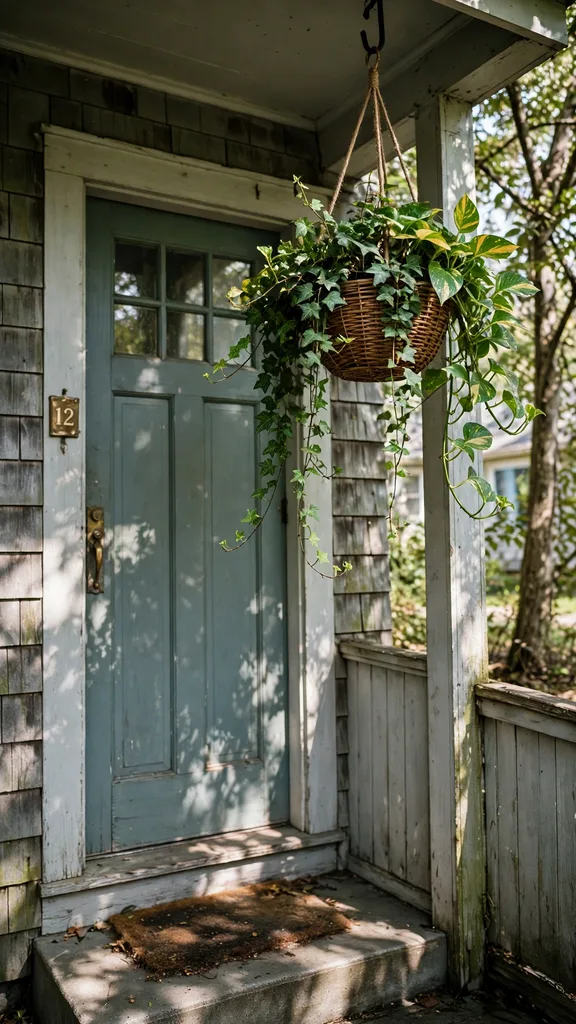
11. One Hanging Basket and Nothing Above It
One hanging basket gives a tiny porch a floating layer of colour, because it hangs above the walking path and uses air space that floor pieces cannot use. Hang a single basket from a sturdy bracket on the wall side, keep its base at least 200 centimetres (79 inches) above the tread, and plant it with one trailing plant rather than a crowded mix.
A second basket crowds the air above a tiny porch and drips onto guests, so one basket is the limit here. Water the basket over a bucket, and check the bracket monthly, since a basket gains weight after watering and a tired bracket sags without warning.
12. Railing Box for a Porch With a Rail
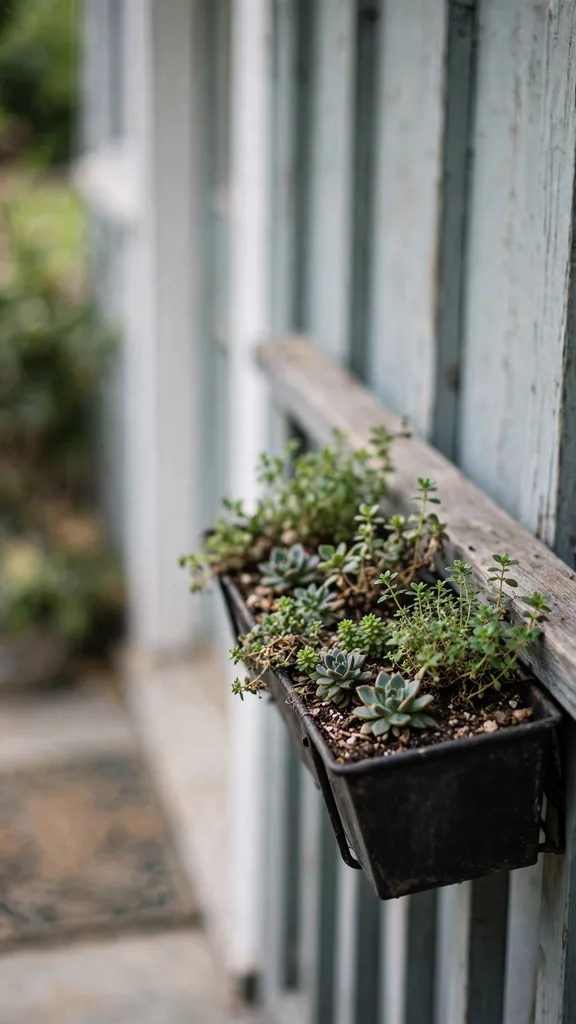
A railing box turns a porch rail into a planter without taking floor space, because the box hangs on the outside of the rail and the plants face the street. Fill the box with compact plants that trail outward, keep the box shorter than the rail length, and fix it with brackets rated for a watered box.
Keep the inner side of the rail clear for hands, since guests need a grip on the rail in wet weather, and never let stems trail across the grip zone. A railing box suits a tiny porch with a long rail and a short landing, because the rail gives planting length that the floor cannot give.
13. Slim Ladder Shelf Against One Wall
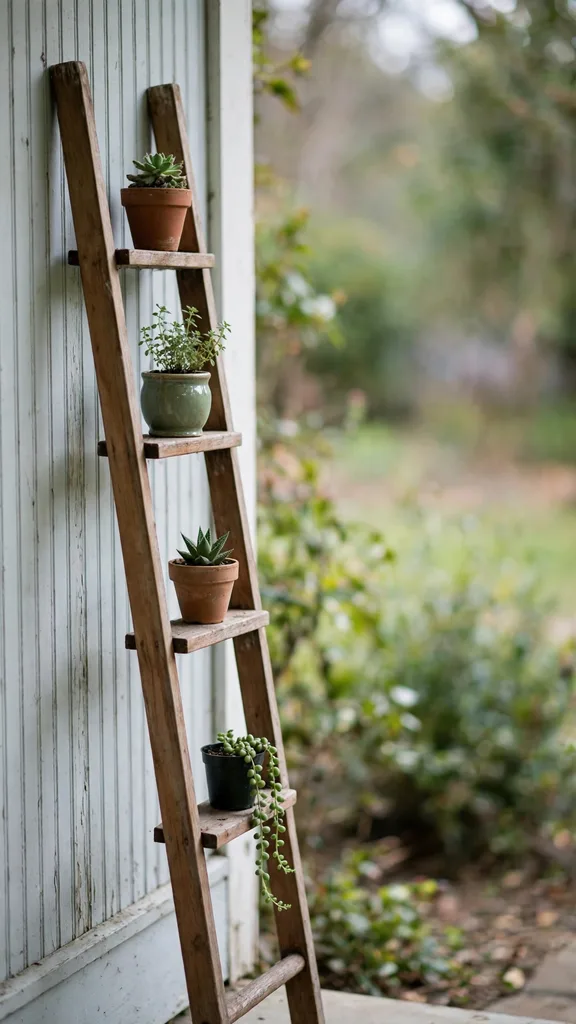
A slim ladder shelf gives a tiny porch three levels of display in one narrow footprint, because each tier sits deeper than the one above and the whole shelf leans against one wall. Choose a shelf no deeper than 30 centimetres (12 inches) at the base, place it on the wall side only, and put the tallest plant on the lowest tier for stability.
Anchor the top of the shelf to the wall when possible, and keep the shelf clear of the door swing, since a leaning shelf tips forward if bumped. A ladder shelf suits a tiny porch with a long blank wall, and it moves indoors in one lift when a storm arrives.
14. Wall Hook Lantern at Shoulder Height
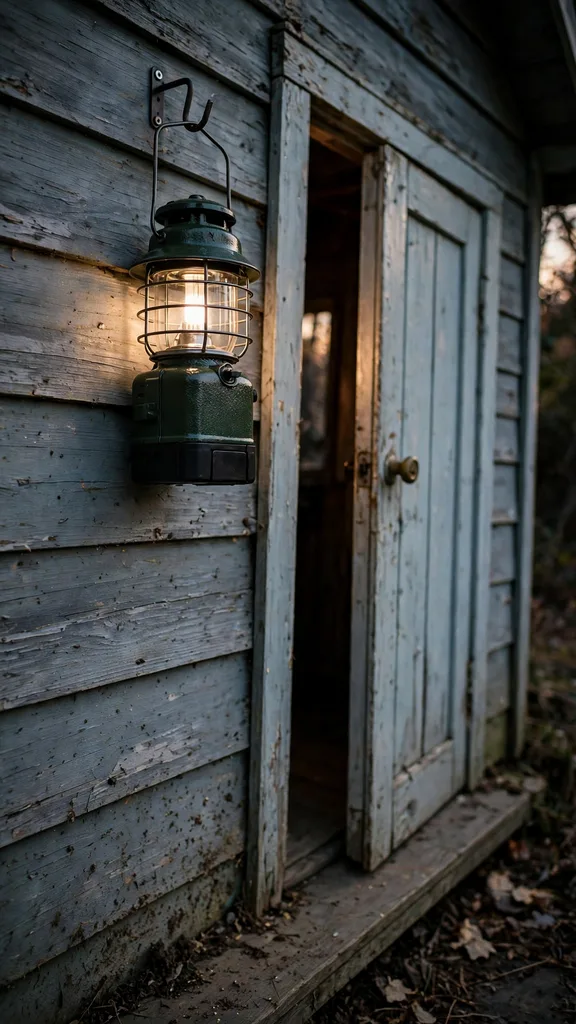
A wall hook lantern gives a tiny porch evening light without a floor lantern, because the hook holds the light at shoulder height on the wall beside the door. Hang one battery lantern from a firm hook, keep it clear of the door swing and of dry stems, and set it on a timer so the porch glows at dusk without a daily switch.
One wall lantern lights the lock and the step edge, which are the two spots guests need lit most. A second wall lantern belongs on the opposite wall only when the porch has two walls to spare, and most tiny porches do not.
15. One Tall Narrow Pot Beside the Door
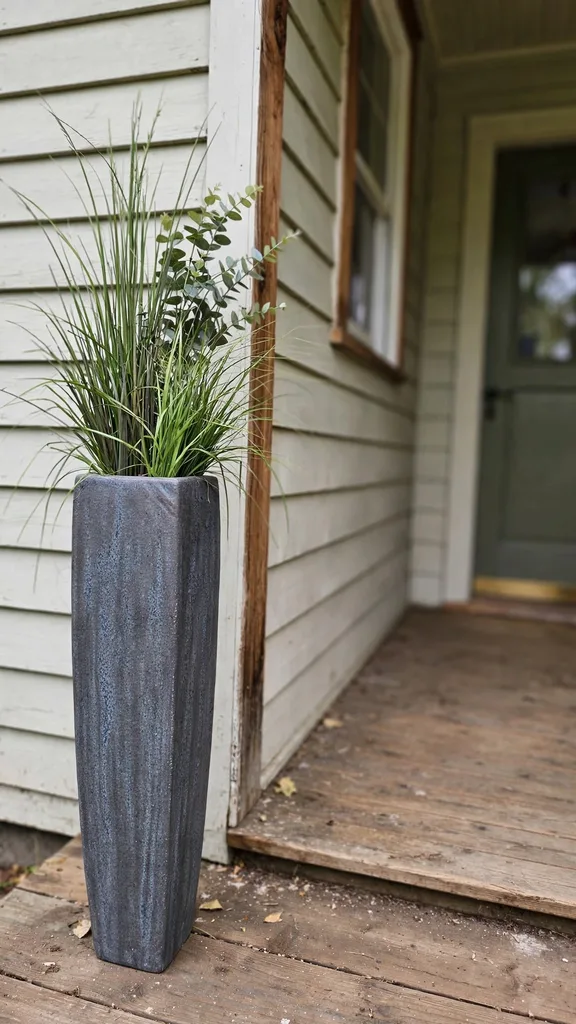
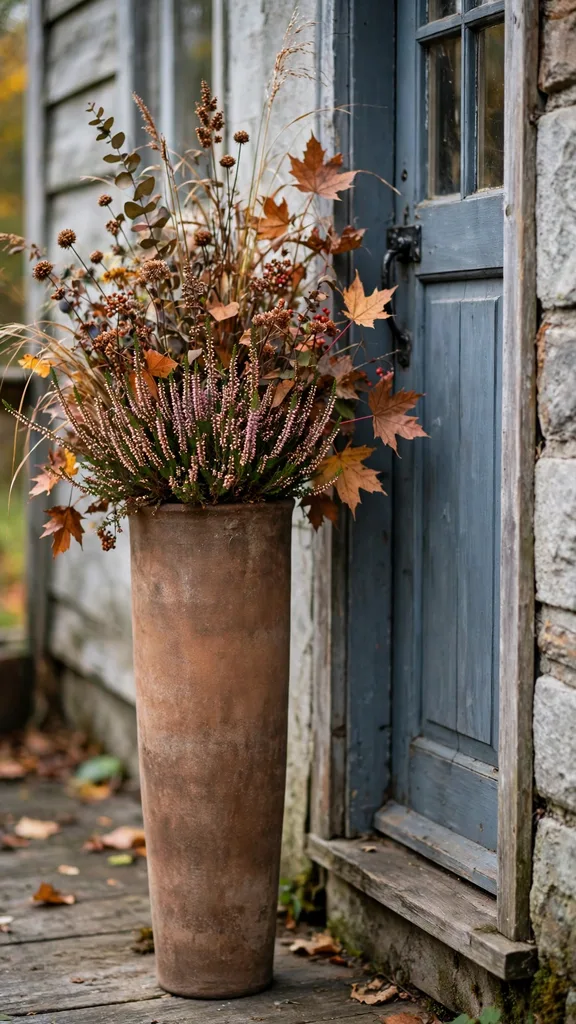
One tall narrow pot gives a tiny porch height without width, because a pot 25 centimetres (10 inches) wide and 60 centimetres (24 inches) tall draws the eye upward while claiming a small patch of floor. Plant it with one upright stem, one mid-height filler, and one trailing edge plant, and set it on the wall side of the door.
A tall narrow pot needs ballast, so add stones at the base before soil, since a tall pot catches wind like a sail on an open entry. One tall pot beats a pair on a tiny porch, because a pair frames a wide door well and crowds a narrow door badly.
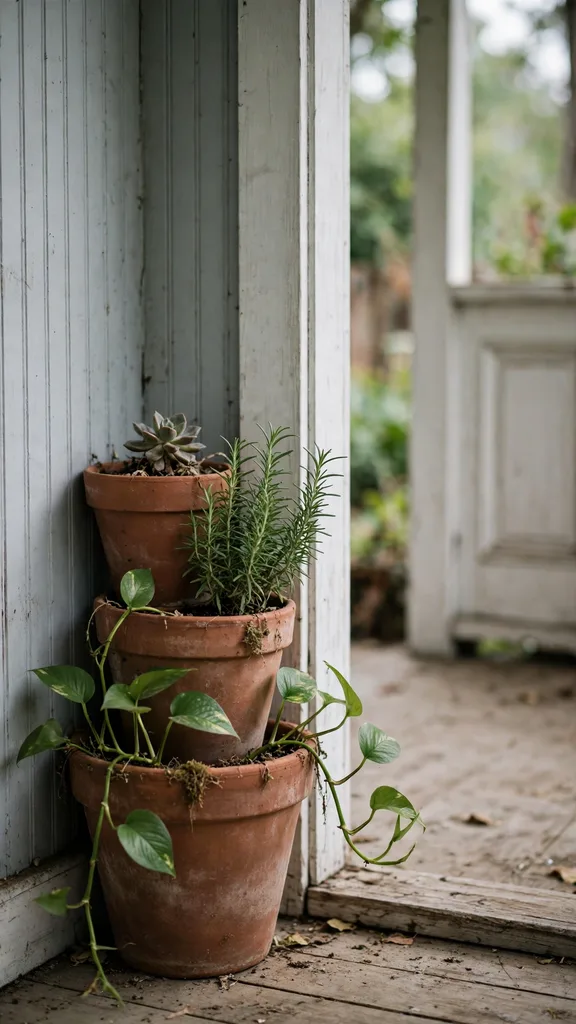
16. Corner Tower of Three Stacked Pots
A corner tower stacks three pots vertically in one corner, because the corner is the one spot on a tiny porch where height harms nothing. Set the largest pot at the base, a medium pot above it, and a small pot at the top, and keep the tower against two walls so wind cannot push it into the walking path.
This tower holds plants, and it differs from a pumpkin tower, since each pot carries its own plant and soil and the tower stays in place all season. Water the top pot first and let excess drain into the pots below, and check the tower after wind, since a stacked tower leans before it falls.
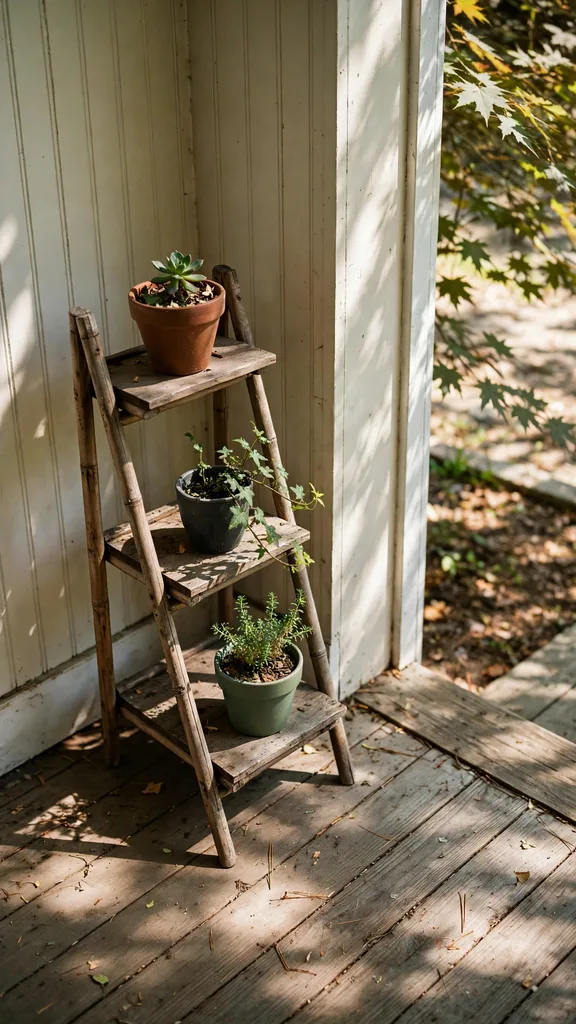
17. Tiered Plant Stand in One Corner
A tiered plant stand packs three plants into one corner footprint, because the tiers rise like steps and each plant gets light without shading the one below. Choose a stand with a base no wider than 45 centimetres (18 inches), place it in the corner farthest from the door handle, and put the heaviest pot on the lowest tier.
A tiered stand suits a tiny porch with one dead corner, and it fails in a walkway corner, since a stand in the path forces guests to step wide. Move the whole stand indoors on frost nights, because a stand carries three plants in one lift.
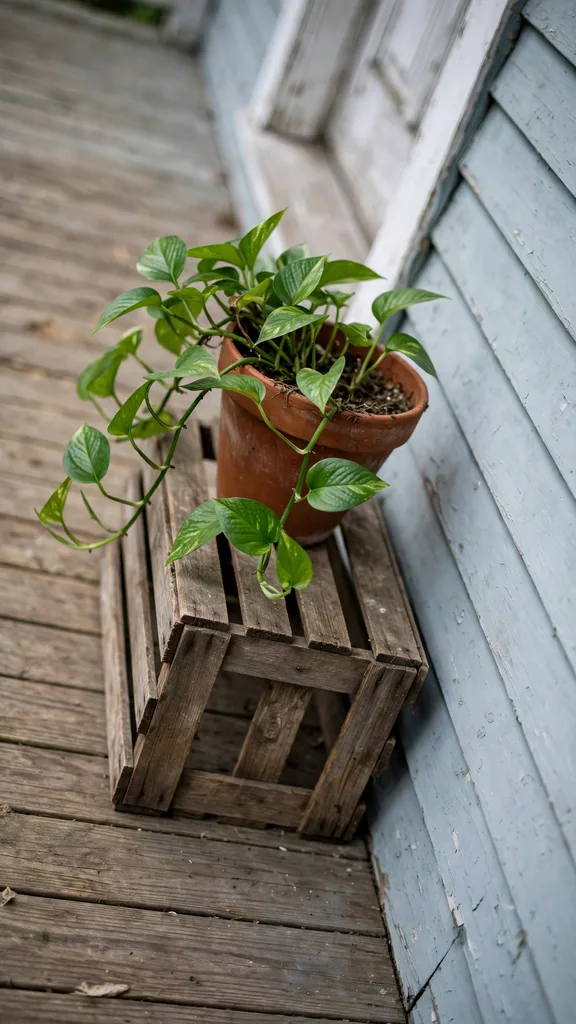
18. Crate Riser That Lifts One Pot
A crate riser lifts one pot to eye level on a tiny porch, because a single crate under a pot raises the plant without adding a second display. Set the crate flat against the wall, place one pot on top, and keep the crate footprint inside the pot footprint plus 5 centimetres (2 inches) on each side.
A crate riser suits a pot that would otherwise sit too low to read from the walkway, and it suits a porch where the focal pot needs height but the budget allows no tall planter. Check the crate for level before placing the pot, since a tilted crate tips a pot in wind.
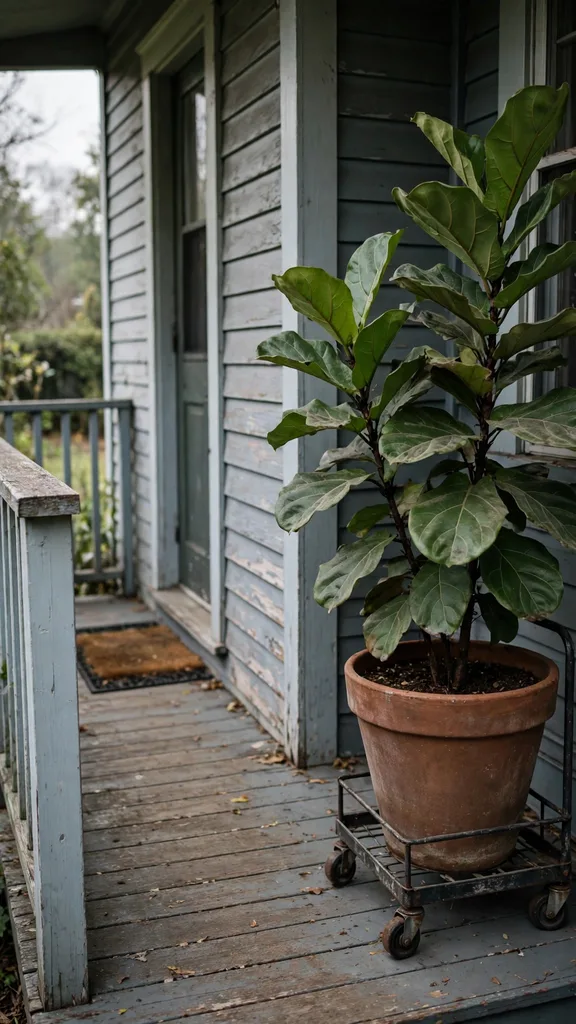
19. Rolling Caddy Under the Heaviest Pot
A rolling caddy under the heaviest pot makes a tiny porch flexible, because the pot can roll aside for sweeping, for parcels, and for frost nights. Set the caddy under the pot before planting, lock its wheels once the pot sits in place, and keep the caddy footprint inside the pot footprint.
A caddy suits a tiny porch with one heavy pot that would otherwise stay fixed all season, and it suits a renter who must return the porch to bare boards at move-out. Unlock the wheels only when moving the pot, since an unlocked caddy drifts on a sloped landing.
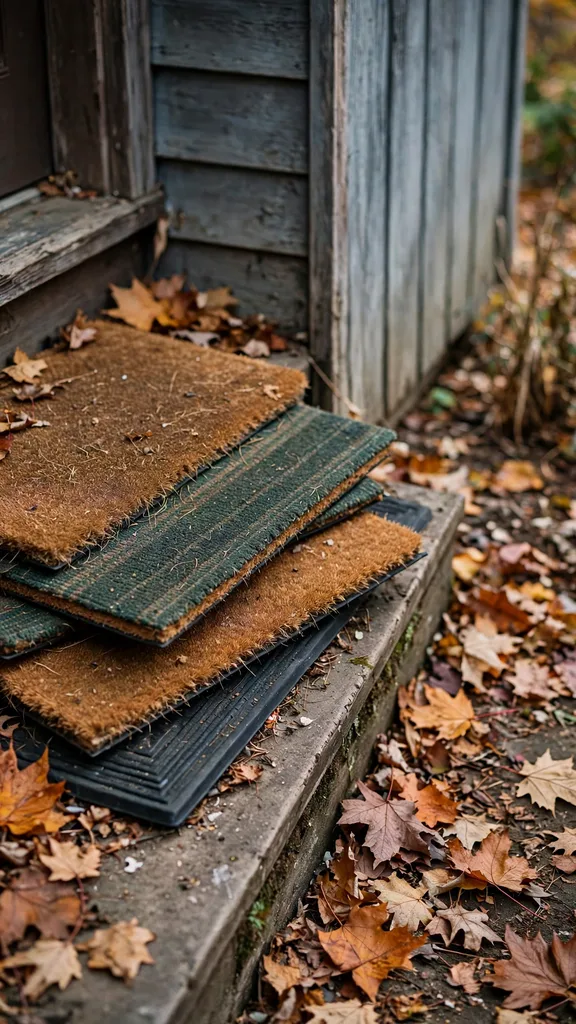
20. Layered Doormat System on a Tiny Landing
A layered doormat system gives a tiny landing colour and texture at floor level without raising the floor height much. Lay a flat outdoor rug 60 by 90 centimetres (24 by 35 inches) first, centre a coir mat 45 by 75 centimetres (18 by 30 inches) on top of it, and keep both mats clear of the door swing and the step edge.
A layered mat system suits a tiny landing because it decorates the one floor patch every guest must cross, and it needs no pot space at all. Shake both mats weekly, since trapped grit under a layered mat grinds into porch boards and stains them.
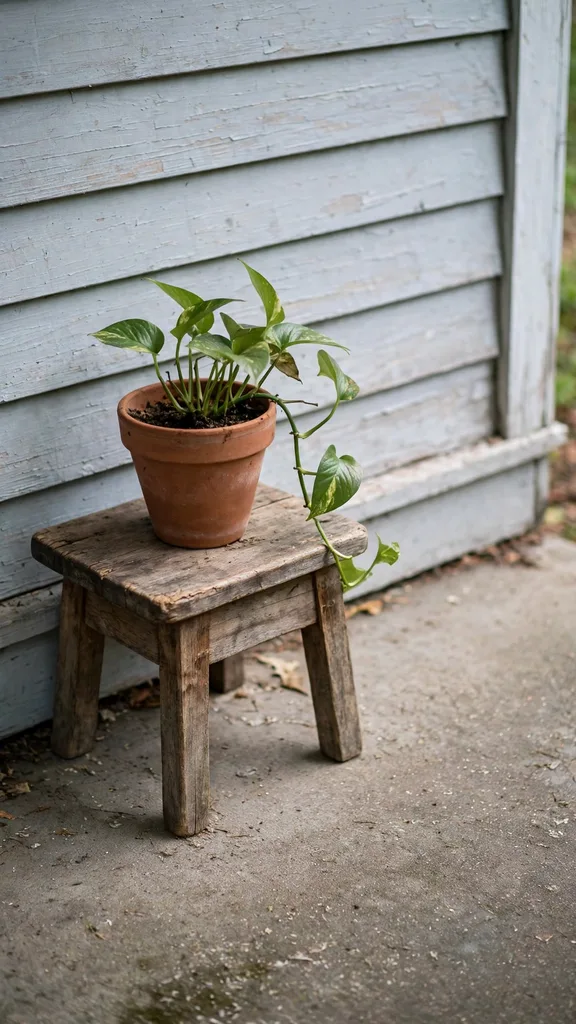
21. Stool as a Plant Stand by the Wall
A small stool by the wall turns a spare seat into a plant stand, because a stool top at 45 centimetres (18 inches) lifts a pot to hand height without a planter purchase. Place the stool flush against the wall, set one pot on top, and keep the stool legs inside the wall-side strip so the walking channel stays clear.
A stool stand suits a tiny porch that already owns a stool, and it moves indoors fast before a storm. Keep the pot saucer on the stool top, since a damp pot base marks painted stool wood and the stain shows after the pot moves.
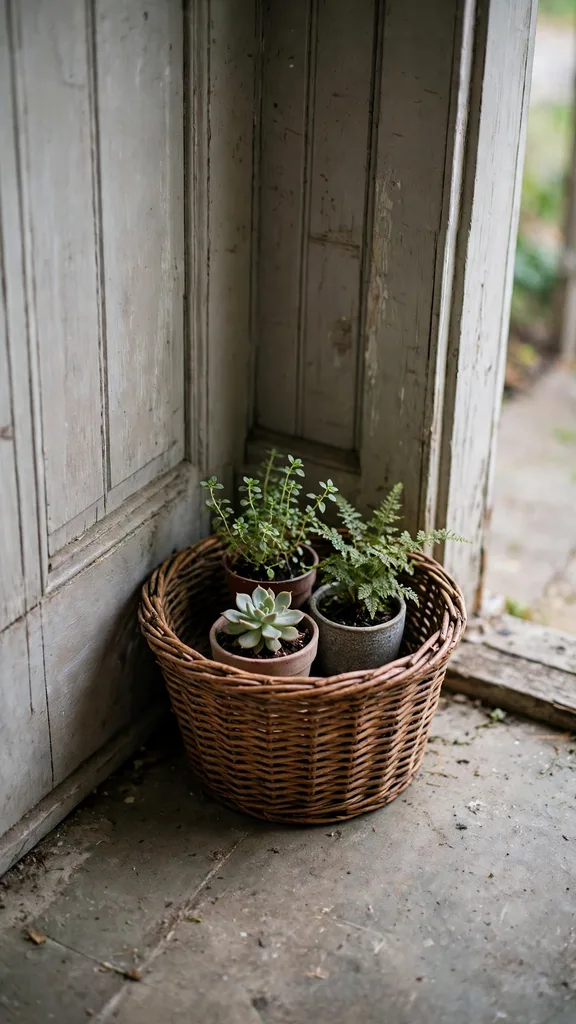
22. Basket Cluster Tucked Into One Corner
A basket cluster packs a harvest look into one portable corner, because one basket holds three small pots and moves as a single object. Set the basket in the corner farthest from the door, place the tallest small pot at the back, and let the basket rim hide the pot edges so the group reads as one arrangement.
A basket cluster suits a tiny porch with no room for a stand, since the basket footprint stays near 40 centimetres (16 inches) square. Carry the basket indoors on storm nights, and check the basket base for damp, since a wet basket stains the landing.
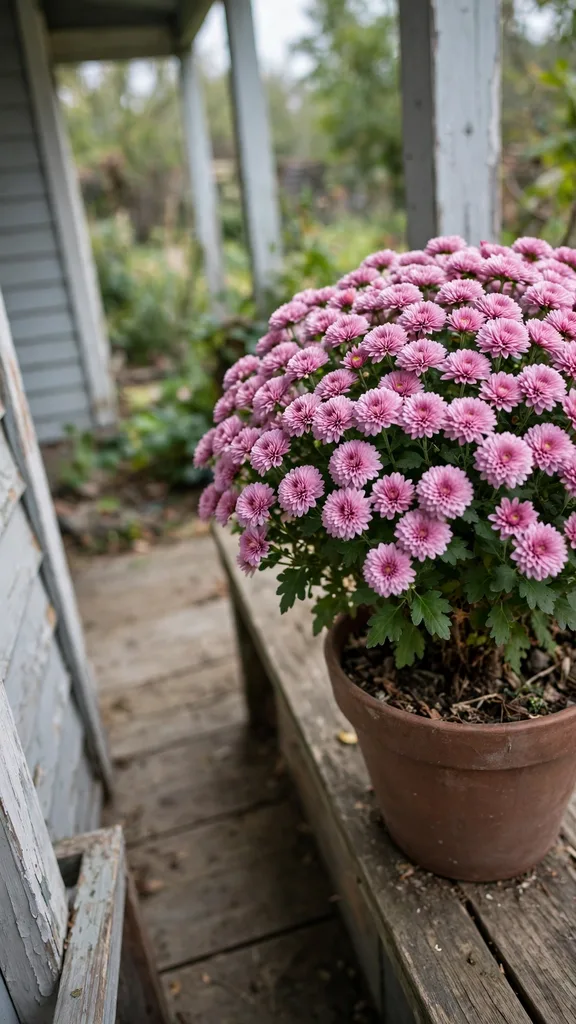
23. Cushion Mum as the Compact Bloom
A cushion mum gives a tiny porch a full dome of bloom in a small pot, because the cushion habit grows as a tidy mound covered in flowers rather than a tall stem with sparse blooms. Choose one cushion mum in a single colour, set it in the focal pot or on the tiered stand, and let it carry the bloom while other plants carry foliage.
[University of Minnesota Extension](https://extension.umn.edu/about/our-stories/news/yard-and-garden-news/hardy-mums-provide-color-that-returns-every-fall) notes that cushion mums form tidy dome-shaped mounds 30 to 46 centimetres (12 to 18 inches) across, and that hardy mums are selected for cold tolerance and dependable blooms. For the living side of mums on a porch, from buying in bud to keeping blooms fresh, see [Mums and Pumpkins Porch Decor Ideas That Last](https://growit.wiki/mums-and-pumpkins-porch-decor-ideas/.
24. Ornamental Kale for Late Season Colour
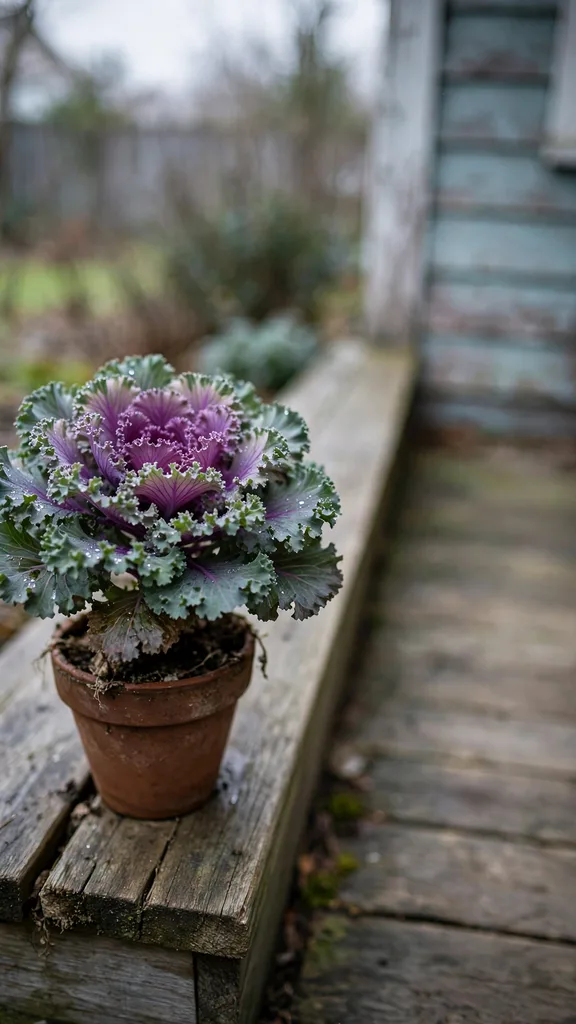
Ornamental kale gives a tiny porch colour after mum blooms fade, because its ruffled leaves hold form in cool weather and its centres deepen to purple, pink, and cream as nights cool. Plant one kale rosette in a small pot, set it where morning light reaches it, and let it carry the display into late November.
Kale suits a tiny porch that must stay dressed to Thanksgiving, since it tolerates light frost that ends tender blooms. Keep kale in its own pot rather than crowded into a mixed pot, because a single rosette reads clearly at small scale while a crowded pot reads as clutter.
25. Pansy Edge in a Shallow Tray
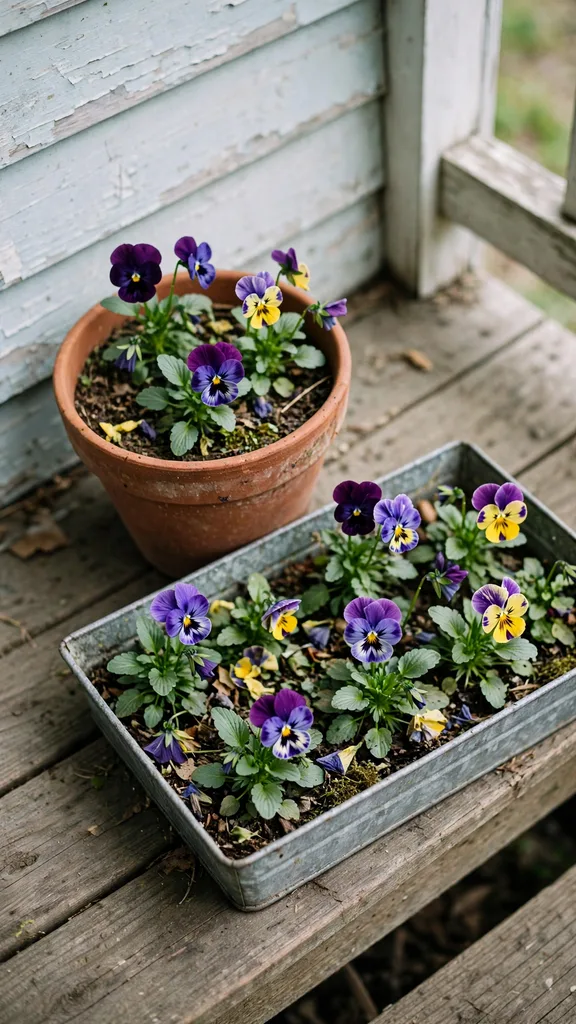
A pansy edge gives a tiny porch a low flower border without a new pot, because a shallow tray of pansies sits in front of a larger pot and fills the gap between pot and step. Plant five pansies in a tray 30 centimetres (12 inches) long, choose one colour that picks up the mum or kale tone, and keep the tray clear of the walking channel.
Pansies suit a cool tiny porch, since they bloom through light frost and keep colour when summer flowers fail. A shallow tray needs drainage holes, since standing water in a tray rots pansy roots within days and the tray then smells before guests notice the flowers.
26. Dwarf Evergreen for Winter Structure
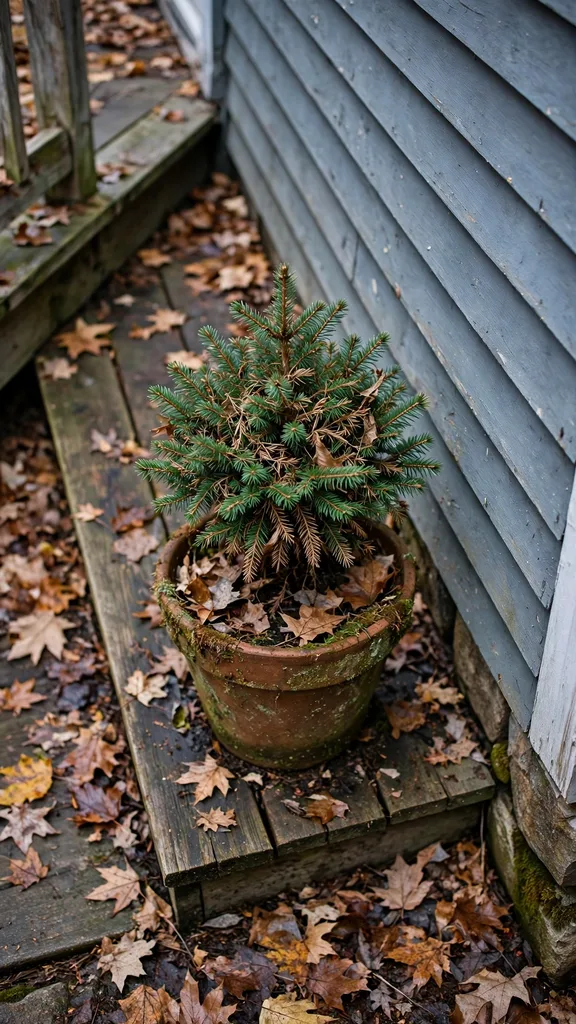
A dwarf evergreen gives a tiny porch structure after Thanksgiving, because it stays green when mums and kale finish and it carries the same pot into winter. Choose a dwarf conifer that stays under 60 centimetres (24 inches) tall, plant it in the focal pot after the autumn display, and let it anchor the porch through December.
A dwarf evergreen suits a tiny porch with one pot to spare for winter, since it needs no replanting and no seasonal swap. Keep the evergreen pot on the wall side, where the house shields it from the worst wind, and water it when the soil feels dry to a finger depth of 2.5 centimetres (1 inch).
27. Trailing Ivy Spill From One Pot
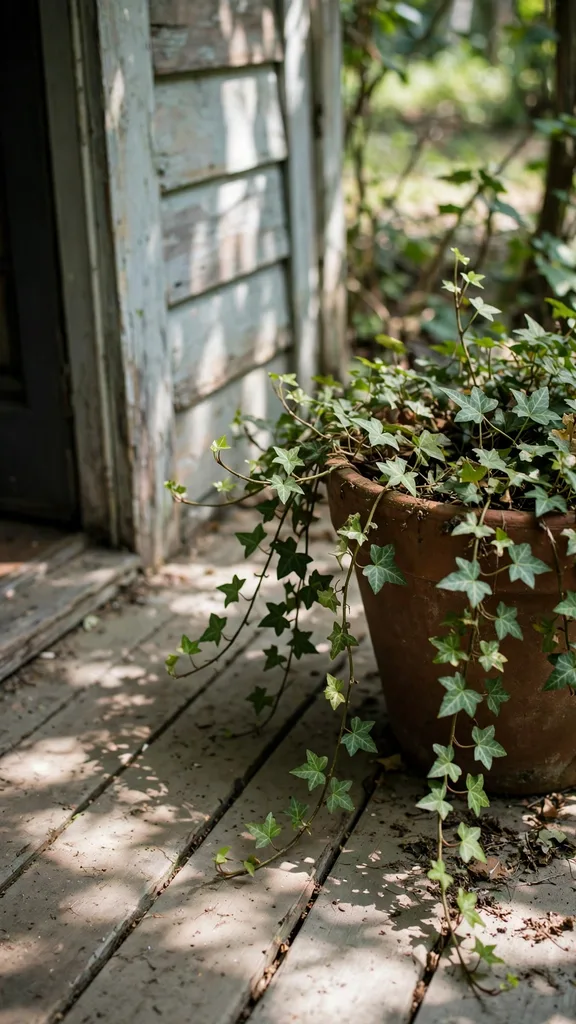
A trailing ivy spill softens one pot edge on a tiny porch, because a single vine drapes over the rim and breaks the hard line between pot and step. Plant one ivy at the front edge of the focal pot, train two stems over the rim, and trim the stems when they reach the tread, since vines on a tread catch shoes.
Ivy suits a tiny porch because one plant gives movement and softness that would otherwise need three plants. Keep ivy out of the walking channel and off the handrail grip, since a vine across either spot turns a soft accent into a trip or grip hazard.
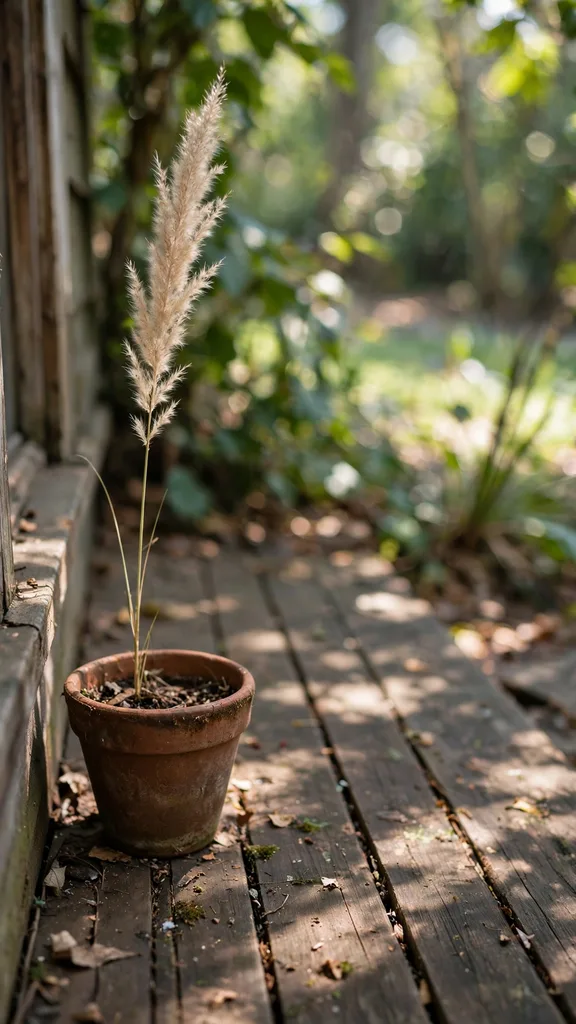
28. Single Ornamental Grass Plume for Height
A single ornamental grass plume gives a tiny porch height without weight, because one tall stem rises behind a pot and moves in wind that would topple a taller display. Place one grass pot behind the focal pot, choose a grass near 90 centimetres (36 inches) tall, and let one plume lean slightly over the pot top for a layered line.
A single plume suits a tiny porch with a tall facade, since it fills vertical space that low pots cannot reach. Anchor the grass pot with stones, because a tall grass pot catches wind like a sail, and cut the plume down when it sheds seed across the landing.
29. Rosemary and Sage Pot for Thanksgiving Scent
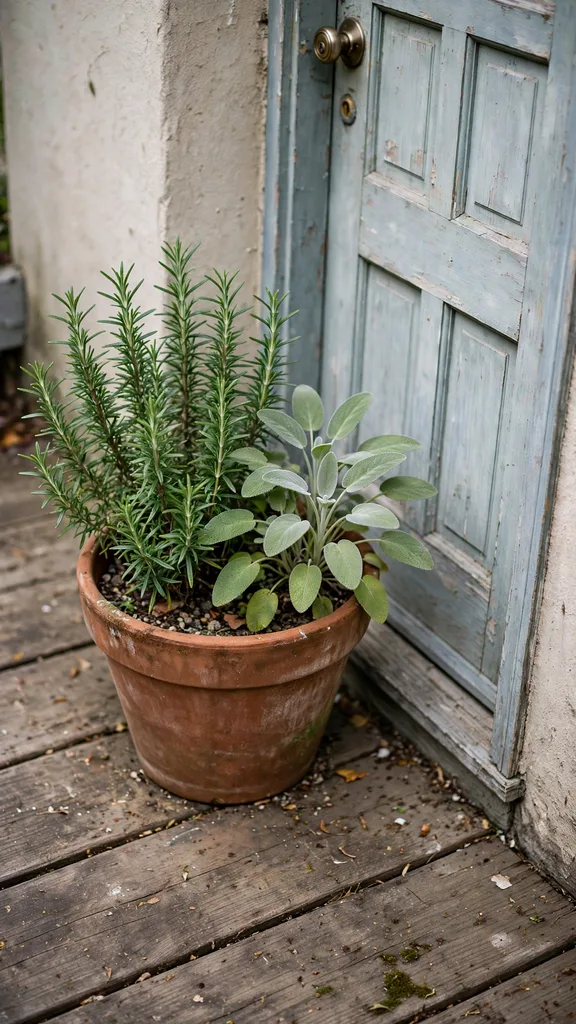
A rosemary and sage pot gives a tiny porch Thanksgiving scent at the door, because guests brush past herbs on entry and the scent reads as seasonal without a single pumpkin. Plant one rosemary stem and one sage plant in a pot 25 centimetres (10 inches) wide, set the pot beside the door handle side only when the handle side has room, and keep it on the wall side otherwise.
Herbs suit a tiny porch near a kitchen door, since snipped sprigs go straight to the Thanksgiving table, and the pot stays useful after the holiday. Bring the herb pot indoors on frost nights, since rosemary in a small pot freezes sooner than rosemary in open ground.
30. Dried Stem Bundle in a Tall Narrow Vase
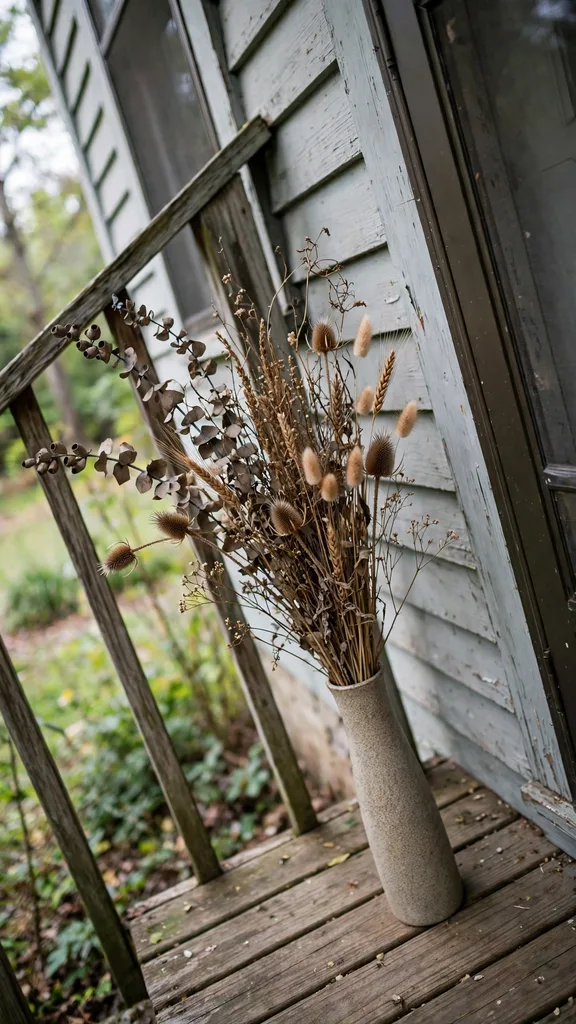
A dried stem bundle gives a tiny porch vertical texture without a living plant, because dried grasses and seed heads stand tall in a narrow vase and need no water. Tie five stems into one bundle, set the bundle in a vase no wider than 15 centimetres (6 inches), and place the vase against the wall where wind cannot topple it.
Dried stems suit a tiny porch that needs height on a shaded wall, since they hold colour in low light that would weaken a living plant. Keep dried stems clear of lantern heat and door lights, since dry foliage catches fire fast, and replace any stem that sheds heavily onto the landing.
31. One Lantern Cluster on One Side Only
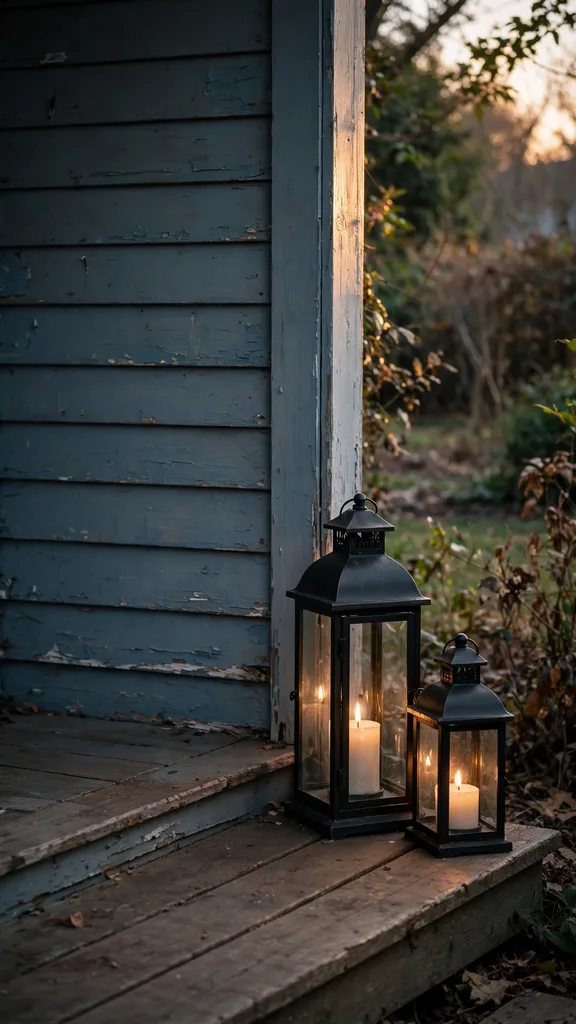
One lantern cluster gives a tiny porch evening light without spreading light pieces across the whole entry, because two lanterns of different heights on one side read as one glowing group. Place the taller lantern behind the shorter one, keep both on the wall side, and use battery candles inside both so heat never meets dry stems.
A one-sided cluster suits a tiny porch because it leaves the other side fully open for walking and parcels. Set both lanterns on stone tiles, since a lantern base on wood can scorch a board if a battery candle overheats, and test the glow from the walkway before guests arrive.
32. String Lights Along the Rail Only
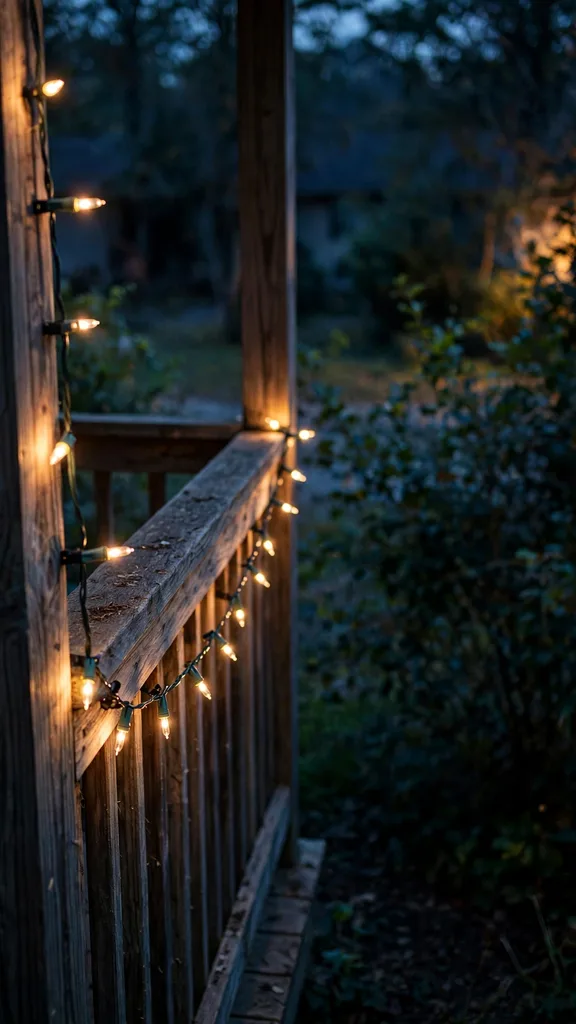
String lights along the rail give a tiny porch a line of evening light without wrapping the whole house, because one short strand follows the rail and stops at the rail end. Choose warm white lights on a strand no longer than 3 metres (10 feet), fasten the strand to the rail with clips, and keep the wire clear of the handrail grip zone.
A rail-only strand suits a tiny porch because it lights the approach line guests actually walk, and it plugs into one outdoor outlet without extension leads across the path. Take the strand down after Thanksgiving when the rail needs clearing for winter, since lights left on a rail ice over and sag.
33. Solar Stake Light at the Walkway Edge
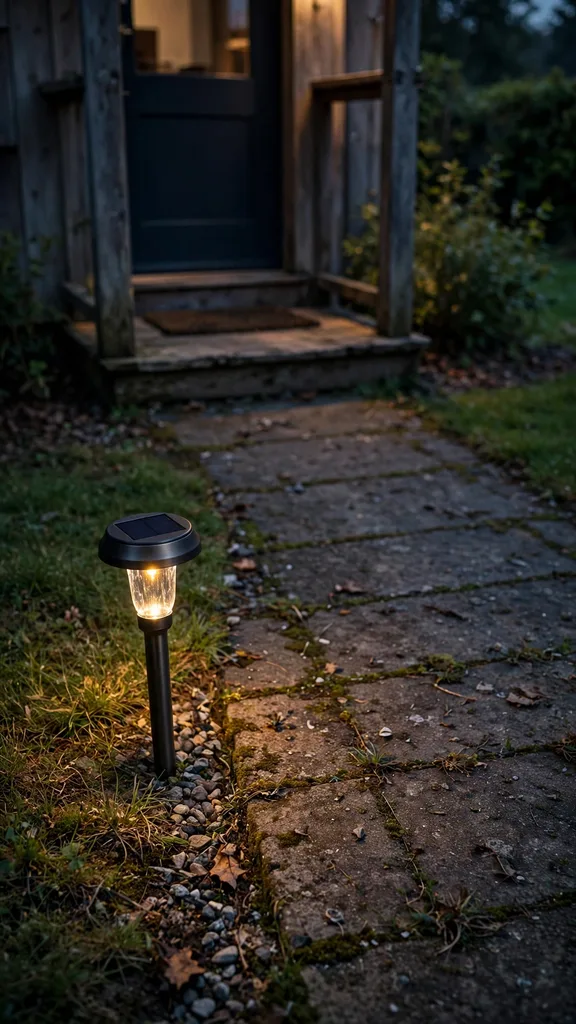
A solar stake light marks the walkway edge for a tiny porch, because one stake at the path corner guides guests from the street to the first step. Push one stake into soil at the walkway edge, keep its panel facing open sky, and let it charge by day so it glows at dusk without wiring.
One stake suits a tiny porch because it lights the approach without adding a floor piece to the porch itself. A stake fails in deep shade, so move it to the sunniest edge of the walkway, and wipe its panel monthly, since dirt on the panel dims the light fast.
34. Battery Candle Glow Inside a Glass Hurricane
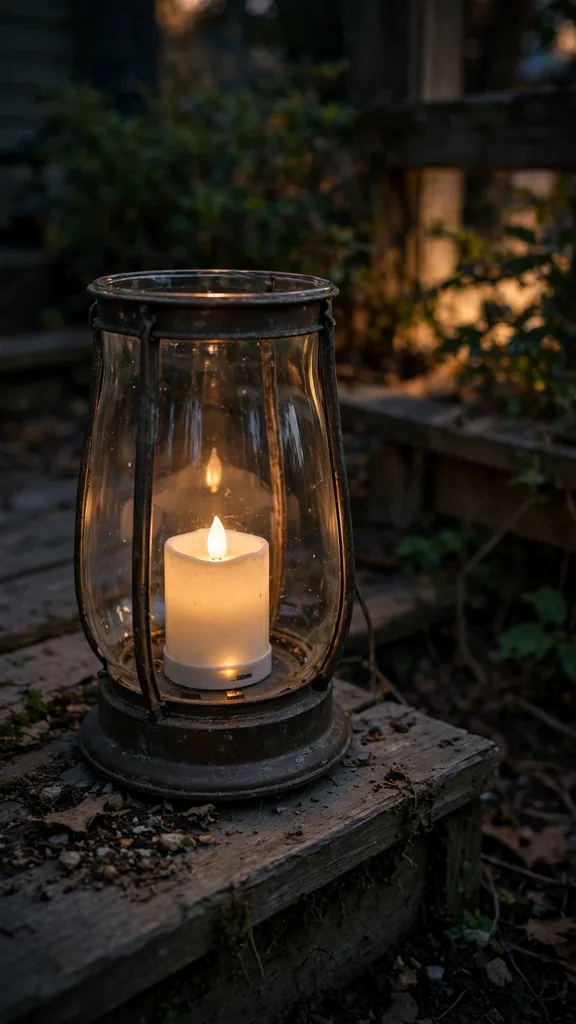
A battery candle inside a glass hurricane gives a tiny porch a safe flame look, because the glass shields the glow from wind while the battery removes fire risk. Set one hurricane on the wall-side step edge, place a battery candle inside, and set the timer for dusk so the porch glows without a daily switch.
A hurricane suits a tiny porch with dry stems nearby, since glass and battery together remove the two fire risks that a real flame carries. Keep the hurricane clear of the walking channel, and wipe the glass weekly, since dust on glass dims the glow and dulls the display.
35. Dusk Check From the Walkway
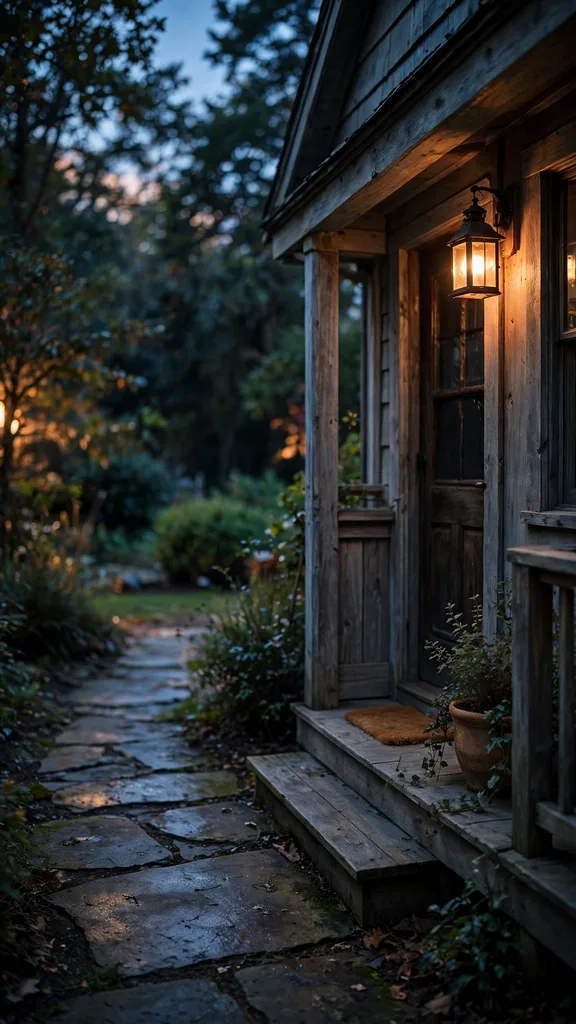
A dusk check from the walkway tests a tiny porch the way guests see it, because lantern light, focal shape, and walking channel read together only when daylight fades. Stand at the walkway at dusk, check that the focal point reads as one shape, that no piece blocks the door, and that the walking channel stays clear in lantern light.
Adjust one piece at a time during the dusk check, since moving two pieces at once hides which move fixed the problem. A tiny porch that passes its dusk check welcomes guests with a display that looks planned from the street to the door, even when the porch itself is barely wider than the door.
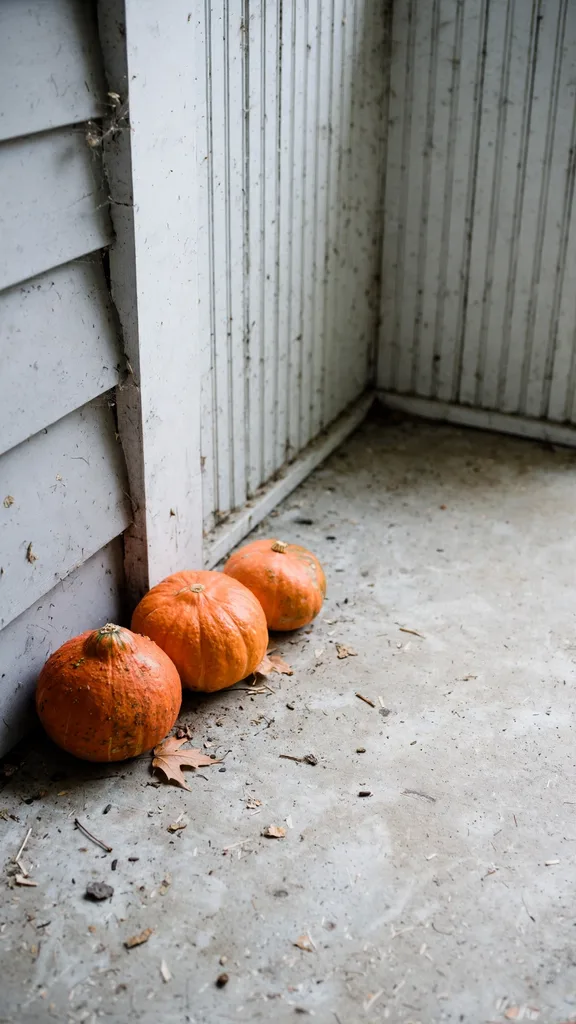
36. One Small Pumpkin Group, Never a Stack
One small pumpkin group gives a tiny porch a Thanksgiving note without a tower, because three small pumpkins set on the ground in one corner read as a harvest accent rather than a display of their own. Place the three pumpkins side by side on the ground at the wall-side corner, keep each pumpkin under 20 centimetres (8 inches) wide, and leave the steps and the landing fully clear of pumpkins.
This group differs from a pumpkin stack, since no pumpkin sits on another pumpkin and no height comes from stacking, and it differs from a step cascade, since no pumpkin sits on a step. A tiny porch needs pumpkins as one component of a whole system, and a stack would steal the focal point from the pot and the wreath that carry the display.
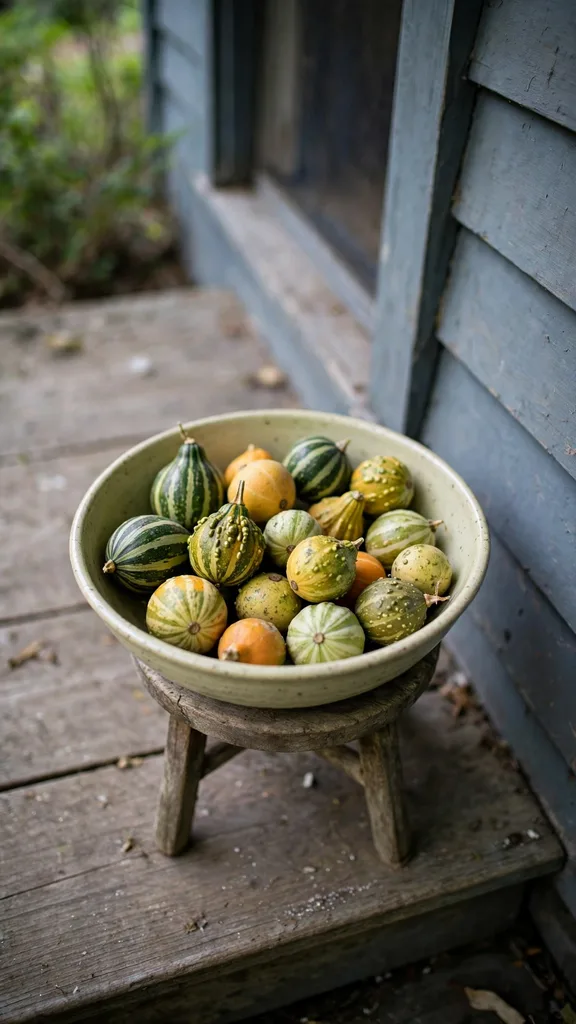
37. Mini Gourds in a Single Bowl
Mini gourds in a single bowl give a tiny porch a close-up harvest detail, because a bowl of small gourds invites a nearer look than a ground group viewed from the street. Fill one bowl 25 centimetres (10 inches) wide with mini pumpkins and striped gourds, set the bowl on the stool stand or the crate riser, and turn the most patterned gourd toward the walkway.
A bowl suits a tiny porch because it packs a full harvest look into one portable object that moves indoors before a storm. Keep the bowl weight under 3 kilograms (7 pounds), since a heavy bowl on a stool stand tips when bumped, and replace any gourd that softens at once.
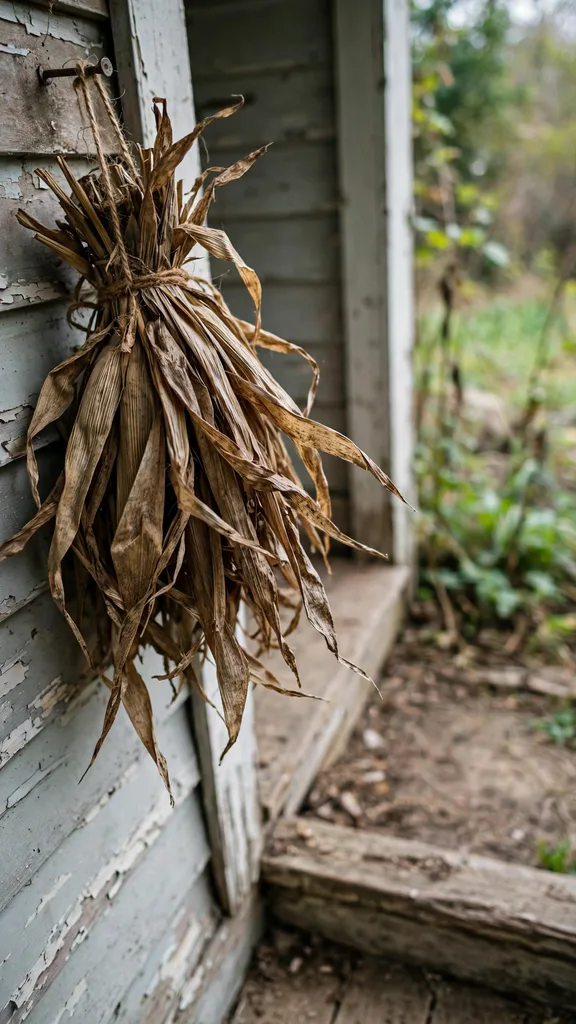
38. Corn Husk Bundle Flat Against the Wall
A corn husk bundle flat against the wall gives a tiny porch harvest texture with zero floor footprint, because the bundle hangs vertically and hugs the wall. Tie dried husks into a flat bundle 60 centimetres (24 inches) long, hang it from one hook on the wall side, and keep it clear of the door swing and of lantern heat.
A flat bundle suits a tiny porch with a long blank wall and no floor to spare, since it decorates height that floor pieces cannot reach. Check the tie monthly, since a loose bundle slides down the wall and lands across the walking channel.
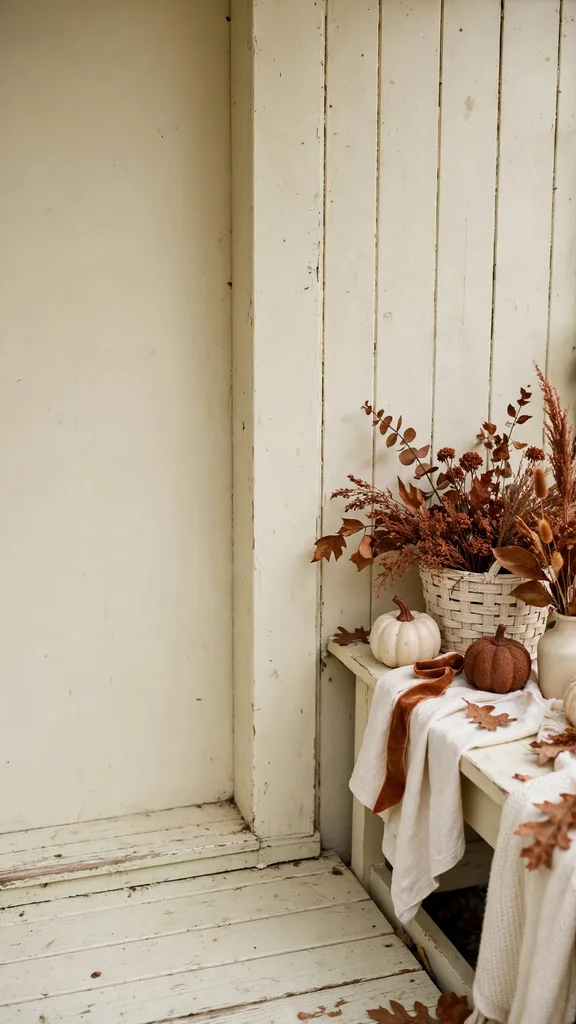
39. Thanksgiving Colour in Two Tones Only
Two tones give a tiny porch a calm Thanksgiving palette, because rust and cream repeat across pot, wreath, mat, and pumpkin group without competing. Choose rust for the mum and the mat, cream for the pumpkin group and the gourd bowl, and let the door colour stay the darkest tone in the whole display.
A two-tone palette suits a tiny porch because it stops small pieces from reading as clutter, and it holds only when it repeats in at least three spots. Add a third tone only when the porch gains a second focal point, and most tiny porches never need that third tone.
40. Decor That Matches the Door and the House
Decor that matches the door and the house gives a tiny porch a finished look, because the porch reads as part of the home rather than a seasonal add-on. Match the wreath ribbon tone to the door colour, match the pot colour to the house trim, and keep the mat tone inside the same family, so the whole entry shares one quiet palette.
For the whole-home side of this match, from entry styling to rooms beyond the door, see [Thanksgiving Decor for Home](https://growit.wiki/thanksgiving-decor-for-home/. A tiny porch matched to its house looks intentional even with three pieces, while a tiny porch in clashing tones looks crowded with the same three pieces.
41. Pot Size and Drainage for Small Pots
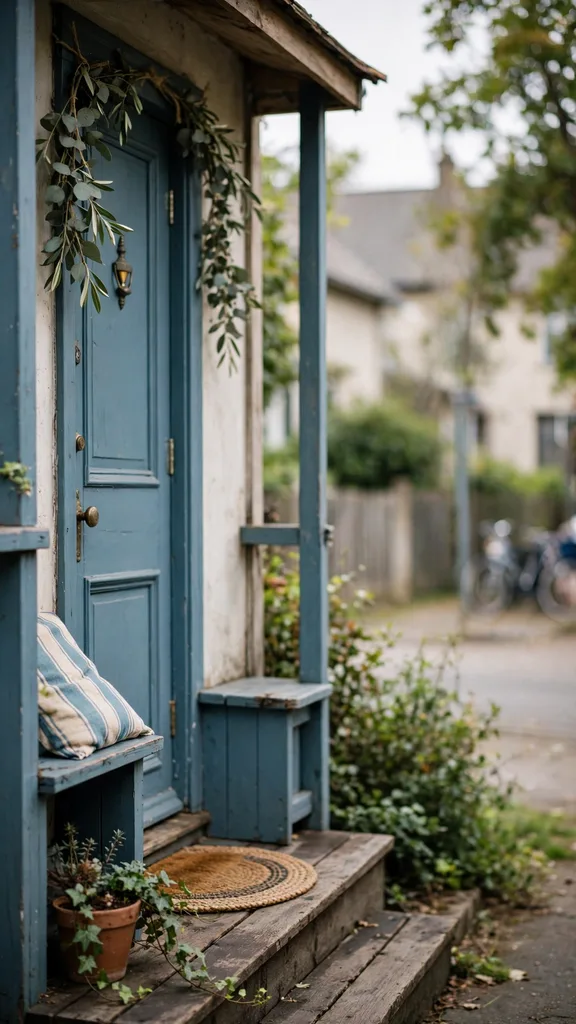
Pot size decides whether a tiny-porch plant survives, because a small pot dries fast in wind and freezes fast on a cold night. Choose pots with drainage holes, set each pot on a saucer, and keep the plant in its nursery pot inside a decorative pot when the decorative pot has no holes, so excess water never sits against roots.
Drainage matters more on a tiny porch than on a wide porch, since small pots sit close together and one overwatered pot splashes its neighbour. Empty saucers after rain, and lift pots to check for damp rings on the landing, since a damp ring marks boards and hides rot at the pot base.
42. Frost Night Routine for Tiny Porch Pots
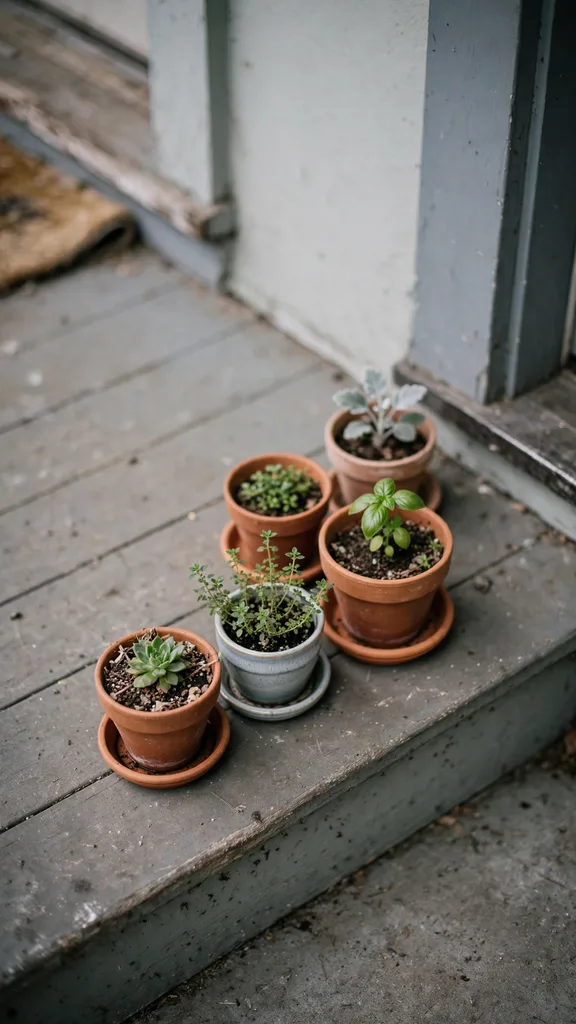
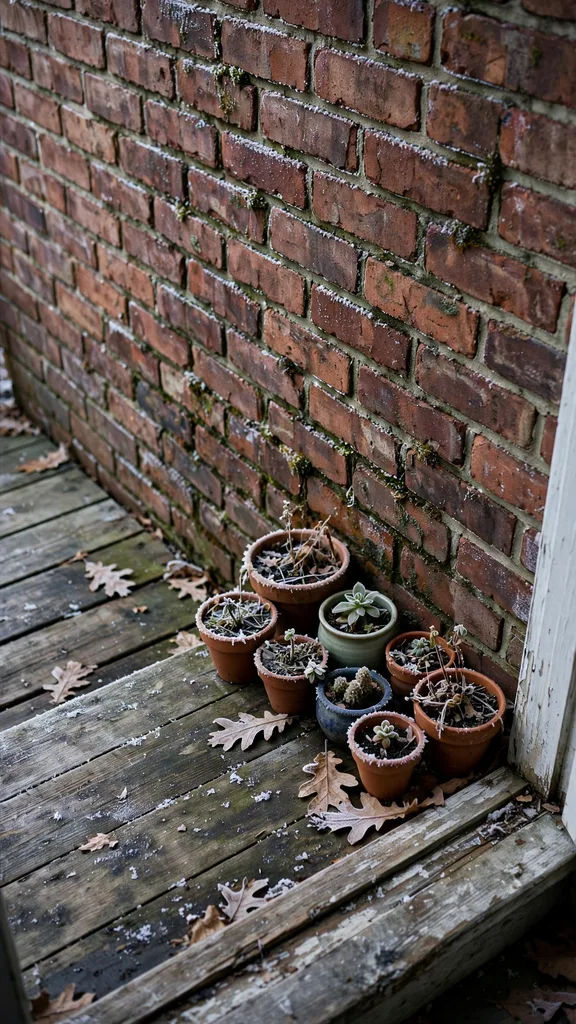
A frost night routine protects tiny-porch pots, because small pots lose heat faster than garden beds and their roots freeze sooner. Group pots tightly against a south or west facing brick wall before a frost night, water containers thoroughly the afternoon before a hard frost, and move the lightest pots indoors when frost turns hard.
[Oklahoma State University Extension](https://extension.okstate.edu/announcements/horticulture-tips/hort-tips-2026/early-to-mid-november/fall-and-winter-container-gardens) notes that containers should sit in a pot 25 to 30 centimetres (10 to 12 inches) or larger so soil neither dries too fast nor freezes solid, that wet soil retains heat better than dry soil, and that grouping containers against a brick wall shields them from freezing winds.
43. Wind Proofing Without Extra Weight
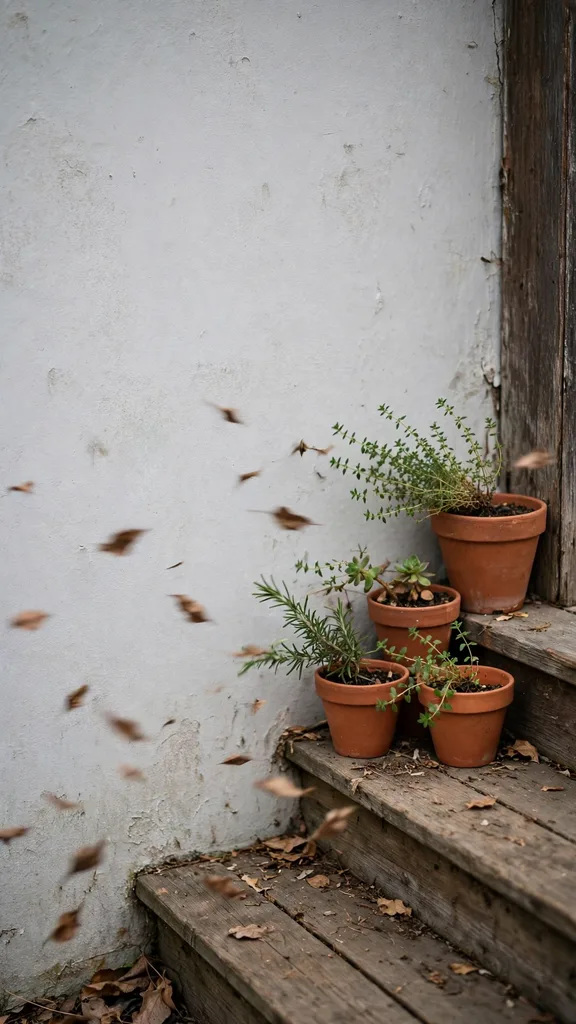
Wind proofing on a tiny porch uses placement before weight, because a tiny porch has no room for heavy ballast pots at every corner. Set pots on the wall side, keep tall pieces against two walls when possible, and add stones inside pot bases rather than beside pots, since stones inside the pot lower the centre of gravity without claiming floor.
Test every pot with a firm nudge from the side before guests arrive, and move any pot that rocks to a lower stand or a wider base. A display that survives a firm nudge survives a windy night, and a display that rocks needs a wider base before it needs more pieces.
44. Rain Week Reset in Fifteen Minutes
A rain week reset keeps a tiny porch tidy after wet weather, because rain splashes soil onto mats, soaks baskets, and tilts small pots. Shake the mats, empty the saucers, wipe the stool and crate tops, straighten the ladder shelf, and replace any pumpkin or gourd that softened, and the whole reset takes fifteen minutes.
Do the reset on the first dry afternoon after rain, since soil left on boards stains them and a soaked basket grows mould within days. A tiny porch reset weekly stays tidy all season, while a tiny porch left after rain looks tired before Thanksgiving arrives.
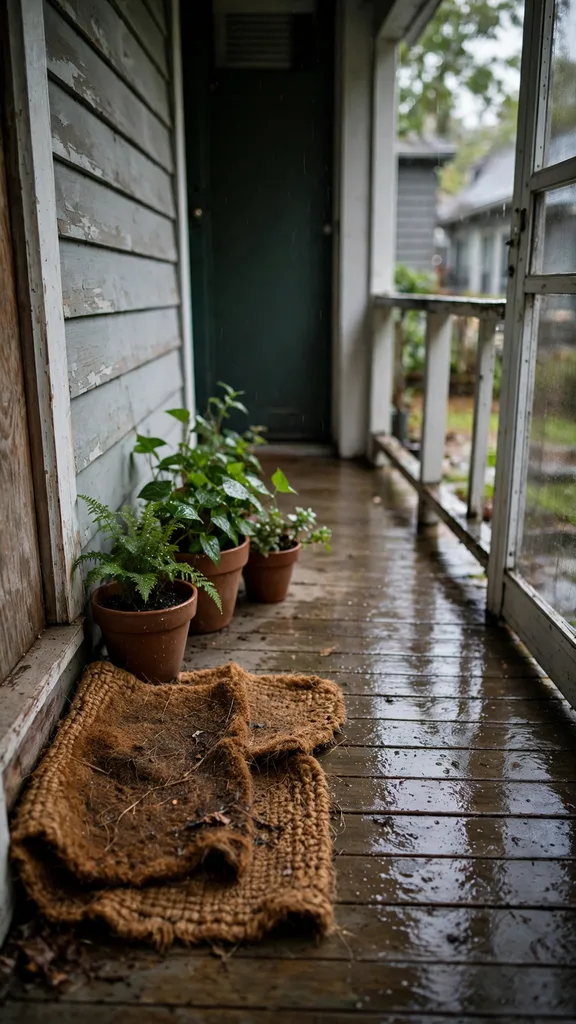
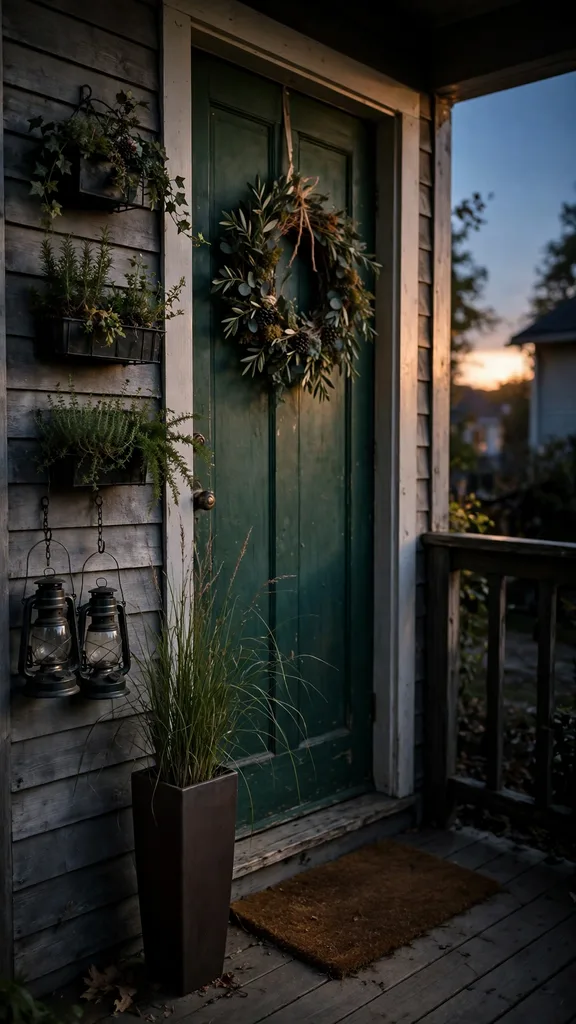
45. Whole Tiny Porch at Dusk: The Finished Display
The finished tiny porch at dusk is the proof of the whole system, because the wreath, the focal pot, the wall pieces, and the lantern light read together only when daylight fades and the porch light takes over. Stand at the walkway at dusk, check that the display reads as one shape, that no piece blocks the door, and that the walking channel stays clear in lantern light.
Photograph the display from the walkway at dusk before Thanksgiving, and use that photograph as the checklist for the holiday itself, because a dusk check catches a leaning pot and a dark corner that daylight hides. A tiny porch that passes its dusk check welcomes guests with a display that looks planned from the street to the door.
| Porch Type | Start With | Plant | Watch For |
|---|---|---|---|
| One-step landing | Wreath and doormat | Cushion mum in one pot | Door swing clearance |
| Narrow steps | Railing box | Pansy edge in a tray | Centre tread clear |
| Landing only, no steps | Tall narrow pot | Dwarf evergreen | Wall side only |
| Railing, no floor | Hanging basket | Trailing ivy | Head clearance |
| Windy tiny entry | Rolling caddy pot | Ornamental grass plume | Ballast weight |
| Shaded tiny porch | Slim door garland | Ornamental kale | Light for colour |
Frequently Asked Questions
How do I decorate a porch with almost no floor space?
Start with the door and the walls, since a wreath, a slim garland, wall pockets, and a wall-hook lantern decorate a tiny porch without claiming floor. Add one focal pot on the wall side only, keep the walking channel 60 centimetres (24 inches) wide, and stop there. A tiny porch with a decorated door and one pot looks finished, while a tiny porch with five floor pieces looks crowded.
What size pot suits a tiny porch?
A tall narrow pot 25 centimetres (10 inches) wide and 60 centimetres (24 inches) tall suits most tiny porches, since it gives height without width. A pot 25 to 30 centimetres (10 to 12 inches) wide or larger holds enough soil to resist fast drying and fast freezing. One tall pot beats a pair on a narrow entry, because a pair crowds a narrow door.
How many pumpkins fit a tiny porch?
Three small pumpkins fit a tiny porch, set side by side on the ground in one wall-side corner, each under 20 centimetres (8 inches) wide. Never stack pumpkins on a tiny porch, since a stack steals the focal point and risks a fall onto the walking path. Pumpkins act as one component of the whole system here, beside the focal pot and the wreath.
How do I keep a tiny porch safe at night?
Keep the walking channel 60 centimetres (24 inches) wide and free of pots, stems, and trailing vines, and keep the handrail grip zone clear. Use battery candles in lanterns and hurricanes, since they remove fire risk near dry stems, and set lights on timers for dusk. Walk the channel with a tray in both hands before guests arrive to test it.
When should the Thanksgiving porch come down?
Take the pumpkin group and the gourd bowl down after Thanksgiving, since small pumpkins soften fast and a decaying pumpkin stains a tiny landing quickly. Keep the dwarf evergreen, the wall pieces, and the lanterns, since they carry the porch into winter without a new purchase. Reset the mats and saucers on the same day the pumpkins come down.
A tiny porch decorated as one system welcomes guests from the walkway to the door, and it holds its shape through wind, rain, and Thanksgiving week itself. Measure first, choose one focal point, decorate the walls before the floor, and let the dusk check decide the final arrangement.