
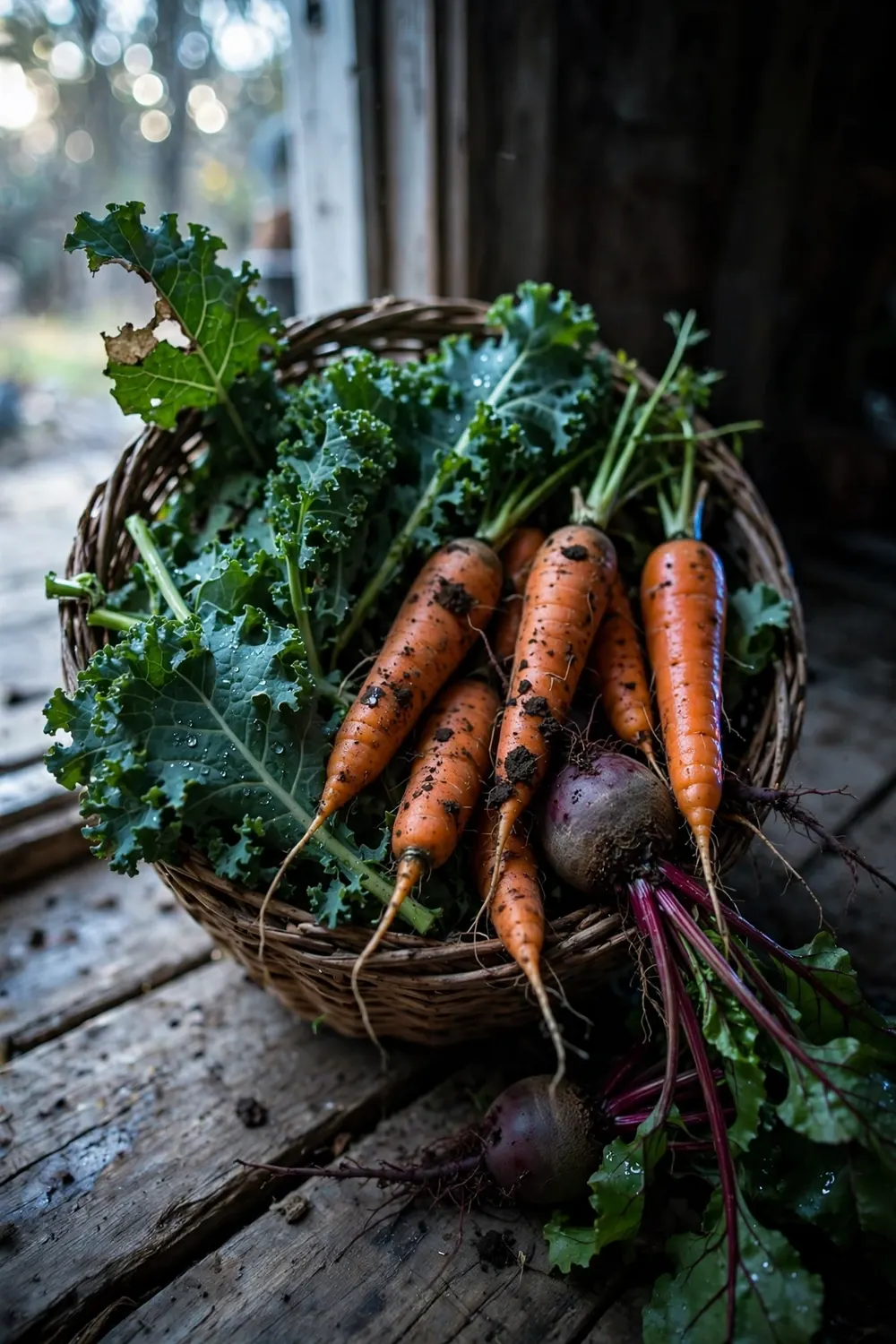

Search “best fertilizer for fall” and every engine hands you a lawn answer: winterizer ratios, Scotts and Jonathan Green, priced product panels from the big-box stores. This page is the garden answer. Feed 2 to 3 pounds of a complete fertilizer per 100 square feet when you plant fall vegetables, and lean on organic granulars while the soil is still warm enough for microbes to unlock them. That is the best fertilizer for fall vegetables strategy in two sentences. The rest of this page is 21 picks, from fast blood meal to kitchen scraps, each with its NPK, its form, and the crop group it serves.
Apply granulars in September or early October. Water them in. Top up with liquids once growth slows. Stop feeding when the soil turns cold and the microbes clock out.
The task list lives on the site’s fall gardening tips page, and the fall planting guide covers what to plant and when. Those pages treat fertilizing as a chore on a checklist. This page owns the products: what to buy, what to make, and what each bag actually contains.
Feed Early: Timing Decides More Than the Bag
Organic granular fertilizers do not feed plants directly. Soil microbes digest them first, and the nutrients become plant-available only after that digestion. The University of Minnesota’s organic soils module describes exactly this: low soluble nutrient content, with nutrients gradually released by microbes into plant-available forms. Microbes slow down as soil cools, so a granular spread in November mostly sits there until spring.
Put the slow feeders down early. September is the window for blood meal, cottonseed meal, feather-class meals, and composted manures. They need weeks of warm soil to start paying out. The same Extension notes draw the line at the previous crop: beds that grew vigorously need little or nothing more, while tired beds get the full baseline feed at planting time.
Liquids are the October tool. Fish emulsion, liquid kelp, and compost tea carry soluble nutrients the plant can take up within days, no microbial middleman required. Use them as the top-up once the granulars are down and growth is visibly slowing. If the previous bed grew vigorously on a good feed, the same Extension notes say you may need little or no additional fertilizer. Test the soil before you buy anything. Guessing wastes money and overloads phosphorus.
The 21 Best Fertilizers for Fall Vegetables at a Glance
| # | Fertilizer | NPK | Form | Best For |
|---|---|---|---|---|
| 1 | Blood meal | 12-0-0 | Granular | Leafy greens, heavy feeders |
| 2 | Cottonseed meal | 6-3-1 | Granular | Brassicas, steady feeding |
| 3 | Bone meal | 3-15-0 | Granular | Root crops, garlic at planting |
| 4 | Alfalfa meal | 2.5-0.5-2 | Granular | All vegetables, gentle all-rounder |
| 5 | Soybean meal | 7-1-1.5 | Granular | Greens, fast N without burn risk of blood |
| 6 | Fish meal | 10-6-0 | Granular | Transplants, hungry brassicas |
| 7 | Bat guano | 10-4.5-2 | Granular | Containers, quick organic N |
| 8 | Fish emulsion | 5-2-2 | Liquid | Mid-fall rescue feeding |
| 9 | Liquid kelp | 1-0-2 | Liquid | Transplants, stress recovery |
| 10 | Compost tea | Trace | Liquid | Soil biology boost |
| 11 | Complete fertilizer | 5-10-10 or 10-10-10 | Granular or liquid | Whole-bed baseline at planting |
| 12 | Used coffee grounds | Low, N-forward | DIY | Leafy greens, acid-tolerant crops |
| 13 | Banana peels | Low, K-forward | DIY | Fruiting and root crops |
| 14 | Crushed eggshells | Calcium, trace NPK | DIY | Calcium-hungry crops, slow release |
| 15 | Wood ash | 0-2-5 | DIY | Root crops, potassium top-up |
| 16 | Finished compost | 1-1-1 | DIY | Every bed, soil-first feeding |
| 17 | Worm castings | 1-0-0 | DIY | Seedlings, gentle top-dress |
| 18 | Leafy greens strategy | High-N target | Feeding plan | Spinach, lettuce, kale, chard |
| 19 | Brassicas strategy | Balanced target | Feeding plan | Cabbage, broccoli, cauliflower |
| 20 | Root crops strategy | Low-N, P-K target | Feeding plan | Carrots, beets, turnips, radishes |
| 21 | Garlic and overwintering onions | P at planting | Feeding plan | Garlic, multiplier onions |
Read the Bag Before You Buy
The three numbers on every fertilizer bag are always nitrogen, phosphate, and potash, in that order. A 12-0-0 feeds leaves. A 3-15-0 feeds roots. A 1-1-1 feeds a little of everything. Read the numbers, not the brand name.
The “derived from” line matters more than the front label for organics. It names the actual meals inside: blood meal, bone meal, kelp, sulfate of potash. Two bags with identical NPK can behave differently if one is feather meal and the other is fish meal, because the release speeds differ. The guaranteed analysis is the promise; the ingredient list is the personality.
Skip any product that hides its NPK or lists “proprietary blend” with no numbers. You cannot match a fertilizer to a crop without the ratio, and a fall garden gives you no season to waste on mystery meals.
Granular Organics: The Slow Feeders
Spread these in September while microbes are still working. Scratch them into the top 5 cm of soil and water well.
1. Blood Meal
Sprinkle blood meal around leafy greens and other nitrogen-hungry crops at planting time. It is the fastest-acting granular organic on this list, and it corrects pale, slow leaves within weeks.
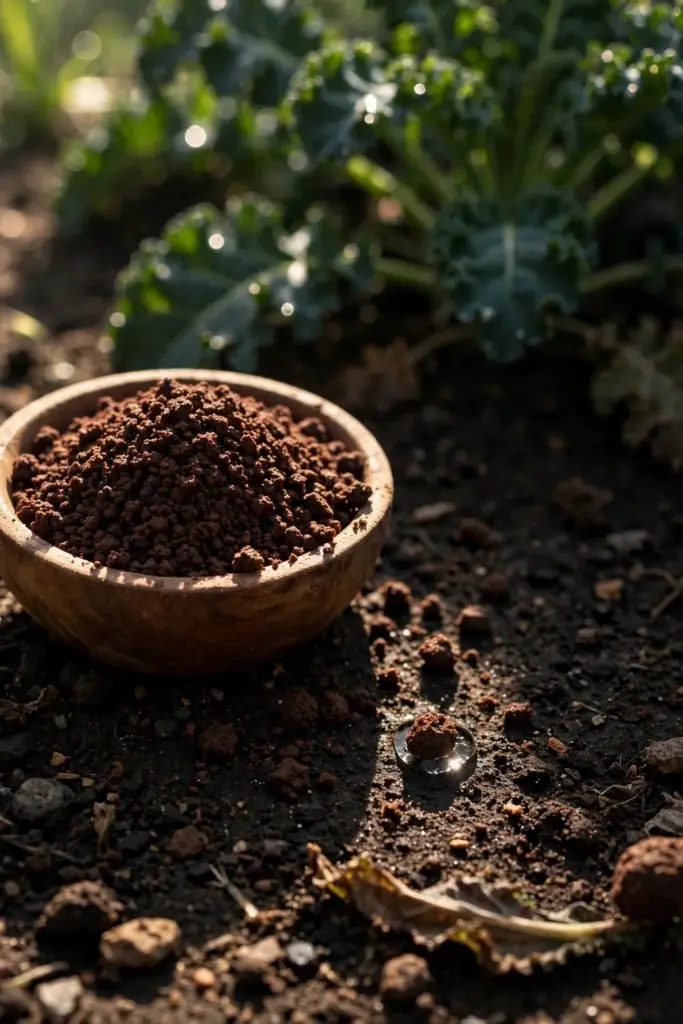
K-State’s composition tables for natural fertilizer materials analyze dried blood meal at 13.0% nitrogen with only traces of phosphorus and potassium, which is why most bags print 12-0-0. The concentration cuts both ways. A heavy hand burns foliage, so measure it and keep it off stems.
NPK: 12-0-0 | Form: Granular | Best for: Leafy greens
2. Cottonseed Meal
Work cottonseed meal into brassica beds two to three weeks before transplanting. It releases nitrogen steadily over the cool weeks of early fall instead of dumping it all at once.
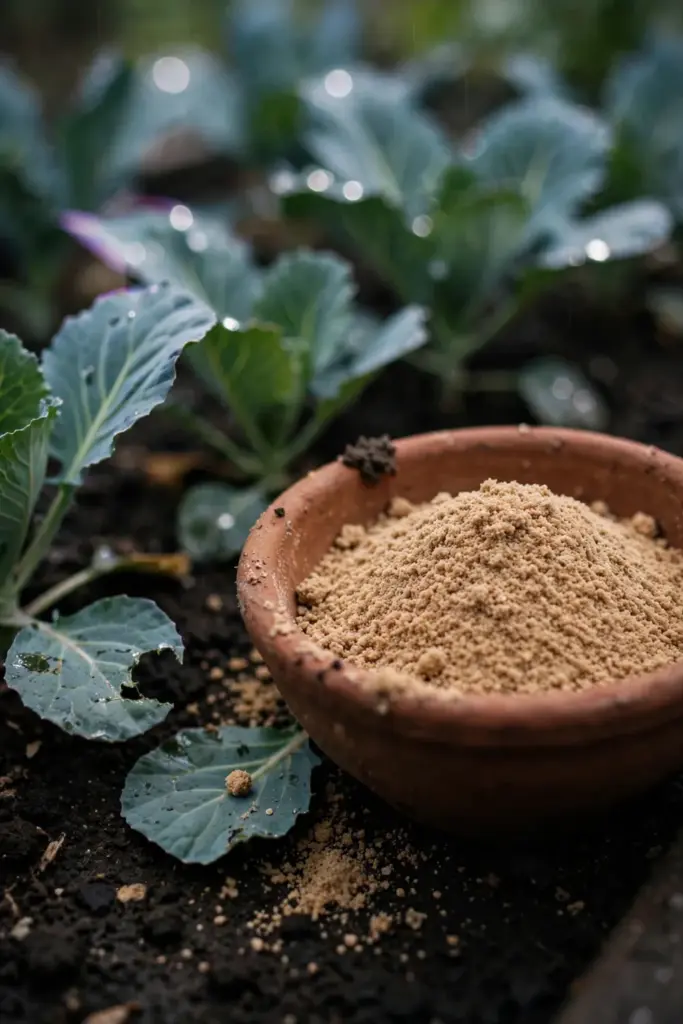
K-State’s tables list cottonseed meal as a 6-3-1 material, a steady nitrogen release with enough phosphorus to matter. The mild acidity suits cabbage, broccoli, and cauliflower. Buy organic-certified meal if the conventional cotton pesticide load bothers you.
NPK: 6-3-1 | Form: Granular | Best for: Brassicas
3. Bone Meal
Drop a tablespoon of bone meal into each planting hole for garlic, carrots, and beets. Phosphorus drives root development, and fall is when roots do their decisive growing.
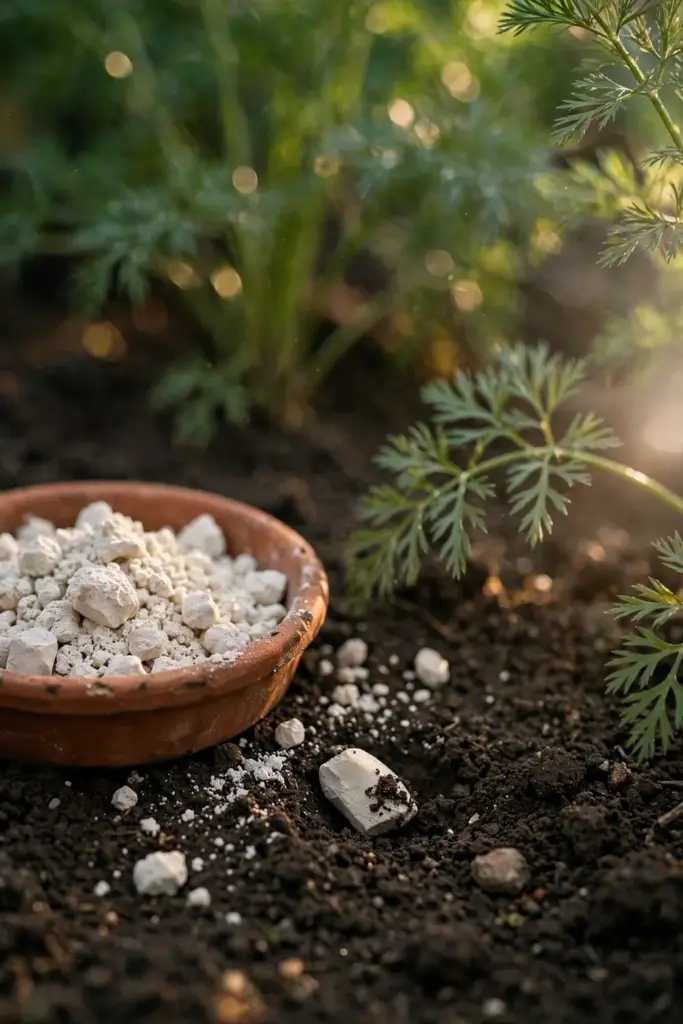
K-State’s tables list steamed bone meal as a phosphorus-heavy 2-22 material, though retail bags usually print 3-15-0. It breaks down slowly, which is a feature in fall: the phosphorus is still there when spring growth resumes. Keep it away from dogs; they dig for it.
NPK: 3-15-0 | Form: Granular | Best for: Root crops, garlic
4. Alfalfa Meal
Broadcast alfalfa meal across any vegetable bed as the gentle all-rounder. It feeds modestly, adds organic matter, and never burns, which makes it the safest pick for beginners mixing their first fall feed.
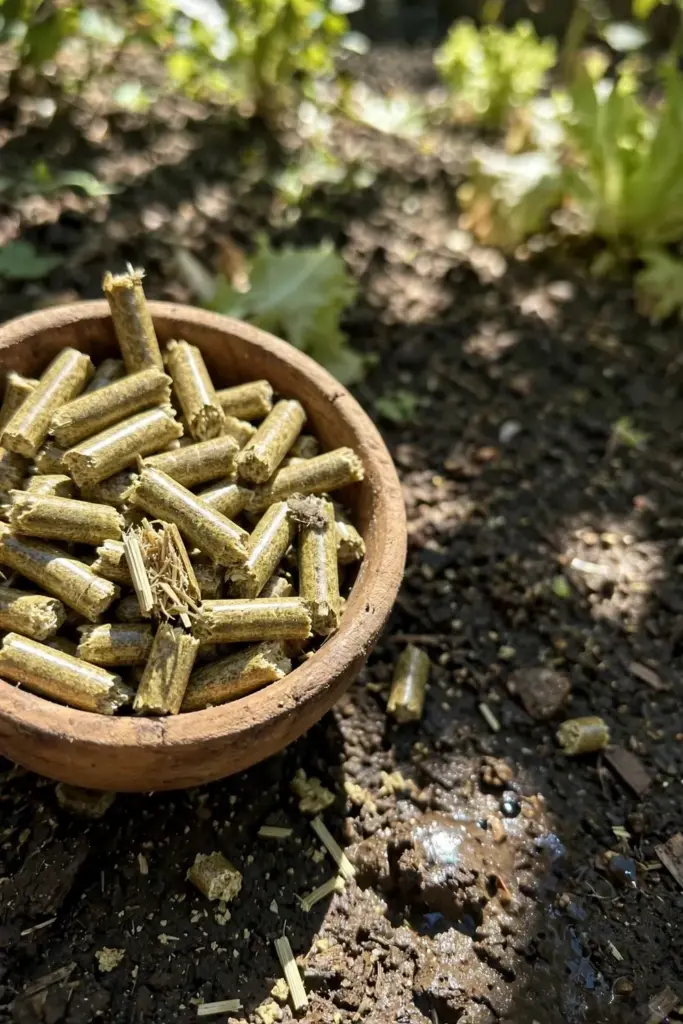
K-State’s analysis of alfalfa hay reads 2.5-0.5-2.0, and the meal runs close to that. Pellets sold for animal feed work fine; they crumble after one watering. Expect a sweet, hay-like smell for a day.
NPK: 2.5-0.5-2 | Form: Granular | Best for: All vegetables
5. Soybean Meal
Choose soybean meal when you want strong nitrogen without blood meal’s burn risk. It suits direct-sown spinach and lettuce, where seedlings sit close to the fertilizer.
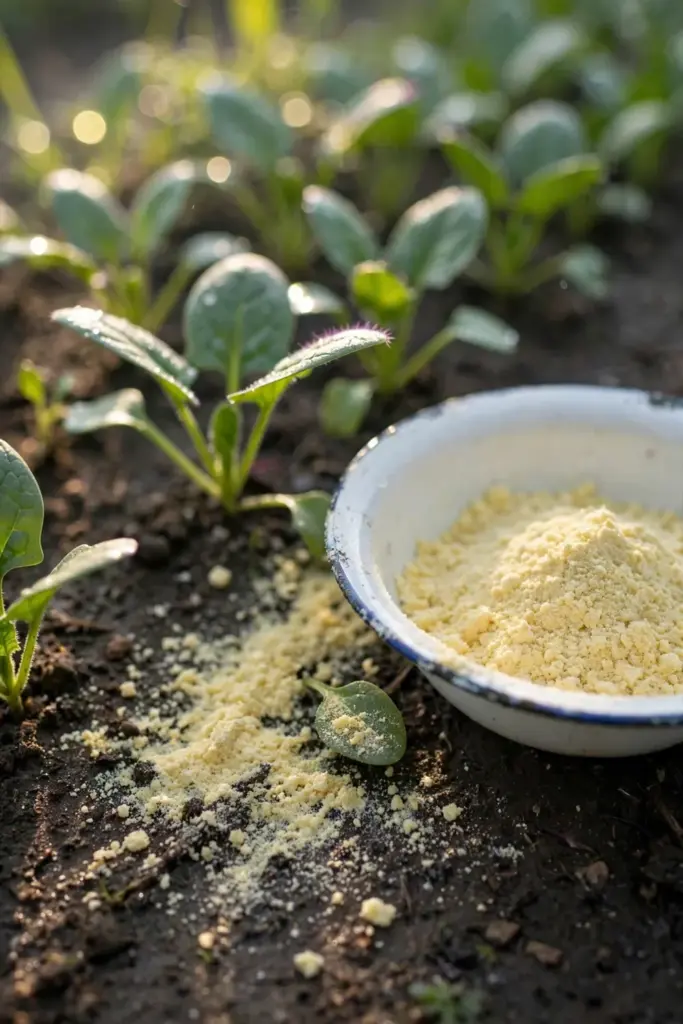
K-State lists soybean meal as a 7-1.2-1.5 material. It mineralizes faster than most meals, so it bridges the gap between September spreading and October growth. Store the bag sealed; mice find it before you do.
NPK: 7-1-1.5 | Form: Granular | Best for: Direct-sown greens
6. Fish Meal
Side-dress fish meal around transplants a week after they go in. The nitrogen-phosphorus punch pushes both leaf and root at the moment a transplant decides whether to thrive or stall.
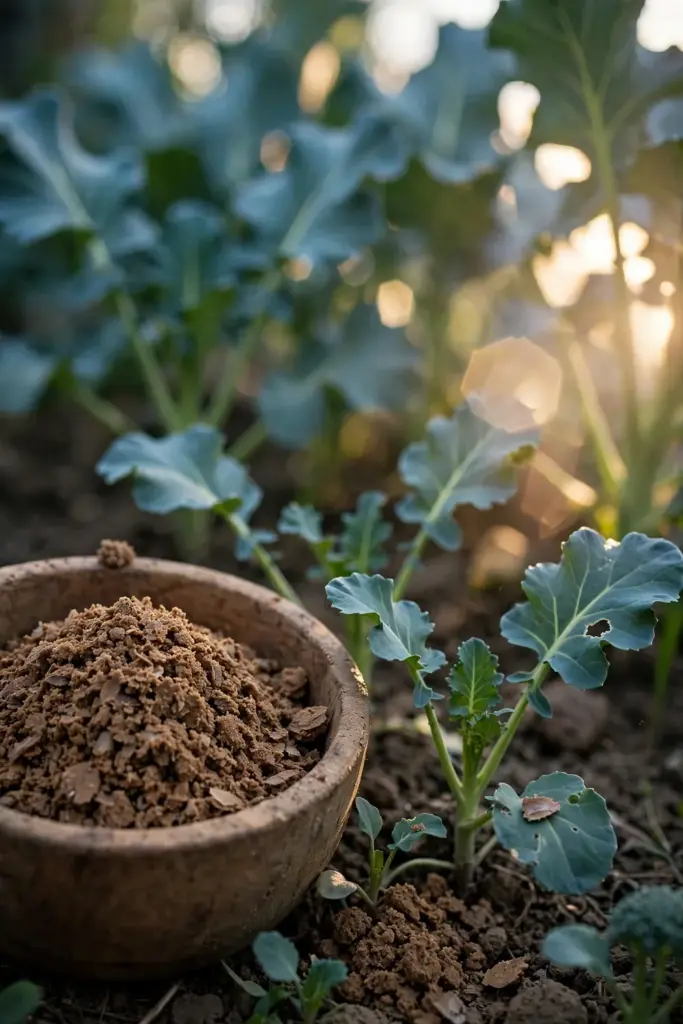
K-State’s tables analyze fish meal as a 10-6-0 material. It smells like a dock for two days, then the smell fades. Water it in well and mulch over it to lock the odor down.
NPK: 10-6-0 | Form: Granular | Best for: Transplants, brassicas
7. Bat Guano
Top-dress containers with bat guano when potted vegetables stall in fall. Containers leach fast, and guano’s concentrated nitrogen replaces what watering washed out.
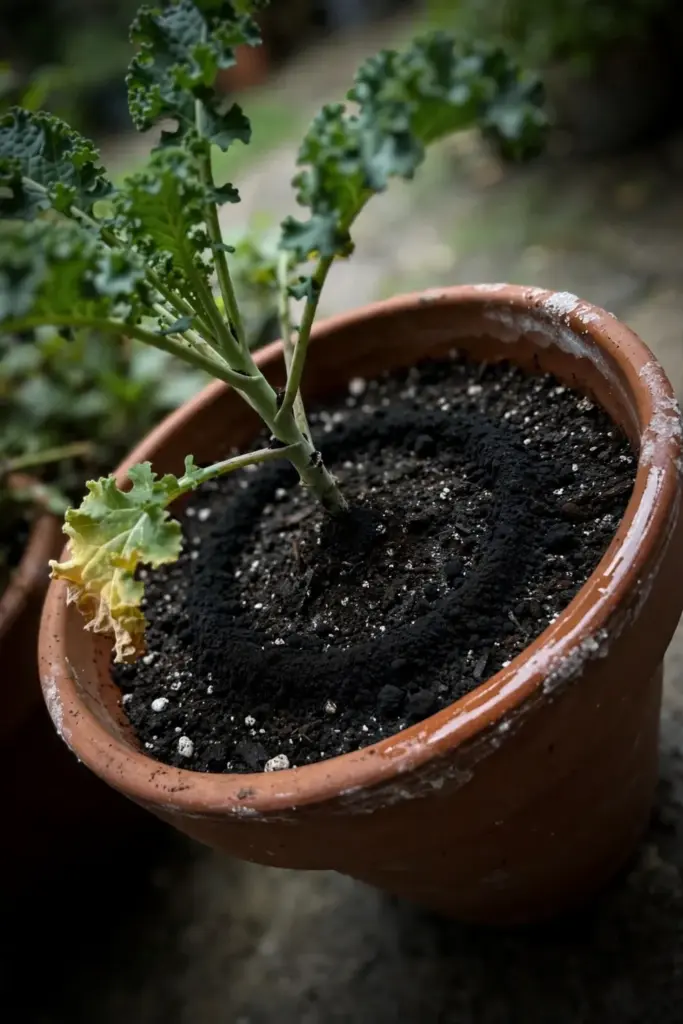
K-State analyzes bat guano as a 10-4.5-2 material. A little goes a long way in a pot; a tablespoon per 20-cm container is plenty. Wear a dust mask when handling the dry powder.
NPK: 10-4.5-2 | Form: Granular | Best for: Containers
Liquid Feeds: The Fast Lane
Mix to label strength, never stronger. Apply in the morning so foliage dries by evening.
8. Fish Emulsion
Drench yellowing greens with diluted fish emulsion for the fastest organic correction available. Soluble nitrogen reaches the roots within days, which matters when October light is already fading.
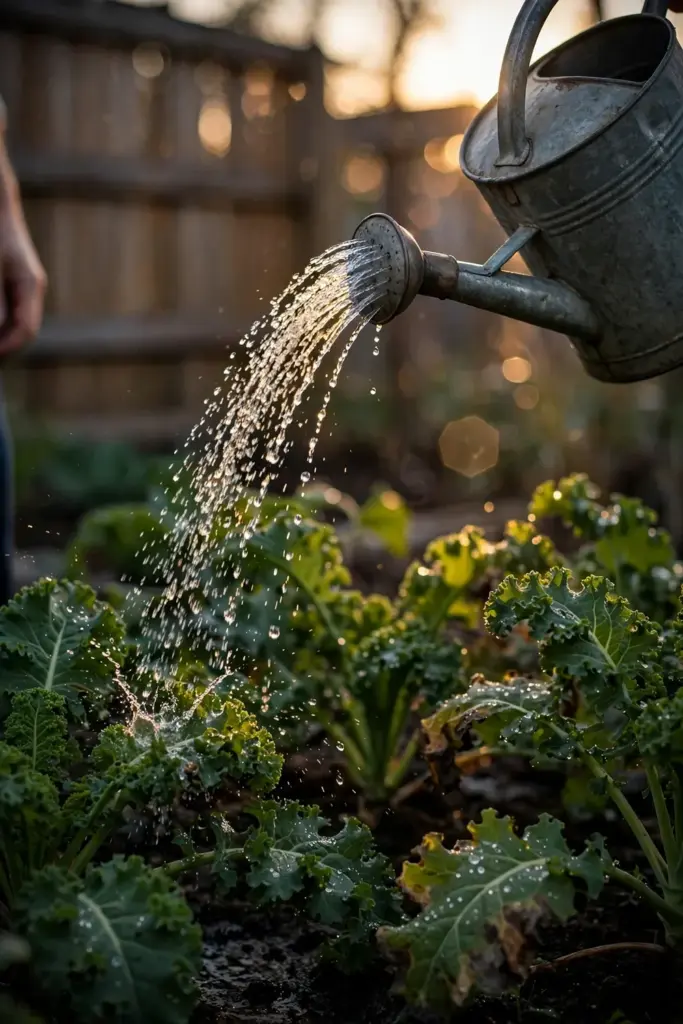
Most bottles land near 5-2-2; the dry fish meal behind it analyzes 10-6-0 in K-State’s tables. Dilute to half strength for seedlings. The smell clears within a day outdoors.
NPK: 5-2-2 | Form: Liquid | Best for: Mid-fall rescue feeding
9. Liquid Kelp
Soak transplants with liquid kelp at planting time. Kelp is a biostimulant and micronutrient carrier rather than a true fertilizer, and it shines at reducing transplant shock.
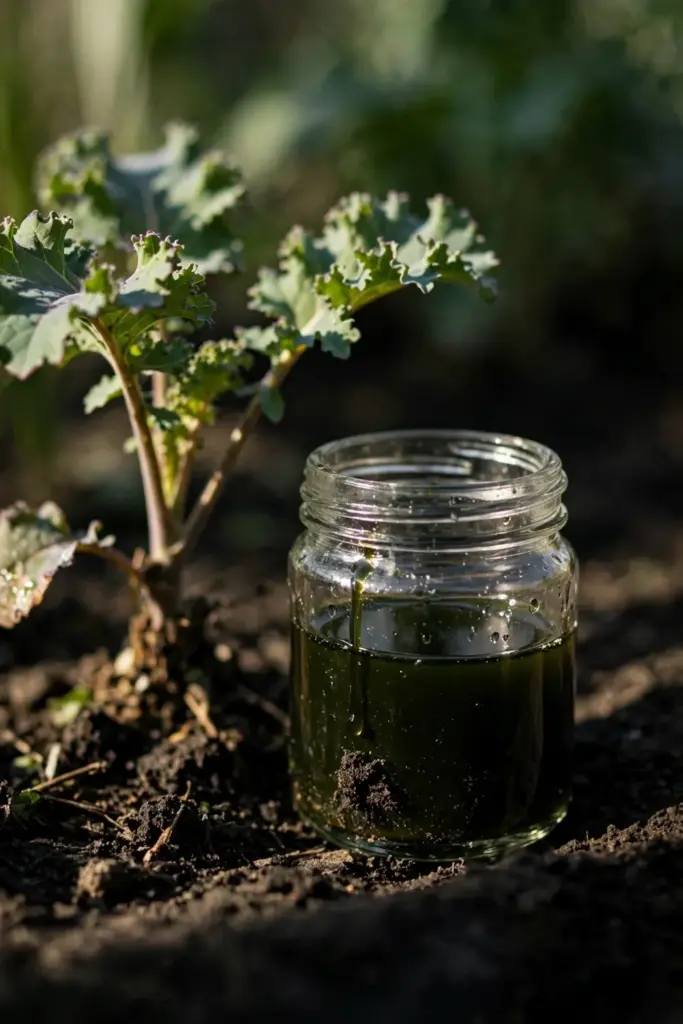
K-State lists raw seaweed (kelp) as a 0.6-0-1.3 material; commercial extracts concentrate to roughly 1-0-2. Pair it with a real nitrogen source. Kelp alone will not carry a hungry crop.
NPK: 1-0-2 | Form: Liquid | Best for: Transplants, stress recovery
10. Compost Tea
Brew compost tea when the goal is biology, not bulk nutrients. A well-aerated brew floods the root zone with microbes that keep unlocking the granulars you spread in September.
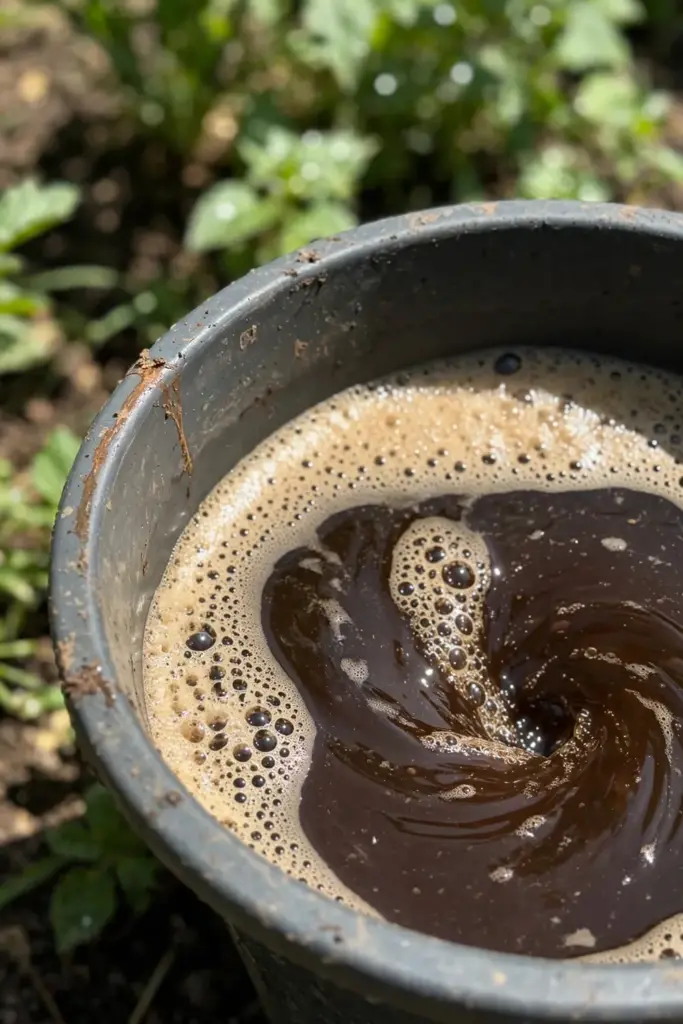
Nutrient content is trace and recipe-dependent, so do not count it as the feed. Count it as the workforce. Use it within hours of brewing; the microbes die off once aeration stops.
A brew gone anaerobic tells on itself. It smells like rot instead of earth, and that batch goes on the compost pile, not the beds. Keep the air pump running the whole brew, 24 hours minimum, and never seal the bucket.
NPK: Trace, varies | Form: Liquid | Best for: Soil biology
11. Complete Fertilizer (5-10-10 or 10-10-10)
Buy one bag of complete fertilizer as the bed’s baseline. When the soil test is missing and planting day is here, this is the honest default.
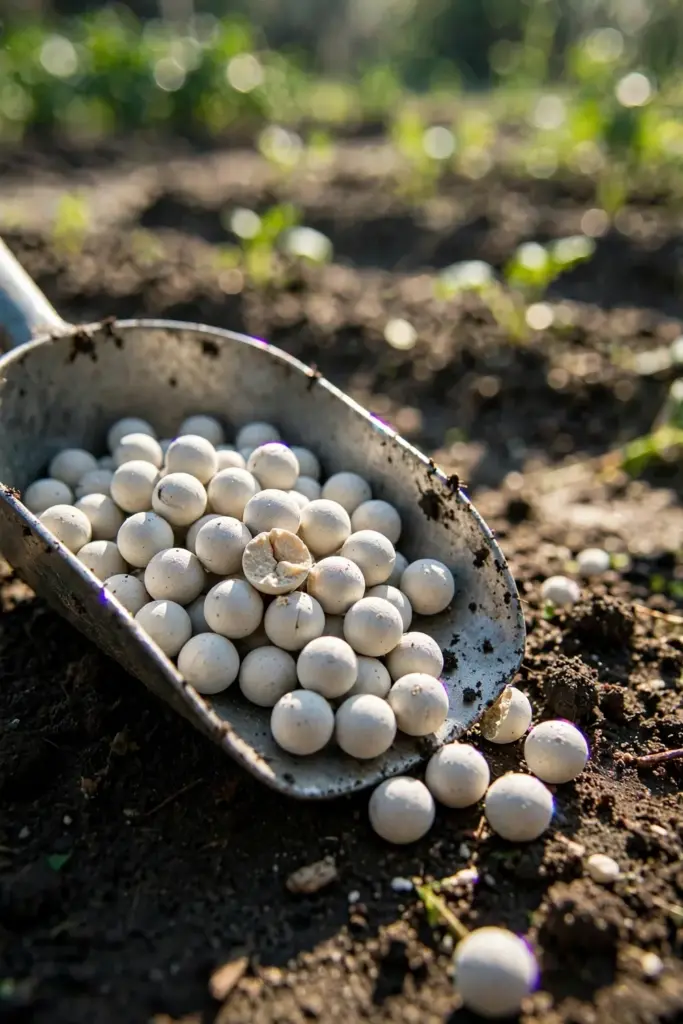
Carter County Extension’s fall vegetable notes recommend about 2 to 3 pounds of 5-10-10 or 10-10-10 per 100 square feet for fall plantings where the previous crop was poorly fed. Water-soluble versions work as the liquid top-up later in the season. Do not exceed the rate; more is not better.
NPK: 5-10-10 or 10-10-10 | Form: Granular or liquid | Best for: Whole-bed baseline
DIY From the Kitchen
Free, slow, and honest. None of these replace a real feed for hungry crops, but all of them improve the bed.
12. Used Coffee Grounds
Scratch used coffee grounds into the top 3 cm around leafy greens. They add nitrogen in a slow, gentle form and improve soil texture as they break down.
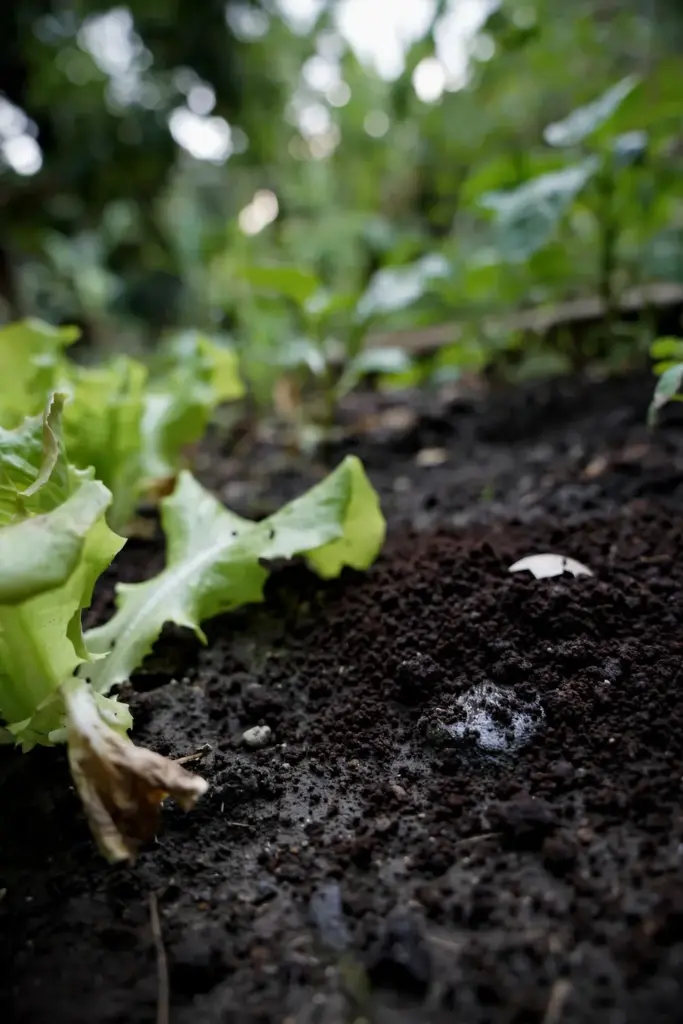
Apply a thin layer, no more than 1 cm, and mix it in rather than mounding it. Thick mats of grounds shed water and mold. Acid-loving crops tolerate them best; heavy, repeated use nudges pH down over seasons.
The other home for grounds is the compost bin. They count as a green: nitrogen-rich and wet. Balance each bucket of grounds with twice the volume of dry leaves or shredded cardboard, or the pile turns slimy.
NPK: Low, nitrogen-forward | Form: DIY | Best for: Leafy greens
13. Banana Peels
Chop banana peels and bury them 10 cm deep beside fruiting and root crops. They break down over weeks, releasing potassium where roots can find it.
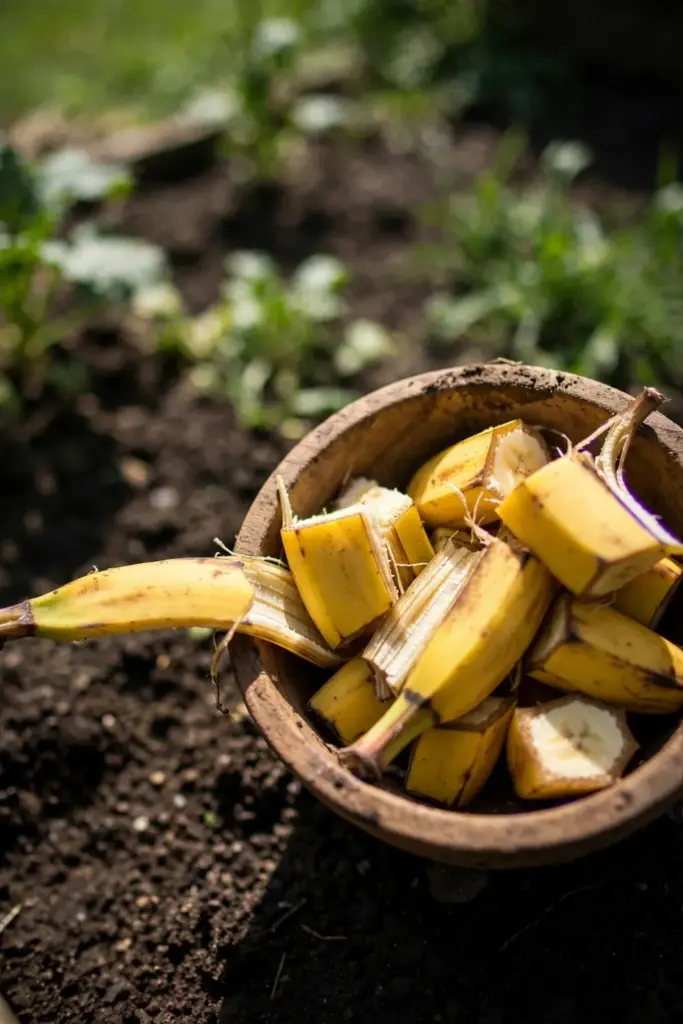
Dried and ground peels work faster than fresh chunks. This is a supplement, not a feed: pair it with a nitrogen source for leafy growth.
Whole peels left on the surface are a fruit-fly nursery within days. Bury every piece at least 10 cm deep or dry them first. The dried chips disappear into the soil in weeks with no smell and no flies.
NPK: Low, potassium-forward | Form: DIY | Best for: Root and fruiting crops
14. Crushed Eggshells
Crush eggshells fine and work them into beds for calcium-hungry crops. Calcium moves slowly through soil, so fall application pays off in spring.
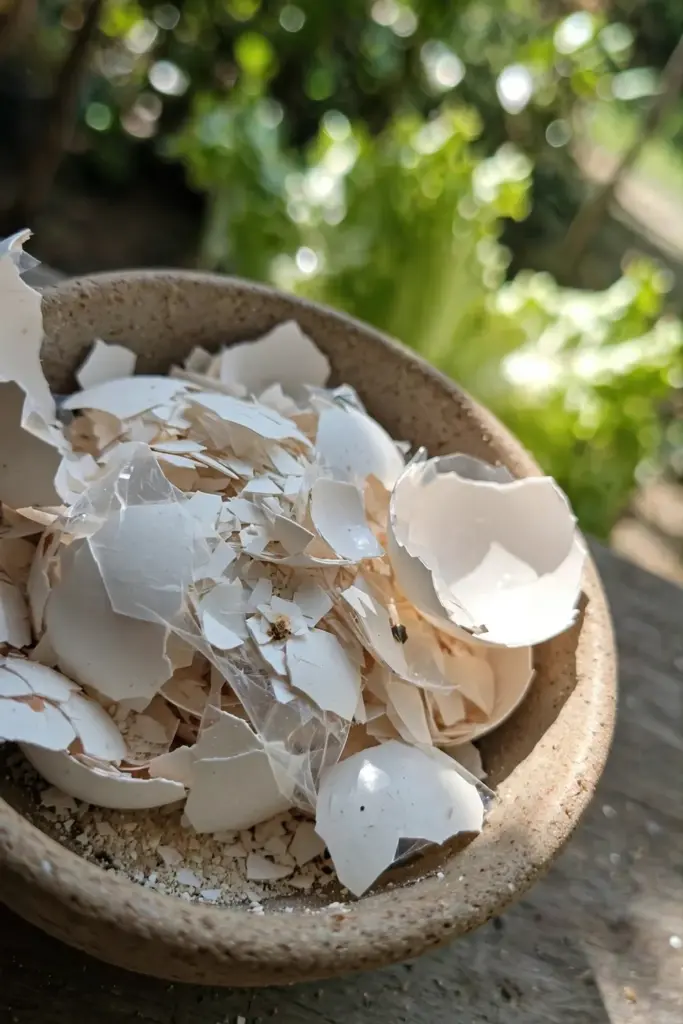
Coarse shells sit unchanged for a year. Grind them to grit or powder for any real effect within the season. They also add grit that slugs dislike crossing, a small bonus around lettuce.
Bake the shells 10 minutes at low heat before crushing. Dry shells shatter into powder with a rolling pin instead of bending, and the heat kills any egg residue that would smell in the jar where you store them.
NPK: Calcium, trace NPK | Form: DIY | Best for: Calcium-hungry crops
15. Wood Ash
Dust wood ash lightly over root-crop beds for potassium. K-State’s tables analyze wood ashes as a 0-2-5 material: phosphate and potash, no nitrogen.
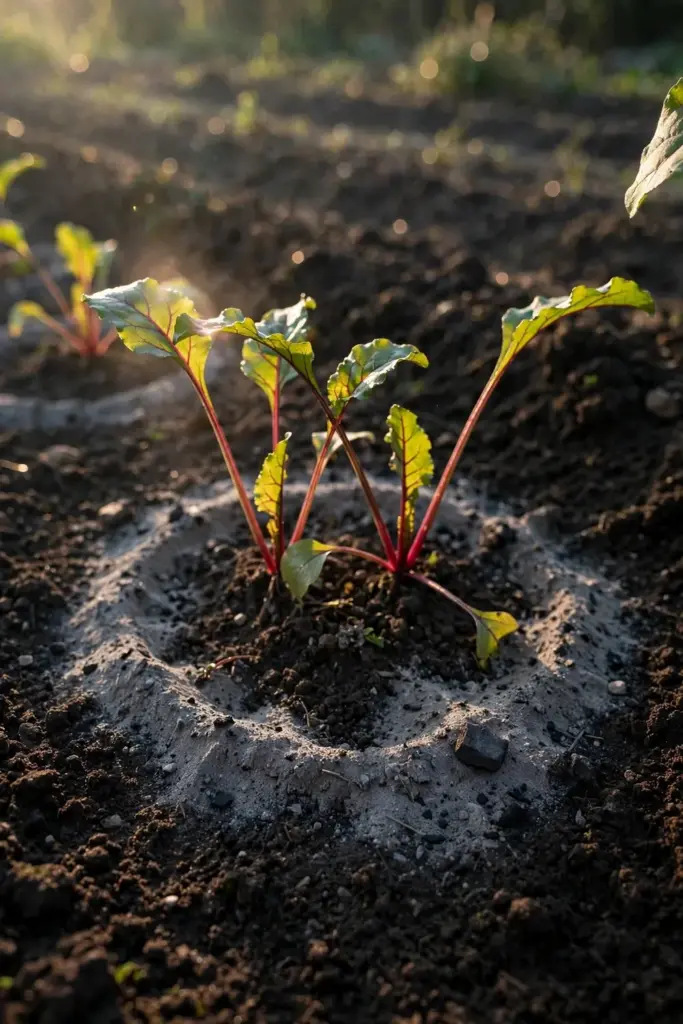
Ash raises pH, so skip it where blueberries or potatoes grow, and never use ash from treated lumber, painted wood, or glossy paper. A thin dusting, about a handful per square meter, is enough. More burns.
NPK: 0-2-5 | Form: DIY | Best for: Root crops
16. Finished Compost
Spread 3 to 5 cm of finished compost over every bed before planting. Compost feeds the soil first and the plant second: structure, water holding, and a slow trickle of nutrients.
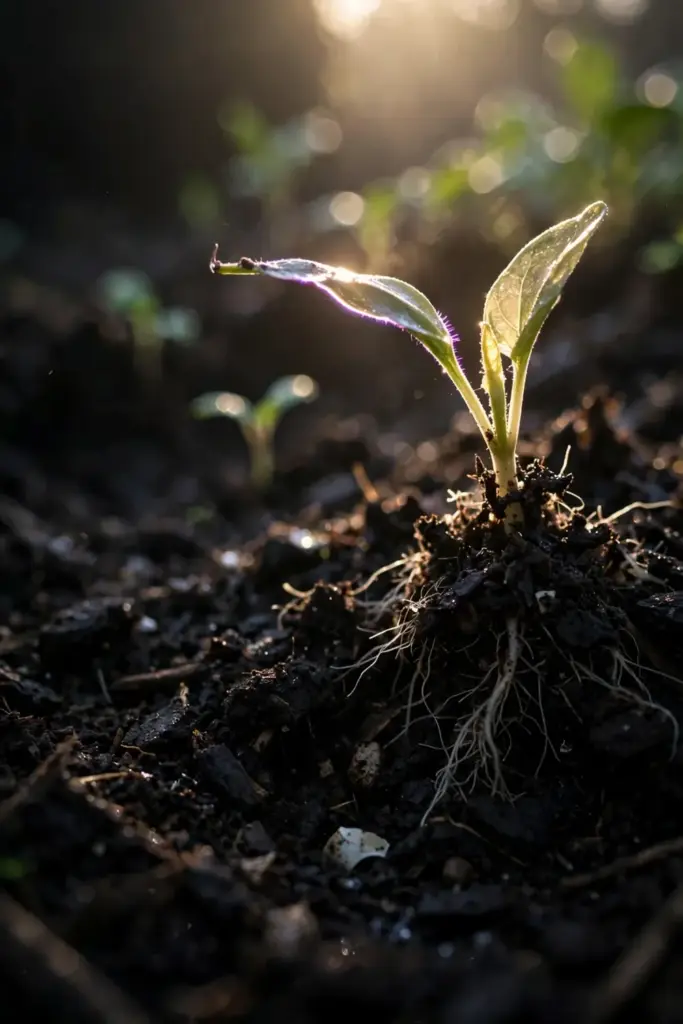
Finished compost usually lands near 1-1-1, varying with feedstock. Do not count on it as the fall feed for hungry brassicas. Count on it as the foundation everything else sits on.
Unfinished compost is the trap. Woody, half-broken material ties up nitrogen as it continues decomposing, and seedlings planted into it stall yellow. If you can still recognize the ingredients, it is mulch, not compost: keep it on top, not mixed in.
NPK: About 1-1-1, varies | Form: DIY | Best for: Every bed
17. Worm Castings
Top-dress seedlings and transplants with worm castings. They carry gentle nutrition plus the densest microbial load of any amendment here, which helps young roots establish in cooling soil.
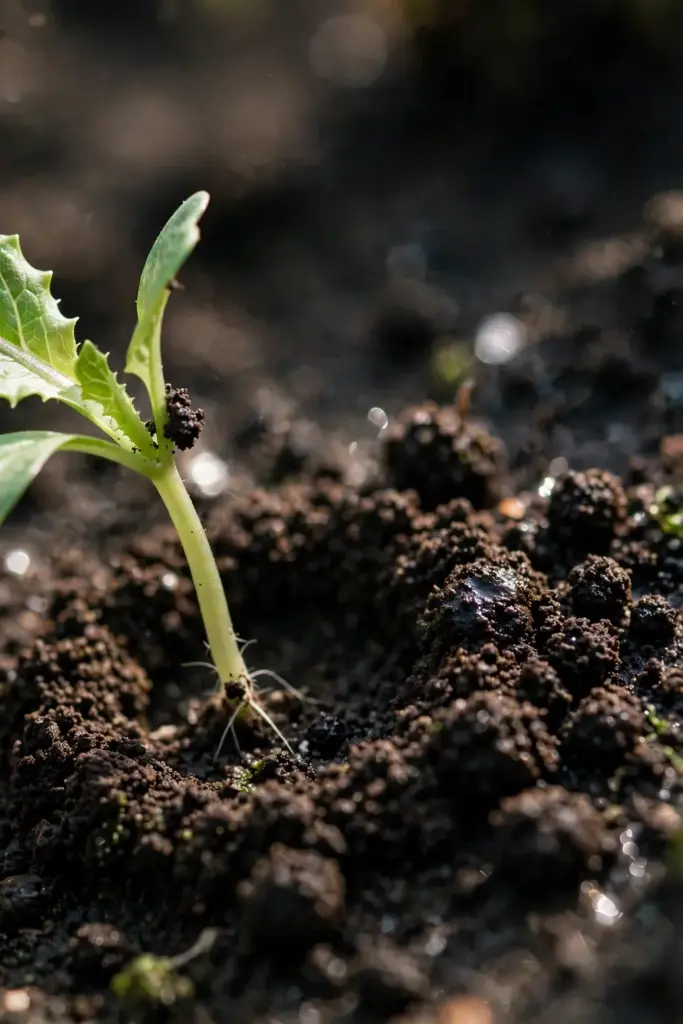
A 1-cm layer around the stem, kept off the stem itself, is the dose. Castings never burn, so they suit the most cautious gardener. They cost more than they feed; use them where it counts, not broadcast.
NPK: About 1-0-0 | Form: DIY | Best for: Seedlings, transplants
Feed by Crop, Not by Habit
Match the fertilizer to what the crop is building right now. Leaves want nitrogen. Roots want phosphorus and potassium. Brassicas want both, steadily.
18. Leafy Greens: Push Nitrogen
Feed spinach, lettuce, kale, and chard for leaves, because leaves are the harvest. Blood meal at planting plus a fish-emulsion drench three weeks later carries most greens to harvest.
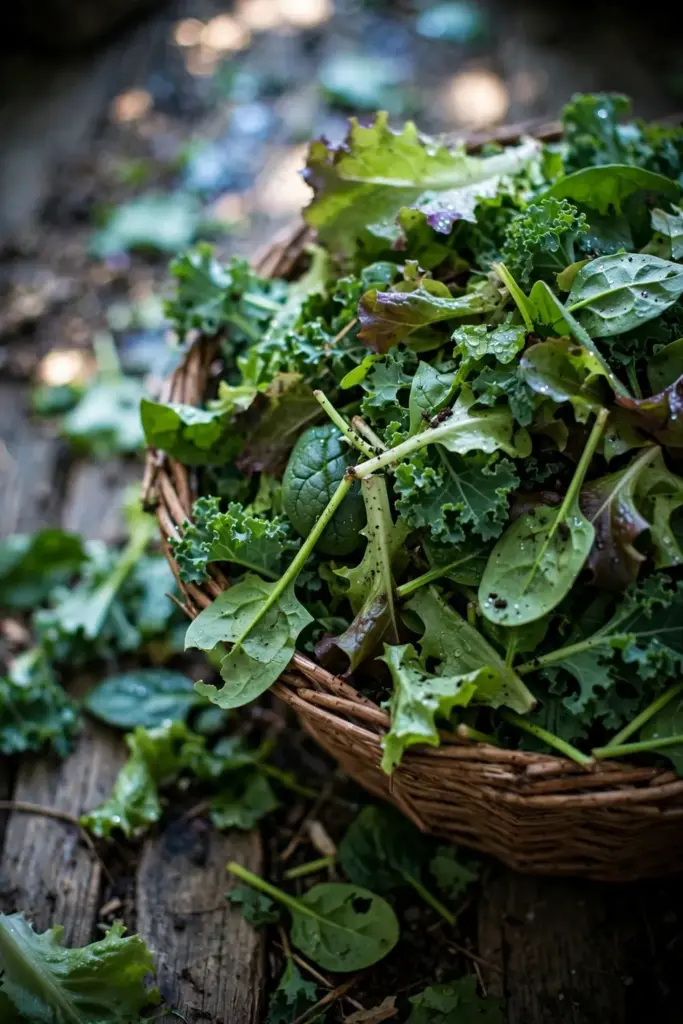
Pale lower leaves mean nitrogen ran out. Do not wait for the whole plant to yellow. Side-dress immediately and water it in. The fall vegetables to plant guide lists which greens still start in October.
NPK target: High-N (12-0-0 or 6-3-1) | Form: Feeding plan | Best for: Spinach, lettuce, kale, chard
19. Brassicas: Feed Steady, Not Heavy
Feed cabbage, broccoli, and cauliflower with a balanced base and a mid-season nitrogen top-up. Cottonseed meal or a complete 5-10-10 at transplanting, then fish emulsion when heads start forming.
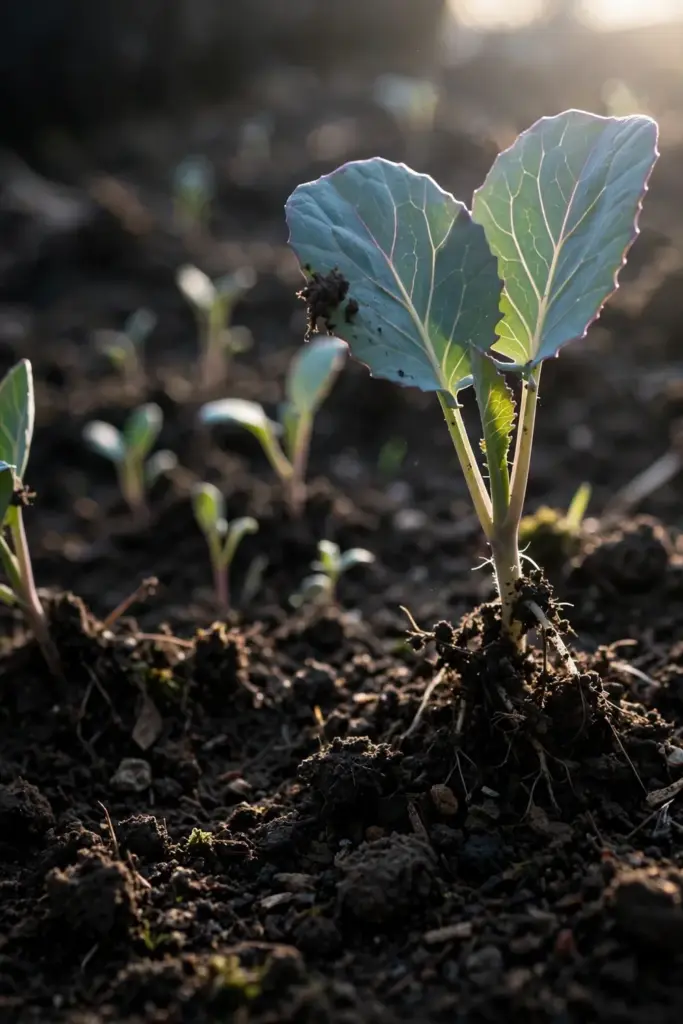
One heavy dose early grows loose, leafy heads. Split the feed and the heads tighten. Mulch after the second feed to hold moisture through the dry weeks of early fall.
NPK target: Balanced (5-10-10) | Form: Feeding plan | Best for: Cabbage, broccoli, cauliflower
20. Root Crops: Starve the Tops
Hold nitrogen back on carrots, beets, turnips, and radishes. Excess nitrogen grows beautiful tops and forked, hairy roots.
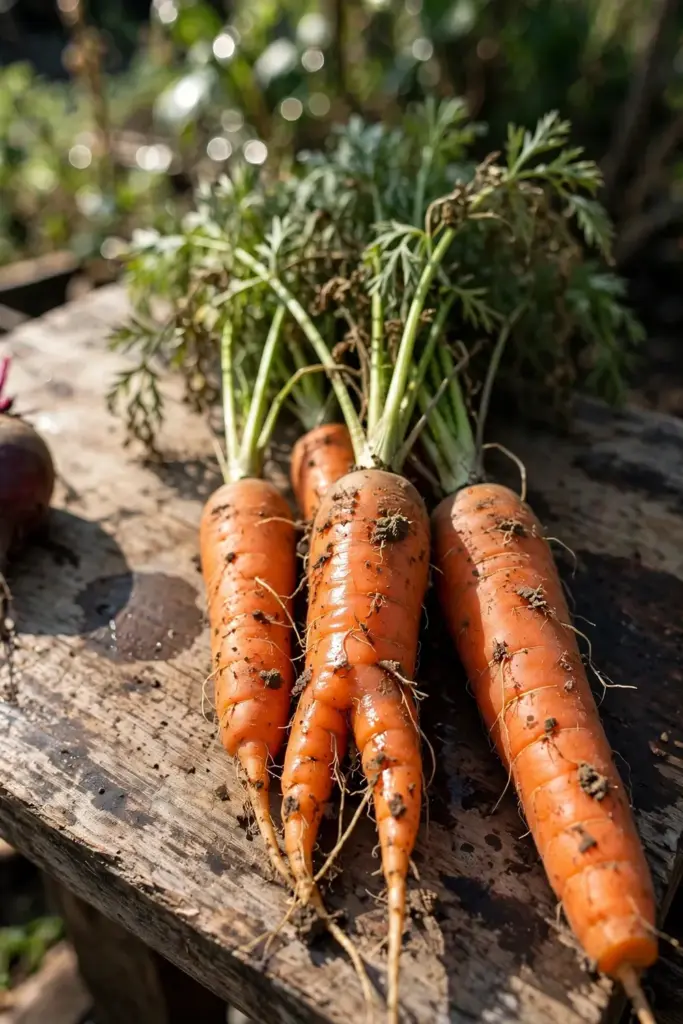
Bone meal at sowing plus a light wood-ash dusting mid-season gives roots the phosphorus and potassium they want without the nitrogen they abuse. Thin on time; crowded roots never size up no matter how well fed.
NPK target: Low-N, P-K (3-15-0 + 0-2-5) | Form: Feeding plan | Best for: Carrots, beets, turnips, radishes
21. Garlic and Overwintering Onions: Phosphorus at Planting
Plant garlic with bone meal in the hole and compost over the top. Fall feeding for garlic is about root establishment before the ground freezes, not top growth.
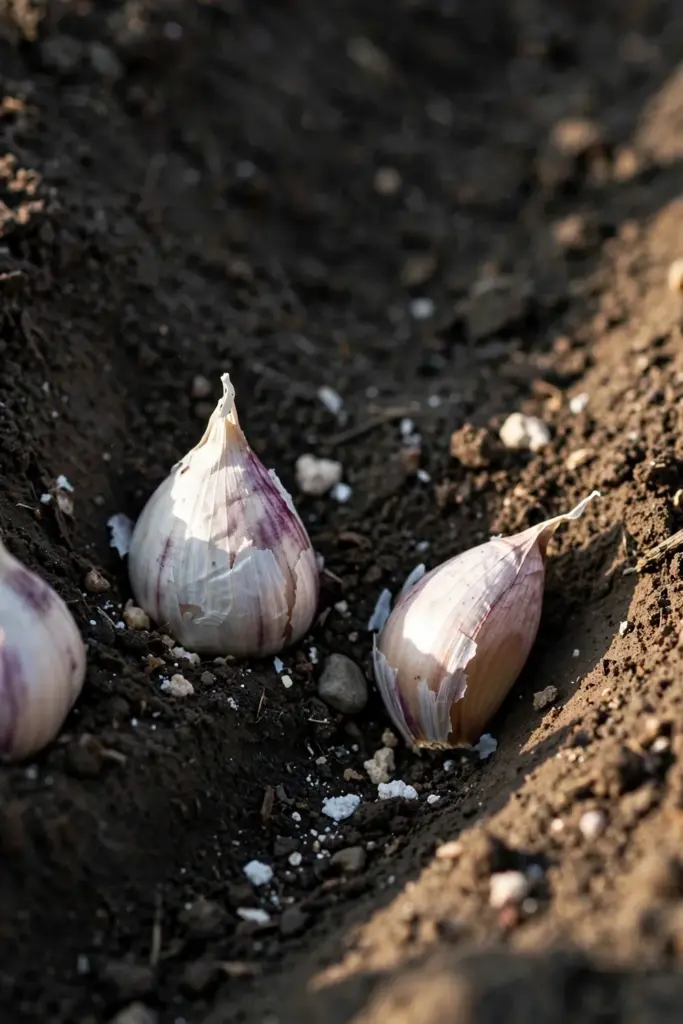
Skip nitrogen entirely in fall. Soft, nitrogen-pushed leaves die back harder in winter. The spring feed, when green tips emerge, is when nitrogen earns its keep. Mulch 10 cm deep after the ground cools.
NPK target: P at planting (3-15-0) | Form: Feeding plan | Best for: Garlic, overwintering onions
Cover Crops: the Living Fertilizer
Sow a cover crop and let it fertilize the bed for you. Cereal rye scavenges leftover nitrogen so winter rain cannot leach it; crimson clover and hairy vetch fix nitrogen from the air and release it when you turn them under in spring.
This is the one section, by design. Living fertilizer gets its own deep dive elsewhere on this site, covering species, mixes, and termination without herbicides. Here it earns one rule: never leave a fall bed bare. Bare soil loses nutrients all winter. A living root holds them.
Three Feeding Mistakes That Cost Fall Harvests
Spreading granulars after the soil cools. Microbes do the unlocking, and cold microbes work slowly. September spreading feeds October growth. November spreading feeds next April.
Pushing nitrogen late. Heavy nitrogen in late fall grows soft tissue that frost kills. Taper nitrogen after mid-October and let potassium-heavy feeds finish the season.
Skipping the soil test. Phosphorus accumulates. Bed after bed of bone meal without a test builds phosphorus to levels that lock out iron and zinc. A basic soil health check every two to three years costs less than one wasted bag.
When the Soil Cools, Stop Feeding
Twenty-one picks, four forms, one rule. Feed early, feed to the crop, then stop. The granulars go down while microbes still work the warm soil; the liquids carry the late season when the biology slows; the kitchen scraps improve every bed they touch without costing a cent. When night temperatures settle and growth stalls, put the spreader away. Anything applied after that waits for spring. Check when to start fall garden for the planting windows these feeds support, and the fall herbs to plant guide for the lighter feeding herbs prefer.
FAQ
What Is the Best Fertilizer for Fall Vegetables?
A balanced organic granular applied at planting, topped up with a liquid feed mid-season. Carter County Extension recommends about 2 to 3 pounds of 5-10-10 or 10-10-10 per 100 square feet for fall plantings where the previous crop was poorly fed. Apply granulars in September while soil microbes are active, then switch to fish emulsion or liquid kelp once growth slows.
Should I Fertilize Vegetables in Fall?
Yes, at planting time and in early fall. Fall crops still need nitrogen, phosphorus, and potassium to size up before cold slows them. The key difference from spring feeding is timing: granular organics need warm, biologically active soil to release nutrients, so apply them early. Late-fall feeding should be liquid only, and stop entirely once growth stalls.
Is 10-10-10 Good for Fall Vegetables?
Yes. A complete 10-10-10 or 5-10-10 is the standard baseline fertilizer for fall vegetable beds, recommended by extension services at roughly 0.9 to 1.4 kg per 9.3 square meters. It suits mixed beds where greens, brassicas, and roots share space. For single-crop beds, match the ratio to the crop: high nitrogen for greens, phosphorus and potassium for roots.
Can I Use Coffee Grounds as Fertilizer in Fall?
Yes, as a supplement. Used coffee grounds add nitrogen slowly and improve soil texture when scratched into the top few centimeters. Keep the layer thin, about 1 cm, and mix it in rather than mounding it on the surface. They will not replace a real feed for hungry crops like broccoli or kale, so pair them with a granular meal or a complete fertilizer.
When Should I Stop Fertilizing in Fall?
Stop granular feeding once the soil cools and microbial activity drops; granulars need weeks of warm soil to release, so an early-fall application is the last granular one. Switch to diluted liquid feeds for any crop still actively growing, and stop those too when growth visibly stalls. Feeding dormant soil wastes product; the nutrients either leach away or sit locked until spring.








