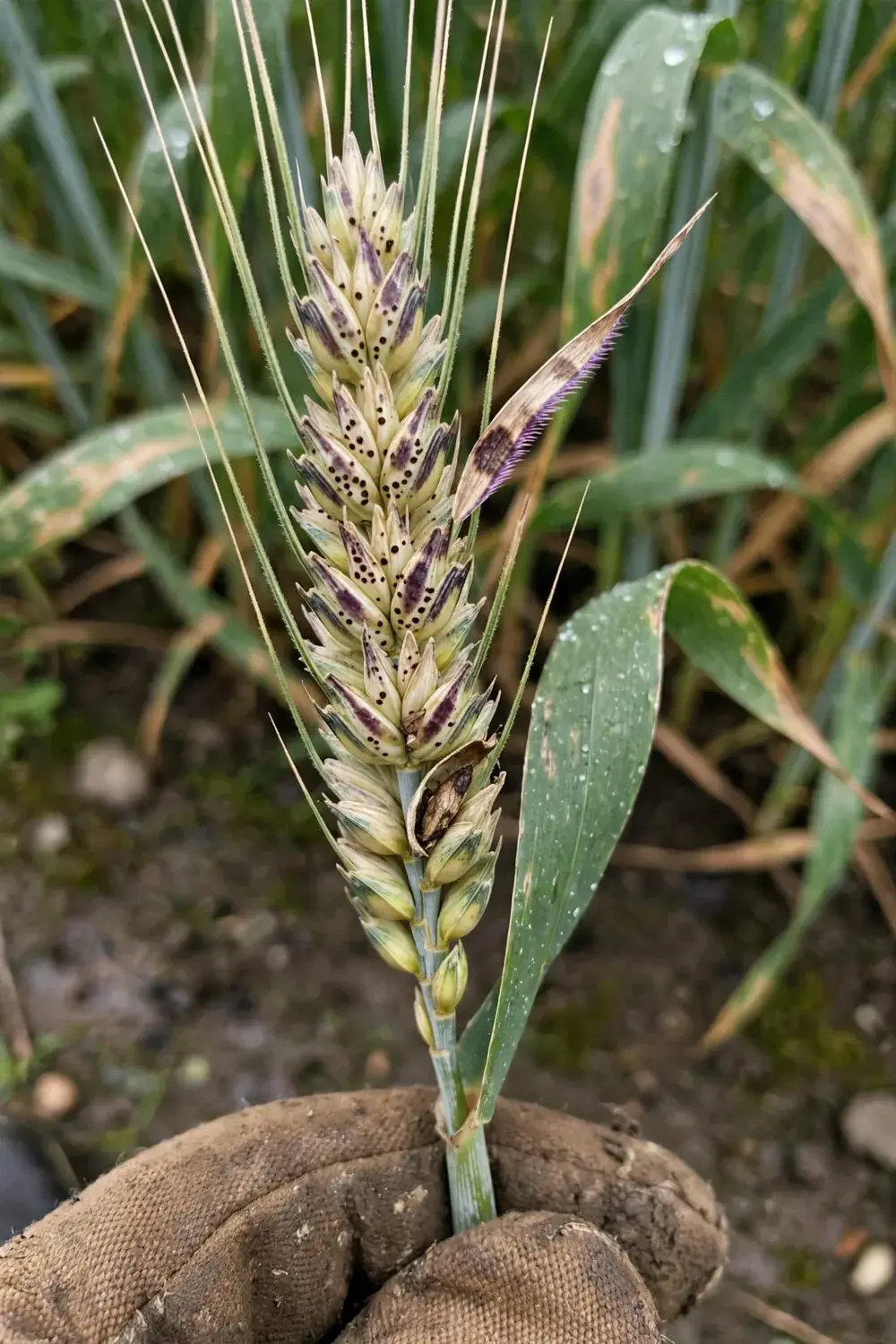

Septoria Glume Blotch turns wheat glumes purple-brown from the tip down, and it arrives as the head phase of one fungus that already blotched the leaves. Check the glume tips first. 6 moves carry the home response, from a 2-season rotation to clean seed.
I have learned to check the glume tips first, since the head tells the story the lower leaves only start.
The rest of this page names the fungus, shows the glume signs, traces the climb from residue to head, and walks the six moves in order.
What Septoria Glume Blotch Is
Septoria Glume Blotch is the head phase of Septoria nodorum blotch, a wheat disease caused by the fungus Parastagonospora nodorum. Older books call the same fungus Septoria nodorum or Stagonospora nodorum. The names changed. The fungus did not. One fungus causes both the leaf blotch and the glume blotch, so the two phases are one disease, not two.
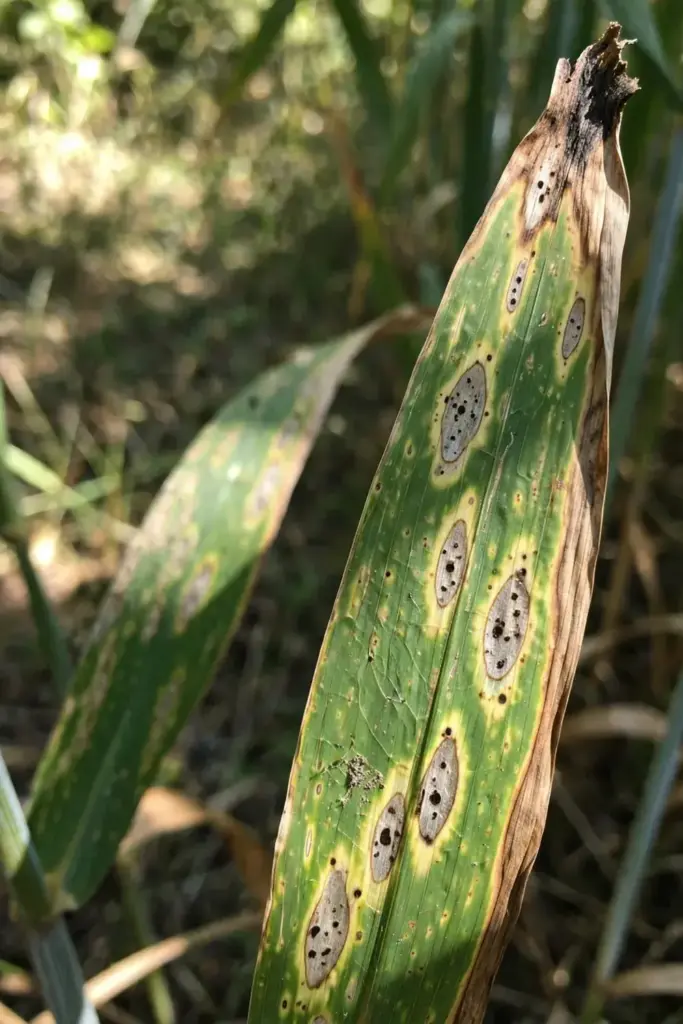
The same disease also goes by Stagonospora Blotch, the name this site uses for the leaf-phase story. This page stays on the glume phase: what the head shows, how the fungus reaches it, and what a small patch can do about it.
Septoria Glume Blotch attacks wheat. The fungus also survives on cereal stubble, so a wheat patch that follows wheat inherits last season’s inoculum. Rotation with non-cereal crops breaks that chain. The table below sorts where the disease shows up on the plant.
| Plant part | What Septoria Glume Blotch shows there |
|---|---|
| Lower leaves | Small yellow flecks that grow into lens-shaped lesions with yellow halos and gray-brown centers |
| Stems and nodes | Dark-brown lesions near the nodes |
| Glumes | Purple-brown blotches that start at the glume tip and spread downward |
| Kernels | Shriveled grain from infected heads |
The glume row is the one that matters here. Leaf spots alone never prove the head phase is coming, and a clean leaf canopy never proves the head is safe. The fungus climbs the canopy on rain splash, and the head phase shows on the glumes themselves.
How to Spot Septoria Glume Blotch on Glumes
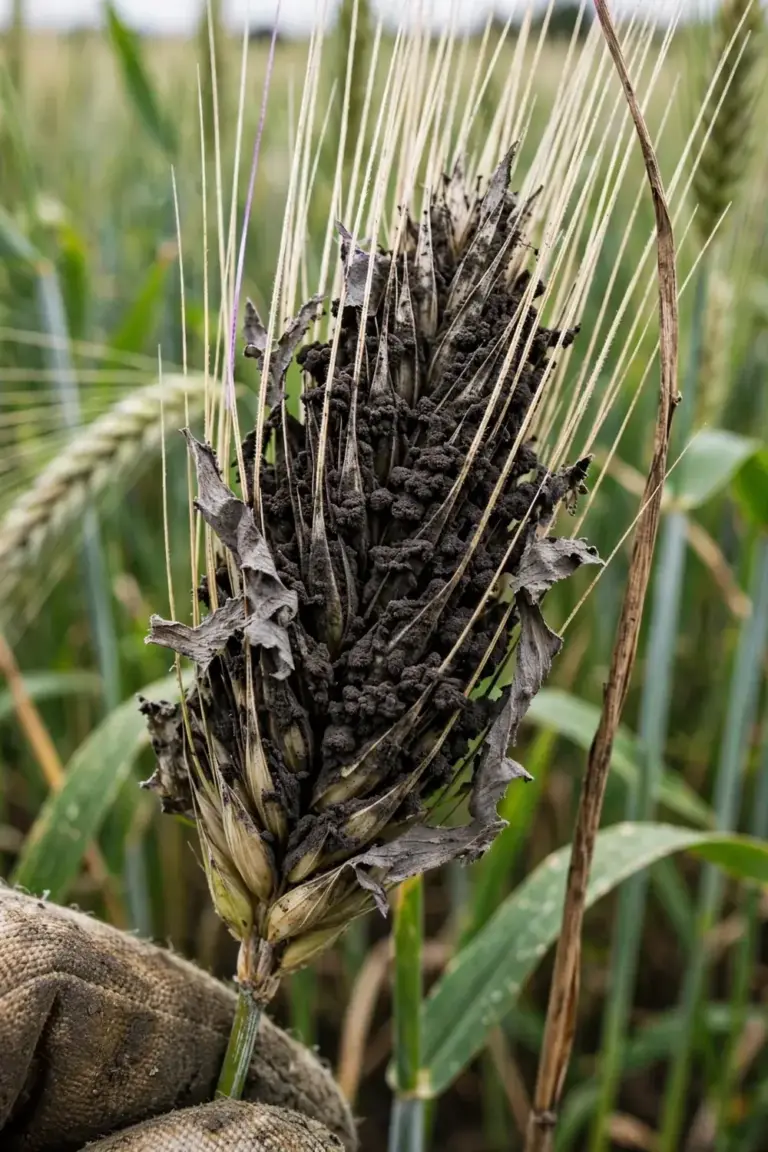
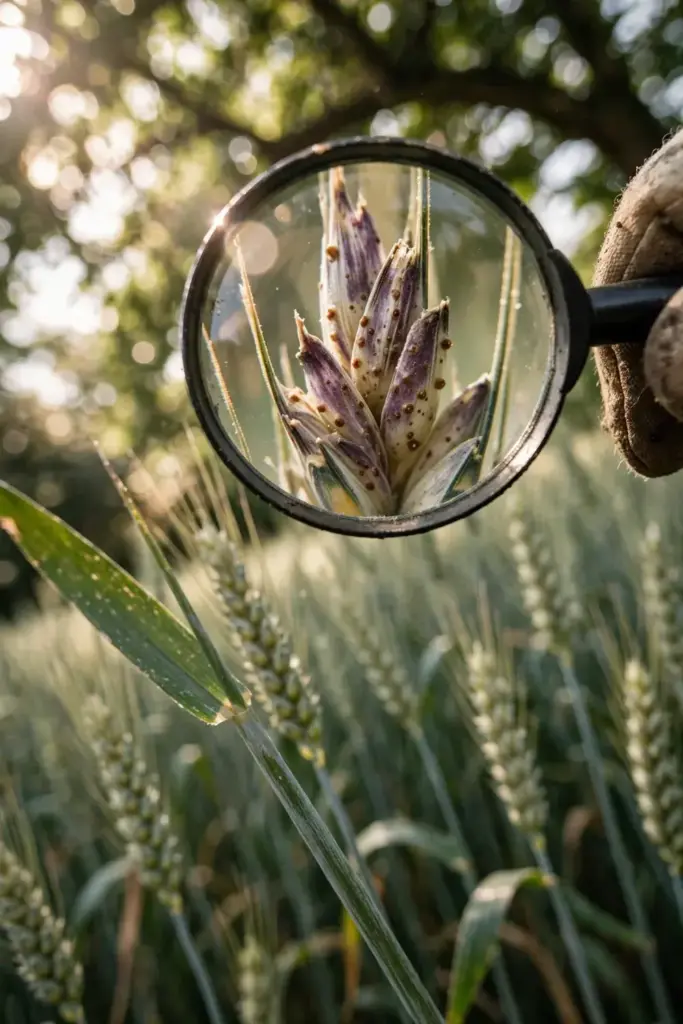
Septoria Glume Blotch opens on the glume tip. The American Phytopathological Society notes that the glume lesion typically starts at the tip of the glume and progresses downward. The color runs tan to brown on green heads, then deepens to purple-brown as the head ripens. A hand lens shows the giveaway inside the blotch: small brown fruiting bodies called pycnidia, seated in the dead tissue.
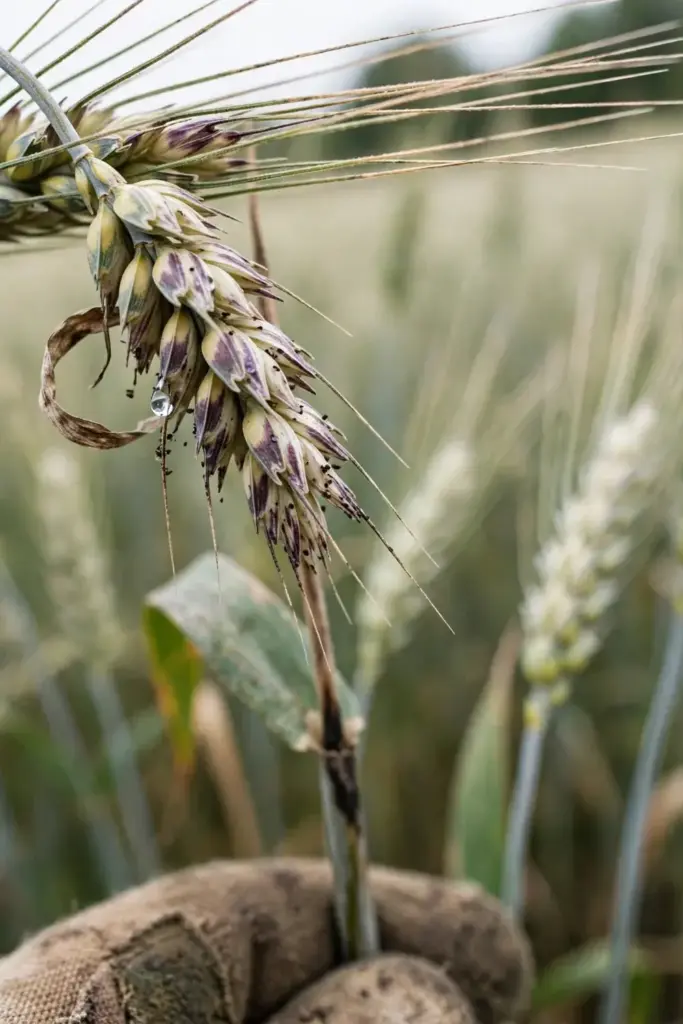
Look at the whole head, not one glume. Infected heads show blotches across several glumes, often with a dirty or water-soaked look from a distance. The Crop Protection Network describes infected glumes as purple to brown, with fruiting structures generally present in infected glume tissue. Heads that ripen early with shriveled kernels point the same way, since infected glumes feed less grain.
Field identification sorts suspects. It never settles the case. Several head problems darken wheat glumes, and a lab test names the agent when the pattern stays unclear. Photograph the head before you cut anything. Shoot the glume tips, the full head, and the flag leaf. The photos preserve the pattern for comparison, and they give Extension a clear case if you send a sample later.
How Septoria Glume Blotch Climbs From Residue to Head
Septoria Glume Blotch starts in two places: infected seed and infected residue. The same Crop Protection Network notes state that the fungus survives in seed and residue, so planting infected seed or planting into infested residue encourages disease development. Spores from residue splash upward in rain, leaf by leaf, until they reach the head. Seed-borne infection starts even earlier, with seedlings emerging from infected seed already carrying the fungus.
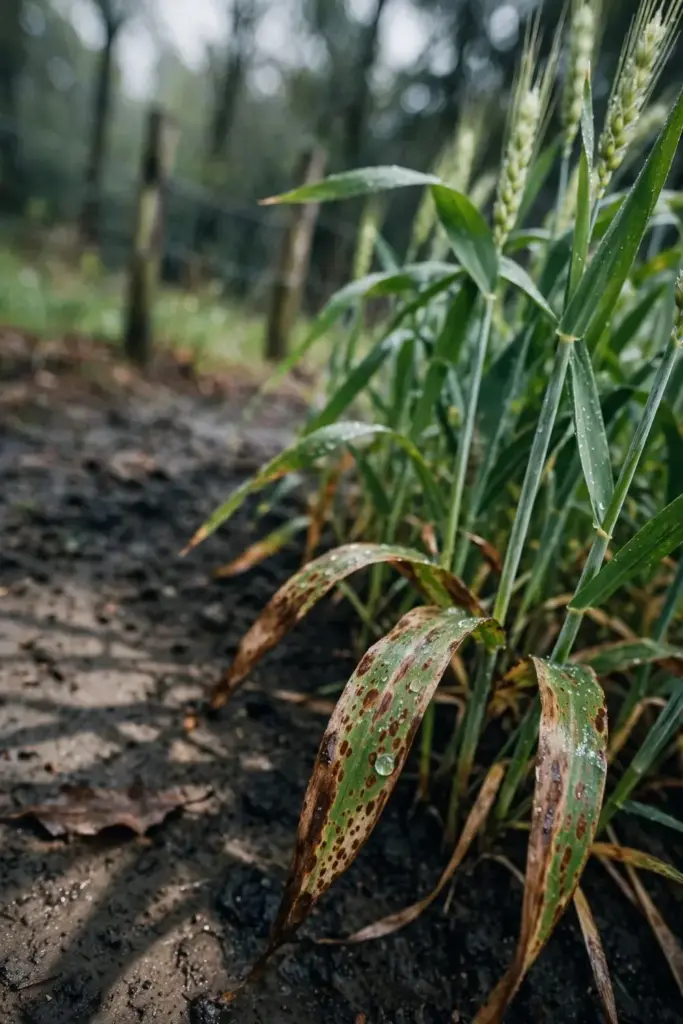
Warm wet weather drives the climb. North Dakota State University Extension reports that the fungal spores generally require 12 to 18 hours of leaf wetness for infection, and the disease develops most rapidly between 20 and 27 degrees Celsius. A wet week at heading moves the fungus from the lower canopy to the glumes. Dry weather slows the climb, since spores need free moisture to germinate and spread.
The timing explains why the head phase feels sudden. The leaf phase builds quietly on lower leaves for weeks. Rain at heading lifts spores onto the glumes. The blotches then show within days. Nothing about the head phase is separate from the leaf phase. It is the same fungus, one canopy climb, one season.
1. Rotate Wheat Out of the Bed
Give wheat a two-season break in the bed. Ohio State University Extension recommends a rotation where wheat is planted in only 1 of 3 years, since these leaf blotch pathogens can survive in infested wheat residues for several years. Two seasons without wheat starve the residue-borne inoculum. The rest of the rotation carries non-cereal crops that the fungus does not attack.
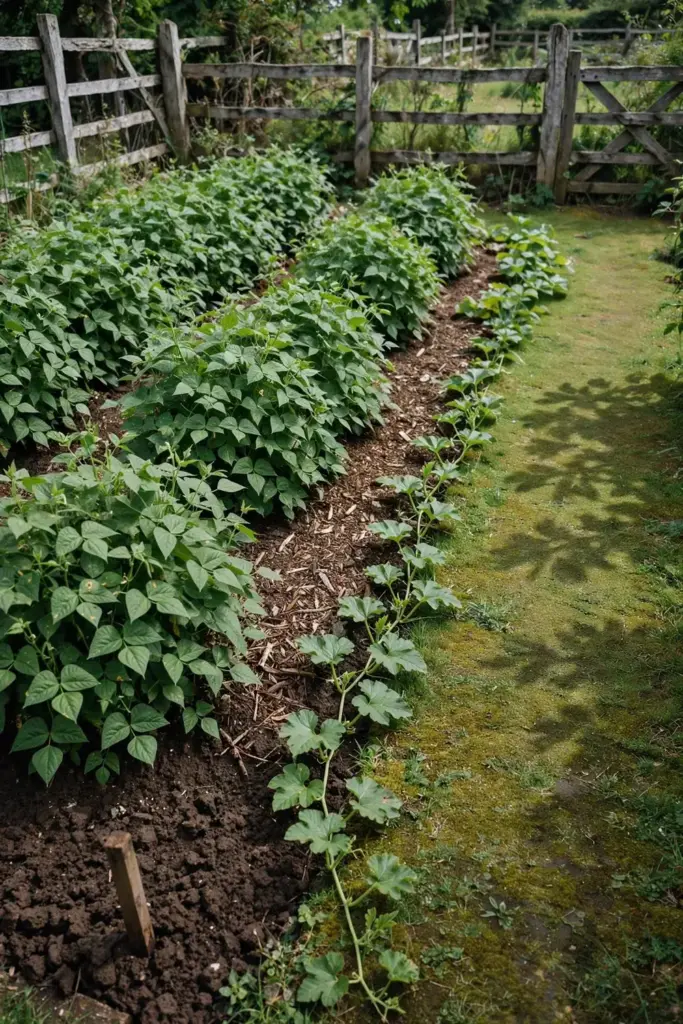
Fill the break years with crops the fungus ignores. Beans, peas, squash, and leafy greens all qualify, since the fungus attacks cereals, not vegetables. The site’s crop rotation guide covers the planning side: which families follow which, and how to keep a small bed in rotation without a spreadsheet. A cover crop of clover or vetch in the off year also works, and the cover crops guide covers the sowing side.
Skip wheat-after-wheat in the same bed. Back-to-back wheat hands the fungus fresh residue on top of old residue, and the second season starts with the inoculum already in place. The rotation is the single move with the longest reach, because it removes the source instead of chasing symptoms.
2. Clear Residue and Volunteer Wheat
Clear wheat stubble from the bed after harvest. The fungus overwinters on residue, so stubble left in place is next season’s spore source. Pull or dig the stubble, then compost it hot or bag it for municipal waste. A cold compost pile keeps the fungus alive. A hot pile breaks it down.
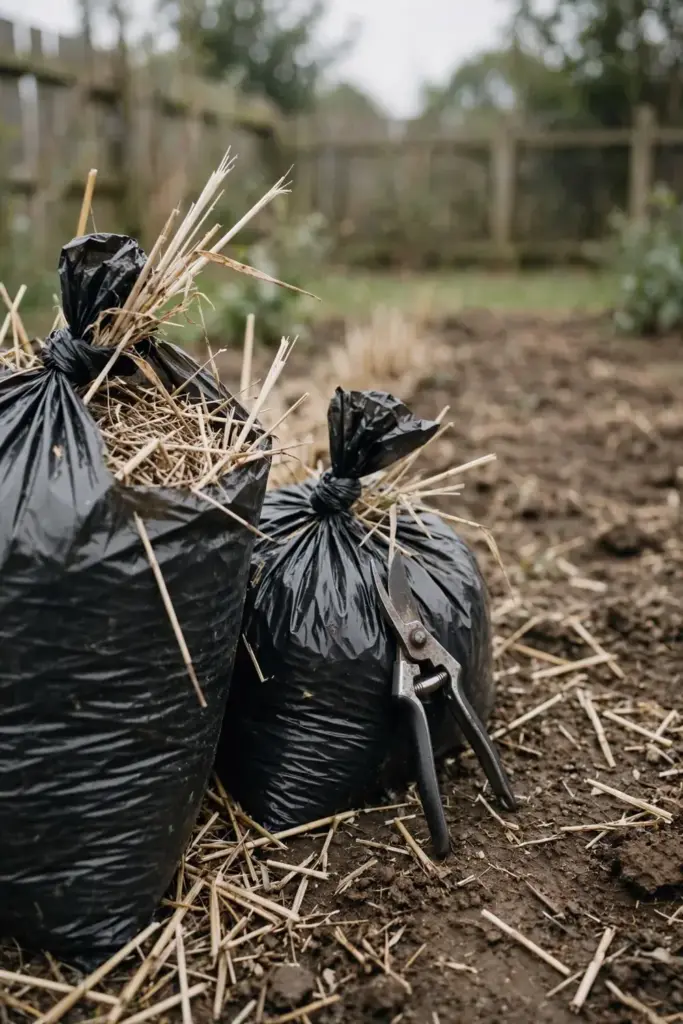
Pull volunteer wheat and grassy weeds before sowing. Volunteers carry the fungus across the gap between crops, and grassy weeds host it too. The same Ohio State notes list destroying volunteer wheat, rye, barley, and wild grasses in the field before planting among the core management moves. Walk the bed once a week for the first month after clearing. Volunteers emerge fast, and each one is a bridge the fungus can cross.
Keep the bed bare or covered with a non-cereal cover crop through the gap. Bare soil with no host starves the fungus. A clover cover does the same job while feeding the soil. Either way, the rule holds: no wheat, no volunteers, no grassy weeds in the bed until the rotation comes back around.
3. Sow Clean Certified Seed
Buy certified disease-free seed for the next sowing. Seed carries the fungus, and sowing infected seed plants the disease with the crop. Certified seed comes from inspected lots, and it is the cheapest insurance in the whole routine. Save the farm-saved seed habit for crops without a seed-borne disease on the record.
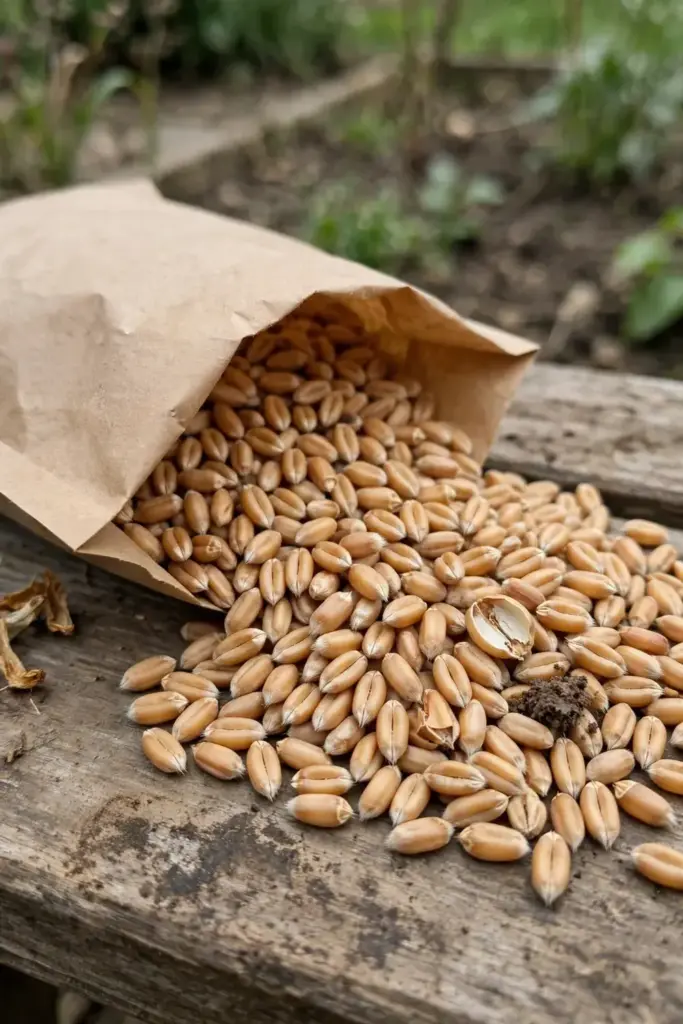
Do not save seed from infected heads. Heads with glume blotch produce shriveled kernels, and those kernels carry the fungus into the next season. The same APS notes state that infected glumes lead to shriveled kernels that reduce grain quality and quantity. Threshing infected heads mixes clean grain with infected grain, so the saved lot starts dirty. Buy fresh certified seed instead.
Sow at the spacing the packet gives, and avoid crowding. Dense stands hold humidity inside the canopy, and humidity is what the spores need. Airflow dries leaves faster after rain, and dry leaves break the infection chain. The packet spacing is a disease move as much as a yield move.
4. Pick a Variety With Resistance to Both Phases
Pick a variety with resistance to both the leaf phase and the glume phase. The two phases do not always travel together. The same Ohio State notes warn that varieties with resistance to Stagonospora nodorum leaf blotch may be susceptible to the glume blotch phase of the disease and vice versa, so growers should select varieties with moderate resistance to both phases where possible. Ask the seed supplier for both ratings before you buy. A variety rated for leaf blotch alone leaves the head exposed.
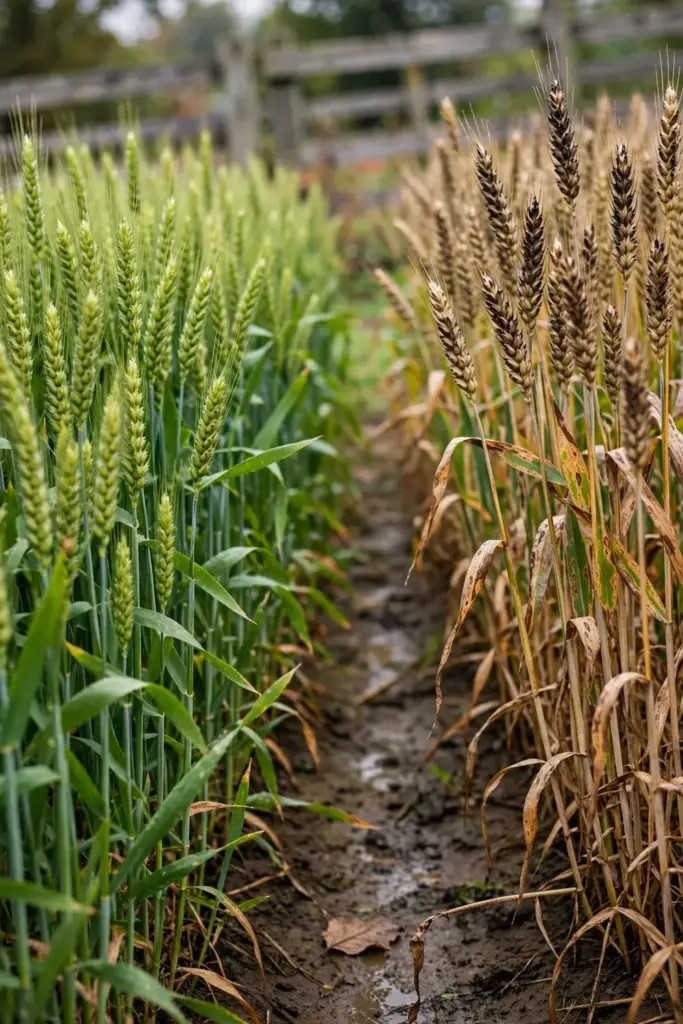
Read the rating as partial resistance, not immunity. Every variety takes some infection under heavy pressure. Partial resistance slows the climb, holds the flag leaf longer, and buys the head a cleaner window at grain fill. That margin is the whole point. No variety on the market shrugs the fungus off entirely.
Write the variety name down with the sowing date. The record tells you next season whether the rating held in your bed. A variety that stayed clean earns a repeat. A variety that blotched hard goes off the list. Memory fades. The notebook does not.
5. Keep Nitrogen Moderate and the Canopy Dry
Feed wheat to a soil test, and hold nitrogen at moderate rates. The same Ohio State notes state that excessively high rates of nitrogen will make the field prone to damage by Stagonospora blotch. Heavy nitrogen pushes soft, dense growth that holds moisture and invites infection. Moderate nitrogen grows a sturdier canopy that dries faster after rain. Building soil health covers the organic-matter side of the same job: steady nutrition without the soft flush.
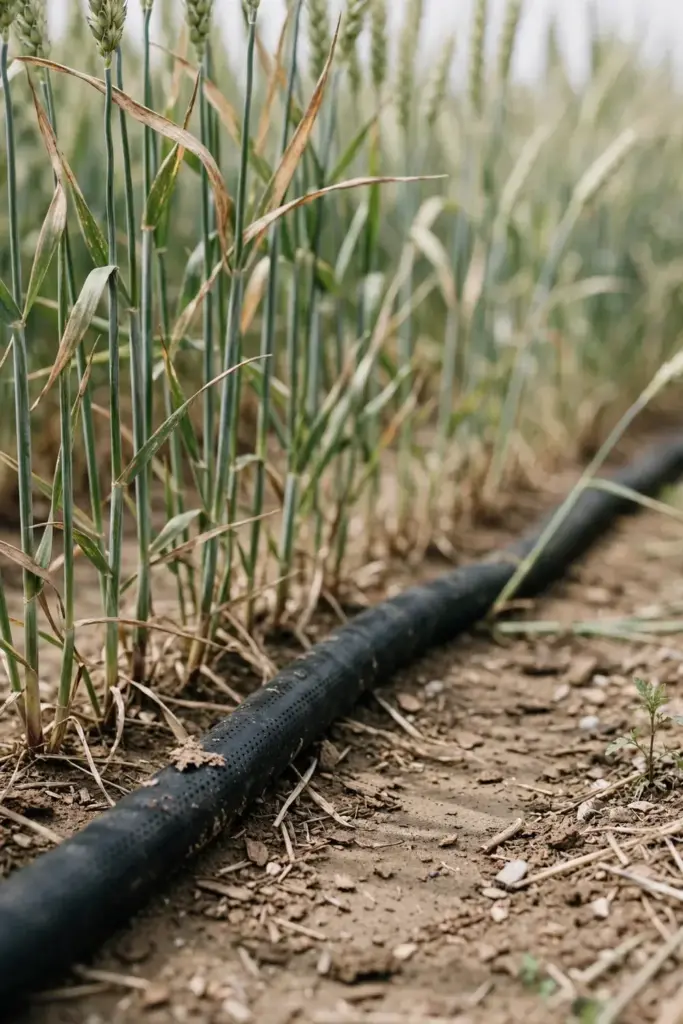
Water at the soil line when you water at all. Overhead watering wets the canopy and mimics the rain splash the fungus rides. A soaker hose or a morning watering at the base keeps leaves dry. Water early in the day when you must wet the leaves, so the canopy dries before nightfall. Wet leaves overnight are the infection window the fungus wants.
Space rows for airflow and keep the bed weeded, because weeds trap humidity inside the canopy and slow drying after rain. A weeded bed with open rows dries hours faster than a choked one. Those hours decide it. Wet spores germinate. Dry spores die.
6. Know When to Stop and Send a Sample
Stop treating heads that already show glume blotch. No spray reverses lesions on infected glumes, and no home treatment restores shriveled kernels. The head phase has no cure at home scale. Field fungicide programs are preventive, timed before infection, and built for field acreage. They do not translate to a backyard wheat patch, and this page gives no spray schedule for one.
Cut your losses on the infected heads and protect the next season instead. Harvest what ripened clean, and keep infected heads out of the seed lot. Clear the residue, rotate the bed, and buy certified seed for the next sowing. The next season is where the win lives. This season’s infected heads are already decided.
Send a sample when the pattern stays unclear. Contact the local Extension office before you cut it, and ask how they want it packed and labeled. A fresh head with photos of the whole plant beats a dried cutting in a plastic bag. The photos show the pattern. The sample names the agent. A week of patience beats a season of guessing.
Frequently Asked Questions
No. Septoria Glume Blotch is the head phase of one disease, Septoria nodorum blotch. The fungus Parastagonospora nodorum infects leaves first, then climbs the canopy on rain splash and infects the glumes at heading. Leaf blotch and glume blotch are two phases of the same fungus on the same plant. Treating them as separate diseases splits one problem into two and misses the single chain that links them.
Skip grain from heavily infected heads. Infected glumes produce shriveled kernels that mill poorly and taste flat, so the harvest is not worth the work. Keep infected heads out of the seed lot as well, since the kernels carry the fungus into the next season. Harvest the clean heads, clear the residue, and buy certified seed for the next sowing. When a head looks borderline, thresh it separately and judge the kernels by weight and plumpness.
No. Septoria Glume Blotch attacks wheat and survives on cereal stubble. It does not attack beans, squash, brassicas, or leafy greens. That host range is what makes rotation work: two seasons of non-cereal crops starve the fungus in the bed. Grassy weeds and volunteer cereals are the exception, since they host the fungus too. Pull them before sowing, and the rotation holds.
No. A spray cannot reverse lesions on glumes that already show blotches, and it cannot plump kernels that already shriveled. Field fungicide programs work by prevention, timed before infection across field acreage, and they do not scale down to a backyard patch. The home response is cultural: rotation, residue cleanup, certified seed, resistant varieties, and moderate nitrogen. Those five moves protect the next season, which is the season you can still win.
Where to Go From Here
Septoria Glume Blotch is one fungus with two phases, and the glume phase is the one that costs grain. Name the fungus. Check the glume tips. Trace the climb from residue to head. Then run the six moves: rotate, clear, sow clean seed, pick a two-phase resistant variety, hold nitrogen moderate, and send a sample when the case stays unclear.
The Plant Care archive collects the site’s disease coverage for the next problem. Start there when a new blotch shows up, and start with rotation when the blotch sits on wheat.