
Plant a tea tree in full sun, give it free-draining soil, and trim it lightly straight after flowering. That is growing tea tree in Australia for the garden genus Leptospermum. Give the plant 6 or more hours of direct sun each day, and it will repay you with decades of flowers.
Pick the plant by the job it must do. A screen needs a tall dense form. A pot needs a dwarf form. A coastal strip needs a salt-hardy form. The rest of this page runs from the name confusion through variety choice, planting, watering, feeding, pruning, propagation, pots, pests, and troubleshooting.
1. Name the Right Plant Before You Buy It
Three different plants share the name tea tree in Australia. The garden tea tree is Leptospermum. The tea tree oil tree is Melaleuca alternifolia. Kanuka is Kunzea. Nurseries sell all three under similar labels, so read the botanical name on the tag before you pay.
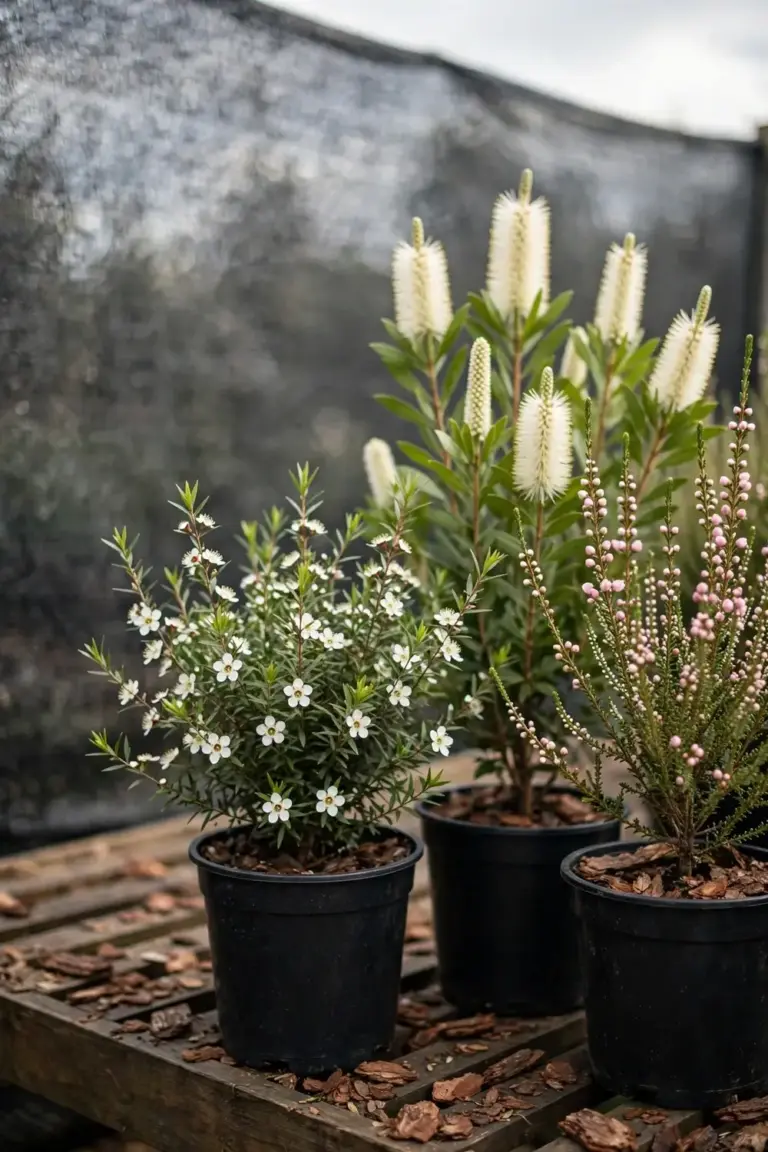
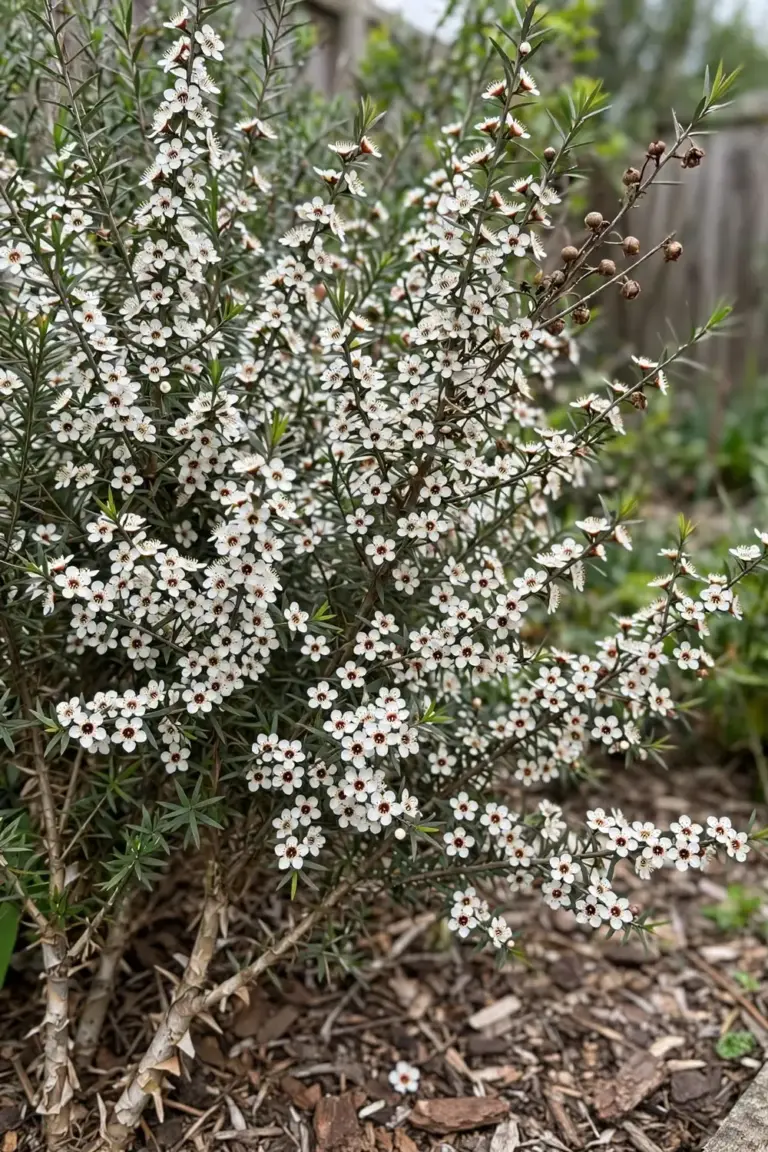
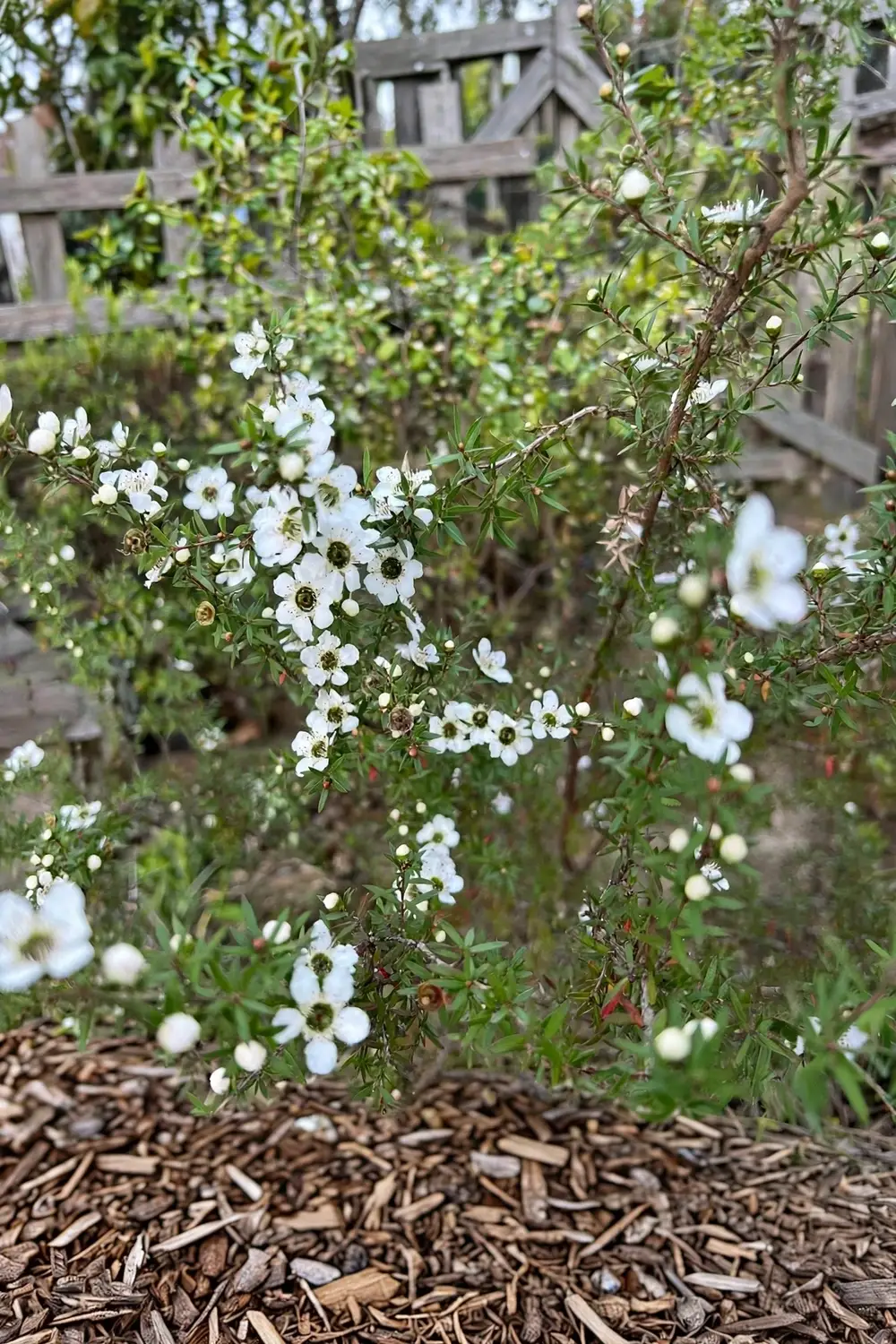
Leptospermum is the subject of this page. It is a genus of evergreen shrubs and small trees in the myrtle family, with over 80 species across Australia and New Zealand, according to the Nurseries Online Leptospermum variety guide. The flowers are five-petalled cups in white, pink, or red. The leaves are small and aromatic when crushed.
Melaleuca alternifolia grows for oil production on farms. It needs different care, and its knee-height cutback advice does not apply to Leptospermum. Keep the two genera apart in your head and on your shopping list. A plant bought as “tea tree” with no botanical name on the label is a plant you cannot plan around.
One taxonomy note matters for shoppers. Some species once placed in Leptospermum now sit in the genus Gaudium. The garden trade still sells them as Leptospermum, and this page keeps the garden name throughout. Check the full botanical name on the tag, whatever genus the label prints.
2. Pick a Tea Tree by the Job It Must Do
Buy for the job first and the flower second. A tall screen plant squeezed into a courtyard pot grows leggy and bare. A dwarf groundcover planted as a screen leaves a gap at eye level. Match the mature height on the label to the space you own. Most small tree forms reach about 4 m, and the plants live 60 years or more, according to the AussieGreenThumb Leptospermum growing guide.
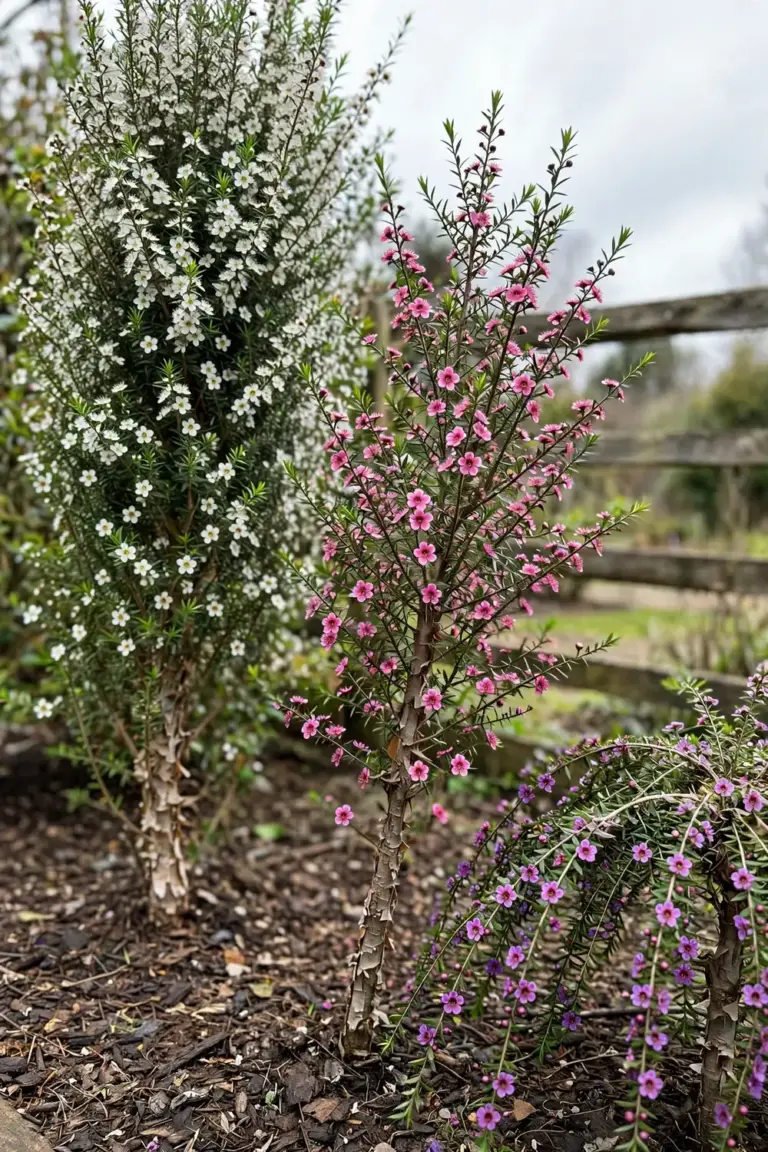
| Variety or species | Job | Mature height | Flower | Notes |
|---|---|---|---|---|
| Leptospermum petersonii | Screen or feature | About 4.5 m | White, summer | Lemon-scented leaves, small tree form |
| Leptospermum polygalifolium ‘Copper Glow’ | Screen or contrast shrub | 3 m | Cream-white, spring | Copper foliage, coastal tolerant |
| Leptospermum spectabile ‘Aphrodite’ | Hedge or screen | 2 to 2.5 m | Bright pink, spring | Dense bushy habit, frost hardy |
| Leptospermum ‘Tickled Pink’ | Feature or container | 1 to 2 m | Pink, spring | Upright medium shrub, cut flowers |
| Leptospermum polygalifolium ‘Pageant’ | Feature or container | 1 to 1.5 m | Purple, spring | Low spreading, cascading habit |
| Leptospermum laevigatum ‘Fore Shore’ | Groundcover or low hedge | 0.3 to 0.5 m | White | Coastal, narrow spaces, topiary tolerant |
| Leptospermum ‘White Wave’ | Groundcover or large tub | 0.4 to 0.5 m | White, spring | Cascading, banks and retaining walls |
Heights in this table come from the Gardening With Angus Leptospermum cultivar pages, which list each cultivar with its measured height and width. The petersonii height comes from the AussieGreenThumb genus guide above, which puts it near 4.5 m. Nursery listings change, so treat the table as a shortlist and confirm the label at the nursery before you buy.
Local provenance wins. A species that already grows in your region handles your soil, your frost, and your dry spells with less help from you. A plant imported from a wetter coast into a dry inland garden needs water you may not want to give. Ask the nursery which forms grow wild near you. A local native nursery stocks the forms that suit your district, and its staff know which ones fail on local clay or in local frost. A big-box garden center stocks what sells across the country, and its labels rarely carry that local knowledge.
Manuka needs one honest sentence. Leptospermum scoparium is manuka, and it is native to New Zealand and south-eastern Australia both. It is not Australian only. Bees work its flowers, and honey production sits outside this guide.
3. Match the Plant to Your Climate Zone
Leptospermum suits subtropical, warm temperate, cool temperate, and Mediterranean gardens. Most forms take light frost once established. The weak spots are wet tropical humidity and hot arid inland heat. A plant that loves a cool coastal garden sulks in a humid tropical courtyard.
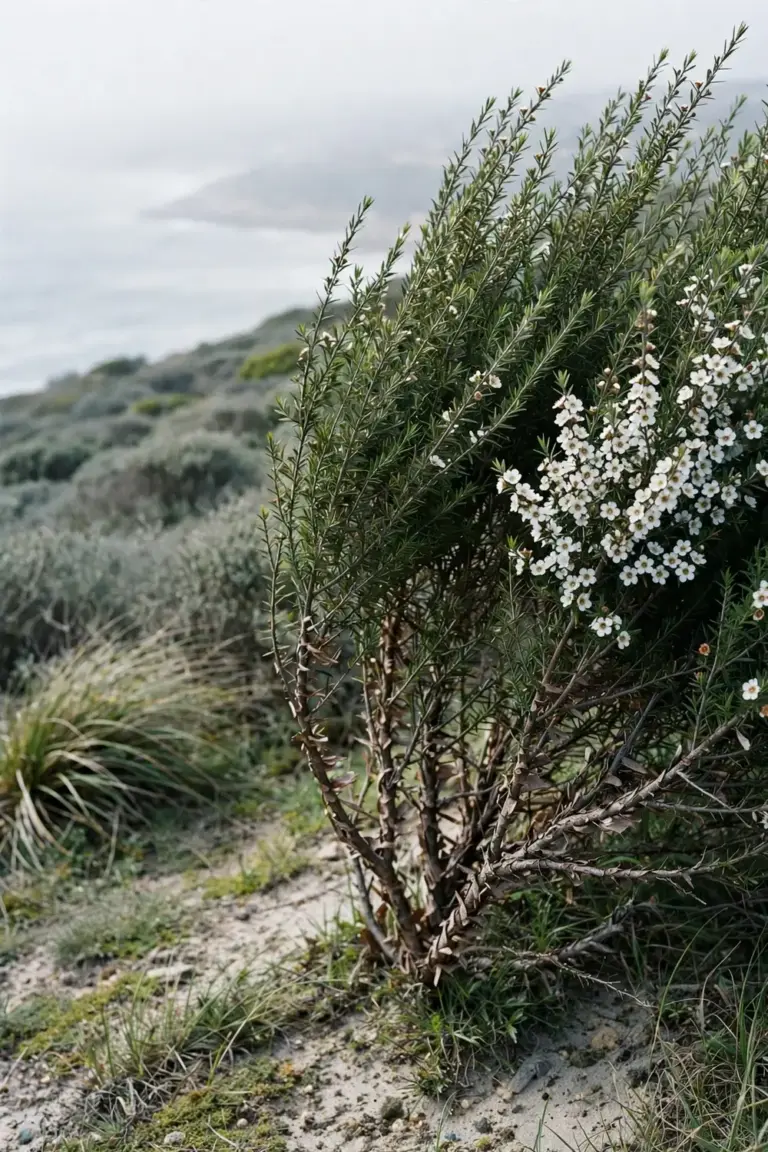
Cold changes the choice. Colo River tea tree grows wild around the Colo River in the Blue Mountains, according to AussieGreenThumb, and it takes hard frosts that flatten softer forms. Woolly tea tree takes frosty winds in inland gardens. If your winters drop below freezing most nights, pick from the cold-hardy end of the table and plant in spring so the roots settle before the first frost.
Coastal gardens suit Leptospermum laevigatum, the coastal tea tree. It handles wind and salt spray that burn softer shrubs. Copper Glow also takes coastal conditions. Inland gardens need the drought-hardy forms and a watering plan for the first summer, not a coastal plant that expects sea breezes.
Tropical gardens need care. Humidity invites leaf problems, and wet soil invites root rot. Pick a form with open airy growth, plant it high on a mound, and space it so air moves through the canopy. If your wet season runs months long with no dry break, Leptospermum may be the wrong genus for that bed.
4. Give It Full Sun and Soil That Drains
Full sun means 6 or more hours of direct sun each day, according to the Nurseries Online Leptospermum variety guide. Morning sun with afternoon shade still works in hot inland gardens, but deep shade thins the growth and cuts flowering. A plant in shade grows taller and narrower as it reaches for light.
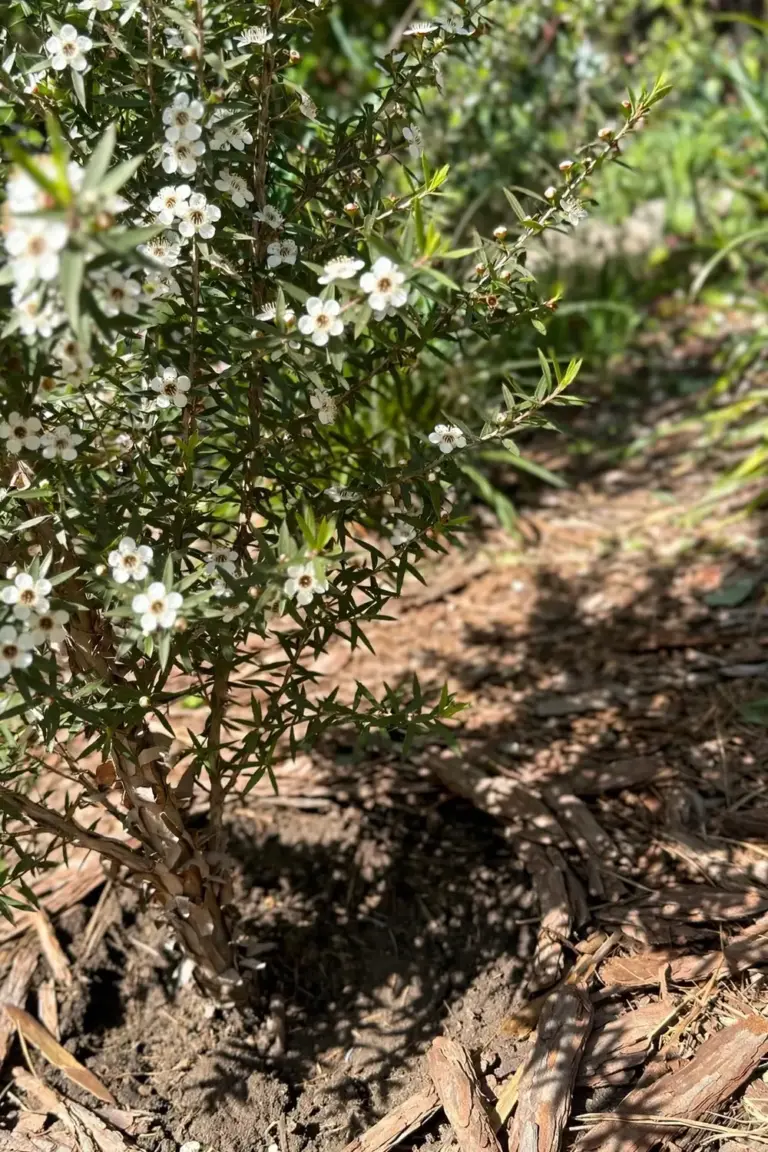
Soil matters more than sun once the plant is in the ground. Leptospermum wants free-draining soil that holds some moisture without staying wet. Heavy clay holds water around the roots and rots them. Sandy loam suits most forms. On clay, build a low mound and plant into the mound so water runs away from the crown.
Soil pH sits in the acidic band. The Nurseries Online guide lists pH 5.5 to 6.5 for Leptospermum. Most Australian garden soils already fall near that band. A soil test settles the question for a few dollars, and it beats guessing with a bag of amendment. Building soil health starts with knowing what your soil already holds. If your soil tests above pH 7, pick another bed or grow the plant in a pot with native potting mix.
Phosphorus is the feeding trap for this whole group. Australian native plants evolved in low-phosphorus soils, and standard fertilizers carry more phosphorus than they tolerate. Feed low-phosphorus native fertilizer only, and skip feeding entirely if the plant grows well without it. The feeding section below gives the exact rule.
5. Plant Tube Stock in Spring for the Fastest Start
Tube stock is the value buy. A young plant in a narrow tube costs less than a pot-grown plant and establishes fast, because its roots have not circled a pot. For a hedge, buy tube stock and plant a row of them. For a single feature plant, a larger pot-grown plant gives instant shape.
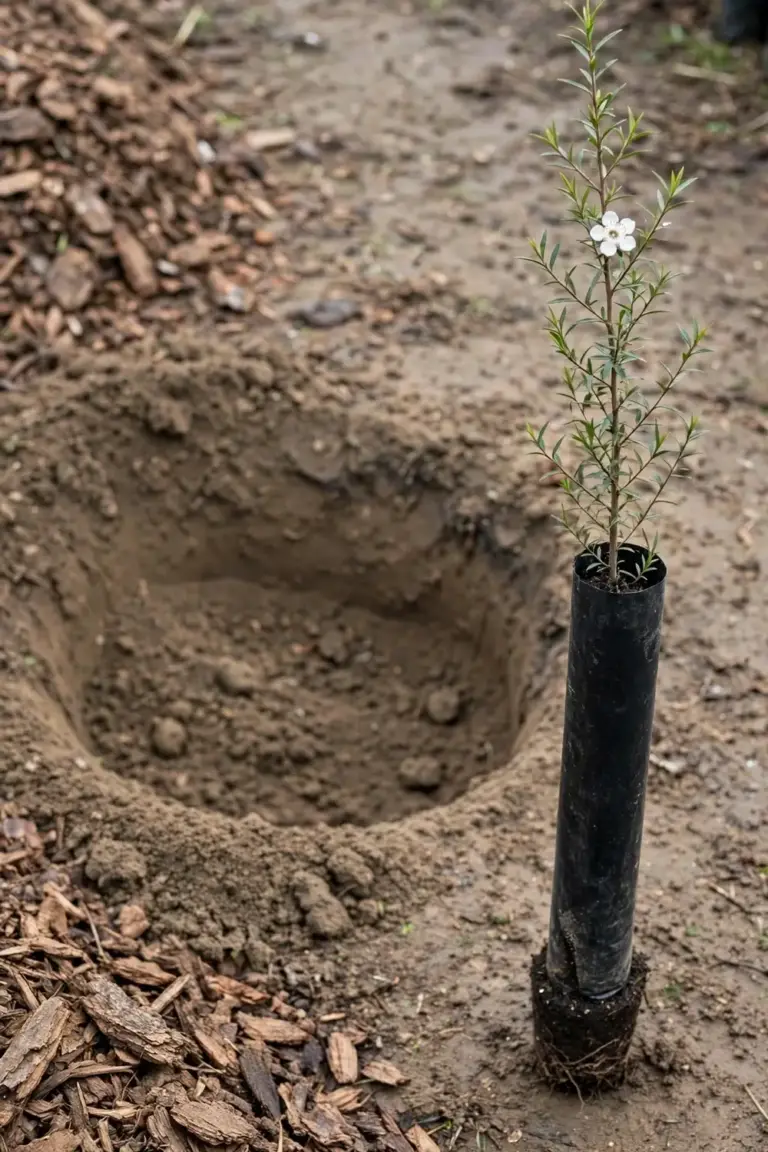
Dig the hole twice as wide as the tube and no deeper than the tube. Set the plant so the top of its root ball sits level with the surrounding soil. Backfill with the soil you dug out. Firm it gently with your hands. Water the plant in slowly until the soil settles around the roots.
Space the plants for their mature width, not their tube width. A screen of Aphrodite needs 1.5 to 2 m between plants. A hedge of Copper Glow needs about 2 to 2.5 m between plants. Tight spacing looks full in the first year and chokes the plants by year three, when the inner branches die back from lack of air and light.
Mulch after planting. A 5 to 7 cm layer of pine bark or gravel holds moisture and keeps the root zone cool, according to the Nurseries Online Leptospermum variety guide. Keep the mulch clear of the stem by a hand width. Mulch piled against the stem holds moisture on the bark and invites rot.
Plant in spring in cool districts and in autumn in warm districts. Spring planting gives the roots a full warm season before winter. Autumn planting suits warm temperate and subtropical gardens, where winter rain does the watering for you. Avoid planting in the heat of midsummer, when a new plant loses water faster than its roots can replace it.
6. Water Deeply While Young, Then Step Back
Water deeply once a week while the plant is young, according to the Nurseries Online Leptospermum variety guide. Deep watering pushes roots down into cool soil. Shallow daily watering keeps roots at the surface, where heat and dry spells kill them.
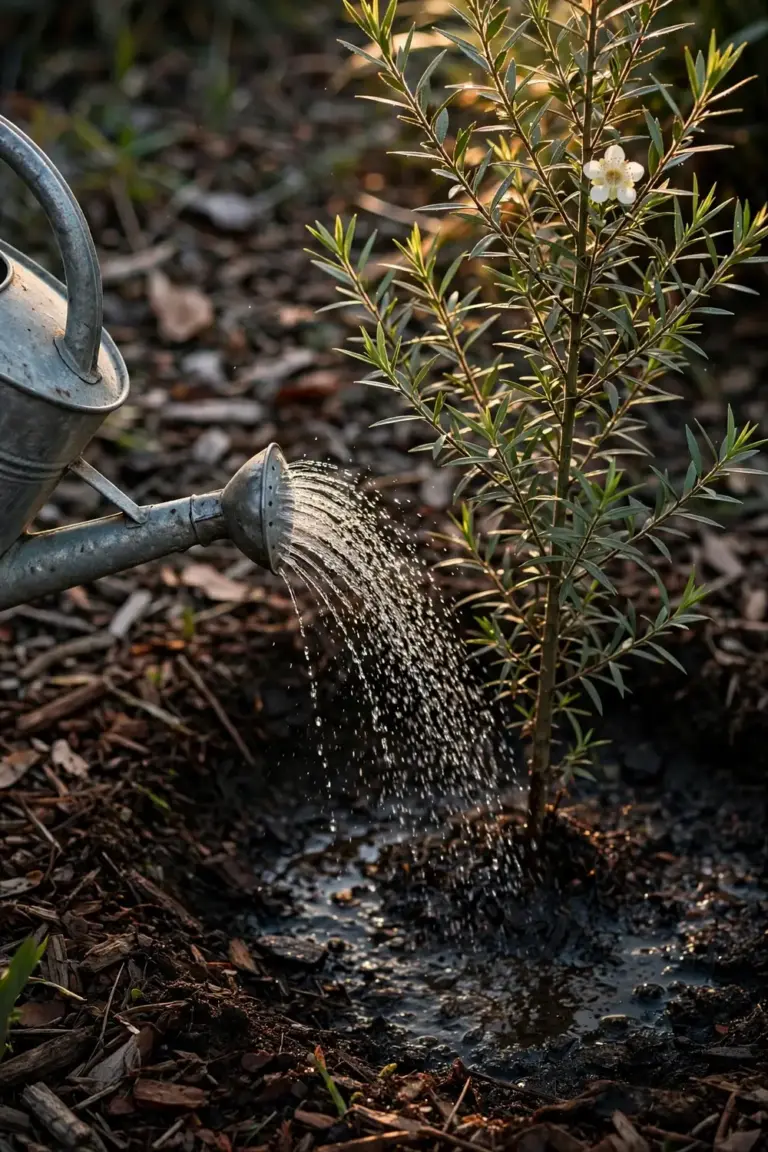
Pink Cascade shows the establishment pattern clearly. Water regularly for about three months until the plant is established, then dial the watering back. Once established, most Leptospermum need water only during extended dry periods. A plant that gets water every week in its second summer never learns to find its own.
Water at the base, not over the canopy. Overhead watering wets the leaves and invites leaf problems. A slow soak from a hose at the base puts water where the roots live. Morning watering beats evening watering, because wet leaves dry faster in morning sun.
Pots dry faster than garden beds. A potted Leptospermum in a sunny courtyard may need water twice a week in summer, while the same plant in the ground needs water once a fortnight. Check the mix with a finger before you water. Water when the top 5 cm feels dry, and stop when water runs from the drainage holes.
7. Feed Low-Phosphorus Fertilizer Once in Spring
Feed a low-phosphorus native fertilizer in spring, and feed lightly or not at all, according to the Nurseries Online Leptospermum variety guide. One light application at the start of the growing season covers the year for most plants. A second application helps a hedge that you prune hard, because pruning removes the growth the plant fed on.
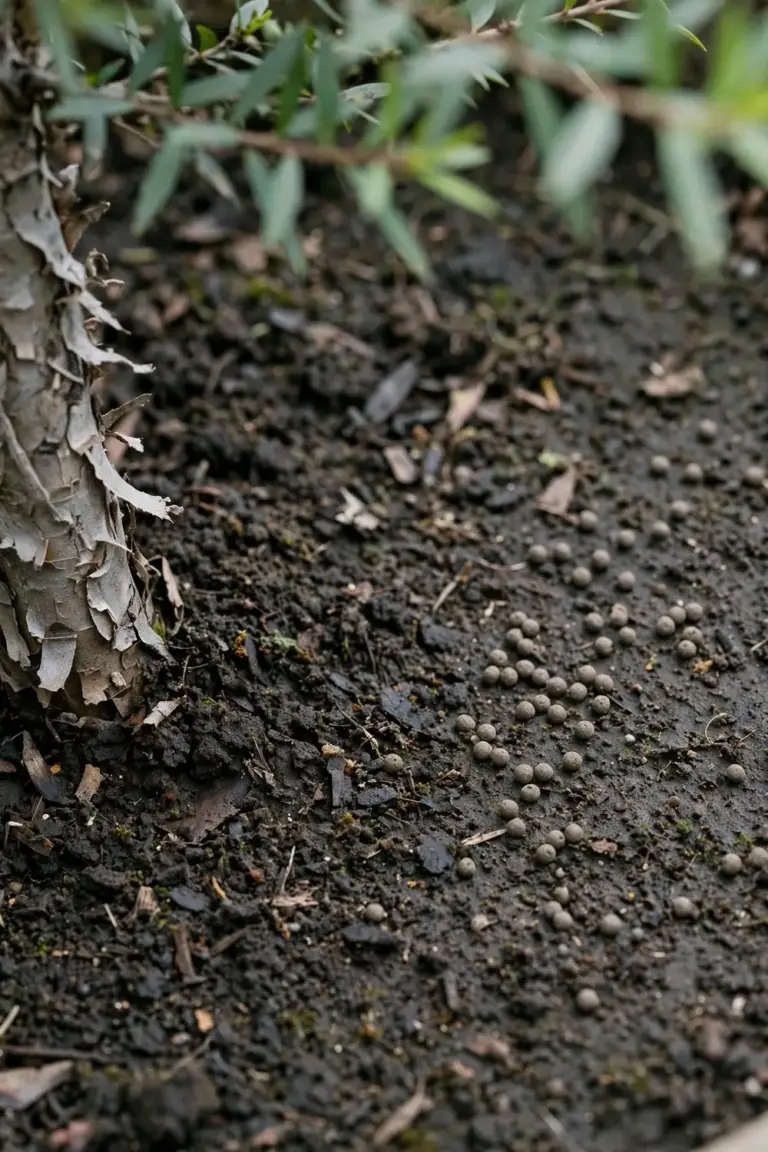
Standard garden fertilizer is the wrong product here. It carries phosphorus at levels that burn native roots and yellow the leaves. Read the label before you buy. The product must say native or low-phosphorus on the front, and the phosphorus figure on the back must sit near zero.
A light sprinkle of blood and bone or a balanced native fertilizer once a year in spring helps flowering. That pattern holds for the genus: a small feed, once, in spring, then nothing. A plant that grows well without feed needs no feed.
Skip feeding a plant that struggles. A yellow plant in wet soil has a drainage problem, not a hunger problem, and fertilizer on wet roots makes the damage worse. Fix the drainage first. Feed only when the soil drains, the sun is right, and the plant still looks hungry.
8. Prune Lightly Straight After Flowering
Trim lightly straight after flowering, every year, and never cut into old bare wood. That is the one pruning rule for Leptospermum, and it is the rule beginners break most often. Tea trees do not reliably reshoot from old bare wood, so a hard cut leaves a dead stub that never fills in.
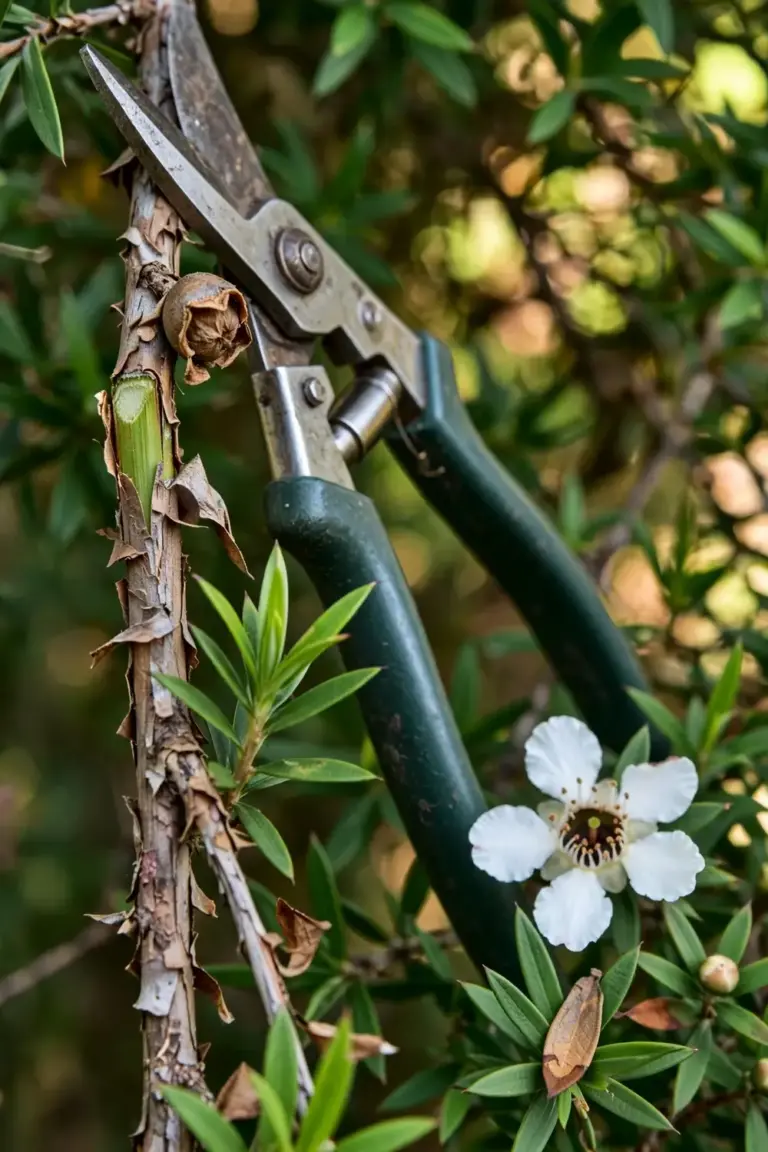
I have learned that the tea tree I trim straight after flowering stays dense, while the one I leave grows leggy and bare inside.
Tip-prune the soft new growth behind the spent flowers. Take the flowered tip back to a leafy shoot below it. The cut wakes the buds along the stem, and those buds grow into the dense bushy growth that carries next year’s flowers. Work around the plant evenly so it keeps its shape.
Timing sits at the end of flowering, which is spring for most cultivars. The AussieGreenThumb genus guide puts a cut in early spring, before flower buds and new growth start to form, and that timing suits plants grown as hedges. Either way, the cut lands near flowering, not in deep winter. The spring pruning techniques guide covers clean cuts and tool care for woody plants.
Hedge plants get the same treatment on a bigger scale. Shear a hedge lightly after flowering to keep it dense. A hedge sheared in late summer loses the flower buds for the next spring, so hold the shears until flowering ends. A hedge left unpruned for three years grows woody inside and cannot be pulled back without cutting into old wood.
Dead, damaged, or diseased timber comes out any time. Cut back to healthy wood with clean secateurs. Remove myrtle-rust-affected growth promptly, and bag it rather than dropping it on the soil. The pests section below covers myrtle rust in full.
9. Propagate From Cuttings to Keep the Cultivar True
Seed grows the species. Cuttings grow the cultivar. A seedling of ‘Aphrodite’ will not look like ‘Aphrodite’, because seedlings mix the genes of both parents. A cutting of ‘Aphrodite’ is a clone of the parent plant, so it keeps the pink flowers and the bushy habit.
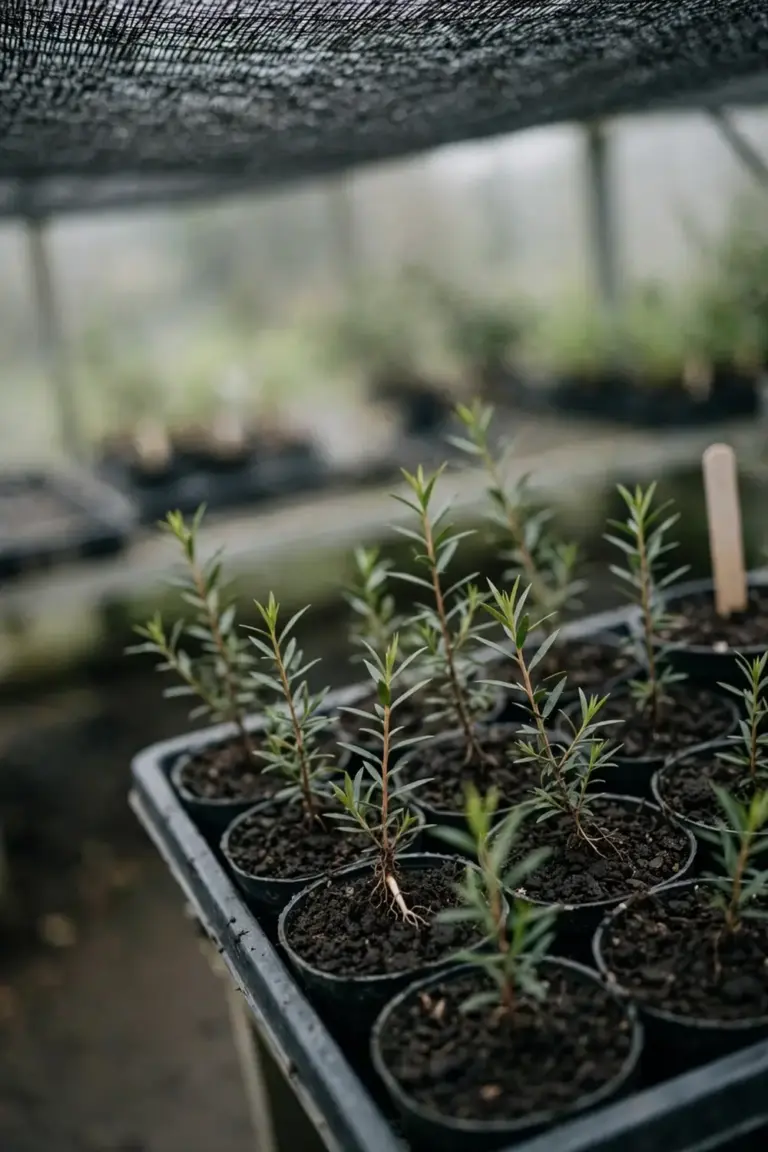
Take cuttings from semi-hardwood tip growth in late spring or summer. Choose a stem that bends but does not snap, 10 cm long, with leaves along its length. Strip the lower leaves, dip the cut end in rooting hormone, and set the cutting in a free-draining propagating mix. Keep the mix damp and the cutting out of direct sun until roots form. Label every cutting with the cultivar name and the date. Cuttings of different cultivars look identical in a tray, and an unlabelled tray grows a mystery plant.
Seed suits species plants and garden experiments. Surface-sow the fine seed on moist seed-raising mix and press it down without burying it. Leptospermum seed needs light to germinate, so a buried seed stays asleep. Keep the tray warm and damp, and expect germination over weeks rather than days. The seed starting steps cover tray setup and watering for fine seed.
Tube stock stays the sensible buy for hedges. A row of 20 tube plants costs less than a row of pot-grown plants and catches up within a season. Propagation is worth the effort for one special cultivar you cannot buy, not for a whole hedge you can order.
10. Grow Dwarf Forms in Pots for Courtyards and Balconies
Dwarf forms grow well in pots. ‘Fore Shore’, ‘White Wave’, ‘Pageant’, and ‘Tickled Pink’ all stay under 2 m, and their roots accept a container. A tall species in a pot grows root-bound and thirsty, so keep the big forms in the ground. The best Australian native plants for container gardens list covers more natives that share a pot bench with tea tree.
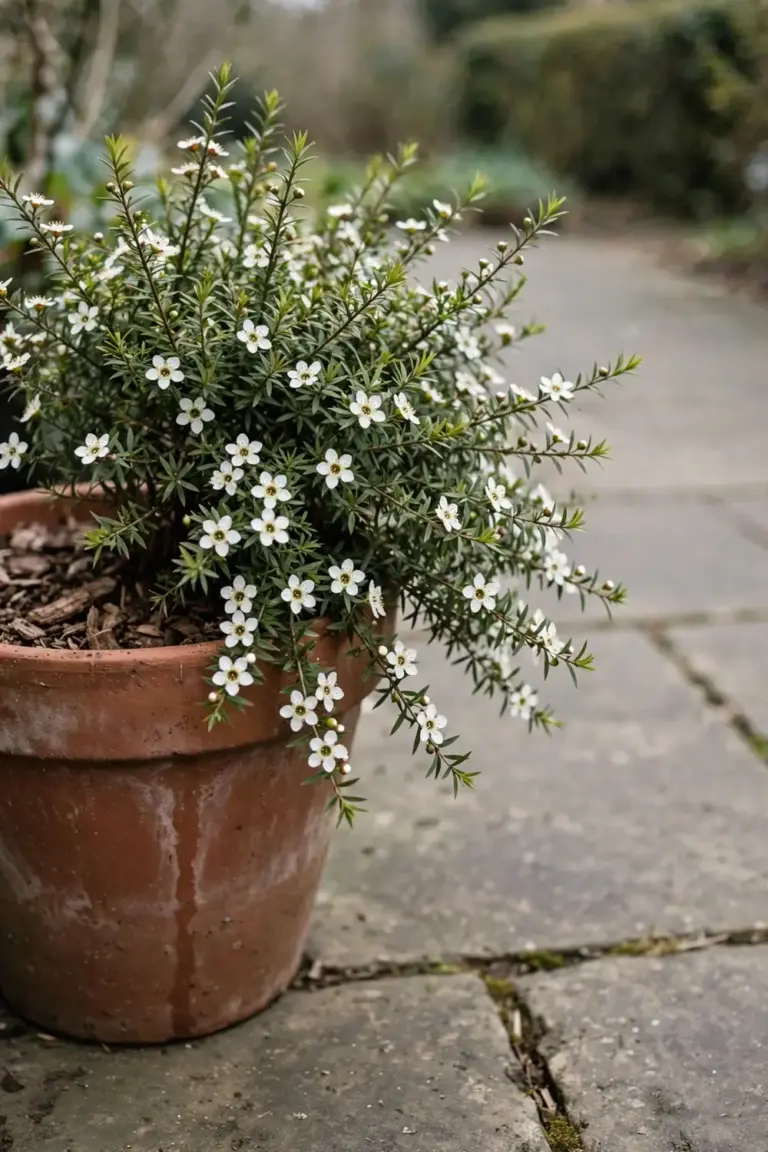
Pick a wide pot with drainage holes in the base. Fill it with a native potting mix, not garden soil, because garden soil compacts in a pot and drowns the roots. Set the plant at the same depth it sat in its nursery pot. Water it in slowly.
Potted plants need more water and more food than the same plant in the ground. Check the mix with a finger twice a week in summer. Feed a small dose of low-phosphorus native fertilizer once in spring, and skip a second dose unless the plant looks hungry. Repot when the roots fill the pot, into fresh mix.
11. Watch for Borers, Webbing Caterpillar, Scale, and Myrtle Rust
Leptospermum is tough, but it is not pest-free. Borers tunnel into stems. Webbing caterpillar, the tea tree web moth, ties leaves together with silk and feeds inside the web. Scale insects sit on stems and suck sap. Each one shows itself before it kills the plant, so a monthly walk past the plant catches all three early.
Borers leave sawdust at the entry hole and a wilting stem above it. Prune the affected stem back to healthy wood and destroy the cut piece. A borer inside a main trunk needs a bigger decision, and a dead trunk comes out rather than being left to fall.
Webbing caterpillar webs are easy to spot. The leaves inside the web brown and dry. Pull the web off by hand and squash the caterpillars inside it. A small infestation ends there. A large infestation across a whole hedge gets a repeat pass a week later, because the eggs hatch in waves.
Scale looks like small bumps on stems and leaf undersides. The bumps do not move. A plant with heavy scale drops leaves and grows sooty mold on the honeydew the scale excretes. Prune the worst stems out, and let predators do the rest. Beneficial insects eat scale, and a garden that welcomes them needs fewer sprays.
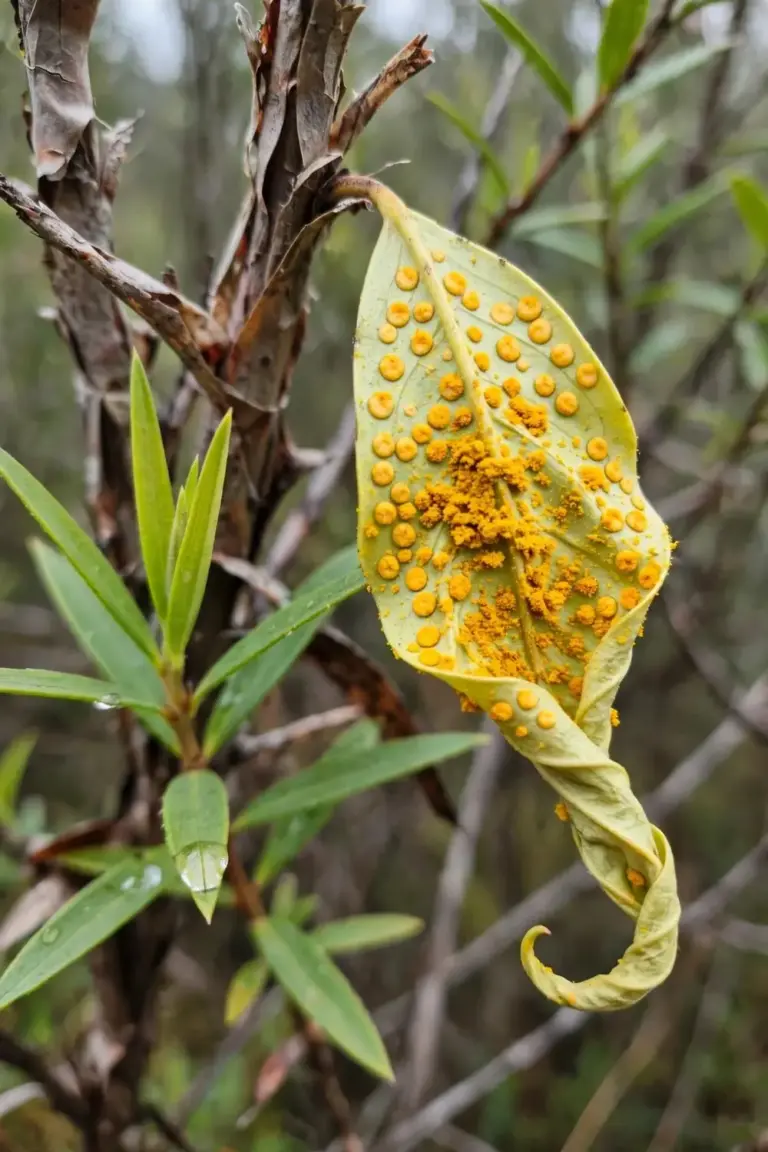
Myrtle rust is the serious one. Myrtle rust is a fungal disease that attacks new growth on Myrtaceae plants, and Leptospermum is a listed susceptible host, according to the myrtle rust study in PLOS ONE. The rust showed up in Australia in April 2010 on the central coast of New South Wales, and it spread along the east coast from there. It is endemic now, and it cannot be eradicated. No spray cures it, and no promise of eradication holds.
Myrtle rust shows as bright yellow-orange powdery pustules on young leaves, buds, and fruit. The infected growth twists and dies. Check new growth after rain, because the rust moves in wet weather. Remove affected growth promptly, bag it, and bin it rather than composting it. Buy resistant forms where the nursery lists them, and keep new plants away from infected neighbours for a few weeks after planting.
12. Fix Yellow Leaves, Bare Centers, and No Flowers
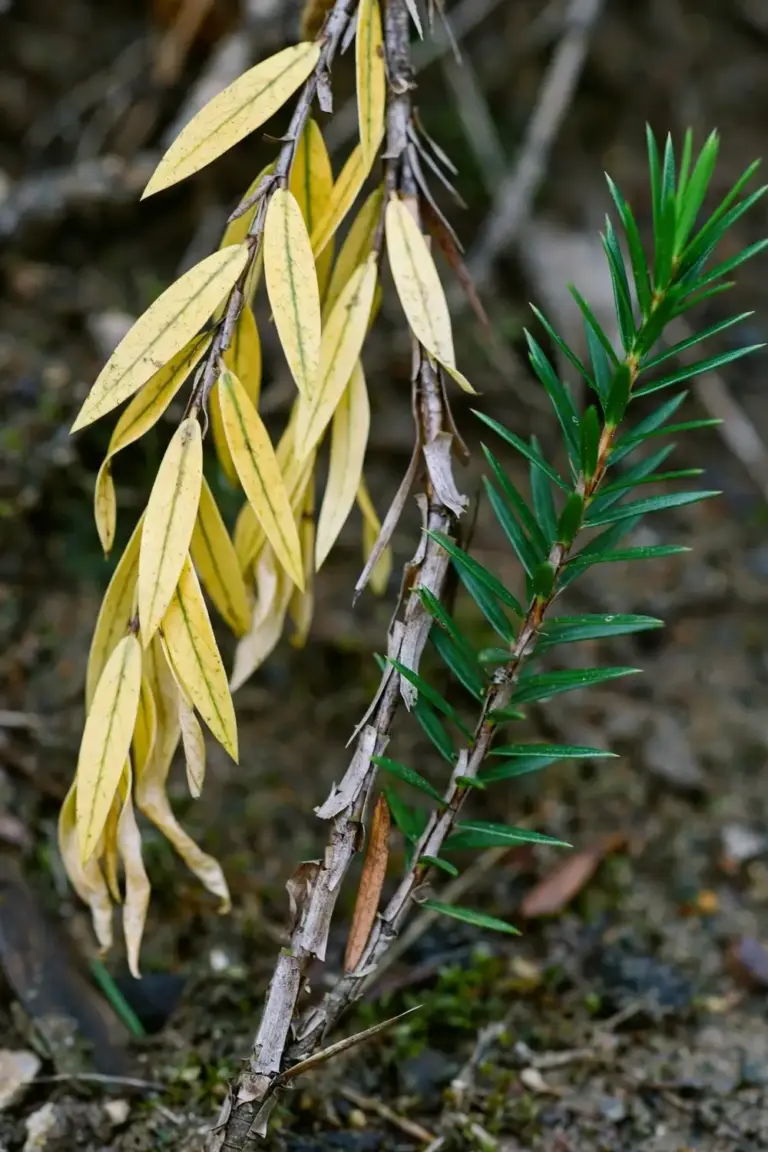
Yellow leaves mean water or drainage trouble first and hunger second. Check the soil before you feed. A plant in wet clay yellows from the roots up, and fertilizer on wet roots makes the damage worse. A plant in dry sand yellows from thirst. Fix the water, then watch for two weeks before you reach for a fertilizer bag.
A bare center means the plant has not been pruned. Leptospermum grows from its tips, and unpruned tips shade the inner branches until they drop their leaves. Tip-prune after flowering, and the plant fills back in over one season. A center that has stood bare for years will not fill, because the old wood inside no longer carries live buds.
No flowers means shade, a late prune, or a young plant. Deep shade grows leaves and skips flowers. A late-summer prune removes the buds set for spring. A first-year plant puts its energy into roots, not flowers, so give a young plant time before you call it a failure.
Root rot shows as wilting in wet soil. The plant wilts though the soil is damp, because dead roots cannot take up water. The cause is over-feeding on damp soil or soil that never drains. The fix is drainage, not water. Lift a potted plant, check the roots, and repot into fresh free-draining mix if the roots look brown and soft.
A plant that leans or splits after wind needs structural help. Leptospermum wood is light, and a tall screen plant in a windy spot can split at a fork. Stake a young plant for its first season, and prune a tall plant to keep its canopy balanced. A split trunk rarely heals cleanly, so prevention beats repair.
Frequently Asked Questions
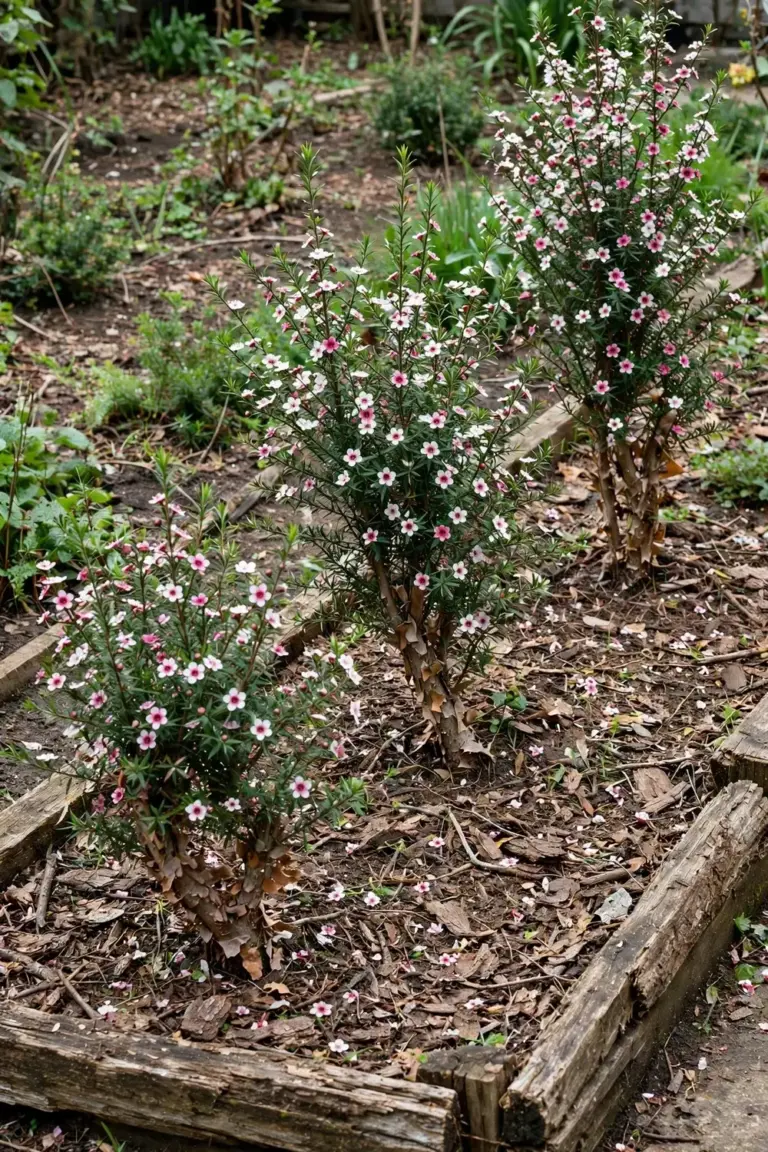
Leptospermum scoparium is manuka. It grows wild in New Zealand and south-eastern Australia. Garden tea trees cover the whole Leptospermum genus, so manuka is one species inside a much bigger group. Buy the species or cultivar that fits your garden job, not the honey name on the label.
Dwarf forms grow well in pots. ‘Fore Shore’, ‘White Wave’, ‘Pageant’, and ‘Tickled Pink’ all stay under 2 m. Use a wide pot, native potting mix, and drainage holes. Water when the top of the mix feels dry, feed once in spring, and repot when the roots fill the pot.
Space hedge plants for their mature width. Aphrodite needs 1.5 to 2 m between plants. Copper Glow needs about 2 m. Tight spacing looks full in year one and chokes the plants by year three, when inner branches die back from lack of air and light. Tube stock fills the gaps faster than you expect.
Unpruned tips shade the inner branches until they drop their leaves. Tip-prune after flowering every year to keep light reaching the center. A center bare for years will not fill, because old bare wood carries no live buds. Start the pruning habit in the first year and the plant stays dense from the start.
Myrtle rust kills new growth and can kill young plants, but established plants usually survive with dieback on the softest shoots. Remove affected growth promptly, bag it, and bin it. Buy resistant forms where the nursery lists them. No spray cures myrtle rust, and the disease is endemic in Australia, so hygiene and resistant choices matter more than chemicals.
Plant the Local One and Let It Flower
Buy the Leptospermum that already grows near you. Plant it in full sun and free-draining soil. Water it deeply through its first summer, feed it once in spring with low-phosphorus fertilizer, and trim it lightly straight after flowering. That routine carries the plant for decades. The flowers bring bees, honeyeaters, and butterflies to the garden, and the plant asks for little in return.