
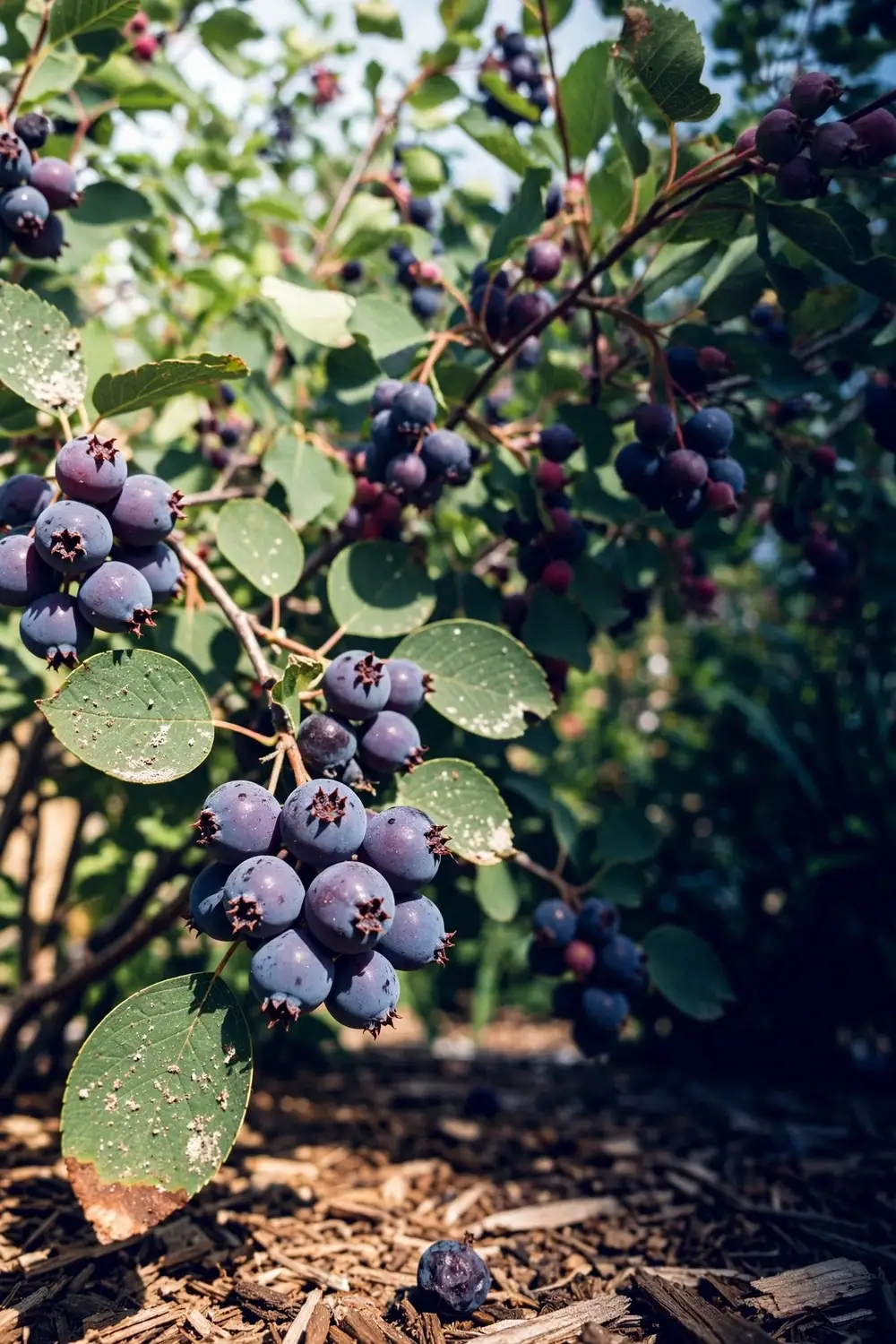

Plant bare-root saskatoon stock for a first small crop in 2 to 3 years, with full production around year 5. The same plant is sold as juneberry and serviceberry, and all three names point to one cold-hardy native shrub, Amelanchier alnifolia.
Here is how to grow saskatoon berries from site selection to storage, in 20 steps. The guide covers the three-name confusion, the variety choice that matters most, honest seed timelines, pollination, spacing, watering, pruning, the two diseases that actually show up, bird protection, containers, and the honest comparison with blueberries. If you are starting from seed, the seed-starting guide walks through the same germination fundamentals with photos.
I have learned that the first lesson with this shrub is the name on the tag. Nurseries, neighbors, and even some gardening books use three different names for the same plant, and knowing they are synonyms is the fastest way to avoid buying a duplicate.
Saskatoon at a Glance
| Item | Detail |
|---|---|
| Botanical name | Amelanchier alnifolia (Rosaceae) |
| Other names | Juneberry, serviceberry |
| Hardiness | Zones 2 to 7 (some sources list to Zone 9) |
| Light | Full sun; tolerates partial shade with lower yields |
| Soil | Well-drained loam or sandy loam, pH 5.5 to 7.0 |
| Spacing | 3 to 6 feet apart; hedgerow 5 feet apart |
| Height | 6 to 15 feet depending on variety and pruning |
| Pollination | Self-fertile; cross-pollination improves fruit set |
| First crop | 2 to 3 years from bare-root; 3 to 4 years from seed |
| Full production | Around year 5; optimal years 6 to 8 |
| Harvest | Mid-summer, when berries turn deep purple |
1. Learn the Three Names for One Shrub
The fastest way to fail with saskatoons is to plant a “juneberry” next to a “serviceberry” and a “saskatoon” and discover three years later that you own one plant three times. They are all Amelanchier alnifolia, a North American native shrub in the rose family.
Nursery tags use whichever name sells locally. In Canada and the northern United States you will see “saskatoon”. In the eastern states the same plant is usually sold as “serviceberry”, and older gardening books call it “juneberry” for its early-summer fruit. The fruit, the flowers, and the care are identical under all three names.
| Name | Where you see it | What it means |
|---|---|---|
| Saskatoon | Canada, northern US, nurseries | Amelanchier alnifolia, the fruit shrub |
| Juneberry | Older books, some nurseries | Same plant; named for early fruit |
| Serviceberry | Eastern US, landscaping trade | Same plant; often sold as an ornamental |
Buy one named variety from a reputable nursery rather than three mystery shrubs. The variety choice, which step 2 covers, matters more than the name on the tag.
2. Pick the Variety That Matches Your Yard
Named varieties exist because wild seedlings vary in fruit size and yield. The Canadian prairie breeding programs selected a handful of reliable ones, and these are the names worth asking for.
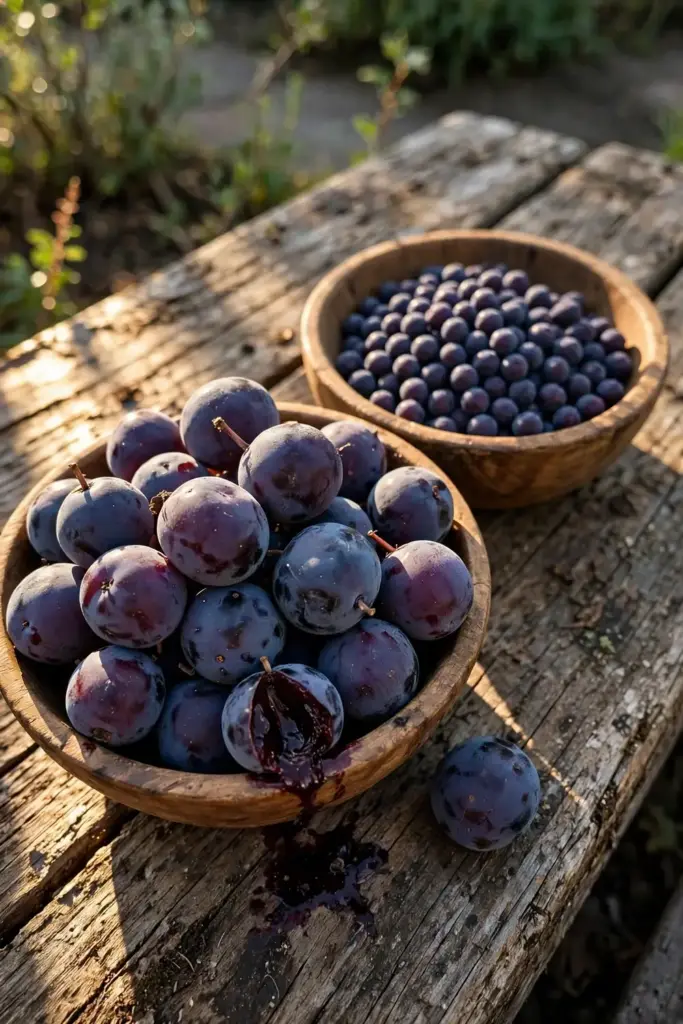
‘Thiessen’ is the heavyweight: discovered in the 1970s in Saskatchewan, it carries the largest fruits of the named varieties and strong yields, according to Horticulture magazine’s saskatoon guide. ‘Smoky’ is the flavor favorite, ‘Northline’ bears early with large upright canes, and ‘Martin’ ripens uniformly for easy picking. ‘Regent’ is the dwarf option for small gardens, staying compact where the tall varieties reach 12 to 15 feet.
Saskatoons are self-fruiting, so one bush will fruit on its own. That said, cross-pollination by bees between two different varieties produces a heavier crop. If you have room, plant two different varieties near each other. If you only have room for one, pick ‘Thiessen’ or ‘Smoky’ and skip the worry.
| Variety | Key trait | Best for |
|---|---|---|
| Thiessen | Largest fruits, strong yields | The all-round first choice |
| Smoky | Sweet flavor, reliable | Taste-first gardeners |
| Northline | Early, large upright canes | Short seasons |
| Martin | Uniform ripening | Easy bulk picking |
| Regent | Dwarf, compact | Small yards and containers |
3. Confirm Your Climate Before You Buy
Saskatoons laugh at winter. The University of Saskatchewan’s extension notes that saskatoons are hardy to Zone 1 and survive temperatures down to minus 60 degrees Celsius, so winter cold is never the problem in North America.
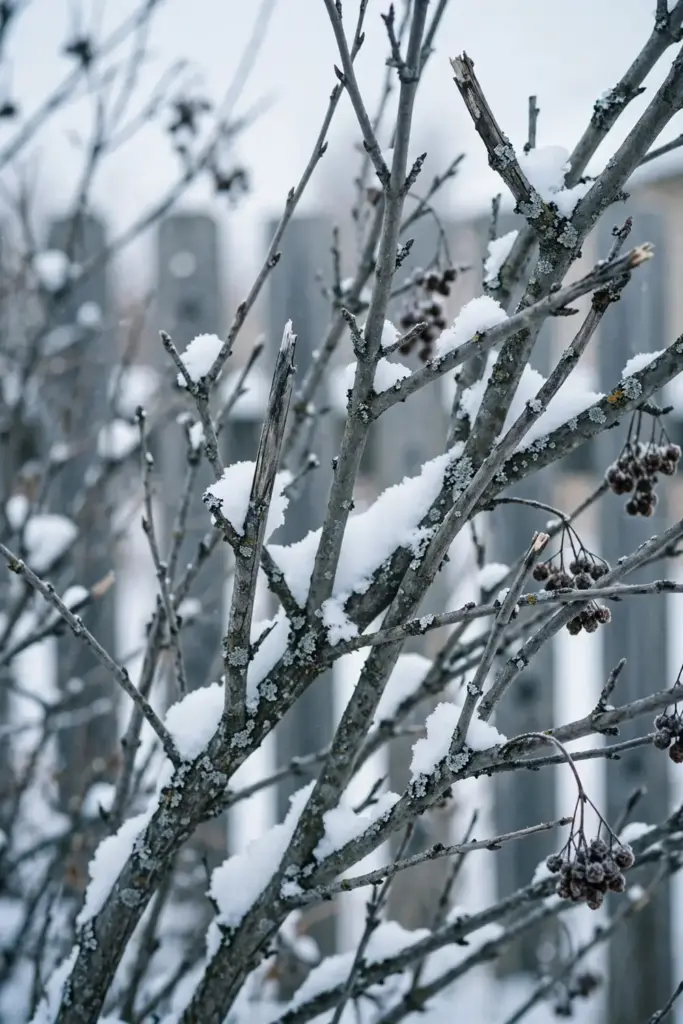
The honest zone split looks like this: Horticulture magazine lists hardiness through USDA Zone 7, while some nursery sources stretch the range to Zone 9. The discrepancy is about heat and humidity, not cold. Saskatoons want a real winter and a dry-ish summer; in hot, humid Zone 8 and 9 gardens they struggle with leaf diseases and poor fruit set.
For the Texas question gardeners keep asking, be realistic. Much of Texas is too hot for saskatoons to thrive. They may survive in the panhandle and the far north, but gardeners in Houston or Austin will fight a losing battle. If your winters rarely dip below freezing, choose a different berry.
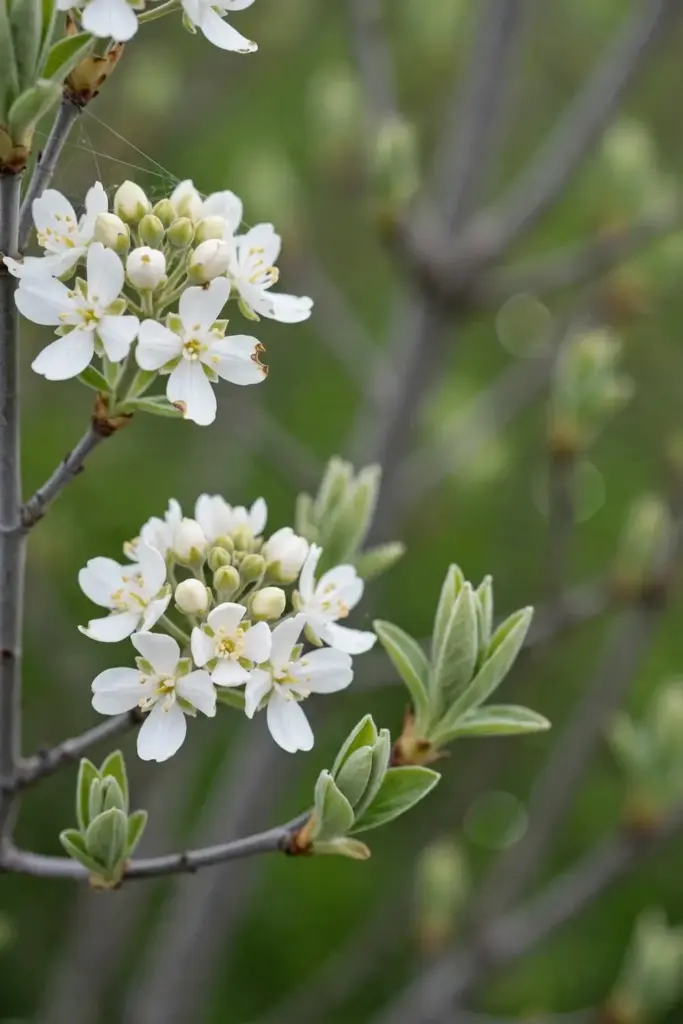
One more siting rule from the University of Saskatchewan: blooms appear early in the season, so avoid planting in a frost pocket where late spring frosts settle. A gentle slope or an open spot with moving air protects the flowers that become your crop.
4. Choose Seed or Bare-Root, With Honest Timelines
This is the decision that shapes everything else. Both routes work, and the trade is time versus money.
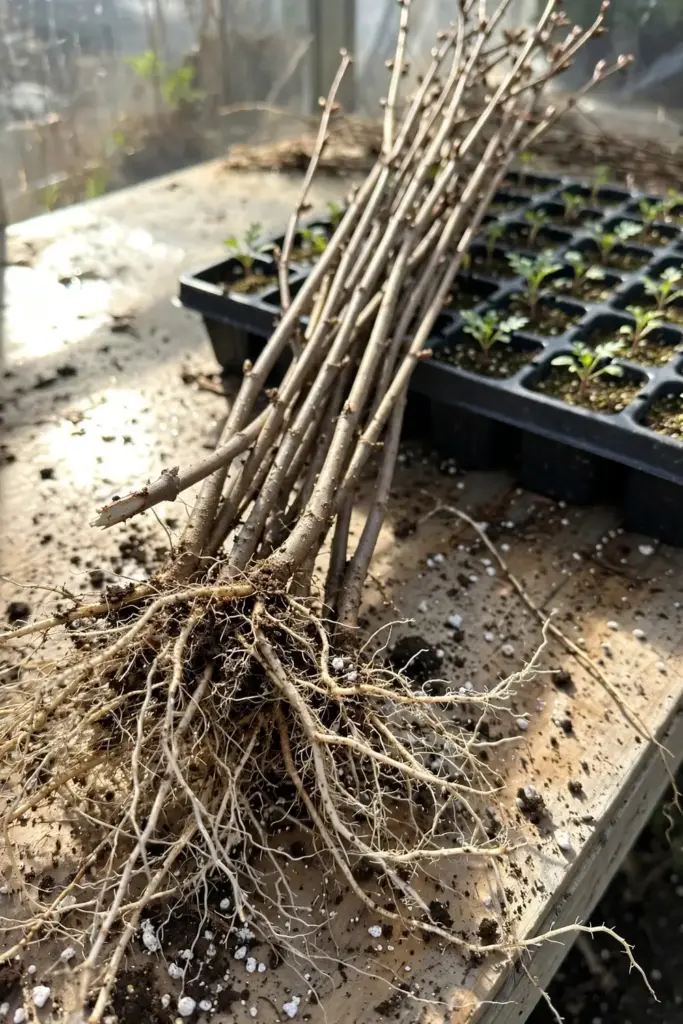
Bare-root stock and small container plants are the proven route. A two-year-old bare-root bush typically gives its first small crop 2 to 3 years after planting, reaches full production around year 5, and hits optimal yields in years 6 to 8, according to Horsting’s Farm plant care guide. You know the variety you are getting, and the plant is already past the fragile seedling stage.
Seed is the slow, cheap route. Expect 3 to 4 years to first fruit from stratified seed, and expect seedlings that will not match a named variety. Seed-grown plants vary, so you might get a great bush or a mediocre one. The advantage is cost and the satisfaction of growing from scratch.
| Route | First crop | Full production | Variety certainty |
|---|---|---|---|
| Bare-root or container plant | 2 to 3 years | Year 5, optimal years 6 to 8 | Exact named variety |
| Seed | 3 to 4 years | Year 6 or later | Unknown, seedling variation |
If you want fruit on a schedule, buy plants. If you want the experience and can wait, sow seed. Steps 5 through 7 cover the seed route in full.
5. Stratify Saskatoon Seeds the Right Way
Saskatoon seeds carry a double dormancy that defeats casual sowing. Fresh seed planted straight into a pot mostly sits there. The fix is a two-phase stratification that mimics a prairie winter.
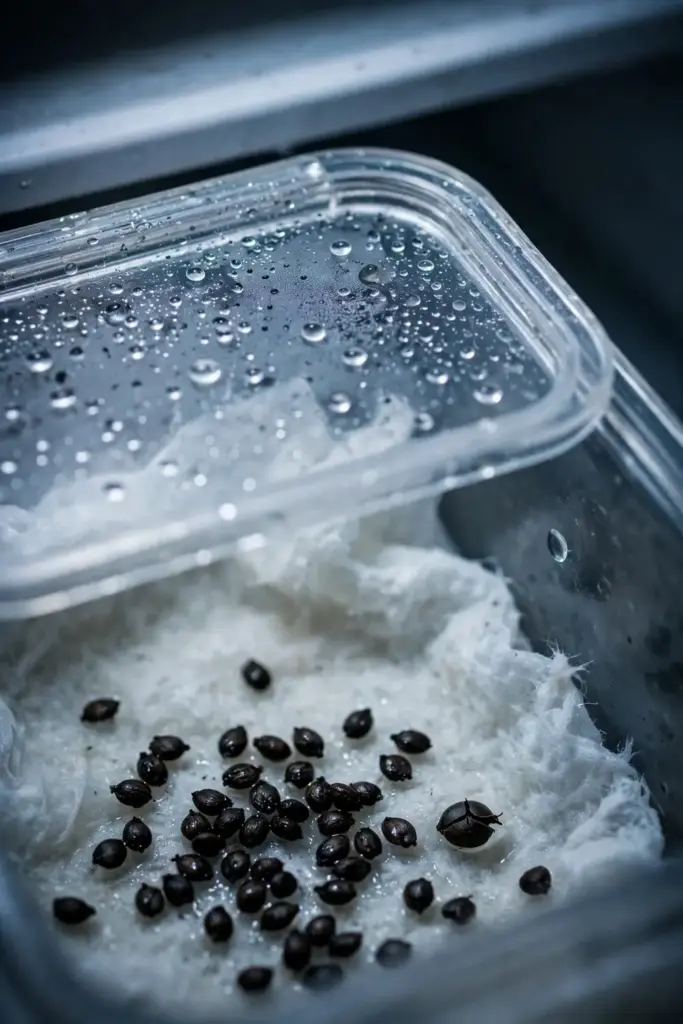
Clean the pulp from ripe fruit first, because the pulp inhibits germination. Then give the seed a warm, moist phase of several weeks at room temperature, followed by 60 to 90 days of cold, moist stratification in the refrigerator, typically around 35 to 41 degrees Fahrenheit. Gardener’s Path documents this warm-then-cold sequence as the reliable path, and growers who skip the cold phase report patchy, months-late sprouting.
Sow a quarter inch deep in a well-drained potting mix once stratification is done. Keep the trays consistently moist, never soggy. Bright light helps; blasting heat does not. Germination stays slow and uneven even in good conditions. Sow extra seed and thin later.
6. Germinate and Raise Your Seedlings
Expect germination to take several weeks, sometimes stretching past a month. Do not assume a silent tray is a dead tray; saskatoon seed is famously staggered.
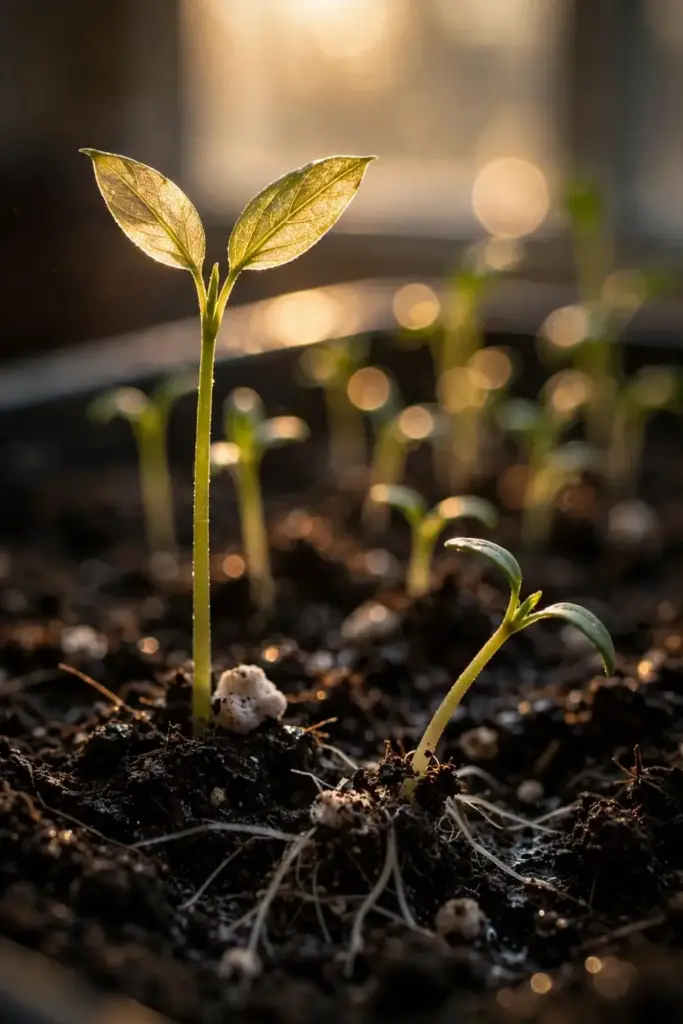
When sprouts appear, keep them in bright, indirect light and water gently. Damping-off is the main killer of young seedlings, so air circulation matters as much as moisture. A small fan on low, aimed near but not at the tray, helps stems stay sturdy.
Let seedlings grow until they have several sets of true leaves and a solid root system before transplanting. Rushing a spindly seedling into the garden is the most common way to lose it. A plant that fills its starter pot with roots will survive the move; a plant with two pale leaves will not.
7. Harden Off Young Plants Before Moving Out
Seedlings raised indoors need a transition week before they meet real weather. Move them outside for a few hours of morning sun on day one, then add a couple of hours daily until they handle a full day. Bring them in if a hard frost threatens.
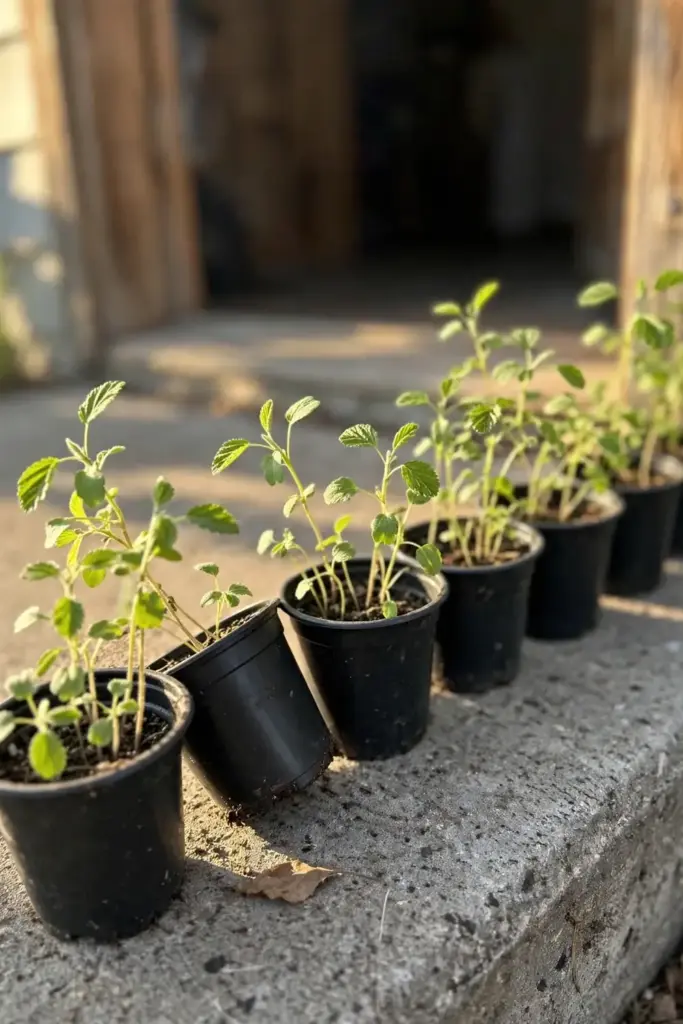
This step applies to purchased bare-root whips too, if they arrive while nights are still cold. A week of gradual exposure builds the cuticle and toughens stems faster than any fertilizer.
Once hardened, seedlings go into a nursery bed or their permanent spots in spring, after the soil is workable. Mulch lightly and water in well. The first season is about roots, not fruit. Any blossoms that appear on a first-year seedling are best pinched off so the plant puts energy into establishment.
8. Buy Quality Stock From the Right Source
If you chose the bare-root route, source matters. Look for nurseries that sell named varieties, not unlabeled “serviceberry” seedlings. T and T Seeds in Manitoba is the classic Canadian source; in the United States, native-plant nurseries and several mail-order fruit nurseries carry ‘Thiessen’, ‘Smoky’, and ‘Northline’.
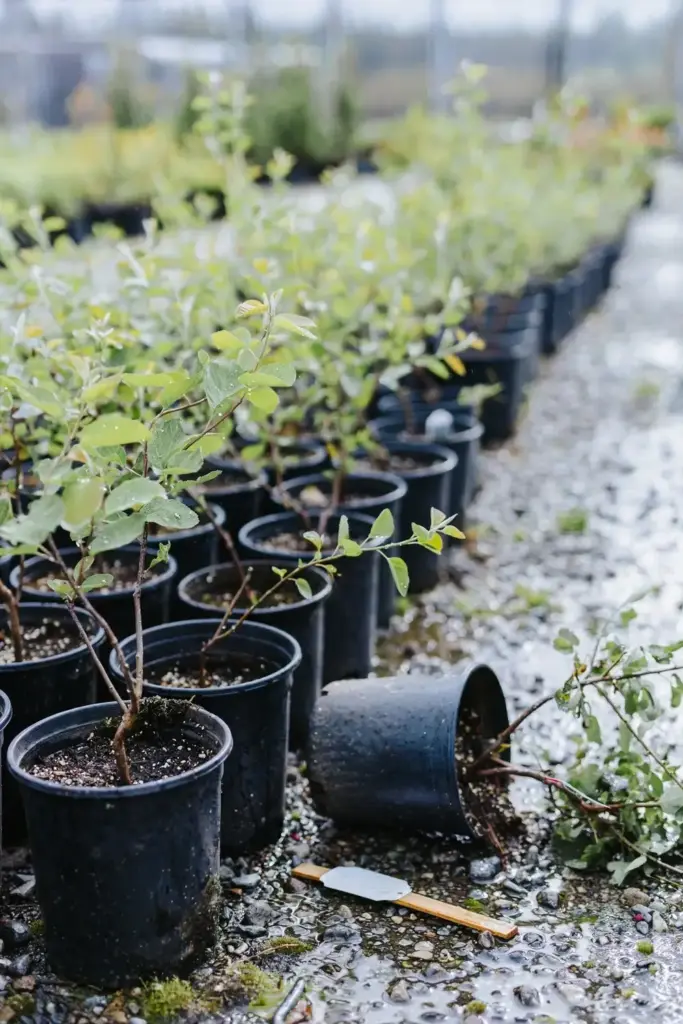
Saskatoons are often sold as small plugs or whips from online distributors, or as larger container plants from local nurseries. Either form works. Plugs are cheaper and establish quickly; container plants give you a head start of a year. Inspect for healthy white roots and avoid plants with circling, pot-bound roots that never got upsized.
Plant in spring as soon as the soil is workable, or in early fall where winters are reliable. Fall planting lets roots settle before the ground freezes, which the University of Saskatchewan lists as standard practice on the prairies.
9. Prepare the Site and Plant at the Right Depth
Saskatoons prefer full sun and reward it with heavier crops. They tolerate partial shade, but yields drop and disease pressure rises. Give them the sunniest spot you can.
Soil needs are forgiving. Saskatoons handle pH from 5.5 to 7.0 and most soil types except waterlogged clay. If your soil is heavy clay, plant in a raised bed or a broad mound. Work compost into the planting area; the shrubs have shallow, wide-spreading roots that appreciate loose, organic-rich soil. For a deeper dive on building that soil, the soil health guide covers the full foundation.
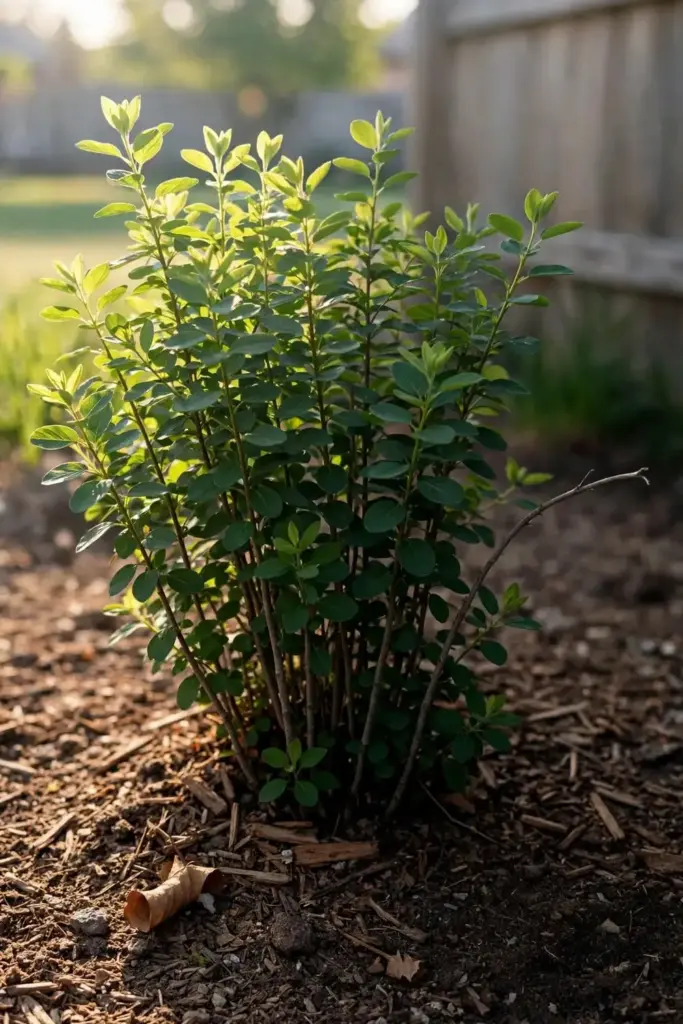
Dig a hole wide enough for the whole root mass. Set the plant 1 to 2 inches deeper than it sat in the nursery container; the University of Saskatchewan notes that this deeper setting encourages a multi-stemmed shrub rather than suckers spreading from the mother plant. Space bushes 3 to 6 feet apart, or 5 feet apart for a solid edible hedge. In a hedgerow the plants fill the gaps within about five years.
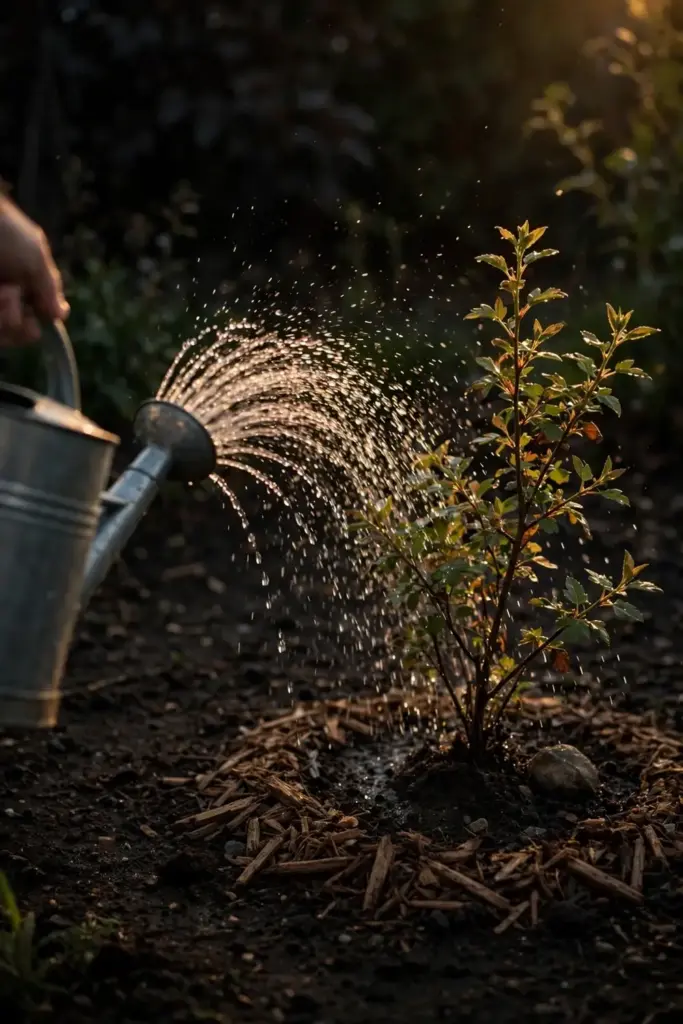
Water deeply after planting, then keep the soil around new shrubs moist but not waterlogged for the first 2 to 3 weeks. A 4 to 6 inch layer of woody mulch extending at least 4 feet around the shrub conserves moisture. Keep the mulch off the crown itself.
10. Water Deeply While They Establish
First-year plants need consistent moisture. Water deeply once a week during the growing season, more often in sandy soil or heat waves. The goal is moist soil a few inches down, not a daily sprinkle that wets only the surface.
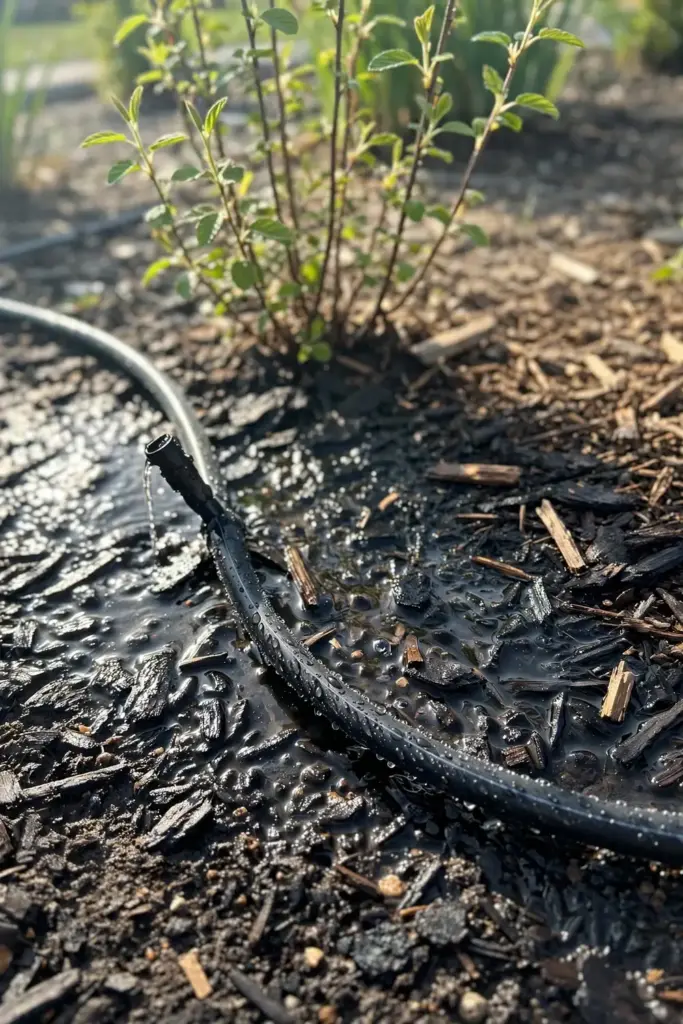
Established saskatoons are tougher. They handle dry spells once their roots are down, but fruit size and yield improve with steady water through bloom and fruit development. Drip irrigation is the preferred method because it keeps foliage dry and cuts foliar disease risk.
Mulch does half the watering work for you. That 4 to 6 inch woody mulch ring from step 9 suppresses weeds and holds soil moisture. Weeds are worth taking seriously: keep the base of each bush weed-free and grass-free, because grass competition measurably slows young saskatoons.
11. Feed Lightly, Mostly With Compost
Saskatoons are light feeders, which is part of their charm. The University of Saskatchewan advises against chemical fertilizer at planting; instead, apply 2 to 3 inches of compost or well-composted manure at soil level around the base before mulching.
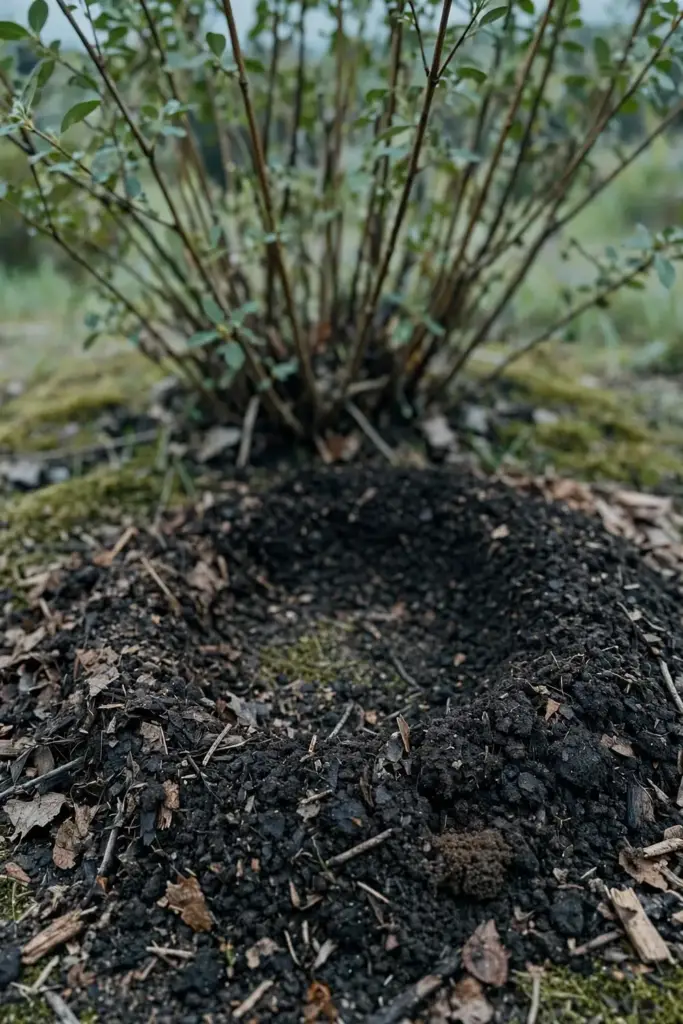
In following years, a yearly top-dressing of compost in early spring is usually enough. If growth looks pale and weak despite good water, a balanced slow-release fertilizer applied once in spring closes the gap. Do not overfeed. Excess nitrogen pushes soft, leafy growth that invites aphids and delays fruiting. If you want the full rundown on feeding options, the fall fertilizer guide covers organic choices that work for fruiting shrubs too.
Because the root system is shallow, never cultivate deeply around the base. Scratch amendments into the mulch layer and let the worms do the rest.
12. Prune in Early Spring for an Open Shrub
Prune saskatoons the way you prune blueberries: keep the shrub open, keep the height pickable, and remove the dead and diseased wood. Early spring, before new growth starts, is the window.
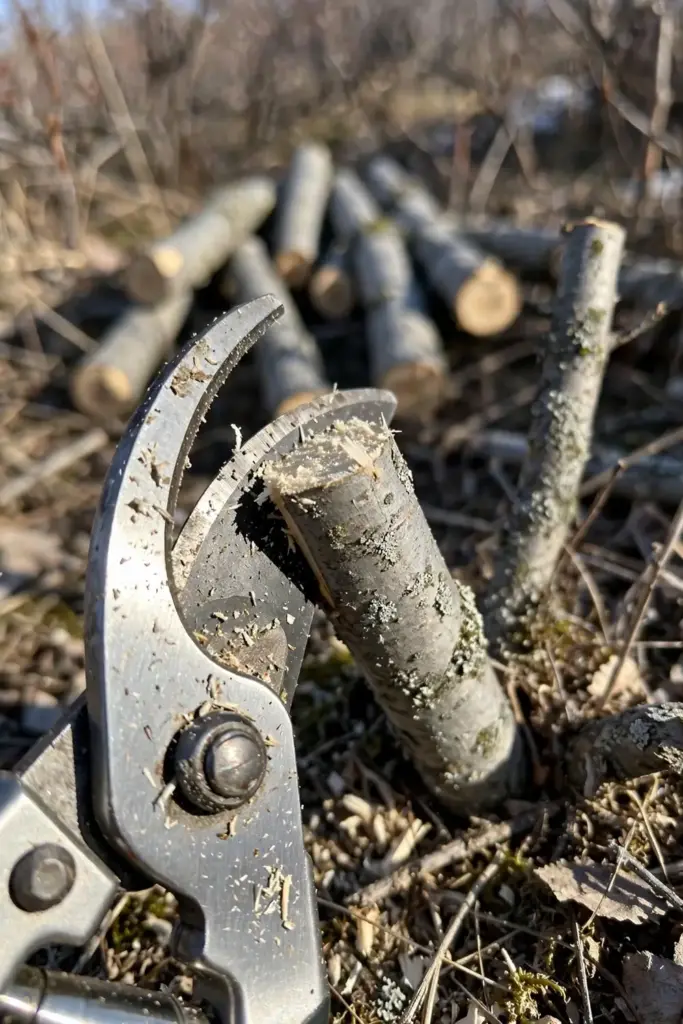
During the first three years, do almost nothing. Remove only diseased or dead stems and any branches drooping so low they touch the ground. The shrub is building its framework, and heavy pruning now just delays fruiting. The spring pruning techniques guide covers the dormant-season cuts in detail.
On mature bushes, thin out the oldest, thickest canes at the base every few years to let light into the center. Remove crossing branches and any weak, spindly growth. If an old bush has become unproductive, cut the whole thing back to about 6 inches above the soil. It sounds brutal, and it works: the shrub rejuvenates from the base and returns to bearing within a couple of seasons.
13. Manage the Suckers Before They Manage You
Saskatoons sucker. New shoots rise from the roots around the mother plant, and left alone they turn one bush into a thicket. This is a feature if you want a hedge and a nuisance if you want a tidy specimen.
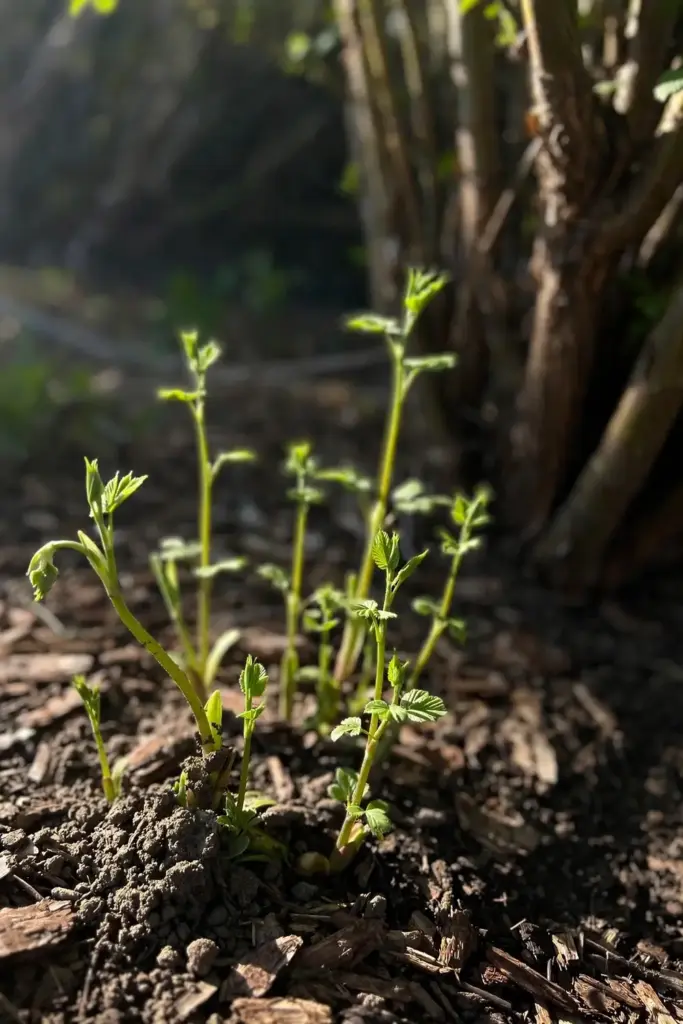
For a single specimen shrub, cut suckers off at ground level whenever they appear, a few times per season. Do not just mow them; mowing encourages more. For a hedge, let selected suckers fill the gaps, and remove the ones that wander out of bounds.
Planting 1 to 2 inches deeper than nursery depth, from step 9, encourages a multi-stemmed shrub form with fewer wandering suckers. It does not eliminate suckering entirely. Budget a few minutes per bush, a few times a year, and the thicket stays where you want it.
14. Net Against Birds or Share the Crop
Birds love saskatoons as much as you do, and they harvest earlier. A bush left unprotected in a suburban yard can be stripped in days.
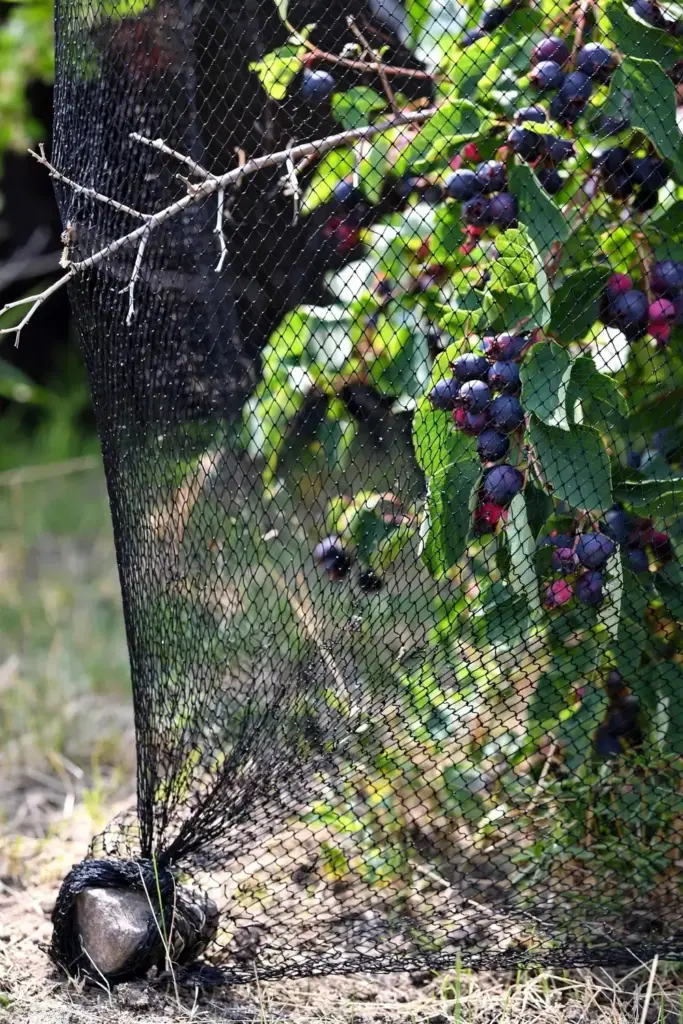
Drape bird netting over the bushes as berries start to color, and secure it at the base so birds cannot slip underneath. Use netting with holes no larger than half an inch; larger mesh traps birds instead of excluding them. Remove the netting right after harvest so it does not snag new growth.
If netting feels like too much work, plant extra. One common strategy is to let the birds have the top of the bush and pick the lower branches yourself. A mature bush can produce a heavy crop in a good year, which leaves room for sharing.
15. Watch for the Two Diseases That Matter
Saskatoons have a short problem list. Two issues account for most complaints.
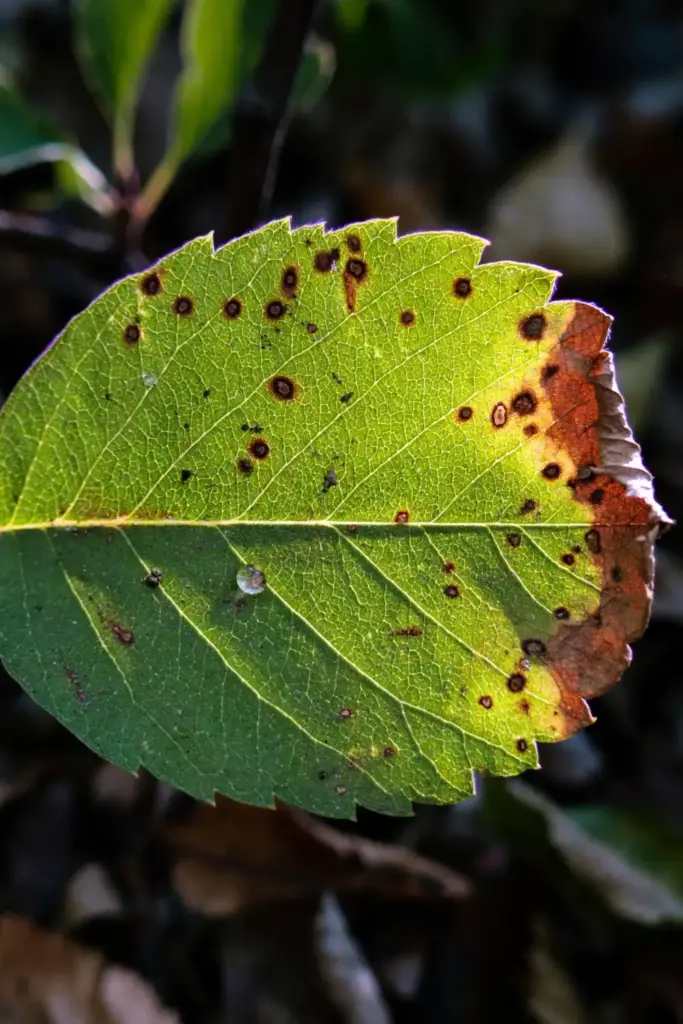
Entomosporium leaf spot shows as small dark spots on leaves that can merge and cause early defoliation in wet years. Good air circulation, drip irrigation instead of overhead watering, and cleaning up fallen leaves in autumn keep it minor.
Saskatoon-juniper rust, a form of cedar-apple rust, is the one to plan around. It needs junipers or cedars as an alternate host. The University of Saskatchewan recommends planting saskatoons at least 2 kilometers from native junipers where that is practical. In a home garden, just avoid planting next to an eastern redcedar or juniper hedge.
Fire blight, powdery mildew, and Cytospora canker appear in some regions but are secondary concerns. Aphids, sawflies, and mites show up occasionally; a strong jet of water or insecticidal soap handles most outbreaks without sprays.
16. Grow Saskatoons in Containers With Honest Expectations
Yes, saskatoons can grow in large containers, and no, they will not match a ground-planted bush. Expect a smaller plant and a lighter crop.
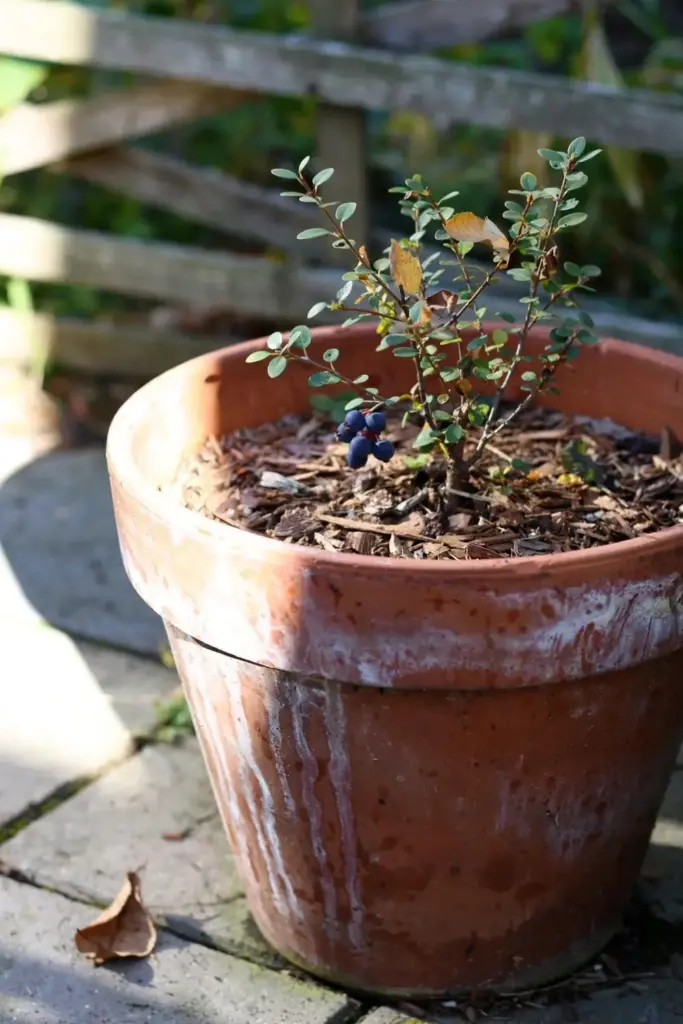
Choose the largest container you can manage, at least 15 to 20 gallons, with drainage holes. Use a quality potting mix amended with compost, not garden soil. Dwarf ‘Regent’ is the natural pick for pots because it stays compact.
Container plants need more of everything: more frequent watering, since pots dry fast, and yearly feeding, since nutrients leach out. In zones at the cold edge of the range, the container is actually an advantage. Move the pot into an unheated garage or against a sheltered wall for winter, and the roots stay protected.
17. Harvest When the Berries Turn Deep Purple
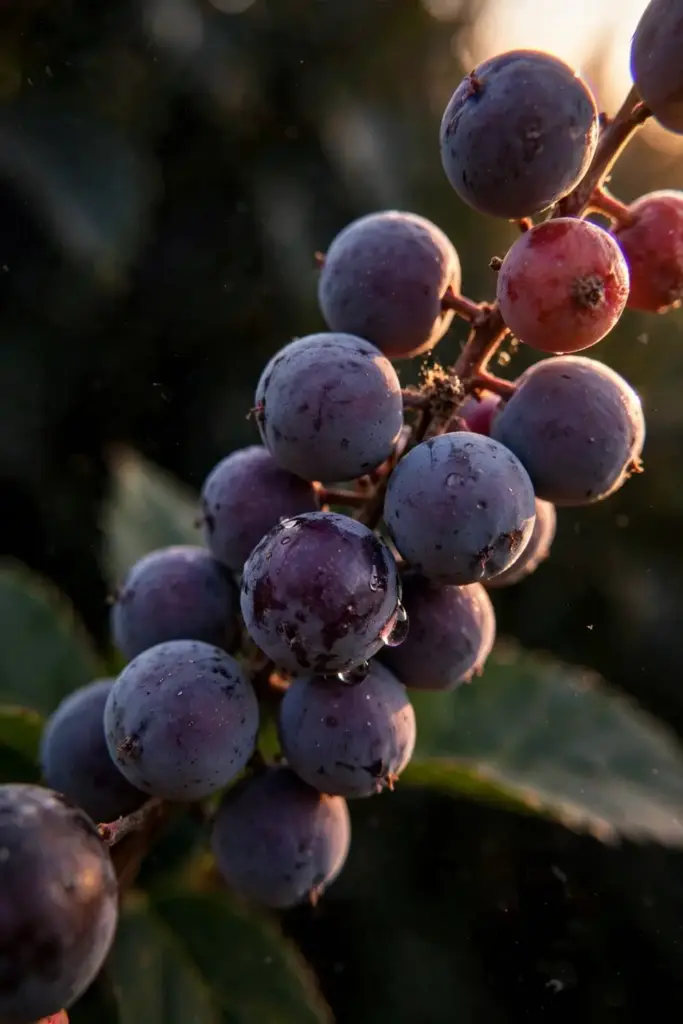
Saskatoons ripen in mid-summer, typically over a few weeks rather than all at once. Pick when individual berries turn deep purple to almost black and come off the stem with a gentle tug. Taste one first. A ripe saskatoon is sweet with an almond-like note; an underripe one is tart and astringent.

Harvest by hand into shallow containers. The berries bruise easily, so do not pile them deep. Plan to pick every few days during the season rather than doing one massive harvest.
For the common question of how long saskatoons last after picking: fresh berries keep about a week in the refrigerator. For longer storage, freeze them on a tray in a single layer, then bag the frozen berries. They hold quality for a year frozen and go straight into pies, jams, and smoothies.
18. Troubleshoot “Why Are My Saskatoons Dying?”
When saskatoons fail, the cause is usually one of a short list. Walk through them in order.
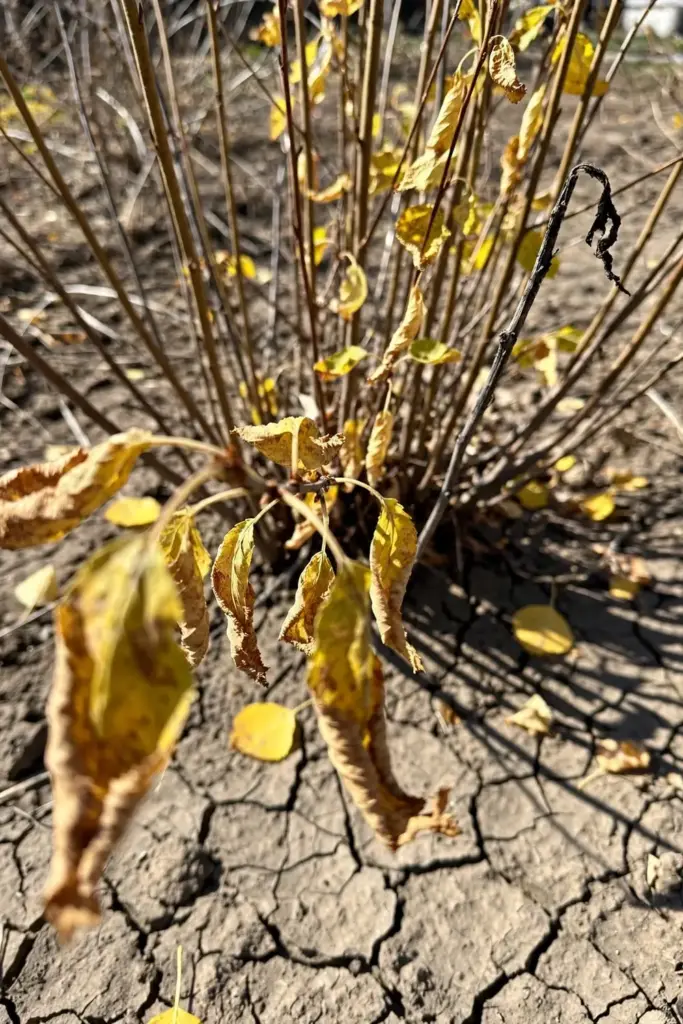
First, check water. Newly planted bushes die more often from drought than disease. The soil should be moist a few inches down through the first season. Second, check drainage. Roots sitting in waterlogged soil rot, and no amount of care fixes a bog. Third, look at the base: grass and weed competition starves young plants.
If the leaves spot and drop in a wet summer, that is Entomosporium leaf spot, covered in step 15. If branches die back with sunken cankers, prune well below the damage and destroy the cuttings. If a bush leafs out but never fruits, suspect a late frost killing the early blooms, which step 3 warned about, or simple youth: seed-grown plants need 3 to 4 years.
Biennial bearing, a heavy crop one year and a light one the next, is normal on some plants. Consistent watering and annual compost even out the cycle.
19. Compare Saskatoons to Blueberries Honestly
Gardeners keep asking whether saskatoons taste better than blueberries, so here is the straight answer. They taste different. Saskatoons are sweet with a nutty, almost almond-like depth. Blueberries are brighter and more acidic. Neither is objectively better; it is a preference.
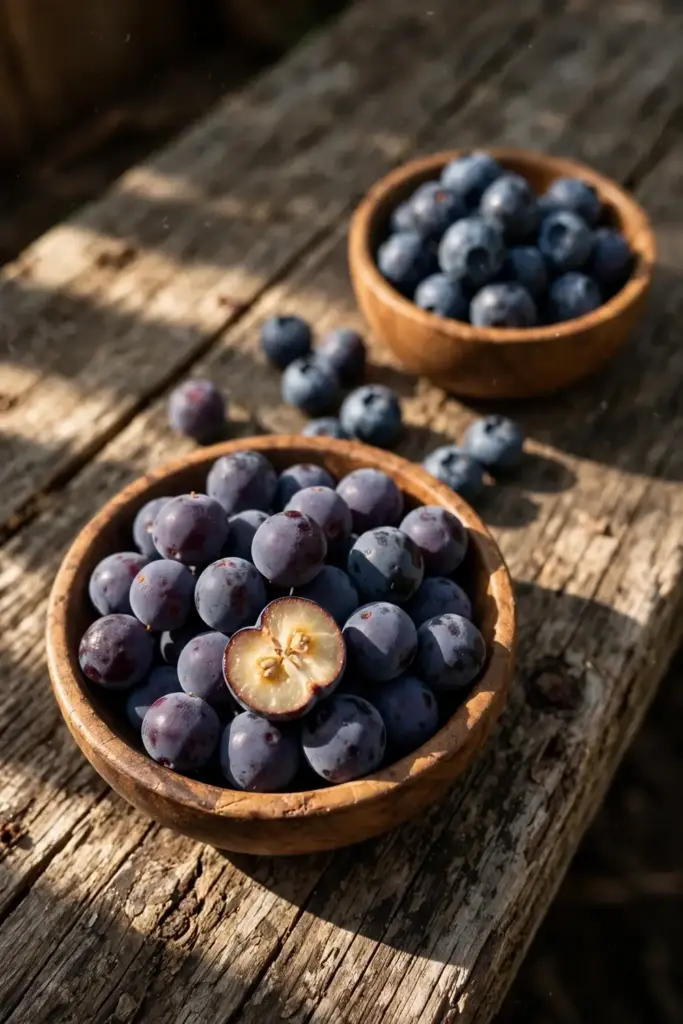
Where saskatoons win clearly is on soil and cold. Blueberries demand acidic soil around pH 4.5 to 5.5 and sulk in alkaline ground. Saskatoons thrive at pH 5.5 to 7.0 and survive minus 60 degree winters that kill blueberry canes. If your soil is neutral and your winters are brutal, saskatoons are the easier berry.
Nutritionally the two are close cousins. Both are rich in anthocyanins and fiber. Saskatoons carry notable iron and manganese, with a nutrient profile researchers compare directly to blueberries. Grow the one your climate favors, or grow both and settle the taste debate at your own table.
20. Decide Whether Saskatoons Earn a Spot
Saskatoons earn their spot on three strengths: extreme cold hardiness, tolerance of ordinary soil, and a long productive life. A well-planted bush can bear fruit for 30 years or more, which few garden fruits can claim.
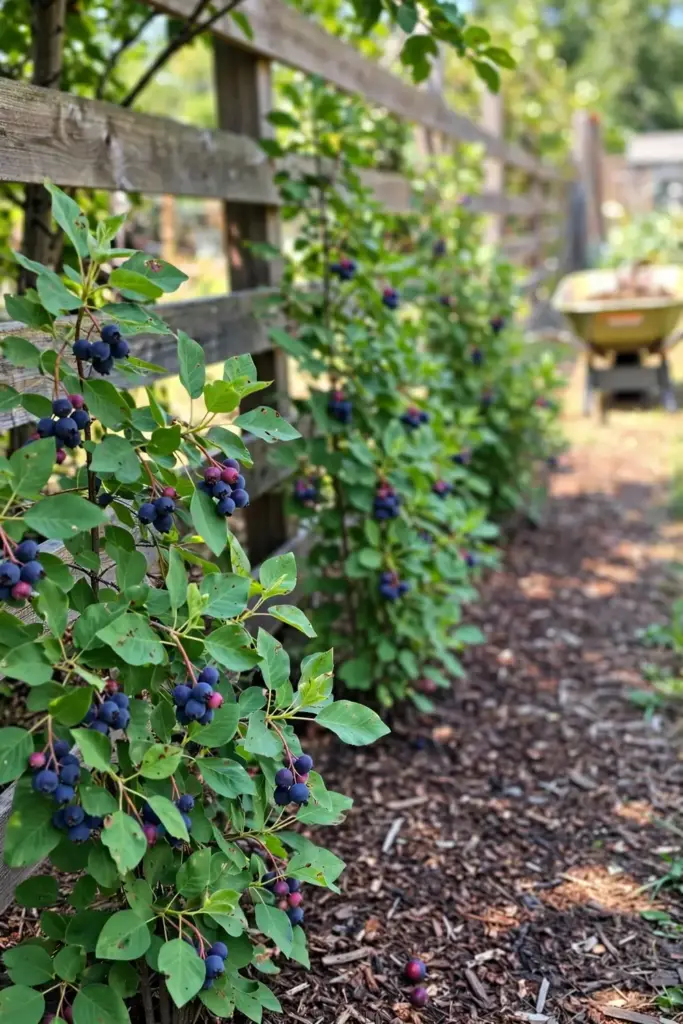
Saskatoons ask little: full sun, decent drainage, a yearly compost top-dressing, early-spring pruning, and netting at harvest. In return they give pounds of sweet, almond-noted berries from a shrub that outlasts winters that destroy lesser fruit.
Start with two different named varieties if you have the space. Give them sun, mulch, and patience through the first quiet years. By year 5 the bushes hit their stride. By years 6 to 8 they peak. That is a long game worth playing.
The Prairie Berry That Outlasts Winter
Plant a saskatoon this spring and you are planting for decades. Few fruiting shrubs combine this level of cold hardiness with this little fuss, and fewer still feed you, the birds, and the bees from the same branches. Pick your varieties, give them sun and compost, and let the prairie berry do what it has done for centuries: thrive where the winter is real.
Frequently Asked Questions
No. Saskatoons are among the easiest fruiting shrubs for cold climates. They survive minus 60 degree winters, tolerate most soils except waterlogged clay, and need only yearly compost, early-spring pruning, and consistent water in the first season. The main work is netting against birds at harvest and managing suckers. Pests and diseases are minor compared with apples or stone fruit.
They taste different rather than better. Saskatoons are sweet with a nutty, almond-like depth, while blueberries are brighter and more acidic. The real advantage is cultural: saskatoons thrive in neutral soil and brutal winters where blueberries struggle. Most gardeners who can grow both end up keeping both, since the harvest seasons and flavors complement each other.
In the United States they are most often sold as serviceberry or juneberry, especially in the eastern states and the landscaping trade. All three names refer to the same plant, Amelanchier alnifolia. Canadian nurseries and prairie growers use “saskatoon” almost exclusively. When shopping, match the botanical name on the tag rather than the common name.
Fresh saskatoons keep about a week in the refrigerator in a shallow container. For longer storage, spread them in a single layer on a tray, freeze until solid, then transfer to freezer bags. Frozen saskatoons hold their quality for about a year and work well in pies, jams, muffins, and smoothies straight from the freezer.
Most of Texas is too hot for saskatoons to thrive. They need a real winter chill and struggle with heat, humidity, and leaf diseases in warm zones. The panhandle and far north Texas are marginal possibilities, but Houston, Austin, and South Texas are poor bets. Gardeners in warm climates get better results from blueberries, blackberries, or figs.
Yes, in large containers of at least 15 to 20 gallons with drainage holes and quality potting mix. Expect a smaller plant and a lighter crop than a ground-planted bush. The dwarf variety Regent suits pots best. Container plants need more frequent watering and yearly feeding. In cold regions, move the pot into an unheated garage for winter to protect the roots.








