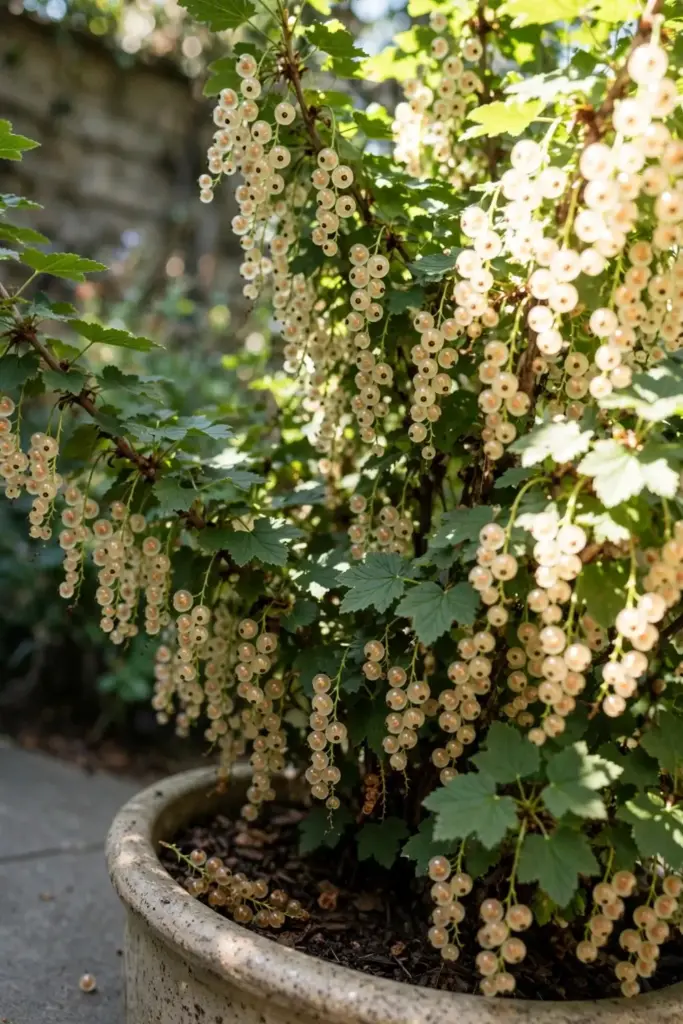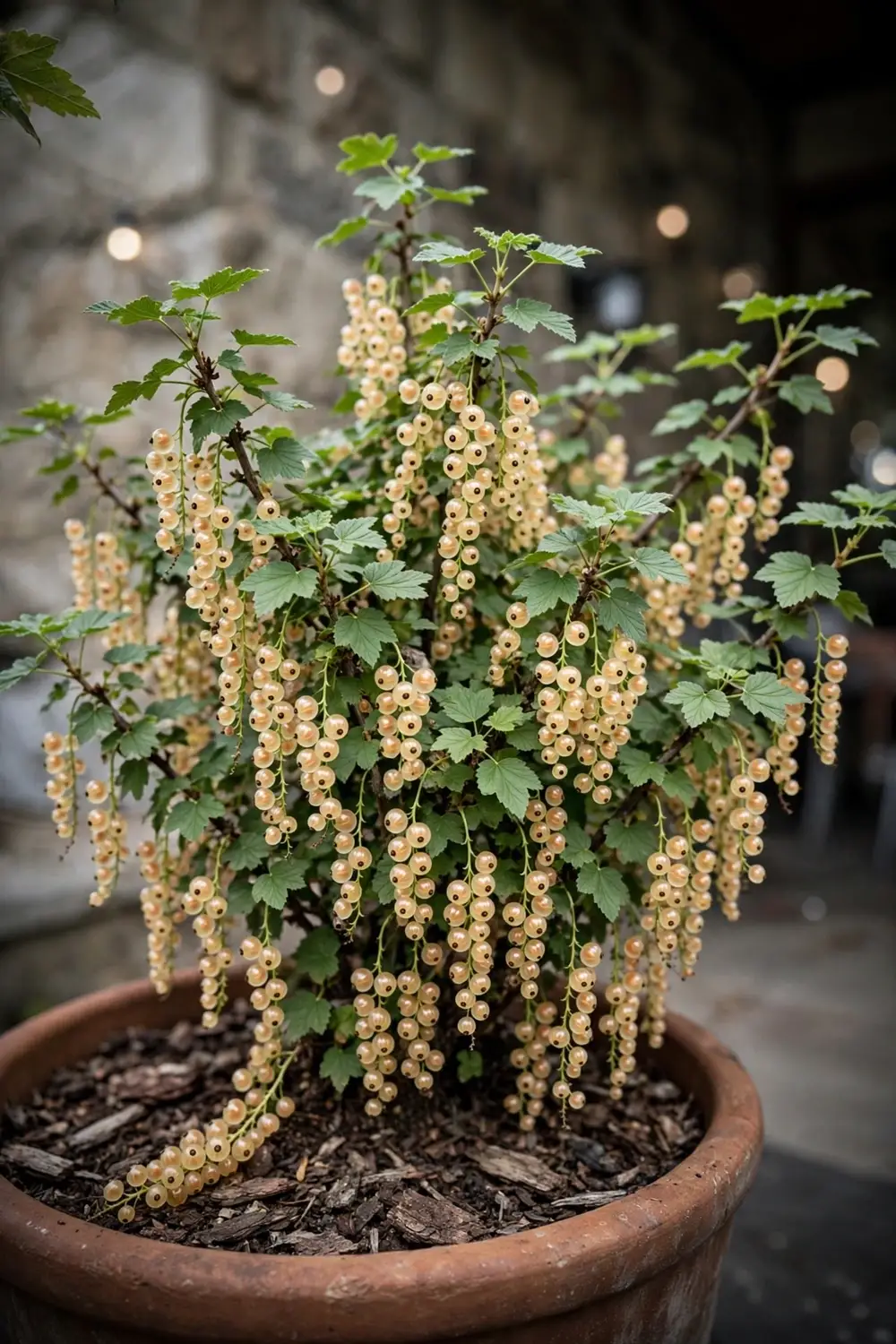

A white currant bush in a 10-gallon pot will give you your first small harvest in its second season and a full crop of translucent berries by year three. Pick one of the pale Ribes rubrum cultivars, plant it bare-root in late fall or early spring, give it morning sun with afternoon shade in hot climates, and prune it to an open goblet every late winter. I have learned that one extra week of patience on the strig turns white currants from mouth-puckering to dessert-sweet. Like other shade-tolerant berries, white currants forgive a spot that gets less than full sun, which makes them one of the best berry bushes for balconies and patios.
White currants are not a separate fruit from red currants. They are pale-fruited cultivars of the same species, Ribes rubrum, and they grow the same way, which means every bit of red currant wisdom transfers directly. This guide walks through the container path specifically: pot choice, chill hours, variety picks for small spaces, watering, feeding, pruning, winter care in pots, the honest legal question in the United States, and how to harvest the translucent strigs at their sweetest. Plant breeders and nurseries sell these under names like Whitecurrant, White Grape, and White Versailles, so the naming is consistent once you know what to look for.
White Currants in Pots at a Glance
| Item | Detail |
|---|---|
| Botanical name | Ribes rubrum (white-fruited cultivars) |
| What it is | A pale, sweeter form of red currant, not a separate species |
| Best planting method for pots | Bare-root plant in late fall or early spring |
| Pot size | 10-gallon fabric pot or a 45 cm container minimum |
| Zones | USDA 3 to 8 |
| Chill hours | 160 to 800 hours at 32 to 45 F |
| Sun | Morning sun with afternoon shade in hot climates; tolerates partial shade |
| Soil pH | 6.0 to 6.8 |
| Water | Deep, even watering; pots dry out faster than garden beds |
| Fruiting | Year 2 light crop, year 3 full crop, on two- and three-year-old wood |
| Harvest | Mid-summer, when berries turn fully translucent |
| Productive life | Up to 20 years in the ground; 10 to 15 in pots with repotting |
1. Know What a White Currant Actually Is
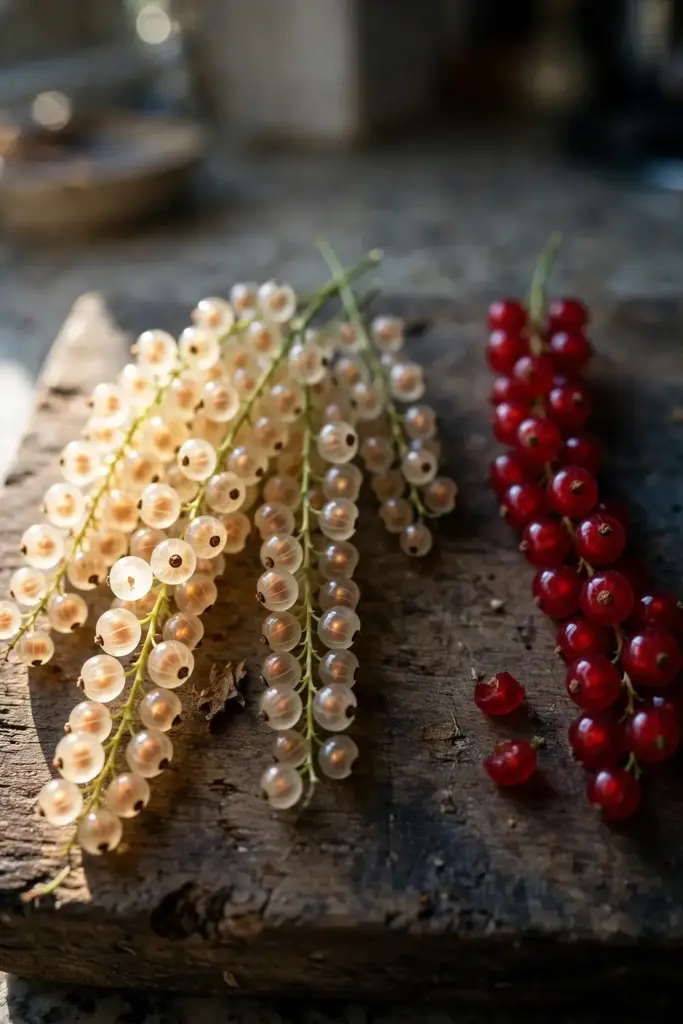
White currants are white-fruited cultivars of the red currant, Ribes rubrum, a deciduous shrub in the gooseberry family. The berries are smaller, paler, and less pigmented than red currants, and they taste sweeter and milder. This matters for a simple reason: you do not need to find a separate white currant care manual. The UC Agriculture and Natural Resources currant guide states that red and white currants are essentially the same fruit, differing only in color, and that cultivars of Ribes rubrum are upright shrubs native to northern Europe.
The confusion comes from labeling. White currants are sometimes sold as Ribes sativum or Ribes silvestre, or marketed as an entirely different fruit. They are not. They are pale selections of red currant cultivars, and the best growing advice applies to the whole group. The Royal Horticultural Society describes whitecurrants as a form of red currant, and its growing guidance for whitecurrants covers pot size, compost, and pruning in one place.
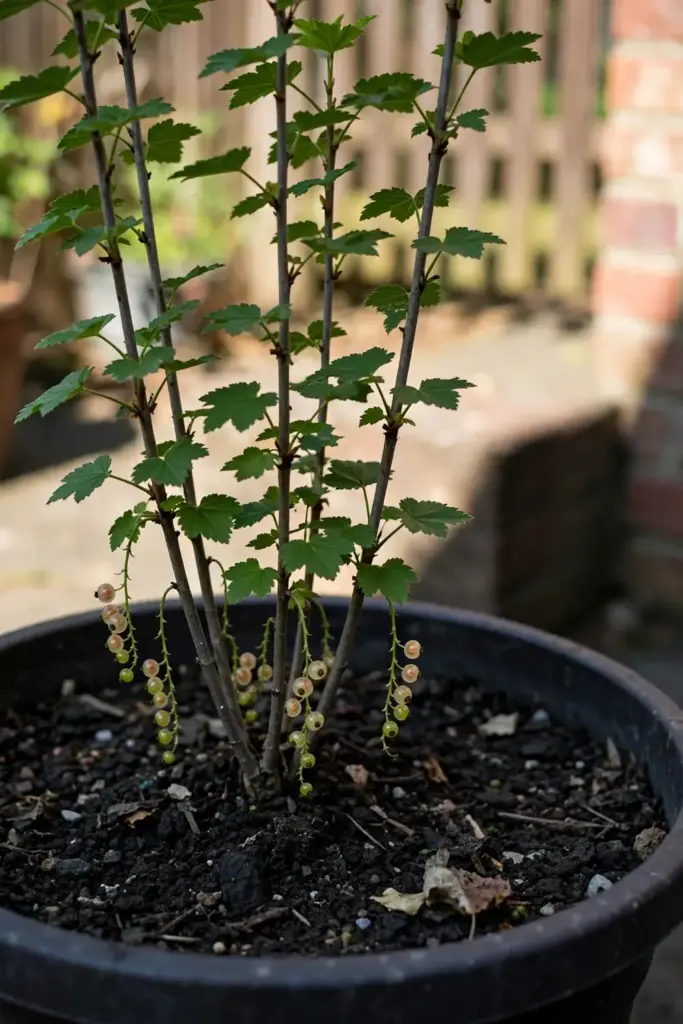
Expect the plant itself to look like a compact deciduous bush, 3 to 4 feet tall in a pot, with lobed leaves and drooping flower clusters in spring. Each flower cluster ripens into a strig, a delicate hanging stem of berries that you harvest whole. The berries turn from green to a translucent white or pale yellow when ripe, and translucency is the signal to wait for, not color.
2. Pick a Variety That Earns Its Pot Space
Four varieties dominate the white currant conversation, and they are not interchangeable.
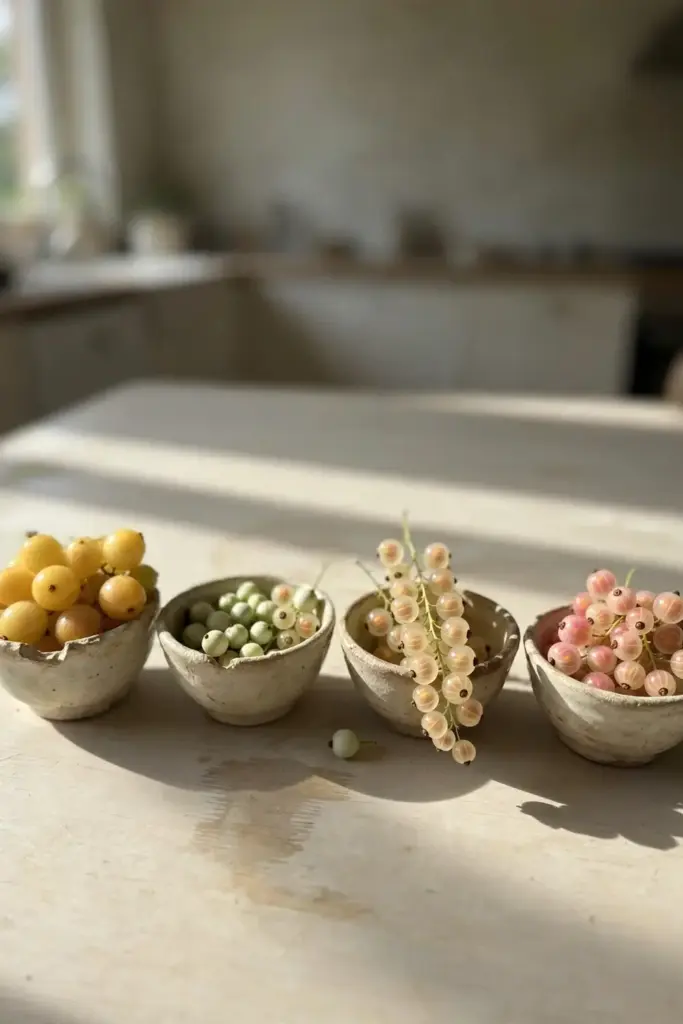
| Variety | Fruit character | Vigor | Notable strength |
|---|---|---|---|
| Blanka | Large pale berries on long strigs | Strong, upright | Self-fertile, heavy cropper, widely recommended for small gardens |
| White Grape | Small sweet berries | Moderate | Exceptionally sweet fresh-eating flavor; RHS Award of Garden Merit |
| White Versailles | Large berries, long heavy trusses | Vigorous, arching | Early season, very reliable crop; trains well as a fan or espalier |
| Pink Champagne | Pink-blushed berries | Moderate | Mildew resistance; the variety to pick where powdery mildew is common |
Blanka is the default pick for pots. It crops heavily, stays self-fertile, and handles pruning to a contained shape without complaint. White Grape wins on flavor but yields smaller berries, so choose it when eating fresh off the bush is your main goal. White Versailles ripens earlier than the others and produces long, heavy trusses, which makes it the pick for a short season or an early harvest. Pink Champagne earns its place through mildew resistance rather than sweetness, which is the right trade in humid regions where powdery mildew ruins other cultivars.
Most white currants are self-fertile, so you need only one bush to get fruit. The UC currant guide notes that most cultivars have self-fertile flowers, though a few are partially self-sterile. One plant per pot is the standard setup, and a second plant is a luxury, not a requirement. This self-fertility is one reason white currants suit small spaces: one 10-gallon pot is a complete planting.
3. Give the Bush the Chill Hours It Needs
White currants are cold-climate plants. Without a real winter, the buds never reset and fruiting fails. A Midwestern currant climate sheet puts the requirement at 160 to 800 chilling hours between 32 and 45 F, and most of the United States and much of Europe supply that easily. The problem zone is the warm South and Gulf Coast, where winters run too short to reset the buds.
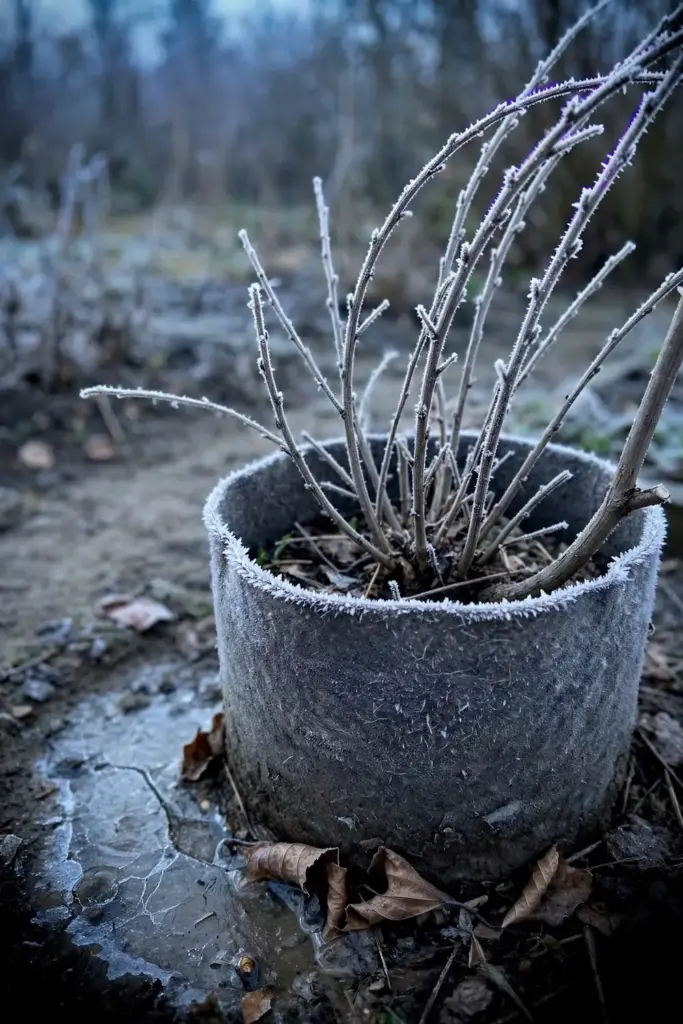
This is why the recommended zones are USDA 3 to 8. In zone 8 and the warmer parts of zone 7, site the pot on the coolest side of the house, use afternoon shade, and accept a lighter crop in warm winters. If your area routinely falls short of 150 chilling hours, white currants are the wrong plant for a container, and no amount of good care fixes that. The chill requirement is genetic, not a management choice.
A pot adds one wrinkle. Container roots experience more temperature swing than ground roots, but the chill count applies to the buds on the wood, which sit above the soil line. Moving the pot into an unheated garage for winter still accumulates chill hours as long as the buds experience cold. What you must avoid is bringing the bush indoors into heated space, which breaks dormancy early and spoils the fruit set.
4. Choose a Pot That Will Last a Decade
The standard recommendation is a 10-gallon fabric pot, which gives the roots room to spread while air-pruning the tips and keeping the root ball from circling. If you prefer a rigid container, use one at least 45 cm across and deep, which is the minimum the RHS suggests for fruit in containers. Bigger is better up to a point; a 15-gallon pot holds moisture longer and buffers winter temperature swings, but it also becomes difficult to move.
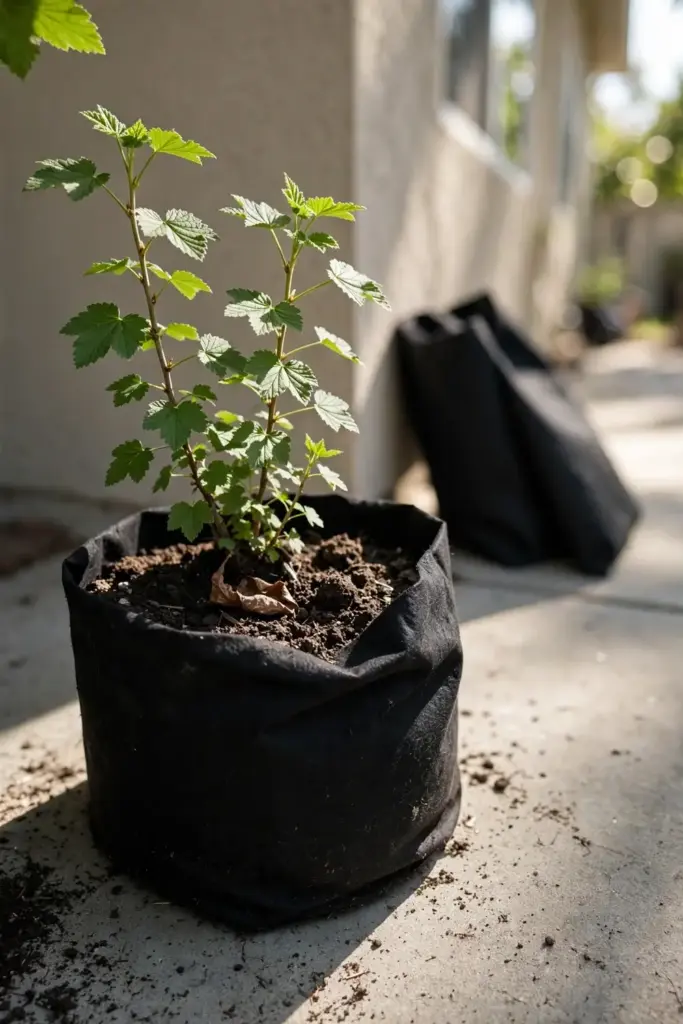
Fabric pots dry out faster than plastic or ceramic, so they demand more frequent watering in summer. Rigid plastic pots hold moisture longer but need excellent drainage holes. Terra cotta breathes like fabric and looks good, but it wicks water aggressively in hot weather and can crack in hard freezes. Whichever material you choose, raise the pot on feet or a low stand so the drainage holes never sit in a saucer of water.
Plan the repotting rhythm now. Every two to three years, lift the bush in late fall, trim back about a quarter of the roots, and refresh the potting mix. This renewal is what keeps a container currant productive past year five, when pot-bound plants start to decline.
5. Compare Pots Against Garden Beds Honestly
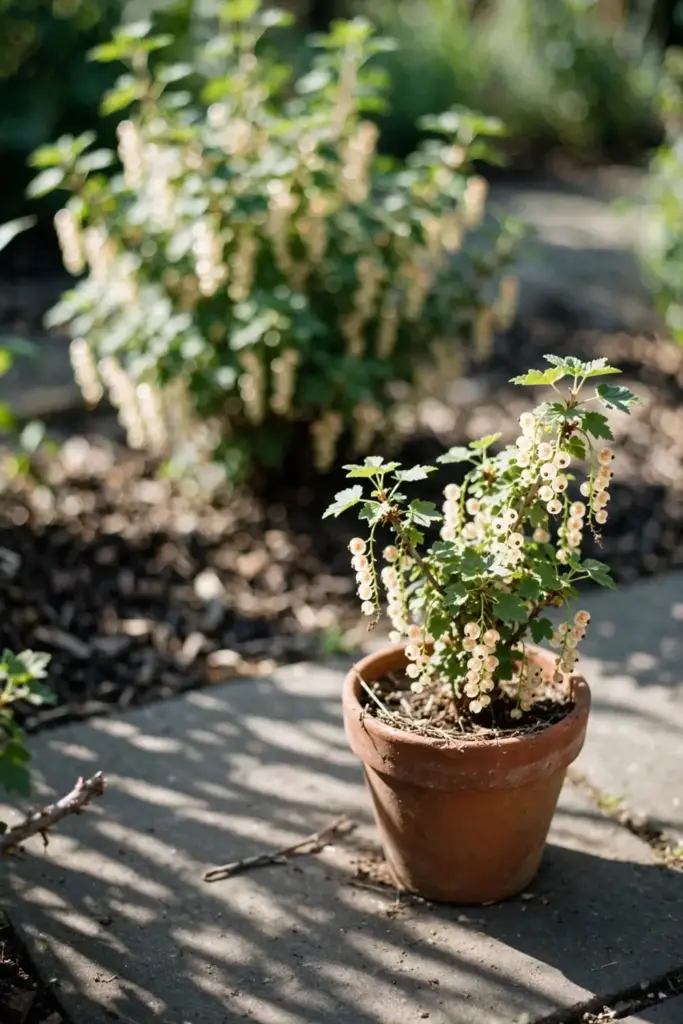
| Factor | 10-gallon pot | Garden bed |
|---|---|---|
| Space needed | 2 square feet of balcony | 4 to 5 feet of bed spacing |
| Harvest timing | Same, mid-summer | Same, mid-summer |
| Yield per plant | Slightly lower after year 5 | Up to 4 kg on established bushes |
| Watering | Daily in heat | Weekly in heat |
| Winter risk | Root freeze damage without protection | Roots insulated by soil |
| Moving the plant | Easy | Not practical |
| Lifespan | 10 to 15 years with repotting | Up to 20 years |
Pots win on flexibility and lose on stability. A potted bush can move to the shade in a heat wave, into a garage in a deep freeze, and onto a balcony that gets no ground soil at all. The price is vigilance: watering, feeding, and root protection all fall on you, where the ground forgives neglect. Choose pots when space is the constraint or when you want to control conditions precisely. Choose the ground when you have room and want the lowest-maintenance version of this fruit.
6. Plant Bare-Root in Late Fall or Early Spring
Buy a bare-root plant from a reputable nursery and plant it while dormant, from late fall through early spring. Bare-root stock establishes faster than potted stock because the roots meet the new mix without a transplant shock from nursery soil. Soak the roots in a bucket of water for a few hours before planting, then spread them out in the pot so no root doubles back on itself.
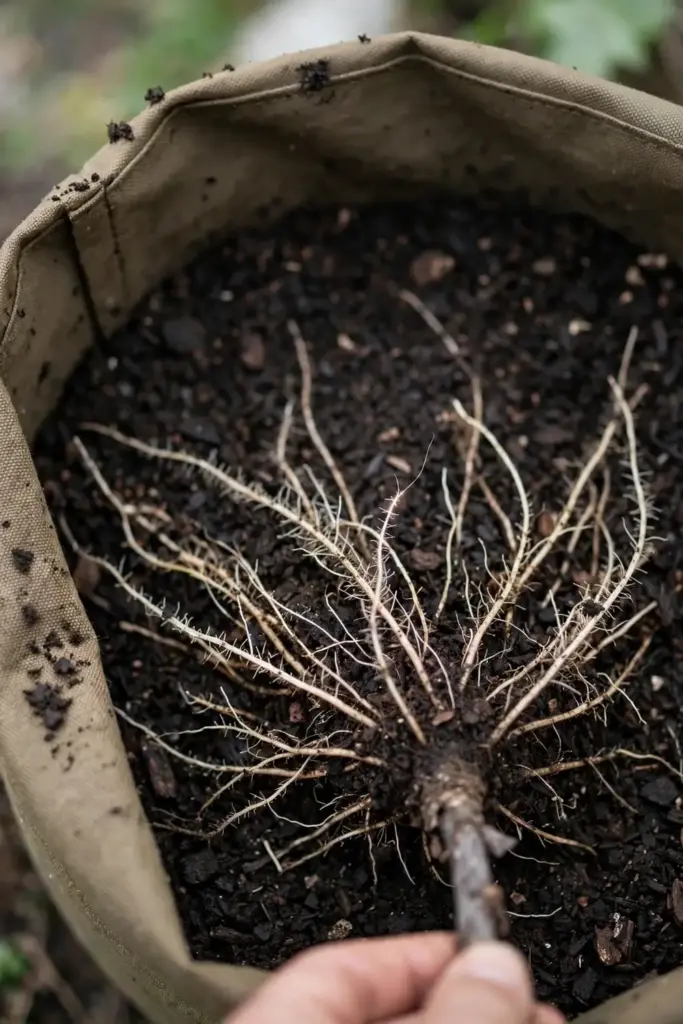
Plant at the same depth the bush grew at the nursery, which you can read from the soil mark on the stem. Currants are not planted deep like tomatoes; the root crown sits at the surface. Fill around the roots with a soil-based potting mix, not garden soil, firming gently to remove air pockets. Water thoroughly after planting so the mix settles, then add a 2-inch layer of compost mulch, keeping it an inch away from the stem.
If you buy a potted plant instead, plant it at any time the ground is workable, but expect a slower first season. Check the root ball for circling roots and tease them outward before setting it in the pot. Container stock bought in leaf has already spent its stored energy on foliage, so do not expect fruit the same year. Plan for first light cropping in the second season either way.
7. Site for Morning Sun and Afternoon Shade
White currants crop best in full sun in cool climates, but in hot regions they prefer morning sun with afternoon shade. A pot on an east-facing balcony or against an east wall gets the ideal exposure in most of the United States: gentle morning light for photosynthesis, shelter from the blasting afternoon heat that stresses container roots. Partial shade is genuinely tolerated; these bushes evolved as woodland-edge plants.
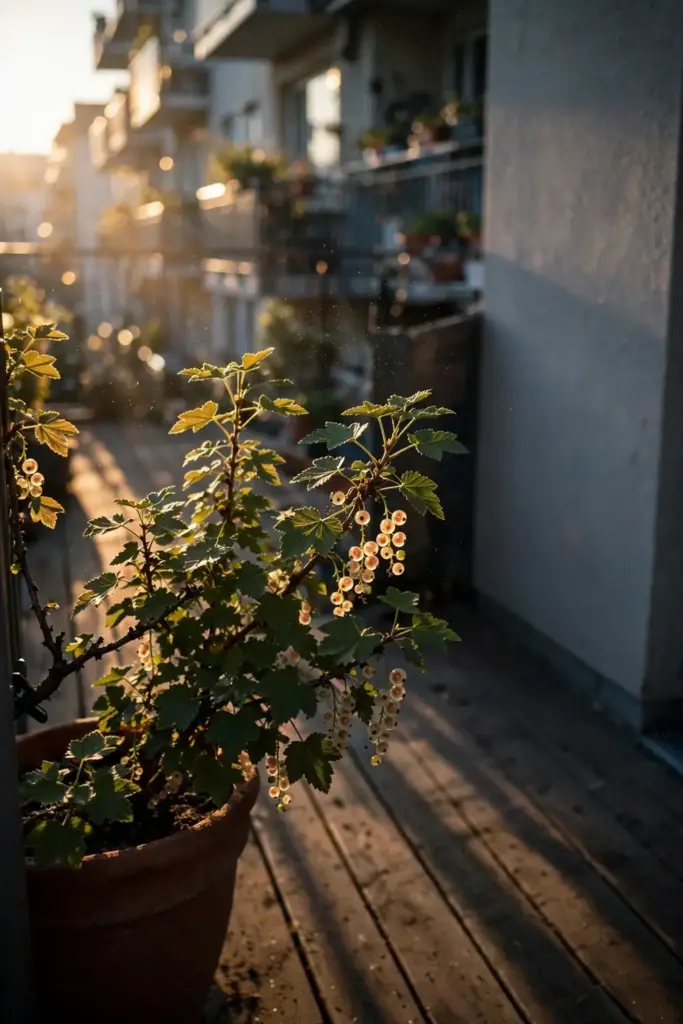
Watch the heat around the pot, not just the light on the leaves. A dark fabric pot on a sun-baked concrete patio can cook roots on a 95 F afternoon even when the air in the shade feels fine. Move the pot a foot or two into the shadow of a wall or shrub during heat waves, or slip a light-colored outer pot around the dark one as a heat shield. The bush recovers from a missed watering far faster in shade than in full reflected sun.
Wind is the overlooked factor. Balcony wind desiccates leaves and dries pots quickly, and a tall bushy currant catches wind like a sail. A sheltered corner near a wall outperforms a windy open rail, and a simple windbreak of lattice or screening pays off in both watering frequency and fruit set.
8. Water Deeply Because Pots Dry Out Fast
Container currants need more water than their garden-bed cousins, and the schedule changes with the season. In spring, water when the top inch of mix feels dry. From fruit set through harvest, check daily and water deeply enough that it runs from the drainage holes; a fruiting bush in a 10-gallon pot can need a full watering every day in hot weather. In fall, taper off as the bush goes dormant, and in winter keep the mix just barely moist so the roots never desiccate.
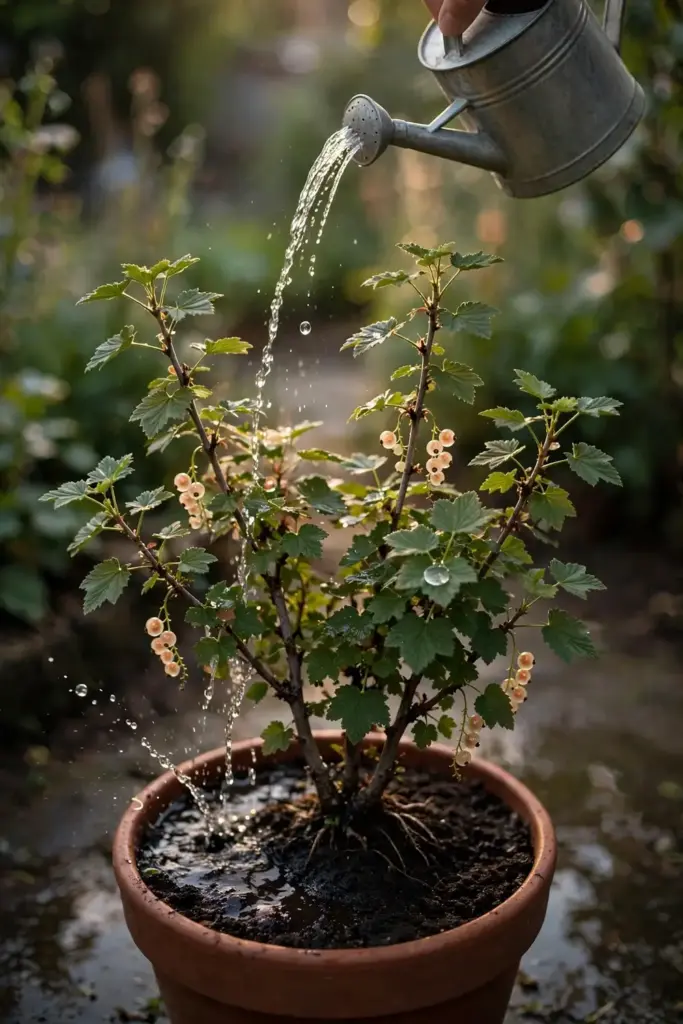
The failure mode to avoid is the shallow daily sprinkle, which wets the top inch and leaves the root ball dry in the center. Water slowly until it drains, wait a few minutes, and water again. This two-pass method saturates the whole root ball instead of channeling down the sides. A saucer under the pot helps in summer but empty it within an hour so the roots are not sitting in water.
Mulch does real work in a pot. A 2-inch layer of compost or bark chips cuts evaporation, keeps the root zone cool, and feeds the soil life that a potting mix lacks on its own. Renew the mulch each spring when you feed. Avoid piling it against the stem, where constant moisture invites rot.
9. Feed for Berries, Not Leaves
Currants have a moderate need for nitrogen and a high potassium requirement, according to the UC currant guide, which recommends an annual dressing of potassium and warns that muriate of potash should be avoided because currants are sensitive to chloride. In a pot, the feeding calendar looks like this.
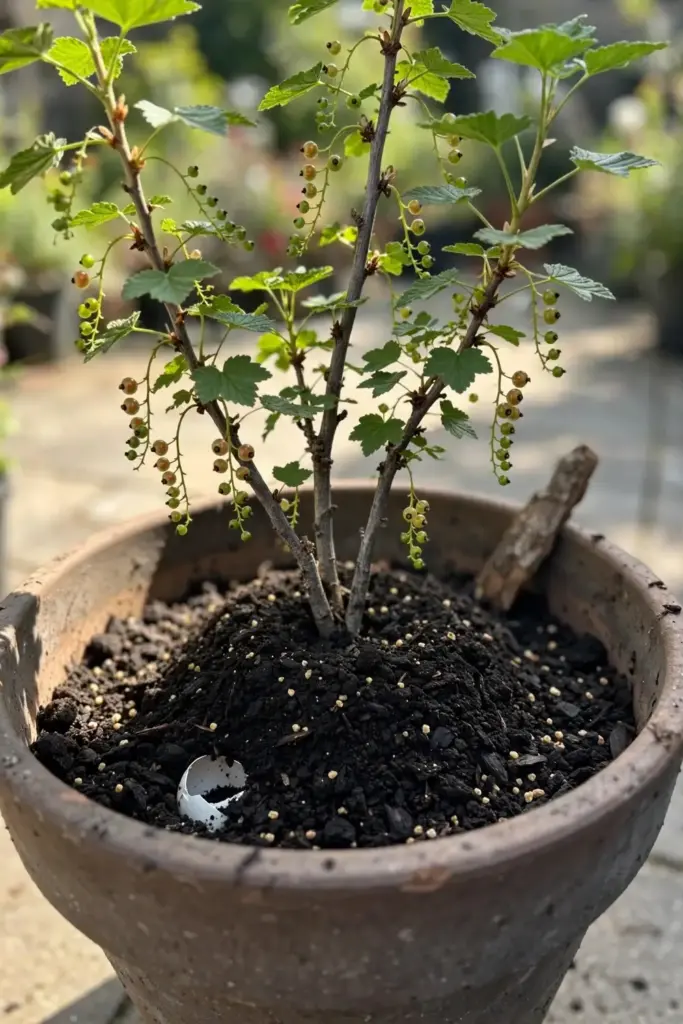
Apply a balanced granular fertilizer in early spring as buds swell, then switch to a potassium-rich feed once flowers fade. A tomato feed or a seaweed-based fertilizer both supply the potassium that drives fruit sizing and flavor. Top-dress with compost at the same time; compost mulch alone will not meet the potassium demand of a heavy-cropping bush in a confined pot. For a feeding rhythm that suits potted plants, the best fertilizer options for fall vegetables carry over well to container currants, since the goal is steady nutrition without a nitrogen spike.
Stop feeding by late summer. Late nitrogen pushes soft growth that never hardens before winter, and that growth is the first to suffer frost damage. A bush that is green and vigorous in August needs no more food. Yellowing leaves in July, on the other hand, signal hunger, and a liquid feed will correct it faster than granular.
10. Prune to an Open Goblet Every Late Winter
Prune in late winter while the bush is dormant and you can see the structure. The goal is an open goblet: 8 to 10 well-spaced stems radiating from the base with an open center that admits light and air. Fruit forms on spurs on two- and three-year-old wood, so the renewal method works like this. Each winter, cut out about a quarter of the oldest stems at the base, keeping the strongest young replacements.
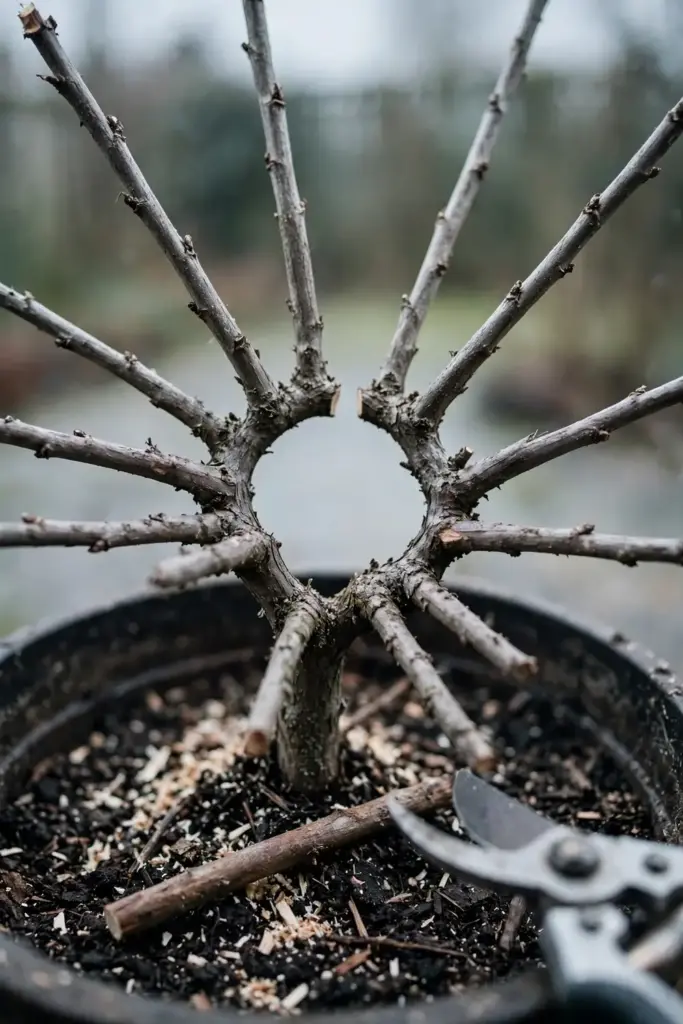
In the first winter after planting, cut all stems back by about half to force strong basal growth. In the second winter, remove crossing stems and anything growing into the center. From the third winter onward, follow the renewal rhythm: remove the oldest wood, keep the best young wood, and shorten any laterals that have grown longer than 8 inches. The whole job takes fifteen minutes on a potted bush.
Summer pruning is limited to damage control. Snip out broken stems, remove any sucker growing far from the base, and thin a cluster of new shoots if the center is getting crowded. Do not head back the current season’s growth in summer; that wood carries next year’s fruiting spurs. For cut placement and bud selection, the spring pruning techniques guide covers dormant-season cuts that transfer directly to currants.
11. Overwinter the Pot, Not Just the Bush
The bush itself is fully hardy to zone 3, but the roots in a pot are not protected by the insulating mass of garden soil. A hard freeze can kill container roots while the same bush in the ground sails through. Winter care for a potted currant is therefore about the pot, not the plant.
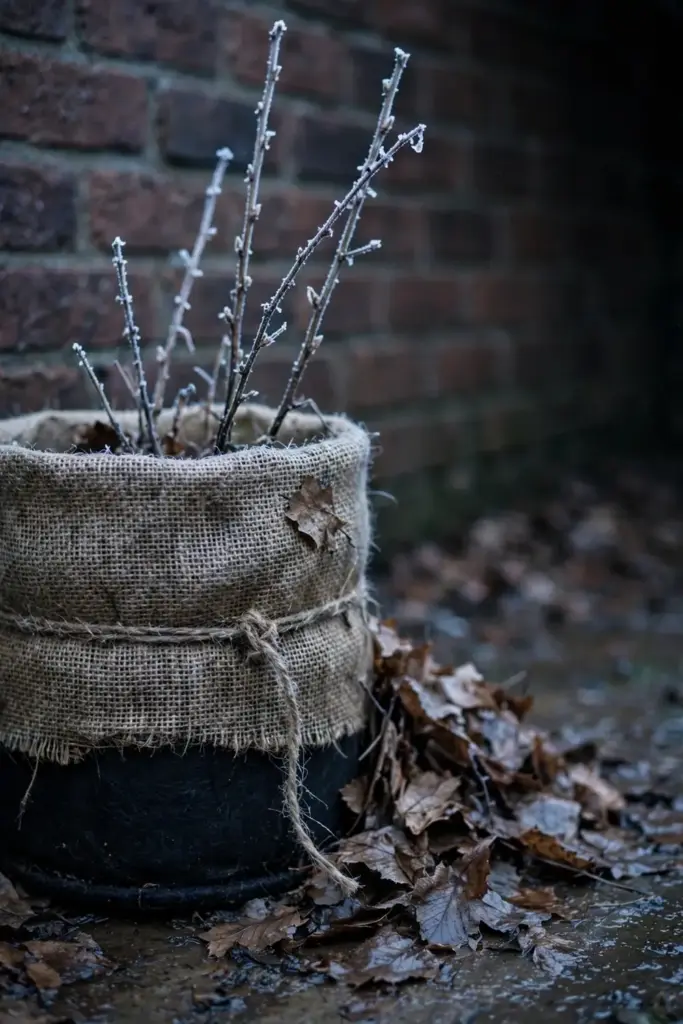
The simplest method is to move the pot against the house wall on the sheltered side, which gains several degrees of protection, and wrap the pot in burlap or bubble wrap. In zones 5 and colder, heel the pot into a sheltered corner and pile leaves or straw around it up to the rim. An unheated garage or shed works for the coldest snaps; the bush is dormant and needs no light, only temperatures that stay above 10 F at the root ball.
Water once a month through winter if the mix dries out. Dormant does not mean dead; roots still lose moisture to dry winter air, and a pot cannot pull replacement moisture from surrounding soil. Check by pushing a finger an inch into the mix. If it is powder dry, give it a slow drink on a day above freezing.
12. Check the Legal Question Before You Buy
This question deserves a direct answer because American currant history is genuinely odd. White currants belong to the genus Ribes, and all Ribes species can carry white pine blister rust, a fungal disease that kills white pines. The United States banned Ribes cultivation nationwide in the early 1900s to protect the timber industry. The federal ban ended in 1966, but individual states kept their own restrictions.
Today the rules are a patchwork that changes by state and sometimes by county. Some states allow currants freely. Some restrict planting near white pine stands. A few still ban Ribes outright or require permits. Before you order a plant, check your state extension service or department of agriculture for the current status. Reputable American nurseries refuse to ship restricted Ribes into banned states, so a nursery that will not sell to you is giving you the answer.
Where currants are legal, choose rust-resistant varieties and keep the bush away from white pines on your property. In Canada, the United Kingdom, and most of Europe there are no restrictions whatsoever. The ban is an artifact of twentieth-century forestry policy, not a verdict on the fruit.
13. Watch for Aphids, Currant Borer, and Mildew
Potted currants face fewer problems than garden-bed bushes because the contained soil breaks some pest cycles, but three issues still show up. Aphids cluster on new spring growth and distort the leaves. A strong jet of water dislodges most of them, and the bush outgrows minor infestations once summer growth hardens. Currant borers tunnel into stems and cause sudden wilting of individual canes; cut out and destroy affected stems at the base, since no spray reaches a borer inside the wood.
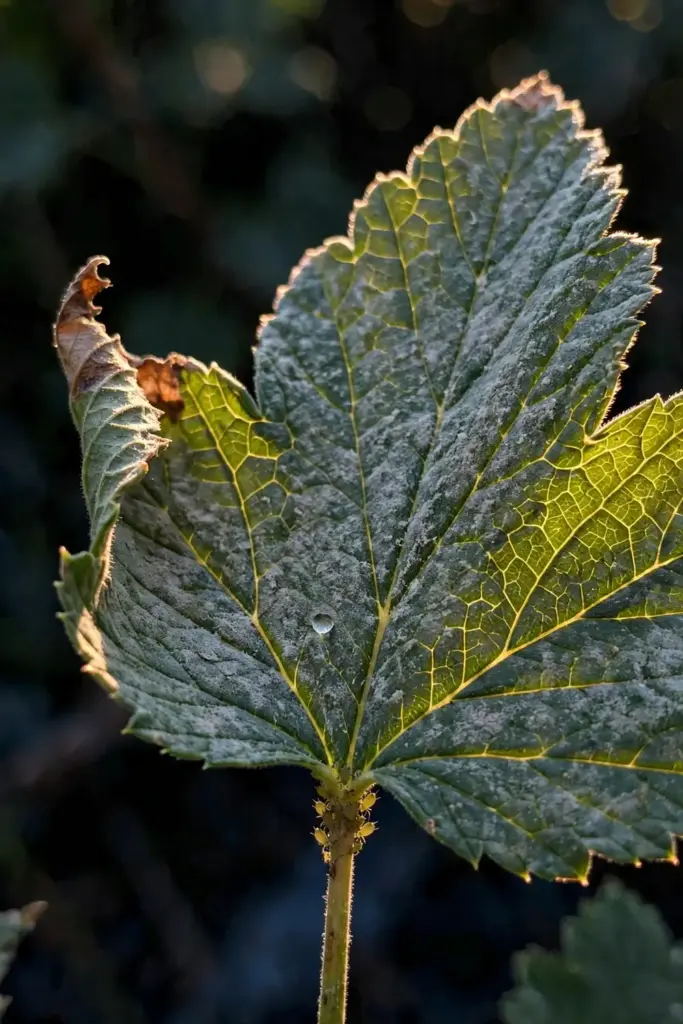
Powdery mildew is the disease that decides variety choice. It coats leaves with a white film in humid weather and weakens the bush over seasons. The open-goblet pruning from section 10 is your first defense because airflow dries foliage fast. Morning sun placement helps for the same reason. Where mildew pressure is high, plant Pink Champagne or another resistant variety instead of fighting the disease every summer.
Imported currantworm can defoliate a bush in days; it is a green caterpillar with black spots that feeds on gooseberries and currants. Hand-pick at the first sign or apply an appropriate insecticide promptly, because a defoliated bush loses both the current crop and next year’s fruiting wood. Cleaning up fallen leaves in autumn removes overwintering disease spores and is the cheapest disease control there is.
14. Harvest When the Strigs Turn Fully Translucent
White currants ripen in mid-summer, and the picking signal is translucency, not size. Green berries are hard and sour. As they ripen they turn a pale, glassy white or yellow and the seeds show faintly through the skin. Pick the whole strig intact and strip the berries later; ripe currants are soft and bruise easily in the hand.
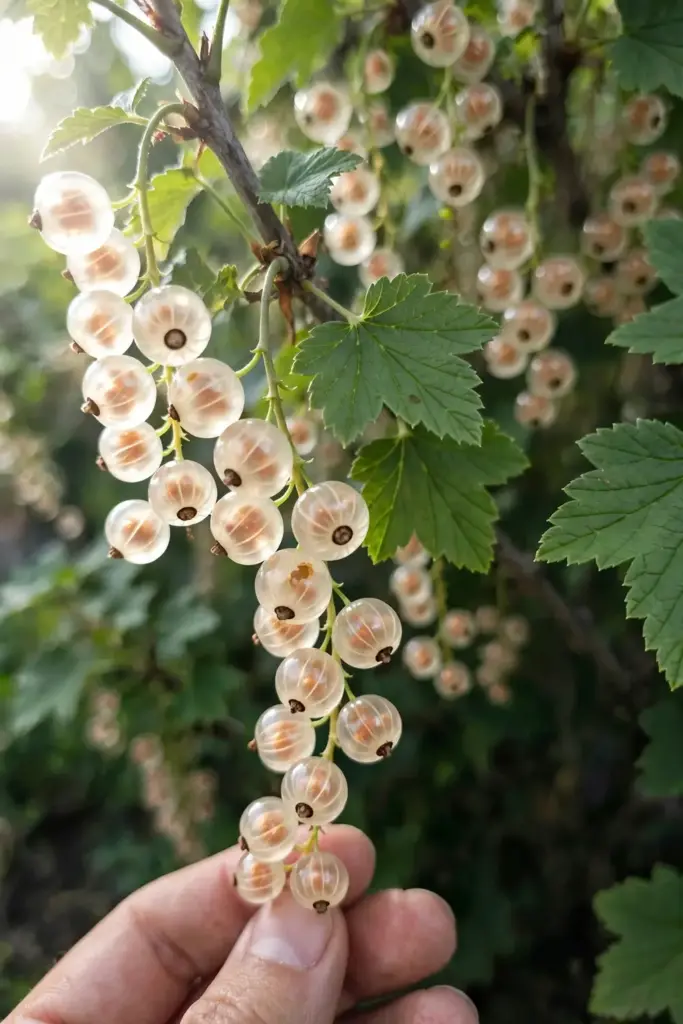
For jelly, pick as soon as the strigs are translucent. For eating fresh, leave them on the bush another two to three weeks after they turn. The UC currant guide confirms that currants left on the bush past first ripeness sweeten enough to eat out of hand, and this is the difference between a tart white currant and a genuinely sweet one. Birds know this too, so net the bush as soon as berries start to color if birds are active in your area.
Expect a modest first crop in year two and a full harvest by year three. A healthy potted bush yields a few pounds of berries at maturity, less than the heaviest garden plants but more than enough for fresh eating and a batch of jelly. Use the berries fresh, in summer puddings, as a garnish, or in jelly where their high pectin sets a clear, jewel-like preserve.
15. Renew and Repot Every Two to Three Years
A currant bush in a pot slowly fills its container with roots until watering becomes a daily chore and growth stalls. This is the signal to repot, not a failure. In late fall after leaf drop, slide the root ball out of the pot and inspect it. If roots circle the outside in a dense mat, the bush is pot-bound.
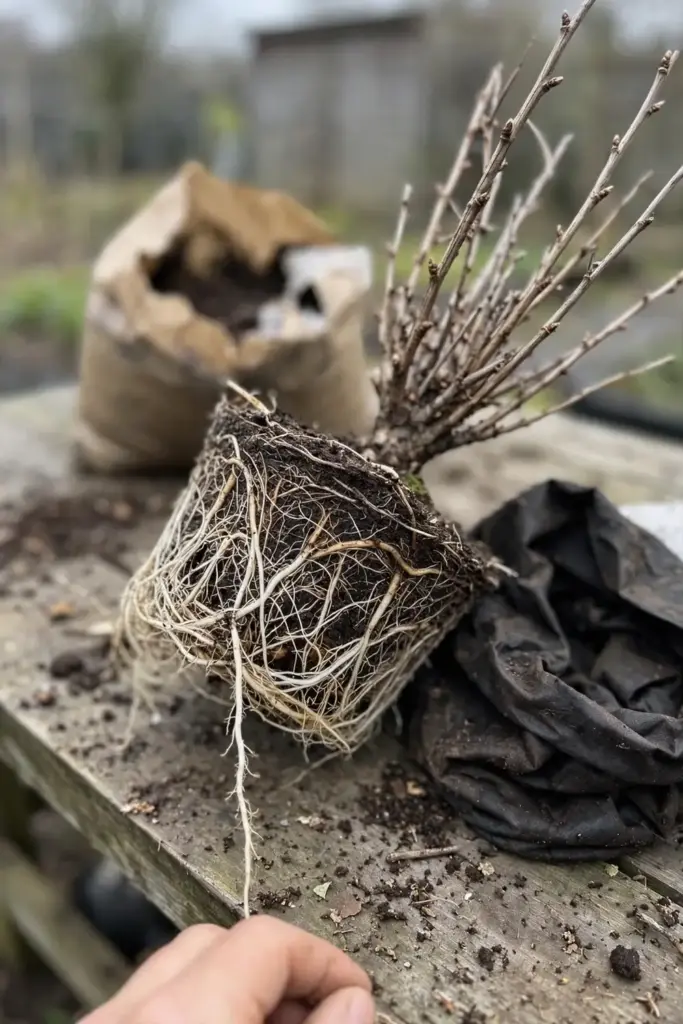
Trim back about a quarter of the outer roots with clean pruners, working around the ball rather than slicing straight across. Move the bush into fresh soil-based potting mix in the same size pot, or step up one pot size if you have room. Water thoroughly and mulch. The bush will look unimpressed for a few weeks, then push strong spring growth on the renewed root system.
This renewal rhythm is what separates a decade-long container currant from one that fades after five years. Jackson’s Nurseries reports whitecurrant plants staying productive for up to 20 years after planting, and a potted bush given regular repotting can fruit well for 10 to 15 of those years. That is an excellent return on one afternoon of work every few years.
16. Propagate From Cuttings, Not Seed
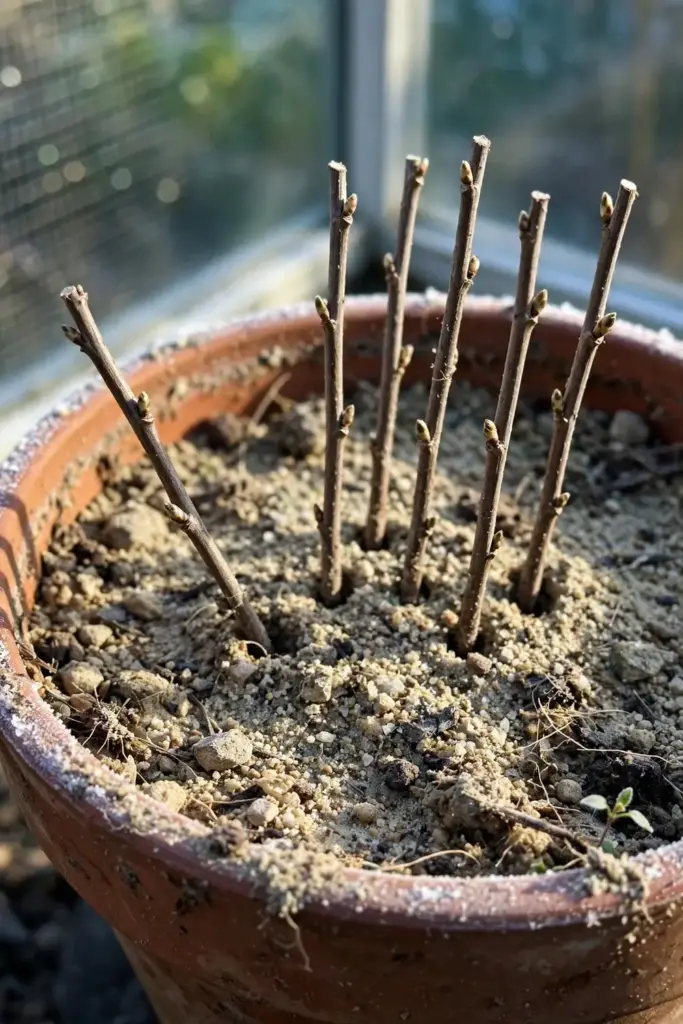
White currants grow easily from hardwood cuttings, and this is how nurseries multiply named varieties. Take 8- to 10-inch cuttings of year-old wood in late fall, push them two-thirds deep into a pot of gritty compost, and leave them outdoors through winter. Most will root by spring. This method gives you an exact copy of the parent variety, which matters because seed-grown currants do not come true to type.
Seed is the honest footnote. You can grow currants from seed, but the seedlings will not match the parent, the wait is longer, and germination is uneven. There is no commercial reason to start white currants from seed when a cutting roots so readily and a bare-root plant costs little. If you want to experiment, the seed-starting guide covers the germination basics, but treat seed as a curiosity project, not a production method.
Keep one more propagation fact in mind for pots. A rooted cutting grows into a productive bush in the same 10-gallon pot you would buy for a nursery plant, so propagating your own replacements costs nothing but a season of patience. Take cuttings when you do your late-winter pruning and you will always have a young bush coming along behind the mature one.
Frequently Asked Questions
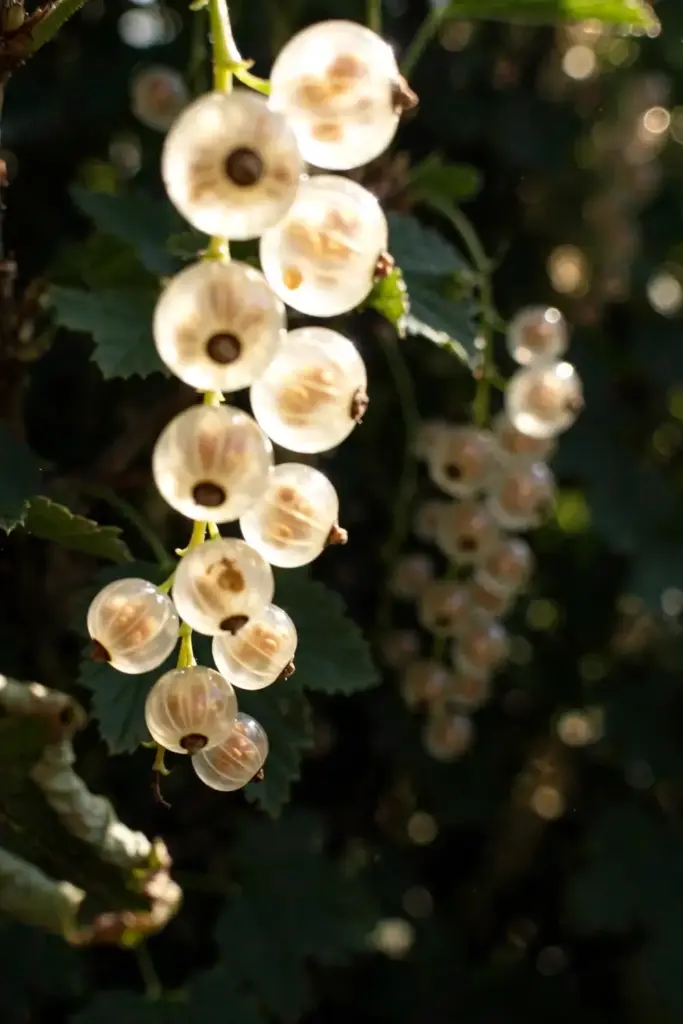
Yes. White currants are sweeter and milder than red currants, and they are pleasant to eat fresh once fully ripe. The trick is patience: leave the strigs on the bush for two to three weeks after the berries turn translucent, and the sugar rises enough for out-of-hand eating. Picked at first translucency they are tart and better suited to jelly, where their high pectin gives a clear set.
No. Most white currant cultivars are self-fertile, so a single bush in a single pot produces a full crop. A few cultivars are partially self-sterile, but the common pot varieties, including Blanka and White Versailles, fruit reliably alone. Plant a second bush only if you want more berries or a longer harvest window across varieties.
Prune in late winter while the bush is dormant. Keep 8 to 10 well-spaced stems in an open goblet shape, and each year remove about a quarter of the oldest wood at the base. Fruit forms on spurs on two- and three-year-old wood, so the goal is a constant rotation of young replacement stems. Summer pruning is limited to removing damaged or crossing growth.
It depends on your state. The federal ban on Ribes was lifted in 1966, but individual states kept their own rules because currants can carry white pine blister rust. Some states allow them freely, some restrict planting near white pines, and a few still ban them. Check your state extension service or department of agriculture before ordering, and buy from a nursery that ships to your state.
Mild, sweet, and less sharp than red currants, with a clean grape-like freshness when fully ripe. They lack the aggressive tartness that makes red currants a cooking fruit, which is why white currants work as a fresh-eating berry. Left on the bush past first ripeness they sweeten further; picked early they are tart enough for jelly and summer puddings.
Yes, and they are among the best berry bushes for containers. A 10-gallon fabric pot or a 45 cm rigid container holds one bush for a decade or more with repotting every two to three years. Give the pot morning sun, deep watering, an annual potassium-rich feed, and winter root protection, and expect a first crop in year two and full harvests from year three.
One Pot, One Bush, Years of Translucent Berries
White currants ask little and give a fruit you cannot buy in most shops. One pot, one self-fertile bush, a winter with real chill, and a late-winter pruning session each year. In return you get strigs of glassy berries that sweeten on the bush into a dessert fruit. Start with Blanka for reliability or White Grape for flavor, plant bare-root while dormant, and let the second summer convince you.