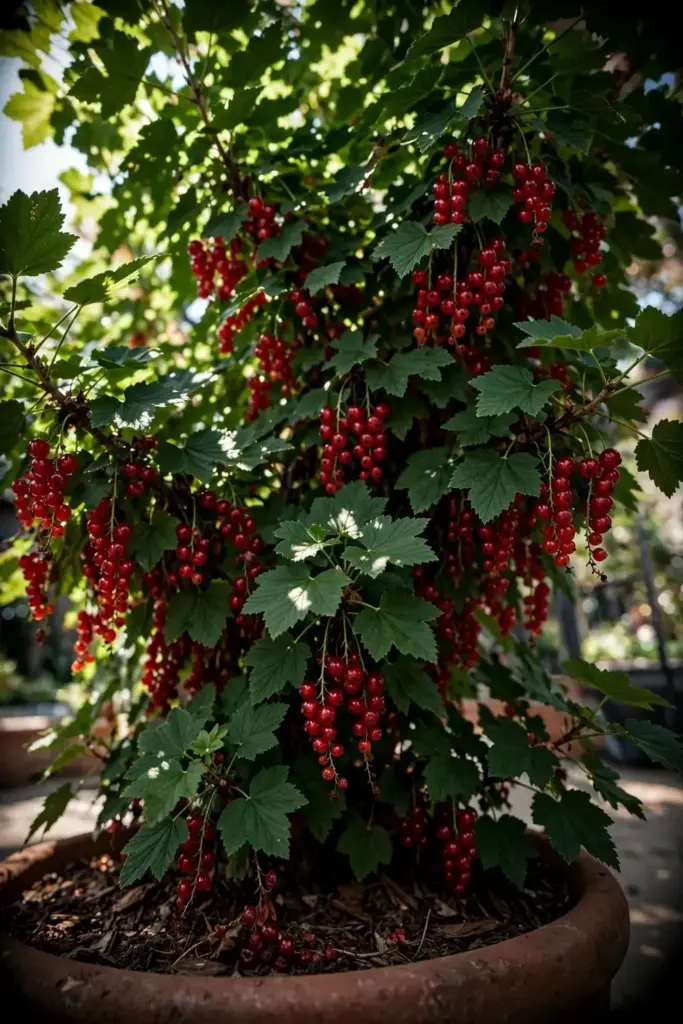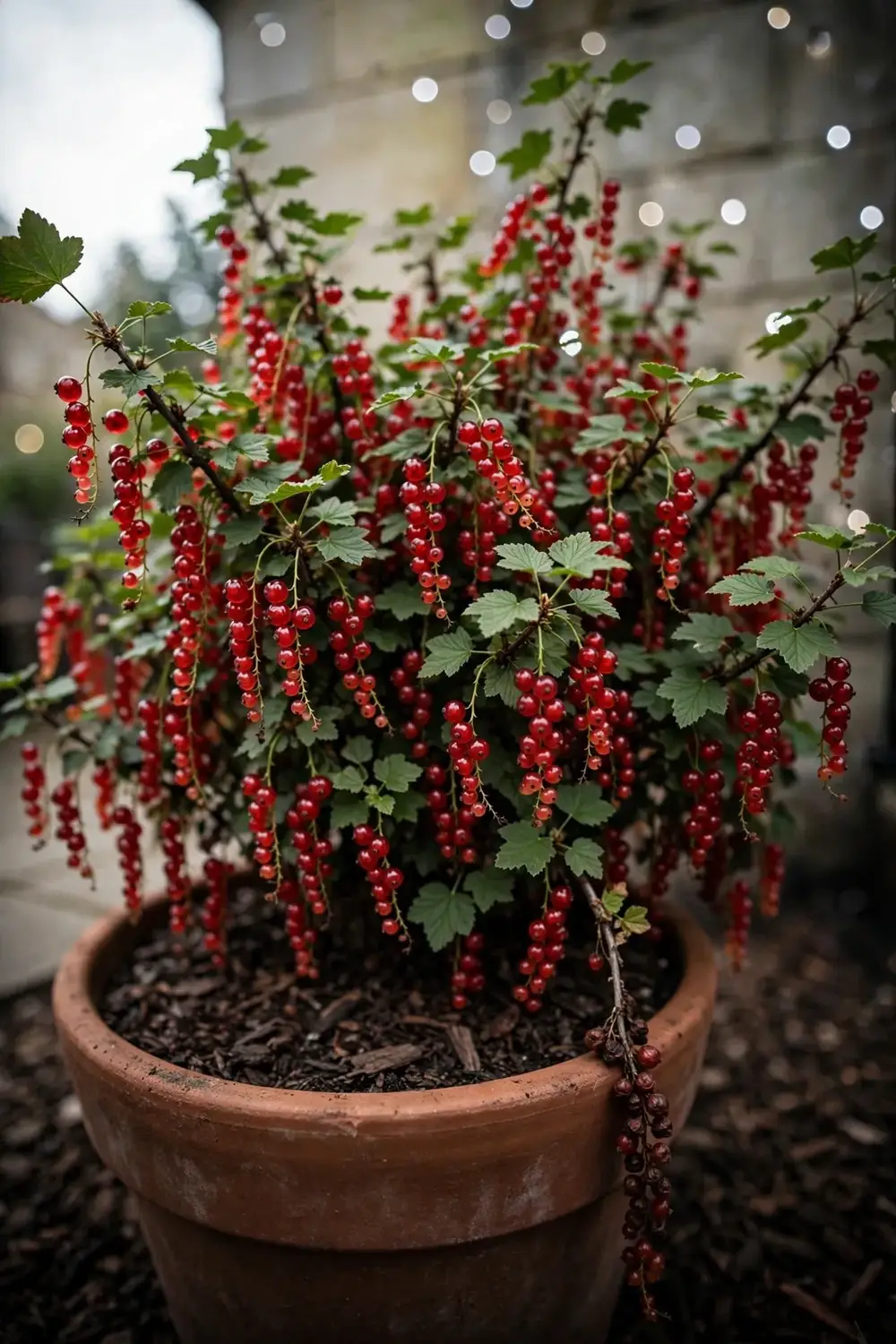

Plant one red currant bush in a pot at least 45 cm wide, fill it with soil-based compost, set it in full sun or light shade, and expect your first real harvest in year two. Red currants are among the few fruiting shrubs that tolerate partial shade, and they fruit reliably on two- and three-year-old wood for fifteen to twenty years or more. I have learned that the single biggest mistake is treating a potted red currant like a houseplant instead of a small orchard tree that drinks and eats on a schedule. Once you commit to that schedule, a balcony or patio plant will out-produce most expectations.
Red currants (Ribes rubrum) are compact deciduous shrubs in the gooseberry family, native to western Europe and cultivated for centuries for their translucent ruby berries, which hang in long chains called strigs. The berries are naturally high in pectin and vitamin C, which is why gardeners value them for jelly, juice, and summer desserts as much as for eating fresh. A potted bush stays smaller than its in-ground sibling and fruits just as well when the pot is big enough.
Below you will find every decision in order: the right pot and soil, three varieties suited to containers, planting at the dormant season, a watering rhythm that suits pots, feeding without pushing soft growth, winter and summer pruning for the open-goblet form, the honest story about which parts of the United States still restrict these plants, pests, bird protection, and the harvest moment that matters most.
Red Currants in Pots at a Glance
| Spec | Detail |
|---|---|
| Plant | Red currant, Ribes rubrum (Grossulariaceae) |
| Best container | At least 45 cm wide, soil-based compost |
| Light | Full sun to partial shade; light shade gives reasonable crops |
| Soil | Moist, well-drained; pH 6.0 to 6.5 |
| Planting time | November to March for bare-root; potted stock any time |
| Pollination | Self-fertile; one plant fruits alone |
| First crop | Year two, sometimes year one |
| Full production | Year three onward |
| Yield per bush | About 4.5 kg per year at maturity |
| Lifespan | 15 to 20 years or more |
1. Start With Why Red Currants Suit Pots
Red currants evolved on woodland edges, which is exactly why they accept less than full sun and still fruit. The Royal Horticultural Society’s red currant growing guide notes that red currants grow well in partial shade, even against a north-facing wall, though berries ripen slightly later and taste a little less sweet there. That tolerance makes them rare among fruiting shrubs, and it is the reason a north-facing balcony can hold a productive berry plant where strawberries would sulk and blueberries would refuse entirely.
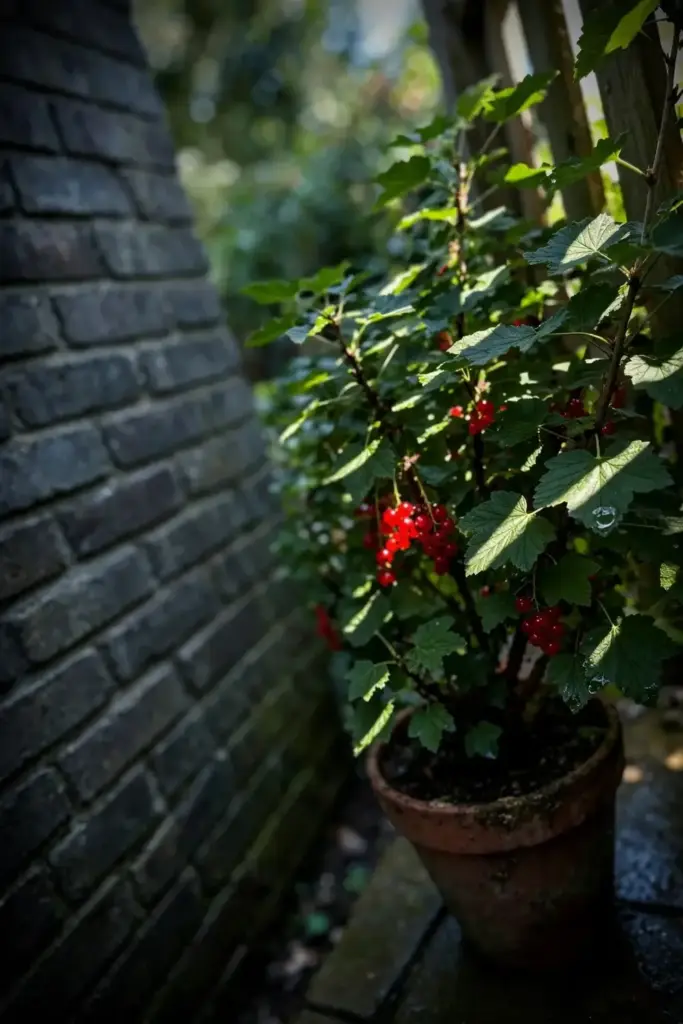
The shrub is naturally compact. An unpruned bush reaches about 1.2 to 1.5 m tall, and a cordon-trained plant occupies a strip of patio barely 30 cm deep. Compare that with a gooseberry’s thorns or a blackcurrant’s sprawling habit, and the red currant looks like it was designed for containers. Because the fruit forms on compact spurs along older wood rather than on long new canes, the plant does not demand constant renewal pruning to stay productive.
Gardeners who already grow other fruit that tolerate shade will recognise the pattern. If you want a broader survey of what else fruits in dim corners, the roundup of fruits that grow in shade maps the full list, and red currants sit comfortably near the top of it.
2. Pick the Right Pot
Choose a pot at least 45 cm wide and equally deep. The Royal Horticultural Society’s container fruit guidance sets 45 cm as the minimum for vigorous currant bushes in containers, and experience backs it up: smaller pots dry out between breakfast and dinner in July, and a thirsty red currant drops its fruit buds for next year long before you notice the leaves flagging. Terracotta breathes well and stays upright in wind, but plastic and glazed ceramic hold water longer, which matters on a south-facing terrace.
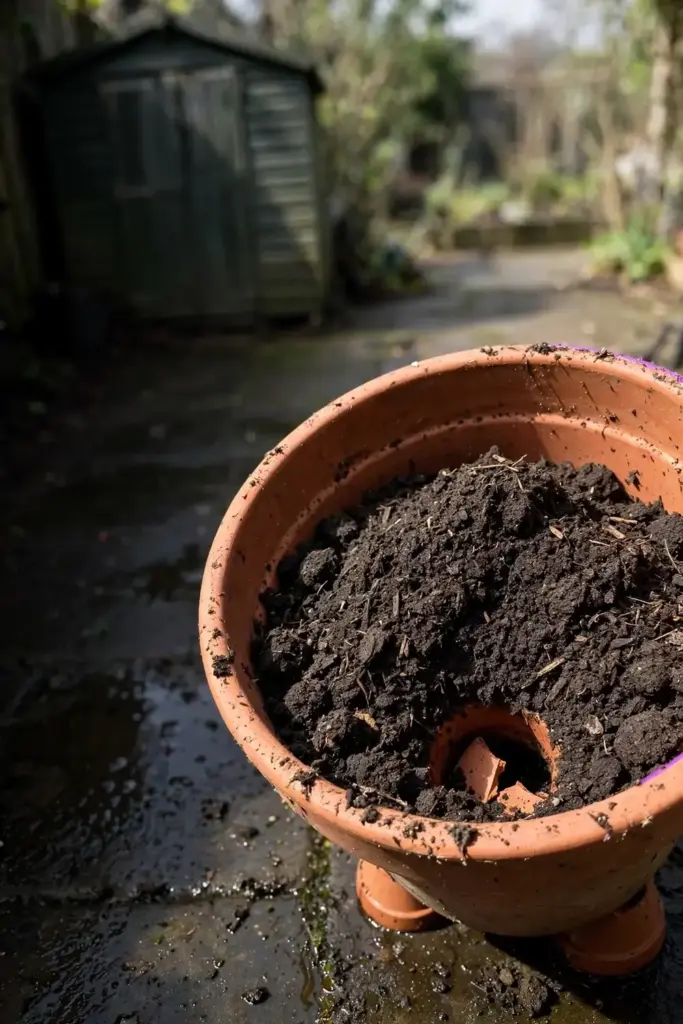
Drainage comes before everything else. One or two large holes are not enough; add a layer of broken crocks or coarse grit at the base so water leaves freely, then stand the pot on pot feet or bricks so the base never sits in its own drainage. Pots that stay soggy in winter invite root problems that no amount of feeding fixes in spring.
Fill with soil-based compost, not multipurpose potting mix. Multipurpose compost slumps and exhausts within a single season, while soil-based compost carries the weight and structure a long-lived woody shrub needs. The RHS advises soil-based compost plus a slow-release fertilizer for any fruit kept in a container for more than one year. Mix in a third by volume of good garden soil if your compost feels light, and top the surface with a 5 cm mulch of bark or well-rotted manure to slow evaporation.
3. Choose a Variety Bred for Small Spaces
All red currants are self-fertile, so one plant fruits alone, though planting a second variety nearby improves berry size. For pots, favour varieties with compact growth, good disease resistance, and staggered ripening so the harvest stretches across the summer.
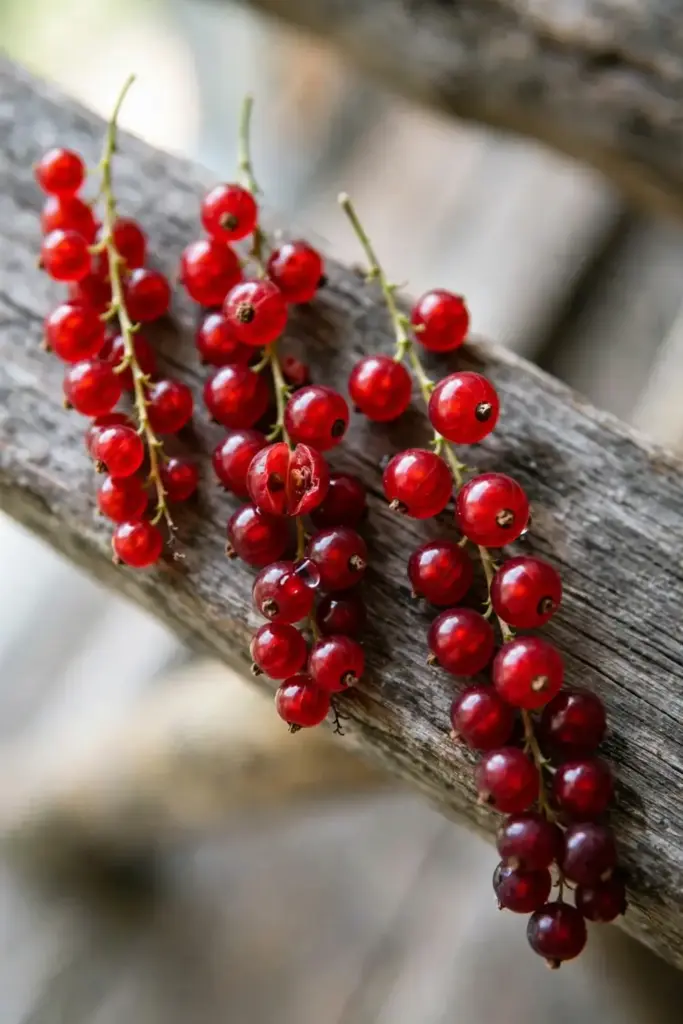
| Variety | Ripening | Growth and Notes |
|---|---|---|
| Jonkheer van Tets | Early July | Heavy crops of large berries on long strigs; RHS Award of Garden Merit; tolerates partial shade and even a north wall; about 1.2 m tall |
| Red Lake | Late July | Sweet, juicy dark-red berries; RHS Award of Garden Merit; vigorous and productive; released by the University of Minnesota in 1933 |
| Rovada | August | Very late, heavy-cropping with extremely long strigs; mildew resistant; extends the season by three to four weeks after Jonkheer van Tets; RHS container recommendation |
Jonkheer van Tets is the classic starter choice because it fruits early and heavily even with imperfect care, and its compact upright habit fits a 45 cm pot without complaint. Rovada deserves its reputation as the jelly-maker’s variety: the strigs are so long that a single truss can fill a handful, and the late ripening closes the season after the early varieties finish. Red Lake sits between them with reliably sweet berries and strong cold hardiness, which suits gardeners who want one dependable plant rather than a collection.
Avoid bargain-bin plants with no variety name. Named varieties carry known disease resistance and ripening dates; an unnamed bush is a gamble on both. Specialist fruit nurseries sell one-year-old plants bare-root from autumn to early spring, and that dormant window is the cheapest and most reliable way to buy.
4. Decide: Bush, Cordon, or Fan
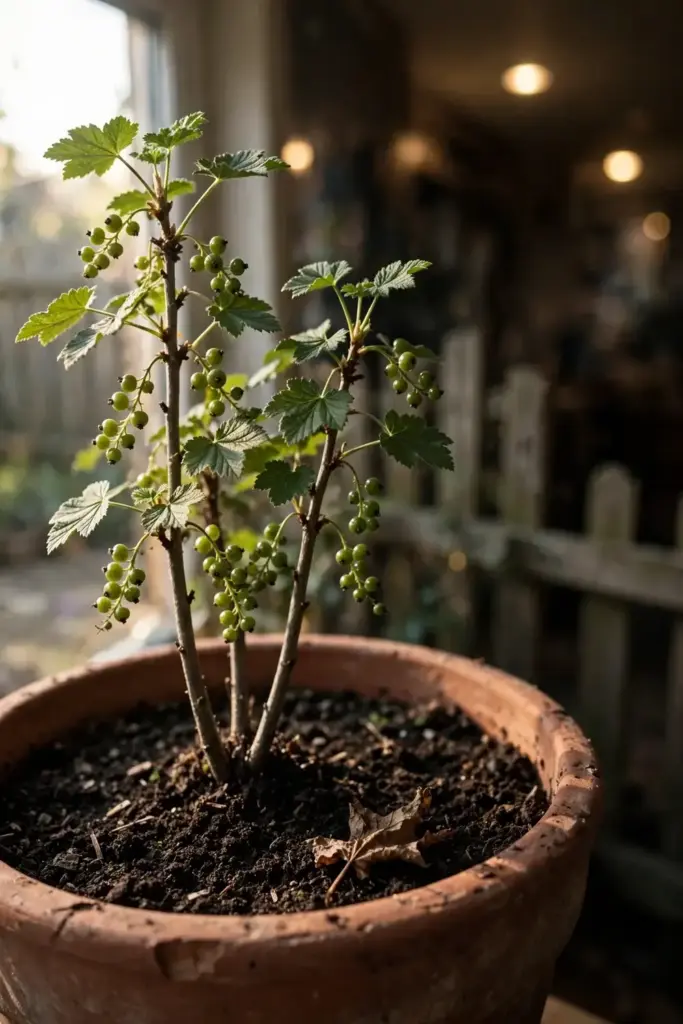
Most potted red currants grow as bushes, and for most gardeners that is the right choice. Buy a one- or two-year-old plant with a short main stem 10 to 15 cm long and at least three strong side shoots, then let it develop into an open-centered bush. A bush fills a 45 to 50 cm pot, needs no wall or wires, and fruits within two years.
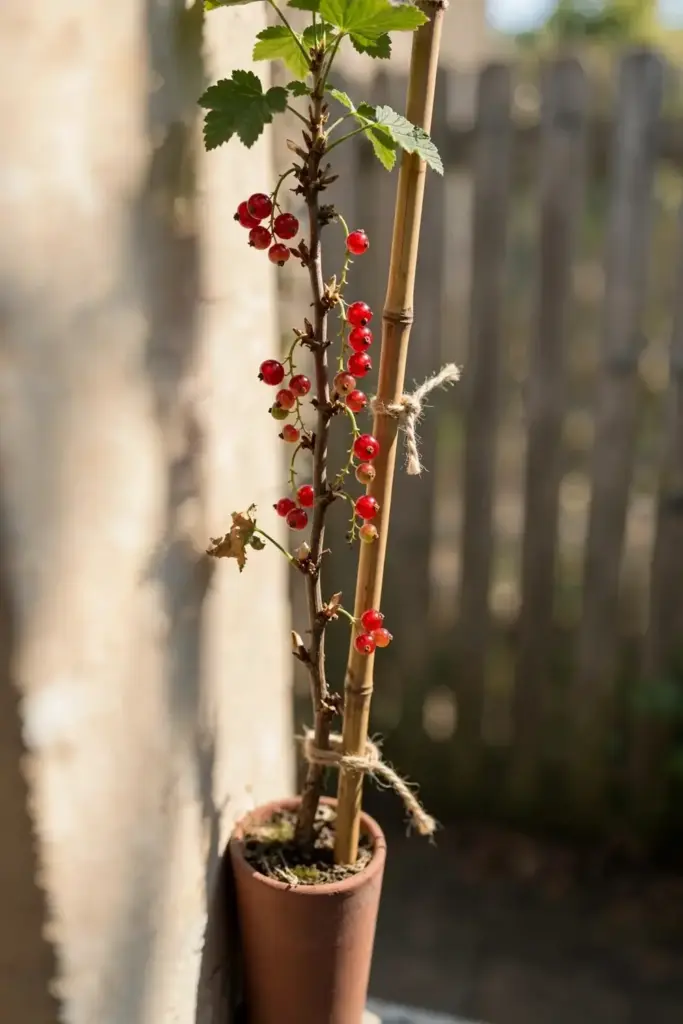
A cordon is a single vertical stem with short fruiting spurs, and it is the form the RHS singles out as particularly suitable for containers. Cordons occupy almost no width, so three cordons in a long trough give you three varieties in the footprint of one bush. Buy a pre-trained cordon from a specialist supplier rather than trying to convert a bush; the training is slow work you pay to skip.
Fans belong against walls and fences. Buy a one-year-old cutting and train two to four strong stems flat against wires or trellis, cutting the main stem back to 15 cm after planting to force branching. A fan of red currants against a shaded north wall turns a dead wall into a productive one, which is a trick few other fruits allow.
Whichever form you choose, plant it at the same depth it grew in the nursery. Currants dislike deep planting, and burying the stem invites rotting at the base.
5. Plant at the Right Time
November to March is the planting window for bare-root red currants, and planting during this dormant season gives the plant its best start. Roots establish quietly through winter, so when spring growth begins the plant draws on a root system that is already anchored. Bare-root stock is cheaper and usually stronger than potted equivalents, and because red currants are deciduous, the bare-root plant in winter looks like a bundle of sticks with enormous potential.
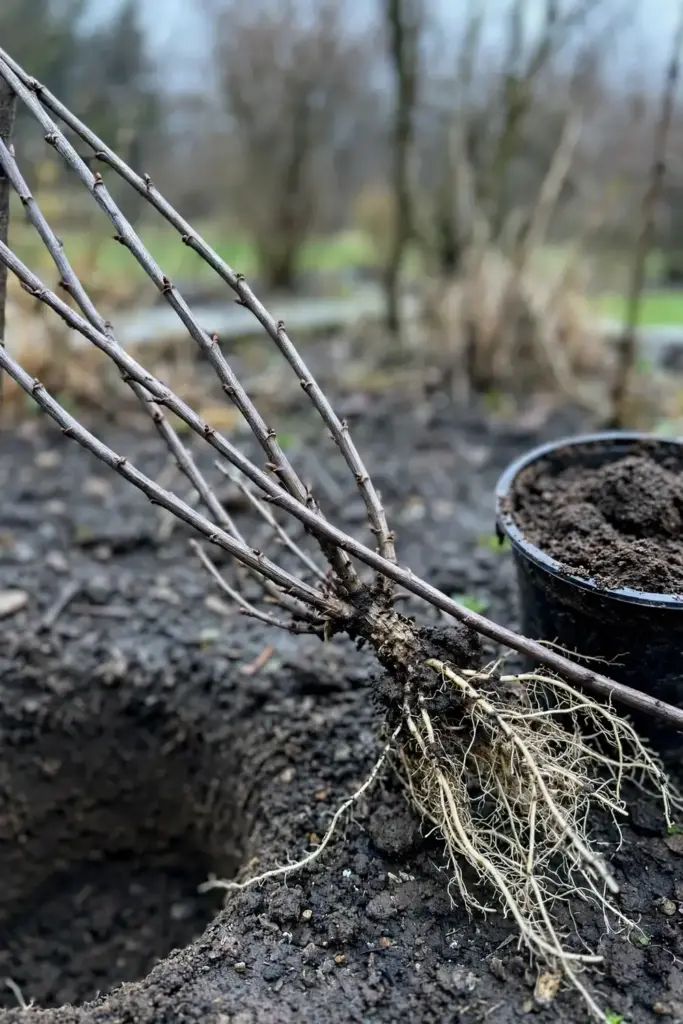
Potted plants can go in at any time of year, provided you water them well afterward. If you buy in summer, soak the root ball in a bucket of water for half an hour before planting, tease out any circling roots at the base, and shade the pot for a few days while it settles. Summer planting works but never matches the vigour of a plant that has had winter to establish.
Before planting, soak the roots, check the graft or stem union sits at soil level, and firm the compost gently around the roots to remove air pockets. Water the pot thoroughly after planting until water runs freely from the drainage holes, then mulch the surface.
6. Fill and Position the Pot
Full sun gives the sweetest berries and the earliest ripening, but light shade is the red currant’s secret weapon. Plants produce reasonable crops in light or partial shade with some midday sun in midsummer, according to the RHS, while deep shade is unsuitable and cuts fruiting sharply. A spot that gets morning sun and afternoon shade suits pots especially well because the container stays cooler in the hottest hours.
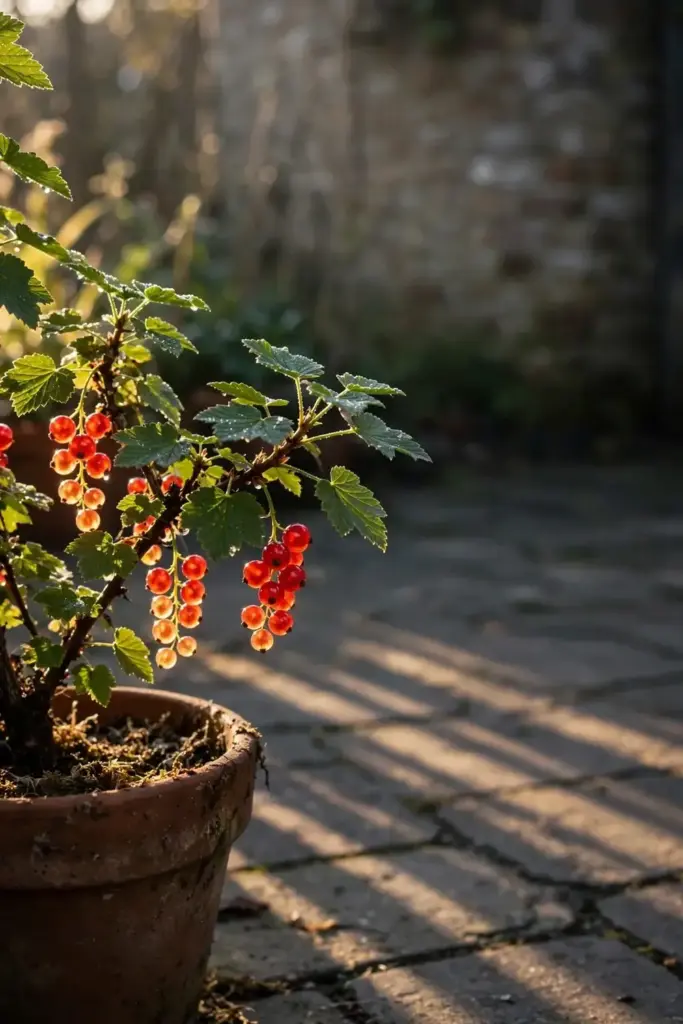
Choose a sheltered position and avoid frost pockets. Red currants flower early, and late frosts can damage the blossom and shrink the crop. A wall, fence, or hedge that breaks the wind protects both flowers and developing fruit, and a fruit cage or netted frame protects ripening berries from birds, which regard red currants as their personal harvest.
If your only available spot is a north-facing wall, plant anyway and accept slightly later, slightly tarter berries. Few fruiting plants tolerate that position at all, and Jonkheer van Tets in particular keeps cropping against north walls. Rotate the pot a quarter turn every few weeks during the growing season so all sides of the bush receive light and the form stays even.
7. Water Like a Pot Grower
Pots dry faster than open ground, and red currants in containers drink heavily from May to September. In-ground bushes want roughly 2.5 to 5 cm of water per week; a potted bush in summer heat can need watering every day, sometimes twice in a heatwave. Check by pushing a finger 5 cm into the compost: if it feels dry at that depth, water immediately and thoroughly until water drains from the base.
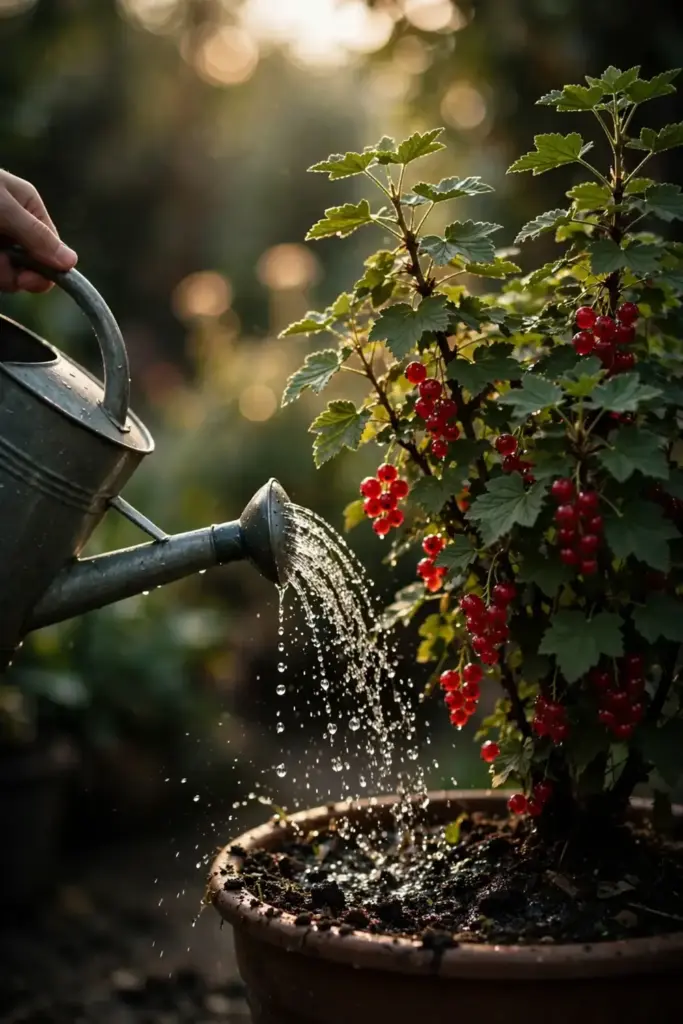
Inconsistent watering shows up the following year, not the current one, because fruit buds form in late summer for the next season’s crop. A plant that dries out repeatedly in August carries fewer buds into winter and fruits poorly the next July. Mulching the pot surface with bark or compost slows evaporation and buys you a day of grace between waterings.
In winter, watering drops to almost nothing. Keep the compost just barely moist so the roots never desiccate, and empty saucers after rain so the pot never stands in water. Rain usually does the job from November to March, but pots under eaves or against walls that block rainfall still need checking every week or two.
Good soil biology helps the compost hold water without waterlogging. If you want to understand what makes a potting medium retain moisture while staying airy, the soil health guide explains the structure and organic matter principles that apply just as well in a container.
8. Feed for Berries, Not Leaves
Red currants are modest feeders, and in a closed container system the compost exhausts. In late winter, apply a balanced fertilizer according to the label rate, then mulch with well-rotted manure or compost. The RHS container guidance adds a slow-release fertilizer for any fruit kept in a pot longer than one year, which covers every potted red currant worth growing.
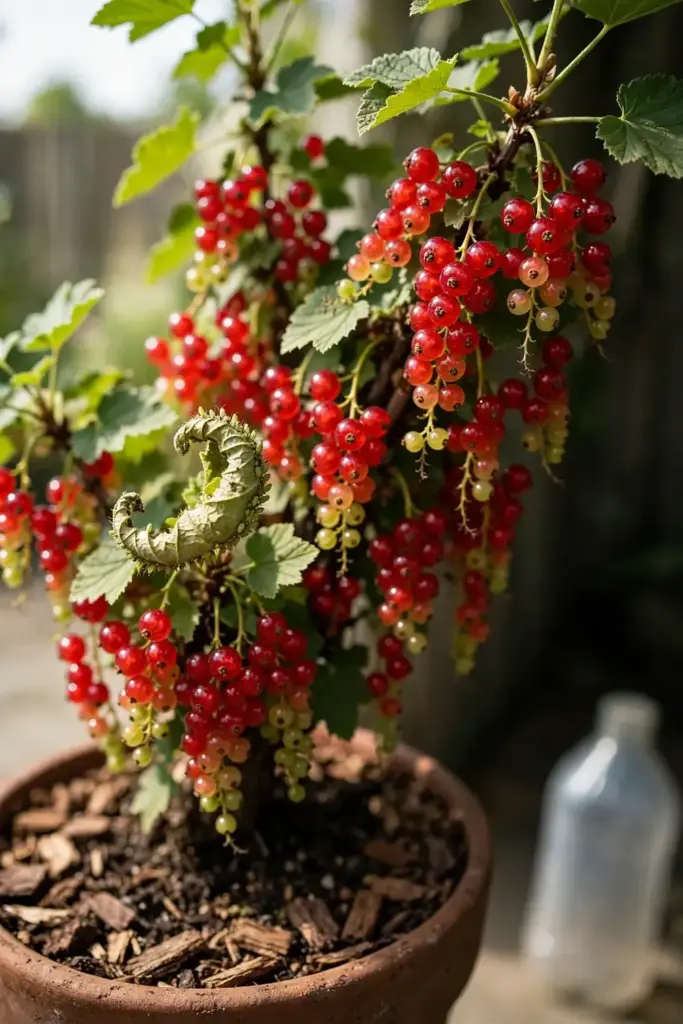
Once the plant comes into leaf, switch to fortnightly liquid feeding with a high-potash feed such as tomato fertilizer through the fruiting season. Potash supports flowering and fruit set; excess nitrogen pushes soft leafy growth that attracts aphids and ripens poorly into winter wood. Stop feeding by late summer so new growth hardens before the first frosts.
Refresh the top 5 cm of compost each spring, replacing the old layer with fresh soil-based compost. This annual top-dressing replaces nutrients, buries weed seeds, and gives the surface roots a fresh start without disturbing the whole root ball. If growth looks pale and thin despite feeding, the compost has probably exhausted and the plant wants a full repot rather than more fertilizer.
Container feeding rhythms differ from in-ground feeding, and the details of organic and slow-release options are worth a dedicated read. The guide to the best fertilizer for fall vegetables covers product types and application rates that transfer directly to feeding fruit in pots.
9. Prune in Late Winter
Red currants bear their fruit at the base of the previous year’s shoots and on spurs along older wood, so pruning aims to keep a constant supply of young productive wood while removing exhausted stems. The RHS advises pruning all forms of red currants annually from late winter to early spring, while the plant is still dormant and before growth begins. Some growers instead prune in late summer right after harvest, and both camps succeed; what matters is doing it every year, not the month.
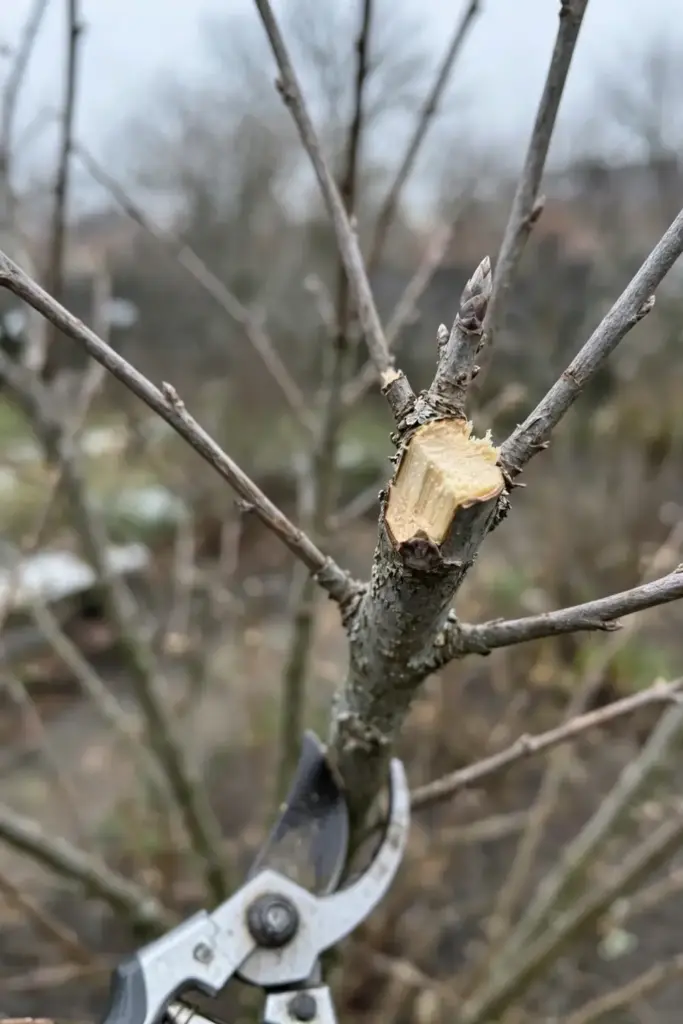
Keep the bush open in the center, shaped like a goblet. Each year, cut out one or two of the oldest stems at the base, the gray four-year-old wood that fruits poorly, and shorten the previous season’s new shoots by about a third to an outward-facing bud. Thin crossing and inward-growing branches so light and air reach the center of the bush.
For cordons, the routine is simpler. In summer, shorten the current season’s side shoots to about five leaves to encourage spur formation, then in winter cut those same shoots back to two or three buds. This spur-pruning builds the knobbly fruiting spurs that carry the crop year after year.
10. Train the Open-Goblet Shape
Young plants need shaping before they need pruning. In the first winter after planting, cut every shoot back to about half its length, choosing an outward-facing bud each time. This forces low branching and starts the goblet form from the ground up. A red currant trained with an open center from youth rarely needs corrective surgery later.
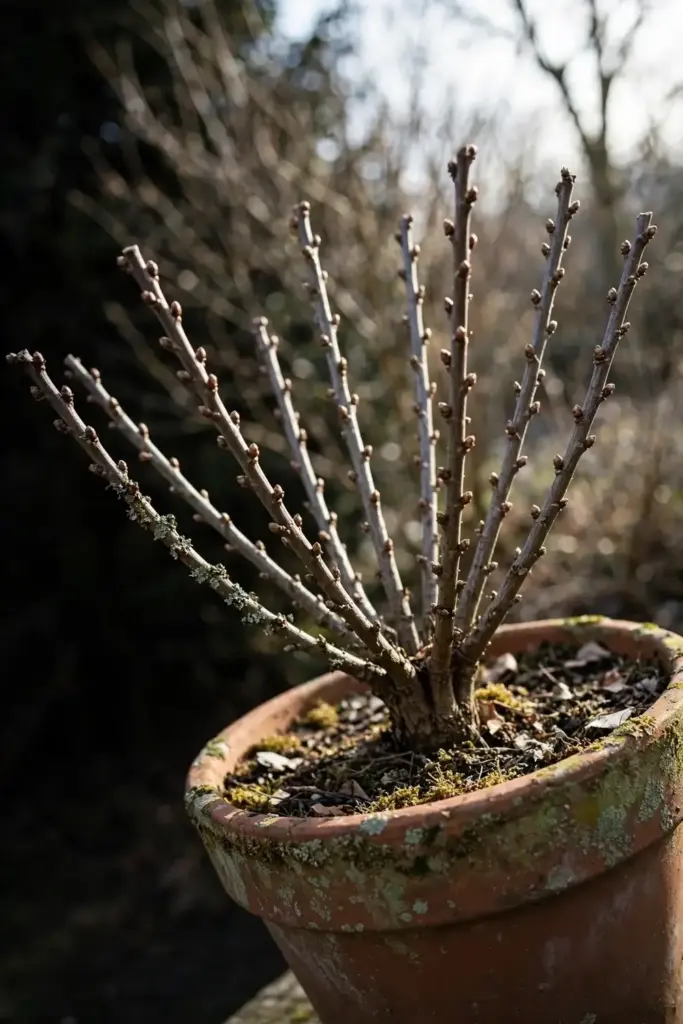
In the second and third years, remove weak, crossing, and inward-facing shoots entirely, and shorten strong new shoots to build the framework. Aim for up to ten well-spaced main stems radiating from the center on a mature bush. Suckers from below the stem union should be pulled off cleanly rather than cut, since cutting leaves a stub that resprouts.
Established bushes maintain themselves with the annual routine from the previous section: remove the oldest wood, shorten new growth, keep the center open. A well-shaped bush lets you reach every strig at harvest and dries quickly after rain, which discourages mildew.
If dormant-season pruning technique feels uncertain, the spring pruning techniques walkthrough covers the cut placement, tool hygiene, and bud selection that apply to currants as much as to any other woody plant.
11. Protect Roots in Winter
The bush itself is fully hardy, but roots in a pot sit above ground and freeze harder than roots in soil. When a hard freeze threatens, wrap the pot in bubble wrap, hessian, or horticultural fleece, and group pots together against a sheltered wall where they share warmth. Moving the pot into an unheated garage or shed for the coldest weeks is the safest option in regions with prolonged deep frost.
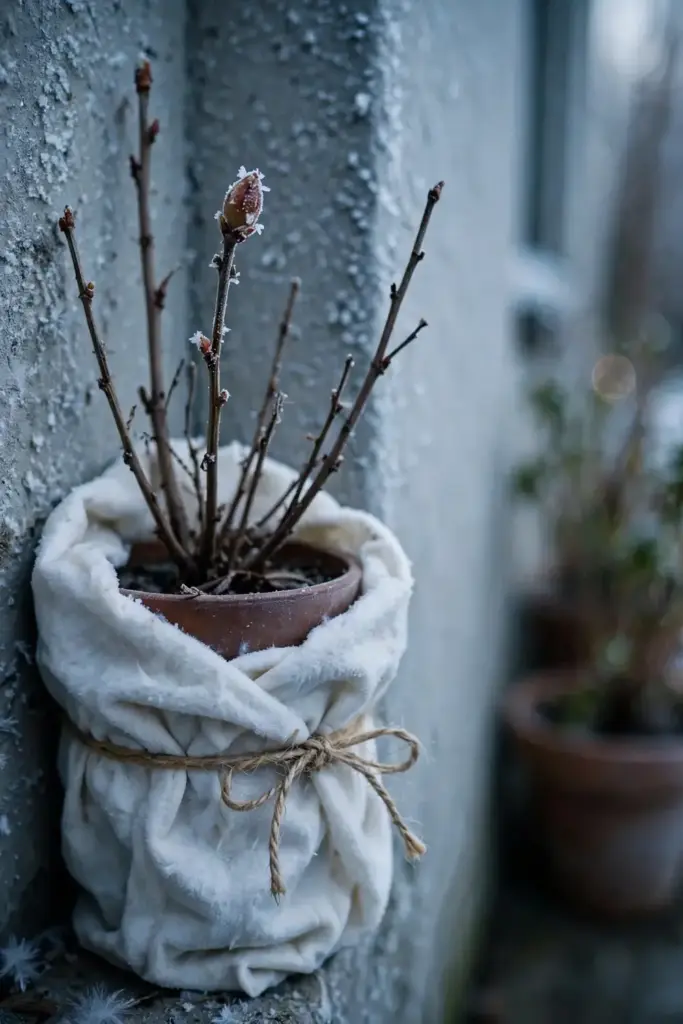
Water sparingly through winter but never let the compost dry out completely. Frozen compost cannot be watered, so check during thaws and water on mild days when the surface feels dry. Remove saucers or tip them empty so meltwater drains away instead of refreezing around the base.
In spring, unwrap the pot before growth starts and check that winter wet has not compacted the compost. Scratch the surface lightly to restore drainage, top-dress with fresh compost, and resume the feeding schedule. A plant that emerges from winter with healthy white root tips repotted or top-dressed in March will outgrow one left in tired compost every time.
12. Can You Grow Red Currants in the US?
This question deserves a straight answer because the law is genuinely unusual. Red currants belong to the genus Ribes, and all Ribes species can host white pine blister rust, a fungal disease that devastates white pines. In the early twentieth century the United States banned Ribes cultivation nationwide to protect the timber industry, and although the federal ban was lifted in 1966, individual states kept their own rules.
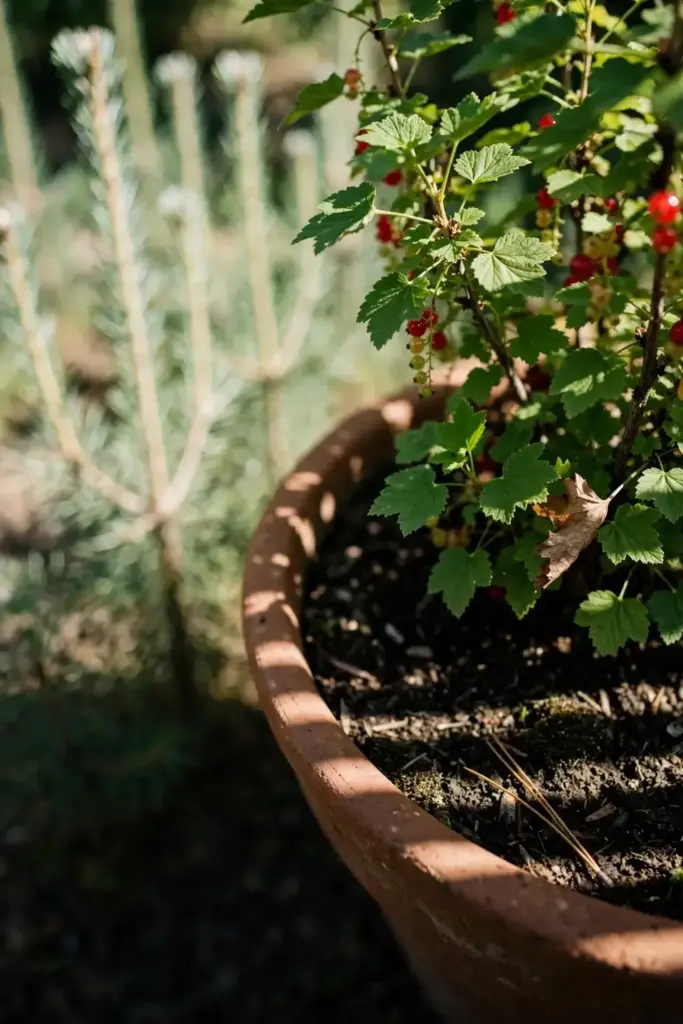
Today the legal picture is a patchwork. Some states permit red currants freely, some restrict planting near white pine stands, and a handful still ban or require permits for Ribes species. The rules change, and they vary by county as well as by state, so check your state extension service or department of agriculture before ordering plants. Reputable US nurseries will not ship restricted Ribes to banned states, which is itself a useful signal.
Where the plants are legal, choose rust-resistant varieties and keep currants away from white pines if you have them on the property. In Canada, the United Kingdom, and most of Europe there are no restrictions at all, and red currants are among the most reliable backyard fruits. The ban is a historical quirk of American forestry policy, not a judgment on the plant.
13. Watch for Aphids, Sawfly, and Mildew
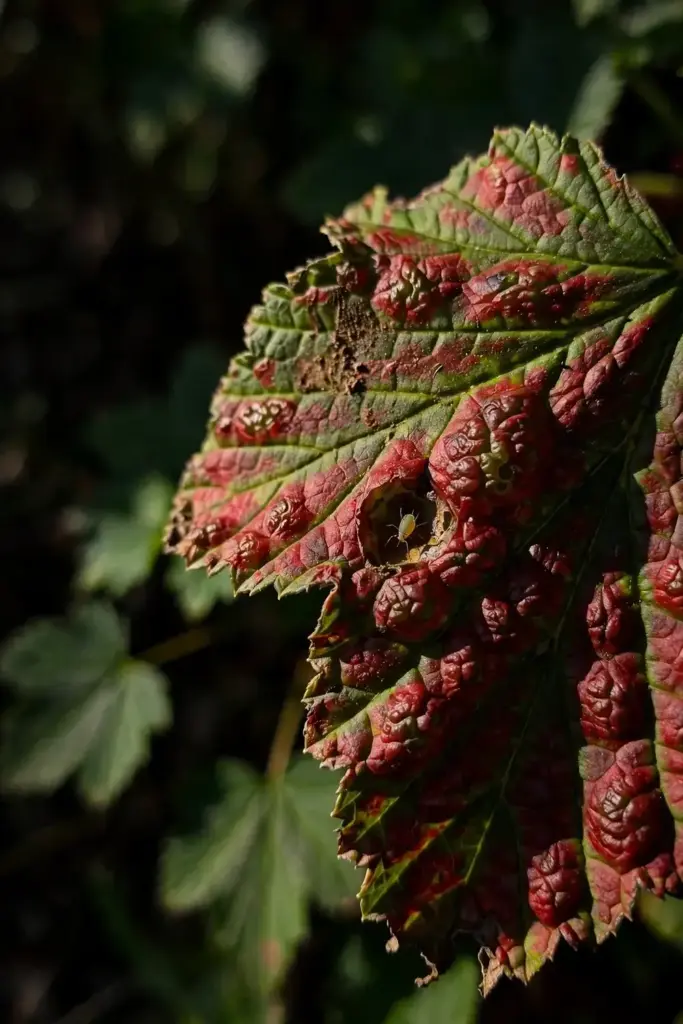
Red currants are among the least troubled fruiting shrubs, but three problems recur. Currant blister aphids pucker the leaves into blistered, reddish bumps in spring; the damage looks alarming but rarely harms the crop, and pinching out affected shoot tips or encouraging ladybirds usually keeps numbers down. Gooseberry sawfly larvae strip leaves to the veins in midsummer; check leaf undersides from June and pick off the caterpillars by hand before they defoliate the bush.
Powdery mildew dusts leaves and young fruit with white powder, especially on susceptible varieties in humid, still air. The open-goblet pruning from earlier sections is the first defence because moving air dries foliage quickly. Resistant varieties like Rovada and Jonkheer van Tets, which carry mildew resistance, sidestep the problem almost entirely.
Replant disease is the quiet killer in pots. Never reuse compost from a dead currant for a new one, and wash pots with hot soapy water before replanting. Vine weevil larvae also love container compost; check for the white C-shaped grubs when repotting and treat with nematodes if you find them.
14. Net Against Birds Before Berries Ripen
Birds love red currants with a devotion that borders on professional. Blackbirds and thrushes strip a bush of nearly-ripe berries in a single morning, and they start before you think the fruit is ready. Net the plant as soon as the berries begin to color, not when they look ripe to you, because the birds’ ripeness test is earlier than yours.
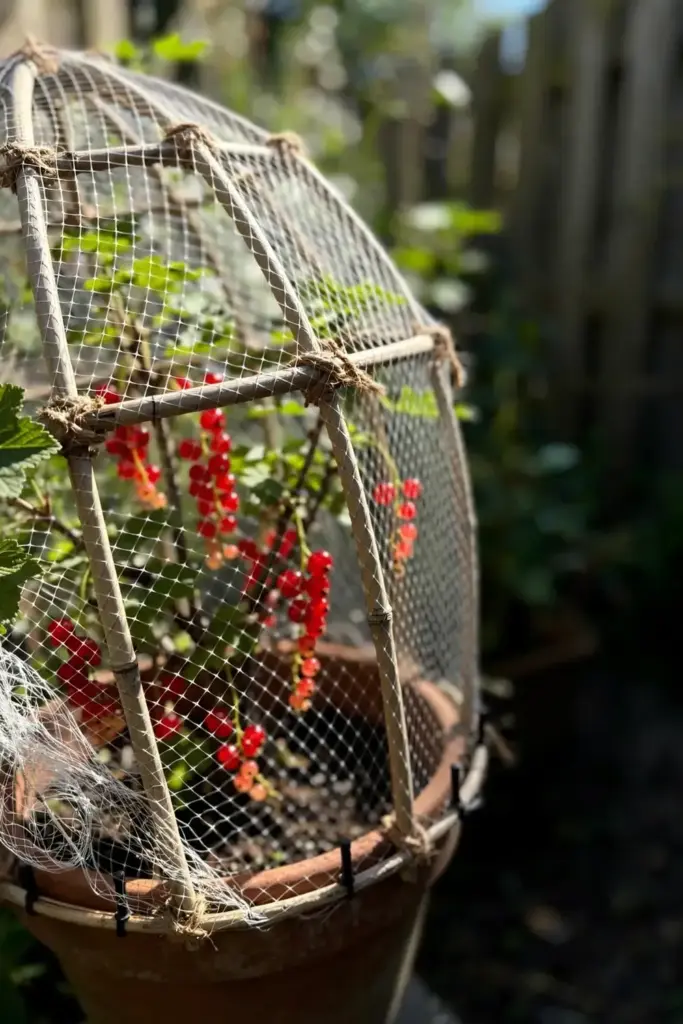
For a single pot, a simple frame of bamboo canes with bird netting draped over it works better than netting laid directly on the bush, which tangles in the strigs and traps birds. Secure the netting at the base so birds cannot walk underneath, and check daily to release anything caught. Remove the netting promptly after harvest so the plant gets full light for bud formation.
Fruit cages are the permanent answer for gardeners with several bushes, and even one potted bush benefits from a small walk-in cage if birds are relentless. The investment pays for itself in the first season you would otherwise have lost the crop.
15. Harvest When the Strigs Are Fully Red
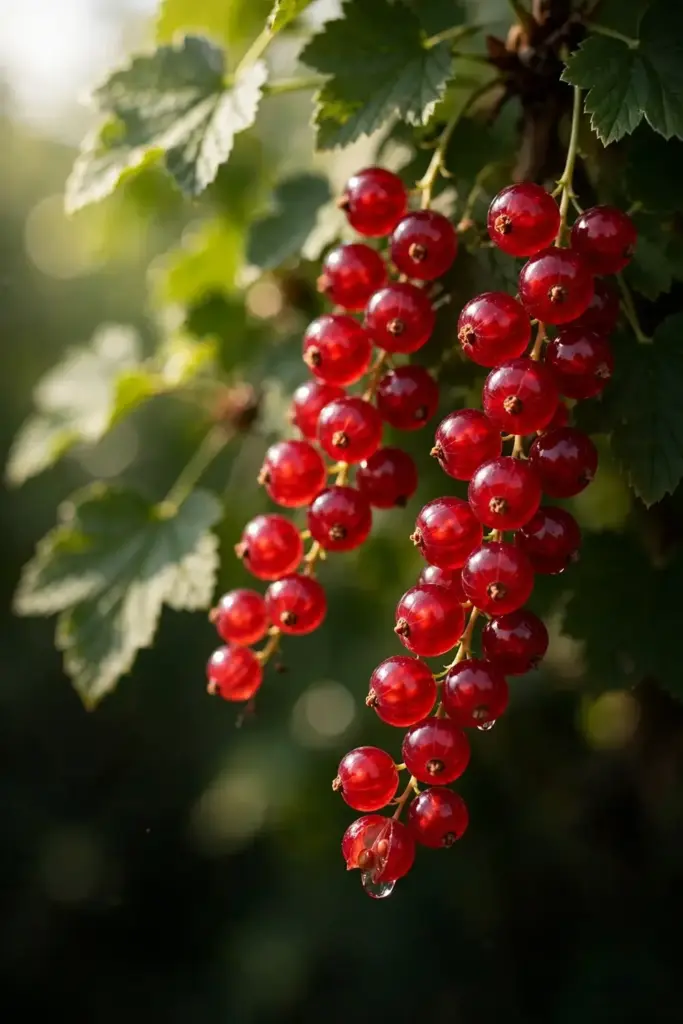
Red currants ripen from early July through August depending on variety, and the strigs color from the top down. Pick only when the entire strig is fully red and the berries taste sweet-tart rather than mouth-puckering; under-ripe currants never sweeten off the bush. Taste one berry from the bottom of the strig, which ripens last, before deciding the truss is ready.
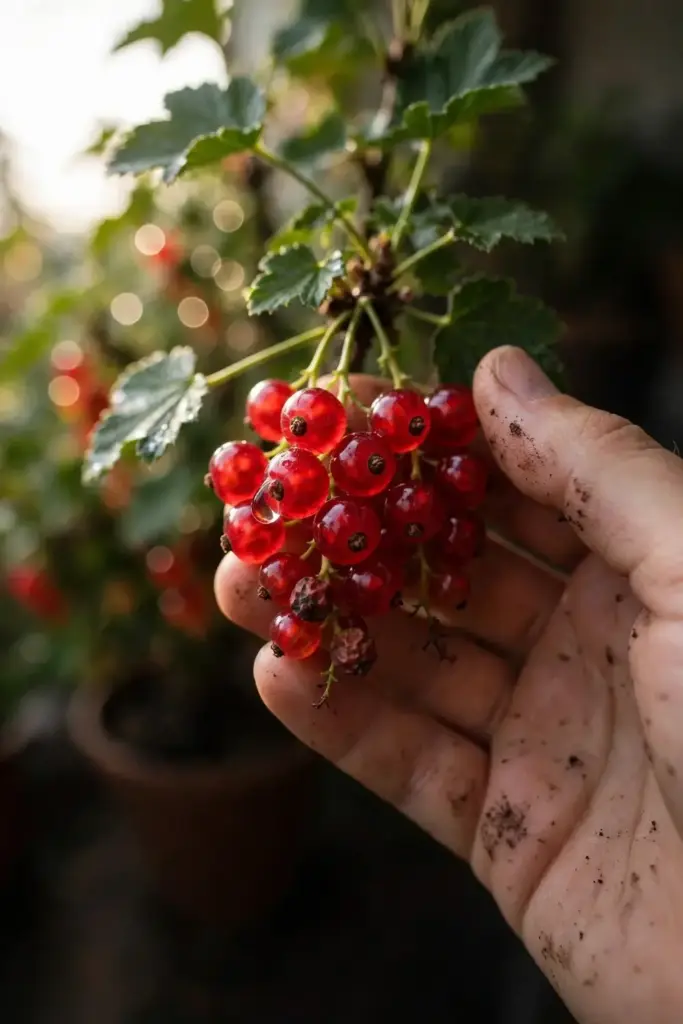
Harvest whole strigs rather than individual berries. Snip the truss with scissors or pinch it off at the stem, which is faster and damages fewer berries than pulling. A mature bush yields about 4.5 kg of fruit, according to the Royal Horticultural Society’s red currant growing guide, which sounds modest until you face the jelly pan: red currants are mostly used for jelly, juice, cordials, and summer desserts because their high pectin sets beautifully.
Use the fruit quickly. Fresh currants keep a few days in the refrigerator, and whole strigs freeze well in bags for winter use. Strip frozen berries from their stems by running a fork through the truss. Red currant jelly, made with equal weights of fruit and sugar, is the classic preserve and the reason many gardeners plant the bush in the first place.
16. Repot and Renew Every Few Years
A red currant can fruit in the same pot for fifteen to twenty years, but only if the compost is renewed. Every spring, scrape off the top 5 cm of old compost and replace it with fresh soil-based compost. Every two years, the RHS advises refreshing the compost more thoroughly, and every two to three years the plant benefits from a full repot into the same pot or one size larger.
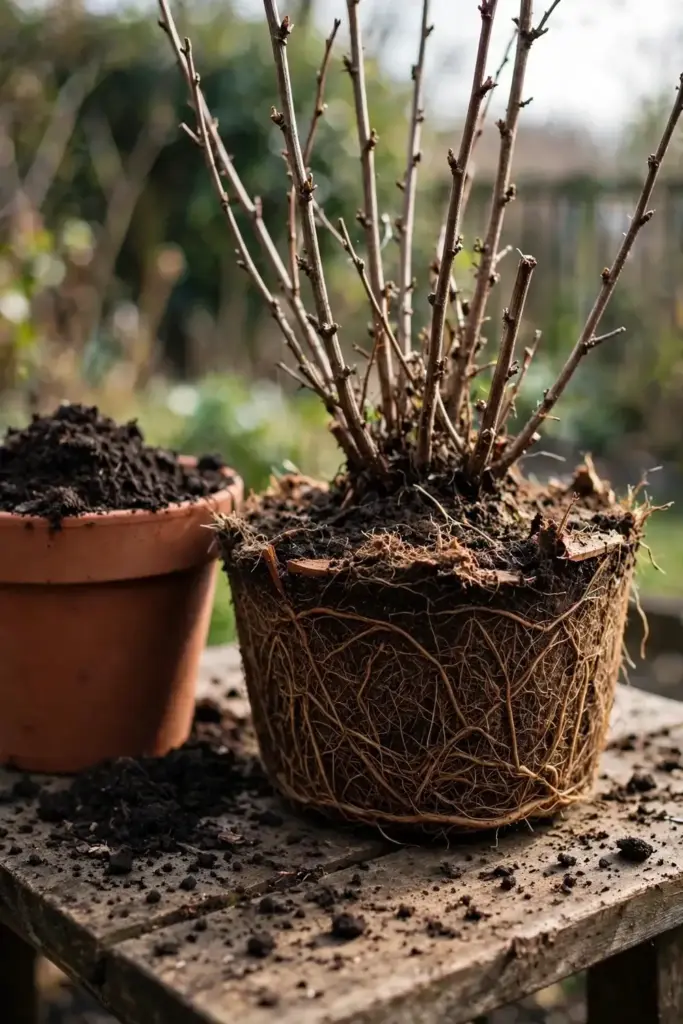
To repot, slide the root ball out in late winter, trim back about a quarter of the outer roots with clean secateurs, tease away loose old compost, and replant in fresh soil-based compost at the same depth. Root pruning sounds brutal but rejuvenates the plant: it stimulates new feeder roots and keeps the bush proportionate to its pot. Water well afterward and hold off feeding for a month while roots re-establish.
Watch for the signs of an exhausted pot: pale small leaves, short new shoots, and declining crops despite feeding. These symptoms mean the compost has collapsed and compacted, and only a repot fixes it. A bush that gets this renewal cycle will still be fruiting when the pot itself needs replacing.
Container culture extends beyond fruit, and a fruiting currant earns its patio place on productivity alone.
17. Fix a Bush That Will Not Fruit
A healthy-looking bush with no berries usually suffers from one of five causes. Young plants need time: expect little or nothing in year one and a real crop from year two or three. Frost damage to early blossom is the next suspect; a single late frost can wipe out the flowers while leaving the foliage untouched, which is why sheltered positioning matters.
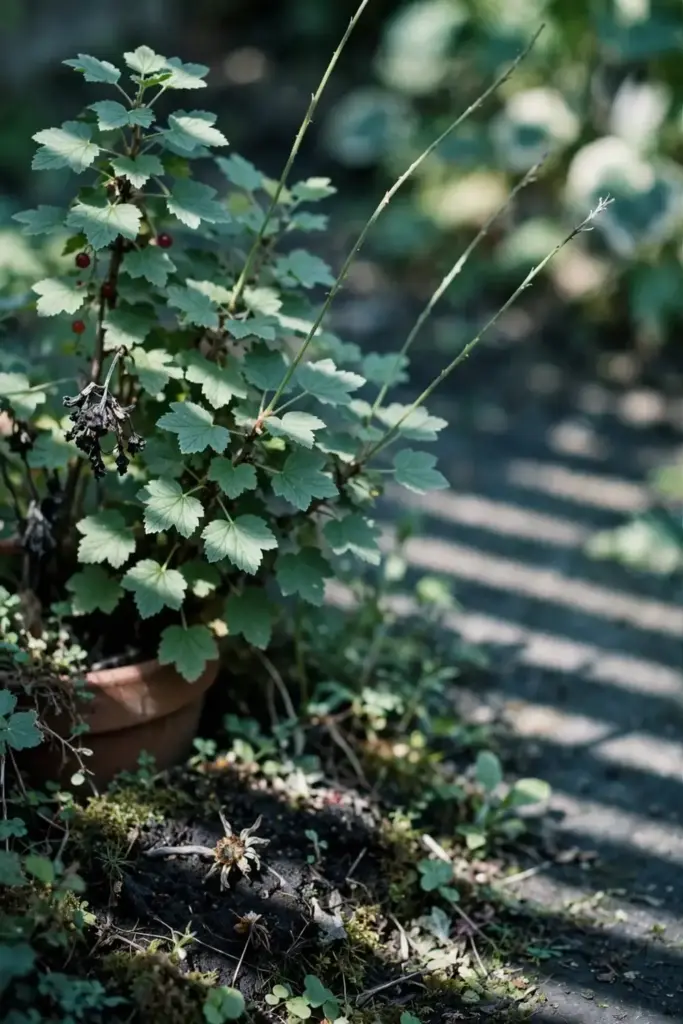
Over-pruning is the gardener’s own fault and the most common one. Because fruit forms on two- and three-year-old wood, shearing the bush into a ball removes the fruiting spurs along with the old stems. If you inherited an over-pruned bush, leave it alone for a full season except for removing dead wood, and it will rebuild its spur system.
Nutrient imbalance shows as heavy leaf growth and no flowers, usually from excess nitrogen. Switch to a high-potash feed, stop feeding by midsummer, and let the plant harden. Finally, deep shade starves the buds: a bush in full shade may grow fine and fruit never, so move the pot to a brighter spot and give it one season to respond.
18. Seed, Cuttings, or Bare-Root: The Honest Note
Red currants grow from seed, but seedlings do not come true to variety, take years longer to fruit, and may carry none of the parent’s disease resistance. The Reddit thread that debated seed versus bare-root reached the right conclusion: seeds are a curiosity project, not a growing method. Nobody who wants berries plants red currant seeds.
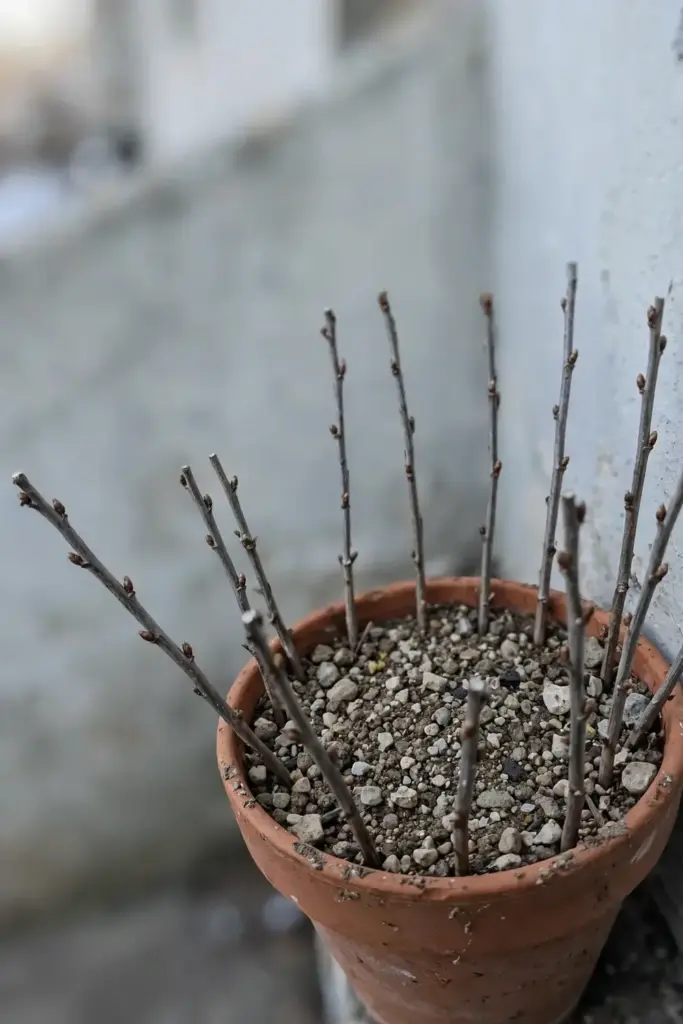
Hardwood cuttings in autumn are the proven home-propagation route. Take 20 cm cuttings of ripe one-year-old wood between mid-autumn and late winter, push them two-thirds deep into gritty compost in a sheltered corner, and most will root by spring. This is how gardeners multiply a favorite variety for free, and it is also how nurseries produce much of their stock.
For everyone else, buy a named variety as bare-root stock in the dormant season or as a potted plant. Bare-root is cheapest, establishes fastest, and fruits soonest. One plant is enough because red currants are self-fertile, and a single well-grown bush in a 45 cm pot will give you more jelly than most households can use.
Frequently Asked Questions
No. Red currants are self-fertile, so a single bush fruits on its own without a pollination partner. Planting a second variety nearby can improve berry size and overall yield, and it extends the harvest if you choose an early and a late variety, but it is never required for fruit set.
Red currants belong to the genus Ribes, which hosts white pine blister rust, a disease that kills white pines. The US banned Ribes nationwide in the early 1900s to protect timber; the federal ban was lifted in 1966 but states kept individual rules. Some states still restrict or ban planting, so check your state extension service before buying.
Fifteen to twenty years or more with basic care, and potted bushes reach the same lifespan when the compost is renewed regularly. Productivity peaks between years three and ten, then declines slowly. Annual pruning that removes the oldest wood keeps the bush productive into old age, and hardwood cuttings taken in autumn replace any bush cheaply.
At least 45 cm wide and equally deep, filled with soil-based compost. Smaller pots dry out too fast in summer and starve the plant. Cordons can manage in slightly narrower troughs, but a bush in a 45 to 50 cm pot gives the best balance of crop and practicality. Repot or refresh the compost every two to three years.
Yes, in light or partial shade, though full sun gives sweeter and earlier berries. Red currants are among the most shade-tolerant fruiting shrubs and will crop against a north-facing wall where most fruits fail. Deep shade is the limit: a bush in full shade grows leaves but sets little fruit, so aim for at least some direct sun.
Pick when the whole strig is fully colored and the berries taste sweet-tart, usually from early July to August depending on variety. Color starts at the top of the strig, so taste a berry from the bottom before harvesting the truss. Harvest whole strigs with scissors, use fresh fruit within days, or freeze whole trusses for later.
One Pot, Two Decades of Berries
A red currant in a 45 cm pot asks for less than most houseplants demand and returns more than most of them ever could: decades of ruby strigs from a corner that gets half a day of sun. Plant in the dormant season, water like the pot matters, prune every late winter, and net before the birds notice. The jelly you make in July will taste like the reason you started gardening, because for many gardeners, it is.