Push 2 sunflower seeds into warm soil 2.5 cm deep, 15.2 cm apart, and a stem taller than you follows in one season. That is how to grow sunflower from seed. The head tracks the sun while it grows, then turns east and stays put once the petals open.
I have learned that a late sowing in warm soil beats an early sowing in cold soil. Sow after the last frost. Water the seed bed for the first 7 to 10 days. Cut the first stems 70 to 120 days later.
Sow in the sunniest bed you own. Give tall types room to stand. Leave the heads for the birds or cut them for seed. Spring sowing, summer watering, and a late summer cut fill the whole season with one planting after another.
Check the Sunflower Numbers Before You Sow
First flowers open 70 to 120 days after sowing, and seeds sprout in 7 to 10 days, according to the University of Missouri Extension sunflower guide. The packet lists the days for your variety. Read it before you sow.
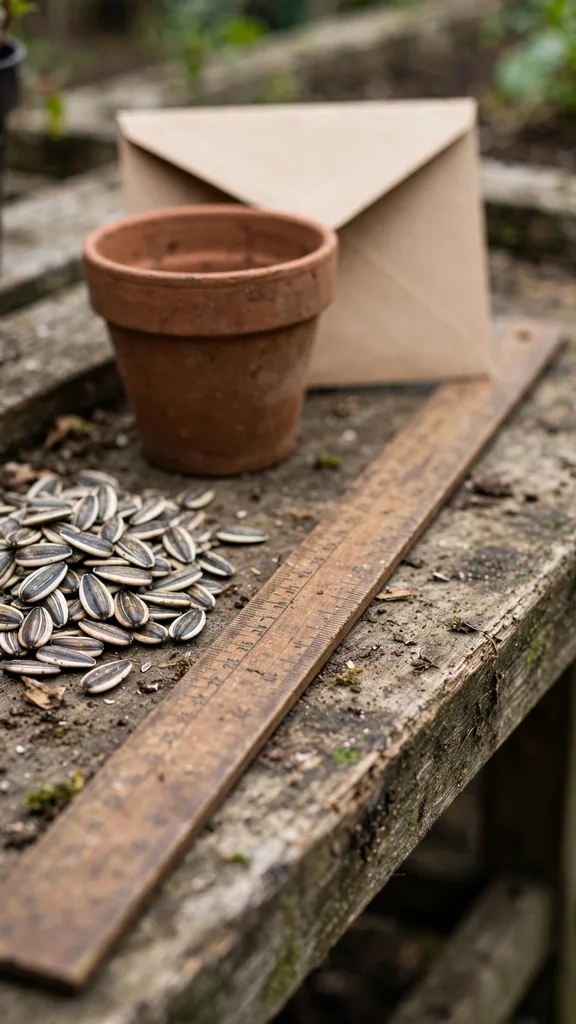
Height decides spacing. Dwarf types stand 61 to 91.4 cm tall. Giants pass 3.05 m. The table below sorts the five types by height, spacing, and days to first bloom.
| Sunflower Type | Mature Height | Spacing | Days to First Bloom |
|---|---|---|---|
| Dwarf | 61 to 91.4 cm | 15.2 cm | 60 to 70 days |
| Mid-size single-stem | 1.2 to 1.8 m | 15.2 cm | 70 to 80 days |
| Tall single-stem | 1.8 to 3.05 m | 30.5 cm | 80 to 100 days |
| Giant seed type | 3.05 m and taller | 61 cm | 90 to 120 days |
| Branching | 1.2 to 2.1 m | 45.7 cm | 70 to 90 days |
A short season still fits a dwarf. A long season fits a giant. Pick the type that matches your frost-free days.
Count your frost-free days before you buy seed. A season of 90 days fits a dwarf or a fast single-stem type with room to spare, while a giant needs the full 120 days to ripen seed. The packet lists two figures that decide the pick: days to maturity and mature height. A packet that promises 70 days suits a short northern season, and a packet that promises 110 days suits a long southern one. Buy the seed that fits the season you own, not the season you wish for.
Site the bed before you sow. Sunflowers want the sunniest ground you own and a spot out of the prevailing wind. A south-facing bed beside a fence gives both, since the fence breaks the wind while the open sky above it pours in sun all day. Avoid the strip beside a tall hedge, since the hedge steals the morning sun and the stems lean toward the light all season.
Pick a Sunflower Variety That Fits Your Bed
Seven names cover nearly every bed. Match the type to the job: pots, cutting, seed, or a tall screen.
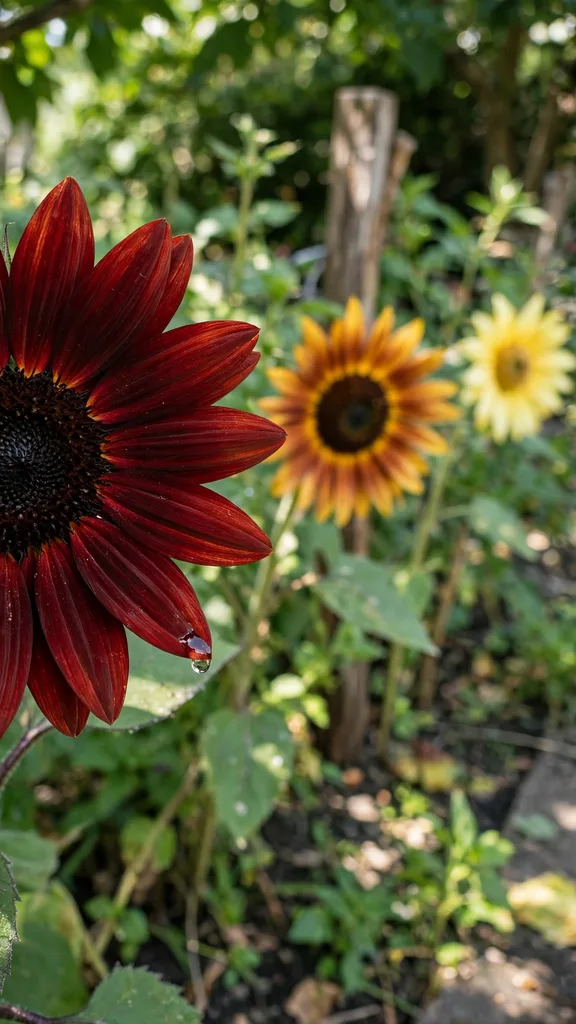
Sunflower petals run from pale white through gold to deep red, and the disk runs from green through brown to near black. The old picture of a sunflower as one gold flower on a tall stem misses most of the range. Breeders crossed color into every height class, so a dwarf now comes in red and a giant now comes in pale lemon. Pick the color against the house wall and the fence behind it, since the flower reads against that background all summer.
Autumn Beauty Sunflower branches from one stem into many smaller heads in gold, orange, bronze, and red. One plant fills a 61 cm wide patch with color for weeks. Cut the side stems often. New buds open behind them.
Chianti Sunflower opens wine-red petals around a dark disk. The plant branches and reaches 1.5 to 1.8 m. It suits a cutting bed beside deep red dahlias. Cut stems last a week in a vase. The dark disk holds its color in the vase longer than gold types, which fade to pale yellow within days of cutting.
Autumn Sun Sunflower carries soft yellow heads on branching stems. One plant gives cutting stems for a month, with new buds opening as fast as you cut the old ones. It stands 1.5 to 1.8 m tall in full sun. The pale heads suit a light border.
California Sunflower grows one tall stem with a single large yellow head. It suits the back of a border or a windbreak row. Give it 30.5 cm of room and a stake in windy beds.
Beach Sunflower spreads low over sandy soil where tall types flop. It roots along the stem and covers bare ground fast, holding loose sand with a mat of stems and leaves. It suits a dry bank or a coastal bed. It asks for little water once it roots.
Mammoth grows the giant head for seed. One stem passes 3.05 m and carries a head 30.5 cm across. Stake it early. A full head snaps a stem in the first storm.
Dwarf types like Teddy Bear stay under 91.4 cm and fit a pot. One plant needs a pot 30.5 cm wide and deep. The double gold heads look like pompoms and draw bees all day. Bees work the double heads from morning until the petals close, and the plant keeps opening new buds for weeks after the first flower fades.
Cut-flower types split into two camps: pollen types and pollenless types. Pollen types feed bees and shed yellow dust on the table. Pollenless types keep the vase water clean and the tablecloth spotless, and florists grow them for that reason. Grow pollen types if bees matter to you. Grow pollenless types if the vase sits on a white cloth.
Seed types split the same way. Oilseed types grow small heads filled with tiny black seeds for pressing or bird feed. Confection types grow the big striped seeds people eat. Mammoth sits in the confection camp. Pick the seed type by the end use, not by the flower color.
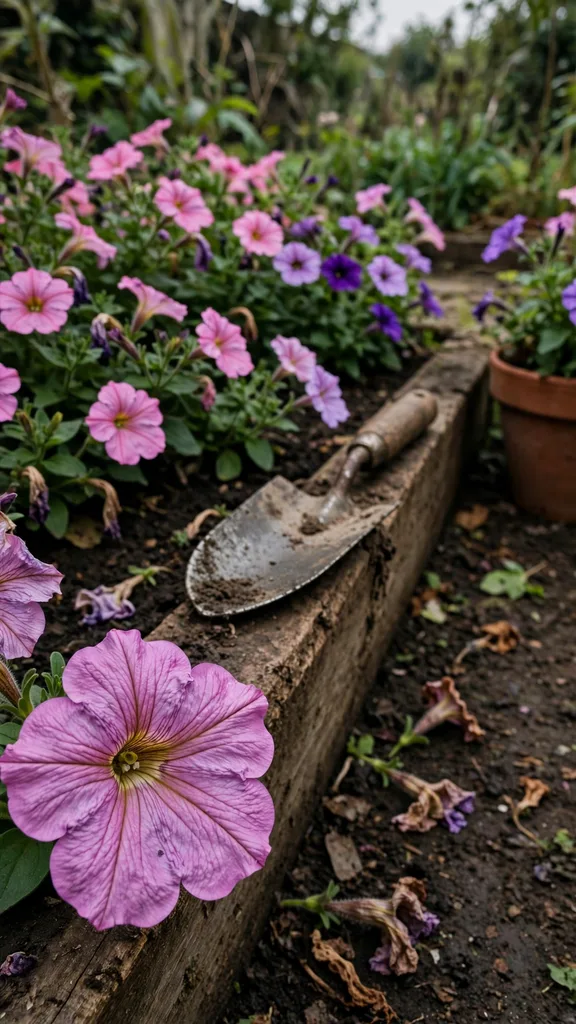
Edge the front of the bed with low flowers. Petunias sit at the front while sunflowers rise behind them, and the how to grow petunia guide covers the low edging plants. The tall stems shade the bed behind them by afternoon, so keep the edging plants in front where the sun still reaches them.
Sow Sunflower Seed 2.5 cm Deep After the Last Frost
Sow directly where the plant will grow. Sunflowers grow a taproot in days, and a moved seedling sulks for weeks.
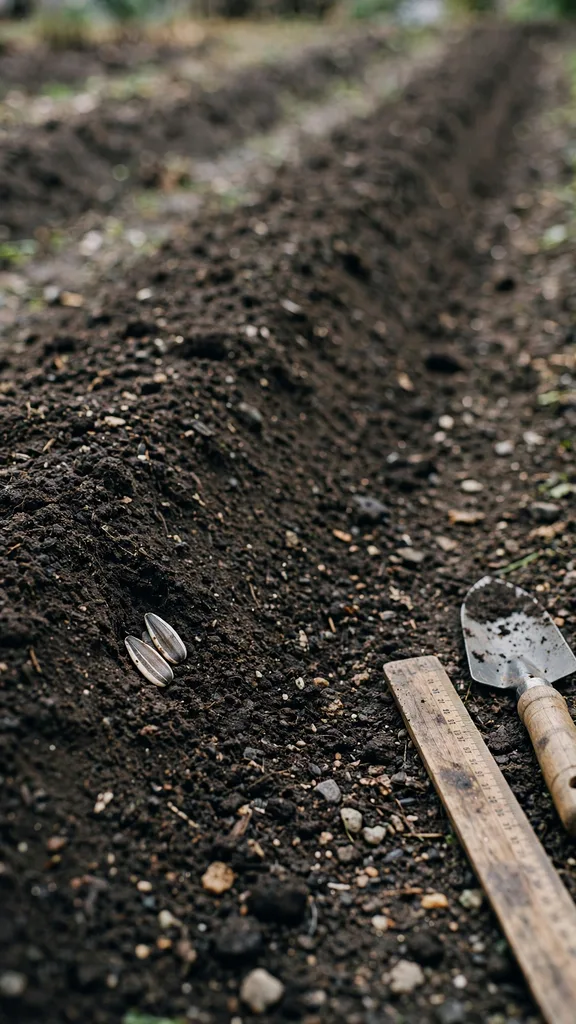
Sunflowers do best in slightly acidic soil with a pH from 6.0 to 6.8, and the soil should read at least 15.6 degrees Celsius before you sow, according to the University of Georgia Extension sunflower guide. Cold soil stalls the seed. Warm soil wakes it in days.
Work compost into the top 15.2 cm of the bed before sowing. The building soil health guide covers the compost and mulch routine for the whole bed.
Fork the bed over and pull out stones and old roots before the seed goes in. Sunflower roots run deep and straight, and a stone turns the taproot sideways. Rake the surface level so water sits where it falls instead of running off to one end. A level bed waters evenly, and even watering grows even plants.
- Push 2 seeds 2.5 cm deep at each spot, 15.2 cm apart for short types and 30.5 cm apart for tall types.
- Water the row lightly until seedlings show in 7 to 10 days.
- Thin each spot to the strongest seedling once true leaves open.
- Spread 11.3 kg of 13-13-13 per 92.9 square meters if you skip the soil test.
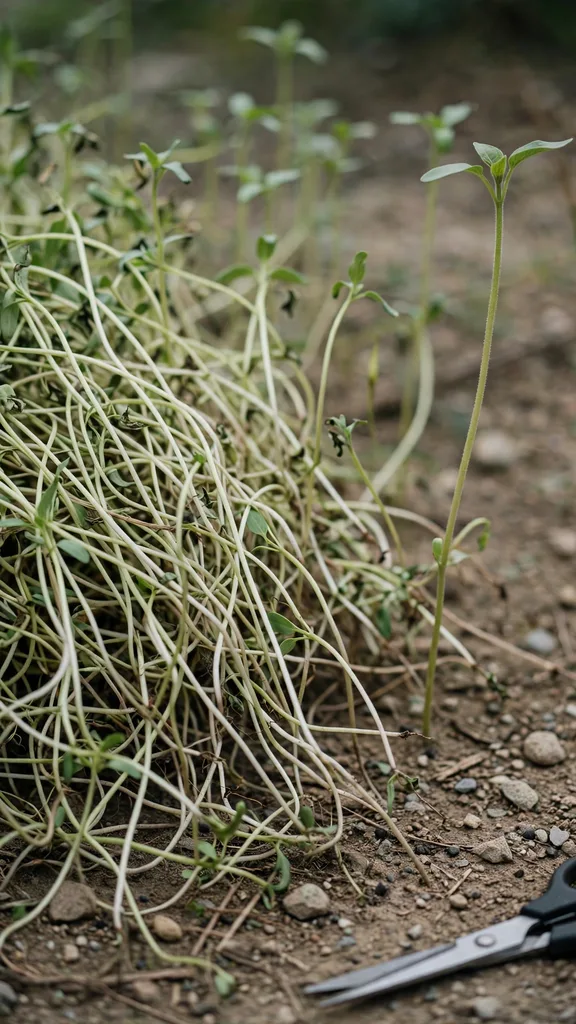
Thin with scissors, not by pulling. Cut the weak seedling at soil level and leave the strong one standing. Pulling drags the keeper out with it, since the two taproots tangle within days of sprouting. Thin early, while seedlings stand 7.6 cm tall, since a late thinning leaves a gap the keeper cannot fill.
Start seed indoors only in peat pots, 4 weeks before the last frost, and move the whole pot. The seed starting steps cover the pots and the hardening-off routine. A bare-root transplant rarely recovers its height.
Guard the seedlings for their first 2 weeks. Birds pull young shoots, and slugs chew the stems at night. Drape netting over the row until true leaves open, and set a board beside the row for slugs to hide under by day. Lift the board each morning and drop the slugs in a bucket of soapy water. The row needs no guard once stems turn woody.
Sow the seed where it will stand. A moved sunflower stays short.
Water Sunflowers Deep Twice a Week Through Bloom
Water at the base, not over the head. Wet heads rot. Dry roots stall the stem.
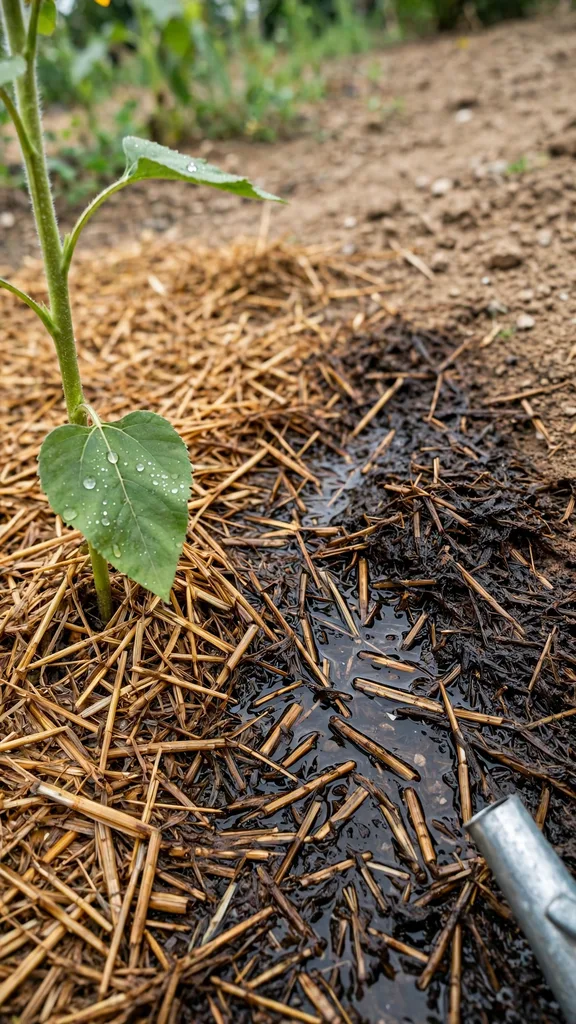
Soak the root zone twice a week while buds form and heads fill. One deep soak beats five sprinkles. The soil should dry 2.5 cm down between waterings.
Mulch the row with 5.1 cm of straw once seedlings stand 15.2 cm tall. Mulch holds moisture through hot afternoons and keeps the soil cool around the roots. Pull the mulch back 5.1 cm from each stem so the base stays dry and air moves around it. A wet stem base rots in days, and a dry one stands all season.
Watch the lower leaves for the first sign of thirst. They wilt first, long before the head droops. A plant that wilts every afternoon needs a deeper soak, not a second sprinkle. Water at dawn so leaves dry before night, since wet leaves overnight invite mildew.
Side-dress once with 2.3 kg of 34-0-0 per 30.5 linear meters when plants carry several true leaves. Water the row right after the side dressing so the feed moves into the root zone.
Cut water back once petals fall. A dry head ripens seed. A wet head molds.
Count rain as a watering. A week with 2.5 cm of rain needs no hose, and a week with none needs the full twice-weekly soak. Push a finger 5.1 cm into the soil before you water, and skip the hose if the soil feels damp at that depth. Gardeners who water on a fixed calendar drown plants in wet weeks and starve them in dry ones.
Stake Stems Taller Than 3.05 m Before the Wind Finds Them
Stake varieties taller than 3.05 m. A head full of seed weighs down a stem, and one gust folds it.
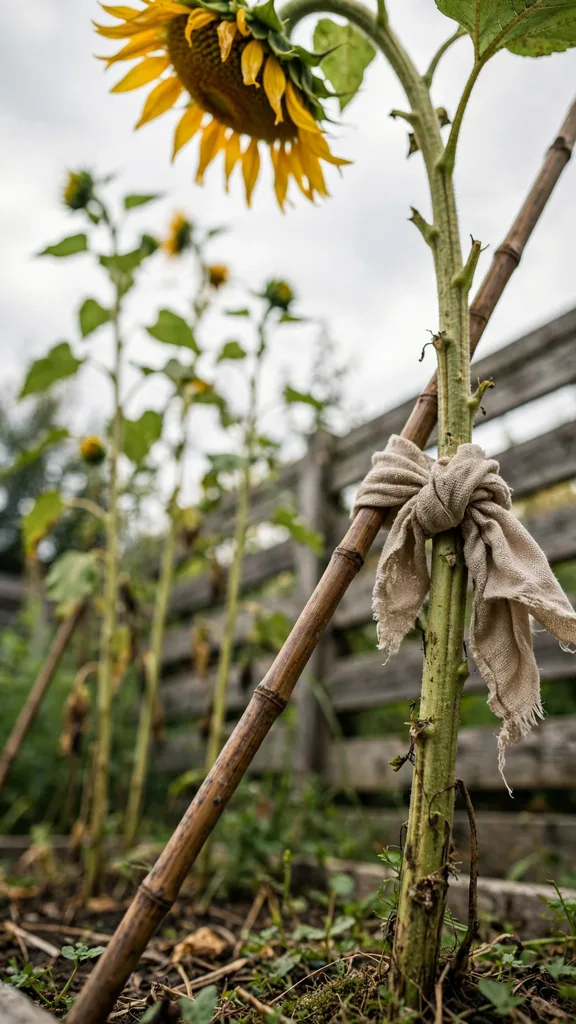
Drive a cane 30.5 cm into the ground on the windward side when the plant reaches your waist. Tie the stem loosely with cloth at two heights. Tight string cuts the stem as it thickens. Check the ties once a week through the season, since a stem that doubles in girth in a month will outgrow a tie left snug in June.
Stake branching types in open beds too. A wide head catches wind like a sail. A staked stem stands after the storm. An unstaked stem lies flat.
Stake a whole row with posts and twine instead of staking each plant. Drive a post at each end of the row and one in the middle, then run twine along both sides of the stems at waist height. The twine holds the row upright as a group, and no single stem carries the wind alone. Tie the twine taut before the plants reach it, since a loose line lets stems lean and snap.
Sow a Second Wave Every 14 Days for Flowers Until Frost
Sow one variety every 14 days until midsummer. Single-stem types flower once, so waves keep the color coming.
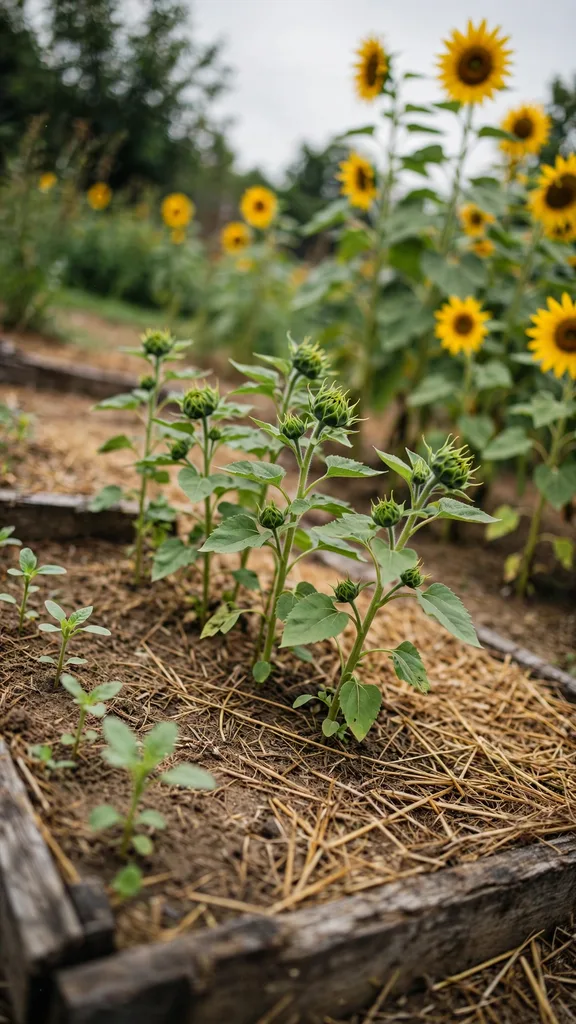
Mix three methods for the longest season. Plant several varieties with different days to maturity at one time. Sow one variety every 14 days. Sow several varieties every 3 to 4 weeks.
Count back from your first fall frost by the packet days. Sow no later than that date. A late sowing never ripens seed.
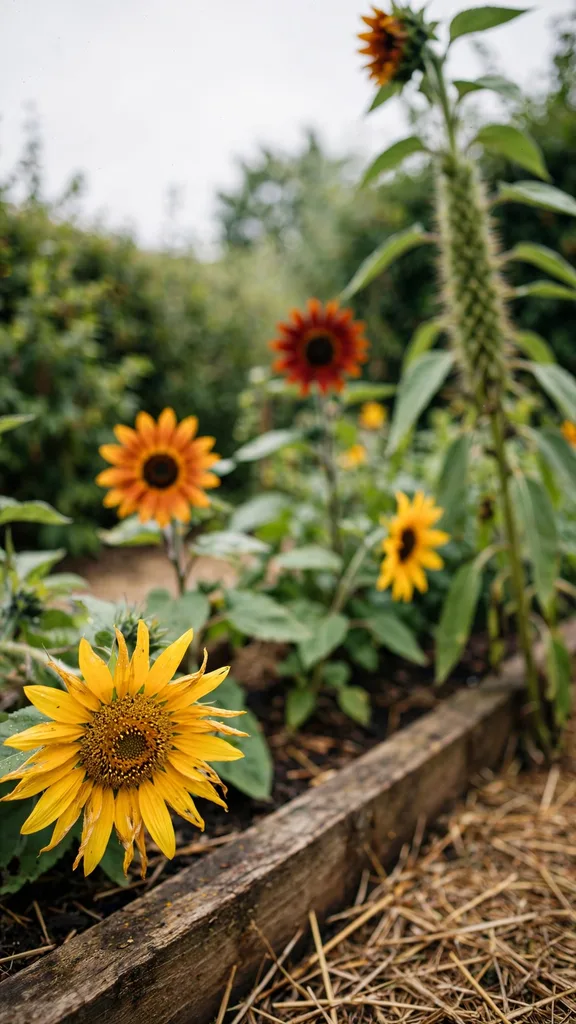
Mix varieties with different heights in one wave for a layered bed. Tall single-stem types rise at the back, branching types fill the middle, and dwarf types edge the front. The bed reads as one planting instead of three rows, and the cutting stems come in waves as each type opens. One sowing of three types gives the same spread as three sowings of one type, with a third of the work.
Cut spent heads from branching types as they fade. New side buds open behind them. A bed of brown heads looks done before the season ends.
Lay out three short rows. Sow row one in spring, row two 14 days later, and row three 14 days after that. The first row flowers while the second grows, and the second flowers while the third grows. One bed cut in rotation gives stems from midsummer to frost without a gap in the vase.
Skip the 5 Mistakes That Shrink Sunflower Heads
Five mistakes shrink heads more than any pest. Skip them all.
- Sowing in cold soil. Seed sits and rots below 15.6 degrees Celsius. Wait for warm soil, and test it with a thermometer at seed depth before you sow.
- Sowing too deep. Seed buried past 5.1 cm never breaks the surface. Keep depth at 2.5 to 5.1 cm, and go deeper only in loose sandy soil.
- Crowding the row. Plants 7.6 cm apart grow thin stems and small heads. Thin to the spacing in the table, even when the seedlings look too small to thin.
- Feeding too much nitrogen. Soft stems grow tall and flop, and heads stay small. Feed once, lightly, and stop. A sunflower in rich soil needs no second feed.
- Watering over the head. Wet petals rot and wet disks mold. Water at the base, and keep the hose off the flowers from bud to harvest.
Small heads trace back to one of these five. Fix the spacing first. It costs nothing and changes the most.
Diagnose Drooping Heads, Empty Seeds, and Chewed Leaves
Read the symptom first. The fix follows the symptom, not the calendar.
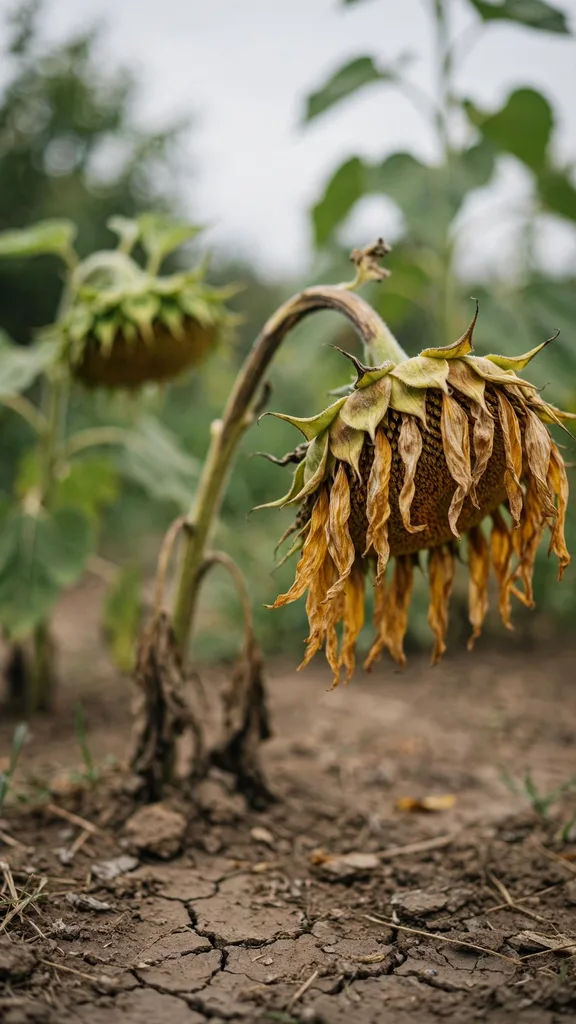
A head that nods in the afternoon sun and lifts by morning needs water. Soak the root zone at the base. A head that stays down for 2 days needs a stake, not water.
Hollow shells mean poor pollination or a cut too early. Leave the head on the stem until the back turns yellow-brown. Bees do the filling while the head faces east. A head that opens in a wet week with few bees flying may set only the outer ring of seeds, leaving the center hollow even when the back turns brown on schedule.
Birds strip young seedlings and peck ripe heads. Net the heads with mesh once petals fall. Drape netting over seedlings until true leaves open.
A white powdery coat on lower leaves signals mildew in damp air. Space plants wider next sowing. Strip the worst leaves and bin them.
Lower leaves yellow first when nitrogen runs short or water runs deep. Feed once and check drainage. Yellow leaves across the whole plant mean root trouble, not hunger.
Holes chewed through the head mean caterpillars moved in at bud stage. Pick them off by hand at dusk, when they feed on the open face of the disk. A head with a few holes still ripens seed. A head eaten to the stem goes in the bin.
Rust spots on leaves show as orange-brown dots that spread up the plant in wet weather. Strip the spotted leaves and bin them. Water at the base from here on, and give the next sowing wider spacing so air moves through the row.
Most sunflower trouble is water, spacing, or birds. Fix those three before reaching for a spray.
Cut Heads When the Back Turns Yellow-Brown
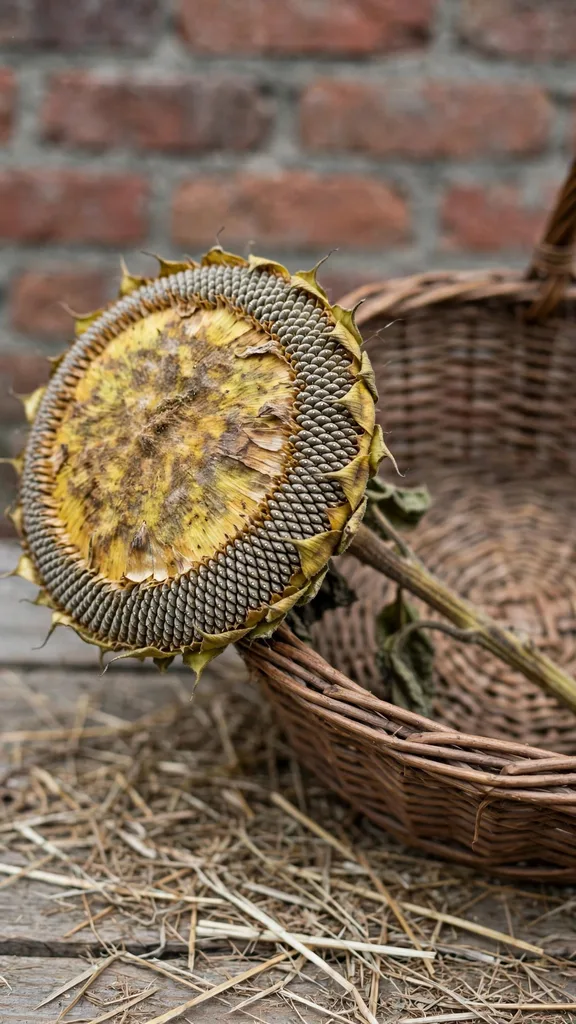
Cut the head when its back turns from green to yellow-brown and the head nods down. The tiny petals over the seeds dry and fall away, and the packed seeds show.
Cut stems in the morning with 30.5 cm of stem for the vase. Strip the lower leaves. The fall cut flowers guide covers conditioning and vase life for cut stems.
Cut seed heads with 30.5 cm of stem attached. Hang them head-down in a warm, dry place with air moving around them. Rub the dry head over a bucket to free the seeds.
Dry the seeds fully before you store them. Spread them in one layer on a tray for 2 weeks in a dry room, turning them once a day. Seeds that feel cool or damp go back on the tray. Dry seeds keep in a sealed jar for a year, and damp seeds mold in the jar within weeks. Roast a batch for eating, and save the rest for birds or next spring.
Save seed from your best head for next spring. Mark the tallest plant with the fullest head while it still blooms, and leave that head on the stem longer than the rest. Dry its seeds apart from the eating batch, and label the jar with the variety name and the year. Seed saved from a hybrid will not grow true, so save only from open-pollinated types if you want the same flower next year.
Leave one head per row for the birds. Goldfinches strip a ripe head in days. The birds pay for the seed with pollination all season.
How to Grow Sunflower in Pots, Cold Climates, and Hot Climates
Dwarf types grow in pots. Tall types belong in the ground. Match the plant to the place.
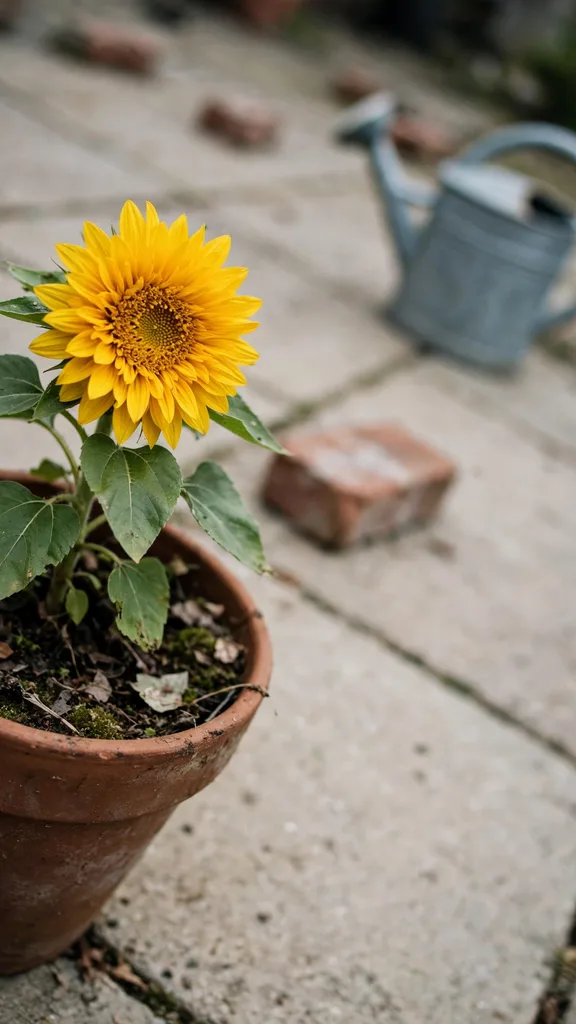
Grow one dwarf per pot 30.5 cm wide and deep. Fill it with potting mix, not garden soil. Water pots daily in heat. A pot dries faster than a bed. Set the pot where it catches morning sun and afternoon shade in hot climates, since a dark pot in full afternoon sun cooks the roots and wilts the plant by noon.
Sow after the last frost in cold climates. Start seed in peat pots 4 weeks early if the season runs short. Choose a dwarf or a fast single-stem type. Giants need a long season.
Sow in hot climates from late winter through spring, then again in late summer. Shade the seed bed with cloth for the first week. Water twice a day until seedlings stand.
Shelter matters more than zone. A windy site flattens tall stems in any climate. Plant giants beside a fence or a hedge, never in open wind.
Shade starves a sunflower faster than cold does. A bed with less than 6 hours of direct sun grows thin stems and small heads that never open fully. Move the bed to the sunniest ground you own, even if it means giving up the neat row by the fence. Sun decides the head size. Soil decides the rest.
Frequently Asked Questions
Seeds sprout in 7 to 10 days in warm soil. First flowers open 70 to 120 days after sowing, depending on the variety. Dwarf types flower at the fast end of that range, and giants sit at the slow end. Read the days-to-maturity figure on the packet before you sow, since it tells you which end you are working with.
Yes, if you pick a dwarf type. One dwarf grows well in a pot 30.5 cm wide and deep filled with potting mix. Tall and giant types belong in the ground, since a pot cannot hold their roots or their weight. Water pots daily in hot weather, since a pot dries faster than a bed. Feed once, lightly, when buds form.
No. Sunflowers are annuals, so one plant flowers once and dies with the frost. They reseed themselves where heads drop seed, and seedlings often appear in spring without any sowing. Leave one head standing through winter for the birds, and volunteers will rise in the same bed. Pull the extras or move them while they are small.
A head that nods in hot afternoons and lifts by morning needs water, so soak the root zone at the base. A head that stays down for 2 days usually needs a stake, since a full head weighs down the stem. A stem that bends at the base after wind needs a cane tied loosely at two heights. Cut the head early if the stem cracks.
Harvest when the back of the head turns from green to yellow-brown and the head nods down. Cut the head with 30.5 cm of stem attached, then hang it head-down in a warm, dry place with air moving around it. Rub the dry head over a bucket to free the seeds. Net the heads early if birds strip them first.