
You can grow codonopsis from seed, and the seeds germinate reliably if you give them what they want: 30 days of cold, moist stratification, a surface sowing with light hitting the seeds, and 7 to 21 days of steady moisture. The catch is patience. The roots you are growing for, the dang shen of Traditional Chinese Medicine, need 2 to 3 full growing seasons before they are worth digging. I have learned that patience is the whole crop with codonopsis: the vines entertain you in year one, but the roots do the real growing in years two and three.
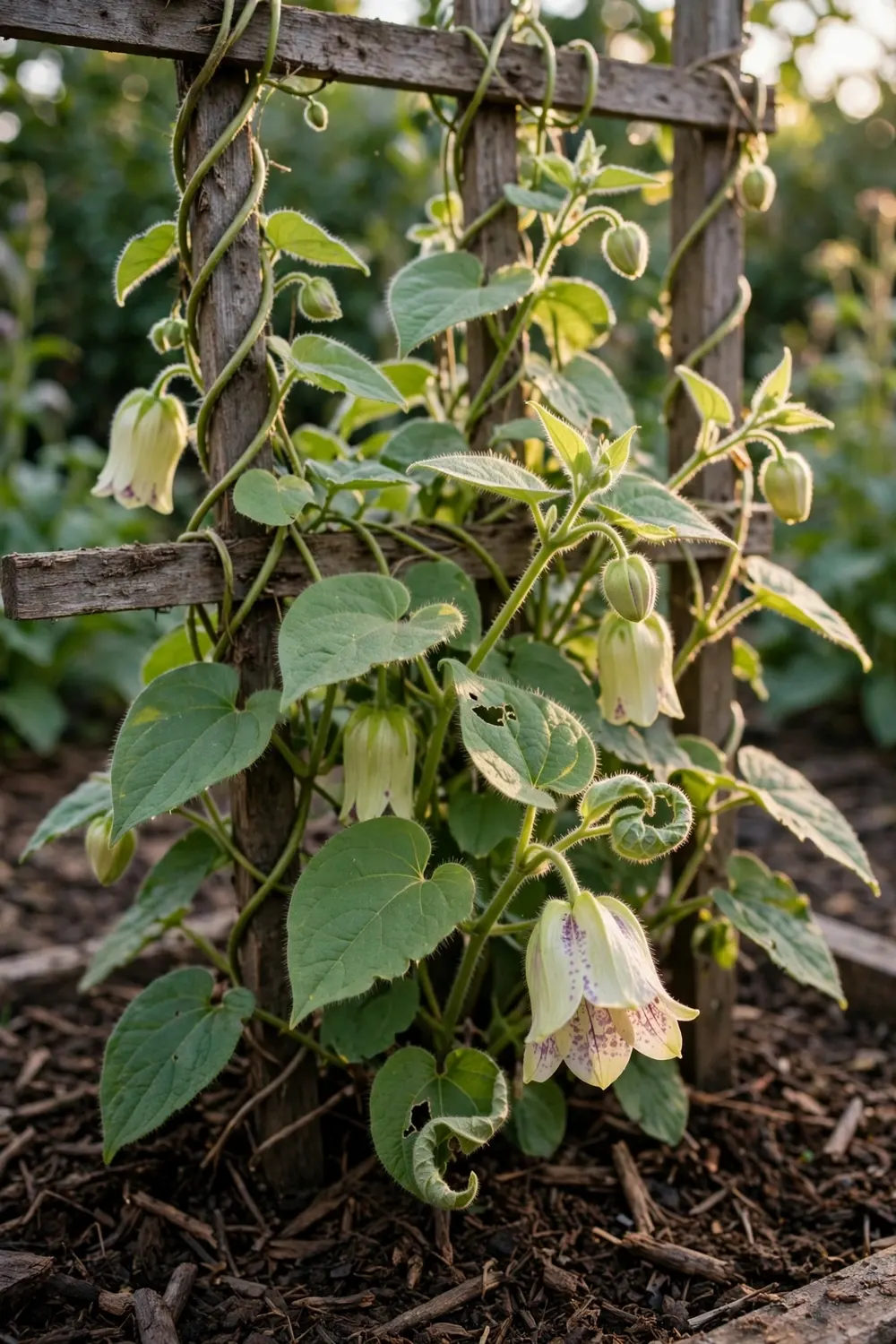
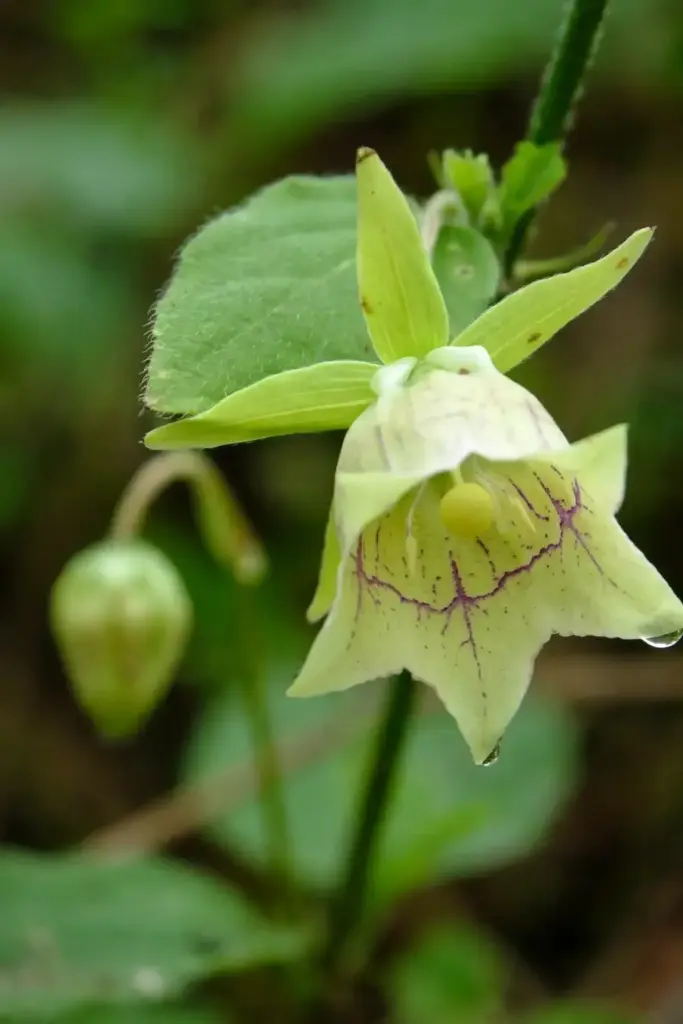
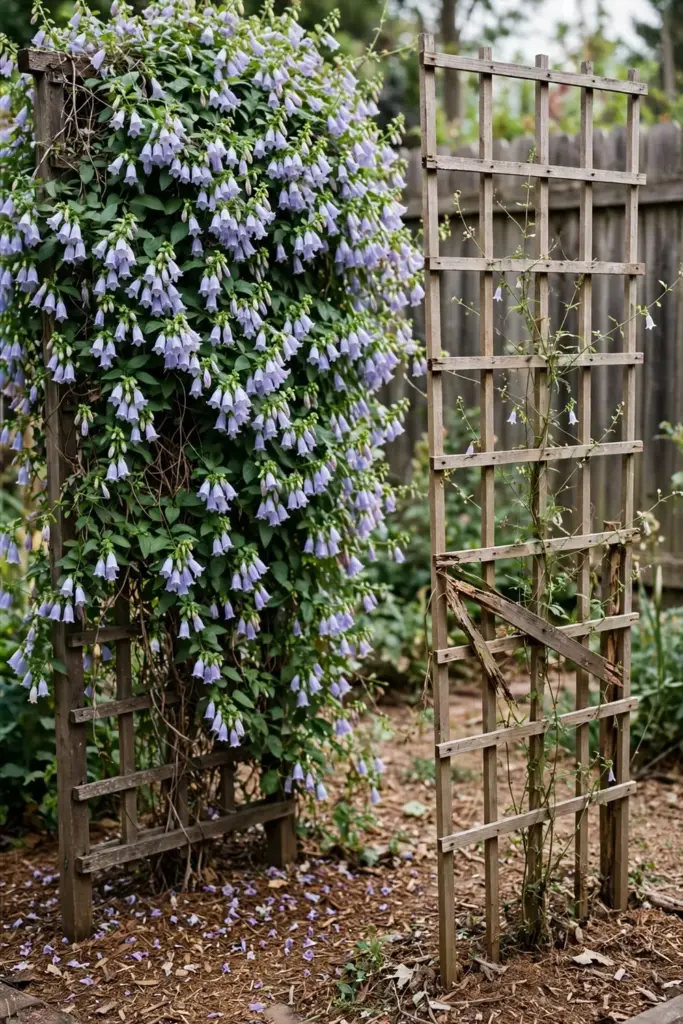
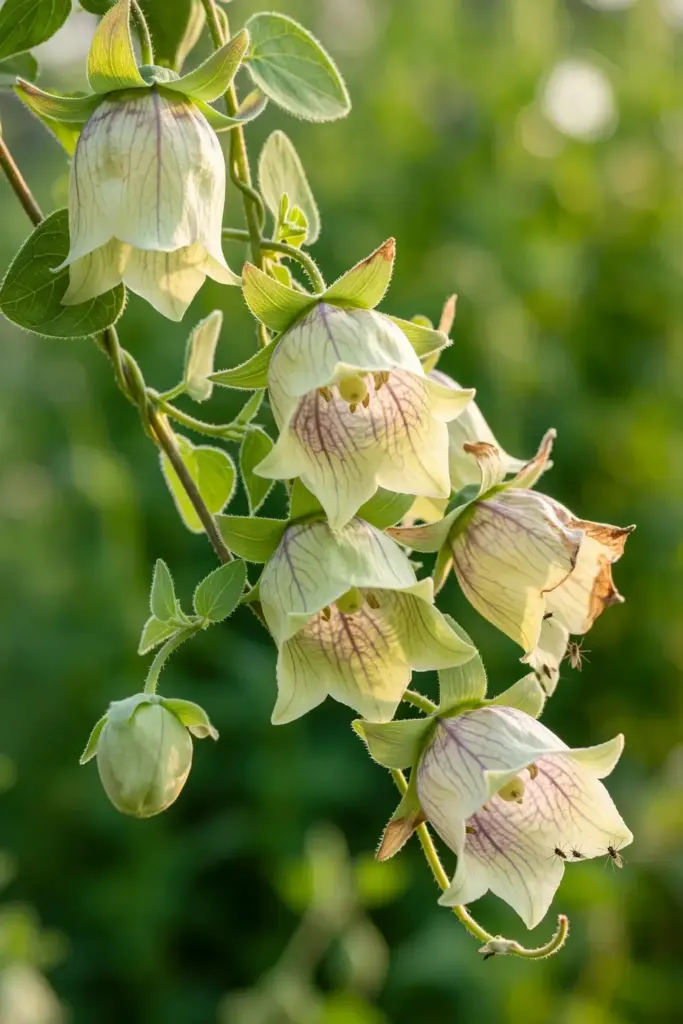
Codonopsis pilosula is a twining perennial vine from the cold mountains of China, Korea, and Mongolia, nicknamed “poor man’s ginseng” because its sweet roots are used in TCM the way ginseng is, at a fraction of the price. It is not ginseng. No Panax anywhere in it. It is a hardy, shade-tolerant vine with pale green bell flowers veined purple inside, and roots you harvest in the fall of the second or third year. If you want to learn how to grow codonopsis from seed and actually reach the harvest, this guide walks the full arc from seed packet to dried dang shen, with the honest timeline competitors skip.
1. Match Codonopsis to Your Climate: Zones 5 to 9
Codonopsis pilosula grows as a perennial in USDA zones 5 to 9, and it comes from country that sees winter lows around minus 30 degrees C, so cold is not your problem. Heat plus wet feet is. Give it full sun in cool climates and partial shade where summers run hot, because the vine prefers the cool, moist edges it evolved in: woodland margins and dappled shade.
If you sit in zone 4, plant it against a sheltered wall and mulch the crown heavily after the tops die back; the roots are tougher than the rating suggests, but young plants deserve protection through their first few winters. In zone 9 and warmer, afternoon shade is not optional. It is the difference between a vine that climbs and one that sulks.
One more climate note. Codonopsis emerges late in spring, often weeks after your other perennials are up. Mark the planting spot with a stake so you do not dig into a sleeping crown in April thinking the plant died. Late emergence is normal, not a failure, and the vines catch up fast once warm weather arrives.
2. Codonopsis pilosula vs Codonopsis lanceolata: Pick the Right Species
Seed packets and blog posts mix these two cousins constantly, and the mix-up matters because they are grown for different harvests. Dang shen, the TCM root, is Codonopsis pilosula. Deodeok, the Korean vegetable whose roots are eaten fresh or pickled, is Codonopsis lanceolata. Buy the wrong one and you wait three years for the wrong crop.
| Trait | Codonopsis pilosula (dang shen) | Codonopsis lanceolata (deodeok) |
|---|---|---|
| Common names | Dang shen, poor man’s ginseng | Deodeok, bonnet bellflower |
| Grown for | Dried medicinal roots | Fresh or pickled edible roots |
| Vine height | 6 to 10 feet | 3 to 6 feet |
| Flowers | Pale green bells, purple veining inside | Similar bells, often bluer |
| Root harvest | Fall of year 2 or 3 | Fall of year 1 or 2 |
| Hardiness | Zones 5 to 9 | Zones 5 to 9 |
Check the Latin name on the packet before you buy. If the listing only says “codonopsis” with no species, ask the seller. The PFAF plant database entry for Codonopsis pilosula lists it as a 1.7 meter perennial climber, hardy, flowering June to August, with both male and female organs on each flower so insects handle pollination and you do not have to.
3. Choose Fresh Seeds From a Reputable Seller
Codonopsis seed stays viable for a few years in cool, dry storage, but fresher seed germinates faster and more evenly. Buy from a seller who lists the harvest year or at least turns stock quickly. A packet of 50 to 200 seeds is plenty for a home planting; you will thin to the strongest seedlings anyway.
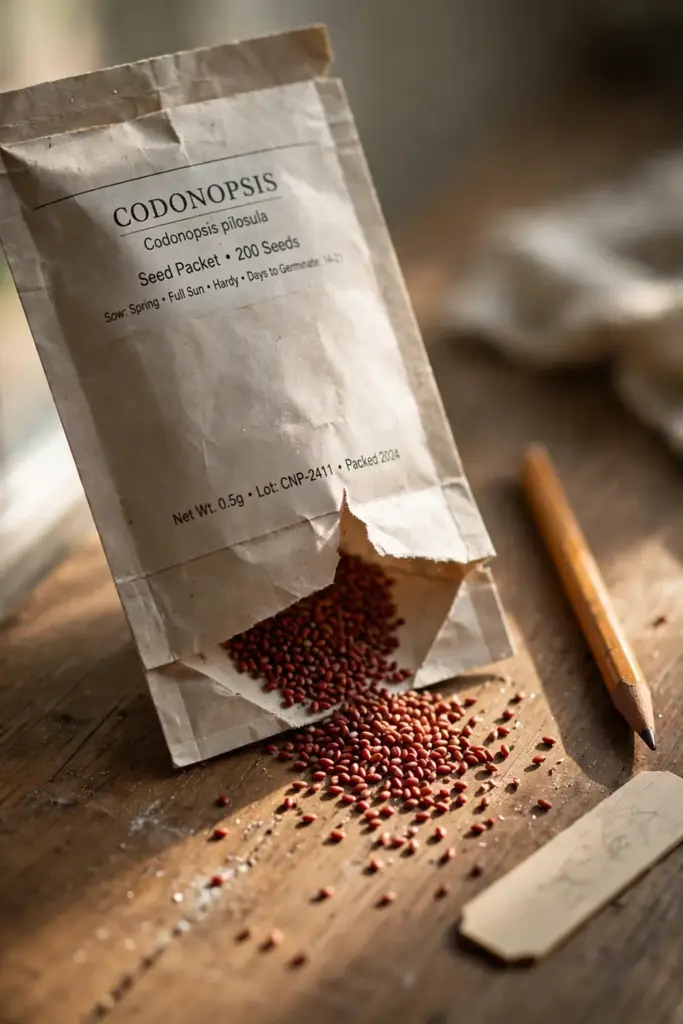
Look for the full Latin name, Codonopsis pilosula, on the packet, and “open pollinated” or “heirloom” if you want to save your own seed later. The plants flower in the first or second year and set seed by late summer, so a single successful planting can supply your seed for years.
To save seed, let a few of the best vines go to seed in late summer and collect the capsules when they turn brown but before they split. Dry them indoors for a week, shake out the tiny seeds, and store them in a paper envelope in a cool, dry place. Label with the year. Home-saved seed germinates as well as bought seed in its first two years, and it costs nothing.
4. Stratify Seeds for 30 Days Before a Spring Sowing
Codonopsis seeds carry a mild dormancy that winter normally breaks. If you sow outdoors in the fall, nature handles this: the seeds sit through winter and germinate in spring. If you want to start seeds indoors in spring, give them 30 days of cold, moist stratification in the refrigerator first.
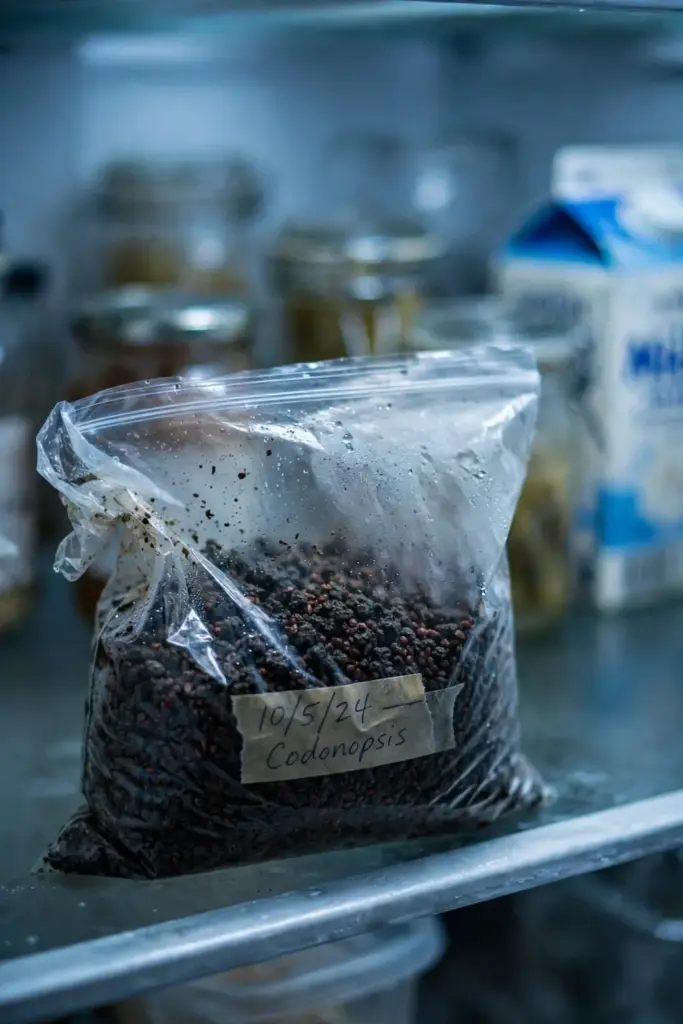
Mix the seeds with damp sand or vermiculite in a labeled bag, keep it around 2 to 4 degrees C, and check weekly that the mix stays moist but not soggy. Sow right after the stratification ends. Some growers report good germination without any chilling when sowing very early in spring, but the 30-day treatment is the reliable route, and it costs nothing but a shelf in the fridge. The Seed Therapy dang shen growing instructions describe both paths: fall sowing outdoors for natural stratification, or 30 days of cold moist stratification before a spring sowing.
5. Surface-Sow the Seeds: Light Does the Germination Work
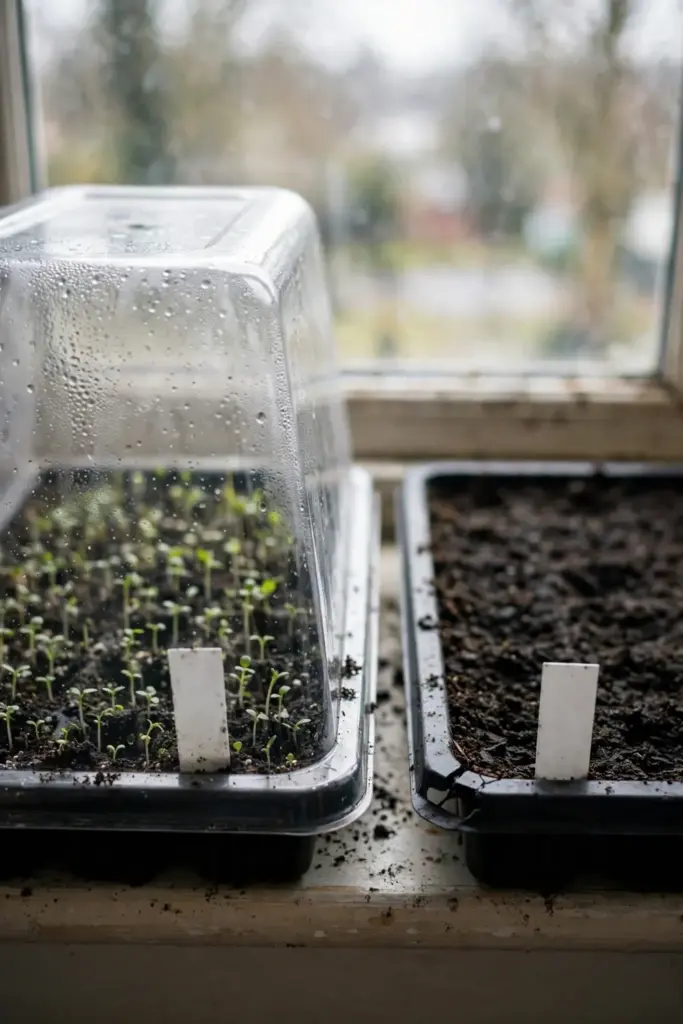
This is the step most beginners get wrong. Codonopsis seeds need light to germinate, so burying them even a quarter inch deep can cut your germination to nearly zero. Fill flats or small pots with moistened seed-starting mix, scatter the seeds on the surface, and press them gently into the mix so they make contact. Do not cover them with soil.
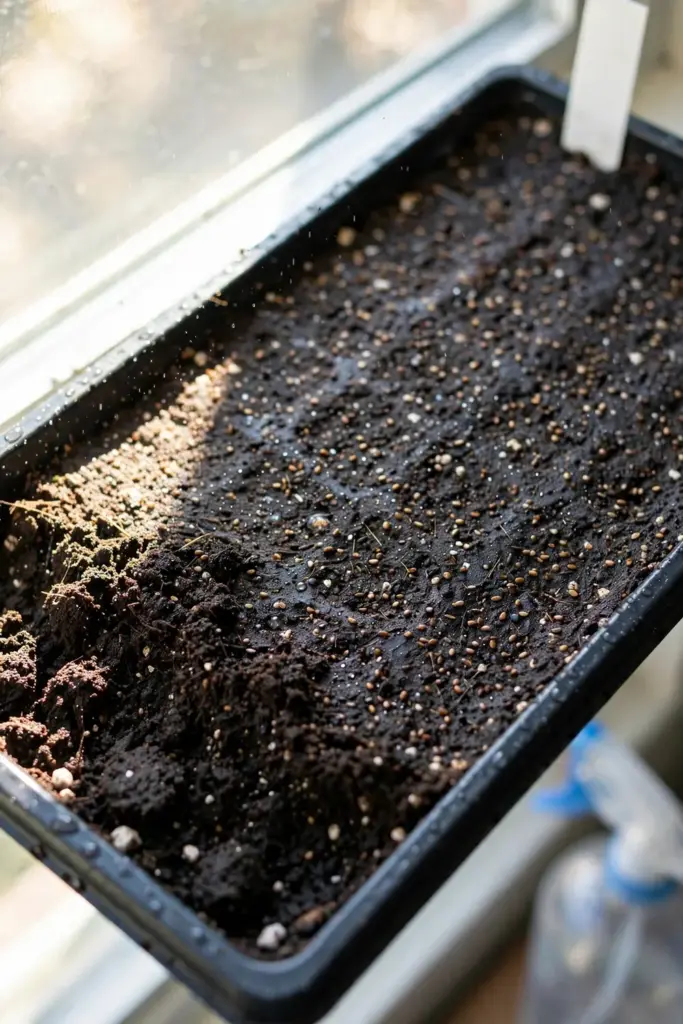
Mist the surface to settle the seeds, then keep the mix evenly moist. A humidity dome or a sheet of plastic helps, but vent it daily so air moves. At room temperature with light, expect sprouts in 10 to 20 days. Earthsong Seeds’ codonopsis sowing guide recommends exactly this: scatter on the surface, press in, do not cover, and look for germination in 10 to 20 days. Most guides on how to grow codonopsis from seed agree on this point because the light requirement is the one rule with no exceptions.
6. Tend Seedlings Indoors for 5 to 6 Weeks
Give new seedlings bright, indirect light and steady moisture. A sunny windowsill works; a basic grow light 4 inches above the leaves works better and keeps stems stocky instead of stretched. Codonopsis seedlings are delicate at first, with thin stems that flop if they dry out even once.
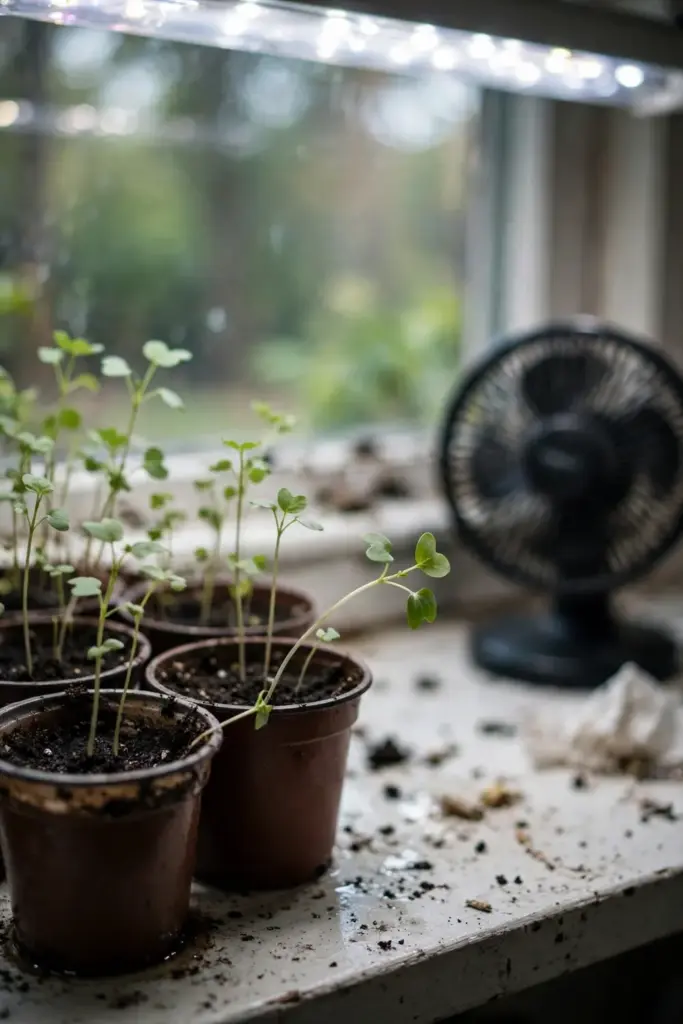
Start seeds in flats about 5 to 6 weeks before your last frost date, then pot the strongest seedlings up into individual 3 or 4 inch pots as they outgrow the flat. The roots grow fast and dislike being cramped, so do not leave them in tiny cells any longer than needed. The general seedling routine in the seed starting guide covers the light and moisture rhythm that applies here too.
7. Build a Deep Bed: Rich, Moist, Well-Drained Soil
Codonopsis roots run long and straight, so the bed matters more than the fertilizer. Dig or loosen the soil at least 12 inches deep, working in 2 to 3 inches of finished compost. The plant wants what its mountain home provides: rich, moisture-retentive soil that still drains freely. Waterlogged ground rots the crown; bone-dry sand starves the roots.
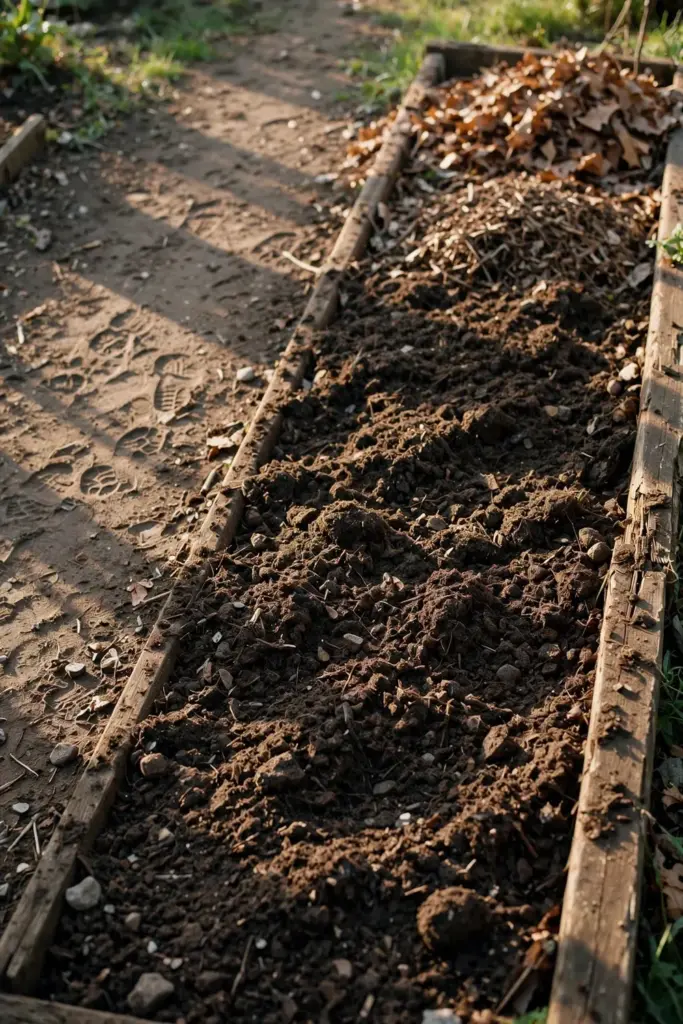
Aim for a mildly acidic to neutral pH, roughly 6.0 to 7.0. Heavy clay needs the most work: raise the bed 6 to 8 inches or plant on a gentle slope so winter water moves away from the crowns. A soil test every few years keeps you honest about pH and organic matter, and the principles in the soil health guide apply directly to a perennial root bed like this one.
Because you will not dig this bed for three years, build it right the first time. Remove perennial weeds completely before planting, since you cannot till around the crowns later without damaging roots. A permanent 2-inch mulch layer suppresses most annual weeds and feeds the soil as it breaks down, which is exactly the low-disturbance regime a long-term root crop wants.
8. Transplant After the Last Frost, 16 Inches Apart
Move seedlings outdoors once frost risk has passed and the plants stand about 4 inches tall. Harden them off for a week first: a few hours of outdoor shade daily, building up to full days. Codonopsis sulks if it goes from windowsill to blazing sun in one afternoon.
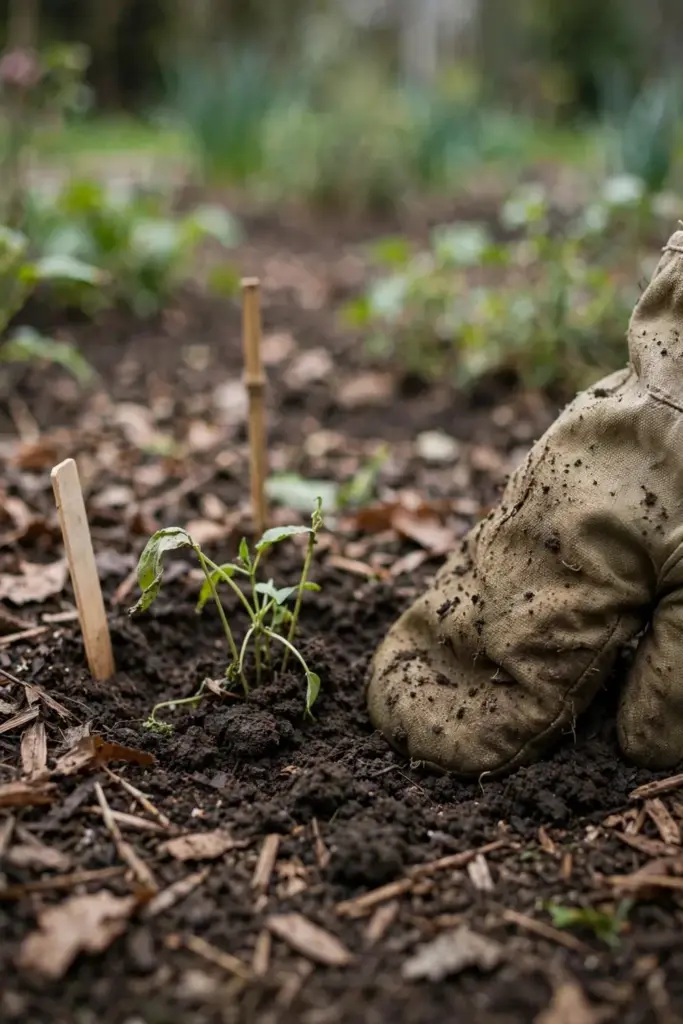
Space plants 12 to 24 inches apart, with 16 inches a good middle for most gardens. Closer spacing gives you more roots per square foot; wider spacing gives each vine room to climb without tangling into a knot you cannot harvest around. Water each transplant in deeply, then mulch 2 inches deep with shredded leaves or straw, keeping the mulch a few inches back from the stems.
9. Set Up the Trellis Before the Vines Need It
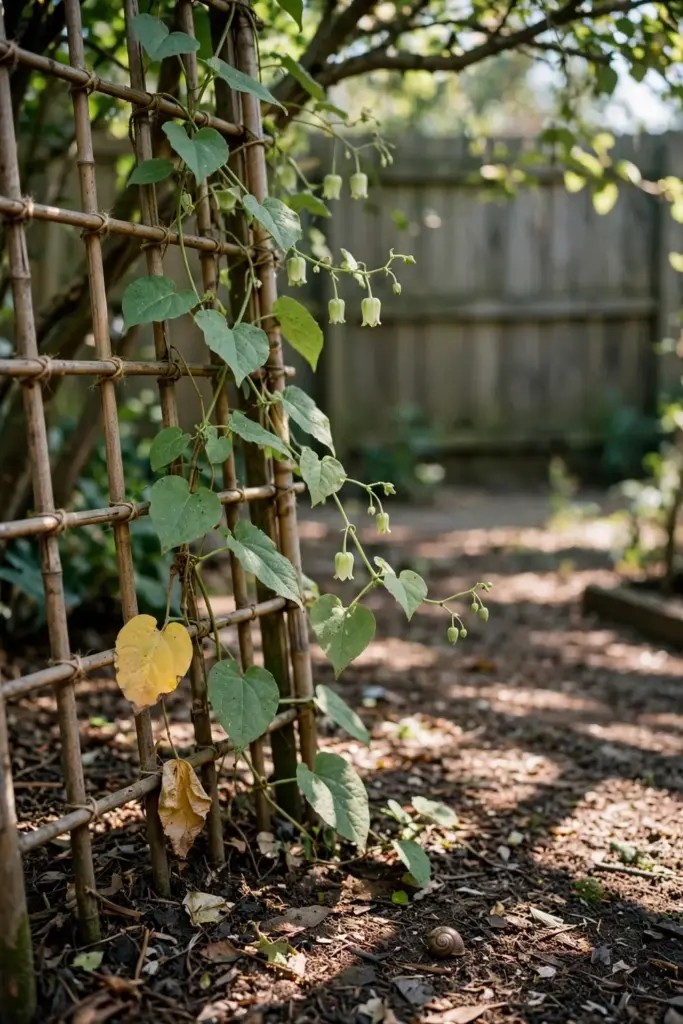
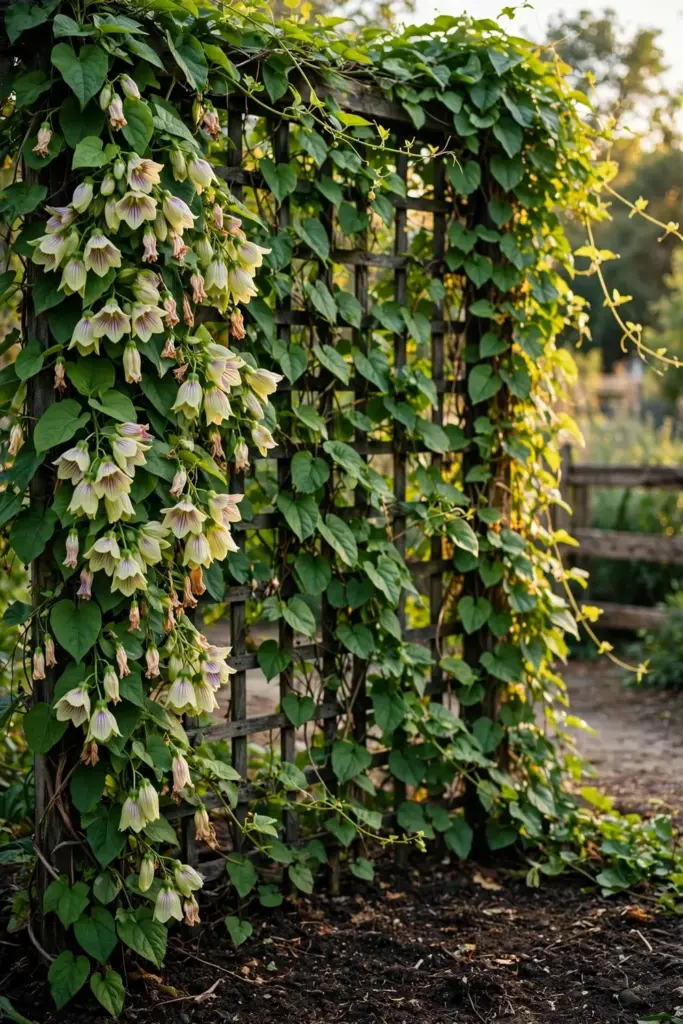
Codonopsis pilosula is a twiner that reaches 6 to 10 feet in a season, and it starts looking for something to climb within weeks of transplanting. Put the support in at planting time, not after the vines are flopping. A simple 6-foot trellis, a section of cattle panel, or sturdy twine strung between posts all work. The vine wraps by itself; you do not need to tie it.
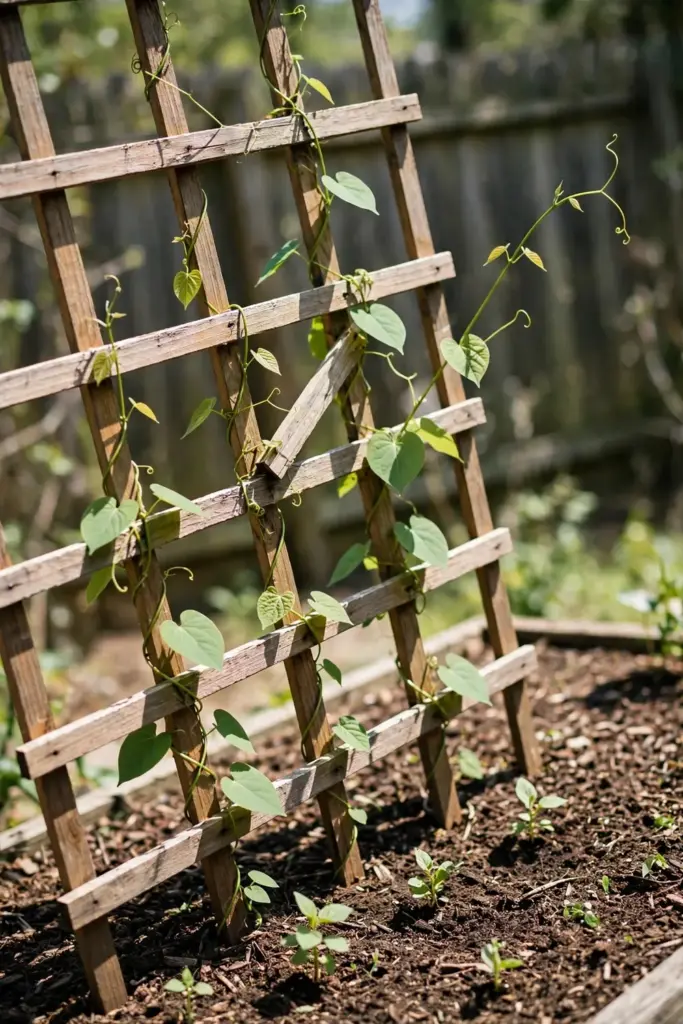
In partial shade the vines grow a little shorter and leafier; in full sun they climb harder but want more water at the roots. Either way, one strong support per plant beats a flimsy cage that collapses in August under the weight of a mature vine. If you grow in a windy spot, anchor the trellis well: a 10-foot vine is a sail.
Guide the first tendrils onto the support by hand in early summer and the plant takes it from there. Twining vines climb by wrapping around whatever they touch, so a trellis with thin slats or strings gives more grip than a smooth wide board. Once the vine reaches the top, let it cascade or train it sideways along the top rail; there is no need to prune the tips unless the plant is invading a neighbor’s space.
10. Water Deeply and Let the Top Inch Dry
Codonopsis likes consistent moisture and hates soggy crowns. Water deeply once or twice a week in the absence of rain, enough to wet the root zone 6 to 8 inches down, then let the top inch of soil dry before watering again. Mulch does most of the work of holding that middle ground.
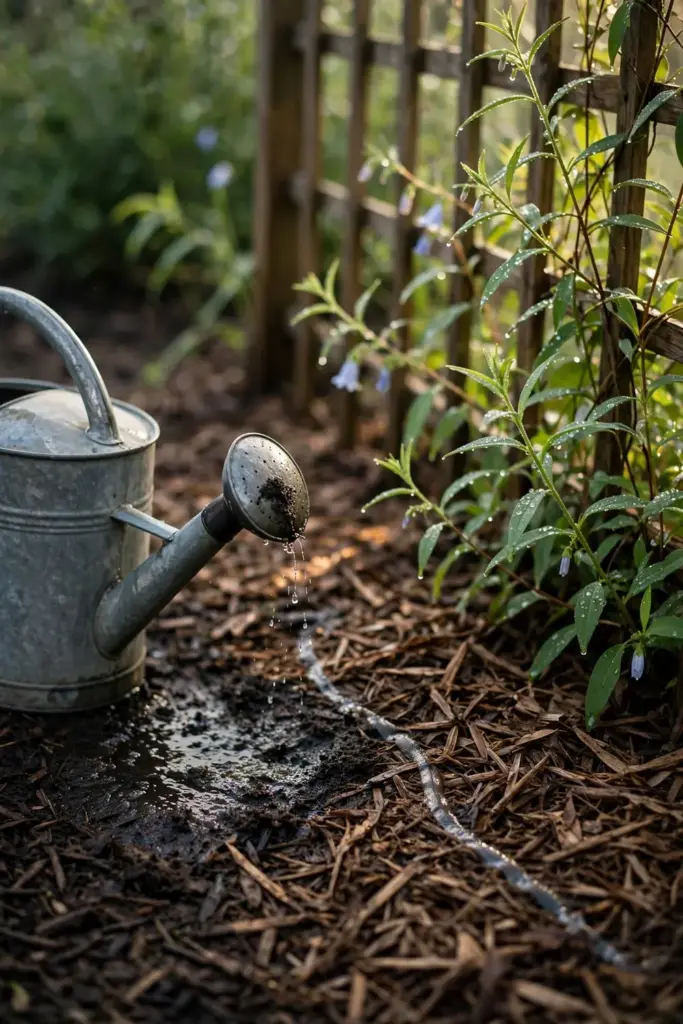
Container plants dry faster and may need daily water in summer heat. In-ground plants in rich soil often need nothing beyond rainfall once established, except in drought. The single most common watering mistake is a daily sprinkle that wets only the surface: it encourages shallow roots and does nothing for a plant whose harvest sits a foot underground.
11. Feed Lightly: Compost in Spring, Then Leave It Alone
Codonopsis is not a hungry plant. A 1 to 2 inch top-dressing of compost each spring is enough fertility for most soils. If your soil is poor, a single light application of balanced organic fertilizer at planting time covers the season.
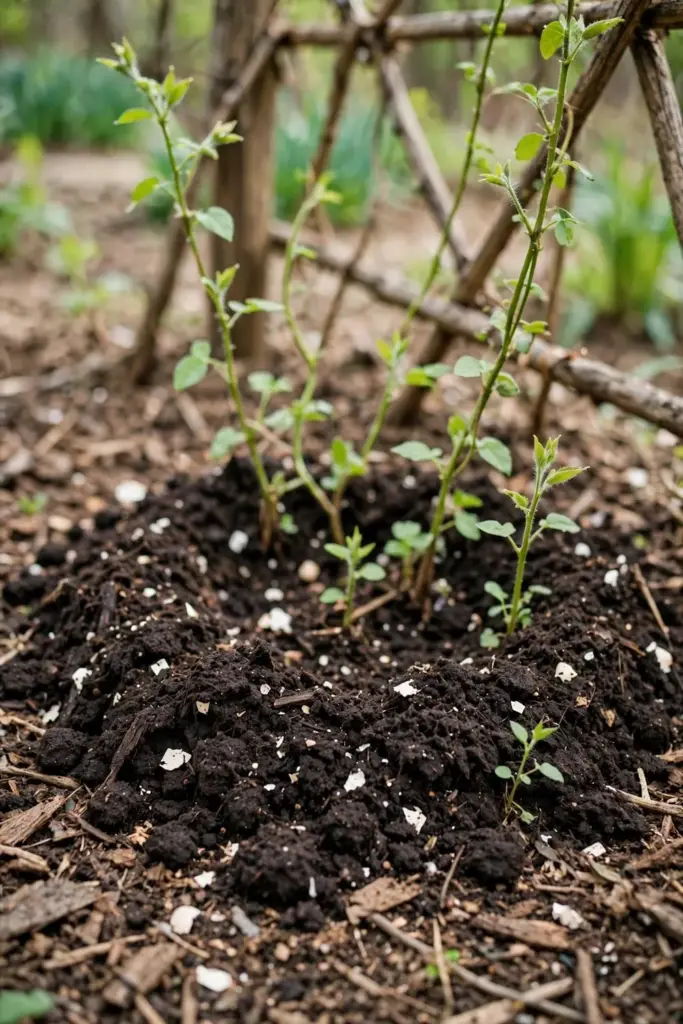
Skip high-nitrogen feeding. It pushes soft, leafy vine growth at the expense of the roots you are actually growing, and dense foliage in humid weather invites fungal trouble. The roots do their best work in steady, unforced conditions. More fertilizer does not shorten the 2 to 3 year timeline by a single week.
If a soil test shows a real deficiency, correct it in the fall before planting rather than chasing it mid-season. A root crop rewards patience twice: once in the feeding schedule, once at harvest. Compost top-dressing each spring plus the mulch layer breaking down underneath will carry most plantings without any bagged product at all.
12. Grow Codonopsis in Pots When Space Is Short
No garden bed? Codonopsis adapts to containers if you respect the roots. Use a pot at least 14 inches deep and 12 inches wide per plant, filled with a rich potting mix amended with extra compost. Deep pots matter more than wide ones: the harvest is a taproot.
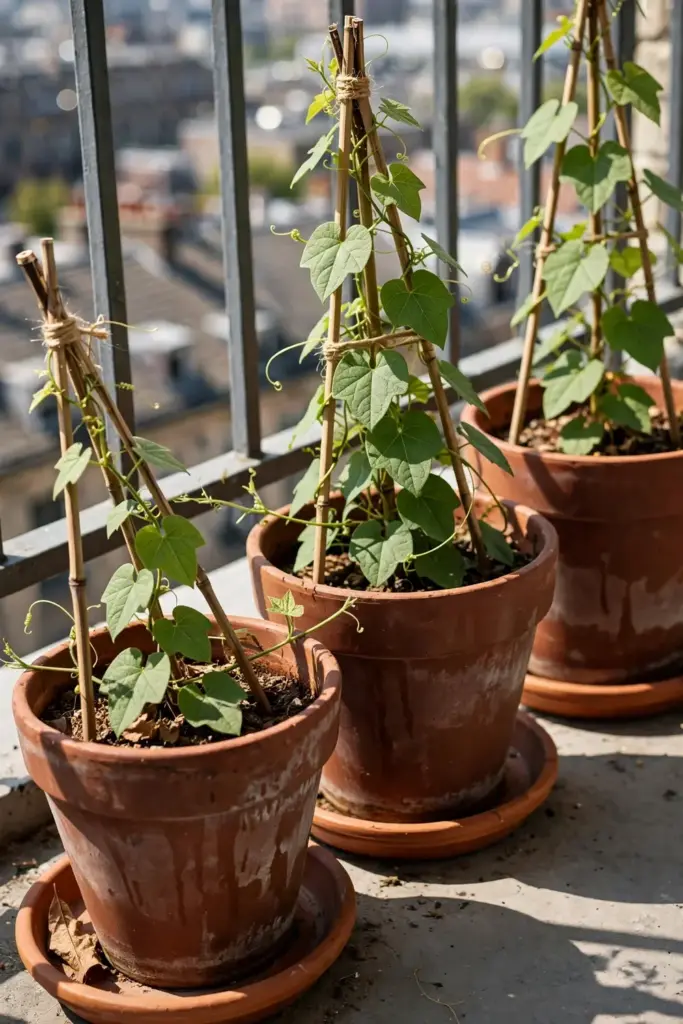
Set a small trellis or a bamboo tripod in the pot at planting time. Water containers more often than beds, feed lightly with diluted liquid fertilizer monthly through summer, and move the pots to a sheltered spot for winter in zones at the cold edge. Expect slightly smaller roots than in-ground plants, but the same 2 to 3 year rhythm.
Pots have one advantage. You can start the stratification and sowing on a balcony in late winter and move the pots to their summer spot after frost, which stretches the first growing season by weeks. A pot left fully exposed in zone 5 winter freezes harder than garden soil, so cluster pots together against the house and wrap them, or sink the whole pot into a garden bed for the cold months.
13. Pests and Diseases: Fewer Than You Fear
Codonopsis has no notorious pest in the home garden, which is part of its charm. The realistic threats are the generic ones: damping off can fell seedlings in cold, wet flats, and crown rot can take established plants in waterlogged soil. Both are prevented the same way: sterile starting mix, good air flow, and soil that drains.
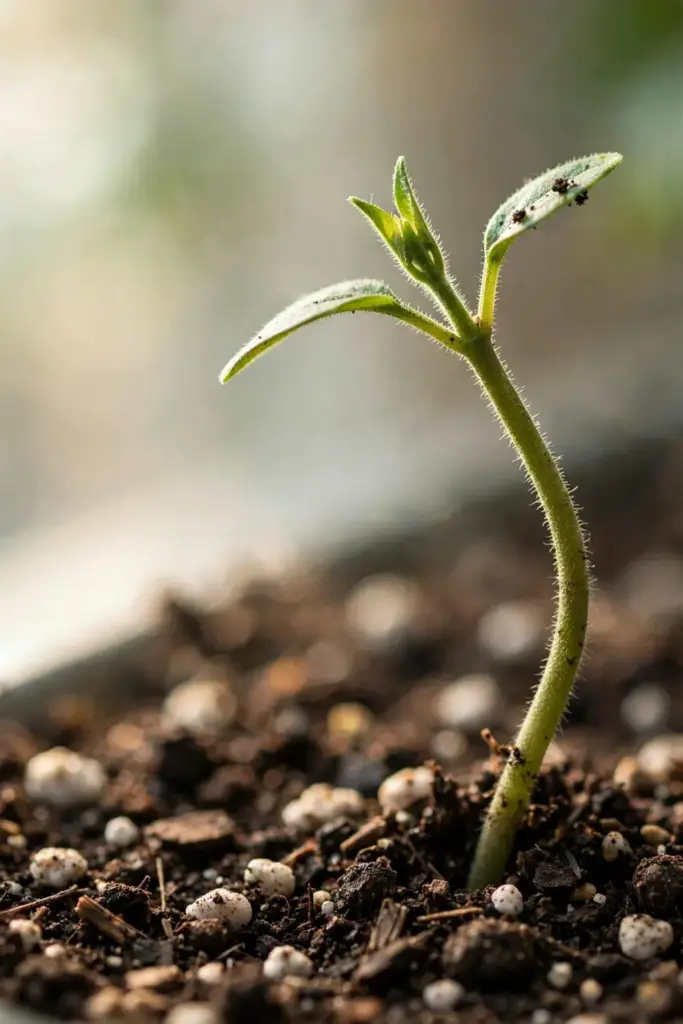
Slugs may browse young leaves in wet springs; a ring of diatomaceous earth or an evening patrol handles it. Deer generally ignore it. If a vine wilts suddenly in summer despite moist soil, check the crown for soft, dark tissue, which signals rot from excess water, and ease off the hose before you reach for any product.
14. The Honest Timeline: Year 1, Year 2, Year 3
Here is what actually happens, so you can plan instead of wondering.
| Year | Above ground | Below ground | Your job |
|---|---|---|---|
| 1 | Thin vines, 3 to 6 feet, first flowers by late summer | Pencil-thin roots establishing | Trellis, water, mulch, protect first winter |
| 2 | Vigorous vines to full height, full flowering July to August | Roots thickening, branching | Top-dress compost, leave the roots alone |
| 3 | Same as year 2, heavier flowering | Roots at harvest size | Dig in fall after the tops die back |
Sow in spring of year 1 and you dig in the fall of year 3, 30 months later. Some gardeners harvest at the end of year 2 for smaller roots; waiting the third season gives you the thick, sweet roots dang shen is known for. Either way, mark your calendar at planting time. Forgetting which year you are in is the most common reason homegrown dang shen disappoints.
15. Harvest the Roots in Fall After the Tops Die Back
Wait until the vines yellow and collapse, usually after the first hard frosts. Cut the dead tops away, then dig with a fork, starting 8 to 10 inches from the crown and working inward. The roots run deep and snap easily, and every broken piece left behind is harvest lost, so go slow.
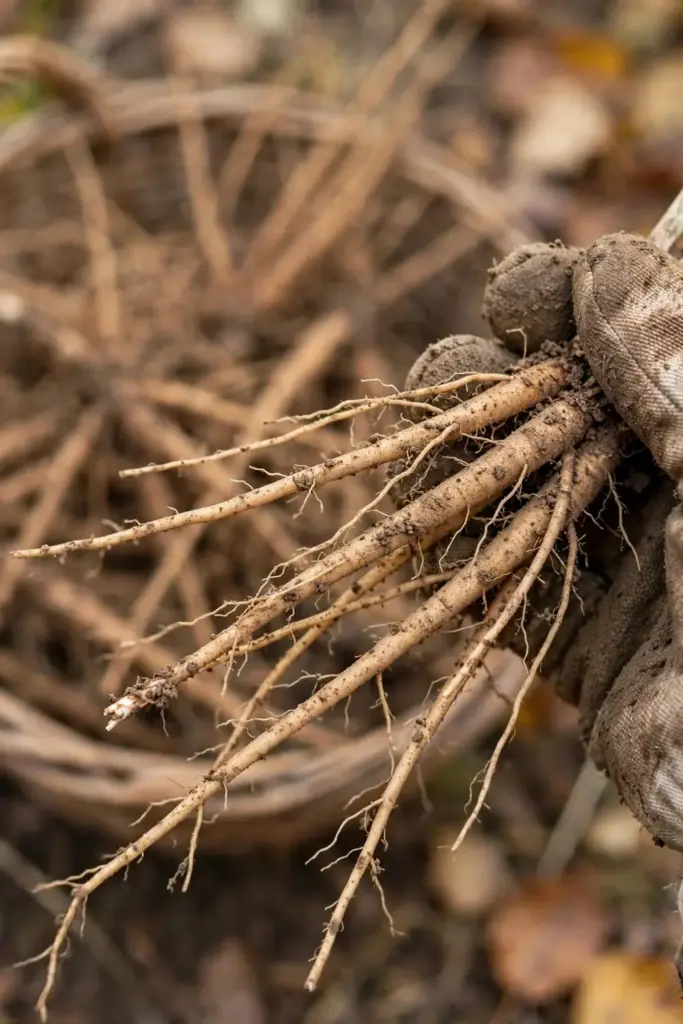
Wash the roots gently in cool water and trim off the thin side roots and the crown. Sort by thickness: the thickest roots dry into the best dang shen, while thin ones can go straight into soup. Growers report the long roots are ready at the end of the second or third year, which matches the timeline serious seed houses print on their packets.
16. Dry and Store Your Dang Shen Roots
Spread washed roots in a single layer in a warm, airy spot out of direct sun: an attic, a covered porch, or a dehydrator set to 95 to 115 degrees F. Turn them every day or two. They are done when they snap instead of bending, which takes 1 to 3 weeks depending on thickness and humidity.
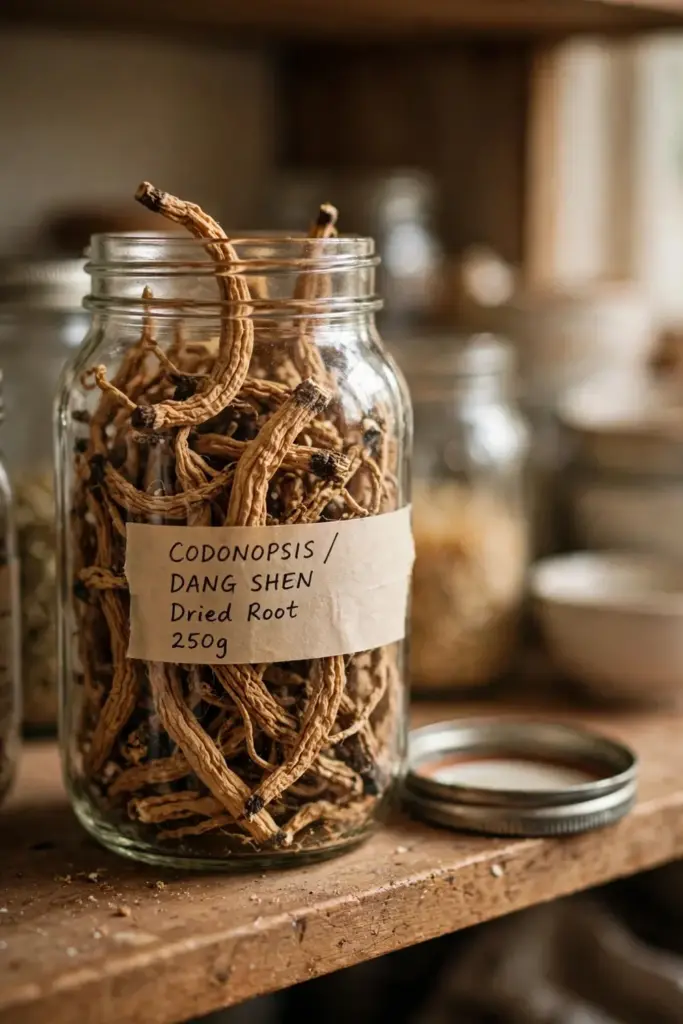
Store fully dried roots in airtight jars in a cool, dark place. Properly dried dang shen keeps for a year or more. Traditional use is simple: simmer a teaspoon of the dried root in a cup of water for about 15 minutes for tea, or add whole dried roots to soups and remove them before serving. These are traditional kitchen uses, not medical prescriptions; talk to a qualified practitioner before using any herb for a health condition.
Grade your harvest as you pack it. The thickest, unbroken roots are the showpieces for tea; snapped pieces and thin roots are perfectly good for soup stock, where appearance does not matter. Do not mix damp-feeling roots into a jar of dry ones: one under-dried root can mold a whole batch. When in doubt, give the roots another few days on the drying rack.
17. Seven Mistakes That Waste a Codonopsis Season
- Burying the seeds. They need light. Surface sow and press, never cover.
- Skipping stratification for spring sowing. Without the 30 cold days, germination is slow and patchy.
- Planting in waterlogged soil. The crown rots, the plant dies, and no product fixes it.
- Feeding heavy nitrogen. You get a jungle of vines and thin, watery roots.
- Forgetting the trellis. Vines left on the ground tangle, shade themselves, and flower poorly.
- Harvesting in year 1. The roots are threads. Wait for year 2 at the earliest, year 3 for the real crop.
- Letting seedlings dry out once. A single dry afternoon can kill a flat of week-old seedlings.
18. Troubleshoot Weak Vines, Yellow Leaves, and Missing Flowers
Seeds did not germinate? They were buried too deep, kept too dry, or never stratified. The light requirement is absolute: if in doubt, sow a fresh batch on the surface and mist daily.
Seedlings tall and floppy? Not enough light. Move them under a grow light or into brighter indirect sun, and run a small fan nearby for a few hours a day; the gentle movement builds sturdier stems.
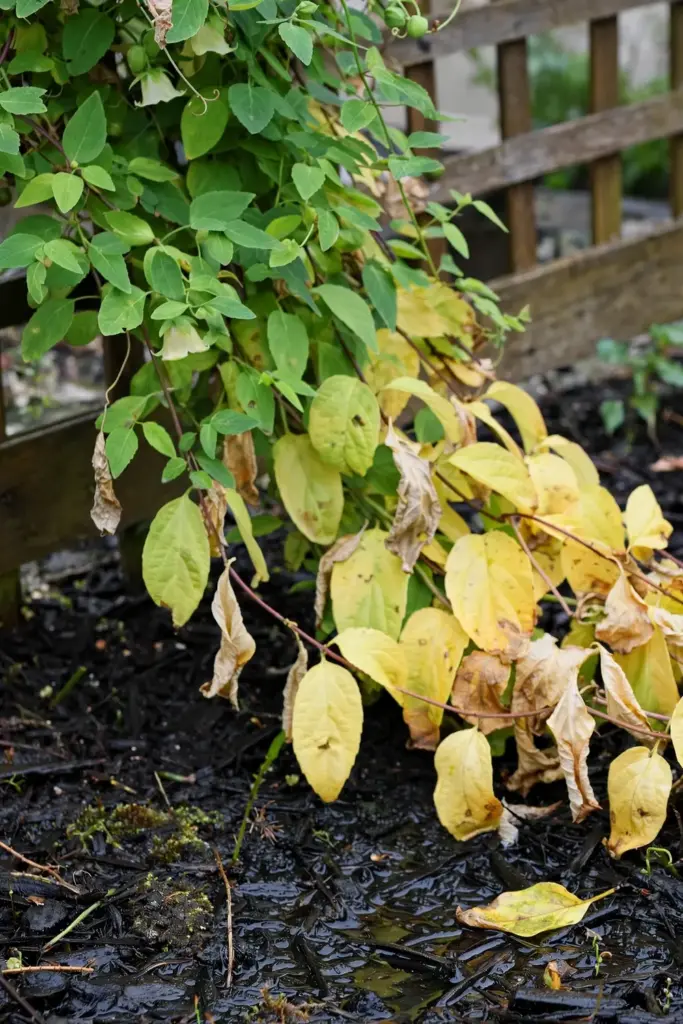
Yellow leaves on established vines? Usually overwatering or poor drainage. Check that water is not pooling around the crown, pull mulch back a few inches, and let the soil dry between waterings.
No flowers in year 1? Normal. Many plants wait until the second summer to bloom fully. Flowers are pretty but irrelevant to the harvest; the roots are the crop, and they do not care whether the vine bloomed.
Vine wilts in midsummer? Heat stress in full sun, or crown rot from soggy soil. Shade the roots with extra mulch, water deeply in the morning, and confirm drainage before assuming disease.
Seedlings keeling over at the soil line? Classic damping off, and it strikes in cold, wet, airless flats. Start over with sterile mix, water from below, and give the flat air circulation with a small fan. There is no rescuing a seedling once the stem pinches at the base.
19. Frequently Asked Questions
No. Codonopsis pilosula is nicknamed “poor man’s ginseng” because its sweet roots are used in Traditional Chinese Medicine in some of the same tonic roles as Panax ginseng, but it contains no Panax species and is a completely different plant. The nickname describes the use tradition, not the botany.
Yes. The roots can be eaten raw or cooked, and in Korea the related species Codonopsis lanceolata is eaten fresh or pickled as deodeok. Most growers dry Codonopsis pilosula roots for tea or soup. Wash them well, and treat traditional use as tradition, not medical advice.
Plan on 2 to 3 years. Seeds germinate in 7 to 21 days, vines may flower in the first or second year, but the roots need until the fall of the second or third year to reach a useful thickness. Mark the planting date so you harvest on schedule.
It grows in full sun to partial shade. In cool climates full sun gives the strongest vines; in hot climates afternoon shade prevents stress. Wild plants favor woodland edges and dappled shade, so when in doubt, give it the shadier spot.
Yes. It is hardy in zones 5 to 9 and comes from regions with winters around minus 30 degrees C. The tops die back completely each winter and regrow from the roots in spring, often quite late, so do not assume a plant is dead in April.
Seed is the reliable home method. Division of established crowns works in early spring, but the long taproots resent disturbance and divisions take a season to recover. Trifecta Botanicals’ growing tips focus on seed: surface sow, keep moist, transplant 4-inch seedlings 16 inches apart after the last frost.
20. Where to Go From Here
Start with one packet of Codonopsis pilosula seed, a flat of starting mix, and a calendar reminder 30 months out. Stratify, surface sow, trellis early, and then let time do the heavy lifting. In the fall of the third year, you will dig roots that most gardeners have only ever bought dried in a bag. That is the quiet payoff of learning how to grow codonopsis from seed: a medicine-chest herb that started as dust-fine seed on a windowsill.
If the wait sounds long, remember the vines earn their keep meanwhile: bell flowers all summer, a living screen on the trellis, and seed for next year’s planting. For the bed-building side of this project, the fall bed prep guide walks through the compost and mulch routine that sets a perennial root bed up right.