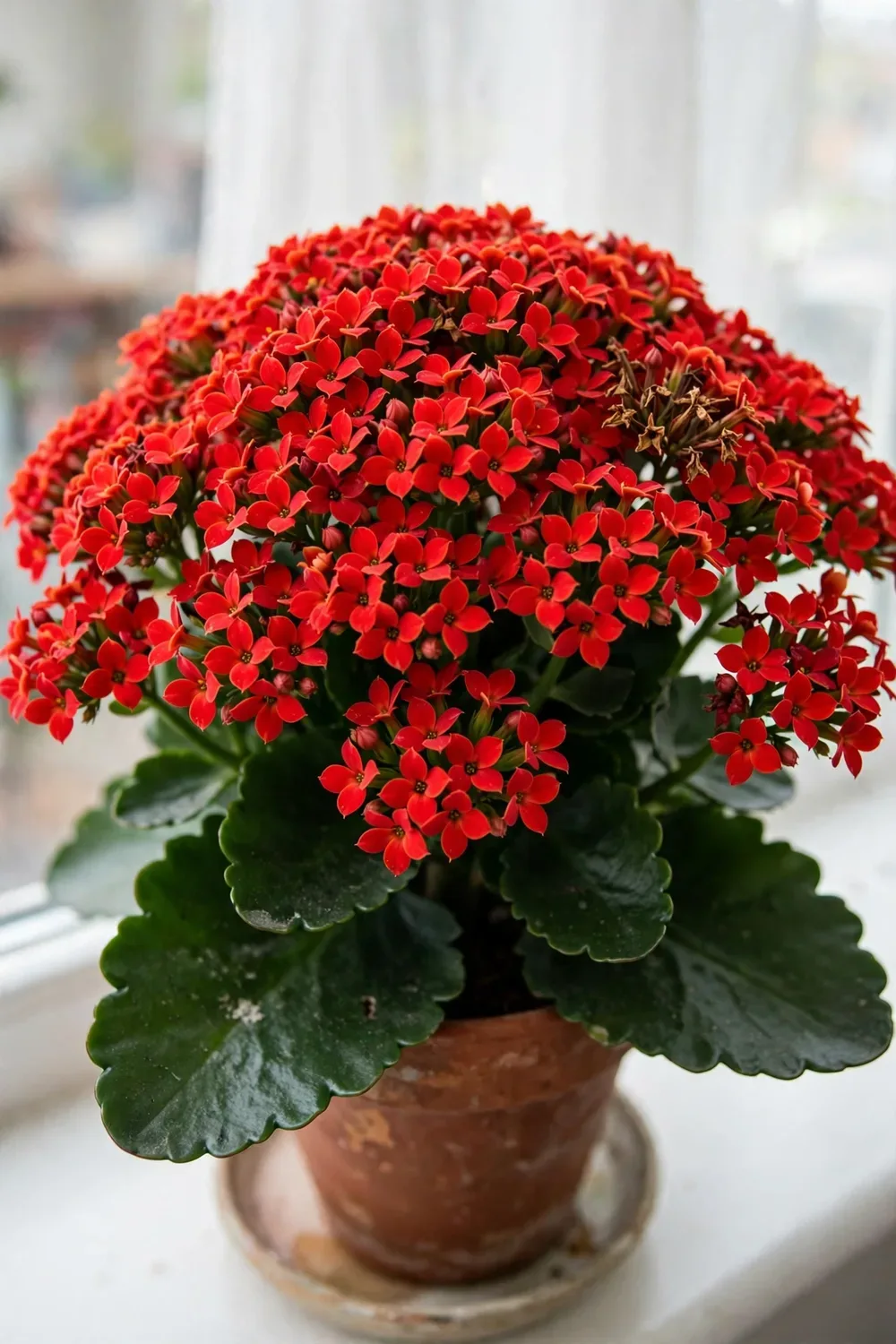

Block 14 hours of light every night for 6 weeks and a spent kalanchoe sets buds again. That is the entire rebloom trick, and it is the reason most kalanchoes bloom once in the store and never again at home. Evening lamps in an ordinary living room quietly break the long nights the plant needs, so the calendar of darkness never completes.
Kalanchoe blossfeldiana is the florist kalanchoe, sold as Flaming Katy or Christmas kalanchoe. It is a succulent member of the stonecrop family (Crassulaceae), native to northeast Madagascar, where it evolved to flower in the season of longer nights (North Carolina Extension Gardener Plant Toolbox). Growers of aloe and other thick-leaved succulents will recognise the watering discipline here (aloe vera care guide). Kalanchoe pinnata, sold as miracle leaf, and mother-of-thousands (Kalanchoe daigremontiana) are different species with different habits. This guide covers only Kalanchoe blossfeldiana.
The rest of this page is 14 sections, from the potting mix to the closet routine. I have learned that the plant forgives a missed watering or two, but it never forgives a leaky dark period.
Identify Kalanchoe blossfeldiana Before Anything Else
Kalanchoe blossfeldiana is a compact, upright, multi-branched succulent with thick, fleshy, oval leaves. The leaves are dark green with scalloped edges, and the tiny four-petaled blooms open in large clusters in red, orange, yellow, pink, or white. Single and double-flowered forms exist, all bred from the same species (North Carolina Extension Gardener Plant Toolbox).
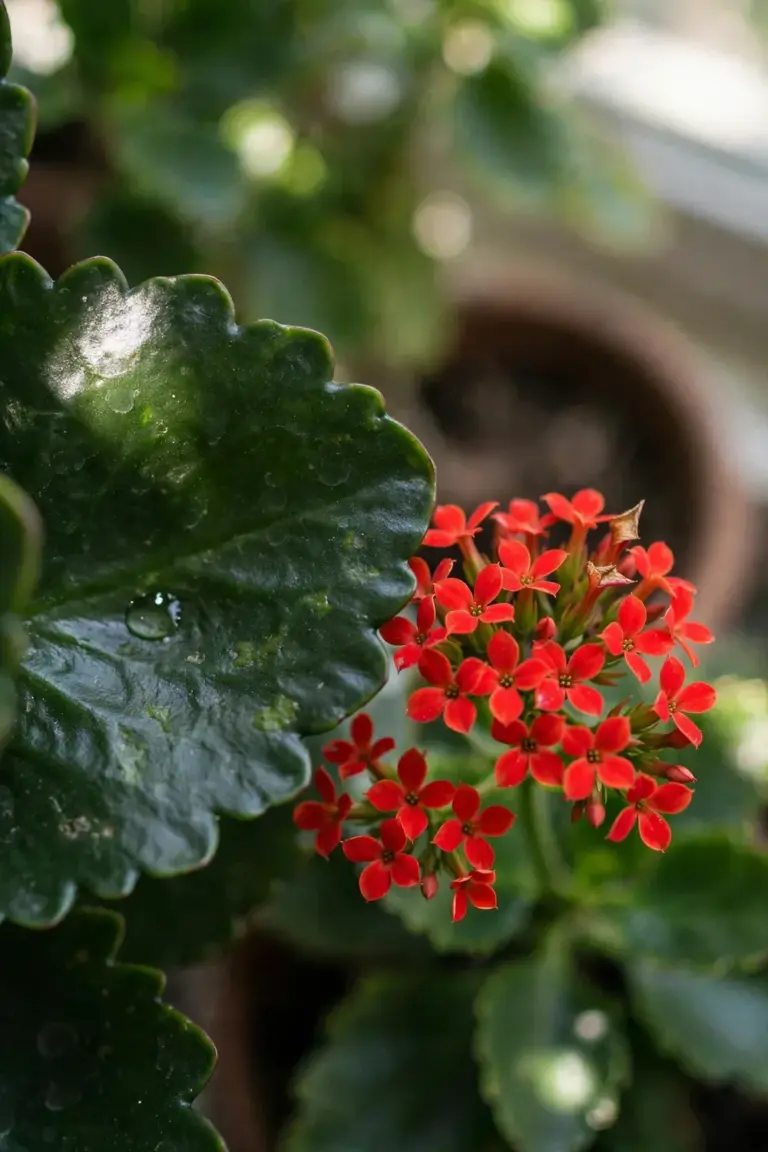
Buy the plant by its botanical name, not by the trade nickname on the pot. Nurseries tag it Flaming Katy, Christmas kalanchoe, florist kalanchoe, or Madagascar widow’s-thrill, and all four labels mean Kalanchoe blossfeldiana. A plant labelled mother-of-thousands or air plant is a different species and will not behave like this one. Check the tag before you bring it home.
Pick a plant that is already compact and well branched, with plenty of buds still closed. A specimen in full blaze with every cluster open looks tempting, but the show is half over before you reach the checkout. Yellowed lower leaves or a wobbly stem at the soil line are signs the plant sat in wet soil at the store. Leave that one on the shelf.
| Fact | Detail |
|---|---|
| Botanical name | Kalanchoe blossfeldiana |
| Family | Crassulaceae (stonecrop family) |
| Origin | Northeast Madagascar |
| Mature size | 15 to 46 cm tall, 15 to 30 cm wide |
| Hardiness | USDA zones 10 to 12; frost intolerant |
| Bloom season | Winter to spring under natural day length |
| Flower display | Clustered umbels, single or double, 5 bold colors |
| Pet safety | Toxic to dogs, cats, and humans if ingested |
Give Kalanchoe Bright Indirect Light and a Few Hours of Gentle Sun
Kalanchoe blossfeldiana needs 6 to 8 hours of bright light every day to keep blooming strength, according to the North Carolina Extension Gardener Plant Toolbox. An east or west window suits it well. A south window works with a sheer curtain, since prolonged direct afternoon sun scorches the scalloped leaves. Stretchy, leggy stems with wide gaps between leaves signal that the plant is reaching for more light. Move it closer to the glass.
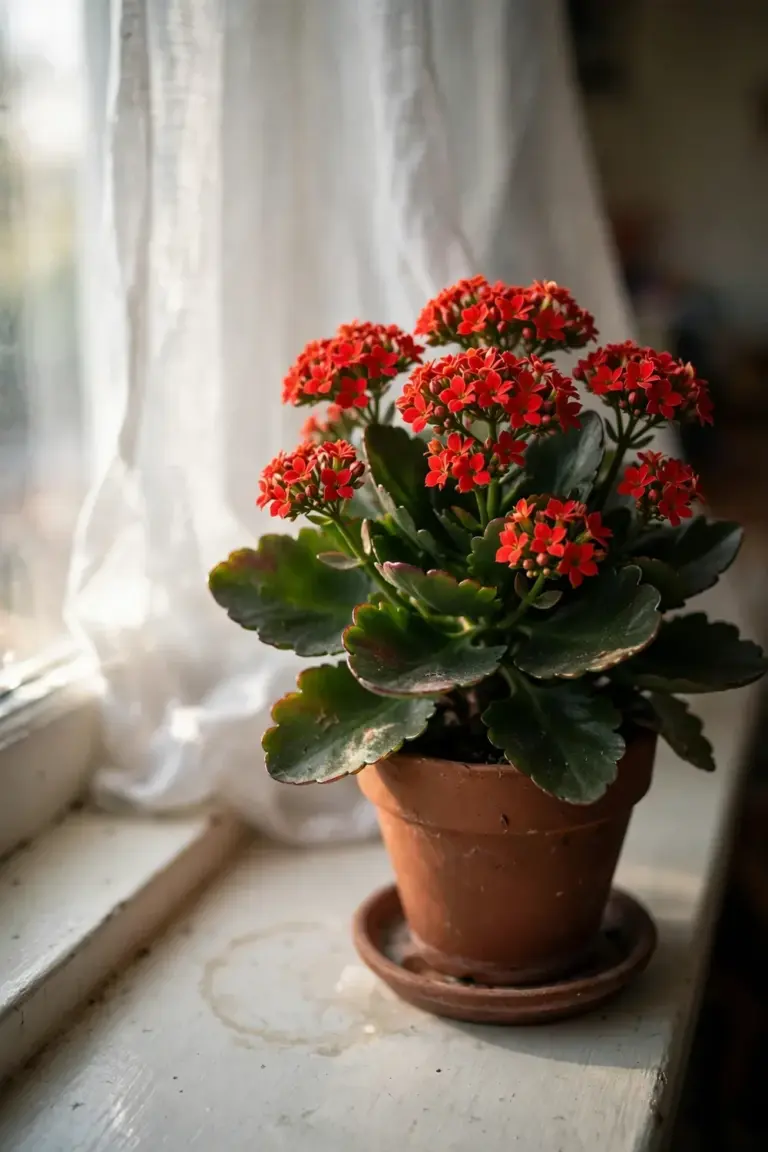
Daylight is only half the light story. The same plant that wants bright days needs genuinely dark nights during the rebloom treatment, and a lamp glowing across the room at 9 pm cancels the signal. If the days are dim in winter, a supplemental grow light for the daytime hours is a better fix than leaving lamps on all evening (choosing a grow light for an indoor garden). Light it hard by day, then let the night go fully dark.
Turn the pot a quarter-turn every week so all sides get their share of the window. Kalanchoe stems lean toward the light within days, and a plant that never rotates grows lopsided by midwinter. The lean also weakens the stem on the shaded side, which matters when the flower clusters get heavy later.
Pot in Fast-Draining Cactus Mix With Drainage Holes
Kalanchoe blossfeldiana rots in ordinary potting soil that stays wet. Use a cactus or succulent mix, or blend regular potting soil with cactus soil roughly half and half, so water runs through in seconds rather than minutes. The Old Farmer’s Almanac kalanchoe guide recommends exactly this 50/50 split for the plant’s fine feeder roots.
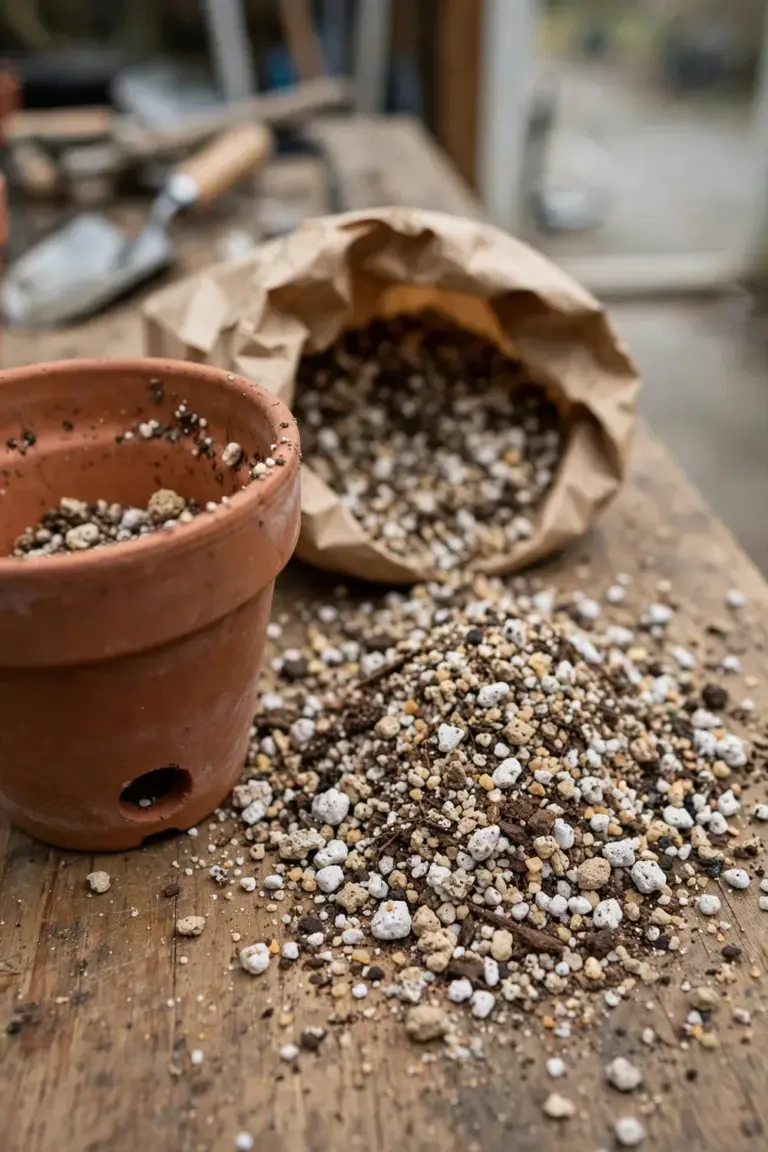
Every pot needs a drainage hole, and saucers must be emptied after watering. A decorative cache pot with no hole is a reservoir, not a home, unless the nursery pot sits inside it and gets lifted out for every watering. Kalanchoes do not have extensive root systems, so a snug pot beats an oversized one. Extra soil mass holds extra water, and that is how root rot starts.
Do not repot a flowering plant. The grower’s mix is already suited to it, and disturbing the roots mid-bloom shortens the show. Wait until spring growth resumes, or until roots circle the pot and push the plant upward. Move up only one pot size, into the same fast-draining mix, and hold off watering for a few days so any nicked roots can seal.
Water Deeply Only After the Soil Dries Out
Kalanchoe blossfeldiana stores water in its thick leaves and tolerates missed waterings far better than soggy roots. Let the soil dry out completely between waterings, then water deeply until it runs from the drainage hole (North Carolina Extension Gardener Plant Toolbox). The Almanac’s kalanchoe guide phrases the test plainly: wait until the soil dries out entirely, then soak it, then let the pot drain before it goes back on the saucer.
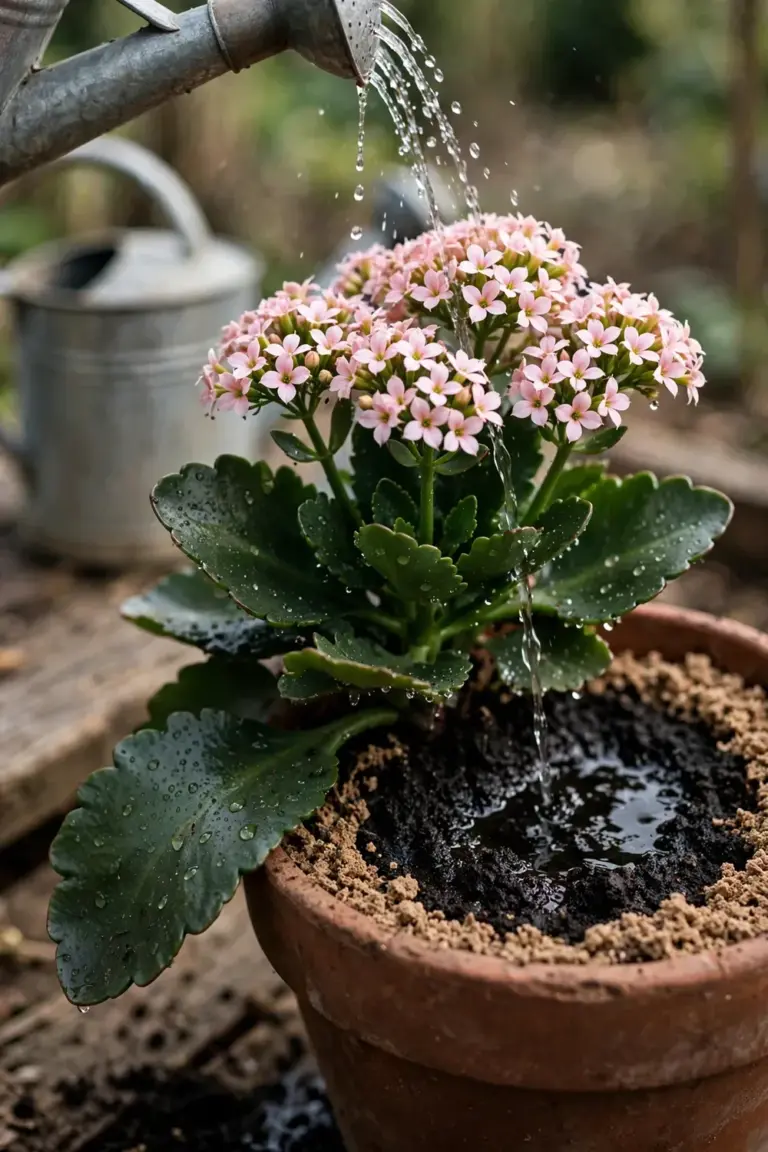
Keep water off the leaves. Wet foliage invites powdery mildew, and the dense leaf canopy dries slowly. Water the soil, not the plant. In winter, when growth stalls and the light is weak, back off further. A kalanchoe sitting in cool, wet soil through a short winter day is the classic route to mushy stems.
Feed lightly and only in the growing season. A balanced houseplant fertilizer at half strength, once a month from spring through summer, is plenty. The Almanac advises a low-nitrogen formula and warns never to feed while the plant is in flower. Excess fertilizer pushes soft leafy growth at the expense of buds.
Deadhead Spent Clusters to Stretch the Bloom
Kalanchoe blossfeldiana holds its flower display for a remarkably long time. The University of Arkansas Extension reports that a healthy plant keeps good blooms for as long as eight weeks. Cool nights extend the show. The Almanac notes that a room at 7 to 18 degrees Celsius at night keeps the petals fresher longer than a warm one.
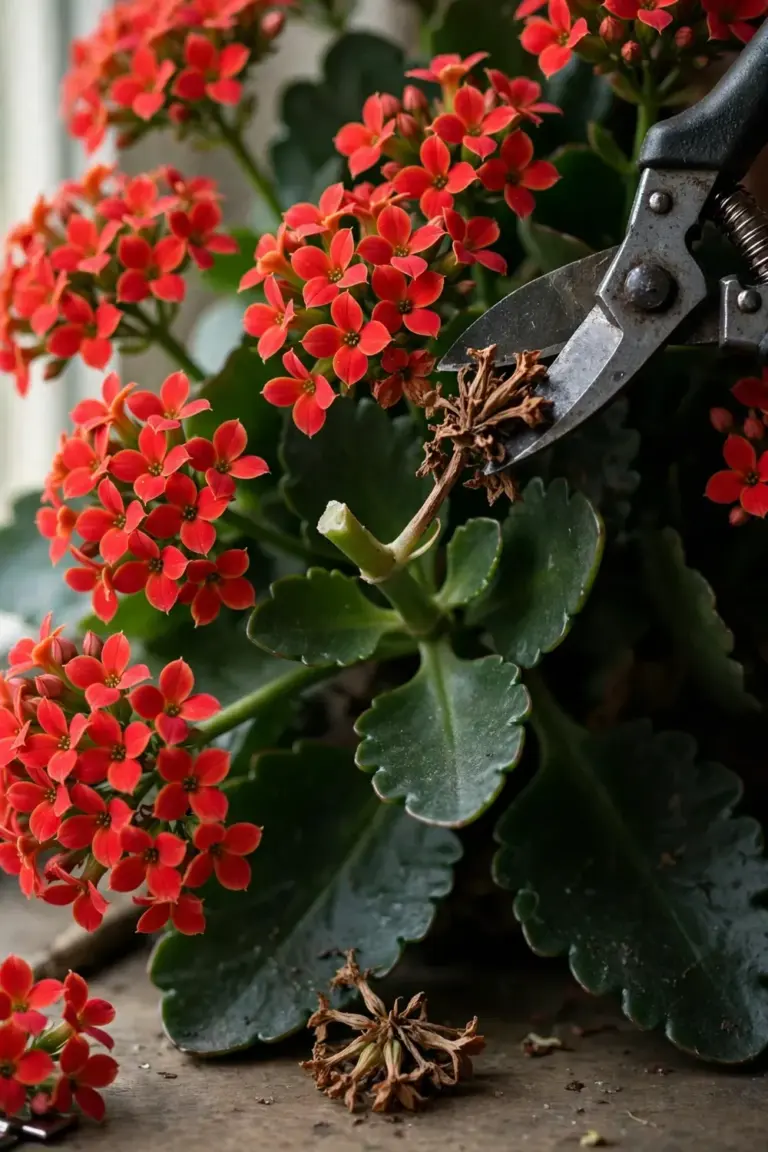
Deadhead each faded cluster at its stem base as soon as the small flowers brown. Removing the spent truss stops the plant from wasting energy on seed and redirects it into lateral buds. Once the whole show is over, cut the old flower stalks back to the second or third leaf on the stem and trim any leggy growth by about a third. New side shoots fill the gaps within weeks, and the plant returns to a tight mound instead of a tangle of bare stems.
Double-flowered forms hold their dead clusters longer because the extra petals dry in place rather than dropping. They still need the same treatment. Strip the whole faded truss when the color dulls, or the plant keeps feeding a husk of brown petals that invites gray mold in humid rooms.
Rest the Plant Cool and Dry After Flowering Ends
Kalanchoe blossfeldiana wants a genuine rest after its long bloom. For a few weeks after the last flowers fade, move the plant to a cooler spot, water sparingly, and withhold fertilizer entirely. This rest lets the plant rebuild the carbohydrate reserves that the rebloom treatment will spend.
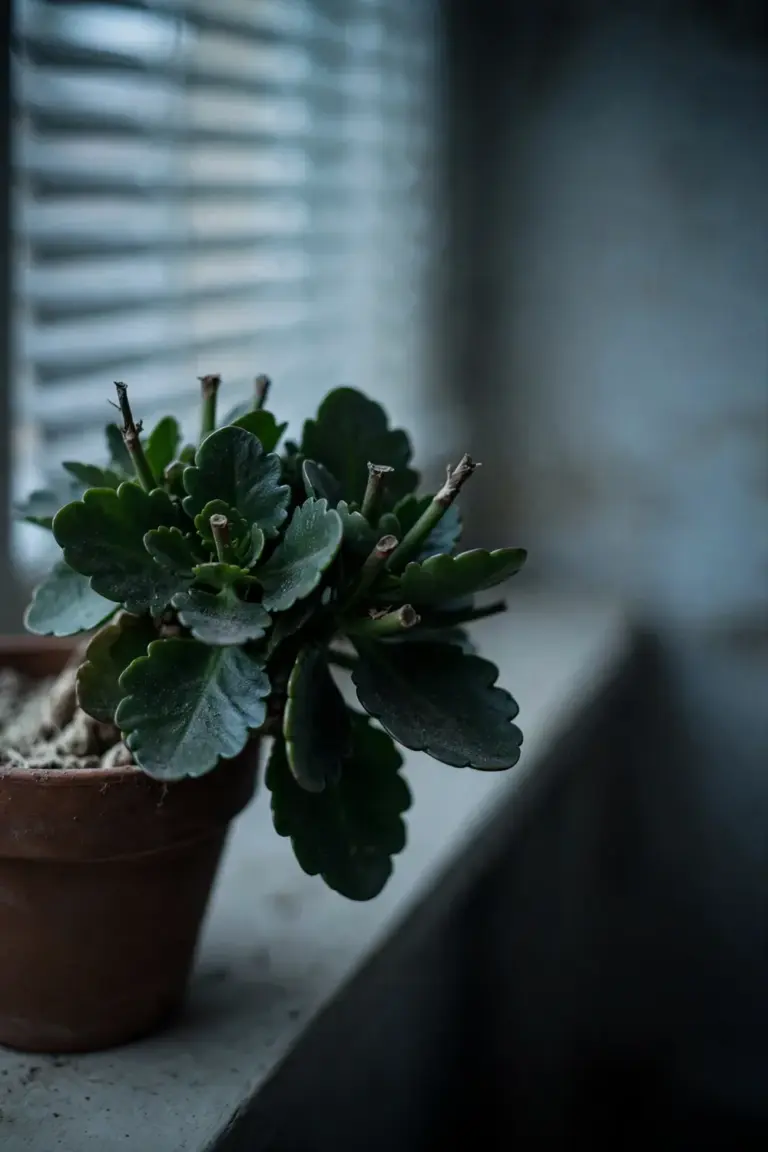
The rest period is also the time to stop hoping and start planning. Store-bought kalanchoes were forced into bloom under commercial blackout curtains, which is why they arrived covered in flowers in the wrong season. Your plant will not repeat that performance by accident. It needs the short-day treatment described below, timed to your own calendar. Six weeks before you want buds, the routine begins.
Run the 14-Hour Darkness Rebloom Treatment for 6 Weeks
Kalanchoe blossfeldiana is a short-day plant. It sets flower buds only when it experiences long, uninterrupted nights, and the North Carolina Extension Gardener Plant Toolbox gives the exact dose: 14 hours of total darkness every day for at least 6 weeks in the fall and winter. Commercial production research from NC State refines the window: a minimum of 13 hours of darkness triggers buds, while 10 hours of daylight paired with 14 hours of darkness gives the best response (NC State kalanchoe production notes).
Start around mid-September if you want winter flowers, a timing the University of Missouri Extension recommends for Christmas blooming. Each evening at 6 pm, move the plant into a dark closet, a spare room with no lamps, or under a large opaque box. Bring it back into bright light at 8 am. Repeat daily for 6 to 8 weeks. Do not peek with a flashlight. Missouri Extension is explicit that no light should be permitted at any time during the dark period, since a single bright interruption can reset the plant’s night-counting.
Your evening lamps are the most common reason this fails. A television glowing across the room, a hallway light under a door, or a phone screen left on beside the pot can all leak enough light to spoil the treatment. The closet door should close fully, and an opaque box must not leak at its base. Use a breathable cover rather than an airtight one, and never cover a plant sitting in wet soil. Stale, damp air under a box is how mildew gets started, a point the leafyzen rebloom guide flags for home growers (leafyzen kalanchoe care guide).
Keep the routine strict but the watering light during the treatment. Water on the dry side and feed nothing until buds appear. Once you see tiny buds forming at the stem tips, stop the forced darkness and return the plant to its bright window. Expect the flowers to open over the following weeks. The NC State production notes record that most varieties take 11 to 12 weeks to flower from the start of short-day treatment in summer conditions and up to 14 weeks in winter (NC State kalanchoe production notes).
Total darkness means zero light, not dim light. A closet with a gap under the door that spills hallway light onto the shelf is not dark enough if the plant sits in that spill. Turn the plant away from the gap or lay a towel at the door. An opaque box works if the base sits flush on a table with no light seeping under the rim. Test it the way photographers test a darkroom: close it up, wait two minutes for your eyes to adjust, and look for any glow inside.
If you miss an evening, do not double up the darkness the next day to compensate. Restart the count from the next clean night and keep going. Bud formation is a running tally of uninterrupted nights, and a bright interruption resets part of the progress rather than cancelling everything. Consistency across 6 weeks matters more than any single night.
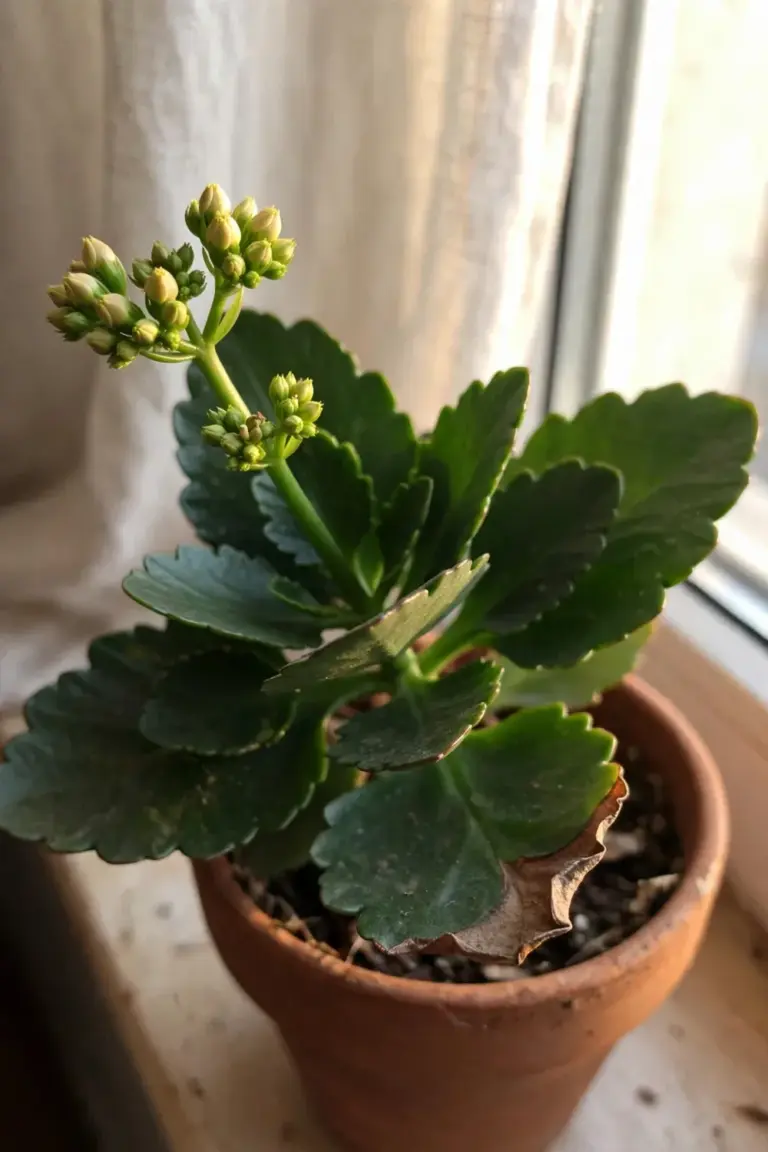
Know what the first buds look like so you stop the treatment at the right moment. They appear as tiny green knobs at the stem tips, distinct from the flat new leaves forming beside them. Wait until the knobs are unmistakable before ending the forced darkness. Stop too early and the plant stalls; stop on time and the knobs swell into the tight flower clusters the plant is known for.
Thanksgiving cactus answers to the same short-day signal, so if you already manage one through its own dark treatment, the habit transfers directly (thanksgiving cactus care).
Hold Night Temperatures Near 60°F for the Best Bud Set
Kalanchoe blossfeldiana sets buds most reliably in cool nights. The North Carolina Extension Gardener Plant Toolbox lists 60 degrees Fahrenheit (15.5 degrees Celsius) at night and 70 degrees Fahrenheit (21 degrees Celsius) by day as the plant’s preferred range. Missouri Extension adds that day temperatures 10 degrees Fahrenheit higher than the night suit it best, and that temperatures above 75 degrees Fahrenheit delay or reduce flowering (University of Missouri Extension).
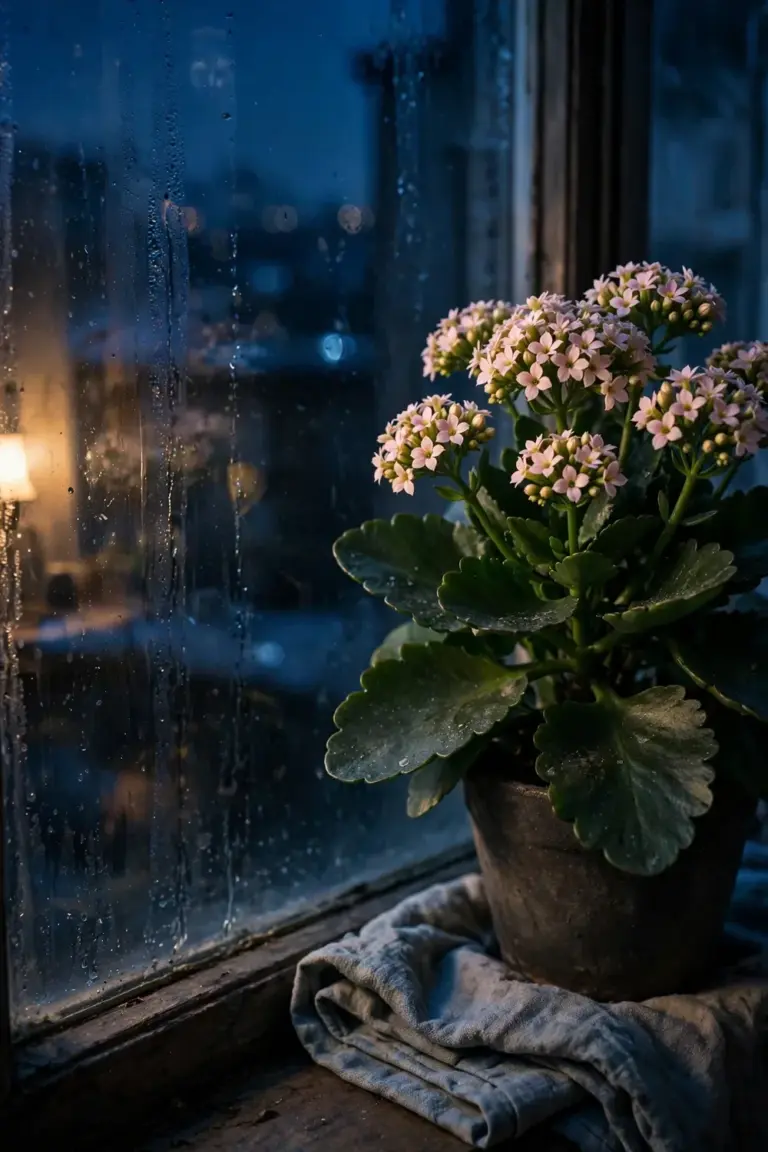
A spare bedroom that drops to 15 degrees at night is ideal during the rebloom treatment. Warm living rooms held at 22 degrees around the clock push leafy growth instead of buds. The same cool preference works in the plant’s favor outdoors: it tolerates normal room warmth for foliage growth, but flowering improves wherever the night air cools off.
Temperature and darkness interact. A plant held at 27 degrees through the night responds sluggishly to the short-day treatment even when the darkness is perfect, because heat signals vegetative growth that competes with bud set. Cool the nights first, then start counting dark weeks. If the only available room runs hot, run the treatment there anyway, but expect buds a week or two later than the cool-room schedule.
Propagate New Kalanchoe From Stem Cuttings While Growth Is Active
Kalanchoe blossfeldiana roots readily from stem or leaf cuttings, and both NC State and Missouri Extension list cuttings among the standard propagation methods (North Carolina Extension Gardener Plant Toolbox, University of Missouri Extension). Take cuttings in spring or early summer when the plant is growing strongly.
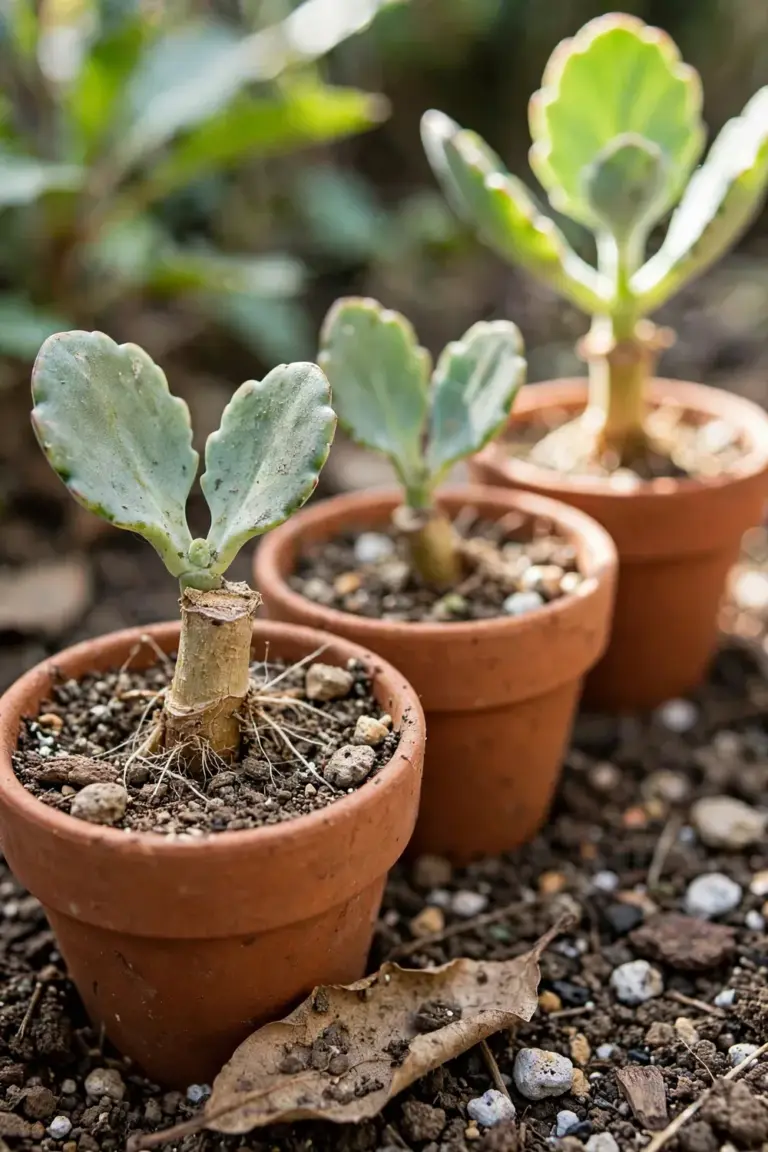
Snip a firm stem tip a few centimetres long, strip the lower leaves, and let the cut end dry for a day or two until a thin callus forms. Press the callused end into barely moist cactus mix and set the pot in bright, indirect light. Keep the mix only lightly damp while roots form, which takes a few weeks. A cutting taken from a mature plant carries the parent’s flowering age, so a rooted tip can join the rebloom rotation the following season rather than waiting years.
Follow this order and the cutting almost always takes:
- Cut in the morning with clean shears, below a leaf node.
- Strip the lowest leaves so no foliage sits under the soil line.
- Lay the cutting on a paper towel for 24 to 48 hours until the cut seals.
- Insert the sealed end 2 to 3 cm into barely moist cactus mix.
- Water lightly once, then wait until the surface dries before watering again.
- Keep the pot in bright indirect light, never in a dark cupboard.
Leaf cuttings work the same way, more slowly. If you would rather start succulents from seed for the experience of it, the patience required is greater and the payoff slower (growing succulents from seed). Cuttings are the reliable route for this plant.
Check Leaves for Mealybugs, Aphids, and Powdery Mildew
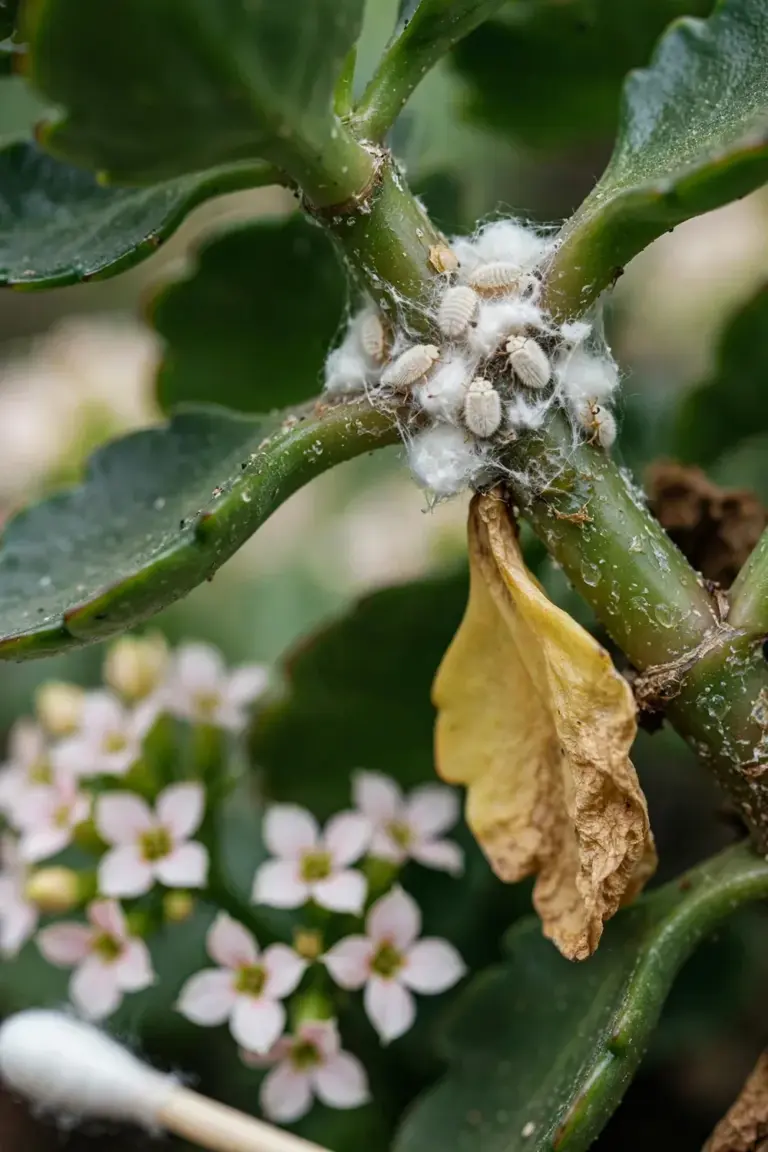
Kalanchoe blossfeldiana resists most problems when its soil drains and its leaves stay dry. The North Carolina Extension Gardener Plant Toolbox names the three regular visitors: mealybugs, aphids, and brown scale. All three cluster at stem joints and under leaves, where they are easy to miss until the plant looks sticky or distorted. A cotton swab dipped in rubbing alcohol removes small colonies. A neem oil spray handles a wider outbreak.
Powdery mildew is the common fungal complaint. It arrives when humidity is high, air circulation is poor, or leaves stay wet overnight. The NC State production notes warn that moisture on the plants at night encourages it (NC State kalanchoe production notes). Space plants so air moves between them, water in the morning, and keep the foliage dry. Root rot is the other killer, and it is always a watering problem: soggy mix, a saucer that never gets emptied, or a pot with no drainage hole.
Check new plants before they join the shelf. A store-bought kalanchoe can carry a few mealybugs tucked into the flower clusters, and one infested pot seeds the whole windowsill. Quarantine newcomers for a week, inspect the stem joints with a magnifier, and only then give the plant its permanent spot.
Keep Kalanchoe Out of Reach of Cats and Dogs
Kalanchoe blossfeldiana is toxic when eaten. The North Carolina Extension Gardener Plant Toolbox states that plants in this genus are toxic to humans and pets if ingested, and advises keeping them out of reach of children and pets. Ingestion can cause vomiting, diarrhoea, and abnormal heart rhythm in dogs and cats. The plant’s cardiac glycosides are the culprit compounds.
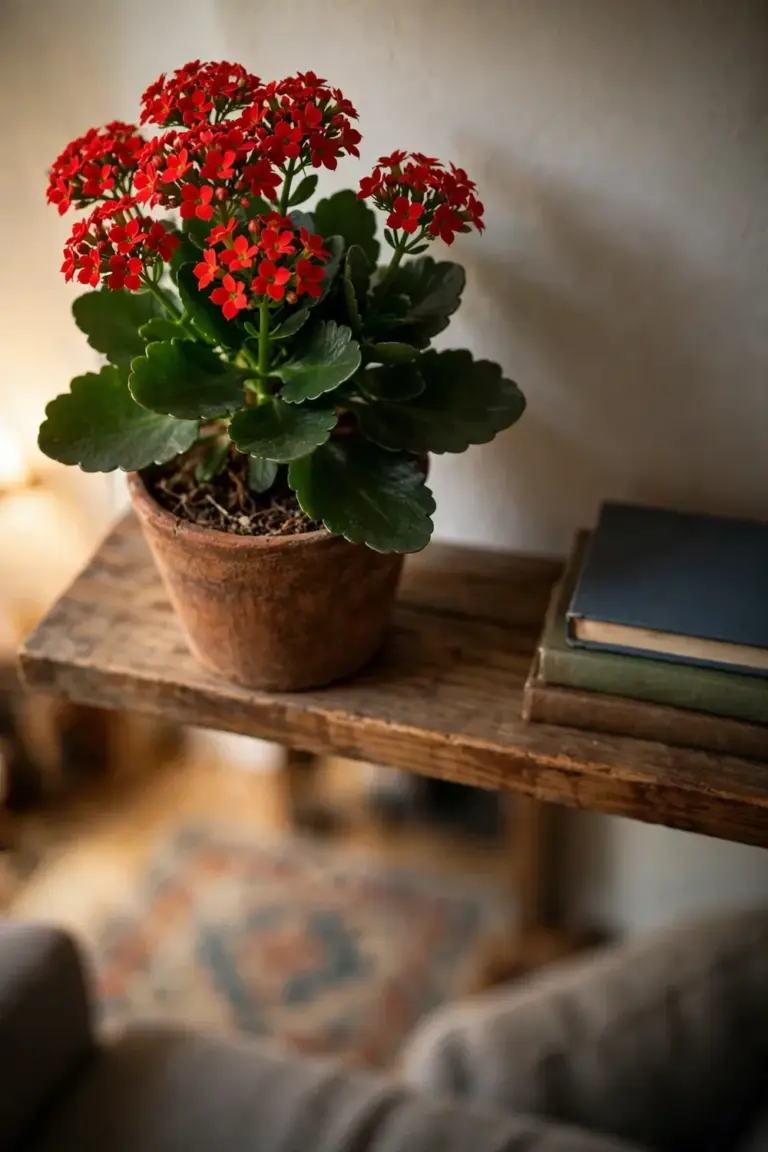
Place kalanchoe on a high shelf or in a room the cat does not patrol, and pick up fallen leaves promptly. If a pet eats any part of the plant, call your veterinarian or an animal poison control service straight away. Children should be told the bright flowers are not for tasting.
Grow Kalanchoe Outdoors Only Where Frost Never Arrives
Kalanchoe blossfeldiana is hardy only in USDA zones 10 to 12, and it is intolerant of frost. The North Carolina Extension Gardener Plant Toolbox advises bringing plants indoors before temperatures drop to 45 degrees Fahrenheit (7 degrees Celsius). A single light frost turns the fleshy leaves to mush. Below 10 degrees Celsius the plant suffers, so outdoor life year-round is limited to genuinely frost-free climates.
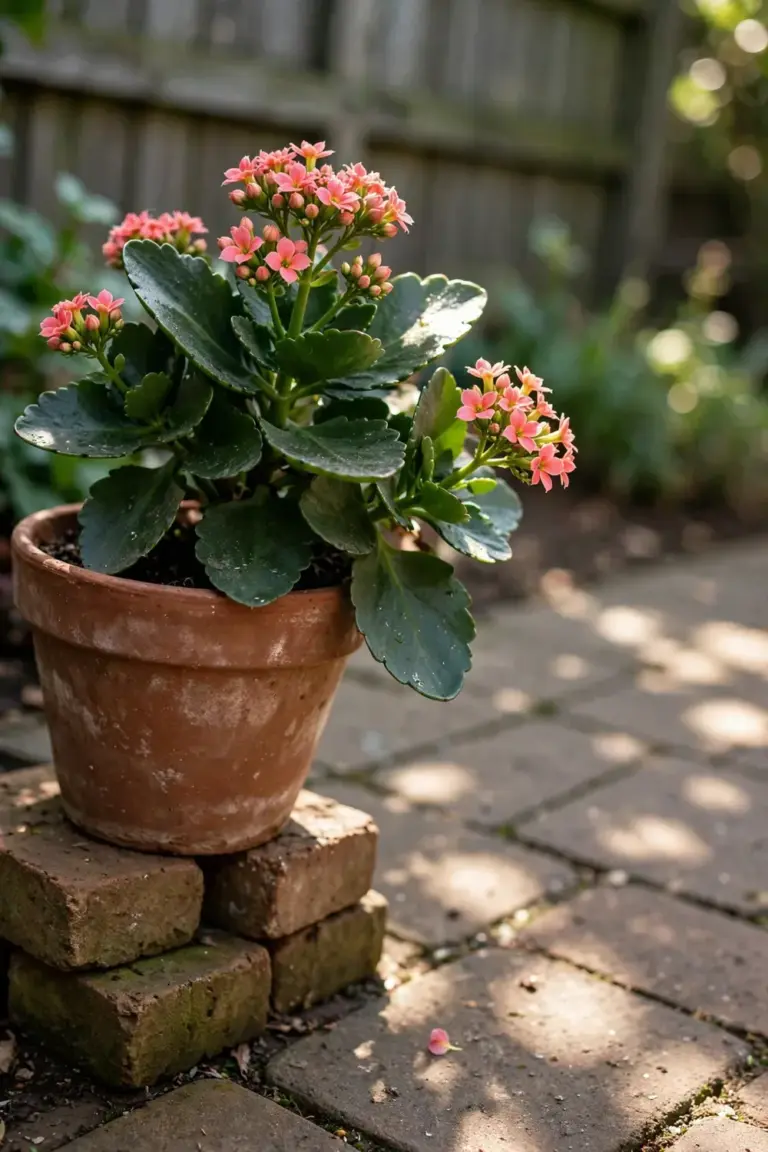
Where the climate allows, grow it in well-drained soil with morning sun and afternoon shade. Summering a potted plant outdoors is a good middle ground: set it out once nights stay reliably warm, harden it off gradually because indoor leaves scorch quickly in direct sun, then bring it back inside before the first cool autumn night. Harden off over a week or two, moving from shade toward sun.
Keep the pot off bare soil when it sits outside for the season. Soil contact wicks moisture up into the drainage hole and invites slugs to climb in. A plant stand, a few bricks, or an overturned saucer under the pot breaks that bridge. Inspect the plant on its way back indoors: a quick look under the leaves catches hitchhiking aphids before they meet the houseplants.
In Australia, the frost-free rule draws the map. Plants can stay outdoors year-round in frost-free coastal and northern regions, while gardeners in the cooler south treat kalanchoe as an indoor plant that holidays outside in summer. Because the Southern Hemisphere calendar flips the seasons, run the darkness rebloom treatment from around March for winter flowers, not September. Mother-of-thousands, a different Kalanchoe species, has turned invasive in parts of Australia, which is another reason to buy Kalanchoe blossfeldiana by its botanical name and keep it contained.
Frequently Asked Questions About Growing Kalanchoe
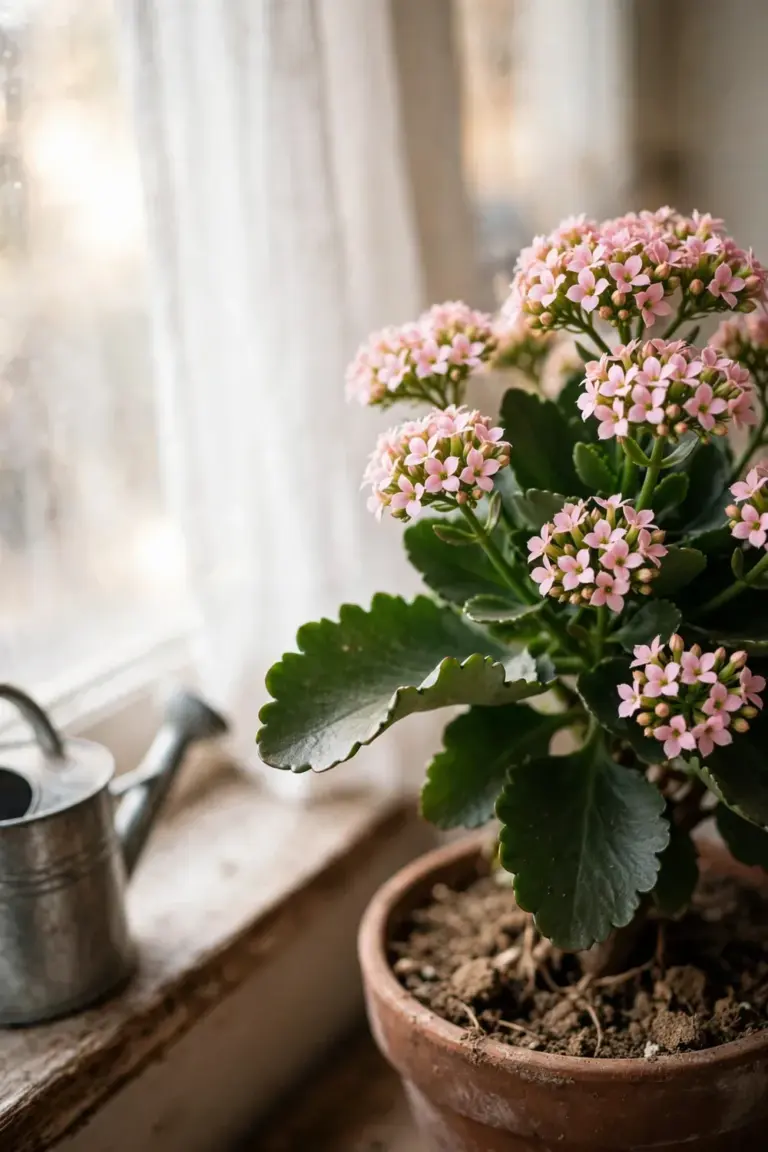
Evening light is the usual answer. Kalanchoe blossfeldiana sets buds only after 14 hours of unbroken darkness nightly for at least 6 weeks, and a single lamp glowing across the room can reset the count. Move the plant to a dark closet from 6 pm to 8 am daily for 6 to 8 weeks, give it bright light by day, and buds should form at the stem tips.
A healthy plant holds its display for up to eight weeks, according to University of Arkansas Extension. Deadheading each spent cluster at its stem base keeps the show going by stopping seed production. Cooler nights also extend bloom life, so a plant in a room that drops to around 15 degrees Celsius overnight outlasts one kept in constant warmth.
Only in USDA zones 10 to 12, where frost never arrives. The plant is frost intolerant and should move indoors before temperatures fall to 7 degrees Celsius. In cooler regions it works as a summer patio plant: set it out once nights stay warm, harden it off over a week or two, and bring it inside before autumn nights cool down.
No. Kalanchoe blossfeldiana is toxic to cats and dogs if ingested, and NC State Extension advises keeping the whole genus out of reach of children and pets. The plant’s cardiac glycosides can cause vomiting, diarrhoea, and abnormal heart rhythm. Place the plant where pets cannot reach it and call a veterinarian immediately if any part is eaten.
Water deeply only after the soil dries out completely, then let the pot drain fully before it returns to its saucer. In practice this means roughly weekly in a warm bright room and less often in winter, but the soil test beats any calendar. If the fleshy leaves look withered or feel soft, the plant is thirsty. If stems turn mushy, the soil has stayed too wet.
Buy Kalanchoe blossfeldiana, sold as Flaming Katy, florist kalanchoe, or Christmas kalanchoe. Kalanchoe pinnata (miracle leaf) is grown for its unusual leaf plantlets, not its flowers, and mother-of-thousands (Kalanchoe daigremontiana) spreads aggressively by dropping plantlets from its leaf edges. The three are different species with different habits, so check the botanical name on the tag.
Bring the Long Nights Back Every Fall
Kalanchoe blossfeldiana asks for three things: bright days, dry feet, and genuinely dark nights. The first two are standard succulent care. The third is the skill that separates a one-season plant from a repeat bloomer. Start the 14-hour darkness treatment six weeks before you want buds, keep the nights cool and the soil on the dry side, and the plant will flower for you again the way the grower’s greenhouse once made it flower for the store.
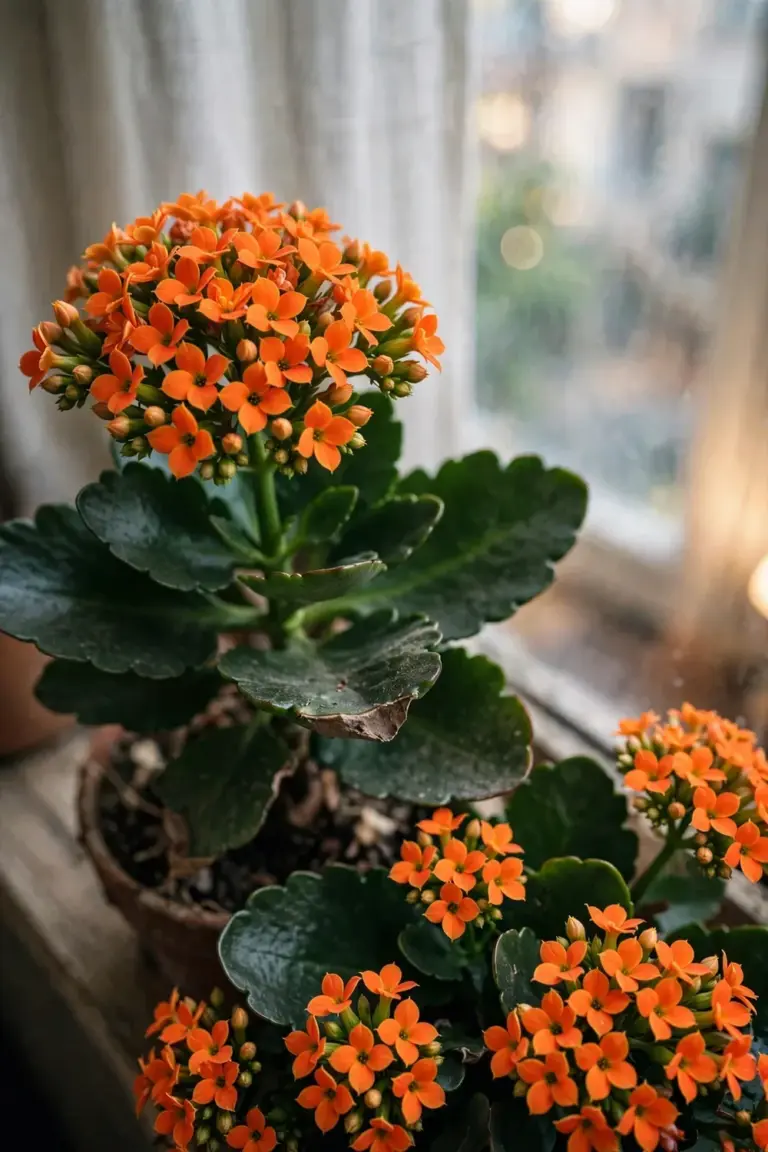
Once the routine is a habit, it costs nothing and takes seconds. A closet at 6 pm, a bright window at 8 am, and eight weeks later the tight red or orange clusters are back. That is the whole contract with a Flaming Katy: you guard the night, and it brings the color.