
Disappearing root rot hollows ginseng roots until nothing but a fragile shell remains, and there is no cure. The plant fails to come up in spring, or it wilts rapidly and never recovers, and by the time the shoot shows anything, the root is already gone. The 10 strategies below tell you how to read the root, how to keep the fungus from taking hold, and why replant ground stays infected for decades.
Disappearing root rot is a ginseng disease. The host scope is ginseng (Panax species) only. No other host carries the name in the Clemson index. The disease is a ginseng disease. The neighbor crops are not hosts.
The pathogen is Ilyonectria mors-panacis. This article uses Ilyonectria mors-panacis as the one consistent current name. Older names for the same pathogen include Cylindrocarpon destructans. The Pacific Northwest Pest Management Handbooks use Ilyonectria destructans (formerly Cylindrocarpon destructans) for the same disease. One pathogen, several names, one disease. Never present the old name as a separate disease.
What Disappearing Root Rot Actually Is
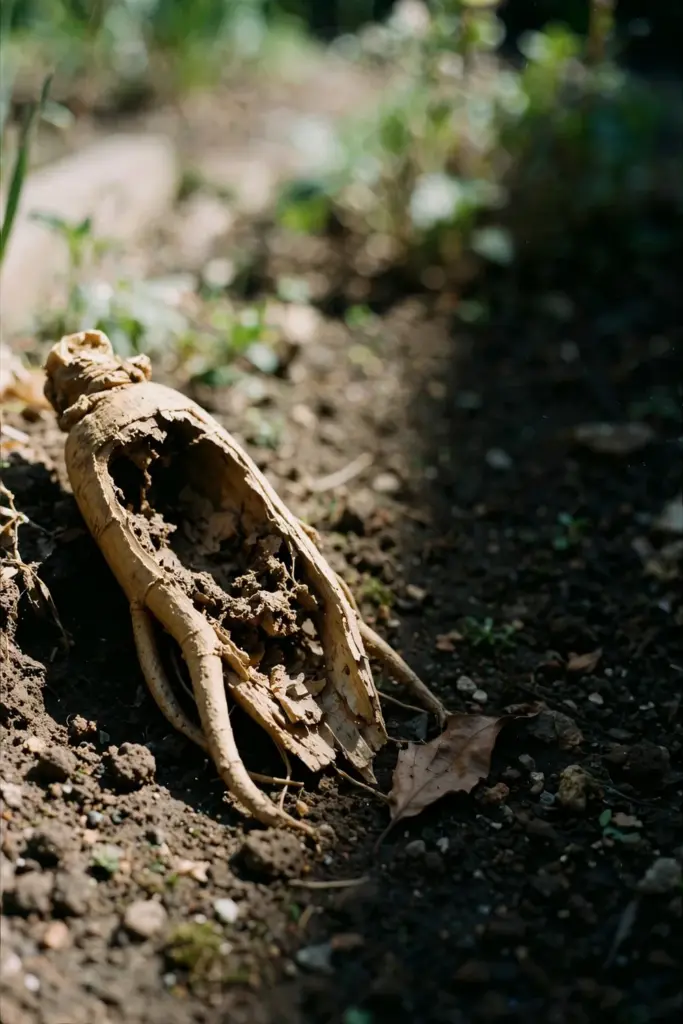
Disappearing root rot is a fungal root rot of ginseng. The fungus penetrates the epidermis directly, followed by intracellular hyphal growth in the cortex. The lesions progress over the surface of the root and move deep into the cortex. In advanced cases, lesions extend throughout the cross-section of the root, effectively severing it in two. The fungus eats the root from the outside in. The root disappears from the inside out.
The fungus is unusually aggressive because it disarms the plant. Research on the interaction shows that Ilyonectria mors-panacis suppresses the ginseng plant’s defense responses, so the root cannot mount the wound-healing and chemical defenses that slow down less aggressive relatives. A less aggressive Ilyonectria species triggers the plant’s defenses and gets contained. Ilyonectria mors-panacis suppresses them and colonizes deep. The suppression is the virulence. The colonization is the rot.
Ginseng is a long-exposure crop. Ginseng grows for years before harvest, and every one of those years is another season of root contact with soilborne fungus. A fast crop gets one season of exposure. Ginseng gets several. The long exposure is the risk. The multi-year bed is the long bet. The entire root center, including the vascular tissues, rots away, leaving only the peridermal shell. The shell is the signature. The hollow root is the disease.
There is no cure. No fungicide cures an infected root, the infected root is gone, the prevention is the only lever, and the replant decision is the biggest prevention.
How to Identify Disappearing Root Rot on Your Ginseng
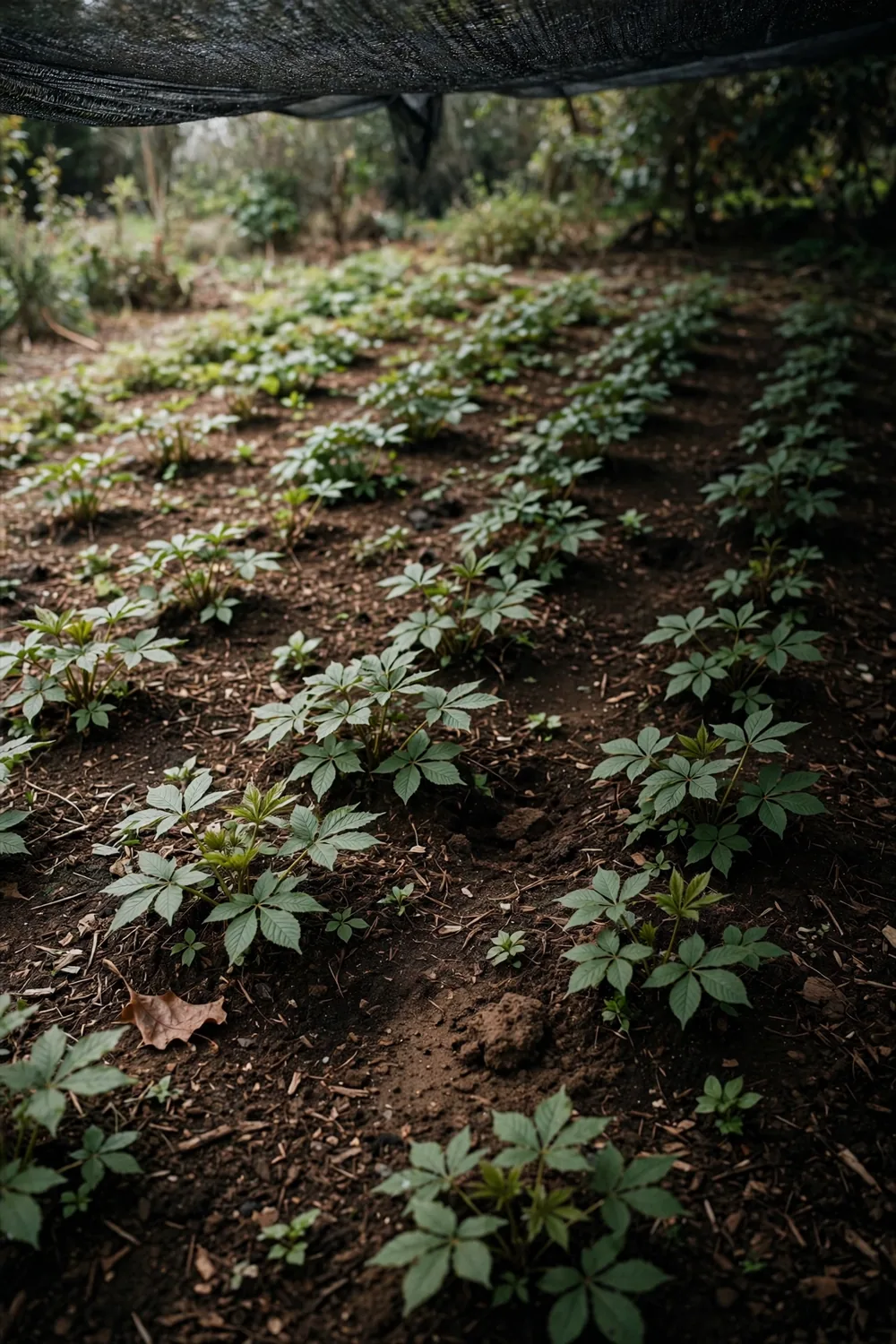
Watch for plants that fail to come up. Plants may fail to come up in the spring. A bed with gaps where plants stood last year is a suspect bed. The missing plant is the first sign. The gap is the clue.
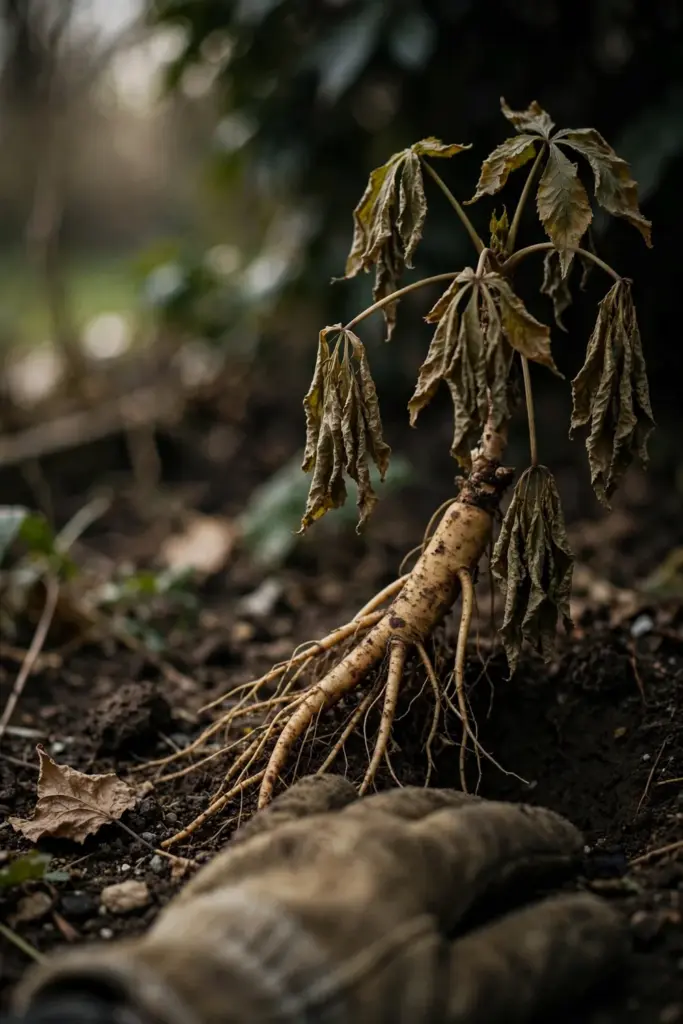
Watch for rapid wilt. During the growing season, plants may rapidly wilt and not recover, or show other symptoms of stress such as premature leaf coloration. The wilted plant does not recover with water. The wilt is the root failure. The water is not the fix.
Dig a suspect root. Lesions progress over the surface of the root and move deep into the cortex. The disease also can start at the root tip, causing a firm decay that progresses toward the crown. Under cool, moist conditions, the rot may progress to within 0.5 inch of the crown before the foliage wilts. The root tells the truth. The shoot lies.
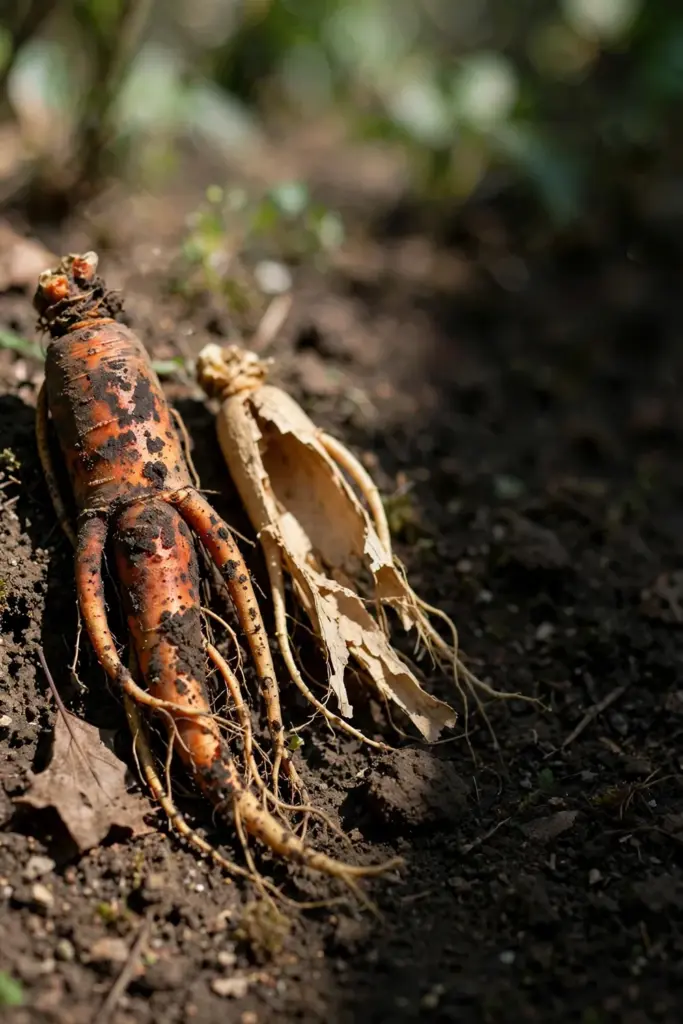
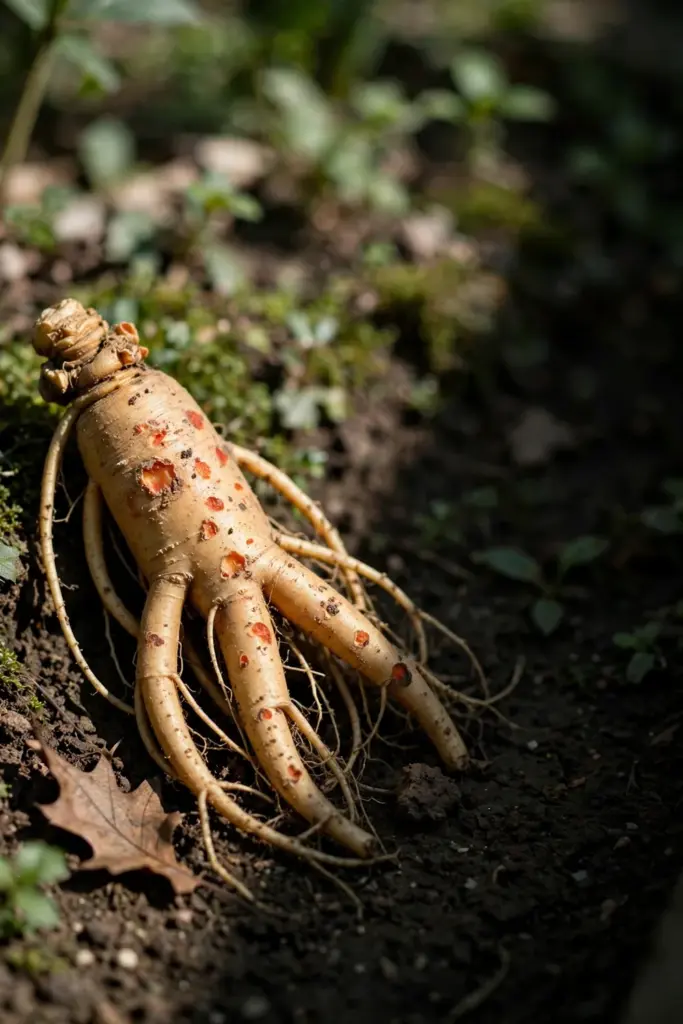
Read the lesion. Infected ginseng roots show orange-red to black-brown lesions that can expand into a severe root rot. The lesions are spongy and dry, not water-soaked. The dry spongy lesion is the mark. The water-soaked lesion points elsewhere.
Check the crown. Under cool, moist conditions, the rot may progress to within 0.5 inch of the crown before the foliage wilts. A crown that is soft, discolored, or collapsing is a late sign, and a plant with a soft crown is a plant to dig and inspect. The crown is the last checkpoint. The root below it tells the full story.
Which Ginseng Gets Hit Hardest
Roots of all ages are susceptible. Roots of all ages appear susceptible, young roots and old roots both catch it, the age does not protect, and the soil history does the damage.
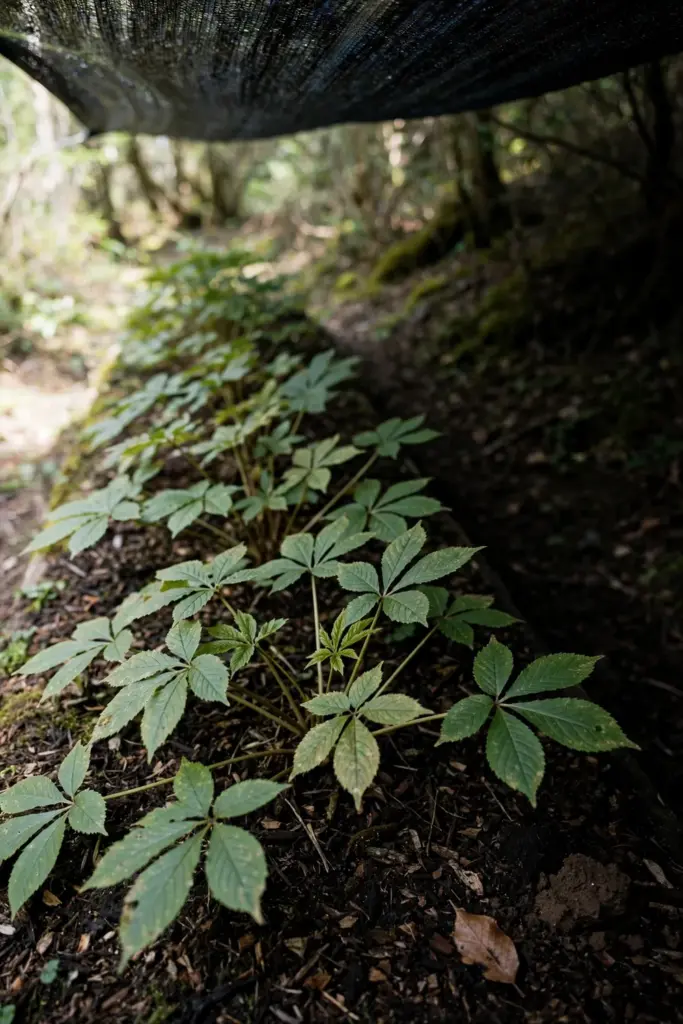
American ginseng is the flagship host. American ginseng (Panax quinquefolius) is the host in the North American literature. Asian ginseng (Panax ginseng) is also a host. The genus is the host. The species is the variety.
The multi-year habit matters. Ginseng is a shade-grown, multi-year crop, and the root stays in the ground for years before harvest. Each year adds exposure to soilborne fungus, and each year of root growth adds wound opportunities from soil pests, frost heaving, and handling. A crop harvested in one season faces one season of risk. Ginseng faces several. The long bed is the long bet.
Replant ground gets hit hardest. In replant disease, infections typically result in plant death, whereas plant death is much rarer in first-crop soils, those not previously planted with ginseng, so the replant soil is the killing soil, the first-crop soil is the safer soil, and the soil history is the risk.
Stressed roots get hit harder. Wounding and acidic growing conditions contribute to disease severity. The wounded root is the entered root. The acidic soil is the severe soil. The wound care is the prevention.
What the Root Shows and What It Suggests
There is no clean home field check that separates disappearing root rot from the other ginseng root rots. Aerial symptoms overlap with Phytophthora and Fusarium rots, and that distinction is lab-level, not a home field check. The table below is a field guide to what the root shows, not a differential diagnosis. Field ID is presumptive. Lab confirms.
| What the Root Shows | What It Suggests | What to Do |
|---|---|---|
| Fragile shell only, interior rotted away | Disappearing root rot, severe form | Remove and destroy the root; do not replant ginseng in that ground |
| Orange-red to black-brown lesions, spongy and dry | Disappearing root rot, earlier form | Remove the plant; check neighboring roots |
| Water-soaked, soft rot | Phytophthora-type rot or Rhizoctonia-type rot, not disappearing root rot | Lab confirms; do not assume disappearing root rot |
| Rusty discoloration of the root surface | Rusty root, a different disorder caused by a different fungus | Fence it off; it is not disappearing root rot |
| Firm decay starting at the root tip, moving toward the crown | Disappearing root rot starting at the tip | Remove the plant; check neighboring roots |
Rusty root gets one line. A different fungus causes the disorder known as rusty root. Rusty root is a different disorder, not this disease. The fence is the line.
How Disappearing Root Rot Spreads
Soil carries it. The fungus lives in the soil, the soil is the reservoir, the root grows into the reservoir, and the planting is the exposure.
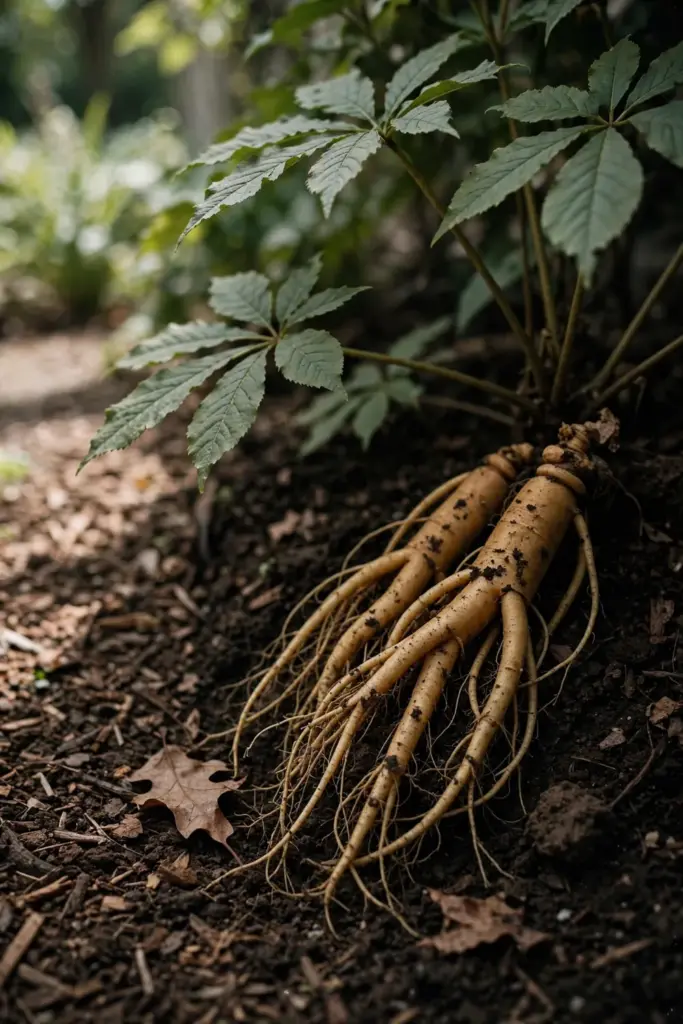
Wounds admit it. The fungus penetrates the epidermis directly. Wounding opens the root further. The wounded root is the entered root. The careful handling is the fence.
Replant ground concentrates it. Ginseng replant disease is host-specific: other crops, such as rice, soybean, wheat, and maize, can be planted in ginseng soil without being affected. The replant soil is toxic to ginseng, not to other crops. The host specificity is the clue.
Root debris feeds it. Decaying ginseng roots release compounds into the soil that can inhibit the growth of ginseng. The debris is the chemical load. The cleaned bed is the lighter load. The debris removal is the reset.
The chemistry behind replant disease is partly understood. Old ginseng roots release ginsenosides and phenolic compounds into the soil, and those compounds can suppress the defenses of new ginseng seedlings while favoring root pathogens. The soil activity that increases root rot appears only after the first crop is harvested, once the debris has decayed and the soil has warmed, and it then persists for decades. The chemistry is the hidden half. The fungus is the visible half.
Soil activity persists for decades. Activity that increases root rot from Ilyonectria mors-panacis was detected in soil from 1 to 30 years after ginseng harvesting. Ginseng replant disease can persist for 30 or more years. The persistence is the reason replant ground is a lifetime decision, not a one-season gap.
What Raises the Risk of Disappearing Root Rot
Replant ground raises the risk most. Replant ground is the biggest risk, the first-crop soil is the safer soil, the replant soil is the killing soil, and the soil history is the risk. No other factor in this disease outweighs where the ginseng grew before.
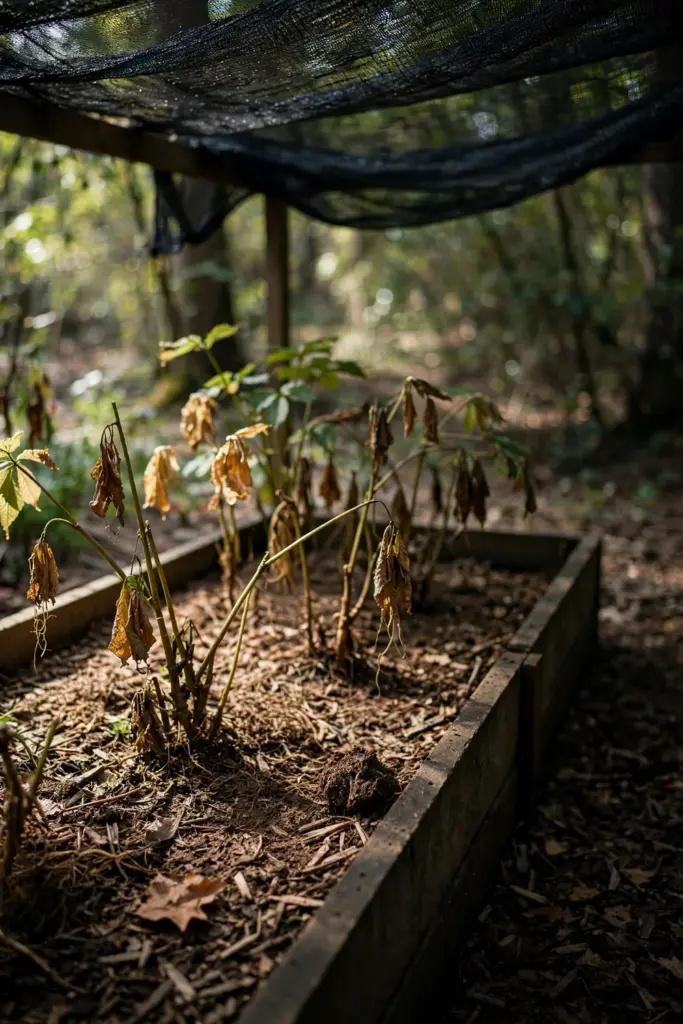
Acidic soil raises the risk. Wounding and acidic (pH 5) growing conditions contribute to disease severity. The acidic soil is the severe soil. The neutral soil is the safer soil. The lime is the correction.
Iron raises the risk. Increased iron availability either in the soil or as foliar amendments was found to encourage disease severity by encouraging fungal growth and sporulation. The iron is the accelerant. The iron amendment is the mistake on neutral or alkaline soils. The iron avoidance is the prevention.
Wounding raises the risk. Wounding opens the root, the wounded root is the entered root, the careful handling is the fence, and the rough harvest is the infection, so a root nicked by a tool or gnawed by a soil pest carries an open door for the fungus, and pest control and careful tool work are disease control as well.
Wet soil is not the main factor. Wet soils were not found to be a major factor in this disease. The wet soil is not the driver. The acidic soil is. The iron is. The wound is. The drainage is not the lever here.
Shade and still air add risk. Ginseng grows under shade, and a shaded bed with still air stays humid longer after rain. The humid bed keeps the root surface wet and the fungus active. The aired bed dries faster. The shade is necessary, and the airflow is the counterweight.
Strategy 1: Confirm the ID by Digging a Root
Dig a suspect plant. The shoot lies, and the root tells the truth. A plant that fails to come up, or wilts rapidly and never recovers, is a dig candidate. The dig is the diagnosis. The guess is the waste.
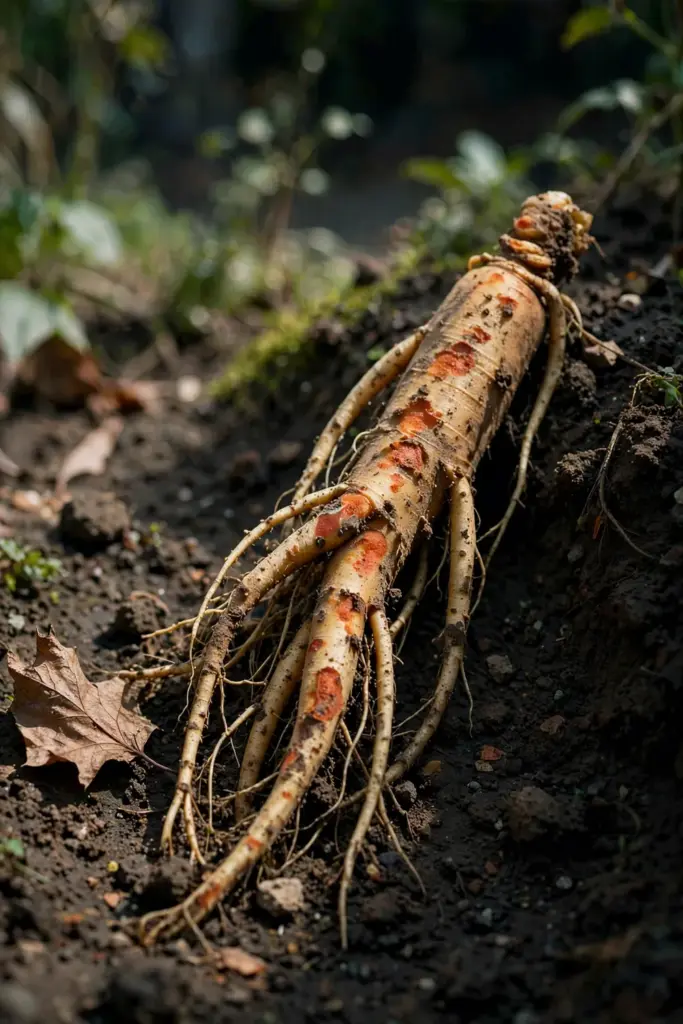
Read the root. Orange-red to black-brown lesions, spongy and dry, point to disappearing root rot. Water-soaked soft rot points elsewhere. Rusty discoloration points to rusty root. The shell-only root is the severe form. The root is the record.
Send a sample to the lab where the diagnosis matters. Field ID is presumptive. A lab confirms. The lab is the settlement. The field guess is the start.
Record what you find. Note the date, the spot in the bed, and what the root looked like, since a record turns one dead plant into a map, the map tells you which parts of the bed are risky and which parts are still clean, and the notebook is the memory that guides next season’s planting, so the record is worth more than the memory.
Strategy 2: Never Replant Ginseng in Old Ginseng Ground
Do not replant ginseng in old ginseng soil. Ginseng replant disease can persist for 30 or more years, so the old ginseng ground is the infected ground, the new ground is the clean ground, and the replant decision is the biggest prevention.
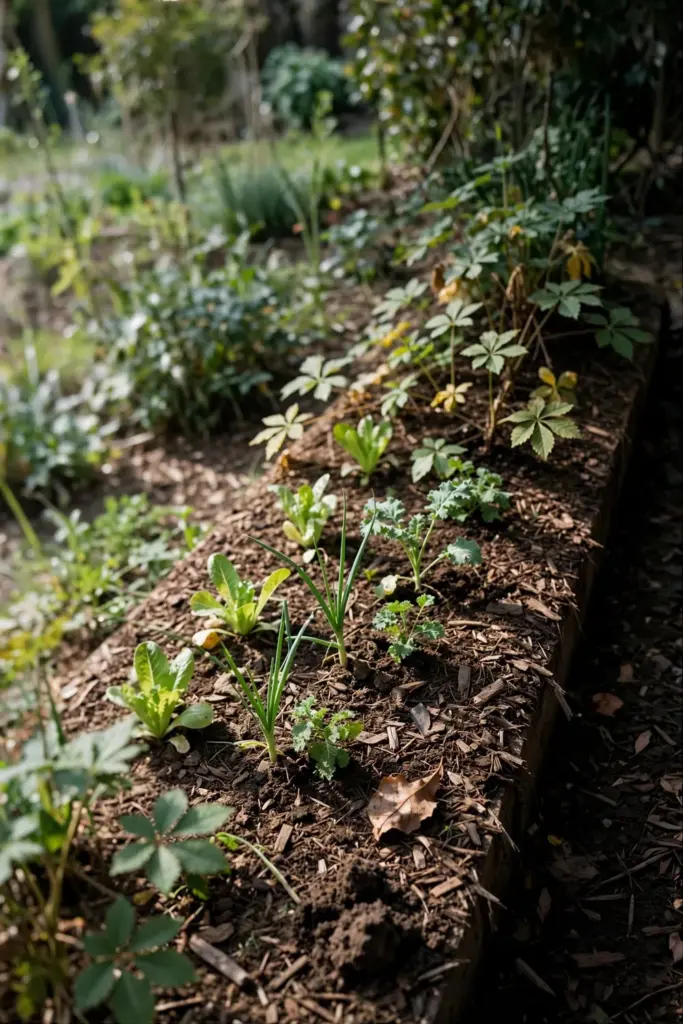
Do not wait out the replant interval. A one-season gap does not clear it. A five-year gap does not clear it. A 30-year persistence means the ground is a lifetime decision, not a gap. The waiting is not the fix. The new ground is the fix.
Plant other crops in old ginseng ground. Other crops, such as rice, soybean, wheat, and maize, can be planted in ginseng soil without being affected. The replant disease is host-specific to ginseng. The other crop is the safe crop. The ginseng is the only victim.
Strategy 3: Start With Clean, Fresh Ground
Choose ground never planted with ginseng. First-crop soil is the safer soil, plant death is much rarer in first-crop soils, the fresh ground is the clean ground, and the virgin ground is the start.
Check the ground history. Ask what grew there before. Ginseng in the history is the red flag. No ginseng in the history is the green light. The history is the risk.
Test the candidate ground before planting. A soil test on the new ground confirms the pH and the nutrient picture before a single root goes in, and a pH near neutral with no ginseng history is the cleanest start available. The test is the confirmation. The planting is the commitment.
Do not plant ginseng where ginseng died. A bed where ginseng died of root rot is a bed with the fungus. The dead bed is the infected bed. The new bed is the clean bed.
Strategy 4: Hold the Soil pH Near Neutral
Test the soil pH. Acidic (pH 5) growing conditions contribute to disease severity. The test is the baseline. The guess is the waste. The pH meter is the tool.
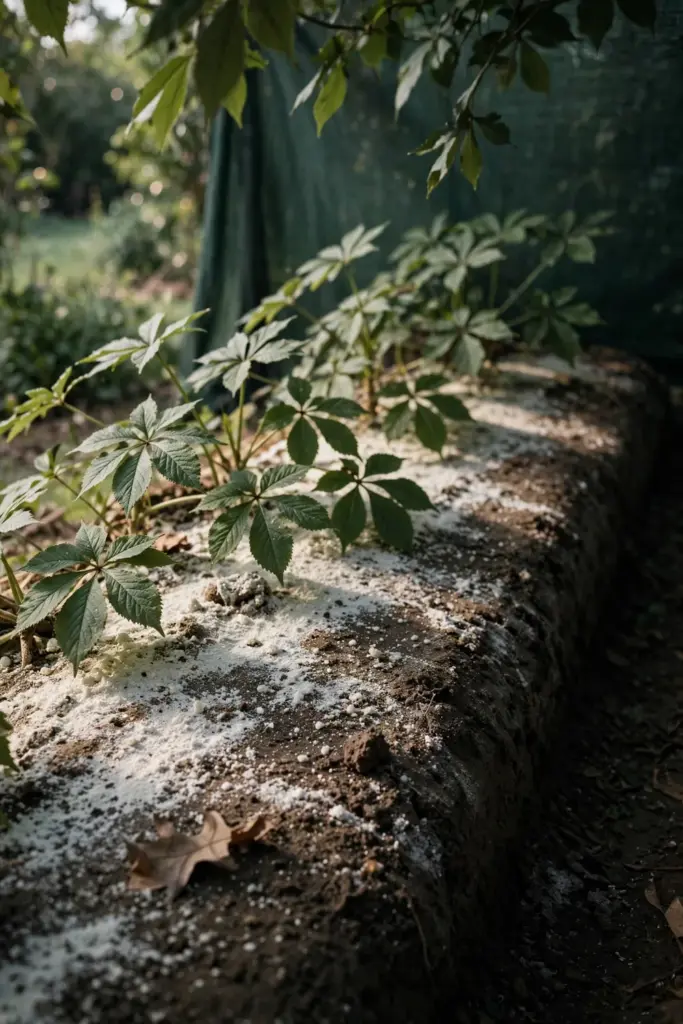
Lime acidic soils toward neutral. Maintain a neutral soil pH through the use of lime for acidic soils. The lime is the correction. The acidic soil is the severe soil. The neutral soil is the safer soil.
Lime by the soil test, not by guess. A soil test gives the lime rate for your soil type, and over-liming pushes the pH past neutral into alkaline ground that brings its own problems. The test is the rate. The guess is the overshoot. The retest confirms the correction.
Retest after liming. Lime takes time to work, the single application does not guarantee the correction, and the retest proves it, so the retest is part of the liming job rather than an optional extra.
Strategy 5: Do Not Add Iron
Avoid foliar iron on neutral or alkaline soils. Avoid foliar applications of iron for plants grown on neutral or alkaline soils. The iron encourages the fungus. The iron amendment is the mistake. The avoidance is the prevention.
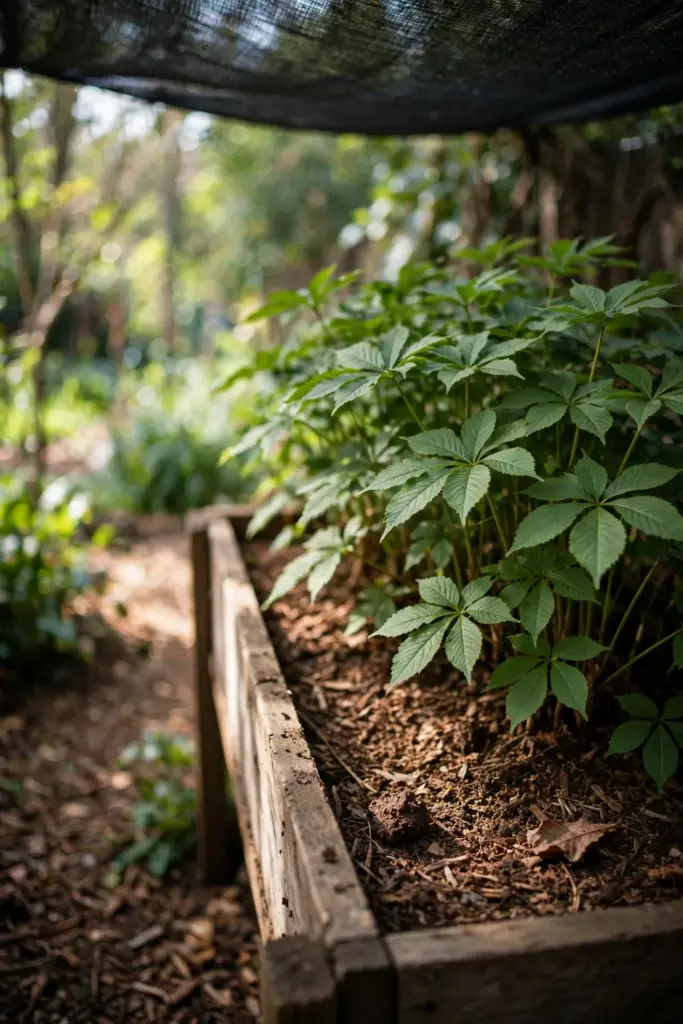
Check the soil iron before amending. Iron in the soil already feeds the fungus, extra iron feeds it more, the soil test is the check, and the blind amendment is the risk.
Do not chase a green leaf with iron. A yellowing leaf is not automatically an iron deficiency. The iron spray is the accelerant. The diagnosis is the fix.
Strategy 6: Handle Roots Gently, Minimize Wounds
Minimize damage or wounding of roots during planting and harvest. The wounded root is the entered root. The careful hand is the fence. The rough hand is the infection.
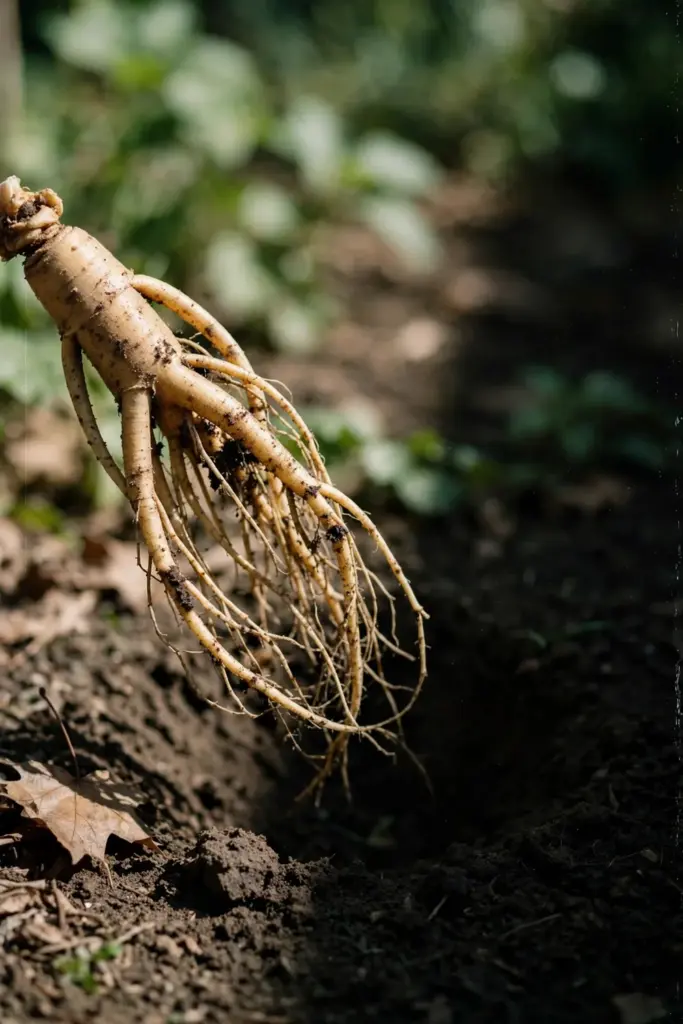
Plant with care. Set roots gently, do not nick, snap, or bruise the root, since the nick is the entry and the gentle set is the defense, and a root set with care starts its life in the new bed without an open wound.
Harvest with care. Lift roots gently, do not gouge or tear the root, since the gouge is the entry and the gentle lift is the defense.
Strategy 7: Remove and Destroy Infected Roots
Remove infected plants as soon as you find them. The infected root is the inoculum, the removed root is the removed inoculum, and the root left in the ground is the next infection.
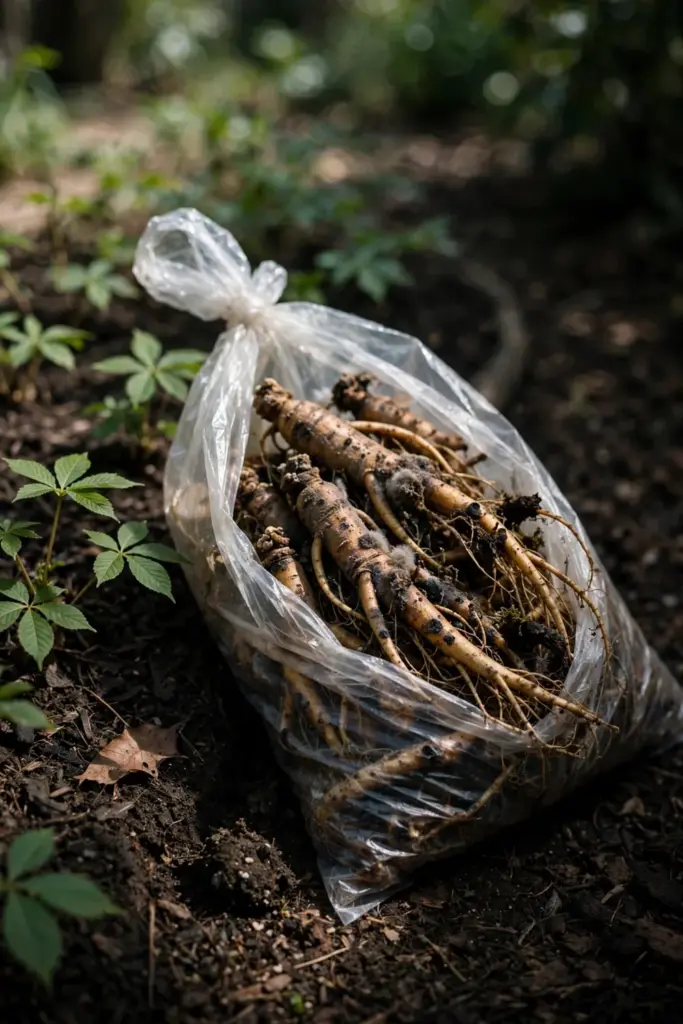
Destroy infected roots. Burn where legal, or bag and landfill. Do not compost infected roots. The compost pile is a distribution route. The composted root is the next infection.
Clean up root debris after harvest. Decaying ginseng roots release compounds into the soil that can inhibit the growth of ginseng, so the debris is the chemical load, the cleaned bed is the lighter load, and the debris removal is the reset that protects the next planting.
Strategy 8: Keep the Bed Clean and the Canopy Dry
Remove dead plants promptly. The dead plant is the inoculum. The removed plant is the removed inoculum. The prompt removal is the containment.
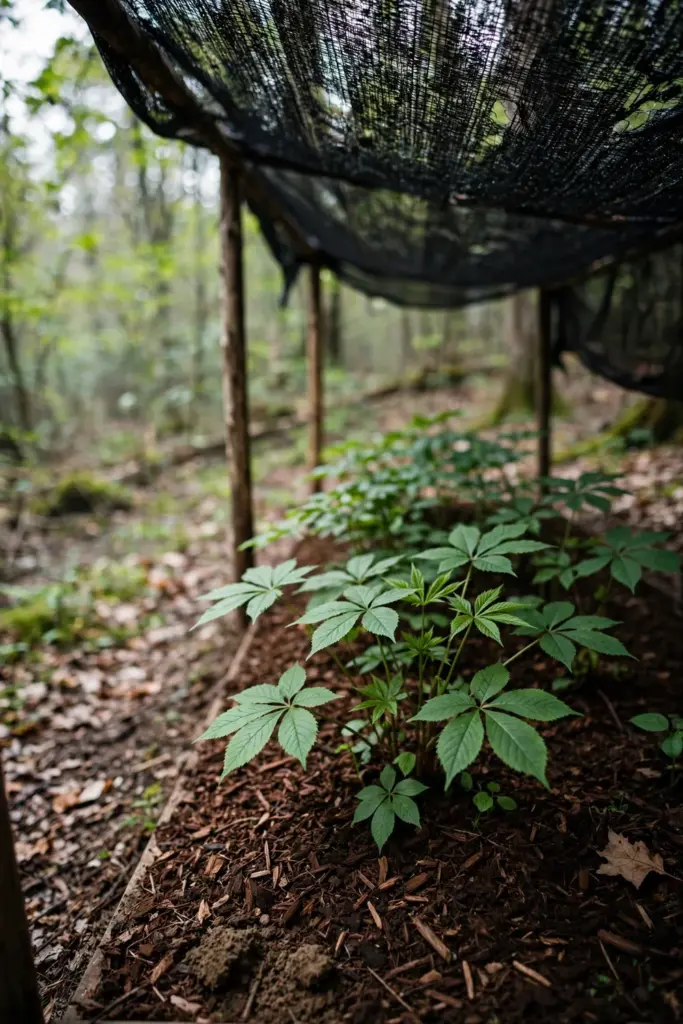
Do not work the bed when wet. Wet work spreads soil and spores. The wet glove is the vector. The dry work is the safe work.
Maintain shade and airflow. Ginseng grows under shade. The shaded bed holds humidity. The aired bed dries faster. The airflow is the fence.
Manage the shade structure. Shade cloth or lath that sits too low traps humid air against the bed. Raising the shade a little and leaving gaps for air movement dries the bed faster after rain without losing the shade the plants need. The raised shade is the aired shade. The low shade is the humid shade.
Strategy 9: Watch for the First Signs Every Spring
Walk the bed at emergence. Plants that fail to come up in spring are the first sign. The spring walk is the scout. The missing plant is the clue. The gap is the signal.
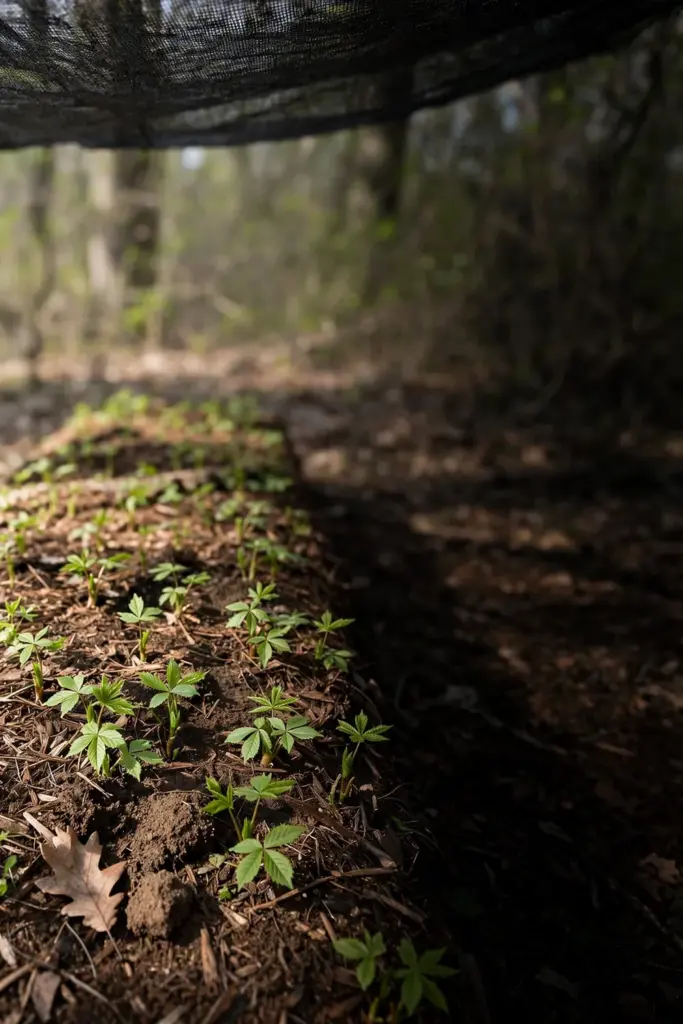
Watch for rapid wilt in the growing season. A plant that wilts rapidly and never recovers is a dig candidate. The wilt is the root failure. The water is not the fix.
Mark suspect spots. Mark where plants failed or wilted. The marked spot is the record. The record is the map. The map guides next season’s planting.
Inspect at harvest. Harvest is the one time every root comes out of the ground, and a harvest inspection catches roots that looked fine above ground but carry early lesions. A root with orange-red lesions at harvest is a root to destroy, not a root to store. The harvest check is the final audit.
Strategy 10: Do Not Pay for a Cure
Know that no cure exists. No fungicide cures an infected root. The infected root is gone. The prevention is the only lever. The cure is the myth.
Do not carry commercial programs as home advice. Per-acre fungicide rates, reentry intervals, drench schedules, and fumigation are commercial production guidance, not home advice. The commercial program is not the home program. The home program is the cultural steps above.
Do not present trial results as home recommendations. Research fungicide drenches and herb-based soil amendments are trial results, not home advice. The trial is the research. The home garden is the practice. The gap is the reason to stick to the cultural steps.
Living With Disappearing Root Rot on Ground You Already Own
A ginseng bed with disappearing root rot is a bed to manage, and the management is mostly about what you do next. Remove infected roots. Hold the pH near neutral. Do not add iron. Handle roots gently. Never replant ginseng in that ground. The ground is the decision.
Plan the next bed now. A grower with infected ground should be scouting fresh ground for the next planting while the current bed finishes, because the next bed needs ground with no ginseng history, a neutral pH, and gentle handling from day one. The fresh bed is the future. The old bed is the lesson.
Stop three habits. Do not replant ginseng in old ginseng soil. Do not add iron to neutral or alkaline soil. Do not rough-handle roots at planting and harvest. Keep those three lines unbroken and the disease stays contained. The Plant Care archive collects the site’s disease coverage for the next problem the garden throws up.
Frequently Asked Questions
No. No fungicide cures an infected root. The infected root is gone. The prevention is the only lever. Hold the pH near neutral, do not add iron, handle roots gently, and never replant ginseng in old ginseng soil. The cure is the myth. The prevention is the program.
Decades. Ginseng replant disease can persist for 30 or more years, and activity that increases root rot was detected in soil from 1 to 30 years after ginseng harvesting. A one-season gap does not clear it. A five-year gap does not clear it. The old ginseng ground is a lifetime decision. The new ground is the fix.
No. A different fungus causes the disorder known as rusty root. Rusty root is a different disorder, not this disease. Disappearing root rot hollows the root to a fragile shell. Rusty root discolors the root surface. The fence is the line. The two disorders share a host, never a pathogen.
Not as a home cure. No fungicide cures an infected root. Commercial fungicide programs with per-acre rates and reentry intervals are production guidance, not home advice. The home program is cultural: clean fresh ground, neutral pH, no iron, gentle handling, and removal of infected roots. The spray is not the answer. The culture is the answer.
Yes. Ginseng replant disease is host-specific: other crops, such as rice, soybean, wheat, and maize, can be planted in ginseng soil without being affected. The replant soil is toxic to ginseng, not to other crops. The other crop is the safe crop. The ginseng is the only victim.
Where to Go From Here
Disappearing root rot rewards the grower who starts with fresh ground, holds the pH near neutral, avoids iron, handles roots gently, and never replants ginseng in old ginseng soil. Confirm the ID by digging a root. Never replant in old ginseng ground. Start with clean fresh ground. Hold the pH near neutral. Do not add iron. Handle roots gently. Remove and destroy infected roots. Keep the bed clean. Watch every spring. Never pay for a cure.
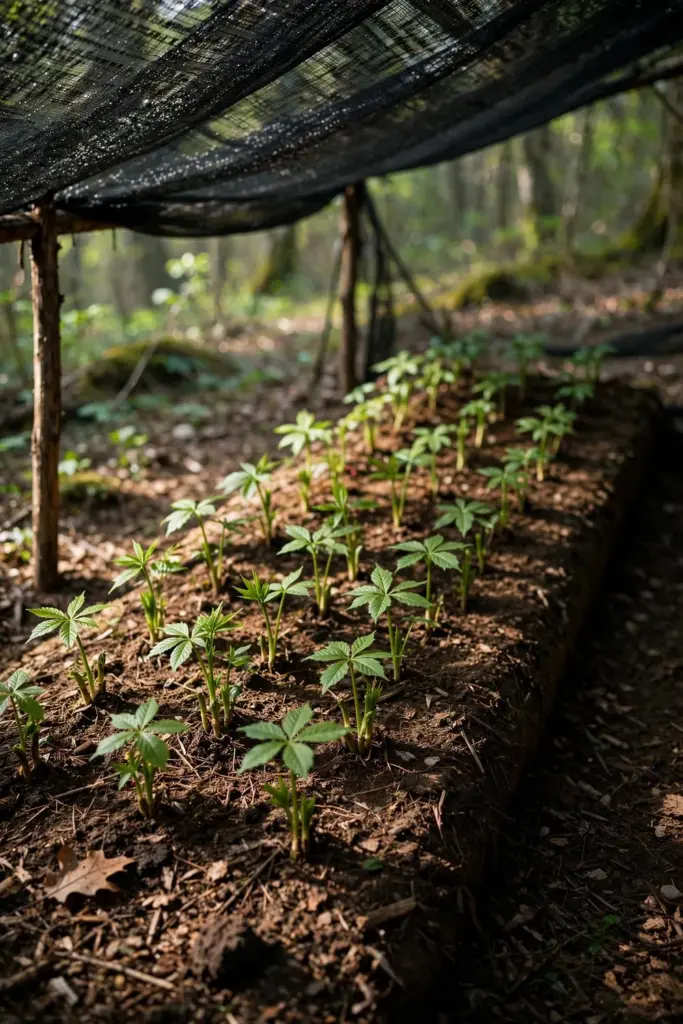
Next season, start with a fresh bed. A bed with fresh ground, neutral pH, gentle handling, and no replant history will hold disappearing root rot to a rare stray root. The PNW Handbooks page on ginseng disappearing root rot is a useful companion for the full Extension picture, since it sets the home-garden response here against the production evidence behind it.