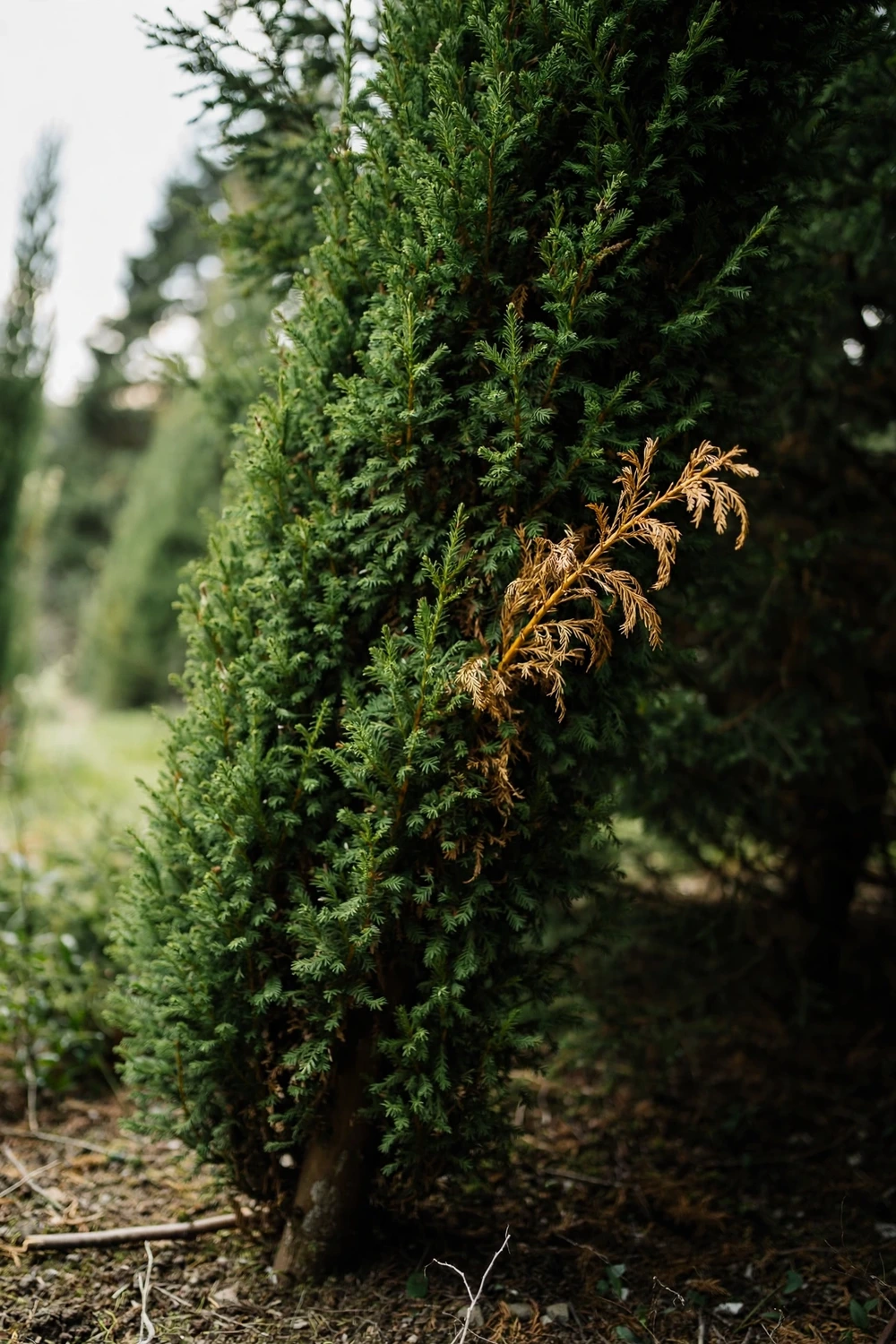

Cypress canker kills branches one at a time, and no fungicide stops it. A single yellow-to-reddish-brown branch among green branches is the first sign, and the canker usually sits several feet down the branch near the trunk, not at the shoot tip. The 10 strategies below tell you where the canker actually hides, how far below it to cut, and how to prevent the next one, because pruning is the only control that works.
Cypress canker and Seiridium canker are the same disease under two names. Clemson lists them in one entry: Seiridium unicorne, Seiridium canker and dieback, Cypress canker. This article uses Cypress canker as the title name and Seiridium canker as the pathogen name, and never presents them as two diseases. The article covers both the Tier 3 row and the Tier 2 Seiridium Canker row, since they are one disease with one article.
The pathogen is a Seiridium species complex. Three species have been reported: Seiridium unicorne, Seiridium cardinale, and Seiridium cupressi. In Georgia, Seiridium unicorne is most commonly associated with cankers and twig dieback on Leyland cypress. Species dominance is region-dependent, and no single species is presented here as the sole cause everywhere.
What Cypress Canker Actually Is
Cypress canker is a fungal canker disease of the cypress family. The fungus enters through wounds in the bark and causes dark, oozing lesions, cankers, on branches and trunks. The cankers girdle the branch, cutting off water and nutrients. The branch beyond the canker dies. The canker is the killer, and the branch flagging is the symptom.
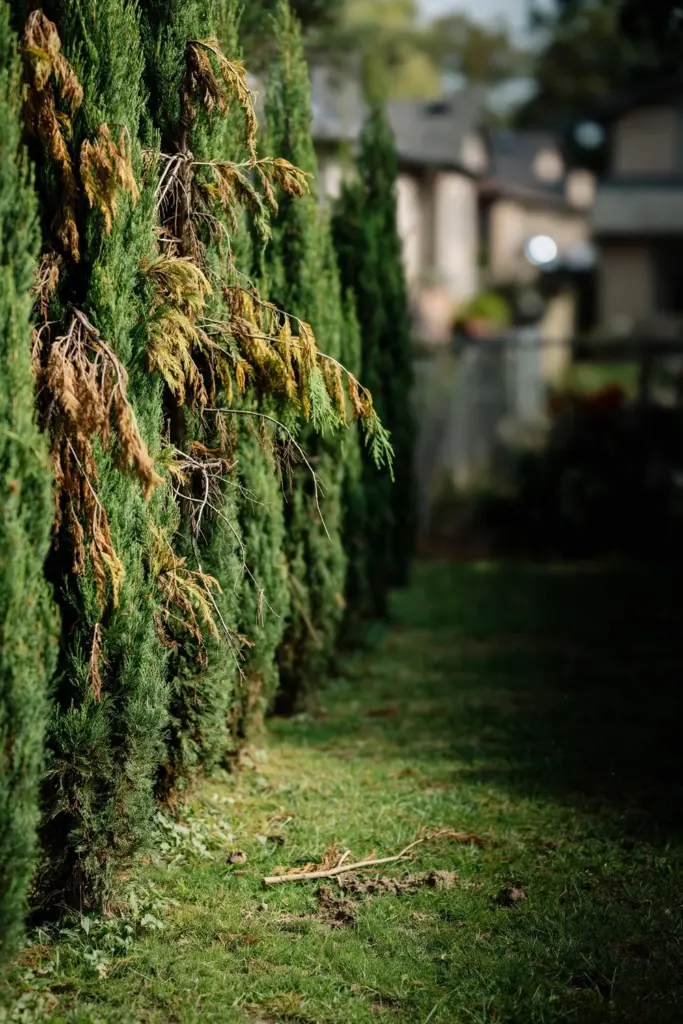
Cypress canker kills branches one at a time. One branch flags, then another, then another. The disease expansion often continues until a significant portion of the tree is destroyed. The one-at-a-time death is the signature. A tree that loses branches one at a time is a canker tree.
No fungicide stops it. There is no control other than pruning out the affected branches, and no fungicides are effective once infection has taken place. The fungicide is not the answer. The pruning is the answer. The prevention is the rest of the article.
The disease hits stressed trees hardest. Drought or heat stressed plants are particularly prone to the disease. The stressed tree is the canker tree. The vigorous tree resists. The stress relief is the prevention.
How to Identify Cypress Canker on Your Cypress
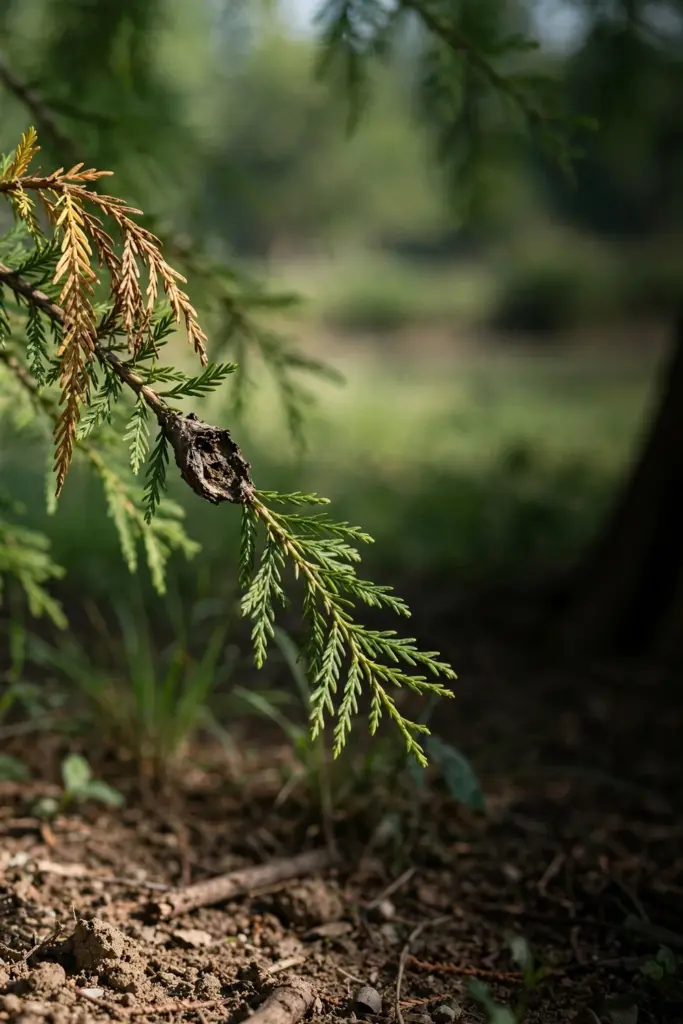
Scout for flagging. The most noticeable symptom is yellowing or browning of the foliage on one or more top or lateral branches. A single yellow-to-reddish-brown branch among green branches is the flag. The flagging branch is the first sign. The scout checks for flagging.
Find the canker below the flag. The canker usually sits several feet down the branch near the trunk, not at the shoot tip. Numerous thin, elongated cankers appear on stems, branches, and branch axils. The canker is the lesion. The flagging is the consequence. The canker hides below the flag.
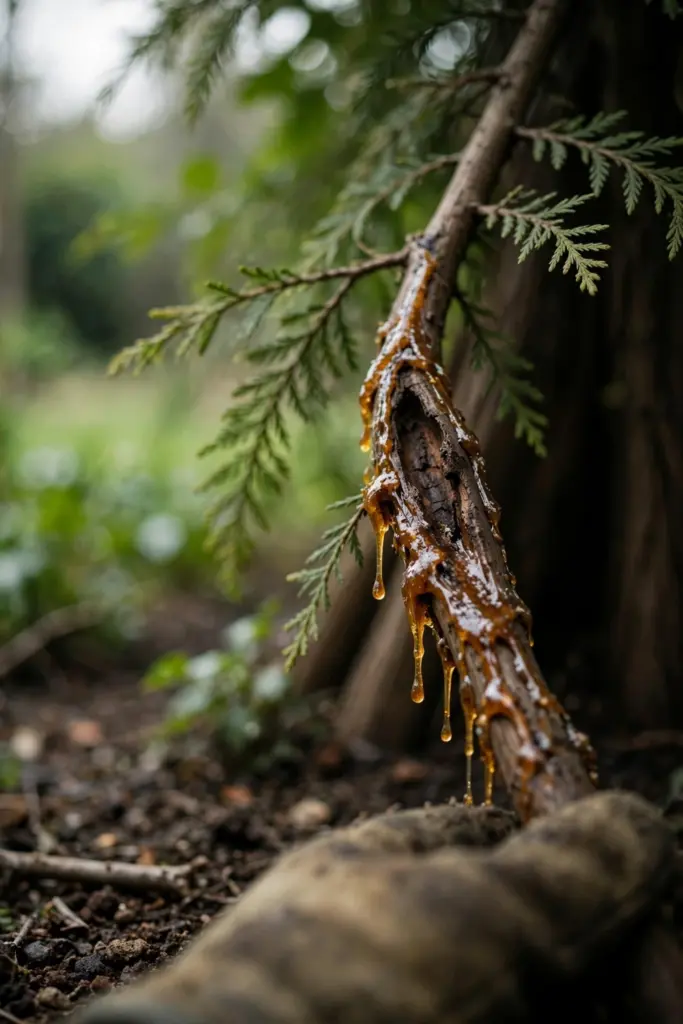
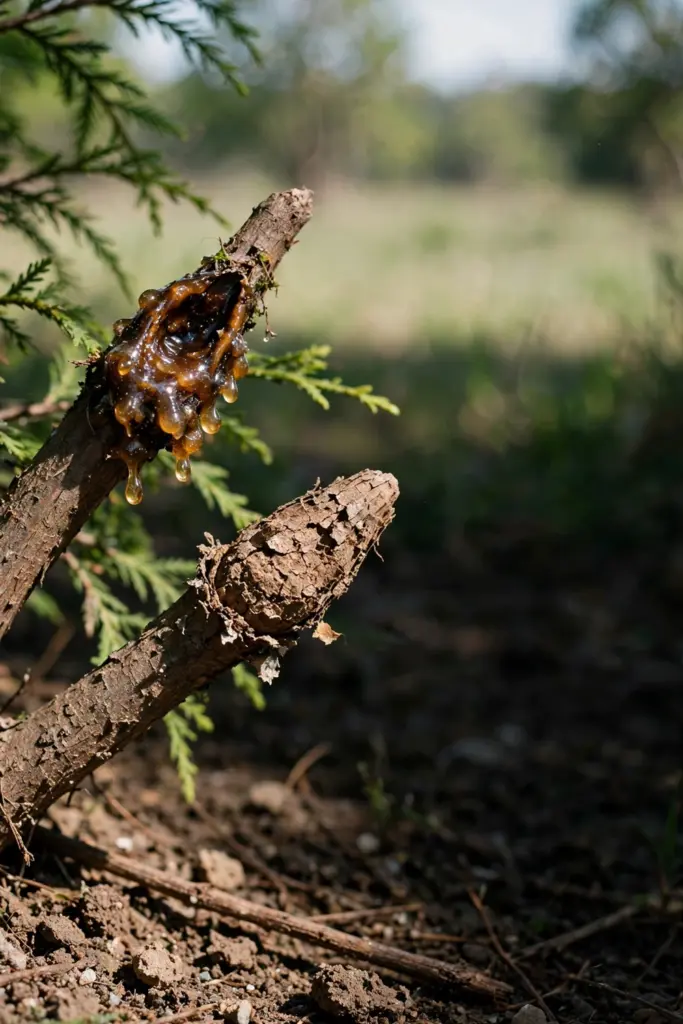
Read the canker. Most cankers are slightly sunken, with raised margins, and they may be discolored dark brown to purple. Cracked bark in infected areas is often accompanied by extensive resin exudates that flow down the diseased branches. The cambial tissue beneath oozing sites is discolored with a reddish to brown color. The sunken canker with resin is the Seiridium mark.
Scrape the bark to check. Scrape some outer bark away with a pruner blade or pocket knife, and check for dark brown tissue instead of green. Dark brown tissue under the bark marks the canker. Green tissue clears it. The scrape test is the bark check.
Watch the tree thin out. Infected trees look thinly branched. The tree loses branches one at a time, and the crown thins. The thin crown is the late sign. The early sign was the single flagging branch.
Which Cypress Family Trees Get Hit Hardest
Leyland cypress suffers most. In Georgia, Seiridium canker is probably the most important and destructive disease on Leyland cypress in the landscape. The Leyland screen is the canker screen. The Leyland is the flagship host.
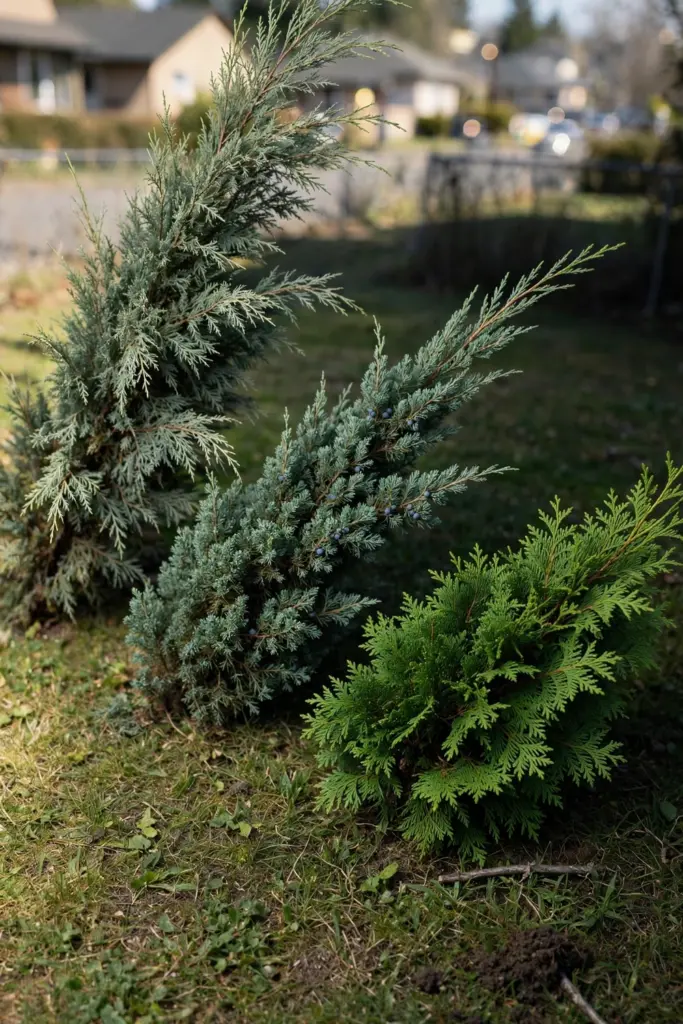
Plants of all sizes and ages can be affected. Young trees and old trees both catch it, the age does not protect, the stress does the damage, and the young stressed tree is as vulnerable as the old stressed tree.
The host range spans the cypress family. Hosts span Cupressaceae: cypress, juniper, arborvitae and Thuja, Chamaecyparis, Cryptomeria, Cupressus, Juniperus, Libocedrus, Platycladus, Taxodium, and Thuja. The article scopes to the cypress family with Leyland as flagship, never to Leyland alone. The juniper and arborvitae are hosts too.
Arborvitae carries a second species. Seiridium cardinale is reported on arborvitae. The species differs by host and region. The arborvitae canker may be a different Seiridium species than the Leyland canker. The species note matters where the host is arborvitae.
Cypress Canker vs Botryosphaeria Canker on Leyland Cypress
The real differential on Leyland cypress is Seiridium versus Botryosphaeria, not Seiridium versus Cytospora. Cytospora hits spruce and stone fruit, different hosts, so a Seiridium-versus-Cytospora differential is mostly host-based. On a Leyland cypress, the two canker diseases are Seiridium and Botryosphaeria. The differential below separates them.
| Clue | Cypress Canker (Seiridium) | Botryosphaeria Canker (Botryosphaeria) |
|---|---|---|
| Resin flow | Resin flow common; extensive resin exudates flow down diseased branches | Little or no resin flow |
| Fruiting bodies | Black fruiting dots on the bark surface | Fruiting bodies just under the bark |
| Canker extent | Thin, elongated cankers; branch dieback | Extensive main-stem cankers |
| Branch pattern | Branches die one at a time | Branches die one at a time |
| Pruning response | Prune below the canker; no fungicide cure | Prune below the canker; no fungicide cure |
| Hosts | Cypress family (Leyland flagship) | Cypress family (Leyland flagship) |
No published home-gardener head-to-head comparison article exists. This table compiles the distinction from parallel sources: the University of Maryland Extension comparison, UGA Extension, and Arkansas Extension. The branch pattern and pruning response rows are the same for both diseases, which is why the resin and fruiting-body rows carry the differential. Resin alone does not prove Seiridium: healthy Leylands can also show resin flow, so resin is a clue, not a confirmation.
Rule out the neighbors in one pass. Cytospora canker hits spruce and stone fruit, not Leyland cypress. Nectria canker hits hardwoods. Hypoxylon canker hits oaks. Each neighbor gets one line, never a second table.
How Cypress Canker Spreads
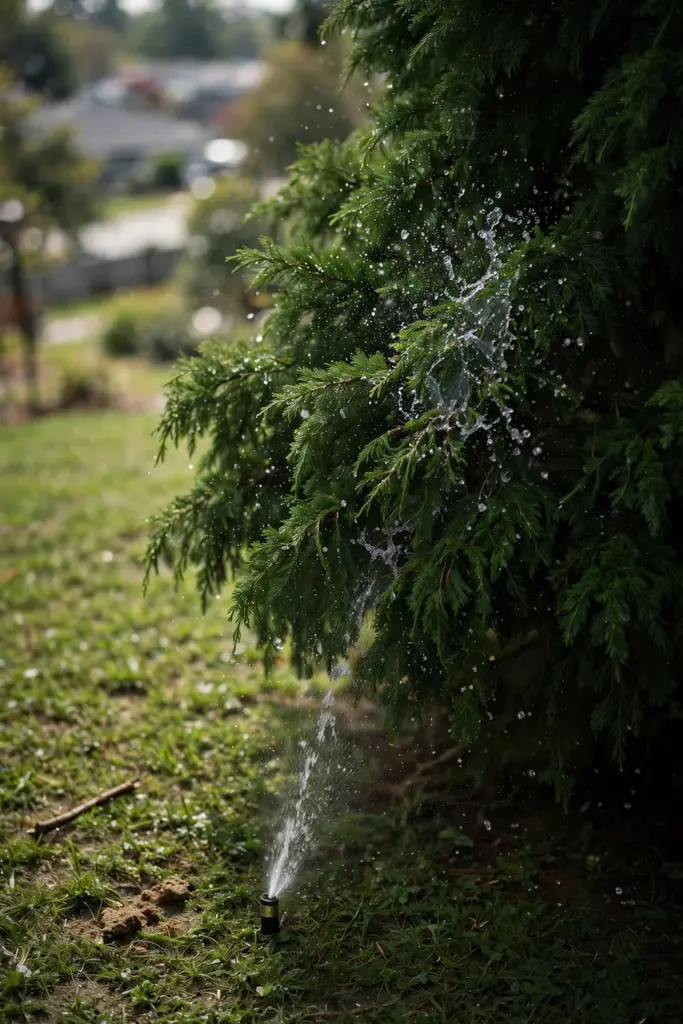
Spores splash from overhead water. Microscopic spores are disseminated primarily by splashing from overhead water, so a sprinkler that wets the canopy moves spores from canker to wound, the overhead water is the highway, and the morning watering is the fence.
Wounds admit the fungus. Infection occurs primarily through tree wounds. Ice damage, spring freezes, pruning cuts, and mower strikes open the bark. The wound is the entry. The intact bark is the fence. The wound care is the prevention.
One species can penetrate intact young tissue. One species of Seiridium can penetrate intact young green leaves and shoots. The intact tissue is not always safe. The young shoot is the exception. The young growth is the vulnerability.
Stressed trees spread it faster. During times of drought, trees that are already infected will spread the disease much more quickly. The drought is the accelerator. The irrigation is the brake. The stressed row is the fast row.
What Raises the Risk of Cypress Canker
Drought stress raises the risk most. Drought or heat stressed plants are particularly prone to the disease. The drought-stressed Leyland is the canker Leyland. The irrigated Leyland resists. The irrigation is the biggest lever.
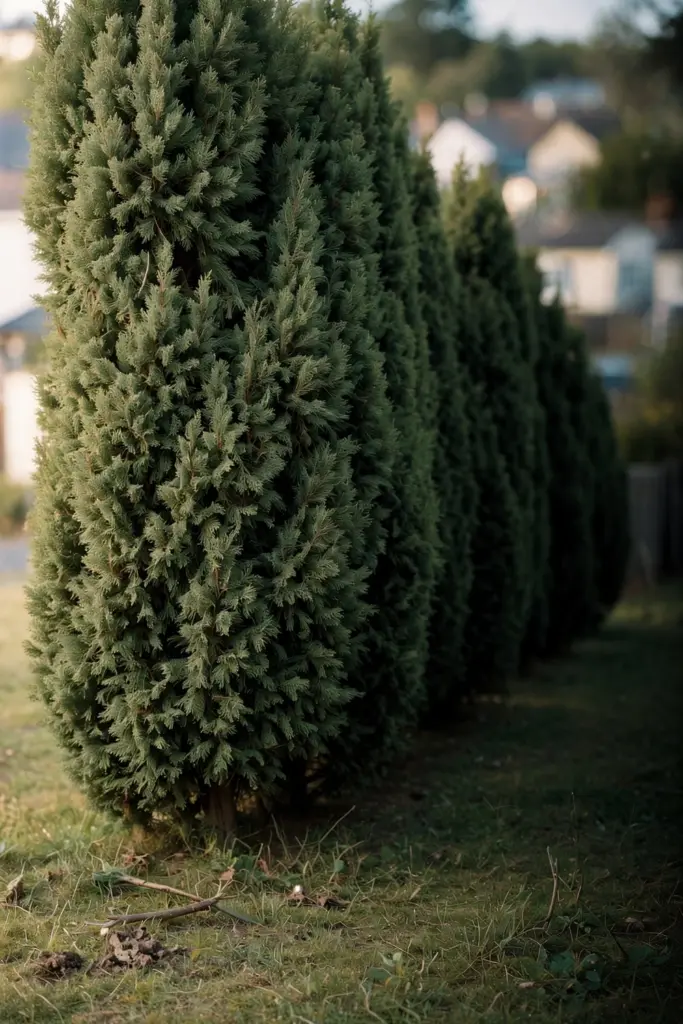
Crowding raises the risk. Leyland cypress are often planted too close together, and crowding restricts airflow. At closer spacing, the trees shade each other and hold humidity. The crowded row is the canker row. The 12 to 15 foot spacing is the fence.
Overhead irrigation raises the risk. Overhead irrigation splashes spores and wets the canopy. The sprinkler is the splash machine. The drip or soaker is the safe water. The morning watering is the fence.
Wet weather pruning raises the risk. Pruning in wet weather opens wounds when spores are moving. The wet cut is the infected cut. The dry-weather cut is the safe cut. The weather is the pruning calendar.
Shady conditions raise the risk. Field observations suggest that trees grown in shady conditions are more prone to develop these canker diseases, so the shaded tree is the canker tree, the sunny tree resists better, and the shade is the risk.
Poor drainage raises the risk. Leyland cypress are commonly planted in poorly drained soils, and poor drainage stresses the roots. The wet soil is the stressed soil. The drained soil is the safe soil. The drainage is the defense.
Strategy 1: Confirm the ID With Flagging and the Canker
Scout for flagging. A single yellow-to-reddish-brown branch among green branches is the flag. The flagging branch is the first sign. The scout checks the whole tree, branch by branch.
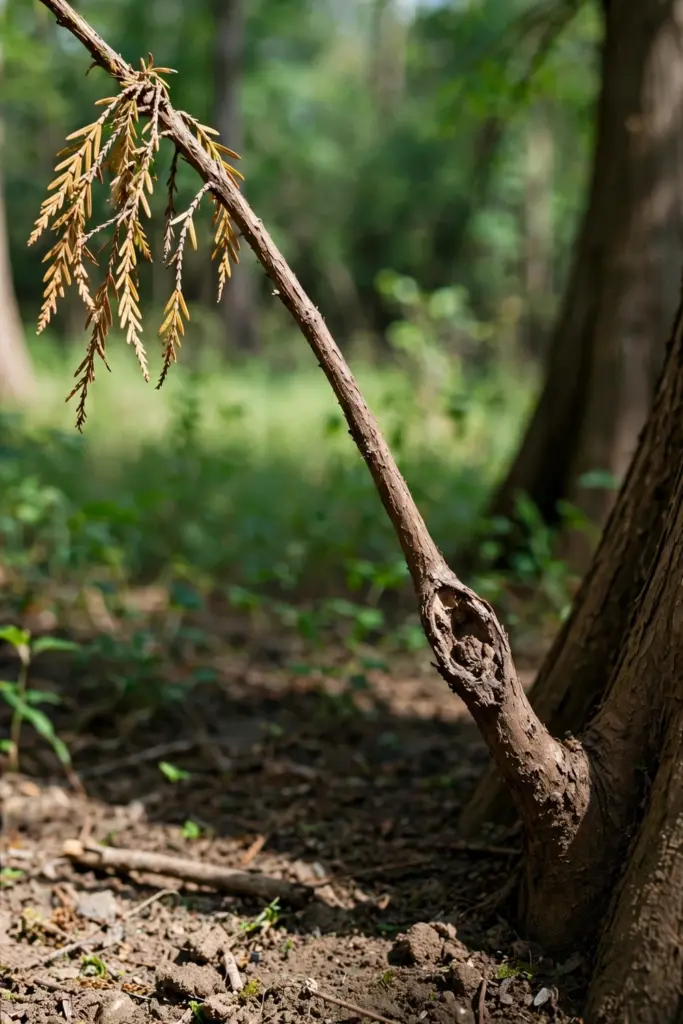
Find the canker below the flag. The canker sits several feet down the branch near the trunk, not at the shoot tip. The canker is the lesion. The flagging is the consequence. The canker hides below the flag.
Scrape the bark. Scrape some outer bark away and check for dark brown tissue instead of green. Dark brown tissue marks the canker. Green tissue clears it. The scrape test is the bark check.
Check the resin. Extensive resin exudates flowing down the diseased branches mark Seiridium. Little or no resin points toward Botryosphaeria. The resin is a clue, not a confirmation, since healthy Leylands can also show resin flow. The resin plus the canker is the pair.
Strategy 2: Tell It From Botryosphaeria Canker
Check the resin flow. Seiridium shows resin flow, with extensive resin exudates flowing down diseased branches. Botryosphaeria shows little or no resin. The resin is the first differential. The resinous canker is Seiridium. The dry canker is Botryosphaeria.
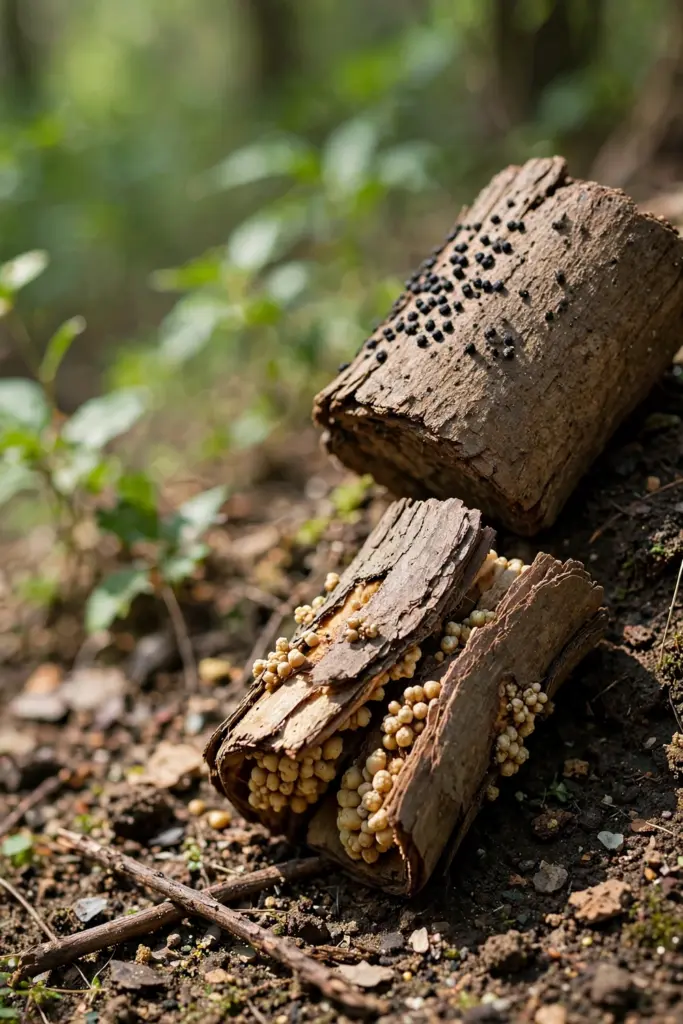
Check the fruiting bodies. Seiridium shows black fruiting dots on the bark surface, while Botryosphaeria shows fruiting bodies just under the bark, so the fruiting-body position is the second differential: the surface dots are Seiridium, and the under-bark bodies are Botryosphaeria.
Check the canker extent. Seiridium shows thin, elongated cankers with branch dieback, while Botryosphaeria shows extensive main-stem cankers, so the extent is the third differential: the thin canker is Seiridium, and the main-stem canker is Botryosphaeria.
Know that the response converges. Both diseases respond to the same pruning: cut below the canker, destroy the material, disinfect tools, and relieve stress. The differential guides the identification, and the pruning is the same. The identification matters for the record, not for the cut.
Strategy 3: Prune Below the Canker, With the Clearance Range
Cut below the canker. All infected branches should be pruned below the cankered area and destroyed as soon as symptoms are observed. The cut removes the canker. The branch beyond the cut is dead anyway. The cut is the control.
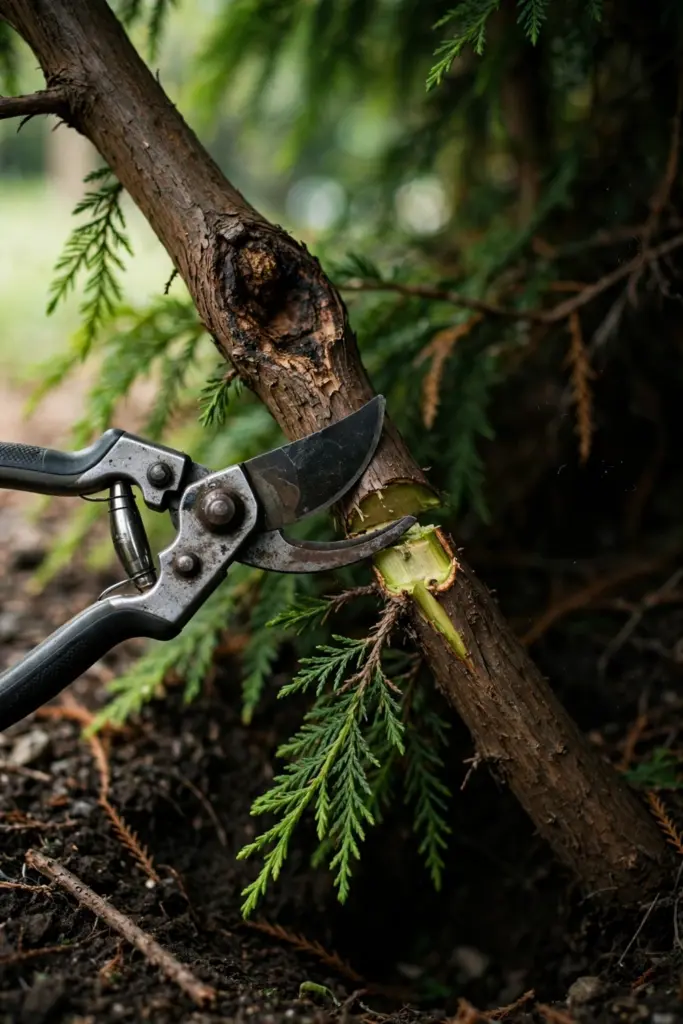
Know the clearance conflict. Sources differ on how far below the canker to cut: Arkansas Extension says 3 to 4 inches below the cankered area; one Extension source says several inches below the visible symptoms; PNW says 1 to 2 feet below; Arizona says at least 1 inch below. This article flags the conflict rather than printing one figure as settled. The safe reading is to cut well below the visible canker, into healthy green tissue, and to cut more rather than less where the branch is valuable.
Cut into healthy tissue. The infection may have spread beyond the area of visible symptoms, since there is a lag time between infection and symptom development. The cut into green tissue clears the hidden infection. The cut into brown tissue leaves it. The green tissue is the margin.
Prune in dry weather. Pruning in wet weather opens wounds when spores are moving. The dry-weather cut is the safe cut. The wet cut is the infected cut. The weather is the pruning calendar.
Strategy 4: Destroy Pruned Material, Never Compost
Burn pruned material where legal. Burning destroys the spores, the burn is the disposal, the burned branch is the dead inoculum, and the burn pile is the containment.
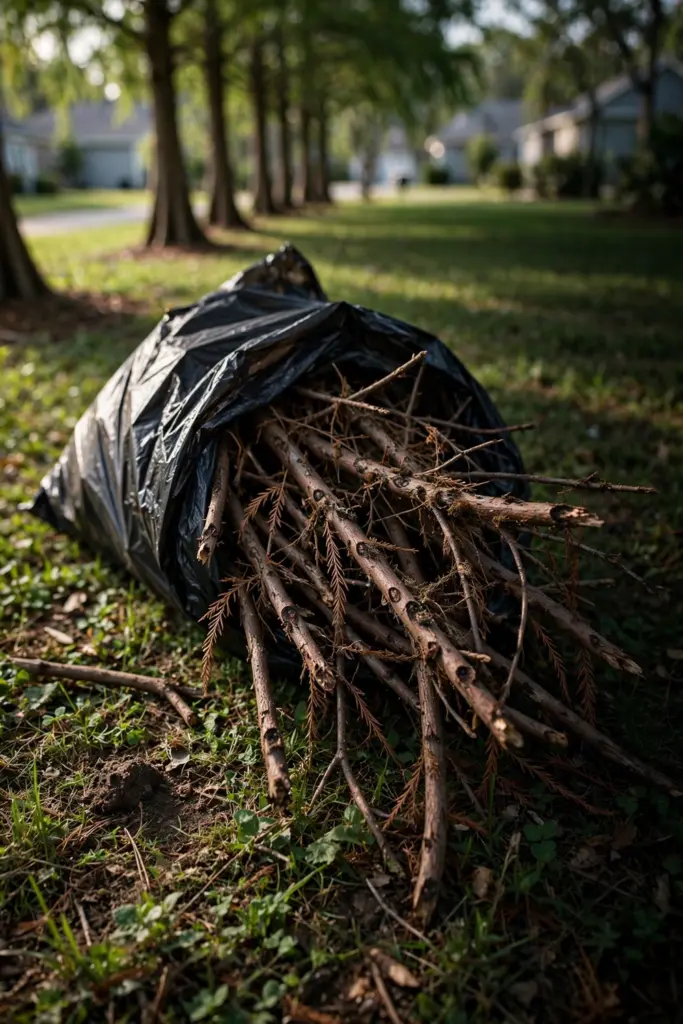
Bag and landfill where burning is not allowed. Bag the pruned branches and put them in municipal waste. The bag is the disposal route. The landfill is the containment. The bagged branch is the safe branch.
Do not compost pruned material. Compost spreads the spores, the compost pile is a distribution route, the composted canker is the next infection, and the compost is forbidden for cankered wood.
Clean up fallen branches. Fallen branches hold spores. The fallen branch is the ground inoculum. The cleanup removes it. The clean ground is the safe ground.
Strategy 5: Disinfect Tools Between Every Cut
Disinfect pruning blades after each cut. Disinfect pruning blades after each cut with either 10 percent household bleach or 70 percent alcohol, per Arkansas Extension. The disinfected blade does not carry the fungus to the next cut. The blade discipline is the containment. The dirty blade is the vector.
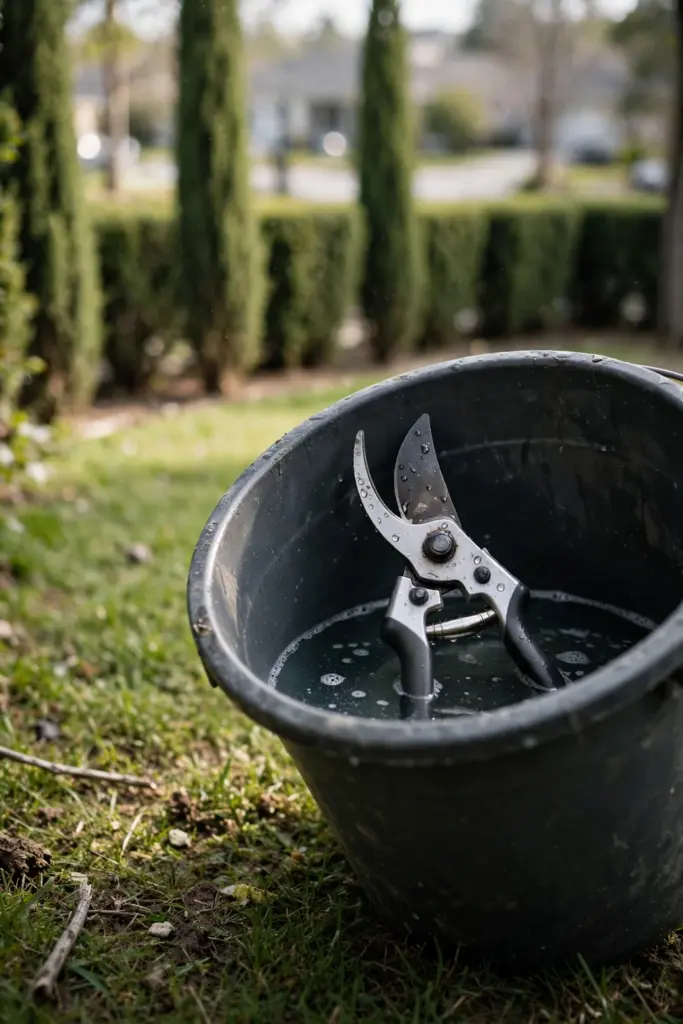
Oil tools after bleach. Bleach corrodes steel, so oil the tools after bleach disinfection, since the oil protects the blade, the oiled blade is the maintained blade, and the rusted blade is the neglected blade.
Disinfect between trees, not just between cuts. A tool used on an infected tree and then on a healthy tree transfers the fungus. The between-tree disinfection is the fence. The shared tool is the syringe. The disinfected tool is the prevention.
Strategy 6: Relieve Drought Stress With Deep Irrigation
Irrigate during dry weather. Trees need to be irrigated during dry weather to reduce canker development. Deep irrigation every 7 to 14 days in hot and dry periods keeps the tree vigorous. The irrigated tree resists. The drought-stressed tree succumbs. The irrigation is the biggest lever.
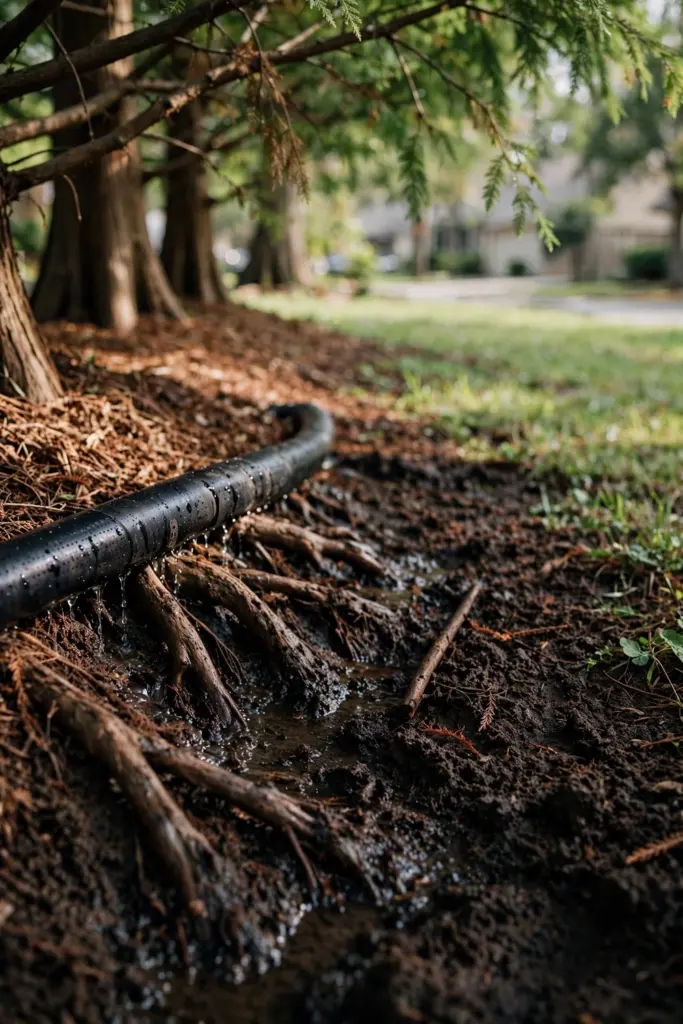
Water late fall and during thaw. Water late fall and during thaw, when the soil is dry. The fall water carries the tree into winter. The thaw water carries it into spring. The seasonal water is the stress relief.
Mulch beyond the lowest limbs. Mulch beyond the lowest limbs holds soil moisture and cools the roots, so the mulch is the moisture keeper, the bare soil is the dry soil, and the mulch ring is the defense.
Check soil moisture at 6 inches. Irrigate when the soil around 6 inches deep has become somewhat dry to the touch. The 6-inch check is the watering rule. The surface check lies. The deep check tells the truth.
Strategy 7: Space, Airflow, and No Overhead Water
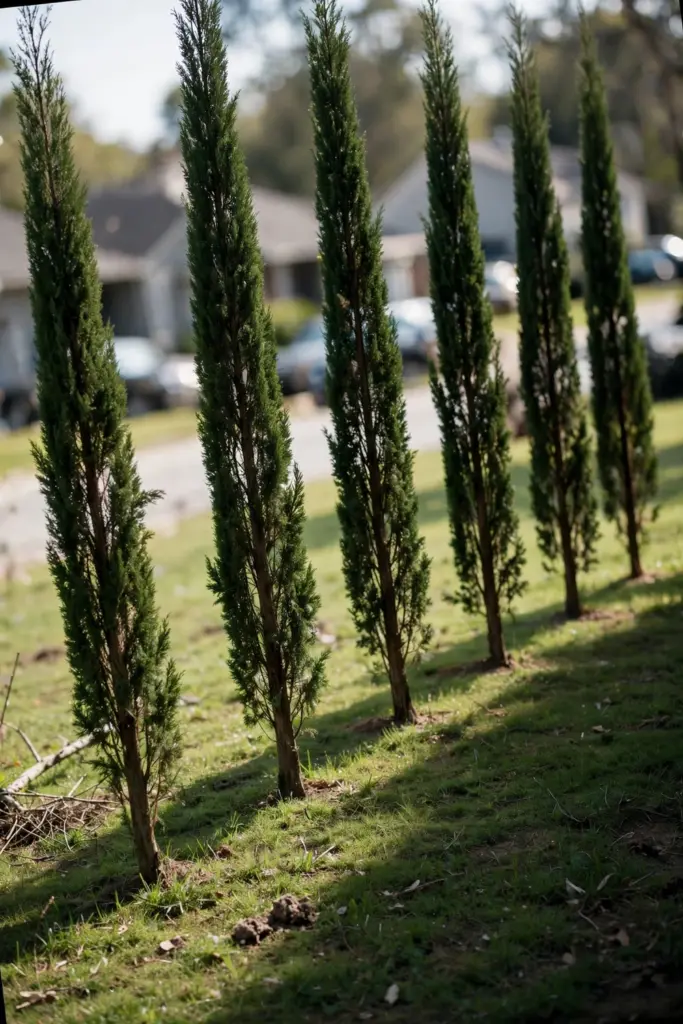
Space plants 12 to 15 feet apart. Plant Leyland cypress at least 12 to 15 feet apart, since at closer spacing the trees shade each other, hold humidity, and spread spores down the row, so the spacing is the airflow and the crowding is the canker row.
Avoid overhead irrigation. Overhead irrigation splashes spores and wets the canopy. Drip or soaker lines water the soil without wetting the canopy. The drip is the safe water. The sprinkler is the splash machine.
Water in the early morning where overhead watering is unavoidable. Early morning watering gives the canopy the day to dry, while evening watering leaves the canopy wet overnight, so the dry canopy is the safe canopy and the morning is the watering time.
Avoid hedge overcrowding. A hedge pruned into a solid wall holds humidity and blocks airflow. The solid hedge is the canker hedge. The aired hedge is the safe hedge. The airflow is the fence.
Strategy 8: Remove Severely Affected and Trunk-Infected Trees
Remove the tree where the trunk is cankered. A canker on the main trunk cannot be pruned out. The trunk canker girdles the tree. The girdled tree dies. The trunk canker is the removal trigger.
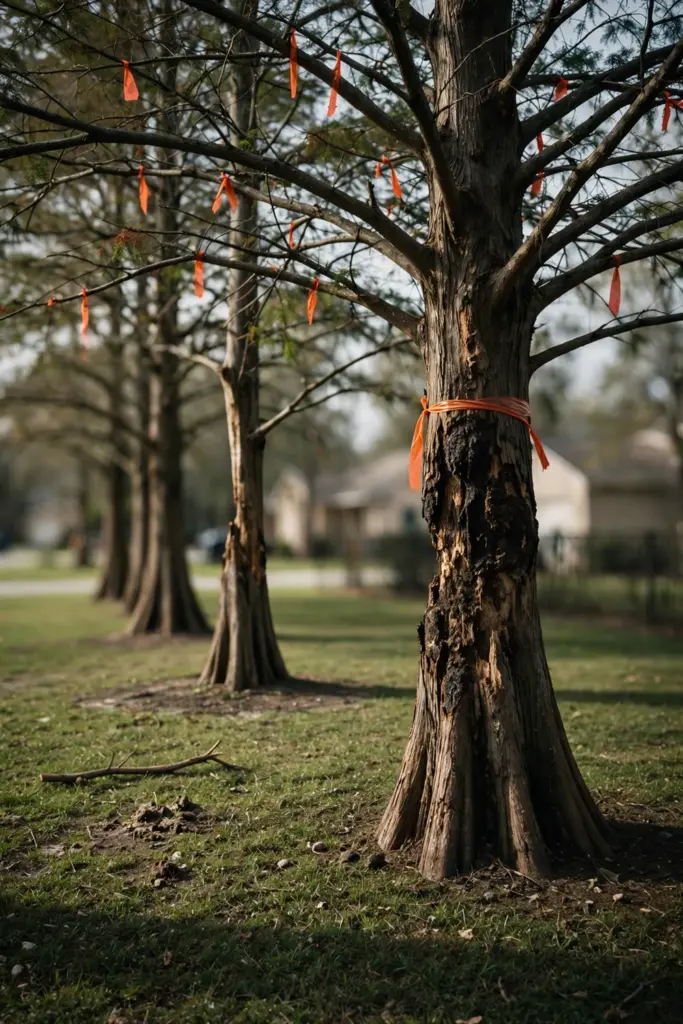
Remove the tree where most branches are flagged. A tree with most branches flagged is a tree past saving. The pruning cannot keep up. The tree is the inoculum for the row. The removal protects the row.
Remove the tree where it is a hazard. A cankered tree with dead branches is a falling hazard. The dead branch falls on people, cars, and roofs. The hazard is the removal trigger. The safety is the reason.
Do not leave the stump as inoculum. The stump holds the fungus. Remove the stump or grind it. The ground stump is the clean ground. The left stump is the reservoir.
Strategy 9: Replant With Resistant Species and Mixed Plantings
Do not replant a solid Leyland screen where Seiridium killed one. A solid Leyland screen replanted after Seiridium is a solid Leyland screen waiting for Seiridium. The solid screen is the epidemic design. The mixed planting is the resilient design.
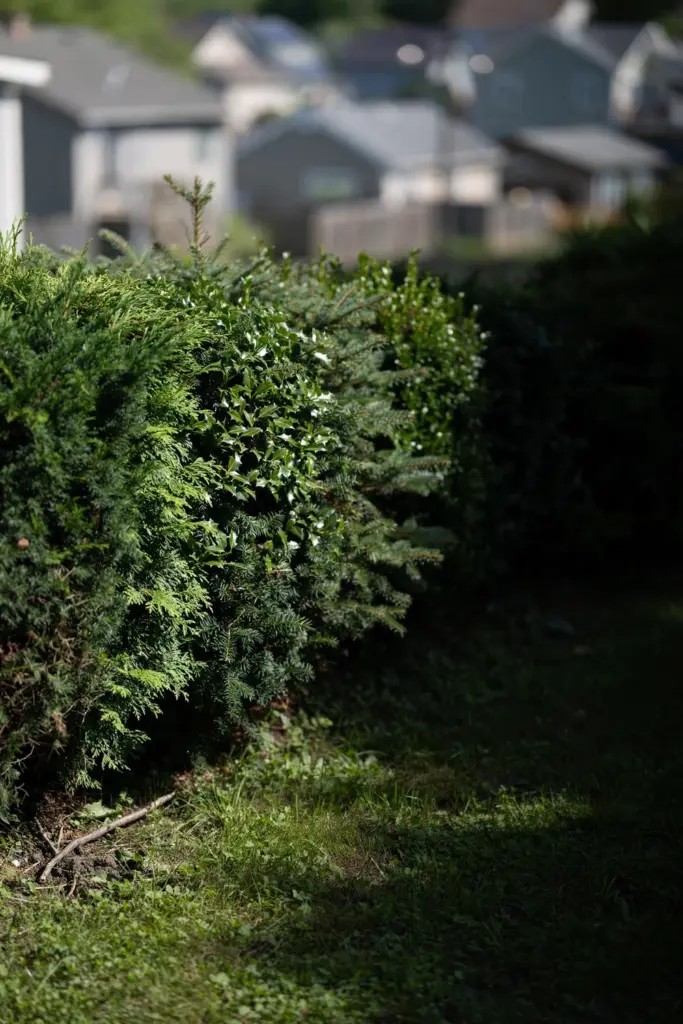
Choose resistant or less-susceptible species. Emerald Green arborvitae, Cryptomeria, Thuja Green Giant, Arizona cypress, and Western red cedar are named as resistant or less-susceptible replacements. Sources differ on the exact list, so verify the list against local Extension guidance before buying. The verified list is the buying list.
Design with mixed species and cultivars. Mass plantings of a single species invite epidemics. Mixed species and cultivars slow the spread. The diversity is the defense. The monoculture is the risk.
Consider Eastern redcedar, American holly, Japanese cedar, Arizona cypress, and Western arborvitae for large evergreen screens. These species are named as large-maturing evergreen options for sunny sites with good drainage. The alternative list is the screen plan. The single-species screen is the past.
Strategy 10: Do Not Pay for a Fungicide Cure
Know the fungicide conflict. Extension consensus holds that fungicides are not effective for controlling this disease, and no fungicides are effective once infection has taken place. One PNW source lists chemical control for arborvitae. This article flags the conflict and defaults to the Extension consensus. The fungicide is not the answer.
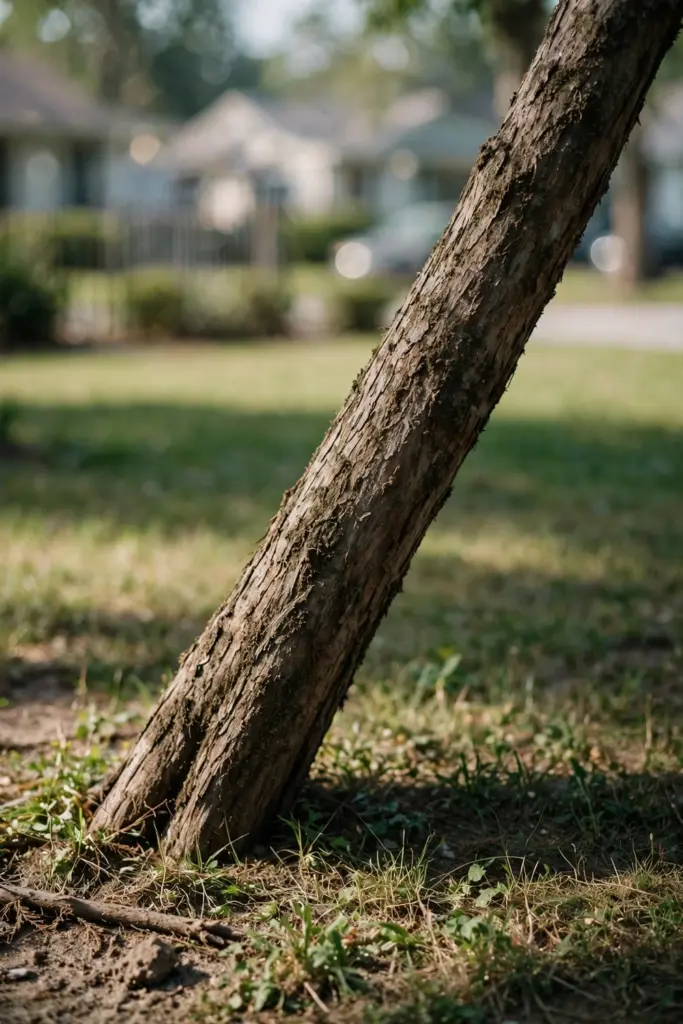
Do not pay for a curative spray. A fungicide cannot cure an existing infection. The curative spray is money on a dead branch. The pruning is the control. The spray is the waste.
Do not carry the aggregator fungicide list as home advice. A low-authority aggregator lists Daconil, Mancozeb, Propiconazole, Myclobutanil, and Thiophanate-methyl for Seiridium. The list contradicts the Extension consensus and is not carried here. The aggregator list is the trap.
Do not present paclobutrazol as a Seiridium treatment. Paclobutrazol data is for Cytospora in spruce, a different disease on a different host. The paclobutrazol is not a Seiridium treatment. The cross-disease borrowing is the error.
Living With Cypress Canker on Trees You Already Own
A landscape with cypress canker is a landscape to manage, not a landscape to abandon. Scout for flagging. Prune below the canker. Destroy the material. Disinfect tools. Irrigate in drought. Space for airflow. The canker will still appear, but it will appear as a single flagged branch, not as a dying row.
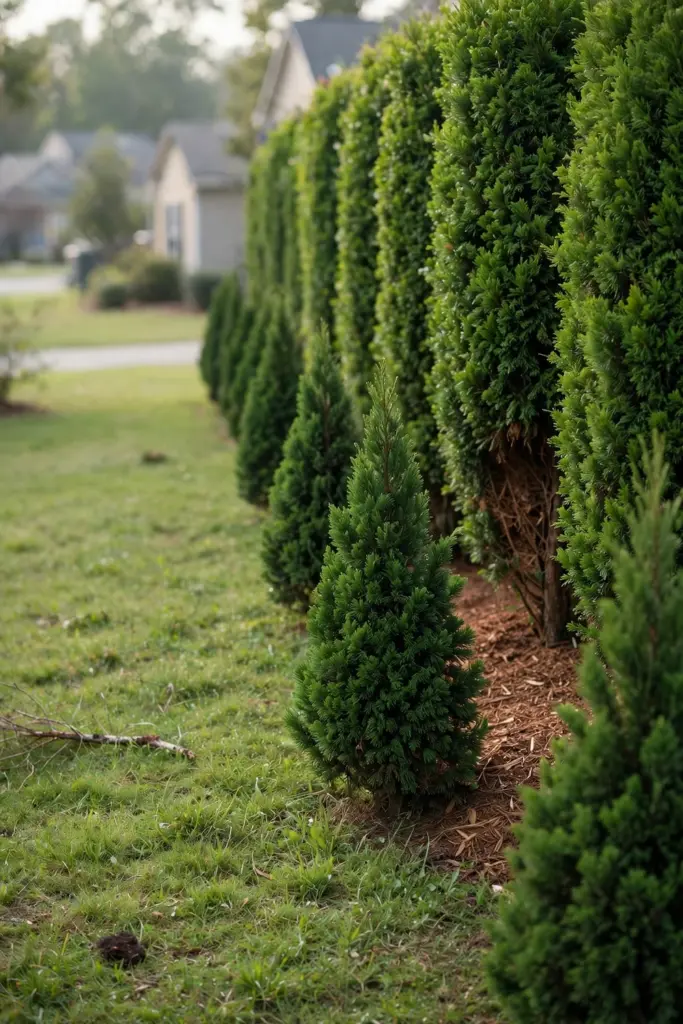
Check the neighbors’ trees too. A cankered row is a neighborhood problem, since spores splash across property lines and a neighbor’s unpruned canker is your next infection. Tell the neighbor where the canker hides and how far below it to cut, and the row on both sides of the fence stays cleaner. Keep those three lines unbroken and the canker stays contained. The Plant Care archive collects the site’s disease coverage for the next problem the landscape throws up.
Frequently Asked Questions
No. There is no control other than pruning out the affected branches, and no fungicides are effective once infection has taken place. A fungicide cannot cure an existing infection. The pruning is the control. The prevention is spacing, airflow, irrigation, and sanitation. A seller who promises a fungicide cure sells a lie.
Sources differ, and this article flags the conflict rather than printing one figure as settled. Arkansas Extension says 3 to 4 inches below the cankered area. One Extension source says several inches below the visible symptoms. PNW says 1 to 2 feet below. Arizona says at least 1 inch below. The safe reading is to cut well below the visible canker, into healthy green tissue, and to cut more rather than less where the branch is valuable.
Yes. Cypress canker and Seiridium canker are the same disease under two names. Clemson lists them in one entry: Seiridium unicorne, Seiridium canker and dieback, Cypress canker. The pathogen is a Seiridium species complex, with Seiridium unicorne most common on Leyland cypress in Georgia. The two names describe one disease. The article covers both names.
Not at the first flagged branch. Prune the flagged branch below the canker, destroy the material, disinfect tools, and irrigate in drought. Remove the tree where the trunk is cankered, where most branches are flagged, or where it is a hazard. The trunk canker is the removal trigger. The single flagged branch is the pruning trigger. The decision is the branch count.
Plant a mixed screen, not a solid Leyland screen. Emerald Green arborvitae, Cryptomeria, Thuja Green Giant, Arizona cypress, and Western red cedar are named as resistant or less-susceptible replacements, and Eastern redcedar, American holly, Japanese cedar, Arizona cypress, and Western arborvitae are named as large evergreen options. Sources differ on the exact list, so verify against local Extension guidance before buying. The mixed planting is the resilient design.
Where to Go From Here
Cypress canker rewards the gardener who scouts for flagging, prunes below the canker, destroys the material, disinfects tools, and irrigates in drought. Confirm the ID with flagging and the canker. Tell it from Botryosphaeria with the resin and fruiting-body rows. Prune below the canker. Destroy the material. Disinfect tools. Relieve drought stress. Space for airflow. Remove the trunk-infected tree. Replant mixed. Never pay for a fungicide cure.
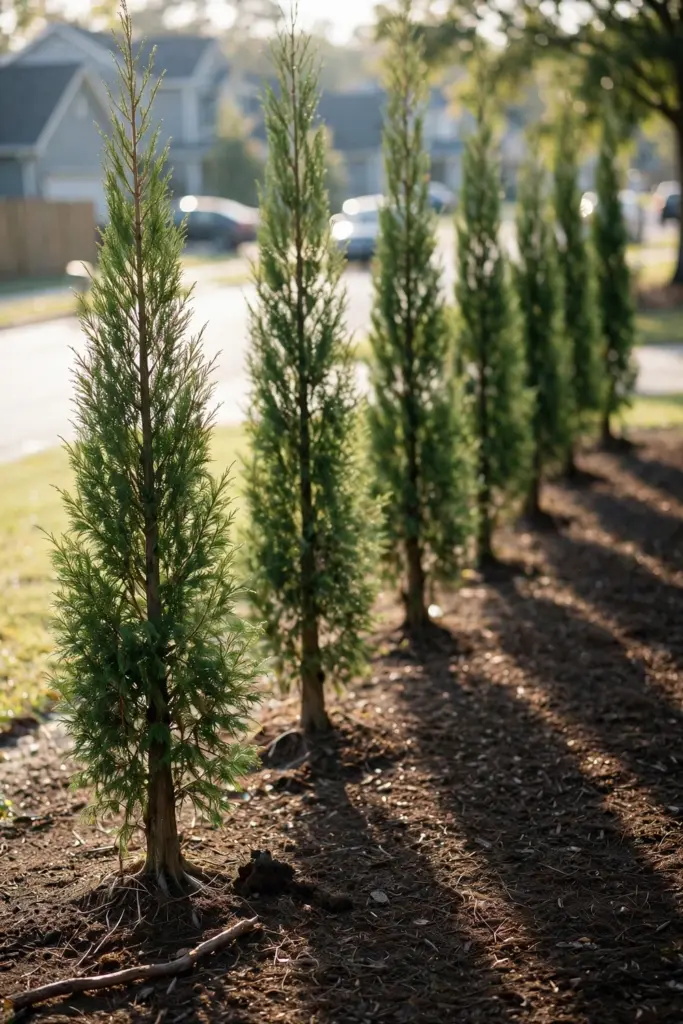
Next season, start with a scouted row. A row with spaced trees, drip water, mulched roots, and pruned cankers will hold cypress canker to a single flagged branch. The UGA Extension bulletin on diseases of Leyland cypress is a useful companion for the full Extension picture, since it sets the home-landscape response here against the university evidence behind it, and the Plant Care archive collects the site’s other disease guides.