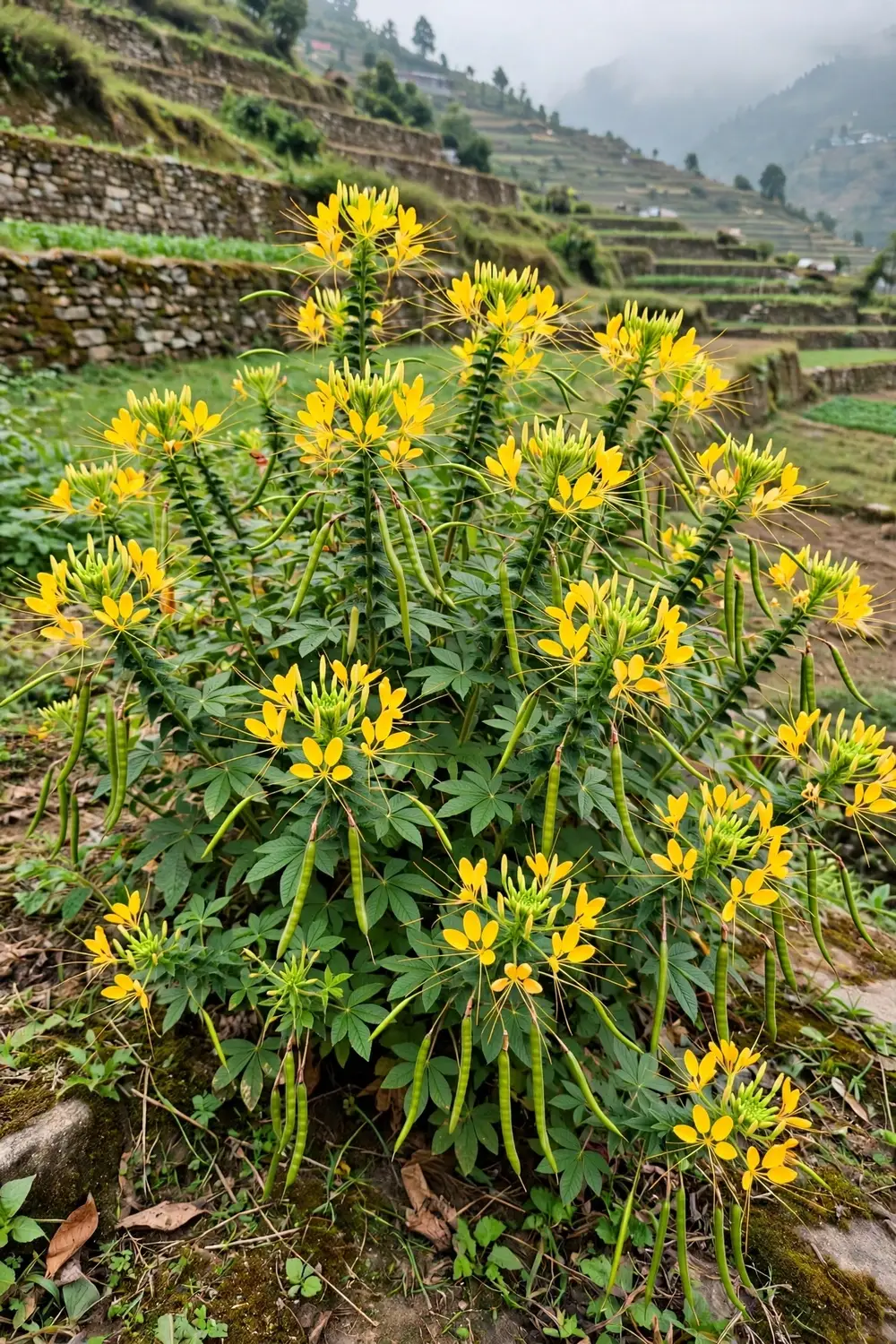

Jakhya needs 90 to 120 days from sowing to dry seed, and the hardest part is believing the timeline. This is a plant that farmers in Uttarakhand treat as a weed, then deliberately grow between crops because those tiny black seeds are worth more than the crops they grow between. If you learn how to grow jakhya from India, you are learning a two-for-one skill: how to sow an annual seed spice, and how to read a plant that tells you exactly what it needs by where it volunteers.
The trick is that jakhya is Cleome viscosa, a member of the spider-flower family (Cleomaceae), and everything about it makes sense once you accept that it is a wild plant first and a crop second. It wants heat to wake up, shallow soil to emerge, and almost nothing from you afterward. Sow it like a pampered vegetable and it will sulk. Treat it like the hardy annual it is, and it pays you back with seed pods full of crackling tempering spice.
This guide gives you 20 moves: identity and the mustard mix-up, seed science, sowing mechanics, containers, the hills calendar, harvest, the tadka, and the Himalayan economics that make this crop worth growing.
1. What Jakhya Actually Is: The Weed That Became a Spice
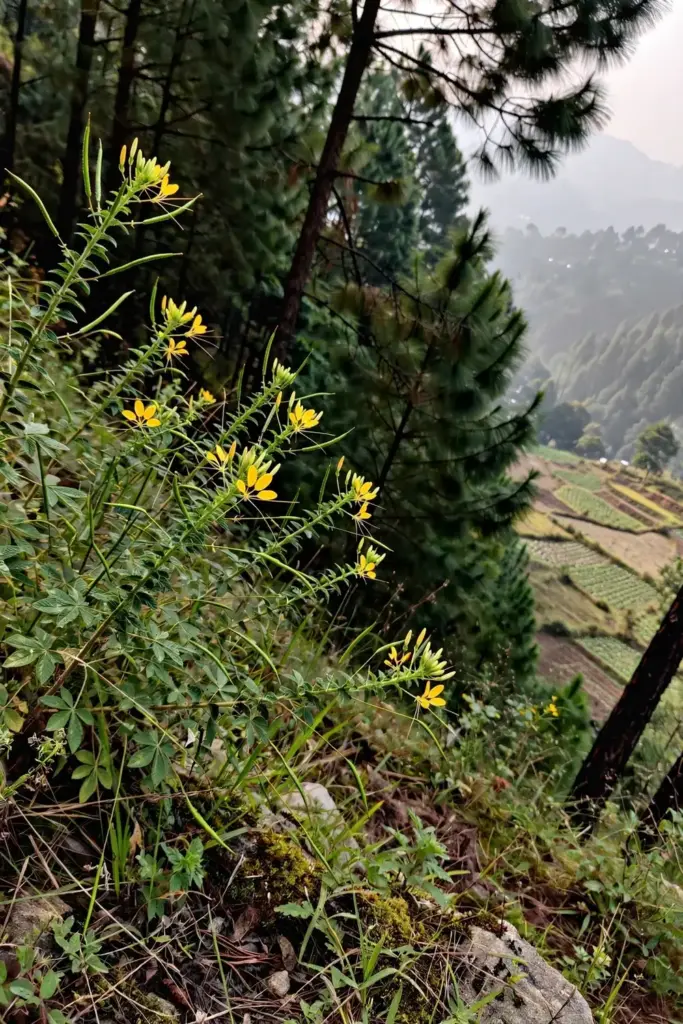
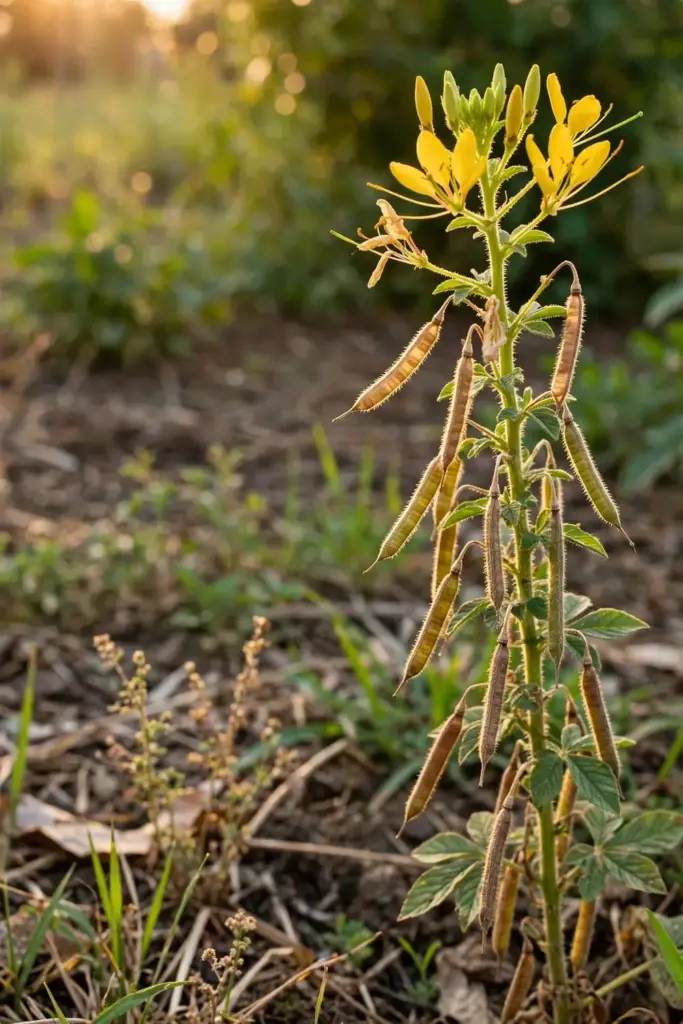
Jakhya is the seed of Cleome viscosa, an annual herb that grows 2 to 4 feet tall with a strong odor, yellow flowers, and sticky glandular hairs on its stems and leaves. In the Garhwali language it is written जख्या, and outside the hills you will also see it spelled jakiya, jhakiya, jakia, or jhakia, all names recorded on Wikipedia’s Jakhya page. All of these names point to the same plant and the same seed. For accuracy in later searches, note the Bengali folk name hurhur (yellow hurhur), which helps separate this plant from Cleome gynandra, a different species known as white hurhur or cat’s whiskers.
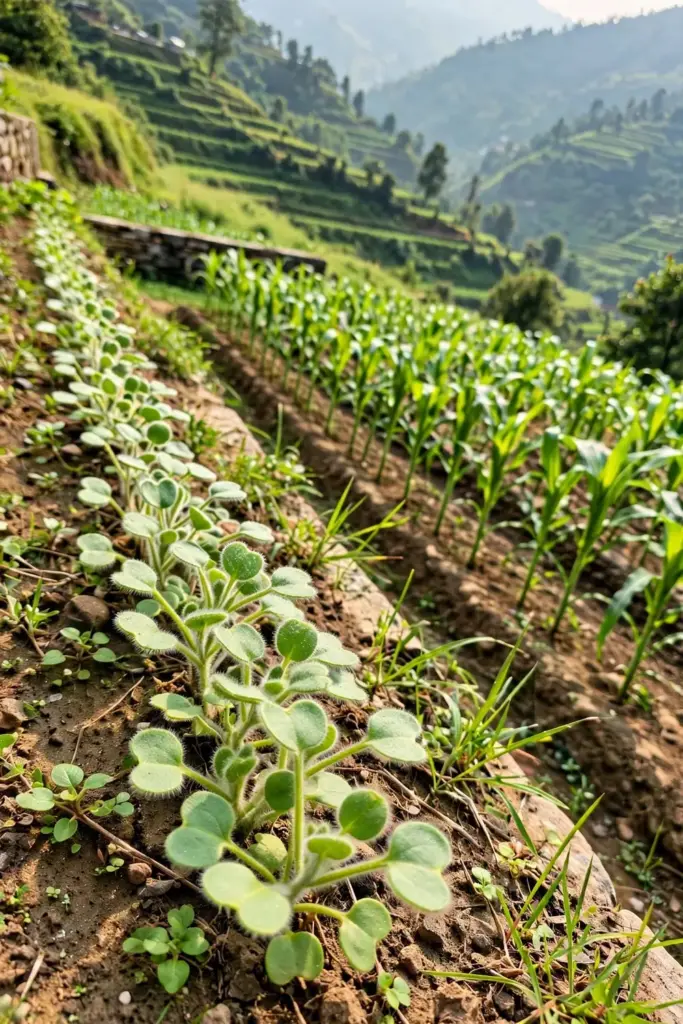
The plant’s real home is the rainfed subtropical hills of Uttarakhand, where farmers grow it between crops or in multi-cropping patterns, exactly as HC Joshi of Divine Agro Products described to The Hindu BusinessLine: “Jakia is actually a weed, so abundant that if one were to curse a neighbour, it is said ‘may jakia grow in your fields.'” That quote is worth keeping in mind the whole time you grow it, because it tells you the plant’s personality in one sentence. It volunteers in wastelands, forest margins, and disturbed ground. It wants almost no inputs. And the same abundance that makes it a curse makes it a crop.
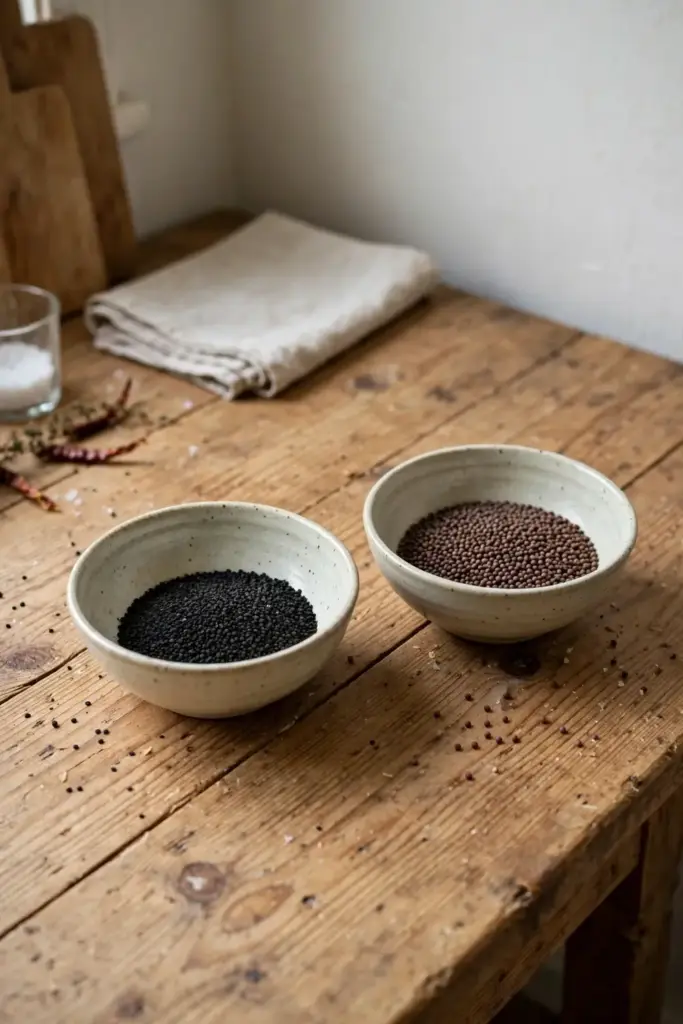
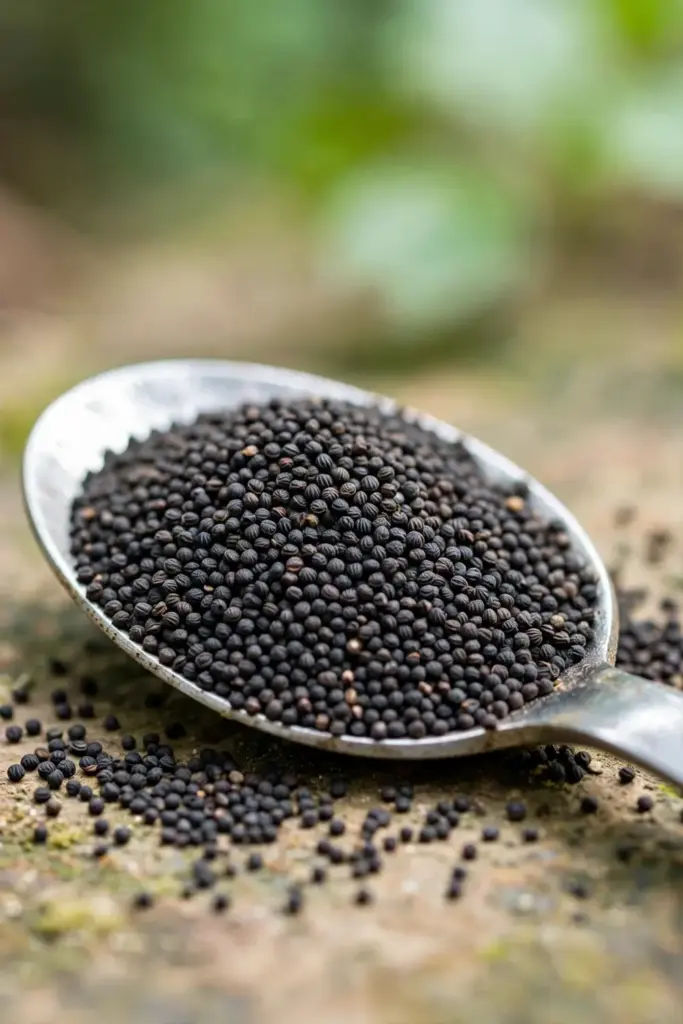
The seed is tiny, black to dark brown, spherical and shining, smaller than both mustard and sesame seed. That size matters at sowing time (see section 5), and it matters in the kitchen, where the seeds crackle in hot oil and give a warm, nutty flavor to potatoes, lentils, and leafy vegetables. If you are growing it for the kitchen, you are growing a tempering spice, not a grain or a leafy green. Every decision downstream flows from that fact.
2. Jakhya vs Mustard: Fixing the Wild Mustard Mix-Up
Two of jakhya’s common names, wild mustard and dog mustard, cause most of the confusion around this plant. The names are wrong in a precise way. Jakhya is not a mustard at all. Real mustard, the rai of Indian fields, is Brassica juncea in the cabbage family (Brassicaceae). Jakhya is Cleome viscosa in the spider-flower family (Cleomaceae). Different family, different flower, different seed. The “mustard” in the folk name describes what the seed resembles in the tadka, not what the plant is.
| Feature | Jakhya (Cleome viscosa) | Mustard / Rai (Brassica juncea) |
|---|---|---|
| Family | Cleomaceae (spider-flower) | Brassicaceae (cabbage/mustard) |
| Plant type | Annual herb, sticky stems, strong odor | Annual/biennial crop herb, smooth |
| Flowers | Yellow, spider-like, 4 petals | Yellow, cross-shaped, 4 petals |
| Seed size | Smaller than mustard and sesame | Larger, standard mustard size |
| Flavor in tadka | Nuttier, stronger crackle, warm and sweet | Sharper, classic pungent mustard |
| Main growing lane | Hills of Uttarakhand, rainfed, low input | Plains of India, irrigated fields |
Why does this matter in the garden? Because seed-buying advice for mustard does not apply to jakhya. Mustard is sown in the cool rabi season; jakhya needs summer heat to germinate (see section 4). Mustard tolerates burial; jakhya germinates best at exactly 1 cm. Buy seed labeled with the Latin name Cleome viscosa, not a packet that just says “wild mustard,” and you will avoid the most common expensive mistake in this lane.
3. Decide Your Jakhya Project: Seeds, Not Transplants
Grow jakhya from seed, direct-sown where it will finish. This plant is an annual with a fast life cycle and a taproot-ish root system that resents disturbance. Transplanting adds labor for zero gain, and nursery trays complicate a crop whose whole advantage is simplicity. The scout research found no serious grower raising jakhya in plug trays. Direct sow, thin once, and let the plants do the rest.
There are three realistic project shapes. First, the kitchen patch: one 1 by 2 meter bed or a row along a fence, sown for a family’s tempering supply. Second, the container project (section 8): two or three wide pots on a sunny terrace, which genuinely works because the plant stays compact when space-limited. Third, the farm-edge lane: sowing it along field borders or between crops, which is the traditional pattern and doubles as pest management, since the plant acts as a pollinator attractor and a natural pest repellent when planted with other crops.
Skip the fourth option, which is wild-harvesting from roadsides and calling it a project. Wild populations face real overharvesting pressure in parts of Uttarakhand, and cultivated seed is both more reliable and better for the hills. Growing it yourself is the conservation-friendly choice.
4. Read the Seed: After-Ripening, Heat, and 1 cm Burial
Jakhya seed has a dormancy story that explains most germination failures. A peer-reviewed germination study of Cleome viscosa seed from Iran tracked what wakes the seed up, and the findings are specific enough to build your sowing plan around. Fresh seed is dormant. After 209 days of dry after-ripening in storage, germination climbs to 77 percent. The practical translation: last season’s seed sown this season outperforms freshly harvested seed. If you buy seed, ask the seller for the harvest year; seed that has rested one season is the sweet spot.
Heat is the second lever. The study’s segmented model put the base germination temperature at 15.7 to 17.3 degrees Celsius and the optimum at 31.9 to 34.1 degrees. Germination at the cool end is slow and erratic; at 32 degrees and above it is fast and even. This is why the hills sow jakhya with the warm season, not ahead of it. Soil thermometers are optional, but the rule is simple: sow when nights are reliably warm and the soil feels warm to the back of your hand.
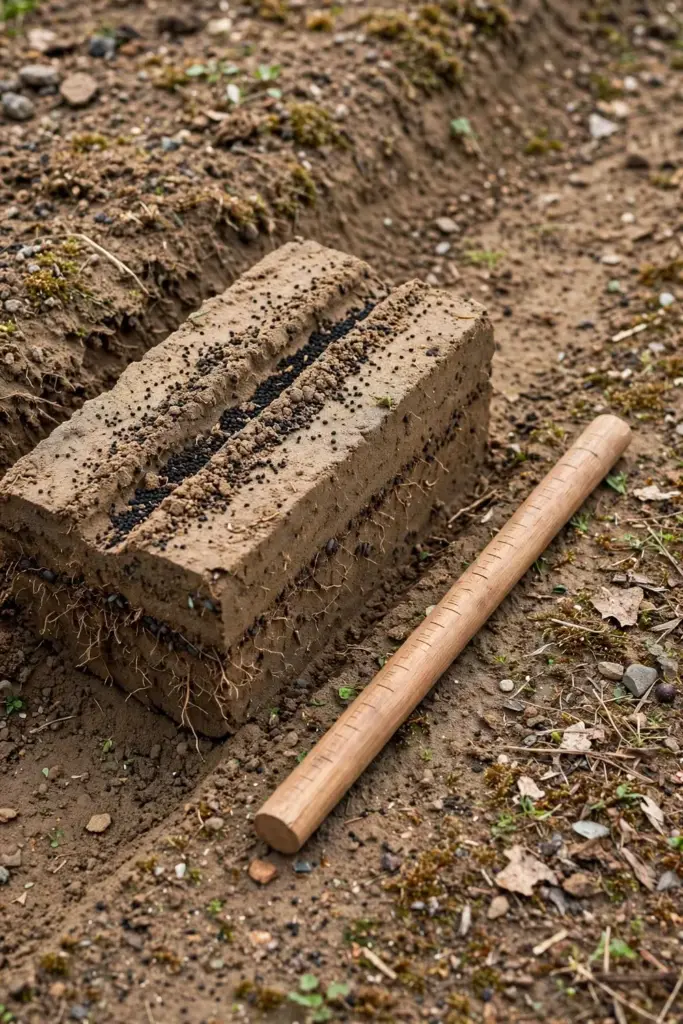
Burial depth is the third lever, and it is the one home growers get wrong. Maximum seedling emergence happened at exactly 1 cm of burial. Seeds left on the surface emerged poorly, and seeds buried deeper than 4 cm barely emerged at all. One centimeter is shallow enough to feel wrong if you are used to sowing larger seeds. Trust the number. Two supporting findings complete the picture: germination is sensitive to high soil salinity, so skip saline patches and heavy fresh manures, and flooding sharply reduces emergence, so the bed must drain freely even in monsoon downpours.
One fence to note. Some nursery-style sources claim germination in about a month from fresh seed. The research says dormancy lifts slowly over roughly seven months of after-ripening. For your first sowing, use rested seed and expect emergence in 7 to 14 days in warm soil; if your seed is fresh-harvested, sow thicker and accept lower emergence rather than assuming you did something wrong.
5. Sow Jakhya Step by Step
Work in the warm season, on a bed you have already weeded, because jakhya seedlings look like weed seedlings to the untrained eye and you will want a clean start. The procedure below assumes direct sowing in a prepared bed.
| Step | Action | Time |
|---|---|---|
| 1 | Choose rested seed (one season old, Cleome viscosa on the label); rub a few seeds between damp paper towels as a spot test | Day 0 |
| 2 | Fork the bed 15 to 20 cm deep, rake level, and remove weed roots; do not enrich heavily | Day 0 |
| 3 | Water the bed to settle it, then let the surface dry to moist, not muddy | Day 0 |
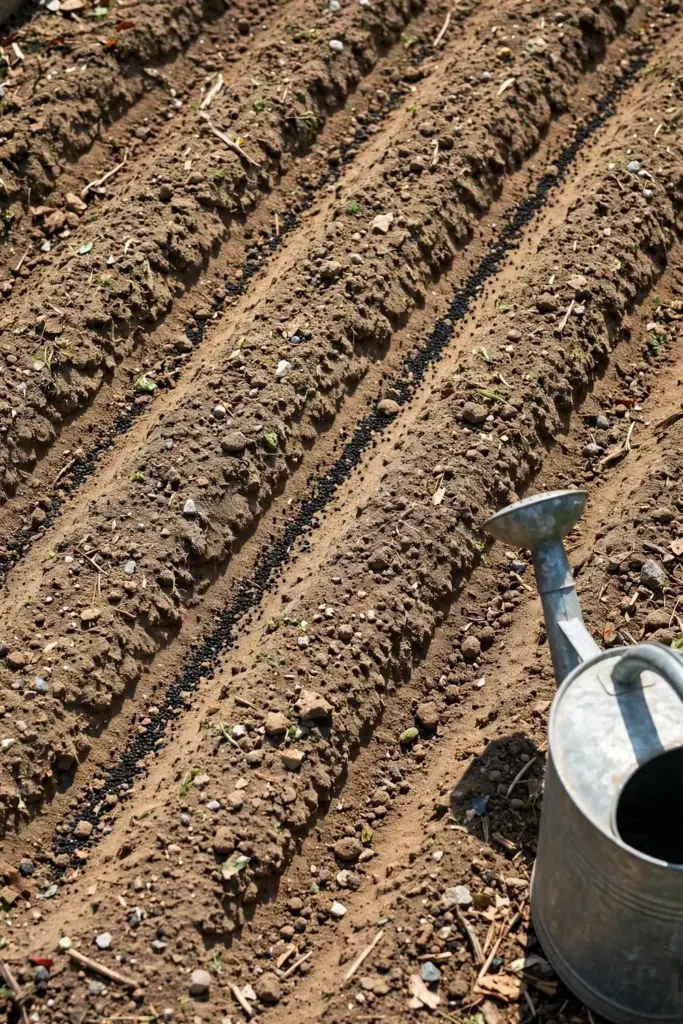
| 4 | Mark shallow furrows 30 cm apart, 1 cm deep; a stick dragged lightly works better than a trowel | Sowing day |
| 5 | Drop seed thinly along the furrow, roughly 2 to 3 cm apart; cover with 1 cm of fine soil and press gently | Sowing day |
| 6 | Water with a fine rose; keep the top 2 cm evenly moist until emergence | Days 1 to 14 |
| 7 | Thin to 15 to 20 cm between plants once seedlings have 3 to 4 true leaves | Week 3 to 4 |
Two details deserve emphasis. First, the 1 cm depth in step 5 is a ceiling, not a target with tolerance. Mark your furrow tool at 1 cm and check it. Second, keep the bed consistently moist during the 7 to 14 day emergence window, then back off. This plant is drought-tolerant once established, and the most common seedling killer is a waterlogged start, not a dry one.
For a seed starting routine that covers trays and indoor sowing of other crops, the fundamentals of moisture and warmth transfer directly, but jakhya itself belongs in the ground, not in cells.
6. Thin the Volunteer Army
Jakhya over-sows itself by design. A single plant drops hundreds of seeds, and the next season’s bed will show volunteers exactly where you do not want them. Thinning is not optional; it is the crop’s main management event. At 3 to 4 true leaves, pull or snip extras to leave 15 to 20 cm between plants in rows 30 cm apart. Crowded jakhya stays short, flowers early, and sets small pods. Spaced jakhya branches freely and carries far more seed.
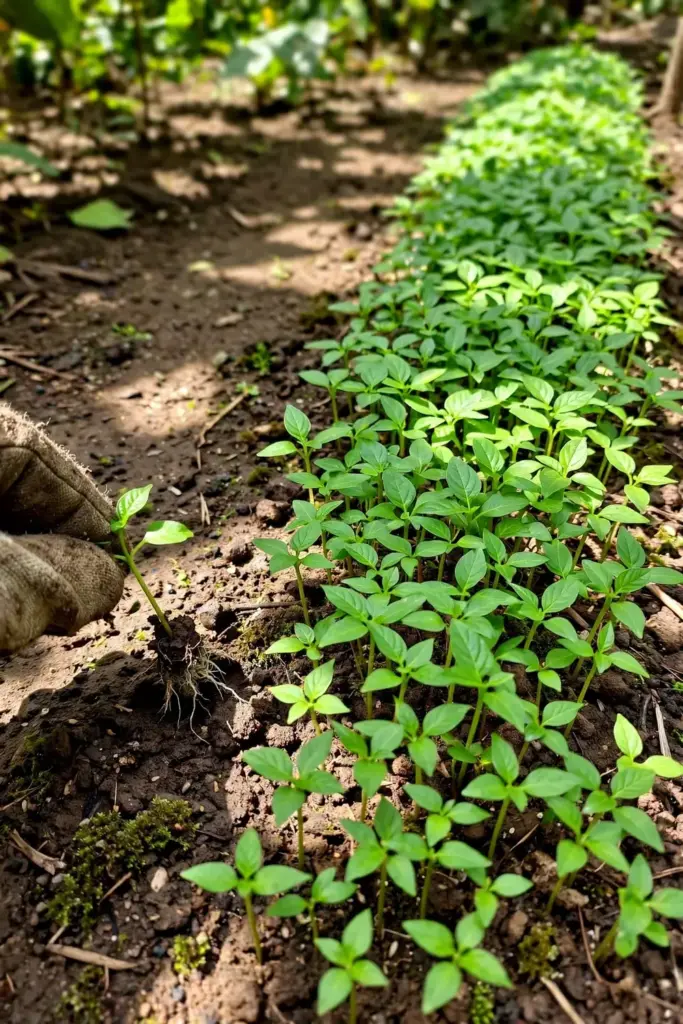
Treat thinning as a weeding pass with a bonus. The thinned seedlings are unmistakable once you know the look: rounded seed leaves, then the first true leaves with the plant’s characteristic sticky feel and sharp smell. Rub a leaf and the odor confirms the identity. Compost the thinnings; they break down fast.
Expect volunteers next year wherever this season’s pods shattered. Some growers let a few volunteers stand as a free second crop and thin them like sown rows. That works, but only if you rogue out any off-type plants and keep the stand spaced. A volunteer bed left unthinned becomes exactly what the curse quote warns about.
7. The Hills Calendar: When to Sow in Uttarakhand and Beyond
In the hills of Uttarakhand, sow jakhya with the onset of warm weather, typically May to June, so that germination happens in soil at or near the 32 degree optimum and the plants mature through the monsoon into autumn harvest. The crop is rainfed in its home range, which means the monsoon does most of the watering. This timing also matches the traditional multi-cropping pattern, where jakhya goes in between or alongside summer crops.
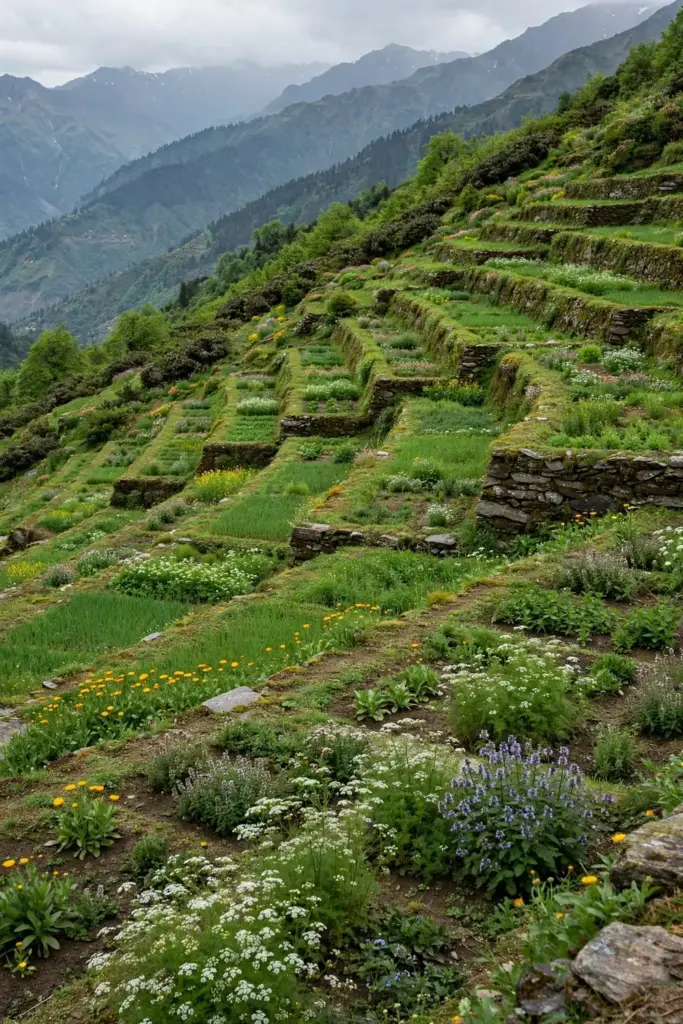
Altitude sets the real boundaries, and the sources report different ranges, so here they are with attribution rather than merged. Krishi Jagran gives 500 to 1,500 meters for the rainfed subtropical hills of Uttarakhand. A Himalayan organic-spice project profile extends that to 500 to 1,800 meters. A third source cites 1,000 to 3,000 meters. The overlap, 1,000 to 1,500 meters, is the safest bet for a first attempt. Above 1,800 meters, nights may stay too cool for the heat-loving germination; below 500 meters in the plains, the plant grows but the cultural and market context thins out.
Outside the hills, the calendar shifts by temperature, not by date. In warm plains regions, sow at the start of the hot season once night temperatures hold above 20 degrees. In a fall planting calendar mindset, jakhya is a summer annual, not a fall crop; do not sow it for winter harvest. If your climate cannot deliver 90 frost-free days above 20 degrees, containers on a hot terrace (section 8) are a better bet than open ground.
8. Pots and Balconies: Growing Jakhya in Containers
Jakhya adapts to containers better than its weedy reputation suggests, with one honest caveat: a pot-grown plant is smaller and yields less seed than a bed-grown one, so run two or three pots, not one. Choose wide pots at least 30 cm across and 25 cm deep, with drainage holes. Clay pots are ideal because the plant dislikes wet feet and clay breathes; plastic works if you are disciplined about watering.
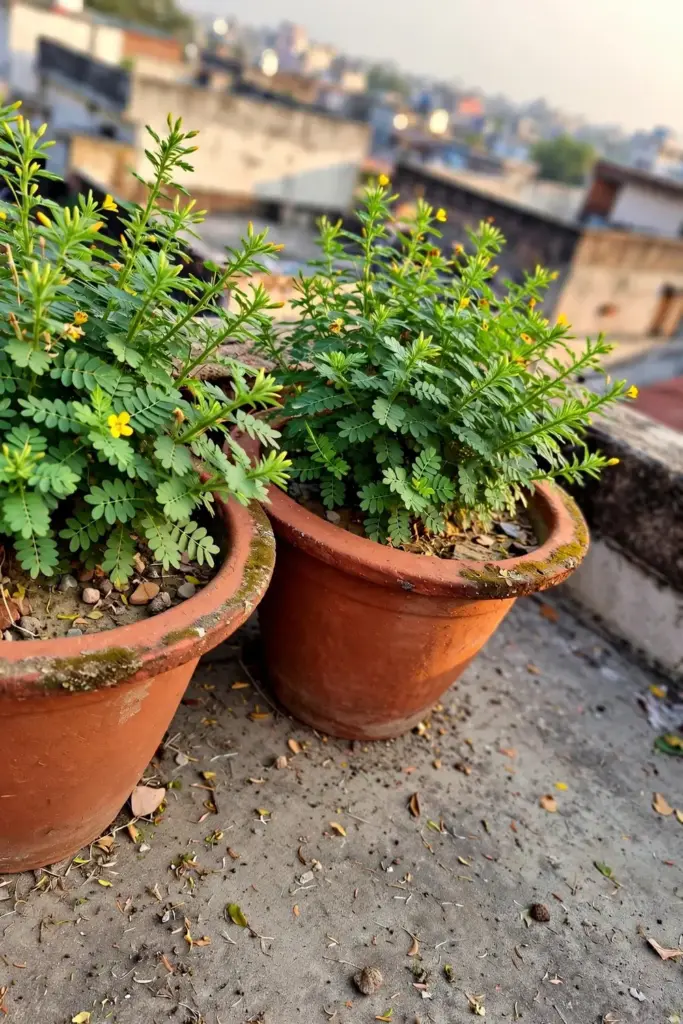
Fill with a lean, gritty mix: two parts garden soil, one part coarse sand or perlite, one part mature compost. No rich potting mixes loaded with slow-release fertilizer; excess nitrogen makes lanky, late plants with fewer pods. Sow 3 to 5 seeds per pot at 1 cm depth, keep moist until emergence, then thin to the strongest single plant per 30 cm pot, or two in a larger trough.
Place pots where they get at least 6 hours of direct sun. Anyone learning how to grow jakhya from India on a terrace should know the rhythm: water when the top 2 to 3 cm dries, and expect to water daily in peak summer on a hot terrace. The sticky stems will tell you when the plant is happy: firm, upright growth and yellow flowers by mid-season. Harvest works the same as in beds (section 13), just on a smaller scale. A 3-pot terrace setup yields enough tempering seed for a small family, which is the entire point of this lane.
9. Soil: Lean, Well-Drained, No Pampering
Jakhya grows in sandy to loamy, well-drained soil and actively prefers ground that other crops would call poor. It volunteers in wastelands and forest margins, which tells you everything about its fertility demands. Aim for a pH between 6.0 and 7.5, which covers most Indian garden soils without amendment.

Prepare the bed with restraint. Fork 15 to 20 cm deep, rake level, and remove perennial weed roots. Add at most one thin layer of mature compost, and skip fresh manure entirely; fresh manure brings weed seeds and salt, both of which hurt jakhya more than they help. If your soil is heavy clay, work in coarse sand or fine gravel to open the structure, because the single fastest way to lose this crop is a bed that ponds water in the monsoon.
The soil-health fundamentals still apply at the margins. A living, covered soil suppresses the weeds that compete with slow-starting jakhya seedlings, and the long-form guide to soil health and pest resistance covers mulching and organic matter in depth. For this crop, “healthy soil” means lean and breathing, not rich and black.
10. Watering: Rainfed Discipline
In its home hills, jakhya is a rainfed crop. The monsoon waters it, and nobody irrigates. That is the model to copy, adjusted for your situation. Water to establish: keep the top 2 cm evenly moist from sowing through the 4-leaf stage. Then step back and let rainfall do the work. In a normal monsoon season, established jakhya needs no supplemental water at all.
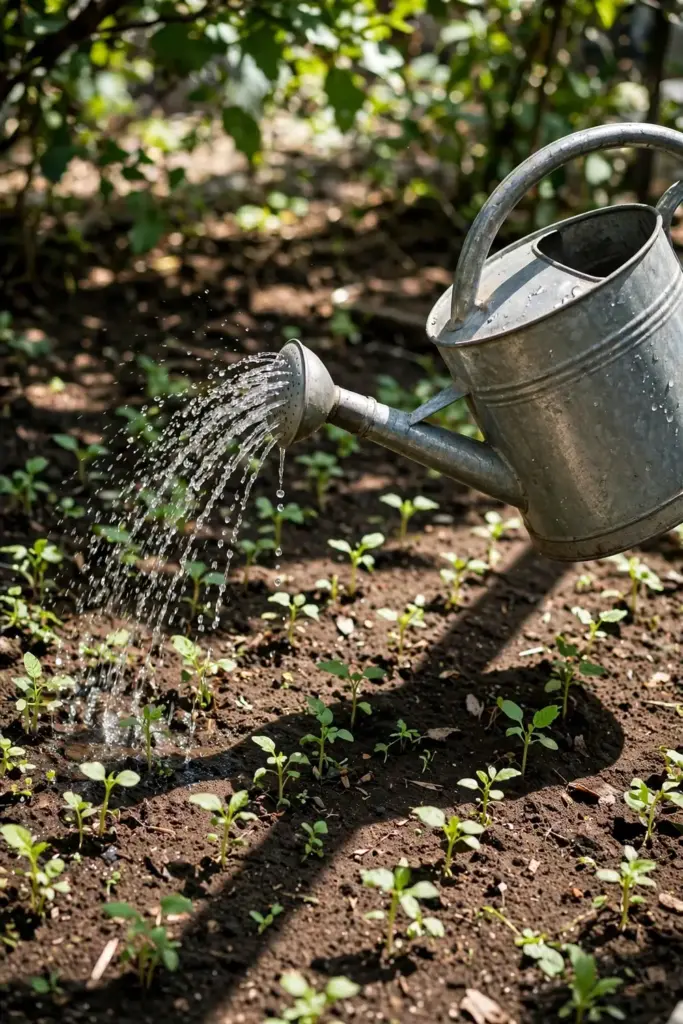
The two watering mistakes are opposites. Too much water, especially flooding or a bed that stays soggy, rots seedlings and cuts emergence, exactly as the germination research found. Too little water at the very start strands the tiny seeds before their roots reach down. After establishment, the plant is genuinely drought-tolerant, and a dry spell during flowering rarely hurts the crop. If you must irrigate in a dry region, water deeply and infrequently in the morning, and never let the bed stay wet overnight.
Container growers ignore the rainfed advice and water on the finger test: top 2 to 3 cm dry means water, moist means wait. Pots dry faster than beds, so this is the one lane where jakhya gets regular attention.
11. Feeding: Mostly Skip It
Do not fertilize jakhya the way you fertilize vegetables. The crop evolved on poor ground, and heavy feeding produces tall, soft, late-maturing plants with fewer seeds per pod. If the bed grew a reasonable crop last season, plant jakhya with no added fertilizer at all and it will still perform.
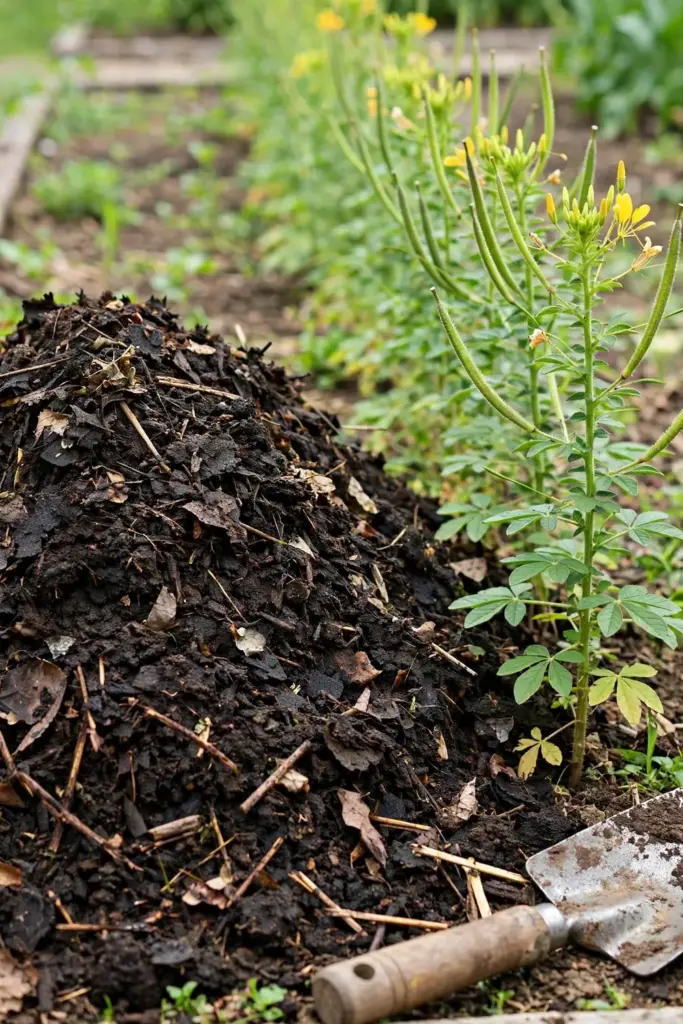
The one exception is genuinely exhausted soil: ground that has grown heavy feeders for years with no organic matter returned. In that case, work one bucket of mature compost per square meter into the bed before sowing, and stop there. No urea, no DAP, no side-dressing. Krishi Jagran’s reporting on the crop stresses that it performs without chemical fertilizers or pesticides, and that low-input character is exactly what makes it suitable for organic farms and marginal land.
Watch the plants, not the calendar. Deep green, upright, branching plants need nothing. Pale, stunted plants on poor sand may appreciate a single light compost-mulch top-dress at flowering, but diagnose first: pale jakhya on waterlogged soil is a drainage problem, not a hunger problem, and feeding it makes things worse.
12. Flowers, Sticky Pods, and the Annual Life Cycle
Flowering begins 40 to 50 days after sowing in warm weather. The yellow blooms are small and spider-like, with four petals, and they open over several weeks, so a single plant carries buds, open flowers, and forming pods at the same time. The stickiness intensifies as the plant matures; the glandular hairs that give viscosa its name coat stems, leaves, and pods. Wear no special gear, but expect your fingers to feel tacky after handling the plants. That stickiness is normal, not a disease.
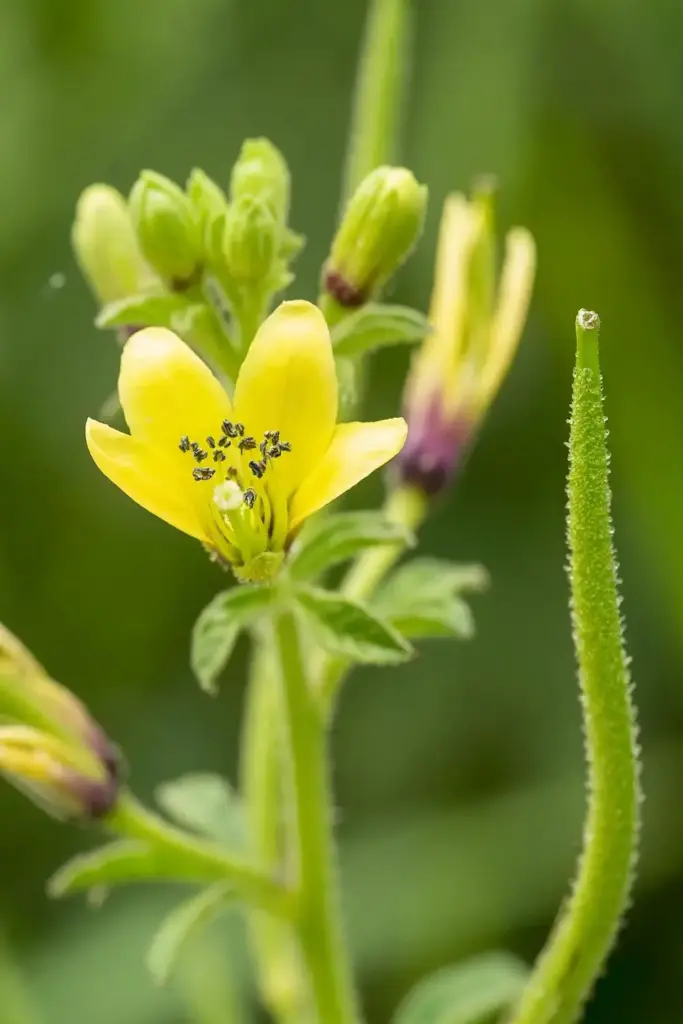
Pods form as slender capsules that swell with seed, then ripen from green to straw-brown. Because flowering is staggered, pods ripen staggered too, which sets up the harvest decision in the next section. The whole plant yellows and dries as seed matures, and by 90 to 120 days after sowing the stand looks finished. That dried, rattling look is the harvest signal, not a problem.
One management note for this stage: the plant’s strong odor and sticky surface make it unpopular with grazing animals and many chewing pests, which is part of why it needs so little protection. Let it stand undisturbed through flowering; every disturbance shakes loose the earliest ripe pods.
13. Harvest Seeds at Full Dryness
Harvest when most pods on a plant have turned straw-brown and rattle when shaken, but before they split open on their own. This is a judgment call you make plant by plant, because ripening is staggered. The practical method: walk the row every two to three days during the ripening window and cut whole plants that are at least two-thirds brown, leaving greener plants to finish.
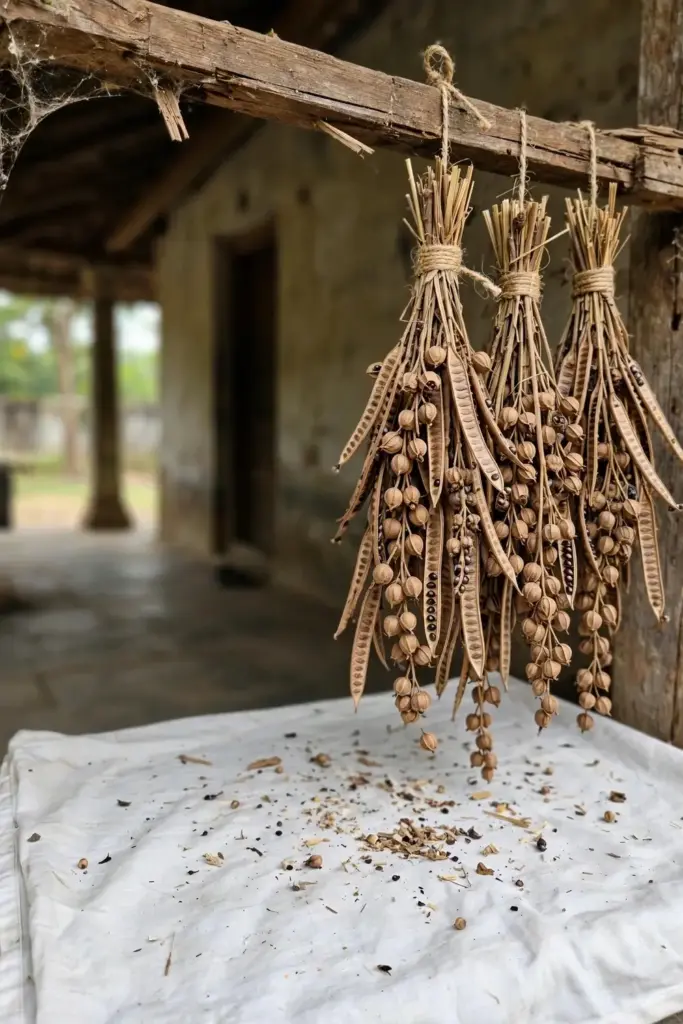
Cut plants at the base in the morning after dew dries. Bundle 5 to 10 plants together, tie with string, and hang them upside down in a shaded, airy spot for 5 to 7 days. Hanging beats laying flat because air circulates around the pods and the seed stays clean. Place a clean cloth or tarp underneath to catch anything that shatters early.
Do not wait for every pod to brown. Overripe pods split and drop seed into the soil, which becomes next year’s volunteer problem and this year’s yield loss. A harvest at two-thirds brown with a week of bundle-drying gives you the seed from the early pods in the bundle plus the late pods that finish drying off the plant. Timeliness beats perfection here.
14. Dry, Thresh, and Store for 18 Months
Once the bundles are dry and brittle, threshing is simple. Lay a tarp, beat the bundles lightly with a stick, and the pods release their tiny black seeds readily. Winnow by pouring the seed from one container to another in a light breeze; the chaff is light and blows clear while the dense seed falls straight. A kitchen sieve with a 1 to 2 mm mesh finishes the cleaning if you want table-grade seed.
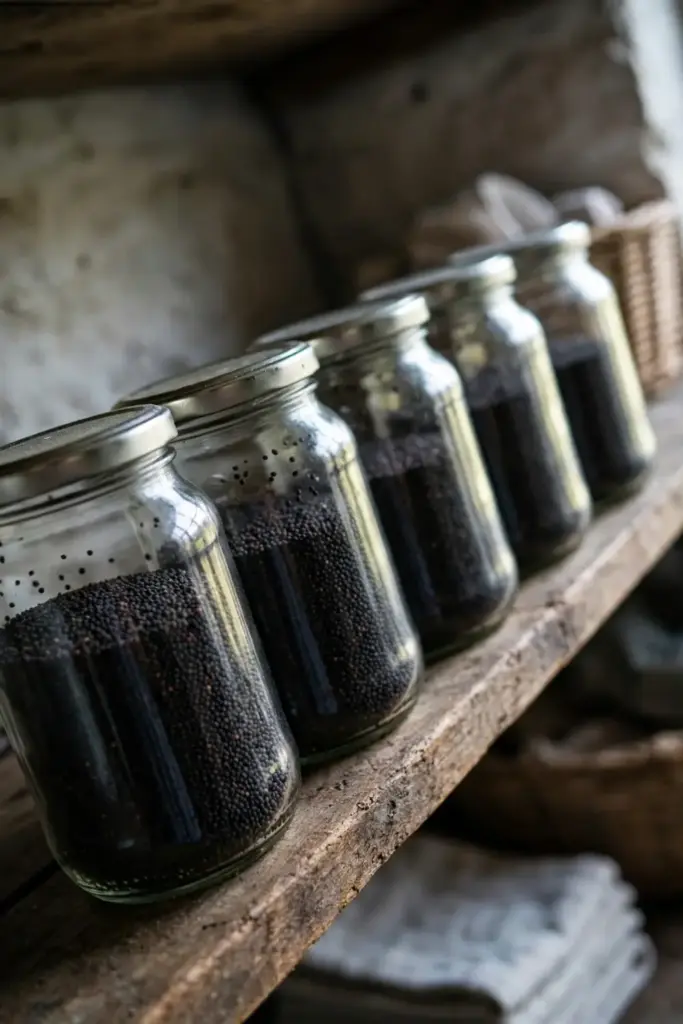
Dry the cleaned seed one more time. Spread it thin on a tray in shade for 2 to 3 days until a bitten seed cracks crisply instead of denting. This final drying is what buys you storage life. Pack the seed in airtight glass jars or food-grade tins, label with the harvest date, and store cool and dark. Under these conditions jakhya seed keeps its flavor and viability for 12 to 18 months.
Two storage warnings. First, the seed’s own dormancy means last year’s jar is next year’s sowing stock; keep sowing seed and kitchen seed in separate labeled jars, because they are the same seed at different ages and mixing them up causes confusion. Second, check jars monthly in humid climates. Any musty smell means moisture got in; spread and re-dry immediately or lose the lot.
15. The Tadka: Jakhya in Pahadi Cooking
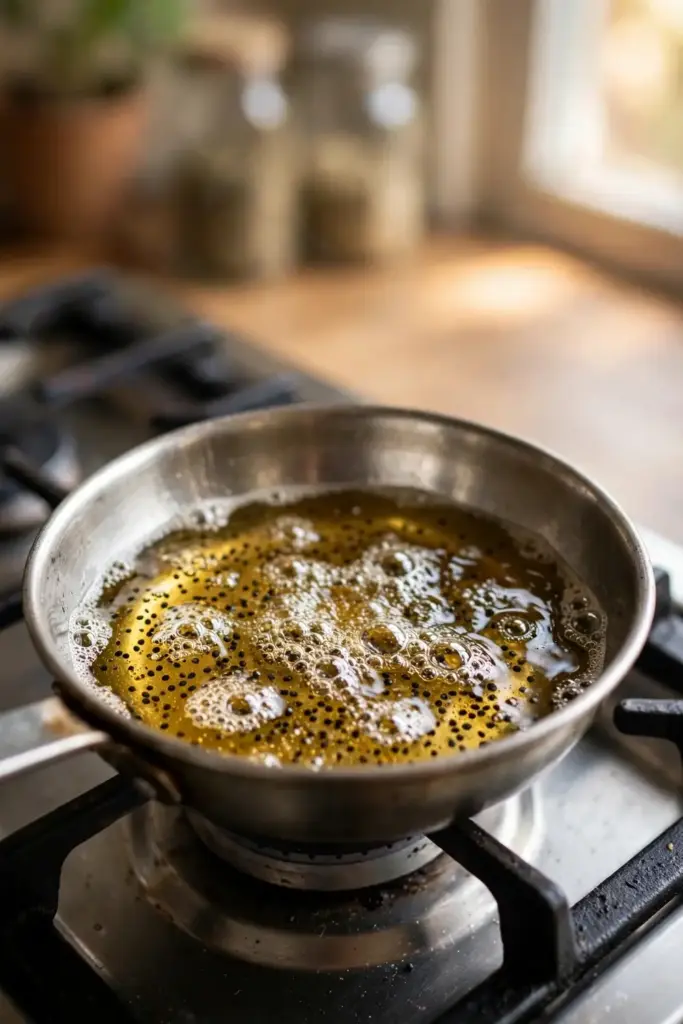
This is why you grew it. Heat a spoon or two of mustard oil or ghee until it shimmers, add half a teaspoon of jakhya seed, and wait for the crackle. The seeds pop and release a warm, sweet, nutty aroma that The Hindu BusinessLine’s reporting describes as the magic of these tiny seeds. Pour the sizzling tempering over the dish and cover for a minute so the aroma settles in.
The signature pairing is potatoes. Jhakhiya Aloo, also called Aloo ke Gutke in Garhwali kitchens, is a dry potato stir-fry where jakhya is the lead spice, not a background note. The same tempering works over arbi (colocasia), raw banana, and simple dals and leafy greens. In Kumaon and Garhwal, cooks reach for jakhya over both cumin and mustard for tempering, a preference built on the seed’s sharper crackle and crunchier bite.
Start with small quantities if it is new to your kitchen. The flavor is stronger than its size suggests, and half a teaspoon tempers a family-sized dish. Whole seeds keep their punch for a year in the jar; ground jakhya loses aroma fast, so grind only what a single meal needs.
16. The Himalayan Economics: Women SHGs and Low-Cost, High-Return
Jakhya’s story does not end at the kitchen door. In Uttarakhand it has become a genuine rural-livelihood crop, and understanding the economics helps you value what you grow. Krishi Jagran describes it as a low-cost, high-return native spice crop for Himalayan farmers, and the numbers behind that label are concrete. Retail listings put the spice at roughly 299 rupees for 500 grams on large marketplaces, around 349 rupees for 400 grams from organic brands, and 490 rupees per kilogram from mountain-food sellers, with one listed brand showing hundreds of reviews. Prices move with season and seller, but the direction is consistent: a once-wild seed now commands real money.
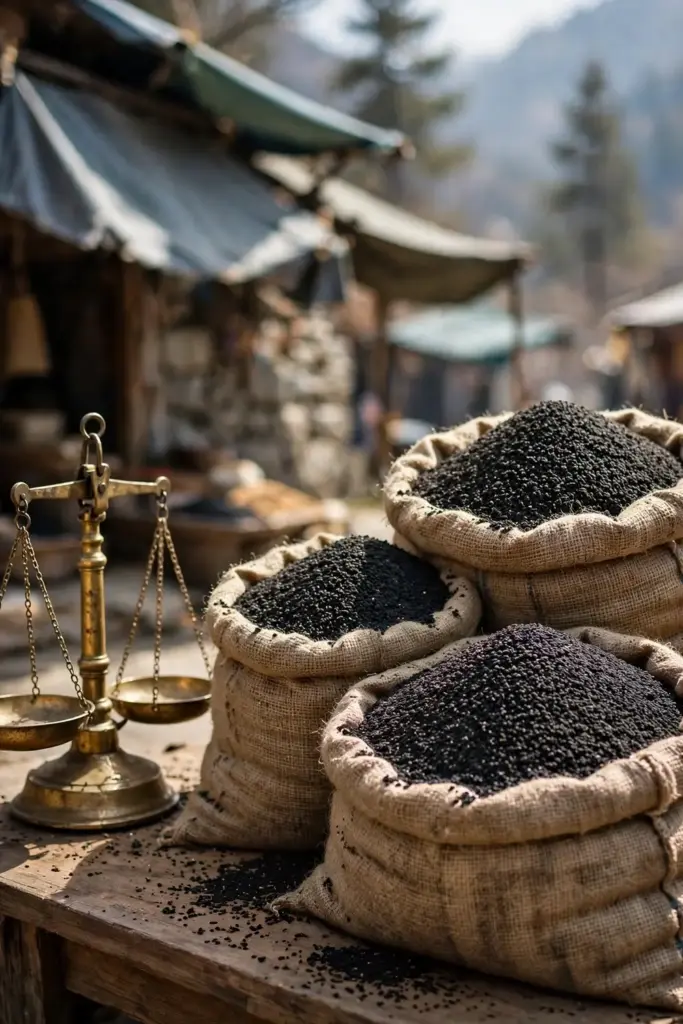
The production side is where the story gets interesting. In the Nayaar River catchment of Pauri Garhwal, women-led self-help groups collect, process, and market jakhya as part of organized community initiatives, turning a plant their grandparents weeded out into household income. Himalayan organic-spice projects bundle jakhya with companion native spices like tej patta, bhangjeera, gandrayani, and jamboo, selling the whole basket as certified mountain produce. For a home grower, the takeaway is simpler and it is the best reason to learn how to grow jakhya from India yourself: a 2-square-meter patch can produce several hundred grams of a spice that retails for hundreds of rupees per kilogram, from seed that cost nearly nothing and a crop that asked for almost no inputs.
17. Conservation Honesty: Wild Harvest Has Limits
Here is the honest counterweight to the economics. Jakhya is still largely wild-harvested or gathered from field edges across parts of its range, and rising demand puts pressure on wild populations. A plant that was once a curse-level weed can still be over-collected when every roadside patch gets stripped before seed sets. The conservation logic is straightforward: every kilogram you grow in a garden or farm edge is a kilogram that did not come from a wild population.
If you collect seed from the wild to start your patch, take modestly and only where the plant is abundant, leaving most pods to self-sow. Better still, buy seed once from a reputable seller and become your own seed source; the dormancy trait means your saved seed improves with a season of rest anyway. Community initiatives in Uttarakhand, including the Himalayan Spice Garden programs, are already moving in this direction, treating native spices as crops to cultivate rather than commons to mine. Home cultivation is the smallholder version of the same shift.
18. Pests and Diseases: Few Problems, One Sticky Warning
Jakhya’s strong odor and sticky foliage give it a mostly free pass from pests. Chewing insects avoid it, grazing animals avoid it, and the plant’s own chemistry does most of the defending. In practice, home growers report few problems worth naming, which matches the crop’s low-input reputation.
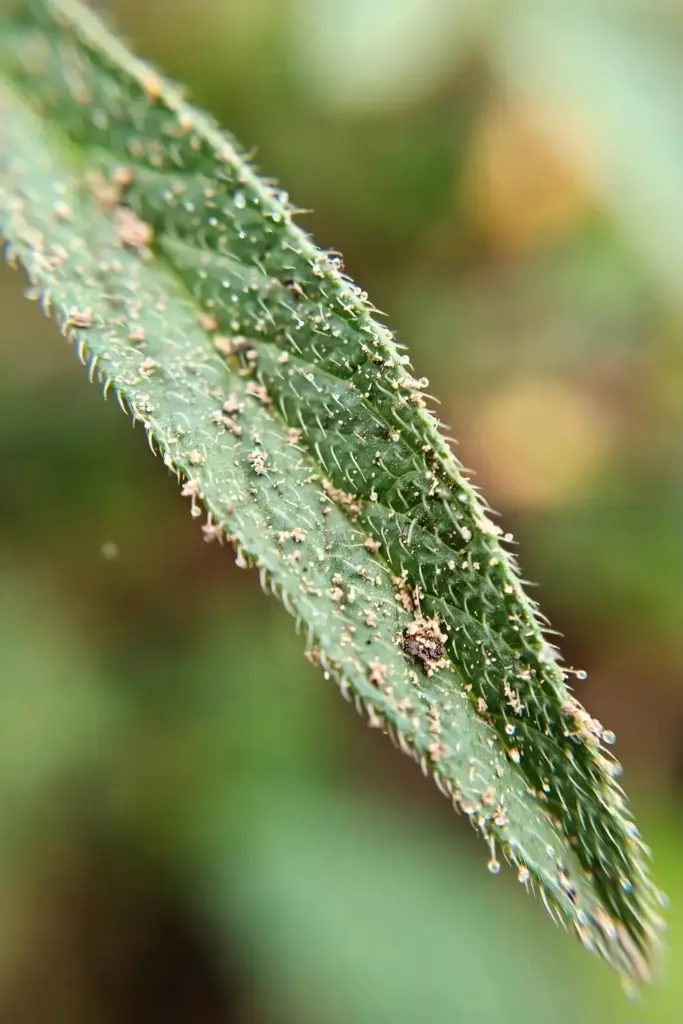
The one real warning is about the stickiness itself. The glandular hairs trap dust, and in humid, crowded plantings that dusty film can host sooty mold on leaf surfaces. The fix is spacing and airflow, not spray: thin properly (section 6), avoid overhead watering late in the day, and site the bed where morning sun dries the foliage fast. If mold appears, it is cosmetic on a seed crop; the seeds inside the pods are unaffected.
Seedling-stage damping off can strike in cold, wet soil, which is another reason the calendar (section 7) insists on warm sowing. Sow into warm, draining soil and the problem rarely appears. Beyond that, no regular spray program is needed or recommended. This is one of the few crops where doing less genuinely is the pest management plan.
19. Mistakes That Ruin Jakhya
Sowing too deep. Anything past 1 cm cuts emergence sharply, and past 4 cm the seed stays buried without emerging. Mark your furrow depth and check it. This is the single most common reason for a blank bed.
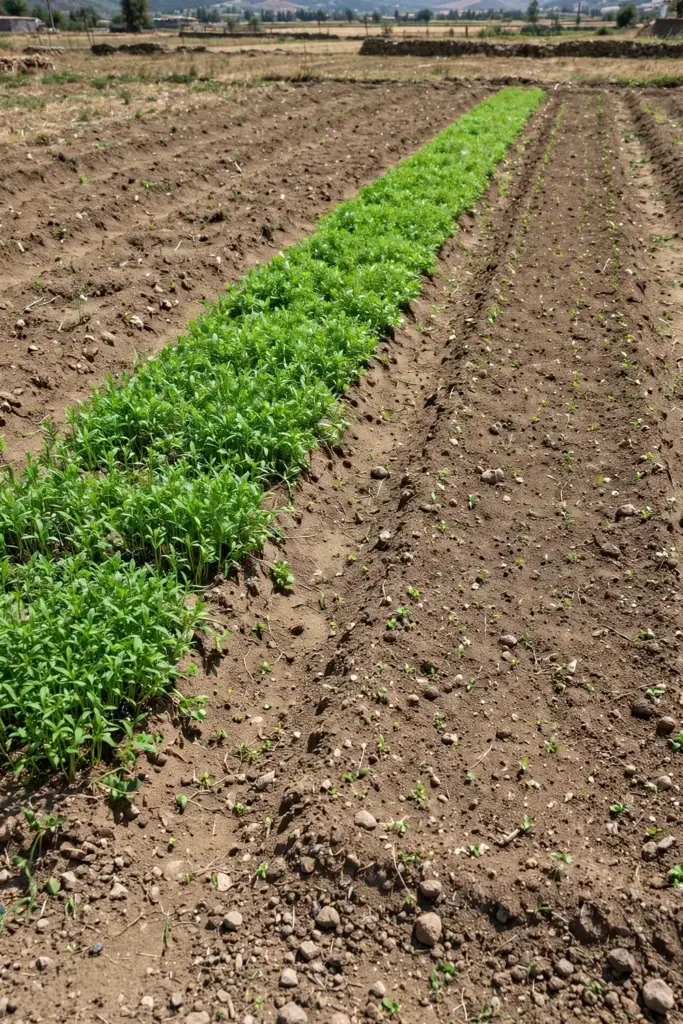
Sowing too early into cold soil. Fresh enthusiasm in early spring meets the 15.7 degree base temperature and loses. Wait for reliably warm nights. The seed will still be there; your patience is the input.
Feeding like a vegetable. Rich soil and nitrogen push leafy, late plants with poor pod set. Lean ground is the plan, not a compromise.
Harvesting too late. Pods that split on the plant donate their seed to next year’s weed problem instead of your jar. Cut at two-thirds brown and finish drying in bundles.
Buying the wrong seed. A packet labeled only “wild mustard” may be anything. Insist on Cleome viscosa on the label, and keep the jakhya-versus-mustard table from section 2 taped inside your seed box until the names feel automatic.
20. Troubleshooting Jakhya
Seedlings emerge patchily. Uneven depth is the usual cause; the 1 cm rule is unforgiving. Next sowing, firm the furrow bottom so every seed sits at the same depth. Patchy emergence from fresh seed is dormancy, not failure; overseed by half and thin later.
Plants flower but set few pods. Heat stress at flowering or a dry spell right at pod-fill are the common causes. The fix is timing: in hot regions, make sure flowering falls in the warm-but-not-scorching window, and give one deep watering if a dry spell hits during early pod formation.
Volunteers everywhere next season. You harvested late. Rogue volunteers while small, and this year cut at two-thirds brown. A few volunteers kept deliberately and thinned make a fine free crop; a carpet of them is a weed problem wearing a spice costume.
Seed tastes flat. Old seed, poor drying, or storage in a non-airtight container. Use seed within 18 months, dry to the crack-crisp stage, and jar airtight. Fresh seed crackles harder and smells warmer; the difference is unmistakable side by side.
White film on leaves in humid weather. Sooty mold on the sticky leaf surface, cosmetic on a seed crop. Improve airflow, water at the base in the morning, and ignore it otherwise.
Frequently Asked Questions
No. Jakhya is the seed of Cleome viscosa in the spider-flower family (Cleomaceae), while mustard seed comes from Brassica juncea in the cabbage family (Brassicaceae). The folk names wild mustard and dog mustard describe the seed’s role in tempering, not its botany. Jakhya seeds are smaller than mustard seeds and give a nuttier, stronger crackle in hot oil.
90 to 120 days from sowing to dry seed in warm weather. Germination takes 7 to 14 days in soil near 32 degrees Celsius, flowering starts 40 to 50 days after sowing, and pods ripen in staggered flushes after that. The season ends when most pods turn straw-brown and rattle, which is your harvest signal.
The three usual causes are depth, temperature, and dormancy. Seeds buried deeper than 1 cm emerge poorly, and anything past 4 cm barely emerges at all. Soil below 20 degrees Celsius gives slow, erratic germination; wait for real warmth. Freshly harvested seed is dormant and germinates far better after roughly seven months of dry after-ripening, so use last season’s seed.
Yes, wherever you can give it 90 frost-free days with warm nights. The plant is not fussy about altitude within reason; the cited range runs from 500 up to 1,800 meters in Himalayan sources. In warm plains, sow at the start of the hot season. In cooler climates, treat it as a container crop on the sunniest, hottest spot you have.
Heat oil or ghee until shimmering, add half a teaspoon of seed, and let it crackle before adding other ingredients or pouring the tempering over the dish. It shines with potatoes (Jhakhiya Aloo), colocasia, raw banana, dals, and leafy greens. Use it whole; ground jakhya loses aroma quickly. Start with small amounts, since the flavor is stronger than the tiny seed suggests.
Jakhya is an everyday tempering spice in Garhwali and Kumaoni kitchens, used in normal culinary amounts for generations. Traditional Ayurvedic and Unani texts also describe medicinal uses for the plant, but those are traditional claims, not modern medical guidance. If you are pregnant, nursing, or managing a health condition, talk to a clinician before using any herb beyond ordinary cooking.
Where to Go From Here
You now have the full picture: a weed with a curse attached to its name, a seed smaller than mustard, a shallow sowing rule backed by research, and a tadka that carries the flavor of the Pahadi hills. Start with one bed or three pots, use rested seed, and cut at two-thirds brown. Next season, your own saved seed will germinate better than anything you can buy, and the plant will have taught you its rhythm. That is the quiet reward of growing a crop the hills never stopped growing.