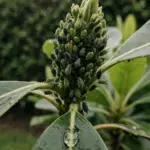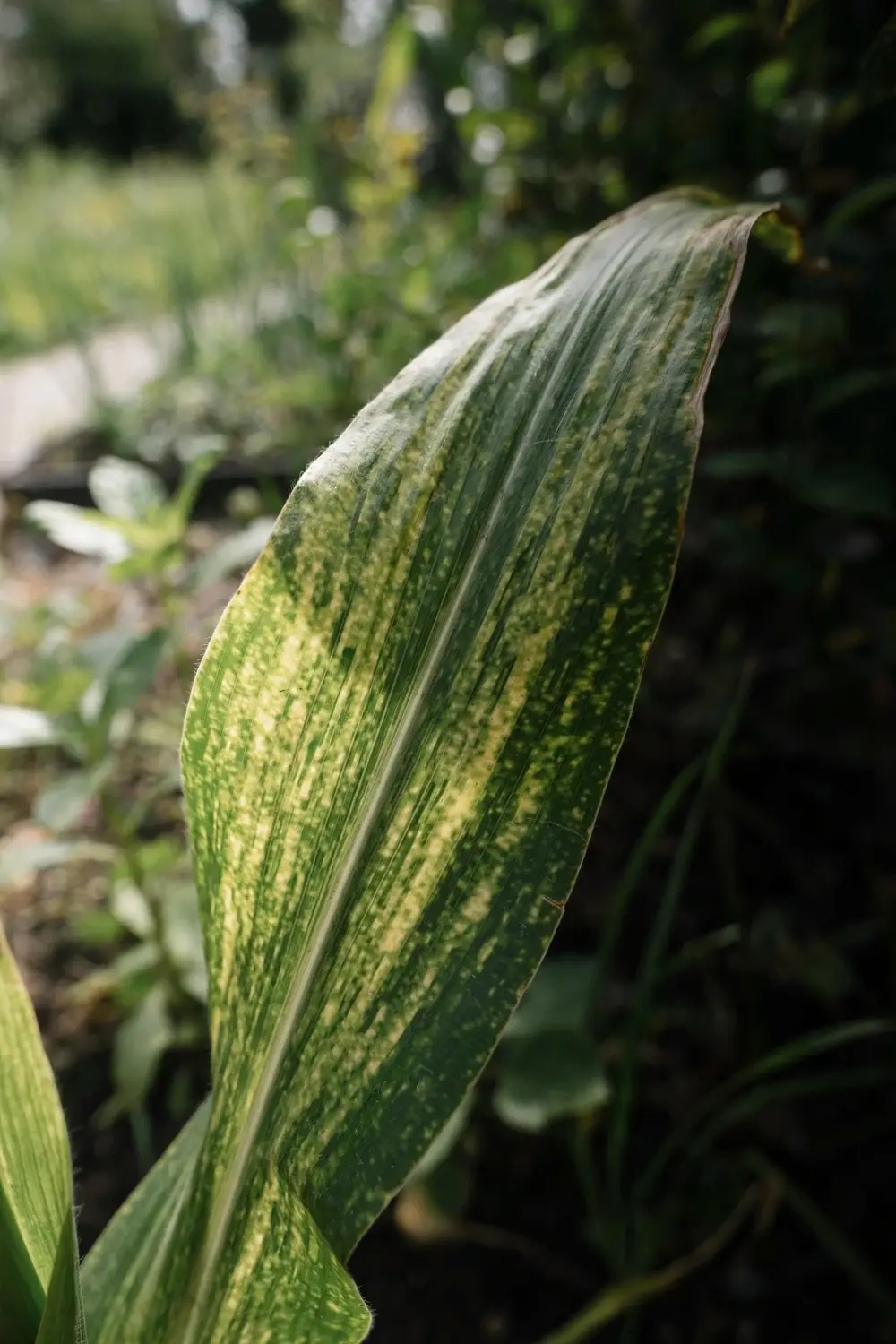

Maize dwarf mosaic virus has no cure. The 7 strategies below prevent it on sweet corn, starting with the resistant hybrid that stops the disease before it starts.
The signature is a mosaic mottling on leaves, stunting, and poor ear fill. The virus spreads through aphids, and aphids pick it up from Johnsongrass. The disease is uncommon in home gardens today, and the prevention is cheap.
The rest of this page runs the order a gardener should follow. Understand the virus first, learn its signs, then work the 7 strategies from resistant hybrids to neighbor cooperation. I have learned that the Johnsongrass I kill in April is the sweet corn that stays clean in July.
What Maize Dwarf Mosaic Virus Actually Is
Maize dwarf mosaic virus is a potyvirus that infects sweet corn and other grasses. The virus Maize dwarf mosaic virus, abbreviated MDMV, causes mosaic, mottling, and stunting in corn.
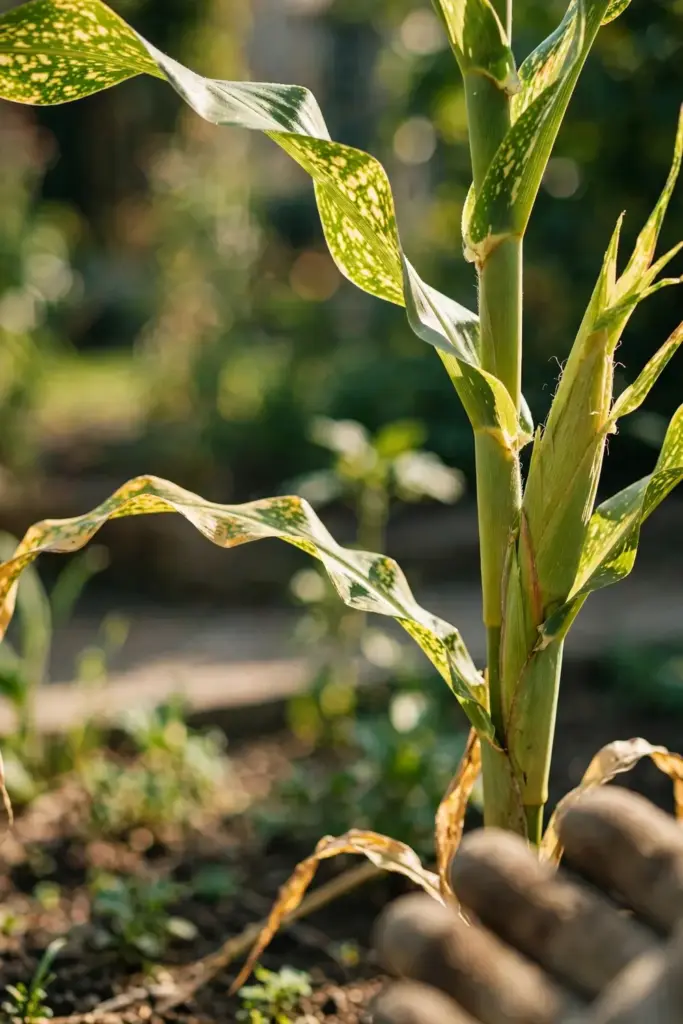
The honest frame comes first. There is no cure for an infected plant. Cornell University gives the prevention-first message for sweet corn diseases: plant tolerant or resistant hybrids, plant early to escape aphid flights, and spray insecticide to slow spread. The Cornell University sweet corn diseases fact sheet carries the core guidance for growers, and its lessons transfer directly to home gardens.
The virus spreads through aphids. Aphids feed on an infected grass, pick up the virus in under 60 seconds, and carry it to the next grass they feed on. The transmission is non-persistent: the aphid carries the virus on its mouthparts for a short time, not for life. An aphid that feeds on Johnsongrass in the morning and on sweet corn at noon moves the virus between the two plants. The aphid is the bridge. Johnsongrass is the reservoir.
Two viruses cause the same disease in the field. Maize dwarf mosaic virus, Type A, overwinters in Johnsongrass. Sugarcane mosaic virus, SCMV, Type B, does not overwinter in Johnsongrass. The two viruses cannot be told apart in the field. They share the vector, the hosts, and the management. The gardener does not need to know which virus hit the corn. The gardener needs the playbook.
| Feature | Maize Dwarf Mosaic Virus (MDMV, Type A) | Sugarcane Mosaic Virus (SCMV, Type B) |
|---|---|---|
| Virus family | Potyvirus | Potyvirus |
| Field symptoms | Mosaic, mottling, stunting, poor ear fill | Mosaic, mottling, stunting, poor ear fill |
| Vector | Aphids, non-persistent transmission | Aphids, non-persistent transmission |
| Overwinters in Johnsongrass | Yes | No |
| Hybrid resistance | Common in modern hybrids | Many modern hybrids susceptible |
| Field separation | Cannot be told apart from SCMV in the field | Cannot be told apart from MDMV in the field |
| Management | One playbook covers both viruses | One playbook covers both viruses |
Read the table as one disease with two agents, not as two diseases to choose between. The symptoms match. The vector matches. The management matches. The single difference that matters for the gardener is the reservoir: MDMV Type A overwinters in Johnsongrass, while SCMV Type B does not. Kill the Johnsongrass and the MDMV reservoir dies with it. The SCMV reservoir sits in other grasses, which is why the full routine, not only Johnsongrass control, carries the prevention.
Modern hybrids are commonly MDMV-resistant yet SCMV-susceptible. That fact is the bonus honesty of the article. A gardener who plants an MDMV-resistant hybrid can still see maize dwarf mosaic disease, because SCMV causes the same disease and the hybrid is susceptible to it. The prevention routine covers both viruses. The hybrid choice covers one. The routine covers the rest.
The declining relevance stays in the article. Ohio State notes that major losses have not been reported for several years. Cornell notes that the disease was not a factor for more than 15 years before 2000. Do not present this disease as a current epidemic threat. Frame it as an uncommon but real risk for sweet corn near Johnsongrass, with cheap prevention and no cure.
The scope stays on backyard sweet corn. Field-corn and commercial framing stay out. This article is a prevention-first care guide, not a treatment guide.
How to Spot Maize Dwarf Mosaic on Sweet Corn
Mosaic mottling on leaves, stunting, and poor ear fill point at maize dwarf mosaic disease.
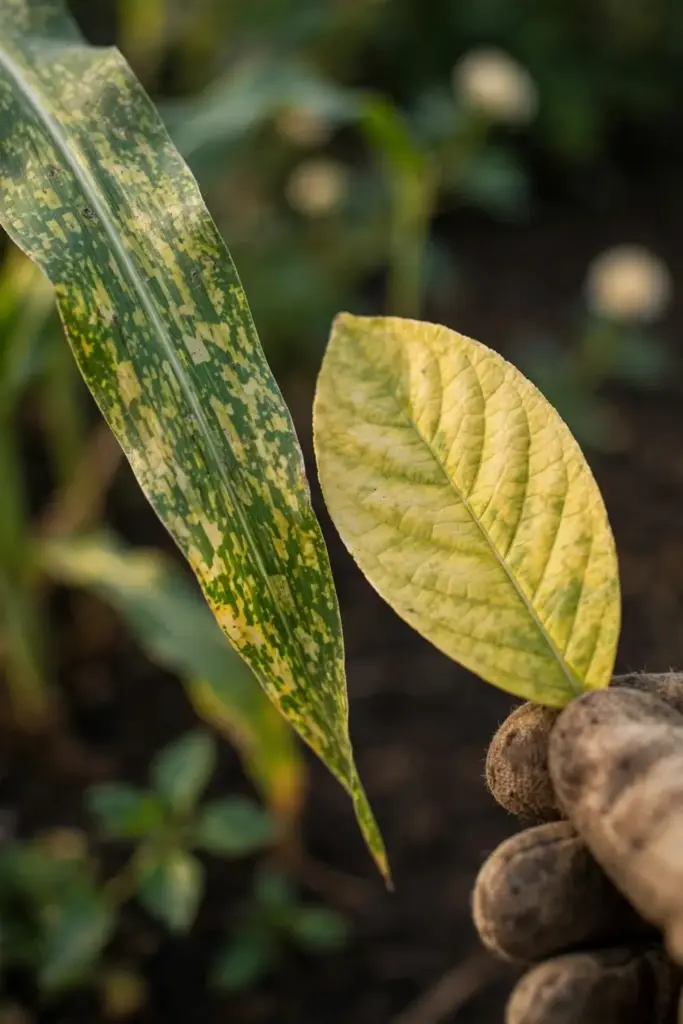
The mosaic starts as a mottling of light and dark green on the leaves. The pattern is irregular, not uniform. The leaves show streaks and blotches of pale green against normal green. The plant stunts. The ears fill poorly, with missing kernels and short cobs. A corn plant that mottles, stunts, and fills poorly is a maize dwarf mosaic suspect.
The symptoms show best in warm weather. Moderate summer temperatures favor aphid populations, and aphid populations spread the virus. A corn patch that mottles after a warm, aphid-heavy week is a suspect. A corn patch that mottles in cool weather with no aphids points elsewhere. The weather and the aphids are part of the diagnosis.
Field identification is presumptive. Mosaic and stunting overlap with nutrient deficiency, herbicide drift, other viruses, and drought stress. A home gardener cannot separate them by eye. MDMV and SCMV cannot be told apart in the field at all. Treat mosaic as a prompt to act: scout for aphids, check for Johnsongrass, and send a sample to the lab where it matters. The lab names the virus. The routine prevents both.
Check the whole patch, not one plant. Maize dwarf mosaic on one plant in a patch points at that plant’s aphid visit. Maize dwarf mosaic across a whole patch, beside a Johnsongrass clump, points at the reservoir. The spread of symptoms across the patch tells the gardener whether the problem is one aphid or one Johnsongrass clump.
Strategy 1: Plant Tolerant or Resistant Sweet-Corn Hybrids
Plant tolerant or resistant sweet-corn hybrids. The hybrid choice is the strongest lever on this page.
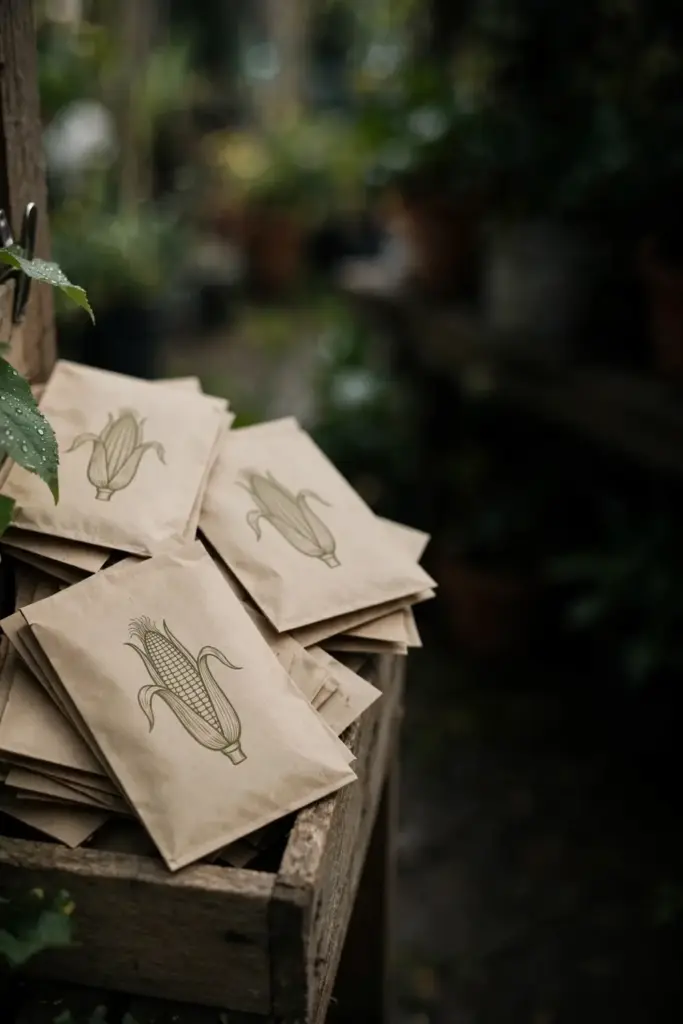
Cornell University gives the hybrid rule: plant tolerant or resistant hybrids. A resistant hybrid resists MDMV. A tolerant hybrid shows milder symptoms. Both options beat a susceptible hybrid. The hybrid choice costs nothing extra. The seed packet with resistance costs the same as the seed packet without it. The resistant packet is the free prevention.
Check current seed catalogs for resistance. Seed catalogs list MDMV resistance in the variety description. Read the description. Look for the words “MDMV resistant” or “MDMV tolerant.” A catalog that lists no resistance information earns a question to the supplier. The question costs nothing. The susceptible variety costs the patch.
Do not carry a commercial trial as a home variety list. One university trial lists specific hybrids with measured resistance, but a trial is not a shopping list. Trials test varieties in one place, in one year, under one set of conditions. A home gardener in a different region needs the current catalog, not a trial table. Read the catalog. Trust the catalog. The catalog is the shopping list.
Remember the SCMV gap. Modern hybrids are commonly MDMV-resistant yet SCMV-susceptible. A resistant hybrid can still show maize dwarf mosaic disease through SCMV. The hybrid choice covers one virus. The routine covers both. Plant the resistant hybrid and run the routine anyway. The routine is the insurance. The hybrid is the first layer.
Strategy 2: Destroy Johnsongrass at Least 2 Weeks Before Planting
Destroy Johnsongrass and other grass hosts in and around the garden at least 2 weeks before planting. Johnsongrass is the reservoir.
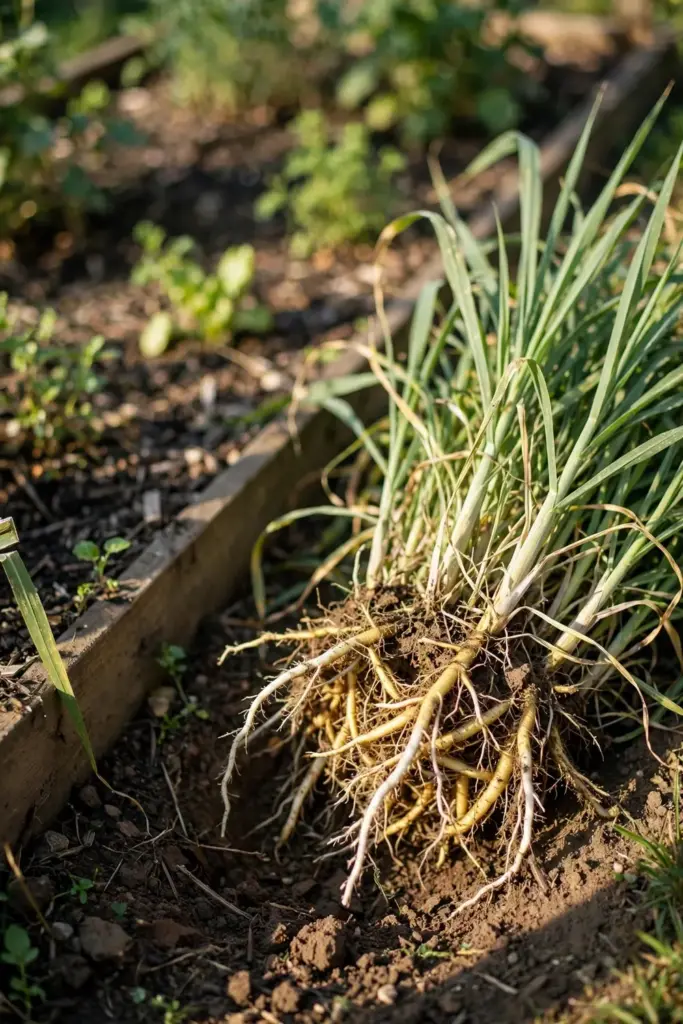
Purdue University Extension gives the Johnsongrass rule: destroying nearby Johnsongrass is more effective than controlling aphids. The Purdue Extension fact sheet on maize dwarf mosaic carries the core guidance, and its lessons transfer directly to home gardens. Johnsongrass is the overwintering host for MDMV Type A. Kill the Johnsongrass and the virus loses its winter home. The aphids lose their spring source. The corn starts clean.
Kill the Johnsongrass at least 2 weeks before planting. Illinois Extension gives the timing: destroy Johnsongrass and grass hosts at least 2 weeks before planting. The 2-week gap matters. Johnsongrass killed the day before planting leaves aphids with nowhere to go but the corn. Johnsongrass killed 2 weeks before planting leaves aphids with no reservoir and no corn. The gap starves the bridge. The gap is the treatment.
Kill the Johnsongrass in the garden, on the edges, and on the paths. Johnsongrass in the garden is the reservoir. Johnsongrass on the edge is the reservoir at the garden’s doorstep. Johnsongrass on the path is the reservoir underfoot. The reservoir does not respect the border between the garden and the lawn. Kill it everywhere within reach.
Kill the whole plant, roots and all. Johnsongrass spreads by rhizomes. A Johnsongrass top cut off at ground level regrows from the rhizome. A Johnsongrass dug out with its rhizomes is a Johnsongrass gone. Dig the rhizomes. Bag them. Trash them. Do not compost them. The rhizome is the plant. The top is the decoration.
Strategy 3: Time Planting Around Aphid Flights With Local Extension Advice
Time planting around aphid flights. Check local Extension for the flight timing, because the sources disagree on early versus late.
The planting-time advice conflicts. Cornell, Ohio, and Wikipedia say plant early to escape aphid flights. University of California IPM says delay planting until the flights are over. Both recommendations key on local flight timing. Both cannot be right for every region. This article presents the conflict and the resolution: check local Extension for the flight timing in the gardener’s region, and plant to avoid the flights.
Local Extension knows the flights. The county extension office tracks aphid flights, Johnsongrass emergence, and virus pressure in the region. A call to the office costs minutes. The office’s answer fits the region. A national rule fits no region. Call the office. Plant to the office’s answer.
Do not present either timing as settled. A gardener who plants early on a national rule may plant into the flights. A gardener who plants late on a national rule may plant into the flights. A gardener who plants to the local flight timing plants around the flights. The local timing is the only timing that matters.
Do not sow corn in wheat stubble, volunteer wheat, or weedy grasses. Illinois Extension gives that rule. Wheat stubble holds aphids and virus. Volunteer wheat holds aphids and virus. Weedy grasses hold aphids and virus. A corn patch sown into any of them starts infected. Sow into clean, prepared soil. The clean start is the prevention.
Strategy 4: Scout for Aphids From the Whorl Stage On
Scout for aphids from the whorl stage on, especially green peach aphid. Scouting finds the vector before the virus spreads.
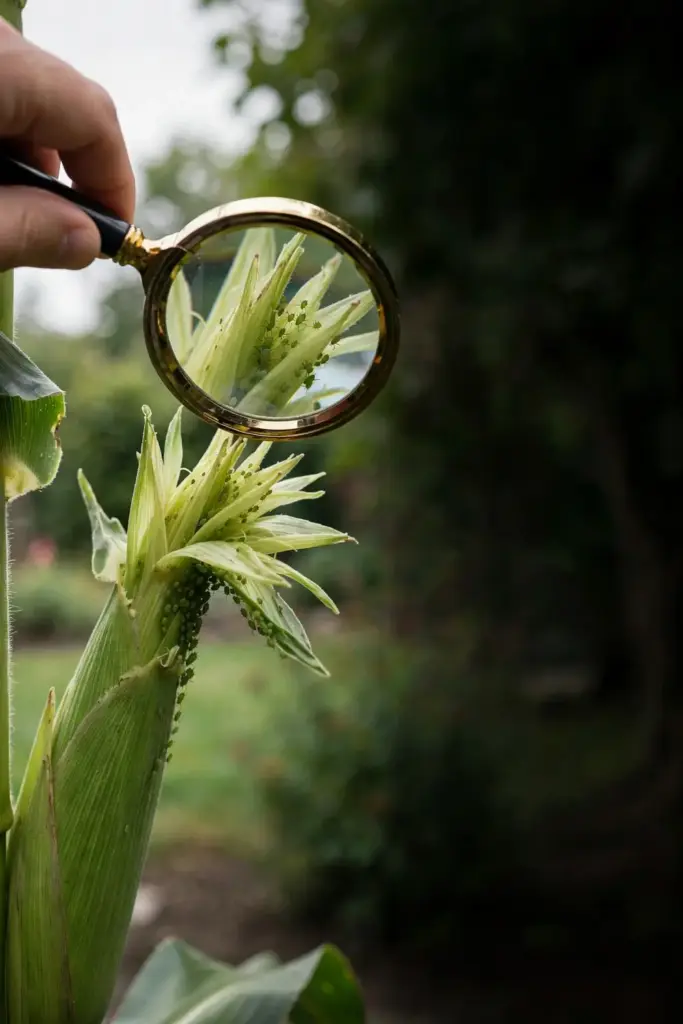
Walk the corn patch weekly from the whorl stage on. Look at the undersides of leaves, inside the whorl, and on the tassels. Aphids cluster on tender growth. A colony found early is a colony that can be washed off or sprayed with soap. A colony found late is a colony that already moved the virus. The weekly scout catches the colony early.
Watch for green peach aphid. The University of Massachusetts notes that sweet corn seeded before June 10 escapes corn leaf aphid pressure, while green peach aphid remains the aphid to watch. A green peach aphid on corn is a vector. A corn leaf aphid on corn is a nuisance. The species matters. The scout learns the difference.
Count the aphids, and note the trend. A few aphids on one plant is a watch. A colony on many plants is an action. A colony that doubles week to week is an urgent action. The count tells the gardener when to act. The trend tells the gardener how fast to act. A scout who counts knows. A scout who guesses does not.
Check the Johnsongrass too. Aphids on Johnsongrass beside the garden are the bridge. A Johnsongrass clump with aphids is a reservoir with a vector. Kill the Johnsongrass. The scout who checks the reservoir catches the bridge before it carries the virus.
Strategy 5: Suppress Aphids With Insecticidal Soap When Found
Suppress aphids with insecticidal soap when found. Soap reduces the pressure, but it does not cure the virus or reliably stop the spread.
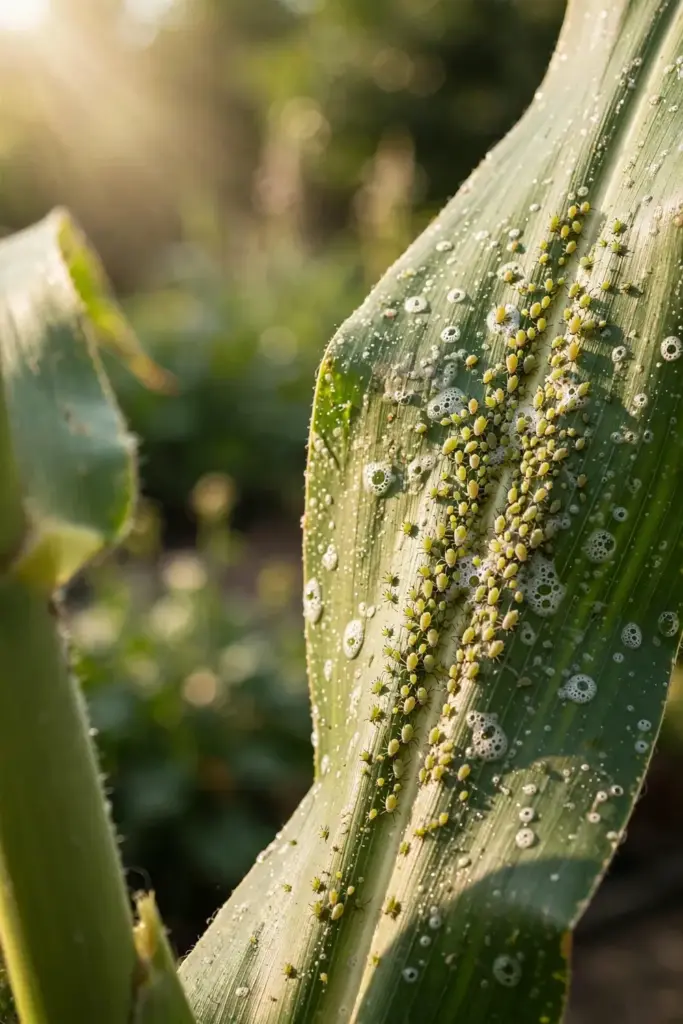
Insecticidal soap kills aphids on contact. Spray the colony directly, covering the undersides of leaves and the whorl. Soap works where it touches. Soap does not work where it does not touch. A colony sprayed thoroughly dies. A colony sprayed on the top leaves only survives on the undersides. Cover the colony. The coverage is the treatment.
State the counter-honesty plainly. Transmission is non-persistent, with acquisition and transmission in under 60 seconds. Disease is relatively unaffected by insecticides, per published research. An aphid that lands on corn, probes once, and flies away moves the virus before any spray kills it. Soap reduces the aphid pressure. Soap does not cure an infected plant. Soap does not reliably stop the spread. The soap is pressure control, not virus control.
Treat systemic insecticide as a last resort only. A systemic insecticide, used only when the label allows and the situation demands, is the last resort. It is never the default. A home gardener who sprays systemics on sweet corn risks the pollinators, the soil, and the harvest. The soap and the Johnsongrass control carry the prevention. The systemic stays in the shed unless the label and the situation both demand it.
Do not present insecticides or soap as a cure. No spray cures a virus. No soap cures a virus. The virus is systemic, through the whole plant. A sprayed plant stays infected. A plant with the virus gets pulled, not sprayed. The spray protects the clean plants. The pull handles the infected ones.
Strategy 6: Never Sow Corn in Wheat Stubble or Weedy Grasses
Never sow corn in wheat stubble, volunteer wheat, or weedy grasses. Those stubbles and grasses hold aphids and virus.
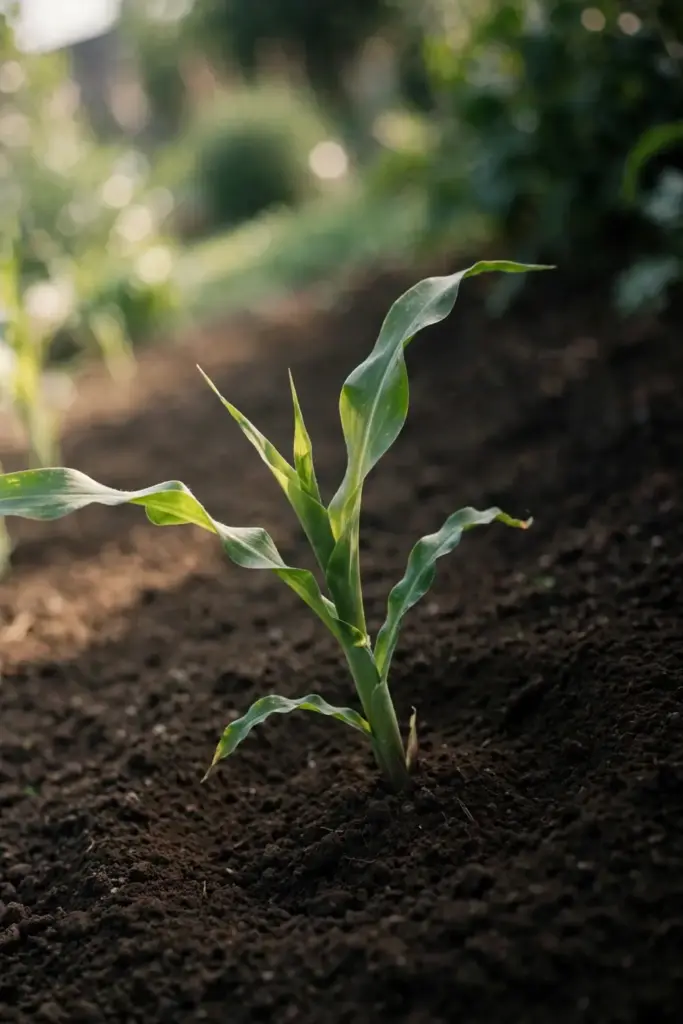
Illinois Extension gives the rule: do not sow corn in wheat stubble, volunteer wheat, or weedy grasses. Wheat stubble holds aphids through winter. Volunteer wheat holds aphids through spring. Weedy grasses hold aphids through the season. A corn patch sown into any of them starts with aphids already in place. The aphids carry the virus to the corn within days. The clean patch starts clean. The stubble patch starts infected.
Prepare the bed before sowing. Clear the stubble. Kill the volunteer wheat. Kill the weedy grasses. Till the bed. Let the soil settle. Sow into clean, prepared soil. The preparation costs a week. The clean start saves the patch. A patch sown into stubble saves a week and loses the patch.
Rotate the corn bed. A corn patch that follows wheat in the same bed faces the wheat’s aphids and virus. A corn patch that follows beans, onions, or another non-grass crop faces a clean bed. The rotation breaks the grass-to-grass chain. The rotation is the prevention. The stubble is the bridge.
Strategy 7: Get Neighbors to Control Johnsongrass Too
Get neighbors to control Johnsongrass too. The reservoir does not respect fences.
Illinois Extension gives the community rule: get neighbors to control Johnsongrass too. Johnsongrass on the neighbor’s lot feeds aphids that fly to the gardener’s corn. Johnsongrass on the roadside feeds aphids that fly to the gardener’s corn. Johnsongrass on the vacant lot feeds aphids that fly to the gardener’s corn. The reservoir does not respect fences. The control must cross fences too.
Talk to the neighbors. Explain the link: Johnsongrass feeds the aphids, aphids carry the virus, the virus hits the corn. Offer to help dig the Johnsongrass. Offer to share the cost of control. A neighbor who understands the link controls the Johnsongrass. A neighbor who does not understand the link leaves it. The conversation is the control.
Control the roadside and the vacant lot when possible. A roadside clump of Johnsongrass beside the garden is a reservoir at the garden’s doorstep. A vacant lot full of Johnsongrass is a reservoir across the street. Mow the roadside. Dig the vacant lot’s clumps. The control beyond the fence protects the corn inside the fence.
Do not present the neighbor rule as easy. A neighbor who refuses to control Johnsongrass leaves a reservoir beside the garden. The gardener’s own control still helps. The gardener’s own Johnsongrass-free garden faces a lighter load than a garden with its own Johnsongrass. Control what the gardener can control. Ask for the rest. The asking is part of the routine.
Living With Maize Dwarf Mosaic Damage You Cannot Undo
Some damage stays. A corn plant with the virus never recovers, and the ears it grows are lost.
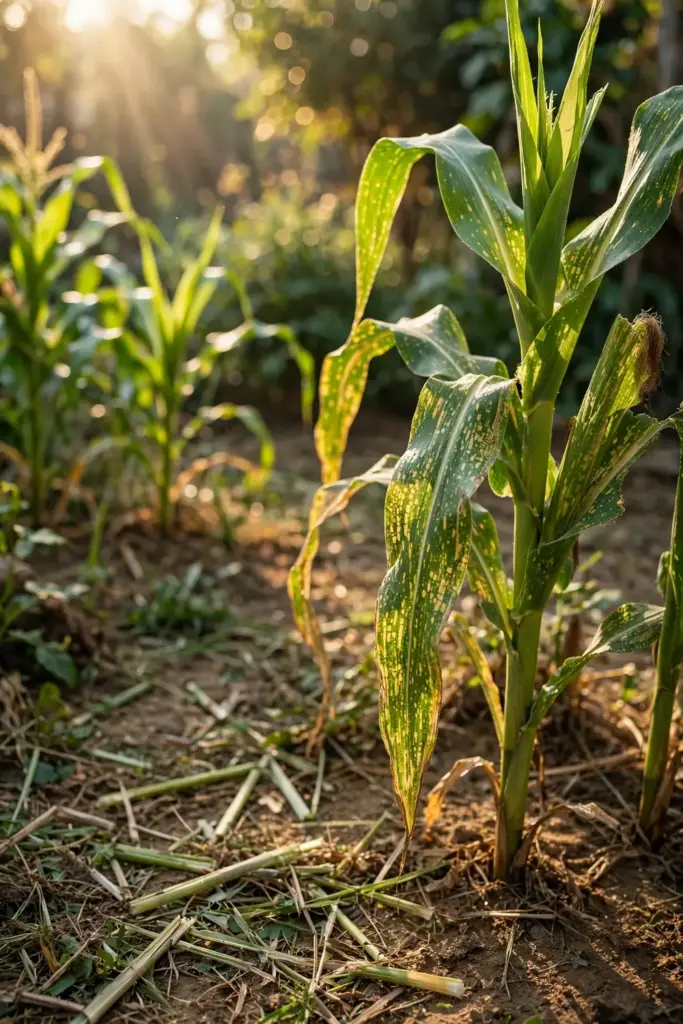
Pull infected plants and let the patch replace them next season. A corn patch grows new plants from seed each year. The new plants need the same routine: resistant hybrid, Johnsongrass control, planting timing, scouting, soap, clean beds, and neighbor cooperation. A patch that keeps its new plants clean earns its place. A patch that mottles every plant needs a harder look at Johnsongrass and aphids.
General bacterial blight care follows the same order: cut, clean, destroy, then keep the canopy dry. The guide to bacterial blight simple solutions covers that order for bacterial blight problems across the garden. The pathogens differ. The habits do not.
The guide to growing sweet corn for beginners covers starting and growing sweet corn at home for readers who want the full growing routine. The growing guide carries the planting and feeding steps. This article carries the virus prevention. The two guides work together. The corn that grows well and stays aphid-free is the corn that resists maize dwarf mosaic.
Do not present seed transmission as significant. Seed transmission of MDMV is rare, at a low percentage. Cornell reports 0.007 to 0.4 percent seed transmission for dent corn in its sweet corn diseases fact sheet, and field transmission is not typically by seed. A gardener who worries about seed transmission worries about the wrong pathway. The aphid is the pathway. The Johnsongrass is the reservoir. The seed is not the problem.
Do not present stylet oil sprays as a home strategy. One Ohio study found that stylet oil cut lab transmission but gave mixed field results, and the authors concluded that stylet oil is unlikely to control spread in the field. Stylet oil is research-only. The home routine is the hybrid, the Johnsongrass control, the scouting, and the soap. The oil stays in the lab.
Frequently Asked Questions
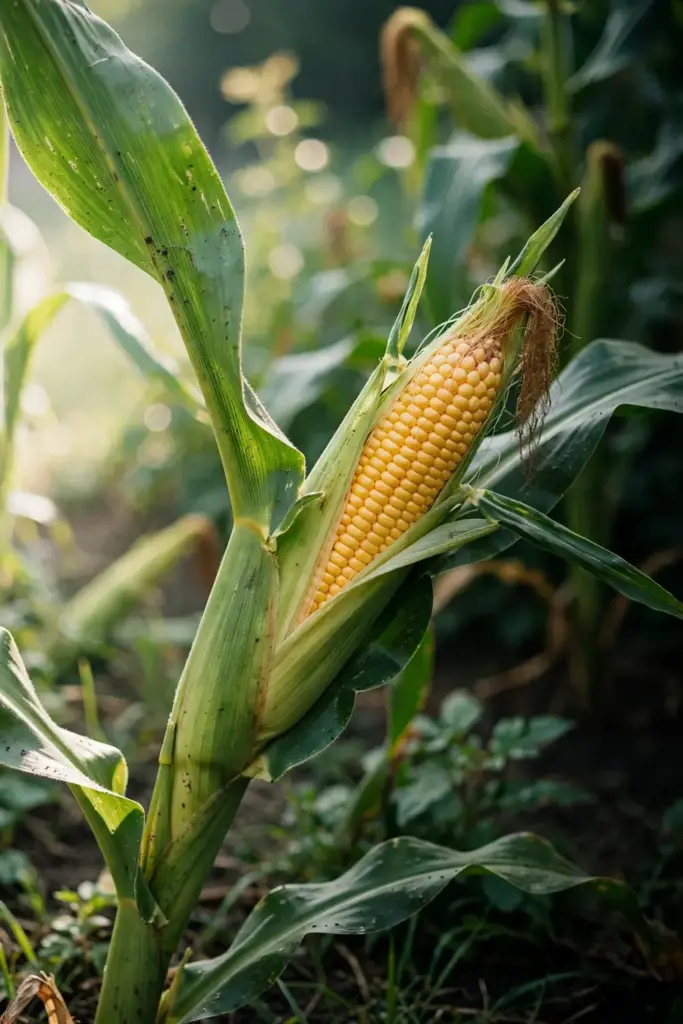
No cure exists for maize dwarf mosaic virus. No spray, no systemic, and no pruning rescue removes a virus from an infected plant. The virus is systemic, through the whole plant. Prevention is the whole response: resistant hybrids, Johnsongrass control, planting timing, scouting, soap, clean beds, and neighbor cooperation. A plant that shows mosaic gets pulled and destroyed. The patch stays clean because the gardener pulls the source.
Maize dwarf mosaic virus is not a current epidemic threat. Ohio State notes that major losses have not been reported for several years. Cornell notes that the disease was not a factor for more than 15 years before 2000. Frame it as an uncommon but real risk for sweet corn near Johnsongrass, with cheap prevention and no cure. The prevention routine costs little and covers several corn problems at once. The disease is rare. The routine is cheap.
A home gardener cannot tell MDMV from SCMV in the field. The two viruses share the vector, the hosts, the symptoms, and the management. Only lab testing separates them. The gardener does not need to know which virus hit the corn. The gardener needs the playbook.
Insecticidal soap reduces aphid pressure, but it does not reliably stop the virus from spreading. Transmission is non-persistent, with acquisition and transmission in under 60 seconds. An aphid that probes once and flies away moves the virus before any spray kills it. Soap kills the aphids it touches. Soap does not cure an infected plant. The soap is pressure control, not virus control. The Johnsongrass control is the stronger lever.
The sources disagree on planting time. Cornell, Ohio, and Wikipedia say plant early to escape aphid flights. University of California IPM says delay planting until the flights are over. Both recommendations key on local flight timing. Check local Extension for the flight timing in the gardener’s region, and plant to avoid the flights. Do not present either timing as settled. The local timing is the only timing that matters.
Seed transmission of MDMV is rare, at a low percentage. Cornell reports 0.007 to 0.4 percent seed transmission for dent corn in its sweet corn diseases fact sheet, and field transmission is not typically by seed. A gardener who worries about seed transmission worries about the wrong pathway. The aphid is the pathway. The Johnsongrass is the reservoir. The seed is not the problem. The routine targets the aphid and the Johnsongrass, not the seed.
The body table lists the full comparison, and the single difference that matters is the reservoir: MDMV Type A overwinters in Johnsongrass, while SCMV Type B does not.
Where to Go From Here
Start with the Johnsongrass. Kill it at least 2 weeks before planting.
The order is resistant hybrid, Johnsongrass control, planting timing, scouting, soap, clean beds, and neighbor cooperation. One next action beats ten good intentions. Kill the Johnsongrass. Check the catalog. The corn stays clean because the gardener killed the reservoir first.