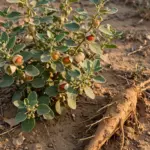
Growing fish mint in pots takes about 2 months from planting to your first real harvest, and the whole project lives or dies on one decision: treat the pot as a containment system. Fish mint spreads through underground runners that would happily colonize an entire garden bed, so a container is how you keep the plant where you put it. Give it constant moisture, partial shade, and a pot at least 20 to 30 cm deep, and Houttuynia cordata will reward you with armfuls of glossy, heart-shaped leaves for years.
The second thing to know before you spend a dollar: fish mint is not a mint. The name is a culinary nickname, not a botanical fact. True mints belong to the mint family (Lamiaceae); fish mint belongs to Saururaceae, a completely different family. This distinction matters because every care instinct you own for peppermint, like letting it run wild in a corner, will backfire here. Fish mint wants wetter soil than any true mint, spreads more aggressively than most of them, and tastes nothing like mint at all. Once you accept those three truths, the plant practically grows itself as long as the pot stays wet.
This guide covers the whole arc: how to grow fish mint in a pot that contains it, which form to buy, how wet the soil really needs to be, and how to harvest and cook the leaves like the Vietnamese and Japanese cooks who have loved this herb for centuries. The plant carries the Chinese name yu xing cao, the Japanese name dokudami, and the Vietnamese name rau diếp cá, and every one of those traditions grows it deliberately, contained, and harvested young.
Not a True Mint: The Disambiguation That Matters
The confusion around fish mint is the deepest of any herb in this series, and clearing it up is the first job of this article. Garden centers, Pinterest boards, and half the internet mix this plant up with true mints, and the mix-ups cost gardeners real money and real flavor disappointment. Here is the plain truth.

Fish mint, Houttuynia cordata, is a moisture-loving perennial from the Saururaceae family, native to Southeast Asia according to the NC State Extension plant profile. True mints, peppermint, spearmint, and their relatives, belong to Lamiaceae. The families diverged long ago, and their needs diverged with them. A true mint tolerates dry spells and sun; fish mint demands constant moisture and sulks in hot afternoon sun. A true mint spreads by runners and is merely enthusiastic; fish mint spreads by rhizomes so aggressively that nursery catalogs warn you to keep it boxed in from day one. And most importantly, a true mint tastes cool and sweet; fish mint tastes sharp, green, and unmistakably fishy, from natural aromatic compounds like undecanone and myrcene. Nobody who has tasted the fresh leaf confuses it twice.
| Trait | Fish Mint (Houttuynia cordata) | True Mints (Mentha spp.) |
|---|---|---|
| Family | Saururaceae | Lamiaceae |
| Flavor | Fishy, sharp, pungent, citrusy edge | Cool, sweet, menthol |
| Moisture need | Constant moisture; tolerates shallow water | Average moisture; hates soggy roots |
| Sun | Partial to full shade preferred | Full sun to partial shade |
| Spread | Very aggressive underground rhizomes | Aggressive runners, but easier to pull |
| Containment | Mandatory pot or root barrier | Pot recommended, border workable |
There is one more identity worth pinning down. The variegated form sold as “chameleon plant” is not a separate species. It is Houttuynia cordata ‘Chameleon’, a cultivar of the same plant, with cream-and-pink marbled leaves. It grows the same way, spreads the same way, and needs the same containment. Buy it for the looks, but do not mistake it for a better-behaved plant.
Fish Mint Growing Specs at a Glance

| Spec | Value |
|---|---|
| Botanical name | Houttuynia cordata |
| Family | Saururaceae (not Lamiaceae) |
| Hardiness | Perennial in warm climates; dies back in frost, re-emerges in spring |
| Height | 30 cm (12 inches) in a pot |
| Light | Partial shade to full shade; afternoon shade essential in heat |
| Soil pH | 5.5 to 8 (tolerant) |
| Soil moisture | Constantly moist; boggy soil or saucer of water tolerated |
| Pot size | 20 to 30 cm deep minimum, with a saucer |
| Seed germination | 1 to 8 weeks at 65 to 70°F; needs light, barely cover |
| First harvest | About 8 weeks after planting |
These numbers come from aquatic-plant nursery references and extension plant profiles, and they agree with each other: 30 cm tall, white flowers in June and July, and a pH tolerance from 5.5 to 8. The plant is forgiving about almost everything except dryness and full escape from its pot.
Tools and Materials
You need less than you think. A 20 to 30 cm deep pot with drainage holes, a deep saucer or tray, rich potting mix with some compost, fine sand if you are starting from seed, a starter plant or cuttings, a watering can you will use often, and a pair of scissors for harvesting. Organic liquid feed like seaweed extract is optional but useful. That is the whole list.

Skip the garden fork, the moisture meter, and the fancy self-watering insert. This plant does not need equipment; it needs water and boundaries.
Step 1: Choose the Right Form to Buy
Buy a small starter plant if you can find one. Nurseries sell fish mint as a potted herb, as bare-root cuttings, and increasingly as the variegated ‘Chameleon’ cultivar. For cooking, the plain green form is the traditional choice and, according to growers, the most vigorous. For looks, ‘Chameleon’ is genuinely beautiful, with marbled leaves that glow in shade. Both need identical care and identical containment.

Seeds are the slowest route. The seeds are tiny, need light to sprout, and germination is sporadic, anywhere from one to eight weeks at 65 to 70 degrees, and Norfolk Cottage Garden’s sowing notes warn the slow end can stretch past 60 to 90 days. If you go the seed route, sprinkle them onto very moist compost, barely cover them with the barest dusting of fine vermiculite, and keep them evenly moist in bright light. Expect patience, not speed. Cuttings root faster: lay a stem cutting with half its length under moist soil, keep it watered, and you will have a rooted plant in about a month.
Whatever form you buy, inspect it the way you would any nursery plant. You want firm green leaves, no mushy stems, and roots that are white or tan rather than black. A healthy starter establishes in weeks; a weak one sits and sulks.
Step 2: Pick a Pot That Is Also a Prison
Learning how to grow fish mint starts with respecting the rhizome, so give this step real attention. Fish mint spreads by underground rhizomes that travel farther and faster than mint runners, and once established in open ground the plant is genuinely difficult to remove. Gardeners who planted it free in a bed describe it as a multi-year regret. The pot is not optional decoration. It is the containment strategy.

Choose a pot 20 to 30 cm deep with drainage holes, and set it in a deep saucer, the exact setup Australian nursery Food Forest Seeds recommends for keeping the root zone damp. The saucer does double duty: it catches water and keeps the root zone damp, which this plant loves. Do not sink the pot rim-level into a garden bed, because the rhizomes can and will escape over the rim or through the drainage holes into the soil below. If you want the in-ground look, bury the pot so the rim sits 5 cm above the soil surface and place a tile or paver under the drainage holes.
One pot is plenty for a household. Once established, this plant grows fast enough that one pot serves most households. Resist the urge to plant three pots “just in case.”
Step 3: Mix a Wet, Rich Soil
Fish mint is one of the rare herbs that thrives where other plants fail: moist, boggy, poorly drained soil. Standard potting mix works, but enrich it. Blend roughly two parts good potting mix with one part rich compost. The compost feeds the plant gently and holds moisture; the potting mix keeps the structure open enough for roots to breathe.

Do not add extra perlite or bark for drainage the way you would for Mediterranean herbs. You are building the opposite of a Mediterranean mix. The goal is a soil that stays damp between waterings, not one that dries out fast. A soil pH anywhere from 5.5 to 8 is fine; the plant is genuinely tolerant. If you want to push vigor, some growers sit the pot in a shallow dish of water a couple of centimeters deep during hot weather, mimicking the pond-edge habitat where this plant grows wild.
Step 4: Plant the Starter
Plant in spring, after the last frost, when nights stay reliably above 10 degrees. Fill the pot with your moist mix, leaving 3 cm of headspace at the top. Set the starter plant at the same depth it grew in its nursery pot, firm the mix gently around it, and water deeply until water runs from the drainage holes.

For cuttings, lay the stem horizontally with half its length buried and the leaf tips pointing up, then water and keep the pot shaded for the first week. For divisions, which is how established growers multiply the plant, lift a pot-bound clump in spring, tease apart a section with roots attached, and replant immediately. Division succeeds nearly every time and is the fastest way to a second pot.
Water the new planting well and keep it out of harsh midday sun for the first few days while roots settle. New growth, small curled leaves unfurling from the center, is your sign that planting worked.
Step 5: Water Like It Is a Bog
Here is the care rule that separates fish mint from every true mint you have grown: never let it dry out. This plant wants constantly moist soil, and unlike most herbs it will not forgive a missed week. In summer, check the pot daily. Water when the top centimeter feels merely damp rather than wet, which in hot weather can mean watering every single day. The saucer should rarely sit bone dry.

The plant tolerates, and even enjoys, conditions that would rot other herbs. Growers keep pots standing in shallow water through heat waves. It grows at pond edges in the wild, with its crown in a centimeter or two of water. If your lifestyle includes vacations or forgetful stretches, this is the herb to rig with a simple wick or to park in a self-watering pot. Dryness shows fast: leaves droop, edges crisp, and growth stalls until moisture returns.
Step 6: Feed Lightly
Fish mint feeds lightly and grows happily in poor soil, so restraint is the whole strategy here. A light application of compost at planting time carries most plants through the season. If the leaves look pale or growth slows in midsummer, give a half-strength dose of liquid seaweed extract or fish emulsion once a month. That is the ceiling, not the floor.

Overfeeding causes soft, floppy growth with diluted flavor, which defeats the purpose of growing a pungent herb. Skip slow-release pellets unless the pot is very large; in a small container they can build up salts. Compost top-dressing in spring is the gentlest and most reliable feed you can give.
Step 7: Give It Shade
Partial shade to full shade is the sweet spot, and this is non-negotiable in hot climates. Morning sun with afternoon shade is ideal. In cool coastal or northern gardens the plant tolerates more sun, but only if the soil stays constantly moist. Leaf scorch, bleached patches on the leaf edges, is the classic sign of too much sun with too little water.

This shade preference is actually a gift. Fish mint fills the damp shady corner where basil sulks and thyme refuses to grow. Under a tree, beside a water butt, on a north-facing balcony, these are premium fish mint locations. The variegated ‘Chameleon’ form colors up best with a little more light than the green form, but it still wants protection from harsh afternoon sun.
Step 8: Propagate Without Buying More
You will never need to buy fish mint twice. The plant propagates itself so eagerly that your main job is restraint, not encouragement. In spring, divide any pot-bound clump by lifting it, pulling apart sections with roots, and repotting. Each division becomes a full plant within weeks.

Stem cuttings root in plain water or moist mix with almost no attention. Snip a healthy stem, strip the lower leaves, and stand it in a jar of water on a bright windowsill. Roots appear in one to two weeks. Rhizome fragments work too: any piece of underground stem with a node will sprout if kept moist. This vigor is exactly why the pot matters so much. Every propagation method is also an escape method if you are careless with trimmings. Never toss fresh cuttings on the compost heap unless your heap runs genuinely hot; dry them in the sun first or drown them in a bucket of water for a week.
Pests and Diseases
Fish mint has few serious enemies, which is one of its quiet virtues. Slugs and snails enjoy the soft leaves in damp shade, so check under the pot rim and nearby surfaces on wet evenings. Hand-pick at dusk or set a simple beer trap nearby. Aphids occasionally cluster on new growth; a strong jet of water dislodges them, and the plant outgrows minor attacks fast.

Fungal leaf spots can appear in crowded, airless conditions. The fix is cultural: thin the clump, improve air circulation, and avoid overhead watering late in the day. Because you eat the leaves, skip systemic pesticides entirely. If a problem ever overwhelms the plant, the nuclear option is simple: cut everything back to the soil, discard the foliage, and let the rhizomes resprout clean. The plant forgives hard cutbacks completely.
Harvest the Leaves for the Kitchen
Start harvesting when the plant is 20 cm tall and bushy, roughly 8 weeks after planting. Pick the young, tender leaves and shoot tips in the morning, when their aromatic oils are strongest. Pinch or snip stems just above a leaf node, which encourages branching and keeps the plant compact. Regular harvesting is genuinely good for the plant; it stays bushier and produces more.

Now the culinary honesty. Fish mint is an acquired taste, and you should know that before your first bite. The fresh leaf smells and tastes of fish, green sharpness, and citrus, all at once. Vietnamese cooks love it raw in salads and spring rolls, where its punch cuts through rich food. Japanese tradition dries it as dokudami tea. Chinese cooks use it in salads and cold dishes. If you grew up with it, it tastes like home. If you did not, start small: a few leaves in a salad, not a plateful. Heat softens the fishiness, so lightly wilted or stir-fried leaves are the gentlest introduction. Do not expect mint. Expect something entirely its own.
Harvest only from your own unsprayed pot. Never pick fish mint from roadsides, unknown ponds, or anywhere that might carry runoff, because this plant absorbs what is in its wet soil.
Store and Use the Harvest
Fresh leaves keep best the way most tender herbs do: wrapped loosely in a damp paper towel inside a container in the fridge, used within 3 to 5 days. For longer keeping, the traditional method is drying. Spread clean leaves in a single layer in a warm, airy spot out of direct sun, and they dry in a few days. Dried leaves keep for months in a sealed jar and brew into the earthy dokudami-style tea.

Freezing works for cooking use: blanch the leaves for 30 seconds, cool in ice water, squeeze dry, and freeze in small portions. The texture softens, but the flavor holds for stir-fries and soups. However you store it, label the jar clearly. A jar of dried fish mint looks unremarkable, and you do not want to discover its identity by surprise in a guest’s tea.
Overwintering the Pot
In warm climates the plant is evergreen and needs nothing. Where frosts come, fish mint dies back to the ground in winter and re-emerges from its rhizomes in spring. This is normal, not failure. After the first hard frost blackens the foliage, cut the dead stems to the soil surface and move the pot against a sheltered wall.

In zones with hard freezes, move the pot into an unheated garage or shed once the top growth dies. Water sparingly through winter, just enough that the soil does not turn to dust, perhaps once a month. The rhizomes are tougher than they look; nursery sources describe the plant as frost resistant, with established roots surviving very cold temperatures. In spring, bring the pot back into light, resume watering, and watch for the first curled shoots. Do not dig up the “dead” plant in February. It is sleeping.
Common Mistakes and How to Fix Them
Planting it in open ground. The classic fish mint regret. The rhizomes escape, and removal takes years of digging. The fix is prevention: grow it in a pot, always. If you already planted it free, dig the whole area now, sift out every rhizome fragment, and replant only in a container.

Letting the soil dry out. The number one killer in pots. Unlike true mints, this plant has no drought tolerance worth mentioning. Fix it with a deep saucer, daily summer checks, and a self-watering pot if you travel.
Full sun in a hot climate. Scorched, bleached leaves and stalled growth. Move the pot to afternoon shade. The plant recovers fast once the light is right.
Expecting mint flavor. The name sets a trap. Taste a leaf before you plant a forest of it, and start culinary experiments small.
Tossing trimmings on the compost. Fresh rhizome fragments survive cool compost and sprout wherever the compost spreads. Dry trimmings in the sun or drown them in water for a week first.
Overfeeding. Soft floppy growth, weak flavor. Cut the feed to compost only, or half-strength liquid feed monthly at most.
Giving up in winter. The dead-looking pot in January is dormant, not dead. Keep it barely moist and wait for spring shoots.
Troubleshooting Common Fish Mint Problems
Leaves are yellowing. Usually overwatering in stagnant conditions or, paradoxically, a pot that dried out and was then flooded. Check that drainage holes are open and the saucer is not a permanent swamp. Pale yellow with green veins can mean the compost is exhausted; top-dress with fresh compost.

Growth is leggy and sparse. Too little light. Move toward brighter shade, not full sun. Pinch the tips to force branching.
The plant stopped spreading. It may be pot-bound. In spring, lift the clump, divide it, refresh the soil, and replant. A divided plant explodes with new growth.
White flowers appeared. Small white blooms in early summer are normal and pretty. They do not hurt leaf flavor the way bolting hurts basil. Leave them or snip them; your choice.
Brown leaf edges. Either sun scorch or a dry spell. Move to more shade, restore steady moisture, and new growth will come clean.
Something is eating the leaves. Slugs are the usual suspects in damp shade. Check at dusk, hand-pick, and keep the area around the pot clear of debris where they hide.
It escaped the pot. Act immediately. Pull the escapees, check the drainage holes, and either raise the pot off the soil on feet or repot with a barrier. Do not wait a season; a season is all it needs.
Frequently Asked Questions

No. Fish mint is Houttuynia cordata in the Saururaceae family, while true mints are Mentha species in the Lamiaceae family. The name is a flavor nickname, not a botanical relationship. Care differs too: fish mint wants wetter soil and more shade than any true mint.
It will if you plant it in open ground. The underground rhizomes spread aggressively and are hard to remove once established. Grown in a pot with the rim above soil level, it is completely manageable. The container is the containment strategy, not just a growing location.
Yes, with conditions. Give it your brightest window or a grow light, keep the soil constantly moist with a saucer underneath, and expect slower, leggier growth than outdoors. A cool room suits it better than a hot one. Harvest lightly so the plant keeps enough leaf to recover.
Sharp, green, and distinctly fishy, with citrus and pepper notes underneath. It is a polarizing flavor that Vietnamese, Japanese, and Chinese cooks prize and newcomers often find startling. Start with a few raw leaves in salad or try it lightly cooked, since heat softens the fishiness considerably.
Yes, it is the same species. Chameleon plant is Houttuynia cordata ‘Chameleon’, a variegated cultivar with cream, pink, and green marbled leaves. It grows, spreads, and cooks the same way as the green form, and it needs the same pot containment.
Begin about 8 weeks after planting, once the plant is 20 cm tall and bushy. Pick young leaves and shoot tips in the morning, snipping just above a leaf node to encourage branching. Harvest regularly through the growing season; the plant responds to cutting by growing denser.
Where to Go From Here
You now own the complete picture of how to grow fish mint: a pot that contains it, soil that stays wet, shade that protects it, and honest expectations about its spread and its flavor. Start with one pot, harvest young leaves often, and let the plant show you what it does best. If the flavor wins you over, a second pot for drying tea leaves is the natural next step. If it does not, you have grown a genuine conversation piece for the garden, and the pot kept it exactly where you put it.

For the foundation under all of this, the soil health guide explains how living soil supports even moisture-hungry plants. If the container life appeals to you, creative container garden ideas will give that pot good company, and the seed-starting guide covers the patient art of starting tiny seeds like these.