
Black cardamom does not want what green cardamom wants. It grows on cool, wet, shaded slopes in the eastern Himalayas, and it will tell you quickly when your garden cannot copy that. Before you buy a single seed, know the honest frame for how to grow black cardamom from India: this is a 3 to 5 year project, and in cold climates it may never give you pods at all.
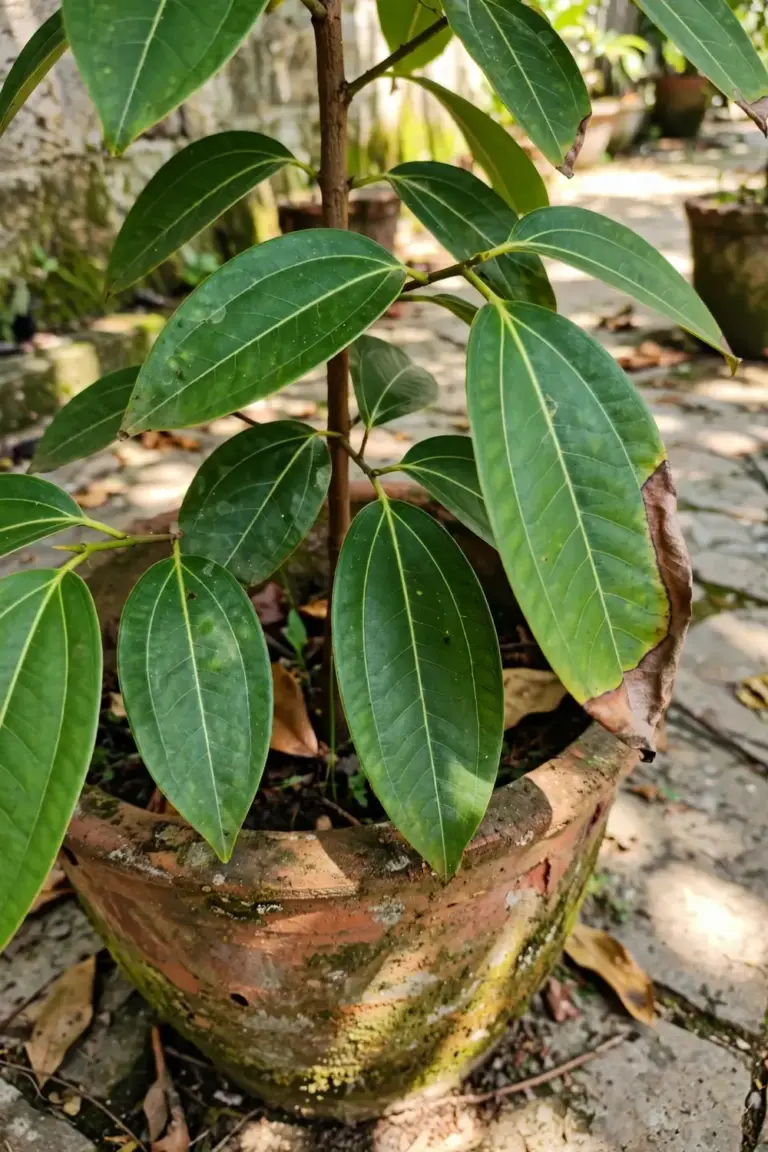
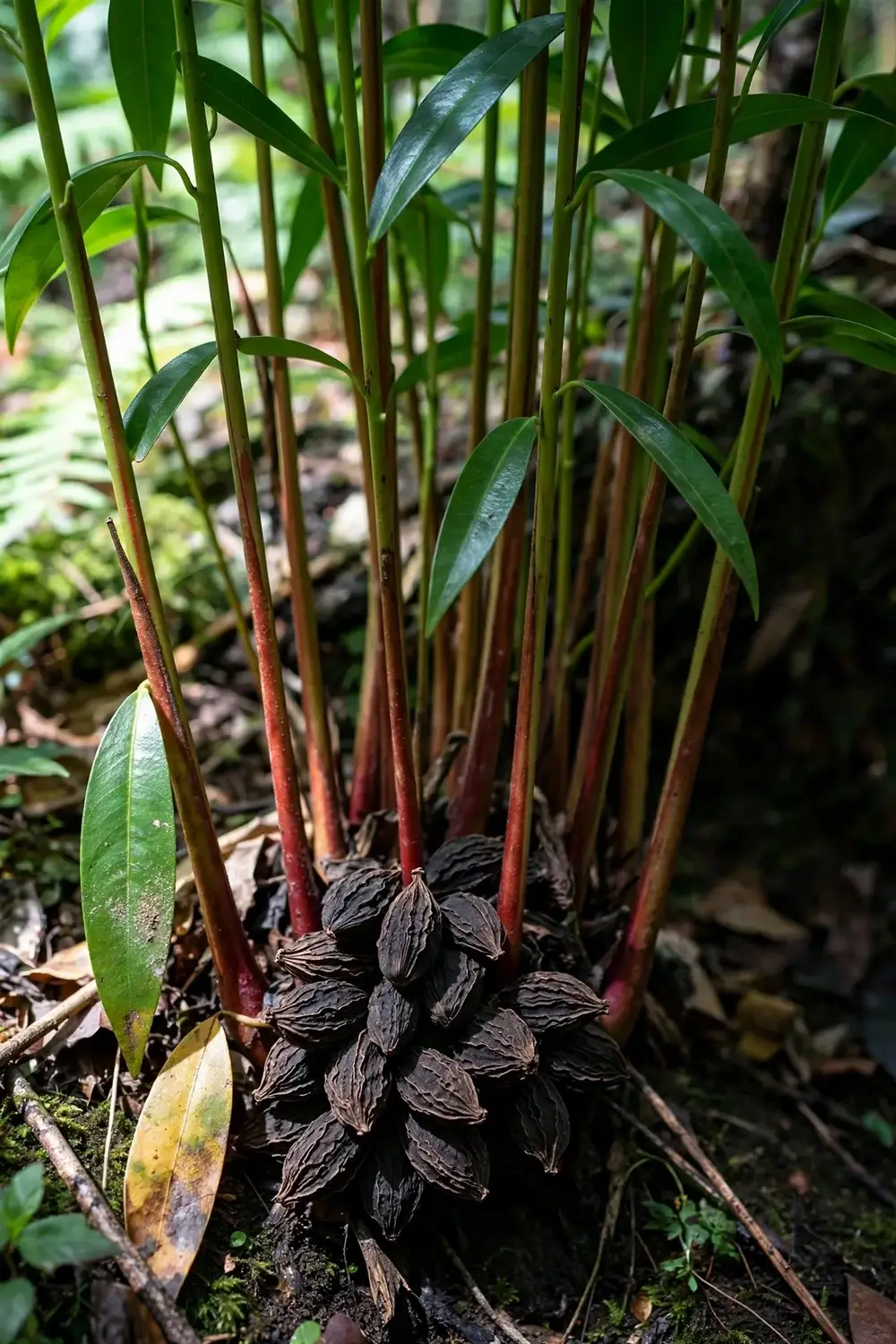
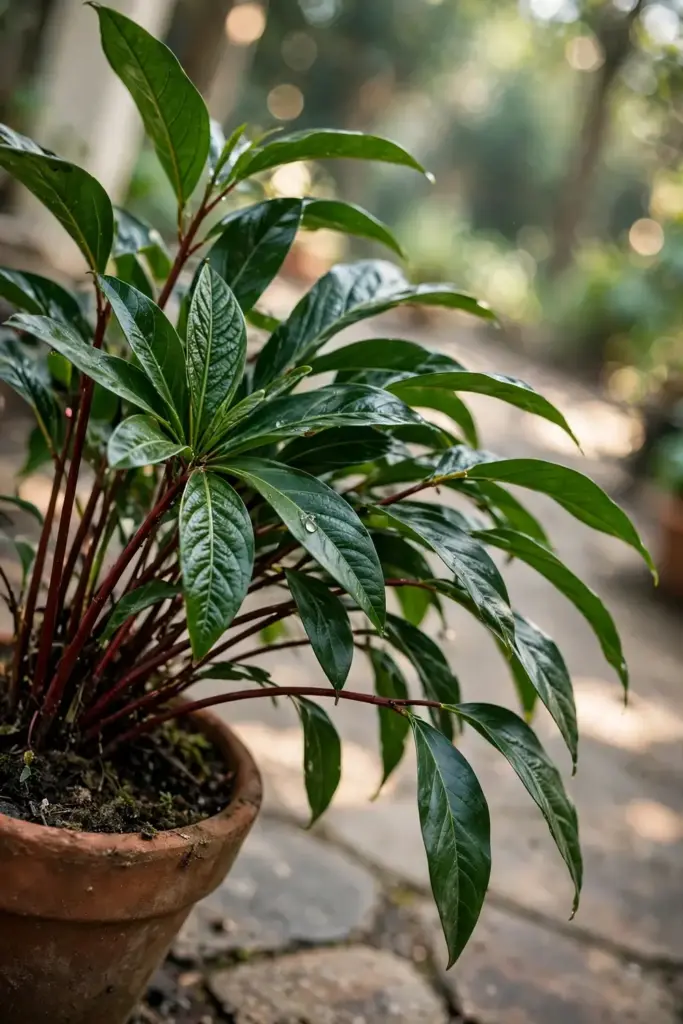
The plant is Amomum subulatum, known as badi elaichi across India. It is a tall, clumping, evergreen perennial in the ginger family, with red stems and glossy pointed leaves. The flowers form at the base of the rhizomes, near the soil, and the fruit becomes the large, dark, wrinkled pods you buy in the spice aisle.
Here is the decision that matters most. If you live in USDA zones 9 to 10 with high humidity, you can try black cardamom outdoors in deep shade. Everywhere else, it is a container plant that comes indoors when nights drop below 50 degrees. If you want to learn how to grow black cardamom from India in a Western garden, this guide covers both paths with numbers you can act on.
1. How to Grow Black Cardamom From India: Start With the Himalayan Truth
Black cardamom comes from the eastern Himalayas: Sikkim, the Darjeeling hills, southern Bhutan, and eastern Nepal. It grows between 500 and 2,000 meters elevation, under evergreen forest canopy, in cool air that stays humid nearly all year.
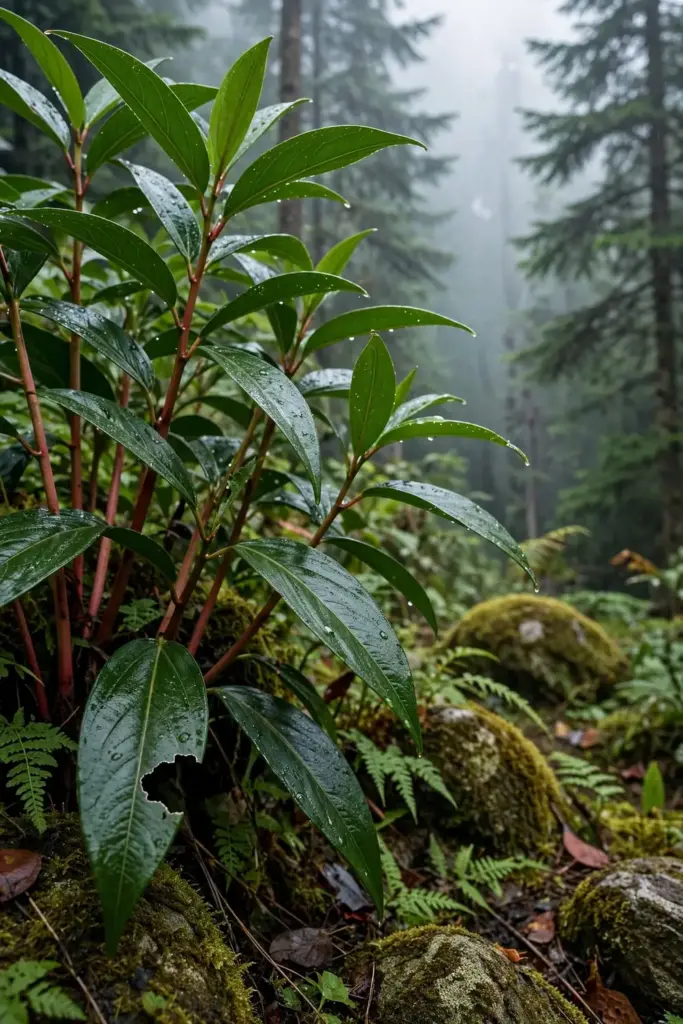
The numbers that define its comfort zone are specific. Daytime temperatures sit between 14 and 20 degrees Celsius for most of the year. Annual rainfall runs 200 to 250 centimeters. Humidity stays near saturation for months at a stretch in the cloud forest where it grows wild. Soil is acidic, between pH 4.5 and 6.5, and rich in leaf mould from the forest floor.
A North Carolina Extension plant profile describes the same plant in American units: temperatures from 50 to 95 degrees Fahrenheit, altitudes between 2,200 and 5,000 feet, and containers moved to a greenhouse or warm, shady, humid room when temperatures drop below 50 degrees. Read that threshold carefully. It is the single most important number here.
The timeline is the second honest number. Seedlings bear fruit after about 5 years. Rhizome divisions bear fruit after about 3 years. Commercial plantations consider 12 to 15 years the productive life of a plant. If you want black cardamom pods this year, buy them. If you want the project, keep reading.
2. Black vs Green vs the Lookalikes: Know Your Cardamom Species
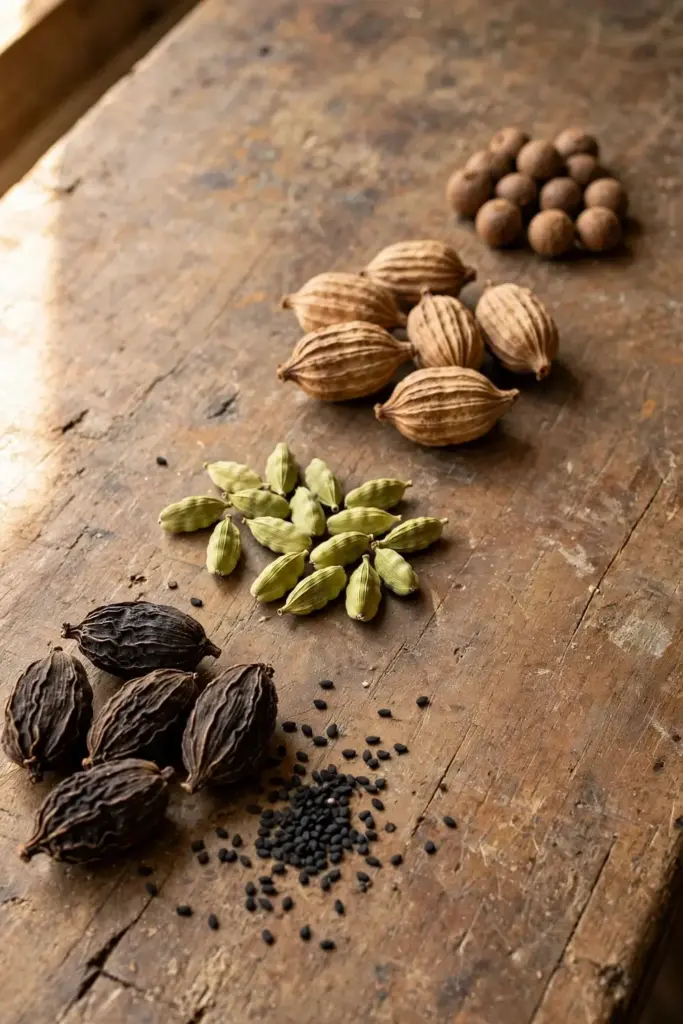
Species confusion is the defining feature of the black cardamom market. Seed sellers label Elettaria cardamomum as black cardamom. Black cardamom listings get stocked with green cardamom guides. Even giant gardening publishers run generic cardamom articles under the black cardamom name. Learn the four names below before you spend money.
| Species | Common name | What it is | Flavor |
|---|---|---|---|
| Amomum subulatum | Black cardamom, badi elaichi | Himalayan understory perennial; large dark wrinkled pods | Smoky, camphor, menthol |
| Elettaria cardamomum | Green cardamom, chhoti elaichi | Tropical lowland ginger-family plant; small green pods | Sweet, floral, eucalyptus |
| Lanxangia tsaoko (formerly Amomum tsao-ko) | Tsaoko, Chinese black cardamom | Different species from China; often mislabeled | Smoky, used in braised dishes |
| Amomum costatum | Also sold as “black cardamom” | A third Amomum species; check the Latin name before buying | Similar smoky profile |
The taxonomy was verified against current botanical sources: Lanxangia tsaoko is not a synonym of Amomum subulatum. They are different species. When a packet says “black cardamom” but the Latin name reads Elettaria cardamomum, you are buying green cardamom seed.
Green cardamom and black cardamom are not interchangeable in cooking. Green cardamom goes into desserts, chai, and baked goods. Black cardamom goes into slow-cooked curries, biryani, and garam masala. A niche spice site notes that black cardamom is 3 to 4 times more pungent than green, and that substituting one for the other ruins both dishes.
If you already grow green cardamom, the green cardamom growing guide covers that species in full. This article is the black cardamom lane only: Amomum subulatum, badi elaichi, the smoky one.
3. Seed or Rhizome: The Honest Comparison
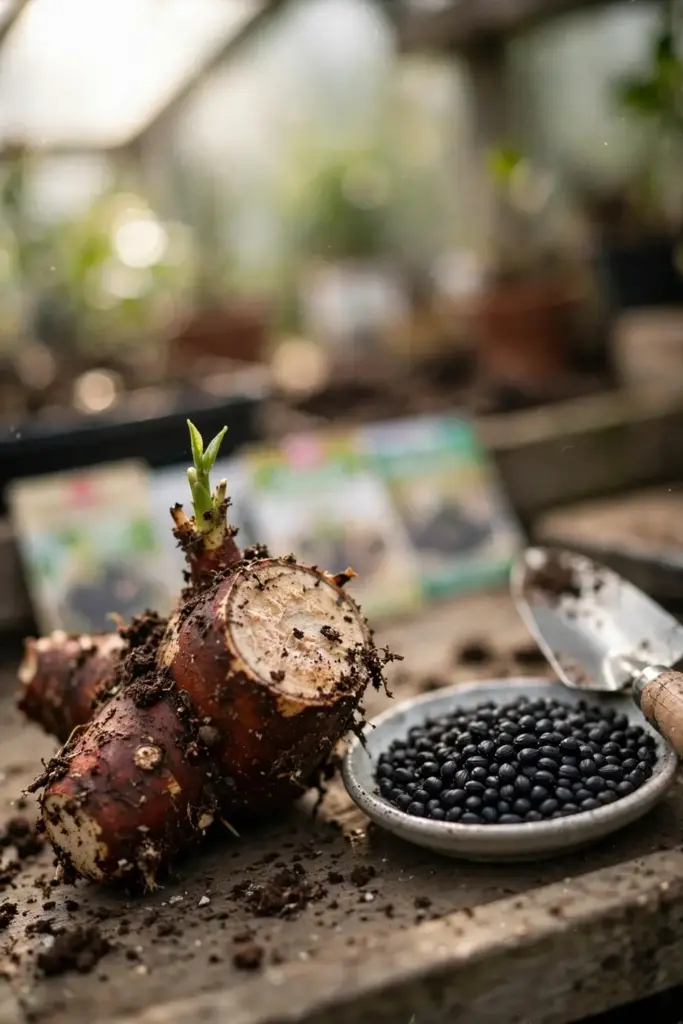
You can start black cardamom from seed or from a rhizome division. The two paths differ in cost, timeline, and failure mode. Compare them below, then choose with open eyes.
| Method | Years to first pods | Cost | Reliability |
|---|---|---|---|
| Fresh seed | 4 to 5 | Low per seed, high in patience | 40 to 70 percent germination with fresh seed; zero with dead seed |
| Rhizome division | 3 | Higher; divisions are scarce for sale | 85 to 95 percent with a healthy division |
| Grocery-store pods | Never | Cheap | Fire-dried pods will not sprout |
That slow arc is the whole story of this crop: scarified seed sown shallow in warm compost, weeks of waiting for germination, and pods years after sowing for seed-grown plants.
Seed is the method most readers can actually buy, so this guide follows the seed track with the division track woven in where it matters. Rhizome divisions are the better choice if you can find them: you skip two years of waiting and you start with the mother plant’s exact genetics.
The grocery-store row deserves emphasis because it is the most common failure in this crop. Black cardamom pods in the spice aisle are dried over heat or smoke. The seeds inside are dead. Sowing them produces nothing. Every reliable grow guide agrees on this point: only fresh, viable seed germinates.
4. Buying Viable Seed: Fire-Dried Pods Will Not Sprout
Buy seed from a nursery or seed seller that names the species Amomum subulatum on the packet. That single line is your quality test. Sellers who write only “black cardamom” without a Latin name have not told you what you are growing.
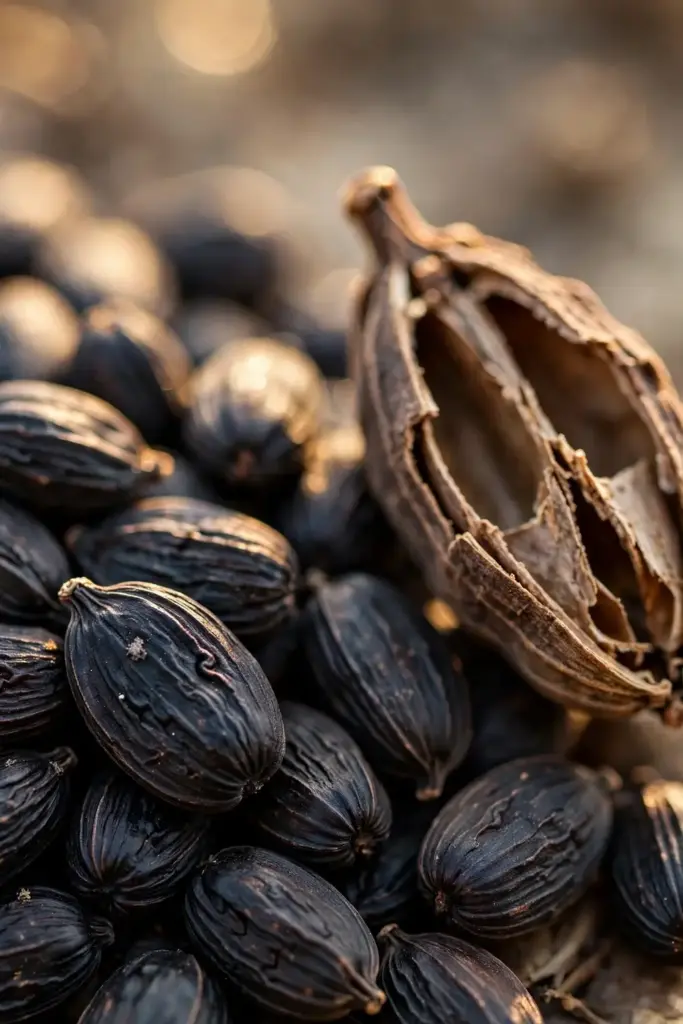
Fresh seed is the entire game. Cardamom seed loses viability quickly once it dries. The best sources are sellers who harvest seed from fresh pods and ship it moist, often in sealed pouches. Check reviews for germination reports before you order, and buy from sellers in the same hemisphere as you when possible, since seed that sits in a warehouse for a year is dead seed with a live price tag.
Buy more seed than you think you need. With germination running 40 to 70 percent from good fresh seed, a packet of 20 seeds gives you 8 to 14 seedlings on a good day, according to one niche cardamom growing guide. Plan for losses and sow extra.
One more buying caution: sponsored shopping results under black cardamom queries frequently sell Elettaria cardamomum seed as “cardamom.” Read the product title for the Latin name. If it says Elettaria, it is green cardamom, no matter what the headline claims.
5. Soak and Sow: The Seed-Starting Steps
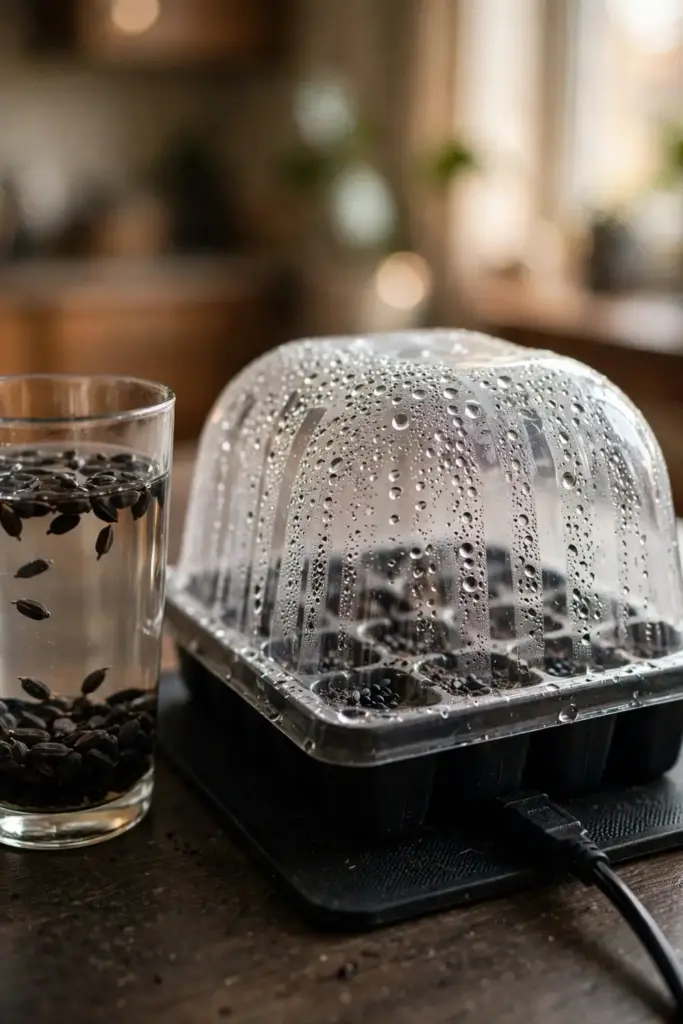
Black cardamom seed germinates slowly and unevenly. The window runs 4 to 12 weeks, and some seeds wait even longer. The steps below give you the best documented odds.
| Step | Action | Time |
|---|---|---|
| 1 | Soak fresh seed in warm water | 24 to 48 hours |
| 2 | Sow 1 to 2 centimeters deep in seed compost | Day 0 |
| 3 | Hold at 25 to 30 degrees Celsius with high humidity | Weeks 1 to 12 |
| 4 | Transplant at 2 to 3 true leaves | After germination |
Start indoors 6 to 8 weeks before your last frost. Use a seed-starting mix, not garden soil: equal parts peat or coco coir, perlite, and vermiculite drains freely while holding moisture. Sow 2 to 3 seeds per cell and cover lightly.
Heat is non-negotiable. A seedling heat mat set to 25 to 30 degrees Celsius sits under the tray for the whole germination window. A clear humidity dome or plastic wrap over the tray holds the moisture that tropical seed expects. Ventilate daily so the surface never grows mold.
A detailed black cardamom growing guide records the same protocol with slightly different numbers: soak overnight, sow about an eighth of an inch deep, hold 75 to 95 degrees Fahrenheit, and keep humidity high with a covered pot. The overlap with the AI-panel numbers is the signal: warm, wet, and patient.
Check the tray twice a week. Keep the mix evenly moist, never waterlogged. When seedlings show 2 to 3 true leaves, move each into its own 4-inch pot. Do not rush this step; cardamom seedlings stressed by early transplanting stall for weeks.
6. Soil: Acidic, Humus-Rich, Never Soggy
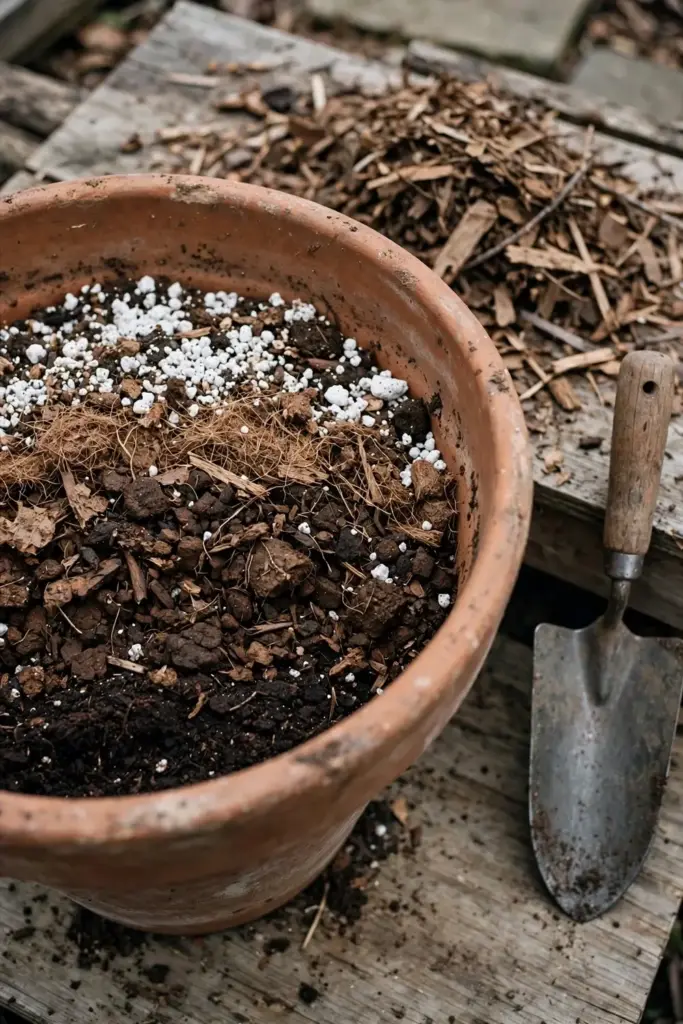
In the Himalayas, black cardamom grows in forest soil: acidic, deep in leaf mould, draining freely on slopes while staying moist from constant rain and fog. Copy that texture, not just the chemistry.
Target pH sits between 4.5 and 6.5. If your soil or tap water runs alkaline, add peat, composted pine bark, or elemental sulfur to pull the number down. Test with a cheap kit before you plant, not after the leaves yellow.
For pots, mix your own from four ingredients: garden soil or loam for body, mature compost for richness, perlite for drainage, and coco peat for moisture, leaning heaviest on the soil and lightest on the coco peat. This gives the drainage cardamom needs with the organic richness it expects. Never use straight garden soil in a pot; it compacts, holds too much water, and suffocates the rhizomes.
In the ground, dig the planting hole twice as wide as the root ball and work composted leaf mould through the whole bed, not just the hole. Mulch 2 to 3 inches deep with shredded leaves to mimic the forest floor. The soil-health foundation guide explains the biology behind this approach: rich organic matter feeds the microbes that keep root zones disease-resistant.
One drainage rule overrides everything else. Black cardamom loves moisture and dies in standing water. On flat ground, plant on a slight mound. In pots, drill generous drainage holes and never let the saucer sit full.
7. Water and Humidity: The Mountain-Stream Rhythm
Water like a Himalayan monsoon slope: constant moisture, never a swamp. During the growing season, water when the top inch of soil feels dry. In most indoor setups that means watering 2 to 3 times per week in summer and once a week in winter.
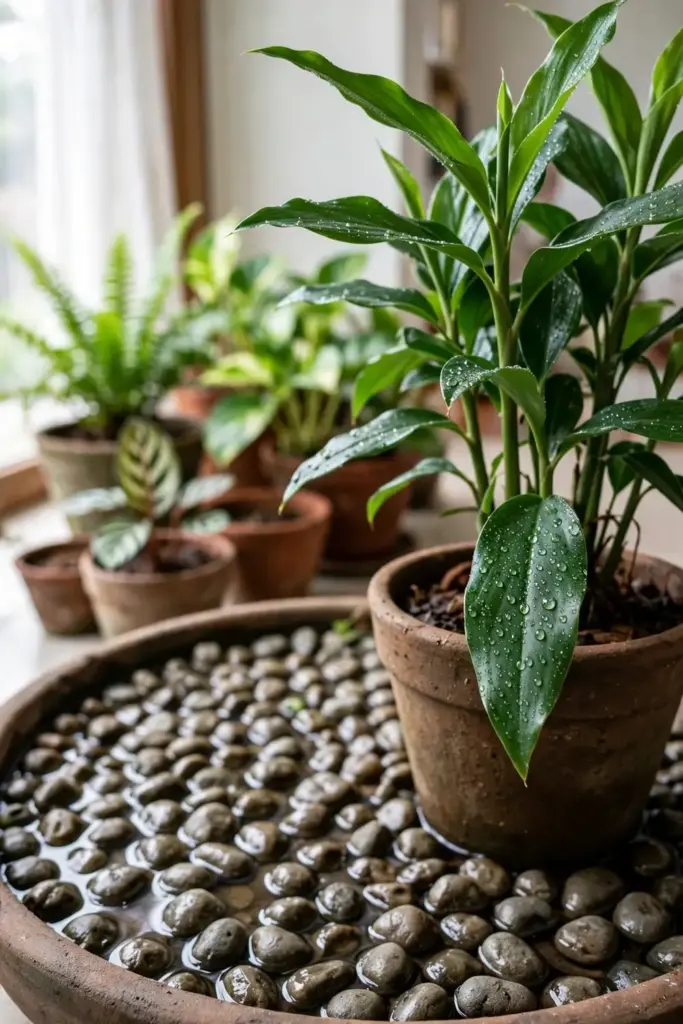
Humidity is the harder half of this equation, and it is where most home growers fail. Black cardamom wants humid air, far more than a normal house provides, and wild plants endure near-saturated air for months. A dry heated house in January feels desert-dry to a Himalayan plant. That gap kills more cardamom plants than any pest.
Close the gap with layers. Group the plant with other tropicals. Set the pot on a pebble tray filled with water. Mist the leaves in the morning so they dry by evening. Run a room humidifier near the plant through winter. A small greenhouse cabinet or a bright bathroom works better than any single trick.
Watch the leaves for your feedback loop. Leaf edges browning and crisping signal low humidity. Soft, dark, collapsing stems signal overwatering. Adjust one variable at a time and give the plant a week to respond before you change anything else.
8. Shade: The One Input You Cannot Skip
Black cardamom is an understory plant. It evolved under evergreen canopy, and direct sun scorches its leaves. This is not a plant you harden off into full sun.
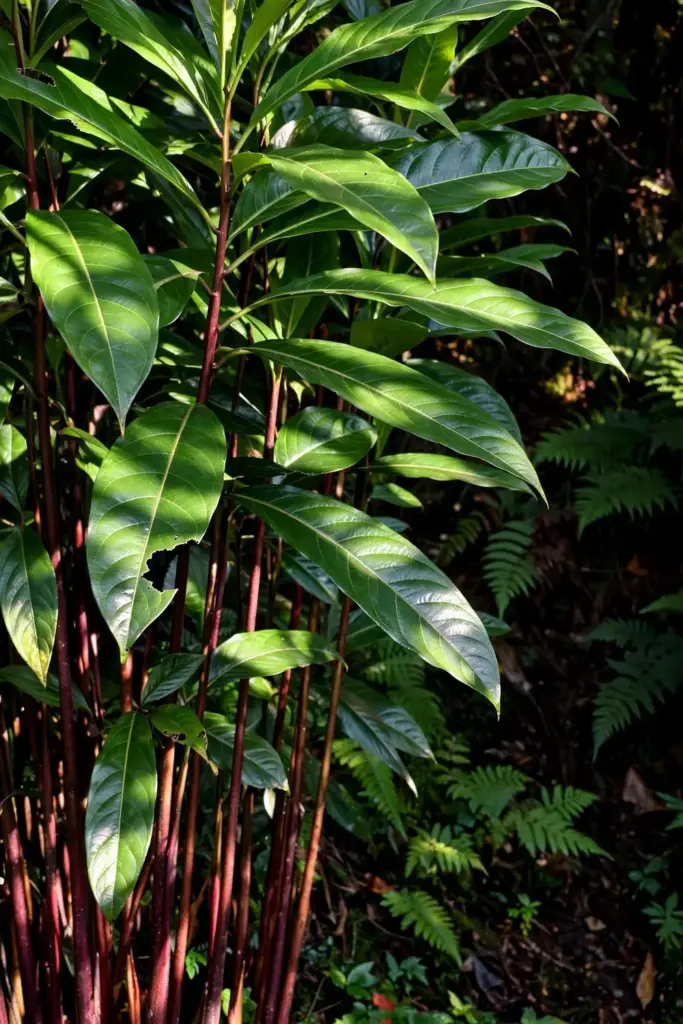
Give it bright, indirect light or dappled shade. Indoors, an east or north-facing window works. Outdoors in warm climates, plant it under high tree canopy or on the north side of a building where it gets morning light and afternoon shade. Medium-density shade cloth does the same job on a patio.
The light test is simple: if you can read a book comfortably in the spot at noon without squinting, the light level is about right. If the spot is dim enough to feel gloomy at midday, add a grow light. Pale, stretched growth with long gaps between leaf joints means too little light.
New gardeners often read “shade-loving” as “no light needed.” That misreading starves the plant. Shade means no direct sunbeams on the leaves, not darkness. Keep it bright but filtered.
9. Feeding a Slow Perennial
Black cardamom is a slow feeder. In the wild it draws steady, mild nutrition from decomposing leaf litter, not from bursts of fertilizer. Copy that rhythm.
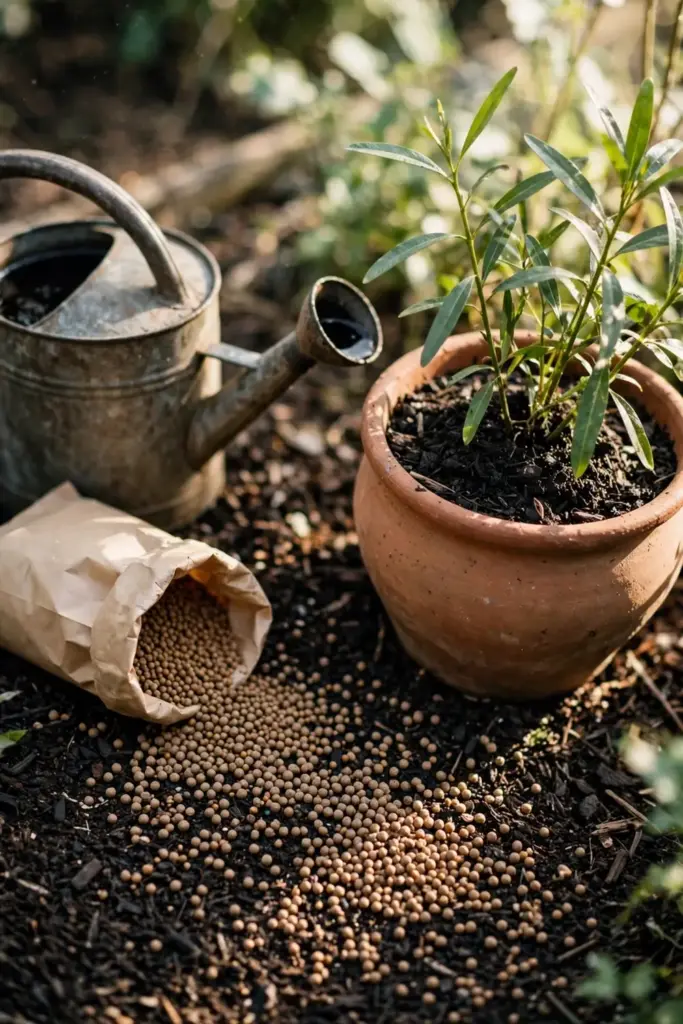
During the growing season, feed lightly every couple of months with a balanced organic fertilizer at half the label rate. Compost tea or diluted fish emulsion works well. One niche cardamom growing site recommends switching to a lower-nitrogen, higher-phosphorus blend once flowering begins, since phosphorus supports bloom and pod set.
Skip fertilizer entirely in winter dormancy. The plant is barely growing, and unused salts build up in the pot. Flush the pot with clean water once in early spring before you resume feeding.
Yellow lower leaves in a mature plant often mean the potting mix has compacted and gone sour, not that the plant is hungry. Repot into fresh mix every 2 to 3 years before you reach for more fertilizer. Fresh soil fixes more problems than feeding does.
10. Growing in Pots in Cold Climates
For most readers, the pot is the whole method. Here is the honest version of it.
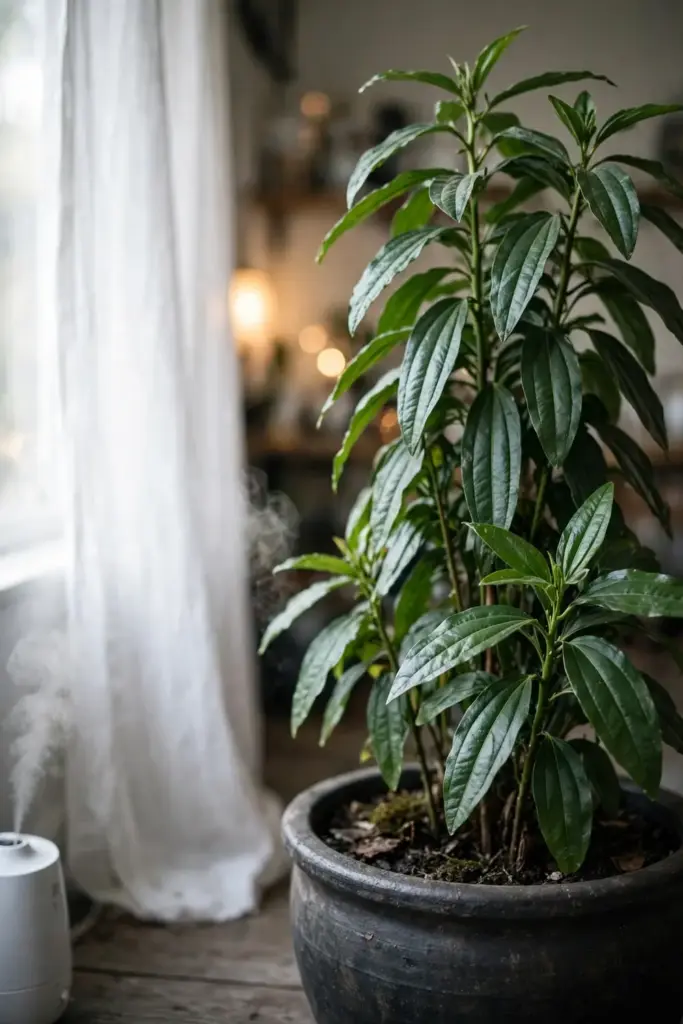
Use the largest pot you can move. A 12 to 14 inch container holds a young plant for its first year or two; a mature clump wants something closer to 20 inches across. Heavy ceramic or wood stays stable as the clump grows tall; plastic is lighter to carry indoors.
Move the plant inside before nights drop to 50 degrees Fahrenheit. Not at the first frost. At 50 degrees, while the plant is still comfortable. A bright room, a heated greenhouse, or a sunroom works. The indoor herb garden guide walks through light and humidity setups that translate directly to an overwintering cardamom. That is the honest starting point for anyone learning how to grow black cardamom from India in a temperate climate.
Winter care is a holding pattern, not a growth phase. Reduce watering, stop feeding, and expect some leaf drop. The plant is resting. Resume normal care when nights stay above 55 degrees and you can move the pot back outside.
Now the honesty the sellers skip. The North Carolina Extension profile states it plainly: plants may not flower or fruit when grown in less than tropical climates or when grown in pots. You can grow a handsome, fragrant foliage plant indoors for years and never see a single pod. Grow it for the plant and the project. Buy your badi elaichi at the spice shop.
11. Pests and Diseases
Healthy black cardamom in the right humidity has few enemies. Most problems trace back to wrong moisture: too wet invites rot, too dry invites sap-suckers.
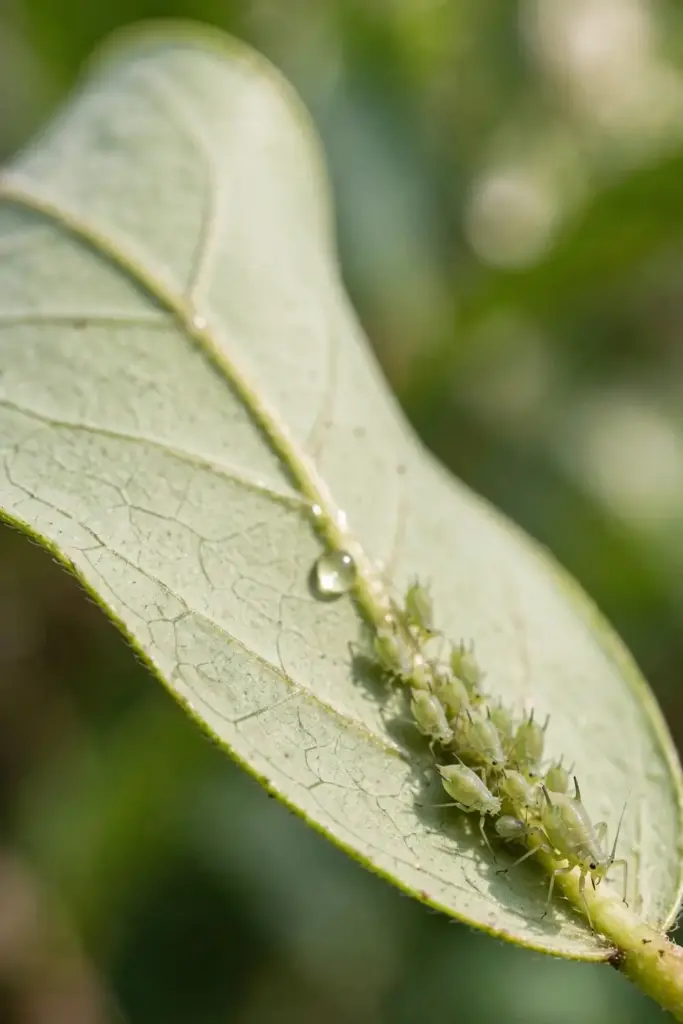
Watch for thrips and aphids on new growth, especially indoors in winter when air is dry and still. Blast small outbreaks off with a strong spray of water, then follow with insecticidal soap if they persist. Check leaf undersides weekly. Both pests start there, and catching them early keeps a small outbreak small.
Nematodes attack the roots in warm, sandy ground soils. They are hard to cure once established, so prevention matters: buy clean nursery stock, never reuse potting mix from a sick plant, and solarize garden beds before planting if your region has a nematode history.
Capsule rot and rhizome rot come from waterlogged soil. The fix is drainage, not chemicals: repot into fresh, free-draining mix, trim away soft black tissue with a clean knife, and let the cut surfaces dry before replanting. If more than half the rhizome is soft, start over with new stock.
Good air circulation prevents most fungal trouble. Space container plants so leaves do not press against each other, and prune out dead foliage promptly instead of letting it mat at the base.
12. Flowering: Low Racemes at the Rhizome Base
Black cardamom flowers where you least expect them. The pale yellow or white flowers form on short racemes at the base of the plant, near the soil surface, tucked against the reddish-brown rhizomes. New growers walk past the blooms for weeks without noticing.
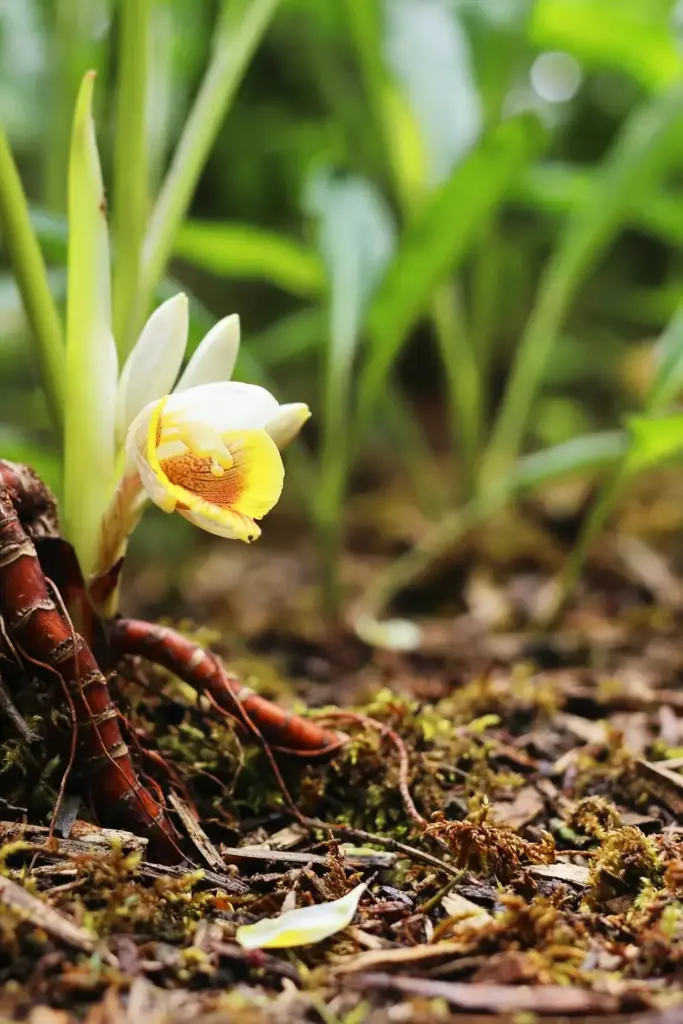
Flowering starts 3 to 4 years after planting from a rhizome division, or 4 to 5 years from seed, and only when the plant has enough warmth and humidity to feel at home. Indoor plants in temperate climates rarely flower at all. This is normal, not a failure.
The flowers are easy to overlook, and they are the whole point of the project. Each pollinated flower can become a pod. In the wild, insects do the work. Indoors, you may need to hand-pollinate with a small soft brush, moving pollen between open flowers in the morning when they are fresh.
Do not remove the low racemes to “tidy up” the plant. They sit at soil level by design, and cutting them removes your harvest before it starts.
13. Harvest: Pods at the Right Ripeness
Pods ripen 35 to 40 days after flowering. Harvest them when they are plump, firm, and fully colored: dark brown to near-black, with a wrinkled skin. Under-ripe pods taste green and weak. Over-ripe pods split and lose their volatile oils to the air.
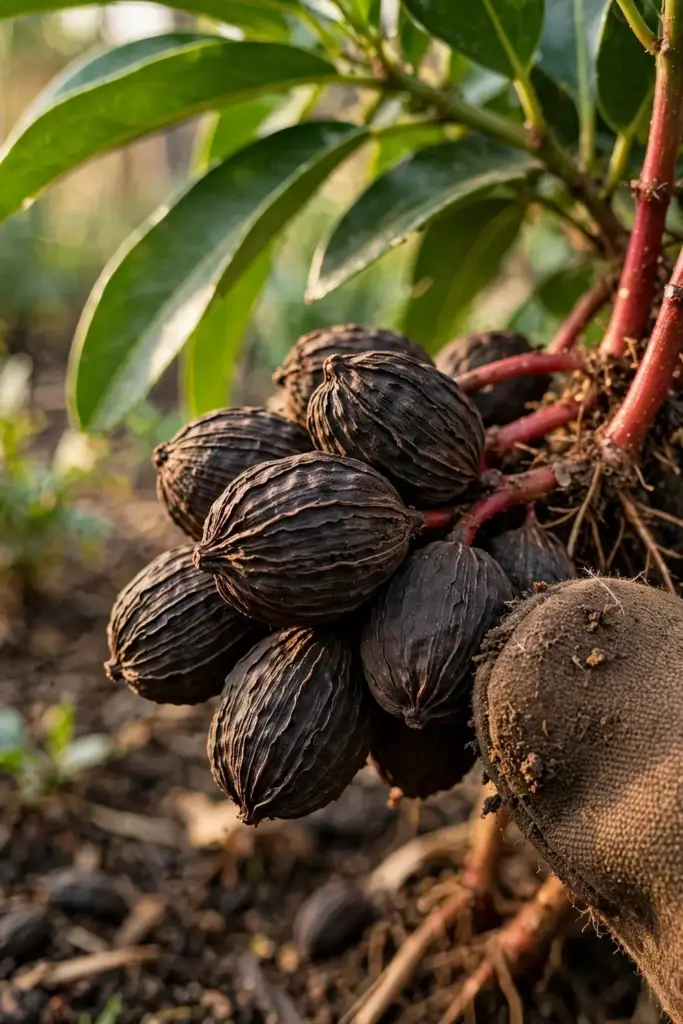
Pick by hand, one pod at a time. The pods grow in clusters on the low racemes, so part the foliage gently and work from the base outward. Do not yank; the raceme stems are brittle and a broken stem costs you next year’s flowers on that rhizome.
A first harvest from a young plant is small: a handful of pods, not a basket. Mature clumps in ideal conditions produce steadily through the season. Pick every week or two during the ripening window rather than stripping the plant once. Regular picking keeps the plant producing.
Taste a fresh pod before you dry it. The flavor is resinous, smoky even before curing, with camphor and menthol notes that green cardamom never has. That taste is your quality benchmark for everything that follows.
14. Curing the Smoky Pods: Drying Done Right
Fresh black cardamom pods must be dried before storage, and the drying method creates the famous smoky flavor. Traditionally, growers dry the pods over wood smoke or with gentle heat, which darkens the pods and drives the camphor-smoky character deep into the seeds.
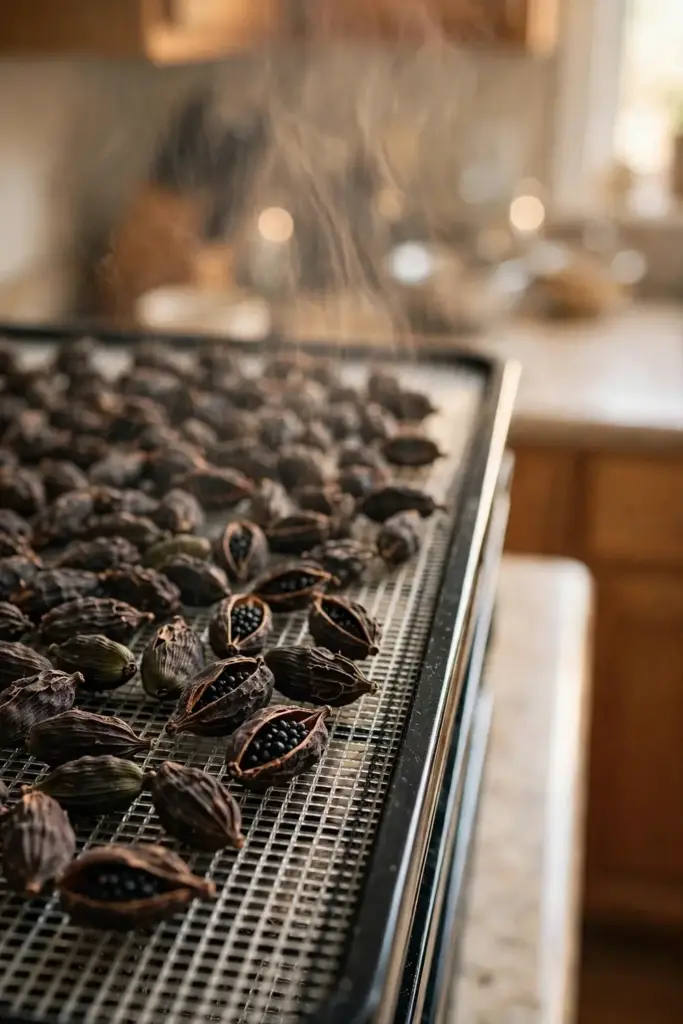
At home, use a food dehydrator or a low oven. Spread the pods in a single layer and dry at the lowest setting until the pods are hard and brittle and the seeds inside rattle when you shake a pod. This takes several hours to a full day depending on pod size and humidity.
Do not rush with high heat. Temperatures above a gentle warmth cook off the volatile oils that make black cardamom worth growing. If your kitchen smells strongly of cardamom during drying, your heat is too high and the flavor is leaving with the steam.
An outsidepride planting guide for black cardamom notes the full arc from seed to spice: start indoors 6 to 8 weeks before the last frost, give seedlings 16 hours of light daily, and harden them off before they move outside. The same patience the guide demands at sowing applies at harvest: slow drying, low heat, no shortcuts.
15. Storage and Shelf Life
Cool, dark, and airtight: the three rules of spice storage apply double to black cardamom. Light and air degrade the volatile oils that carry the smoky flavor, and ground spice loses potency fastest of all.
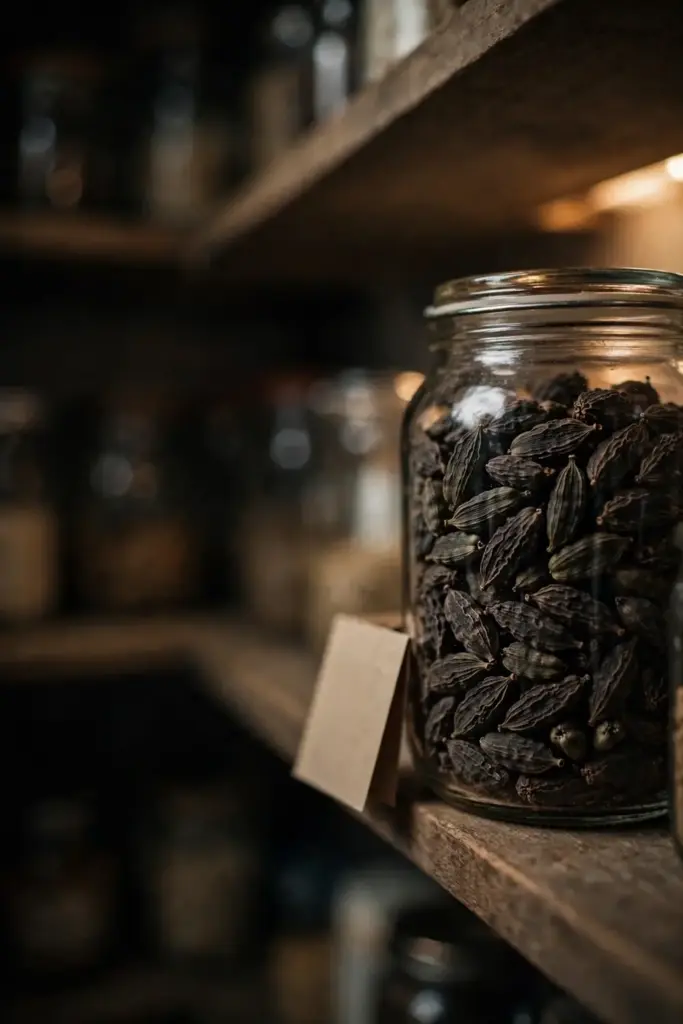
Store whole dried pods in a glass jar with a tight lid, away from the stove and out of sunlight. Whole pods keep their character for a year or more when stored well. Test an old pod by cracking it and smelling the seeds; if the aroma is faint, the spice is spent.
Grind only what you need. Crack the pod, extract the small black seeds, and grind them fresh for each dish. A spice grinder does the job in seconds. Pre-ground black cardamom from the store is a shadow of the fresh-ground version.
Label your jars with the harvest date. When you grow a 5-year crop, you want to know which jar holds this year’s pods and which one is two seasons old.
16. Cooking With Black Cardamom
Black cardamom is a savory spice. Its smoky, camphor character belongs in slow-cooked dishes: biryani, dal makhani, nihari, pho broth, and garam masala blends. Use whole pods so you can fish them out before serving, the same way you treat bay leaves.
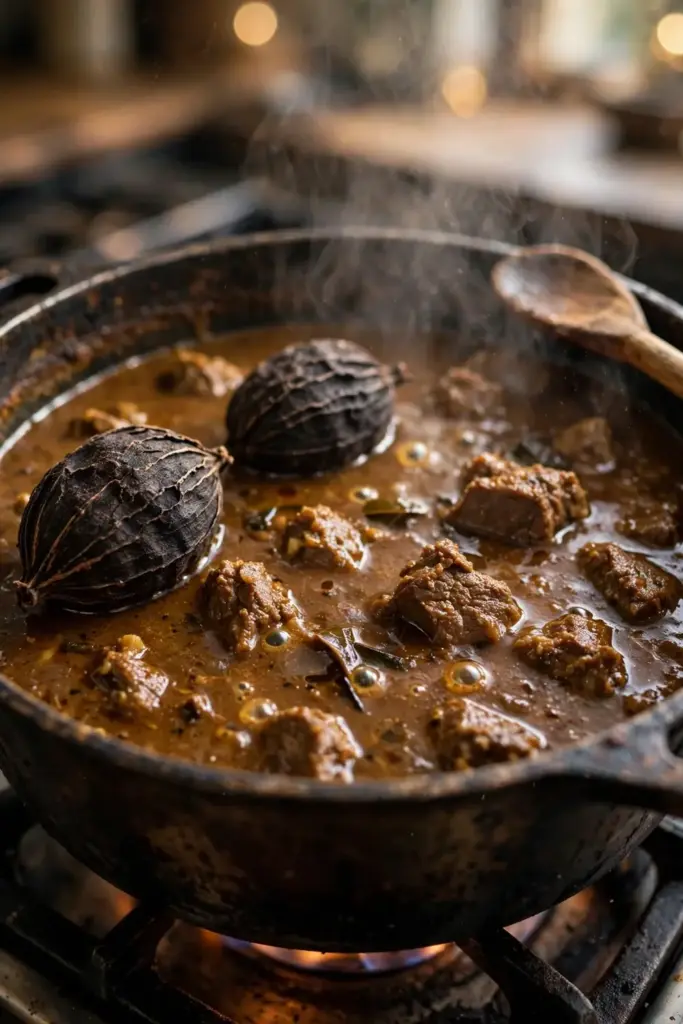
A little goes a long way. One or two pods flavors a whole pot of curry. The pods are 3 to 4 times more pungent than green cardamom, so recipes are not interchangeable between the two species.
Never use black cardamom in desserts, chai, or baked goods. The smoky camphor flavor that suits braised meat is completely wrong in sweet dishes. That lane belongs to green cardamom.
Toast whole pods briefly in a dry pan before grinding to wake up the oils. Thirty seconds over medium heat, shaking the pan, until the aroma rises. Then crack, grind, and use immediately.
17. Common Mistakes and Their Fixes
Mistake: sowing grocery-store pods. The seeds are fire-dried and dead. Fix: buy fresh seed from a seller who names Amomum subulatum on the packet.
Mistake: skipping the heat mat. Room-temperature sowing in a cool house gives you nothing for months, then mold. Fix: hold 25 to 30 degrees Celsius under a humidity dome for the whole germination window.
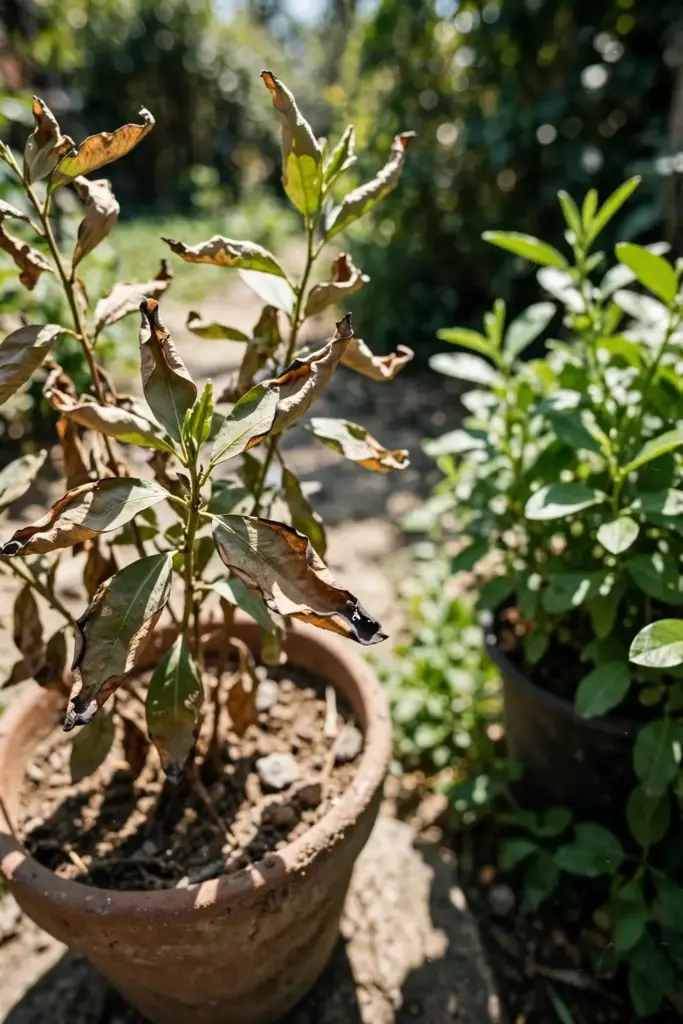
Mistake: full sun. The leaves scorch, brown at the edges, and the plant stalls. Fix: move to bright indirect light or under medium-density shade cloth.
Mistake: treating it like a houseplant that fruits. Years pass with no pods and the grower assumes failure. Fix: reset expectations. In pots and temperate climates, black cardamom is a foliage project. Pods are a bonus, not a promise.
Mistake: overwatering in winter. The plant is resting, the soil stays wet, and the rhizome rots. Fix: water sparingly in winter and make sure the pot drains completely.
Mistake: buying the wrong species. The packet says “black cardamom” but the Latin name is Elettaria cardamomum. Fix: check the species before you buy, every time.
18. Troubleshooting Q and A
Seeds have not sprouted after 8 weeks. This is normal. Germination runs 4 to 12 weeks, and some seeds wait longer. Keep the heat mat on and the mix moist, then wait. If nothing emerges by week 16, the seed was likely dead on arrival.
Seedlings damped off at the soil line. The mix was too wet and airless. Sow the next batch in a grittier mix, water from below, ventilate the dome daily, and thin to one seedling per cell early.
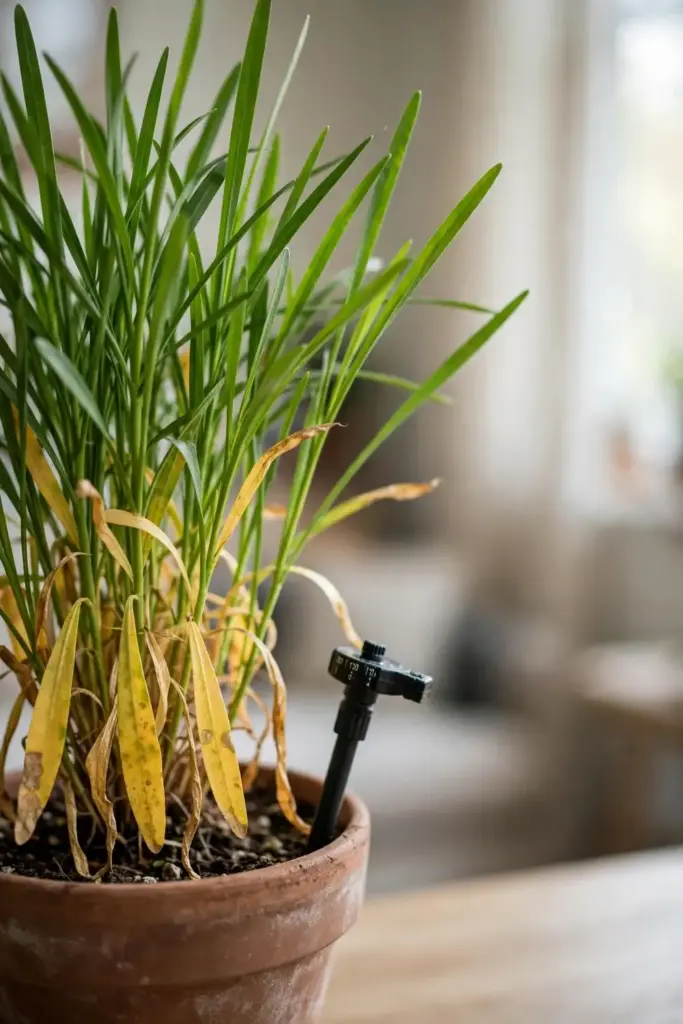
Leaves are yellowing from the bottom up. Check three things in order: overwatering, compacted acidic-depleted soil, and nitrogen deficiency. Repot into fresh mix before you fertilize.
Leaf edges are brown and crispy. Humidity is too low. Add a pebble tray, group plants together, mist in the morning, or run a humidifier. This is the classic winter-indoors symptom.
The plant grows but never flowers. It is likely too young, too cool, or too dry in the air. Flowering needs 3 to 5 years, sustained warmth, and high humidity. Indoor temperate plants may never bloom. That is the honest answer.
White crust on the soil surface. Fertilizer salt buildup. Flush the pot thoroughly with clean water and skip the next two feedings.
19. Frequently Asked Questions
Plan on 4 to 5 years from fresh seed to the first pods, and 3 years from a rhizome division. Germination alone takes 4 to 12 weeks at 25 to 30 degrees Celsius. This is one of the slowest spice crops a home gardener can attempt, so start it as a background project while faster crops fill your kitchen.
Yes, as a foliage plant. Use a 12 to 14 inch pot minimum, give it bright indirect light and 60 percent humidity or better, and bring it inside before nights drop below 50 degrees Fahrenheit. Be honest with yourself: it may never flower or fruit in a pot, and that is normal for this species.
The most common cause is dead seed. Grocery-store pods are fire-dried and will not germinate, and old seed loses viability fast. The second cause is cold soil; without steady warmth around 25 to 30 degrees Celsius, tropical seed sits dormant. Buy fresh seed from a named species source and use a heat mat.
No. Black cardamom is Amomum subulatum, a Himalayan understory plant with large dark smoky pods. Green cardamom is Elettaria cardamomum, a tropical lowland plant with small sweet pods. They are different species with different flavors and different uses, and they are not interchangeable in recipes.
Cool, humid, shaded mountain conditions: spring-like temperatures year-round, humidity far above what a heated house provides, and no direct sun. The North Carolina Extension profile gives the workable American range as 50 to 95 degrees Fahrenheit, with the plant moved indoors below 50 degrees. It grows wild between 500 and 2,000 meters in the eastern Himalayas. In USDA zones 9 to 10 you can try it outdoors in deep shade; everywhere else it is a container plant that winters indoors.
Dry them slowly at low heat until the pods are hard and the seeds rattle inside. A food dehydrator on its lowest setting works well. Traditional growers dry pods over wood smoke, which creates the signature smoky flavor. Keep heat gentle; high temperatures drive off the volatile oils that make the spice worth growing.
20. Where to Go From Here
Black cardamom rewards the patient gardener with a flavor few other spices can match, and it punishes every shortcut. Start with verified Amomum subulatum seed, give it warmth to germinate and shade to grow, and measure progress in years, not weeks.
If your climate cannot promise the humidity this plant wants, revisit the indoor setup ideas from the overwintering section above. And when fall arrives, the fall herbs planting calendar helps you plan the cool-season crops that grow while your cardamom rests.
One last division of labor, since the names confuse everyone: the green cardamom growing guide covers Elettaria cardamomum, the sweet green pods for chai and desserts. That is how to grow black cardamom from India in one sentence: start with verified Amomum subulatum seed, give it warmth to germinate and shade to grow, and measure progress in years, not weeks. This article is the black cardamom lane: badi elaichi, smoky pods, Himalayan patience.