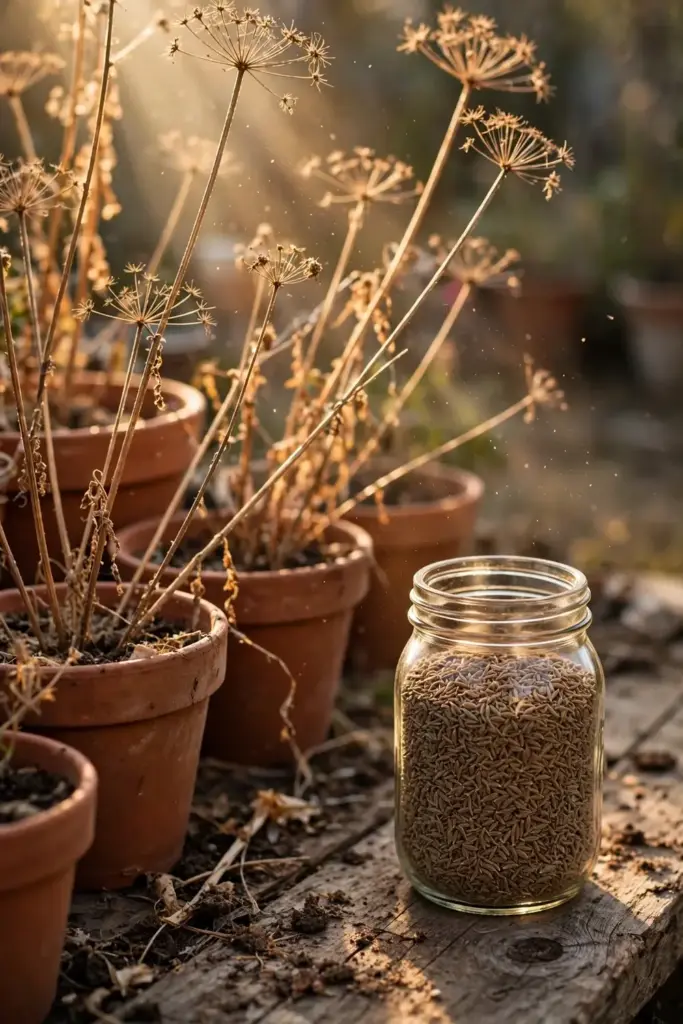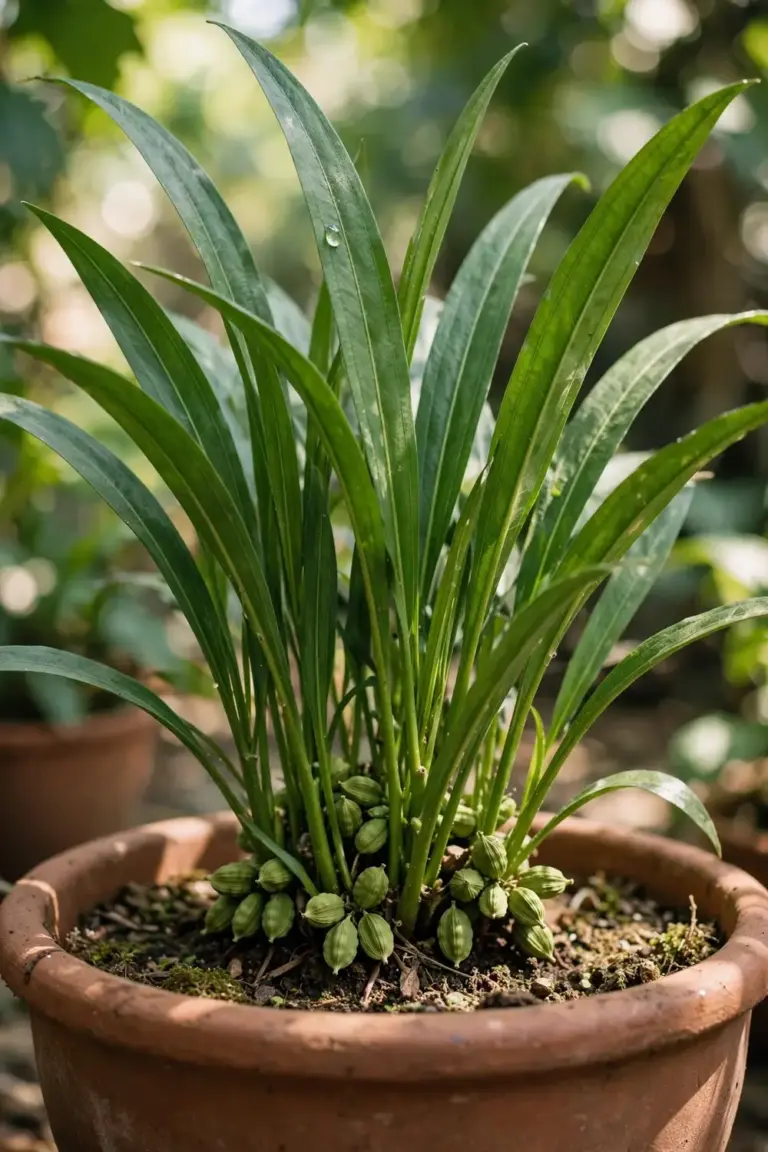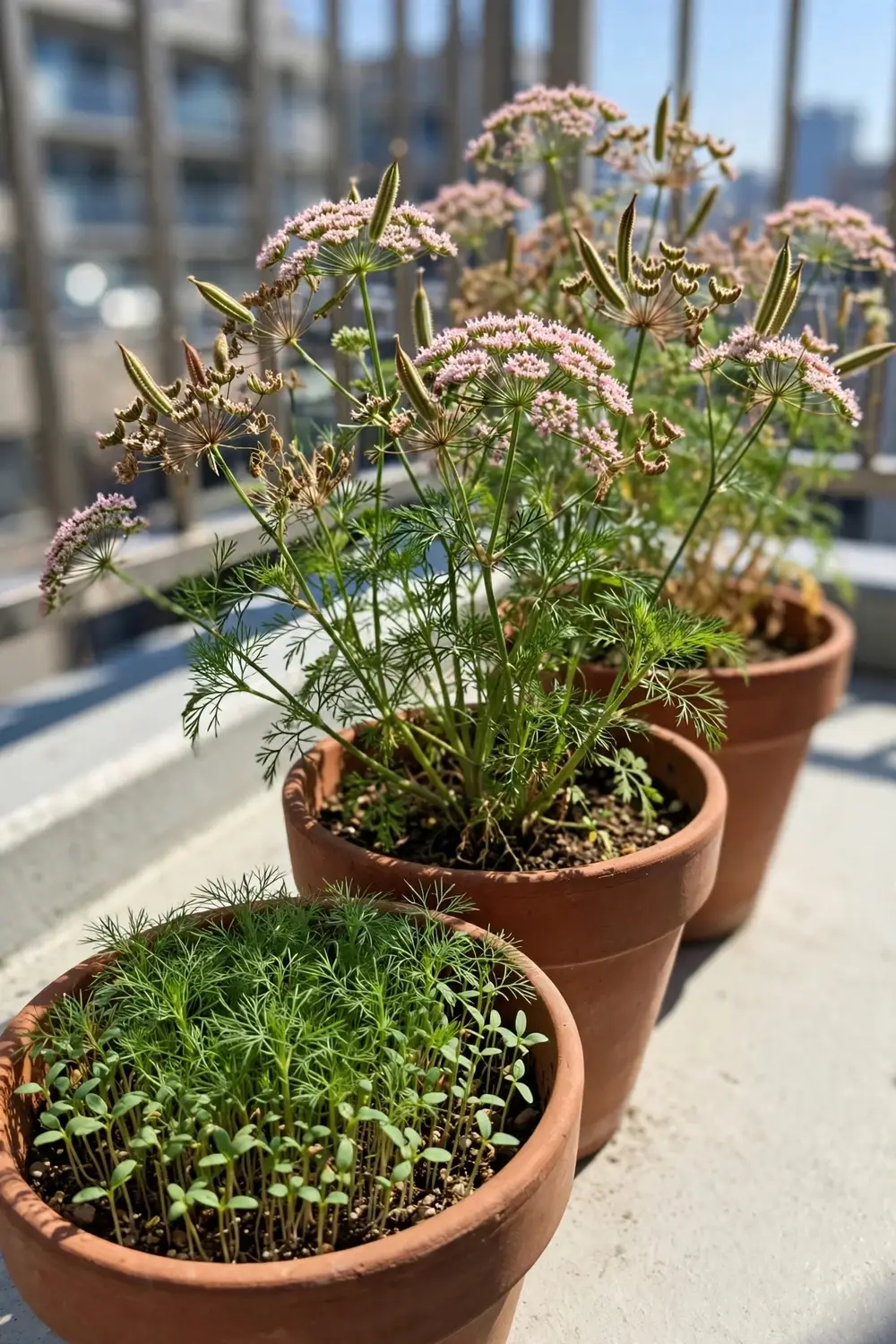

Indian cumin, called jeera in Hindi, is a warm-season annual that needs 120 frost-free days, full sun, and a dry finish to ripen its seed. Grow it in pots in cold climates, sow the seed where it will live, and plant densely so the slender stems support each other. This guide shows you how to grow cumin from India in your own home, from soaking the seed to grinding the spice.
Here is the honest frame before you buy seed. Cumin does not tolerate frost, it does not transplant well, and one plant produces only a small handful of seed. A single pot yields a cook’s sampling, not a year’s supply. A cluster of pots started early indoors can give you a real harvest. The India lane is worth owning on purpose: India grows the bulk of the world’s cumin, mostly in the dry states of Gujarat and Rajasthan, and the jeera of that region is the flavor benchmark cooks mean when they say cumin.
The rest of this article is built around the pot method. You will pick real planting seed, set up containers that drain fast, sow directly, water with restraint, and bring the crop inside when the nights cool. Nothing here is a farm technique shrunk down without thought. Every step is sized for a balcony, a patio, or a sunny kitchen corner.
1. Climate and Timing: The Honest Frame for Cumin
Cumin is a frost-sensitive annual in the carrot family. It flowers, sets seed, and dies in one season. The whole cycle runs 100 to 120 days from sowing to ripe seed, and every one of those days needs warmth. Night temperatures below 50 degrees Fahrenheit stall the plants, and frost kills them outright.
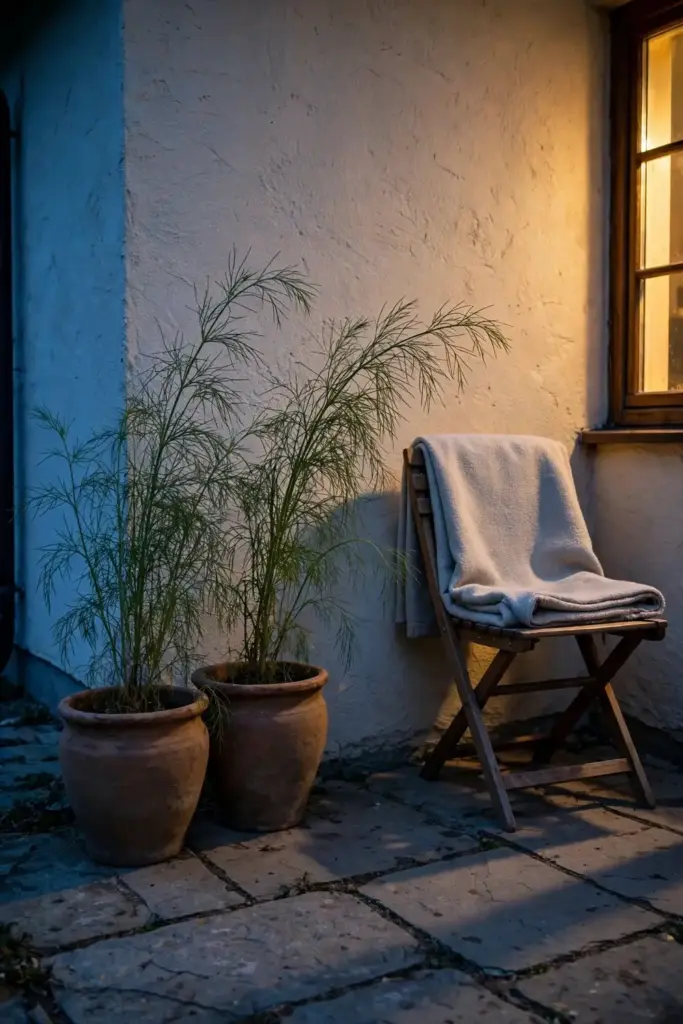
In warm regions with long summers, sow outdoors 1 to 2 weeks after the average last frost date, once the soil has warmed. In short-season or cold climates, start indoors 4 to 6 weeks before the last frost and move the pots outside only when nights stay reliably warm. Pots are the honest solution here because they are movable. You can start them inside under lights in early spring, set them out for summer, and pull them back under cover if a cold snap threatens in fall.
Do not try to force cumin as a true houseplant year round. It wants 8 or more hours of full sun and a long hot stretch, conditions a windowsill rarely delivers in winter. Think of the indoor phase as a nursery stage, not a permanent home.
2. Cumin vs Caraway vs Black Cumin: What You Are Actually Planting
Search results mix these plants up constantly, and buying the wrong seed is the most expensive mistake a cumin grower can make. Here is the disambiguation.
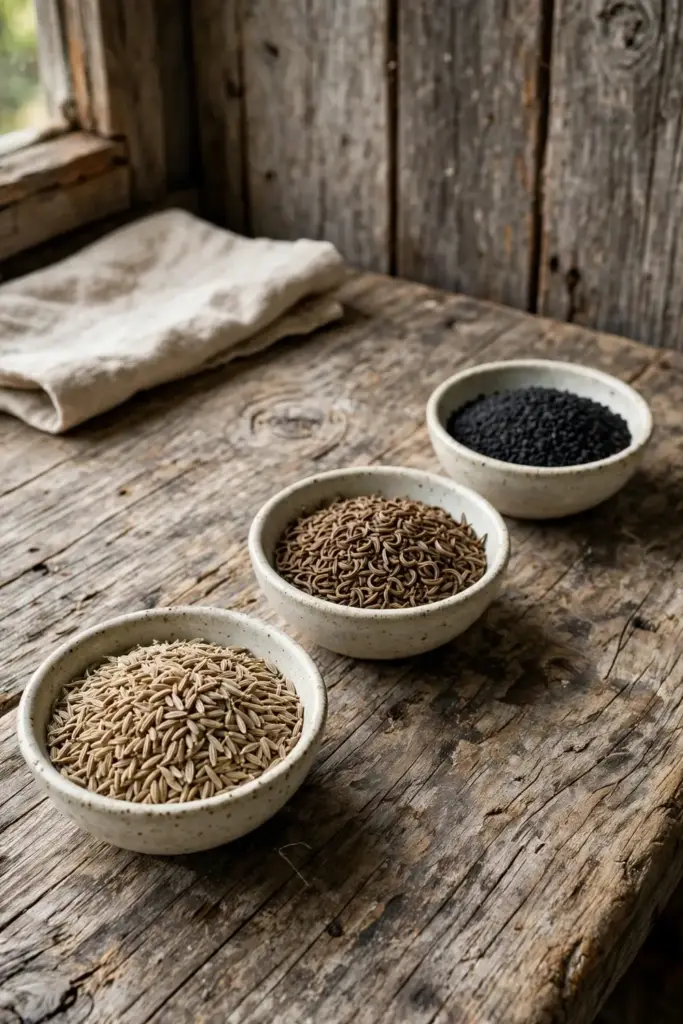
| Feature | Cumin (jeera) | Caraway | Black cumin (kalonji) | Black cumin (shahi zeera) |
|---|---|---|---|---|
| Botanical name | Cuminum cyminum | Carum carvi | Nigella sativa | Bunium persicum |
| Family | Apiaceae (carrot family) | Apiaceae | Ranunculaceae (buttercup family) | Apiaceae |
| Grown for | Ripe dried seed | Ripe dried seed | Ripe dried seed | Ripe dried seed |
| Seed look | Elongated, ridged, tan | Curved, darker, ridged | Small, black, angular | Dark, thin, smaller than cumin |
| Flavor | Warm, earthy, the classic curry note | Sweet, anise-like, rye-bread note | Peppery, oregano-like | Earthy, smoky, more intense |
| Where India grows it | Gujarat, Rajasthan | Kashmir region | Widely as a crop | Wild Kashmir, limited |
If your goal is jeera, the packet must say Cuminum cyminum. Caraway belongs to the same family and looks like a cousin at seedling stage, which is exactly why nursery mix-ups happen. The two “black cumin” names belong to entirely different plants. Keep them in separate searches and separate seed orders.
Cumin’s closest familiar relative in the home garden is coriander, its fellow member of the carrot family. If you have grown coriander, the seedling look, the umbel flowers, and the harvest rhythm will feel familiar. The live guide to growing cilantro fast covers the leaf side of that plant; this article covers the seed side of cumin.
3. Buying Cumin Seed for Planting
Buy seed sold for planting, not spice jars from the grocery aisle. Spice seed is often old, heat-treated, or blended from multiple harvests, and germination is a gamble. Fresh cumin seed germinates in 7 to 14 days at soil temperatures of 68 to 86 degrees. Seed older than two years may barely sprout at all.
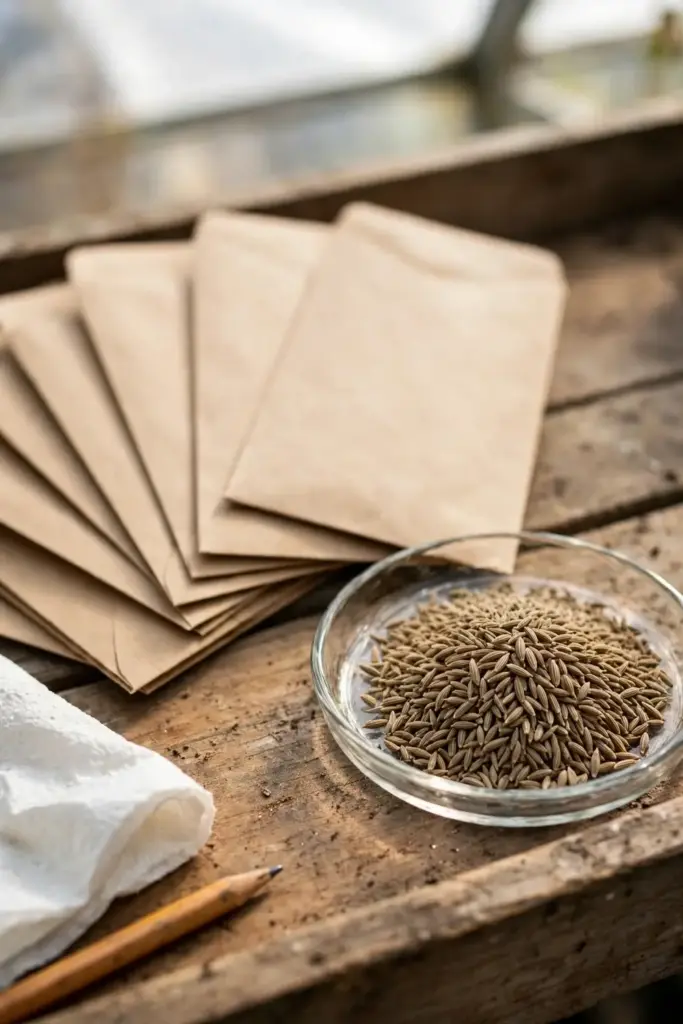
Look for packets labeled Cuminum cyminum from a seed company, ideally with the variety named. Indian varieties such as GC-1, GC-2, GC-3, and RZ-19 are the workhorses of Gujarat and Rajasthan production; any named variety from a reputable seller beats an unlabeled packet. Order enough seed. Because each plant yields little, you want enough for several pots, and dense sowing is the plan, not a fallback.
If you cannot find cumin seed at a local nursery, order from a specialist herb or spice seed supplier online. Check the packet date. Cumin seed sown in its first or second year after harvest germinates strongly; seed sitting on a shelf for three years is a donation to your compost. When the packet arrives, do a quick germination test before committing pots and mix: fold 10 seeds in a damp paper towel, seal it in a bag, and keep it warm. If 7 or more sprout within two weeks, the seed is worth sowing.
Store leftover seed cool, dry, and dark in an airtight jar. Cumin seed holds viability for about two years under good storage, then declines.
4. Pots and Containers: The Method That Works
Cumin does not transplant well, so the cleanest container method is direct sowing into the pot where the plants will grow. Choose pots at least 10 to 12 inches wide and 10 inches deep. That volume gives the roots room and keeps the soil from swinging between soaked and bone dry in a single afternoon.
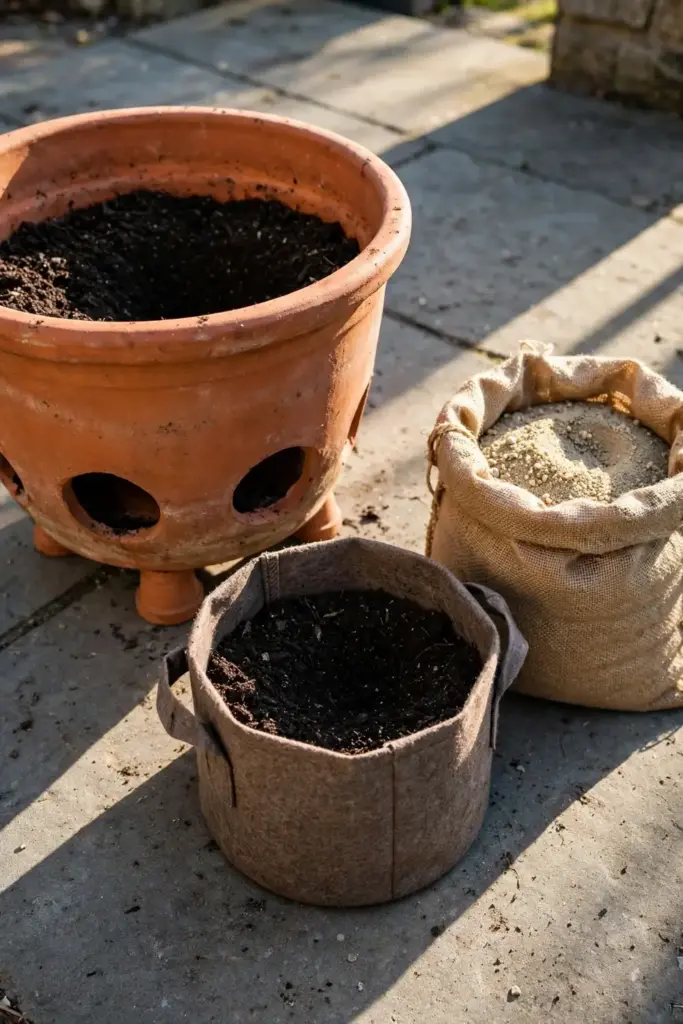
Drainage is non-negotiable. Use pots with large drainage holes, and set them on pot feet or a rack so water runs clear. Cumin rots in soggy soil, and a pot sitting in a saucer of water is the fastest way to lose a crop. Terracotta and fabric grow bags both work well because they breathe; plastic pots work too if you water carefully.
One more argument for pots: mobility. When a late cold snap threatens, you carry the crop inside for the night. When the summer rains turn relentless in week 15, you move the pots under an eave so the seed heads dry instead of molding. That control is the whole reason the India lane favors containers for gardeners outside warm regions. Urban Farmer’s cumin seed-to-harvest guide reaches the same conclusion, noting that cumin grows well in containers like most herbs and that container plants need more frequent watering than in-ground ones.
Light deserves its own sentence because it is the most common indoor failure. Cumin wants at least 8 hours of direct sun for sturdy growth and seed ripening. A south-facing balcony works. A shaded patio does not, no matter how warm it feels. If you start indoors, keep the grow light close, a few inches above the seedlings, and run it 12 to 16 hours a day.
5. Soil Mix for Cumin in Pots
Cumin wants a sandy, fast-draining mix with modest fertility, roughly neutral to slightly alkaline. Target a pH between 7.0 and 7.5. A workable recipe is 2 parts quality potting mix, 1 part coarse sand or fine perlite, and 1 part finished compost. The compost feeds gently; the sand and perlite keep air around the roots.
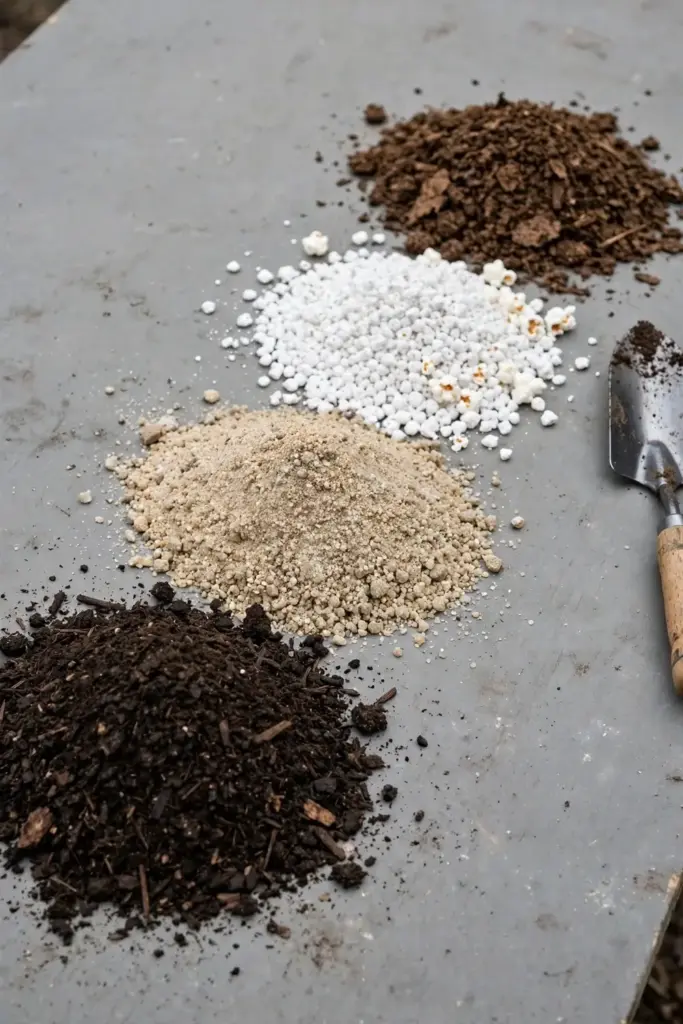
Never fill pots with garden soil. It compacts, drains slowly, and brings disease spores with it. A sterile-ish potting mix plus your amendments is the safer base every time.
Rich soil is not the goal. Heavy feeding pushes soft, leggy growth that lodges and molds. The principles behind a living, well-drained soil matter here, and the site’s long-form guide to building soil health explains the biology, though its in-ground advice needs container adjustments: less organic bulk, more drainage, and no bare earth.
6. Sowing Cumin Seed in Pots
Soak the seed for 8 hours before sowing. This single step wakes the seed coat and tightens the germination window to 7 to 14 days. NC State Extension’s cumin profile documents the full protocol: soak 8 hours, sow 1/4 inch deep in groups of 4, and expect emergence in 7 to 14 days at 68 to 86 degrees. Soak in room-temperature water, then drain and sow the same day.
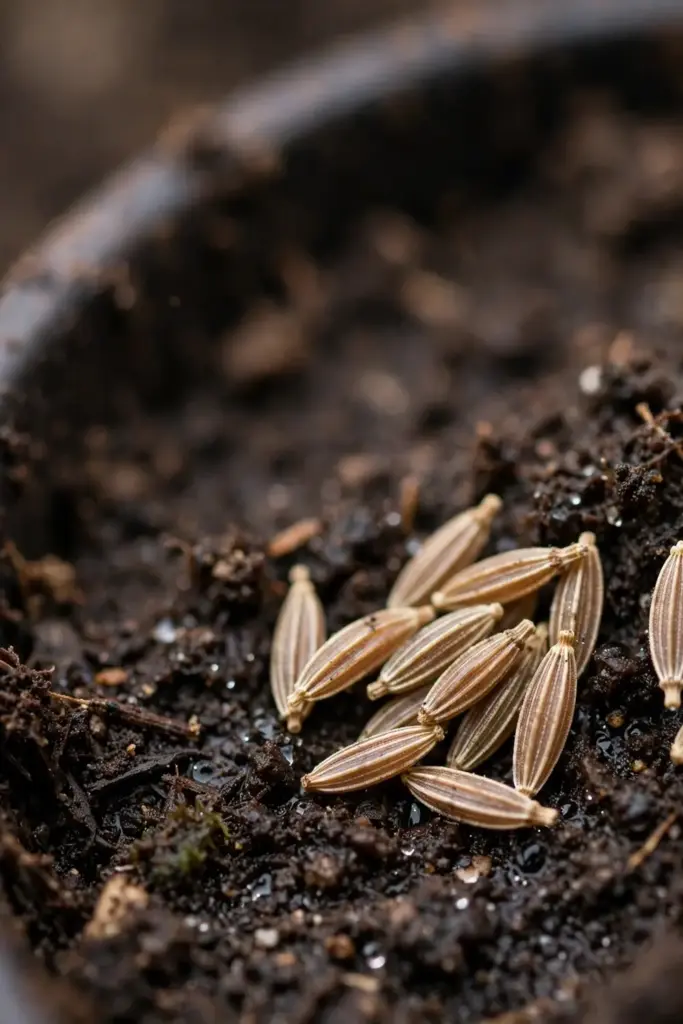
Sow 1/4 inch deep. Place 4 seeds in each small group, groups spaced 4 to 8 inches apart across the pot surface. Cover lightly with mix, firm it gently, and water with a fine mist until evenly moist. Then give heat: a warm spot at 68 to 86 degrees is ideal, and a seedling heat mat under the pot pays off in cool spring weather.
Keep the surface evenly moist but never waterlogged until seedlings emerge. A clear humidity dome or a loose plastic cover helps in dry indoor air; remove it the day green appears. From there, strong light is everything. A south-facing spot or a grow light running 12 to 16 hours a day keeps the first leaves compact instead of stretched. For the full mechanics of starting seed indoors, the seed starting guide walks through trays, lights, and hardening off in detail.
| Step | Action | Time |
|---|---|---|
| 1 | Soak seed in room-temperature water | 8 hours |
| 2 | Sow 1/4 inch deep, 4 seeds per group, groups 4 to 8 inches apart | Sowing day |
| 3 | Hold soil at 68 to 86 F, keep evenly moist | 7 to 14 days to emergence |
| 4 | Remove cover, give strong light 12 to 16 hours daily | From emergence |
| 5 | Thin to the strongest plants at 4 to 6 inches apart | When seedlings reach 2 inches |
7. Watering Cumin in Containers
Cumin tolerates drought once established, and its worst enemy is wet feet. Water at the base, let the top inch of mix dry between waterings, and never mist the foliage. Pots dry faster than garden beds, so in hot weather you may water daily, but always check the soil first. The finger test is the whole technique: dry at one inch deep means water; damp means wait.
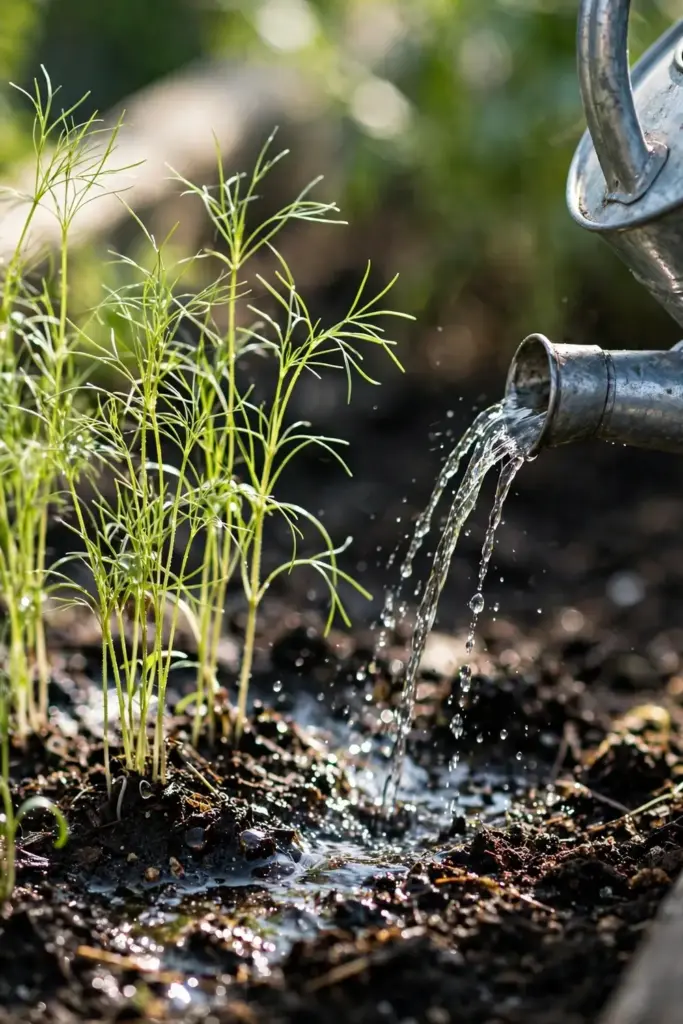
Reduce watering as the plants mature. When the seed heads start turning brown, back off deliberately. A dry finish concentrates flavor and keeps the ripening umbels from molding. Container growers have the advantage here: you can shelter the pots from rain during the last two weeks, something a field grower cannot do.
8. Feeding Cumin
Feed lightly. A modest dose of compost tea once during the growing season is enough for most pot mixes, and cumin grown for seed does not want high nitrogen. Too much nitrogen grows leaves at the expense of seed and invites soft, disease-prone tissue.
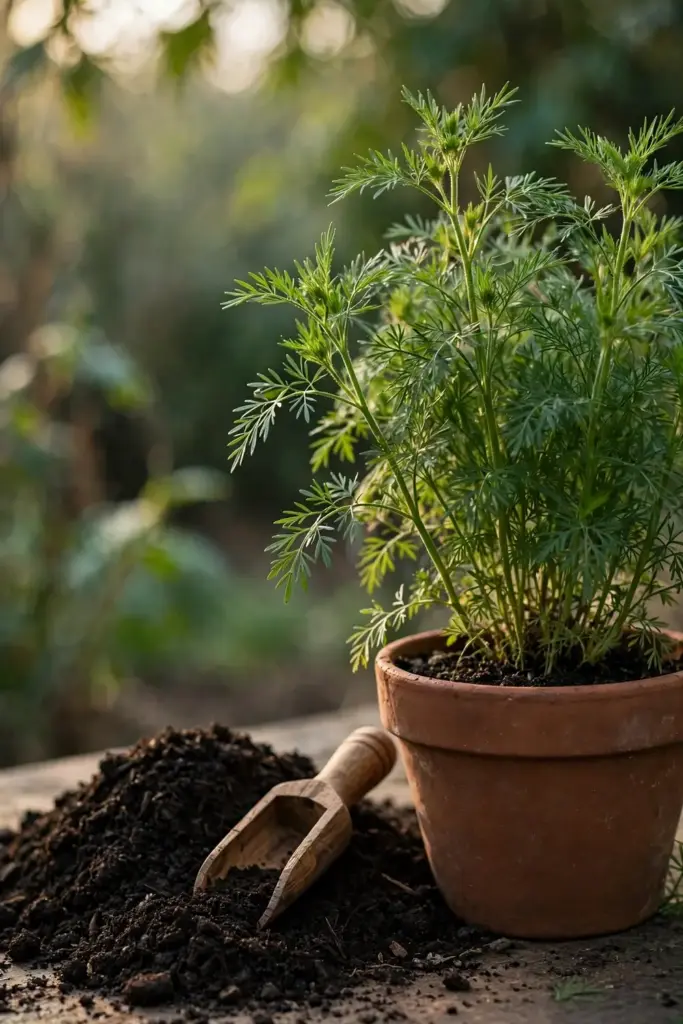
If your mix included compost at planting, you may need no feeding at all. Watch the plants, not the calendar. Pale, stunted foliage in mid-season earns one light feeding of balanced liquid fertilizer at half strength. Dark green, vigorous plants need nothing.
9. Thinning and Spacing
Cumin seedlings look impossibly thin at first, and the temptation is to give each one a mansion. Resist it. Thin to 4 to 6 inches apart when seedlings reach 2 inches tall. Dense stands support each other, and that mutual support matters because cumin stems lodge, meaning they flop, especially after rain or when the flower heads get heavy.
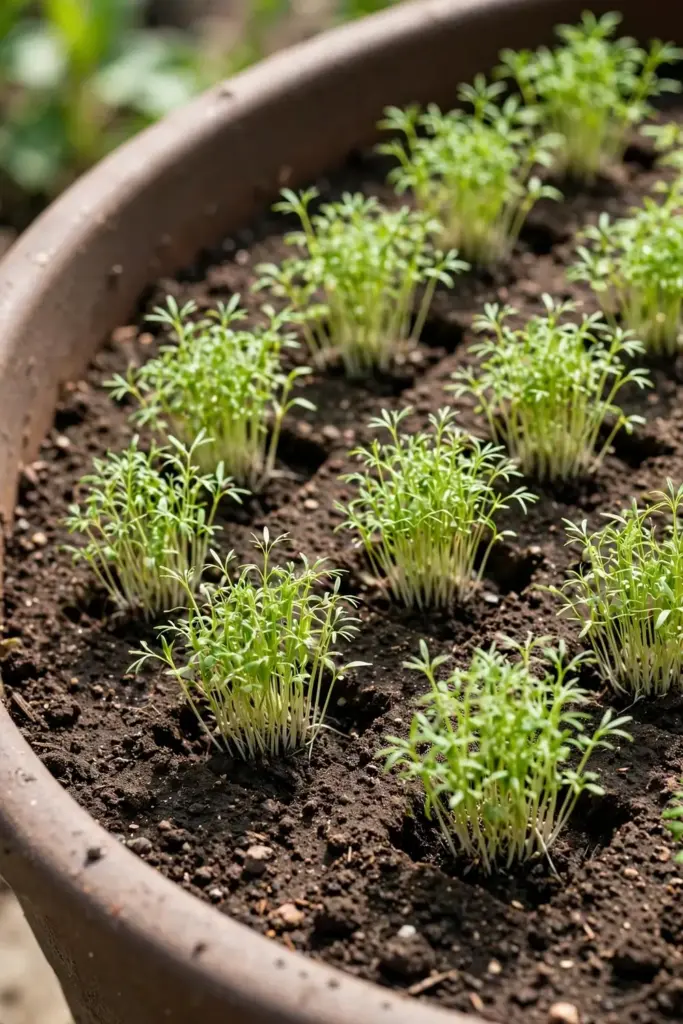
A little lodging leaves seed development intact. Stems that lie flat on wet soil are the real risk, because they rot where they touch. Dense-but-not-crowded is the target. Seed growers confirm the behavior: one seed company’s cumin growing notes describe the stems as fragile and prone to lodging after hard rain or at flowering, and recommend sowing close together so the plants support each other. Good airflow between plants keeps the fine foliage dry and cuts disease pressure.
Gardeners learning how to grow cumin from India in containers often thin too hard out of habit carried over from vegetables. Cumin is not a tomato. It wants company.
10. Flowering and What It Signals
Around midsummer, cumin sends up delicate umbels of tiny white to blush-pink flowers. Each flower cluster becomes a seed head, and the plant is now spending its energy on the harvest you want. This is the monocarpic turn: the plant will die after setting seed, and no amount of care reverses that.
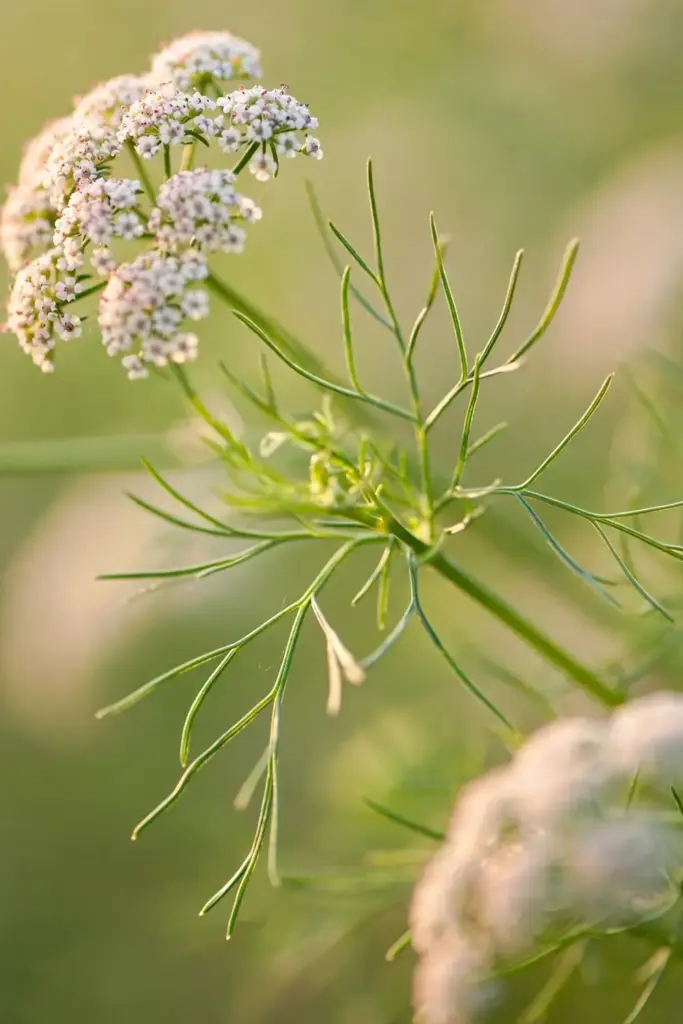
Watch the flowers, not the calendar, from here. Pollinators visit the umbels, and the clusters begin swelling into elongated ridged fruits. Each fruit holds a single seed, which is why the yield per plant stays small and why you planted so many.
11. Pests and Diseases of Cumin
Cumin’s pest list is short, and its disease list is mostly about moisture. Aphids cluster on the flower stems and young growth. Blast them off with a strong jet of water, and repeat in three days if they return. Ladybugs and lacewings handle light infestations on their own.
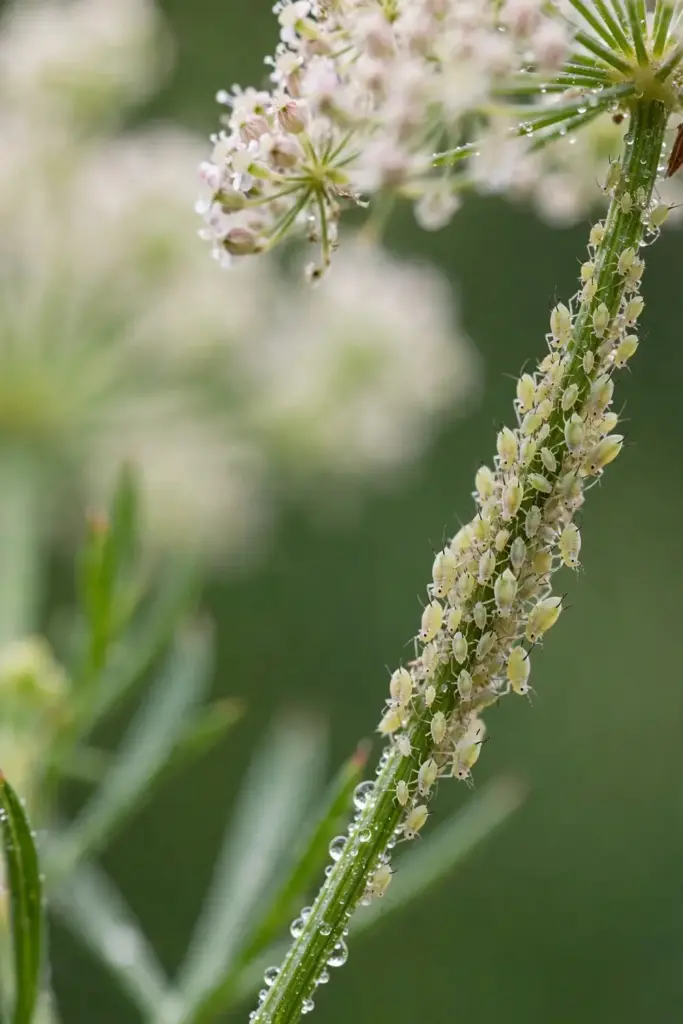
The diseases to respect are fusarium wilt, alternaria blight, and powdery mildew. All three thrive in humidity and wet foliage. Prevention is the whole program: space for airflow, water at the base, keep foliage dry, and never crowd pots against a wall. Remove and discard any plant that wilts from the base up; fusarium lives in soil, so do not compost the victim.
Damping off kills seedlings in cold, wet mix. Warm soil, moderate watering, and a sterile-ish starting mix keep it away. If seedlings keel over at the soil line in the first week, the mix was too cold or too wet, and the fix is to re-sow in warmer, drier conditions.
12. Harvesting Cumin Seed Heads
Harvest when the umbels turn brown and the seed feels dry and hard between your fingers, 100 to 120 days after sowing. The plants themselves will look spent: yellowed, dry, finished. That is correct. Ripe cumin seed is plump, tan, and strongly aromatic.
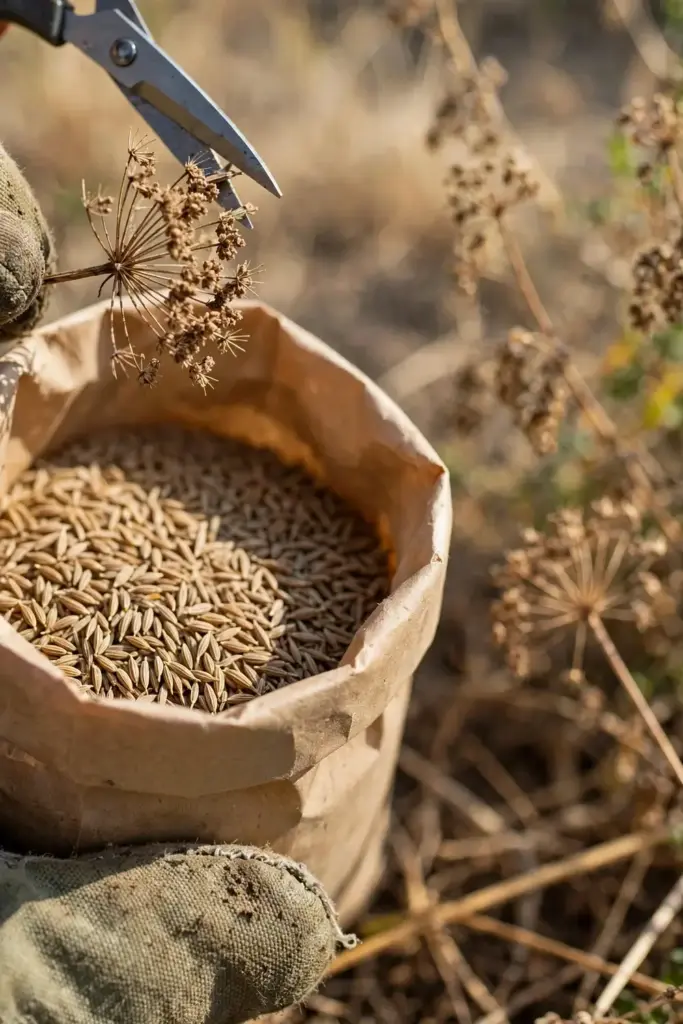
Do not wait for every head to ripen. Umbels mature unevenly, and ripe seed shatters and falls. Walk the pots every two or three days during the harvest window and clip the brown heads into a paper bag. Cut in the morning after the dew dries, on a dry day, with clean scissors. Leave the green heads to finish; you will return for them.
13. Drying and Threshing
Finish the heads indoors. Hang the paper bags in a warm, dark, airy spot for a week or two until the seed is fully dry. Then thresh: rub the heads between your palms or beat the bag gently so the seed falls free.
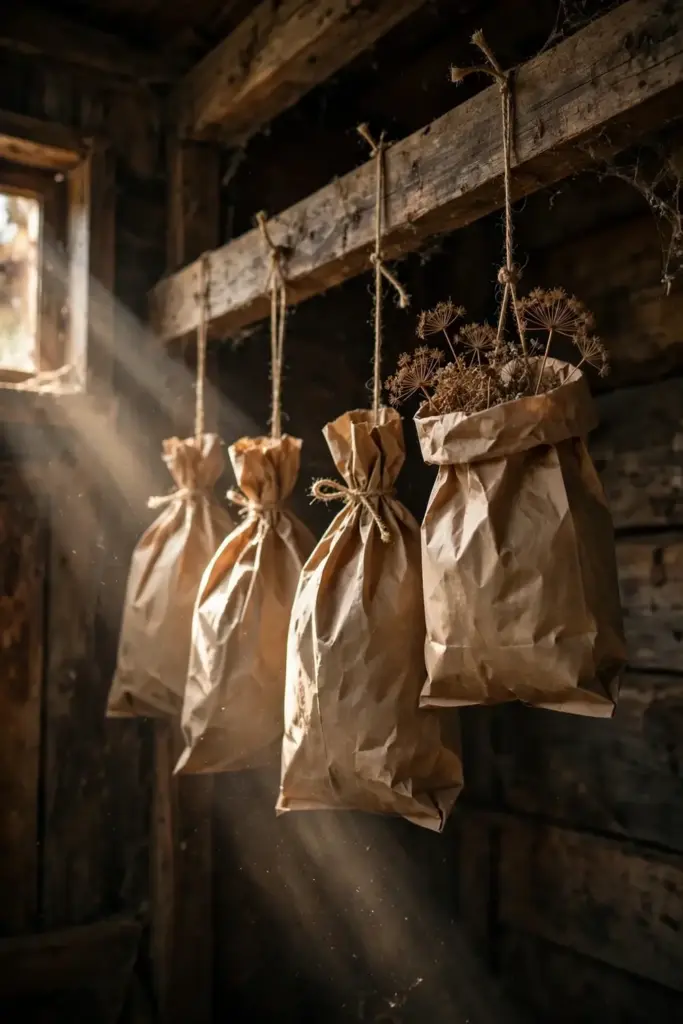
Winnow the chaff. Pour the seed slowly from one bowl to another in front of a gentle fan or breeze; the light debris blows away and the heavy seed falls straight. One or two passes give clean seed. Store it in an airtight glass jar in a cool, dark cupboard. Whole cumin seed keeps its punch for about a year stored this way.
Label the jar with the harvest date. Homegrown seed blends into store-bought seed in the cupboard within a month, and you want to know which is which when you grind. If you saved extra for next year’s sowing, keep that portion separate and marked as planting seed, stored in the refrigerator for the longest viability.
14. Processing and Grinding Your Cumin
Whole seed is the best storage form. Grind only what you will use within a few weeks, because ground cumin loses its volatile oils fast. A small spice grinder or a mortar and pestle both work; the mortar gives a coarser, more aromatic crush that suits Indian cooking.
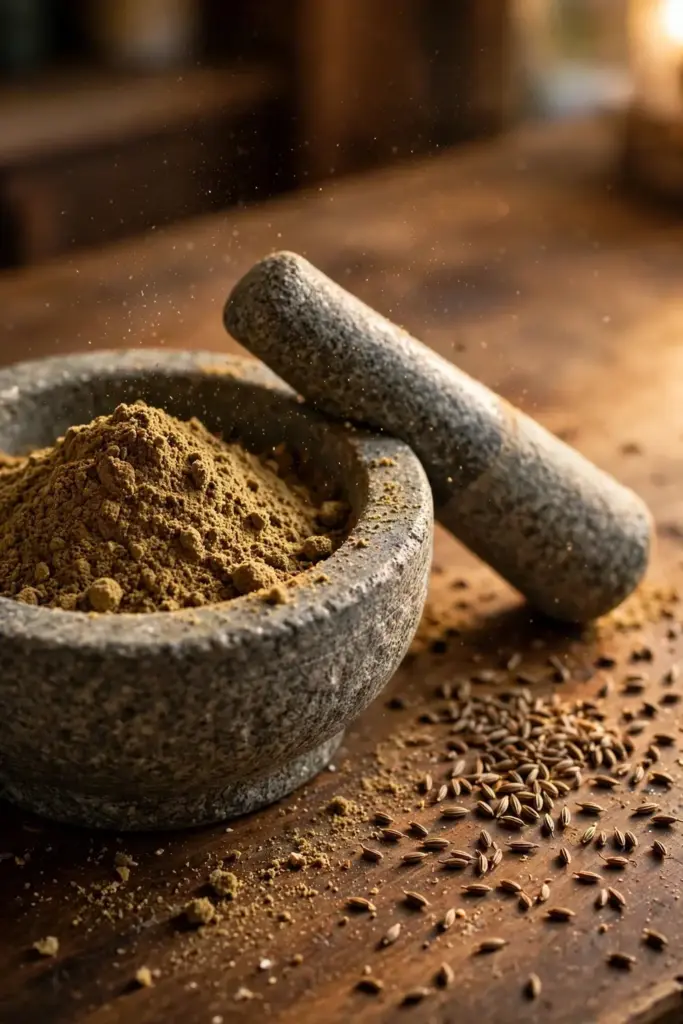
For the deepest flavor, toast the whole seed in a dry skillet over medium heat for 1 to 2 minutes, shaking the pan, until it darkens a shade and smells intensely nutty. Cool it, then grind. That toasting step is the difference between flat cumin and the jeera that perfumes a tadka.
15. Yield Reality: How Much Spice From a Pot
Here is the math, stated plainly. Each cumin fruit holds a single seed, and each plant produces only a modest cluster of fruits. A 12-inch pot of healthy cumin might yield a few tablespoons of dried seed, not a jar.
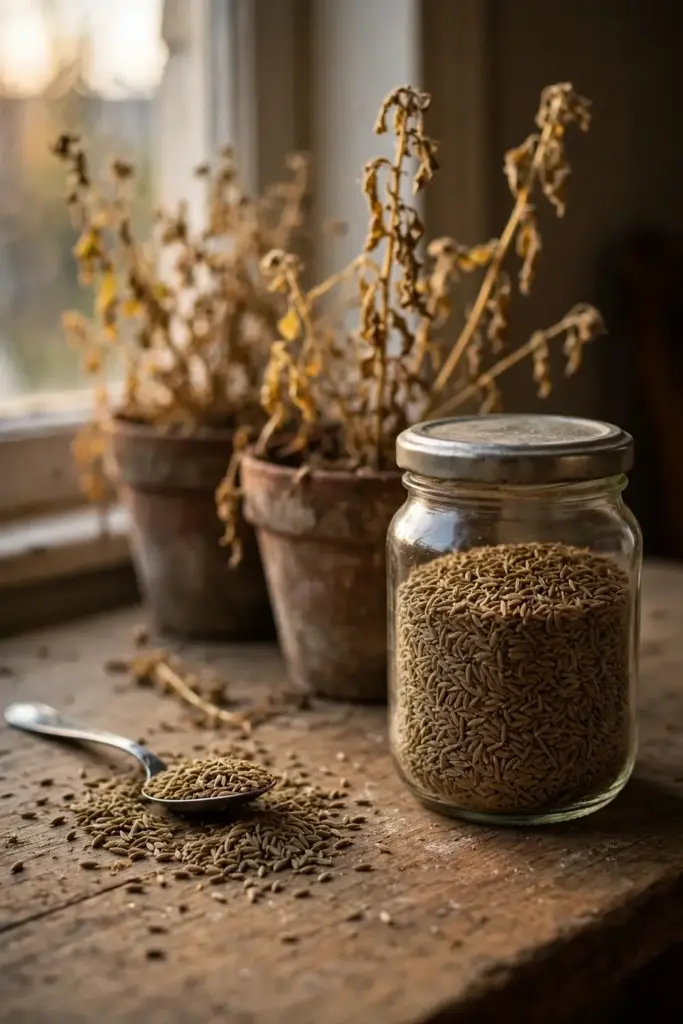
That sounds discouraging until you price fresh seed and taste it. Homegrown cumin, dried and ground within the week, is dramatically more aromatic than the dusty jar from the store. Three or four pots cover a season of cooking. One pot gives you a proof of concept and a good story. Both are honest outcomes, but only one of them fills the grinder.
Scale by pots, not by pampering one plant. More containers beat more fertilizer every time.
16. Common Mistakes Cumin Growers Make
Sowing too deep buries the seed’s small energy reserve; 1/4 inch is the depth, not a suggestion. Skipping the 8-hour soak stretches germination into weeks and invites rot. Starting in garden soil invites damping off. Overwatering after establishment invites root rot and blight.
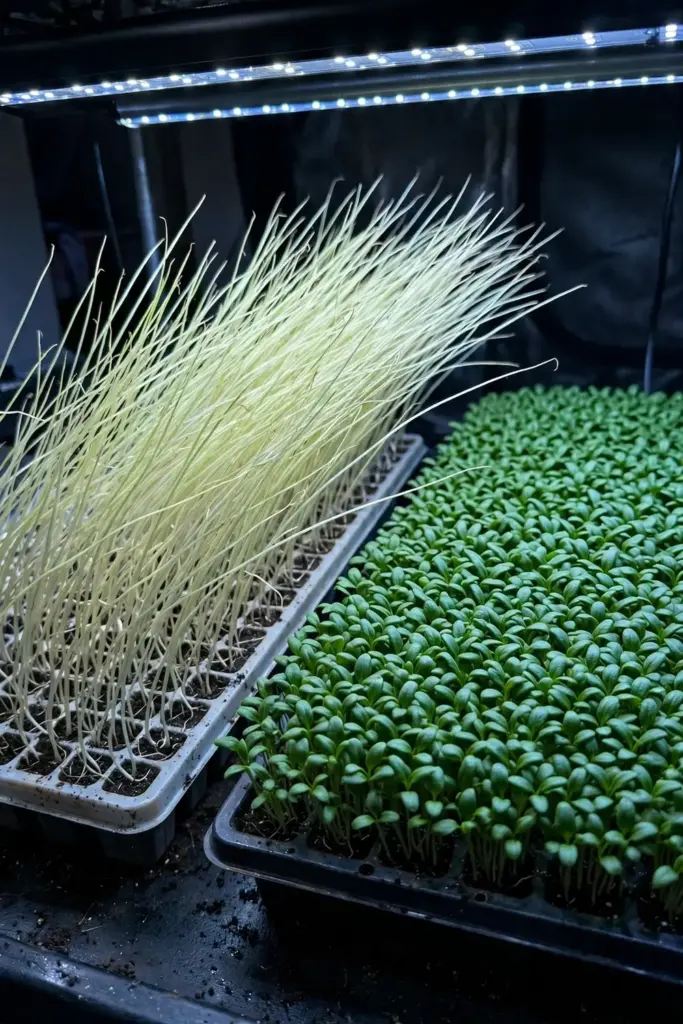
The big structural mistakes are timing and loneliness. Sowing too late in a short summer means the seed never ripens before frost. Sowing a dozen lonely seeds in a giant pot wastes the crop’s best defense, because cumin stems hold each other up. Sow densely, sow on time, and let the plants lean on each other.
17. Troubleshooting
Seedlings never emerge. The usual causes are old seed, cold soil, or sowing too deep. Test old seed on a damp paper towel first: if fewer than half sprout in 10 days, buy fresh. Warm the soil to at least 65 degrees before sowing.
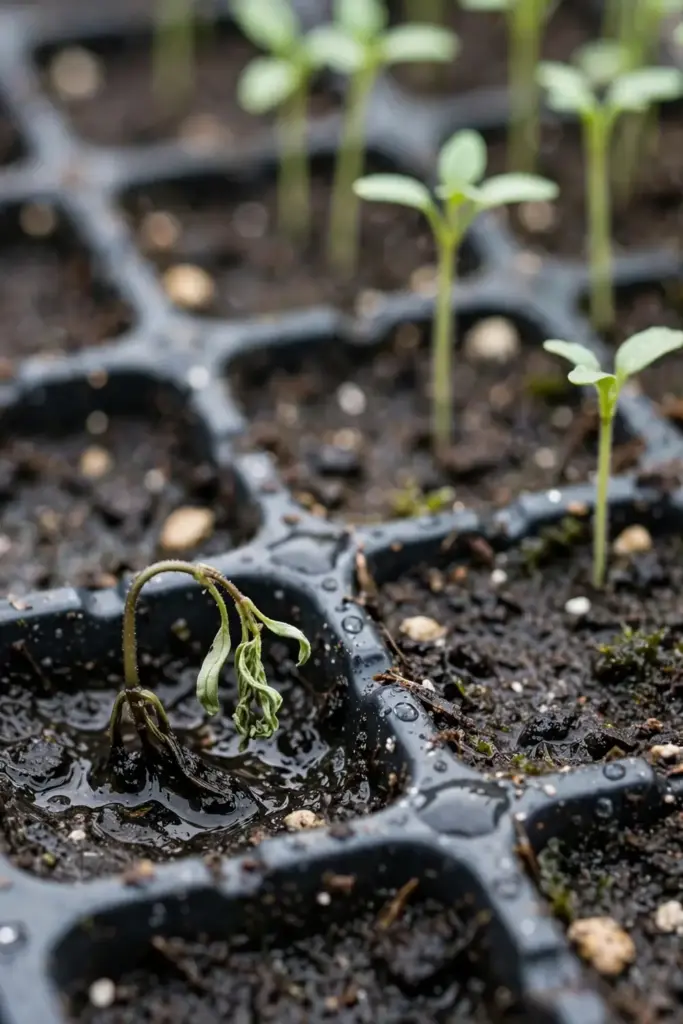
Seedlings are tall and floppy. Light is too weak or too far. Move the pot to full sun or lower the grow light to a few inches above the leaves, and add a gentle fan for air movement. Leggy seedlings rarely recover fully; re-sowing is often faster than nursing them.
Plants flower but seed heads stay green. The season ran out of heat. Next year, sow 2 weeks earlier or start indoors. In the current season, harvest what ripened and compost the rest; green seed has little flavor.
Seed heads mold before harvest. Rain or overhead watering hit the ripening umbels. Move pots under cover during the dry-down weeks, harvest brown heads promptly, and finish drying indoors.
Frequently Asked Questions
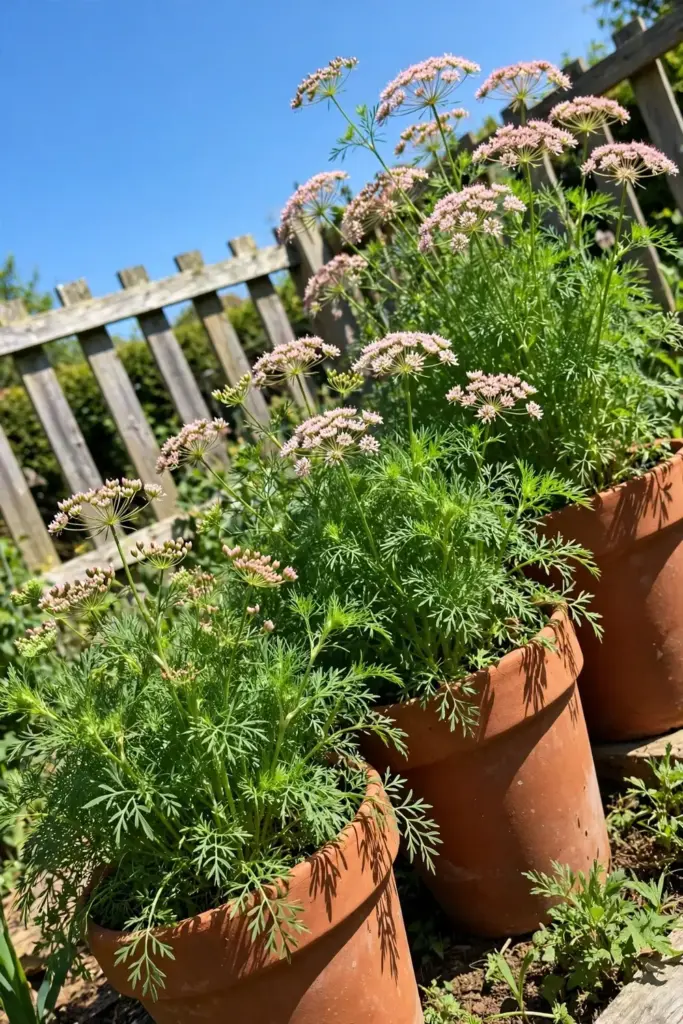
No, the germination itself is easy: soaked seed sprouts in 7 to 14 days at 68 to 86 degrees. The hard part is the season. Cumin needs 120 frost-free days of heat to ripen seed, so the difficulty is climatic, not technical. Give it warmth, sun, and time, and it grows.
No. Cumin is a true annual that flowers, sets seed, and dies in one season. It does not overwinter, and it does not reliably self-sow in pots. Save some of your harvest as next year’s seed, and sow fresh each spring.
Sometimes, but it is a gamble. Spice-aisle seed may be old, heat-treated, or blended from several harvests, so germination is unreliable. Seed sold for planting is tested for germination and labeled with the variety. Buy planting seed for the crop; keep the spice jar for the kitchen.
Yes. Toast the whole seed in a dry skillet for 1 to 2 minutes until fragrant, cool it, then grind in a spice grinder or mortar and pestle. Grind only what you will use within a few weeks, because ground cumin loses flavor far faster than whole seed.
100 to 120 days from sowing to ripe seed, depending on heat. Germination takes 7 to 14 days, flowering arrives around midsummer, and the seed heads ripen as the plant dries down. In short summers, start indoors 4 to 6 weeks before the last frost to buy the needed time.
Cumin pairs well with other warm-season herbs that share its needs: full sun, lean soil, and moderate water. Its fine flowers attract small beneficial insects. Keep it away from heavy feeders and thirsty plants whose watering schedule would keep cumin’s roots too wet.
The Harvest Is Worth the Heat
Growing cumin asks for one thing above all: a long, honest summer. Pots make that possible almost anywhere, because they move, they drain, and they let you start early and finish dry. Learn how to grow cumin from India once, and the jeera in your kitchen stops being a commodity. It becomes something you grew, dried, and ground yourself, and you will taste the difference in the first tadka.