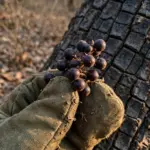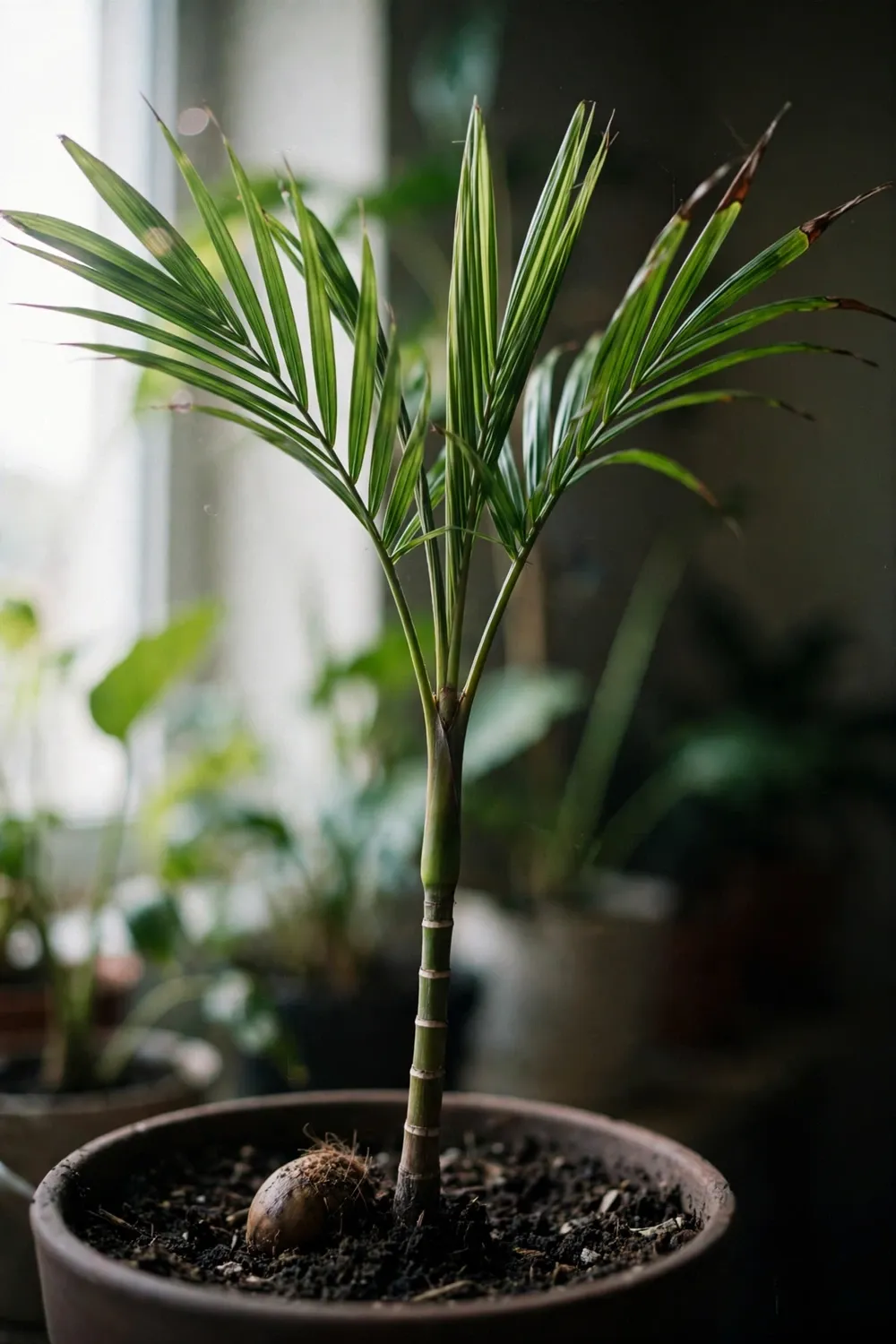

How to grow betel nut palm as an ornamental houseplant starts with one decision: grow a juvenile palm in a pot for its fronds, never for its nuts. A potted palm stays small, seldom blooms, and rarely fruits. Outdoors in the tropics the same species reaches 10 to 20 m, and that gap explains every choice below.
I have learned to check the botanical name before trusting any palm sold as areca. Areca nut is carcinogenic to humans, and betel quid without tobacco carries the same Group 1 classification. Grow the palm as an ornamental plant only. Its fronds earn its place.
The sections below identify the palm and separate it from the garden-center areca palm. Then they walk through buying, seed, potting, light, water, feeding, and repotting. The chewing risk gets its own section before any growing advice. Read that section first when a seller, a friend, or a label mentions chewing.
1. Decide Whether Betel Nut Palm Fits Your Home Before You Buy One
Betel nut palm fits a home only as a potted ornamental in steady indoor warmth, and only when the household wants fronds rather than fruit. A temperate garden bed fails it. A cold balcony fails it. Buy it for fronds, or skip it.
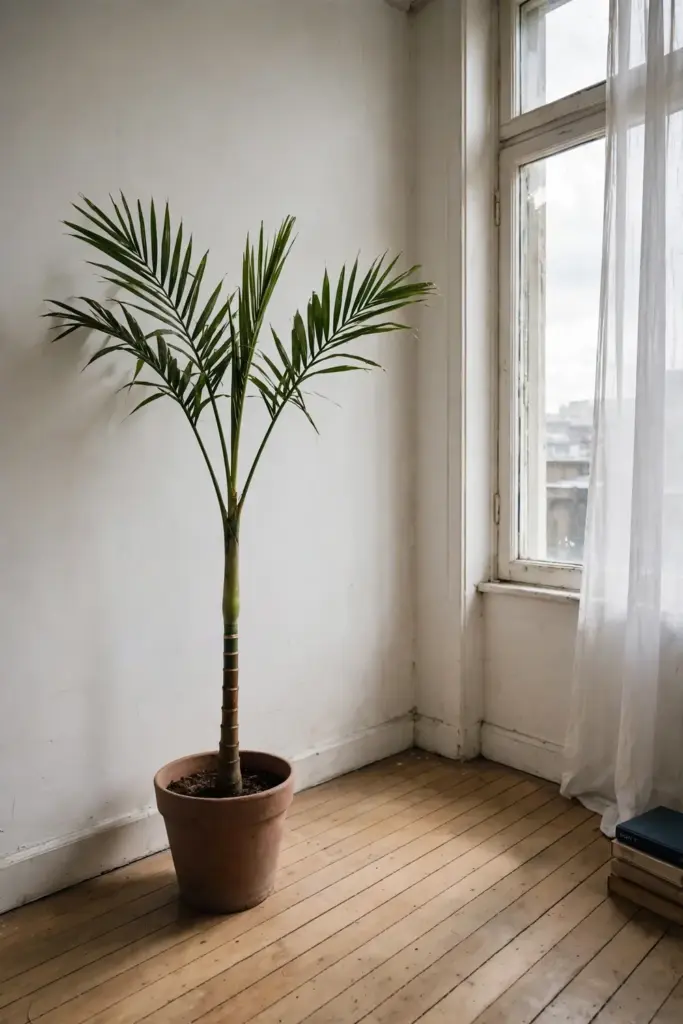
Outdoors the palm grows into a tall single-stemmed tree. It reaches a mature height of 10 to 20 m, with a trunk 25 to 40 cm in diameter, according to the Areca catechu agroforestry profile. The crown holds 8 to 12 fronds, and the palm adds six new leaves each year, according to the Areca catechu agroforestry profile. The palm grows at a rate of 0.5 m per year outdoors, according to the Areca catechu agroforestry profile.
A pot changes the outcome. The container limits root spread and the ceiling limits height. A temperate winter keeps the palm indoors year-round. Expect slow growth and no harvest. The plant stays decorative for years. How to grow betel nut palm in a pot is a climate decision first and a gardening project second.
Pinang is the Indonesian name for this palm. Kew lists the palm as native to the Philippines, while the agroforestry profile calls the wild origin unknown and notes a Philippine origin as postulated, according to Kew Plants of the World Online and the Areca catechu agroforestry profile. Treat pinang as an Indonesian name and use, never as proof of an Indonesian origin.
| Item | Betel Nut Palm in a Pot |
|---|---|
| Botanical name | Areca catechu |
| Indonesian name | Pinang |
| Outdoor height | 10 to 20 m |
| Crown | 8 to 12 fronds |
| Propagation | Seed only |
| Role at home | Ornamental fronds, no harvest |
| Chewing | Never, Group 1 carcinogen |
2. Identify Betel Nut Palm by 5 Field Marks
Betel nut palm shows five marks that separate it from every clumping palm on the shelf. Check all five before you pay. A single mark proves little on its own.
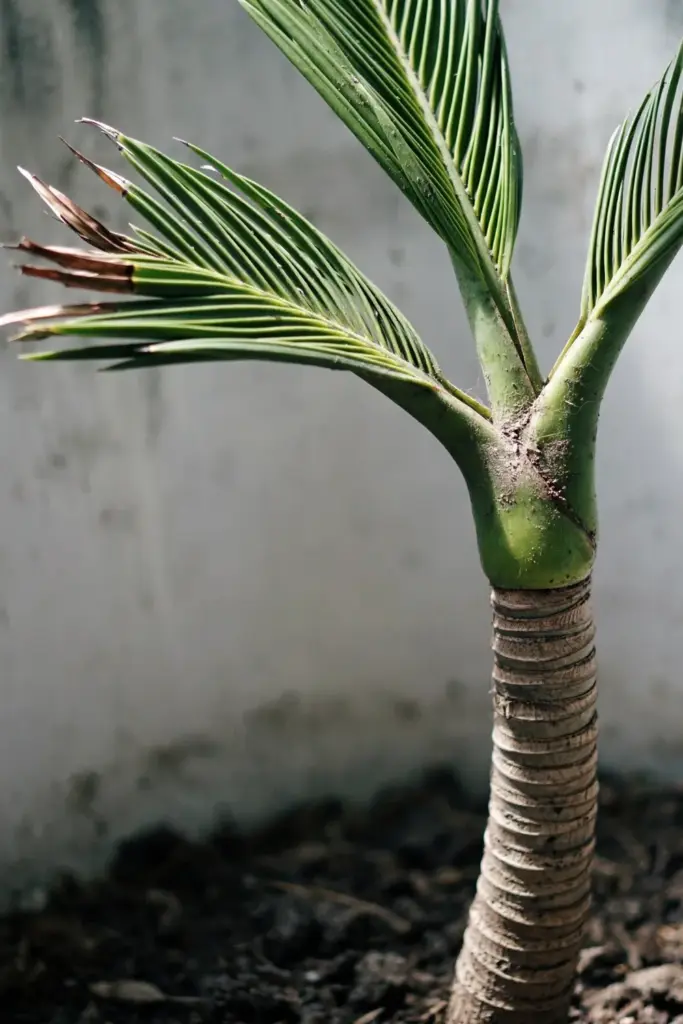
- Single trunk. One slender stem carries the whole crown. The trunk measures 25 to 40 cm across on a mature outdoor palm, according to the Areca catechu agroforestry profile.
- Crownshaft. A smooth green crownshaft 100 to 175 cm long wraps the stem below the fronds, according to Kew Plants of the World Online.
- Fronds. Each frond runs 1.5 to 2.7 m long and carries 20 to 35 leaflets on each side of the stalk, according to Kew Plants of the World Online.
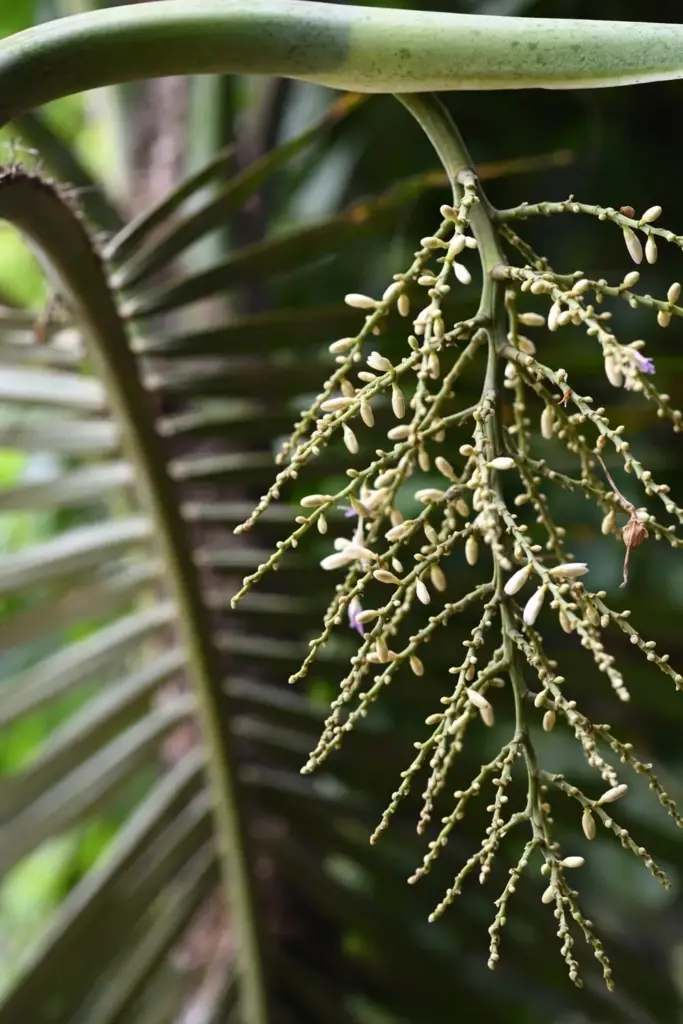
- Flower stalk. The branching flower stalk runs 29 to 80 cm long and hangs below the crownshaft, according to Kew Plants of the World Online.
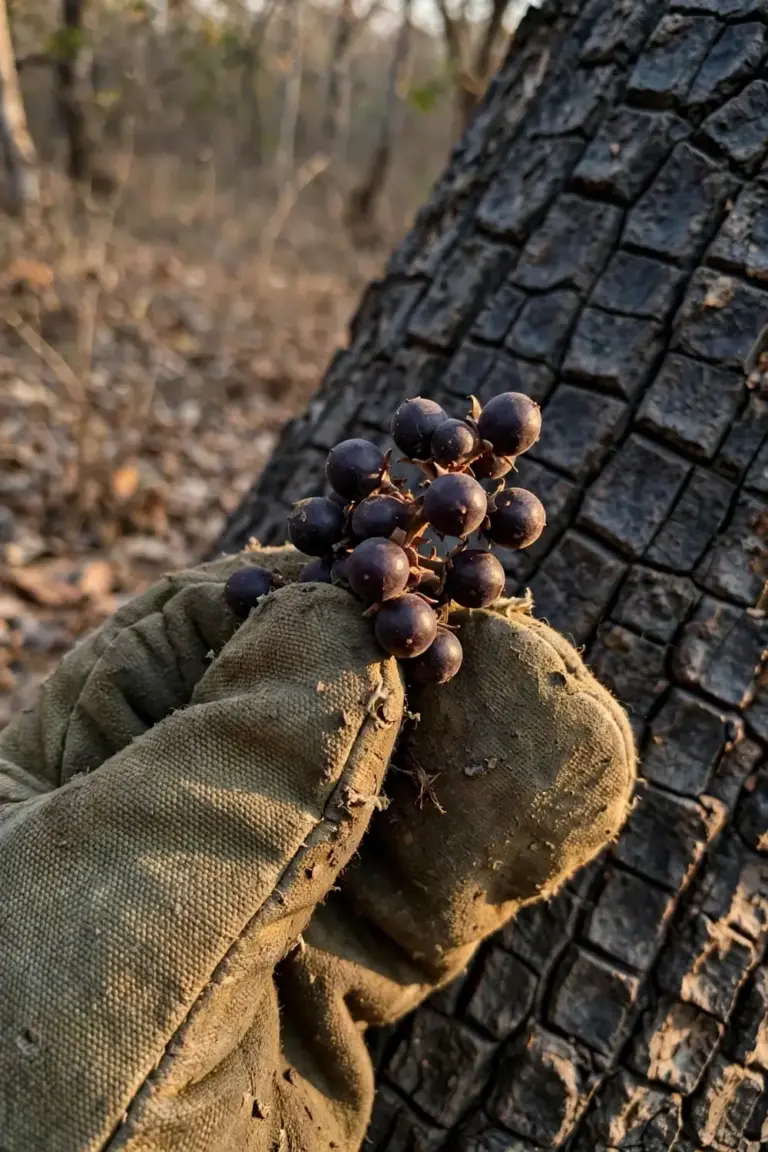
- Fruit and seed. The fruit measures 5 to 7 cm long and 2 to 4 cm wide, and the seed inside measures 3.0 to 3.5 cm long, according to Kew Plants of the World Online.
Leaflets sit in one plane along the stalk, and each leaflet shows more than one fold, according to Kew Plants of the World Online. A mature frond sheds after a leaf lifespan of 2 years, according to the Areca catechu agroforestry profile. The crown keeps 8 to 12 fronds at a time, so one yellowing frond among green ones is normal turnover.
Young plants look nothing like the outdoor tree. A juvenile palm shows a short stem, a few upright fronds, and sometimes the seed still half buried beside the sprout. Judge a juvenile by stem, crownshaft, and frond shape, never by height alone. Height misleads, because a pot and a ceiling hold every indoor palm far below its outdoor size.
3. Separate Betel Nut Palm From the Areca Palm Sold in Every Garden Center
The areca palm sold in most garden centers is Dypsis lutescens, a different species. Betel nut palm is Areca catechu. The two share a trade name and little else.
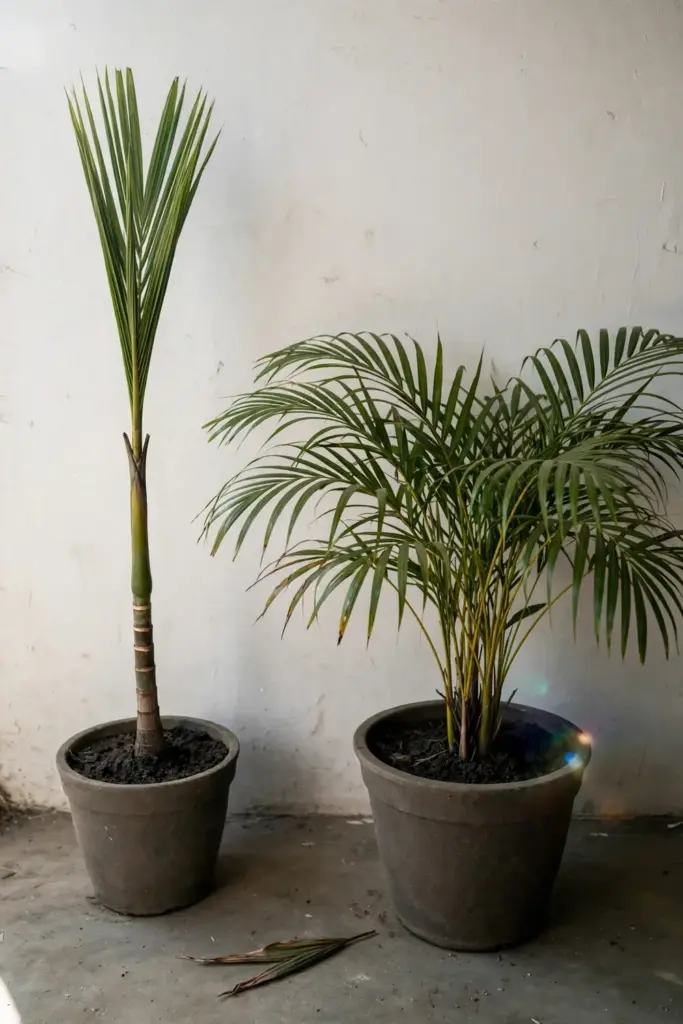
Dypsis lutescens grows as a clump. Its trunk is multistemmed, and each stem runs 2 to 3 inches in diameter, according to the Areca palm fact sheet from UF/IFAS Extension. The same fact sheet puts the palm at 20 to 35 feet tall with a crown spread of 10 to 20 feet, and fronds 6 to 8 feet long. Betel nut palm grows one stem, never a clump.
Propagation settles the question. Betel nut palm grows from seed only. It forms no basal shoots, so no division exists to separate. Dypsis lutescens divides through its clump. A seller offering divisions of Areca catechu sells the wrong plant or the wrong method. Cut the terminal bud of a betel nut palm and the palm dies, because palms cannot regrow from a cut tip, according to the Areca catechu agroforestry profile.
| Feature | Betel Nut Palm (Areca catechu) | Garden-Center Areca Palm (Dypsis lutescens) |
|---|---|---|
| Stems | Single | Multiple, clumping |
| Propagation | Seed only | Seed or clump division |
| Fruit | 5 to 7 cm, ovoid | About 1 inch, egg-shaped, yellow to dark purple or black |
| Fronds | 1.5 to 2.7 m | 6 to 8 feet |
| Cold behavior | Frost kills, keep indoors | Low temperature range 35 to 40 degrees F |
Check the botanical name on the label before you pay. A label that reads only areca palm proves nothing. A label that reads Areca catechu names the palm described here. When the label carries no botanical name at all, walk away. A nameless palm is a gamble, and this species is the wrong one to gamble on.
4. Weigh the Chewing Risk Before You Grow Areca catechu
Do not grow betel nut palm for chewing. Areca nut is carcinogenic to humans, and betel quid without tobacco carries the same Group 1 classification, according to the California OEHHA listing summary. No home harvest changes that finding.
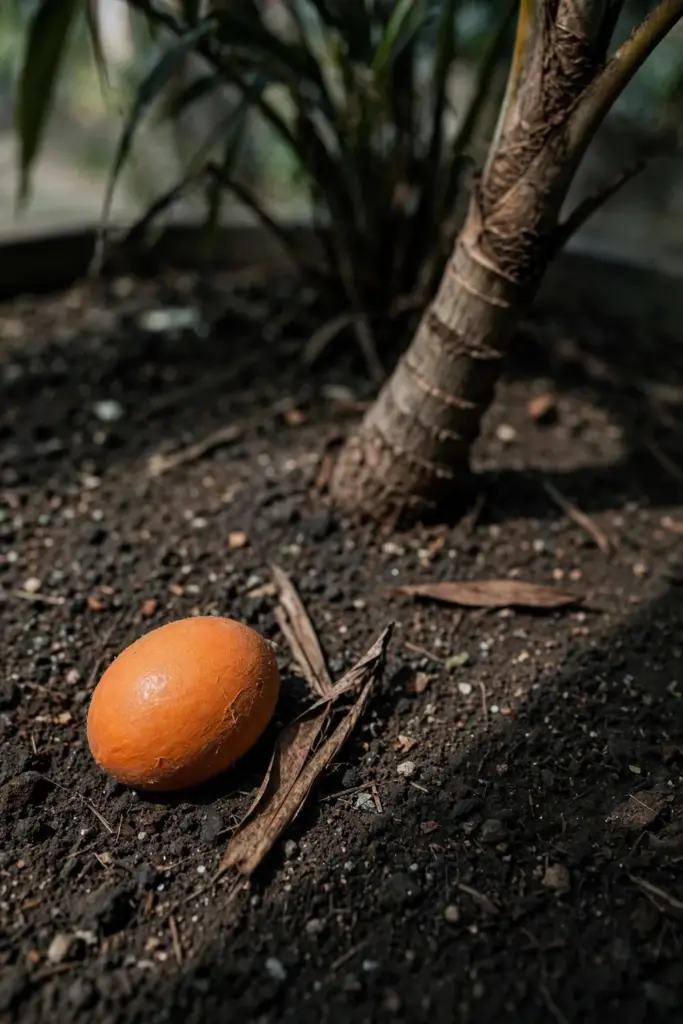
Betel quid mixes areca nut with betel leaf and slaked lime, and tobacco often joins the mix. The leaf in the quid is betel leaf (Piper betle), a different species from a different family, and the quid uses both plants together. Grow the palm as an ornamental plant. Chewing instructions and doses have no place here.
Chewing is common enough to deserve a plain warning. About 5 percent of the world population chews betel nut, according to the Areca catechu agroforestry profile. The practice carries the cancer risk stated above. A potted palm on a windowsill stays an ornamental plant. Keep it that way.
5. Buy a Healthy Juvenile Palm in 6 Checks
Buy a juvenile palm, never a seedling sold as a dwarf. A juvenile shows a short stem, several upright fronds, and a firm crownshaft. Six checks separate a healthy plant from a weak one.
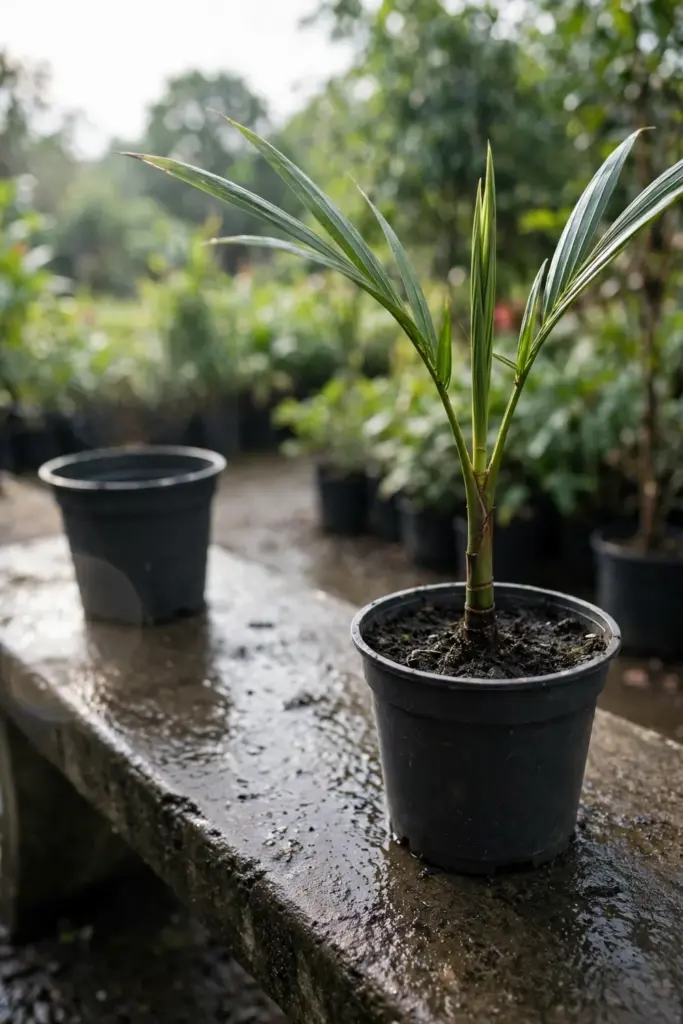
- Stem. One straight stem, firm to a gentle squeeze, with ringed leaf scars.
- Crownshaft. Green and firm, with no soft spots or dark patches.
- Fronds. Several upright fronds, green to the tips, with no yellow wash or brown edges.
- New growth. A fresh spear rising from the crownshaft center. A palm with no new spear has stalled.
- Roots. Roots that fill the pot without circling in a tight mat, and no sour smell from the mix.
- Label. A label that reads Areca catechu. A label that reads only areca palm proves nothing.
Buy the size you see. A seedling carries no promise of staying small, and a dwarf label on a seedling means little. A mature palm that already shows compact growth is the only honest dwarf on the market. Pay for the plant in front of you, never for a story about its future size.
Ask the seller how the palm arrived. A palm shipped bare-root in cold weather may look fine and fail weeks later. A palm grown in its pot, with roots holding the mix together, settles faster. Inspect the crownshaft last, because a firm crownshaft and a rising spear tell you the growing point is alive.
Buy from a nursery when you can. A nursery lets you inspect the crownshaft, the spear, and the roots before you pay, and a good nursery labels the palm with its botanical name. Online orders can work too. Ask the seller for a photo of the actual plant, not a stock photo, and ask whether the palm ships in its pot. A palm shipped in its pot settles faster than a palm shipped bare-root. Refuse a shipment that arrives cold, wilted, or with a crushed crownshaft. A crushed crownshaft rarely recovers, because the growing point sits inside it.
6. Grow Betel Nut Palm From Seed in 7 Steps
Betel nut palm grows from seed only, and fresh seed beats stored seed every time. Seven steps carry a fresh fruit to a seedling. Expect patience, not speed.
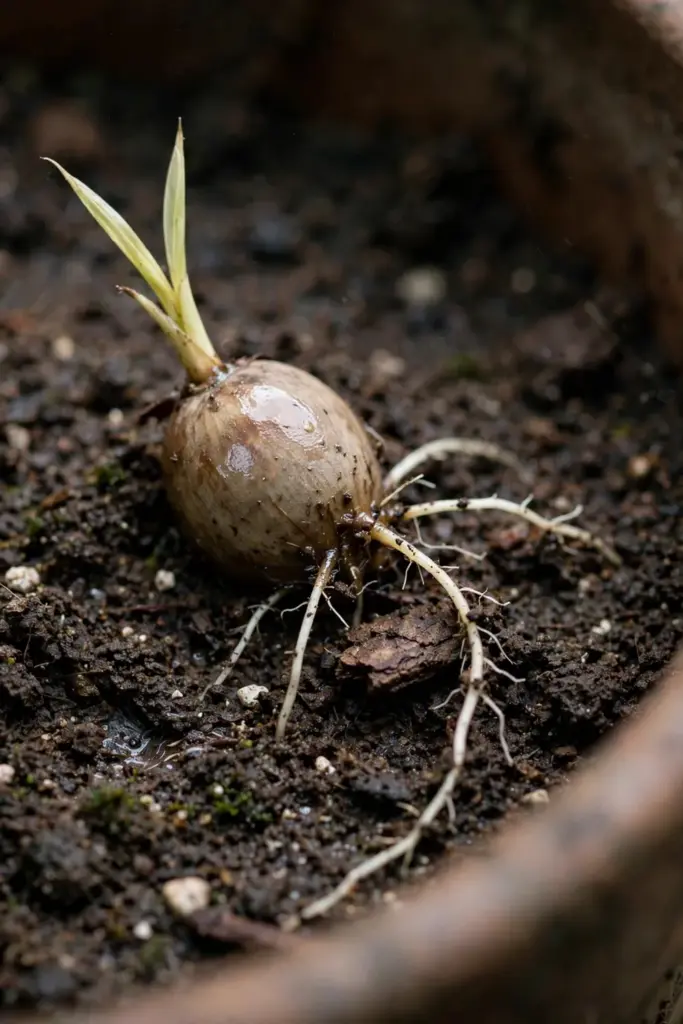
- Start with a fresh whole fruit. Sow soon after harvest. Stored seed weakens fast.
- Press the fruit into moist, free-draining mix with the top left exposed. Covering the whole fruit slows emergence.
- Set the pot in steady warmth and filtered light. Direct sun dries the mix and cooks the seed.
- Water to hold the mix evenly moist, never waterlogged. Empty the saucer after each watering.
- Wait. Germination is complete by 90 days after planting seeds, and seedlings at that point carry the first forked leaf and five roots, according to the Areca catechu agroforestry profile.
- Feed nothing until the seedling shows several leaves. A seedling lives off the seed at first.
- Move the seedling on only when it stands sturdy with several leaves. Seedlings need 3 to 24 months before transplant to nursery beds, according to the Areca catechu agroforestry profile. A 1-year-old seedling carries 4 or 5 leaves, according to the Areca catechu agroforestry profile.
A trunk forms in the third year, according to the Areca catechu agroforestry profile. Indoor seedlings take longer to reach that stage, and many never reach it in a pot. That delay is normal. The palm is a slow grower, and a pot slows it further.
Seedlings want shade. Keep young plants in filtered light until several fronds harden. A seedling in direct sun scorches, and a scorched seedling rarely recovers its first fronds. The seed starting steps for warm-climate seed apply here, with one change: sow this palm as a whole fruit, never shelled.
7. Pot Your Palm in a Free-Draining Mix With Real Drainage
Betel nut palm wants a mix that drains fast and still holds moisture. A dense mix suffocates roots, and a mix that dries in a day starves them. Build the middle ground.
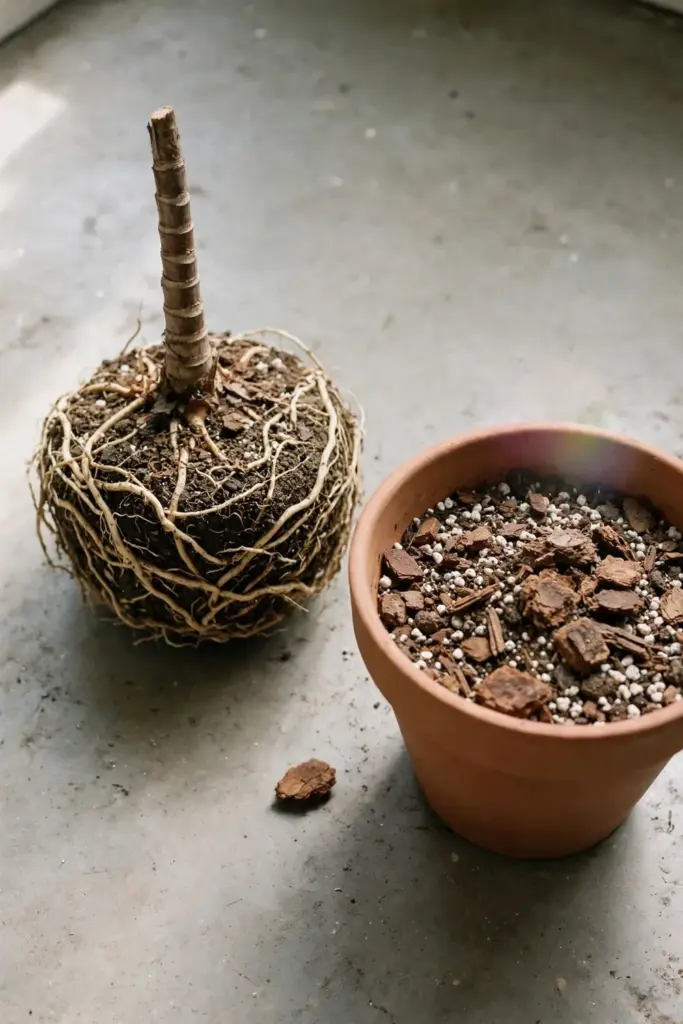
The palm prefers soils with medium texture, loams and sandy clay loams, and it needs thorough drainage with high moisture retention, according to the Areca catechu agroforestry profile. The same profile puts the soil pH range at 5.0 to 8.0, and it calls soils rich in organic matter the most desirable, according to the Areca catechu agroforestry profile.
Mix loam-based potting soil with perlite and bark in roughly equal parts. Add a handful of compost for organic matter. The building soil health approach applies in a pot too: feed the mix, not just the plant. A mix that smells earthy and crumbles in the hand is right. A mix that smells sour or packs into a brick is wrong.
Choose a pot with drainage holes and a saucer you will actually empty. Start a juvenile in a pot one size larger than its root ball. A pot far larger than the roots stays wet after watering, and wet mix rots palm roots. A pot that matches the roots dries on schedule.
8. Give Your Palm Bright Indirect Light and Steady Warmth
Betel nut palm wants bright indirect light indoors. An east window suits it, and a south window suits it behind a sheer curtain. Direct midday sun through glass scorches fronds. How to grow betel nut palm indoors starts with the window, not the fertilizer.
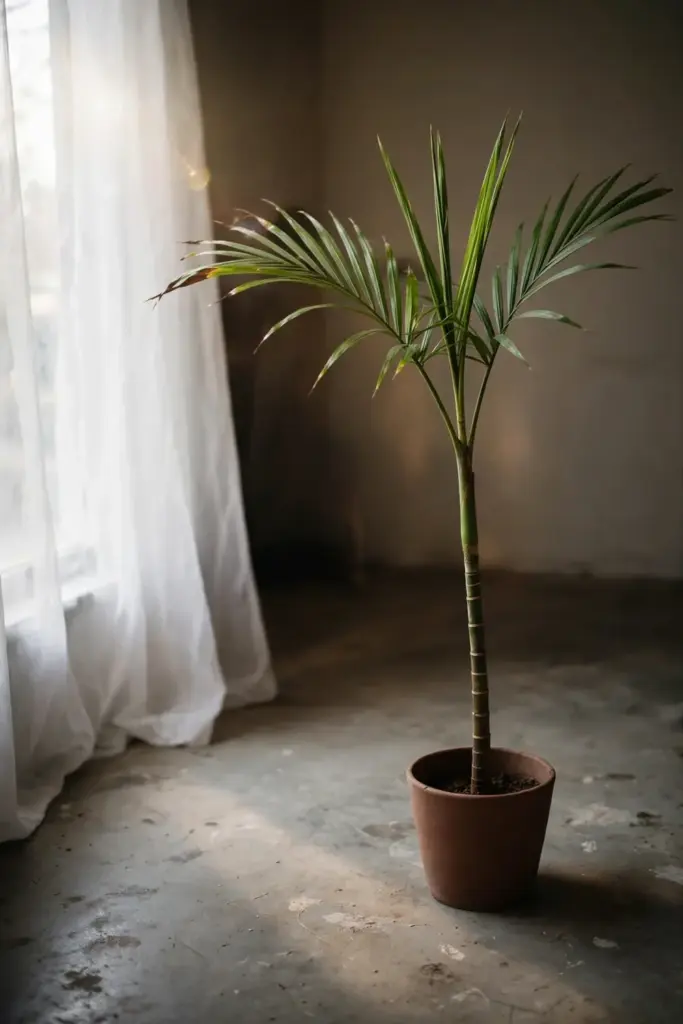
Young palms want shade, and seedlings scorch in direct sun. Move a juvenile into brighter light in stages over two weeks. Start with a bright spot away from the window, then shift the pot closer every few days. A frond that bleaches or crisps at the edges is getting too much sun too fast. Pull the pot back and let the plant recover.
Warmth matters as much as light. Betel nut palm is a tropical palm, and frost kills it. Keep the palm indoors year-round in any climate with cold winters. Move it outside only when nights stay warm, and bring it back inside before the first cold nights of fall. Keep it clear of cold drafts, and keep it clear of hot radiators. Both extremes brown the fronds.
Rotate the pot a quarter turn every week. A palm left in one position leans toward the window, and the fronds on the shaded side thin out. A quarter turn each week keeps the crown even without moving the plant to a new spot. Mark the pot with a small dot of tape so you remember which side faced the light last. The dot costs nothing and keeps the rotation honest.
9. Water for Even Moisture and Raise Humidity Without Wet Feet
Betel nut palm wants even moisture, never a swamp. Water when the top layer of mix feels dry to the touch. Water until liquid runs from the drainage holes, then empty the saucer.
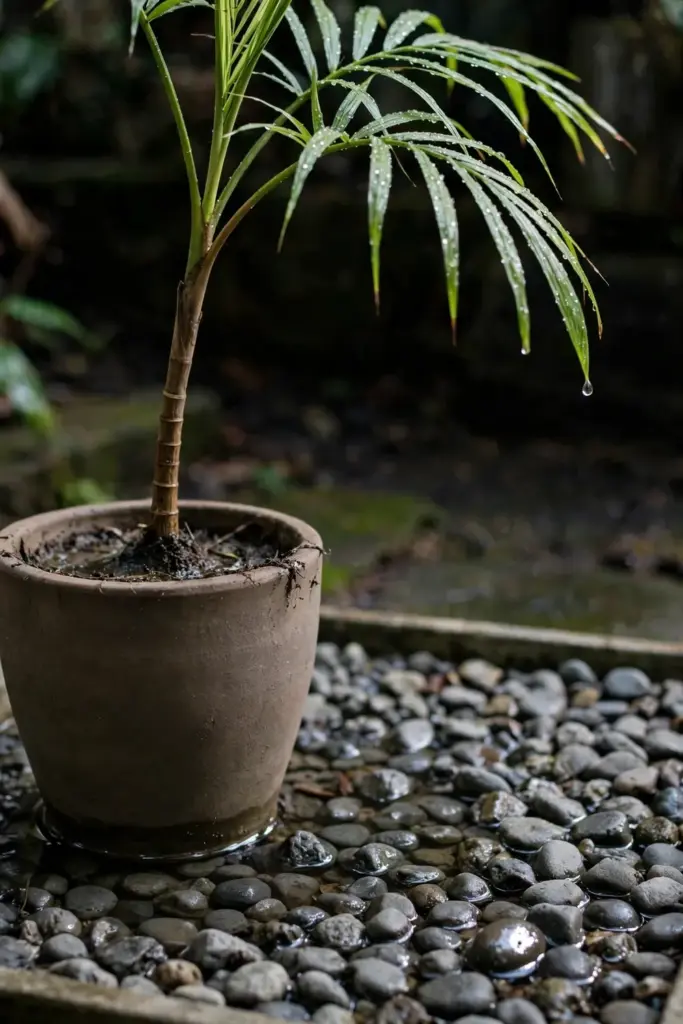
Roots that sit in water rot. A saucer left full for days is the fastest way to kill a potted palm. Check the saucer after every watering, and check the mix before the next one. A wooden skewer pushed to the bottom of the pot tells the truth: damp mix clings to the wood, and dry mix leaves it clean.
Dry indoor air browns frond tips. Group the palm with other plants, set the pot on a pebble tray with water below the pot base, or run a humidifier nearby. Mist the fronds for a quick lift, and treat misting as a supplement, never as the main water supply. A pebble tray keeps humidity near the plant without wetting the roots.
Watering shifts with the seasons. A palm in bright summer light drinks faster than the same palm in a dim winter room. Check the mix twice a week in summer, and once a week in winter. A palm near a heater dries faster than a palm across the room, so check the dry spots first. When the mix stays wet for days after watering, the pot is too large, the mix is too dense, or the drainage holes are blocked. Fix the pot, the mix, or the holes before you blame the palm.
10. Feed Your Palm Lightly and Read Yellow Fronds as a Signal
Betel nut palm wants light feeding, not heavy doses. Feed in spring and summer with a balanced liquid palm fertilizer at half the label rate. Stop feeding in fall and winter, when growth slows.
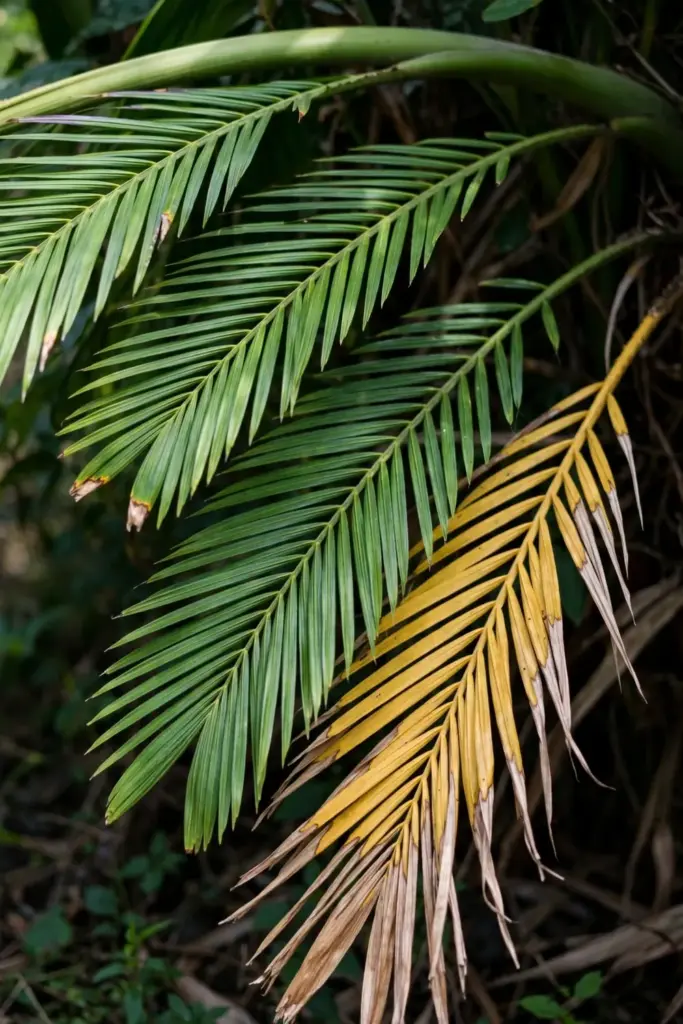
Yellow fronds carry a message, and the message depends on which fronds yellow. One oldest frond yellowing at a time is normal turnover. A mature frond sheds after a leaf lifespan of 2 years, according to the Areca catechu agroforestry profile. Several fronds yellowing at once point to overwatering, dry air, or hunger, in that order. Check water first, then air, then food.
Salt buildup browns tips too. Flush the pot with plain water every few months until liquid runs clear from the drainage holes. A white crust on the mix surface means salts have gathered. Scrape the crust away and flush the pot. A palm that keeps browning after a flush wants a repot into fresh mix, not more fertilizer.
Skip fertilizer on a stressed palm. A palm with brown tips, wilting fronds, or a sour mix wants water, air, and fresh mix, in that order. Fertilizer on stressed roots burns them. Feed only a palm that shows new growth and holds firm fronds. New growth is the green light. No new growth means wait.
11. Repot When Roots Fill the Pot and Never Bury the Crown
Betel nut palm wants repotting only when roots fill the pot. Roots circling the base, water running straight through the mix, and a palm that dries a day after watering all signal a pot-bound plant. One signal is enough to check. Two signals mean repot now.
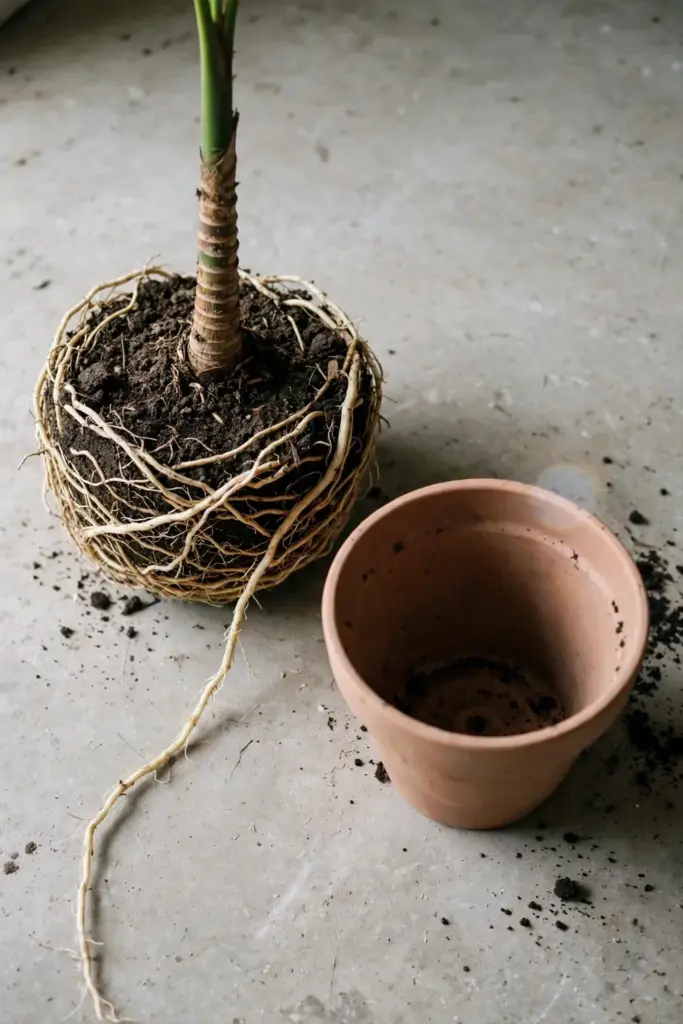
Move the palm up one pot size, no more. Set the palm at the same depth it grew before, with the crownshaft clear of the mix. Burying the crownshaft rots the growing point, and the growing point is the whole palm. Never top the palm to control height. Palms cannot regrow from a cut tip, and cutting the terminal bud kills the palm, according to the Areca catechu agroforestry profile.
Repot in spring, when growth resumes. Water the palm a day before the move, slide the root ball out whole, and firm fresh mix around it without packing it hard. Hold food for a month while roots settle into the new mix. A palm that wilts after repotting usually wants shade and steady moisture, not fertilizer.
12. Keep Your Palm Out of Reach of Children and Pets
Betel nut palm belongs out of reach of children and pets. No part of the palm is food, and the nut carries the Group 1 finding from the chewing section. Keep the palm on a high stand, behind a barrier, or in a room pets cannot enter.
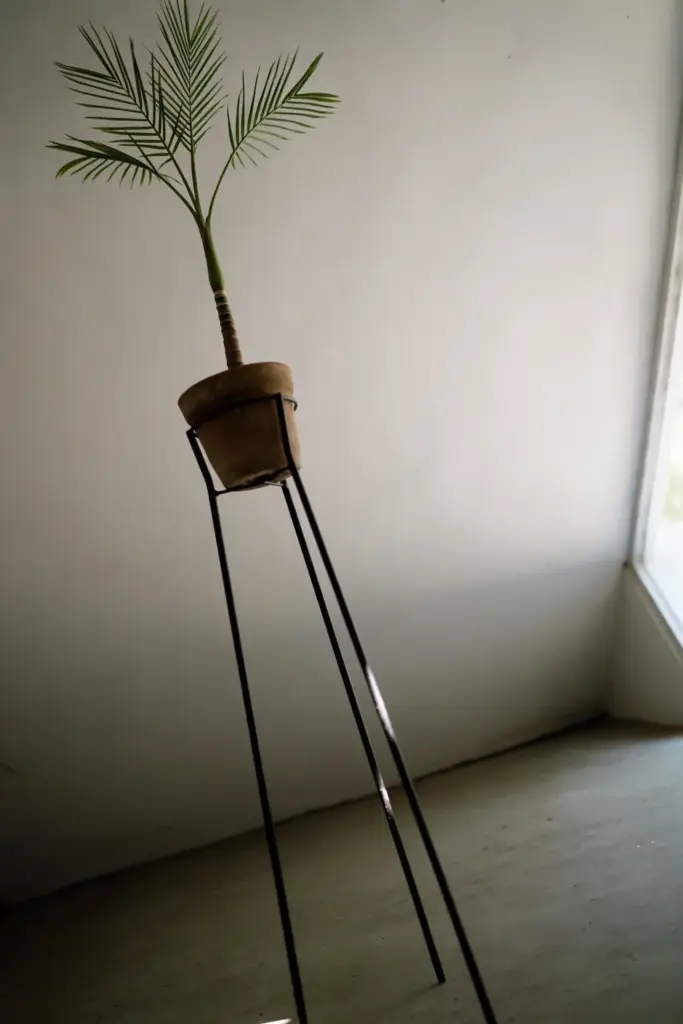
Do not let children or pets chew any part of the palm. Pick fallen fruit off the floor at once, and keep the pot where a dog cannot dig in the mix. A chewed frond is a warning to move the plant, not a reason to wait.
Do not transfer pet-safety claims from the garden-center areca palm to this species. Dypsis lutescens and Areca catechu are different species with different chemistry. The safe label on one never covers the other. When in doubt, treat the palm as unsafe to eat and keep it out of reach.
Frequently Asked Questions
No. Betel nut palm is a tropical palm, and frost kills it. Grow it in a pot indoors year-round in any climate with cold winters. Move it outside only when nights stay warm, and bring it back inside before the first cold nights of fall. A temperate garden bed, a cold balcony, and an unheated garage all fail this palm. The pot is the whole strategy.
Germination is complete by 90 days after planting seeds, and seedlings at that point carry the first forked leaf and five roots, according to the Areca catechu agroforestry profile. Sow fresh seed promptly in warm, evenly moist, free-draining mix. Stored seed weakens fast, and a seed left to dry on a shelf may never sprout. Give the seedling filtered light and steady warmth while it waits.
A potted palm stays small, seldom blooms, and rarely fruits. The pot limits root spread, the ceiling limits height, and a temperate winter keeps the palm indoors. Fruit needs a tall outdoor palm with a full crown and a warm climate. Your palm is doing its job when it holds green fronds and pushes new spears. Judge it as an ornamental plant, never as a fruit tree.
No. Betel nut palm is Areca catechu, a single-stemmed palm grown from seed only. The garden-center areca palm is Dypsis lutescens, a multistemmed palm that divides through its clump, according to the Areca palm fact sheet from UF/IFAS Extension. The two share a trade name and little else. Check the botanical name on the label before you pay. A label that reads only areca palm proves nothing.
Do not chew them. Areca nut is carcinogenic to humans, and betel quid without tobacco carries the same Group 1 classification, according to the California OEHHA listing summary. A home harvest changes nothing about that finding. No safe home dose exists. Grow the palm for its fronds, and keep every nut out of reach.
Yes. A pot, bright indirect light, even moisture, and humid air carry this palm indoors year-round. Feed lightly in spring and summer, and stop feeding in fall and winter. Repot when roots fill the pot, and never bury the crownshaft. Growth stays slow indoors, and the palm seldom blooms or fruits, so expect a decorative plant with green fronds rather than any harvest.
Make the Honest Call on Betel Nut Palm
How to grow betel nut palm in a pot comes down to one honest call. Grow a juvenile palm for its fronds in steady indoor warmth, with no plan for fruit and no plan for chewing, and the palm repays the care with green fronds for years.
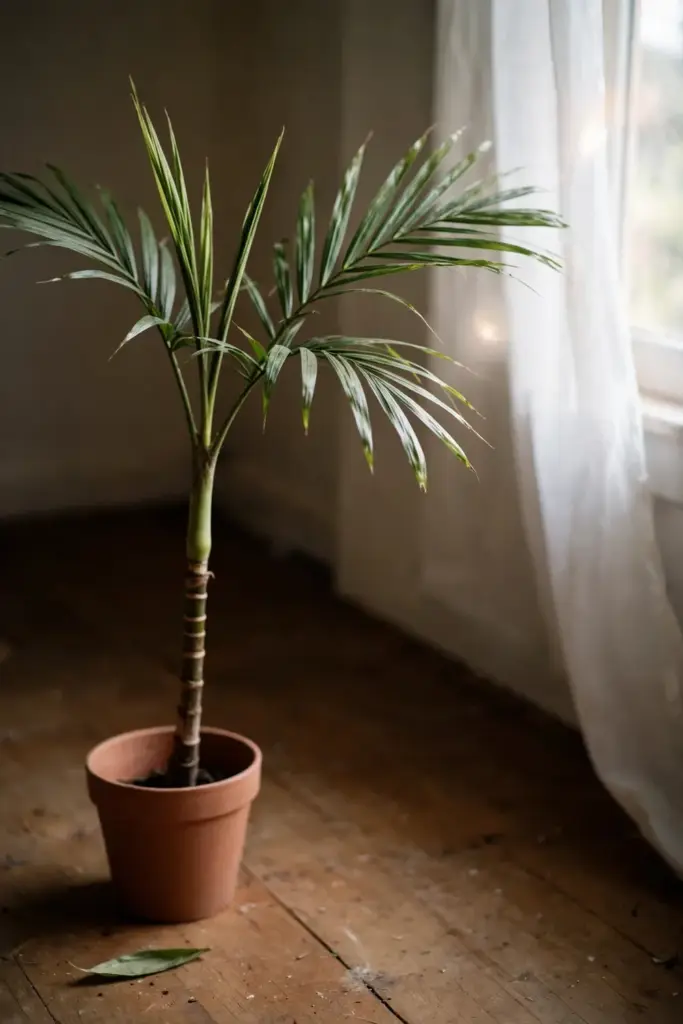
Skip the palm when the household wants fruit, when no bright indoor spot exists, or when children or pets can reach it. A palm bought for the wrong job disappoints everyone. A palm bought for fronds, kept in a pot, and kept out of reach does its job quietly.
Start with the botanical name on the label. Buy a healthy juvenile. Pot it in free-draining mix, give it bright indirect light, water for even moisture, feed it lightly, and repot only when roots fill the pot. The palm asks little beyond that. Keep it ornamental, keep it out of reach, and enjoy the fronds.