
The small dark spots scattered across your grass are almost certainly helminthosporium leaf spot, a fungal lawn disease that looks worse than it usually is. For most home lawns the spotted-blade phase is cosmetic and fades with a few weeks of good care, so a full helminthosporium leaf spot lawn treatment rarely means reaching for a fungicide first. The phase that earns real effort has a different name: melting out, the crown and root phase that can thin a lawn into bare patches if it gets rolling.
This guide walks you through helminthosporium leaf spot lawn identification on blades and crowns, which grasses get hit hardest, how it differs from dollar spot and brown patch, and six treatments that actually work. The honest summary up front: leaf spots get cultural care, melting out gets the serious response, and fungicide is a backup tool with real limits.
What Helminthosporium Leaf Spot Actually Is
Helminthosporium leaf spot is a disease of turfgrass caused by a group of true fungi that used to be lumped together under one old name. Plant pathologists now split that legacy name across three genera: Drechslera, Bipolaris, and Exserohilum. Extension services still use “helminthosporium” as the common name because that is what turf professionals and homeowners search for. This disease is so closely tied to its renamed cousin that our Bipolaris leaf spot guide covers the same pathogen complex under the modern name.
The disease works in two phases, and they behave like two different problems. The leaf spot phase infects grass blades during cool, moist weather in spring and fall. Small spots appear, and under the right conditions the infection moves down into the crown and roots, where it becomes melting out. That second phase is the killer: it rots the sheath, crown, and rhizomes, and entire plants wilt and die. A lawn can shrug off the leaf spots and still be wrecked by the melting out that follows.
The fungi survive as dormant mycelium in the thatch layer and in infected leaf clippings. Spores spread by wind, splashing water, and mower wheels. A lawn with a thick thatch mat is carrying the disease through the off-season whether the blades look healthy or not.
How to Identify It on Grass Blades
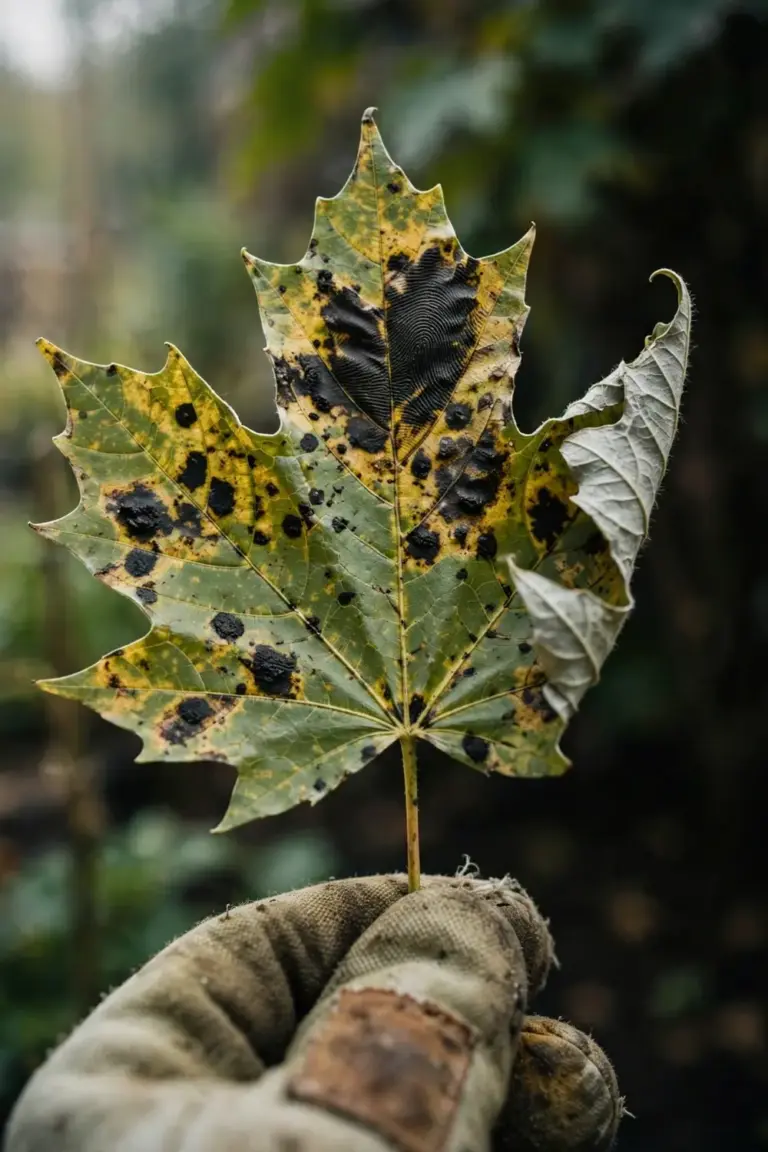
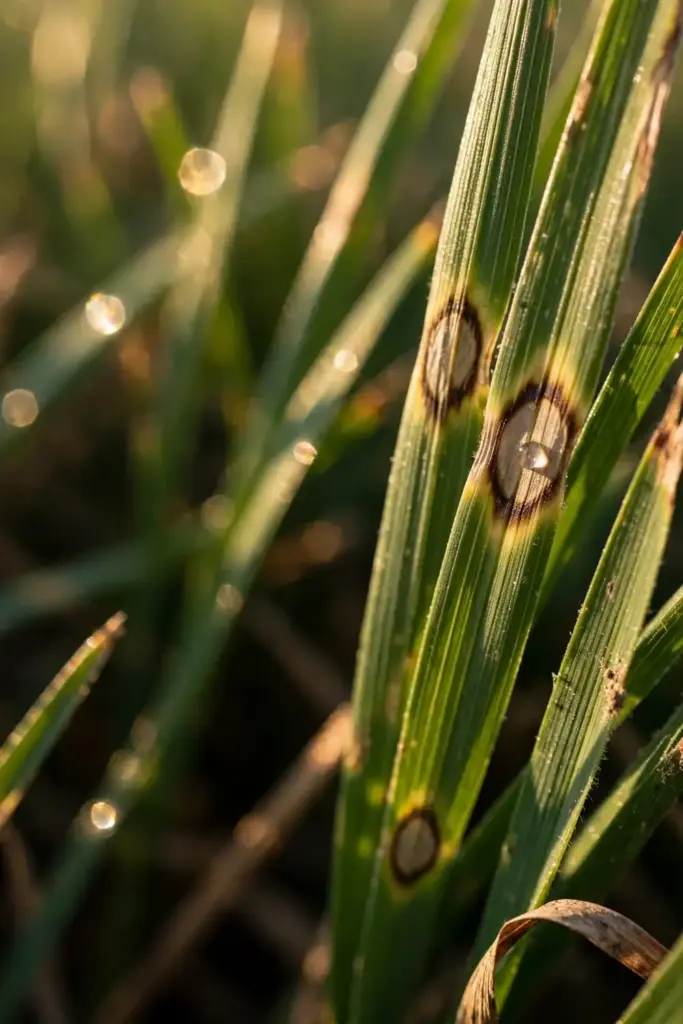
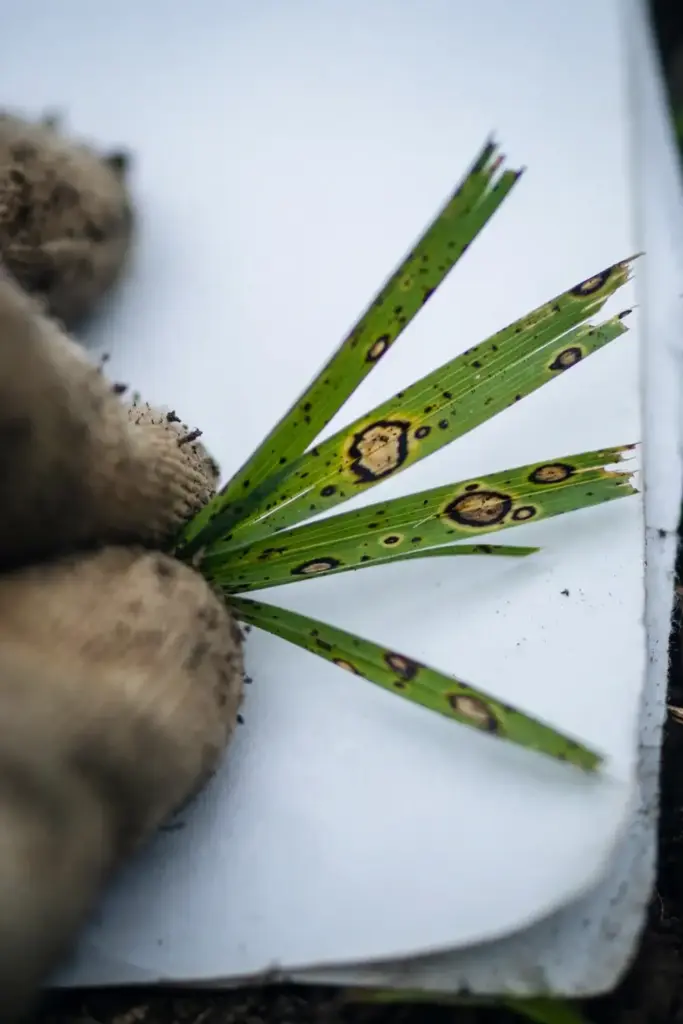
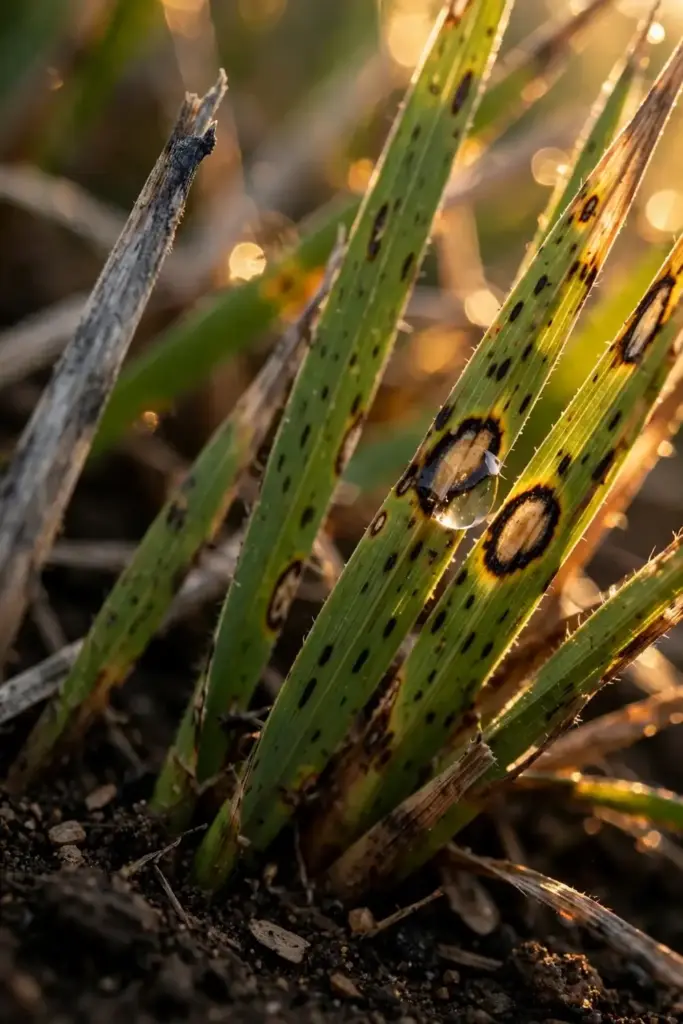
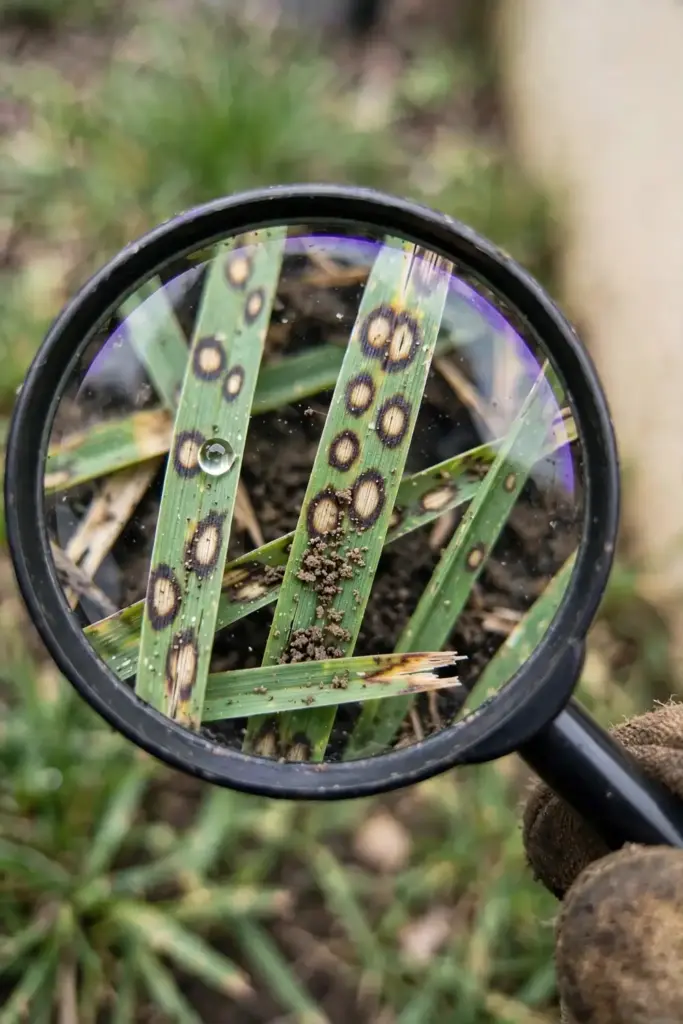
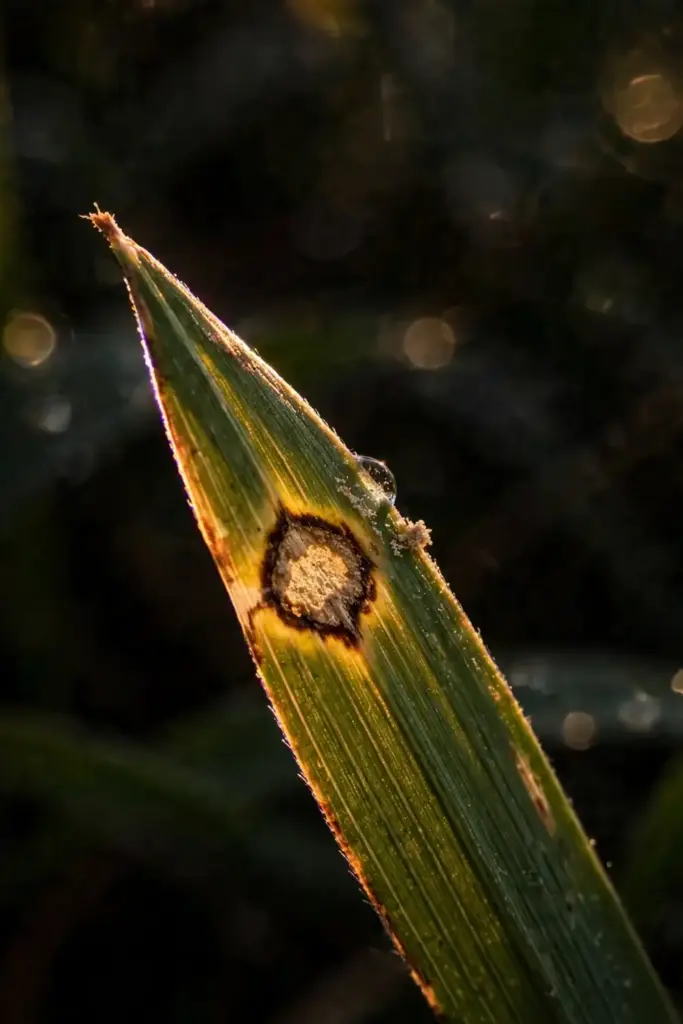
Start at the blade level on a dry morning. The first signs are small, dark specks or flecks on the leaves and leaf sheaths, purple to black in color. As the lesions grow they develop a tan center with a dark brown or black border, often ringed by a yellow halo. Spots frequently show up near the collar area where the blade meets the sheath. You may notice the turf taking on a purplish cast from a distance before you ever see an individual spot.
Severely affected leaves turn reddish brown, wither, and die. When many lesions merge, whole blades die back and the lawn looks scorched in patches. The pattern across the lawn is irregular, though some “hot spots” usually look worse than the rest. If your lawn shows these tan-centered spots with dark borders and a purplish tint in the stand, leaf spot is the strong suspect.
One inspection trick helps a lot: pull a few affected blades and look at them against a white piece of paper. The dark border and pale center stand out clearly, and you can see whether the lesions are mostly oval spots rather than the bleached bands of mower damage or the straw-colored tips of fertilizer burn.
How to Identify Melting Out at the Crown
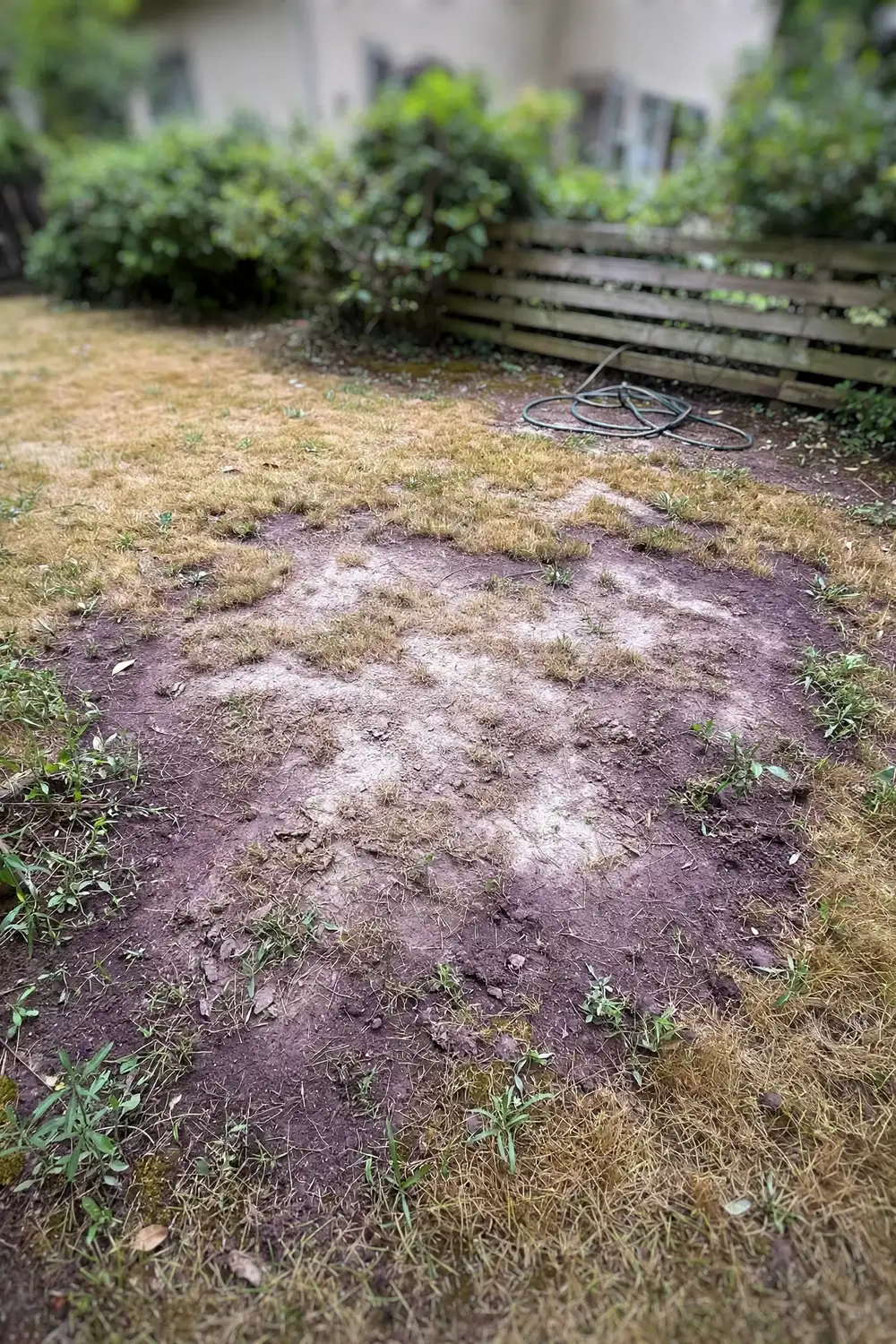
Melting out looks different from leaf spot and that difference matters, because melting out is the phase that thins a lawn permanently. Part the grass and look down at the base of the plants, at the sheaths, crowns, and stolons. Infected tissue shows a reddish-brown rot at the base. Grass that was spotted last week starts wilting, then yellowing, then dying in irregular patches.
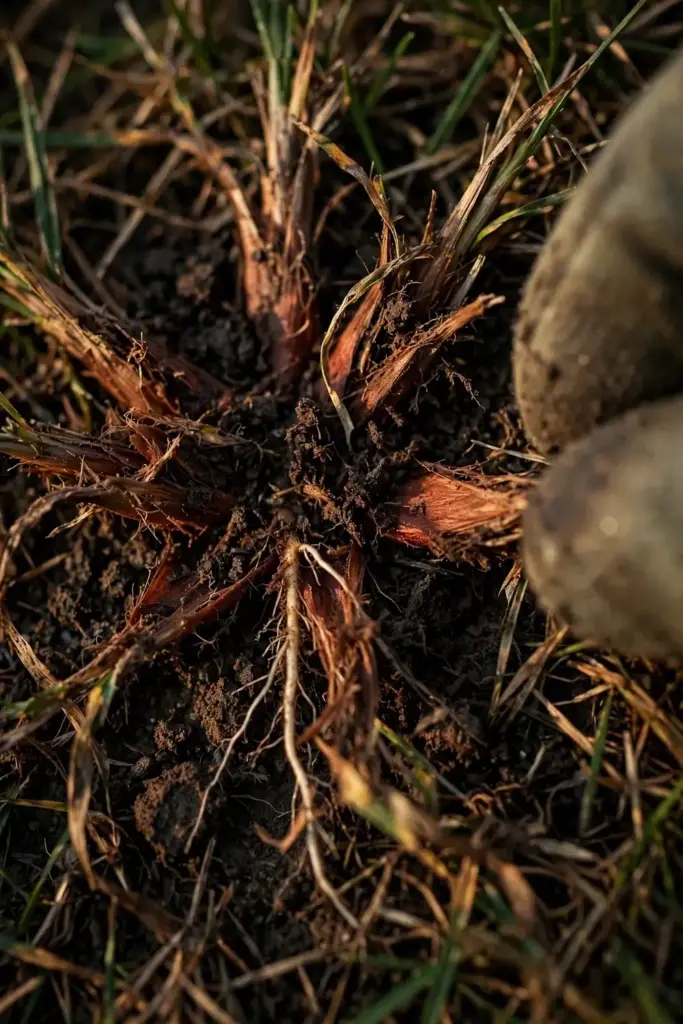
The name is literal: affected turf seems to melt out of the stand, leaving thin areas that fill with weeds or bare soil. On bluegrasses this phase is most active during warm, humid weather, while on bermudagrasses the worst damage happens in cool, wet stretches of fall and spring, especially during long periods of cloudy weather. In warm-season lawns, watch for melting out when temperatures stay above 85 degrees Fahrenheit with heavy humidity.
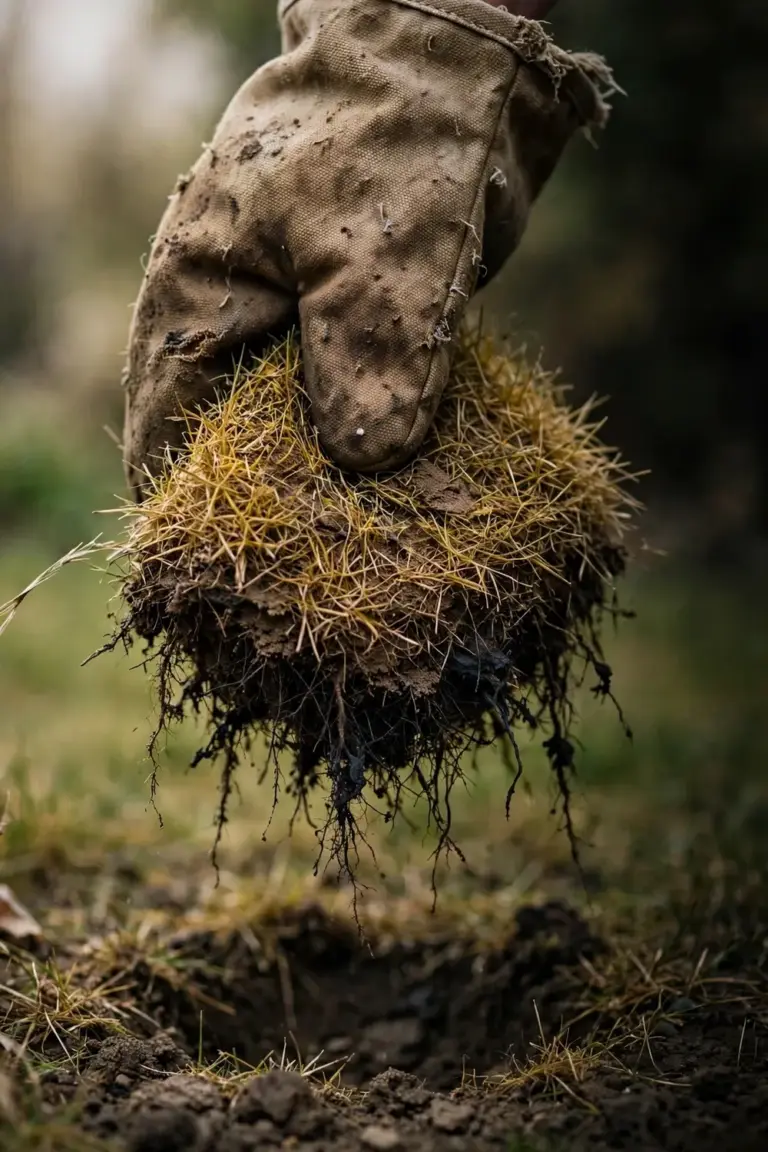
Check melting out with the tug test. Grip a clump of affected grass and pull gently. Leaf spot leaves stay anchored to living crowns. Melted-out crowns rot at the base and the blades slide out with almost no resistance. If your tug pulls out whole shoots with brown, rotted bases, you are past the cosmetic phase and into the one that justifies a full treatment plan.
Which Turfgrasses Get Hit Hardest
Cool-season grasses take the hardest hit: Kentucky bluegrass, perennial ryegrass, tall fescue, and all varieties of bentgrass are listed as susceptible by turf disease guides from the University of Georgia and other extension programs. Newly seeded or sodded lawns are especially vulnerable because young plants have shallow roots and thin canopies.
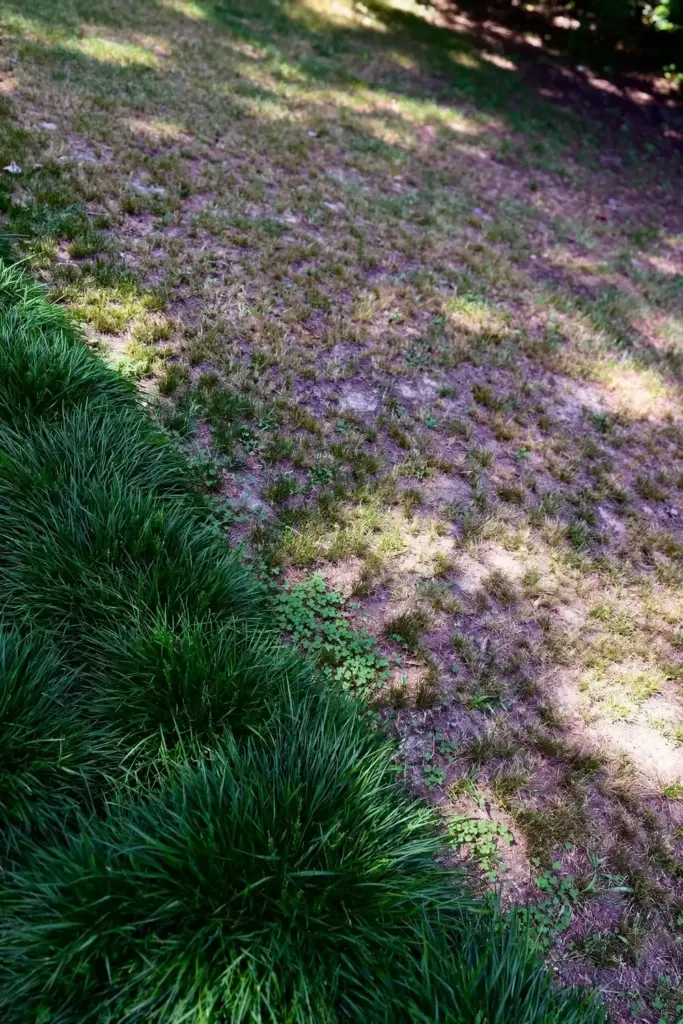
Warm-season grasses are not exempt. Bermudagrass, zoysiagrass, and centipedegrass all develop helminthosporium leaf spot and melting out, with the disease shifting its timing to the cooler, wetter shoulders of the growing season. Dense, fast-growing stands of any grass type get hit harder than thinner stands, which is one reason over-fertilized lawns suffer first and worst.
If you are planning a lawn from seed and leaf spot is a recurring problem on your street, look for cultivars with resistance ratings to leaf spot and melting out. Seed catalogs and extension variety trials publish these ratings, and a resistant cultivar is the only form of prevention that works while you sleep.
Helminthosporium Leaf Spot vs Dollar Spot vs Brown Patch vs Gray Leaf Spot
Four lawn diseases make spots and patches, and they ask for different responses. Misidentifying them wastes money and time, so use this table before you buy anything. The fastest split: helminthosporium and gray leaf spot attack individual blades with visible lesions, while dollar spot and brown patch kill whole areas in patch patterns.
| Disease | Blade Lesions | Patch Pattern | Favorable Conditions | First Clue |
|---|---|---|---|---|
| Helminthosporium leaf spot | Small dark specks growing into tan-centered spots with dark borders and yellow halos | Irregular thinning, then melting-out patches | Cool wet weather for leaf spot, warm humid weather for melting out, more than 10 hours of leaf wetness per day | Purplish cast to the lawn, spots near the leaf collar |
| Dollar spot | Light tan lesions with reddish-brown borders, often spanning the whole blade width | Small round bleached patches, 2 to 6 inches across, like silver dollars | Cool nights, heavy dew, low nitrogen | White cobweb-like mycelium in the patch at dawn |
| Brown patch | Dark brown-bordered lesions, then whole blades die | Large circular brown patches, sometimes with a dark “smoke ring” edge | Hot humid weather, night temperatures above 65 degrees, excess nitrogen | Patches appear overnight after hot, humid nights |
| Gray leaf spot | Small round spots that expand into gray-centered lesions with purple borders | Rapid blighting in irregular patches, mostly on St. Augustine and ryegrass | Hot humid weather, excess nitrogen, wet foliage | Silvery-gray lesions that look scorched |
If your lawn shows the tan-centered, dark-bordered spots of the first row, stay on this guide. If the pattern looks more like one of the other rows, follow the matching treatment path instead: our brown patch guide covers the Rhizoctonia disease in detail.
Why Leaf Wetness Drives This Disease
The single mechanism behind this whole disease is leaf wetness, and everything else is commentary on it. These fungi need extended wet periods to germinate, infect, and spread. Disease turns serious when grass stays wet for more than 10 hours a day for several consecutive days, a threshold published in the University of Georgia’s turf disease reference. Dew, irrigation, and rain all count.
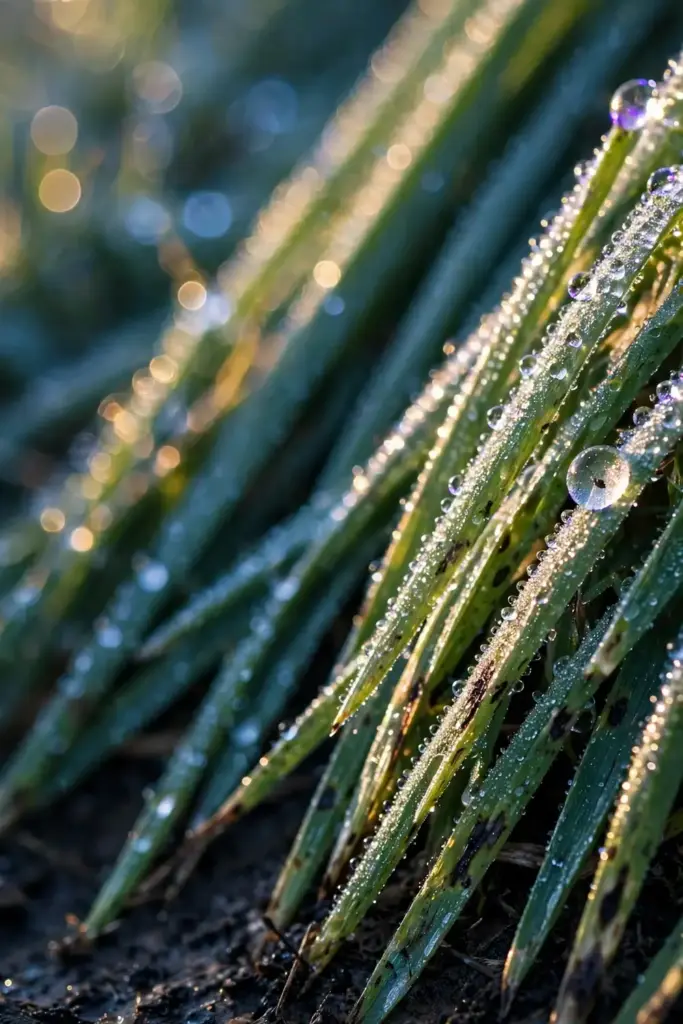
This is why watering schedule matters more than watering amount. Lawns watered in the evening go into the night wet, then stay wet through morning dew, stacking twelve or more continuous wet hours. Lawns watered in the early morning dry as the day warms, and the fungi lose their window. Thatch feeds the cycle too: a thick thatch layer holds moisture at the crown and gives the fungi a damp nursery to survive in between infections.
Low mowing height makes the wetness worse by pushing dense, shaded growth that holds humidity at the base of the plants. High nitrogen makes it worse by growing soft, succulent blades that infect easily. Both of those are choices you control, which is why cultural treatment comes before chemicals in every serious lawn disease guide.
What Makes It Worse in a Home Lawn
Five risk factors separate lawns that shrug off the disease from lawns that melt out. Thatch thicker than half an inch is first, because it shelters the fungi and holds crown-level moisture. Heavy spring nitrogen is second: applications of more than one pound of nitrogen per 1,000 square feet in spring push soft, fast-growing blade tissue that these fungi colonize easily, a warning stated directly in the University of Arkansas turf pathology materials.
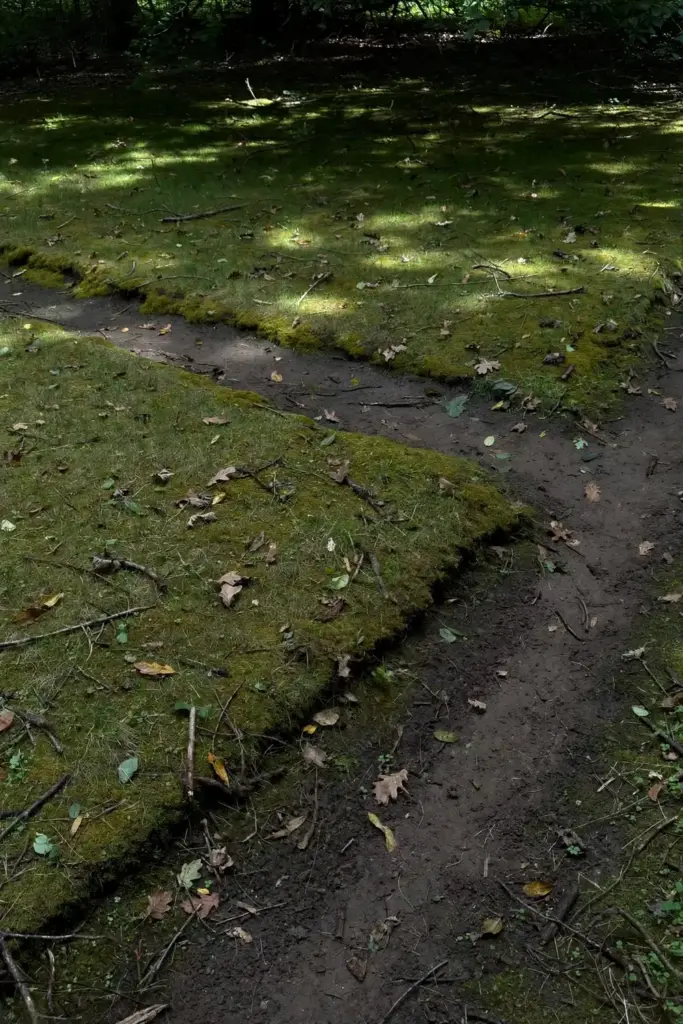
Shade is third. Lawns under heavy tree cover stay wet longer after rain and dew, and they dry slower every morning. Poor drainage and compacted soil are fourth, because standing water and soggy root zones stress the grass and extend every wet period. Dull mower blades are fifth: ragged cuts fray the leaf tips, and every frayed tip is an open wound for spores to enter.
Most melting-out disasters are not bad luck. They are a thick thatch, heavy spring feeding, deep shade, and an evening sprinkler habit arriving together. Fix any two of those and the disease loses most of its power.
Step 1: Decide Whether the Spots Deserve a Fight
The honest first step is a decision, not a purchase. The leaf spot phase is usually cosmetic. Small spots on blades during a cool, wet spring often fade as weather warms and the lawn grows through them, especially if you apply the cultural steps below. Spraying fungicide on cosmetic leaf spot is money spent to speed up what nature was already doing.
Melting out is a different calculation. If the tug test pulls out whole shoots with rotted bases, or you see irregular bare patches spreading, the disease is killing plants, and real effort is justified. In that case the full treatment plan below applies, and a fungicide is worth considering for the curative and protective effect described in Step 6.
One more honest point: a severely melted-out area will not fill back in with the grass you already have. Plan for overseeding in the proper season as part of the recovery, and accept that the worst patches need replacement, not resurrection. Knowing this up front keeps you from spending a whole summer nursing dead crowns.
A realistic helminthosporium leaf spot lawn treatment budget is close to zero for the cosmetic phase. The cultural steps above cost nothing but a Saturday morning. Reserve the fungicide money for a genuine melting-out outbreak, where the product protects something worth saving.
Step 2: Raise Your Mowing Height and Sharpen the Blade
Raise the cutting height one or two notches above your usual setting. Taller grass shades the soil, grows deeper roots, and holds less humidity at the crown, which shortens the daily wetness window. Follow the one-third rule: never remove more than a third of the blade height in a single mow. Scalping a stressed lawn is one of the fastest ways to invite a melting-out outbreak.
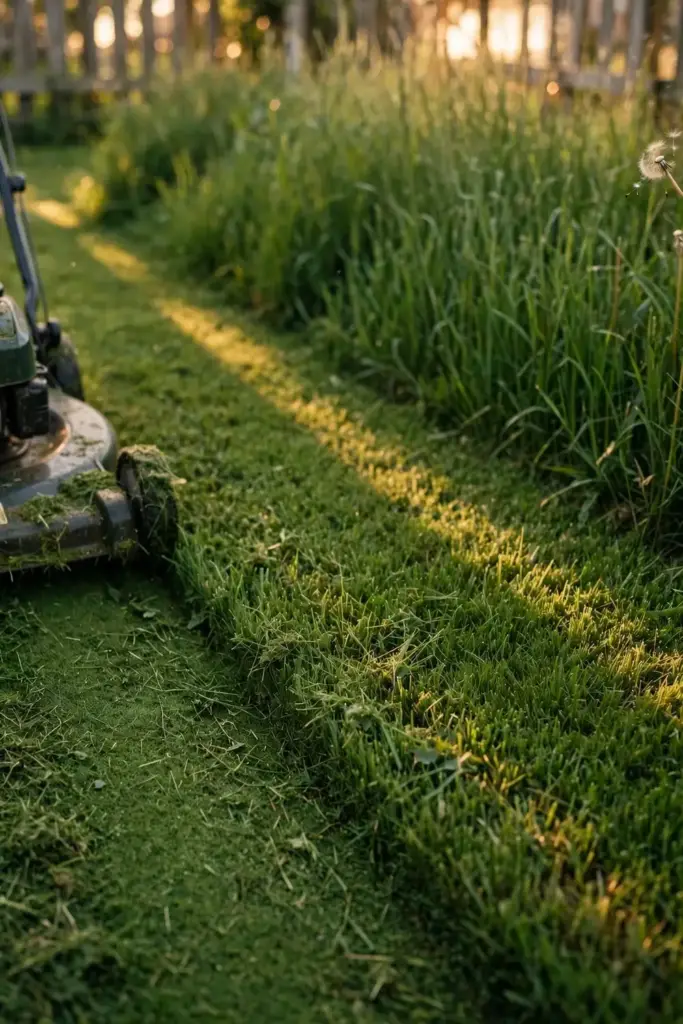
Sharpen the mower blade before you start the treatment plan. A sharp blade cuts cleanly; a dull blade shreds. Shredded leaf tips brown at the edges, lose water faster, and open infection courts across the whole lawn with every pass. If you mow with a rotary mower, expect to sharpen once or twice a season. Reel mowers need their edges checked more often.
Leave the clippings on the lawn unless the disease is severe. Clippings return nitrogen and do not meaningfully spread this disease on a healthy mower. If large areas are actively melting out, bag the clippings until the outbreak passes, then clean the mower deck and wheels, since spores travel on equipment.
Step 3: Water Early So Blades Dry by Midday
Shift all irrigation to the early morning, finishing before the sun climbs high. Morning watering lets the blades dry during the day, breaking the long wet periods the fungi need. This single change often does more than any product on the shelf, and it costs nothing.
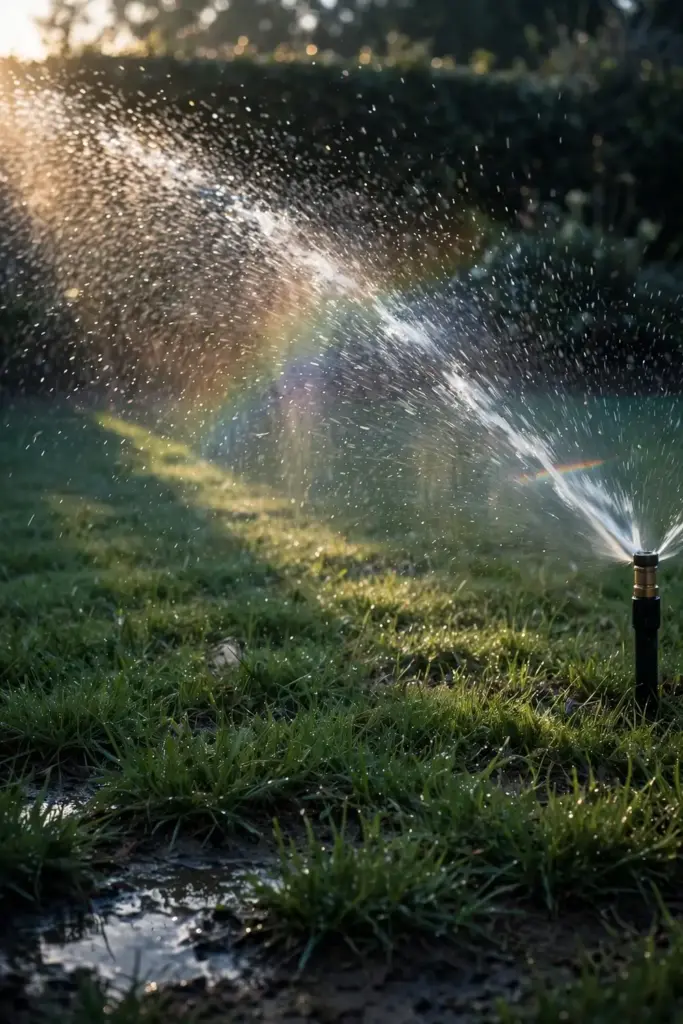
Water deeply and less often rather than lightly and daily. One deep soaking that wets the root zone encourages deep roots; daily sprinkles keep the surface and the crowns constantly damp, which is exactly the nursery the disease wants. Most established lawns do well on about an inch of water per week from rain and irrigation combined, adjusted for your soil type and heat.
Fix the spots where water lingers. Low areas that pond after rain, downspout outlets that dump onto the lawn, and compacted paths that shed water into the turf all extend leaf wetness for hours. A French drain, a dry well, or just regrading a low spot removes the wettest conditions on the lawn, and drainage problems are worth addressing with the long view in our soil health guide.
Step 4: Stop Feeding It Nitrogen for Now
Hold off on nitrogen until the outbreak passes. Excess nitrogen grows the soft, succulent leaf tissue these fungi infect most easily, and the Arkansas pathology materials put the danger line at more than one pound of nitrogen per 1,000 square feet in spring. If you already fed the lawn this spring, the feeding you skipped is now part of the treatment.
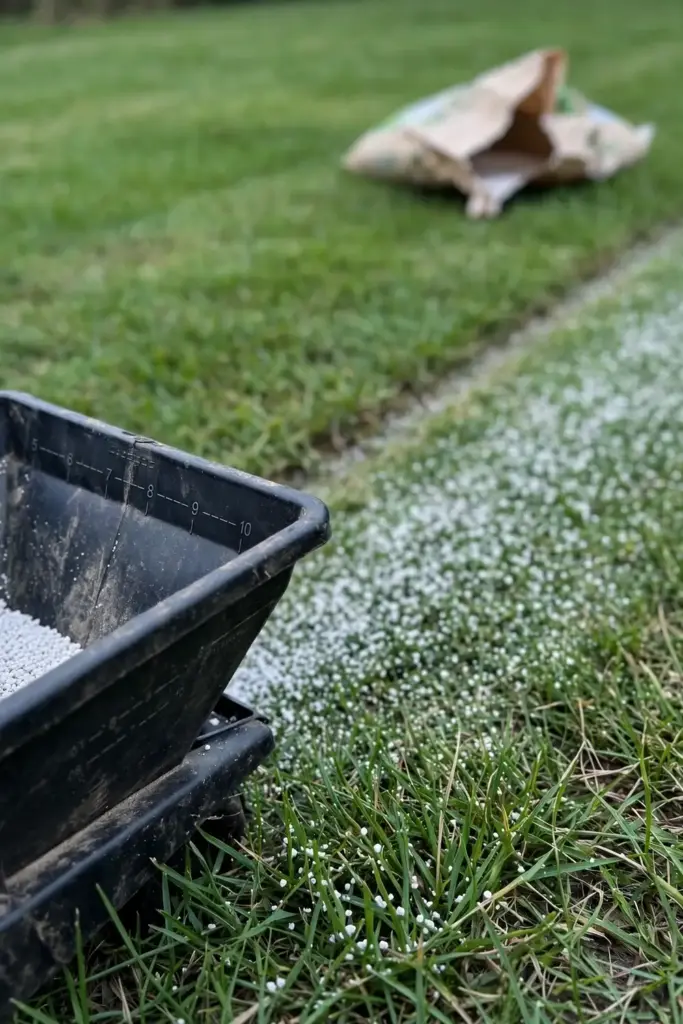
Potassium deserves attention too. Low potassium is listed as a disease-promoting condition in turf pathology references, and a soil test shows whether your lawn is short on it. Get the test before buying fertilizer: a balanced lawn care calendar with proper timing, like our guide to the best time to fertilize your lawn in spring, keeps nutrients working for the grass instead of the fungi.
Slow-release products at modest rates beat heavy quick-release applications in every disease-prone season. If the lawn needs feeding during an outbreak, choose a light, balanced application and skip the extra nitrogen push until the spots are gone and the crowns are sound.
Step 5: Break Up Thatch and Compacted Soil
Measure your thatch. Push a trowel into the lawn and look at the spongy brown layer between the green blades and the soil. Half an inch or less is fine; more than that is a thatch problem, and a thatch problem is a disease problem. Dethatch with a power rake or a dethatching rake in the lawn’s active growing season, and follow with core aeration.
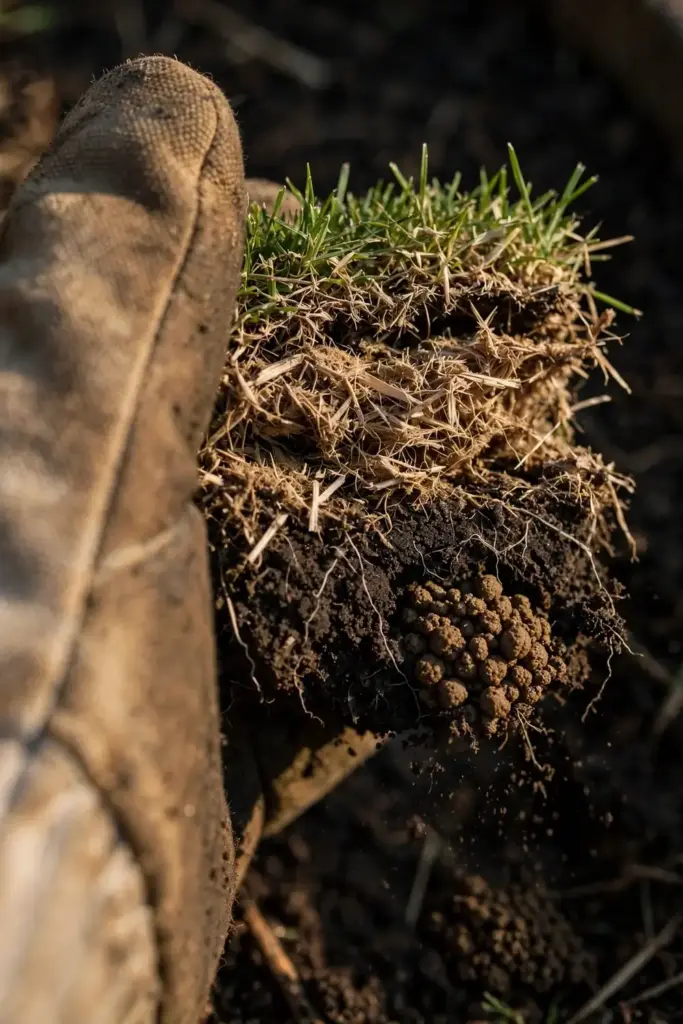
Core aeration does double duty. It relieves compaction, improves drainage, and punches channels through the thatch layer so air and water move down instead of sitting at the crown. Aerate when the grass is actively growing so the holes fill in quickly: fall for cool-season lawns, early summer for warm-season lawns. The NC State Extension guide to leaf spot in turf lists improving drainage and reducing compaction among the core corrective measures.
Top-dress thinly with compost after aeration if the soil is tired. A quarter-inch layer works into the aeration holes and feeds the soil biology that competes with the pathogens. Strong soil is the long game against every lawn disease, and our soil health and pest resistance guide lays out the full foundation approach.
Step 6: Spot-Treat With a Fungicide That Fits
Fungicide is the last step, not the first, and it comes with honest limits. Fungicides containing strobilurins such as azoxystrobin or pyraclostrobin, DMI products such as propiconazole or myclobutanil, or thiophanate-methyl are the classes turf references list for leaf spot diseases. They work best as preventives: they protect new growth and slow the spread, but they do not erase existing spots, and they rarely save crowns that have already rotted.
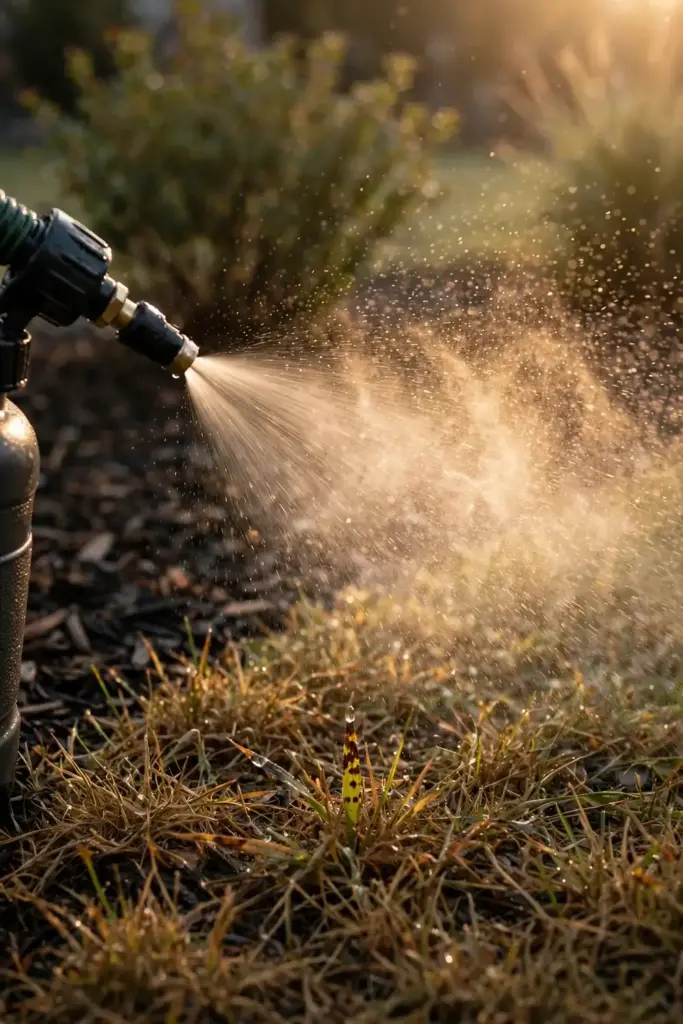
If you spray, spray for melting out, not for cosmetic spots. Target the active margins of thinning patches during a leaf-spot phase before the crown rot advances, or treat early in the season on a lawn that melted out the previous year. Always follow the label exactly: rate, protective equipment, and watering-in instructions are legally binding, not suggestions.
A few cautions worth hearing. Repeated use of one chemistry class selects for resistant fungi, so rotate classes if you spray more than once a season. Keep the treatment off non-target areas, away from water features, and away from blooming plants that bees visit. And remember the sequence: cultural steps first, fungicide as backup. A fungicide sprayed onto a thatchy, overfed, evening-watered lawn is a very expensive placebo.
Living With a Lawn That Already Melted Out
If patches already melted out, stop treating and start rebuilding. Mark the dead areas and plan to overseed or resod in the proper season: fall for cool-season grasses, late spring for warm-season grasses. Trying to seed in the wrong season wastes seed and hands the weeds a head start.
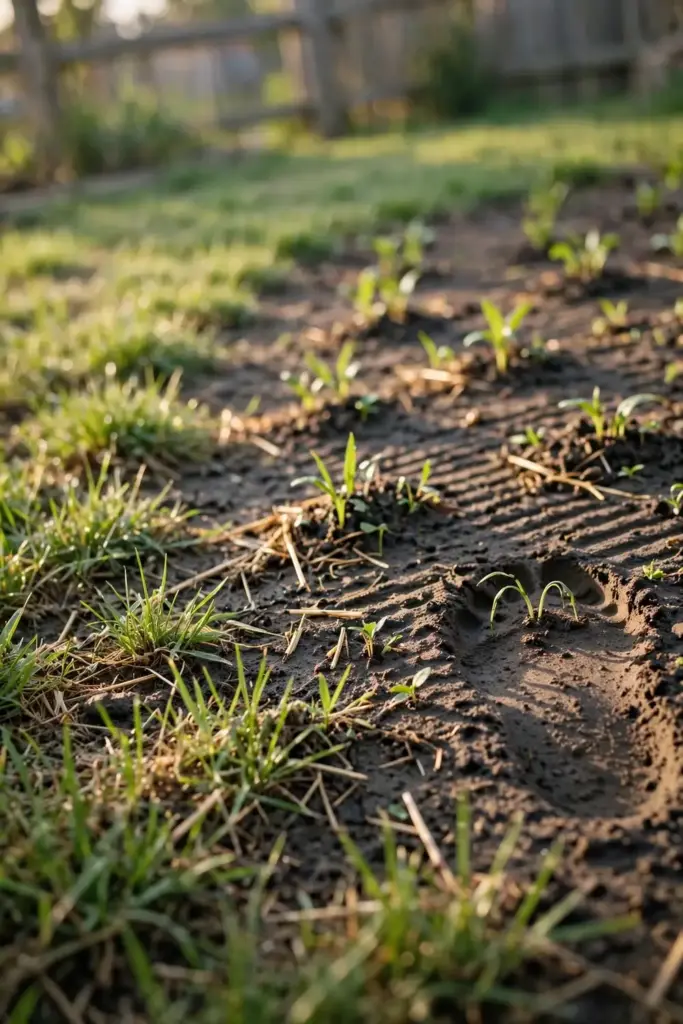
Before seeding, fix the conditions that let the melting out happen. Dethatch, aerate, correct the drainage in low spots, and adjust the irrigation timer to morning watering now, not later. Seed into the corrected lawn, not the sick one. A soil test before seeding tells you what the new grass actually needs.
Keep the survivors healthy. The grass around the dead patches is your recovery crew, and every cultural step described above applies to it double. Mow it tall, water it in the morning, and skip the heavy nitrogen until the new seed is established. A lawn that melts out once and gets its conditions fixed rarely melts out twice in the same way.
Frequently Asked Questions
The leaf spot phase almost never kills a lawn outright; it spots blades and looks ugly for a few weeks. Melting out is the dangerous phase, and it can thin or kill patches of grass when crowns and roots rot. Most lawns recover from leaf spot with cultural care, while melting out demands the full treatment plan and often overseeding afterward.
Yes for routine mowing, with one condition: keep the blade sharp and the deck clean. Spores do travel on mowers and in clippings, but on a lawn with mild leaf spot the risk is small. If large areas are actively melting out, bag the clippings, mow those areas last, and hose off the mower afterward to avoid carrying the disease to healthy sections.
Often, yes, for the cool-season version of the disease. The leaf spot phase thrives in cool, moist spring weather and typically fades as summer heat arrives, though the disease can shift into melting out on warm-season grasses instead. If spots persist into hot weather or patches start thinning, treat it as an active outbreak rather than waiting.
Cultural controls are enough for most home-lawn leaf spot outbreaks: morning watering, taller mowing, nitrogen discipline, and thatch control resolve the majority of cases. Fungicide is worth considering when melting out is active, when a lawn melted out the previous year, or when the lawn has high value and you want preventive protection through the risk season.
Yes, and it is usually the right move for patches that will not recover on their own. Wait for the correct seeding season, fix the thatch, drainage, and watering problems first, then overseed into corrected soil. Seeding into an unchanged lawn repeats the same disease cycle, so treat the reseeding as part of the treatment, not a shortcut around it.
Where to Go From Here
The short version: dark spots with tan centers mean leaf spot, and leaf spot means fix your watering, mowing, and feeding before you buy anything. Do the tug test. If crowns pull out with rotted bases, you are dealing with melting out, and the full plan plus a fungicide option applies.
For a deeper reference on the biology and the extension-approved management, the NC State Extension guide to leaf spot in turf covers symptoms and control in detail. The Texas Plant Disease Handbook entry on Bipolaris, Drechslera, and Exserohilum leaf spot, crown, and root rot adds warm-season perspective and the cultural measures that back every recommendation above.
Start today with the two moves that cost nothing: water only in the morning, and raise the mower a notch. A lawn that dries by midday and grows at full height is a lawn these fungi mostly leave alone.