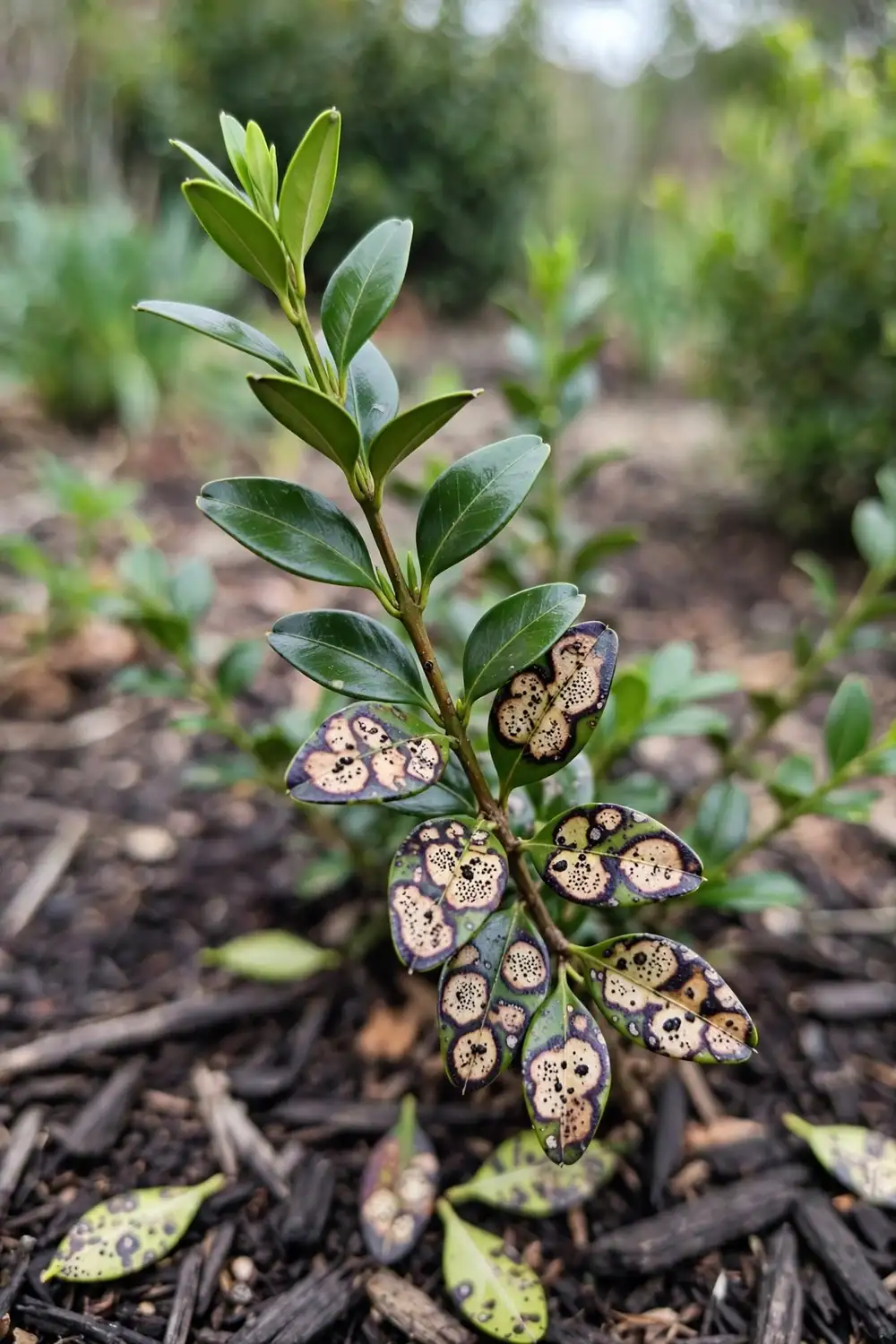

Brown spots about a quarter inch across, ringed in purple or black, on your boxwood or hydrangea leaves are most likely Phyllosticta leaf spot. Here is the honest news first: on established shrubs this fungal disease is cosmetic, and a spotted leaf stays spotted until it drops in winter no matter what you spray. Treatment only protects new growth, so in most home gardens cleanup and watering changes beat any spray bottle.
Phyllosticta leaf spot is a fungal disease that marks the leaves of ornamental shrubs with tan to brown spots ringed in purple or black. Each spot often carries tiny black dots at its center. The fungus spreads by rain splash, survives winter in fallen leaves, and favors cool, wet weather. It shows up on boxwood, hydrangea, maple, azalea, holly, mountain laurel, orchids, and more than a dozen other ornamentals.
This guide ranks the seven treatments that actually work, from the free cultural fixes that matter most to the fungicide options for severe cases. You will also learn how to tell Phyllosticta apart from the lookalike leaf spot diseases that deserve your worry, including boxwood blight.
What Phyllosticta Leaf Spot Actually Is
Phyllosticta leaf spot is a foliar disease caused by fungi in the genus Phyllosticta, true fungi in the Ascomycota group. Different species attack different hosts. Phyllosticta minima marks maples, Phyllosticta kalmicola marks mountain laurel, and other species mark boxwood, hydrangea, azalea, holly, and orchids. The name changes with the host, but the disease behaves the same way everywhere.
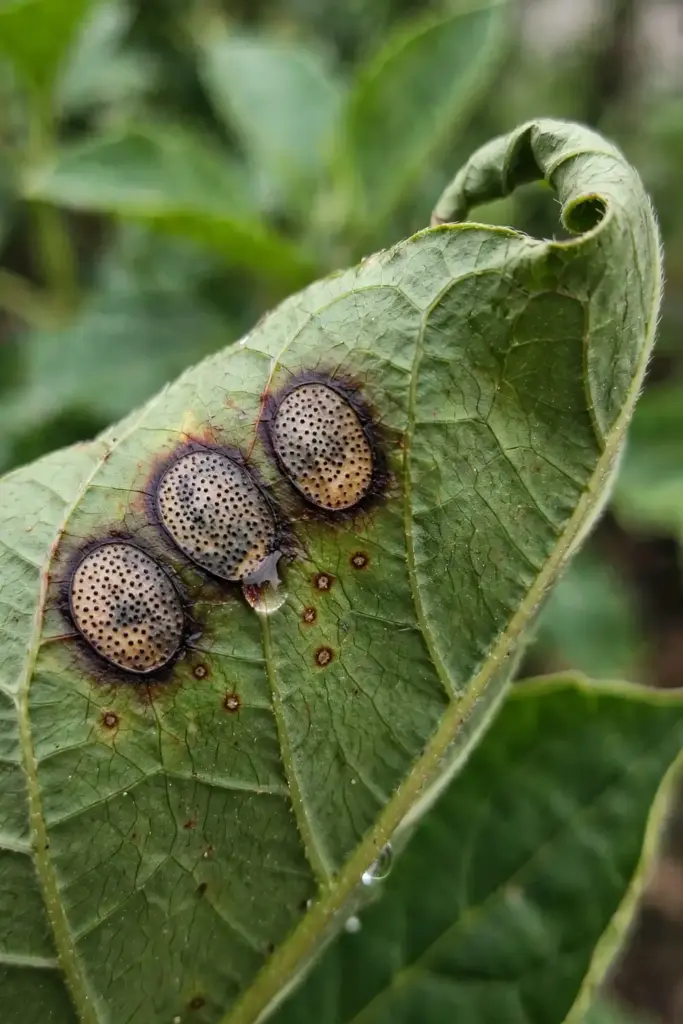
The fungus lives on leaf surfaces and in fallen leaf litter. Tiny black fruiting bodies called pycnidia form in the centers of older spots. Each pycnidium holds thousands of spores. Rain and overhead watering splash those spores onto healthy leaves, where new infections start. The cycle repeats through the growing season, then the fungus settles into fallen leaves to survive the winter.
Cool, moist conditions favor the disease. A disease database in New Zealand describes Phyllosticta leaf spots as round to irregular silvery spots up to 5 millimeters across with reddish to purple borders, worst under crowded, shaded, and excessively moist conditions. Cornell University’s field crop pathologists call the soybean form an uncommon disease of low economic importance that needs no management recommendations. The ornamental form matters more to gardeners because the spots are ugly, not because the plants are in danger.
How to Spot Phyllosticta on Boxwood and Holly Leaves
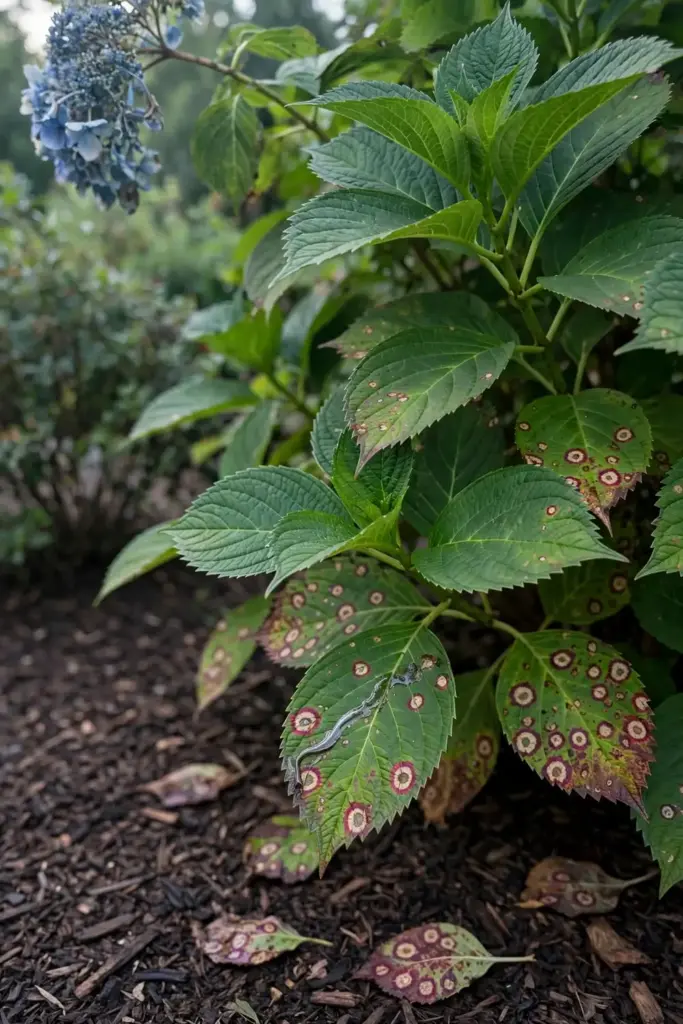
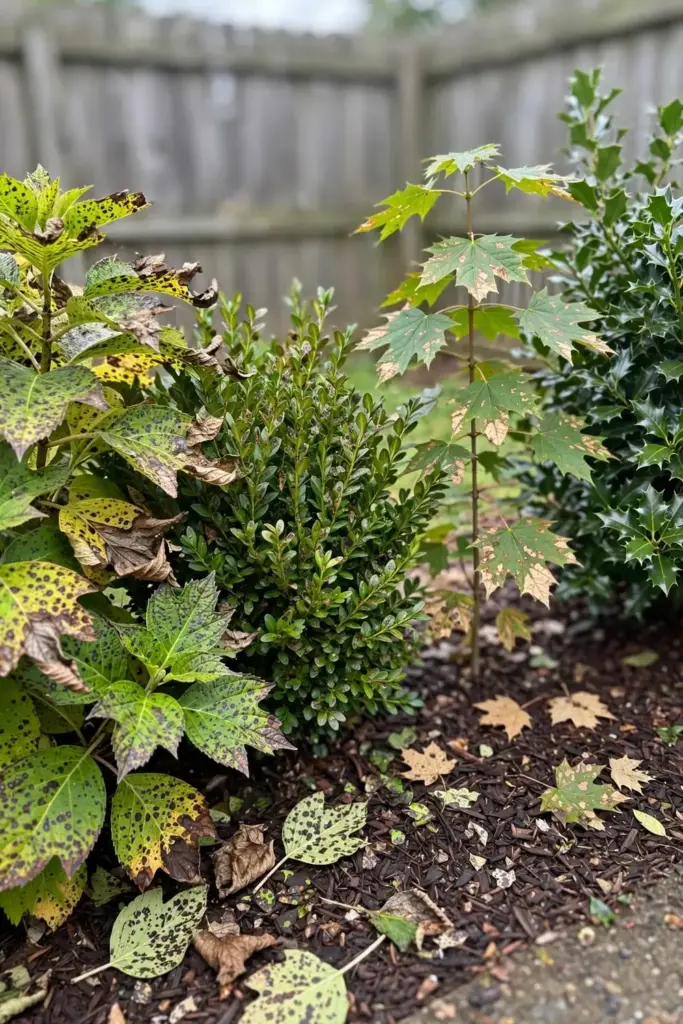
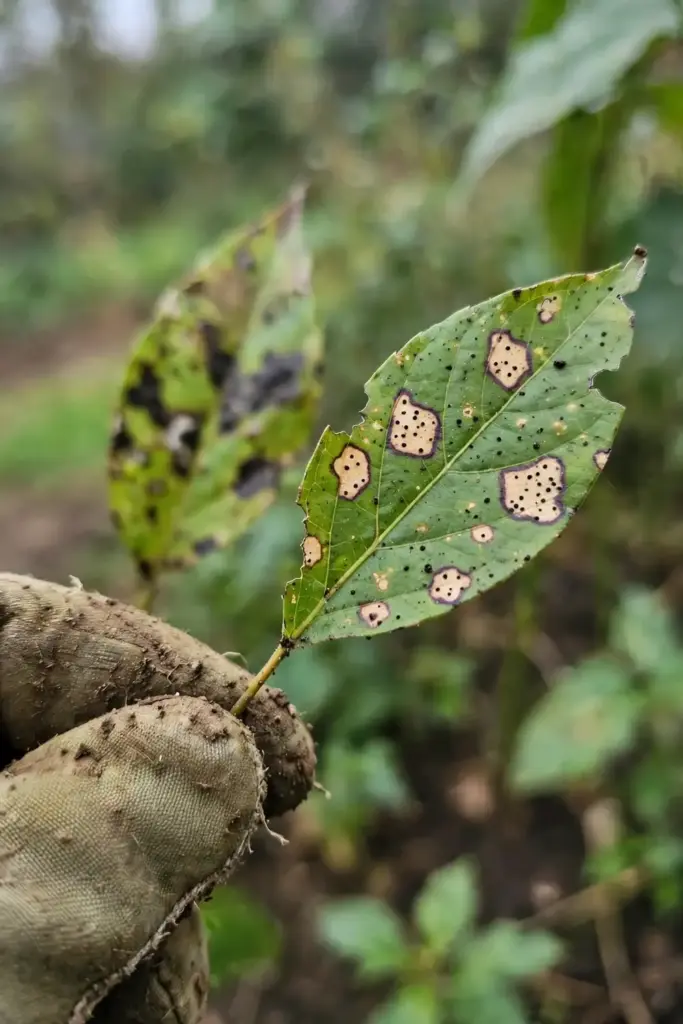
Look for small, round to irregular tan or brown spots on the leaves, usually starting on the lower, inner canopy where foliage stays damp longest. The spots carry a dark purple or black border, and as they age, tiny black dots appear in the center. Those dots are the pycnidia, the spore factories. Under a magnifying glass they look like pinprick-sized bumps. That center-dot pattern is your best field clue.
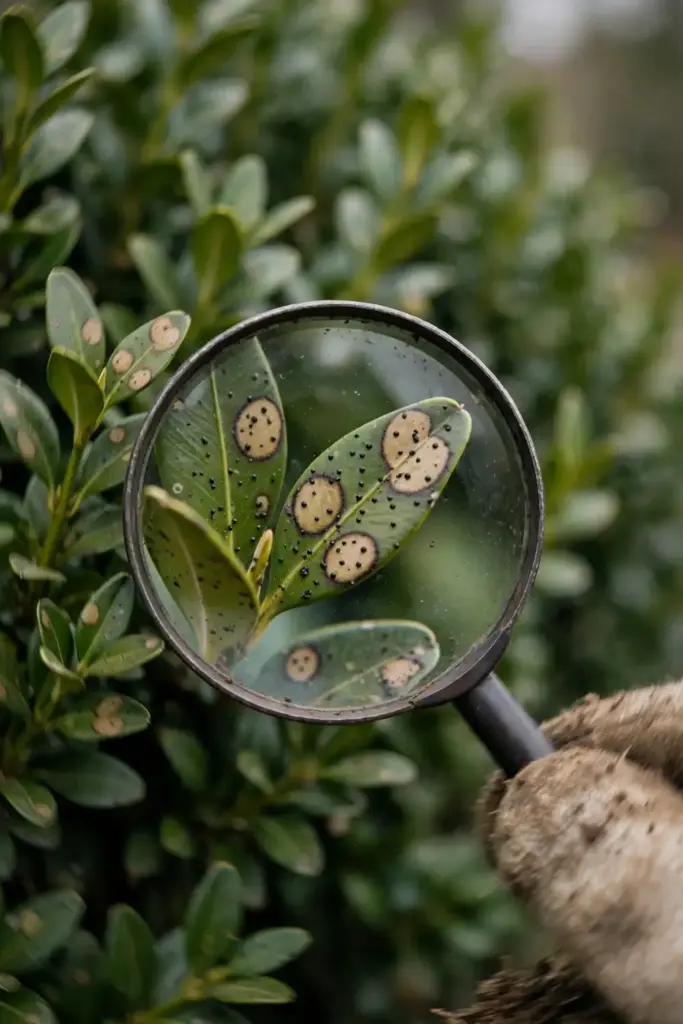
On boxwood the spots rarely merge into large dead areas. Heavily spotted leaves may yellow and drop, but the shrub pushes new growth and fills back in. Stems stay clean. That last detail matters enormously, because the disease that strips boxwood bare and blackens its stems is not Phyllosticta. If you see dark streaks running along the stems plus rapid leaf drop, stop reading this guide and look up boxwood blight instead. Boxwood blight, caused by the fungus Calonectria pseudonaviculata, defoliates shrubs fast and can kill them. Phyllosticta does neither.
On holly the pattern is similar: scattered round spots with dark margins, pycnidia in the centers of old spots, worst on lower leaves. Holly leaves are thick and glossy, so the spots read as small dark blemishes rather than the tan patches you see on maple. The shrub keeps its overall shape and vigor.
How to Spot Phyllosticta on Hydrangea and Maple Leaves
On bigleaf hydrangea, the spots begin as small dark dots that expand into circular tan lesions with reddish-purple borders. They scatter across the leaf blade, sometimes dozens per leaf in a wet year. Lower leaves go first, then the damage climbs. University of Georgia Extension notes that spotted leaves stay spotted until they fall in winter, whether or not you spray. That single fact should reset your expectations: treatment protects new leaves, it never repairs old ones.
On maple, Phyllosticta minima creates tan, oval lesions about one quarter inch across, ringed in purple or black, with the characteristic black pycnidia dots in the middle. The disease is described on Wikipedia’s plant pathology pages as a largely cosmetic disease of maple. Leaves may look ragged by August in a wet season, yet the tree’s health barely notices. Tar spot, a different maple disease, makes much larger black raised blotches without the purple ring, so the two are easy to separate once you know the pattern.
On orchids, the American Orchid Society flags Phyllosticta as a leaf spotter of Cattleya and related genera, with dark lesions that can expand in humid greenhouse conditions. Orchid growers get one of the few cases where treatment actually pays, because spotted blooms and foliage ruin the plant’s whole point.
Which Ornamentals Get Hit Hardest
Not every host suffers equally. Susceptibility tracks with leaf thinness, canopy density, and how long foliage stays wet after rain.
| Host | How Badly It Gets Hit | Why |
|---|---|---|
| Bigleaf hydrangea | High | Thin leaves, dense canopy, holds water; popular varieties stressed by too much sun get hit harder |
| Boxwood | Moderate | Dense interior canopy traps humidity; lower inner leaves spot first |
| Maple (landscape) | Moderate | Widespread but largely cosmetic; wet springs bring the worst years |
| Azalea and rhododendron | Moderate | UConn’s Soil Plant and Pest Center lists both as regular hosts |
| Holly | Low to moderate | Thick glossy leaves resist; spots stay scattered |
| Mountain laurel | Low to moderate | Phyllosticta kalmicola causes silvery spots with purple borders; worst in crowded shade |
| Orchids | Low in homes, higher in greenhouses | Humid greenhouse air lets lesions expand; household orchids rarely see it |
Bigleaf hydrangea earns the top slot because the combination of thin leaves and a dense crown holds moisture exactly where the fungus wants it. A Tennessee State University study found several bigleaf cultivars resistant to leaf spot diseases in both sun and shade, including Ami Pasquier, Ayesha, Blue Bird, Forever Pink, Fuji Waterfall, Seafoam, and Veitchii. If you are planting new hydrangeas and leaf spot has been a yearly headache, those names are worth carrying to the nursery.
Young plants suffer more than established ones. University of Georgia Extension advises that spraying may be worth the effort on young plants as a protective measure, while older plants generally tolerate the disease. A newly planted boxwood hedge with thin root systems and dense nursery-grown foliage is the classic severe case. A ten-year-old hydrangea in the same yard shrugs it off.
Phyllosticta vs Entomosporium vs Bacterial Leaf Spot vs Sunscald
Four problems make spots on ornamental leaves, and they ask for different responses. Use this table before you spend a dollar on treatment.
| Feature | Phyllosticta | Entomosporium | Bacterial Leaf Spot | Sunscald |
|---|---|---|---|---|
| Cause | Fungus (Phyllosticta spp.) | Fungus (Entomosporium) | Bacteria (Xanthomonas, Pseudomonas) | Environmental (sun + heat) |
| Spot look | Tan to brown spots with purple or black borders; black pycnidia dots in centers | Gray-brown spots with darker margins, often with tiny black dots too | Water-soaked spots that turn brown or black; often angular, following leaf veins | Pale bleached patches on sun-exposed leaves; no border, no dots |
| Center dots | Yes, pycnidia in old spots | Yes, similar fruiting bodies | No fruiting bodies; may ooze in wet weather | Never |
| Worst conditions | Cool, wet, splashy | Cool, wet spring | Warm, wet; overhead watering | Hot sun after cloudy stretch; reflected heat |
| Defoliation risk | Low | Moderate on hawthorn and photinia | Moderate | None (leaf stays, just bleached) |
| Fungicide helps? | Rarely needed; protectants only | Sometimes on high-value plants | No, fungicides do not touch bacteria; copper helps limit spread | No chemical helps; shade and water do |
| Home fix | Sanitation + airflow | Sanitation + resistant varieties | Remove infected leaves, stop overhead water | Move or shade the plant |
The trickiest pair is Phyllosticta and Entomosporium, because both make bordered spots with black dots. Entomosporium leans toward hawthorn, photinia, and loquat and hits in cool spring weather, while Phyllosticta ranges wider across ornamentals. When in doubt, your local Cooperative Extension office can confirm the diagnosis from a sample, and proper identification matters because fungicide choices differ.
The bacterial column deserves emphasis: no fungicide on the shelf touches bacterial leaf spot. Copper-based products can limit bacterial spread in late spring, but they will not cure infected tissue. Spraying a fungicide on a bacterial problem wastes money and time.
And one emergency rule for boxwood owners: if spots come with black stem streaks and fast leaf drop, you are not looking at Phyllosticta. Boxwood blight defoliates within days under warm humid conditions and its spores persist in leaf debris for years. That diagnosis needs immediate sanitation, not the relaxed schedule below.
Why Rain Splash Drives This Disease
Every management decision here traces back to one mechanism: the fungus moves on water. Pycnidia in old spots release spores, and those spores travel only as far as a water droplet carries them. Rain hits an infected leaf, droplets bounce, and the spores land on the leaf below or beside it. Overhead sprinklers do the same job. Wind alone moves almost nothing.
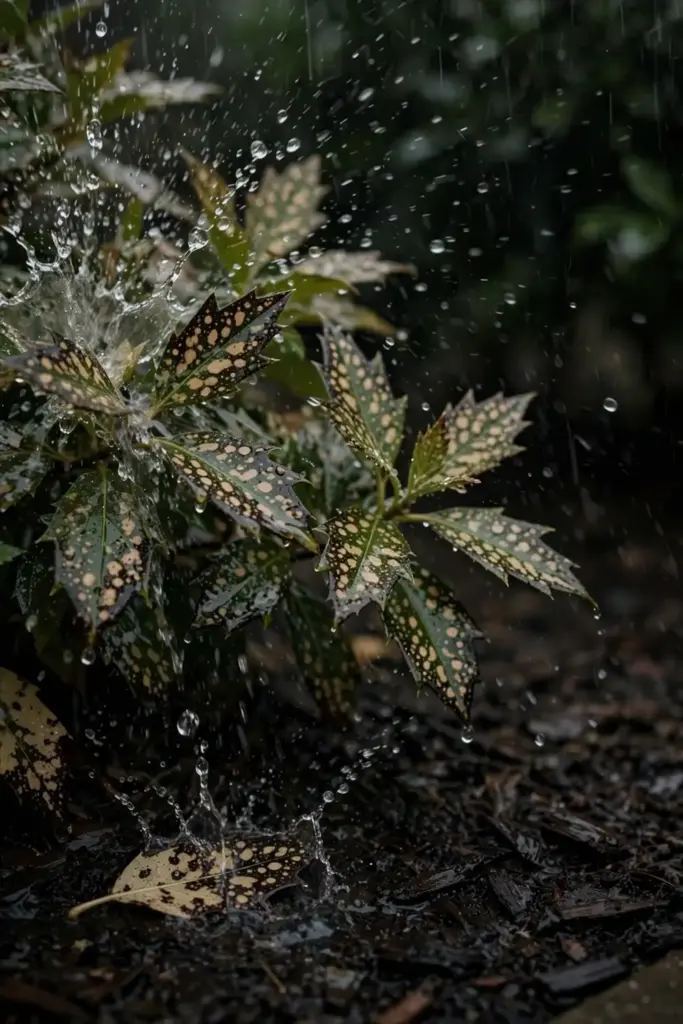
That is why the disease always starts low and climbs. Lower leaves catch the splash from infected litter on the ground. The upper canopy stays cleaner until rain is heavy enough to wash spores upward through the foliage. It is also why the disease explodes in wet years and nearly vanishes in dry ones. Some years will be worse than others depending on the weather, as University of Georgia Extension puts it.
The fungus overwinters as spores in fallen leaves. Spring rain wakes them up. New infections need extended leaf wetness, so a leaf that dries within a few hours of sunrise mostly escapes. Everything in the treatment steps below either removes the spore source, shortens leaf wetness, or shields new leaves before spores arrive.
What Makes Phyllosticta Worse in a Home Garden
Certain garden habits roll out the red carpet for this fungus. Check how many of these sound familiar.
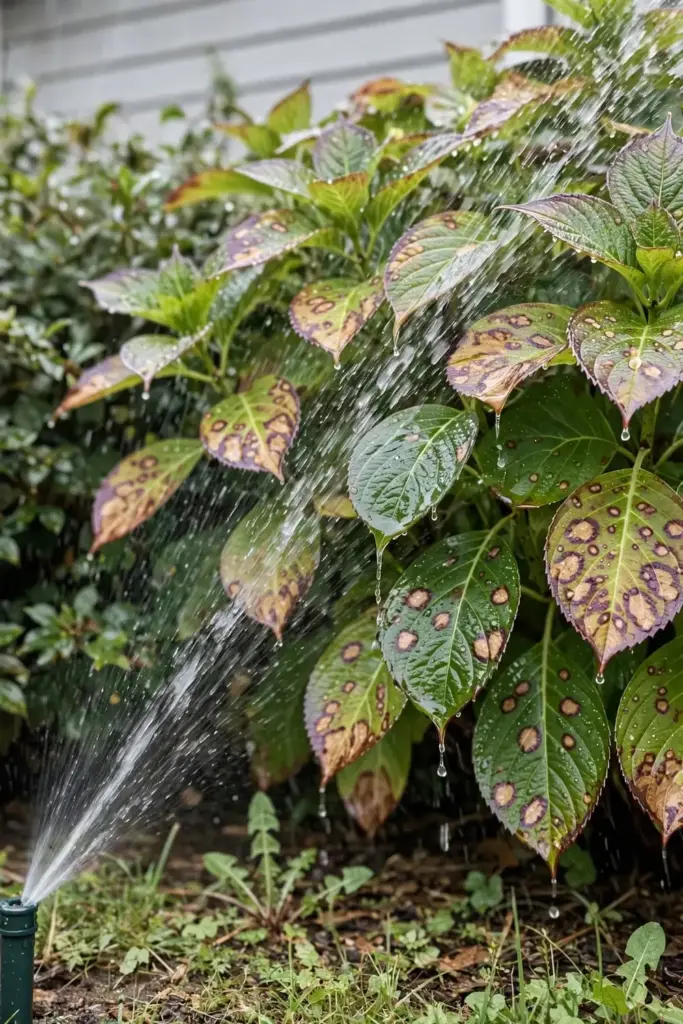
Overhead irrigation is the biggest one. A lawn sprinkler that clips the hydrangeas every morning keeps foliage wet through the heat of the day and splashes spores with every cycle. Drip irrigation or soaker hoses at the soil line remove the problem entirely.
Crowded planting comes second. Shrubs packed tight hold humidity in their interiors and block the drying breeze. The interior leaves of a sheared boxwood hedge can stay damp for a full day after rain while the outer surface dries in an hour.
Fallen leaf litter is the winter nursery. Spores survive in dead leaves under the shrub, so every spring starts with the inoculum sitting right below the new growth. Gardens where autumn cleanup is thorough start each season with a fraction of the pressure.
Late-day watering extends leaf wetness into the night, when cool air slows drying to a crawl. Morning watering gives the sun a full day to dry the canopy.
Excess nitrogen pushes soft, succulent growth with thinner cell walls. Heavy spring feeding on an already susceptible hydrangea grows the exact tissue the fungus colonizes fastest.
Shade plus still air is the microclimate trifecta. A north-facing bed under a dense tree canopy, never thinned, holds morning dew until noon. That is Phyllosticta weather even on a dry week.
Step 1: Decide Whether Treatment Is Actually Worth It
Here is the cost-benefit call most guides skip. On established boxwood, holly, azalea, maple, and mature hydrangea, Phyllosticta leaf spot is cosmetic. The plant will not die. The spots will not spread to your vegetables. Next spring brings clean leaves. Sanitation and watering fixes, which cost nothing, handle the visible problem well enough for most gardens.
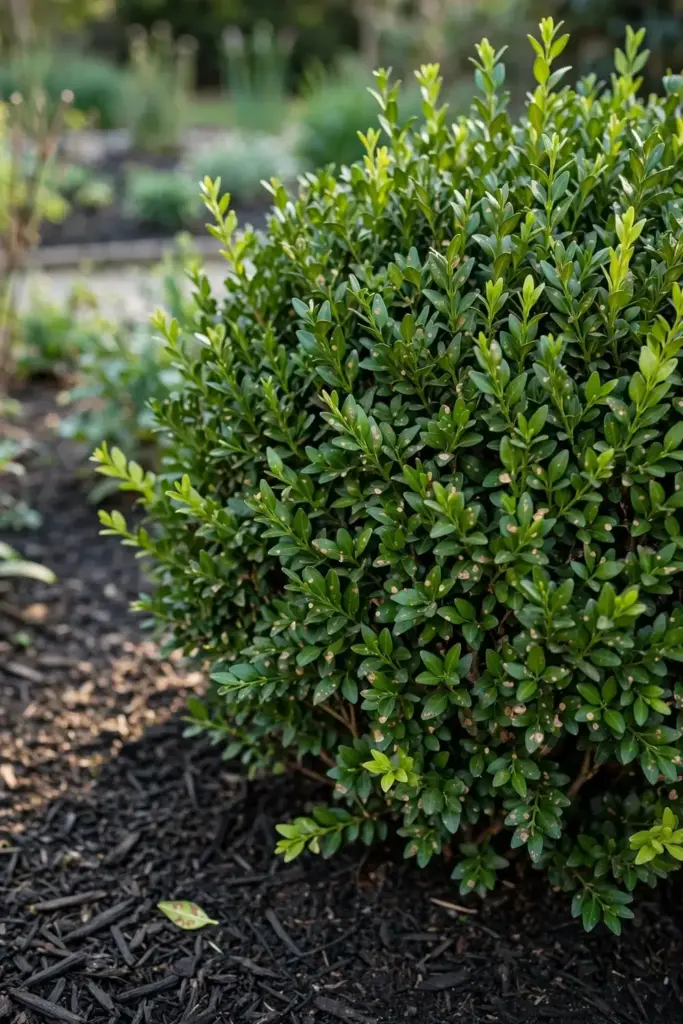
Treatment earns its effort in four cases. The plant is young and still building its canopy, so every leaf matters. The plant is an orchid or a show specimen where foliage appearance is the entire point. The shrub defoliates heavily two years running, which weakens it and invites secondary problems. Or you cannot stand the look, which is a legitimate reason as long as you know what you are buying.
If none of those apply, skip to Step 2 and Step 3, do the free work, and spend your garden budget elsewhere. If one applies, work the full list.
Step 2: Clean Up Every Fallen Leaf
Sanitation is the highest-impact free treatment. The fungus overwinters in dead leaves, so removing them removes next spring’s starting inoculum. Rake up and destroy all fallen, infected leaf litter beneath your shrubs. Bag it for municipal pickup or trash it. Do not add infected leaves to a home compost pile, because backyard piles rarely get hot enough to kill fungal spores, and you would be spreading the problem with your own compost.
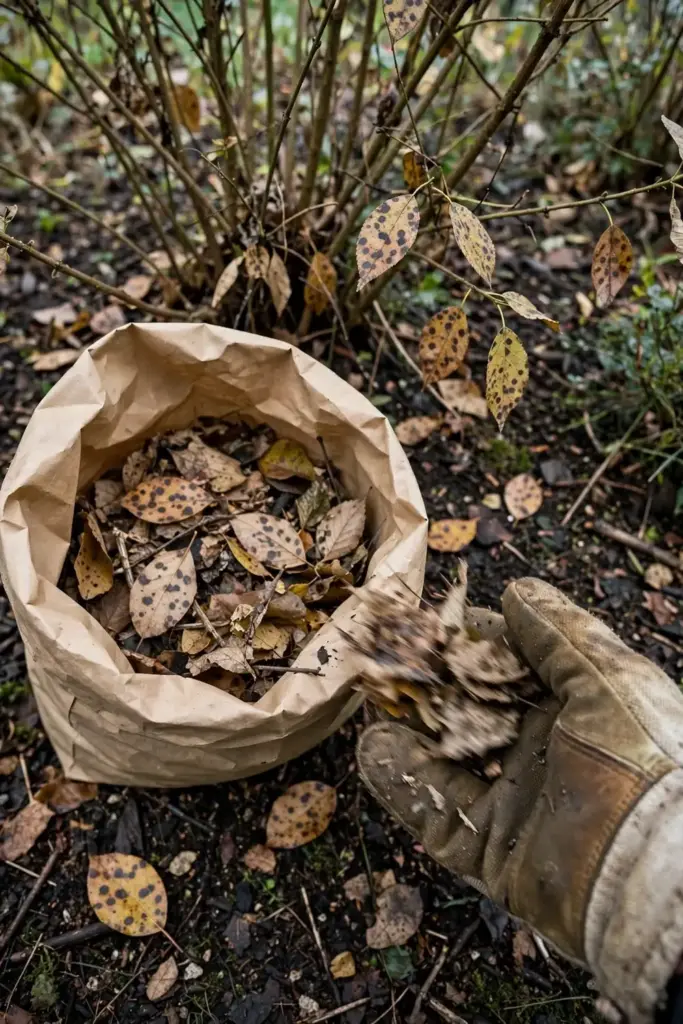
Do this cleanup in autumn after leaf drop and again in early spring before bud break. North Carolina State Extension’s Lee County Center lists sanitation as the first step in its leaf spot playbook, ahead of every other measure. While you are under the shrub, pick off any spotted leaves still clinging to lower branches. Infected leaves can be removed at any time during the season to slow the spread.
Mulch helps after cleanup. A two to three inch layer of clean mulch covers any spores you missed and breaks the splash path from soil to lower leaves. Keep mulch pulled back a few inches from stems so bark stays dry.
Step 3: Open the Canopy for Airflow and Fast Drying
Prune to let air move through the shrub and sunlight reach the interior. Thin out crowded branches, remove crossing stems, and lift the lowest branches a few inches off the ground so splash has farther to travel. The goal is foliage that dries within a few hours of morning sun.
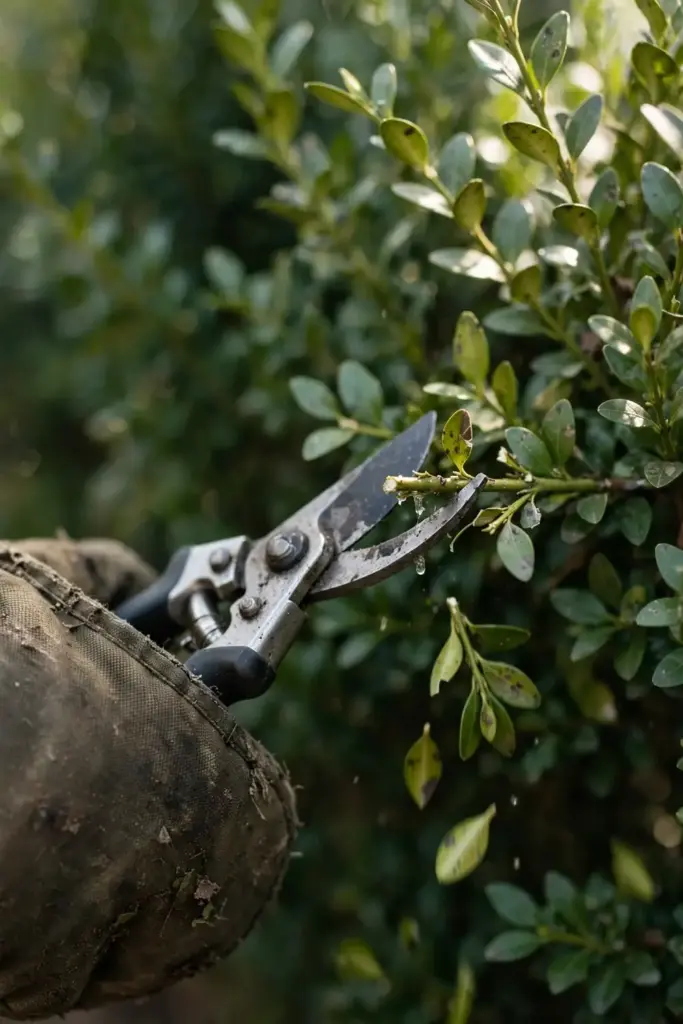
For boxwood, thin rather than shear. Shearing seals the outer surface into a shell that traps humidity inside, which is exactly the microclimate Phyllosticta loves. Hand-thinning opens windows through the canopy, and spring pruning techniques for ornamental shrubs show which cuts to make first. For hydrangea, remove the weakest interior stems at the base each spring and deadhead spent blooms so air circulates around the remaining foliage.
Space matters at planting time too. If you are adding new shrubs, give them their mature width plus a little extra, following the spacing and soil prep in our guide to planting shrubs in fall. A hedge planted at its final spacing from day one never develops the damp interior that feeds this disease.
Sanitize your tools as you prune. North Carolina State Extension’s leaf spot playbook compares shared pruners to a shared hypodermic needle and recommends wiping blades with rubbing alcohol of at least 60 percent between cuts. A diseased branch cut followed by a healthy branch cut can move spores directly into a fresh wound.
Step 4: Change How You Water
Switch ornamental beds from overhead sprinklers to drip irrigation or soaker hoses. Water lands on soil, not leaves, and the splash cycle that drives this disease never starts. If your lawn irrigation clips the shrubs, adjust the heads or add a drip zone for the bed.
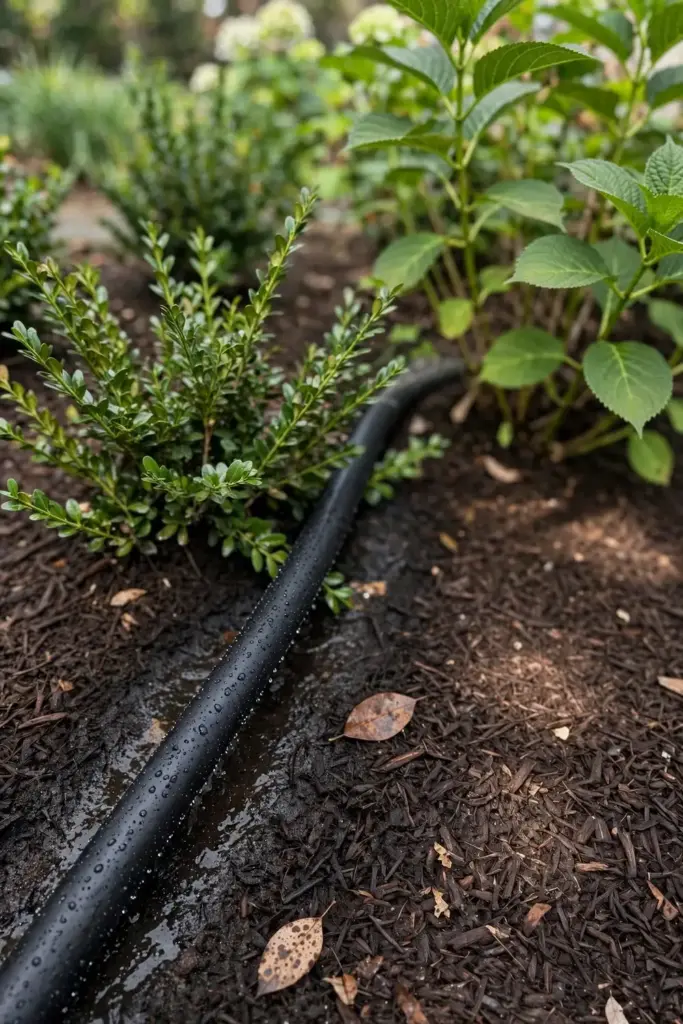
When you must water from above, do it early in the morning. Leaves that get wet at dawn dry as the sun rises. Leaves watered at dusk stay wet all night, and night wetness is when infections take hold. Water plants early in the morning to allow the leaves to dry more quickly as the sun rises, in the words of University of Georgia Extension.
Water deeply and less often rather than shallowly every day. Deep watering grows deeper roots and keeps the surface, where spores sit, drier between cycles. Mulch, from Step 2, stretches the interval further.
Step 5: Feed Lightly and at the Right Time
Heavy nitrogen grows soft foliage that the fungus colonizes easily. Cut spring feeding back to a moderate, balanced application and skip the midsummer nitrogen push on susceptible shrubs. A soil test every few years beats guessing, and most established ornamentals need less fertilizer than their owners think.
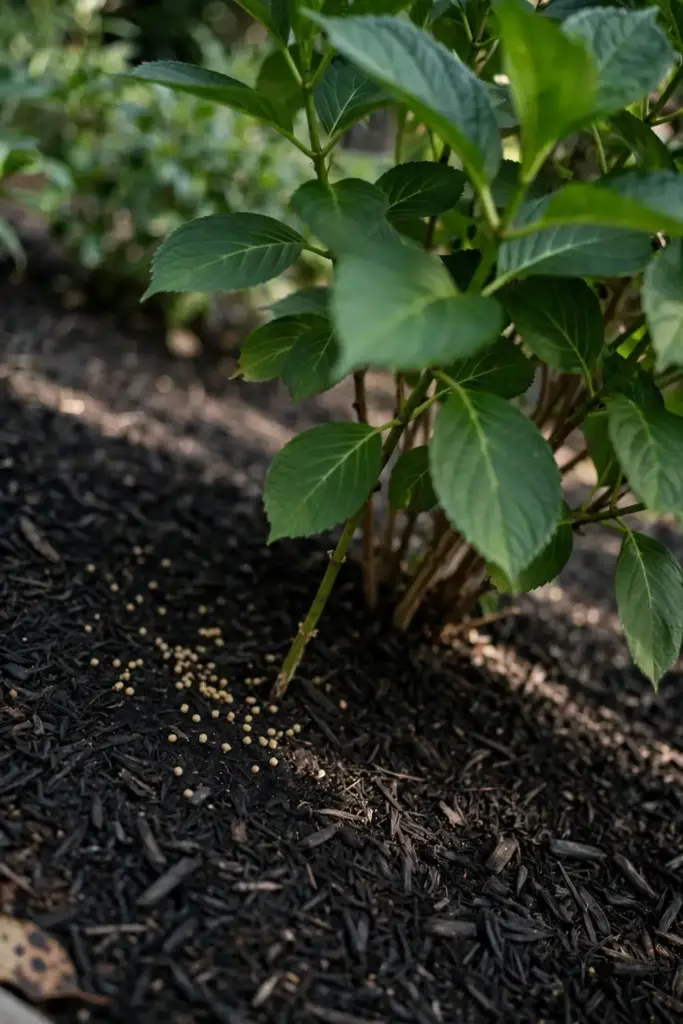
For hydrangeas showing yearly leaf spot, light feeding with a balanced slow-release product in early spring supports clean new growth without the succulent flush. Avoid fertilizing stressed, heavily spotted plants in late summer, which pushes tender growth into the season when spores are most active.
Step 6: Use Fungicides Only as Prevention, and Only When Warranted
Fungicides protect new leaves. They never repair spotted ones. That rule decides everything about spray programs. If your situation from Step 1 does not justify spraying, skip this step entirely.
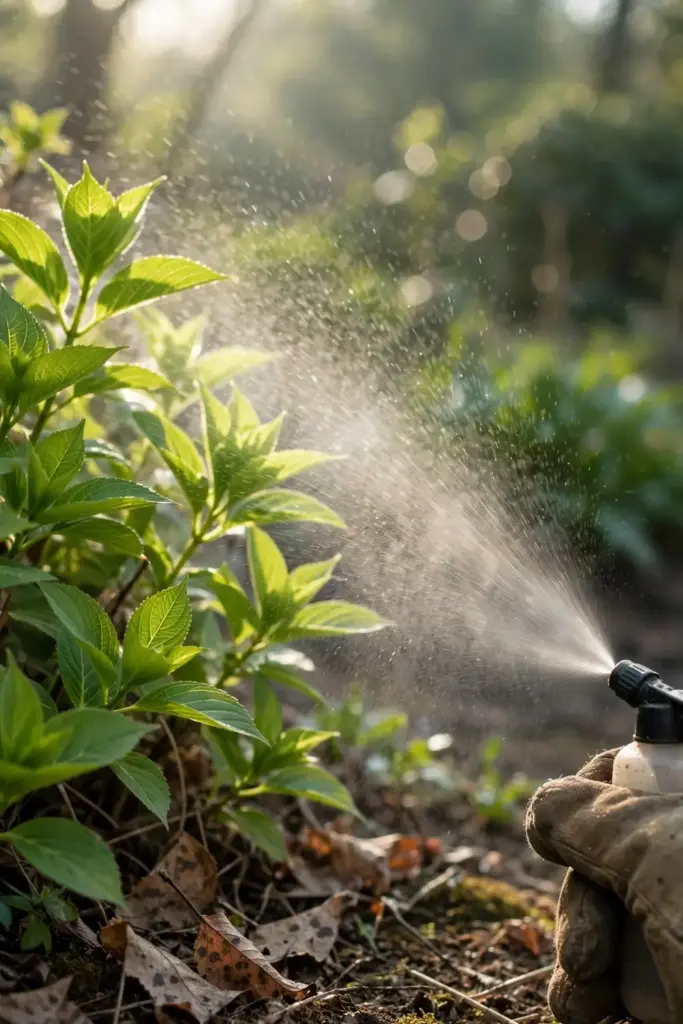
For the cases that do justify it, University of Georgia Extension names the homeowner actives with the best track record against hydrangea leaf spots: chlorothalonil, mancozeb, and thiophanate-methyl, with myclobutanil also listed in extension guidance. Begin applications when new leaves emerge in spring, before the first spots appear, and reapply every 10 to 14 days through the wettest part of the season, always following the label for rates and safety.
Rotate active ingredients rather than spraying the same product all season. Fungi develop resistance to single-site products, and rotation is the standard resistance management practice. Cover leaf undersides as well as tops, because spores land everywhere.
Spraying on a calendar you will not keep is worse than not spraying. A protectant program works only with thorough, repeated coverage. Two enthusiastic sprays in May followed by nothing in June buys almost nothing. Be honest about your follow-through before you buy the product.
Neem oil and other home remedies come up constantly in related searches. They can suppress mild foliar disease and fit an organic program, but no extension trial puts them in the same class as the labeled protectants for this disease. Treat them as a supplement to sanitation, not a replacement for it.
Step 7: Prevent Next Year’s Outbreak Starting This Fall
Prevention is a year-round habit, not a spring panic. Fold these into your normal garden calendar.
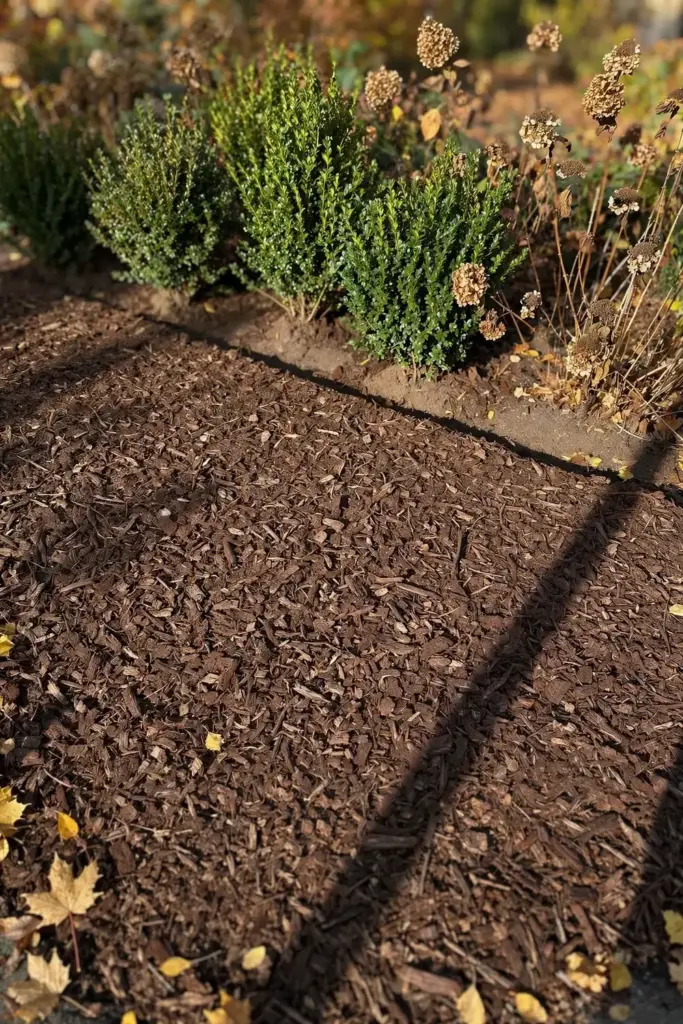
In autumn, finish the leaf cleanup from Step 2 and cut back herbaceous perennials near susceptible shrubs so winter debris does not pile up. In late winter, do the thinning prune from Step 3 while the shrub is dormant and you can see its structure. In early spring, lay fresh mulch before bud break to seal the soil surface.
At bud break on shrubs that were hit hard last year, you have a choice. Start the protectant spray program from Step 6 on the newly emerging leaves, or commit to the cultural program and watch. Wisconsin horticulture guidance describes three key spray timings for ornamental foliage diseases: bud break, half-expanded leaves, and fully expanded leaves. Those timings exist because young expanding tissue is the most vulnerable.
When buying new plants, choose resistant varieties where they exist. The Tennessee State University hydrangea trial names carry weight here, and nurseries increasingly label disease resistance on tags. A resistant cultivar in the right spot, meaning morning sun and good air movement, may never need a spray in its life.
Living With Leaves That Are Already Spotted
If you are reading this in August with a spotted hydrangea, the season is mostly decided. Spotted leaves will stay spotted until they drop. That is not failure. That is the disease.
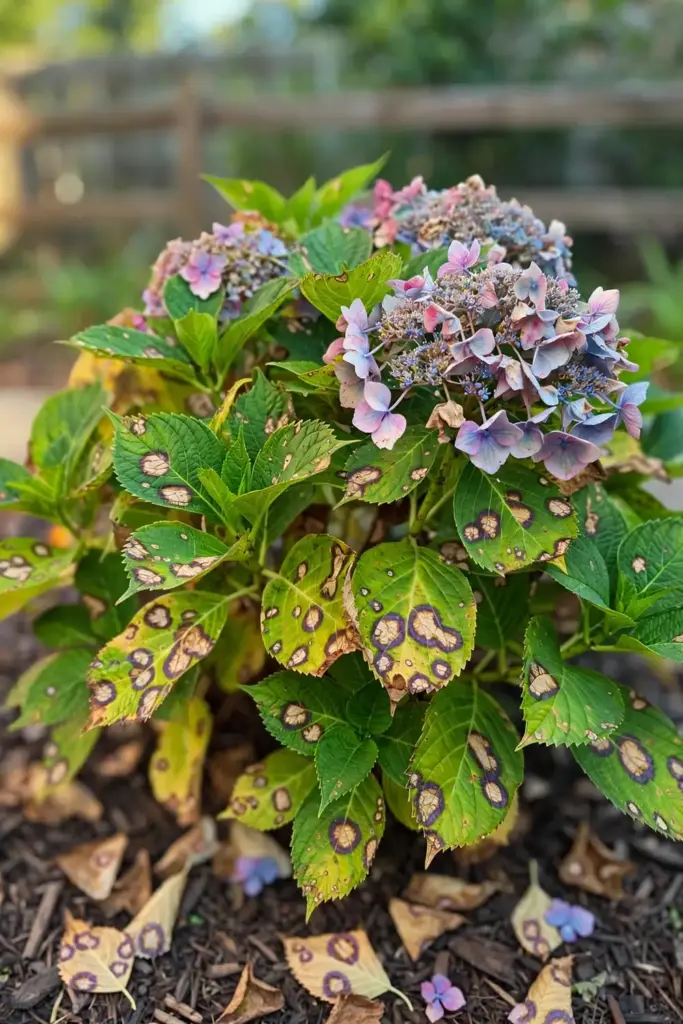
What you can still do: keep up the sanitation, picking off the worst leaves and clearing litter so next year starts cleaner. Keep watering at the soil line. Do not defoliate the shrub trying to “clean” it, because the remaining leaves are still photosynthesizing and feeding next year’s buds. A hydrangea that looks rough in August can bloom beautifully the following June.
Resist the urge to spray in late summer. Protectant fungicides applied after the canopy is fully spotted protect nothing, because there is no clean new growth left to protect. Save the product and the effort for spring.
Watch for the one escalation that matters. If a boxwood starts dropping leaves rapidly while stems develop black streaks, that is the boxwood blight pattern, not Phyllosticta, and it needs immediate action. Everything else about this disease rewards patience.
Frequently Asked Questions
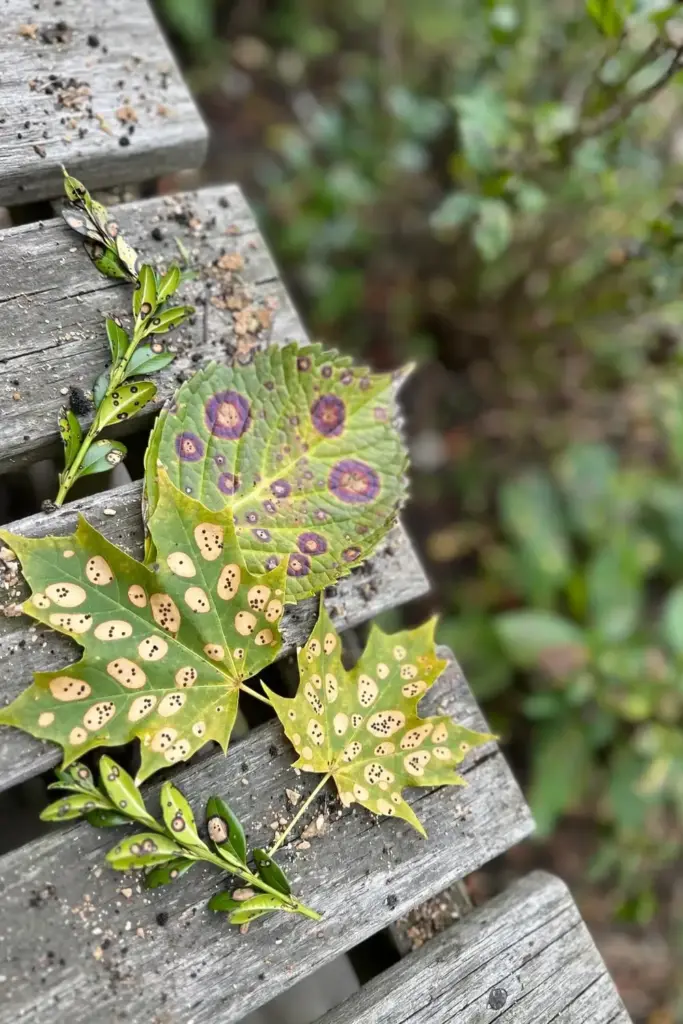
It makes small round to irregular tan or brown spots with dark purple or black borders on leaves. Older spots develop tiny black dots in their centers, which are the spore-producing pycnidia. Spots start on lower leaves and climb in wet weather. On maple the lesions run about one quarter inch across. The pattern is scattered rather than blighted, and stems stay clean.
Almost never. On established ornamentals it is a cosmetic disease. Plants may look rough by late summer in a wet year, but they leaf out clean the next spring. The exceptions are very young plants, which can be weakened by repeated heavy defoliation, and greenhouse orchids, where humid air lets lesions expand. If your shrub is dying back, look for a different cause.
Start with the free fixes: rake up and destroy all fallen leaves, thin the canopy for airflow, and switch to drip irrigation or morning watering so foliage dries fast. Sanitize pruners between cuts. These cultural steps control most cases. Fungicides are a last resort for severe or high-value situations, applied as protectants to new spring growth every 10 to 14 days.
Neem oil can suppress mild foliar fungal disease and fits into an organic program alongside sanitation and good watering. Extension guidance does not rank it with the labeled protectants like chlorothalonil, mancozeb, or thiophanate-methyl for this disease. Use it as a supplement to cleanup and airflow work, not as a replacement, and keep expectations modest.
Yes, pick off badly spotted leaves any time during the season and destroy them. This slows the spread by removing active spore sources. Do not strip the shrub bare, because remaining leaves still feed the plant. Always clear fallen leaves from beneath the shrub too, since the fungus overwinters in that litter and restarts the cycle each spring.
Only as prevention, and only on shrubs that were hit hard last year or young plants you are protecting. Begin at bud break as new leaves emerge, before any spots appear, and reapply every 10 to 14 days through wet weather, rotating active ingredients. Spraying after leaves are already spotted protects nothing. Follow the label exactly for rates and safety.
Where to Go From Here
Phyllosticta leaf spot looks alarming and behaves mildly. That gap between appearance and reality is the whole story. Clean up the leaves, open the canopy, water the soil instead of the foliage, and most years the disease fades into background noise.
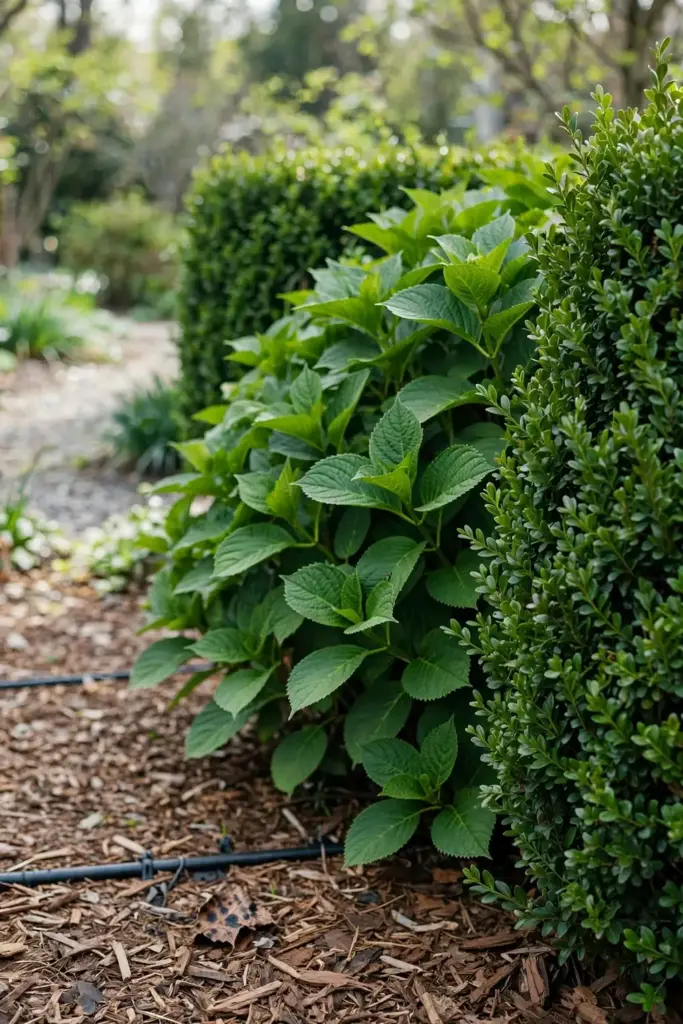
Your one action this week: walk your shrubs with a bag, pick up every fallen leaf beneath the boxwood and hydrangea, and check whether your sprinkler is hitting their leaves. Those two fixes cost nothing and do more than any spray bottle. If you want help telling this disease from its lookalikes, the differential table above and your local Cooperative Extension office have you covered.