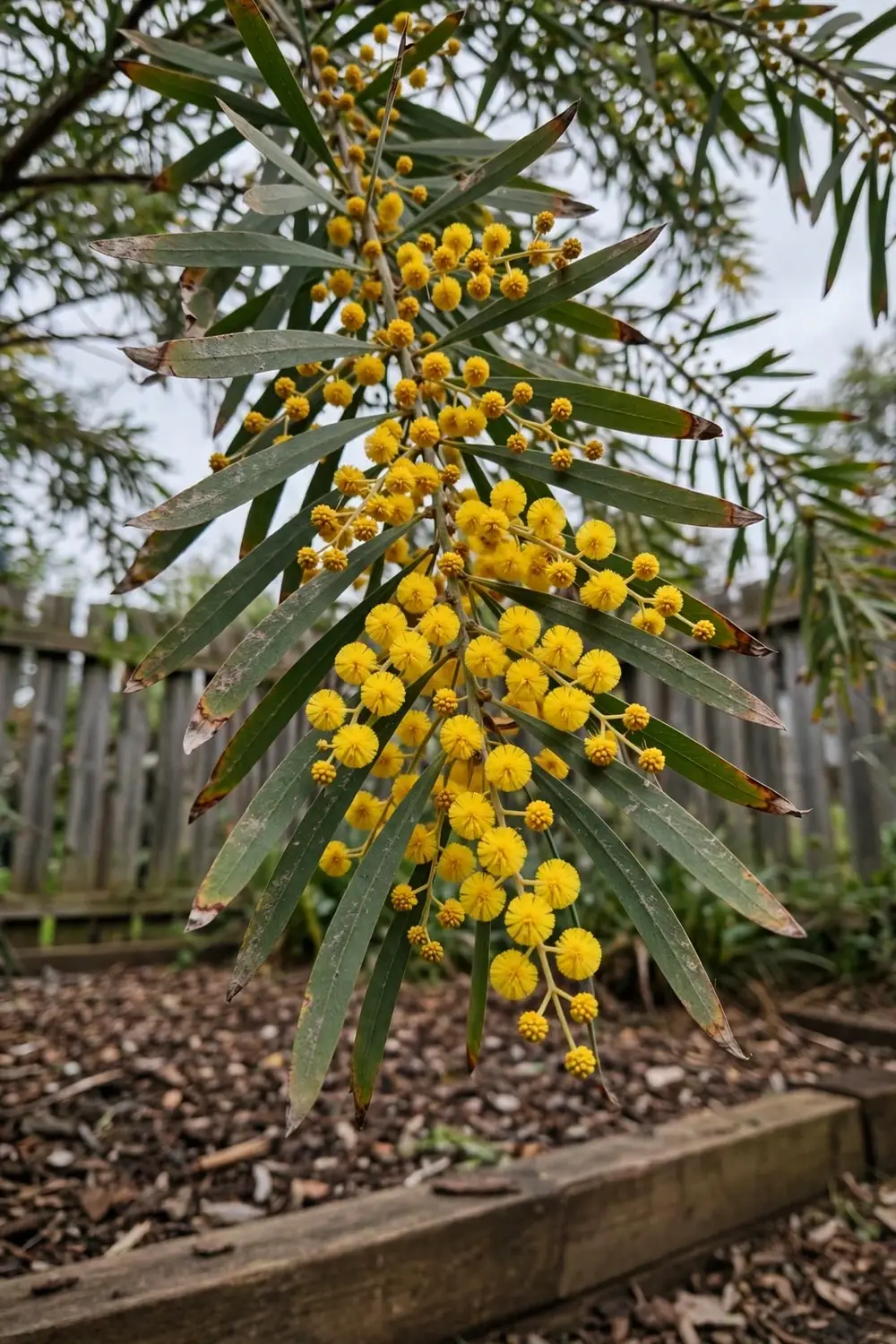

Pick 1 wattle that already grows in your district, plant it in full sun and free-draining soil, and it will flower with almost no feeding. That is growing wattle in Australia. Wattle is the everyday Australian name for the genus Acacia. Golden Wattle, Acacia pycnantha, is the national floral emblem.
I have learned that the wattle I plant for my postcode outlives the wattle I plant for its flowers. The rest of this page is 10 moves, from picking a local wattle to planning its replacement.
1. Pick a Wattle Local to Your Area First
A local wattle beats a pretty wattle. Local provenance means the plant comes from your district or a matching climate, so it already tolerates your frost, your rainfall, and your soil. A wattle dragged across the continent may flower hard at first, then fail in a frost it never evolved to meet. Ask the nursery where the seed or the tube stock came from. A straight answer names a district. A vague answer names a state.
Wattle is the everyday name. Acacia is the genus name. The two names describe the same plants, so check the botanical name on the label before you buy. Two wattles can share a common name and need different climates. The botanical name never lies about identity.
Acacia counts 750 species across Australia, per the Australian National Botanic Gardens Acacia notes. Golden Wattle, Acacia pycnantha, is the national floral emblem, and Wattle Day falls on 1 September. That count is the reason local provenance matters. With 750 species to choose from, no gardener needs to force a wattle from the wrong climate.
Find your local wattles before you shop. Your council often publishes an indigenous plant list for your area. A local native nursery stocks tube stock grown from local seed. PlantNET distribution maps show where each species grows wild. Walk your suburb and note which wattles already thrive on nature strips and in reserves. Those survivors already passed your local frost and soil test.
Start with the table in the next section. Pick 1 row that matches your climate and your space. Then check the weed-risk fence in move 10 before you plant it. A wattle that is native to Australia can still be a weed outside its home range.
2. Match the Wattle to Your Climate and Soil With 5 One-Line Picks
The right wattle fits your climate, your frost, and your space. The table below gives 5 picks with one line each. Heights and home ranges come from the Australian National Botanic Gardens species notes. The full variety list lives elsewhere. This table only starts your choice.
| Wattle | Home Range | Height | Garden Note |
|---|---|---|---|
| Golden Wattle, Acacia pycnantha | NSW, Vic, SA | To 10 m | Floral emblem, fast, best as a feature tree |
| Sydney Golden Wattle, Acacia longifolia | NSW, Vic | To 6 m | Fast screen, weedy outside its range |
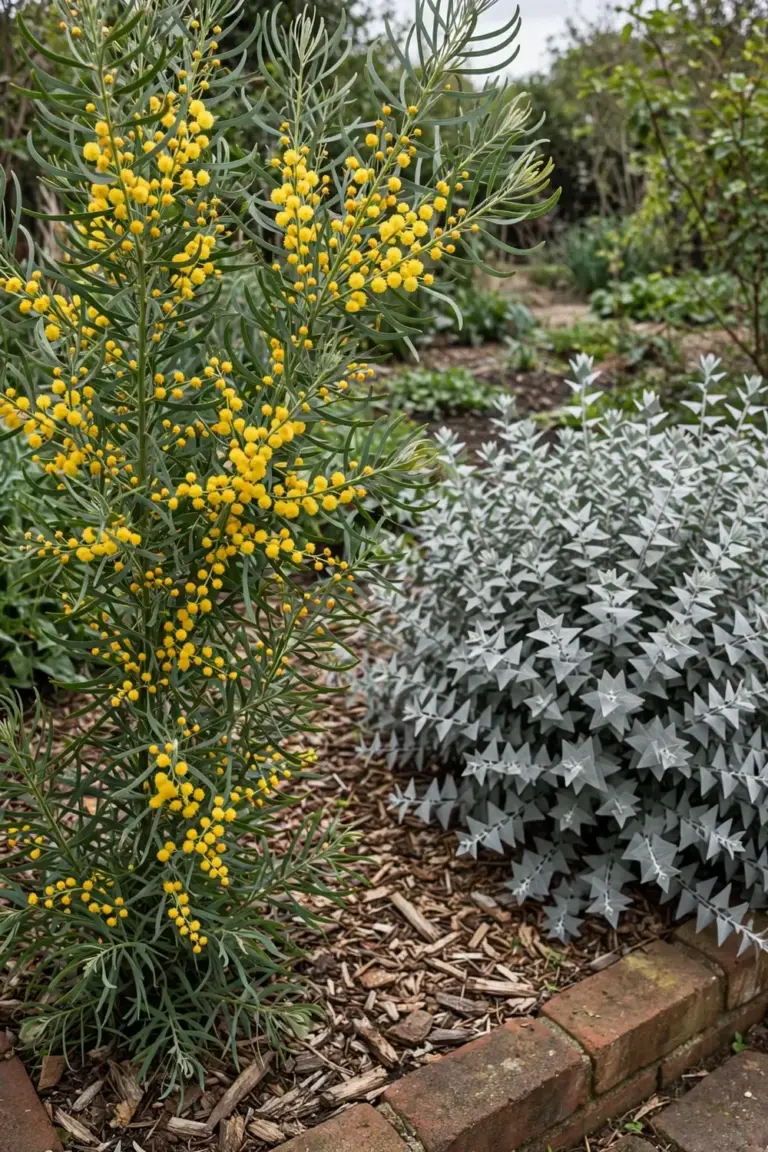
| Knife-Leaf Wattle, Acacia cultriformis | NSW, Qld | 2.5 m | Gray phyllodes, suits small gardens |
| Golden Wreath Wattle, Acacia saligna | WA | To 10 m | Salt-spray tolerant, weedy in north-eastern NSW |
| Cootamundra Wattle, Acacia baileyana | NSW, Temora to Cootamundra | To 10 m | Do not plant outside its home range |
Match frost first. Several wattles in the table tolerate frosts to minus 7 degrees Celsius, per the same Gardens notes. A wattle rated for your frost line still needs full sun and drainage. Shade and wet feet kill more wattles than cold does.
Match space second. A 10 m wattle under a power line becomes a pruning war. A 2.5 m wattle in a big verge looks lost. Measure the gap before you buy. A wattle that fits its gap needs less pruning and lives longer.
Read the label for mature size, not pot size. A tube stock plant stands 30 cm tall. The same plant reaches 10 m within a few years. Trust the mature height on the label over the small plant in front of you, because a courtyard wattle planted as a 10 m tree becomes a removal job.
Check mature width too. A wattle that grows 4 m wide needs 4 m of clear ground. Branches that rub a fence or a roof lose their leaves and invite borers. Roots that hit a retaining wall push it out of line. A wattle with room around it keeps its shape without a saw.
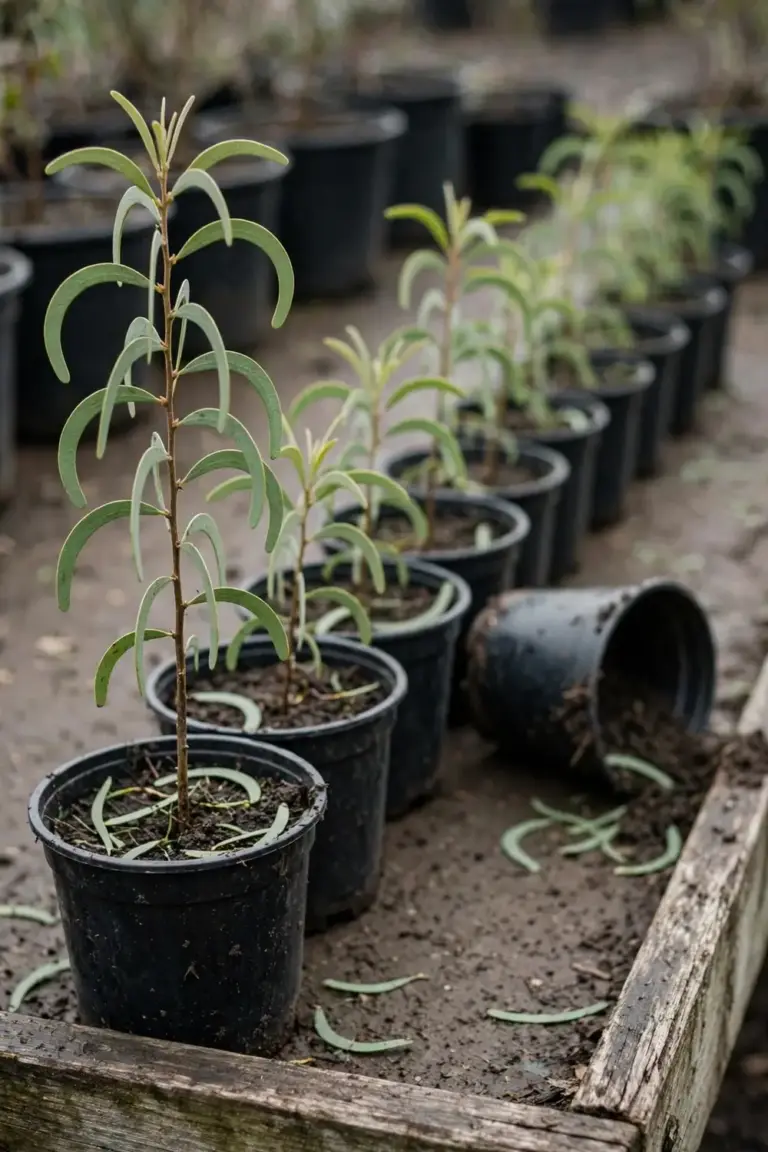
3. Grow Wattles From Seed With Boiling Water and a 24-Hour Soak
Seed is the cheapest way to grow a wattle, and the hard seed coat is the only real barrier. Wattle seeds carry a coat so hard that water cannot enter. Scarifying the coat or softening it with heat lets water in and germination starts. The Australian National Botanic Gardens Acacia notes give the home method: pour boiling water over the seeds and leave them to soak for 24 hours. Infertile seeds float to the surface. Discard them. Sow the swollen seeds. Re-treat the rest.

Work the method in order. Tip the seeds into a heatproof mug and pour boiling water over them until they sit well under the surface. Leave the mug on the bench overnight. Next morning, lift out the seeds that swelled to twice their size and sow those at once, then return the hard ones to a fresh pour of boiling water and repeat the soak.
Sow into a free-draining mix, not garden soil straight from the bed. A seed starting guide covers the tray, the mix, and the first watering. Cover the seeds with mix to about their own depth and keep the tray damp, not wet. Most wattles germinate fast once the coat softens. A seedling that stalls usually sat too wet, so ease off the water at the first sign of a limp stem.
Store spare seed dry and it waits years. Wattle seeds keep in a labeled jar on a shelf. The hard coat that blocks germination also blocks decay. That storage life is why wattles wait in the soil seed bank for years and then germinate in a flush after fire or disturbance. Your jar works the same way as the bush soil, minus the fire.
Give seedlings room. Sow 2 seeds per cell and snip the weaker one once both show true leaves. A seedling left crowded grows tall and thin, then flops. Pot on when roots fill the cell, not before. A seedling moved too early sulks for weeks.
Cuttings work too. Many Acacia species grow from cuttings taken from firm new-season growth, and cuttings from phyllode species strike more easily than cuttings from bipinnate-leaf species, per the same Gardens notes. Seed stays the default. Cuttings suit a named form you want to copy exactly.
4. Plant a Wattle in 6 Steps on a Mild Morning
Plant on a mild morning with no hot wind coming. A wattle planted into heat spends its first week fighting the sky instead of rooting. Autumn planting suits most of Australia. The soil still holds warmth, the air cools, and the plant roots through winter before its first hot summer.
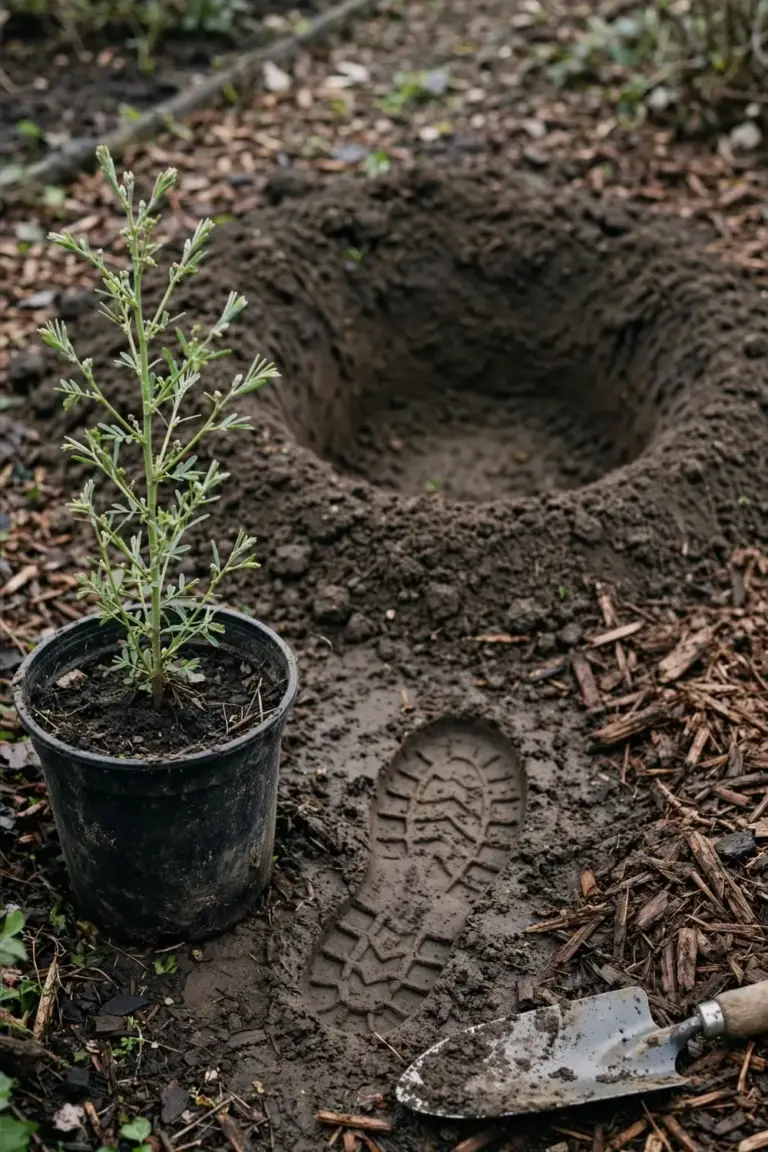
Soak the root ball before it goes into the ground. Stand the pot in a bucket of water until bubbles stop rising. A dry root ball repels water after planting and the plant wilts while the soil around it stays damp. A soaked root ball starts drinking at once. Lift the plant from the bucket and let it drain for a minute before you set it in the hole.
Dig the hole twice as wide as the pot and no deeper than the root ball. Tease out any roots circling the pot wall. Set the plant so the top of the root ball sits level with the surrounding soil. Planting deep buries the stem and invites rot. Backfill with the soil you dug out. Firm it with your boot, then form a shallow saucer around the plant to hold water.
Water the plant in at once. Soak the root ball until water ponds in the saucer, then let it drain. Spread mulch 5 cm thick around the plant, and keep the mulch clear of the stem. Mulch piled against the stem holds moisture where rot starts. A clear collar of bare soil around the stem stops that failure.
Stake only if wind rocks the plant. One stake on the windward side, tied loosely, lets the stem flex and thicken. A rigid stake grows a weak stem. Remove the stake once the plant stands firm on its own. A stake left for years girdles the trunk and strangles the tree it was meant to save.
5. Water a New Wattle Deep, Then Back Off
A new wattle needs deep water until its roots reach past the planting hole. Water at the saucer, not at the stem. Soak until the soil is wet a spade deep. Then wait until the top soil dries before you water again. Deep and infrequent beats shallow and daily. Shallow water grows shallow roots, and shallow roots fail in the first dry spell.
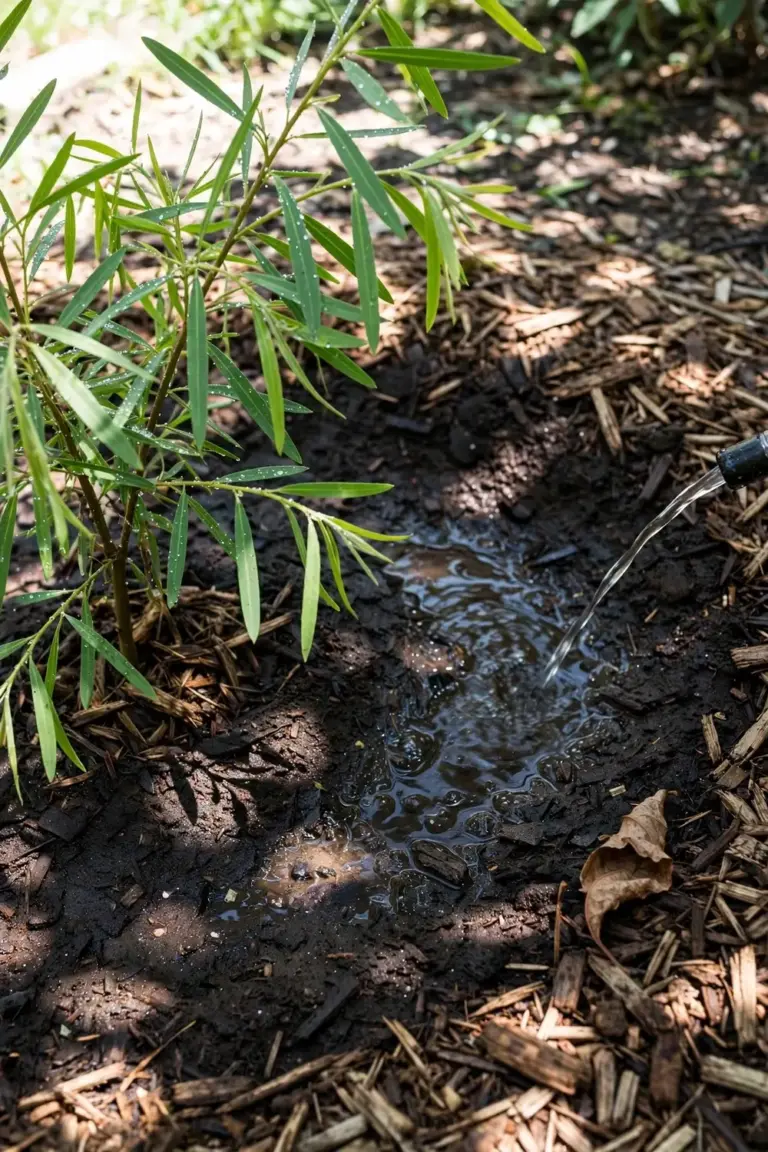
Taper the watering as the plant establishes. A wattle that still gets nursery-level water in its second year never learns to chase deep moisture. Cut back once new growth shows and the plant holds its leaves through a dry week. Established wattles in most districts live on rainfall alone. A wattle that wilts every dry week sits in the wrong soil or the wrong spot. Move it or replace it.
Learn the two failure signs. A wattle with yellow lower leaves and soggy soil at spade depth sits too wet. Stop watering and check the drainage. A wattle with dull, curling phyllodes and dry soil at spade depth needs a deep soak. The spade test settles every argument about water. Dig beside the plant and look. Guessing from the surface wastes a season.
Check soil health before you blame the water. Compacted clay holds water at the surface and starves the roots below. Sandy soil drains before the roots drink. Both failures look like drought from above. Dig beside the plant. Damp soil at spade depth means the water reached the roots. Dry soil at spade depth means it did not.
Shift the rhythm with the seasons. A wattle in its first summer needs a deep soak whenever the top soil dries out. The same wattle in its first winter needs almost nothing, since cool air and short days slow its drinking. A wattle in sandy soil needs water more often than the same species in loam. Watch the soil, not the calendar. The spade test beats any schedule.
Mulch carries the watering further. A 5 cm layer of leaf mulch slows evaporation and keeps the root zone cool through summer. Top it up as it breaks down. Mulch is the cheapest water you will ever buy.
6. Feed a Wattle Almost Nothing and Keep Phosphorus Low
Wattles fix their own nitrogen. Acacias, like most legumes, carry Rhizobium bacteria in nodules on their roots, and those bacteria pull atmospheric nitrogen into a form the plant can use, according to the Royal Botanic Gardens Sydney wattle notes. That partnership is why wattles green up poor soil and why they rarely need nitrogen fertilizer. Feeding nitrogen to a wattle is feeding a plant that already feeds itself.
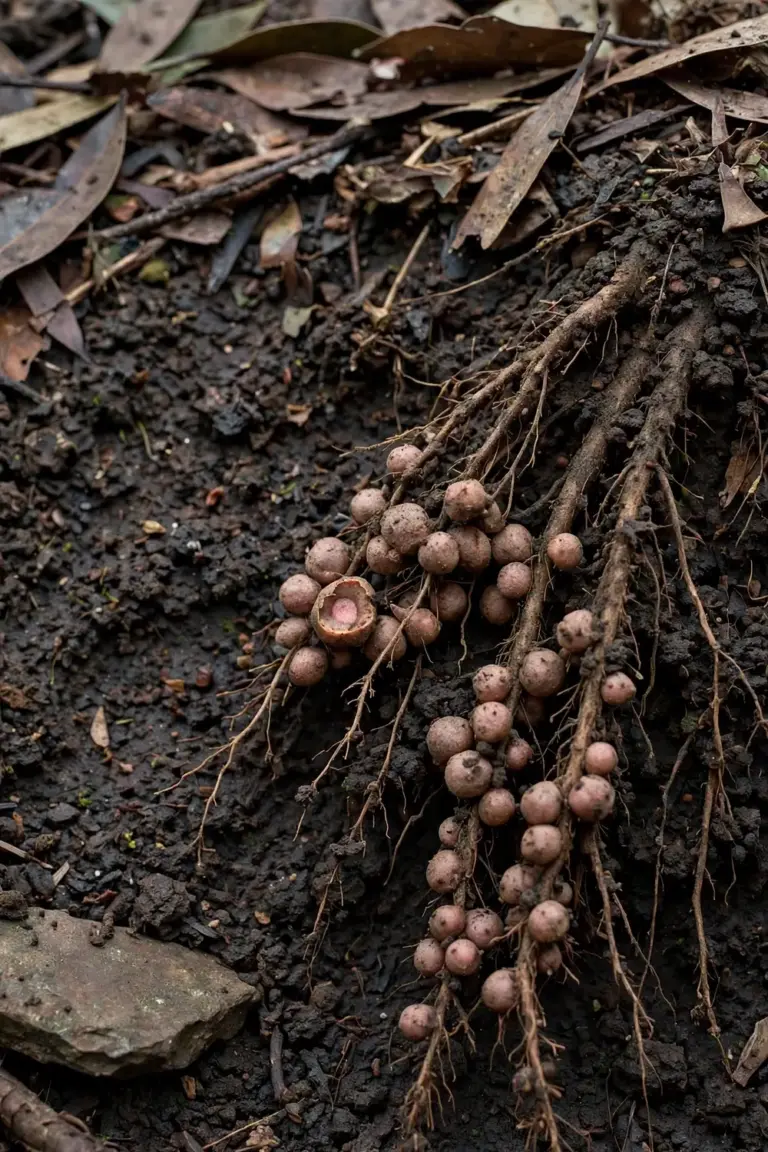
Keep phosphorus low. Many Australian natives evolved in soils low in phosphorus, and acacias sit in that group. Gardening With Angus lists acacias among the natives that need a low-phosphorus approach when you condition soil. If you feed at all, use a slow-release fertilizer labeled for Australian natives and follow the label rate. A standard garden fertilizer can carry more phosphorus than a wattle wants.
Skip feeding in most cases. A mulch of leaf litter and a healthy soil food web carry a wattle through the year. A wattle that yellows despite good water and drainage usually suffers from wet feet or a phosphorus problem, not from hunger. Fix the drainage first. Feeding a drowning plant never saves it.
Think of a wattle as a cover crop with flowers. Cover crops fix nitrogen and feed the soil, and a wattle does the same work at tree scale. Its leaf litter returns nitrogen to the bed. Its roots host the bacteria that fix it. A wattle planted ahead of a hungry shrub prepares the ground for free.
7. Prune After Flowering to Extend the Life of the Plant
Prune right after flowering. That is the one pruning rule for wattles. The Australian National Botanic Gardens states that most wattles respond to pruning immediately after flowering and that regular pruning can extend the life of the plant. Pruning at that moment shapes the plant, removes spent wood, and leaves the full season for new growth to harden before the next flowering.
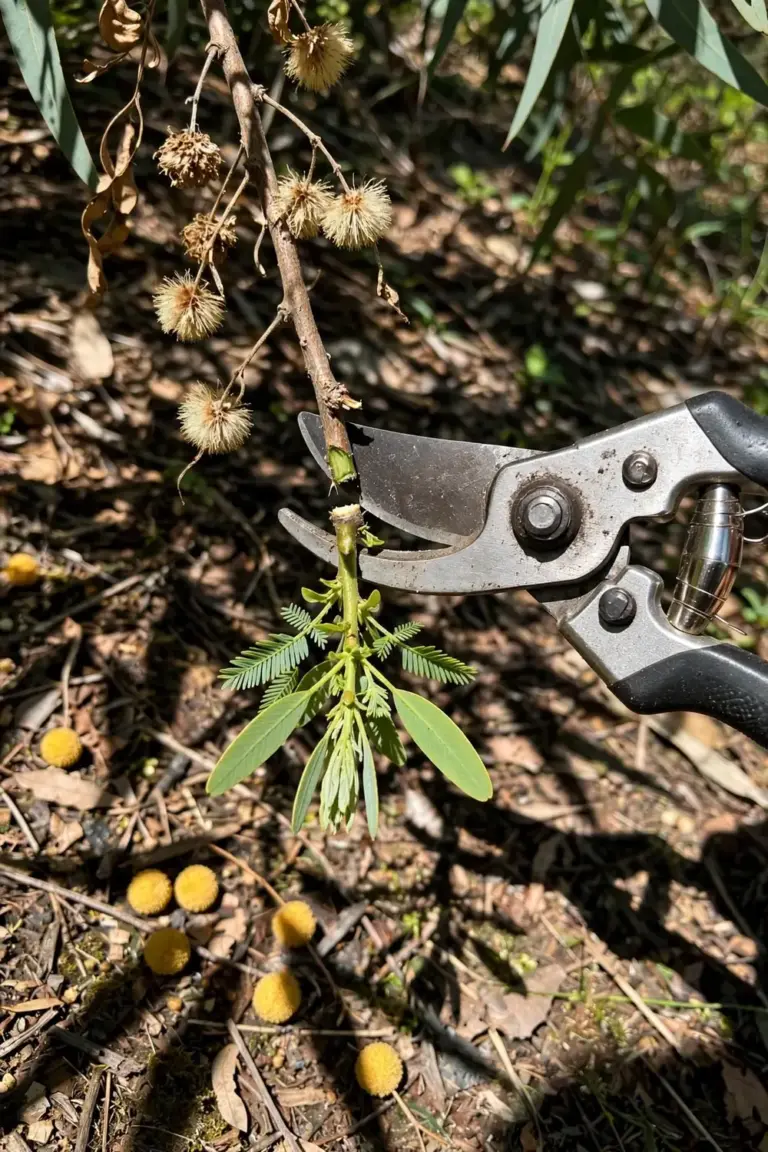
Use spring pruning techniques as the method base, then adjust to the wattle calendar. Most wattles flower in spring and summer, so the cut lands in late spring or early summer for most species. Winter-flowering species get their cut in late winter. Cut back to a leaf node or a side branch. Never leave a bare stub. A stub dies back and invites borers.
Keep the cuts light and regular. Tip-prune young wattles to build a bushy frame, and remove crossing branches and dead wood each year. Never cut a wattle back to bare trunk. Wattles do not reshoot from old bare wood the way some exotics do, so a hard cut into leafless wood leaves a skeleton that never fills again.
Keep your secateurs clean and sharp. Wipe the blades with rubbing alcohol between plants. A blunt cut crushes the stem and heals slowly. A clean cut heals fast. Cut at a slight angle so water runs off the wound instead of pooling on it. Small habits like these keep a wattle healthy for years.
8. Check for Borers, Galls, and Acacia Bug Before You Spray
Wattles carry few pests, and the 3 worth knowing are borers, galls, and acacia bug. Stem borers tunnel into branches and leave holes with frass. The Gardens notes give the home fix: probe the hole with flexible wire, or inject a few milliliters of alcohol into the hole. Prune out a branch that is riddled with holes. A branch full of borer holes is firewood, not a patient.
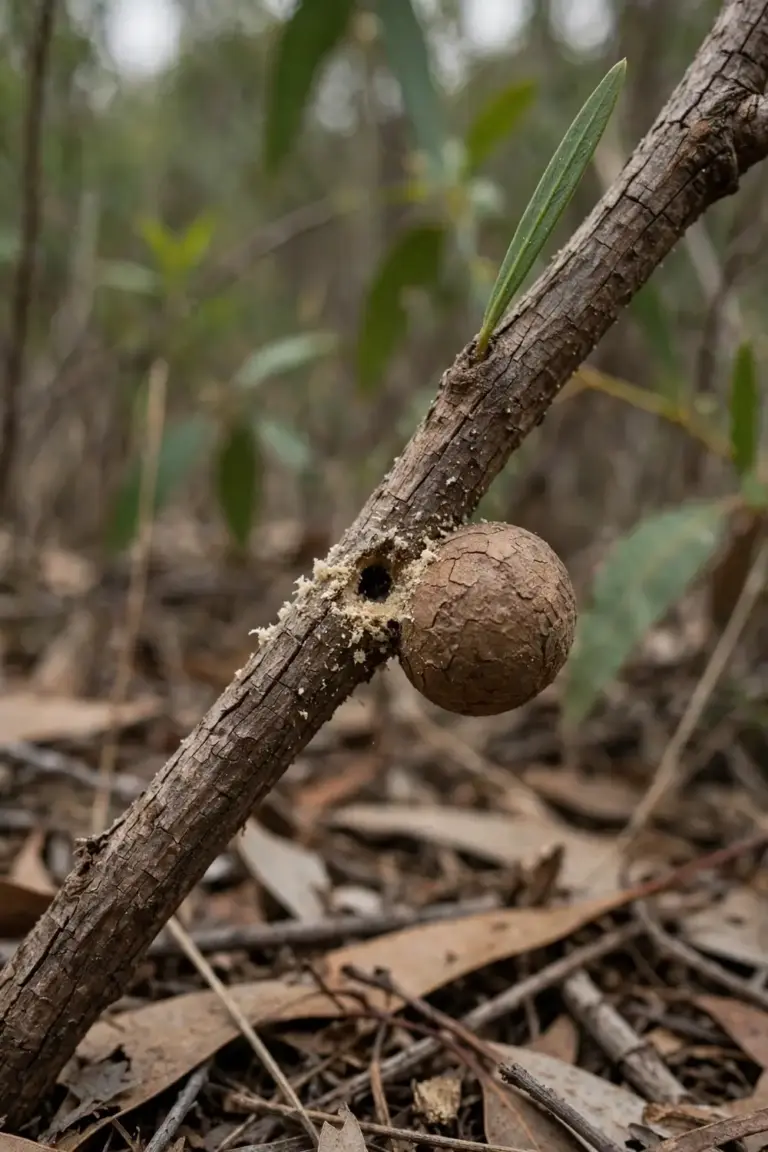
Galls are harder. Gall-forming insects swell the stems into lumps. Removing the affected branches reduces the problem, per the same Gardens notes. Do not chase galls with sprays. The insect sits inside the gall where spray cannot reach. Cut the gall out and bin it. A gall left on the plant seeds the next generation.
Acacia bug, Eucerocoris tumidiceps, damages the foliage of wattles with phyllodes and resists easy control. The Gardens notes warn that treatment with a systemic insecticide may be required. Start with the physical checks first. Confirm the pest before you reach for any spray. A wattle with a few chewed phyllodes needs no chemistry. A wattle stripped of foliage needs an identification, not a panic spray.
Leave healthy wattles alone most of the time. Birds and predatory insects eat many wattle pests before you notice them. A garden that gets a weekly walk and a quick look at the foliage catches borers early. A garden that gets sprayed on a schedule kills the predators too. Inspection beats intervention for wattles.
Watch the base for root rot. A wattle that wilts despite damp soil, with dark bark at the stem base, may carry root rot. No spray fixes that. Improve the drainage, keep mulch off the stem, and clean your secateurs between plants so you do not carry the problem to the next shrub. A wattle in free-draining soil rarely meets this failure at all.
9. Plan the Replacement Before the Wattle Fades
Wattles are pioneer plants. They colonize bare ground fast, flower young, and die younger than a eucalypt. That short life is a trait, not a failure. A wattle that flowers hard for years and then thins at the crown is running its natural course. The gardener who plans for that day never stares at a sudden gap.
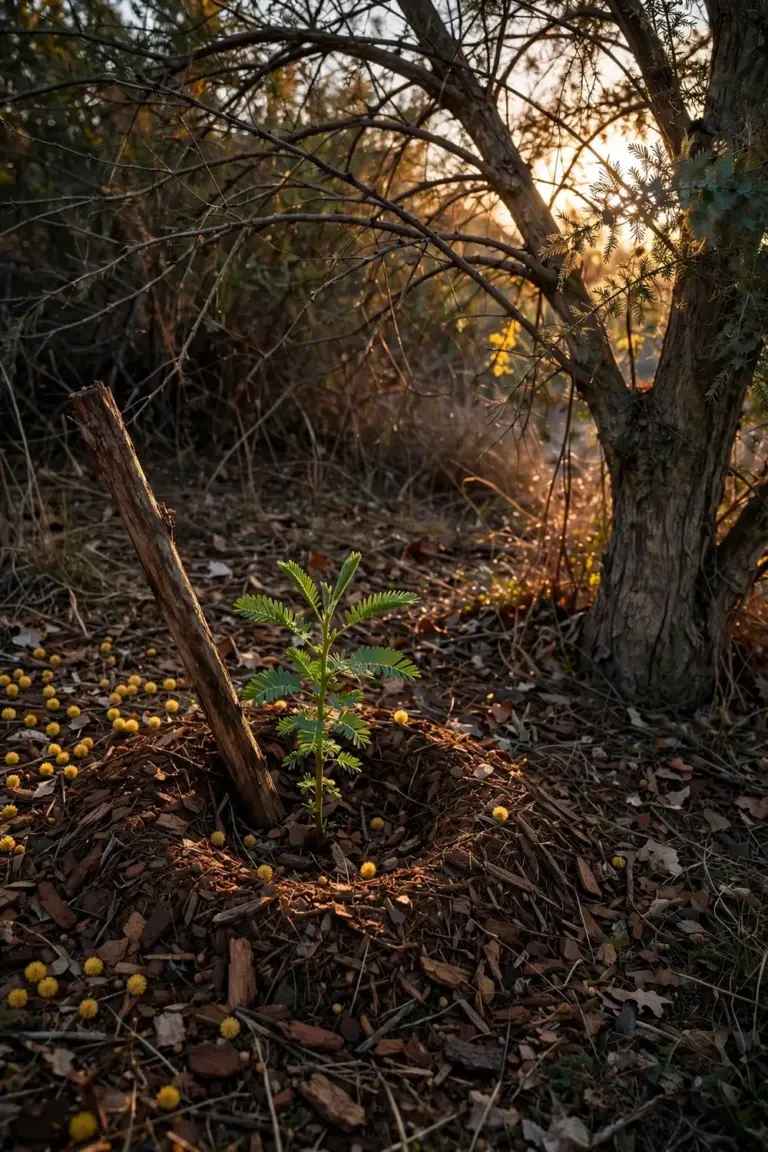
Plant the successor while the wattle still flowers. Set a longer-lived tree or shrub 2 m from the wattle while the wattle still shades the spot. The successor roots in shelter, and the wattle keeps flowering overhead. When the wattle fades, cut it out and the successor already fills the gap. A garden with no succession plan loses a whole season to a hole.
Let the wattle feed the soil on its way out. The nitrogen its roots fixed stays in the soil and in the leaf litter. Chop the prunings and leave them as mulch. The next plant inherits richer ground. A wattle that dies after feeding the soil did its second job well.
Harvest the other gifts while the wattle stands. Wattle flowers feed bees and other pollinators through spring. Seed-eating birds work the pods. Some wattle seeds were ground into flour and cooked like damper by Aboriginal people, per the Gardens notes. A wattle earns its place in the garden long before it fades.
10. Keep Weedy Wattles Out of the Bush With a Local Check
A wattle can be native to Australia and a weed outside its home range. Cootamundra Wattle grows wild in a small patch of inland New South Wales around Temora and Cootamundra, yet it now grows wild across Victoria, South Australia, Western Australia, and the ACT. Queensland Silver Wattle, Acacia podalyriifolia, shows the same pattern. The Blue Mountains City Council lists both Cootamundra Wattle and Queensland Silver Wattle as local priority weeds, with a control measure of full and continuous suppression and destruction. Planting either one outside its home range risks exactly the escape the list warns about.
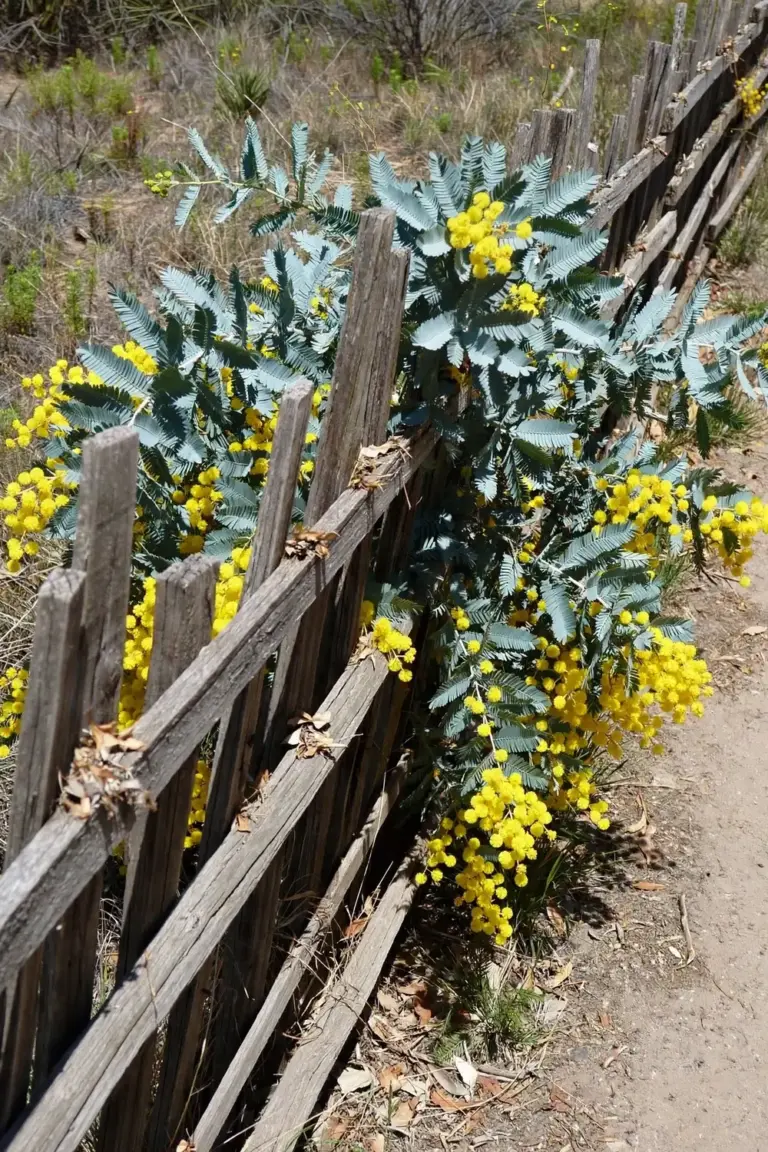
Run the local check before you buy. Search your council weed list for the botanical name. Check your state declared-weed list too. A nursery can sell a plant that your council lists as a priority weed. The label tells you the name. The council list tells you the risk.
Never dump wattle prunings in the bush. Seed in green waste rides to the next creek line. Bag the prunings or compost them hot at home, because a wattle planted in your garden stays your responsibility until its last seed dies.
Act fast if you already planted a weedy wattle. Remove it before it sets seed. Cut it down and paint the stump, or dig it out whole. Replace it with a wattle local to your district. A weedy wattle removed in its first year costs an afternoon. The same plant left for 5 years costs a bushland.
Respect the seed bank. Wattle seeds wait in the soil for years behind their hard coats, then germinate in a flush after fire or soil disturbance. One season of seeding from a weedy wattle means years of seedlings to pull. That long memory is why the local check matters before planting, not after. A wattle you never plant never needs weeding.
Frequently Asked Questions

Yes. Collect pods when they turn brown and dry on the plant. Shell out the seeds and store them dry. Treat them with the boiling-water soak before sowing. Discard the floaters. Sow the swollen seeds at once. Home-collected seed carries the same hard coat as nursery seed, so the soak is not optional. Label the bag with the species name and the suburb where you collected it.
A wattle dies young from wet feet, a hard cut into bare wood, or old age. Check drainage first. Dig beside the stump. Soggy soil points to wet feet. A stump cut back to bare trunk points to a pruning failure. A wattle that thinned slowly over years and flowered less each season likely reached the end of its natural life. Replace it with a longer-lived plant.
Plant it only inside its home range around Temora and Cootamundra in inland New South Wales. Outside that range it escapes into bushland and hybridizes with other wattles, including rare species. Several councils list it as a priority weed. Pick a wattle local to your own district instead. A local wattle gives you the same golden flowers without the weed risk.
Most wattles need none. Their Rhizobium root nodules fix atmospheric nitrogen, so they feed themselves nitrogen. Keep phosphorus low, since acacias sit among the natives that want a low-phosphorus approach. If you feed at all, use a slow-release fertilizer labeled for Australian natives at the label rate. Mulch and healthy soil carry a wattle through most years without a bag of fertilizer.
Prune right after flowering. That timing shapes the plant and leaves the full season for new growth to harden. Most wattles flower in spring and summer, so the cut lands in late spring or early summer. Winter-flowering species get their cut in late winter. Keep cuts light and regular. Never cut back to bare trunk, since wattles do not reshoot from old leafless wood.
Start With the Wattle That Already Grows Near You
A local wattle is the easy win. It tolerates your frost, your soil, and your rainfall without fuss. It flowers, feeds the birds and the bees, and enriches the soil on its way out. Pick 1 from the table. Check the council list. Plant it on a mild morning, water it deep, prune it after flowering, and plan its successor. The garden gains a golden spring and a healthier bed for whatever follows.
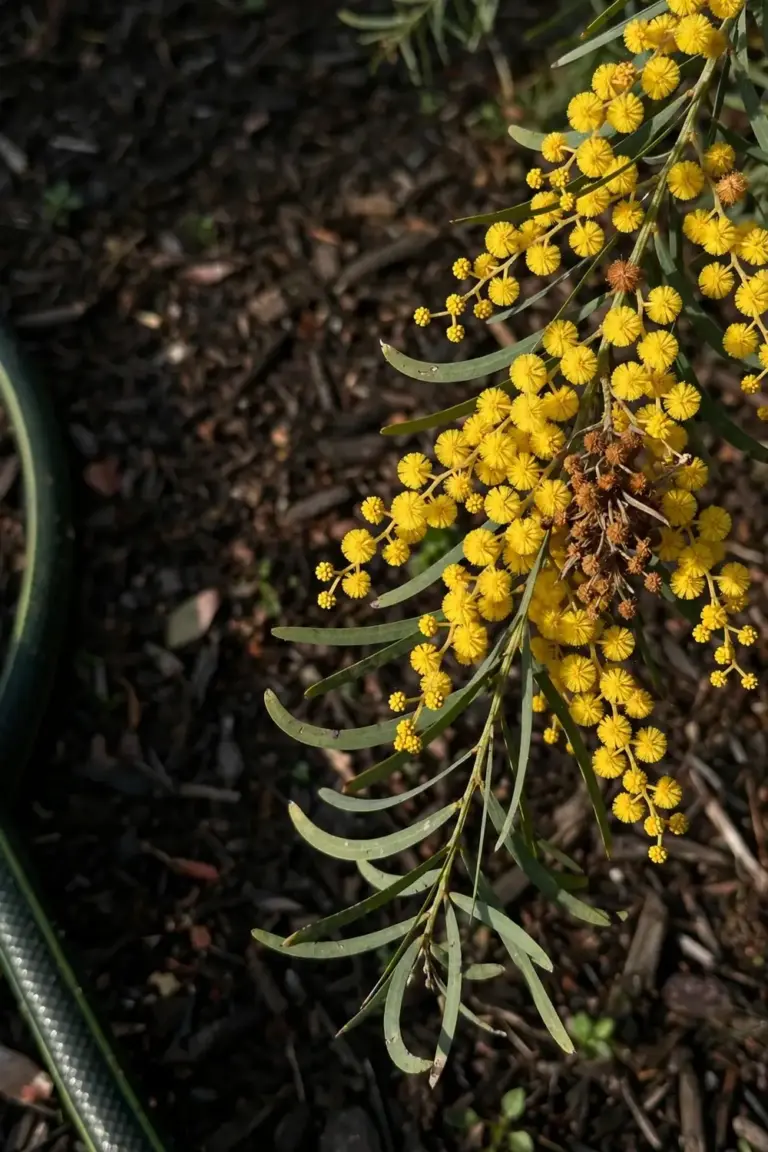
Mark Wattle Day on the calendar. On 1 September, Australians wear a sprig of wattle and plant for the spring ahead. A wattle planted that week joins a national habit older than most gardens. Plant yours, then watch it earn its place.