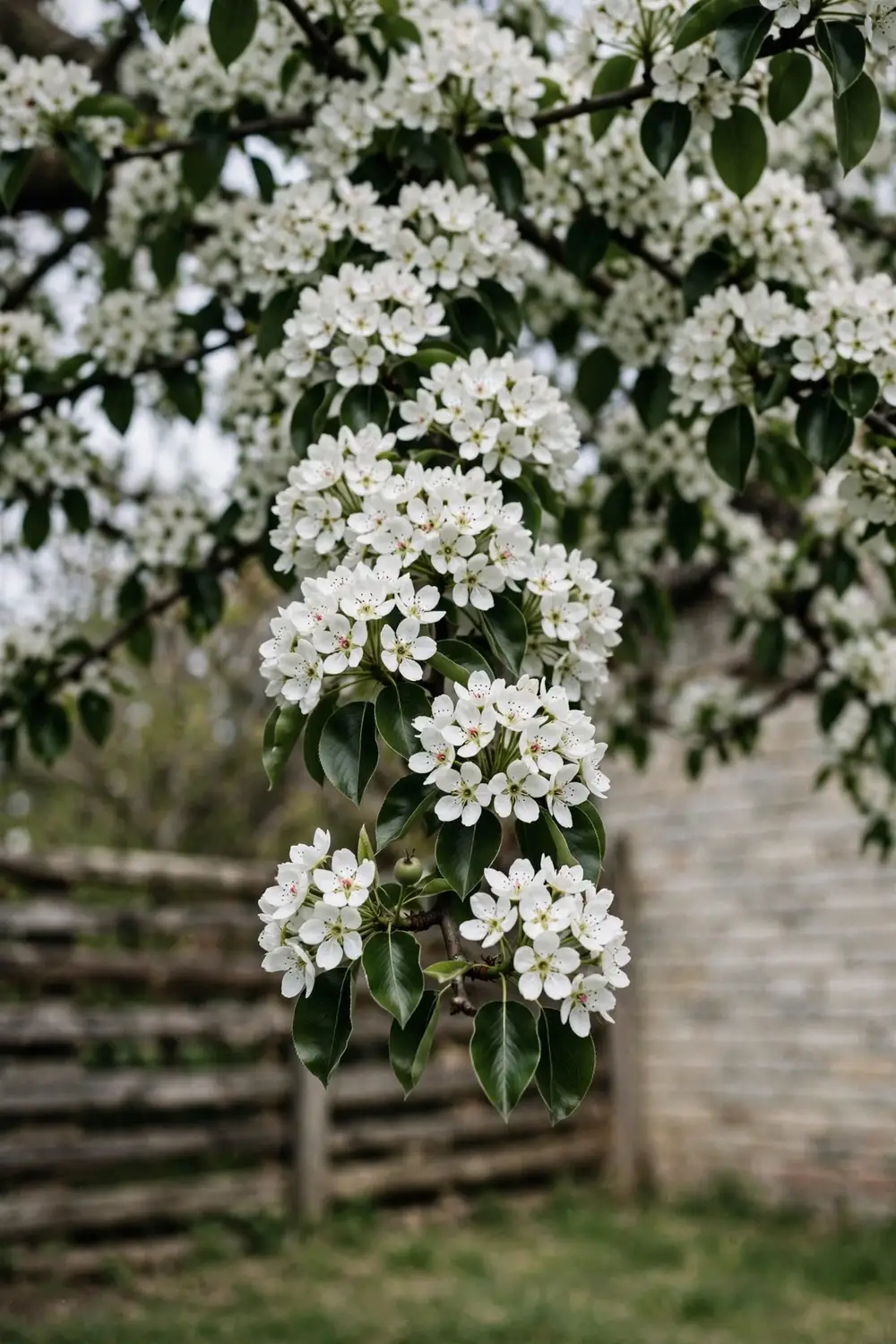

Pick the pear by the space it gets at maturity, not by the flowers it shows at the nursery. Ten ornamental pear varieties cover Australian gardens from a 2 m wide column to a 12 m shade tree. The rest of this page lists all ten with mature size, form, autumn color, and the job each one fits.
I have learned that the pear I pick for its mature width outlives the pear I pick for its spring flowers. Spring blossom lasts weeks. The mature width lasts decades. Measure the bed, the driveway, and the distance to the house before you read the variety list. Spring blossom feeds bees and other pollinators, so every variety below earns its keep in a garden that needs early nectar.
Measure the Space Before You Pick the Pear
An ornamental pear is a Pyrus calleryana cultivar grown for flower and form. The fruit stays small and hard. A fruiting pear is Pyrus communis, a different tree grown for eating. Check the botanical name on the label before you buy. The two trees look alike in spring and diverge everywhere else.
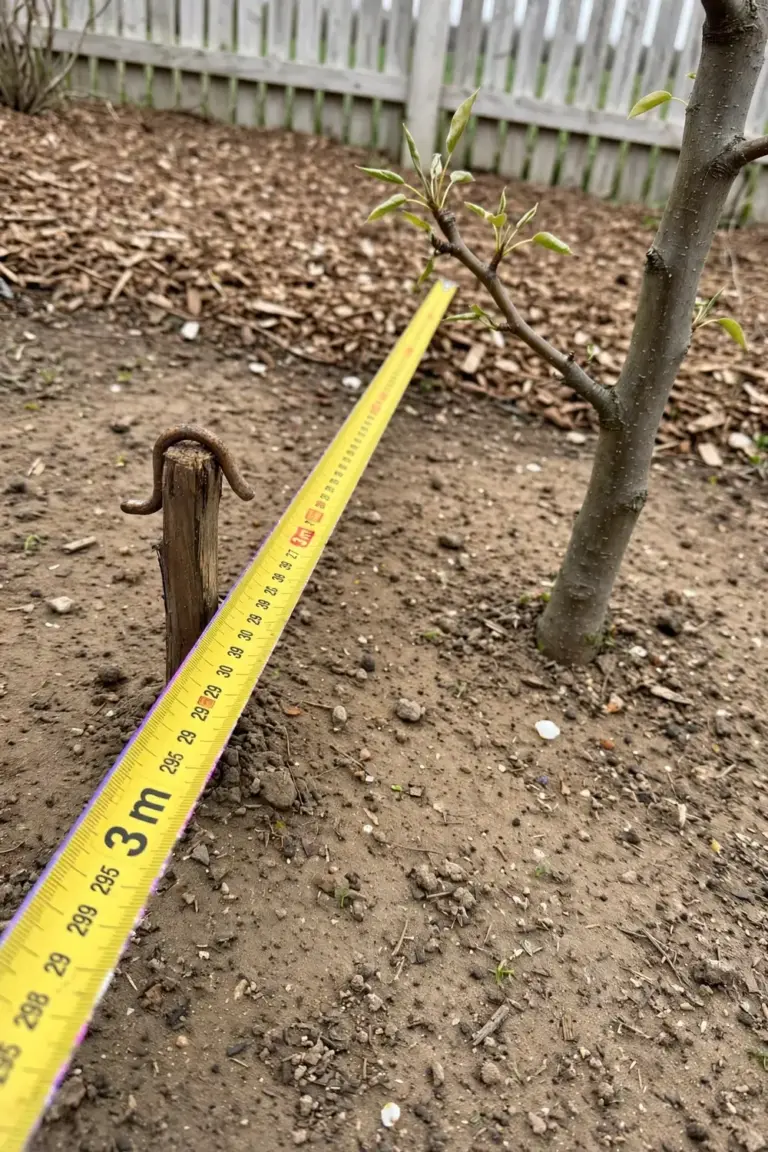
Start with three measurements. Measure the width of the bed or nature strip. Measure the distance to the nearest building, fence, and drain. Measure the overhead clearance to powerlines. The mature width in the table below decides the pick. A tree that fits at planting time and outgrows the space at year ten is a removal job, not a feature.
Soil decides the rest. Ornamental pears grow best in soil that drains freely, and heavy clay that holds water after rain slows establishment and weakens flowering. Dig a test hole 30 cm deep. Fill it with water. Watch it drain. Water that still sits after an hour means the site needs drainage work or a different tree. The guide to building soil health covers the organic matter and structure work that fixes a heavy bed before planting.
| Variety | Mature Size (H × W) | Form | Best Job |
|---|---|---|---|
| ‘Capital’ | 10 m × 2–3 m | Narrow columnar | Narrow beds, driveways, screening |
| ‘Chanticleer’ | 10 m × 4 m | Neat pyramidal | Avenues, nature strips, formal rows |
| ‘Korean Sun’ | 3–4 m × 3 m | Compact rounded | Courtyards and small blocks |
| ‘Snow Pear’ | 5 m × 4 m | Small, spreading | Silver-gray foliage, small gardens, dry sites |
| ‘Edgewood’ | 8 m × 5 m | Upright rounded | Glossy foliage, good all-round garden tree |
| ‘Red Spire’ | 10 m × 4 m | Upright oval | Strong red autumn color in a narrow crown |
| ‘Winter Glow’ | 8 m × 5 m | Broad pyramidal | Long-lasting burgundy autumn display |
| ‘Aristocrat’ | 10 m × 7 m | Broad, open | Larger gardens, better branch structure |
| ‘Manchurian’ | 10 m × 8 m | Broad rounded | Cold districts, exposed and windy sites |
| ‘Bradford’ | 12 m × 9 m | Very broad, dense | Big open spaces only |
The sizes in this table come from the Nursery Near Me comparison of the ten best ornamental pear varieties. Size guides disagree on several cultivars, so each variety section below names the conflict where one exists. Treat every figure as a planning figure, then confirm the mature size with the supplying nursery before you dig.
1. Capital: The 2 m Wide Column for Narrow Beds
‘Capital’ is the narrowest ornamental pear in Australian nurseries. It reaches 10 m tall and stays 2–3 m wide, according to the Nursery Near Me comparison of the ten best ornamental pear varieties. The columnar form suits a driveway edge, a side boundary, or a narrow bed where a spreading tree would need constant pruning. Autumn color runs reddish-purple. The upright habit holds its shape with little intervention.
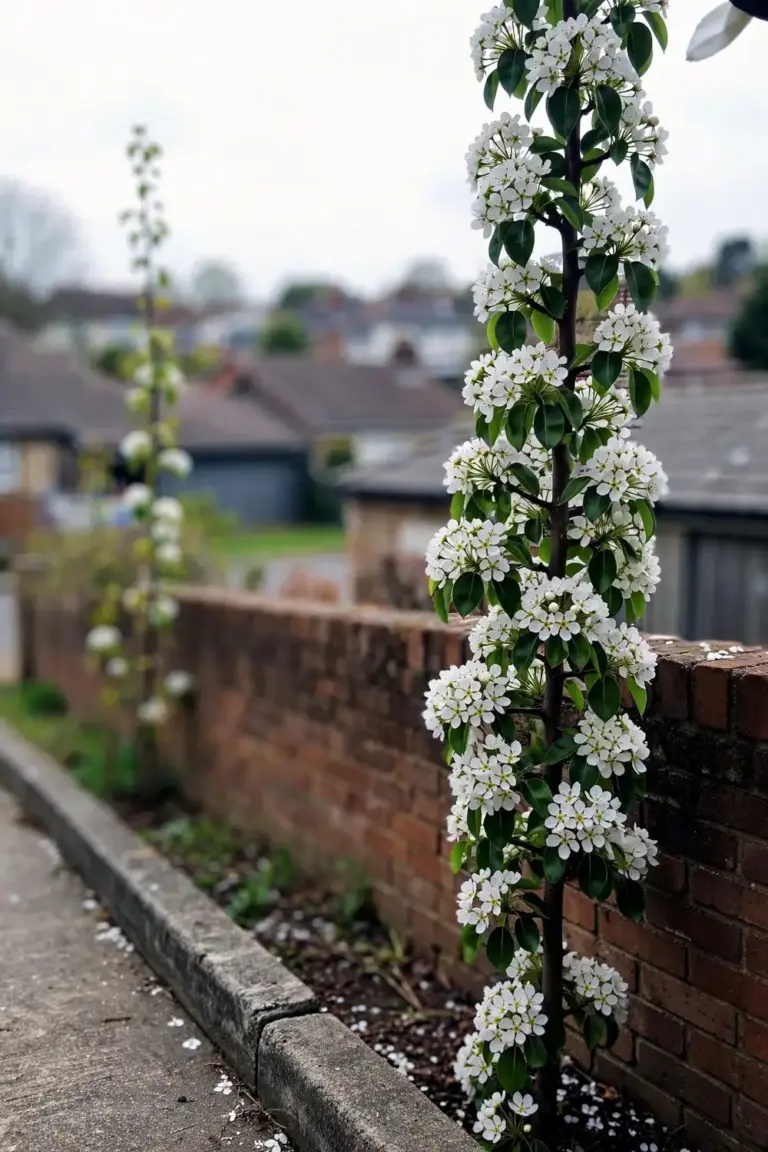
Plant ‘Capital’ where width is the constraint. A 2 m wide crown fits a 3 m nature strip with room to spare. Space repeat trees 2–3 m apart for a screen, or 4 m apart for separate columns with air between them. The tree tolerates heat and drought once established, and it handles urban conditions that stress broader cultivars.
Check the height before you commit. A 10 m column still drops leaves, still needs root room, and still reaches powerlines. One wholesale comparison sheet lists ‘Capital’ at 11 m tall and 3 m wide, so plan for the taller figure on a tight site. Confirm the expected height with the supplying nursery, then plant for that figure.
2. Chanticleer: The 10 m Default for Avenues and Nature Strips
‘Chanticleer’ is the ornamental pear councils plant most, and it earns the position. It holds a neat pyramidal shape without pruning, carries stronger branch attachments than the older ‘Bradford’, and colors reliably each autumn. The Nursery Near Me comparison of the ten best ornamental pear varieties lists it at 10 m tall and 4 m wide. That size fits a nature strip, a driveway row, or a formal garden avenue.
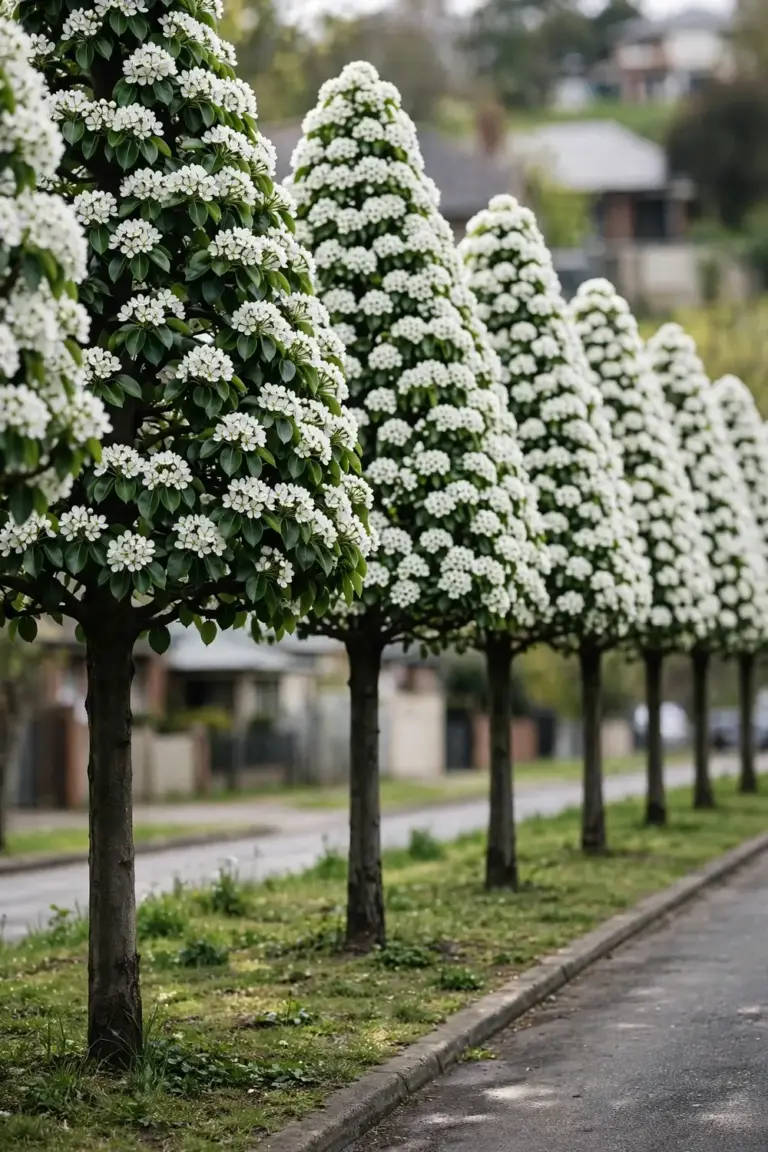
Nurseries sell ‘Chanticleer’ under three names. ‘Cleveland Select’ and ‘Glen’s Form’ point to the same cultivar, according to the University of Connecticut plant database entry for Pyrus calleryana. Buy whichever name the nursery uses, then check the label for the cultivar name in single quotes. A tree sold as plain “ornamental pear” with no cultivar name is a gamble. The label is the only proof of what you bought.
‘Chanticleer’ suits repeat planting. A row of matched trees down a driveway needs one cultivar, one size, and one autumn color. Mixed cultivars in one row break the rhythm as they mature at different rates. Plant ‘Chanticleer’ at 4–5 m spacing for a closed avenue, or 6 m apart for separate pyramids with daylight between them.
3. Korean Sun: The 3 m Compact Pear for Courtyards
‘Korean Sun’ is the smallest ornamental pear on this list. The Nursery Near Me comparison of the ten best ornamental pear varieties lists it at 3–4 m tall and 3 m wide, with a compact rounded crown. That size fits a courtyard, a small block, or a front garden where a 10 m tree would dominate the house. Botanically it is Pyrus faurei ‘Westwood’, a separate small species, not a Pyrus calleryana cultivar. The nursery name and the botanical name point to the same tree.
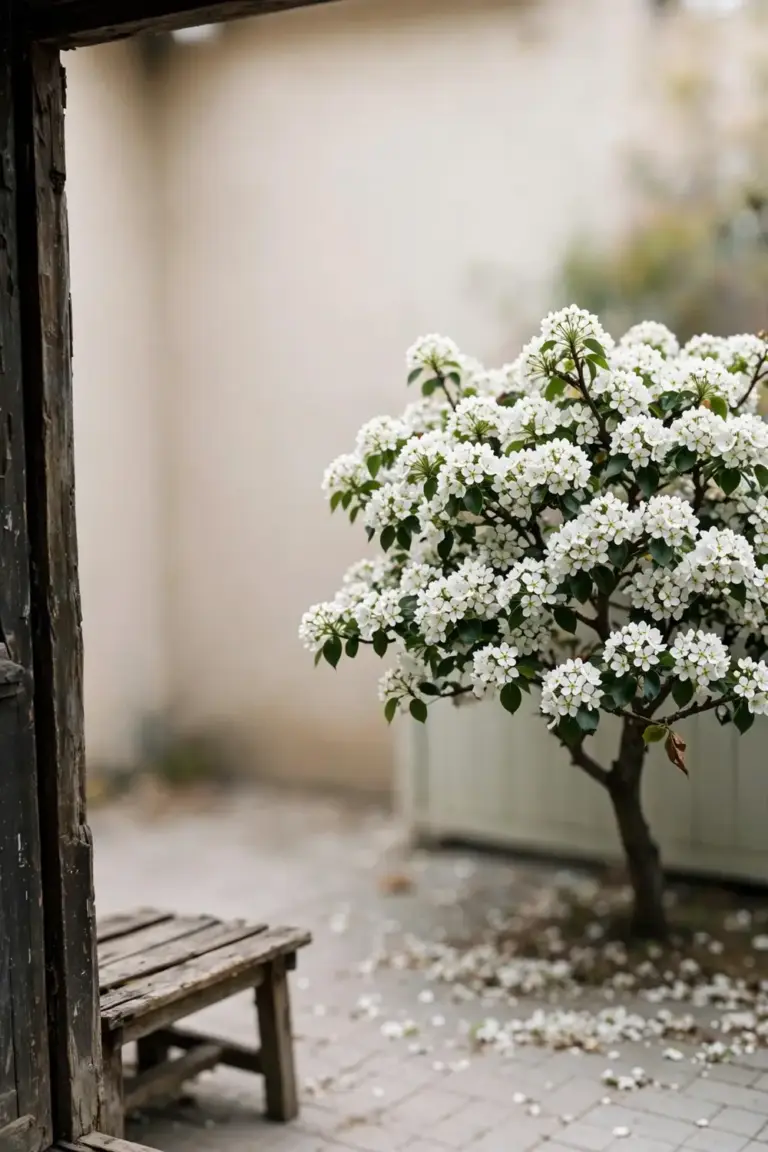
Size guides disagree on ‘Korean Sun’. A wholesale nursery comparison sheet lists it at 4 m tall and 5 m wide, which is wider than the Nursery Near Me figure. Plan for the wider figure. A courtyard tree that spreads to 5 m still fits most courtyards, but a 3 m bed does not hold it. Confirm the expected width with the supplying nursery before you plant against a wall.
‘Korean Sun’ suits a single feature position. One compact tree beside a bench or in a lawn circle reads as a deliberate choice. Two or three in a row read as a hedge that never closes. Give it full sun and room for the full 5 m spread, then leave it alone. Light shaping in late winter keeps the rounded crown tidy.
4. Snow Pear: The Silver-Leafed 5 m Pick for Small Gardens
‘Snow Pear’ is the silver-foliaged ornamental pear. Its leaves carry a soft gray-green tone through the warm months, then turn golden in autumn. The Nursery Near Me comparison of the ten best ornamental pear varieties lists it at 5 m tall and 4 m wide, with a small spreading crown. That size fits a small garden, a dry site, or a front bed where a calleryana cultivar would outgrow the space. Botanically it is Pyrus nivalis, a separate species with its own habits.
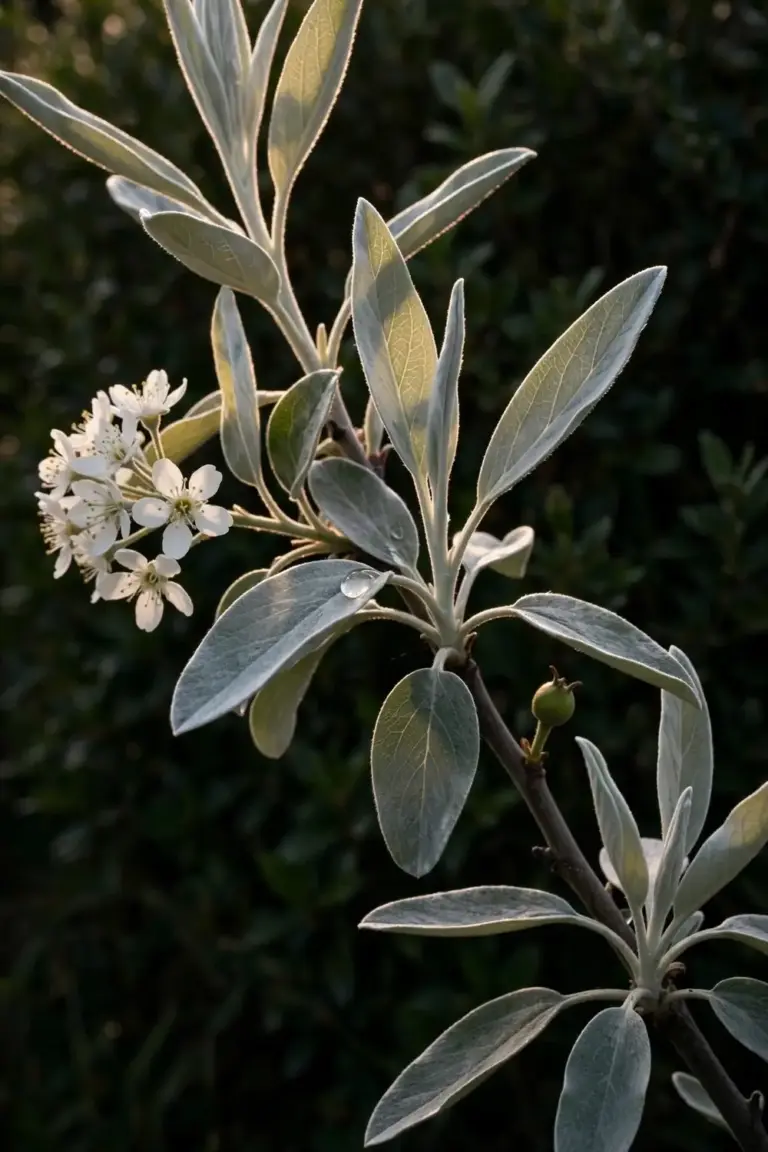
Size guides disagree sharply on ‘Snow Pear’. Evergreen Trees Direct lists it at 6–8 m on one page and 7–10 m on others, against the Nursery Near Me figure of 5 × 4 m. The gap is wide enough to change the planting decision. Treat 5 m as the small end and 10 m as the large end, then confirm the expected size with the supplying nursery. A tree that reaches 10 m needs the root room of a 10 m tree, even if the label promises 5 m.
‘Snow Pear’ suits cool-toned planting schemes. Silver foliage pairs with olive, gray-foliaged shrubs, and pale stone. It tolerates frost and dry sites once established, and it handles full sun. Avoid heavy clay that holds water. The silver leaf reads best against dark green hedging, where the contrast carries the whole bed.
5. Edgewood: The 8 m All-Rounder With Glossy Foliage
‘Edgewood’ is the quiet all-rounder on this list. The Nursery Near Me comparison of the ten best ornamental pear varieties lists it at 8 m tall and 5 m wide, with an upright rounded crown and glossy foliage. It suits a garden that needs one good tree without a specialist job: a front lawn, a side bed, or a corner that needs height. Botanically it is a Pyrus calleryana × Pyrus betulaefolia cross, sold as ‘Edgedell’. The two names point to one cultivar.
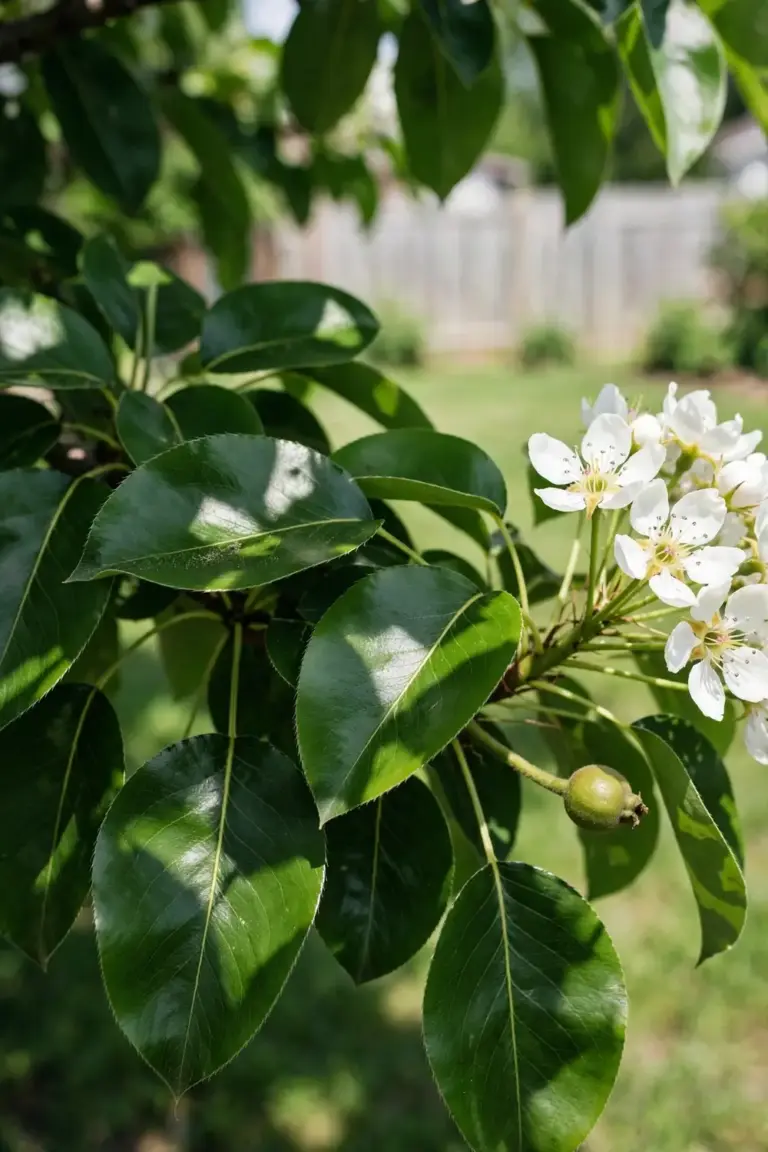
‘Edgewood’ earns its place on foliage and form. Glossy green leaves hold through summer, then turn orange-red with purple tones in autumn. The upright rounded crown needs little shaping. A light winter prune removes crossing wood and keeps the crown open. Heavy pruning ruins the natural form, so cut sparingly and stop early.
Plant ‘Edgewood’ at 5–6 m from the house and 5 m from a neighbor’s fence. The 5 m mature width clears most suburban setbacks with room for a garden bed beneath. Full sun gives the strongest flowering and the deepest autumn color. Shade thins the crown and dulls the color, so a north-facing or east-facing position beats a south-facing wall.
6. Red Spire: The 10 m Upright Oval for Red Autumn Color
‘Red Spire’ is the ornamental pear for autumn color in a narrow crown. The Nursery Near Me comparison of the ten best ornamental pear varieties lists it at 10 m tall and 4 m wide, with an upright oval crown and strong red autumn color. It suits a front garden, a driveway row, or a street planting where color matters more than shade. The crown stays narrow enough for a 4 m nature strip.
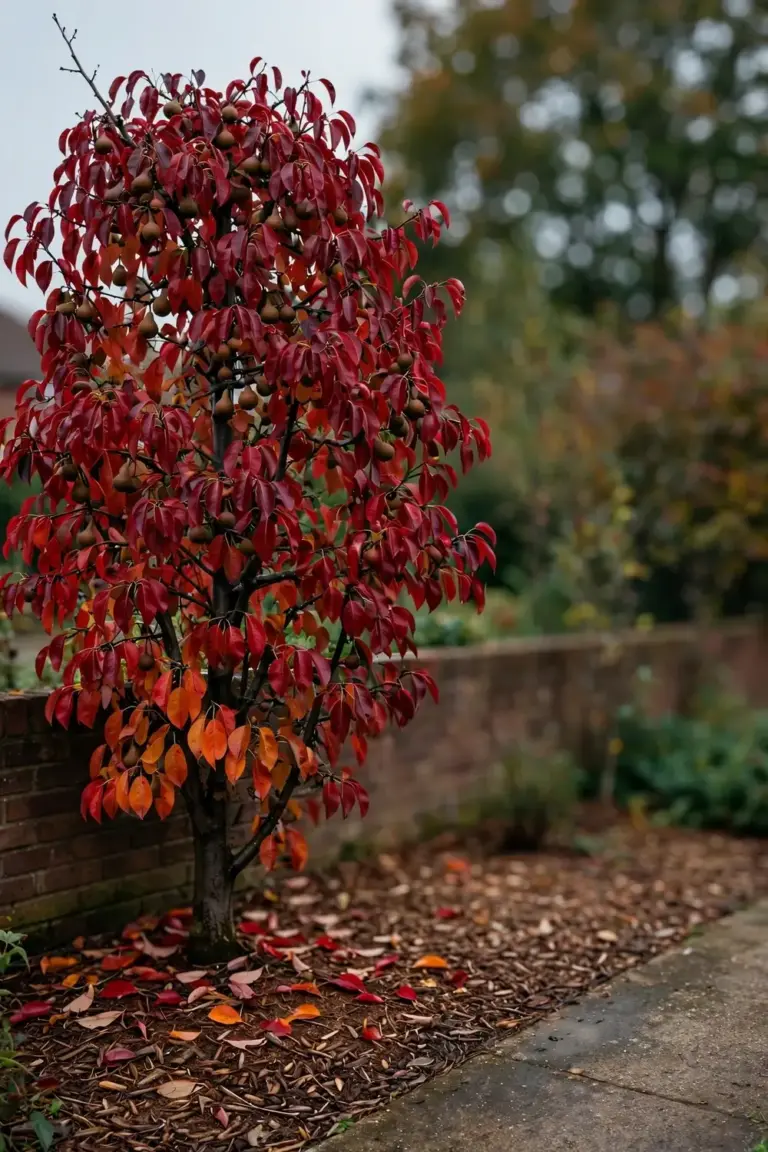
Fire blight ratings do not decide ‘Red Spire’ in Australia. The University of Connecticut plant database entry for Pyrus calleryana notes that ‘Redspire’ is more prone to fire blight infection than ‘Bradford’. Australia has kept fire blight out through biosecurity controls, according to Apple and Pear Australia. Rank ‘Red Spire’ on color, form, and fit, not on a disease that is absent from the country.
‘Red Spire’ grows more slowly than ‘Bradford’ and colors earlier in autumn. The slower growth suits a garden where the owner wants a tree that settles rather than races. Space repeat trees 4–5 m apart for a closed row, or 6 m apart for separate ovals. Full sun deepens the red; shade washes it toward yellow.
7. Winter Glow: The 8 m Broad Pyramid for Burgundy Autumn
‘Winter Glow’ is the ornamental pear for a long burgundy autumn display. The Nursery Near Me comparison of the ten best ornamental pear varieties lists it at 8 m tall and 5 m wide, with a broad pyramidal crown. The autumn color holds burgundy longer than most cultivars, which suits a garden where the autumn show is the main event. Some guides list it to 10 m tall, so plan for the taller figure on a tight site.
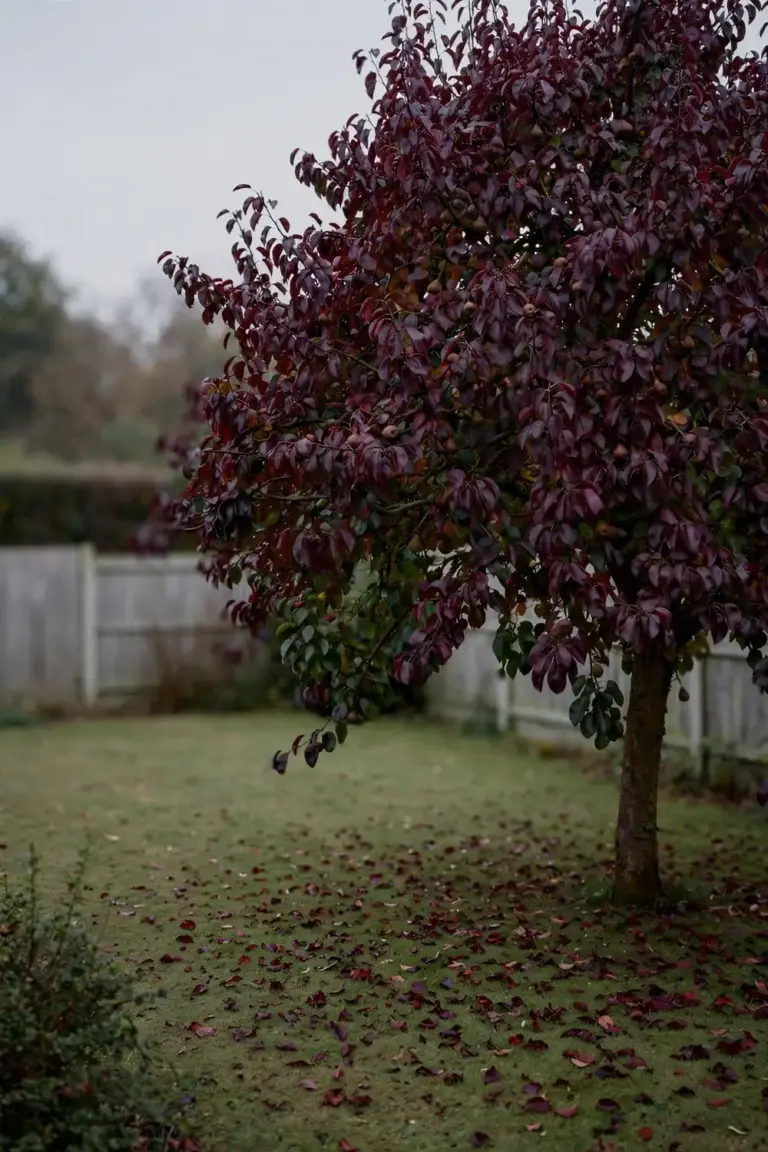
‘Winter Glow’ suits a feature position with room to spread. A broad pyramid needs 5 m of clear width and 8 m of clear height. Plant it as a single lawn specimen, or as the anchor of a front bed with low shrubs beneath. The burgundy autumn foliage pairs with cream fencing, pale render, and silver foliage. Dark brick swallows the color, so a light backdrop earns the display.
Water ‘Winter Glow’ through its first two summers. Deep watering twice a week in warm weather and once a week in mild weather builds the root system that carries the autumn show. A tree that dries out in its first summer drops leaves early and skips the color entirely. Mulch holds the moisture that the first two summers demand.
8. Aristocrat: The 10 m Open Crown for Larger Gardens
‘Aristocrat’ is the ornamental pear for a larger garden. The Nursery Near Me comparison of the ten best ornamental pear varieties lists it at 10 m tall and 7 m wide, with a broad open crown. The open crown suits a big front garden, a park edge, or a property where shade matters. Branch structure runs stronger than ‘Bradford’, with wider branch angles that resist splitting.
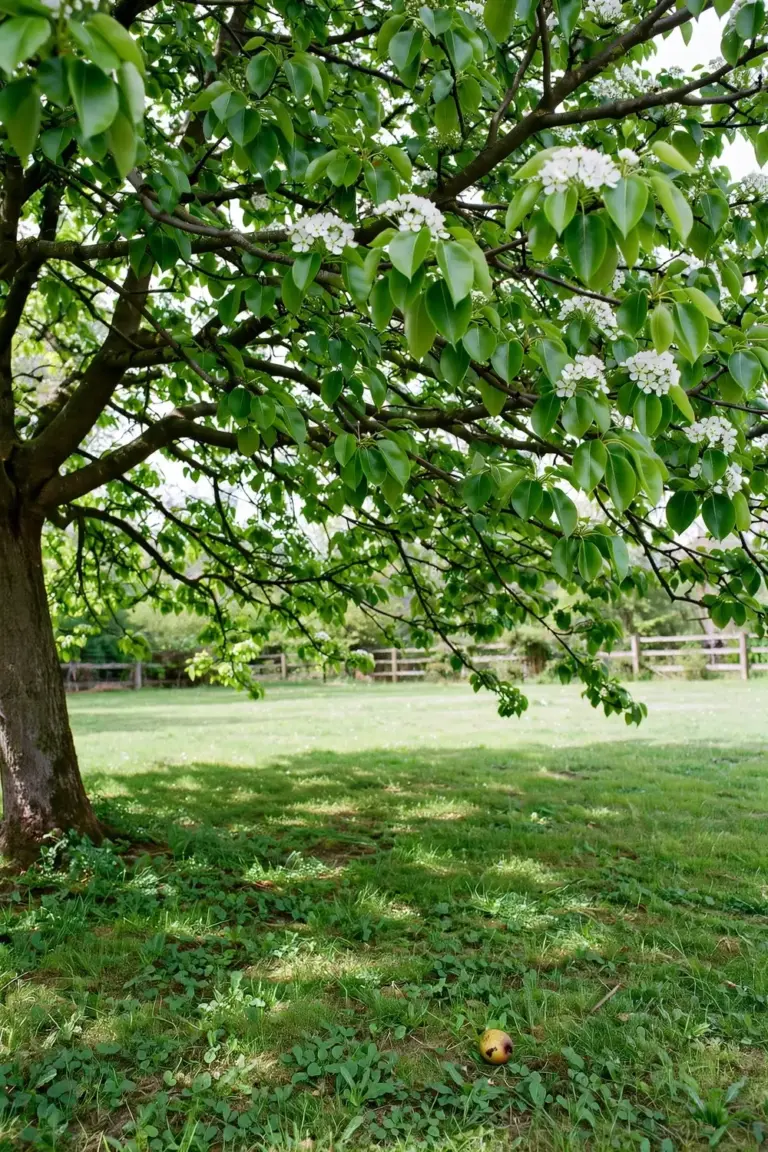
‘Aristocrat’ needs room. A 7 m crown clears a 7 m bed, a 7 m setback, and a 7 m gap to the next tree. Plant it 7 m from the house and 7 m from a neighbor’s fence. The tree repays the space with a broad summer canopy and deep red autumn color. Crowding it against a building forces pruning that ruins the open form.
‘Aristocrat’ suits formal planting. A pair flanking a driveway, a row along a boundary, or a single tree centered on a lawn all work. The pyramidal form with horizontal branching reads as deliberate from every angle. Keep the ground beneath it clear or planted low. Tall shrubs beneath an open crown tangle the lower branches and hide the form.
9. Manchurian Pear: The 10 m Cold-District Workhorse
‘Manchurian’ is the ornamental pear for cold districts. The Nursery Near Me comparison of the ten best ornamental pear varieties lists it at 10 m tall and 8 m wide, with a broad rounded crown. It handles cold winters, exposed sites, and wind that strips weaker cultivars. Botanically it is Pyrus ussuriensis, a separate species from the calleryana cultivars. The first blossom of spring often belongs to this tree.
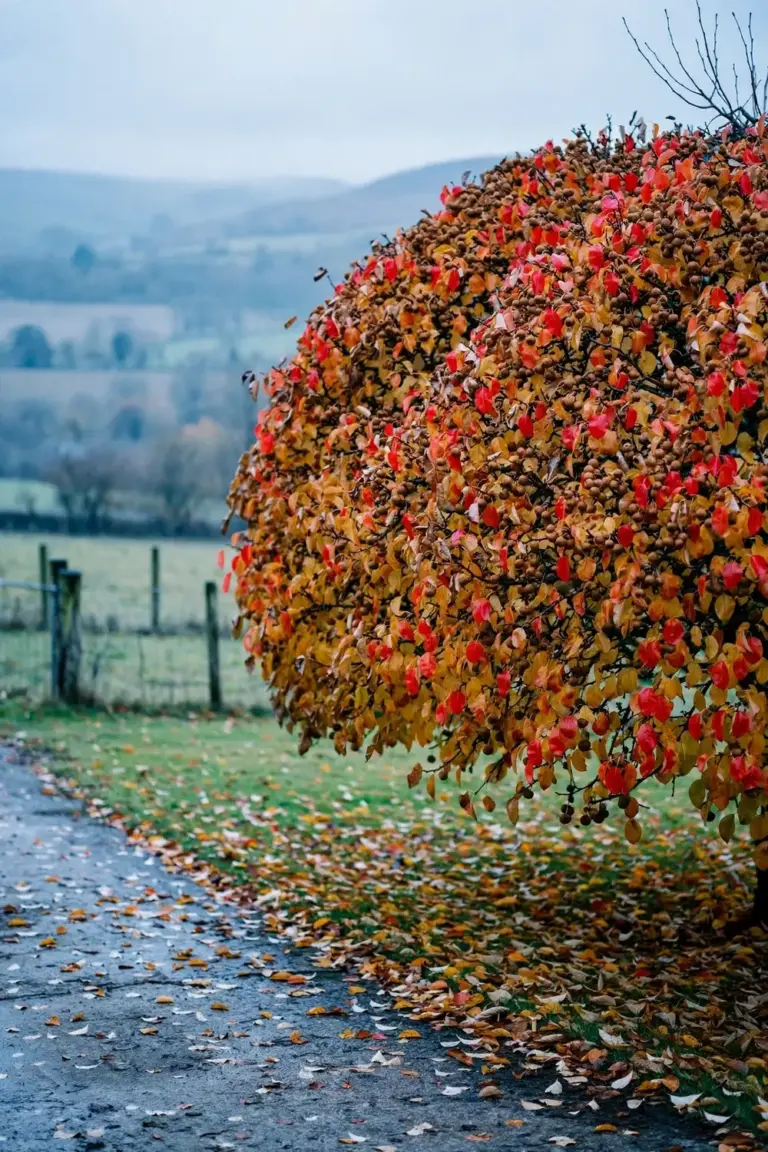
Growth runs moderate. Evergreen Trees Direct puts Manchurian growth at 40–60 cm of height per year, with mature size reached in 10–15 years, and autumn color lasting three to four weeks in most Australian climates. Plan the garden around the ten-year figure, not the planting-day figure. A tree that grows 50 cm a year reaches the fence line fast when the fence sits 5 m away.
Size guides disagree on ‘Manchurian’. One Australian guide puts it at a 20 m maximum, against the 9–12 m range in most comparisons. The 20 m figure is an outlier, but it shows the spread of published sizes. Plan for 10 m, confirm with the supplying nursery, and leave room for more. A cold-district tree that outgrows its space becomes a removal job in a garden that needed shade.
10. Bradford: The 12 m Shade Tree for Big Spaces Only
‘Bradford’ is the biggest ornamental pear on this list. The Nursery Near Me comparison of the ten best ornamental pear varieties lists it at 12 m tall and 9 m wide, with a very broad dense crown that suits big open spaces only: a large garden, a park, or a broad avenue. A suburban block under 600 square metres rarely holds a 12 × 9 m tree without conflict.
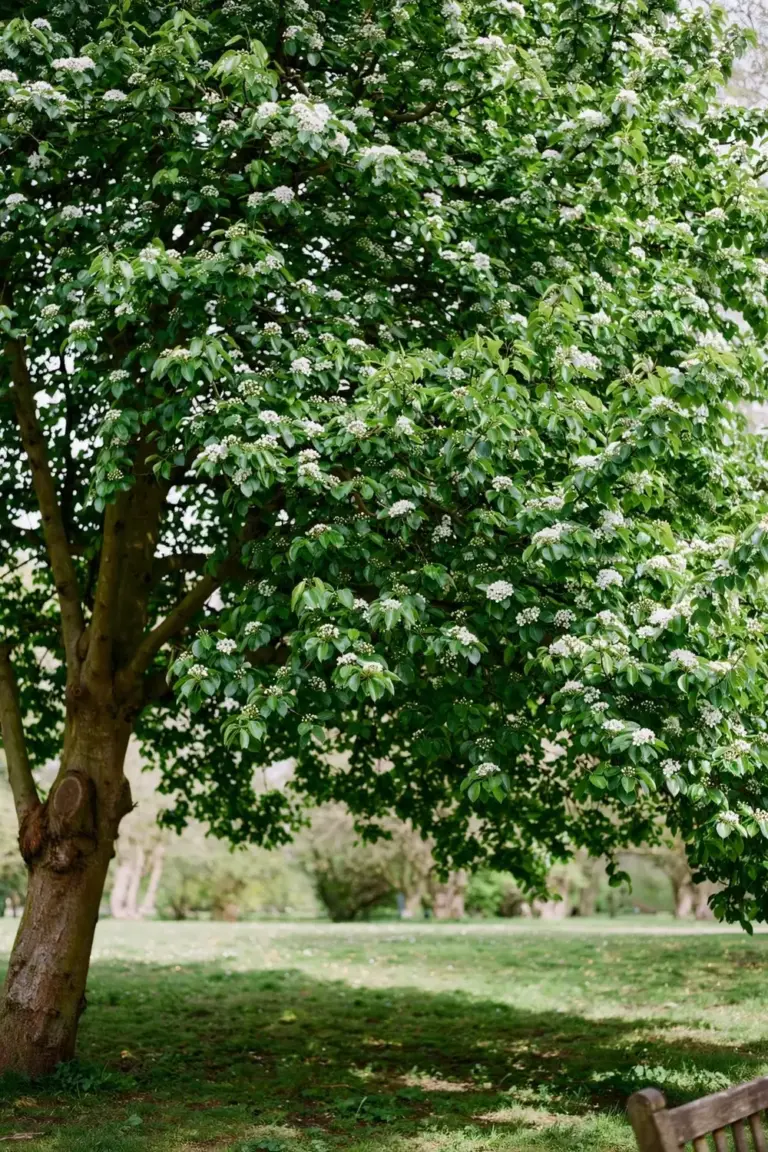
‘Bradford’ carries a structural weakness. The North Carolina Extension Gardener Plant Toolbox profile of Callery ‘Bradford’ pear notes that its branches grow at upright angles with weak crotches that break with age, wind, and ice, and that pruning is required to improve strength and structure. The same profile puts the species at a 15.2 m maximum in height and 6.1–10.7 m wide in the United States. Plant ‘Bradford’ only where a dropped limb harms nothing, and prune for structure from the first year.
‘Bradford’ also seeds the weed problem covered in the next section. Cross-pollination with other cultivars produces fertile seed that reverts toward the thorny wild form, according to the same North Carolina Extension profile. A lone ‘Bradford’ in a big garden is a shade tree. A ‘Bradford’ planted beside other ornamental pears in a street row is a seed source. The distinction matters for every planting decision below.
Check the Weed Risk and Planting Rules for Ornamental Pears Before You Plant
Callery pear has a weed record that Australian gardeners should know before planting. In the United States, Callery pear has become invasive across the south-east, according to the North Carolina Extension Gardener Plant Toolbox profile of Callery ‘Bradford’ pear. When a ‘Bradford’ cross-pollinates with other trees, it reverts back to the invasive species Callery pear, the same profile states. Birds eat the small fruit and spread the seed. Seedlings revert toward the thorny wild form.
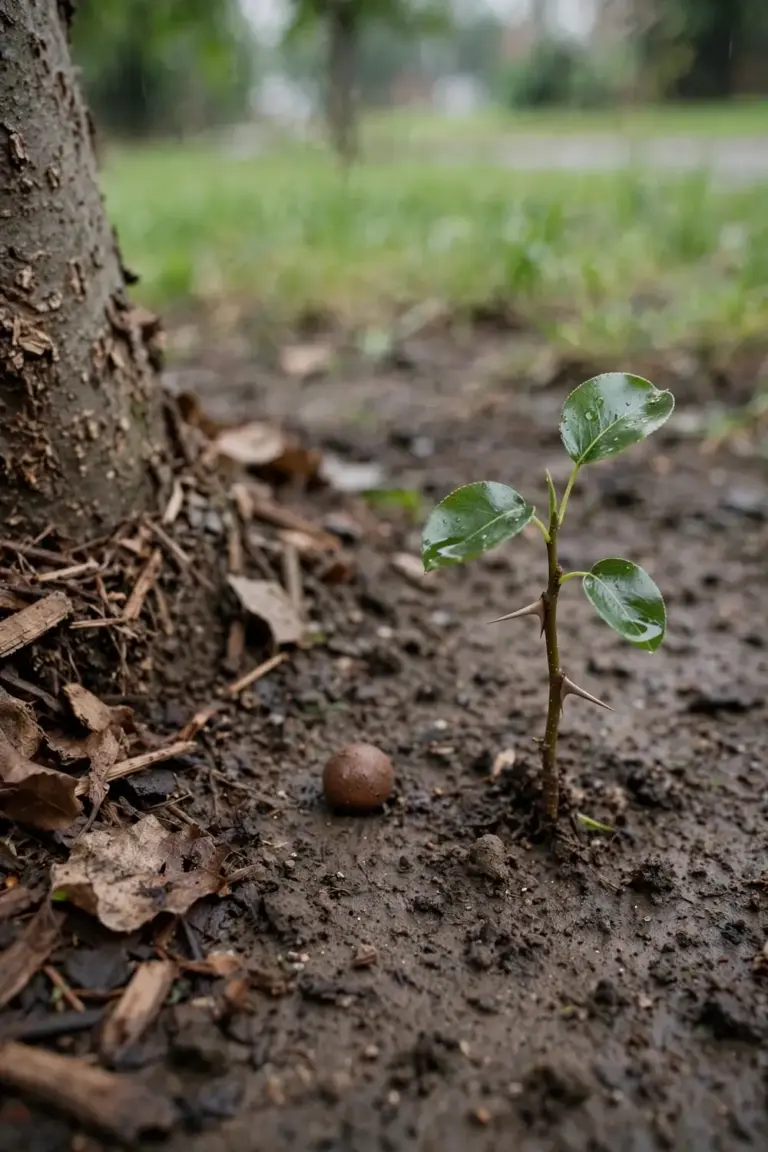
In Australia, the record is already open. Friends of Mount Majura mapped weedy Callery pear spreading in Canberra to June 2025 and titled their report “Callery Pear Invasion Has Started”, according to their mapping report. Callery pear varieties sit in the ACT municipal planting standards and grow widely in streets. Australian weed literature lists Callery pear as a potential environmental weed (Csurhes and Edwards 1998). The Canberra mapping shows what happens when street plantings seed into nearby bushland.
Check your local council’s weed list before planting near bushland, a creek, or a reserve. Do not grow seedlings from collected fruit. A seedling grown from a garden pear reverts toward the thorny wild form and carries the weed risk without the cultivar’s form. Buy a named cultivar from a nursery instead. A named cultivar on the label is the only proof of what you planted.
Pull seedlings when you spot them. A seedling under the parent tree pulls out by hand after rain. A seedling left for a season roots deep and needs a mattock. Check the ground beneath street trees and garden pears each autumn, when fallen fruit shows where the next seedlings will rise.
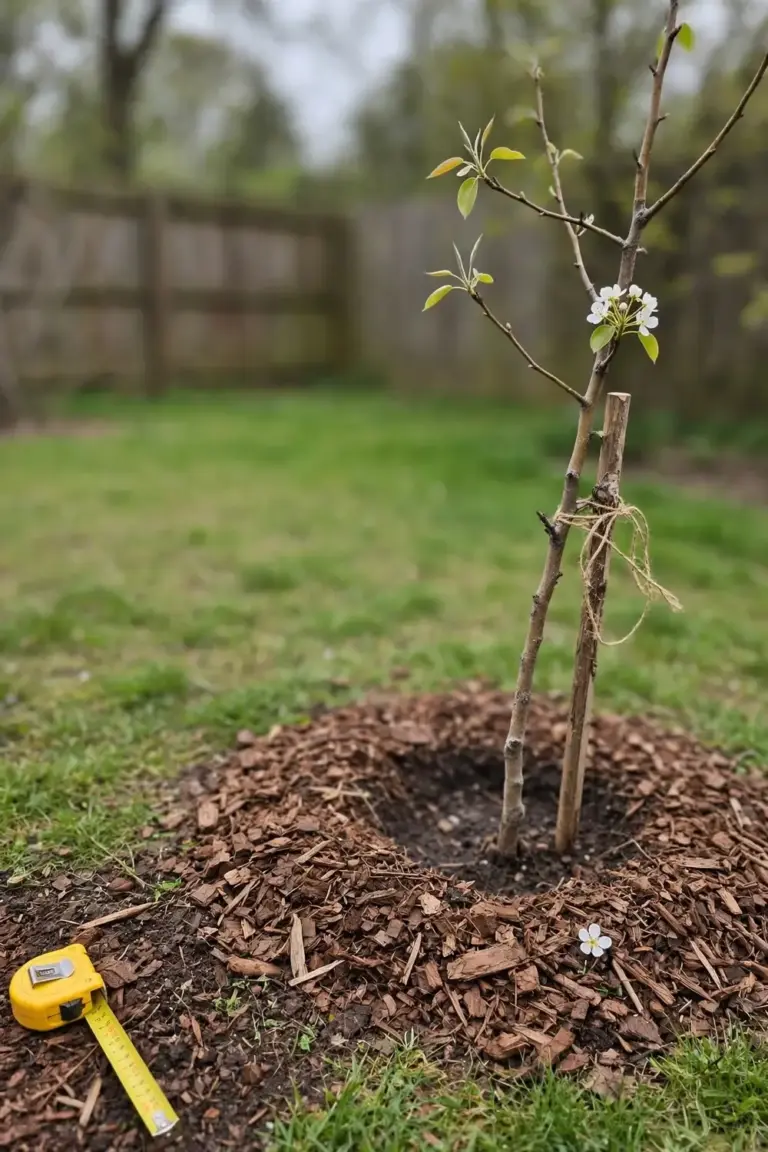
Planting follows a short set of rules. Dig the hole twice the width of the rootball and the same depth, then set the rootball level with the surrounding soil, never deeper. Stake firmly for the first two years. A strong vertical leader is the payoff. Full sun gives the strongest flowering and the deepest autumn color, while shade thins the crown and dulls the color. These steps come from Evergreen Trees Direct’s ornamental pear growing guide.
Water deeply through the first two summers. Twice a week in warm weather and once a week in mild weather builds the root system, according to the same Evergreen guide. Mulch out to the drip line to hold that moisture. Lay 75–100 mm of organic mulch with a 50 mm clear gap around the trunk, as the guide directs. The guide to what is mulching covers mulch types and the gap that keeps the trunk dry.
Prune lightly in late winter for shape. Remove crossing wood, dead wood, and branches that crowd the center. Stop early. Hard pruning ruins the natural form that makes an ornamental pear worth planting. Late frost can nip early blossom, so a tree that flowers before the last frost loses its spring show some years. The guide to how to protect plants from late frost covers the covers and positions that save an early bloom.
Check the stake after storms. A leaning stake rubs bark and opens a wound. Remove the stake after two years, once the trunk stands firm in wind. A tree that still leans without the stake needs another season of support.
Frequently Asked Questions
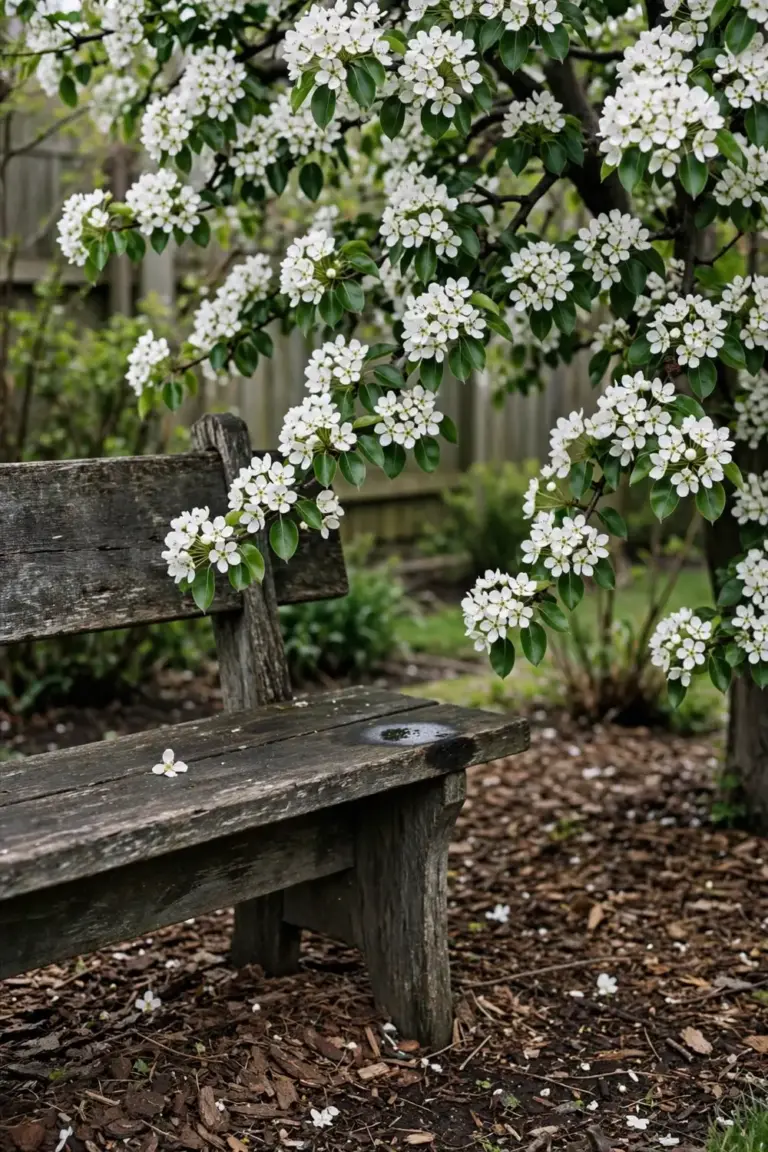
‘Capital’ is the best pick for a narrow driveway. It reaches 10 m tall and stays 2–3 m wide, so it fits a 3 m nature strip with room to spare. Space repeat trees 2–3 m apart for a screen, or 4 m apart for separate columns. Confirm the expected height with the supplying nursery, since one wholesale sheet lists it at 11 m.
Ornamental pears and fruiting pears are different trees. Ornamental pears are Pyrus calleryana cultivars grown for flower and form, with small hard fruit. Fruiting pears are Pyrus communis, grown for eating. Check the botanical name on the label before you buy. The two trees look alike in spring and diverge everywhere else.
Growth runs moderate for most cultivars. Manchurian pear grows 40–60 cm of height per year and reaches mature size in 10–15 years, according to Evergreen Trees Direct. Other cultivars grow at a similar pace. Plan the garden around the ten-year figure, not the planting-day figure. A tree that grows 50 cm a year reaches the fence line fast.
Ornamental pears drop small hard fruit 1 cm across. The fruit is not messy the way a fruiting pear is. Birds eat much of it. The rest falls to the lawn. The weed risk matters more than the mess, because birds spread the seed and seedlings revert toward the thorny wild form. Buy a named cultivar and check your council weed list near bushland.
A pot suits ‘Korean Sun’ for a few years, and no other variety on this list. ‘Korean Sun’ reaches 3–4 m tall, so a 100 litre pot holds it while young. The other nine varieties outgrow any pot within a few seasons. A pot-grown pear needs daily watering in summer and root pruning every two to three years. Plant the rest in the ground.
Start With the Space, Then Pick the Pear
Measure the space first. Pick the pear second. ‘Capital’ fits the narrow bed, ‘Chanticleer’ fits the avenue, and ‘Korean Sun’ fits the courtyard. ‘Snow Pear’ fits the small garden. ‘Edgewood’ fits the all-round job. ‘Red Spire’ and ‘Winter Glow’ fit the autumn color brief, while ‘Aristocrat’ and ‘Manchurian’ fit the larger garden. ‘Bradford’ fits the big open space and nowhere else. The table at the top holds every figure in one place. Confirm the mature size with the supplying nursery, check the council weed list near bushland, then plant for the mature tree, not the nursery pot.