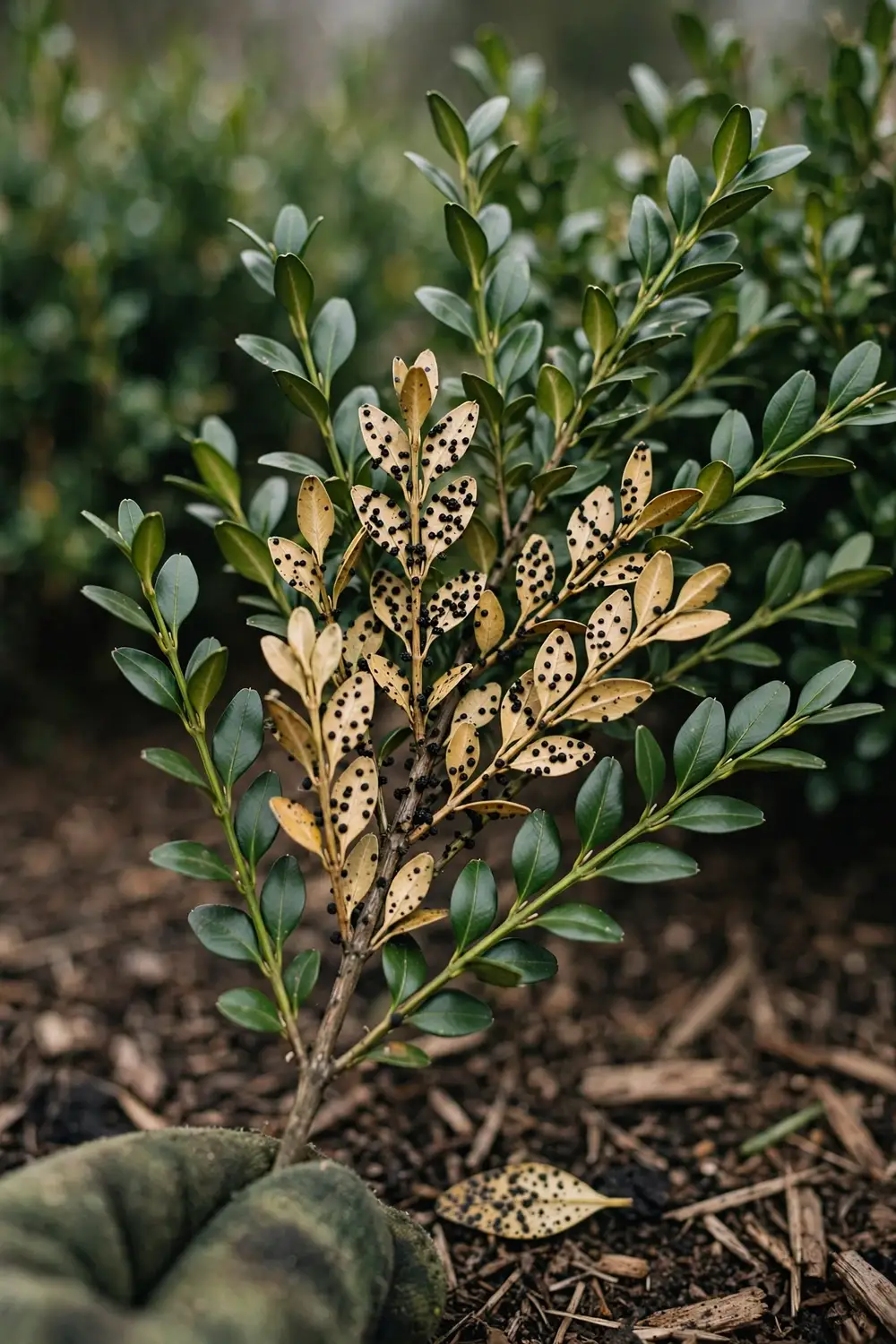

7 moves separate Macrophoma leaf spot on boxwood from the two diseases that actually kill boxwood. Macrophoma leaf spot on boxwood turns older leaves straw-colored and dots them with tiny black fruiting bodies. The shrub looks doomed. The fungus behind the spots is weak.
Macrophoma leaf spot on boxwood colonizes leaves already damaged by cold, wind, or bad pruning. The shrub sheds the spotted leaves and grows past the damage when the stress lifts. That recovery is the whole story of this disease.
The rest of this page is 7 moves, from the black-dot check to the winter shield. Read the identification sections first if the shrub still holds spotted leaves. Start at Step 1 if the damage already looks old.
What Macrophoma Leaf Spot Actually Is
Macrophoma leaf spot on boxwood is a minor fungal leaf disease of boxwood. A weak fungus colonizes leaves already weakened by cold, wind, or bad pruning. The shrub sheds the spotted leaves and recovers.
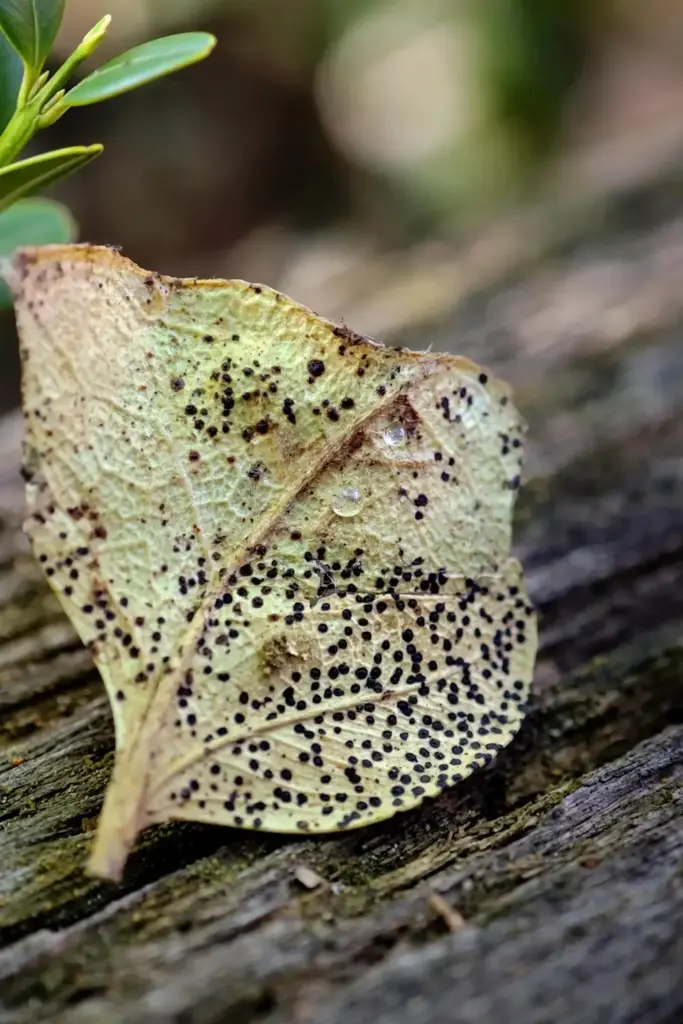
The fungus carries several names. Extension pages still call it Macrophoma candollei. A 2022 Plant Pathology Journal study places the boxwood fungus as Neofusicoccum buxi, with Dothiorella candollei among its older names. Gardeners meet it as Macrophoma leaf spot. Macrophoma leaf spot belongs to the Botryosphaeriaceae family.
The University of Maryland Extension page on Macrophoma leaf spot calls it a weak fungus and notes that most boxwoods are susceptible to infection. Most boxwoods means most boxwoods. No boxwood in the home landscape sits safely outside its reach, and no boxwood needs a rescue program because of it.
Two other diseases share the Macrophoma name in older literature, and neither one describes boxwood leaf spot. Tea branch canker is a commercial plantation disease. Soybean stem canker belongs to a different fungus entirely. Dothiorella dieback is a separate canker complex, and the shared genus name in older literature does not make the two diseases one problem. Keep them apart.
How to Identify Macrophoma Leaf Spot on Leaves
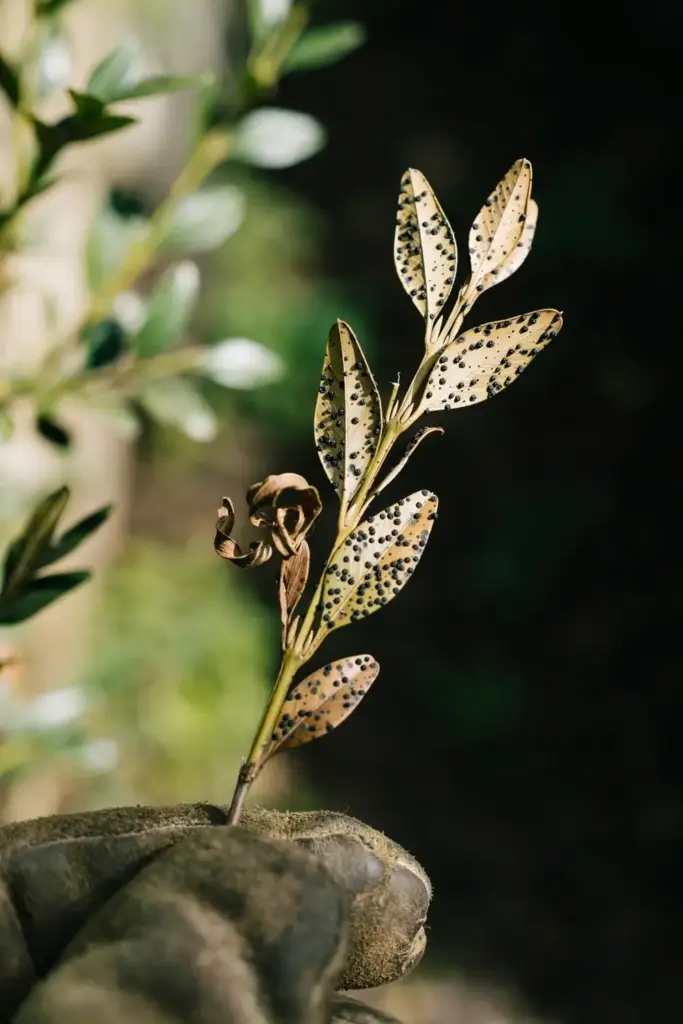
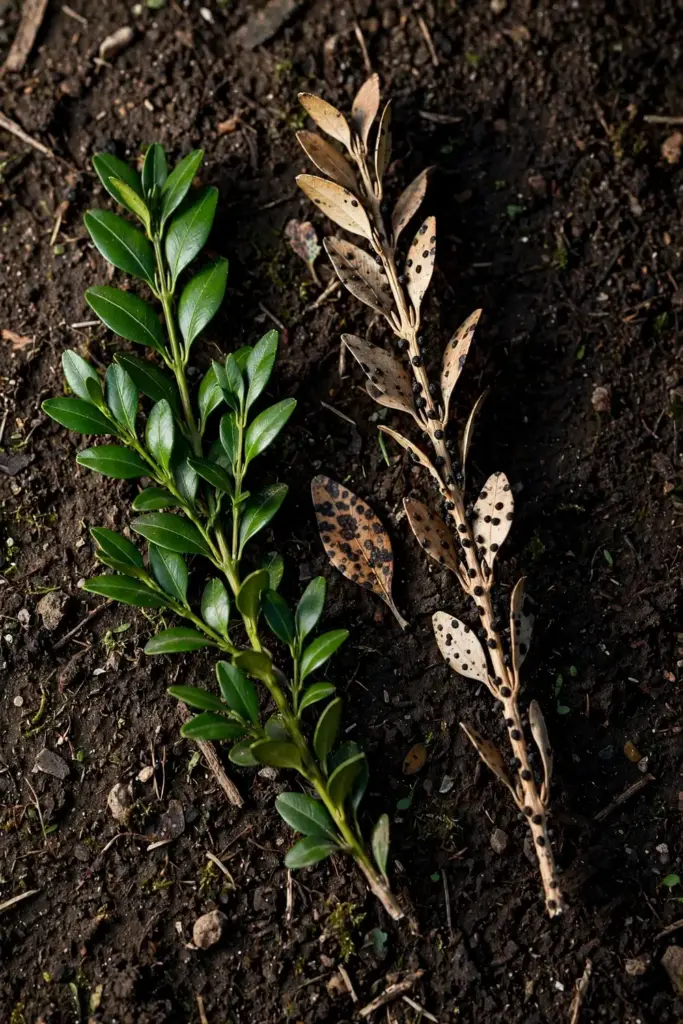
Macrophoma leaf spot on boxwood shows as straw-colored leaves dotted with tiny black raised fruiting bodies. The spotted leaves stay attached to the stem. That attached-leaf detail separates it from diseases that strip the shrub bare.
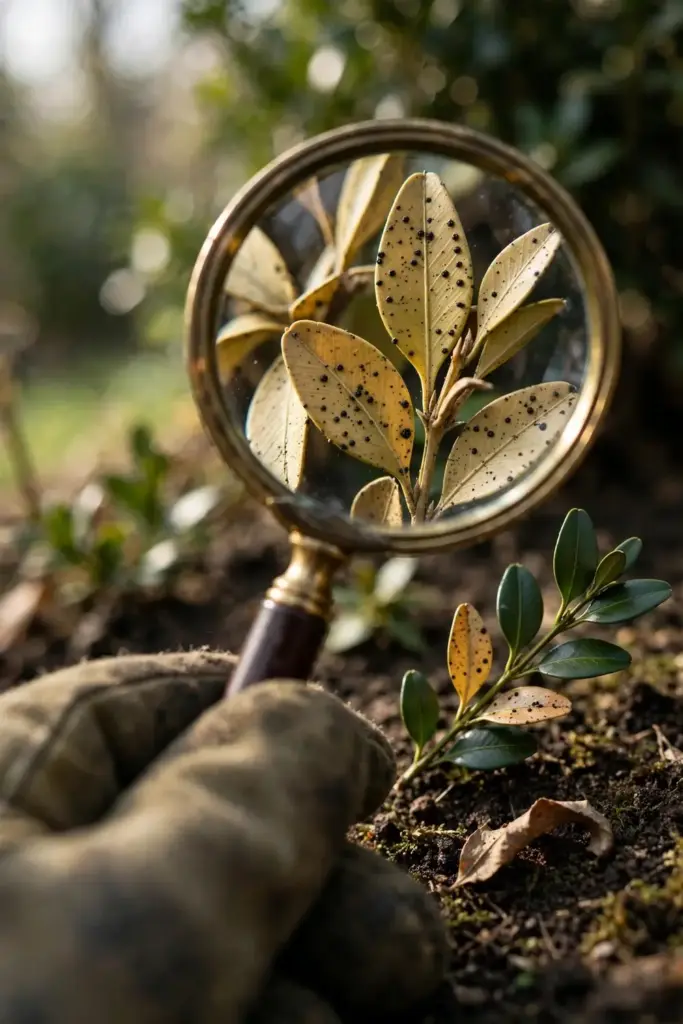
The Purdue Plant Doctor page on Macrophoma leaf spot describes pinkish-straw colored leaves that stay attached and develop black pustules. Pink spores ooze from the black pustules in wet weather. The color sequence runs from yellow to straw to spotted black. Each stage stays on the stem.
A hand lens turns the black dots into raised bumps. Flat discoloration without bumps points elsewhere. Hold the lens over the worst leaf and look for the raised pycnidia. The bumps are the fruiting bodies. Flat spots without bumps belong to another problem.
Gardening Know How notes that Macrophoma yellows the oldest foliage first. Check the interior of the shrub, where the oldest leaves sit. The outer growth often stays green while the interior yellows, because the oldest leaves sit deepest in the canopy. That inside-out pattern fits Macrophoma leaf spot on boxwood.
Black dots alone do not name the disease. Black dots plus straw-colored leaves plus leaves that stay attached name it. All three signs together make the call. One sign alone never does.
How to Identify Macrophoma Leaf Spot on the Whole Shrub
Macrophoma leaf spot on boxwood starts on scattered leaves inside the canopy. The shrub keeps its shape. Bare stems and whole-branch dieback point to a different problem.
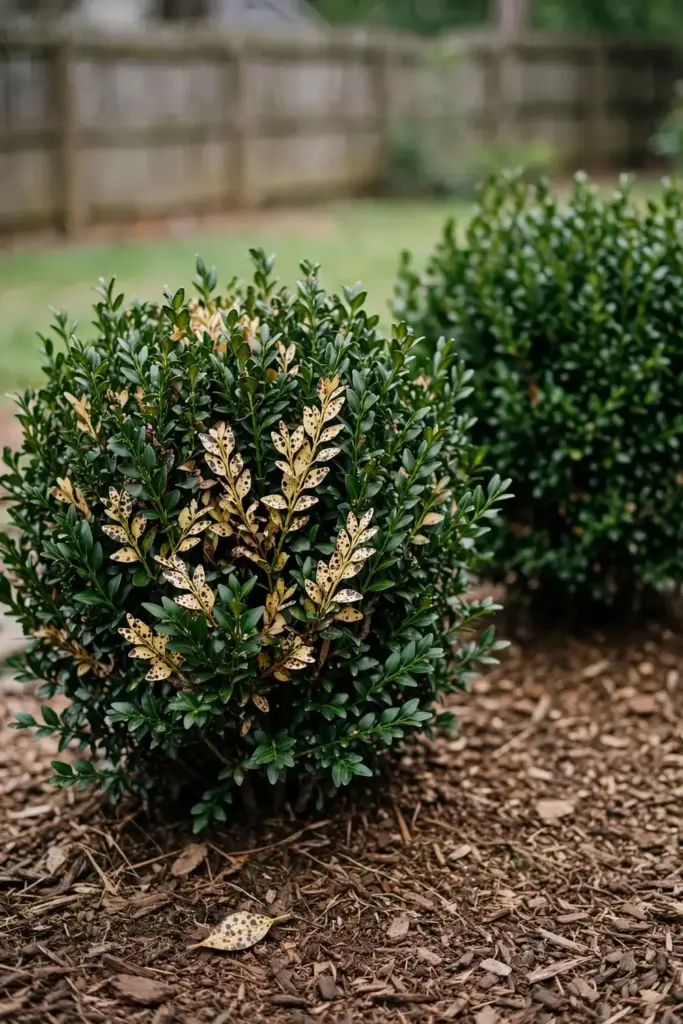
Look at the pattern across the shrub. Macrophoma spots appear on leaves already stressed by cold or poor pruning. The damage stays patchy. A shrub that loses leaves across every branch at once carries something else.
University of Georgia Extension notes that diseases tend to start on one or two branches, while winter injury colors leaves across the whole shrub at once. That contrast helps. Patchy damage points toward disease. Uniform damage points toward weather.
Spotted leaves cling to the stem for weeks after they discolor. Boxwood blight strips leaves fast. The difference shows in the mulch under the shrub. A blighted shrub drops a carpet of leaves within days. A Macrophoma shrub keeps its spotted leaves attached for weeks.
If the whole shrub bronzes at once after a cold snap, suspect winter injury first. Winter injury colors every exposed leaf the same way. Macrophoma never does. The uniform pattern is weather, and the patchy pattern is disease.
Which Boxwoods Get Hit Hardest by Macrophoma Leaf Spot
Most boxwoods are susceptible to Macrophoma leaf spot. Older shrubs and stressed shrubs show the worst spotting. Healthy vigorous shrubs rarely carry it.
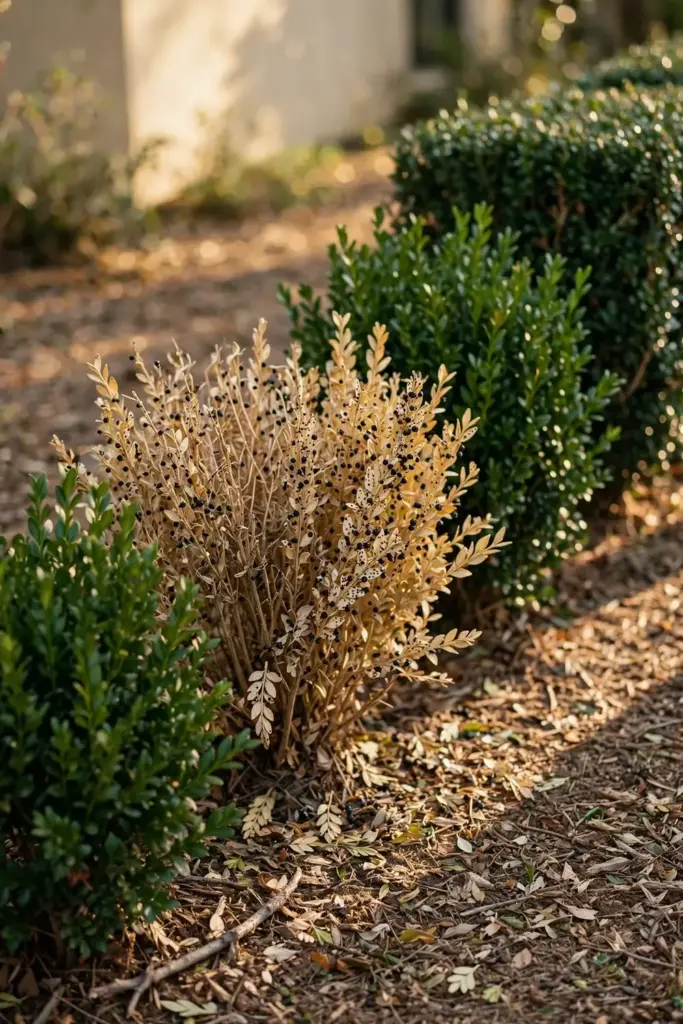
The same Extension notes behind the identification above name no resistant cultivar. Treat every boxwood as susceptible. American boxwood, English boxwood, and Japanese boxwood all sit in the same risk pool. Cultivar choice does not buy protection here.
Gardening Know How notes that boxwood decline strikes older boxwoods, those 20 years old or more. Macrophoma is one contributor to that decline, never the whole syndrome. Decline is a catch-all for poor growth from stress plus disease. Macrophoma plays a part in it. The part stays small.
A University of Guelph thesis on boxwood leaf and stem diseases reports that healthy vigorous plants rarely carry Macrophoma infection. Vigor is the shield. A shrub with deep roots, steady water, and an open canopy shrugs off the spores that land on it.
Sheared hedges sit high on the risk list. Shearing seals the canopy into a damp shell. Interior leaves stay wet long after rain and dew have dried off the outer growth. Thinned shrubs dry faster and spot less. The pruning method decides the risk more than the cultivar does.
Site new boxwoods for air and drainage from the start, because the planting site sets the disease pressure for decades. A bed that drains well keeps roots firm through wet springs. A corner with moving air dries leaves fast. A low pocket that holds frost and water grows spotted shrubs. The planting site decides the disease pressure for decades, so choose it with care.
Macrophoma Leaf Spot vs Volutella Blight
Fruiting-body color splits Macrophoma leaf spot from Volutella blight. Macrophoma dots stay black. Volutella masses turn salmon pink.
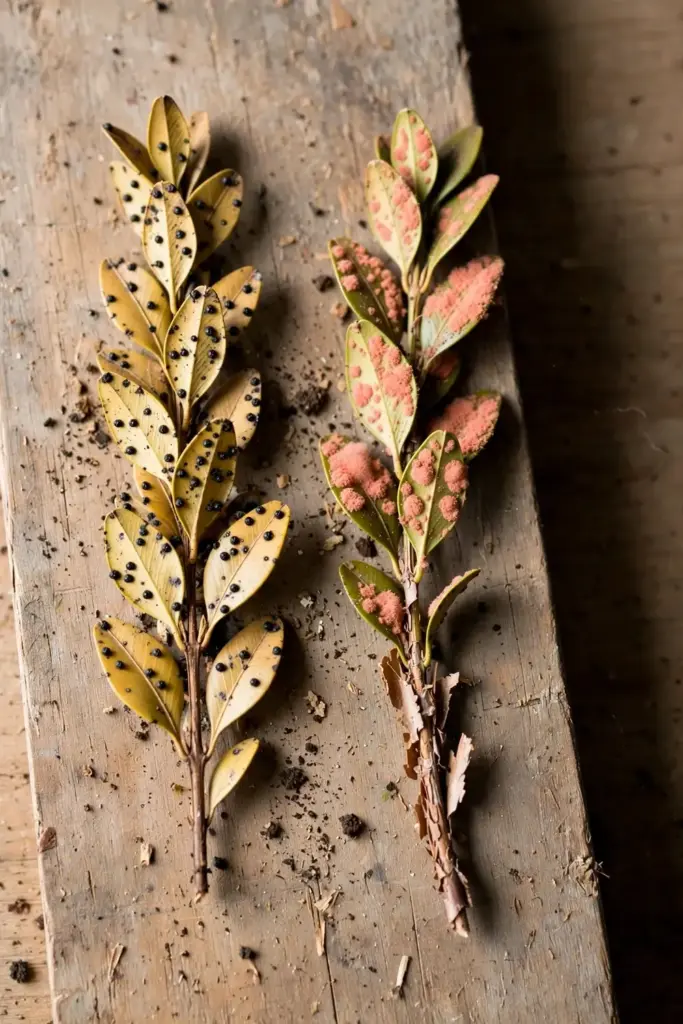
The University of Maryland Extension page on Volutella blight describes salmon pink fruiting bodies on leaves and stems in moist weather, plus loose bark and girdling. The Purdue Landscape Report on Volutella blight and dieback adds bark splitting, sunken cankers, and blackened wood under the canker. Virginia Tech Extension notes that Volutella spore masses start white and turn salmon pink at maturity.
| Clue | Macrophoma Leaf Spot | Volutella Blight |
|---|---|---|
| Pathogen | Neofusicoccum buxi, formerly Macrophoma candollei | Pseudonectria buxi and Pseudonectria foliicola |
| First sign | Straw-colored older leaves with black dots | Delayed stunted spring growth, then branch dieback |
| Leaves | Stay attached, straw-colored | Turn red, bronze, then yellow, and die back with the branch |
| Stems and bark | No cankers, bark stays tight | Loose peeling bark, girdling, sunken cankers, blackened wood |
| Fruiting bodies | Tiny black raised dots on leaves | Salmon pink masses on leaves and stems in moist weather |
| Damage level | Minor and cosmetic, shrub recovers | Serious, branch loss harms shape and ornamental value |
| Management | Thin, prune out spotted growth, skip fungicides | Prune infected branches to healthy tissue, destroy debris, thin for air |
Boxwood blight is a third disease. Purdue Plant Doctor describes dark leaf spots, black stem streaks, and rapid defoliation. It moves faster and hits harder than either disease in the table. Suspect it when leaves drop fast and stems show black streaks.
Phyllosticta leaf spot on boxwood and hydrangea shows tan spots with dark borders. Macrophoma shows straw-colored leaves with black fruiting bodies. The two diseases share a host and little else.
Why Macrophoma Leaf Spot Follows Stress and Winter Injury
Macrophoma leaf spot on boxwood is a secondary disease. The fungus enters leaves already damaged by cold, wind, or bad pruning. Healthy leaves resist it.
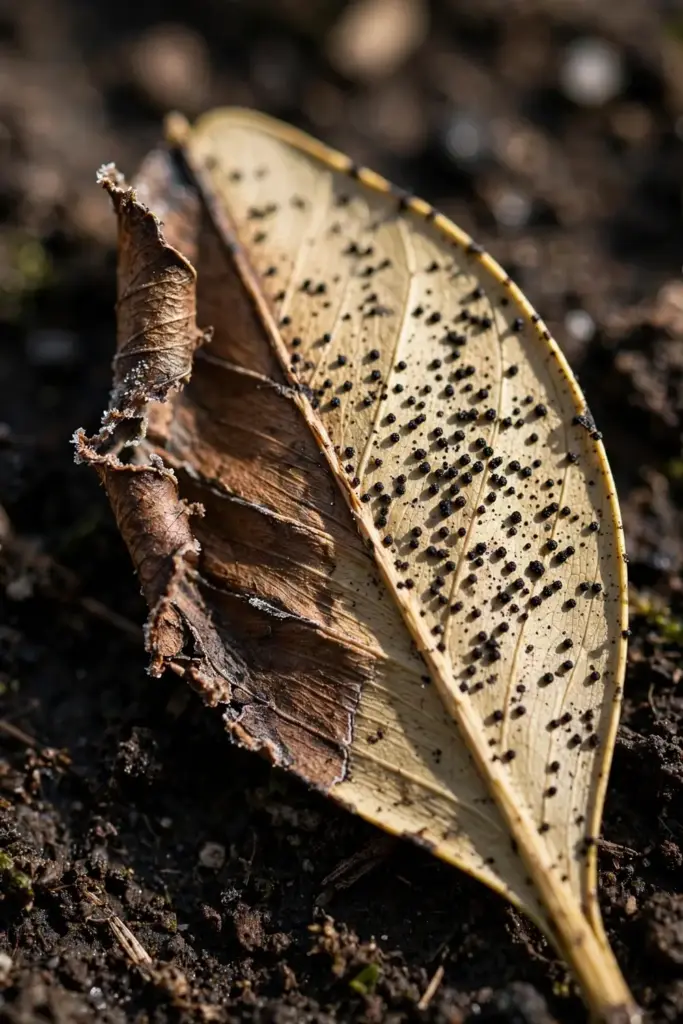
Purdue Plant Doctor states the mechanism plainly. The pathogen invades leaves damaged by cold, wind, or bad pruning practices, and spreads from there. The damage comes first. The fungus comes second. No damage means no opening.
University of Arkansas Extension calls Macrophoma a secondary colonizer of dead leaves. Its presence signals that the plant already carries stress from another disease or from the environment. The black dots are a symptom of stress. They are never the root cause.
Cold injures boxwood leaves. Wind dries boxwood leaves and pulls moisture out of evergreen foliage all winter. Bad pruning wounds boxwood leaves. Macrophoma colonizes the damaged leaves. Each stress opens a door. The fungus walks through doors other forces opened, and it needs no invitation of its own.
Treatment aimed at the fungus misses the cause. Treatment aimed at the stress removes the opening the fungus uses. Close the door and the fungus stays outside, with no damaged leaf left to colonize. That is why every step below targets stress, not spores.
New growth covers the loss. The shrub replaces spotted leaves in spring when the stress lifts. The recovery is slow. It is also reliable. A shrub that survives winter with less damage spots less the next year.
What Makes Macrophoma Leaf Spot Worse in a Home Garden
Shearing, dense canopies, wet foliage, and winter exposure make Macrophoma leaf spot worse. Each one holds moisture on damaged leaves. Dry leaves starve the fungus.
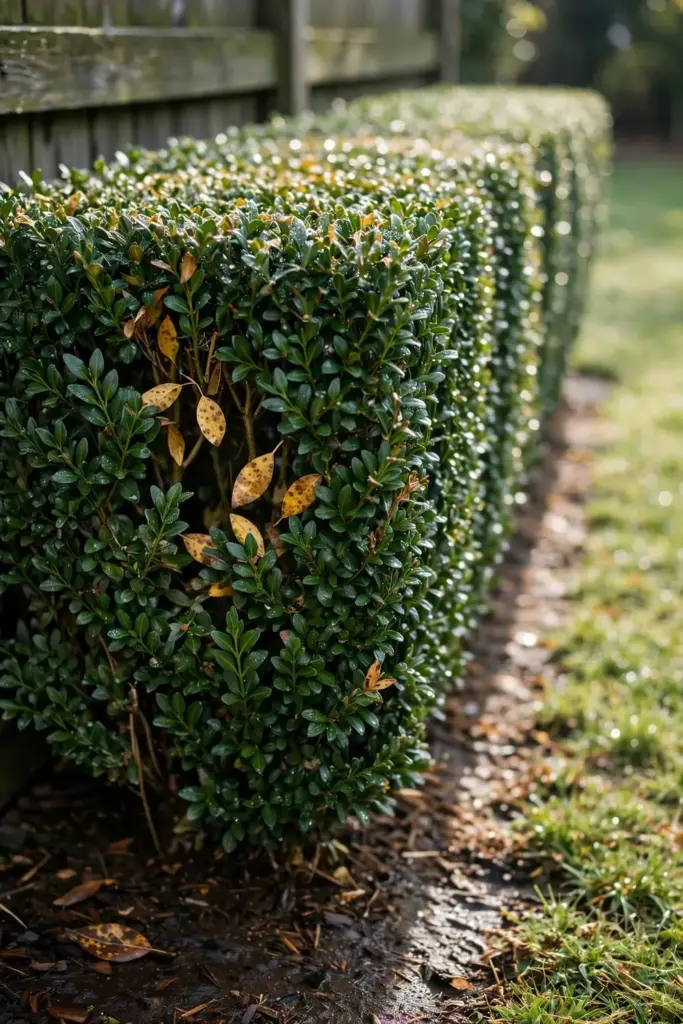
Shearing cuts every stem tip at one height. The canopy closes into a damp shell. Interior leaves stay wet long after rain and dew have dried off the outer growth. A sheared hedge dries last in the garden. That wet interior is where the fungus works, hidden from sun and air.
Dense planting makes the same problem bigger. Boxwoods crowded against fences or walls trap still air. Still air holds moisture. Moisture holds the disease. Space is medicine for a boxwood hedge.
Overhead watering wets the leaves the fungus needs. Sprinklers soak the canopy on a schedule the weather never asked for. The leaves stay wet into the night. Night wetness gives the fungus hours to work.
Gardening Know How lists excess water in the soil among the stresses behind boxwood decline. Soggy roots stress the shrub. A stressed shrub spots more. Drainage matters as much as watering.
Fallen leaves lodged in branch crotches hold moisture against the stems. The interior of a boxwood traps fallen leaves for months. That trapped debris keeps the inner canopy damp. Clean crotches dry faster.
Winter exposure tops the list. Wind and cold damage the leaves the fungus later colonizes. A boxwood on an exposed corner spots harder than one in a sheltered bed. The winter writes the spring disease report.
Step 1: Decide Whether This Boxwood Needs Treatment at All
Most boxwoods with Macrophoma leaf spot need no treatment. The disease is cosmetic. The shrub recovers when the stress lifts.
A spray program costs money and time and buys nothing here. No fungicide is labeled or effective for this disease. The spray bottle stays on the shelf. The budget stays in the pocket for tools that actually help the shrub.
Treat the stress, not the spots. Water in drought, and thin the canopy before the next wet spell. Shield the shrub from winter wind. Those three moves do more than any product. They close the doors the fungus uses, one stress at a time.
Act only when the shrub shows a second problem, and let the symptom name the response. Salmon pink masses on the stems mean Volutella, the bigger problem. Rapid leaf drop means boxwood blight. Either one changes the plan. Macrophoma alone never changes it.
Skip the rescue spray. Spend the effort on Steps 2 through 7. The steps below cost labor and attention. They return a healthier shrub. A spray returns a receipt.
Step 2: Prune Out Affected Growth and Destroy the Debris
Prune out the affected growth and destroy the debris. Cutting removes the fruiting bodies that spread spores. Destruction keeps the spores out of the bed.
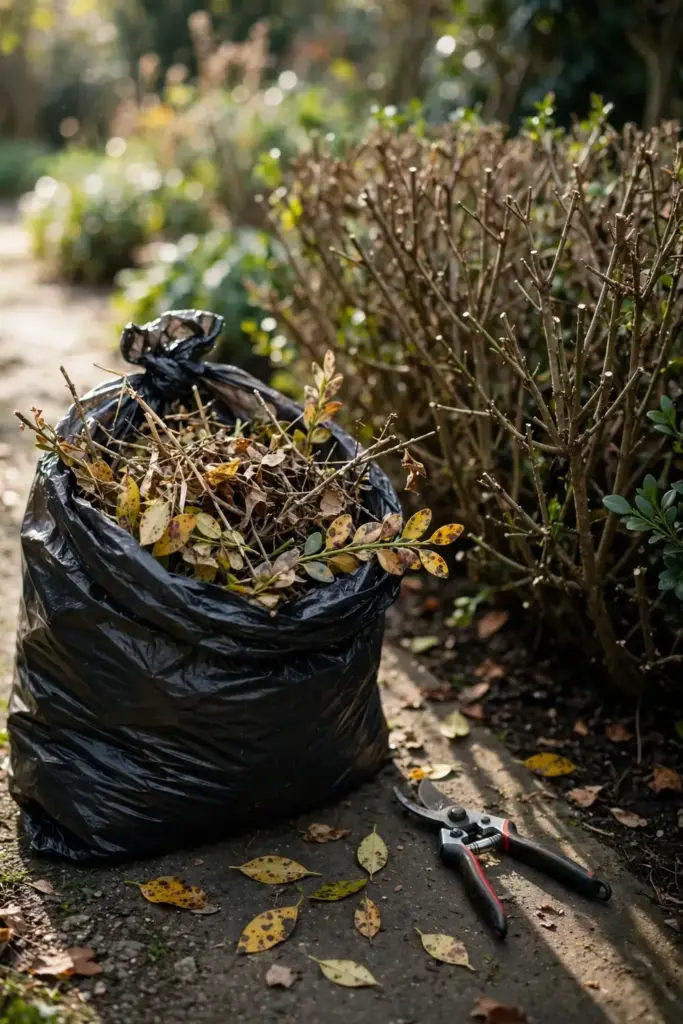
Purdue Plant Doctor advises gardeners to prune out the affected portion of the plant. Cut back to healthy green growth. Leave no spotted leaves on the cut stem. The clean cut is the point.
Prune when the foliage is dry. Dry foliage spreads fewer spores across tools and gloves than wet foliage does. Wet foliage smears spores across every cut. A dry morning beats a wet afternoon for this job.
Bag the cuttings before they sit on the soil. Send them out with municipal waste on collection day. Do not compost the cuttings. Home compost piles rarely sustain the heat that kills fungal fruiting bodies. The compost pile would save the spores for next season.
Clean tools after the job. Wipe blades before they touch the next shrub. Dirty tools carry spores from a sick shrub to a healthy one. The wipe takes seconds. The infection takes a season.
Shake dead leaves out of the branch crotches before they settle in for the season. The interior of a boxwood traps fallen leaves for months. Those trapped leaves hold moisture and spores against the stems for months. A shake and a rake clear them.
Step 3: Thin the Shrub Instead of Shearing It
Thin the shrub instead of shearing it. Thinning opens the canopy. Shearing seals it.
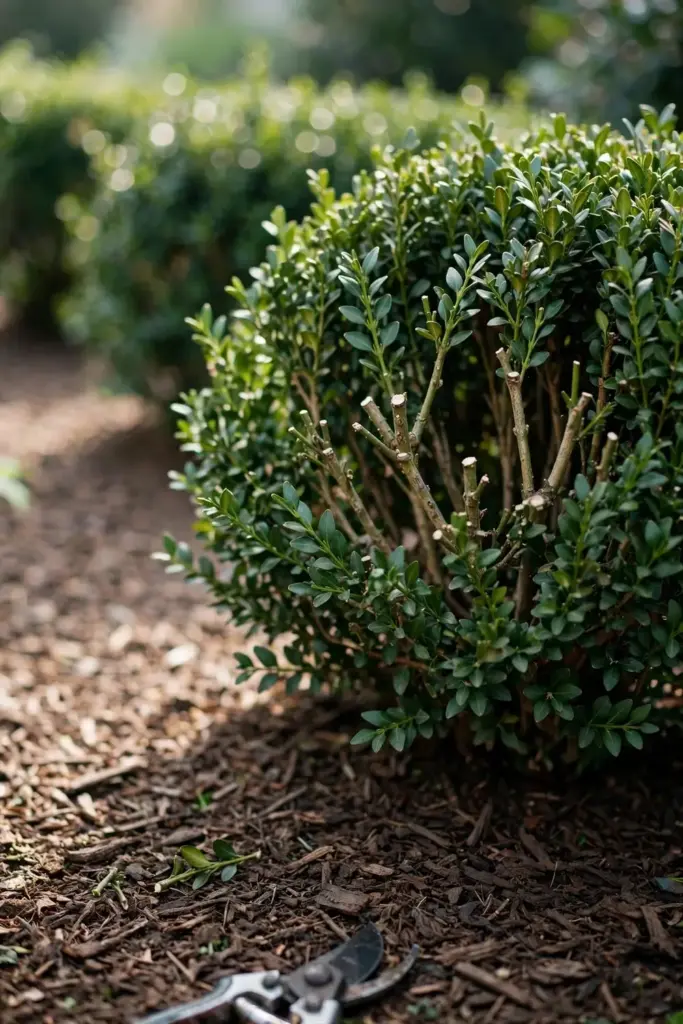
The University of Maryland Extension calls proper pruning and thinning, instead of shearing, the most effective management for this disease. Thinning increases air circulation so leaves dry. Dry leaves break the disease cycle. That sentence is the whole management plan in miniature.
Reach inside the shrub. Cut selected stems back to a side branch. Leave gaps that let light and air reach the interior. The shrub should look open, never hollowed. Light in the middle is the goal.
The spring pruning techniques guide covers the timing and the cut shapes for woody shrubs. Thin in spring before new growth hardens. The shrub seals the cuts fast in spring growth.
Thin a little each year. A hard one-day gutting stresses the shrub and opens the door the fungus uses. Steady thinning beats a single hard cut. The shrub never notices a light thinning. It notices a scalping.
Skip the shears on a shrub with Macrophoma. Hand pruners do the thinning work. Shears cut everything at one height and seal the canopy again. The pruner picks stems. That choice is the treatment.
Step 4: Open the Air and Keep Foliage Dry
Open the air around the shrub and keep the foliage dry. Air circulation dries leaves after rain. Dry leaves break the disease cycle.
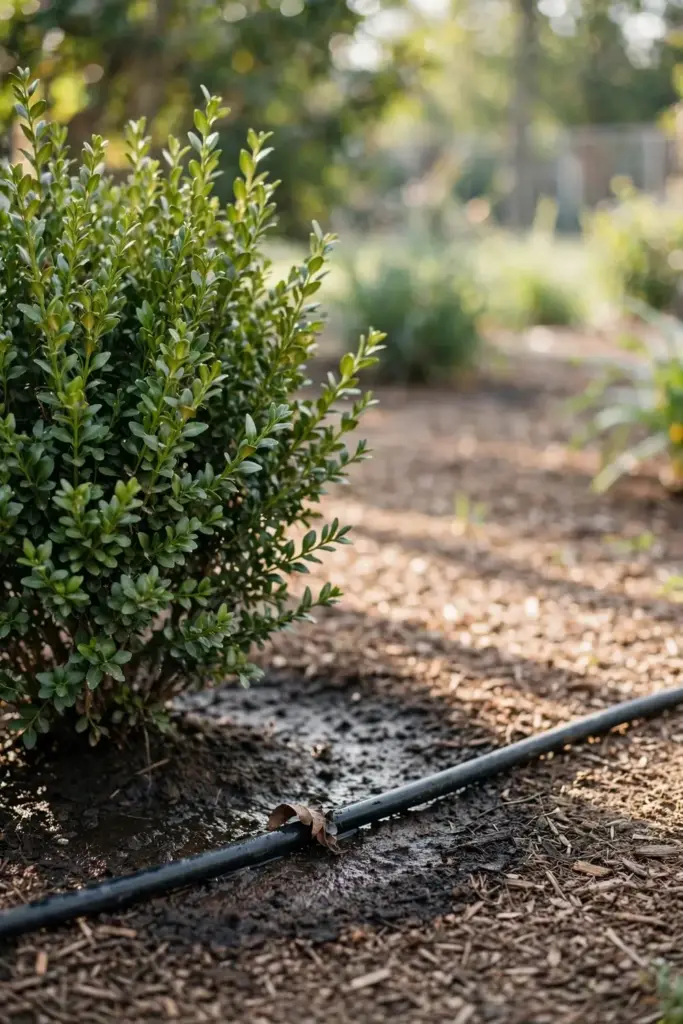
Do not crowd new boxwoods against fences or walls. Leave room for air to move on all sides. A hedge needs breathing room. A hedge pressed against a wall dries last and spots first.
Water at the base. Drip lines and soaker hoses beat overhead watering. Wet leaves feed the fungus. Dry leaves starve it. The hose belongs at the soil, never over the canopy.
Water in the morning. Morning water dries during the day. Evening water sits on the leaves all night. Night wetness is the longest shift the fungus gets.
Keep mulch off the stems. A mulch ring holds moisture in the soil, not against the bark. Bark that stays wet rots. Bark that dries stays sound. Pull the mulch back a finger width from every stem.
Prune neighboring shrubs that shade the boxwood. Shade holds moisture. Sun and air dry it. A boxwood in a still pocket spots harder than one in moving air. Open the pocket.
Step 5: Protect Boxwood From Winter Injury
Protect boxwood from winter injury. Winter injury opens the leaves Macrophoma colonizes. Prevention here beats every later step.
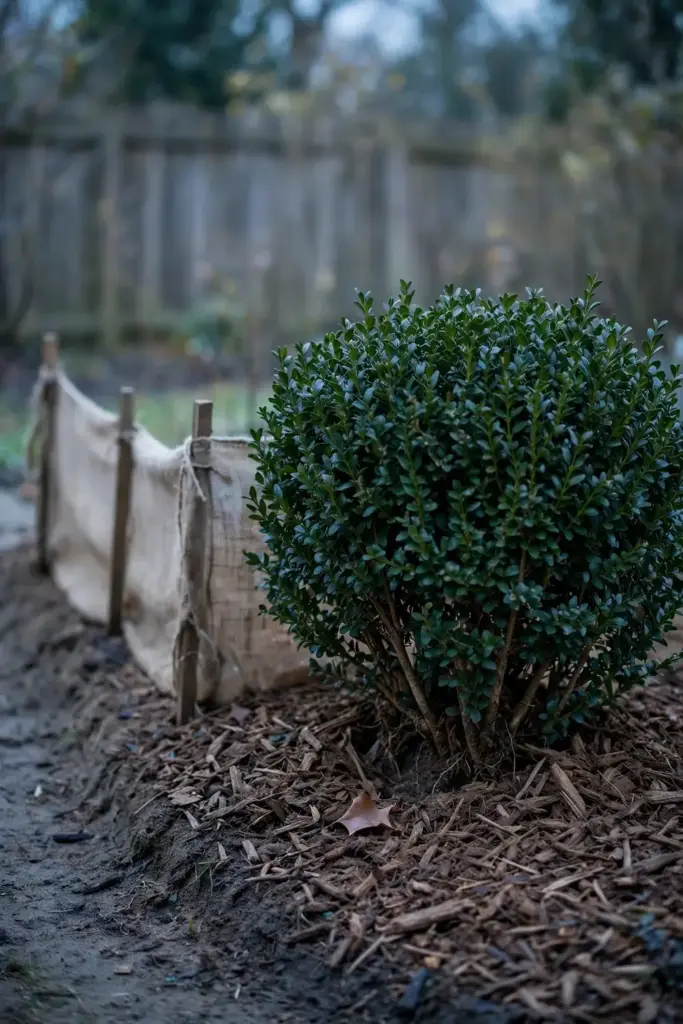
Purdue Plant Doctor calls preventing winter injury the best way to manage this disease. The sentence carries the whole plan. Stop the cold damage and the fungus finds no opening.
Plant boxwoods out of harsh winter wind where the site allows. A fence or a neighboring shrub breaks the wind that dries leaves. Wind strips moisture from evergreen leaves all winter. The stripped leaves die. The fungus colonizes them.
Water deeply before the ground freezes. A shrub that enters winter with moist roots handles cold better. University of Georgia Extension advises gardeners to maintain uniform soil moisture through the year. Steady moisture beats feast and famine.
Mulch with wood chips or pine straw. University of Georgia Extension notes that mulch helps minimize drought stress. Mulch holds soil moisture through dry spells. It also steadies soil temperature.
Skip high-nitrogen fertilizer in late summer and fall. University of Georgia Extension warns that late nitrogen pushes soft growth into winter. Soft growth freezes first. Frozen growth feeds the fungus in spring.
Check the shrub after the first hard freeze of the season. Look for bronzed leaves on the windward side. Those leaves are the next Macrophoma site once spring turns damp. Thin around them in spring so they dry fast.
Step 6: Feed and Water for Vigor, Not Soft Growth
Feed and water for vigor, not soft growth, and the shrub outgrows the spots. A vigorous shrub outgrows Macrophoma leaf spot. An overfed shrub grows soft leaves the fungus colonizes.
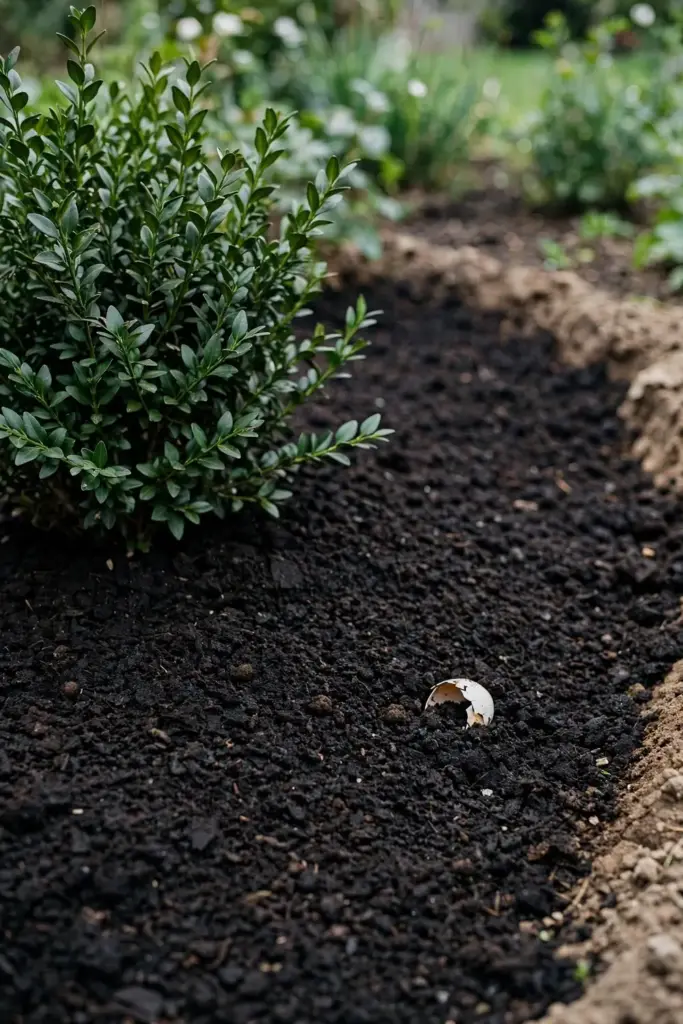
Vigor is the defense. Healthy plants rarely carry this disease. The Guelph thesis behind that finding ties vigor to water, nutrition, and thinning. Those three inputs build the shrub that resists.
Purdue Landscape Report advises moderate fertilization and warns against fertilizing after mid-summer. Moderate feeding grows firm leaves. Heavy feeding grows soft leaves. Firm leaves resist. Soft leaves invite.
The soil health guide covers structure, organic matter, and drainage in practical detail. Good soil grows a vigorous shrub. Poor soil grows a stressed one. The shrub is only as strong as its root zone.
Test the soil before feeding. A soil test tells you what the shrub lacks. Feeding blind grows soft leaves. Feeding to the test grows firm ones.
Water during dry spells. Avoid overwatering. Soggy roots stress the shrub as fast as drought does. The same thesis lists water during dry spells, no overwatering, and proper nutrition among the cultural methods that keep boxwood healthy. Balance is the program. Extremes are the risk.
Step 7: Skip Fungicides and Watch for Volutella Instead
Skip fungicides for Macrophoma leaf spot on boxwood. No fungicide is effective or labeled for this disease. Watch for Volutella instead.
Purdue Plant Doctor states the limit plainly. No fungicides are effective or labeled at this time. Pesticides are neither available nor recommended for managing this disease. That is the full spray guidance. There is no secret product.
The University of Maryland Extension agrees. Fungicide treatment is not necessary or recommended for a cosmetic leaf spot like this one. Two Extension sources reach the same verdict. The verdict is rare in garden advice. Trust it.
A spray bottle left on the shelf is the right call here. The money stays in the pocket. The shrub stays unsprayed. The disease clears on its own when the stress lifts.
Watch the shrub through the season. Salmon pink masses on stems mean Volutella. Black streaks on stems with fast leaf drop mean boxwood blight. Both demand a different response. Macrophoma demands patience. The other two demand action.
Send a sample to a diagnostic lab when the signs do not fit. A lab settles close calls. A wrong guess costs a season. A lab answer costs a sample bag and a few days.
Living With Macrophoma Leaf Spot on a Boxwood You Already Own
A boxwood with Macrophoma leaf spot keeps its place in the landscape. The shrub sheds spotted leaves and grows new ones. Patience beats products here.
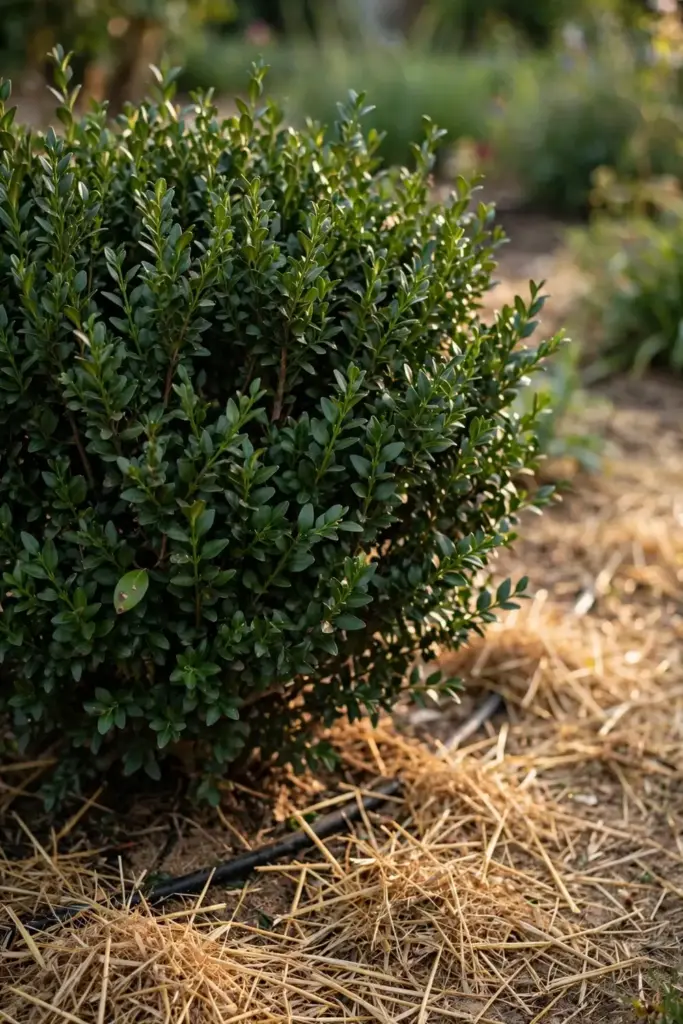
I have learned that a boxwood with Macrophoma rewards patience more than products.
Thin each year. Prune out spotted growth on dry days. Water at the base. Shield the shrub from winter wind. The routine is small, and it holds the stress down season after season.
A notebook helps. Write down the year, the worst branch, and the thinning date. Next spring, the notes show whether the routine works. A shrub that spots less each year proves the plan. A shrub that spots more needs a closer look for Volutella.
Keep the routine every season. The fungus returns whenever stress returns. A hard winter brings it back. A wet spring brings it back. The routine meets it each time, and the shrub holds its shape through the cycle.
Replace the shrub only when a second disease takes hold. Volutella dieback that girdles branch after branch changes the math. Boxwood blight changes it faster. Macrophoma alone never justifies removal.
If the decay sits at the roots and the whole shrub wilts, the problem is root disease, not leaf spot. Root disease needs its own diagnosis. Leaf spot advice does not cover it.
Frequently Asked Questions
No. Macrophoma leaf spot on boxwood is cosmetic. A weak fungus colonizes leaves already damaged by cold, wind, or bad pruning. The shrub sheds the spotted leaves and grows new ones. The disease does not kill boxwood. Stress and winter injury do the real damage. Fix the stress and the spots fade.
No, not by itself. Macrophoma leaf spot stays on damaged leaves and the shrub outgrows it. A shrub that dies with spotted leaves dies from something else. Volutella blight girdles branches. Boxwood blight strips leaves fast. Root disease wilts the whole shrub. Check for those three before blaming Macrophoma.
No. Purdue Plant Doctor states that no fungicides are effective or labeled for this disease. The University of Maryland Extension agrees that fungicide treatment is not necessary or recommended. Sprays cost money and buy nothing here. Spend the effort on thinning, pruning, dry foliage, and winter protection instead.
Check the fruiting bodies and the bark. Macrophoma shows tiny black raised dots on straw-colored leaves, and the bark stays tight. Volutella shows salmon pink masses on leaves and stems, plus loose peeling bark, girdling, and sunken cankers. Black dots mean Macrophoma. Salmon pink masses mean Volutella. The bark test settles close calls.
No. Prune out the spotted growth and destroy the debris. Thin the canopy so leaves dry. Water at the base and shield the shrub from winter wind. The shrub replaces the spotted leaves with new growth. Remove a boxwood only when Volutella girdles branch after branch or boxwood blight strips it bare.
New growth covers the loss in the next growing season. The spotted leaves themselves do not heal. The shrub sheds them and grows fresh leaves. The timeline depends on the stress behind the spots. A shrub with less winter damage and an open canopy clears faster than a sheared hedge in a wet corner.
Where to Go From Here
Macrophoma leaf spot on boxwood looks worse than it is. Black dots on straw-colored leaves name a weak fungus. Thinning, pruning, dry foliage, and winter protection carry the plan.
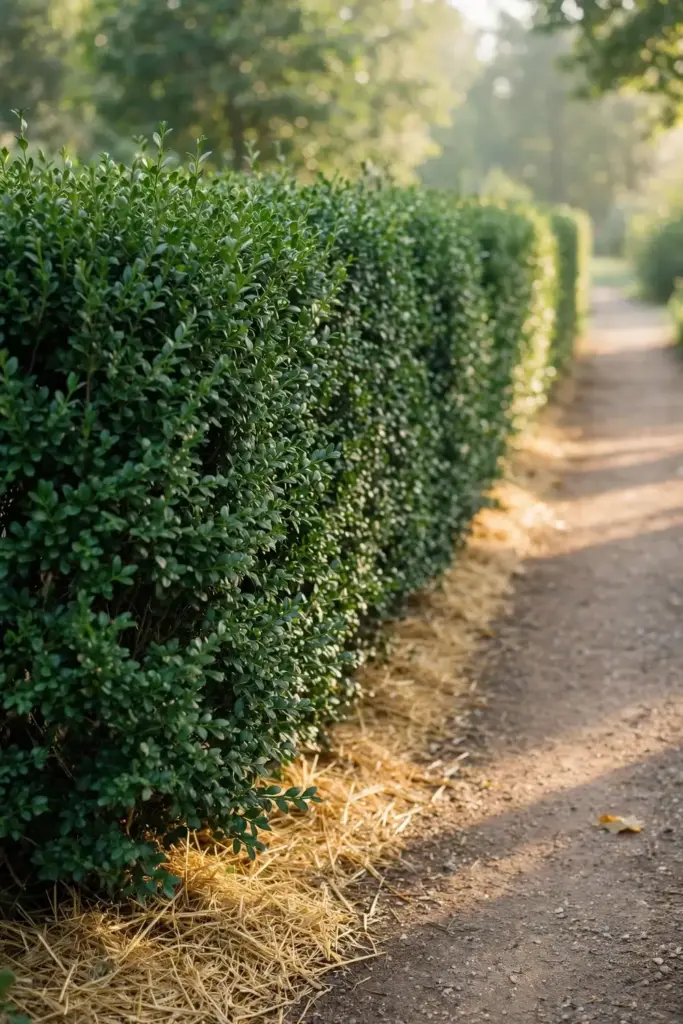
Start with the black-dot check. Confirm the ID. Then thin the shrub and prune out the spotted growth.
The blossom blight guide is a useful companion read if you are building a broader disease-identification habit, since it trains the same look-closely-at-symptoms approach.