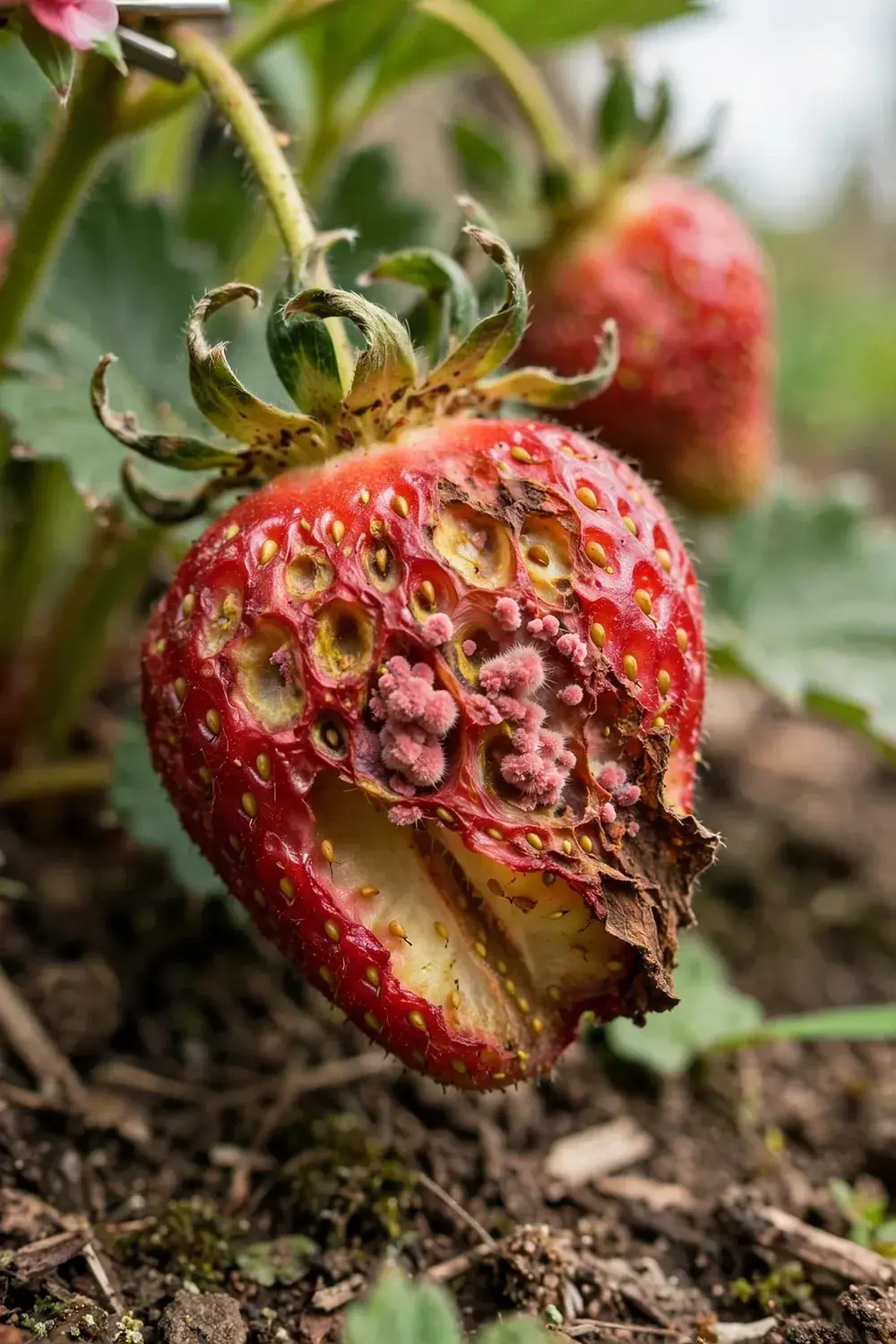

Tan-brown rot strawberry is a real disease with almost no usable detail for a home gardener. The only detailed description comes from laboratory tests, where sunken lesions appeared 3 days after inoculation. No home treatment, prevention schedule, or field identification guide exists for it.
That gap is the point of this article. It records what the lab reports show, names what is still unknown, and states plainly that there is no tan-brown-rot-specific action for a home garden.
The signs described in the lab overlap anthracnose, the common strawberry fruit rot. A rotting berry in your patch cannot be named by eye, and this article does not try. For the rot gardeners actually meet, see the anthracnose fruit rot guide.
What Tan-Brown Rot Strawberry Actually Is
Tan-brown rot strawberry is a fruit rot of strawberry (Fragaria × ananassa) caused by a fungus. The American Phytopathological Society first report names the fungus Pilidium concavum, with Hainesia lythri as its synanamorph and Discohainesia oenotherae as its teleomorph, in the first report of tan-brown rot on strawberry fruit in Belgium.
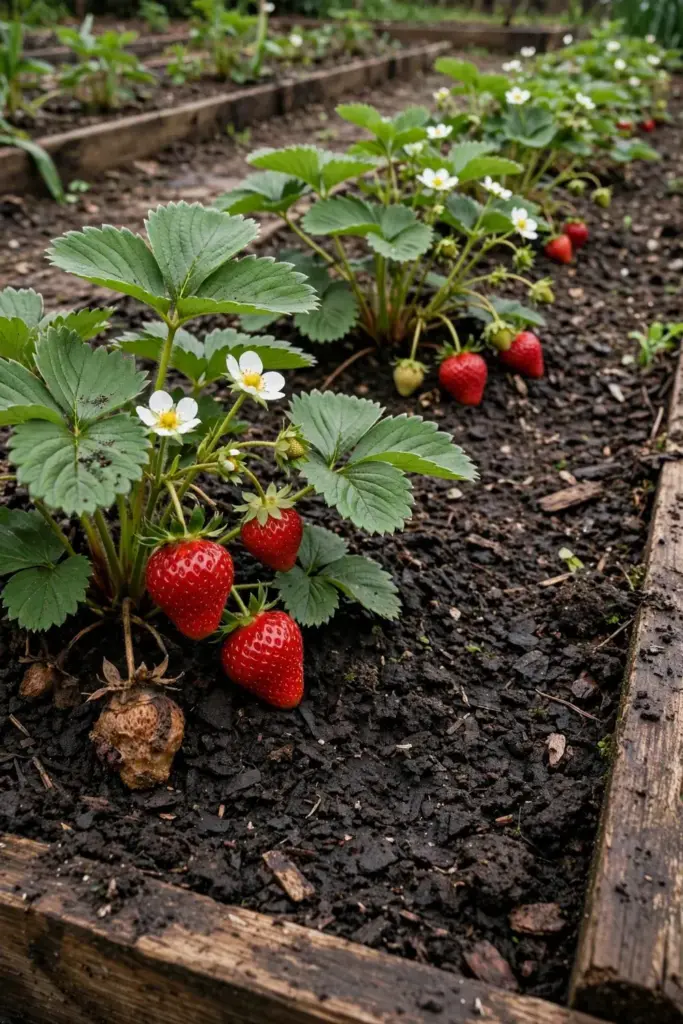
The three names describe one fungus. Pilidium concavum is the name the APS reports use. Hainesia lythri is its synanamorph, and Discohainesia oenotherae is its teleomorph. Clemson University’s index of plant diseases in South Carolina lists the disease under strawberry as Discohainesia sp., giving the genus only.
The same fungus is an opportunistic pathogen with a wide host range, so this page covers the strawberry fruit rot only. The APS South Carolina report describes it as a fungus that causes leaf spots and stem necrosis in a wide range of hosts, including strawberry, in the first report of tan-brown rot on strawberry nursery stock in South Carolina.
What the Lab Tests Actually Showed
Lab tests produced the only detailed description of this rot. In the 2011 Belgium report, researchers submerged 15 mature strawberry fruit per isolate for 3 minutes in a spore suspension, then held them in a moist chamber at 25°C, as described in the first report of tan-brown rot on strawberry fruit in Belgium.
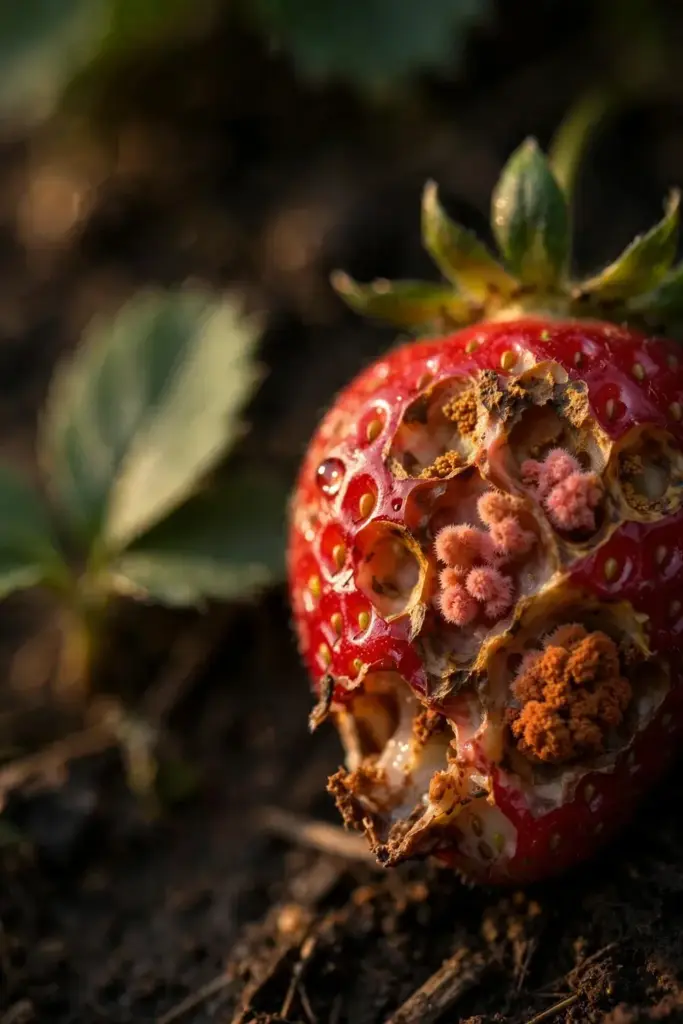
Sunken, yellowish brown lesions with pink and later orange-brown spore masses appeared starting 3 days after inoculation on 88 and 94% of the fruit for the Brazilian and Belgian isolates, respectively, according to the first report of tan-brown rot on strawberry fruit in Belgium. Control fruit stayed healthy. The researchers reisolated the fungus from symptomatic fruit and confirmed its identity by morphology.
Field evidence is thin. During a July 2010 survey in Sint-Truiden, Belgium, lesions of the described type were found on eight strawberry fruit of the cultivar Elsanta, and the fungus was isolated from the tissue of two fruit. The same report notes that pink-orange spore masses later turning brown were seen on 7 to 50% of transplant lots during routine screening, and that no strawberry cultivars with resistance to the pathogen have been reported, as recorded in the first report of tan-brown rot on strawberry fruit in Belgium.
In the later South Carolina report, infection without wounding failed. Researchers wounded 24 fruit and submerged them in a spore suspension. Characteristic symptoms appeared at the wound site only on inoculated fruit after 4 days at 22°C.
The same report calls the fungus a common secondary invader of roots and dead strawberry plant parts. A fungus that colonizes dead tissue can show up on fruit that was already damaged, which makes field identification even less reliable.
The described signs also overlap anthracnose. Anthracnose fruit rot produces circular, sunken, water-soaked tan to brown lesions with creamy pink to salmon spore masses, according to the University of Massachusetts anthracnose guide. The APS report warns that tan-brown rot spore masses can be confused with those of anthracnose when the freeze method is used, and calls for microscopic analysis of the spore masses. For the broader disease, see the anthracnose guide.
What Is Not Known About Tan-Brown Rot Strawberry
Most of what a gardener would want to know about this disease is not in the record. The table below separates the known from the unknown.
| Question | What the Record Shows |
|---|---|
| What fungus causes it? | Known. APS names Pilidium concavum, with Hainesia lythri and Discohainesia oenotherae as its other life-stage names. |
| What does it look like? | Known only from lab tests. Sunken yellowish brown lesions with pink to orange-brown spore masses. |
| Does it occur in home gardens? | Unknown. Field reports are nursery and survey finds, not home-garden studies. |
| Can a gardener identify it by eye? | No. Signs overlap anthracnose, and lab analysis settles identity. |
| Is there a home treatment? | None published. No home spray, sanitation schedule, or resistant cultivar is documented for it. |
| Does it have a prevention plan? | None published. No home prevention schedule exists for this rot. |
Data not available is the honest entry for treatment, prevention, and field identification. No Extension fact sheet, grower bulletin, or home-garden guide in the sources checked describes any of these for tan-brown rot.
What to Do With a Rotting Strawberry
There is no tan-brown-rot-specific action for a home garden. Do not try to name a rotting berry by eye, and do not apply a spray labeled for another rot as if it targets this one.
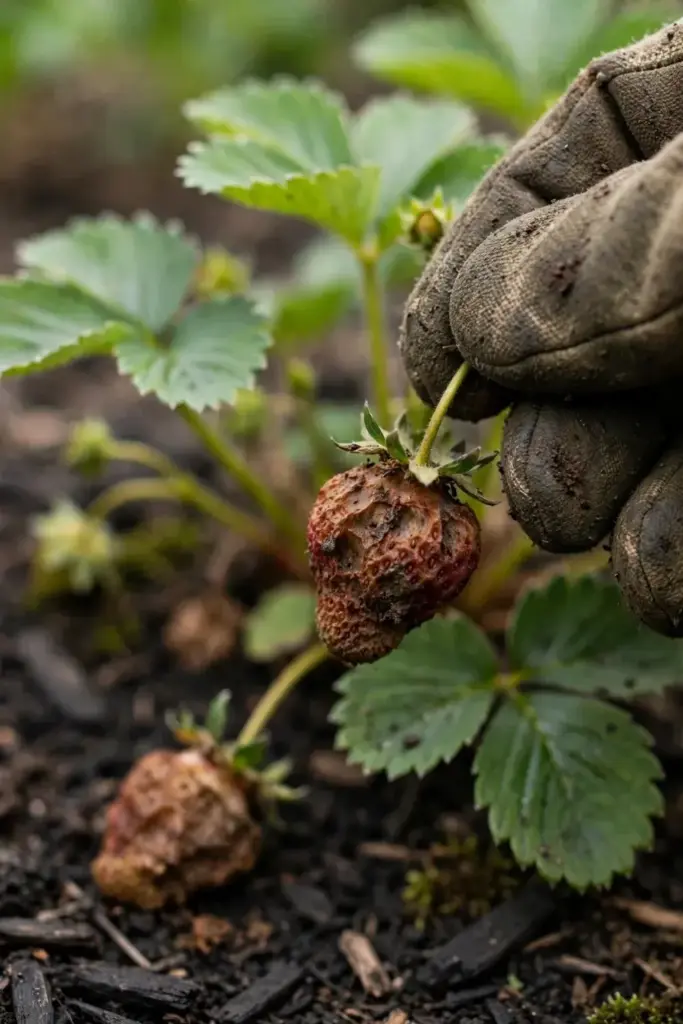
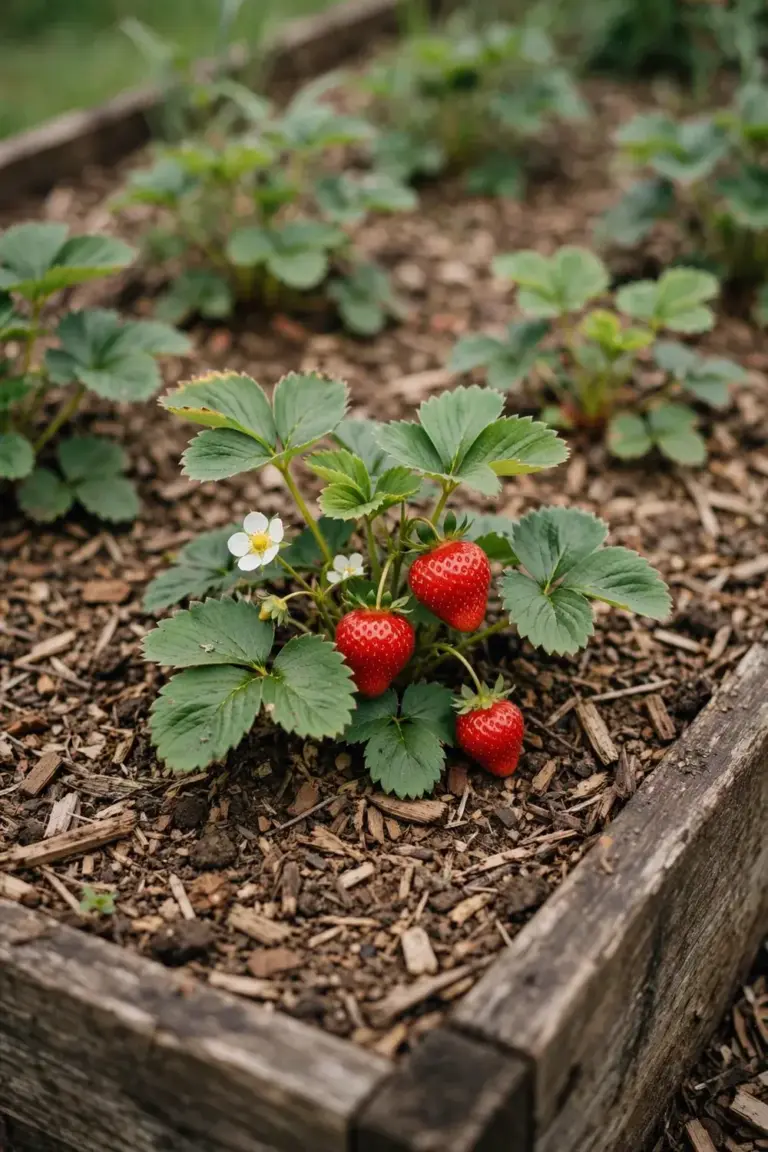
The only sensible step is general, and it is not a treatment for this disease. Remove rotting fruit from the plant and drop it in the trash. Pick it with a hand in a worn garden mitt, then wash your hands after. Keep the patch tidy and give plants air and light.
For rots that do have published guidance, see the anthracnose fruit rot guide and the botrytis blight guide. Those pages cover the common fruit rots. Tan-brown rot has no equivalent page because no equivalent evidence exists.
Frequently Asked Questions
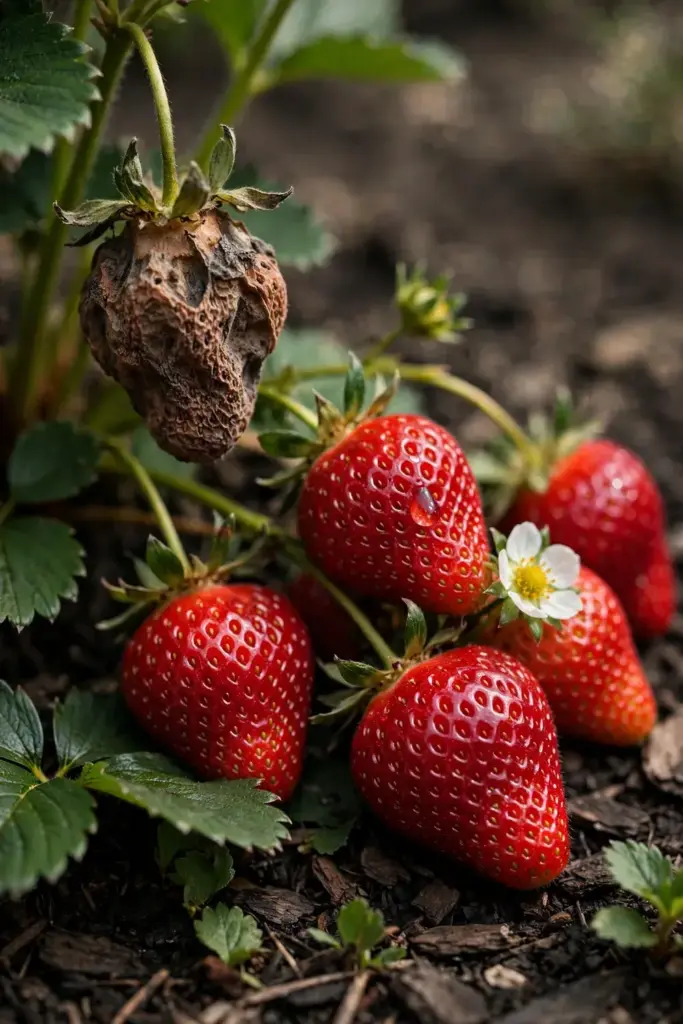
No. The lab signs overlap anthracnose, and the fungus also colonizes dead tissue as a secondary invader, so a rotting berry cannot be named by eye. The APS report calls for microscopic analysis when spore masses are checked. A home gardener has no reliable field test for this rot. Treat any rotting strawberry as unidentified fruit rot.
No published home treatment exists. The APS reports describe lab inoculation and field finds, and the South Carolina report states that more information on field occurrence is needed. No spray, schedule, or resistant cultivar is documented for home gardens. Do not repurpose a fungicide labeled for another rot as a tan-brown rot cure.
No. Brown rot is a different disease of stone fruit, as described in the APS brown rot of stone fruits lesson. Tan-brown rot strawberry is a strawberry fruit rot tied to Pilidium concavum. The names sound alike, and both rot fruit, but they are separate diseases on separate hosts. Follow brown rot advice for stone fruit only, and do not carry it over to strawberries.