
3 plant groups wear the grass costume, but only 1 of them is a grass. True grasses belong to the Poaceae family. Strappy lilies belong to the asparagus and flax-lily families. Lamb’s ear belongs to the mint family. Anyone who searched ornamental grasses for Australian gardens and landed here gets the honest version: the texture you want comes from all three groups, and the care each group needs is completely different.
The confusion costs real money. Shoppers plant a strappy lily expecting a true grass, shear it like one, and kill a plant that only needed combing. I have learned to read the botanical name on the pot before I read the common name, because the common name is where the expensive mistakes hide. These garden design ideas built around texture and structure show how grasses and grass-like plants carry a bed.
1. Answer the Real Question: 3 Groups Share the Grass Look
The search term “ornamental grass” describes a look, not a family. Three botanical groups deliver that look. True grasses (Poaceae) produce flowers in spikelets and wind-blown seed heads. Strappy lilies (mostly Asparagaceae, plus Dianella in Asphodelaceae) produce showy flowers and berries or capsules, never spikelets. Lamb’s ear (Stachys byzantina, Lamiaceae) produces felted silver leaves on square mint-family stems. Same texture. Three different biologies.
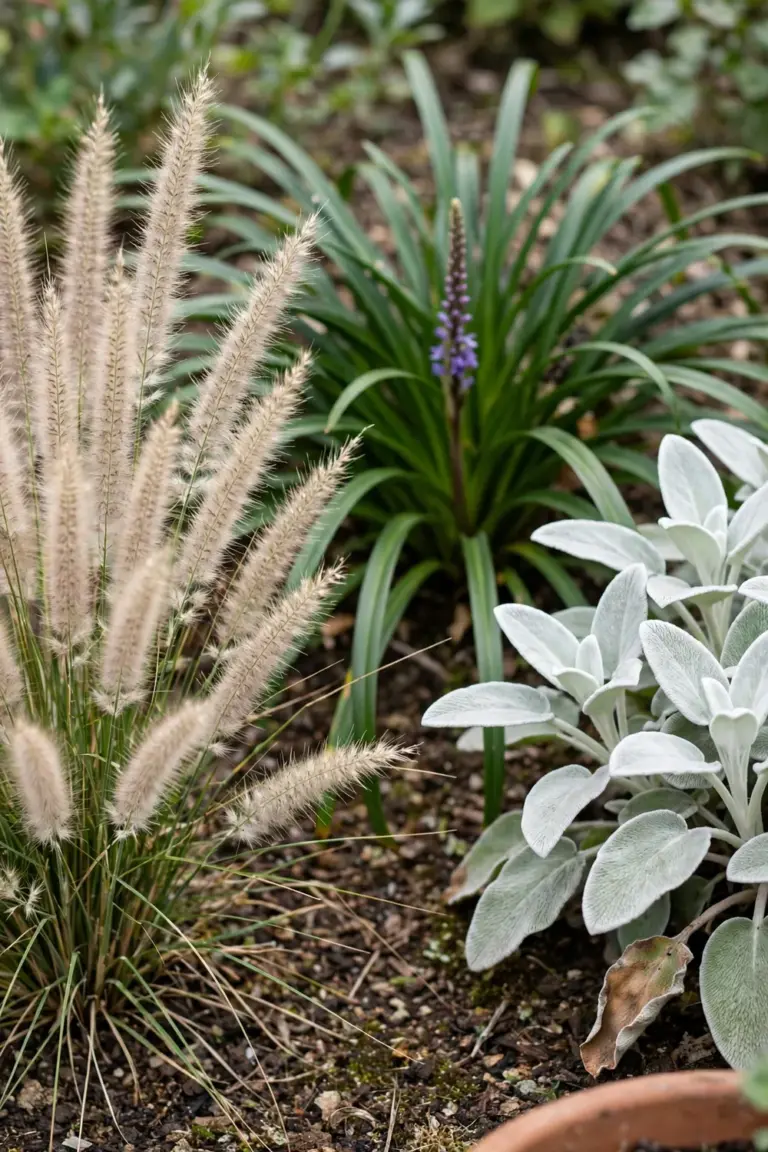
This matters because care follows biology, not looks. A true grass tolerates a hard cutback to the crown in late winter. A strappy lily rots if you shear it the same way. Lamb’s ear wants the drainage of a rock garden, not the moisture of a grass border. Buy the look you want, then care for the plant you actually bought.
2. Run the 60-Second True-Grass Test at the Nursery
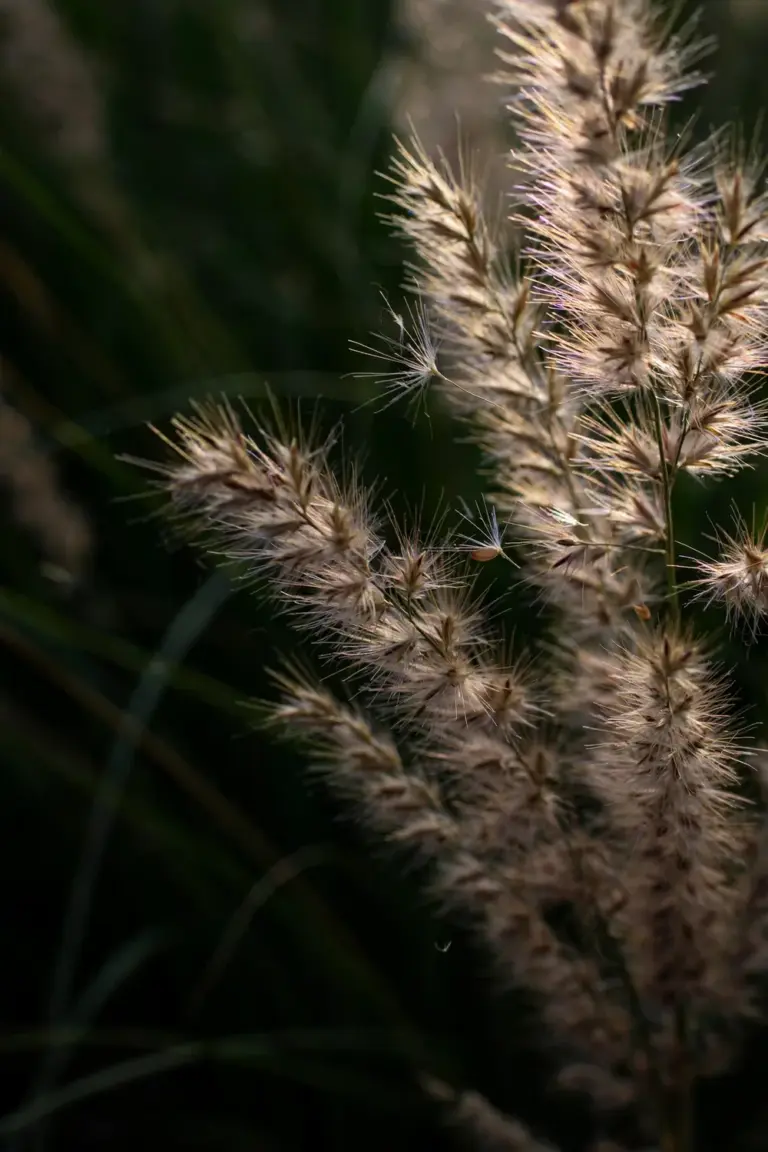
Look at the flowers first, not the leaves. True grasses flower in spikelets: small, petal-less florets wrapped in papery bracts, grouped into feathery plumes or bottle-brush heads. No showy petals. No berries afterward. The University of Sydney’s Poaceae key defines the family by exactly this spikelet structure, and it is the fastest field mark a shopper has.
Strappy lilies break the test immediately. Liriope pushes up spikes of small purple flowers that ripen into black berries. Dianella follows blue flowers with indigo berries. Lamb’s ear sends up woolly spikes of tiny purplish-pink flowers on unmistakably square stems. If the plant makes berries or showy flowers, it is not a true grass, no matter how grassy the leaves look.
Second check: feel the stem. True grass stems are jointed, with distinct nodes, and often hollow between them. Lily stems are not jointed this way. Third check: read the tag. Poaceae on the label means true grass. Asparagaceae, Asphodelaceae, or Lamiaceae means grass-like or grass-impersonator.
3. Read the One Table That Settles True Grass vs Grass-Like
This table is the whole article in 30 seconds: screenshot it for the nursery run and lean on the middle column, because memorising that column turns the rest of this guide into shopping instead of studying.
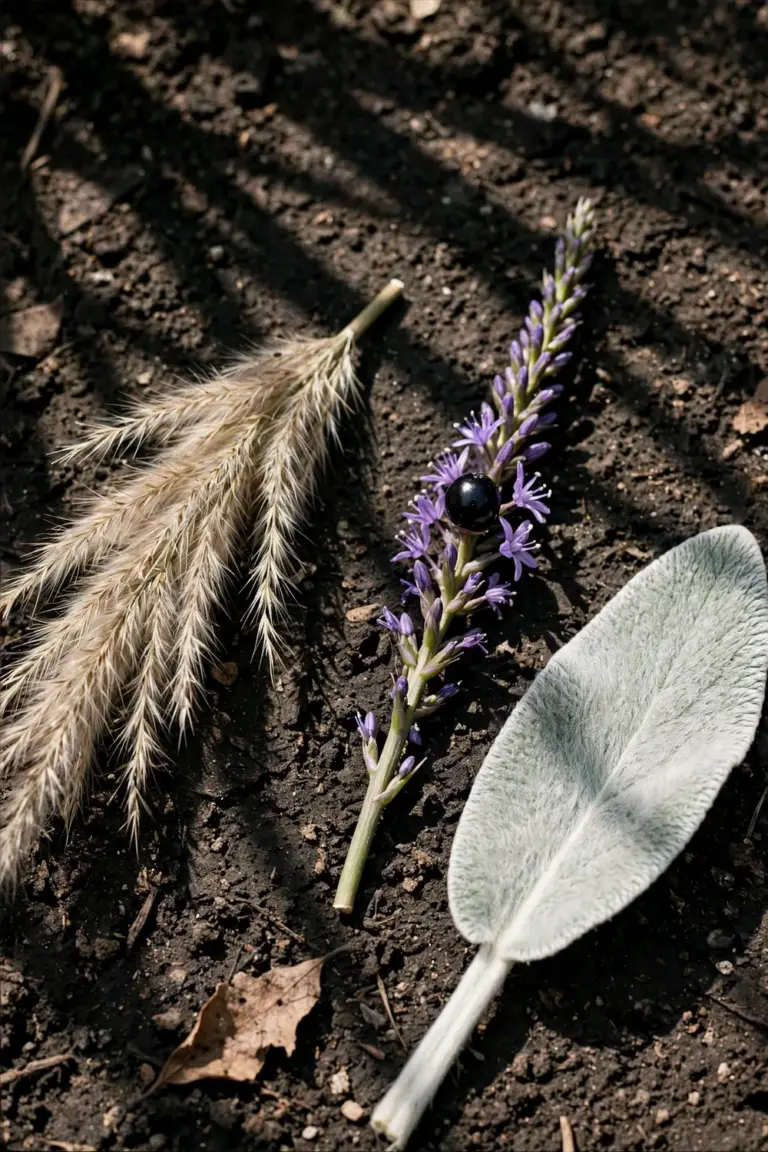
| Group | Botanical family | A true grass? | How the test reads | Worked examples |
|---|---|---|---|---|
| True grasses | Poaceae | Yes | Petal-less flowers in spikelets, feathery or bottle-brush seed heads, jointed stems | Pennisetum alopecuroides, Festuca glauca, Miscanthus sinensis, Poa |
| Strappy lilies | Asparagaceae (liriope, lomandra, mondo grass); Asphodelaceae (dianella) | No | Showy lily-like flowers, berries or capsules, no spikelets | Liriope muscari, Lomandra longifolia, Dianella caerulea, Ophiopogon japonicus |
| Lamb’s ear | Lamiaceae (mint) | No | Felted silver leaves, square stems, small lip-shaped flowers on woolly spikes | Stachys byzantina |
4. Plant 4 True Grasses for Seed Heads and Movement
True grasses earn their place with seed heads and motion. These four cover the practical shortlist behind the ornamental grasses for Australian gardens query, from fountain plumes to blue mounds.
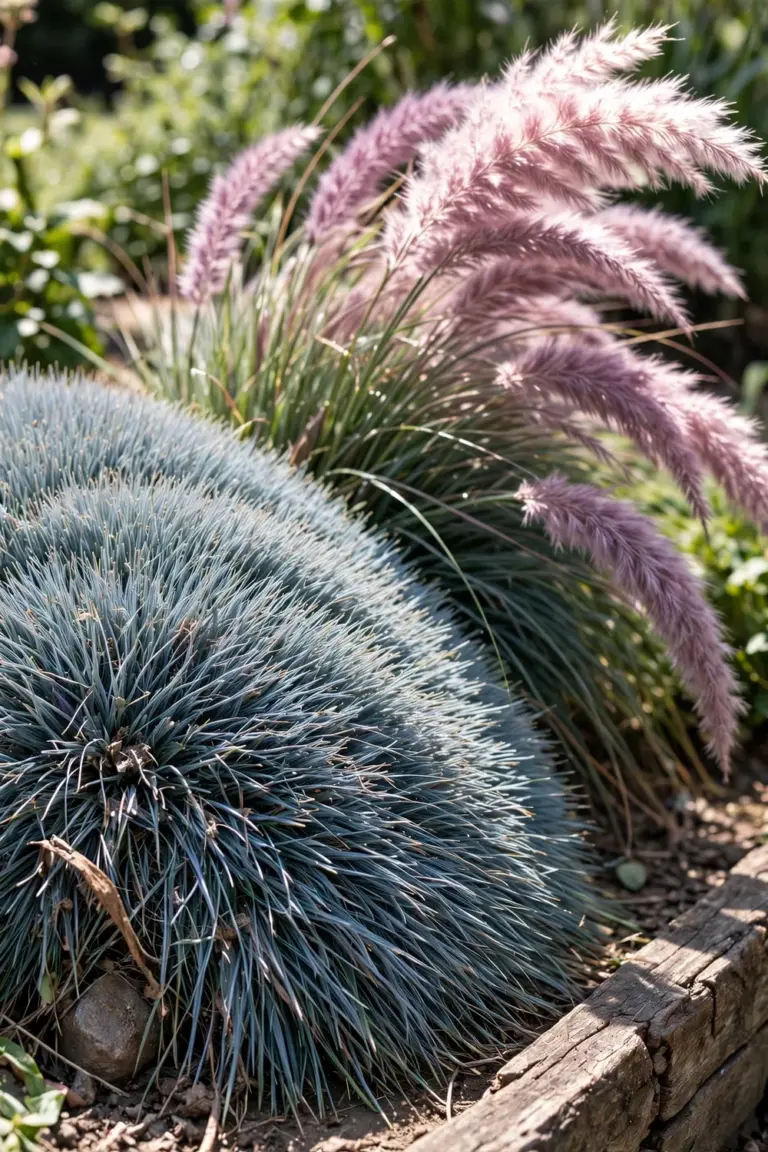
Pennisetum alopecuroides (swamp foxtail, fountain grass). The native Australian fountain grass. Plant this one. It forms arching clumps of mid-green foliage topped with soft bottle-brush plumes in late summer and autumn. Plant it in full sun to partial shade in well-drained soil, water deeply but infrequently once established, and prune the old growth in late winter to make room for the spring flush. A slow-release, low-phosphorus fertilizer applied once in spring suits it; Australian natives evolved in lean soils and rich feeding only produces floppy foliage. That care summary comes from ozbreed’s native Australian ornamental grasses guide, which also carries the critical warning: do not confuse this native, non-invasive species with the invasive African fountain grass (P. setaceum).
Festuca glauca (blue fescue). The blue mound. This cool-season perennial grass forms dense tufts of needle-like blue-gray foliage. NC State Extension’s plant profile records the working numbers: clumps mature at 9 to 12 inches tall and spread 12 to 18 inches wide, and congested centers need division every 2 to 3 years. Blue fescue is a confirmed member of the grass family (Poaceae). Give it full sun and sharp drainage. It dislikes wet feet and sulks in hot, humid summers, so it performs best where summers stay dry or the planting sits in a breezy, open spot.
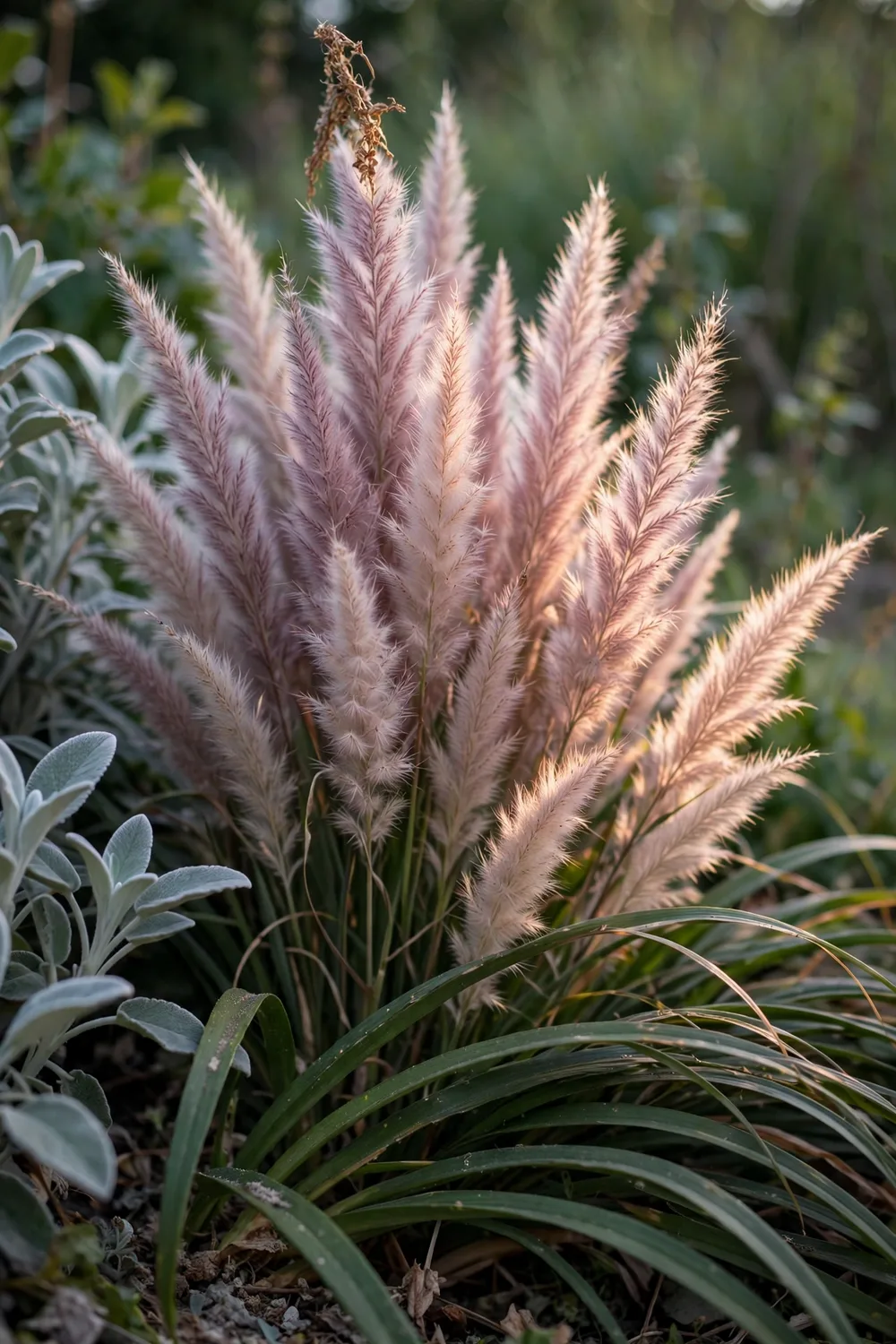
Miscanthus sinensis (Japanese silver grass, maiden grass). The skyscraper of the group. Towering clumps of arching foliage rise well above head height, and the silvery-pink plumes hold through autumn into winter. Use it as a screen, a backdrop, or a single specimen where its scale can breathe. Cut the whole clump to a few inches above the ground in late winter before new shoots emerge. Choose named cultivars over the plain species form where self-seeding is a concern; the seed-fertile species type has escaped gardens in some regions and local weed lists should be checked first.
Poa and Themeda (native tussock grasses). Poa labillardieri (snow grass) and Themeda triandra (kangaroo grass) are Australian natives that work as the honest local answer to the exotic grass border. They form evergreen tussocks, handle poor soils, and need little beyond an annual comb-out of dead blades. Use them in drifts for a grassland feel that no imported species can quite fake.
Pair these true grasses with fall-blooming perennials for a border that peaks when the seed heads catch the low light.
5. Plant 4 Strappy Lilies for Evergreen Structure
Strappy lilies never go fully dormant. They hold the garden together in winter while the true grasses are cut to stubble.
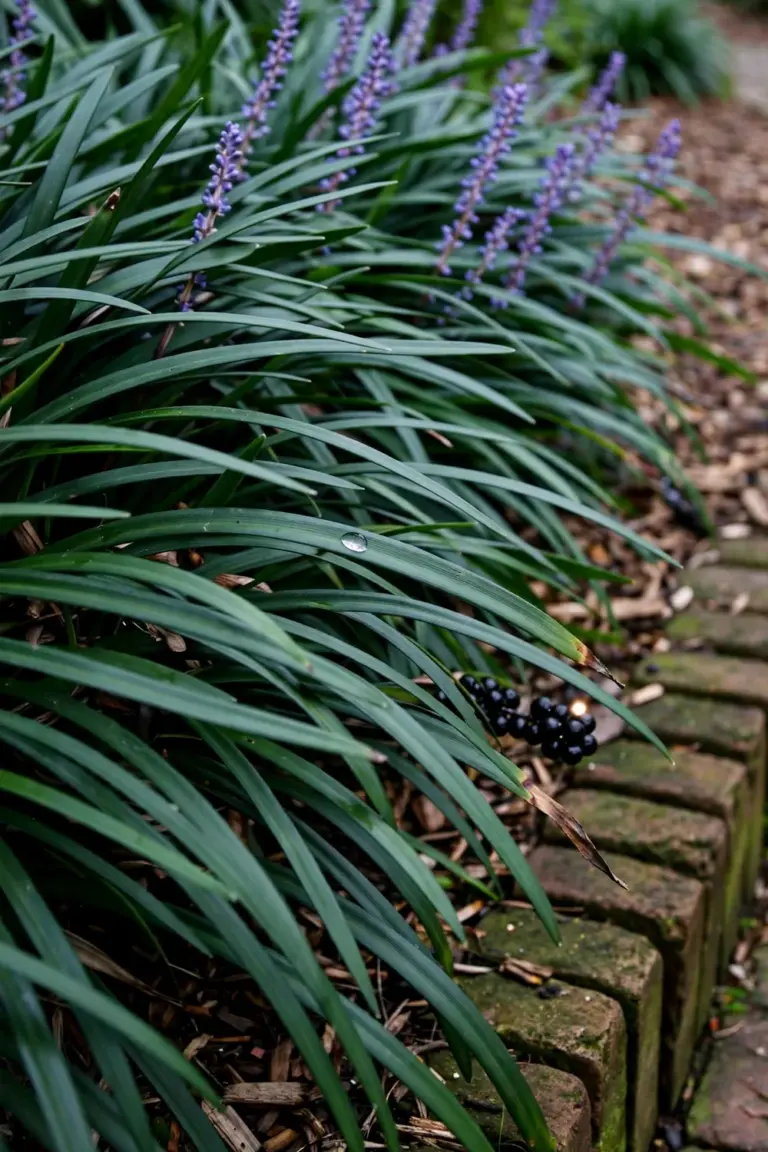
Liriope muscari (lilyturf). The edging classic. Clumps of arching dark-green leaves measure 1 to 1.5 feet tall and equally wide, and late-summer spikes of purple flowers are followed by black berries that persist into winter. NC State Extension states it plainly: though it resembles an ornamental grass, it is not a true grass, and it sits in the Asparagaceae (asparagus) family. Maintenance is one annual job: cut back the tops in late winter before new growth begins. Northern-hemisphere growers do this in February; southern-hemisphere growers do it in August. Never shear it with hedge trimmers mid-season. Comb out dead leaves by hand.
Lomandra longifolia (spiny-head mat rush). The toughest plant on this list. This Australian native forms fountain-like tussocks of strap leaves and tolerates drought, frost, shade, and neglect in any order. It belongs to the Asparagaceae family in current classification, grouped with the other strappy lilies. Plant it where nothing else survives: dry shade, roadside verges, steep banks. New plants along its rhizomes form the dense clumps that make it a mass-planting workhorse.
Dianella caerulea (blue flax lily). The flowering one. Strap leaves give way to sprays of blue flowers in spring and summer, then to glossy indigo berries. It belongs to the Asphodelaceae family, the flax-lily branch of the strappy group. It adapts readily to cultivation and suits suburban beds, where its broad mound fills space fast. Full sun to part shade, average soil, and almost no feeding.
Ophiopogon japonicus (mondo grass). The lawn substitute. Dense tufts of near-black-green blades spread slowly into a weed-proof mat that never needs mowing. It plays the same lily-lookalike role as liriope at a smaller scale and edges paths beautifully. Divide congested patches every few years to keep the mat dense.
For more plants that fill the same low, spreading role, browse these ground cover ideas for tough spots, which cover liriope, mondo grass, and lamb’s ear in their own right.
6. Understand Why Lamb’s Ear Crashes Every Grass List
Lamb’s ear is not a grass. It is a mint-family perennial that texture guides keep borrowing because its silver felt leaves do the same visual job as a grass: they catch light, soften edges, and contrast with everything green around them.
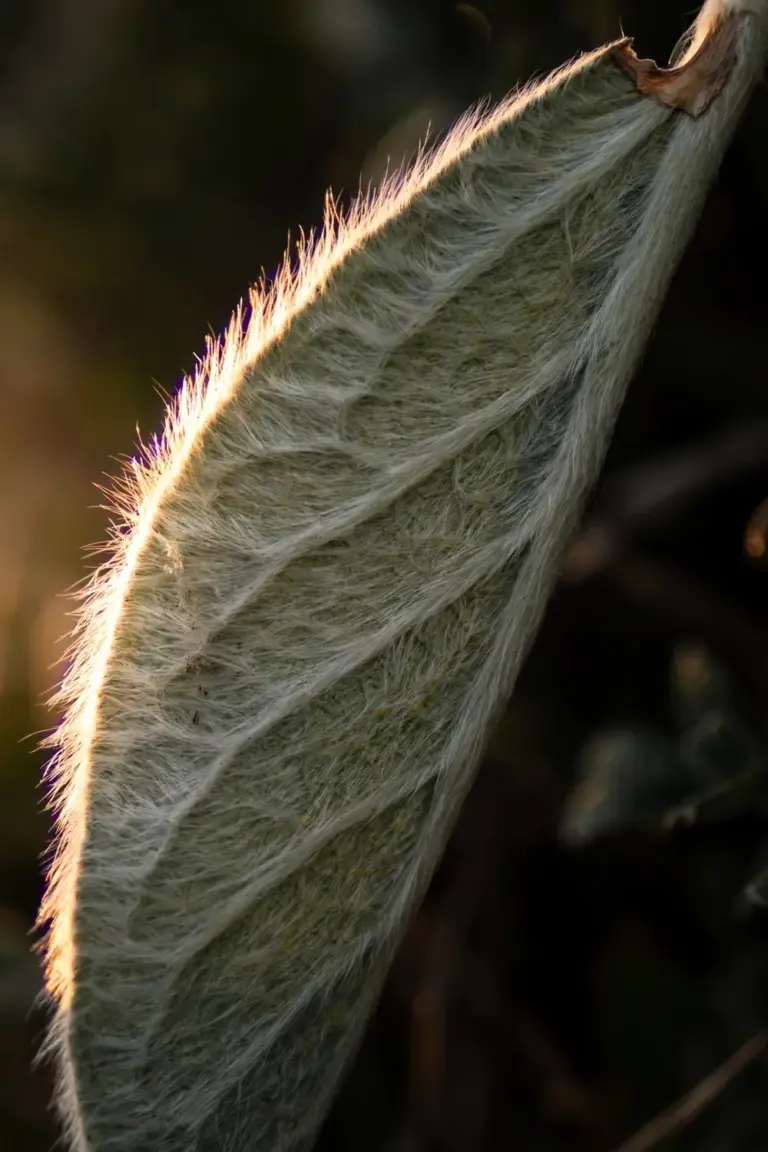
Stachys byzantina forms a low mat of thick, soft, densely woolly silver-green leaves. The mint-family membership shows in the square stems and the small lip-shaped purplish-pink flowers on woolly spikes. It spreads by stems that root where they touch soil, so it can be assertive in good conditions; divide it every few years to keep it in bounds. Give it full sun and very sharp drainage. Wet leaves invite disease and humid summers melt it, so hot-climate growers plant it on a slope or a raised edge. Remove the flower spikes to keep the foliage dense and compact.
Use it at the front of the border, along a path edge, or in a container where the silver reads against dark mulch. Treat it as a texture perennial with grass-like manners, and it never disappoints.
7. Match 5 Garden Jobs to the Right Group
Stop choosing plants by looks alone. Choose by job, and the looks follow.
| Garden job | Reach for | Plants that do it |
|---|---|---|
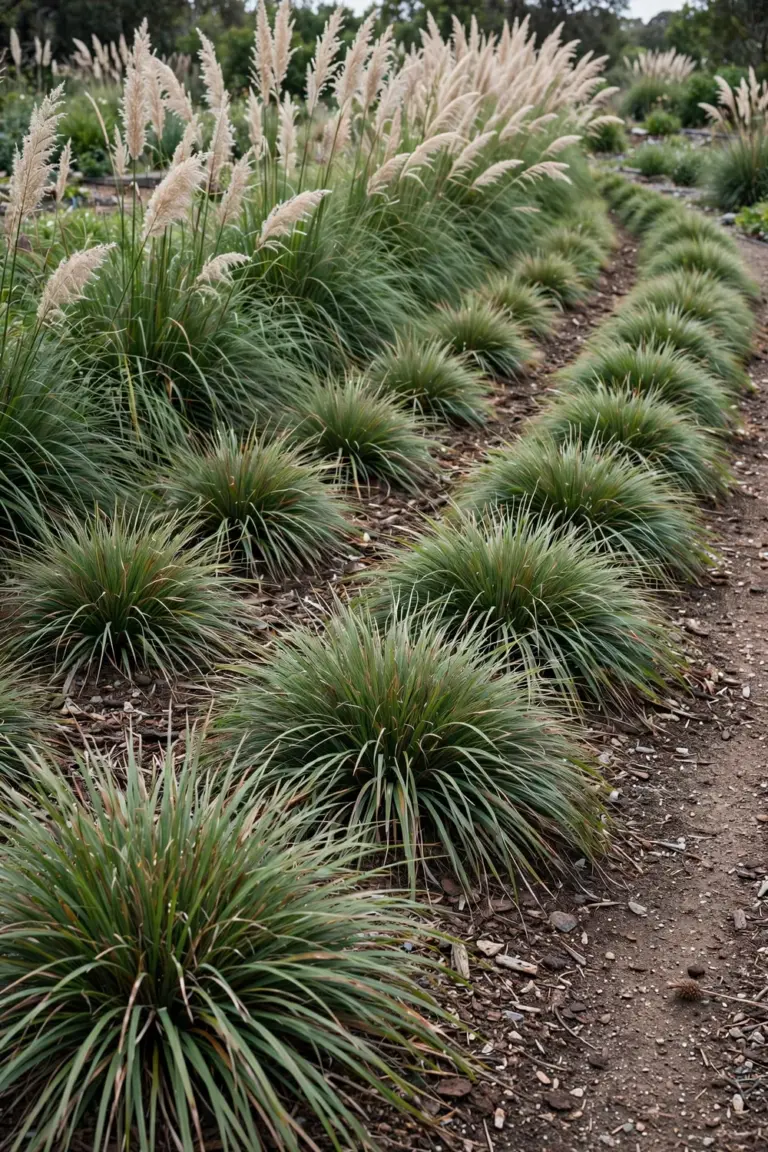
| Mass planting a drift | True grasses or strappy lilies | Poa, Lomandra, Dianella |
| One bold feature | A tall true grass | Miscanthus, Pennisetum alopecuroides |
| Crisp edging | A clumping strappy lily | Liriope muscari, mondo grass |
| Weed-suppressing understory | Dense strappy lilies | Lomandra, Dianella |
| Erosion control on a slope | Deep-rooted true grasses, mat-forming lilies | Pennisetum, liriope |
Mass planting works on repetition. Plant lomandra or poa in odd-numbered drifts of five or seven, not in lonely singles. A feature grass needs empty space around it; miscanthus jammed against a fence reads as a mistake. Edging needs a clumper that stays put, which is why liriope beats its spreading cousin Liriope spicata for path edges. On slopes, the roots do the engineering while the foliage does the decorating, and a layer of mulch holds the soil while young plants establish.
8. Cut Back True Grasses, Groom the Grass-Likes by Hand
This is the single care distinction that decides whether the planting thrives. True grasses and grass-like plants want opposite treatment in late winter.
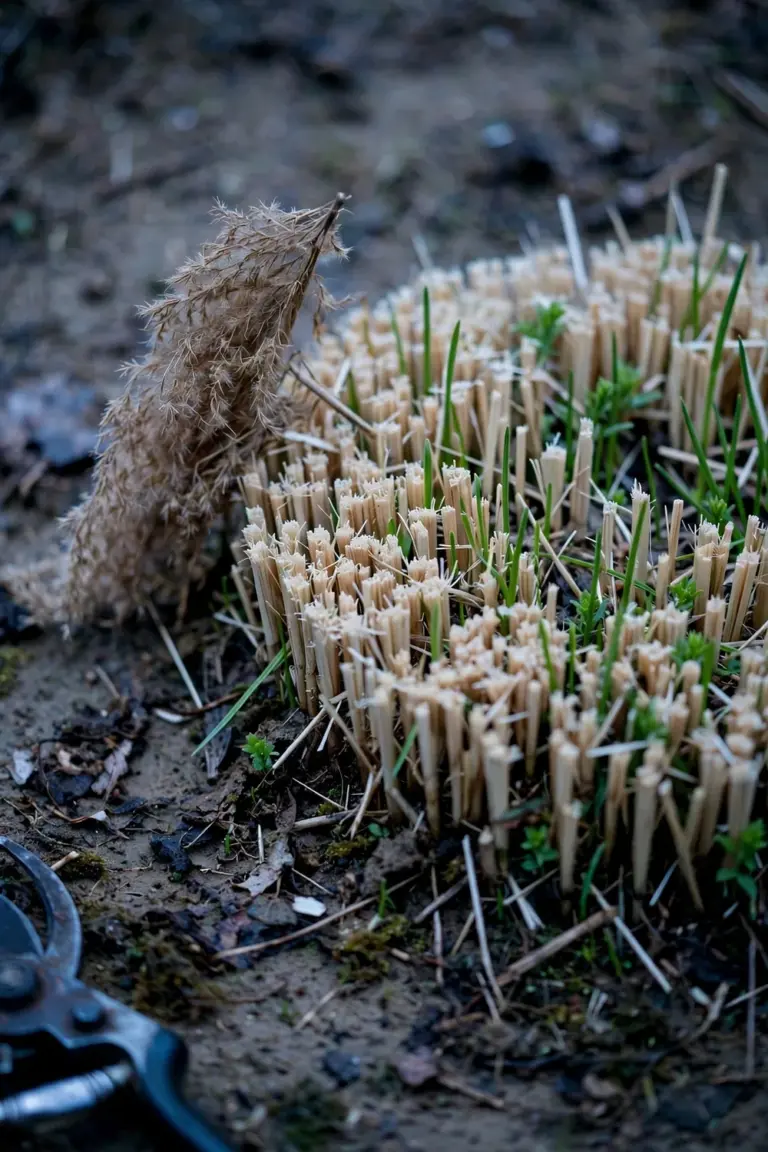
True grasses get the hard cutback. Pennisetum, miscanthus, and the native tussocks all renew from the crown, so cut the old foliage to a few inches above the ground in late winter before the new blades push. Leaving the dried foliage standing through winter is fine and even desirable: it protects the crown and looks good in frost. The cutback is what resets the clump.
Grass-like plants get grooming, never shearing. Liriope, lomandra, and dianella keep their leaves through winter, so a hard shear removes living tissue the plant needs. Instead, comb out dead blades by hand or with a flexible rake, and trim only the ragged tips. For liriope, the annual routine is one tidy cutback of the tops in late winter before new growth emerges; northern growers do it in February and southern growers in August. Shear a strappy lily like a hedge and it sulks for a season. Comb it like hair and it shines.
Lamb’s ear gets neither treatment. Just pull out dead leaves from the mat and remove spent flower spikes.
9. Feed Native Grasses a Low-Phosphorus Diet in Spring
Australian native grasses evolved in some of the leanest soils on earth, and rich feeding hurts them. The rule from ozbreed’s native grass guide is exact: apply a slow-release, low-phosphorus fertilizer once a year in spring. That is the whole feeding program. Standard lawn fertilizer, high in phosphorus, can damage phosphorus-sensitive natives and pushes soft, floppy growth that flops in the first storm.
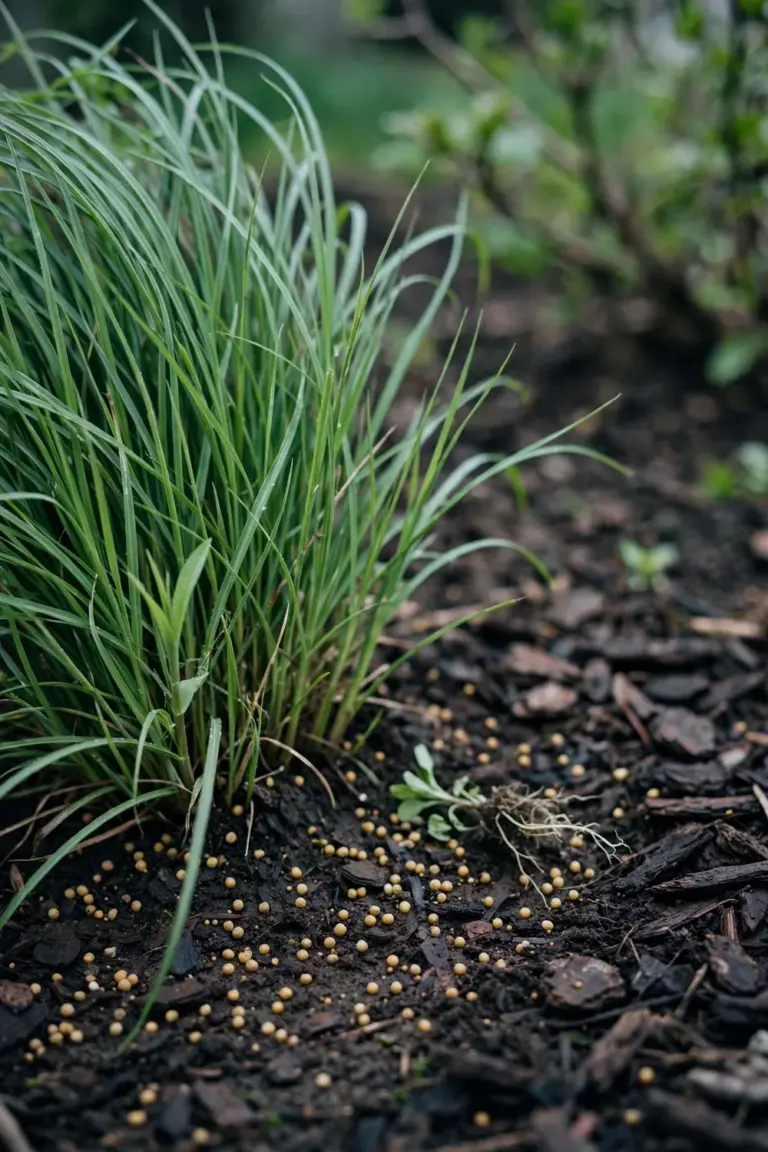
Water follows the same lean logic. Deep, infrequent watering in dry periods builds deep roots. Frequent sprinkling builds shallow roots and weak plants. Once established, pennisetum, poa, lomandra, and dianella survive on rainfall in most temperate regions and only need help in extended drought.
Exotic grasses like festuca and miscanthus are less fussy about phosphorus but share the dislike of waterlogged soil. When in doubt, feed less. A hungry grass grows slowly. An overfed native grass grows badly.
10. Separate Native Pennisetum alopecuroides From Invasive P. setaceum
This identification protects both the garden and the bushland beyond it. Pennisetum alopecuroides is the native Australian fountain grass: non-invasive, nursery-propagated, and safe to plant. Pennisetum setaceum is African fountain grass: a highly invasive weed that escapes gardens, forms dense stands that exclude native vegetation, and increases fire intensity. Two related plants. Opposite legal and ecological status.
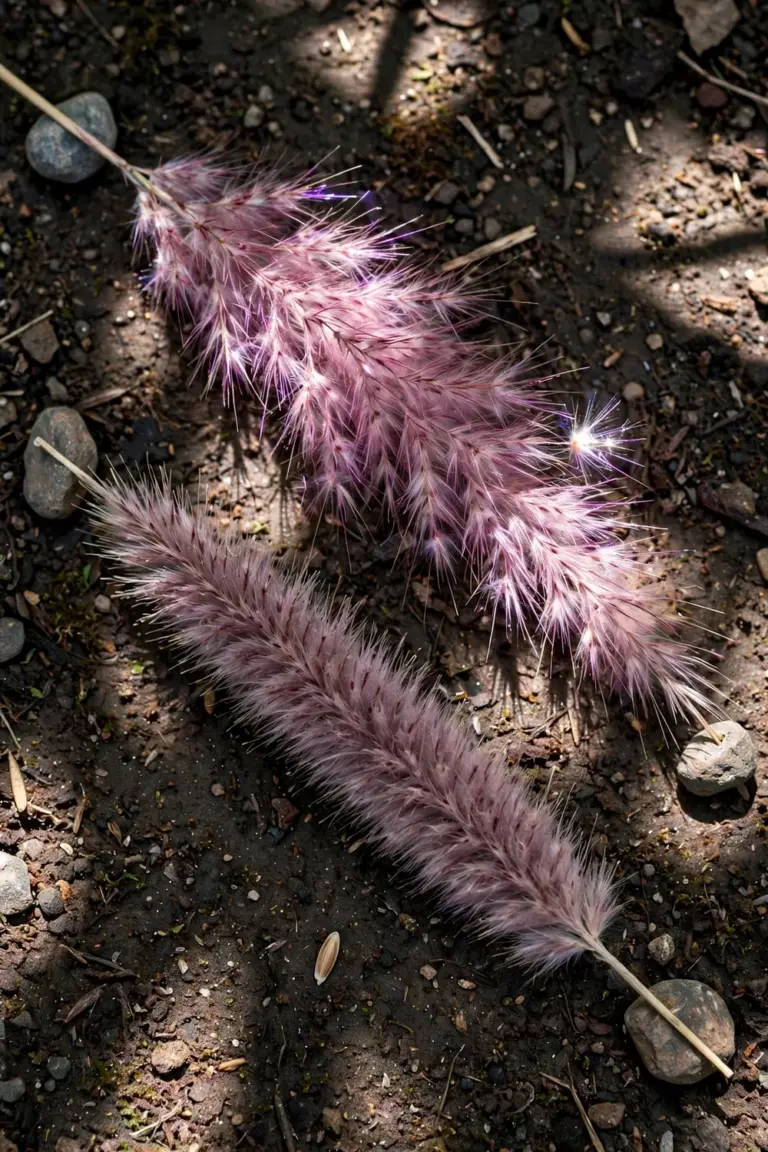
Tell them apart by the seed head. On P. setaceum the bristles surrounding each spikelet are distinctly feathery (plumose), and the plumes read pink to purple. On P. alopecuroides the bristles are not feathery, and the plumes read softer and more bottle-brush. At maturity the invasive species forms a tufted perennial around 0.9 m tall. NSW WeedWise profiles fountain grass as a highly invasive tufted grass whose wind-dispersed seed can remain viable in the soil for at least seven years, which is why a single escaped plant becomes a long-term problem.
Queensland lists African fountain grass as a category 3 restricted invasive plant: it must not be given away, sold, or released into the environment. If a nursery label says only “fountain grass” with no botanical name, treat it as unidentified and ask. The botanical name is the whole fence. Alopecuroides stays. Setaceum goes, and existing plants should be reported to the local council or biosecurity authority rather than composted.
11. Check Regional Invasiveness Before You Plant Anything
Readers who type ornamental grasses for Australian gardens deserve a straight answer on this: invasiveness is regional, and a well-behaved plant in one state is a declared weed in another. Before buying any grass on this list, check the weed list for your state or territory and ask the local council about plants flagged in your area. Nursery catalogues sell nationally. Weed law is local.
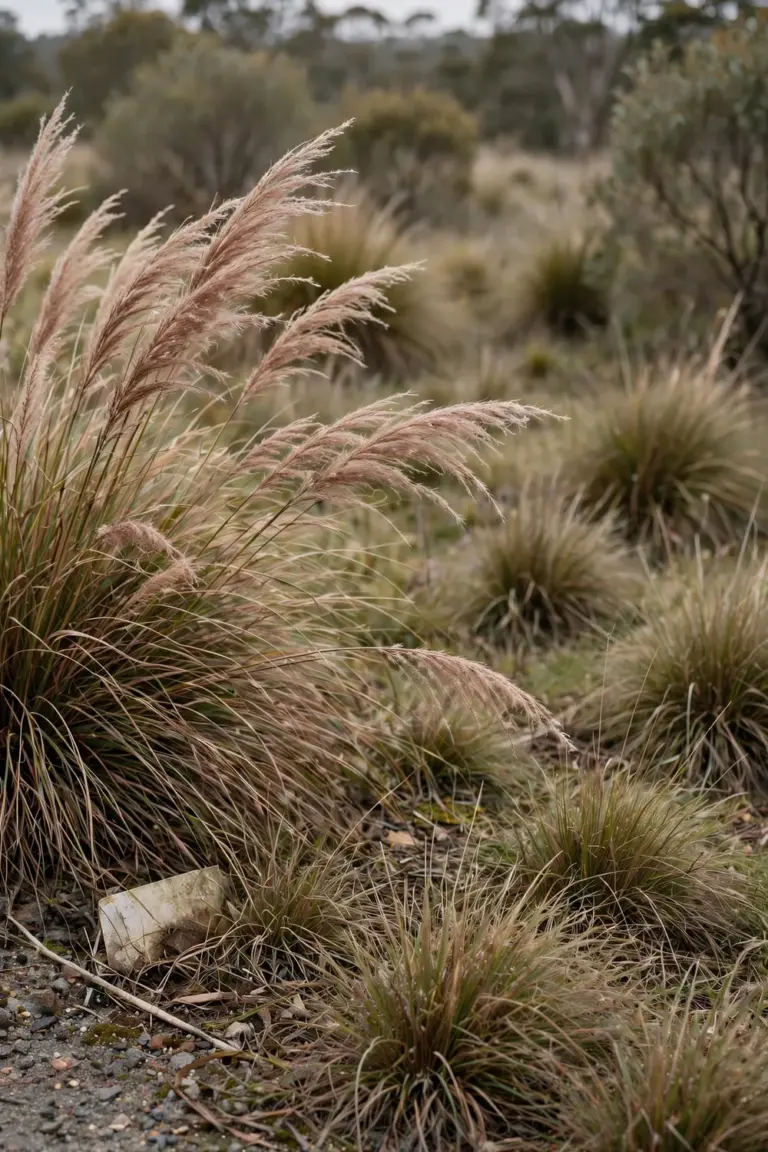
Three cautions apply beyond the Pennisetum fence. First, the plain species form of Miscanthus sinensis self-seeds freely and has naturalised beyond gardens in the southeastern United States; named sterile or low-seed cultivars are the safer choice wherever seeding is a concern. Second, Liriope spicata spreads by underground rhizomes far more aggressively than the clumping Liriope muscari, and it is the spicata you should avoid near bushland. Third, any Pennisetum alopecuroides cultivar still self-seeds, so deadhead the plumes if seedlings appear where they are not wanted.
The pattern is simple. Clumping beats running near boundaries. Named low-seed cultivars beat species forms. And the local weed list beats any national planting guide, including this one.
12. Renew Congested Clumps Every 2 to 3 Years
Even tough grasses age. The center of a clump dies out, the ring of live growth thins, and the plant looks tired by midsummer. Renewal fixes it.
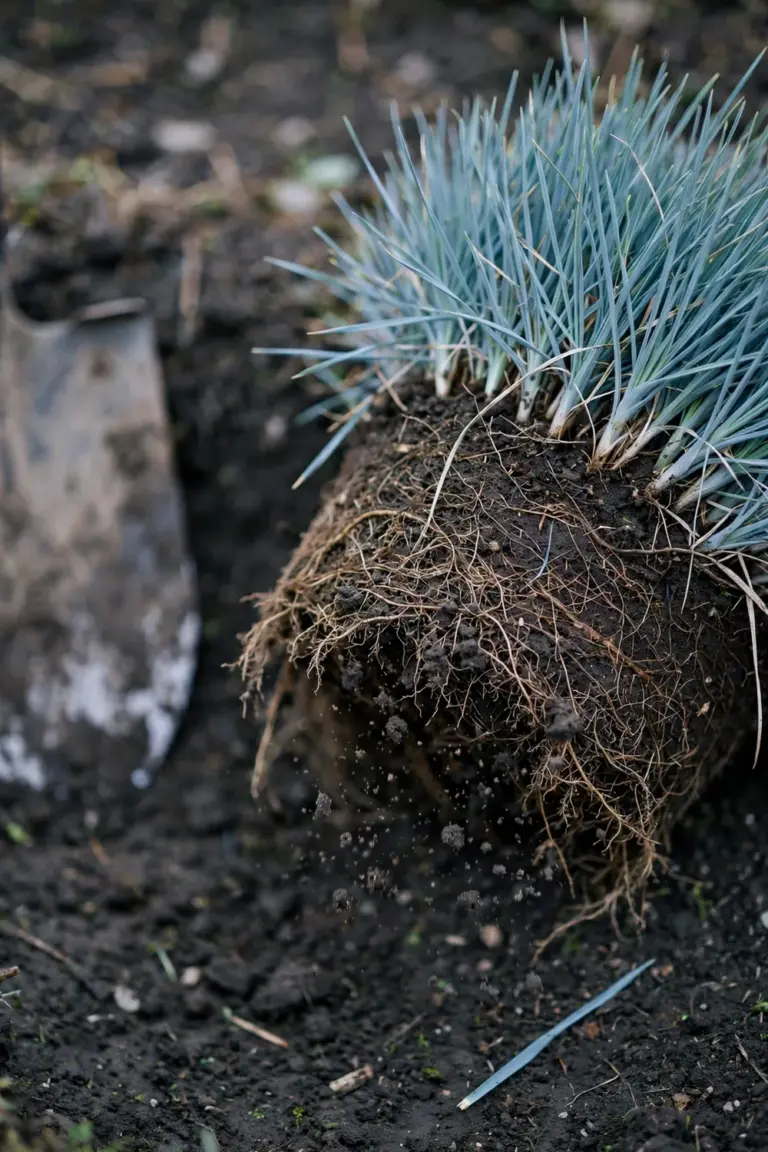
Blue fescue is the textbook case. NC State Extension notes that clumps tend to die in the center and need division every 2 to 3 years, either by lifting and replanting the healthy outer fans or by replacing the plant outright. Do it in early spring as new growth starts. A sharp spade through the crown, teased apart into fist-sized divisions, gives each piece its own roots and shoots.
Liriope and mondo grass respond to the same treatment on a slower schedule: lift congested patches every few years and replant the divisions. Lomandra and dianella rarely need it but accept division if a clump outgrows its spot. Lamb’s ear renews by division too, every few years, and the lifted pieces make free plants for the next bare edge.
The ground-cover lane has its own seasonal rhythm; time division and replanting with the growing season so divisions establish before heat or frost.
13. Answer 5 Frequently Asked Questions
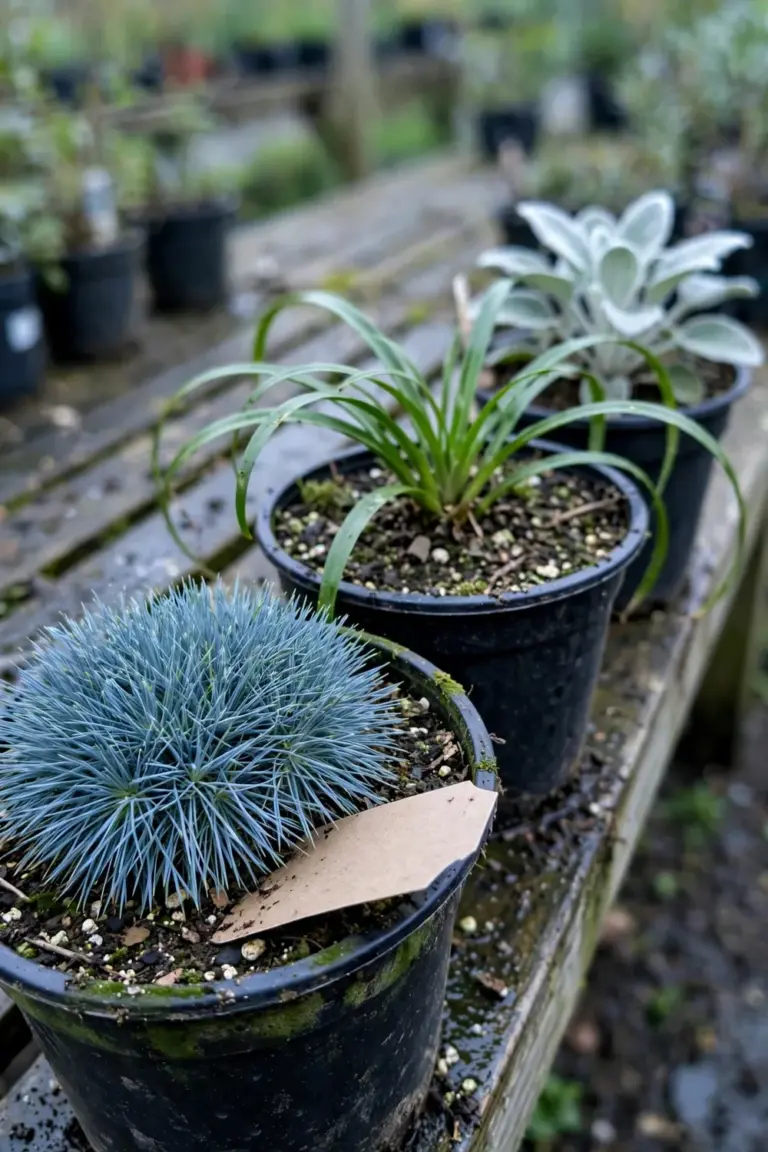
No. Liriope muscari looks like a grass but belongs to the Asparagaceae (asparagus) family, not the Poaceae grass family. It flowers with small purple spikes that become black berries, which no true grass does. Grow it for evergreen edging and ground cover, and groom it by hand instead of shearing it like a grass.
No. Lamb’s ear (Stachys byzantina) is a mint-family perennial grown for its silver felted leaves. It appears in grass roundups because its texture does the same visual work as a grass: light-catching, edge-softening contrast. Give it sharp drainage and full sun, and treat it as a texture perennial rather than a grass.
Pennisetum alopecuroides, the native swamp foxtail, is the safe choice: non-invasive and widely propagated by Australian nurseries. Avoid Pennisetum setaceum (African fountain grass), a declared invasive plant with feathery seed-head bristles, wind-dispersed seed viable for years in soil, and restrictions on sale and release in Queensland.
True grasses do. Cut pennisetum, miscanthus, and native tussocks to a few inches above the ground in late winter before new growth emerges. Grass-like plants do not get the same treatment: comb dead leaves from liriope, lomandra, and dianella by hand, and give liriope one tidy top trim in late winter only.
Lomandra longifolia. This Australian native tolerates drought, frost, shade, and poor soil, needs almost no feeding, and holds its form year-round. Plant it in drifts for mass effect or singly as a structural anchor. It asks for less care than nearly any true grass on this list.
14. Start With One True Grass and One Grass-Like
The whole guide compresses to a shopping list of two. Buy one true grass for seed heads and movement: Pennisetum alopecuroides if the garden is Australian, Festuca glauca if the spot is small and sunny. Buy one grass-like plant for evergreen structure: lomandra for toughness, liriope for edging, dianella for flowers. Add lamb’s ear only where its silver felt earns its place at a path edge.
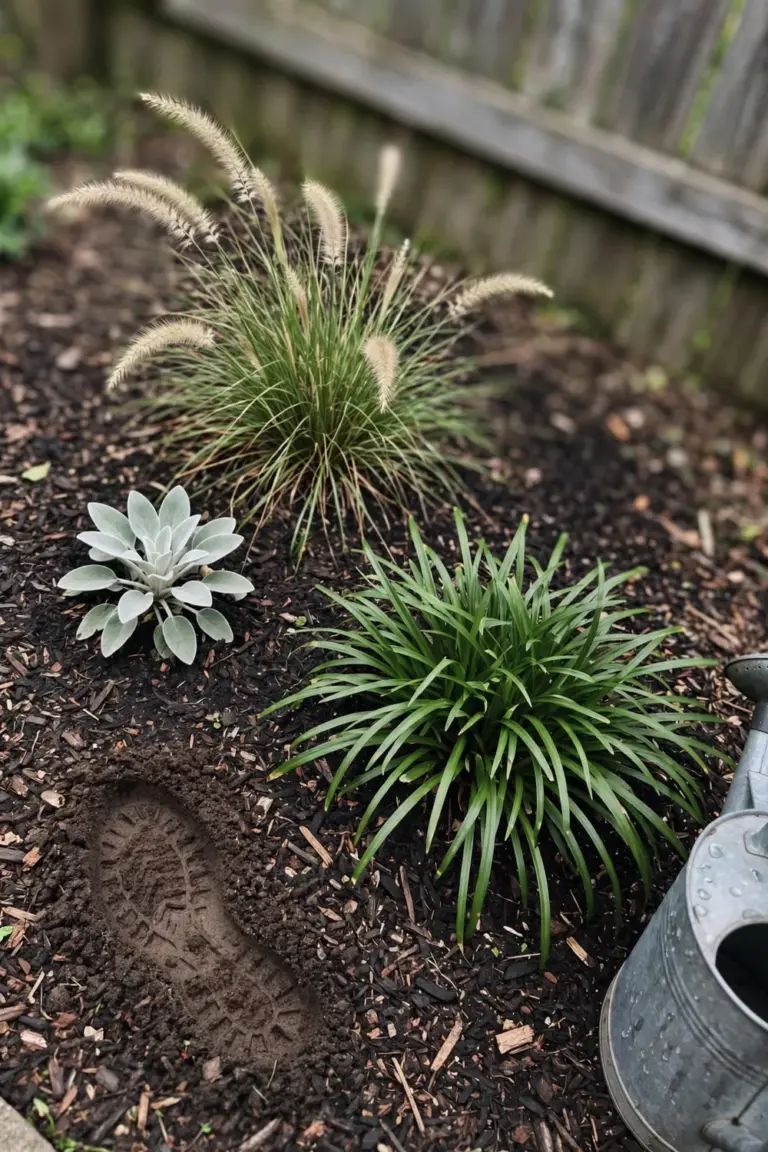
Plant the true grass where the late-winter cutback will not leave a visible hole. Plant the grass-like where winter structure matters. Check the botanical name on every label, check the local weed list once, and the texture trio takes care of the rest. When the bed around them needs its next layer, these fall flower bed ideas show how to build outward from a strong grass backbone.