
Bend 1 leaf before you lift the watering can. That single test is the whole skill behind how to grow jade plant: a soft, flexible leaf means water now, and a firm leaf means the plant is still drinking from its own reserves. A jade plant (Crassula ovata) stores water in thick, fleshy leaves that let a mature plant coast for weeks between drinks. The rest of this page is 14 moves, from the brightest windowsill to the first cutting you give away.
The reputation problem is the word easy. Sellers call the jade plant unkillable, and it survives a lot of neglect. It does not survive regular kindness. Weekly watering drowns the small root system, the stem turns mushy, and the plant collapses while the owner buys a bigger watering can. In my experience, switching from a calendar to the leaf test ended the cycle of drowned jades on my windowsill, because the plant finally got to ask for water instead of receiving it. Treat a firm leaf as a full glass and a soft leaf as an empty one, and your jade plant will outlive your furniture.
| Care snapshot | What works |
|---|---|
| Light | Brightest indoor sun, with shelter from harsh afternoon glare |
| Water | Only when a leaf bends soft; soak deep, then let the pot dry fully |
| Potting mix | Gritty and fast-draining; cactus or succulent mix |
| Pot | Small, heavy, with a drainage hole; terracotta dries fastest |
| Feed | Weak dose, growing season only |
| Temperature | Average to cool indoor warmth; keep above frost |
| Pets | Toxic to cats and dogs |
1. Identify Your Plant: Jade Plant (Crassula ovata) vs the Pothos Money Plant
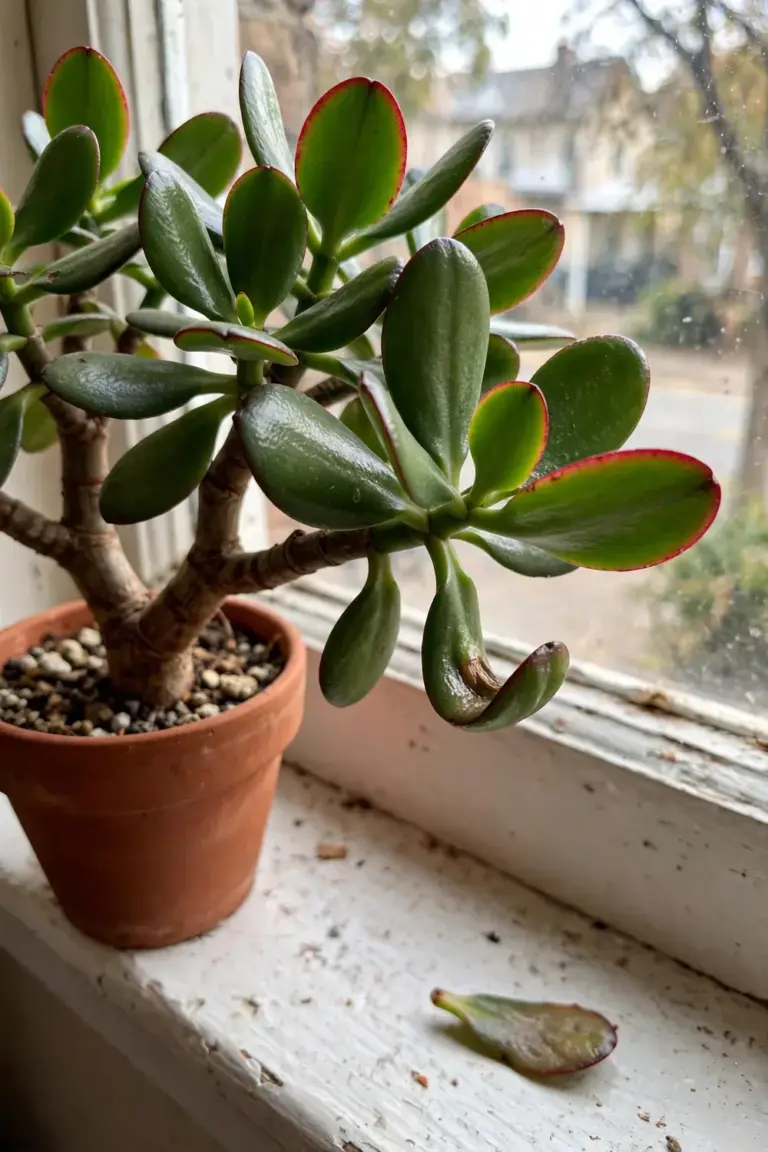
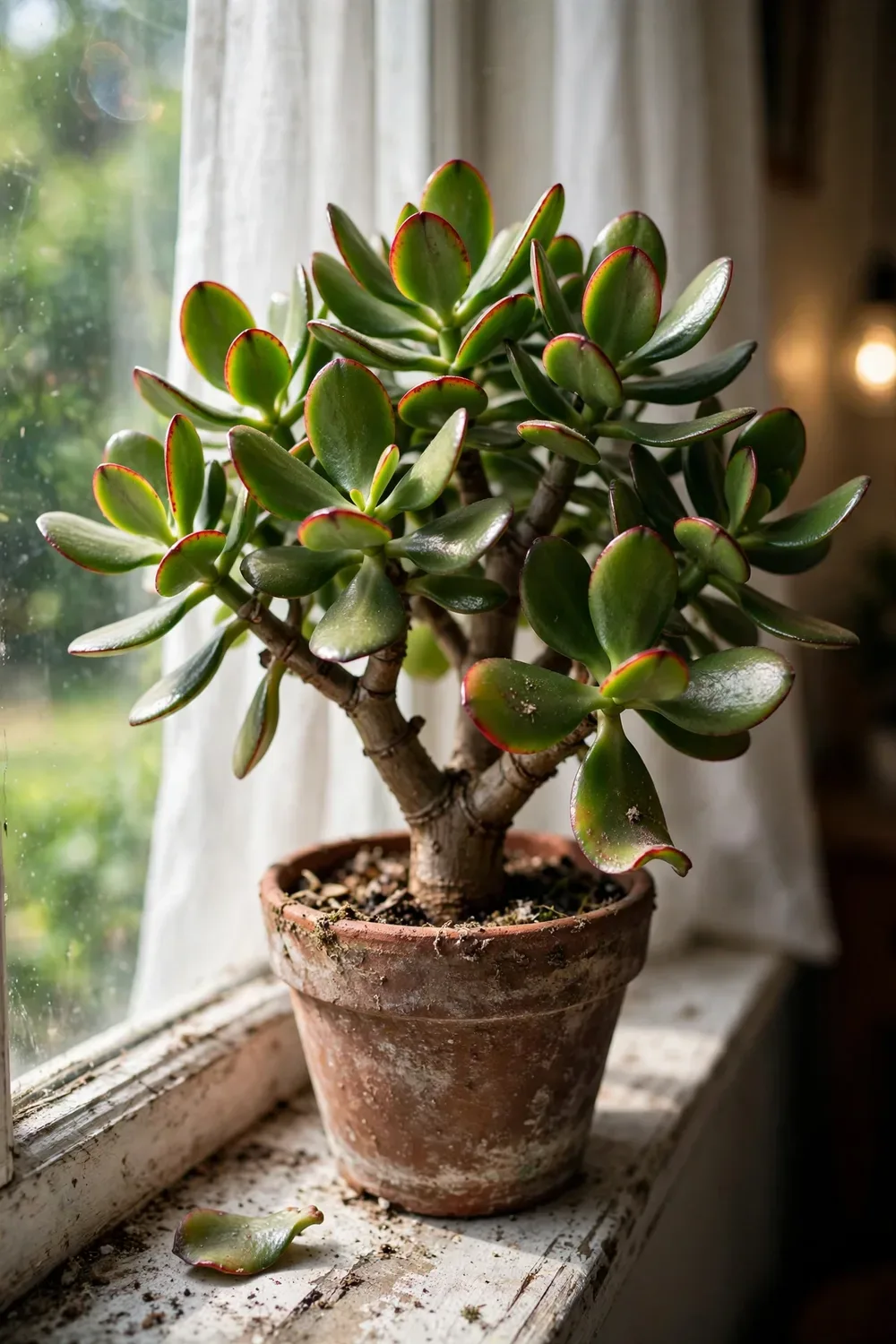
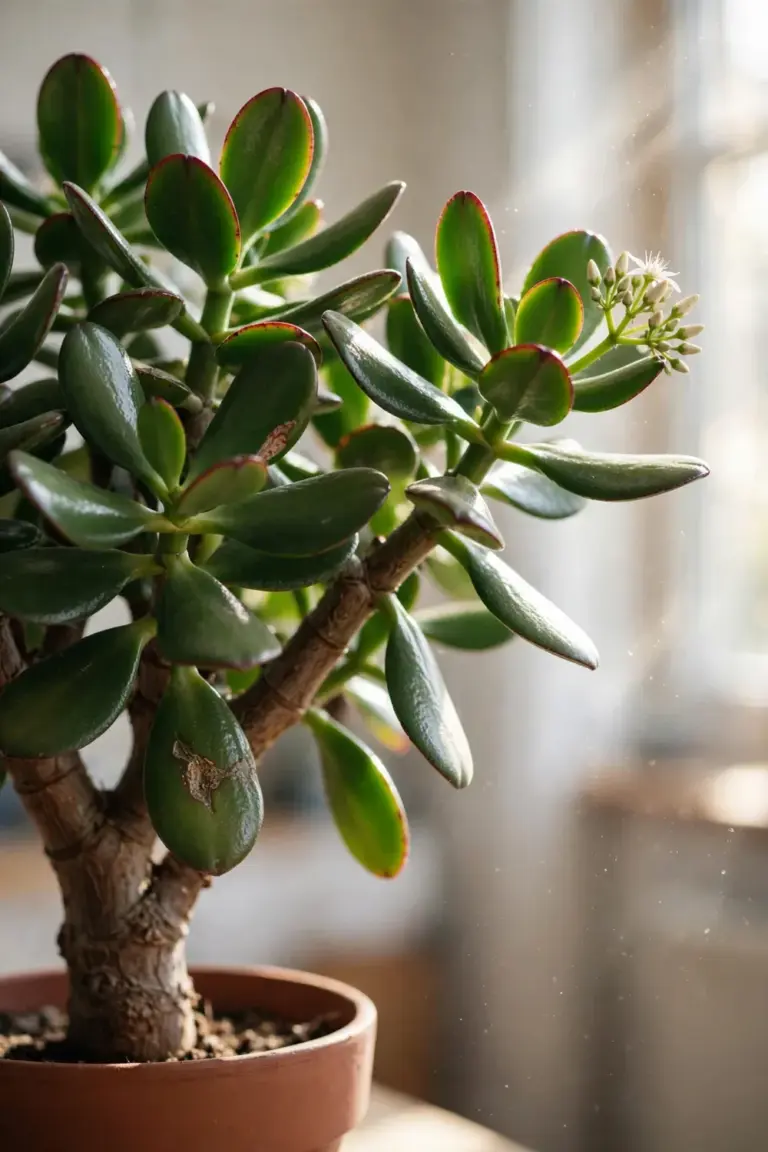
A jade plant is Crassula ovata, a succulent shrub in the stonecrop family, native to South Africa and Mozambique. The species name ovata means egg-shaped, which describes the thick, oval leaves exactly. NC State Extension’s variegated jade page records 1 to 4 feet tall and 2 to 3 feet wide under ideal conditions, and older specimens develop a woody trunk that makes them look like miniature trees. Tiny pink or white flowers appear in spring, mostly on plants grown outdoors. Indoors, flowering is rare, so grow it for the leaves.
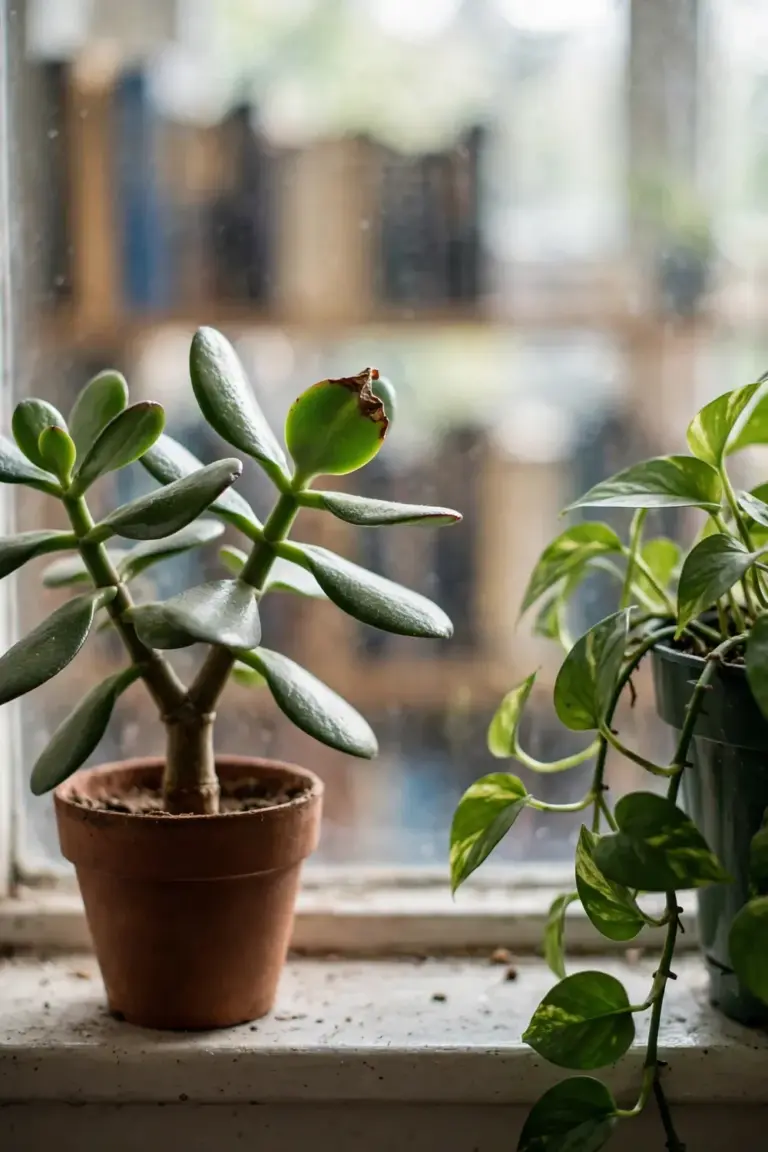
The naming trap sits right at the nursery bench. Jade plant is also sold as money plant, lucky plant, and dollar plant. The other money plant is pothos, Epipremnum aureum, a trailing vine with heart-shaped leaves and zero relation to Crassula ovata. The two plants want opposite care, so check the botanical name on the tag before following any growing advice. If your “money plant” trails and climbs, you are holding pothos, and our guide to growing pothos is the one you need. If it stands upright with thick oval leaves on woody stems, it is jade, and this guide is yours.
2. Give It the Brightest Sun You Have Indoors
Light is the non-negotiable. NC State Extension’s Crassula ovata plant page places the pot in a sunny indoor location, and calls bright light essential for good plant health. Aim for the brightest windowsill in the house. A south or west-facing window in the northern hemisphere works well, with a sheer curtain if the glass magnifies the midday blast. An east window gives gentler morning sun that jades love.
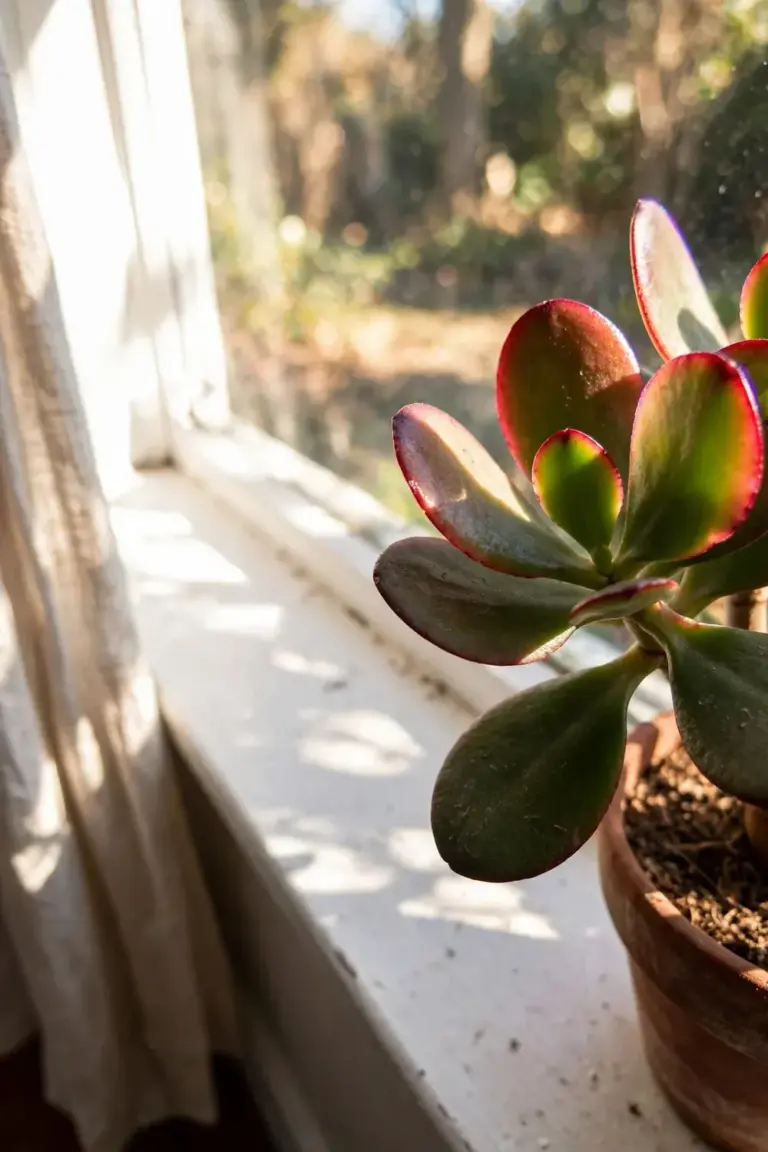
Low light is the slow killer nobody blames. The plant stretches toward the window, the stems grow long and floppy, and the leaves shrink and space out. This legginess is permanent on the stretched stems, though new growth comes in tight once light improves. Red leaf margins are the opposite signal and a good one. Strong light pushes the plant to make red anthocyanin pigments along the leaf edges, the same sun response that tans human skin. A jade with a red rim is a jade getting enough sun.
3. Water by the Leaf-Bend Test, Not the Calendar
Pick a mature leaf, not a new baby one, and bend it gently between your fingers. A firm leaf that resists bending is full of stored water. Leave the watering can alone. A leaf that bends soft and flexible is running low. Water now. This test beats every schedule because it reads the plant’s actual water bank instead of guessing at it.
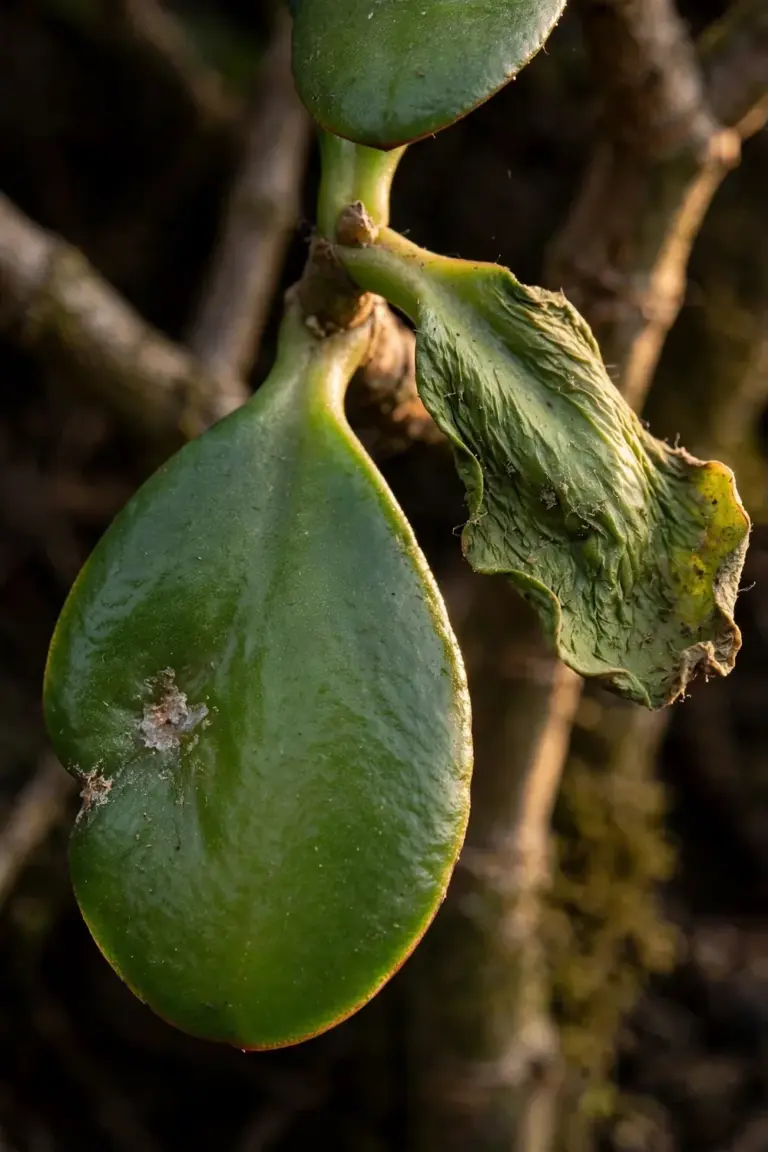
The mechanism is turgor pressure. Succulent leaves hold water in swollen cells, and those cells press outward and keep the leaf rigid, the same way a full water balloon holds its shape. As the plant uses its stored water, the pressure drops and the leaf softens. The bend test reads that pressure directly. Soil moisture tests can lie in a gritty succulent mix that dries on top while staying damp at the roots, but the leaf never lies about the plant’s internal reserves.
Run the test on two or three leaves from different parts of the plant, and test in the morning before the day’s heat changes leaf feel. New growth always feels softer than old growth, so learn the firmness of your plant’s mature leaves as the baseline. After a few weeks of testing, the difference between full and thirsty becomes obvious at a touch. Skip the test and every watering is a guess. Guess wrong often enough and the stem turns to mush.
4. Soak the Whole Pot, Then Let It Dry Completely
When the leaf test says water, water like a desert rainstorm. Drench the potting mix until water streams from the drainage hole, wait a minute, then drench once more so the whole root ball gets wet. Empty the saucer afterward. A light sprinkle only wets the top inch. Shallow roots follow, and the bottom of the pot stays permanently dry.
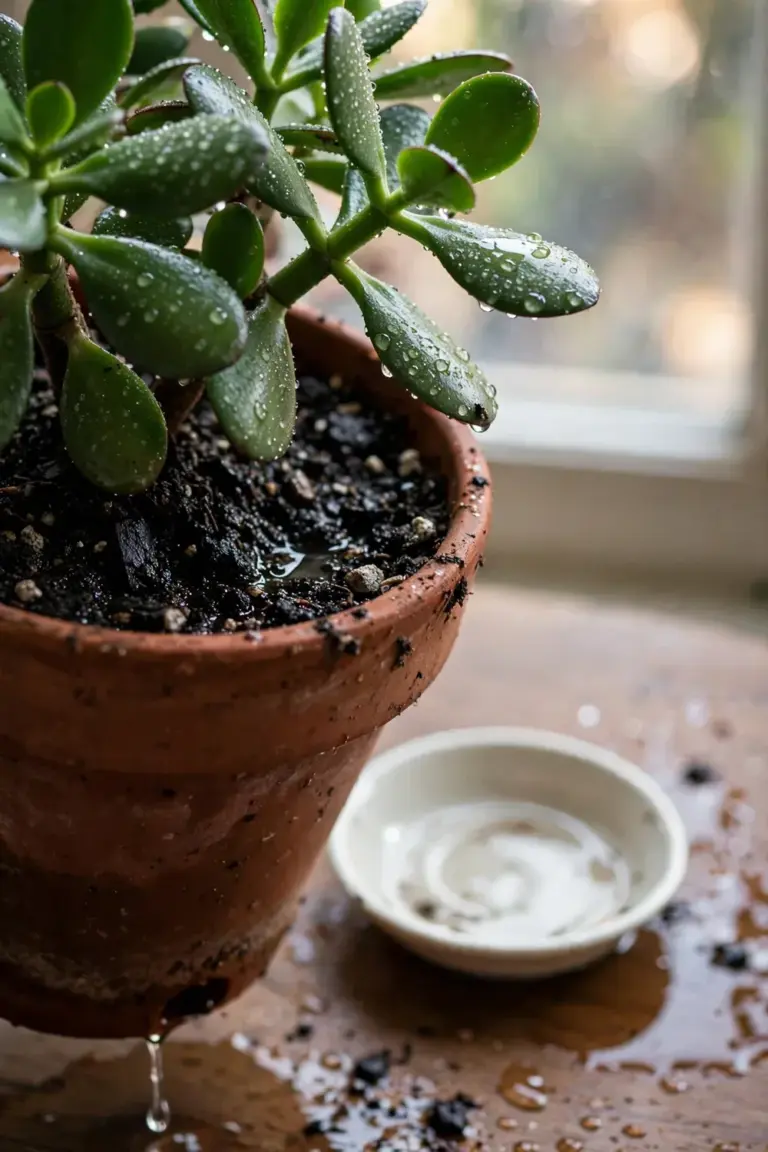
Then the hard part: walk away. Let the mix dry all the way through before watering again. NC State Extension advises watering in moderation when the soil is dry, and reducing watering from fall to late winter when growth slows. In a warm bright summer the dry-out might take a week. In a cool dim winter it can take a month or more. The leaf test decides, not the calendar. If the leaves stay firm for three weeks, the plant is not thirsty. Forcing water on it is how jades die.
Lift the pot as a backup check. A dry pot feels noticeably lighter than a wet one, and after a few soak-and-dry cycles you will feel the difference without thinking. Terracotta pots make this easier because they wick moisture through their walls and dry faster than plastic.
5. Recognize the Death Spiral: Rot That Looks Like Thirst
Overwatering kills more jade plants than every other cause combined, and it kills them through a cruel trick. Drowned roots rot and die, and dead roots cannot take up water. The leaves then wrinkle and soften from genuine dehydration, which looks exactly like thirst. You water again. The remaining roots rot further. The plant collapses.
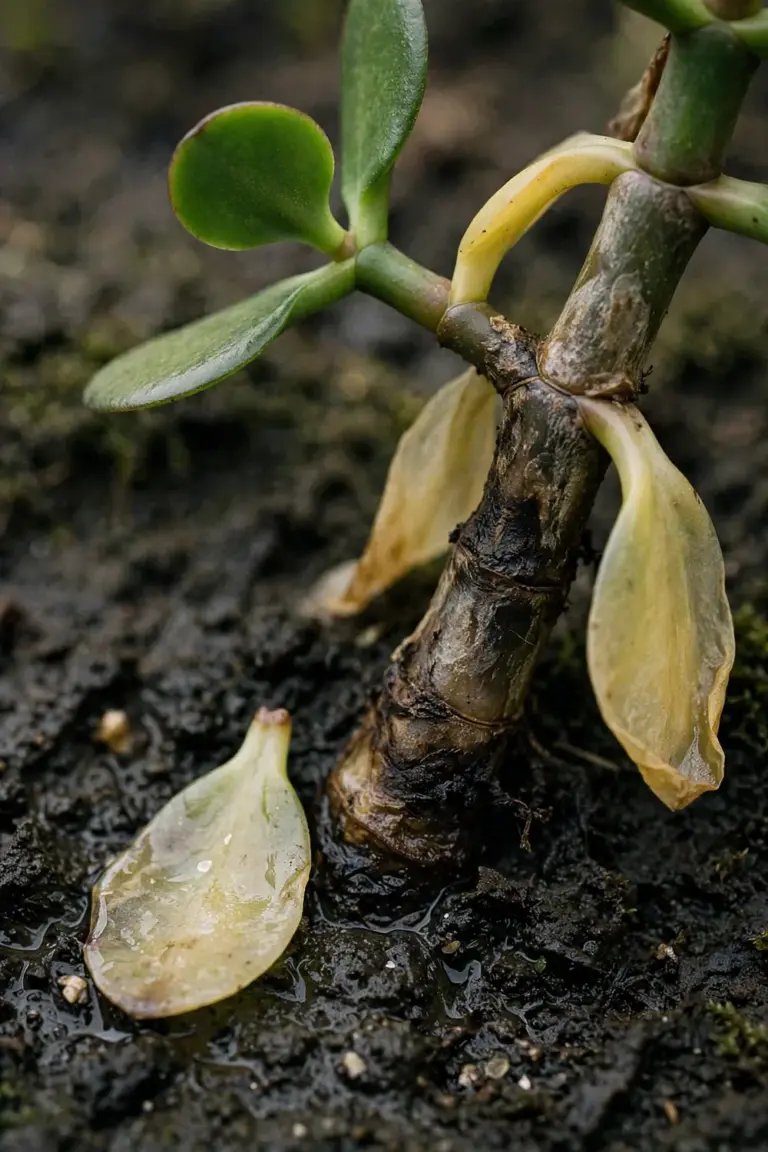
Learn to read the difference. An underwatered jade has dry, wrinkled leaves on firm stems, and the leaves perk up within a day or two of a deep soak. An overwatered jade has soft, translucent, or yellowing leaves that drop at a touch, often on a stem that feels spongy near the soil line. NC State Extension lists leaf fall and root rot as the direct results of overwatering, and notes that the damage comes from excess water, not from any disease.
If you catch it early, unpot the plant and inspect the roots. White or tan firm roots are alive. Brown or black mushy roots are dead, so trim them back to healthy tissue with clean scissors and repot in fresh dry mix. Then wait a week before watering, and let the leaf test run the schedule from there. If the stem itself is mushy all the way through, take a healthy cutting from the top and start over. Jade cuttings root so readily that a rescue is often faster than a revival.
6. Mix a Gritty, Fast-Draining Potting Medium
Jade roots need air as much as water, so the mix must drain fast and never pack into mud. NC State Extension warns that the plant develops root rot in poorly drained soil, and prescribes a well-drained, loamy potting soil. A bagged cactus or succulent mix is the simplest honest choice. Open the bag and squeeze a handful. It should feel gritty and fall apart, not clump like dough.
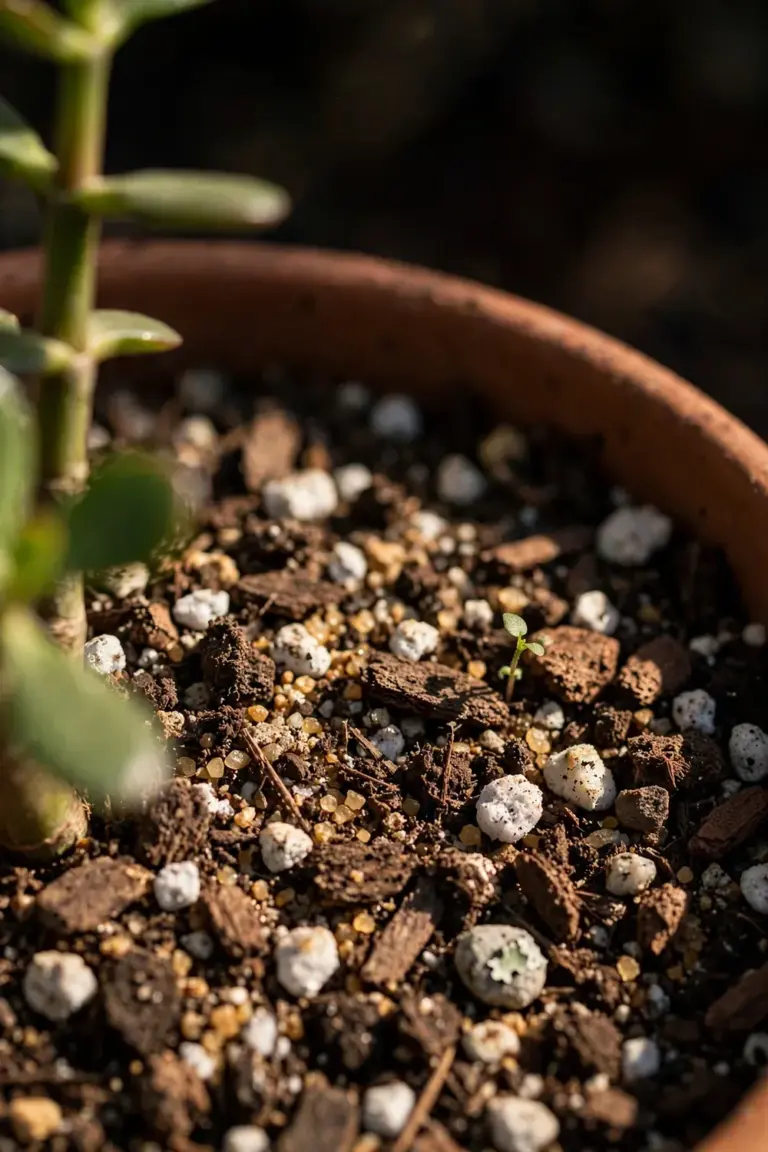
Ordinary potting soil holds too much water for a succulent. If it is all you have, cut it half and half with perlite or coarse sand to open it up. Skip fine beach sand, which packs tight and makes drainage worse. Skip moisture-retaining crystals and water-storing gels entirely. Every additive should move water away from the roots faster, never hold it closer.
Top the mix with a thin layer of coarse grit or small pebbles if fungus gnats bother your indoor pots. The dry top layer discourages the gnats from laying eggs, and it looks tidy. This is cosmetic help, not a substitute for a gritty mix underneath.
7. Choose a Small, Heavy Pot With a Drainage Hole
Jade plants have small root systems for their size. NC State Extension states this plainly: the plant has a small root system and does not need a large pot. A pot only slightly wider than the root ball is the target. An oversized pot holds a reservoir of wet soil the roots cannot reach, and that reservoir breeds rot while the owner thinks the plant has room to grow.
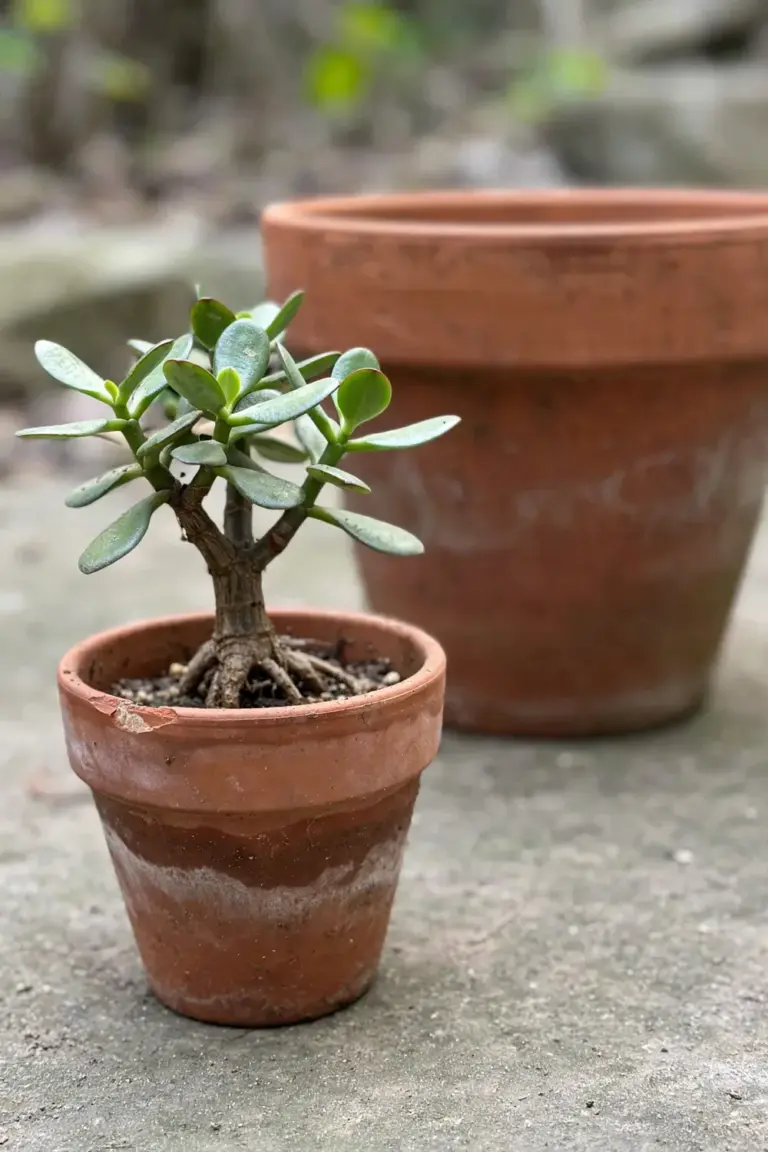
Weight matters as much as size. A mature jade grows top-heavy, with dense branches on a narrow base, and a light plastic pot tips over at the worst moment. Terracotta solves both problems. It is heavy enough to anchor the plant, and its porous walls breathe and pull moisture from the mix, which forgives a heavy watering hand. One drainage hole is the absolute minimum, and several are better. A pot with no hole is a slow drowning no matter how careful the watering.
Repot only when the plant is genuinely root-bound or the pot threatens to tip. Spring is the kindest time, at the start of active growth. Move up one pot size, not three. Fresh gritty mix around the old root ball is all the plant wants.
8. Feed Lightly in the Growing Season Only
Jade plants are slow growers that evolved in lean soils, so they ask for very little fertilizer. Feed at half the label strength or less, and only during the active growing season in spring and summer. A balanced liquid houseplant fertilizer or a cactus and succulent formula both work. The weak dose is the point. Strong fertilizer burns the small root system and pushes soft, flabby growth that flops and invites rot.
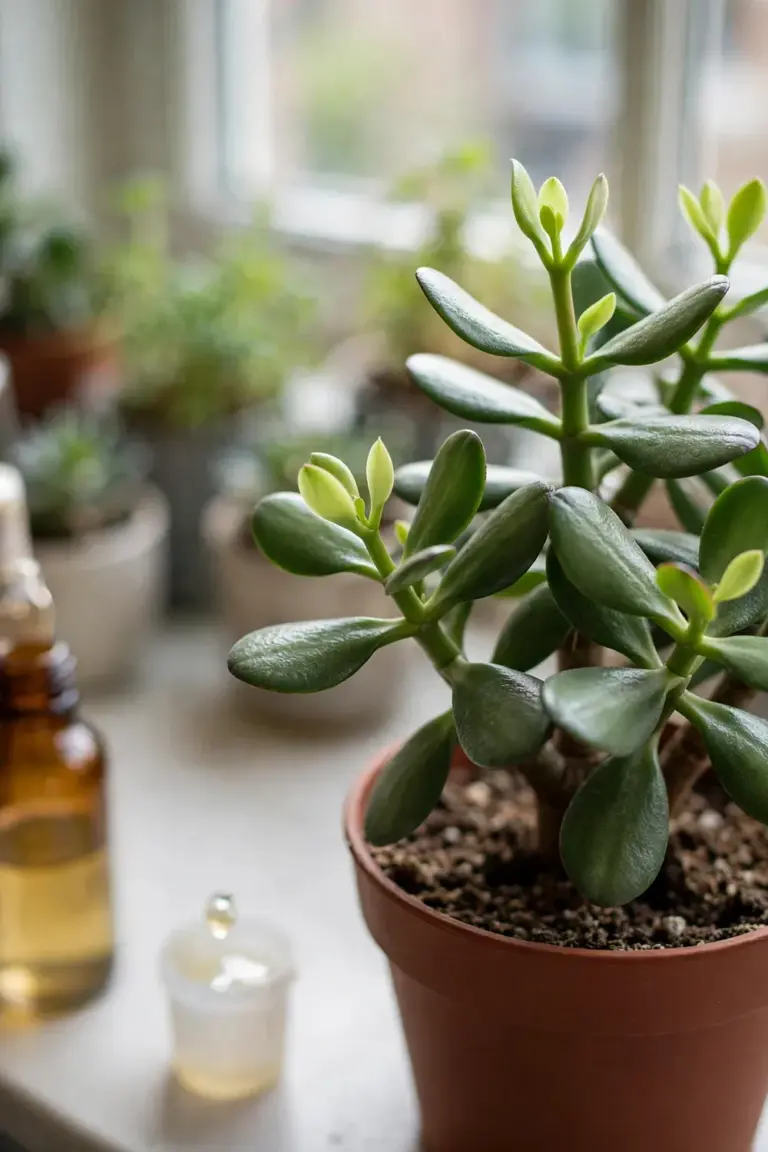
Skip feeding entirely from fall through winter. NC State Extension advises reducing watering from fall to late winter, and feeding follows the same rest logic. A dormant plant cannot use the nutrients, so they sit in the mix and accumulate as salts. If white crust forms on the soil surface, flush the pot with plain water at the next watering and cut back on feeding. One weak feeding in spring and one in summer is plenty for most indoor jades.
9. Keep It Warm, Dry, and Out of Frost
Jade plants want average to cool indoor temperatures, the range most homes sit in naturally. NC State Extension calls bright light and average to cool indoor temperatures essential for good plant health. Normal room warmth suits them, and a slightly cooler night suits them even better. What they cannot take is frost. One hard freeze turns the water-filled leaves to mush, and the damage shows as blackened, collapsed tissue within days.
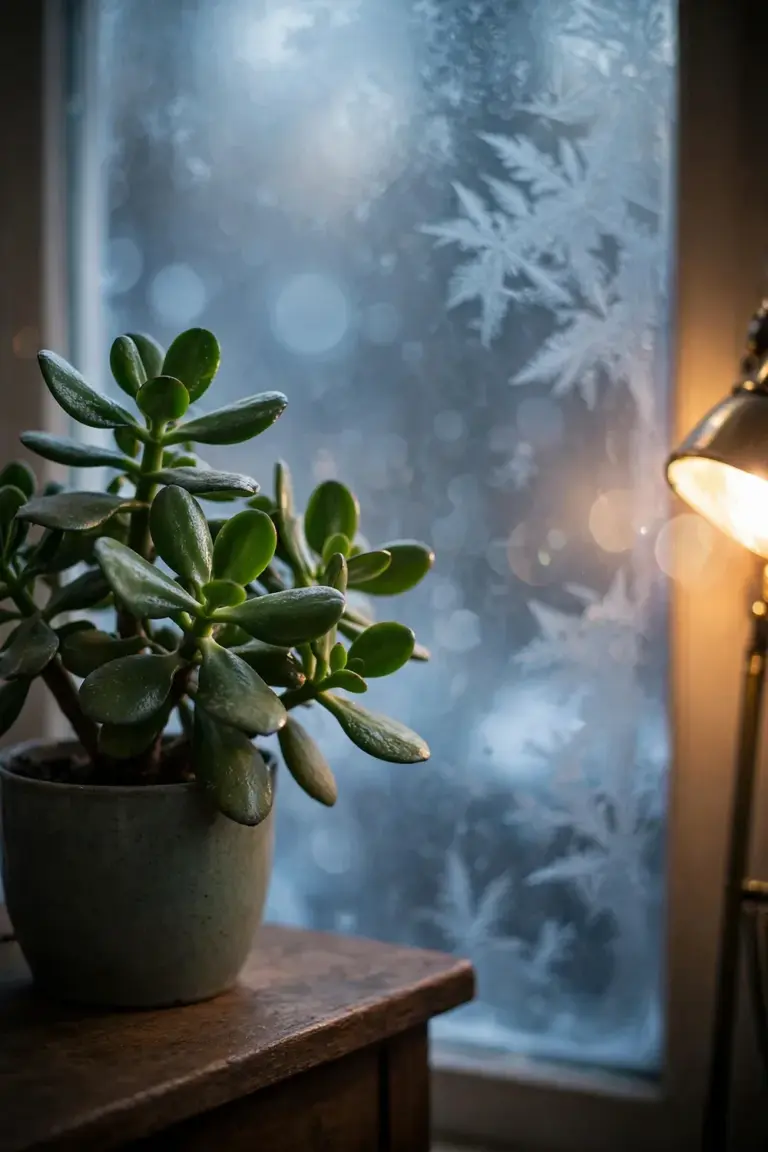
Humidity is the quieter enemy. The NC State variegated jade page notes the plant is intolerant of humidity and warns against overwatering in damp conditions. Keep jades out of steamy bathrooms and away from humidifiers. Good air circulation around the plant keeps leaf surfaces dry and fungal problems away. In a humid climate, a fan on low in the room does more for the plant than any spray or treatment.
10. Prune Above Leaf Pairs to Build a Bushier Jade
Jade plants take pruning well, and pruning is how a lanky plant becomes a handsome one. Cut a stem just above a pair of leaves, and two new branches usually sprout from that point, doubling the fullness. Use clean, sharp scissors or pruning shears, and make the cut in spring or early summer when the plant heals fastest.
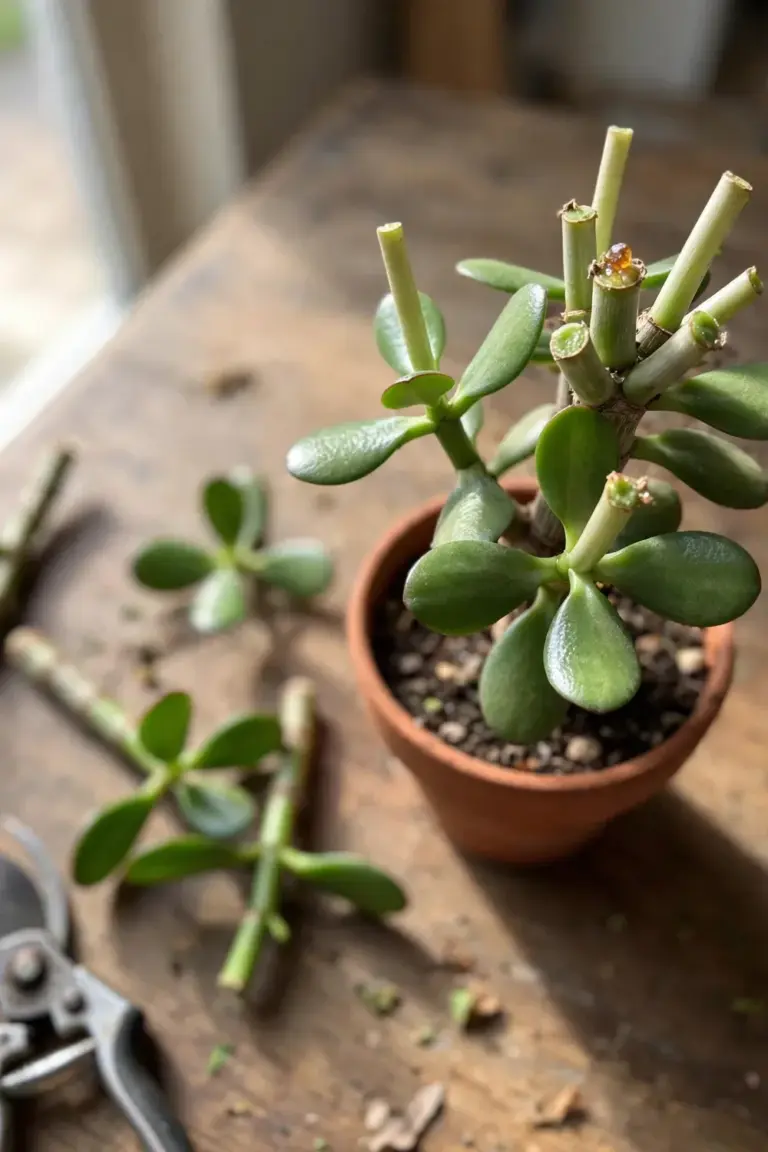
Save the pruned pieces. Every stem cutting is a free plant, which the propagation section covers next. Let the cut ends on the parent plant dry in the air. A callused cut resists infection far better than a fresh wound. Never prune in the dead of winter unless removing dead or rotting tissue, because slow healing invites problems.
Shape gradually over seasons, not all at once. Removing more than a third of the plant in one session stresses it, and the bare stems take months to refill. Step back after each cut and look at the silhouette. The goal is a balanced miniature tree, not a topiary on a deadline.
11. Grow New Plants From Leaf and Stem Cuttings
Jade propagation is almost unfairly easy, and it is the reason mature plants become gifts. NC State Extension notes that propagation succeeds from leaf or stem cutting. Stem cuttings give a decent plant fastest. Leaf cuttings work too, but they take months to become anything more than a curiosity. Seeds exist and can work, and our guide to growing succulents from seeds covers that slower road for the patient.
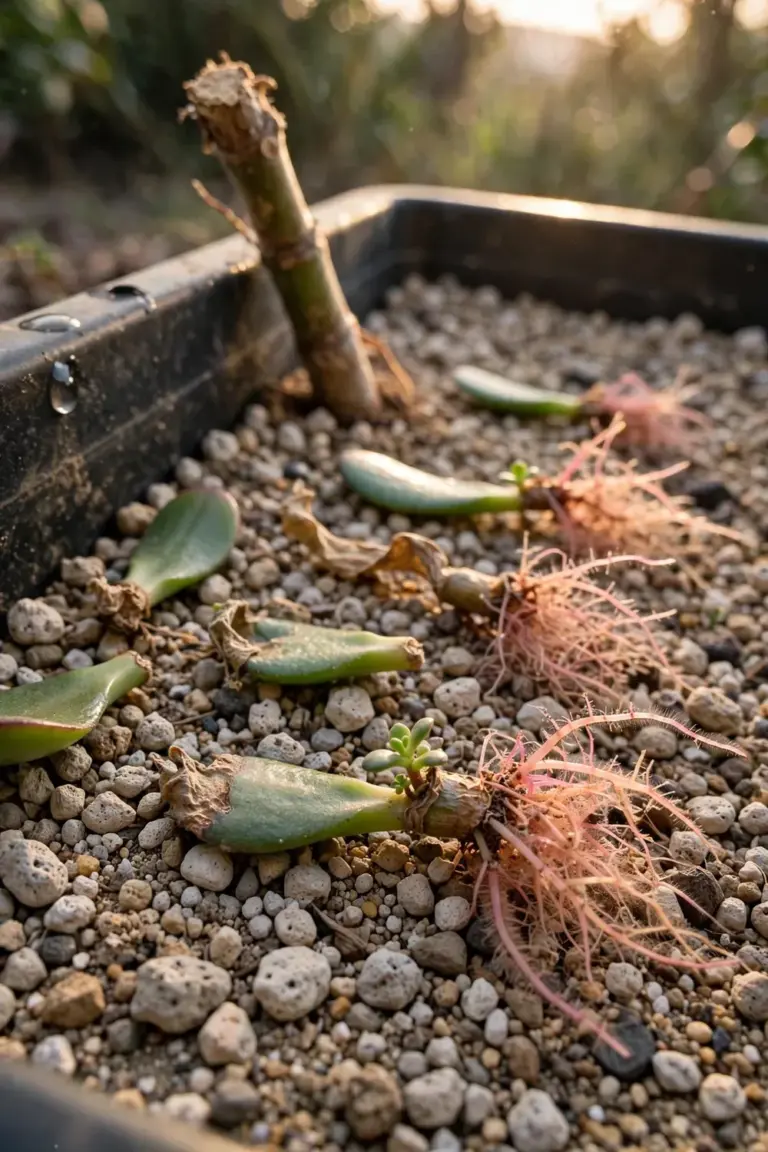
For a stem cutting, snip a healthy 3 to 4 inch stem section and strip the lowest leaves. Set it in a dry, shaded spot for several days until the cut end forms a dry callus. This waiting step is not optional. A fresh cut planted straight into damp mix rots more often than it roots. Once callused, push the stem an inch into dry gritty mix and wait. Roots usually form within a few weeks at room temperature. Water sparingly until the cutting resists a gentle tug, which means roots have anchored.
For a leaf cutting, twist a plump leaf cleanly from the stem so the base comes away intact. A torn base rarely roots. Let it callus for a few days, then lay it on top of dry mix without burying it. Mist the mix lightly every few days, never soaking it. A tiny rosette and pink roots emerge from the leaf base over several weeks. Patience is the whole technique. The mother leaf shrivels as it feeds the baby, and that is normal, not failure.
| Method | Speed | Difficulty | Best for |
|---|---|---|---|
| Stem cutting | New plant in weeks | Easy | Replacing a leggy plant, gifts |
| Leaf cutting | New plant in months | Easy but slow | Fun experiment, bulk numbers |
| Seed | New plant in a year or more | Fiddly | Breeding, curiosity |
12. Meet ‘Hobbit’, ‘Gollum’, and the Variegated Jades
The plain green jade is the toughest and the cheapest, and it is the right first plant. Once it thrives, the cultivars get interesting. ‘Hobbit’ and ‘Gollum’ grow tubular, finger-like leaves with spoon-shaped tips, a mutation that looks like a different species until it flowers. ‘Variegata’ and ‘Tricolor’ carry cream, yellow, or pink streaks in the leaves. ‘Hummel’s Sunset’ blushes gold and red in strong light. ‘Blue Bird’ has a wavy, blue-gray cast, and ‘Pink Beauty’ was selected for pinker flowers.
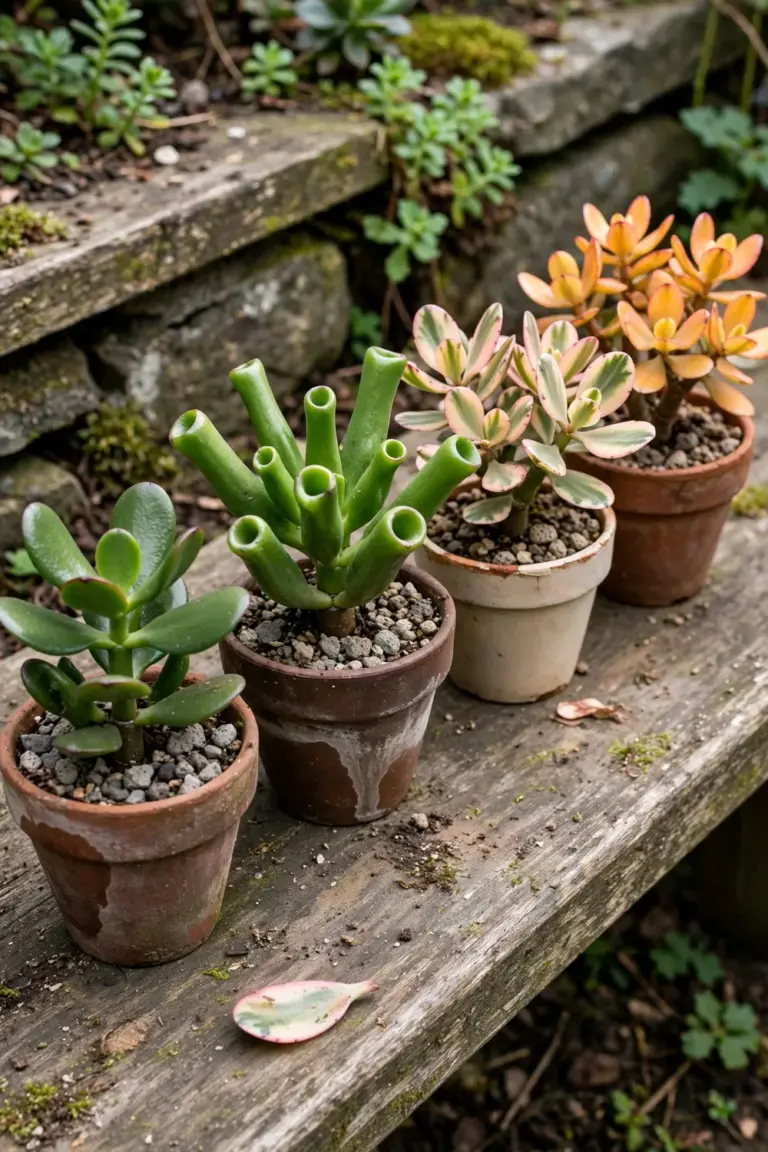
Variegated types need more light than plain green ones, because their white and yellow patches cannot photosynthesize. In dim light they revert or sulk. Give them the brightest spot you have and accept slower growth. NC State Extension’s variegated jade page describes green and white variegated leaves with the same care needs as the species, plus the same warning about root rot in poorly drained soil. Buy named cultivars from reputable nurseries, because the variegation is unstable in seed-grown plants and big-box labels are often wrong.
13. Fix the 6 Most Common Jade Plant Problems
Most jade problems trace to three causes: too much water, too little light, or pests that found a stressed plant. Work through the table before reaching for any product.
| Symptom | Likely cause | Fix |
|---|---|---|
| Soft, translucent leaves dropping at a touch; mushy stem base | Overwatering and root rot | Unpot, trim dead roots, repot in dry gritty mix, wait a week to water |
| Wrinkled, shriveled leaves on firm stems | Underwatering | Deep soak until water drains; leaves firm up in a day or two |
| Long bare stems, small spaced-out leaves | Too little light | Move to the brightest window; prune lanky stems in spring |
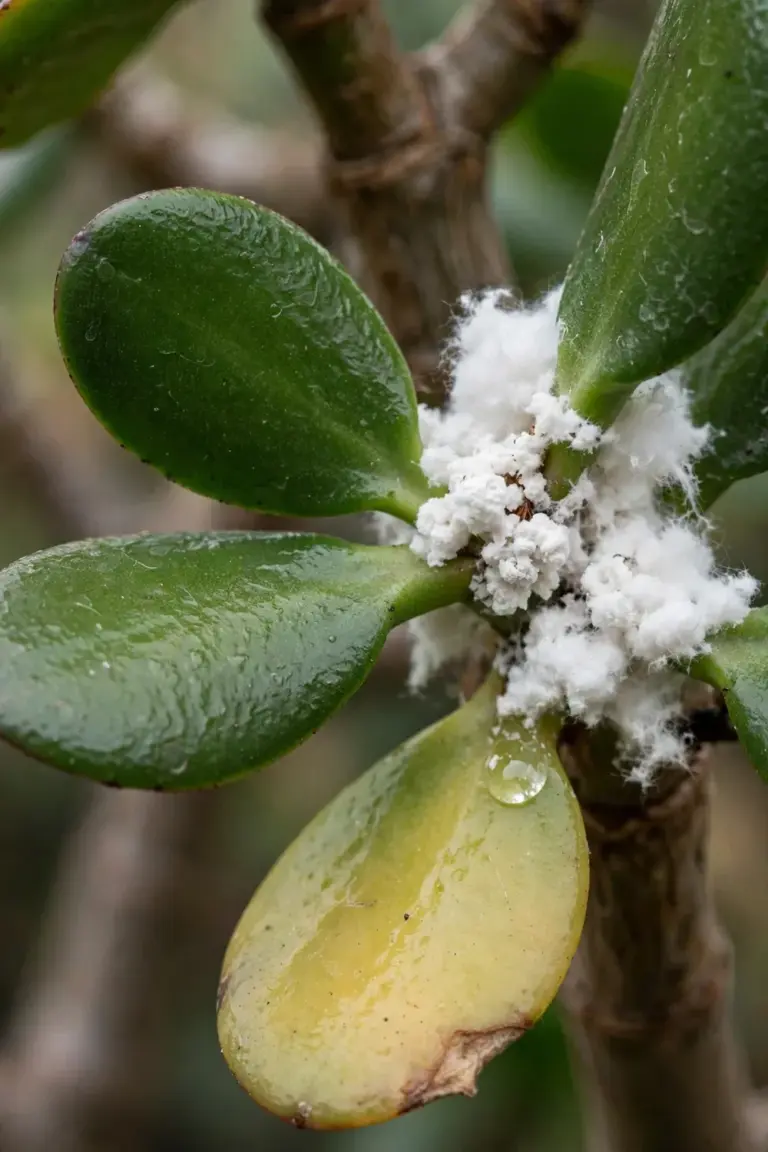
| White cottony clusters in leaf joints | Mealybugs | Dab with rubbing alcohol on a cotton swab; isolate the plant |
| Fine webbing and speckled leaves | Spider mites | Rinse the plant, improve air flow, treat with insecticidal soap |
| Sudden leaf drop after moving the plant | Shock or cold draft | Keep conditions steady; new growth replaces the dropped leaves |
On pests, NC State Extension lists aphids, scale, spider mites, and mealybugs as the occasional problems on jade plants. Treat early and mechanically first. A cotton swab dipped in rubbing alcohol kills mealybugs on contact without drenching the plant in chemicals. Repeat weekly until no new cottony clusters appear, because the eggs hide in crevices. Isolate an infested plant from the rest of the collection, since mealybugs walk.
One safety note belongs here. Jade plants are toxic to cats and dogs, and NC State Extension flags the plant as problematic for both. Keep the pot out of reach of curious pets, and pick up fallen leaves before a dog finds them. The same fallen leaves root where they land, so sweeping them up protects pets and prevents surprise jades in neighboring pots.
14. Grow Jade Plants in Australia: Outdoors, Frost Zones, and Humid Summers
Australia splits neatly into two jade zones. In frost-free coastal and subtropical regions, jade plants grow outdoors year-round and turn into genuine small trees, with winter flower clusters that indoor growers rarely see. In frost-prone inland and southern areas, treat jade as an indoor plant from autumn through spring, and move it outside only after the last frost has passed. One unexpected frost does more damage than a whole winter of dim indoor light.
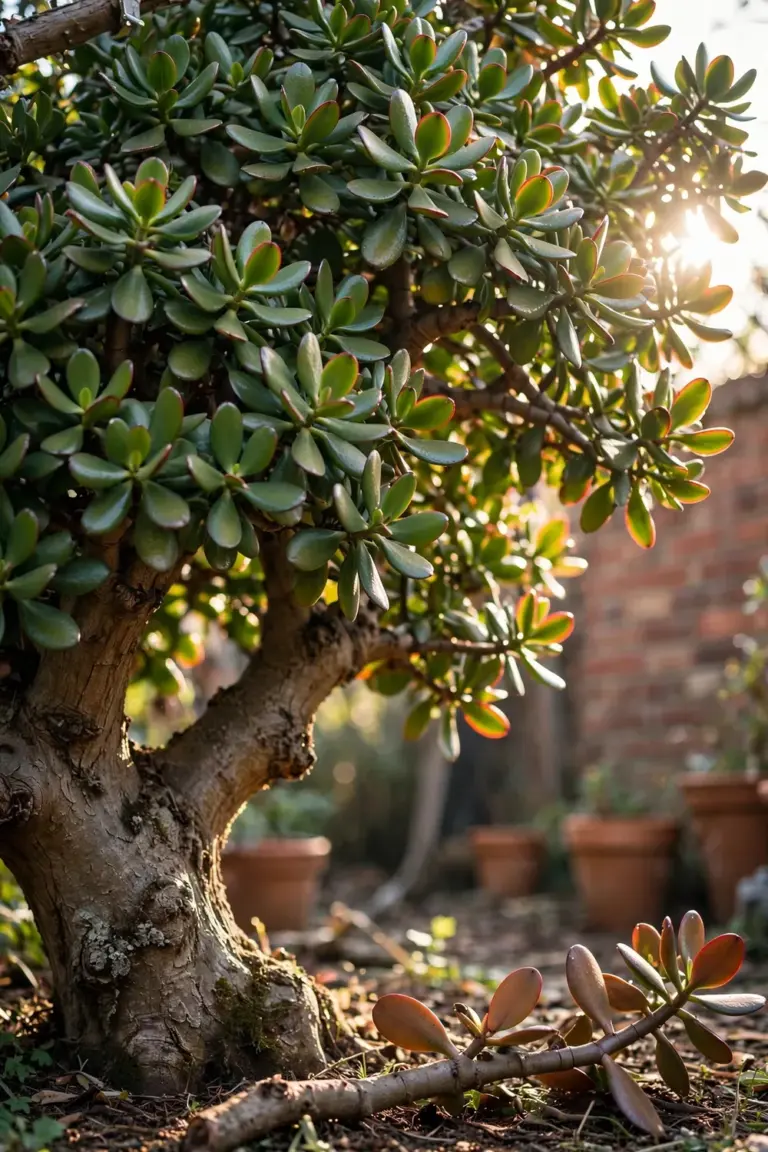
Sun placement needs an Australian adjustment. The plant wants bright sun, but hot afternoon sun through glass or against a brick wall can scorch leaves that never adapted to it. Morning sun with afternoon shade is the sweet spot for outdoor pots in summer. Indoors, the brightest window still wins, since glass filters out a surprising amount of light.
Humid summers are the other local challenge. Terracotta pots earn their keep in Brisbane or Sydney summers, because the porous clay pulls moisture from the mix between waterings. Space pots apart so air moves between them, and stretch the watering interval in muggy weather even if the leaf test says the plant looks ready. When humidity is high and the soil stays damp, the calendar lies and the leaf test still tells the truth.
Frequently Asked Questions
Water when the leaves tell you to, not on a schedule. Bend a mature leaf gently. A soft, flexible leaf means water now with a deep soak until water drains from the pot. A firm leaf means wait. In warm bright conditions this might be weekly, and in cool winter conditions it can stretch to a month or more. NC State Extension advises watering when the soil is dry and reducing water from fall to late winter.
Soft leaves that drop at a touch usually mean overwatering and the start of root rot, the most common cause. Let the mix dry fully and check the roots if it continues. Dry, crispy leaves that fall from underwatering or sudden cold are less urgent and recover with a deep soak. Leaf drop also follows a sudden move, a cold draft, or too little light, so change one condition at a time.
Yes, where frost never comes. Jade plants grow outdoors year-round in frost-free climates and can reach small-tree size with winter flowers. In frost-prone areas they must come indoors before the first frost, because freezing turns the water-filled leaves to mush. Outdoors, give morning sun and afternoon shade, gritty soil, and shelter from heavy rain that keeps the roots wet.
Legginess means the plant is starved of light. Stems stretch toward the window, leaves shrink and space out, and the plant looks sparse. Move it to the brightest windowsill you have and prune the stretched stems in spring, cutting just above leaf pairs so two new branches sprout. New growth comes in compact, but the old stretched stems never shrink back.
Yes. Jade plants are toxic to cats and dogs, and NC State Extension flags the plant as problematic for both animals. Keep pots out of reach and pick up fallen leaves promptly. If a pet chews the leaves, watch for vomiting, lethargy, or loss of coordination and call a veterinarian. The same dropped leaves root easily, so sweeping protects pets and stops volunteer plants.
Flowering needs maturity, bright light, and a cool dry rest. Outdoor plants in frost-free climates bloom most reliably, with star-shaped white or pink clusters in late winter to spring. Indoors, give the plant the brightest spot, cool nights, and reduced water through winter, then wait. Young plants and pampered, constantly warm plants rarely bloom, and no fertilizer forces it.
Grow It by the Leaf, Not the Calendar
A jade plant asks for four things: the brightest sun indoors, a gritty mix in a small heavy pot, food only in the growing season, and water only when a leaf bends soft. The leaf-bend test replaces every schedule, every app reminder, and every guess. Firm means full. Soft means thirsty. Learn that touch and the plant handles the rest, growing slowly into the miniature tree it was always going to become.