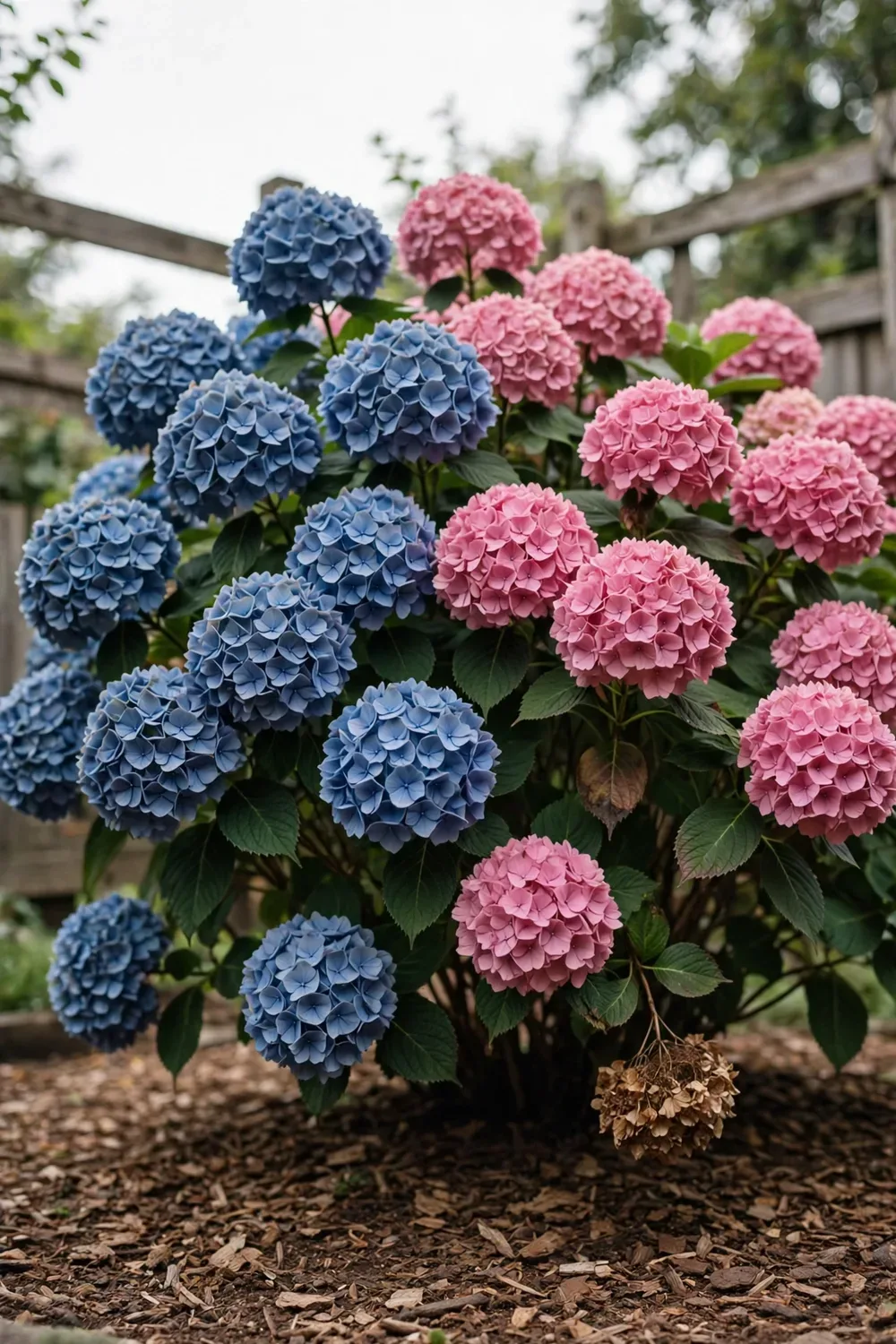

Pin down which of the 4 common hydrangea types you own before you cut a single stem. That identification is the heart of how to grow hydrangeas well: the species sets the pruning date, the sun exposure, and whether the soil gets a vote on the flower color. The rest of this page is 14 steps, from the 4-type comparison table to the winter deadhead that shields next year’s buds.
Two facts run the whole plant. First, some hydrangeas bloom on old wood and some on new wood, and that split sets every pruning date on this page. Second, only bigleaf hydrangea answers soil pH with different flower colors. In my experience, the pruning question answers itself the moment you name the species.
A general beginner guide is a different job, and that lives on the site’s Blooming Elegance guide to growing hydrangeas. This page stays on the species decision: which type you own, which pruning date it needs, and which sun exposure keeps it flowering.
1. Compare 4 Hydrangea Types in 1 Table Before You Buy
Four hydrangea species cover nearly every nursery tag: bigleaf (Hydrangea macrophylla), panicle (Hydrangea paniculata), climbing hydrangea (Hydrangea anomala subsp. petiolaris), and smooth hydrangea (Hydrangea arborescens, usually sold as ‘Annabelle’ types). Learn these four and you can prune any hydrangea with confidence.
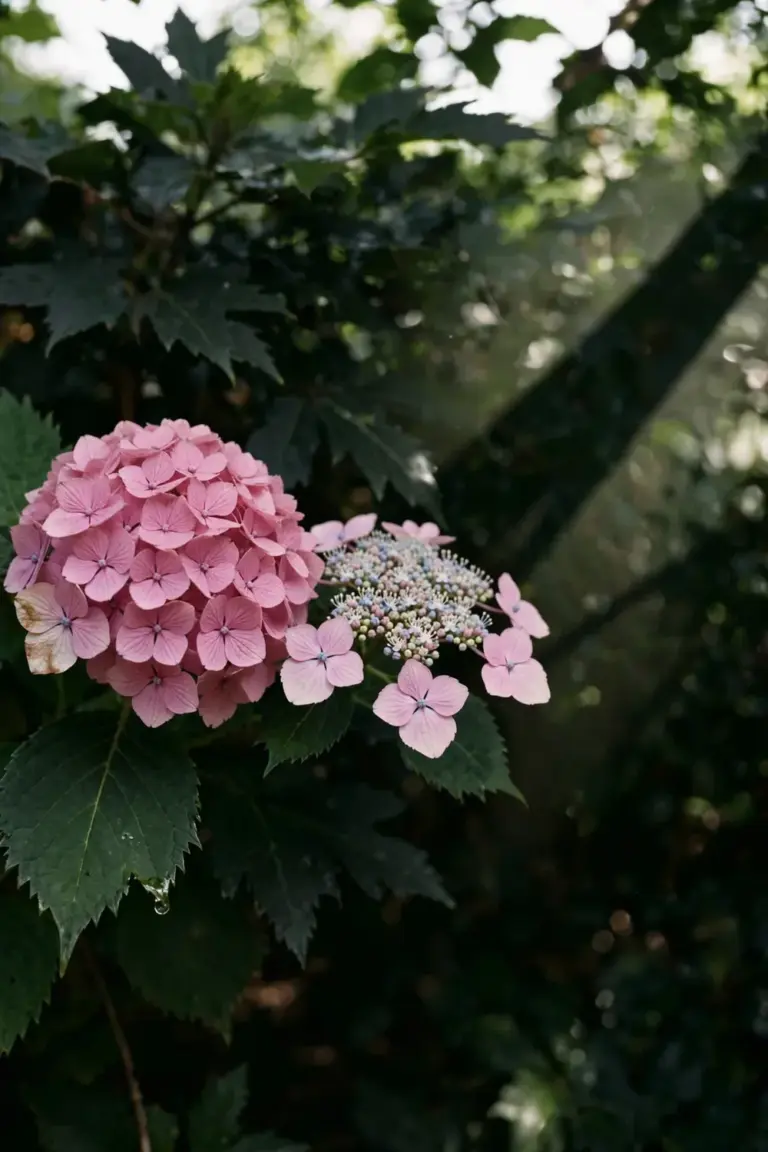
| Type | Blooms on | Flower shape | Sun | Prune | Flower color |
|---|---|---|---|---|---|
| Bigleaf (H. macrophylla), mophead and lacecap forms | Old wood | Round pom-poms or flat lacecaps | Part shade | Right after flowering | Blue to pink by soil pH |
| Panicle (H. paniculata) | New wood | Cone-shaped panicles | Full sun tolerant | Late winter, hard | White, aging to pink |
| Climbing (H. anomala subsp. petiolaris) | Old wood | Flat white lacecaps on a vine | Part shade to full shade | Lightly, right after flowering | White |
| Smooth (H. arborescens) | New wood | Big white snowballs | Part shade | Late winter, hard | White |
One naming trap to clear before you shop. In Europe, gardeners call bigleaf hydrangea (Hydrangea macrophylla) ‘hortensia’. The name covers the same species, so a tag that reads hortensia is a mophead tag. Buy it and you own an old-wood shrub that wants part shade and a prune right after flowering.
Oakleaf hydrangea (Hydrangea quercifolia) misses this table only because nurseries stock it less often. It blooms on old wood and prunes exactly like bigleaf: after flowering, lightly, and never more than a third at once.
Read the nursery tag before you buy, not after. The tag should name the species: a tag that reads Hydrangea macrophylla names an old-wood plant, while Hydrangea paniculata names a new-wood one. A tag that says only “hydrangea” tells you nothing. Ask for the species, then match it to the table.
Buy on looks alone and the classic mistake follows: a mophead baking in full afternoon sun, or a panicle pruned in September. The table takes two minutes. It saves a season.
2. Memorize the Old-Wood vs New-Wood Pruning Rule
Old wood is last season’s stem. New wood is this season’s growth. The species decides which one carries the flower buds, and that decision sets every pruning date below.
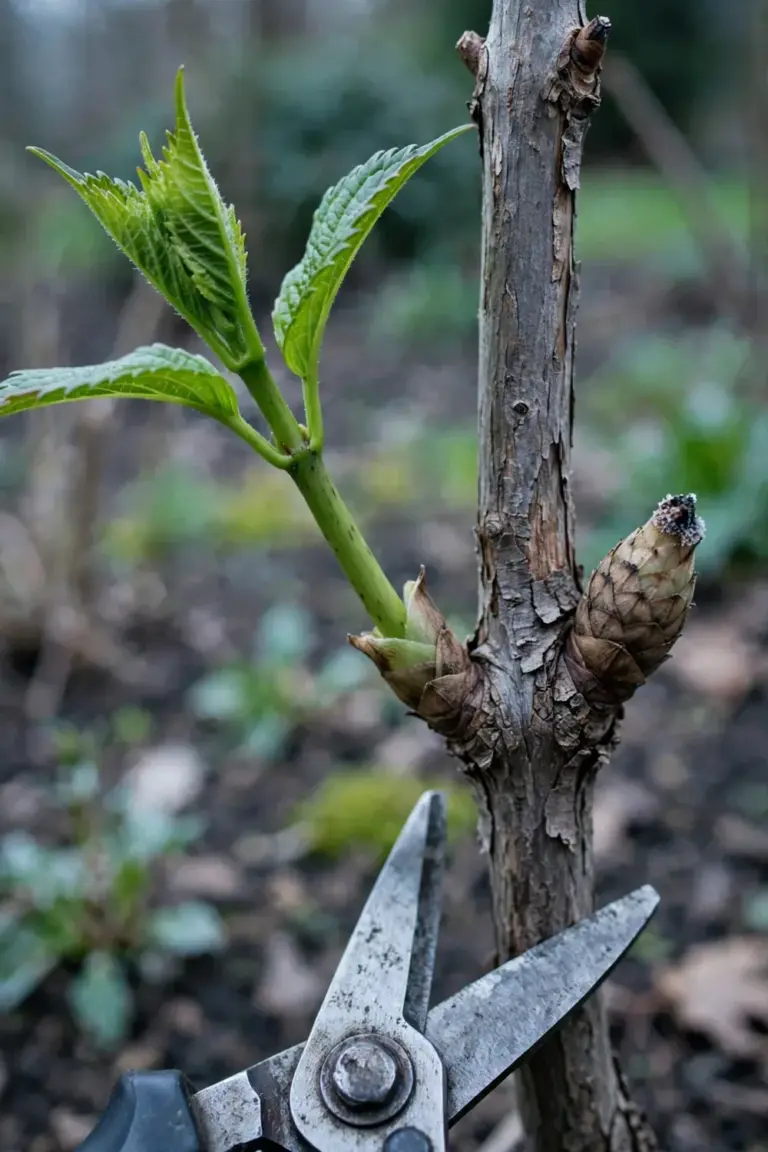
Bigleaf hydrangea sets its buds on old wood in late summer and fall, so any necessary pruning happens immediately after flowering, according to the Clemson Extension pruning guide. Panicle and smooth hydrangeas bloom on new wood grown during the current season, so they take pruning in late winter or early spring while dormant. Oakleaf and climbing hydrangea are old-wood bloomers too, pruned after flowering.
Two refinements matter. The Endless Summer series of bigleaf hydrangeas blooms on old wood first and then reblooms on new wood, so it tolerates pruning after flowering without losing the whole season. And whatever type you cut, never remove more than a third of the total growth in one session.
Cut an old-wood type in autumn and you slice off the buds that took all summer to form. The shrub leafs out green in spring and flowers not at all. That flowerless shrub is the classic hydrangea heartbreak, and the calendar caused it.
3. Match Each Type to Its Sun Exposure
Bigleaf wants morning sun and afternoon shade. Panicle takes full sun. Climbing hydrangea climbs a shady wall without complaint.
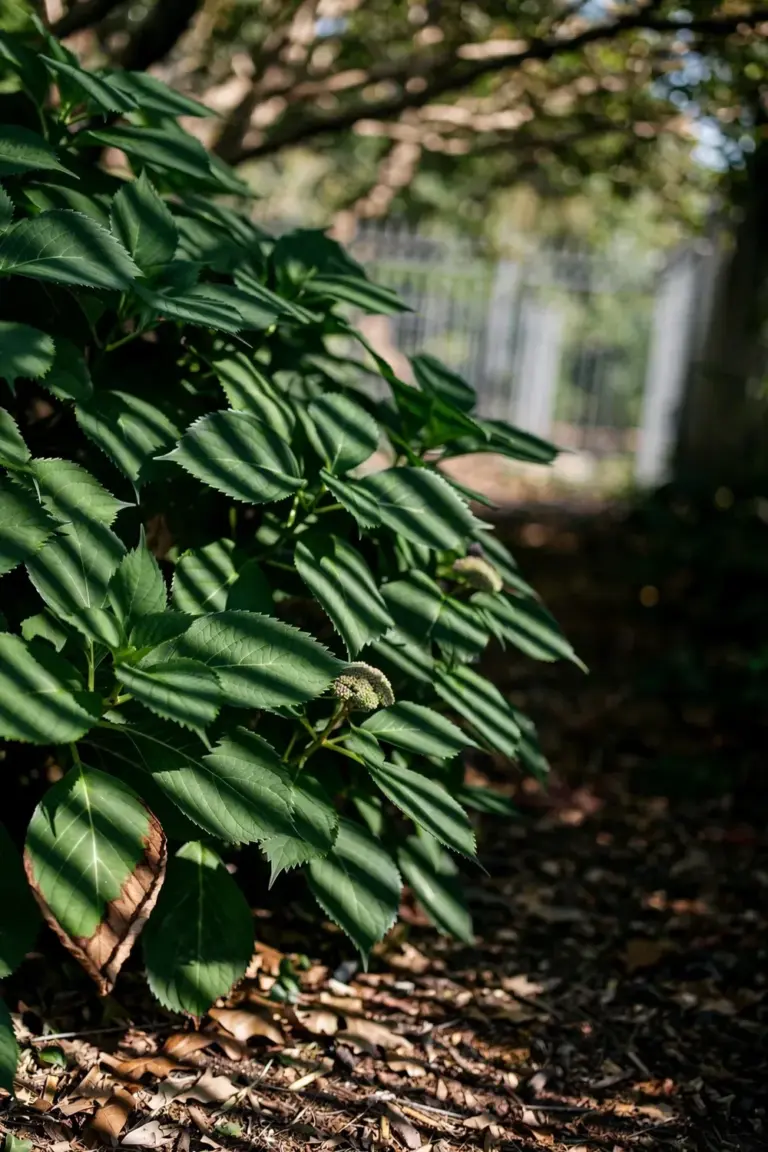
Give bigleaf hydrangea morning sun and afternoon shade. The big soft leaves scorch in hot afternoon sun, and the plant wilts by mid-afternoon even when the soil is moist. This exposure is non-negotiable in warm climates.
Panicle hydrangea is the sun-tolerant one. Full sun grows the strongest stems and the biggest cones, and the species handles heat that flattens bigleaf. Smooth hydrangea sits in the middle: give it part shade, with more sun tolerated where water is steady.
Climbing hydrangea wants part shade to full shade, and it climbs north-facing walls and fences that no other hydrangea would touch, per the Missouri Botanical Garden plant profile. It attaches with aerial rootlets, so give it brick, masonry, or rough wood to grip.
Read the aspect of the bed, not just the hours. An east-facing bed gives bigleaf gentle morning sun and shade by afternoon, which is the ideal it asks for. A west-facing bed delivers the harshest sun of the day right when the plant is already warm. When the only free bed faces west, a small tree or a lattice screen on the afternoon side fixes the exposure.
The wrong exposure never kills a hydrangea outright. It just makes a tired plant that blooms half-heartedly for a decade.
4. Dig a Hole Twice as Wide as the Root Ball
Dig the hole twice as wide as the pot and no deeper. Set the crown level with the surrounding soil, backfill with the soil you removed, and water it in.
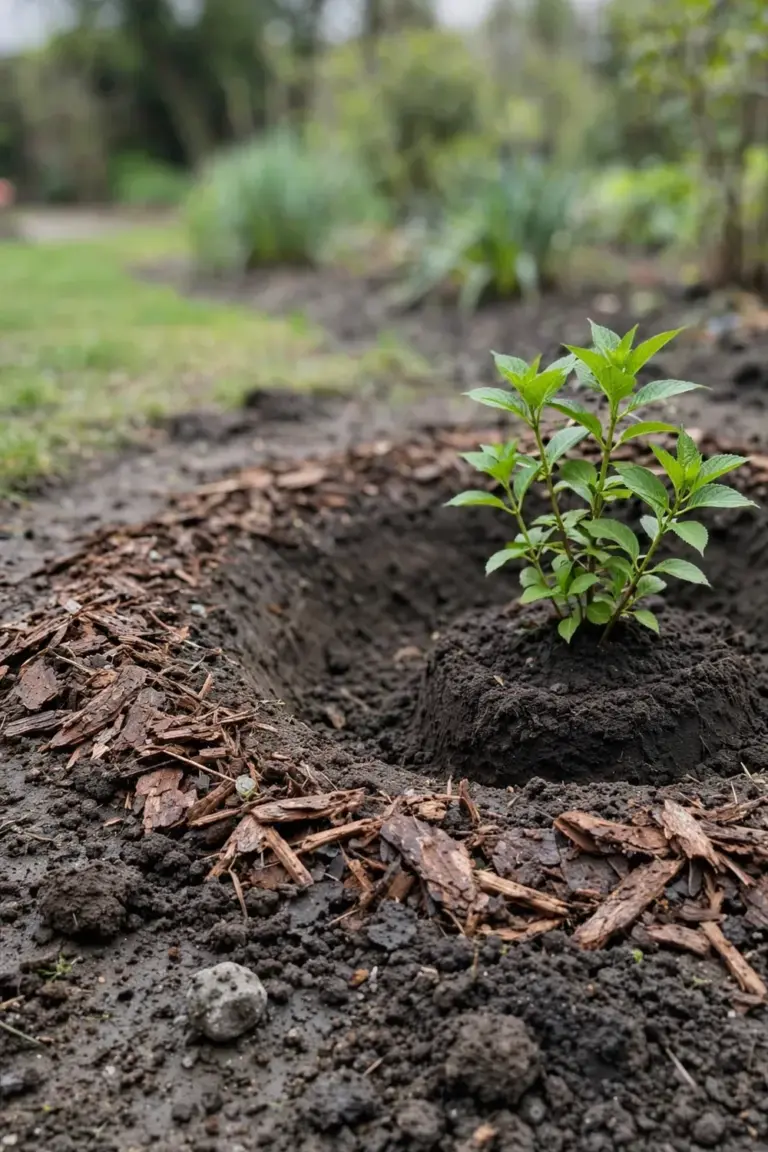
Plant in spring after the last frost, or in autumn while the soil still holds warmth. Soak the root ball before it leaves the pot. Tease apart circling roots with your fingers so they head outward instead of strangling the crown.
Depth is where plantings quietly fail. A hydrangea set 5 cm too deep sits with its crown in wet soil and sulks for years. Check the depth before you backfill: the top of the root ball sits level with the soil surface, never below it.
Finish with 5.1 to 7.6 cm of organic mulch over the root zone, kept a few centimetres off the stems. Mulch holds the moisture these plants demand and keeps the roots cool. Never pile mulch against the stems.
In heavy clay, widen the hole further and plant the crown 2 to 3 cm proud of the surrounding soil. Clay holds water, and a slightly raised planting keeps the crown out of the wettest zone. Fork the sides of the hole so roots can push into the surrounding ground instead of circling in the loosened fill.
A wide, shallow planting hole gives new roots loose soil to run into. A narrow, deep hole gives them a bathtub.
5. Water Deeply Once a Week Through the First Season
Water thoroughly once a week, more often in heat. One deep soaking beats a daily sprinkle every time.
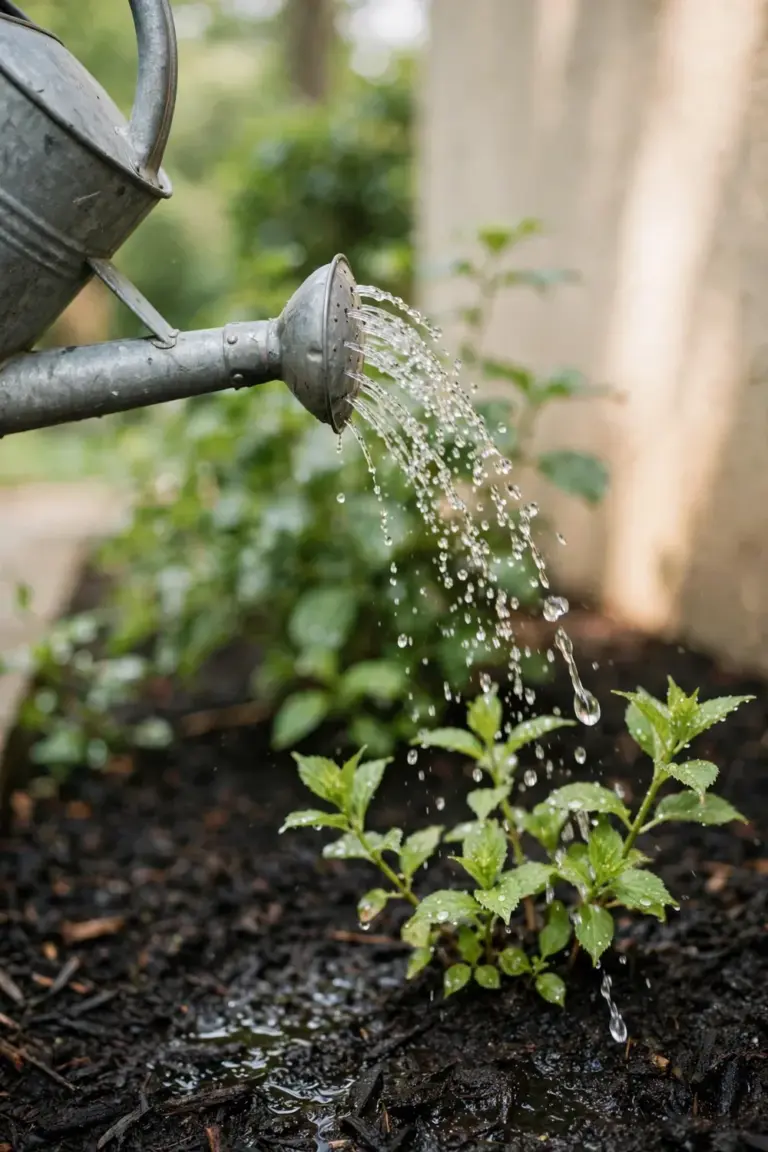
The genus name says it plainly: Hydrangea joins the Greek hydor (water) and aggeion (vessel). These are thirsty plants. The Clemson extension lesson notes on hydrangeas advise gardeners to plan on watering thoroughly once per week or more frequently, and that weekly rhythm is the backbone of first-year care.
Aim the water at the soil. Wet foliage invites leaf spot, and morning watering lets the leaves dry by nightfall. In a heatwave, an afternoon wilt can be normal heat response rather than thirst: check the soil 5 cm down before you add more water.
Use the finger test before you reach for the hose. Push a finger 5 cm into the soil near the base. Water only if it feels dry at that depth. A hydrangea that wilts every afternoon but holds moist soil is reacting to heat, not thirst, and extra water will not fix it.
A daily sprinkle wets the top 2 cm and trains roots to stay shallow. Shallow roots wilt first in every dry spell. Water like it rains: rarely, and all the way down.
6. Feed a Balanced 10-10-10 in March, May, and July
Feed a balanced 10-10-10 fertilizer at 2 cups per 100 square feet (473 ml per 9.29 square metres) in March, May, and July. The same Clemson notes that set the watering rhythm set this rate.
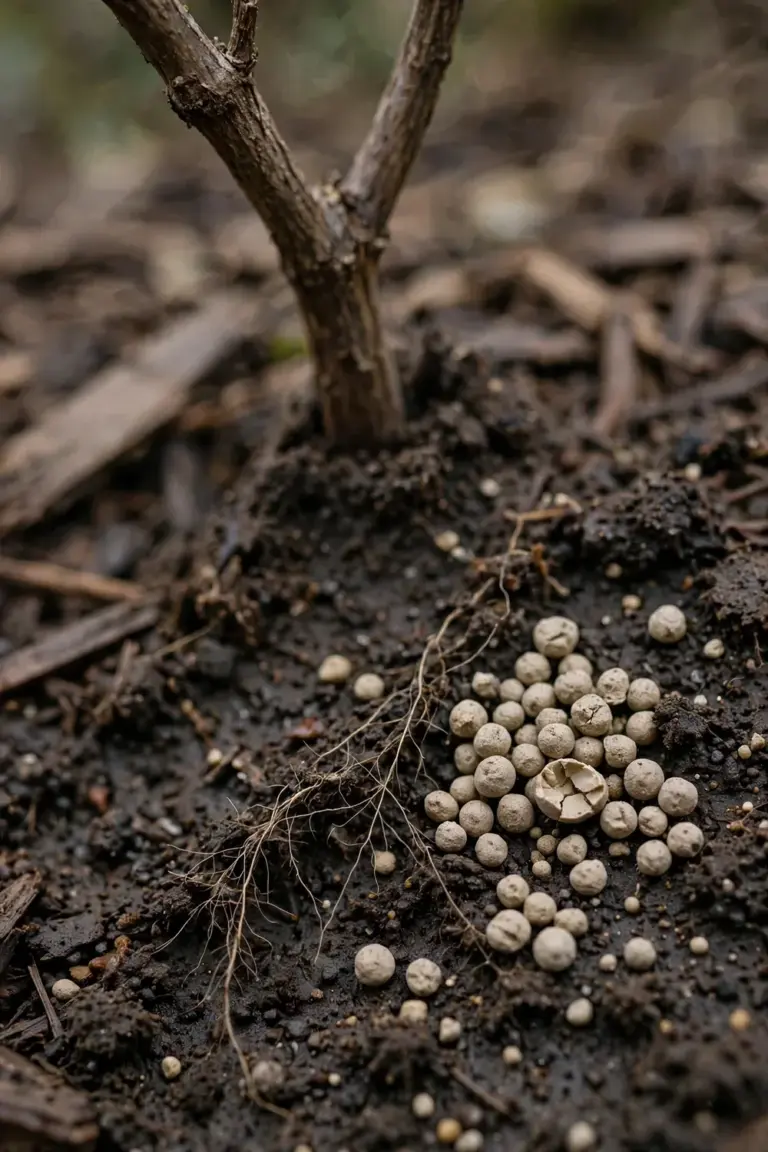
Stop feeding by midsummer. Late feeding pushes soft green growth into autumn, and the first frost blackens it. Hydrangeas ask for less fertilizer than most shrubs: a spring feed carries the season.
One color caveat for bigleaf growers. Phosphorus ties up aluminum in the soil, so a high-phosphorus fertilizer pushes the blooms toward pink. Gardeners chasing blue should pick a low-phosphorus feed and let the aluminum stay available to the roots.
An overfed hydrangea grows magnificent leaves and shy flowers. When in doubt, feed less.
7. Prune Each Type on Its Own Calendar
Prune old-wood types right after they flower. Prune new-wood types in late winter, before new growth starts. The calendar follows the wood.
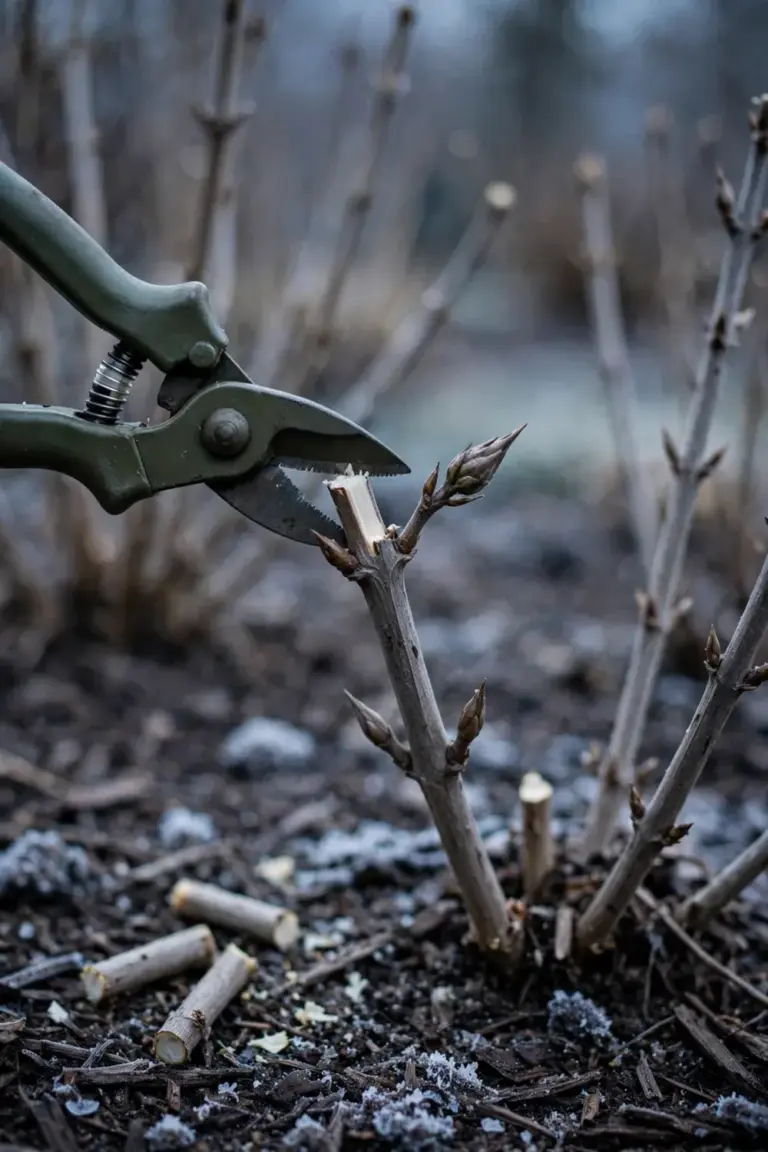
On bigleaf, snip each spent bloom back to a fat bud pair just below it, right after flowering. Shape the shrub lightly and cut no more than a third of the plant in one session. In the northern hemisphere, finish old-wood pruning by early August so the new buds set before winter.
On panicle and smooth types, prune hard in late winter while the plant sleeps, cutting each stem back to a low framework of 2 or 3 buds. The flowers form on the new shoots, so the harder the cut, the bigger the bloom. The spring pruning techniques guide covers the general cutting method that applies here.
Use sharp bypass pruners. Cut just above an outward-facing bud, angled so water runs off the wound. Wipe the blades with rubbing alcohol between shrubs. A clean cut heals fast. A crushed stem invites dieback.
On climbing hydrangea, prune as little as possible. After flowering, shorten only the shoots that grew out of bounds and deadhead the flowered shoots to a healthy bud. On reblooming bigleaf types such as the Endless Summer series, deadhead through summer and the new wood reblooms.
The shears are never the problem. The month is.
8. Leave Spent Flowerheads as Winter Armor for the Buds
Leave the dead flowerheads on the shrub through winter. The papery heads shelter the buds sitting just beneath them from frost and drying wind.
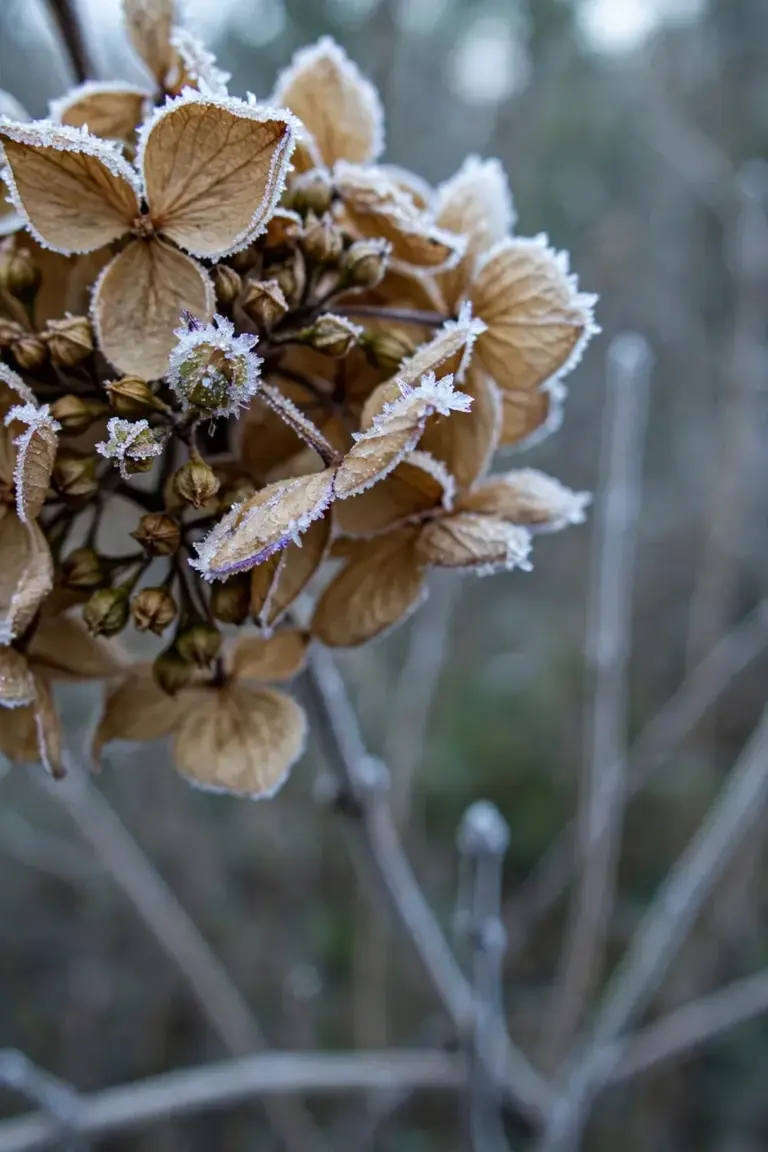
This matters most for old-wood types. Their buds spend the whole winter exposed on last year’s stems. A mophead stripped bare in November loses its top buds to the first hard freeze and blooms only from the lower stems the next summer.
Remove the deadheads in spring, once hard frosts pass. Cut each stem back to the first healthy bud pair. Snipping deadheads never removes next year’s buds; cutting into live stems does. Learn the difference and winter stops being scary.
In exposed, windy sites the deadheads do double duty: they slow the wind across the stems and catch frost around the buds instead of on them. Do not wrap the shrub in plastic to protect it. Plastic traps moisture against the stems and rots the very buds it was meant to save.
A tidy November haircut feels productive. It is the most expensive haircut in the garden.
9. Turn Blooms Blue at pH 5 to 5.5 and Pink at pH 6 and Above
Soil pH 5 to 5.5 grows blue flowers, while pH 6 and above grows pink. Bigleaf hydrangea is the only species that answers.
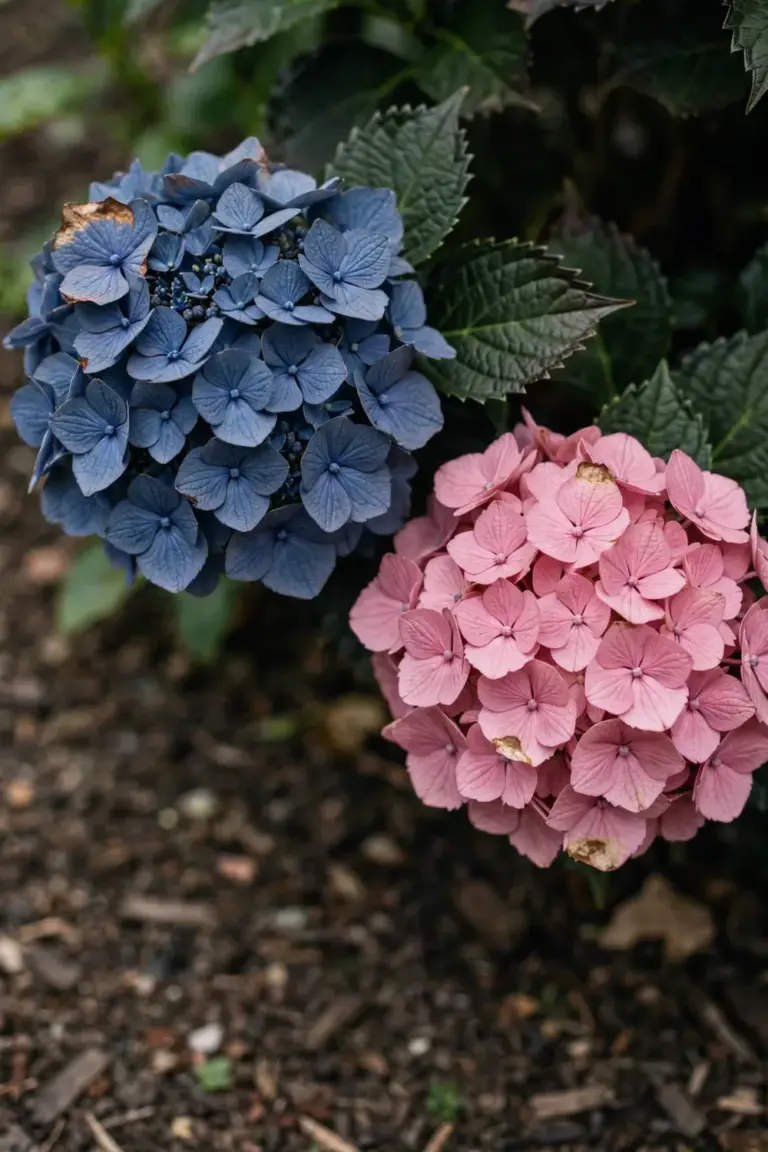
Aluminum drives the mechanism. Dye plays no part. Acidic soil releases aluminum from soil minerals. The roots absorb the aluminum. The aluminum binds the pink pigment in the sepals. The pigment turns blue. At pH 6 and above, aluminum stays locked in the soil and the pigment stays pink, as the North Carolina extension notes on hydrangea color explain.
Between pH 5.5 and 6, expect purple or a mix of blue and pink on the same plant. That in-between color is the soil telling you the pH sits in the middle.
To push blue, work aluminum sulfate or sulfur into the root zone as new growth emerges in spring, following the label rate. To push pink, add garden lime to raise the pH. Test the soil first: the same extension lesson behind the watering and feeding rates opens with a soil test for exactly this reason.
Panicle, smooth, oakleaf, and climbing hydrangeas ignore all of this. Their white or cream flowers carry no shiftable pigment, so they stay white whatever the pH. White bigleaf cultivars stay white too. For the soil side of the job, the soil health guide covers testing and amendment basics.
Chasing blue without a soil test is guessing with a shovel. Test once, amend once, and give the shrub a full season to answer.
10. Rejuvenate an Old Shrub With a 3-Spring Cut
Cut the oldest third of the stems to the ground each spring, three springs running. The shrub rebuilds itself from the base.
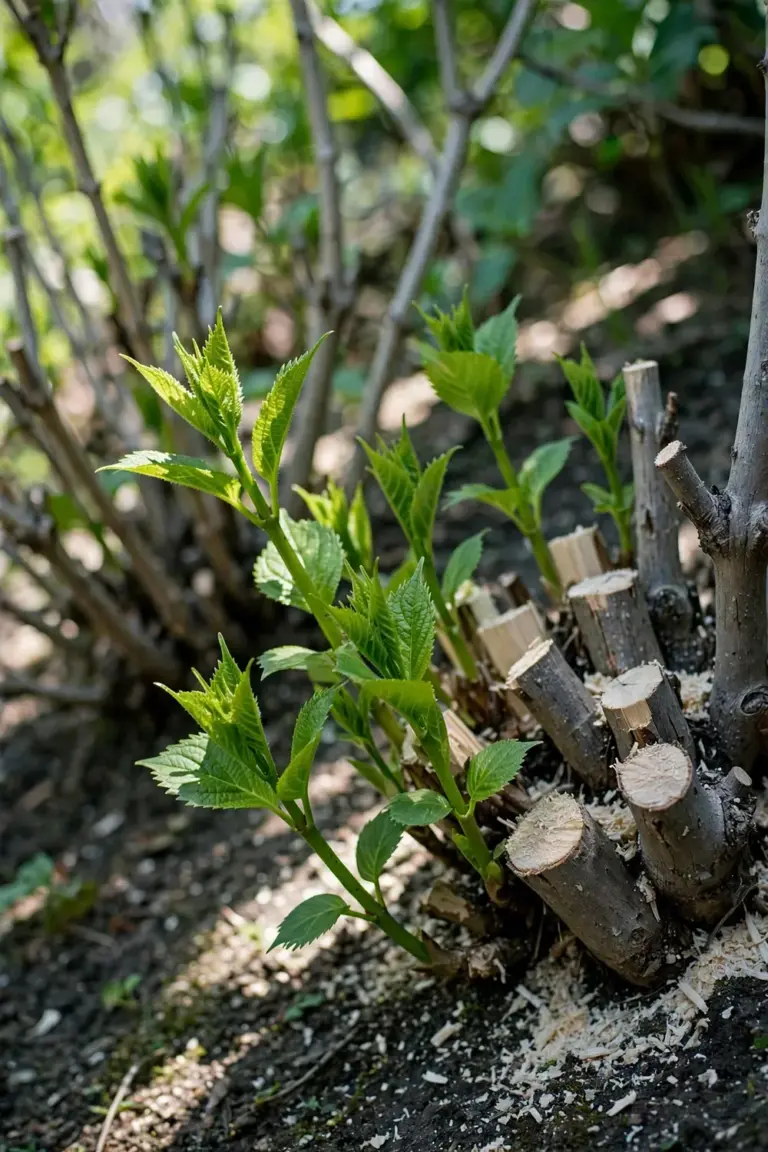
Old bigleaf shrubs turn woody and flowerless in the center. Each spring, saw the thickest, grayest third of the stems off at ground level. Leave the younger stems to flower. By the third spring the whole shrub is young wood again.
Panicle and smooth hydrangeas take the fast version: one hard late-winter cutback to a low framework renews the entire plant, because the flowers come on new wood anyway. Climbing hydrangea never gets the hard treatment. Thin only the shoots that escape their bounds.
Young shrubs do not need this treatment. A hydrangea under five years old is still building its framework, and cutting a third of it away each spring just slows the plant down. Reserve the 3-spring cut for shrubs with thick gray stems, a dead-looking center, and flowers only at the tips.
Saw the whole shrub to the ground in one go and an old-wood type gives you nothing next summer. A third a year costs patience and keeps the flowers coming.
11. Give a Climbing Hydrangea Time to Take Hold
Climbing hydrangea is slow to establish and then nearly unstoppable. Tie the young shoots to their support and leave the plant alone.
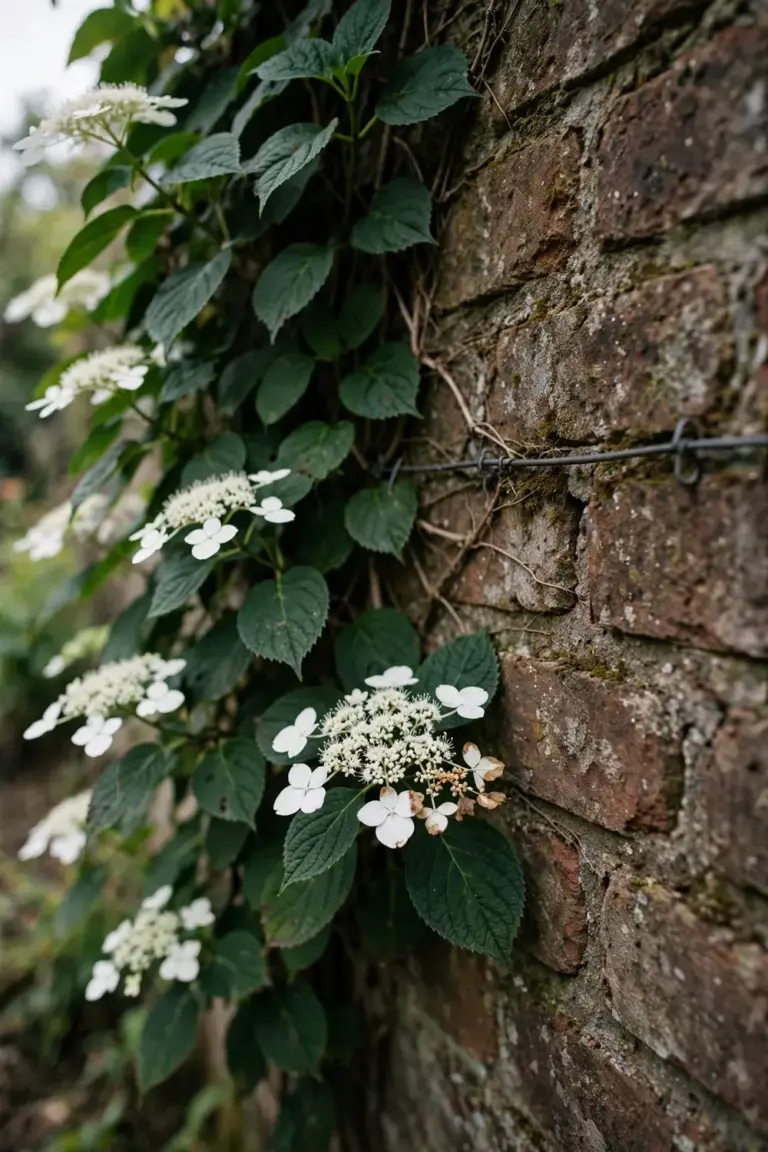
The same Missouri plant profile that lists part shade to full shade gives the mature size: hardy in zones 4 to 8, climbing 30 to 50 feet (9.1 to 15.2 m). That is a big vine. Point it at a wall, a sturdy fence, or a mature tree trunk, and check that the support can carry a heavy mature plant.
Flowers appear on the previous year’s lateral shoots, so prune right after flowering and keep it minimal. Deadhead the flowered shoots to a healthy bud. Tie young shoots to the support until the aerial rootlets take over the grip.
Give the vine a proper trellis from day one. Horizontal wires fixed 30 cm apart on standoff brackets hold the stems 5 cm off the wall, which keeps air moving behind the foliage and lets you prune without scraping render. Tie new shoots in loosely with soft twine; the aerial rootlets take over the anchoring as the stems mature.
Yank a young vine off its wall to check the roots and you tear the aerial rootlets it spent a season building. The vine sulks for a year. Patience is the whole technique.
12. Build a 3-Month Bloom Sequence From 3 Species
Plant all three: climbing hydrangea opens in late spring, bigleaf carries the summer, and panicle closes from midsummer into autumn. One shrub of each beats three of one for season length.
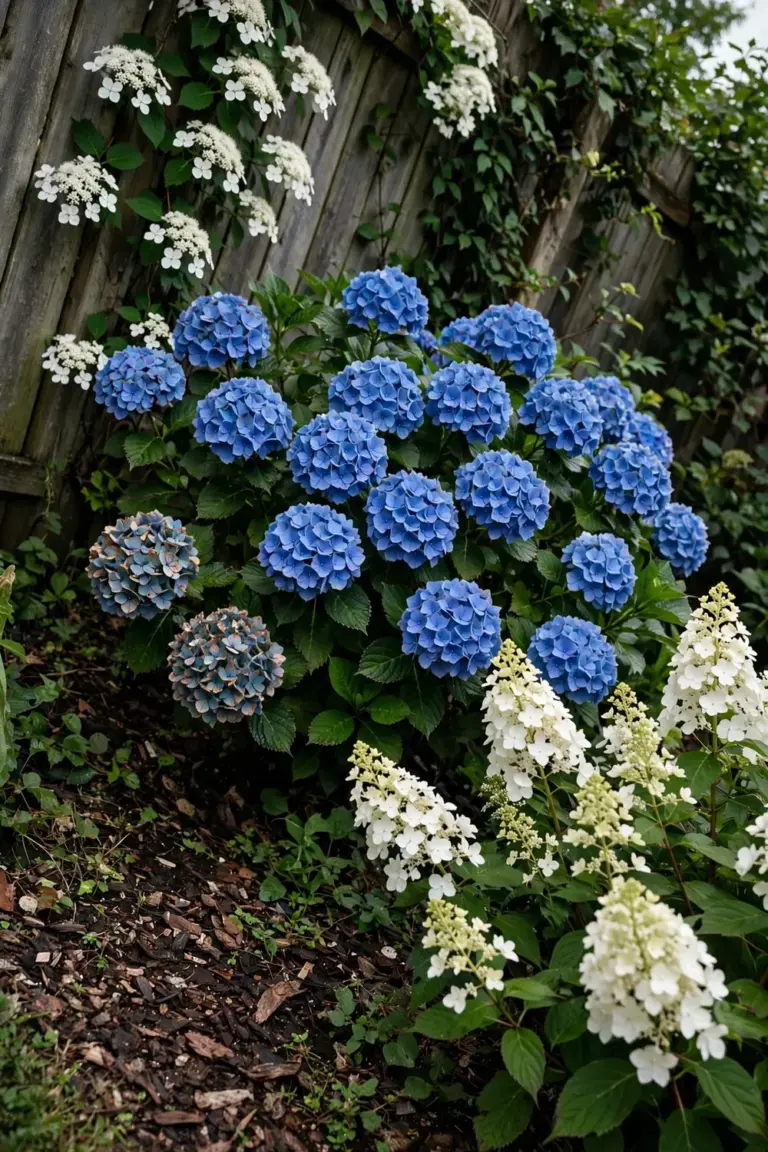
Set the sequence along one border. The climbing hydrangea takes the wall or fence at the back with its white lacecaps. Bigleaf mopheads fill the middle in blue or pink. Panicle cones stand at the sunny end, opening white and aging to pink as autumn arrives.
This is the payoff bed, and it earns one honest photograph: three species in flower at once, in a real garden. The fall blooming perennials guide extends the same idea past the hydrangea season.
Slip a smooth hydrangea into the middle of the border as the white bridge. Its big snowball blooms open just as the bigleaf show peaks and carry the eye toward the panicle cones. Four species in one bed sounds crowded, but at one shrub each the sequence reads as one long season, not four separate plants.
Three bigleaf shrubs in a row give you six weeks of flowers. Three species give you three months.
13. Diagnose the 2 Most Common Failures: No Blooms, Scorched Leaves
No blooms means the buds were removed or frozen. Scorched leaves mean too much afternoon sun. Both are fixable.
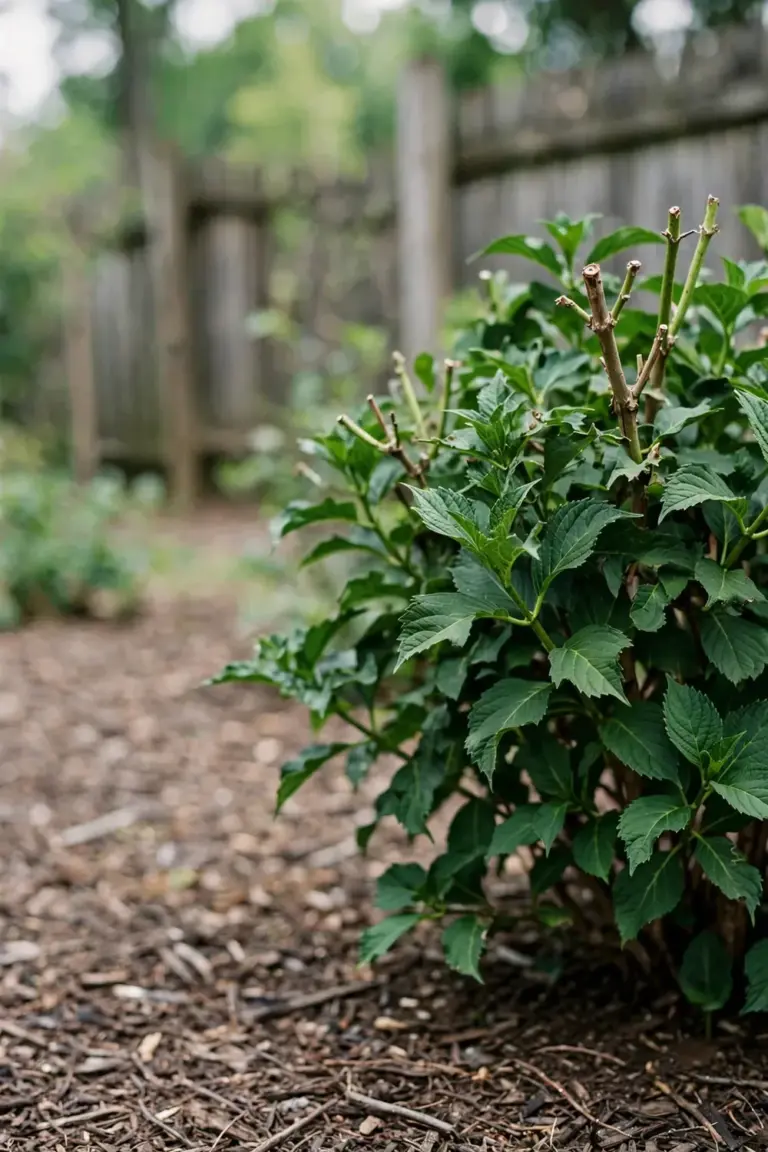
When the leaves look healthy but no blooms appear, the shrub was pruned after bud set, usually in autumn, and the buds went out with the clippings. Or a late frost killed the exposed buds on an old-wood type. Fix the calendar, leave the deadhead armor on through winter, and the shrub recovers on its own wood.
When growth looks weak as well as flowerless, suspect too much shade. Bigleaf still wants morning sun. Move the shrub or lift the canopy above it.
For scorched leaves with brown crispy edges on bigleaf in hot afternoon sun, deep water first to rule out thirst, then plan a move to morning sun or add afternoon shade. Panicle hydrangeas rarely scorch; if a panicle wilts, suspect water first.
To separate a pruning injury from frost damage, scratch a flowerless stem with your thumbnail in spring. Green tissue underneath means the stem survived and the buds were cut away: a pruning problem. Brown, dry tissue means the cold killed it: a winter problem. The fix differs, so check before you change the calendar.
A flowerless hydrangea is a calendar problem almost every time. The plant is fine. The date was wrong.
14. Adapt the Calendar Across Hemispheres and Climates
South of the equator, flip the months. Push bigleaf toward shade in heat and trust panicle in the cold. The rules do not change. Only the month names do.
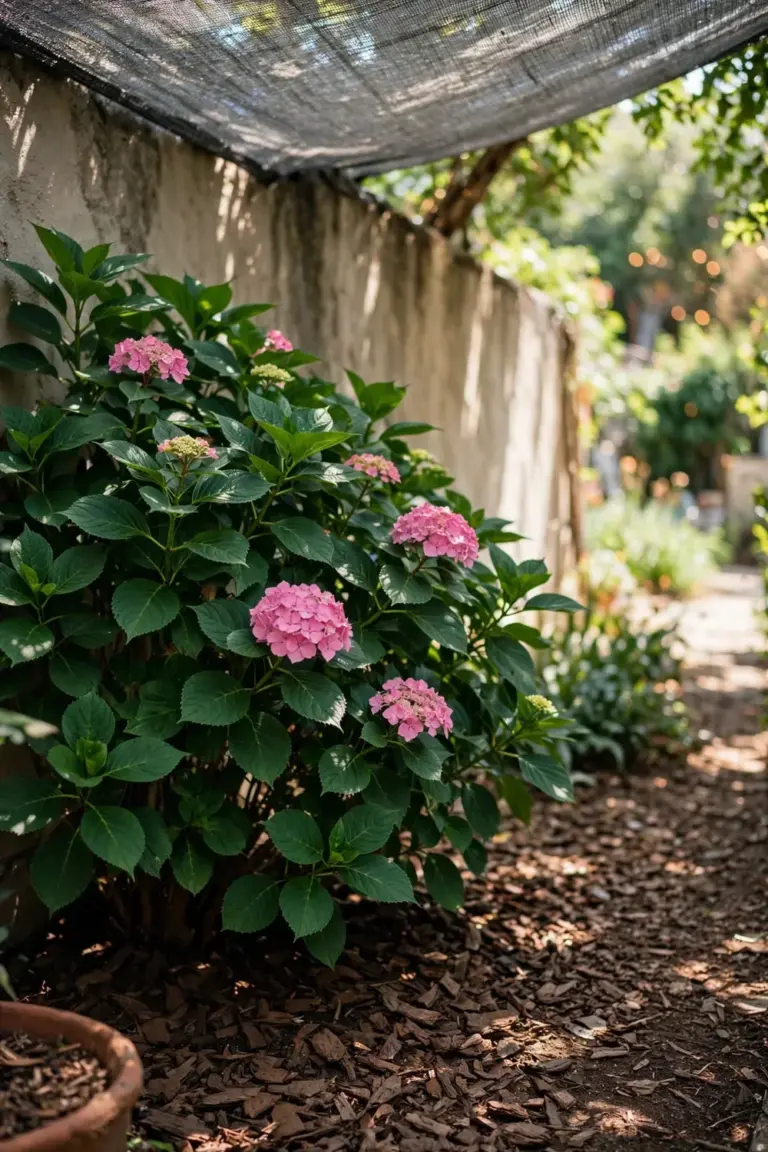
In Australia and other southern-hemisphere gardens, late winter means August: that is the month for the hard prune of panicle and smooth types. Deadhead bigleaf after summer flowering and finish shaping by February. Morning sun matters even more under a harsh southern-hemisphere summer.
In hot, humid, low-chill climates, bigleaf hydrangea struggles: the buds need a winter rest they never get, and the leaves scorch. Panicle types handle more heat. Climbing hydrangea dislikes hot, humid conditions too, so give it deep shade and steady moisture in warm regions.
In cold climates, panicle hydrangea is the safe pick: it blooms on new wood, so a brutal winter cannot take the flowers. For bigleaf, plant near a sheltering wall, mulch the base, and leave every deadhead on as bud armor.
Match the species to the climate first and the calendar becomes easy. Fight the climate and no calendar saves the shrub.
Frequently Asked Questions
Plant a panicle hydrangea (Hydrangea paniculata). It blooms on new wood, so a pruning mistake cannot delete the flowers: cut it back in late winter and it blooms the same summer. It takes full sun, handles cold, and forgives neglect. Pick a compact cultivar for a small garden, water it well in year one, and expect flowers in the first season.
Yes, with a large pot and steady water. Choose a compact bigleaf or panicle cultivar, use a container at least 45 cm across with drainage holes, and fill it with quality potting mix. Pots dry faster than garden beds, so check the moisture daily through summer. Feed lightly in spring. A bonus: container shrubs shift flower color faster, because you control the soil in the pot.
The soil pH drifted upward. Above pH 6, aluminum locks out of the roots’ reach and the sepal pigment stays pink, which the North Carolina extension notes confirm. Retest the soil, then work aluminum sulfate or sulfur into the root zone as new growth emerges, aiming for pH 5 to 5.5. Expect the shift over a full growing season, not a week. Pine bark mulch helps hold the acidity.
Watch one full season before you prune. Read the flowers: round pom-poms or flat lacecaps mean bigleaf, cones mean panicle, big white snowballs mean smooth, and a climbing vine means the climbing type. Until you are sure, only snip dead flowerheads in spring and remove dead stems. That holding pattern cannot remove next year’s buds on any species.
Yes. Take softwood cuttings in early summer, 10 to 15 cm long, from stems that did not flower. Strip the lower leaves, dip the cut end in rooting hormone, and set the cutting in moist potting mix in the shade. Keep the mix damp but not wet. Roots usually form within weeks, and the new plant is an exact clone of the parent shrub.
Only on reblooming types. Snipping spent flowers off an Endless Summer bigleaf or a panicle hydrangea through summer encourages the next flush. On a classic old-wood mophead, deadheading tidies the shrub but grows no new flowers; the buds for next year are already set on the stems. Deadhead for looks, not for rebloom.
What to Do This Weekend
Name the species first, then plant. Check the nursery tag, match it to the comparison table, and write the pruning month on the tag with a marker before it fades. Dig the hole wide, water it deep, mulch it cool, and leave the shears in the shed until the flowers fade. The shrub does the rest.