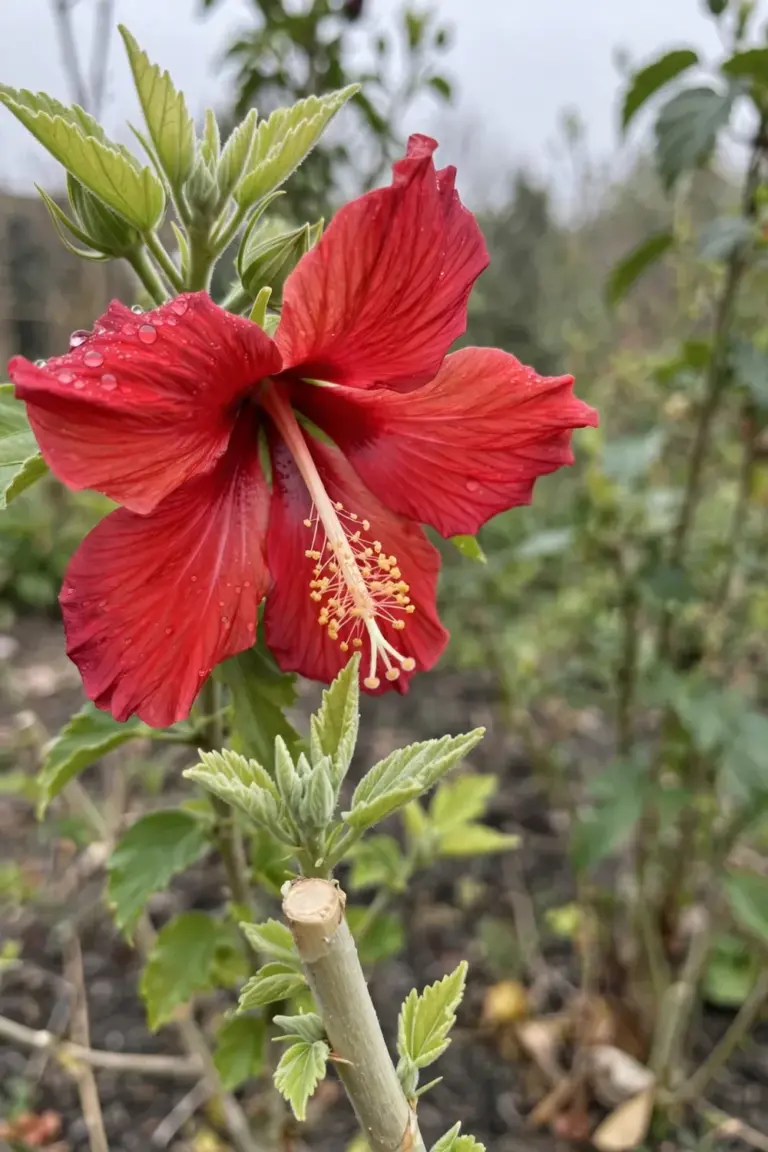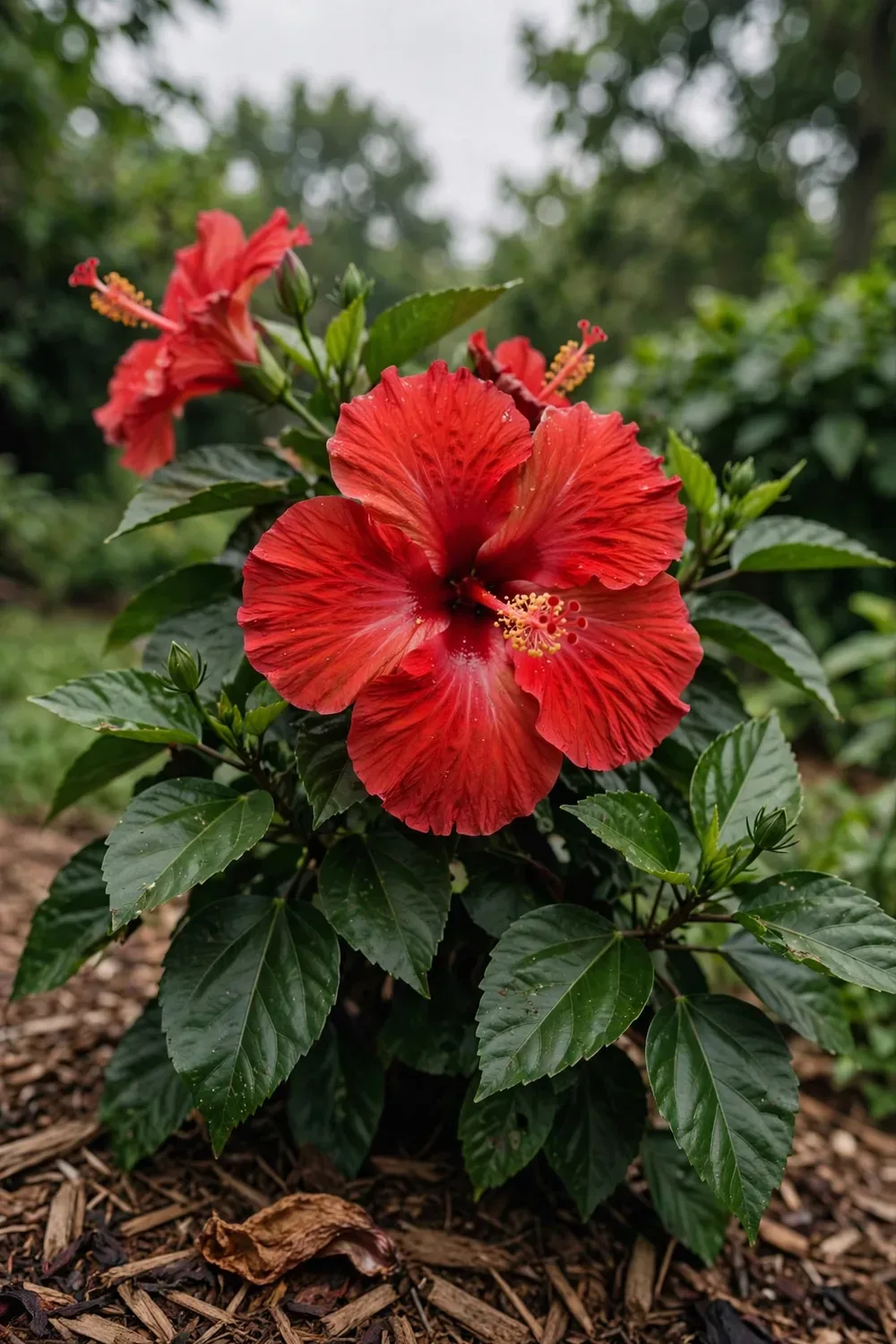

Pick the right hibiscus before you plant anything. The word “hibiscus” covers three very different plants: tropical Hibiscus rosa-sinensis, hardy Hibiscus syriacus, and the Australian native Hibiscus tiliaceus. Tropical hibiscus grows 4 to 10 feet tall with flowers up to 6 inches across, and it needs frost protection, according to the NC State Extension hibiscus profile. Rose of Sharon, Hibiscus syriacus, survives winter in USDA zones 5a through 8b and blooms on new wood, per Proven Winners’ rose of Sharon data. Plant the wrong one for your winter and no amount of care fixes it.
The second decision is the bloom window you want. Tropical hibiscus flowers in warm weather from spring to autumn and holds its glossy leaves all year in frost-free climates. Hibiscus syriacus flowers in summer on the current season’s new growth, and it drops its leaves in autumn. The native cottonwood flowers yellow with a red center through spring and summer and suits salty coastal positions, as the Northern Beaches Council native hibiscus page documents.
One nursery saying survives contact with reality: treat hibiscus like roses. Give them full sun, deep watering, regular feeding through the growing season, and a hard annual prune. The rest of this guide walks the decision in order: choose your type, match it to your winter, plant it right, then water, feed, and prune on schedule.
1. Pick the Right Hibiscus First: Tropical, Hardy, or Native
Your winter makes this decision. Match the plant to the coldest night your garden gets, not to the flowers that caught your eye at the nursery. The three types behave so differently that one care calendar cannot cover all of them.
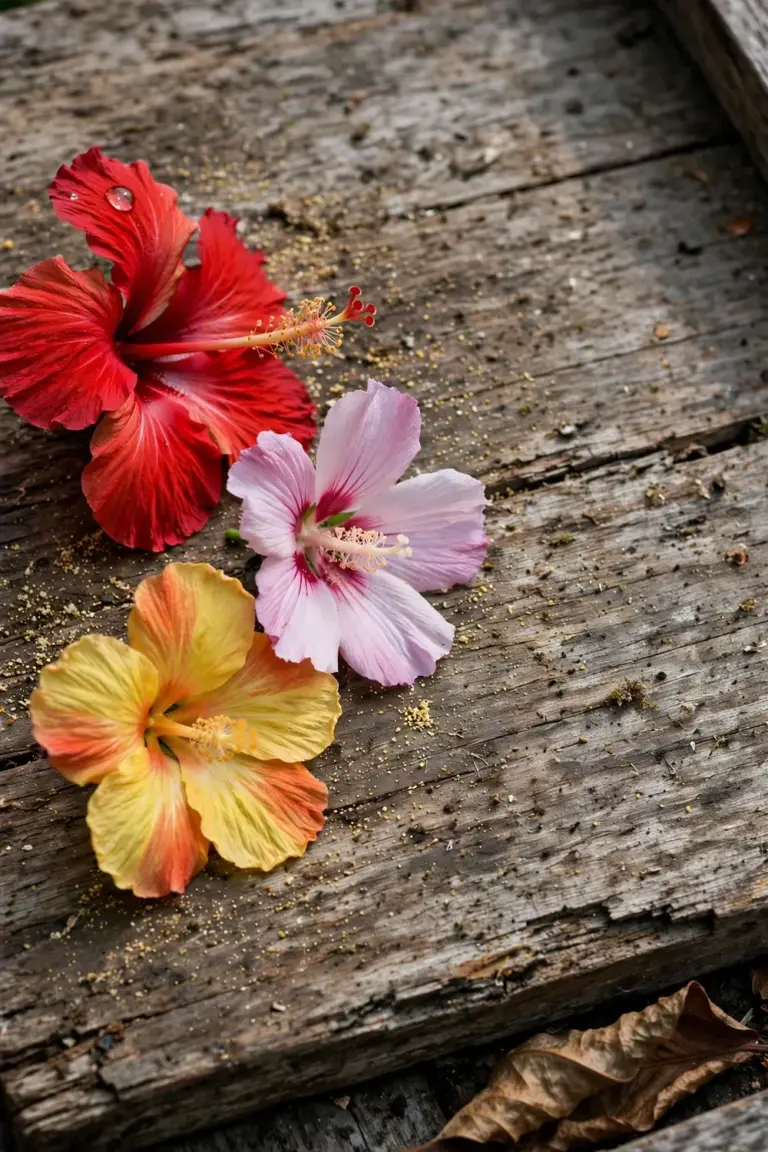
| Trait | Tropical (Hibiscus rosa-sinensis) | Hardy (Hibiscus syriacus) | Native (Hibiscus tiliaceus) |
|---|---|---|---|
| Common names | Tropical hibiscus, Chinese hibiscus | Rose of Sharon, Syrian rose | Cottonwood, sea hibiscus |
| Leaf habit | Evergreen | Deciduous | Evergreen |
| Mature size | 4 to 10 ft high, 5 to 8 ft wide | 8 to 10 ft tall | 4 to 8 m tall tree |
| Flower | Up to 6 in across, funnel-shaped | Large, 5-petaled, summer | Yellow with red center, color-shifts to orange-red through the day |
| Blooms on | New growth | New wood | New growth |
| Cold tolerance | No frost tolerance; needs protection from frost | Hardy in USDA zones 5a to 8b | Tolerates light frost; needs warm temperate or subtropical |
| Salt tolerance | Low | Low | High; tolerates salt spray and wind |
Three identity facts keep you from buying the wrong plant. Hibiscus rosa-sinensis is Latin for “rose of China,” and it belongs to the mallow family, Malvaceae, per NC State. Hibiscus syriacus carries the name “rose of Sharon” yet is not related to roses at all, per the NC State Extension profile of Hibiscus syriacus ‘Diana’. Hibiscus tiliaceus is a genuine Australian native tree, and council planting guides list it for coastal positions where salt spray rules out both other types.
2. Match Your Winter to the Right Hibiscus
Choose by your coldest weather, then double-check your summer heat and salt exposure. This decision decides whether the plant survives its first winter. A correctly matched plant forgives beginner mistakes. A mismatched one punishes everything you do right.
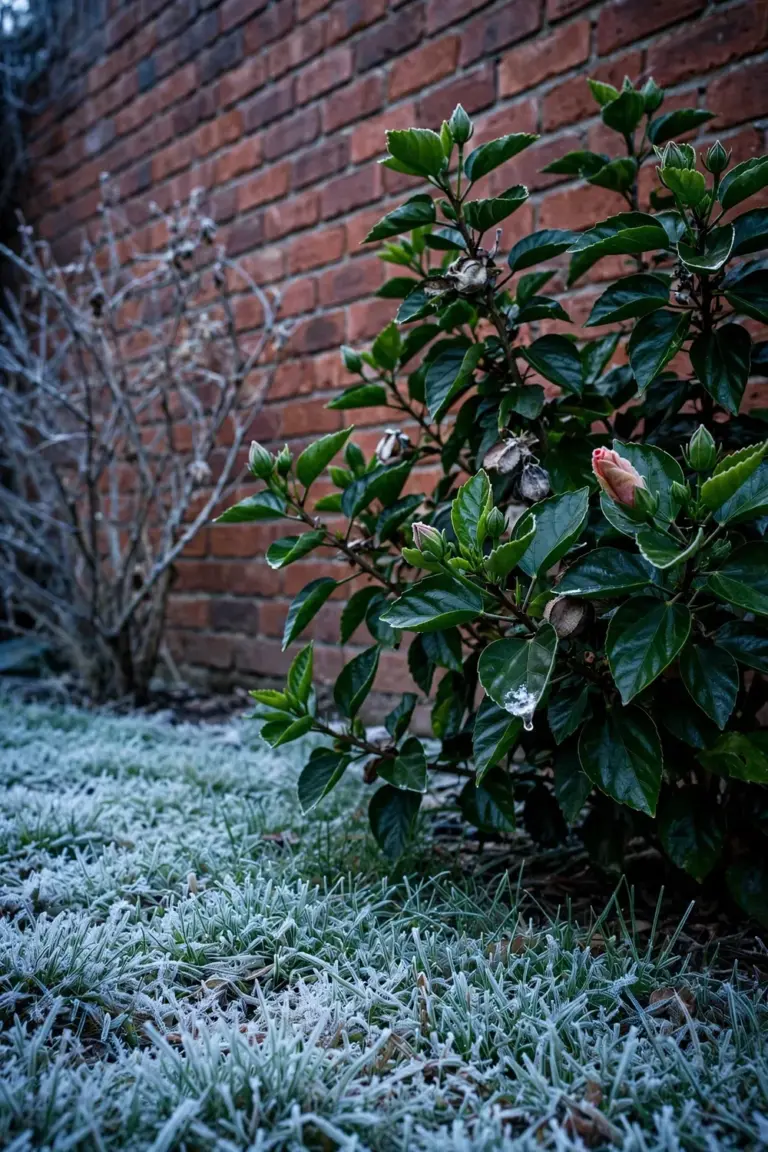
Pick tropical hibiscus when your winters stay frost-free. Hibiscus rosa-sinensis is evergreen and flowers longest where the temperature never drops to freezing, though NC State warns that it needs protection from wind and frost, so an inland valley with four frosty nights a year is not tropical territory.
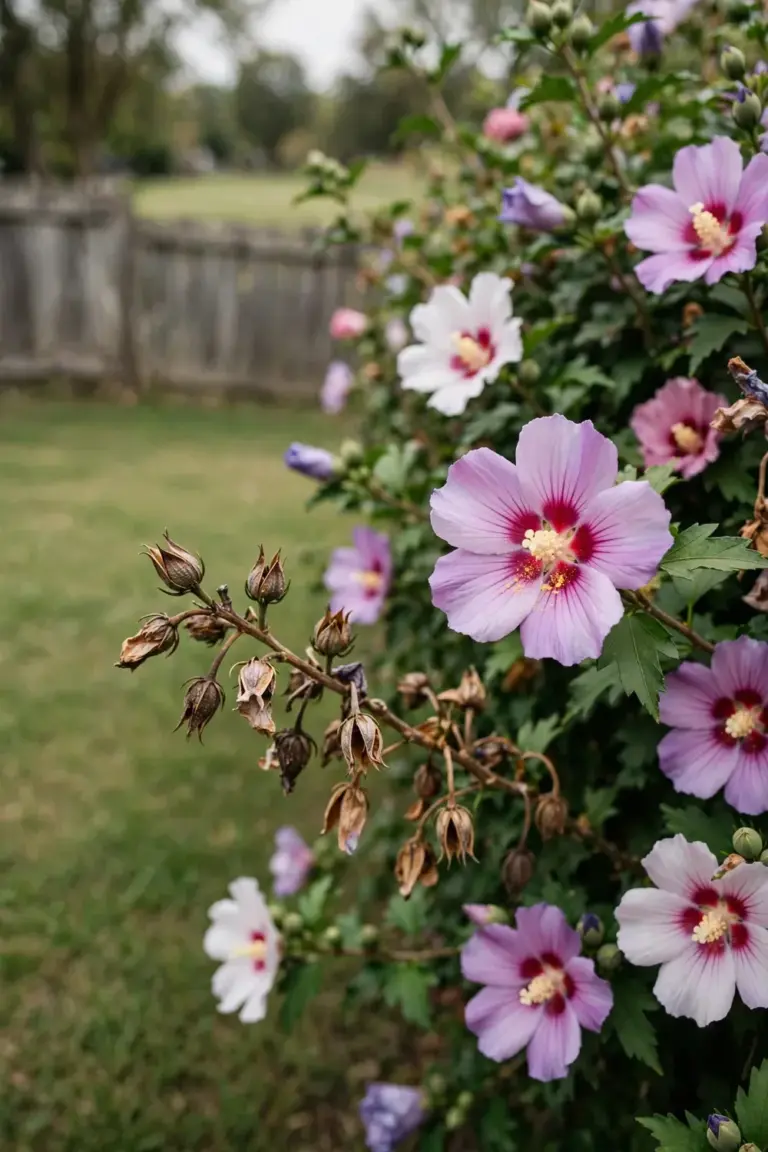
Pick Hibiscus syriacus when your winters get properly cold. Deciduousness is the signal. The plant drops its leaves and sleeps through freezes that would kill a tropical hibiscus outright, and zone 5 gardens grow rose of Sharon with no winter wrapping at all.
Pick Hibiscus tiliaceus when salt spray or coastal wind shapes your garden. The native cottonwood tolerates salt spray, coastal winds, sandy soils, and even brackish water, per the Northern Beaches Council guide. It reaches 4 to 8 metres. Give it tree space, not shrub space.
Australia deserves its own decision map because one country holds all three climates. Frost-free northern and coastal districts grow tropical hibiscus in the ground with almost no winter care. Frost-prone southern and inland districts grow Hibiscus syriacus in the ground, or tropical hibiscus in a pot that moves under cover in winter. Melbourne gardens can hold tropical hibiscus against a north-facing masonry wall, where the wall releases stored warmth on frosty nights. Coastal strips with salt-laden wind get the native cottonwood, which no exotic type outlasts there. Planting for Australian conditions is about microclimate reading: walk the garden on a winter morning and find the frost hollows before you dig.
3. Plant Hibiscus in Full Sun and Rich, Moist Soil
Plant in spring after the last frost date has passed. Soil warmth matters more than air warmth: roots establish faster in warm, moist ground, and cold wet soil is the fastest route to root trouble in marginal climates.
Give every hibiscus at least six hours of direct sun. NC State lists full sun to partial shade for tropical hibiscus, and Proven Winners specifies full sun for maximum bloom on rose of Sharon. Light afternoon shade helps in brutally hot districts, but a plant in deep shade blooms poorly no matter how well you feed it.
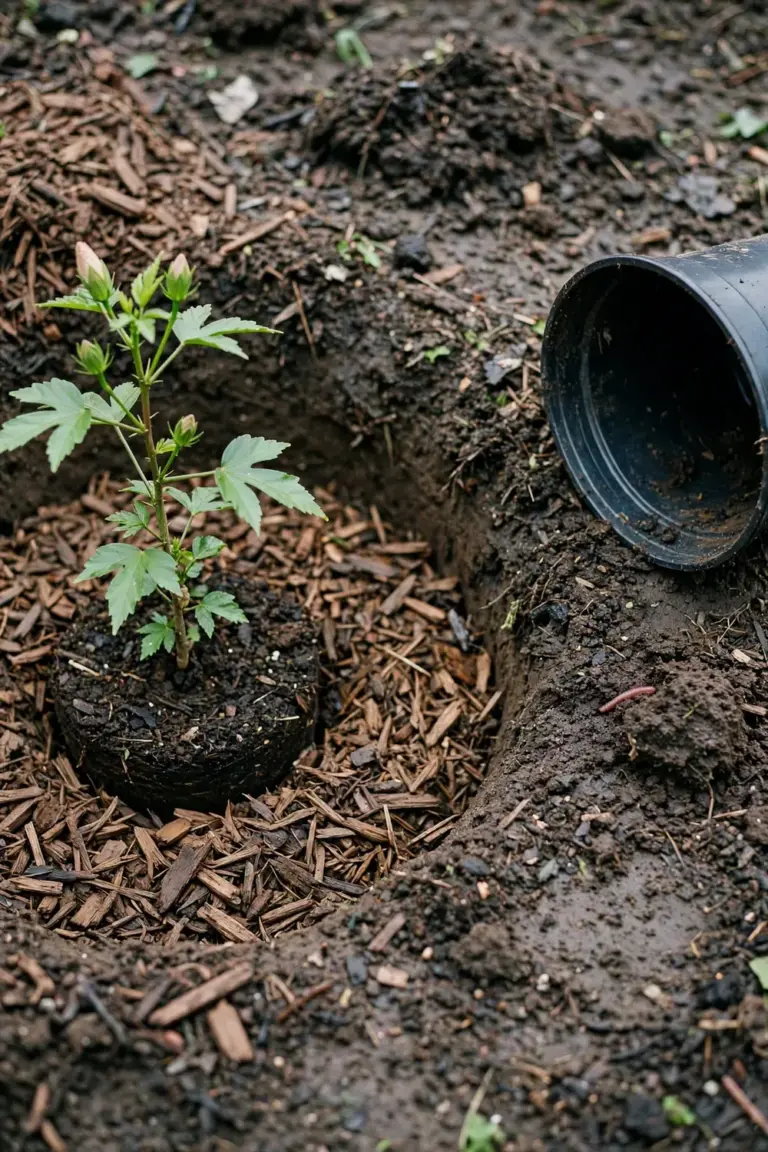
Dig the hole twice as wide as the root ball and no deeper. Set the plant at the same depth it sat in the pot. Backfill with the native soil mixed with compost, then water deeply to settle the mix and drive out air pockets.
Space for the mature plant, not the nursery pot. Tropical hibiscus spreads 5 to 8 feet wide, and rose of Sharon reaches 8 to 10 feet tall, so crowding them now means a hacking job in three years. A hedge planting of rose of Sharon sits 3 to 4 feet apart, which matches the 36 to 48 inch spacing Proven Winners lists for Hibiscus syriacus, and closes into a screen without tangling.
Lay a deep ring of organic mulch over the root zone and keep the mulch from touching the stem. Mulch keeps the roots cool and moist, which hibiscus demands: leaves scorch in full sun when the soil is allowed to dry out.
4. Water Deep and Feed Like You Would Feed Roses
Water newly planted hibiscus through the full first growing season. Give them a deep weekly soak, counting rainfall. Tropical hibiscus roots must stay moist, per NC State, and its large leaves transpire fast in summer heat.
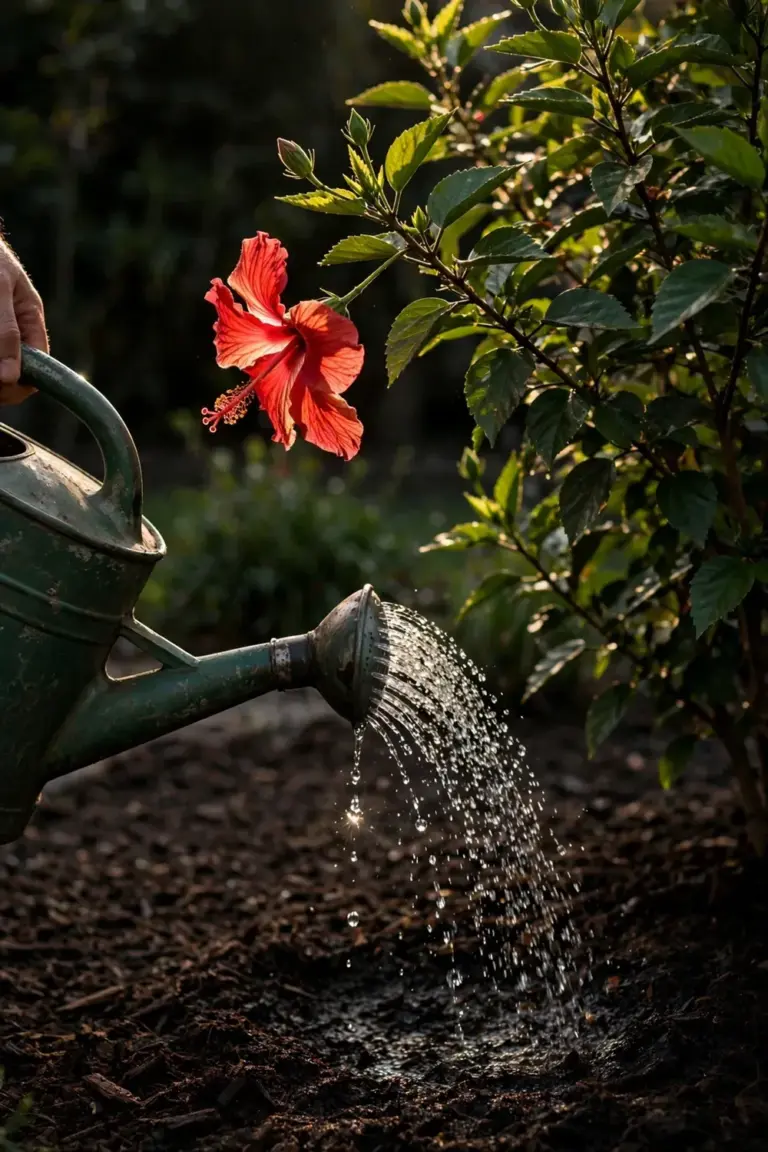
Established plants still want consistency. Give them a deep soak when the top few inches of soil dry out, rather than a daily sprinkle. Shallow frequent watering builds shallow roots, and shallow roots are the first casualty of a hot week. Reduce watering in winter, when growth slows and the risk is rot, not thirst.
Feed on the rose schedule. Hibiscus are hungry bloomers, and nurseries describe the rule as “think of hibiscus as roses”: regular feeding from spring through late summer, then nothing in winter. A rose-formula or flowering-shrub fertilizer covers the need. Stop feeding in early autumn so the plant hardens off instead of pushing soft growth into cold weather.
Potted hibiscus eat faster than garden plants. Water flushes nutrients out of a pot with every irrigation, so container plants need the feeding schedule applied more strictly and a fresh top layer of compost each spring.
5. Prune Hibiscus Hard in Late Winter or Early Spring
Prune before spring growth starts. All three types flower on new growth, so the cuts you make now become the branches that carry this season’s flowers. Late winter to early spring is the window, while the plant is still dormant.
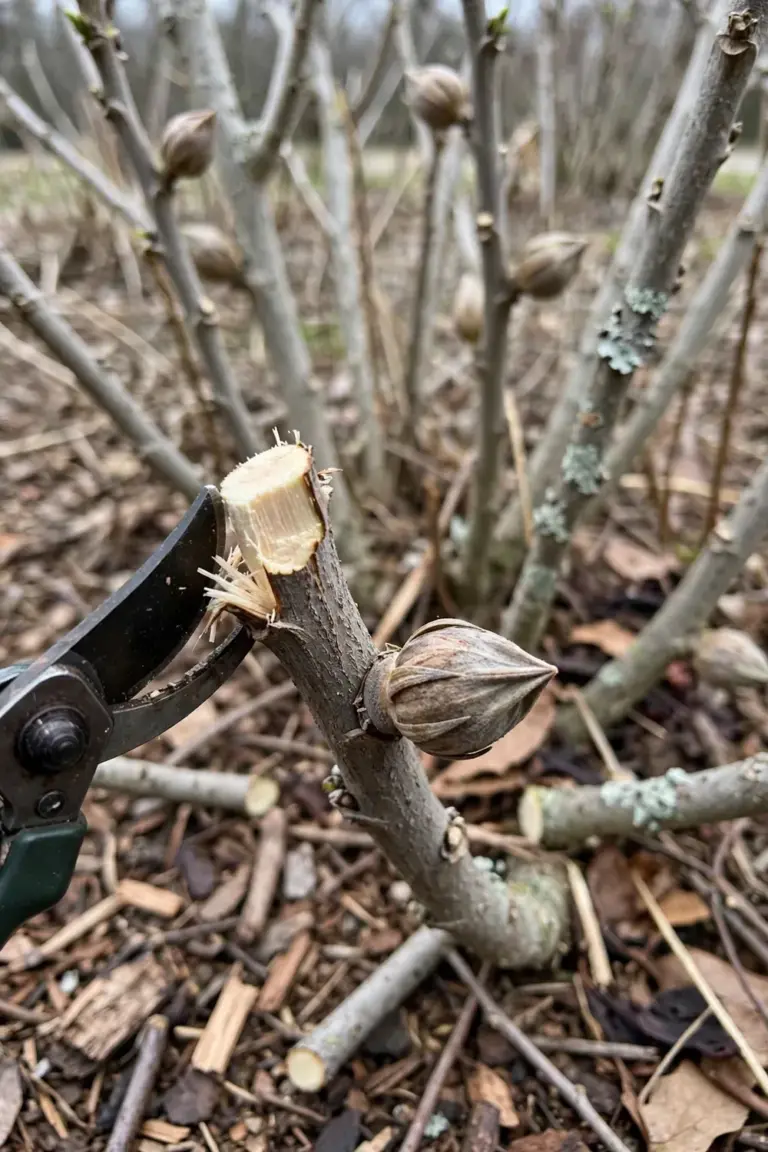
Cut tropical hibiscus back by about one-half of its height in early spring. NC State gives exactly this instruction: prune back by one-half to encourage a compact growth habit, because flowers will bloom on the new growth. Removing half the plant looks brutal. It is the correct move.
Cut rose of Sharon back hard in early spring while the plant is still dormant. Proven Winners lists early spring as the best pruning time for rose of Sharon, and because flowers form on new wood, the harder the cut, the larger the flowers. Remove a portion of the oldest woody branches to the ground each year to keep an established shrub renewing itself.
In my experience, cutting a tropical hibiscus back hard in early spring is the moment the whole season turns, because the flowers open on new growth. Deadhead spent blooms if you like the look tidy, but hibiscus does not need deadheading to keep flowering the way some annuals do.
Follow proper spring pruning techniques on every cut: sharp bypass secateurs, one cut just above an outward-facing bud, no ragged stubs. The native cottonwood needs pruning only to control its 4 to 8 metre size. Shape the canopy in late winter; the tree flowers without being forced.
6. Give Tropical Hibiscus a Frost Plan Before Autumn Ends
Tropical hibiscus is the only type that needs winter protection. Decide the plan in autumn, not on the night frost is forecast. Cold damage shows as blackened foliage and dead stems, and a plant that froze to the roots in the ground rarely recovers.
Move potted tropical hibiscus indoors or under cover before the first frost. Indoors, the plant wants the brightest spot available: a large container in bright light, per NC State. Expect some leaf and bud drop after the move. NC State warns that the plant is sensitive to environmental changes, so the drop is normal, not a death sentence.
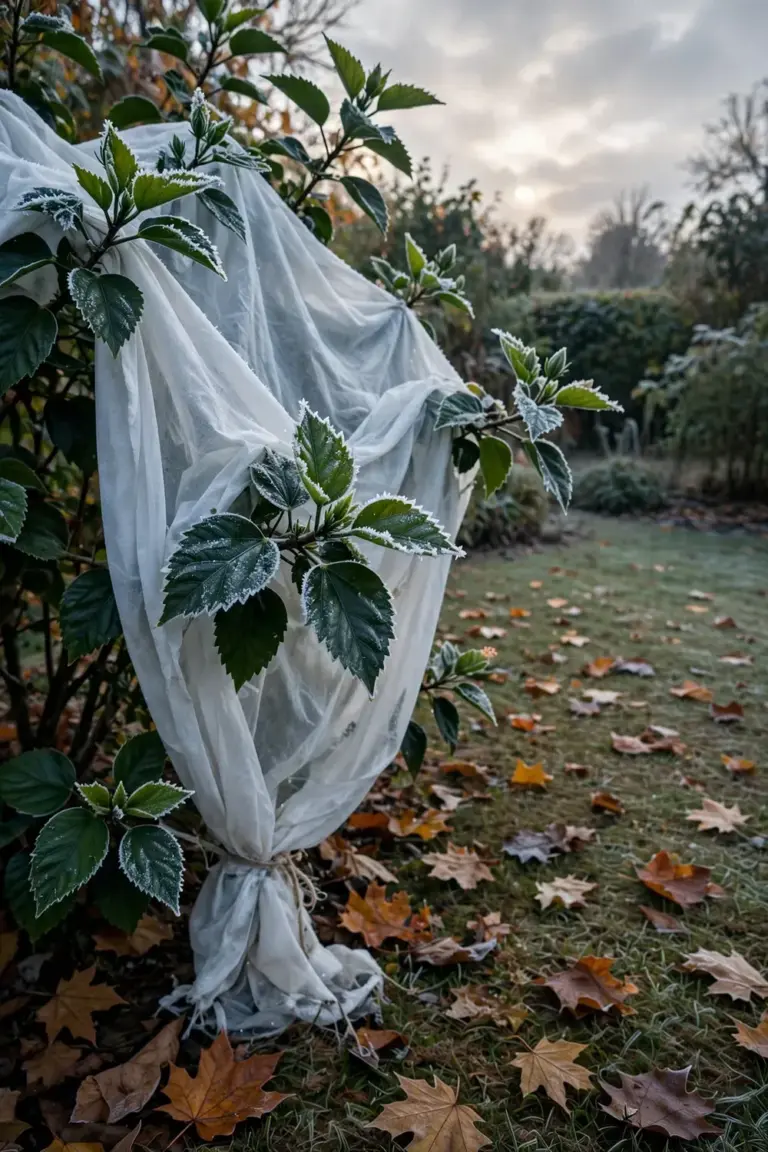
Protect in-ground plants in marginal climates. A thick mulch layer insulates the root zone. A frost cloth draped over the shrub on forecast frost nights saves the canopy; remove it in the morning. A north-facing masonry wall radiates stored heat all night and can carry a tropical hibiscus through a district that sees only light frosts.
Water sparingly through winter. The plant’s metabolism has slowed, and cold wet soil rots roots faster than drought damages them. Resume normal watering when new growth starts in spring, which is also the signal to prune.
Do not prune freeze-damaged stems until spring growth appears. The dead wood above protects the live buds below. Scratch the bark on a suspect stem: green under the bark means alive, brown means the stem is dead.
7. Grow Hibiscus in a Pot You Can Move
A pot solves the winter problem completely. Growing tropical hibiscus in a container turns a frost-tender shrub into a movable one, and the pot goes under cover on frost nights and back into full sun the next morning.
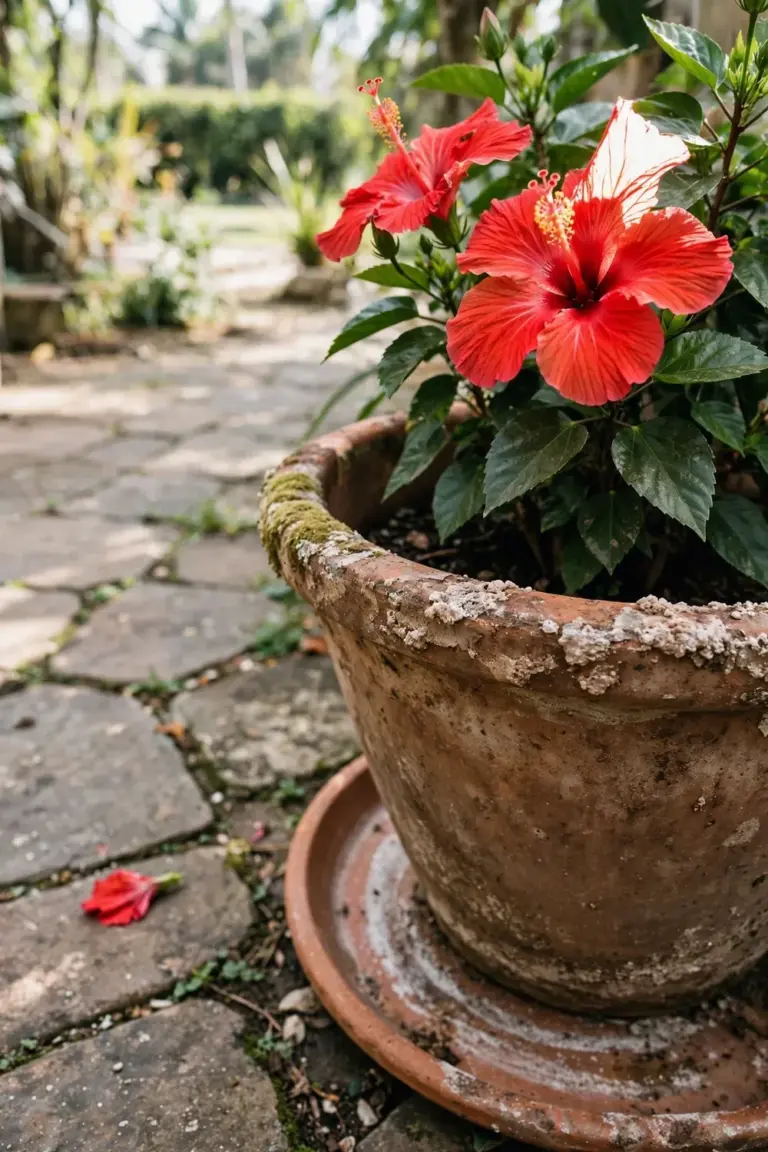
Choose a generous pot for a full-size tropical hibiscus. The plant reaches 4 to 10 feet in the ground, so a small pot stunts it and dries out hourly in summer. Terracotta breathes and looks right, but it dries faster than glazed ceramic or plastic.
Fill with a free-draining potting mix, not garden soil. Garden soil compacts in pots, suffocates roots, and holds winter wetness. Mix one part coarse perlite or bark into a quality potting mix if the bag feels heavy and fine.
Water pots on their own schedule. A pot in full sun can need water twice a day in a heatwave, while the garden plant next to it manages on weekly rain. Check by weight: lift the pot. Light means thirsty.
Repot every two to three years in spring. Root-bound hibiscus stops flowering and drinks badly. Move up one pot size, trim back the circling roots, and refresh the mix. If the pot is already the largest you can lift, root-prune and repot into the same container with fresh mix instead.
8. Propagate Hibiscus from Stem Cuttings
Stem cuttings are the proven method for tropical hibiscus. NC State lists propagation by stem cutting, and cuttings preserve the exact cultivar, which seed never does. A cutting from a double-flowered ‘President’ grows into the same double flower.
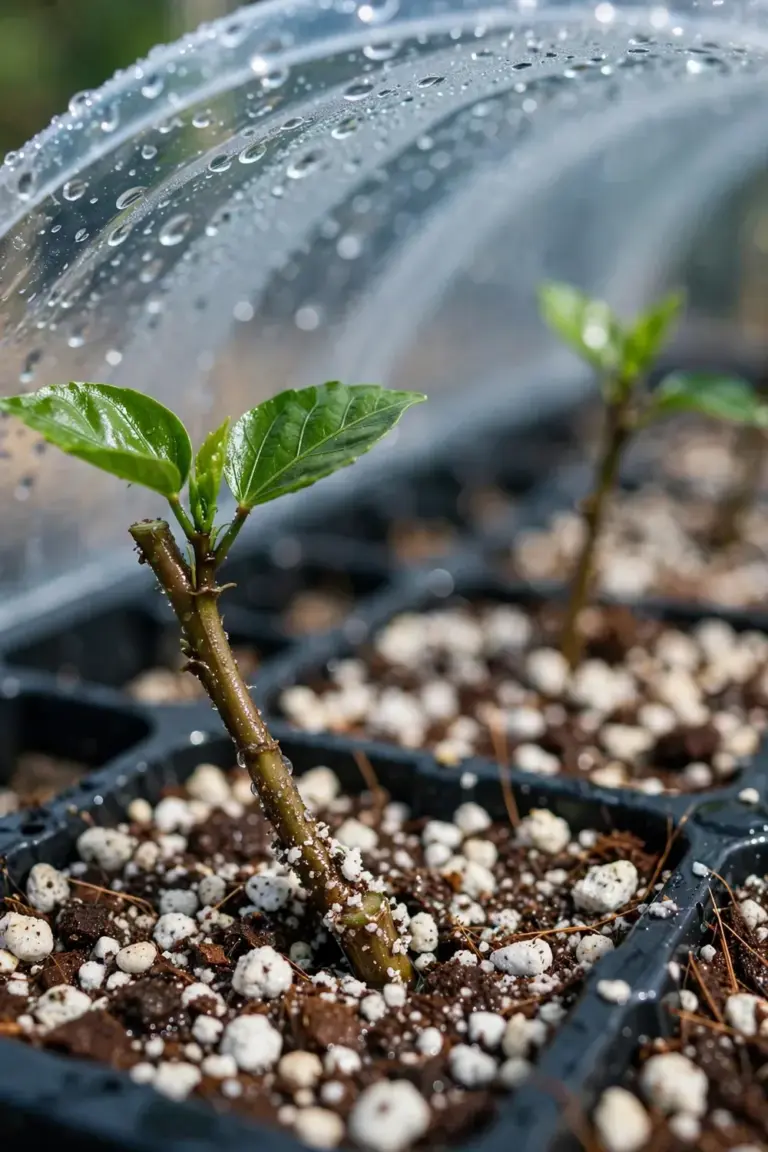
Take cuttings in late spring or early summer from semi-hardwood stems. Choose a healthy stem and cut just below a leaf node. Strip the lower leaves, leaving two or three at the top. A clean angled cut just below the node exposes the growth tissue where roots form.
Dip the base in rooting hormone and set the cutting in a moist mix of perlite and peat or coco coir. Cover with a clear plastic bag or place in a propagator to hold humidity, and keep it in bright indirect light, not direct sun.
Roots develop over several weeks. Test with a gentle tug: resistance means roots. Harden the new plant off gradually before full sun exposure, then pot it up and treat it like any young hibiscus. Expect flowers in the second season, not the first.
Rose of Sharon also roots from cuttings, but it self-seeds so freely that most gardeners start with a seedling instead. Watch for volunteers around a mature shrub and transplant them in autumn or early spring.
9. Avoid the 5 Failures That Kill Most Hibiscus
Planting the wrong type for the winter kills more hibiscus than every disease combined. Re-read the decision table in the first section before you buy. A tropical hibiscus in a frost-prone inland garden dies in its first winter no matter how lovingly you mulch it.
Watering on a calendar instead of by soil moisture rots roots or bakes them. Check the soil with a finger two inches down. Water when it is dry at that depth. The “1 inch per week” rule from the Almanac is a starting point, and hot weeks need more while cool weeks need less.
Pruning at the wrong time removes the flowers you wanted. Hibiscus blooms on new wood, so a hard prune in late spring cuts off the buds that were about to open. Prune in late winter or early spring, while the plant is still dormant, and leave it alone after that.
Feeding in autumn pushes soft growth into cold weather. Stop all fertilizer in early autumn. The soft new shoots that feeding triggers are the first tissue a frost kills, and the dieback opens a wound for disease.
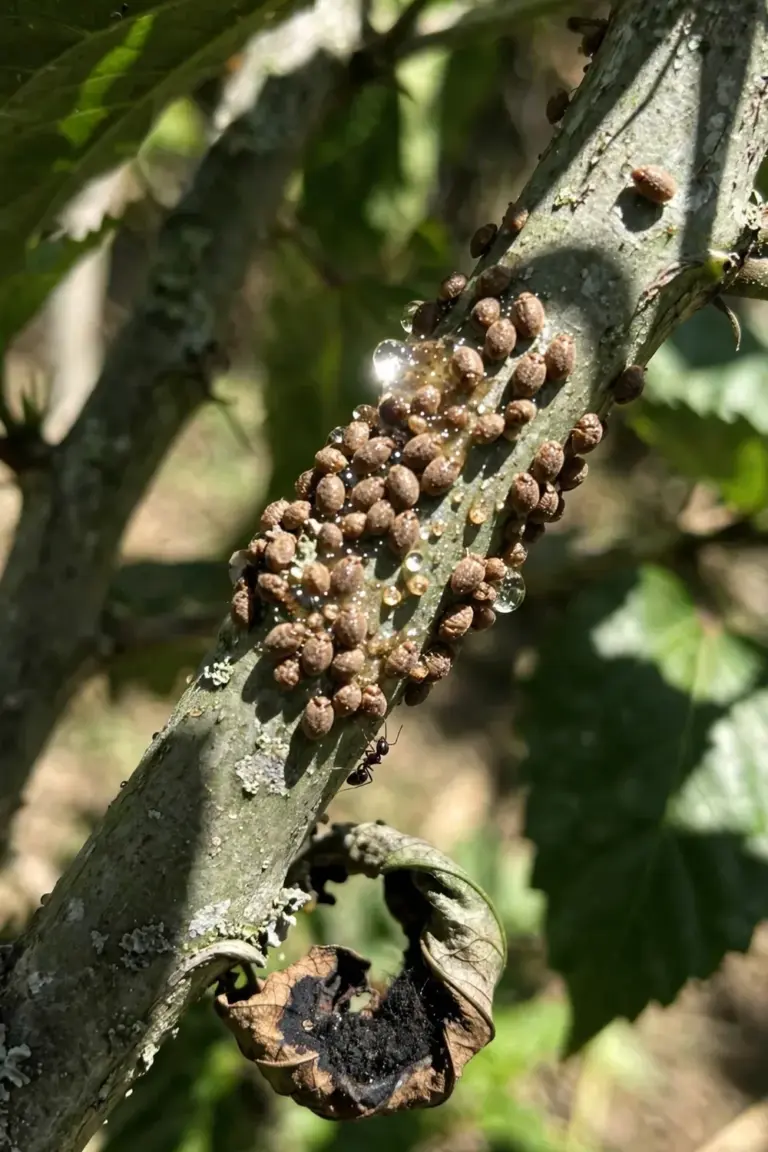
Ignoring scale insects lets a small problem become a sticky one. NC State flags scale as the pest to watch on tropical hibiscus. Look for bumps on stems and sooty mould on leaves, and treat with horticultural oil before the infestation spreads. A strong jet of water dislodges aphids, the other common pest, and an organic pest control approach keeps beneficial insects in the garden.
10. Fix Yellow Leaves, Bud Drop, and Missing Blooms
Start with the most common cause, not the most dramatic one. Nine times out of ten, a hibiscus problem is water, light, or feeding, and only then is it pests or disease.
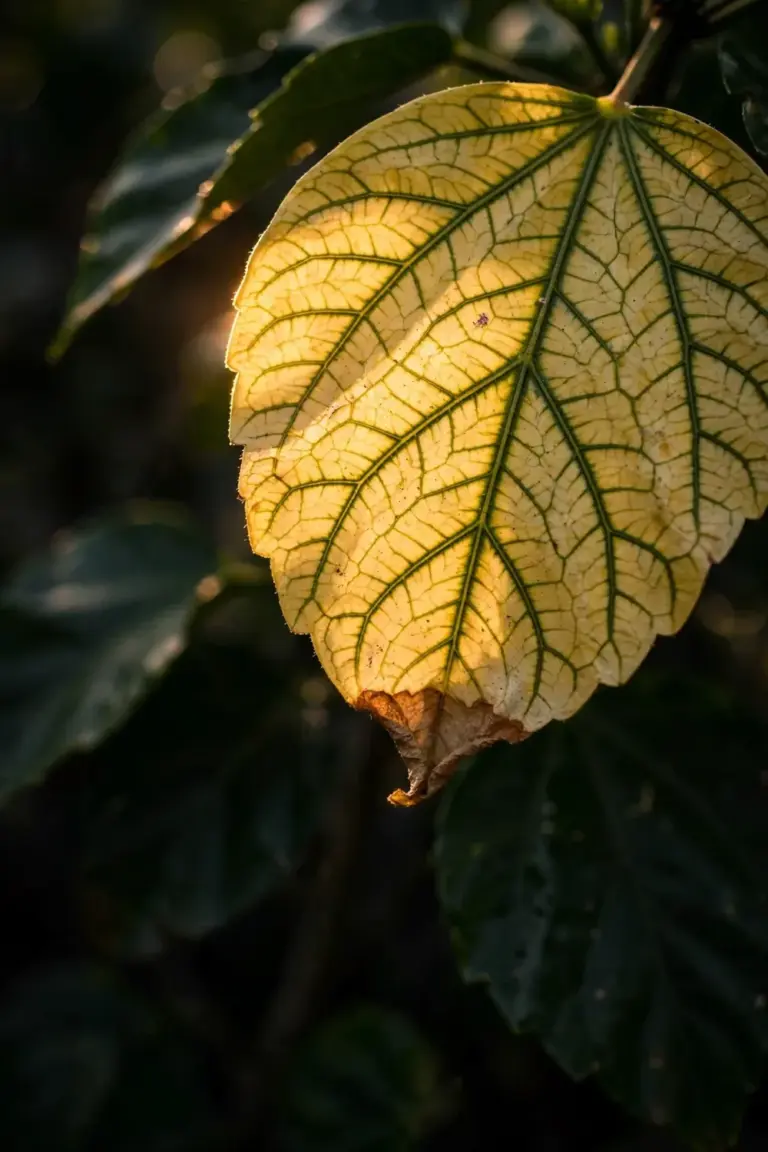
Yellow leaves with green veins mean the plant cannot take up iron. Hibiscus wants slightly acidic soil, and alkaline soil locks iron away even when the soil holds plenty. Test the pH. Then amend with sulfur or an acid-forming fertilizer instead of pouring on more nitrogen.
Buds that yellow and drop before opening signal stress. NC State lists the triggers: moving the plant, sudden temperature swings, dryness, overwatering, or low light. Fix the stress and the next flush of buds holds. Bud drop is a symptom, never the disease.
No blooms on a healthy-looking plant means one of three things. Too little sun is the usual cause. Move the plant or prune overhead shade. Too much nitrogen fertilizer grows leaves at the expense of flowers, so switch to a flowering-shrub formula. And pruning after spring growth started removed the flower buds; wait for next season and prune in late winter instead.
Wilted leaves on moist soil mean root trouble. Overwatering suffocates roots, and the plant wilts exactly as if it were dry. Let the soil dry, check that the pot drains, and confirm the planting hole does not sit in a water-collecting hollow.
Sticky leaves with black sooty mould mean sap-sucking insects. Aphids and scale excrete honeydew, and mould grows on the honeydew. Wash the plant with a strong jet of water, treat stems with horticultural oil for scale, and the mould washes off with the next rain once the insects are gone.
11. Keep Roselle and the Other Hibiscus Names Out of This Decision
The genus Hibiscus holds more than 200 species, and a few share the name without sharing the care. This section fences them off so nobody follows tropical-shrub advice for a crop plant.
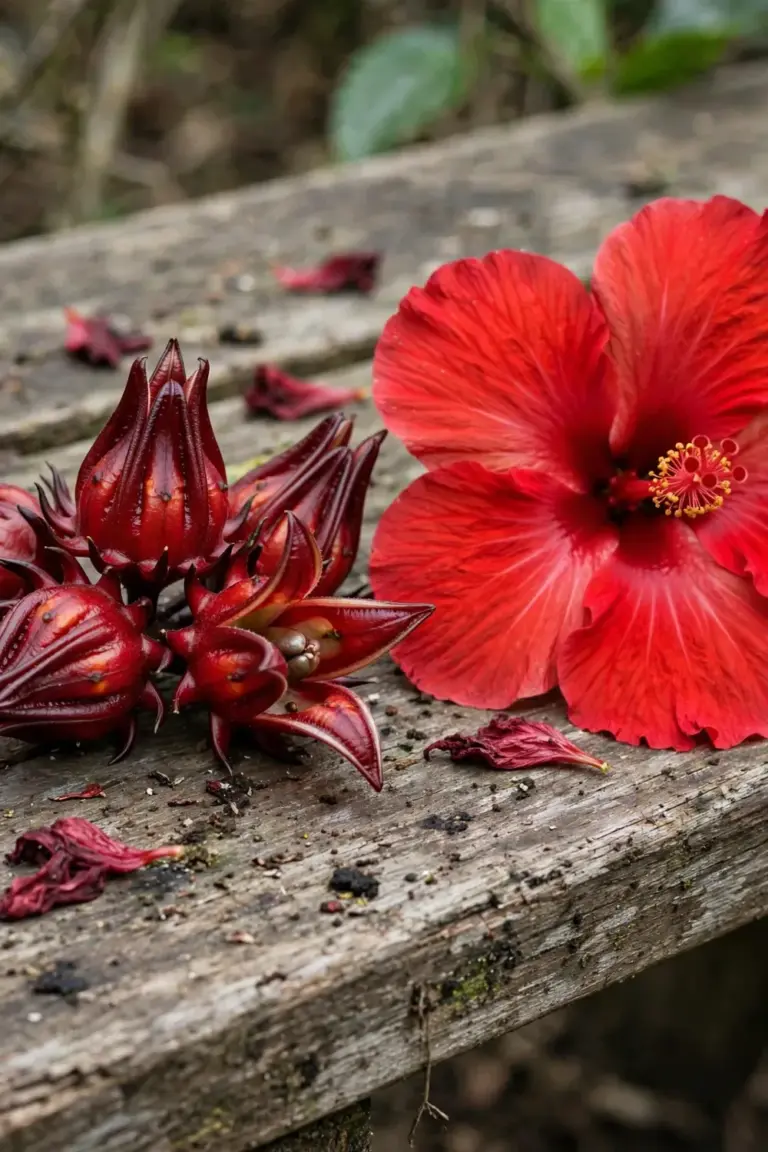
Roselle, Hibiscus sabdariffa, is grown for its edible calyces, not for ornamental flowers. It needs its own article and gets exactly this one mention here. Do not prune, feed, or overwinter roselle like a tropical hibiscus shrub.
Hardy perennial rose mallow, Hibiscus moscheutos, dies to the ground each winter and regrows from the crown. It suits wetland edges and cold gardens, and it is a different plant from the woody shrubs covered above.
Confederate rose, Hibiscus mutabilis, opens white and ages to pink through the day. It behaves like a tropical shrub in frost-free climates and needs the same frost plan as Hibiscus rosa-sinensis.
Check the botanical name on the nursery tag before following any growing advice. Common names overlap and mislead. NC State confirms that rose of Sharon is not related to roses at all. “Chinese hibiscus” is the species’ Latin name, not a claim about Chinese gardens. And “hardy hibiscus” on a nursery tag usually means the perennial Hibiscus moscheutos, not the shrub Hibiscus syriacus.
12. Frequently Asked Questions About Growing Hibiscus
Tropical hibiscus survives winter outside only where frost never reaches it. NC State states plainly that the plant needs protection from frost. In marginal districts, a north-facing masonry wall and frost cloth carry it through light frosts. Anywhere with hard freezes, grow it in a pot and move it under cover before the first frost. Do not gamble a shrub on one mild winter.
Hibiscus rosa-sinensis grows at a medium rate and reaches 4 to 10 feet high and 5 to 8 feet wide at maturity, per the NC State Extension hibiscus profile. A young shrub puts on strong seasonal growth with full sun, consistent water, and spring feeding. Hibiscus syriacus grows at a medium rate too and reaches 8 to 10 feet, per Proven Winners’ rose of Sharon data. Heavy spring pruning resets the height each year without harming the plant.
Bud drop is a stress response, not a disease. The usual triggers are moving the plant, sudden temperature swings, underwatering, overwatering, or low light, all documented by NC State. Keep water, light, and temperature steady, and do not move a plant that is carrying buds. The next flush of buds holds once the stress stops. Check for gall midge or thrips only if the cultural conditions are already correct.
Yes, for the heaviest bloom. Six hours of direct sun is the baseline, and Proven Winners recommends full sun for rose of Sharon for the maximum amount of blooming and best color. Light afternoon shade is acceptable in extremely hot districts. Plants in deep shade grow leggy, bloom sparsely, and invite pests. If your only spot is shady, choose a different flowering shrub rather than fighting the plant’s nature.
Yes. Annual pruning keeps the plant compact, removes dead wood, and produces the new growth that carries the flowers. NC State instructs cutting tropical hibiscus back by about one-half in early spring. Purdue advises pruning rose of Sharon back hard to two or three buds in early spring for large flowers. Skipping the prune for a year is harmless, but skipping it for five years leaves a leggy shrub with flowers only at the tips.
Rose of Sharon self-seeds freely and naturalises in some districts. NC State notes that Hibiscus syriacus often naturalises near its original plantings. Deadhead spent flowers before the seed capsules mature if seedlings are a problem, or plant a sterile triploid cultivar such as ‘Diana’, which NC State describes as producing no seed. Check local weed listings, since invasiveness varies by region and sterile cultivars sidestep the issue entirely.
13. Watch for the First Bloom
Start with the decision, then plant with confidence. Match the type to your winter, give it full sun and rich moist soil, prune hard in late winter or early spring, and feed like roses through the growing season. Tropical hibiscus rewards frost-free gardeners with months of enormous flowers. Hibiscus syriacus rewards cold-climate gardeners with a shrub that shrugs off winter and blooms on new wood all summer. The native cottonwood rewards coastal gardeners with a tough tree nothing else survives beside. The first bloom on new growth is the proof the whole system worked.